Pot Odds vs. Implied Odds: When to Call, Fold, or Raise in Every Poker Situation (2026)
Every profitable poker decision comes down to one question: are you getting the right price? Pot odds tell you the price right now. Implied odds tell you the price when you factor in what you can win on future streets. Understanding the difference between these two concepts -- and knowing when each one applies -- separates break-even players from consistent winners.
Analysis of online cash game data shows that players who consistently miscalculate pot odds lose an average of 8-12 big blinds per 100 hands compared to players who apply correct odds-based decision making. That is the difference between a solid winner and a significant loser over any meaningful sample size. The math is not complicated, but applying it correctly under pressure at the table is a skill that takes deliberate practice.
This guide walks you through both concepts from the ground up, with real-world examples, street-by-street frameworks, and the common traps that cost players thousands of dollars every year.
Calculate your exact pot odds instantly with our free Pot Odds Calculator.
What Are Pot Odds?
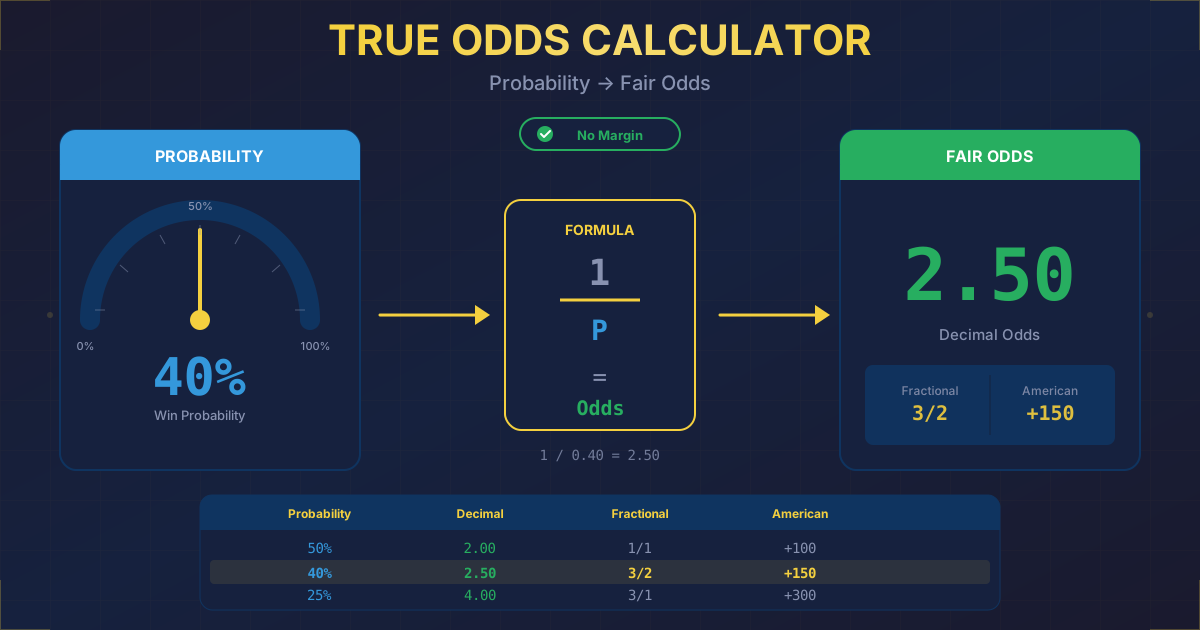
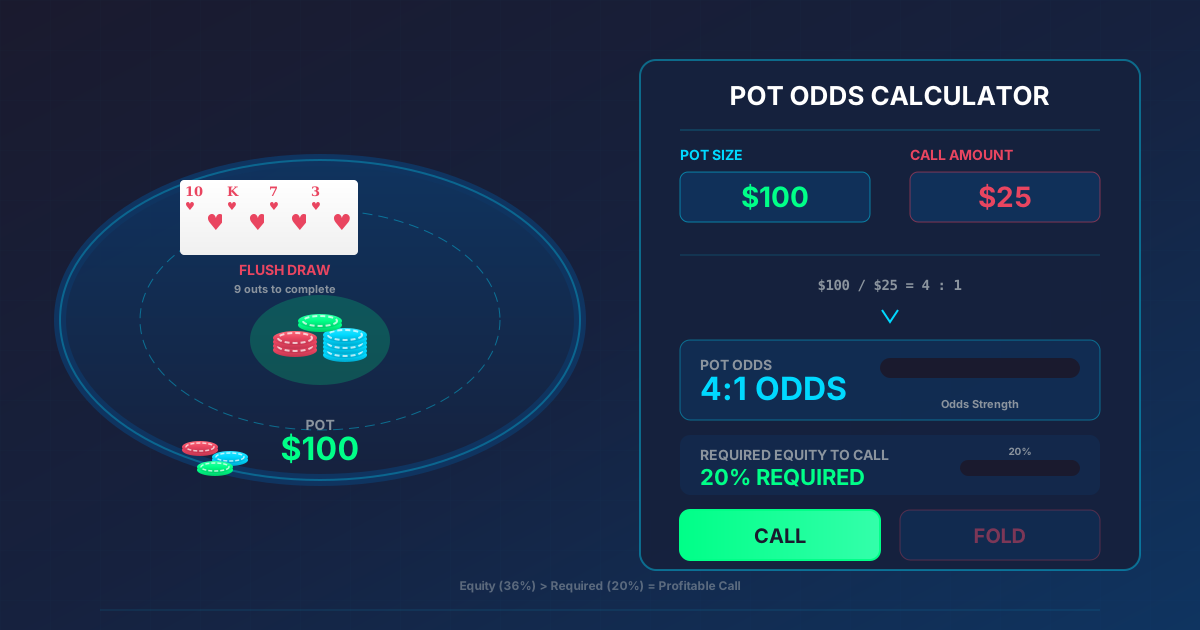
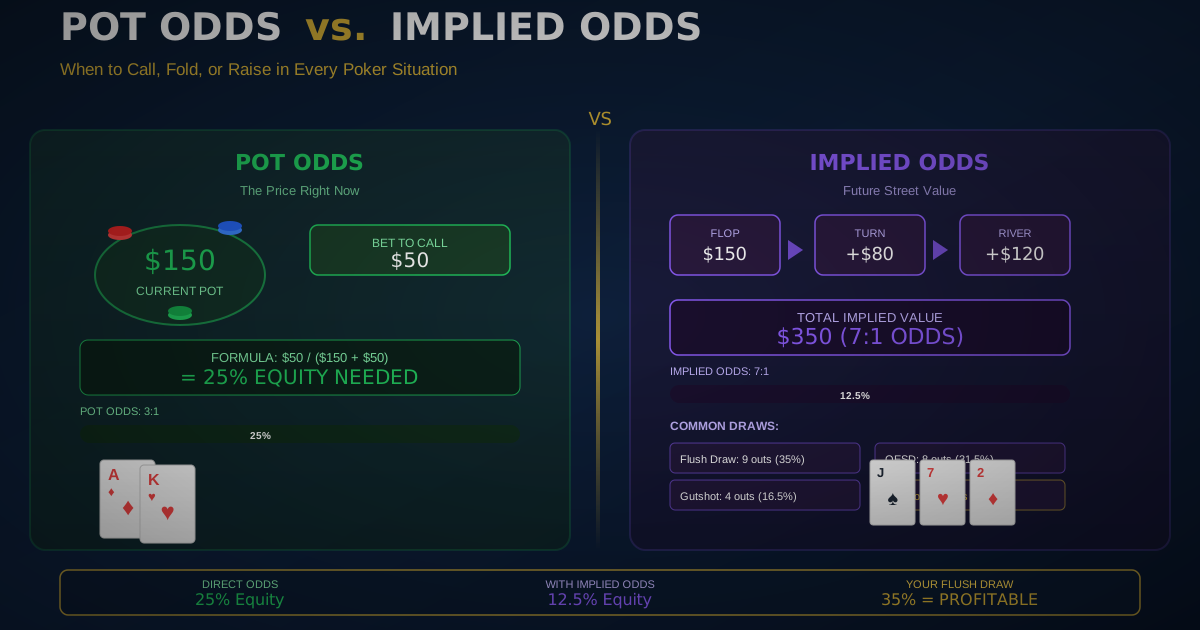
Pot odds represent the ratio of the current pot size to the cost of a contemplated call. They tell you the immediate price you are being offered on a call, expressed either as a ratio or a percentage.
The Pot Odds Formula
Pot Odds (Ratio) = Total Pot : Amount to Call
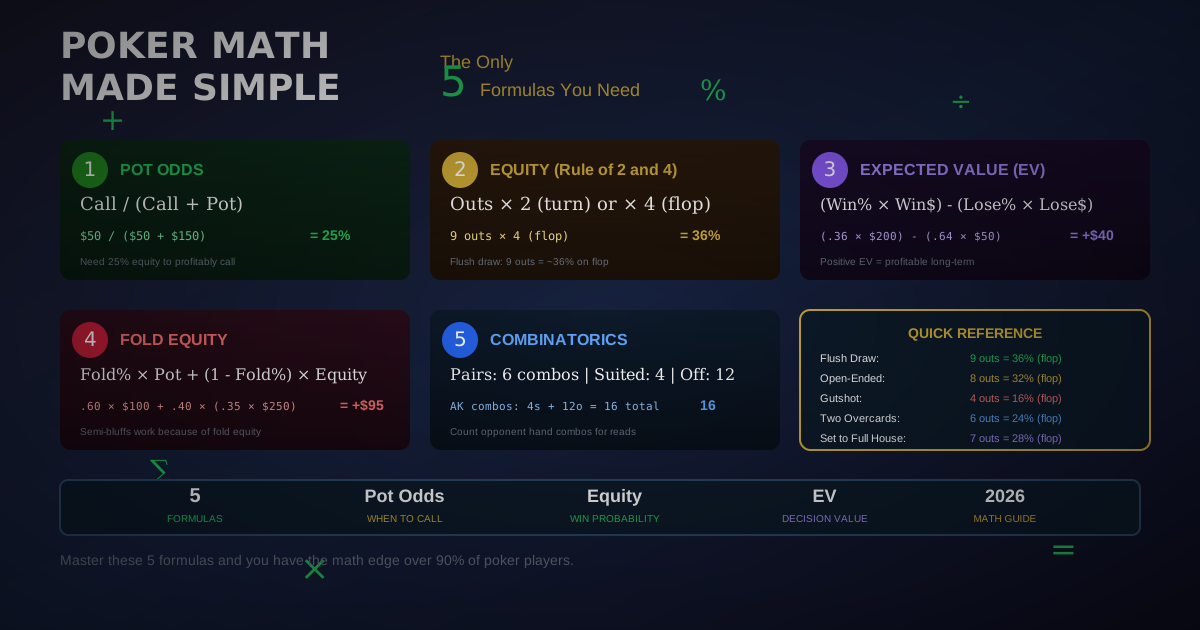
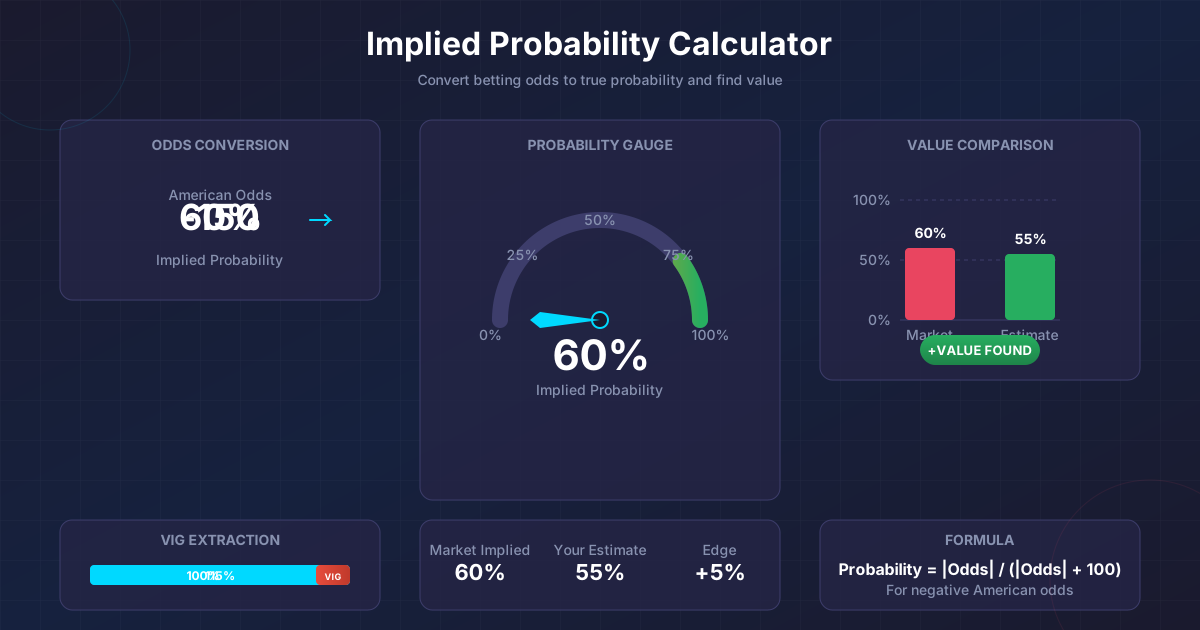
Pot Odds (Percentage) = Amount to Call / (Total Pot + Amount to Call) x 100
If the pot is $100 and your opponent bets $50, the total pot is now $150 and it costs you $50 to call.
- Ratio: 150:50 = 3:1
- Percentage: $50 / ($150 + $50) = 25%
You need at least 25% equity (chance of winning) to justify a call based on direct pot odds alone.
Why Pot Odds Matter
Pot odds convert every decision into a math problem. When you know your equity against an opponent's range and the price you are being offered, the decision makes itself:
- Your equity exceeds the pot odds percentage: Call (or raise)
- Your equity is below the pot odds percentage: Fold (unless implied odds change the calculus)
No guesswork required. No gut feeling necessary. The numbers tell you what to do.
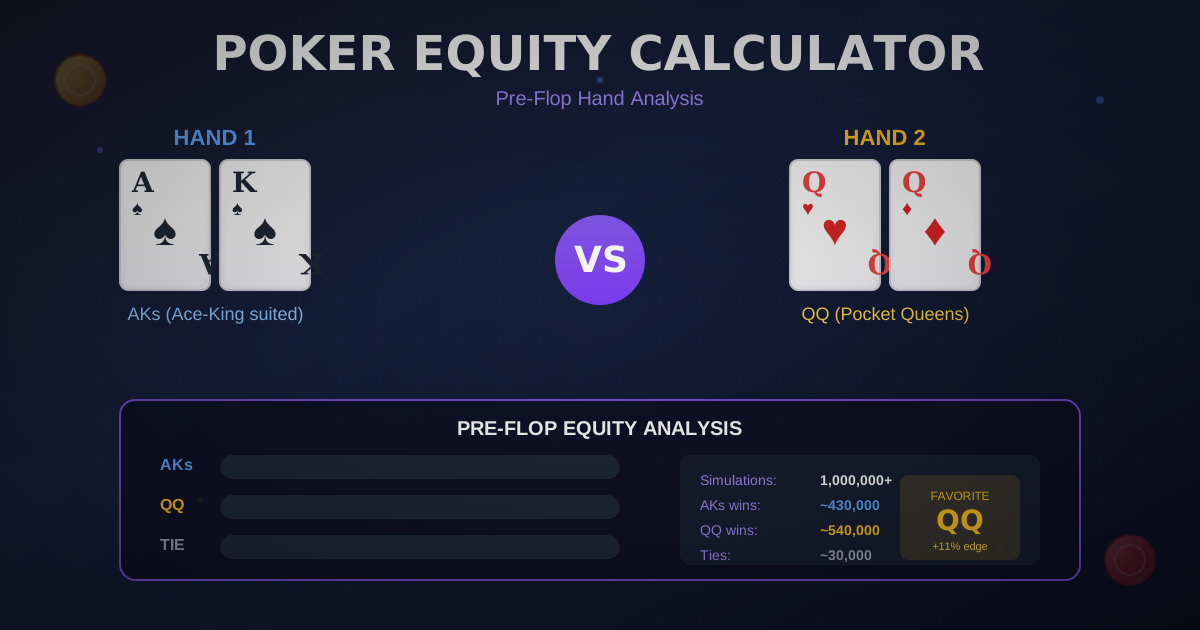
Use our Poker Equity Calculator to determine your exact equity against any range.
Pot Odds by Common Bet Sizes
Here is a reference table for the most common bet sizes you will encounter:
| Bet Size (% of Pot) | Pot Odds You Get | Equity Needed to Call |
|---|---|---|
| 25% (quarter pot) | 5:1 | 16.7% |
| 33% (third pot) | 4:1 | 20.0% |
| 50% (half pot) | 3:1 | 25.0% |
| 66% (two-thirds pot) | 2.5:1 | 28.6% |
| 75% (three-quarter pot) | 2.3:1 | 30.0% |
| 100% (full pot) | 2:1 | 33.3% |
| 150% (1.5x pot) | 1.67:1 | 37.5% |
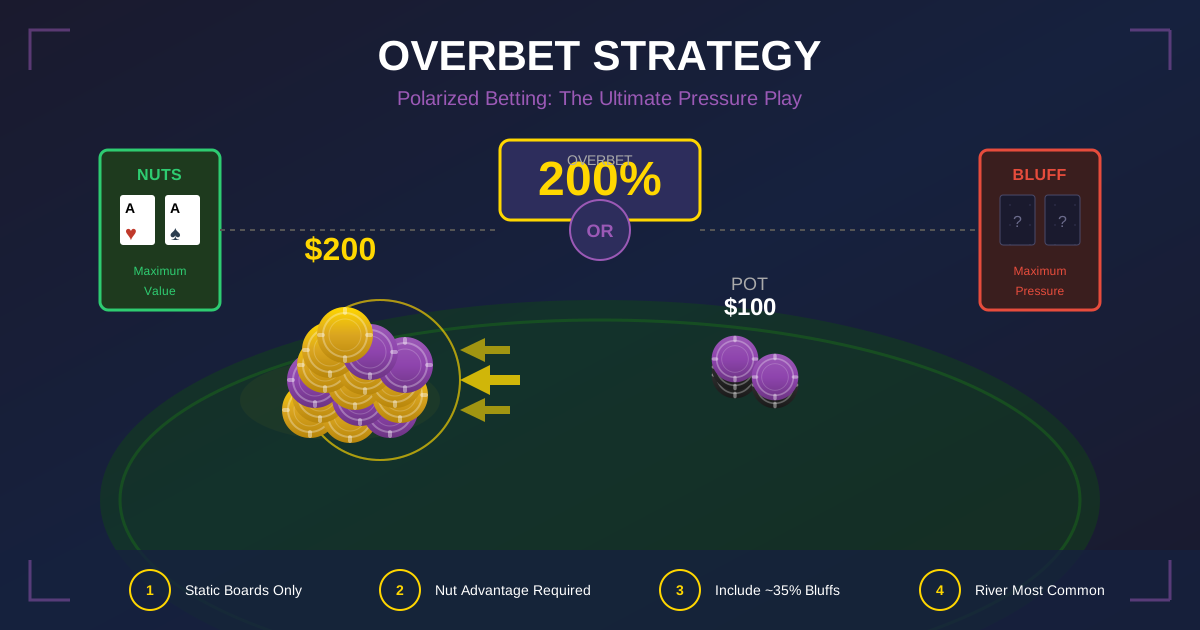
| 200% (2x pot) | 1.5:1 | 40.0% |
Memorize this table. It will serve you in every session you play for the rest of your poker career.
What Are Implied Odds?
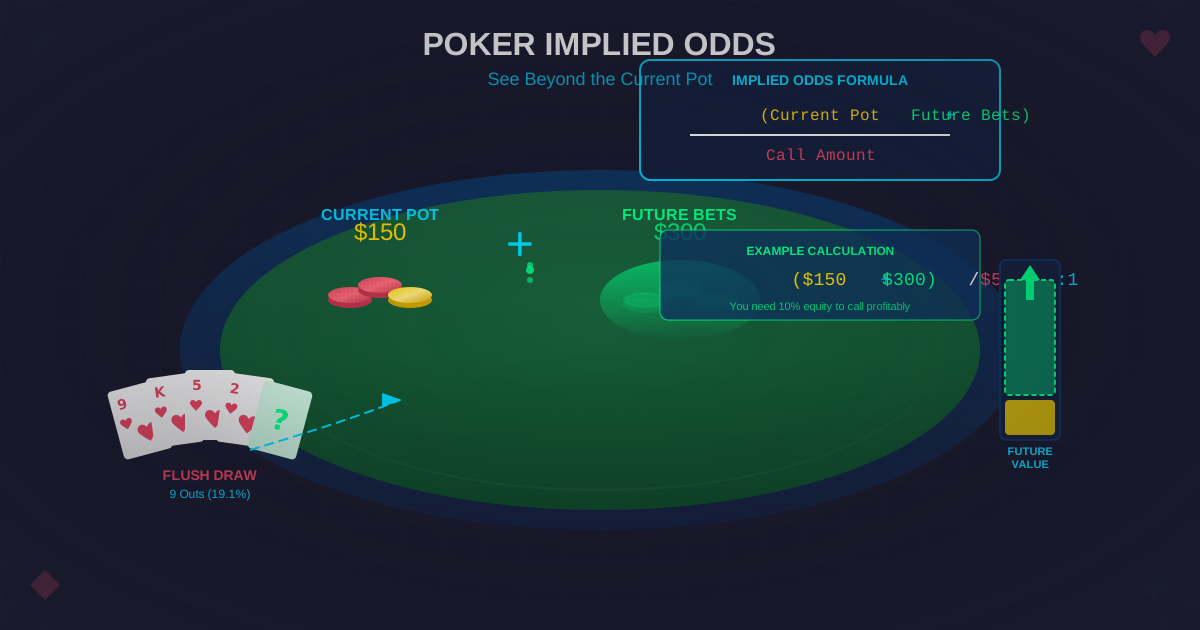
Implied odds extend the pot odds concept by accounting for additional money you expect to win on future streets if you complete your draw. Direct pot odds only consider what is in the pot right now. Implied odds factor in what you can extract from your opponent later.
The Implied Odds Formula
Implied Odds = (Current Pot + Expected Future Bets) : Amount to Call
If the pot is $100, your opponent bets $50, and you estimate you can win an additional $150 on future streets when you hit:
- Current pot: $150 (including opponent's bet)
- Expected future winnings: $150
- Total potential winnings: $300
- Cost to call: $50
Implied odds: 300:50 = 6:1
Even if your direct pot odds of 3:1 do not justify a call with your 15% equity draw, the implied odds of 6:1 (needing only 14.3% equity) make it clearly profitable.
Calculate your implied odds for any situation with our Implied Odds Calculator.
When Implied Odds Are High
Several factors increase your implied odds:
-
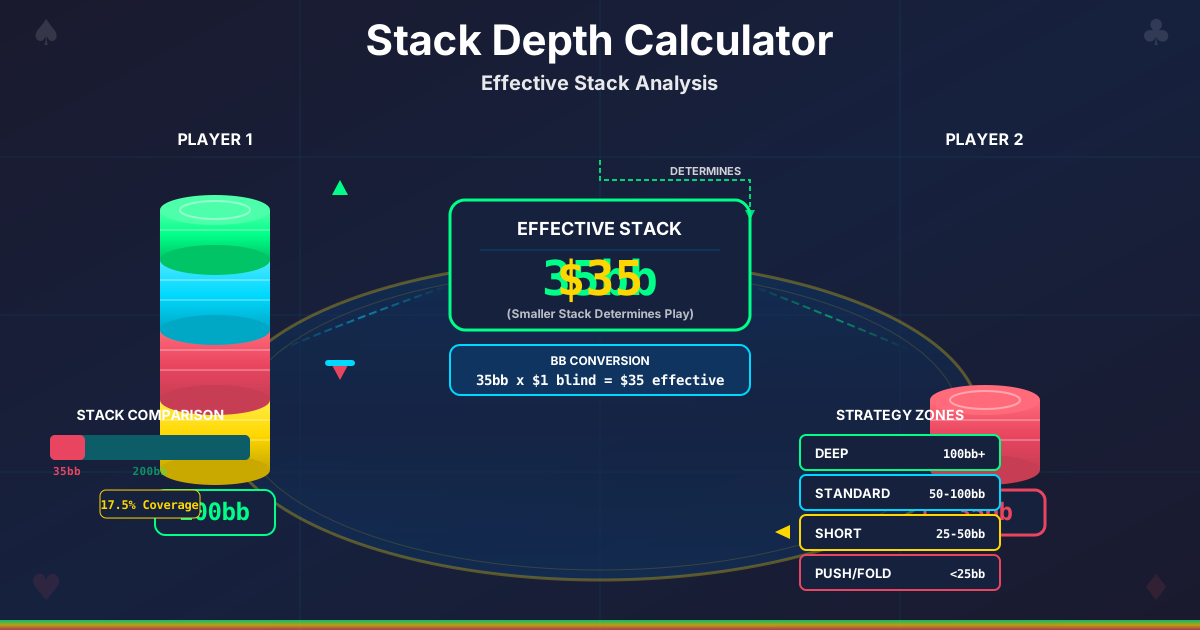
Deep stacks: The deeper the effective stacks, the more money available to win on future streets. With 200bb stacks, implied odds are far superior to 50bb stacks.
-
Concealed draws: Hands like a gutshot straight draw or a set draw are harder for opponents to detect, meaning you get paid more often when you hit.
-
Opponents who cannot fold: Calling stations provide enormous implied odds because they will pay you off with weaker hands when you complete your draw.
-
Nut draws: When you are drawing to the nuts (best possible hand), you can bet aggressively after completing your draw, maximizing the amount you extract.
-
Position: Being in position allows you to control the action on future streets, making it easier to build the pot when you hit and minimize losses when you miss.
When Implied Odds Are Low
Conversely, several factors reduce or eliminate implied odds:
-
Shallow stacks: With only 30-40bb behind, there simply is not enough money left to win on future streets.
-
Obvious draws: If the board screams "flush draw" and you are holding two suited cards, opponents may shut down when the flush card hits.
-
Strong opponents: Good players recognize draw-completing boards and adjust their sizing and calling patterns accordingly.
-
Non-nut draws: Completing a weak flush or a non-nut straight means you may run into better hands and lose even more money.
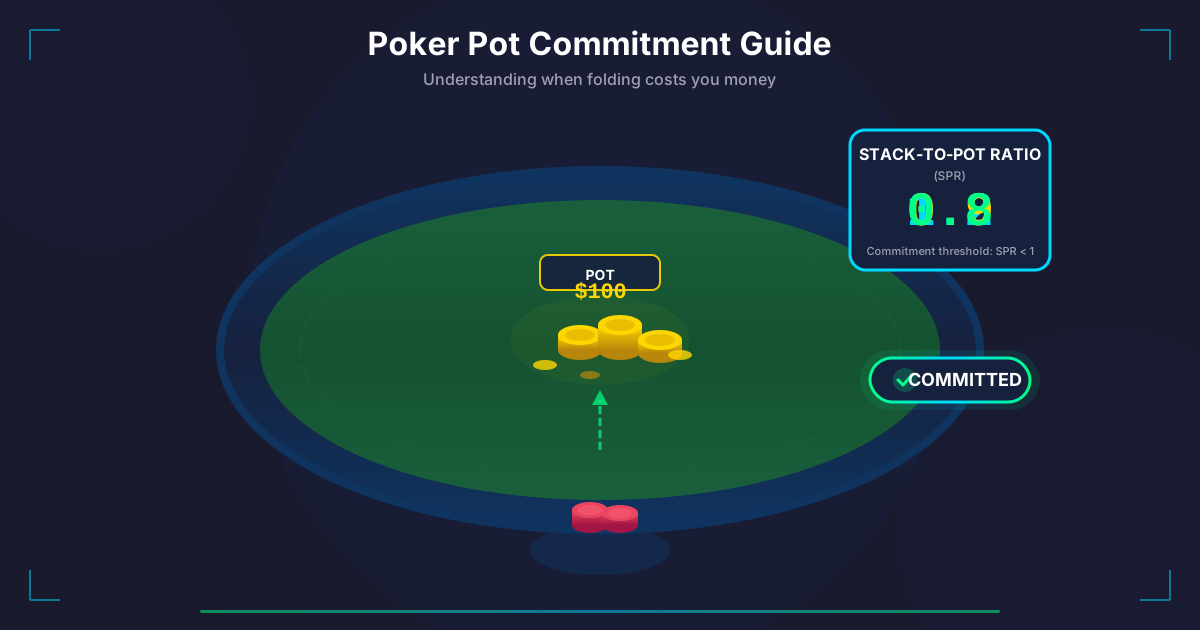
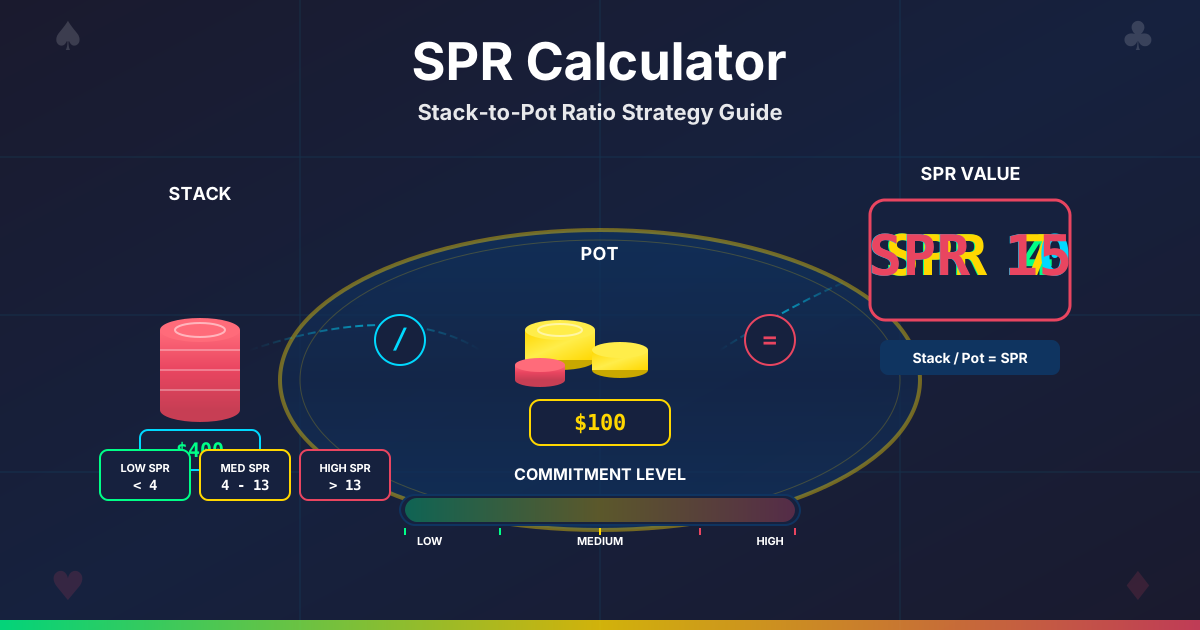
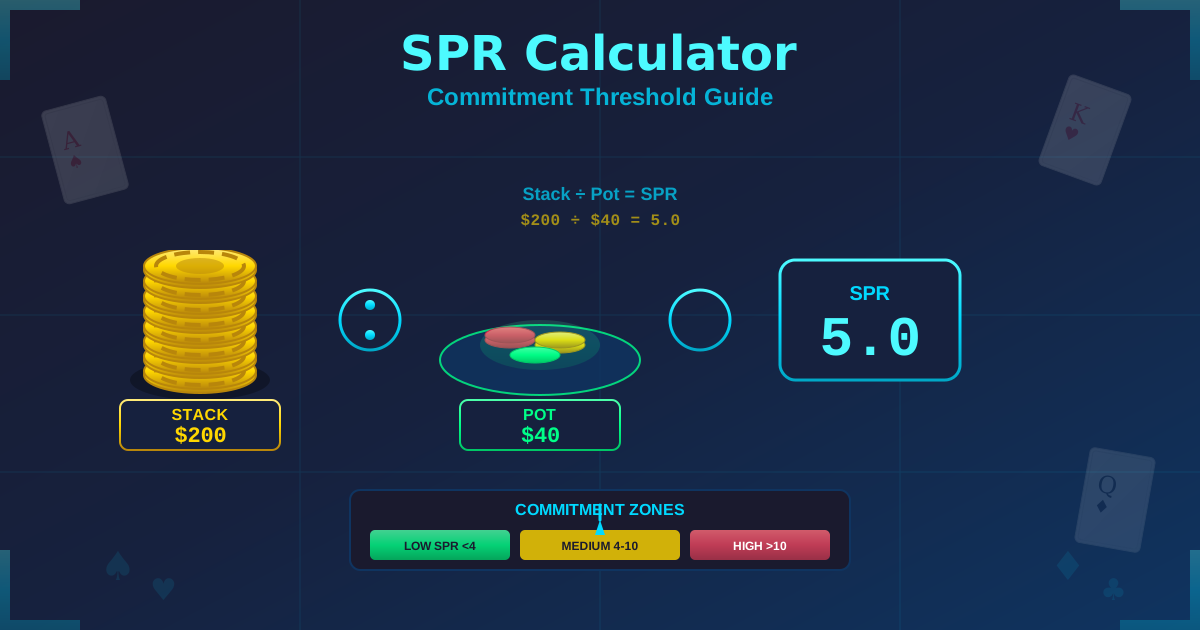
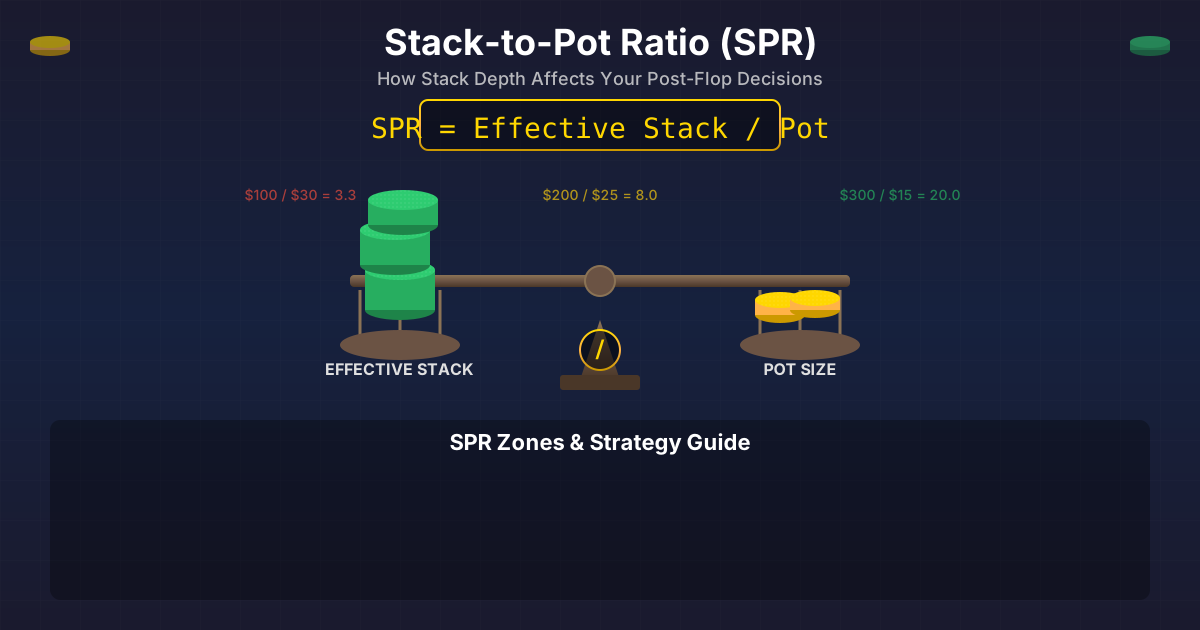
Check your stack-to-pot ratio and its impact on implied odds with our Poker SPR Calculator.
What Are Reverse Implied Odds?
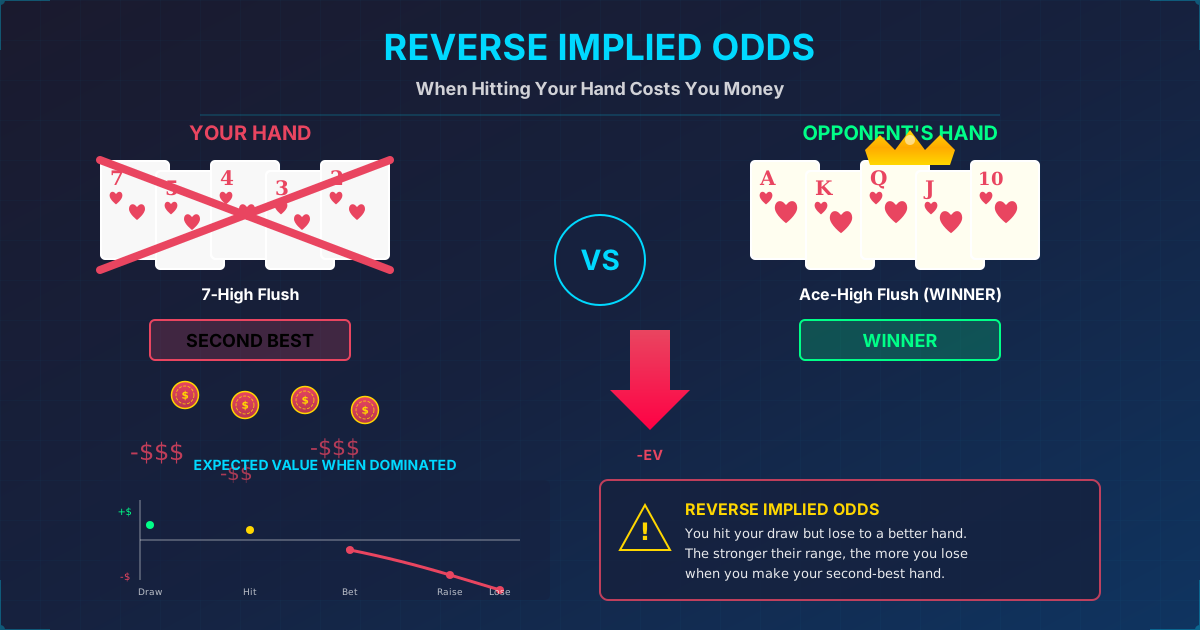
Reverse implied odds represent the additional money you stand to lose when you make a second-best hand. This is the mirror image of implied odds, and it is the concept most players ignore at their peril.
How Reverse Implied Odds Work
You hold A-9 of spades on a board of K-7-3 with two spades. You have the nut flush draw (9 outs, approximately 35% equity to make a flush by the river). The pot odds and implied odds suggest a call is profitable -- and in this case, because you are drawing to the nut flush, your reverse implied odds are minimal. When you hit, you almost always have the best hand.
Now consider holding 8-7 of spades on the same board. When a spade hits, you make a flush -- but any opponent with a higher spade flush draw has you crushed. You will put in significant money on the river only to lose. This is a disastrous reverse implied odds scenario.
Common Reverse Implied Odds Traps
| Situation | Risk | Example |
|---|---|---|
| Non-nut flush draws | Higher flush possible | Your 8-high flush vs opponent's ace-high flush |
| Low straight draws | Higher straight possible | Your 5-6-7-8-9 vs opponent's 7-8-9-T-J |
| Bottom set | Higher set possible | Your set of 3s vs opponent's set of kings |
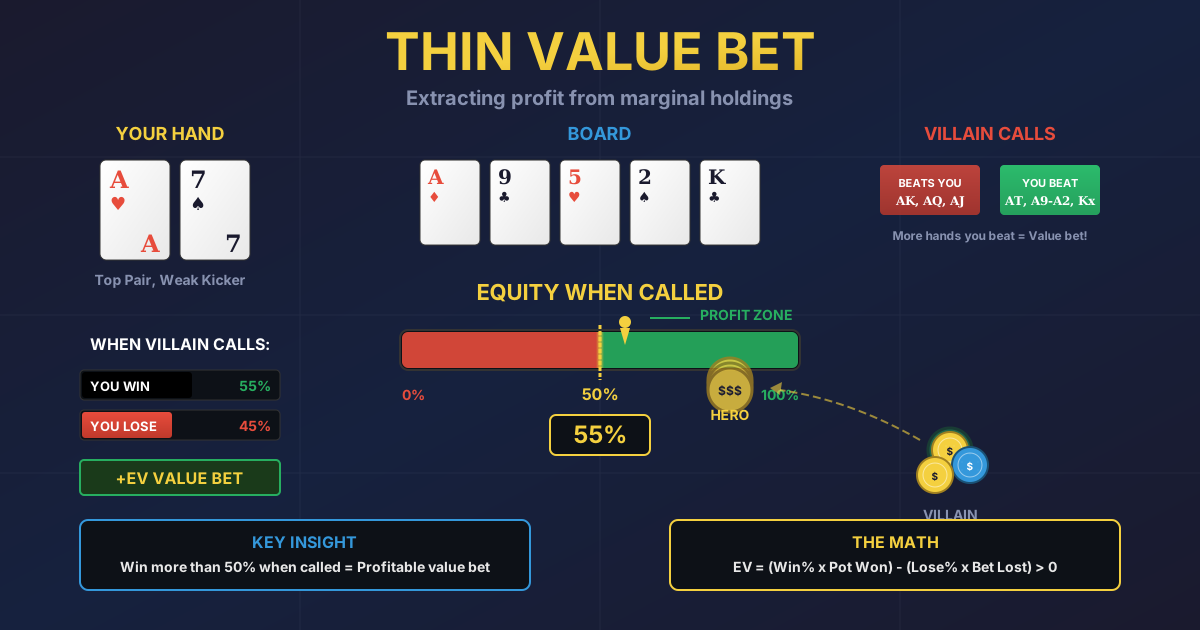
| Top pair weak kicker | Dominated by better kicker | Your A-5 on A-K-7 vs opponent's A-K |
| Two pair on wet boards | Straights and flushes | Your two pair on connected, suited board |
Evaluate your reverse implied odds risk with our Reverse Implied Odds Calculator.
Street-by-Street Decision Framework
Preflop: Setting the Stage
Preflop pot odds are straightforward because there are no draws yet. You are comparing your hand's equity against the raiser's range to the price you are being offered.
Example 1: Calling a 3x Open from the Big Blind
Villain opens to $6 in a $1/$2 game. The pot is $9 (including the open, small blind, and big blind). You must call $4 more from the big blind (you already posted $2).
Pot odds: $9 / ($9 + $4) = 30.8%
You need 30.8% equity against villain's opening range to justify a call. Most hands that are not complete trash have this much equity against a standard opening range, which is why big blind defense ranges are so wide.
Analyze your preflop equity against any opening range with our Poker Hand Range Calculator.
Flop: Direct Odds vs. Drawing Odds
The flop is where pot odds and implied odds diverge most significantly. With two streets remaining, you must consider both the immediate math and future opportunities.
Example 2: Flush Draw on the Flop
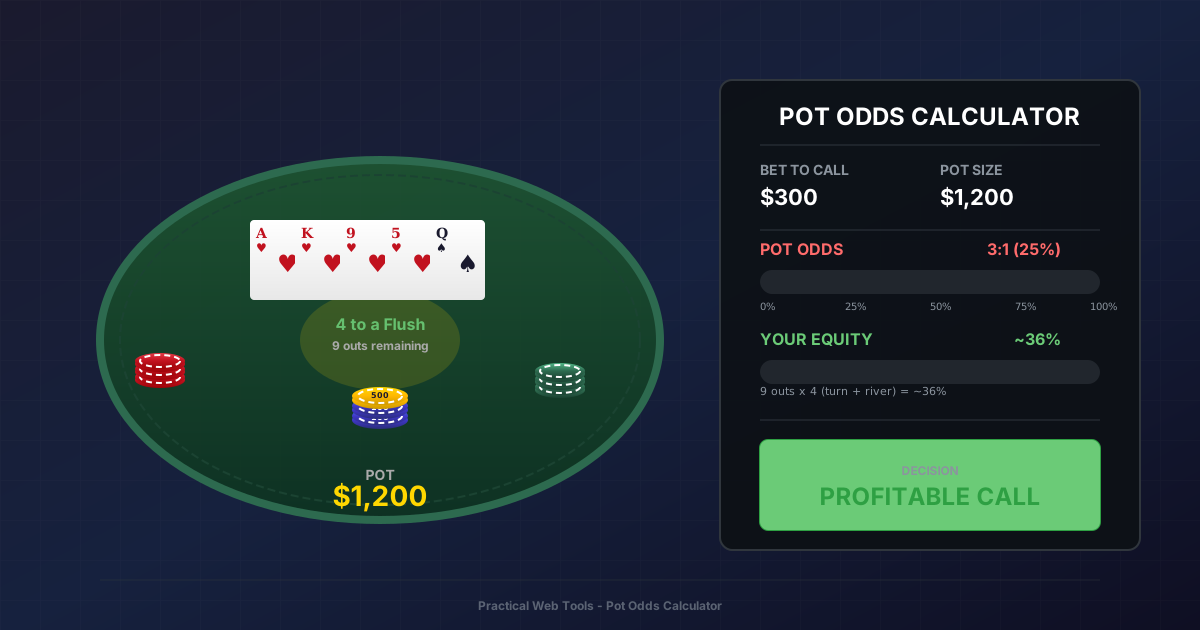
You hold A-K of hearts. The flop is J-7-2 with two hearts. The pot is $25 and villain bets $15.
Direct pot odds: $15 / ($40 + $15) = 27.3%
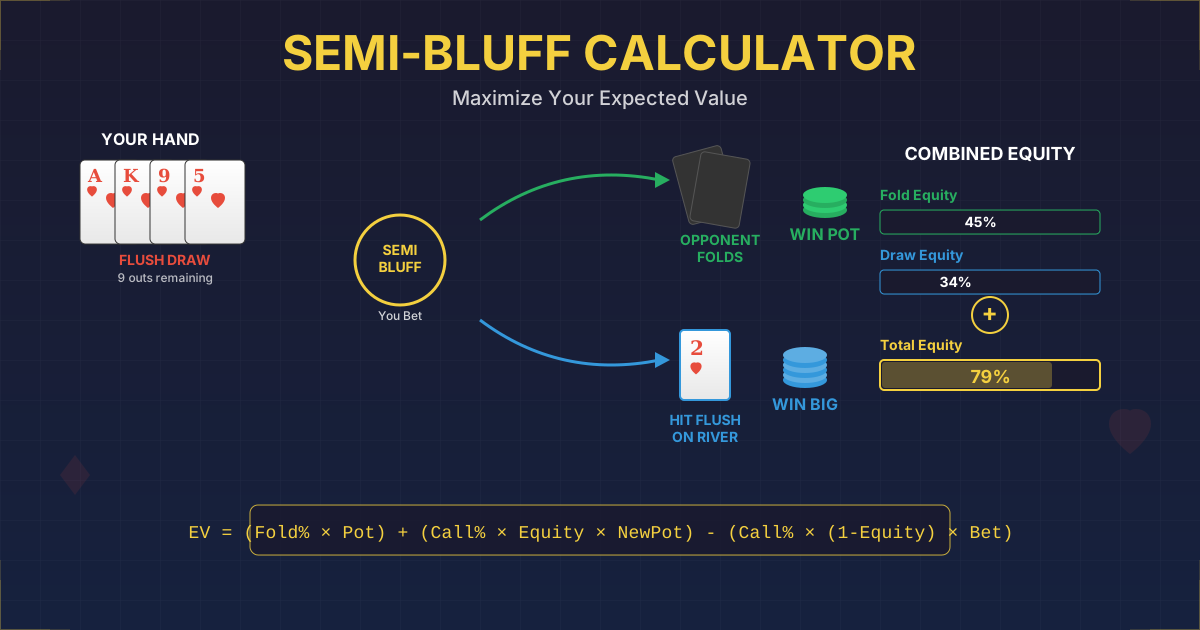
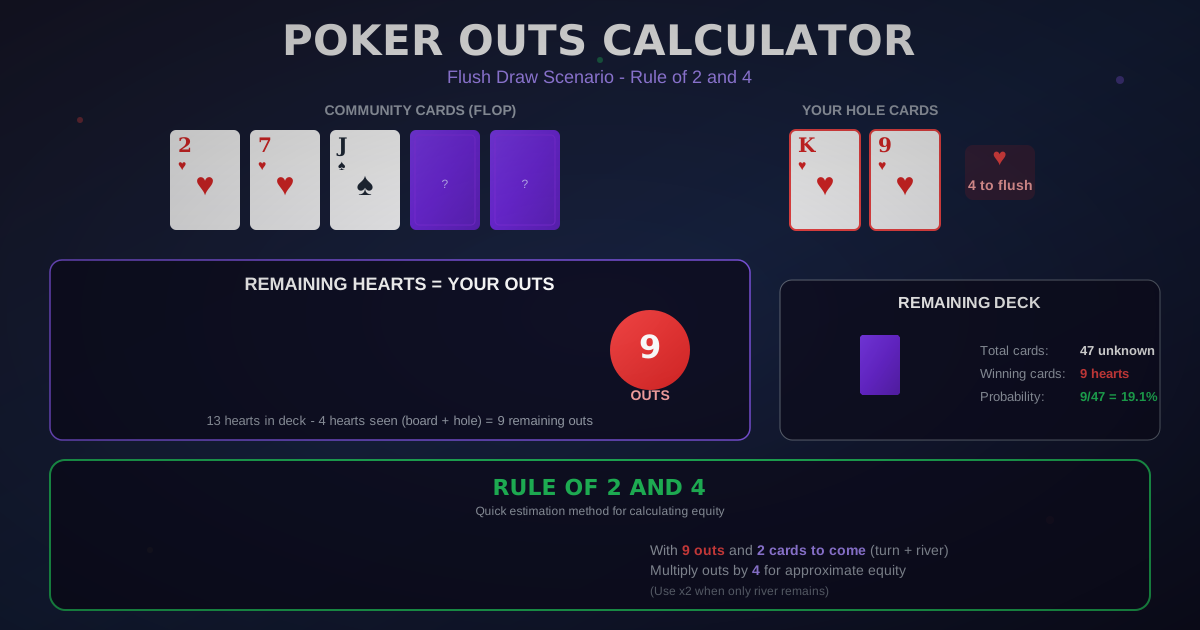
Your flush draw has 9 outs. Using the Rule of 4 (multiply outs by 4 on the flop for approximate equity through the river): 9 x 4 = 36%.
36% > 27.3%, so calling is profitable on equity alone -- but only if you were all-in and guaranteed to see both remaining cards.
You are not all-in. You should not use the Rule of 4 when facing a single-street call. The Rule of 4 gives your equity through two streets, but you only get to see one card for $15. Use the Rule of 2 instead: 9 x 2 = 18%.
18% < 27.3%, so you are not getting direct pot odds to see just the turn.
This is where implied odds come in. With $185 behind (100bb stacks), you can win significant additional money when you hit. The effective implied odds easily make up the difference.
Count your outs precisely with our Poker Outs Calculator.
Turn: The Critical Street
The turn is where many players make their most expensive mistakes. With only one card to come, implied odds shrink dramatically, and your draws must hit their direct odds more precisely.
Example 3: Flush Draw on the Turn
Same hand, but now the turn is an offsuit 5. The pot is $70 and villain bets $50.
Pot odds: $50 / ($120 + $50) = 29.4%
Your flush draw has 9 outs with one card to come: 9/46 = 19.6%.
19.6% < 29.4%. You do not have direct pot odds.
Implied odds analysis: There is $120 behind after calling the turn bet (assuming 100bb starting stacks). You need to win an additional amount on the river to break even.
Break-even calculation: You need the call to have zero EV. The pot after calling is $220. You win $220 about 19.6% of the time from the existing pot. Your expected loss from direct pot odds is approximately $50 - (0.196 x $170) = $16.68. So you need to win at least $85 extra on the river when you hit ($16.68 / 0.196) to justify calling.
Will villain put in $85 on the river when a flush card hits? Against a calling station or an opponent with a strong hand, probably. Against a skilled player who checks the river on a flush-completing card, maybe not.
River: Pure Math
On the river, there are no future streets. Implied odds and reverse implied odds are irrelevant. You are left with pure pot odds versus your estimated equity against villain's range.
Example 4: River Call Decision
The pot is $200 and villain bets $100. You hold a medium-strength hand.
Pot odds: $100 / ($300 + $100) = 25%
You need to win more than 25% of the time to justify a call. If villain's betting range is 60% value hands and 40% bluffs, you are winning 40% of the time -- easy call. If villain's range is 85% value and 15% bluffs, you only win 15% of the time -- clear fold.
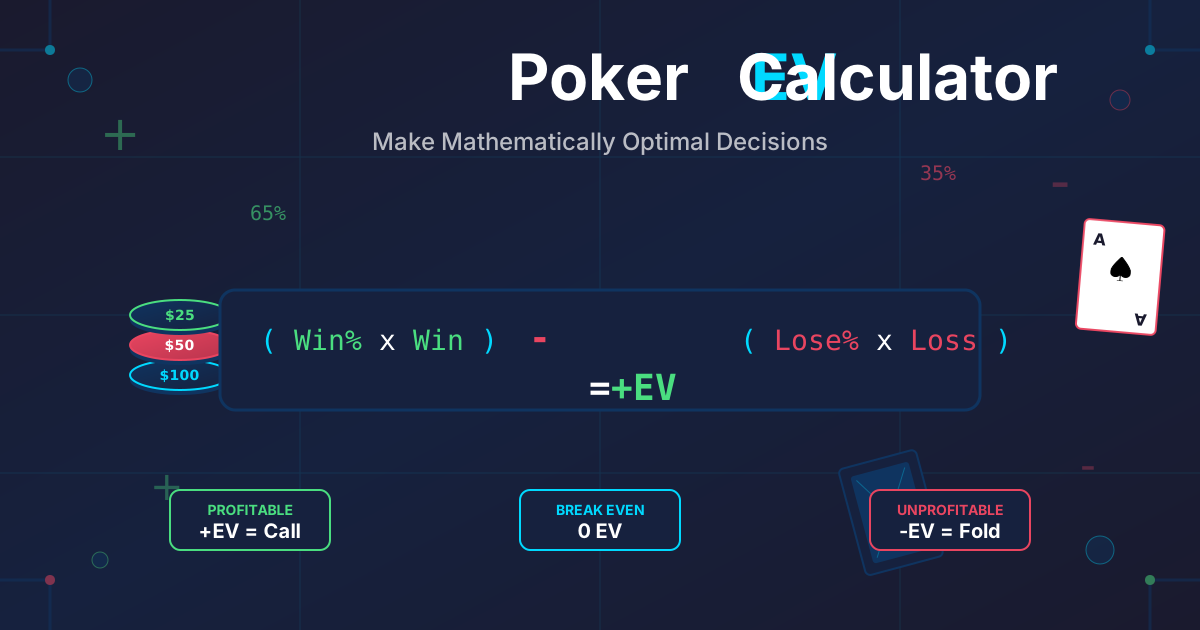
Assess your expected value in any situation with our Poker EV Calculator.
Common Drawing Situations: The Complete Math
Flush Draws (9 Outs)
| Street | Approximate Equity | Breakeven Pot Odds |
|---|---|---|
| Flop (2 cards to come) | 35% | 1.86:1 |
| Turn (1 card to come) | 19.6% | 4.1:1 |
Flop play: You can call up to a pot-sized bet when all-in on the flop with a flush draw based on direct equity alone (35% vs 33% needed).
Turn play: You need at least 4.1:1 direct pot odds, or sufficient implied odds to compensate. Against a half-pot bet (3:1), you are about 5% short and need roughly $25 in implied odds per $100 pot.
Open-Ended Straight Draws (8 Outs)
| Street | Approximate Equity | Breakeven Pot Odds |
|---|---|---|
| Flop (2 cards to come) | 31.5% | 2.17:1 |
| Turn (1 card to come) | 17.4% | 4.75:1 |
Key insight: Open-ended straight draws are slightly worse than flush draws because straights are harder to conceal on some boards (four-to-a-straight is obvious), reducing implied odds.
Gutshot Straight Draws (4 Outs)
| Street | Approximate Equity | Breakeven Pot Odds |
|---|---|---|
| Flop (2 cards to come) | 16.5% | 5.06:1 |
| Turn (1 card to come) | 8.7% | 10.5:1 |
Gutshots survive on implied odds. You almost never have direct pot odds to call with a gutshot, but the concealed nature of the hand (opponents rarely put you on a gutshot) means implied odds can be enormous with deep stacks.
Flush Draw + Gutshot Combo (12-13 Outs)
| Street | Approximate Equity | Breakeven Pot Odds |
|---|---|---|
| Flop (2 cards to come) | 45-48% | 1.1:1 |
| Turn (1 card to come) | 26-28% | 2.6:1 |
Monster draws like these are often ahead of made hands in equity. With a flush draw and gutshot on the flop, you can be a favorite against top pair. These hands should be played aggressively -- raising is often superior to calling because you add fold equity to your already-strong equity position.
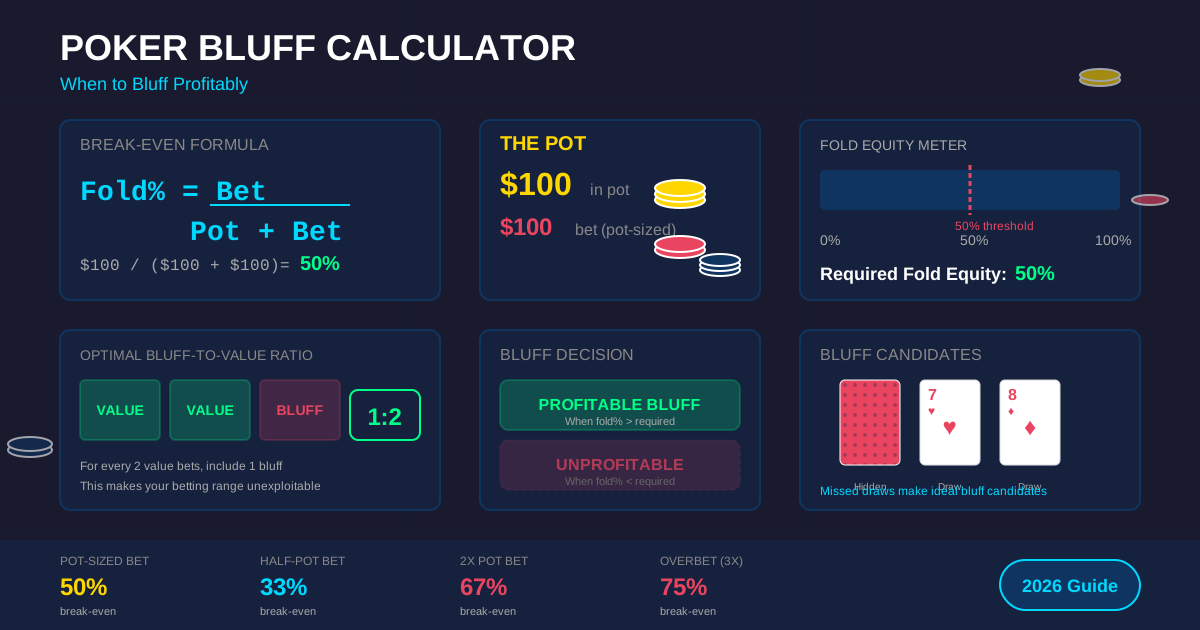
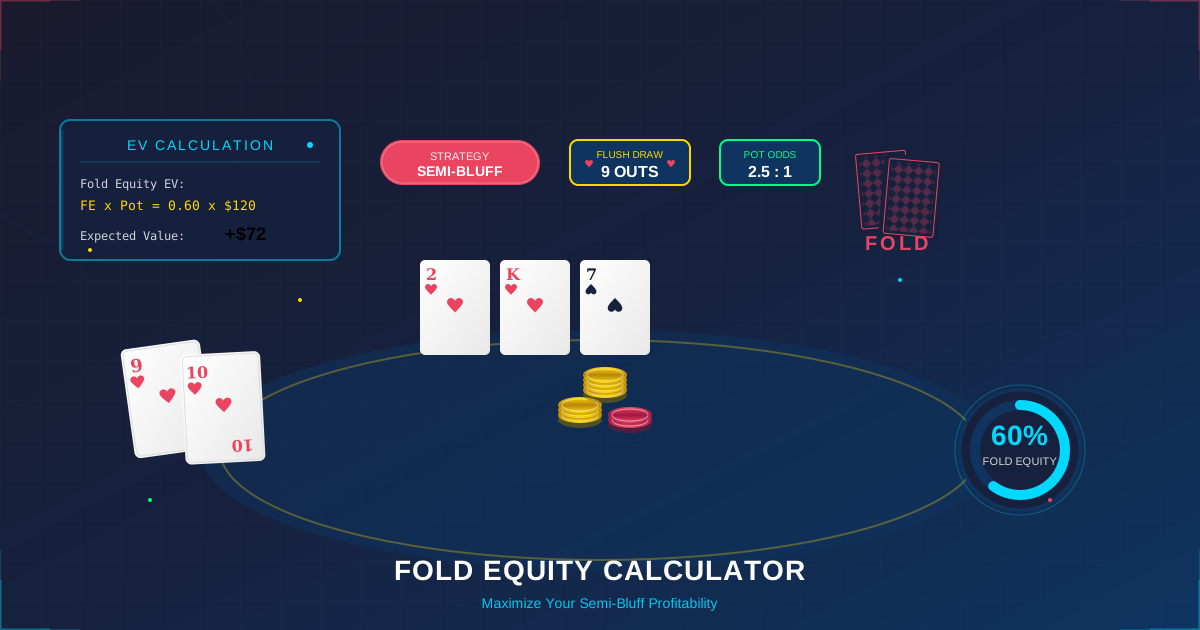
Calculate your fold equity when raising draws with our Poker Fold Equity Calculator.
Set Mining (2 Outs for a Set on the Flop)
When you call preflop with a pocket pair hoping to flop a set, you have approximately 11.8% chance of hitting on the flop. The breakeven implied odds requirement is approximately 7.5:1 on your preflop investment.
This means if you call a $6 raise with pocket fours, you need to win at least $45 in the pot when you hit your set to break even. With 100bb stacks, this is usually achievable, which is why set mining is profitable in deep-stacked games.
In short-stacked situations (under 40bb effective), set mining becomes unprofitable because there is not enough money behind to compensate for the 88.2% of the time you miss.
Real-World Scenarios with Dollar Amounts
Scenario 1: The Profitable Flush Draw Call ($1/$2 Live)
You are playing $1/$2 No-Limit Hold'em with $400 effective stacks. You hold 9-8 of clubs in the cutoff. The pot is $15 after a raise and two callers. The flop comes K-6-2 with two clubs.
The preflop raiser bets $12. One player folds, and it is on you.
Pot odds: $12 / ($27 + $12) = 30.8% equity needed.
Your equity: 9 flush outs. Through the river = approximately 35%. For just the turn = 19.6%.
Implied odds analysis: You have $388 behind. If you hit a flush on the turn, you can likely win at least $60-$100 more on later streets.
Decision: Call. Your equity through the river (35%) exceeds the requirement (30.8%), plus implied odds provide additional padding. The call costs $12 and your expected value is approximately +$2.50 per occurrence.
Scenario 2: The Expensive Reverse Implied Odds Trap ($2/$5 Live)
You hold Q-J offsuit in the big blind with $500 effective stacks. The pot is $35 after a raise and a call. The flop is Q-8-4 rainbow.
You check, the raiser bets $25, the caller folds.
Pot odds: $25 / ($60 + $25) = 29.4% equity needed.
You have top pair with a decent kicker. Against a standard c-bet range, you likely have 55-65% equity. Easy call on raw equity alone.
The problem is reverse implied odds. When you are behind (opponent has AQ, KQ, QQ, 88, 44), you will put in significant money on future streets only to lose. When you are ahead (opponent has AK, AJ, TT, 99), they may not invest much more.
The asymmetry: You win small pots when ahead but lose big pots when behind. This is the definition of poor reverse implied odds.
Better play: Consider check-raising to $75. This defines your hand strength, builds the pot when you are ahead, and forces opponents to fold hands with equity against you. The fold equity from a check-raise adds approximately $15-$20 in EV compared to a flat call.
Scenario 3: The Gutshot That Pays Off ($1/$3 Live)
You hold 6-5 of diamonds on a board of 9-8-2 with one diamond. The pot is $40, and villain bets $20. You have $350 behind.
Pot odds: $20 / ($60 + $20) = 25% equity needed.
Your equity: 4 gutshot outs (any 7 gives you a straight) plus backdoor flush potential. Approximately 10% for the turn, 17% through the river.
Direct odds: Clearly insufficient.
Implied odds: If a 7 hits the turn, the board reads 9-8-7-2. Your straight is disguised if opponent holds an overpair or top pair. You can expect to win $80-$150 on the turn and river combined.
Implied odds calculation: ($60 pot + $100 estimated future value) / $20 = 8:1. You need just 11.1% equity. Your 17% through the river exceeds this threshold.
Decision: Call $20. Expected value is approximately +$3 per occurrence due to the massive implied odds when you hit. Over a year of playing, situations like this add up to thousands of dollars.
Scenario 4: The Turn Combo Draw ($2/$5 Online)
You hold A-T of spades on a K-J-4 board with one spade (the four). You called a flop bet with a gutshot (any queen gives you broadway). The turn is the 3 of spades, giving you a gutshot plus nut flush draw (13 outs).
The pot is $120 and villain bets $80. You have $320 behind.
Pot odds: $80 / ($200 + $80) = 28.6% equity needed.
Your equity: 13 outs with one card to come = 13/46 = 28.3%.
Almost exactly breakeven on direct odds. But you have $240 behind, and when you hit any of your 13 outs, you are likely making the best hand. Implied odds easily push this into profitable territory.
Decision: Call is clearly profitable. But should you raise? If you jam for $320 total, villain must call $240 more into a pot of approximately $520. You have 28.3% equity plus fold equity. If villain folds even 20% of the time, raising is significantly more profitable than calling.
Use our Poker Fold Equity Calculator and Poker EV Calculator to compare calling vs. raising in spots like this.
Scenario 5: When to Fold Despite Apparent Odds ($5/$10 Live)
You hold 7-6 of hearts on a board of A-K-5 with two hearts. The pot is $180 and villain bets $160.
Pot odds: $160 / ($340 + $160) = 32% equity needed.
Your equity: 9 flush outs = 19.6% for the turn, 35% through the river.
For just the turn card, 19.6% is well short of 32%.
Implied odds analysis: Effective stacks started at $1,500. After the flop action, you have $1,040 behind. If you hit the flush on the turn, can you extract another $700+ to compensate for all the times you miss?
The problem: The ace-king board means villain likely has a strong range (AK, AA, KK, AQ). When a heart hits, many opponents will slow down or check-fold because flush draws are obvious here. Your implied odds are lower than they appear.
Reverse implied odds: If villain holds the ace or king of hearts, you could make a non-nut flush and face painful decisions.
Decision: This is closer to a fold than most players realize. The large bet sizing (89% pot), the board texture that telegraphs draws, and the reverse implied odds risk make this a marginal spot. Fold and wait for a better opportunity.
Scenario 6: Multi-Way Pot with Bottom Set ($1/$2 Live)
You hold 5-5 in the cutoff. Four players see a flop of K-9-5 rainbow. The pot is $40 and the first player bets $20. Two players call in front of you.
Pot odds: $20 / ($100 + $20) = 16.7% equity needed.
Your equity: You flopped bottom set. Against three opponents, you have approximately 70-80% equity.
Implied odds analysis: With $380 behind and three opponents who have each invested $20, you could potentially stack anyone holding top pair or two pair.
Decision: Raise to $85. You have an extremely strong hand in a multi-way pot. Building the pot now maximizes the money you extract. A flat call is profitable but leaves significant value on the table.
Expected value of raising: Approximately +$60-$80 per occurrence when you get action from top pair and two pair hands.
Advanced Concepts: Combining Pot Odds with Range Analysis
Using Blocker Effects
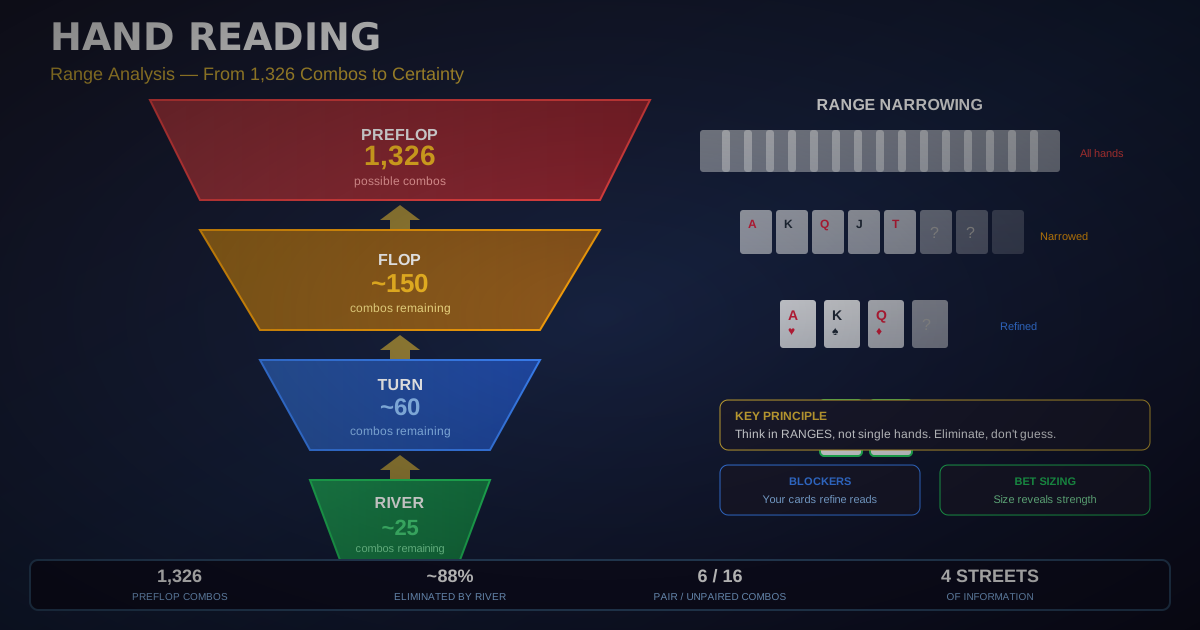
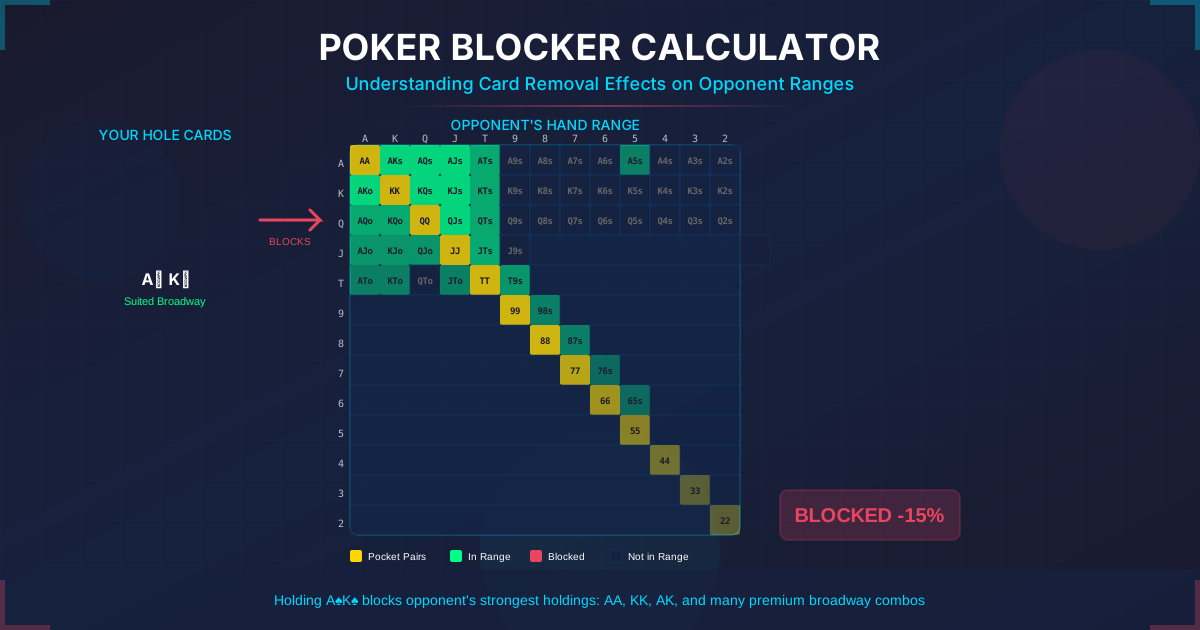
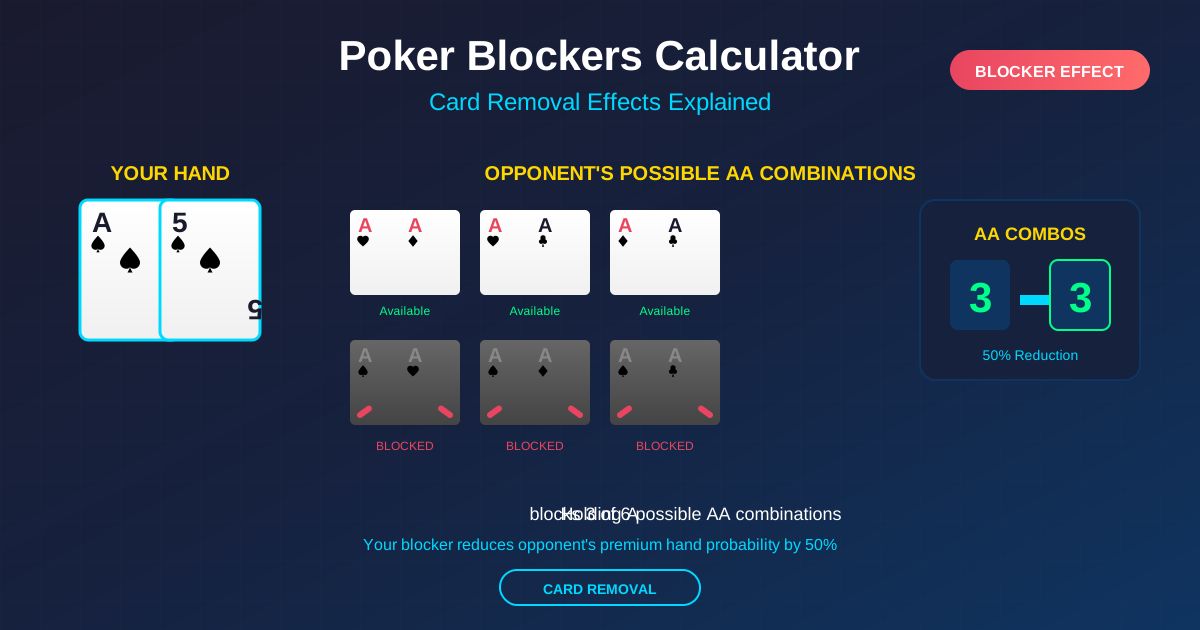
Blockers change your equity calculations and therefore your pot odds decisions. If you hold the ace of spades on a board with two spades, you block one of your opponent's flush combinations, making it less likely they have a flush draw. This increases the probability they hold made hands, which affects both your equity and your implied odds.
Analyze how blockers affect your opponent's range with our Poker Blocker Calculator.
Combo Counting for Precise Equity
Instead of estimating equity, count the exact number of hand combinations in your opponent's range. If villain's range contains 30 combinations of value hands and 15 combinations of bluffs, you have 33% equity against their betting range.
This matters because pot odds decisions are only as good as your equity estimate. A 5% error in equity estimation can flip a call from profitable to unprofitable.
Use our Poker Combos Calculator to count exact hand combinations in any range.
Multi-Street Planning
The best players do not just calculate pot odds for the current bet. They plan the entire hand, estimating what they will face on each future street and whether the combined pot odds across all streets justify their current decision.
For example, calling a flop bet with a draw is not just about flop pot odds. You must also consider:
- What will you do if you miss the turn and face another bet?
- How often will you face a turn bet?
- What size will the turn bet likely be?
- Can you profitably bluff-raise if you miss?
This multi-street analysis separates intermediate players from experts.
The Decision Tree: When to Call, Fold, or Raise
Call When:
- Your equity exceeds the pot odds requirement
- Your implied odds compensate for insufficient direct pot odds
- Your draw is to the nuts or near-nuts
- Stacks are deep enough to extract value when you hit
- Your opponent is likely to pay you off
Fold When:
- Your equity is below the pot odds requirement AND implied odds are insufficient
- Reverse implied odds dominate (you make second-best hands frequently)
- Stacks are too shallow for implied odds to matter
- The draw-completing card is obvious and opponents will not pay off
- Multiple opponents reduce your equity significantly
Raise When:
- You have significant fold equity plus equity when called
- Your draw is to the nuts and you want to build the pot
- Raising is more profitable than calling when you combine fold equity and pot equity
- You can deny equity to opponents behind you
- Calling creates awkward future street situations that raising avoids
Frequently Asked Questions
What is the difference between pot odds and implied odds? Pot odds measure the immediate ratio of the current pot to the cost of calling. Implied odds extend this by adding the money you expect to win on future streets. Pot odds are based on known quantities; implied odds require estimation of future betting action. Use our Pot Odds Calculator for direct math and our Implied Odds Calculator when future streets matter.
How do I calculate pot odds quickly at the table? Memorize the common bet size table: 33% pot bet needs 20% equity, 50% pot needs 25%, 66% pot needs 28.6%, 100% pot needs 33%. For odd sizes, divide the bet by the total pot (including your call) and that percentage is what you need. Practice until it becomes automatic.
When should I use implied odds instead of direct pot odds? Use implied odds when you are drawing to a strong hand (nut flush, nut straight, set) with deep stacks remaining and an opponent who is likely to pay off when you complete your draw. If stacks are shallow (under 40bb), implied odds are minimal and direct pot odds should drive your decisions.
What is the Rule of 2 and 4? The Rule of 4 says multiply your outs by 4 on the flop to estimate your equity through the river (both turn and river cards). The Rule of 2 says multiply your outs by 2 for just the next card. Use the Rule of 2 when facing a single bet, because you are only paying to see one card. Use the Rule of 4 only when the money is all-in on the flop.
How do reverse implied odds affect my decisions? Reverse implied odds make you lose more money when you hit your draw but still have the second-best hand. This is most dangerous with non-nut flush draws, low straight draws, and bottom set on wet boards. When reverse implied odds are high, you need significantly better direct pot odds to compensate. Use our Reverse Implied Odds Calculator to quantify this risk.
Should I ever call without pot odds or implied odds? Rarely. Some advanced players call in specific spots for game-theory reasons (preventing opponents from profiting by bluffing with any two cards), but for most players, if the math does not support a call, you should fold. Consistently calling without odds is the fastest way to drain your bankroll.
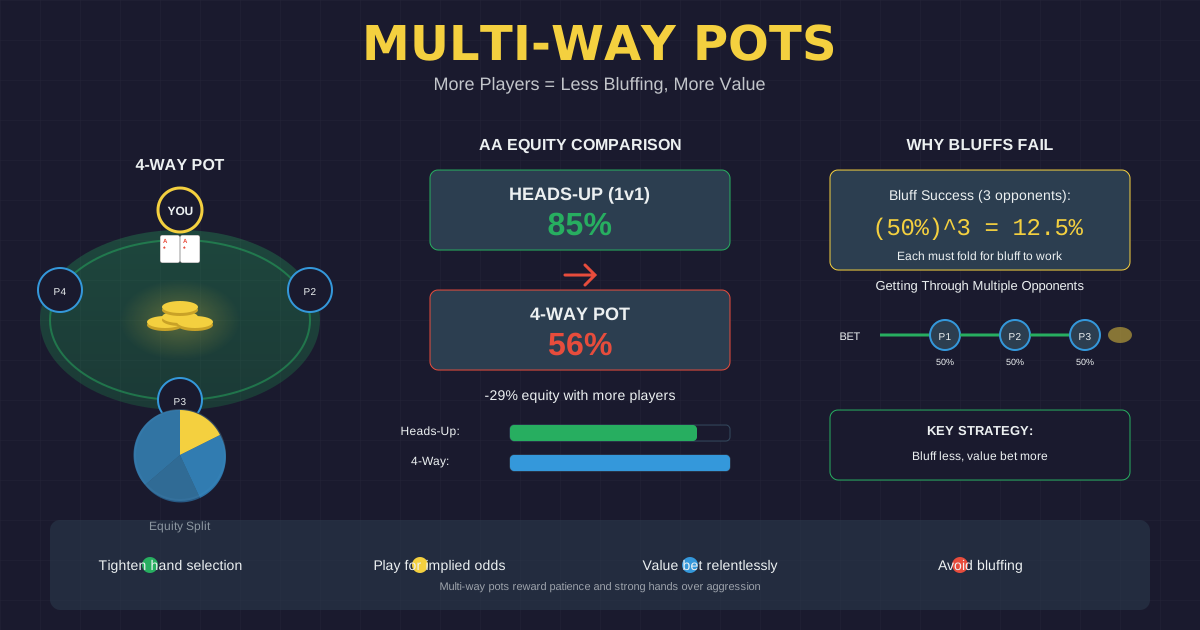
How do pot odds change in multi-way pots? In multi-way pots, your direct pot odds improve (the pot is bigger relative to your call) but your equity against multiple opponents decreases. The net effect depends on how many opponents are in the hand and how your draw performs against multiple ranges. Generally, nut draws gain value in multi-way pots while marginal draws lose value.
What pot odds do I need for a set mine preflop? You need approximately 7.5:1 implied odds to set mine profitably. If you call a $6 raise, you need to win at least $45 when you flop a set. With 100bb stacks, this is usually achievable. With 40bb or less, set mining becomes unprofitable. Use our Poker Equity Calculator to verify your preflop equity in specific matchups.
Essential Tools for Pot Odds and Implied Odds Mastery
- Pot Odds Calculator: Instantly calculate your pot odds for any bet size and pot combination
- Implied Odds Calculator: Factor in future street value to determine if drawing hands are profitable
- Reverse Implied Odds Calculator: Assess the risk of making second-best hands and losing extra money
- Poker Equity Calculator: Determine your exact equity against any opponent range
- Poker Outs Calculator: Count your outs precisely for any draw combination
- Poker EV Calculator: Calculate expected value for any decision in any spot
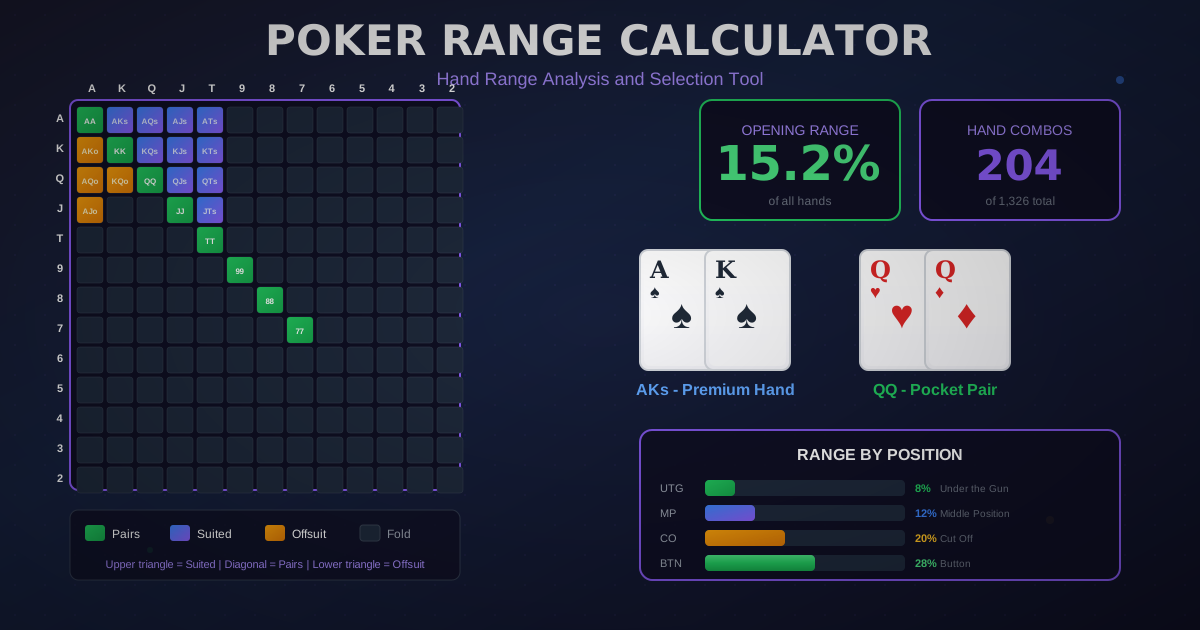
- Poker Hand Range Calculator: Build and analyze opponent ranges to determine your equity
- Poker Combos Calculator: Count exact hand combinations for precise range analysis
Conclusion: Let the Math Make Your Decisions
Pot odds and implied odds are not advanced concepts reserved for professionals. They are the foundation of every profitable poker decision, from the $0.01/$0.02 micro stakes to the $100/$200 nosebleed games. The math works the same way at every level.
The players who consistently apply these concepts win money over time. The players who rely on instinct, gut feelings, and "I had a feeling" lose money over time. It really is that straightforward.
Start putting these concepts into practice today. Use our Pot Odds Calculator to train yourself on instant pot odds calculations. Then level up to our Implied Odds Calculator when you are ready to factor in future street value. Before long, these calculations will become second nature, and your win rate will reflect the improvement.
The math is on your side. Use it.
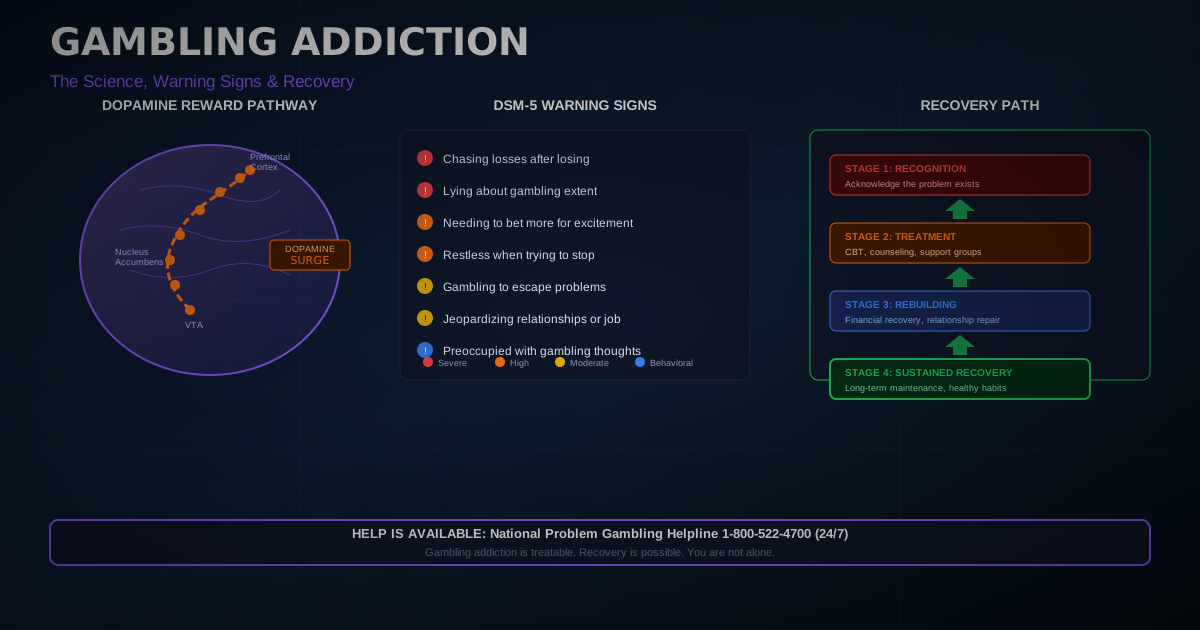
Gambling involves risk. This content is for educational and informational purposes only. Always gamble responsibly, set limits you can afford, and seek help if gambling becomes a problem. Visit the National Council on Problem Gambling or call 1-800-522-4700 for support.