Video Poker vs. Slots: Why Video Poker Is the Smartest Machine Game (2026)
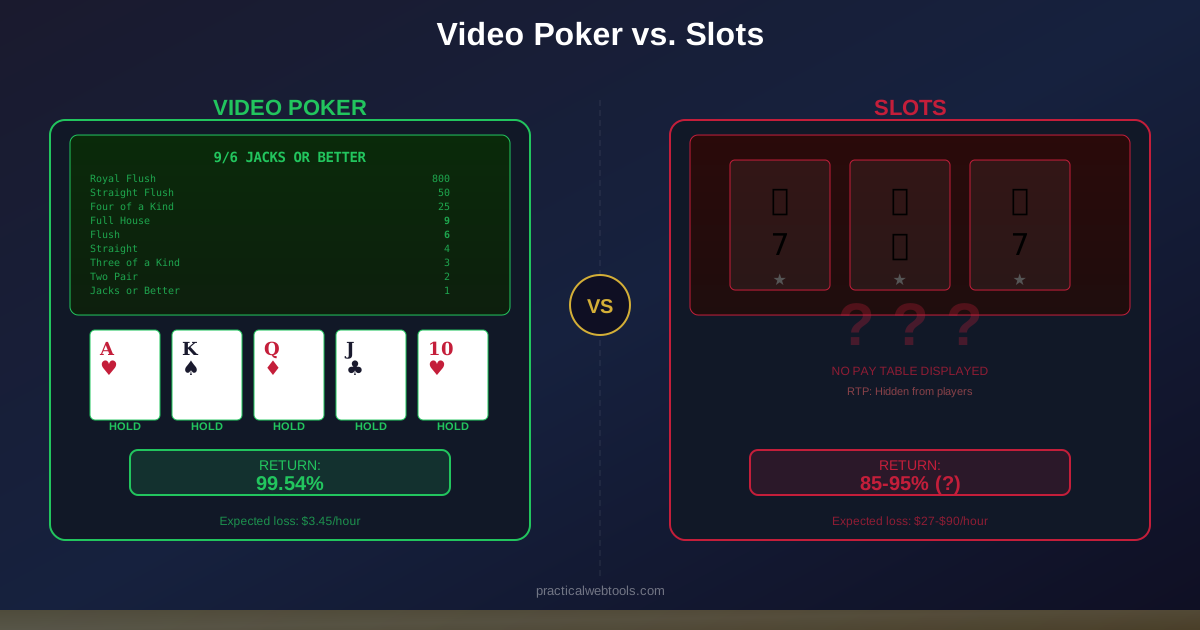
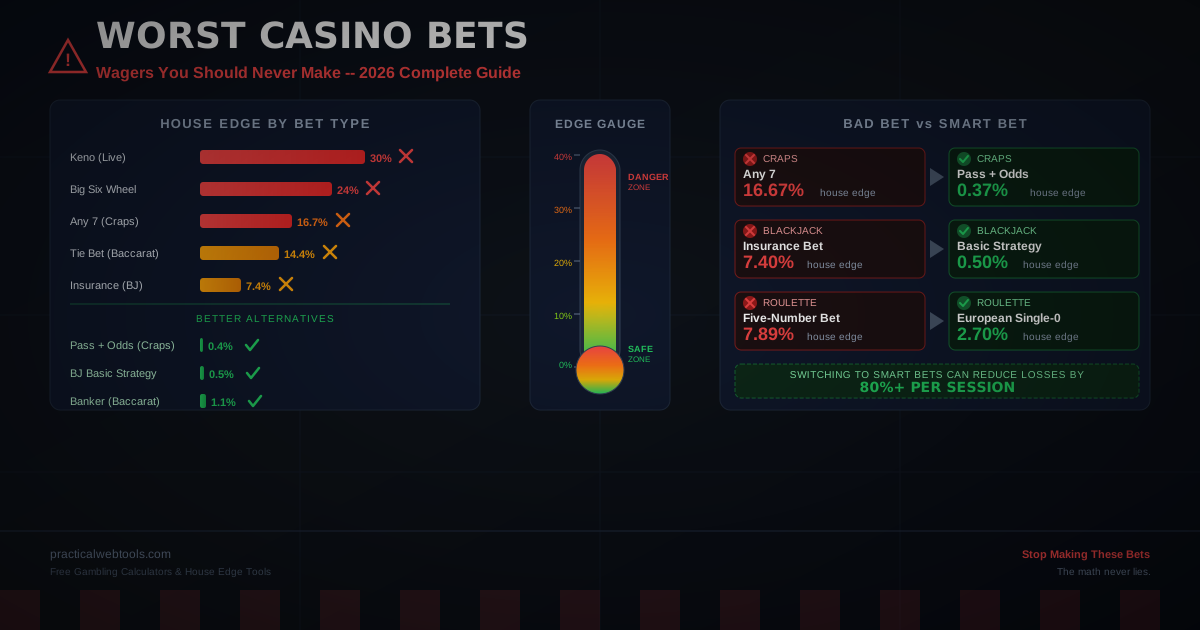
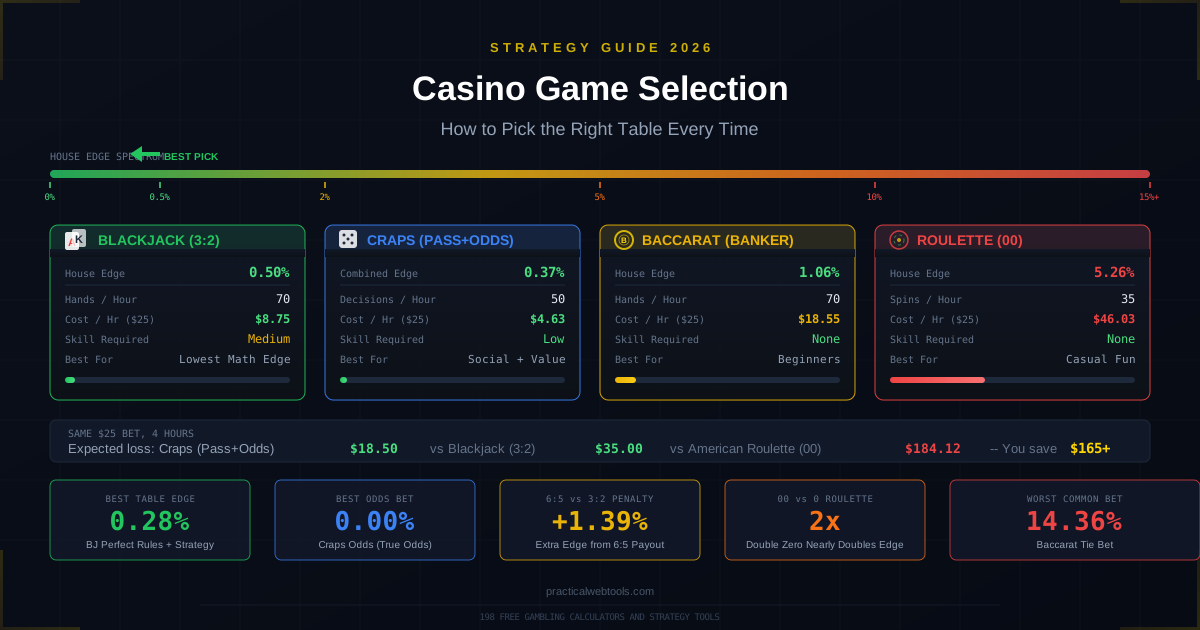
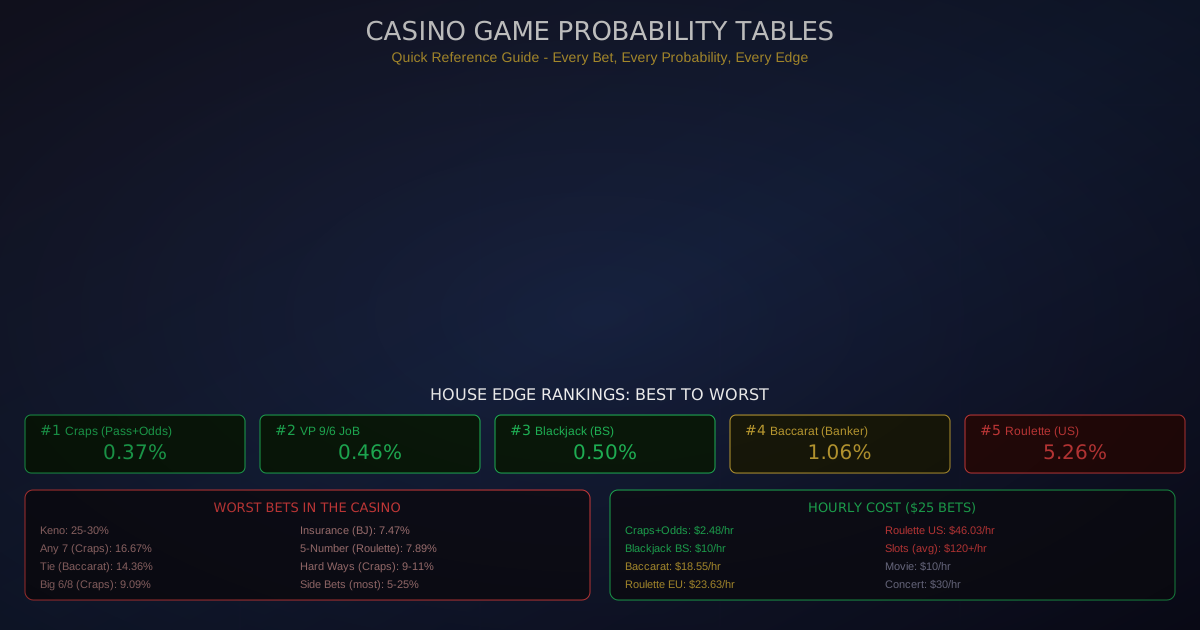
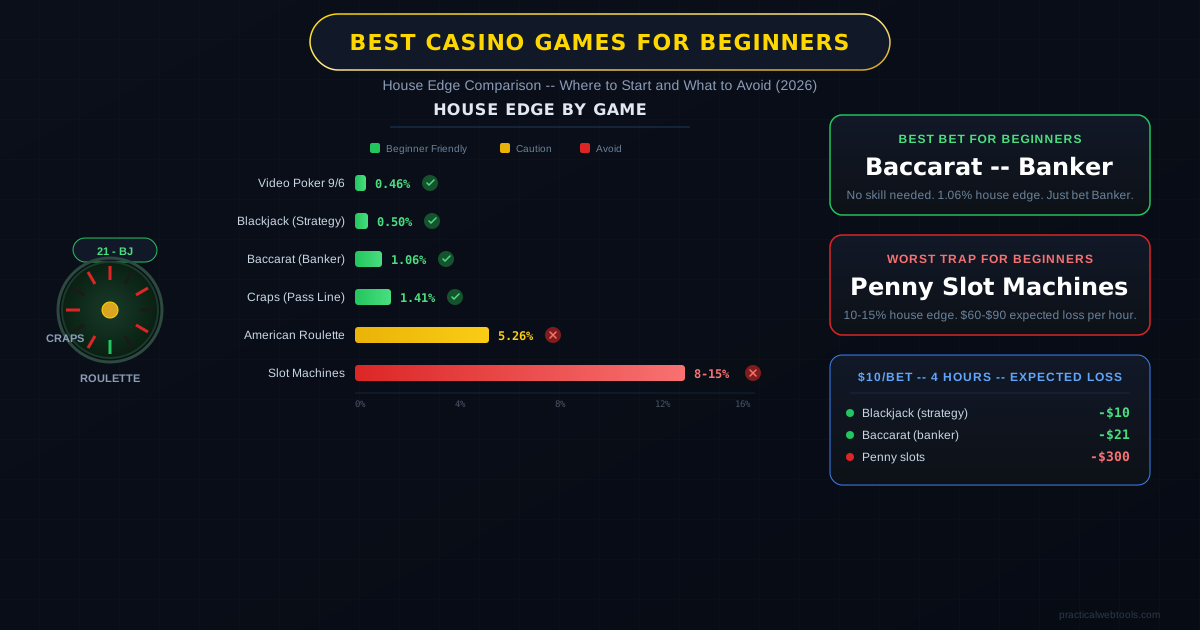
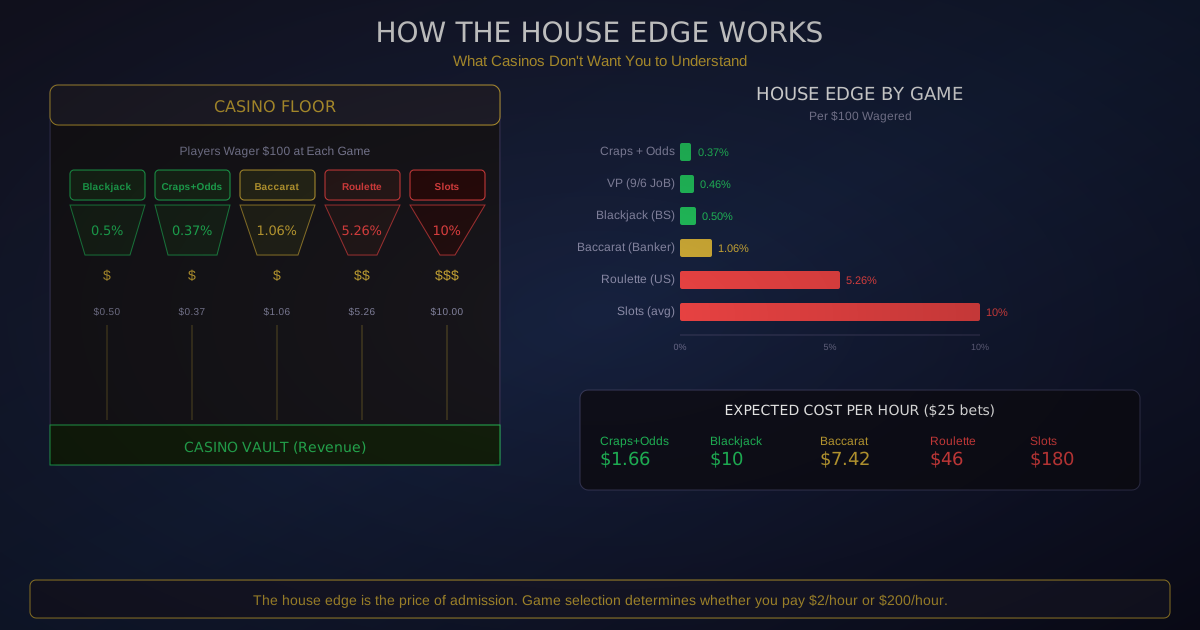
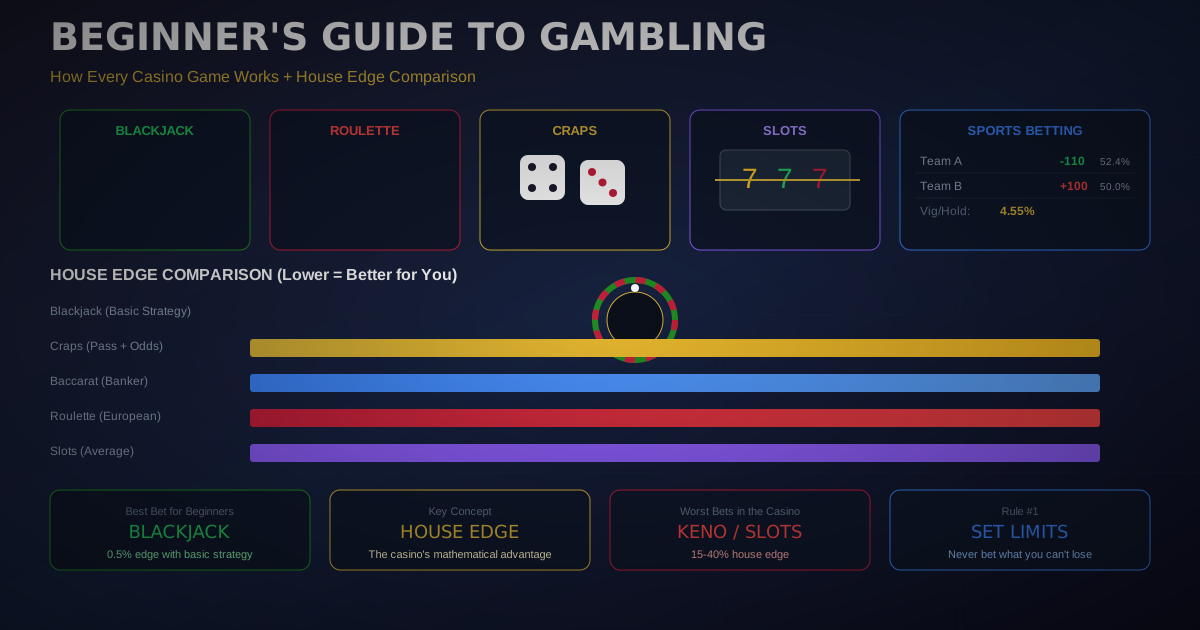
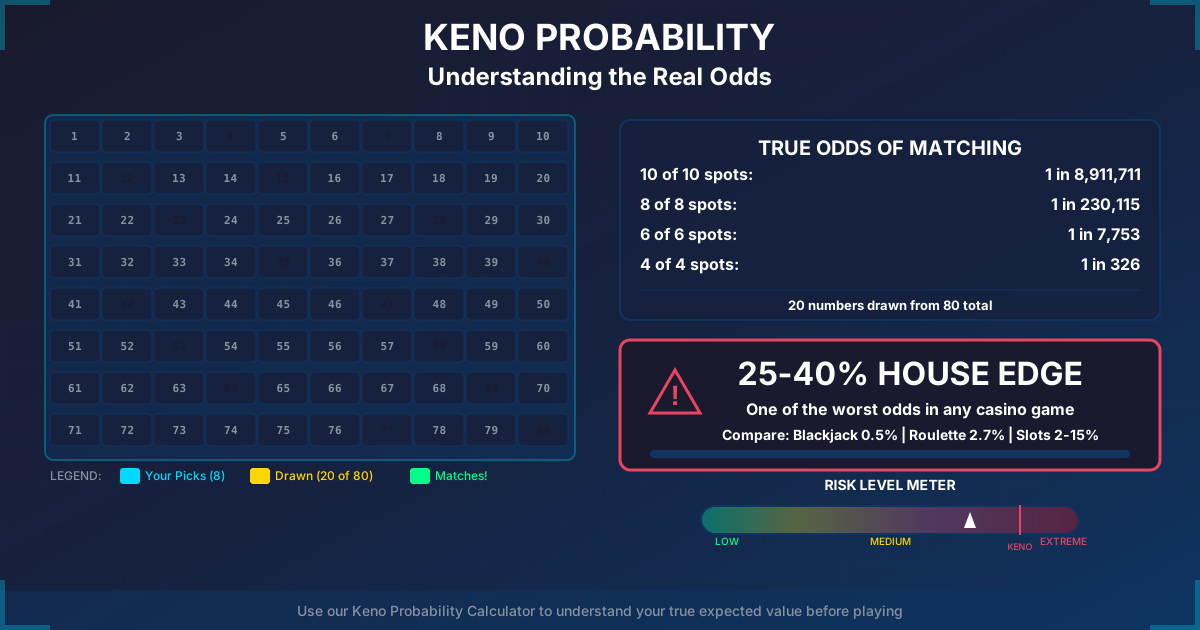
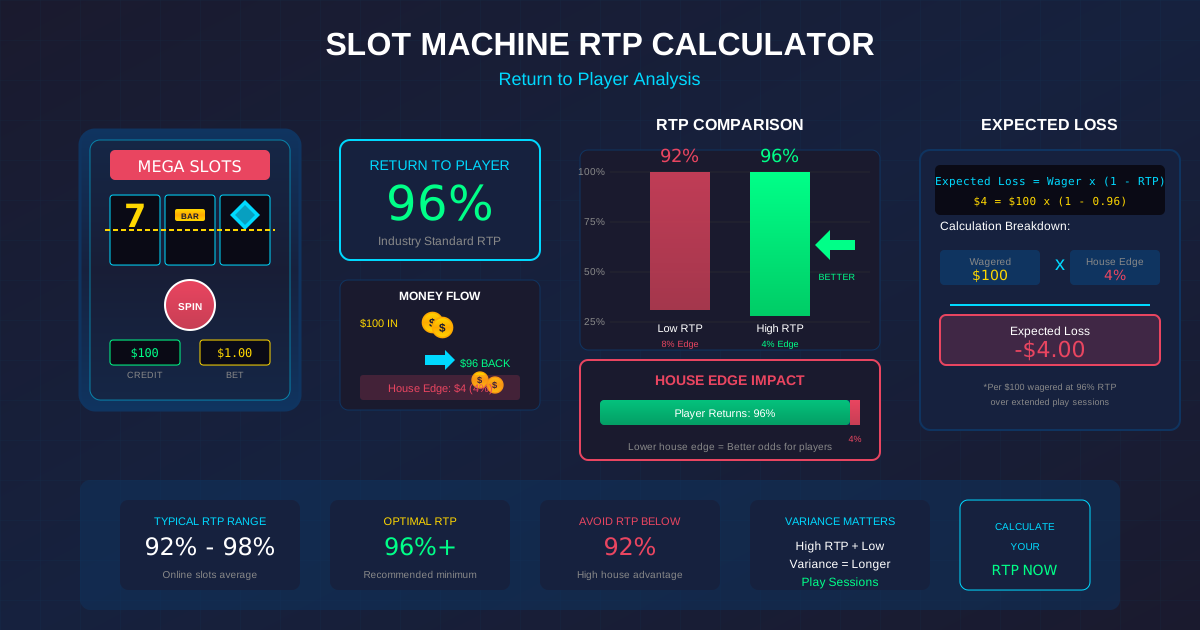
If you are going to play a machine game in a casino, video poker is not just better than slots, it is in an entirely different mathematical category. Full-pay Jacks or Better video poker has a house edge of just 0.46% with optimal strategy, making it competitive with the best blackjack tables. Meanwhile, the average slot machine carries a house edge of 5-15%, and you have absolutely no way to know where in that range your specific machine falls. One game gives you transparent odds and strategic control. The other is a black box designed to extract maximum revenue while keeping you entertained.
Video Poker Pay Table Analyzer
The Core Difference: Transparency
This is the fundamental distinction between video poker and slots, and it matters more than any other factor.
Video Poker: You Can See the Math
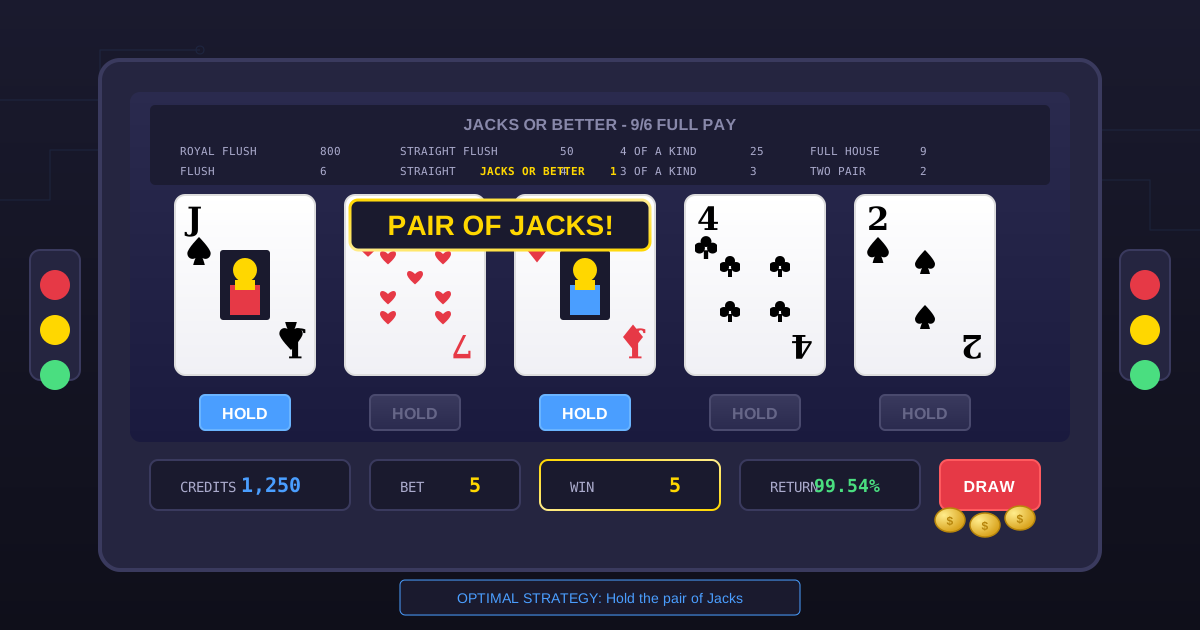
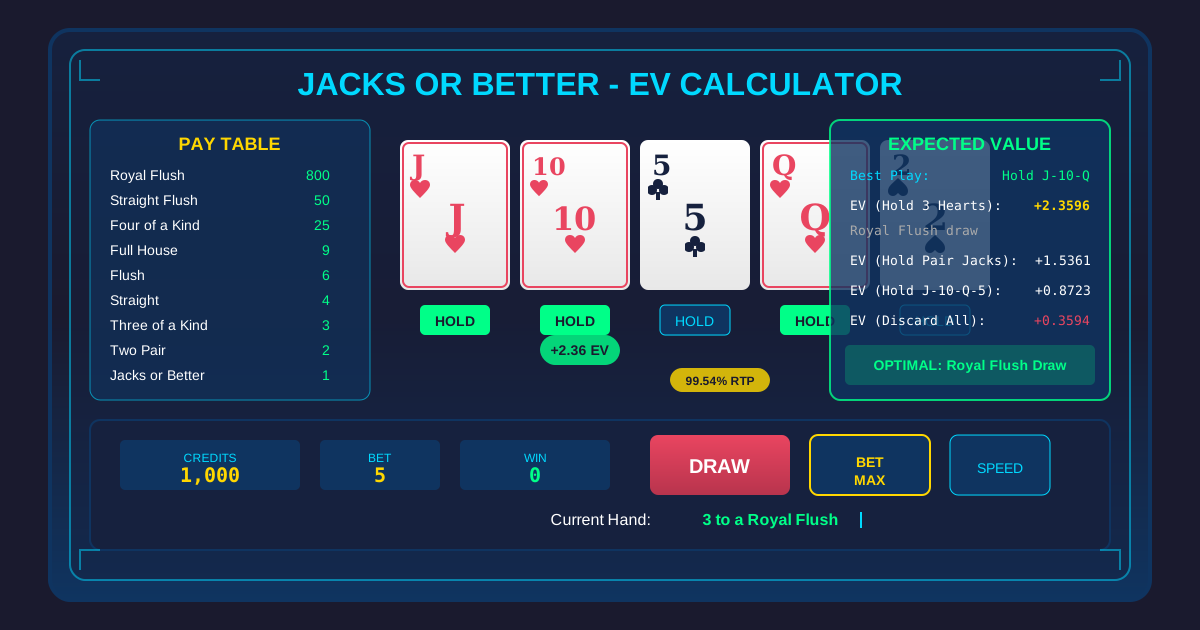
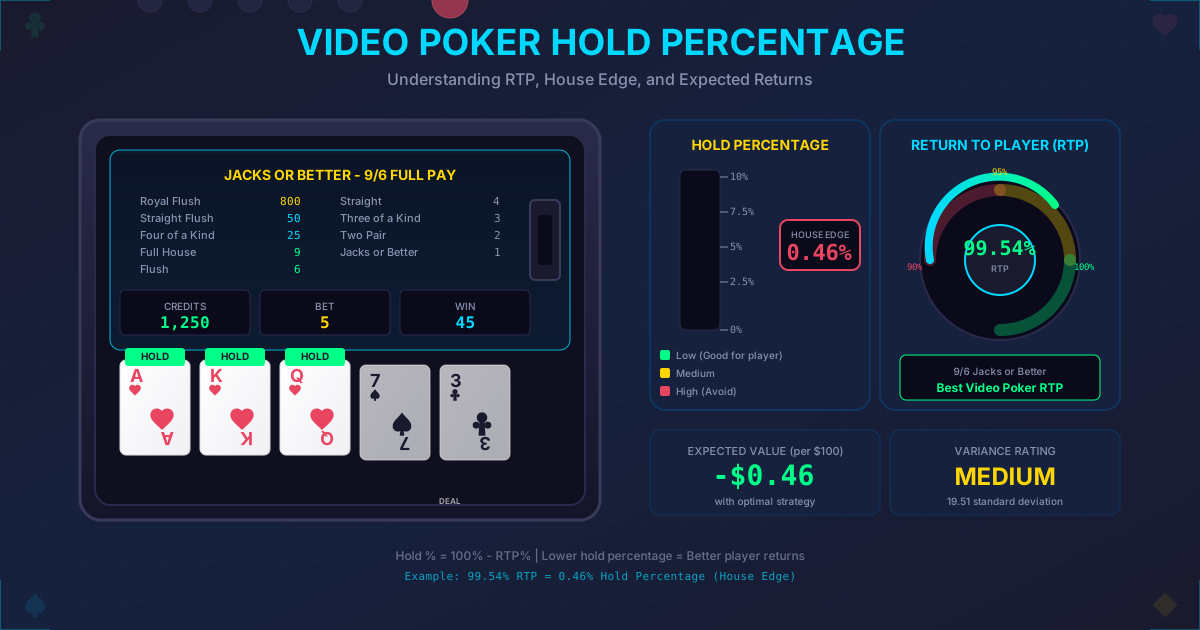
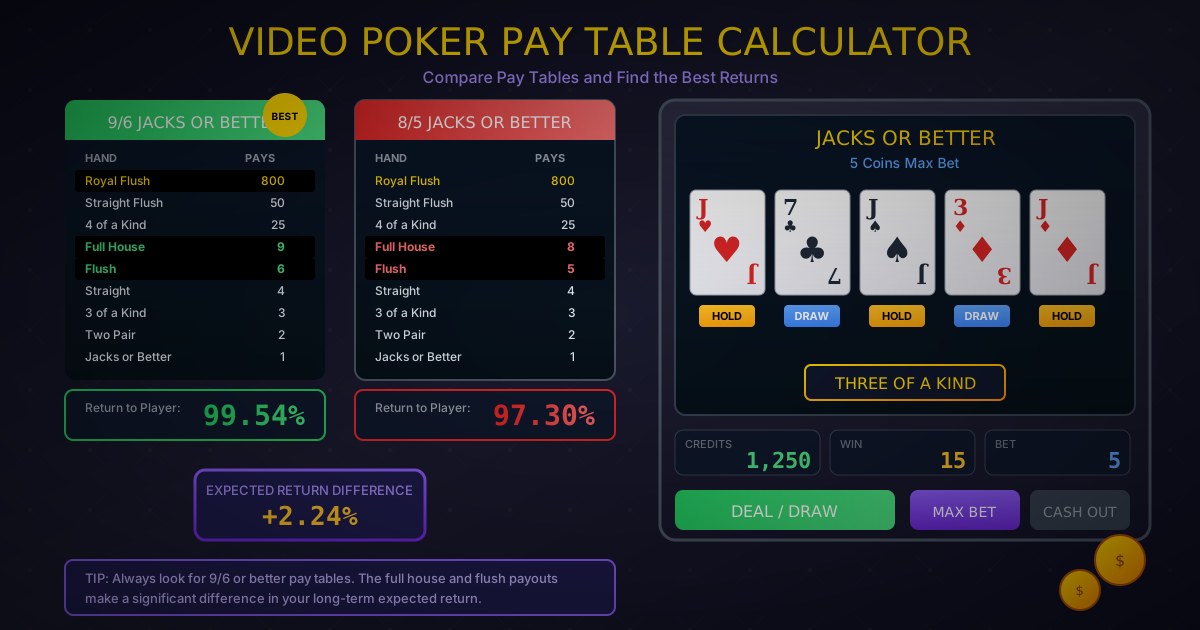
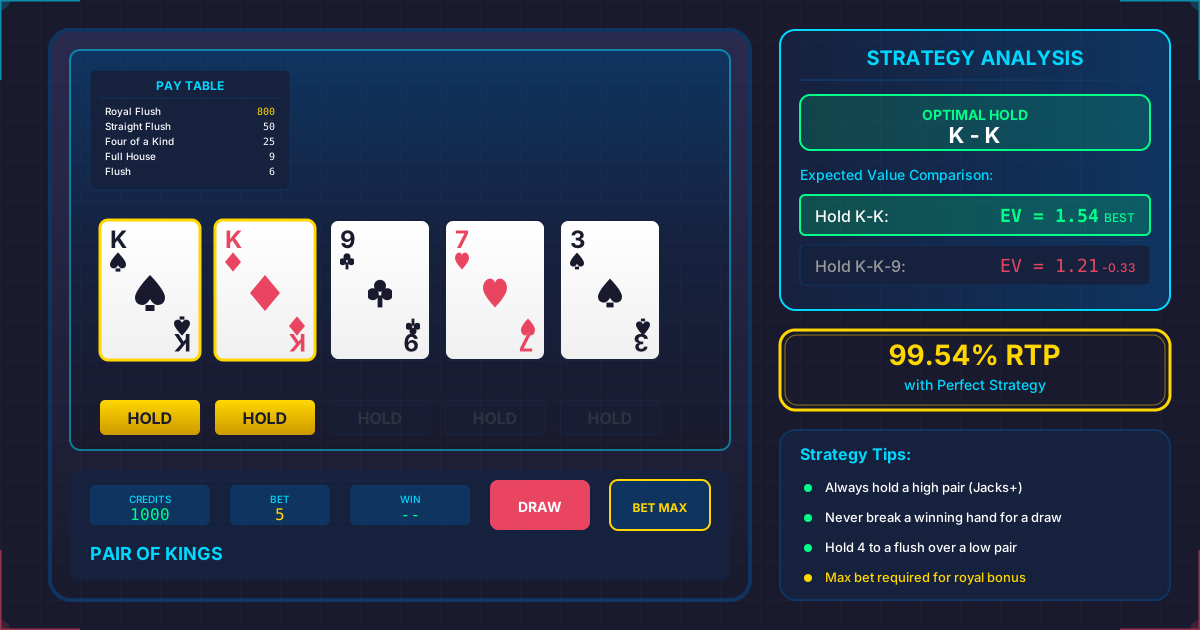
Every video poker machine displays its pay table on the screen. From that pay table, you can calculate the exact expected return of the machine to the hundredth of a percent. A 9/6 Jacks or Better machine (9x for full house, 6x for flush) returns 99.54% with optimal play. An 8/5 Jacks or Better machine returns 97.30%. The math is public, verifiable, and consistent.
9/6 Jacks or Better Pay Table (per coin, 5 coins max):
  Royal Flush:    800 (with max coins)
  Straight Flush: 50
  Four of a Kind:  25
  Full House:       9
  Flush:            6
  Straight:         4
  Three of a Kind:  3
  Two Pair:         2
  Jacks or Better:  1

Expected Return: 99.54%
House Edge: 0.46%
You know exactly what you are getting. If the machine pays 8 for a full house instead of 9, the return drops by 1.10%. If it pays 5 for a flush instead of 6, it drops another 1.14%. These differences are visible right on the screen.
Slots: A Complete Black Box
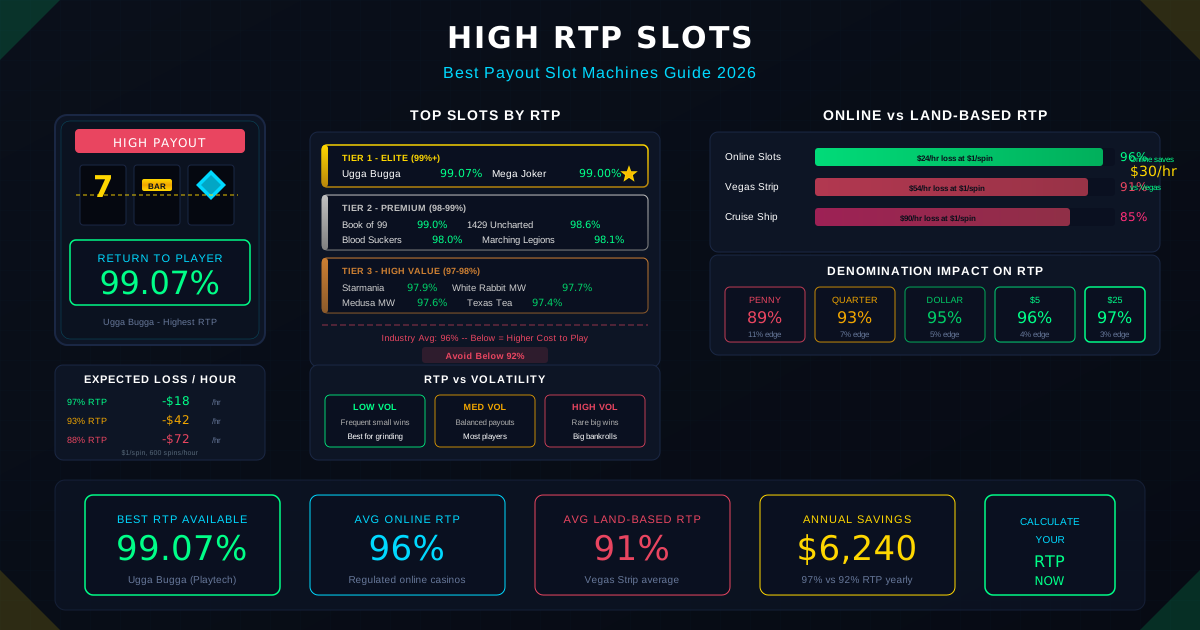
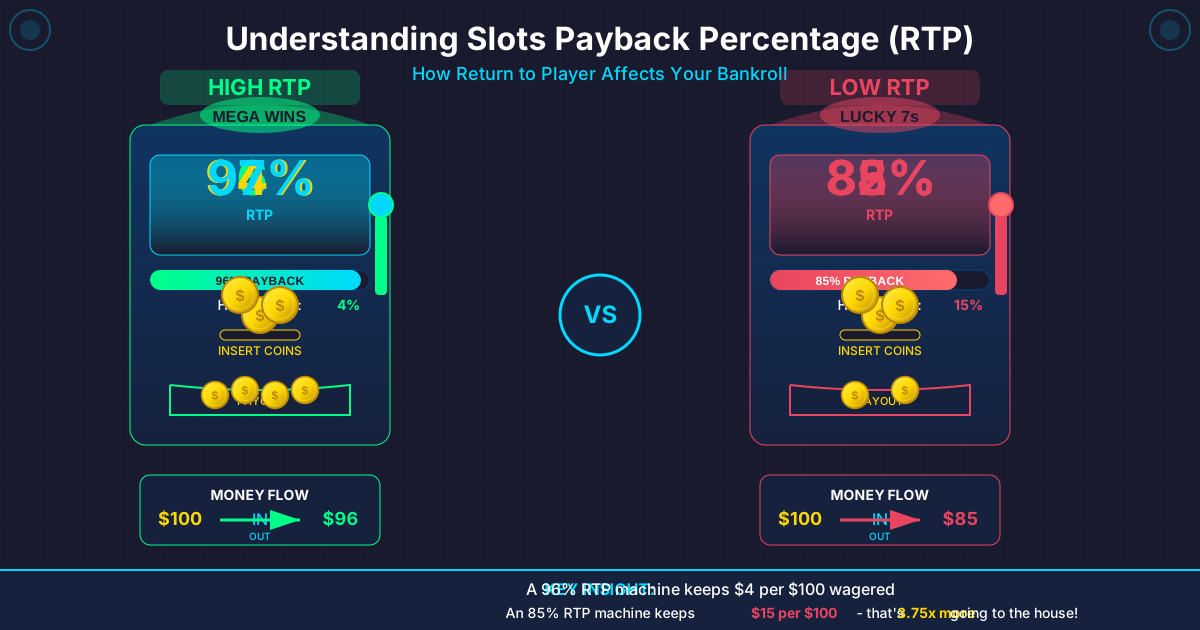
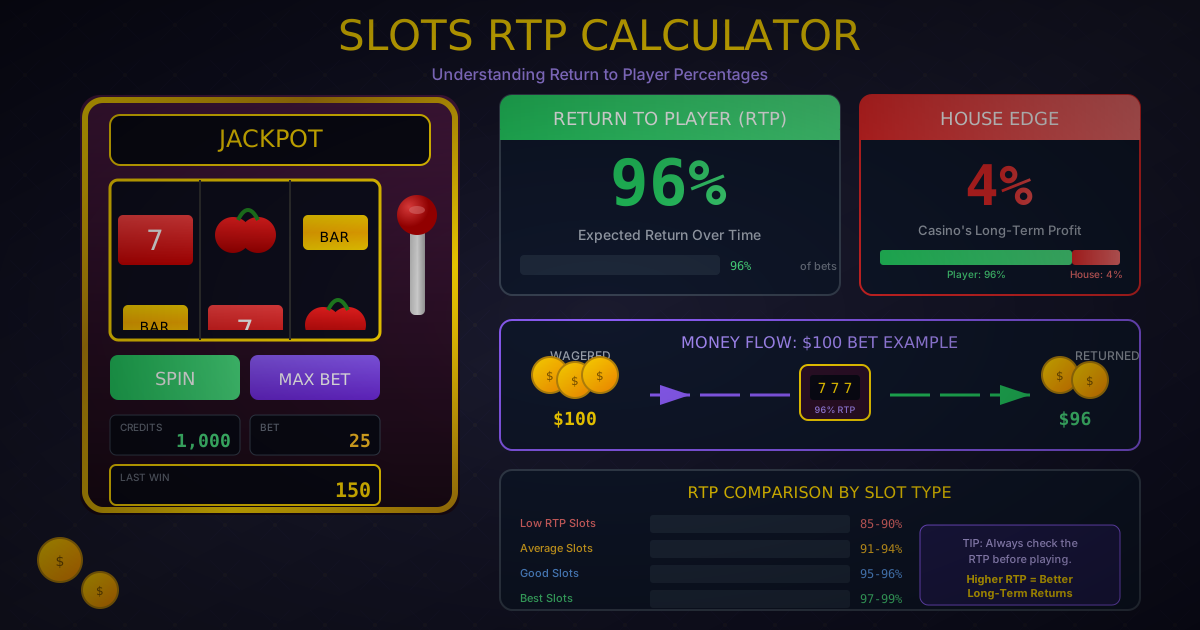
Slot machines do not display their return percentages. The return-to-player (RTP) is programmed into the machine's software and hidden from the player. You have no way to determine whether the machine you are sitting at returns 85%, 92%, or 97%.
Casino gaming commissions publish aggregate return statistics by denomination, but these are averages across hundreds of machines. The specific machine you are playing could be anywhere in the range:
Typical Slot Machine RTP Ranges (Nevada averages, 2024-2025):
  Penny slots:      88-92%  (8-12% house edge)
  Nickel slots:     91-94%  (6-9% house edge)
  Quarter slots:    92-95%  (5-8% house edge)
  Dollar slots:     93-97%  (3-7% house edge)
  Five-dollar slots: 94-98% (2-6% house edge)

Even the best slot machines carry 2-3x the house edge
of the worst standard video poker pay tables.
You are making a financial decision with hidden information. That alone should give any rational player pause.
House Edge Comparison: The Numbers
Let me put the house edge comparison into concrete terms with a detailed table.
Video Poker Games (with Optimal Strategy)
| Game | Pay Table | Return | House Edge |
|---|---|---|---|
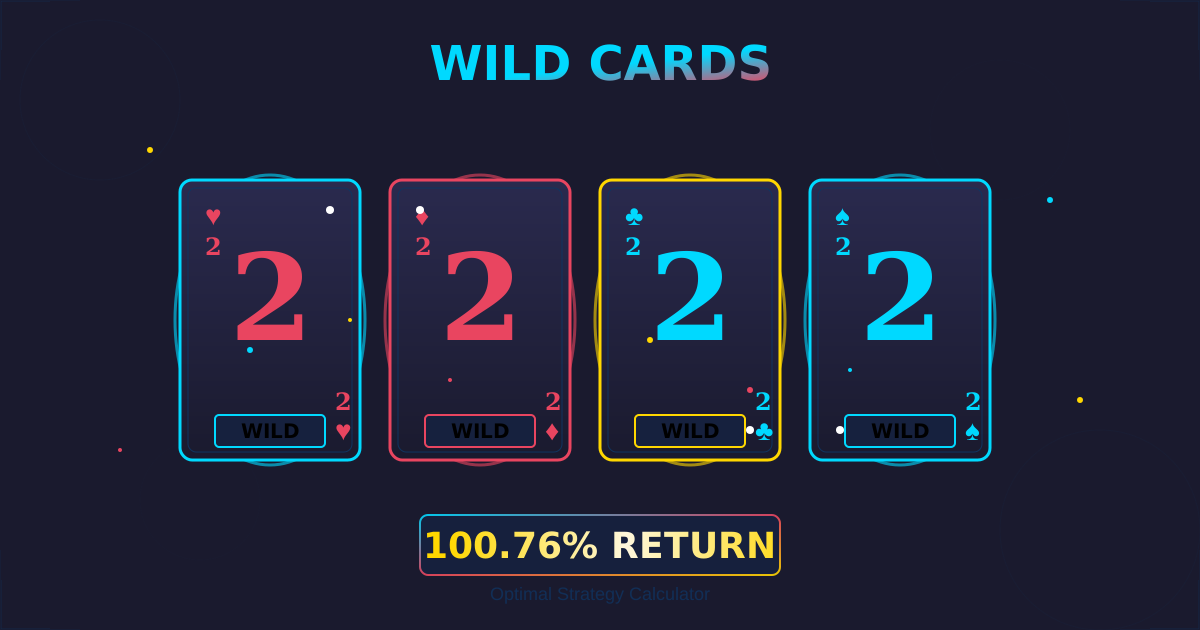
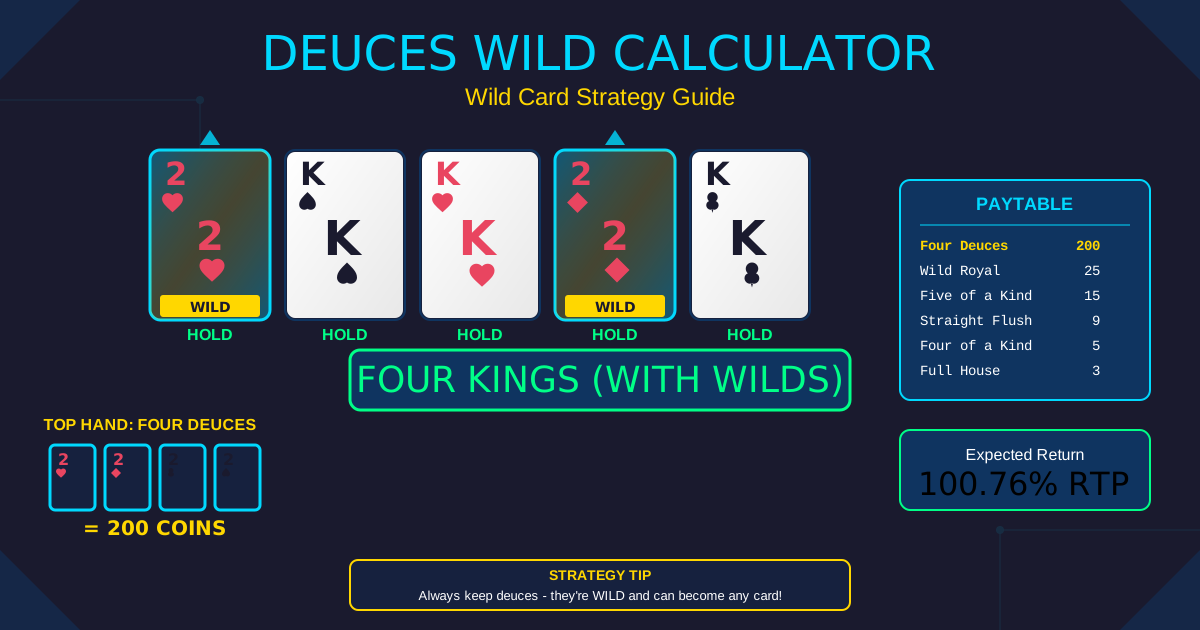
| Deuces Wild | Full-Pay (NSUD) | 100.76% | -0.76% (player edge) |
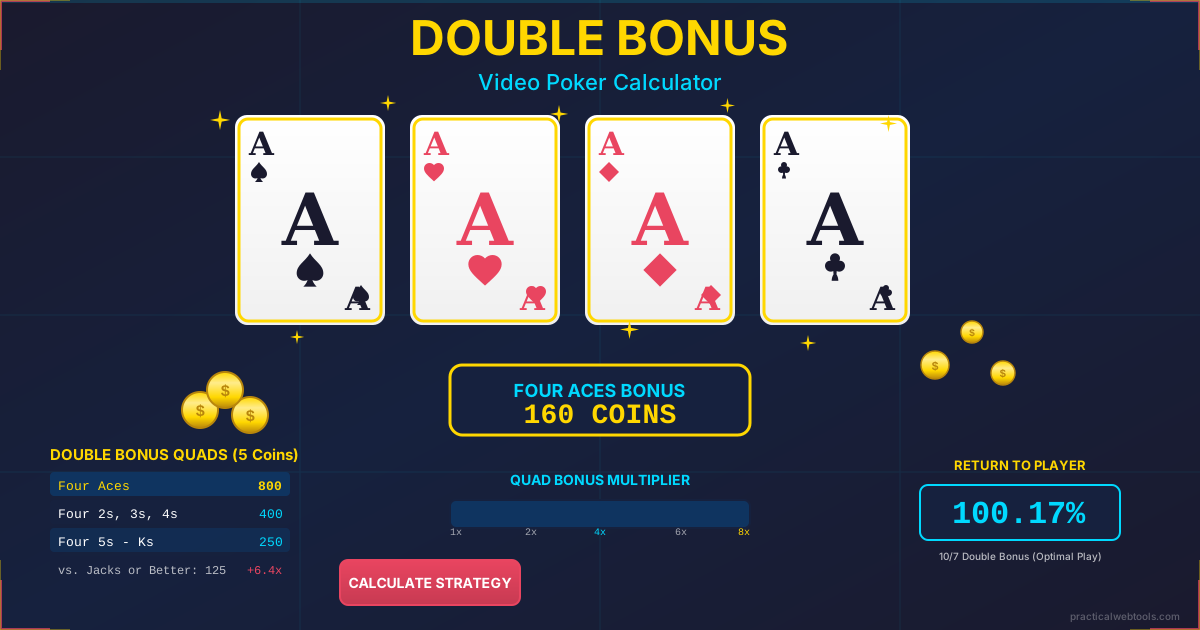
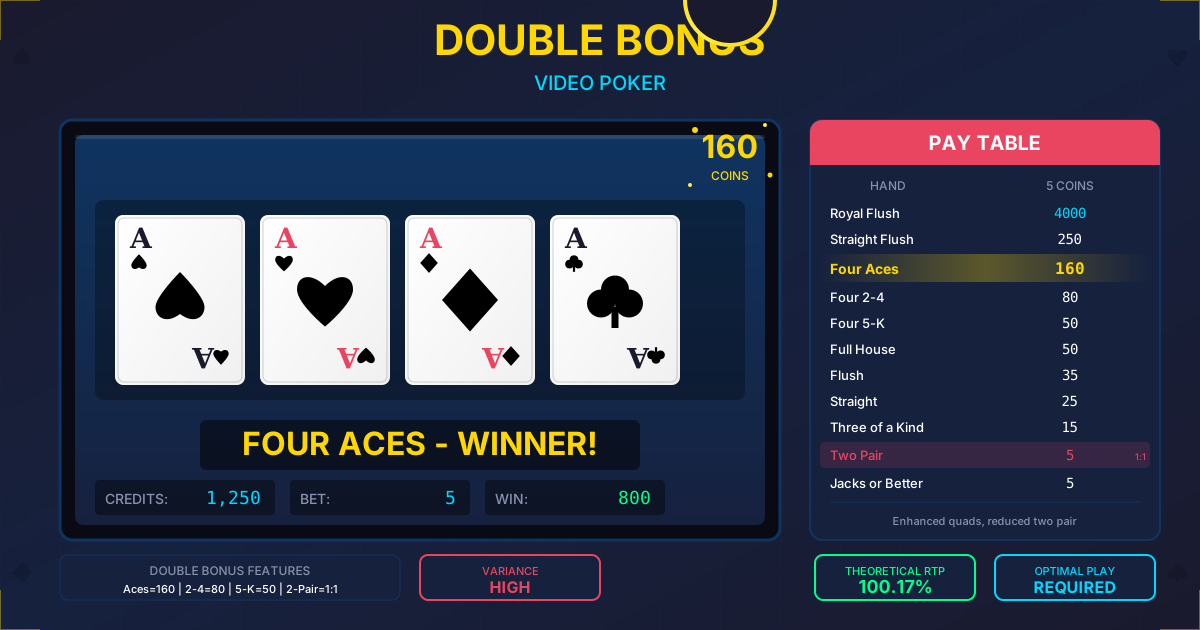
| Double Bonus | 10/7 | 100.17% | -0.17% (player edge) |
| Jacks or Better | 9/6 | 99.54% | 0.46% |
| Bonus Poker | 8/5 | 99.17% | 0.83% |
| Double Double Bonus | 9/6 | 98.98% | 1.02% |
| Jacks or Better | 8/5 | 97.30% | 2.70% |
| Jacks or Better | 7/5 | 96.15% | 3.85% |
| Jacks or Better | 6/5 | 95.00% | 5.00% |
Slot Machines (No Strategy Possible)
| Type | Typical Return | House Edge |
|---|---|---|
| Dollar Progressives | 88-92% | 8-12% |
| Penny Multi-line | 85-90% | 10-15% |
| Video Slots (standard) | 88-93% | 7-12% |
| High-limit slots | 93-97% | 3-7% |
| Airport/bar slots | 75-85% | 15-25% |
The best video poker games actually give the player a mathematical edge. No slot machine does this. Even the worst commonly available video poker pay table (6/5 Jacks or Better at 5.00%) is better than the average penny slot machine.
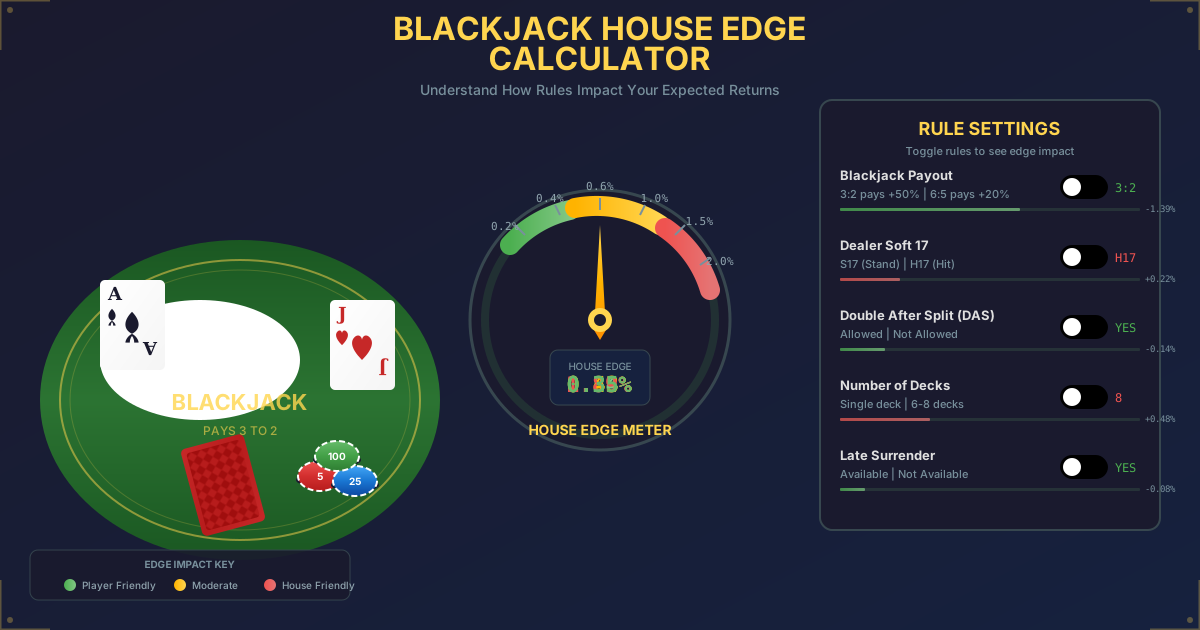
Blackjack House Edge Calculator for cross-game comparison.
The Strategy Advantage
Video poker is a game of skill. Every deal gives you five cards, and you choose which to keep and which to discard. These decisions matter enormously.
How Much Strategy Matters
Jacks or Better Strategy Calculator
9/6 Jacks or Better Returns by Skill Level:

  Optimal strategy:     99.54% return
  Good strategy:        ~98.5% return
  Average player:       ~97.0% return
  Poor strategy:        ~95.0% return
  Random play:          ~90.0% return

The difference between optimal and random play is 9.54%.
On $1.25/hand at 600 hands/hour, that's:
  Optimal: -$3.45/hour expected loss
  Random: -$71.63/hour expected loss
Learning optimal strategy transforms video poker from a mediocre game into one of the best bets in the casino. And the strategy is learnable. Unlike poker against human opponents, video poker strategy is deterministic. For every combination of five cards, there is one mathematically correct hold/discard decision.
Slots Offer Zero Strategic Control
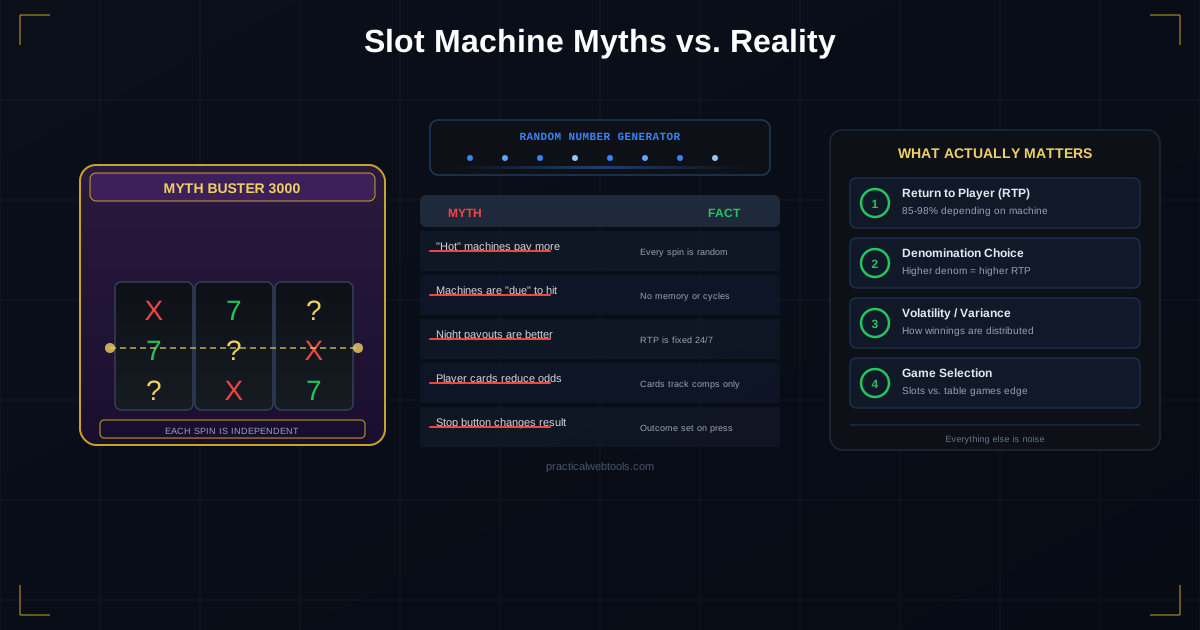
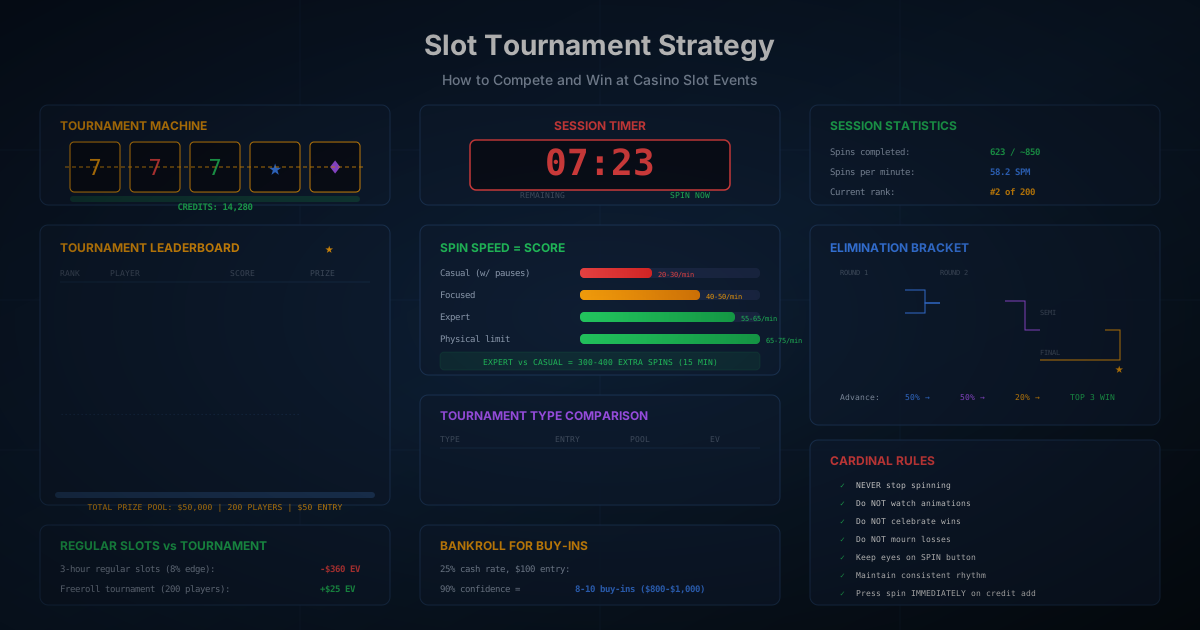
With slot machines, you press a button and wait. There are no decisions to make, no cards to hold, no strategy to learn. The RNG (random number generator) determines your outcome the instant you press spin. Every spin is an independent event with a fixed expected return that you cannot influence.
Some slot manufacturers include "bonus choice" features that create an illusion of control, but studies have consistently shown these choices have equal expected value regardless of which option you pick.
Deuces Wild Strategy Calculator
Hourly Cost Comparison: What You Actually Lose
This is where the comparison becomes stark. Let us calculate the expected hourly loss for each game at typical playing speeds.
Video Poker Hourly Loss
Assumptions:
  Game: 9/6 Jacks or Better
  Denomination: $0.25 (5 coins = $1.25 per hand)
  Speed: 600 hands per hour (typical experienced player)
  Strategy: Optimal
  House edge: 0.46%

Expected hourly loss = $1.25 x 600 x 0.0046 = $3.45

That is $3.45 per hour for entertainment.
Less than a cup of coffee per hour.
Slot Machine Hourly Loss
Assumptions:
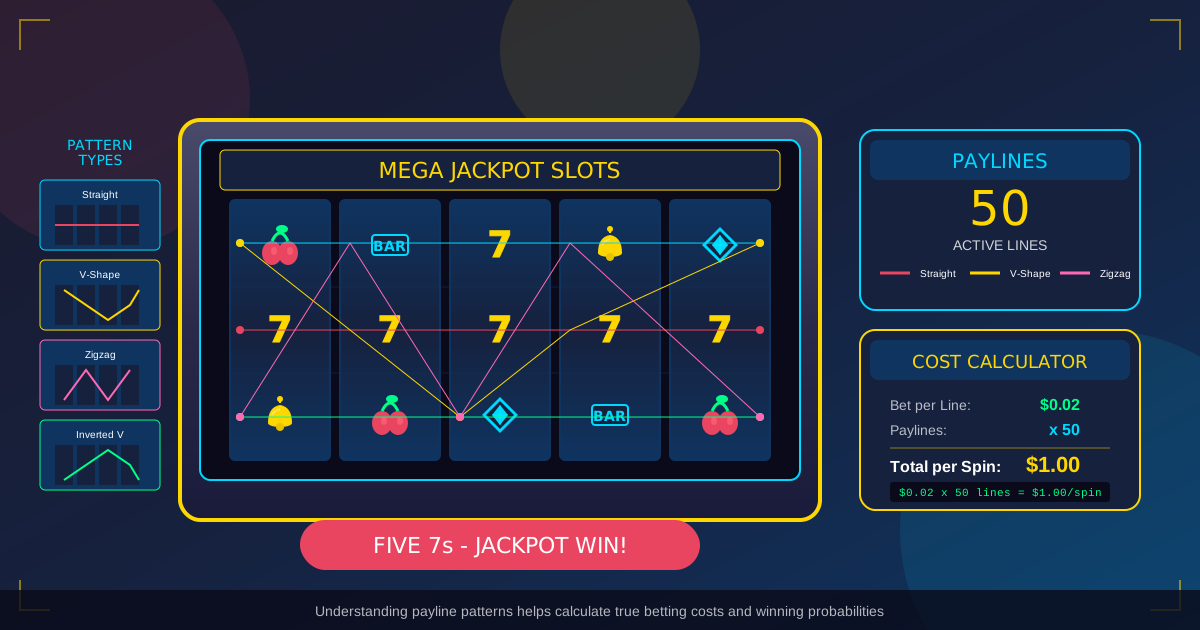
  Game: Penny slots, 30 lines x $0.01 = $0.30 per spin
  Speed: 900 spins per hour (slots play faster)
  House edge: 10% (conservative average for penny slots)

Expected hourly loss = $0.30 x 900 x 0.10 = $27.00

Now with higher denomination:
  Game: Dollar slots, 3 lines x $1.00 = $3.00 per spin
  Speed: 600 spins per hour
  House edge: 5%

Expected hourly loss = $3.00 x 600 x 0.05 = $90.00
Side-by-Side Summary
| Factor | Video Poker (9/6 JoB) | Penny Slots | Dollar Slots |
|---|---|---|---|
| Bet per round | $1.25 | $0.30 | $3.00 |
| Rounds per hour | 600 | 900 | 600 |
| Total hourly action | $750 | $270 | $1,800 |
| House edge | 0.46% | ~10% | ~5% |
| Expected hourly loss | $3.45 | $27.00 | $90.00 |
| Loss per $100 wagered | $0.46 | $10.00 | $5.00 |
| Hours of play per $100 budget | 29 hours | 3.7 hours | 1.1 hours |
A $100 budget lasts 29 hours at video poker. The same $100 lasts under 4 hours at penny slots and barely over 1 hour at dollar slots.
Real-World Comparison Examples
Example 1: Weekend Vegas Trip ($500 Entertainment Budget)
Video Poker Player (Maria): Plays 9/6 Jacks or Better at $1.25/hand.
Total hands over 3 days: ~3,600 (12 hours of play)
Total wagered: $4,500
Expected loss: $4,500 x 0.0046 = $20.70
Actual result range (95% confidence): -$350 to +$310

Maria's $500 budget easily lasts the entire trip. Her most
likely outcome is losing $20-$40 with decent chance of
finishing ahead.
Slot Player (David): Plays penny slots at $0.30/spin, about 900 spins/hour.
Total spins over 3 days: ~10,800 (12 hours of play)
Total wagered: $3,240
Expected loss: $3,240 x 0.10 = $324.00
Actual result range (95% confidence): -$500 to -$100

David's $500 budget is strained. He likely loses $250-$400,
and running out of money before the trip ends is a realistic
scenario.
Video Poker Bankroll Calculator
Example 2: Local Casino Regular (Weekly Player, $200/Month Budget)
Video Poker Regular: Plays 8/5 Bonus Poker at $1.25/hand, 4 sessions per month of 3 hours each.
Monthly hands: 7,200
Monthly wagered: $9,000
Monthly expected loss: $9,000 x 0.0083 = $74.70
Annual expected loss: $896.40
Annual entertainment value: 144 hours
Cost per hour: $6.23
Slot Regular: Plays quarter video slots at $0.75/spin, same schedule.
Monthly spins: 10,800 (slots play faster)
Monthly wagered: $8,100
Monthly expected loss: $8,100 x 0.08 = $648.00
Annual expected loss: $7,776.00
Annual entertainment value: 144 hours
Cost per hour: $54.00
The slot player loses $6,880 more per year than the video poker player for the same amount of playing time. Over 10 years, that is $68,800 in additional losses.
Roulette House Edge Calculator to see how other table games compare.
Example 3: Finding the Right Machine
You walk into a casino and see two video poker machines side by side. One is 9/6 Jacks or Better. The other is 8/5 Jacks or Better.
Video Poker Pay Table Analyzer
9/6 JoB: 99.54% return = 0.46% house edge
8/5 JoB: 97.30% return = 2.70% house edge

Difference: 2.24% per hand

At $1.25/hand, 600 hands/hour:
  9/6: -$3.45/hour
  8/5: -$20.25/hour

The "wrong" video poker machine costs you an extra $16.80/hour.
Always check the pay table before sitting down.
That 8/5 machine sitting right next to the 9/6 machine costs you 5.87 times more per hour. Pay tables matter enormously. Always check before you play.
Which Video Poker Games to Play
Not all video poker games are created equal. Here are the best games to look for, ranked by return with optimal strategy.
Double Bonus Strategy Calculator
Best Video Poker Games (Full-Pay Versions)
| Game | Full-Pay Return | Where to Find |
|---|---|---|
| Deuces Wild (NSUD) | 100.76% | Rare; some downtown Vegas |
| Double Bonus 10/7 | 100.17% | Uncommon; select casinos |
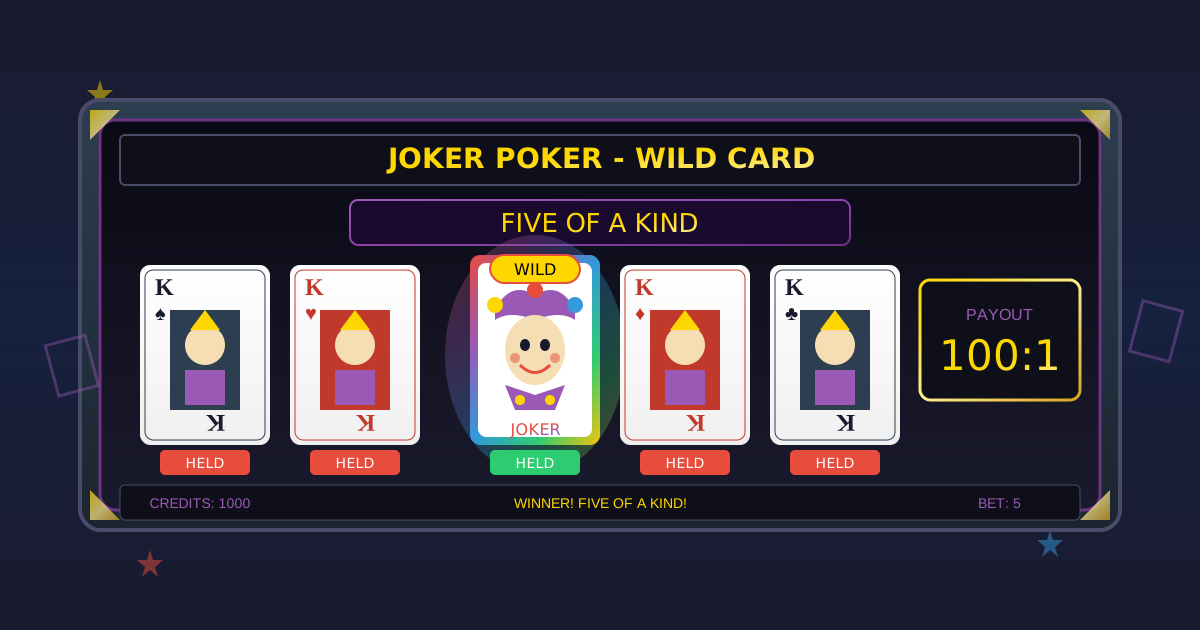
| Joker Poker (Kings+) | 100.65% | Very rare |
| Jacks or Better 9/6 | 99.54% | Common in Vegas, less common elsewhere |
| Bonus Poker 8/5 | 99.17% | Available at many casinos |
| Double Double Bonus 9/6 | 98.98% | Common |
Games to Avoid
| Game | Return | Why Avoid |
|---|---|---|
| JoB 6/5 | 95.00% | Worse than most table games |
| JoB 7/5 | 96.15% | Poor value |
| Any "Short Pay" variant | <97% | Not worth the time |
| Multi-hand at reduced pay tables | Varies | Lower pay tables offset multi-hand variance |
How to Identify Pay Tables
The key numbers to look for on Jacks or Better machines are the Full House and Flush payouts:
Full House / Flush = Return
9 / 6 = 99.54% (PLAY THIS)
9 / 5 = 98.45% (acceptable)
8 / 6 = 98.39% (acceptable)
8 / 5 = 97.30% (marginal)
7 / 5 = 96.15% (avoid)
6 / 5 = 95.00% (avoid)
Learning Optimal Video Poker Strategy
The good news: video poker strategy is finite and deterministic. There are roughly 2,598,960 possible five-card hands from a 52-card deck, and for each one there is exactly one mathematically correct set of cards to hold. These decisions have been computed by running every possible combination through every possible draw.
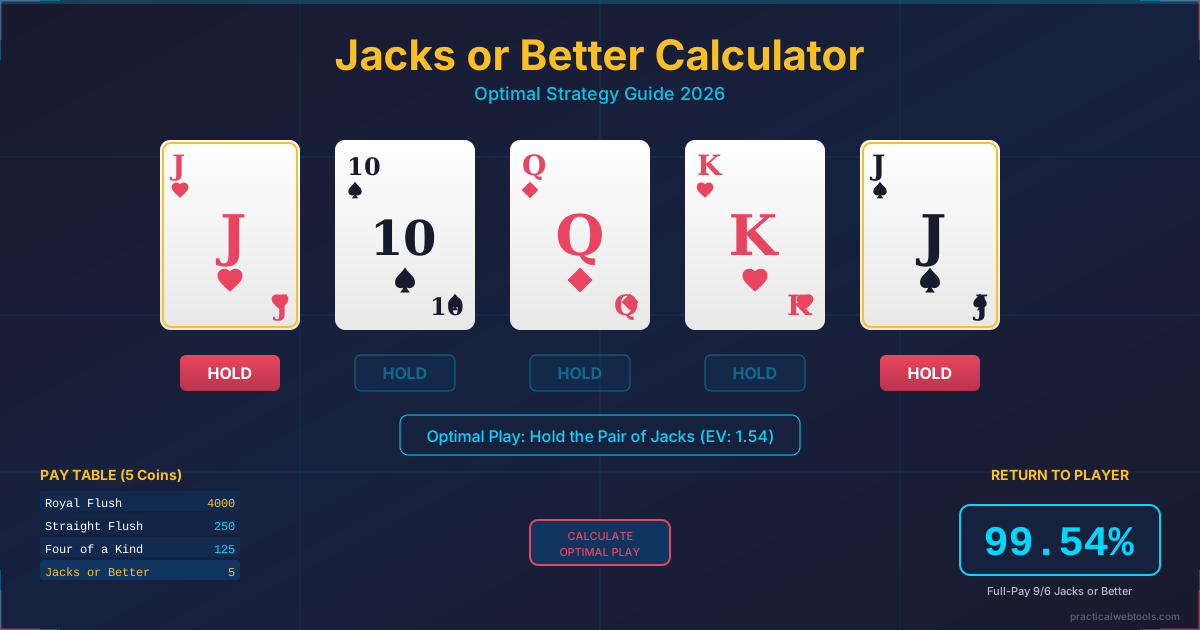
Jacks or Better Strategy Calculator
Simplified Jacks or Better Strategy (Top 20 Holds)
For 9/6 Jacks or Better, here are the key strategy decisions ranked by expected value:
1.  Royal Flush (hold all 5)
2.  Straight Flush
3.  Four of a Kind
4.  4 to a Royal Flush
5.  Full House
6.  Flush
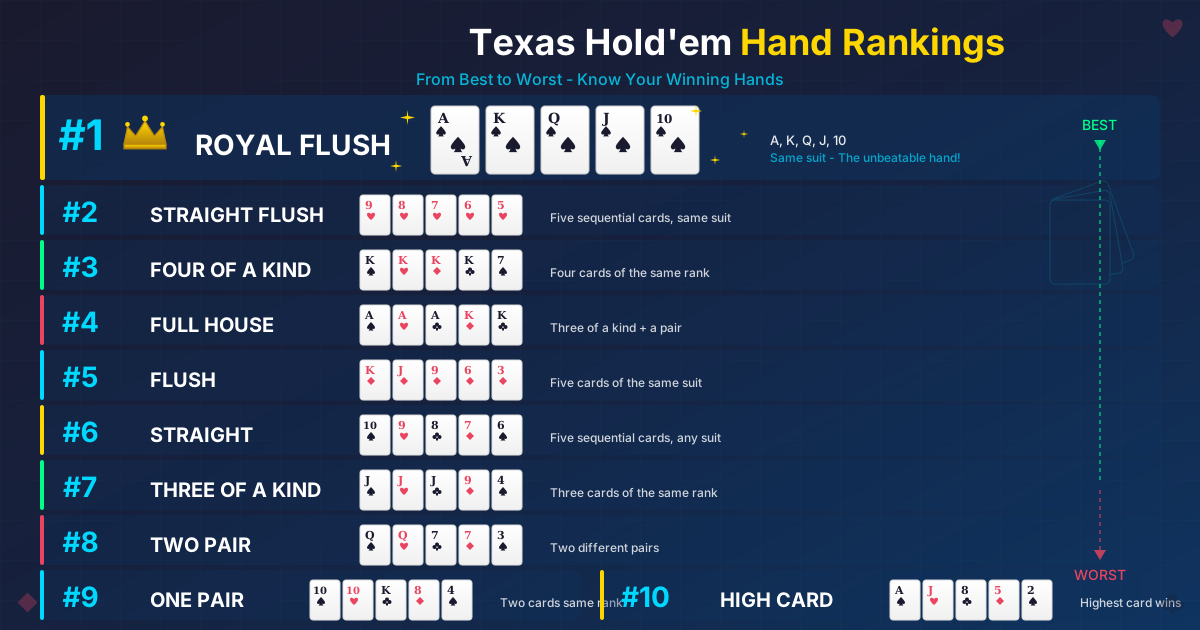
7.  Three of a Kind
8.  Straight
9.  4 to a Straight Flush
10. Two Pair
11. High Pair (Jacks or better)
12. 3 to a Royal Flush
13. 4 to a Flush
14. Low Pair (2s through 10s)
15. 4 to an Outside Straight
16. 2 suited high cards
17. 3 to a Straight Flush
18. 2 unsuited high cards (pick lowest 2)
19. Suited J-10, Q-10, or K-10
20. 1 high card

Key surprise decisions:
- Hold a LOW PAIR over a 4-card straight (except open-ended)
- Hold 3 to a Royal over a made straight or flush
- Never hold a kicker with a pair
- Break a straight to draw to a Royal Flush
These strategy decisions account for about 98% of all hands you will encounter. Mastering this list gets you within 0.1% of perfect play.
The Learning Curve
Most players can learn basic Jacks or Better strategy in 2-4 hours of practice. Computer trainers and strategy cards are widely available. After 10-20 hours of play with a strategy card visible, the decisions become automatic for most common hands.
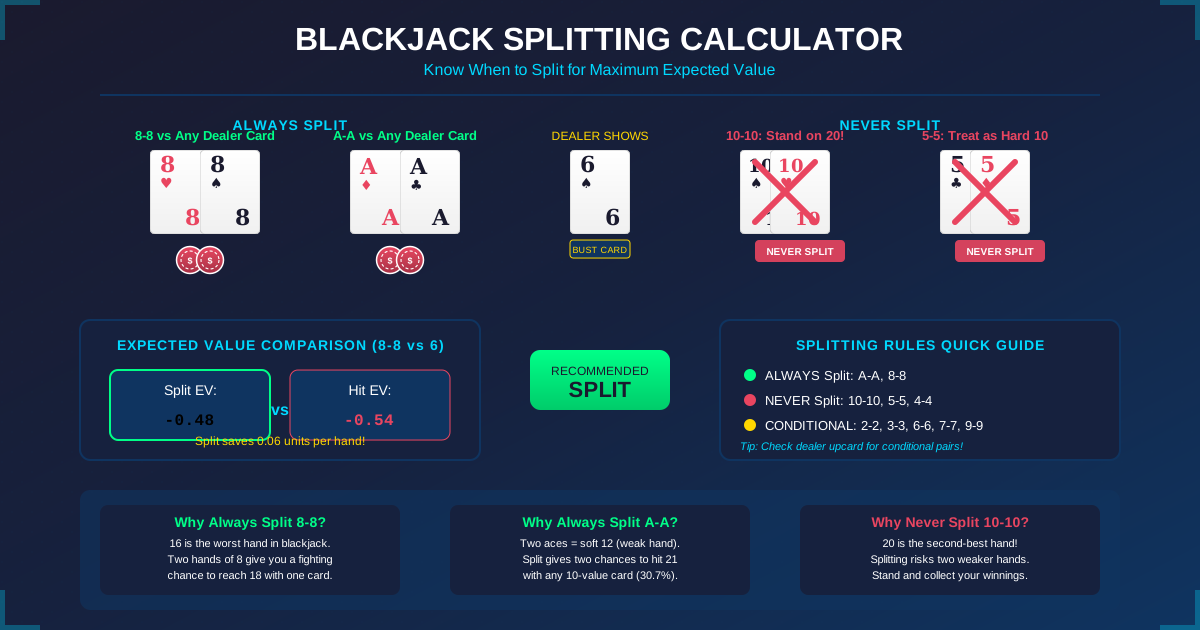
Compare this to blackjack basic strategy, which has roughly 270 decisions to memorize. Video poker strategy is actually simpler for most players to learn.
Deuces Wild Strategy Calculator
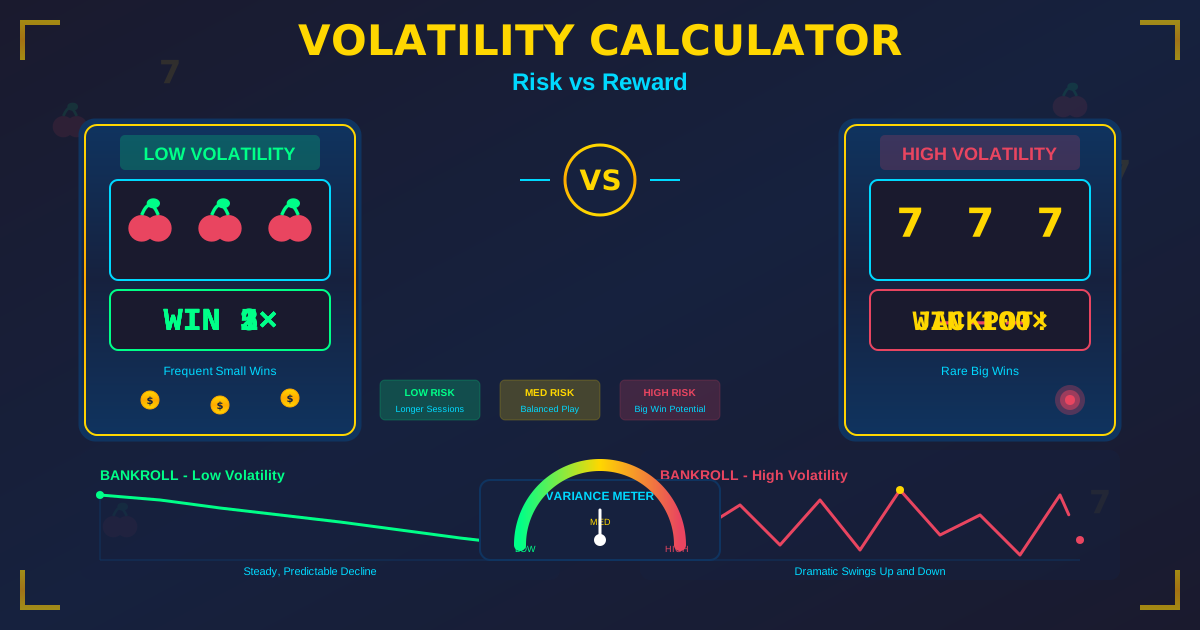
Variance: Understanding the Swings
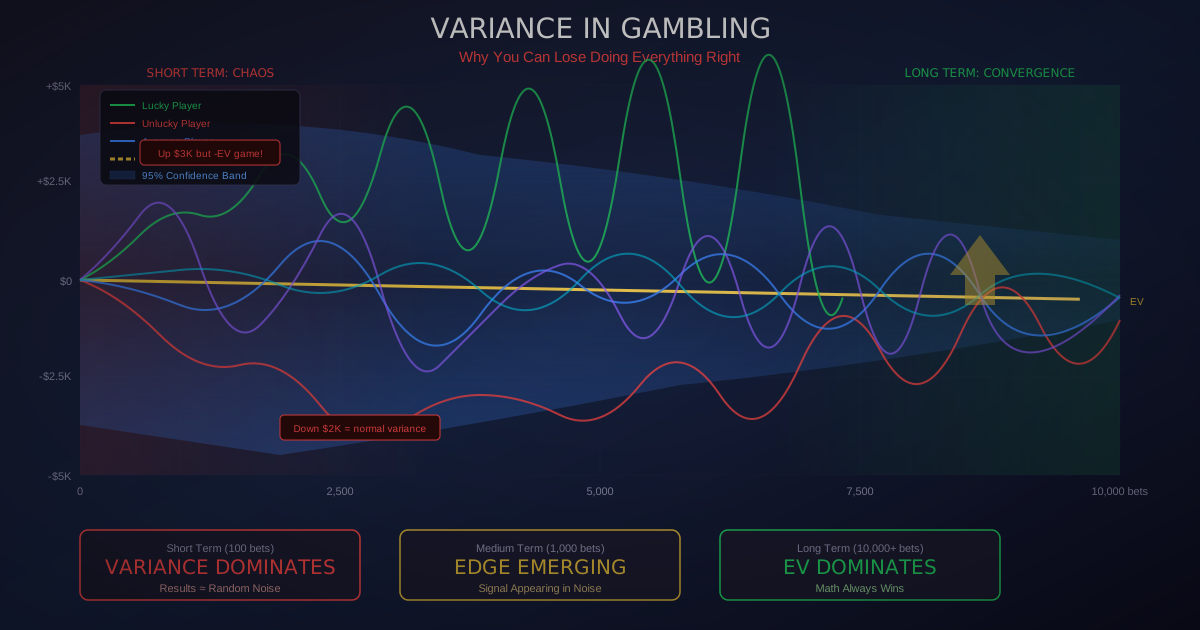
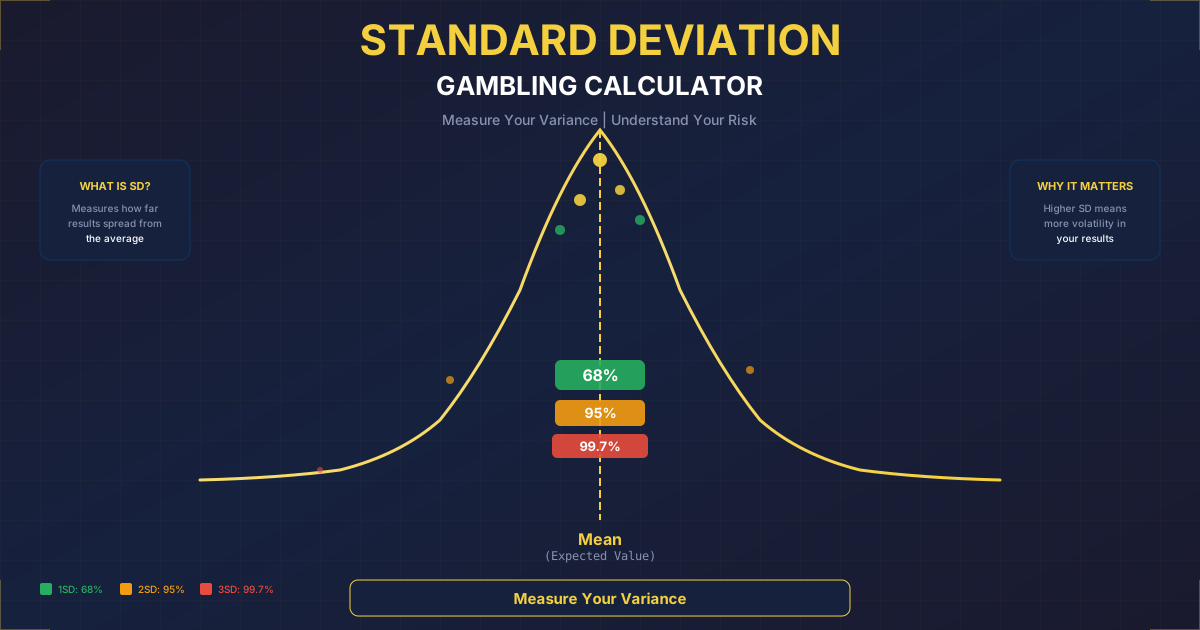
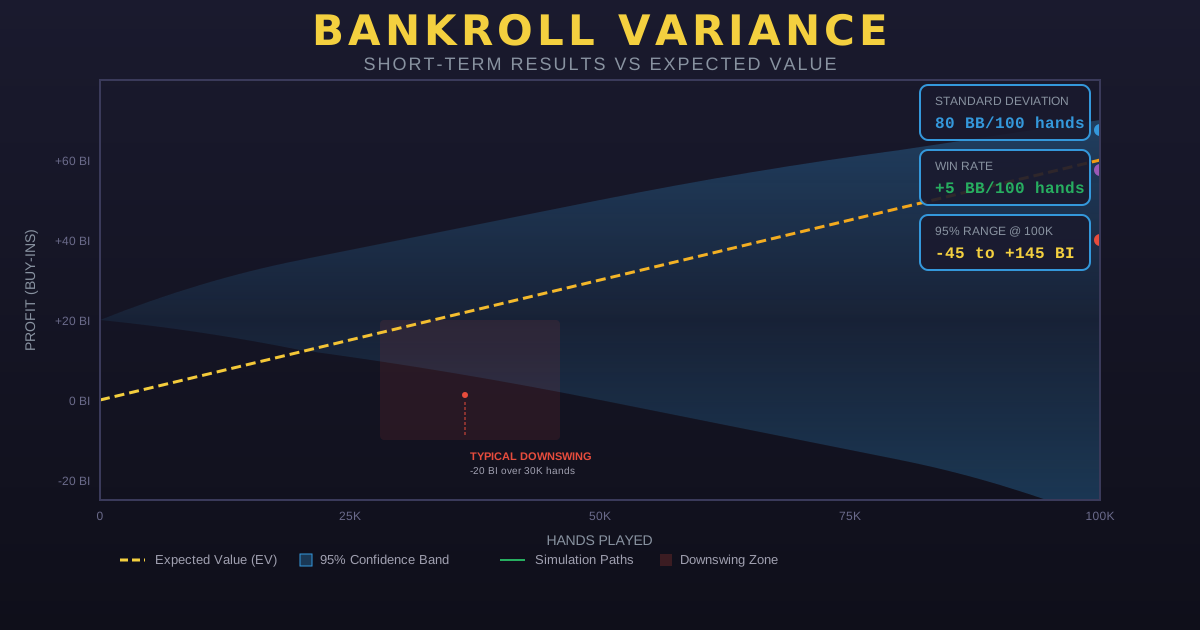
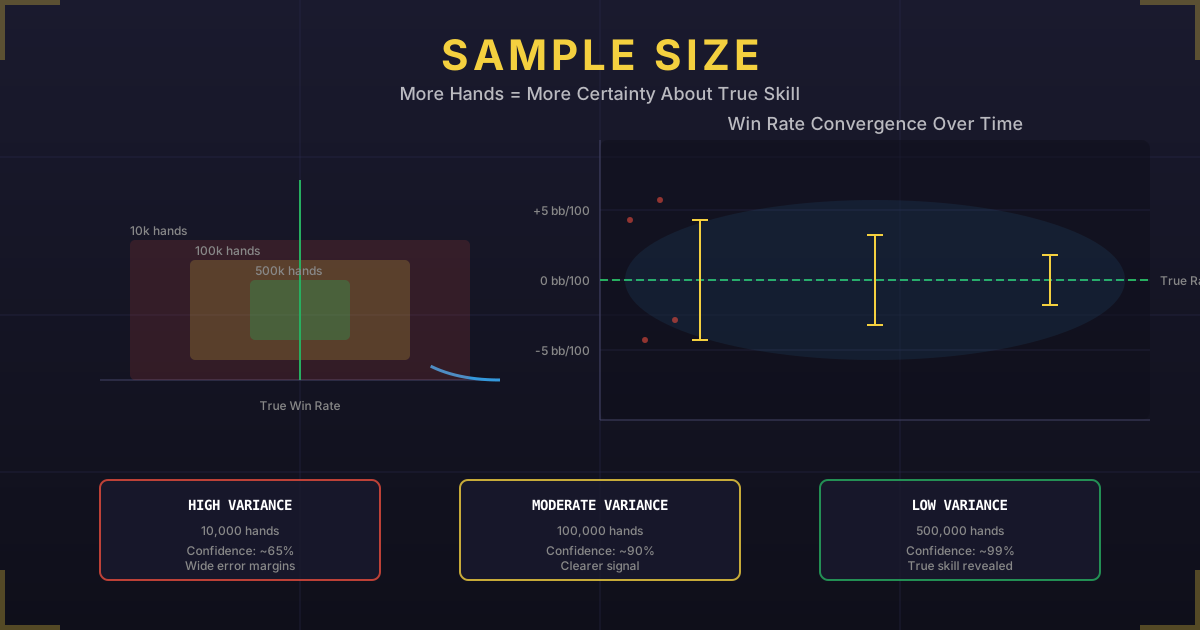
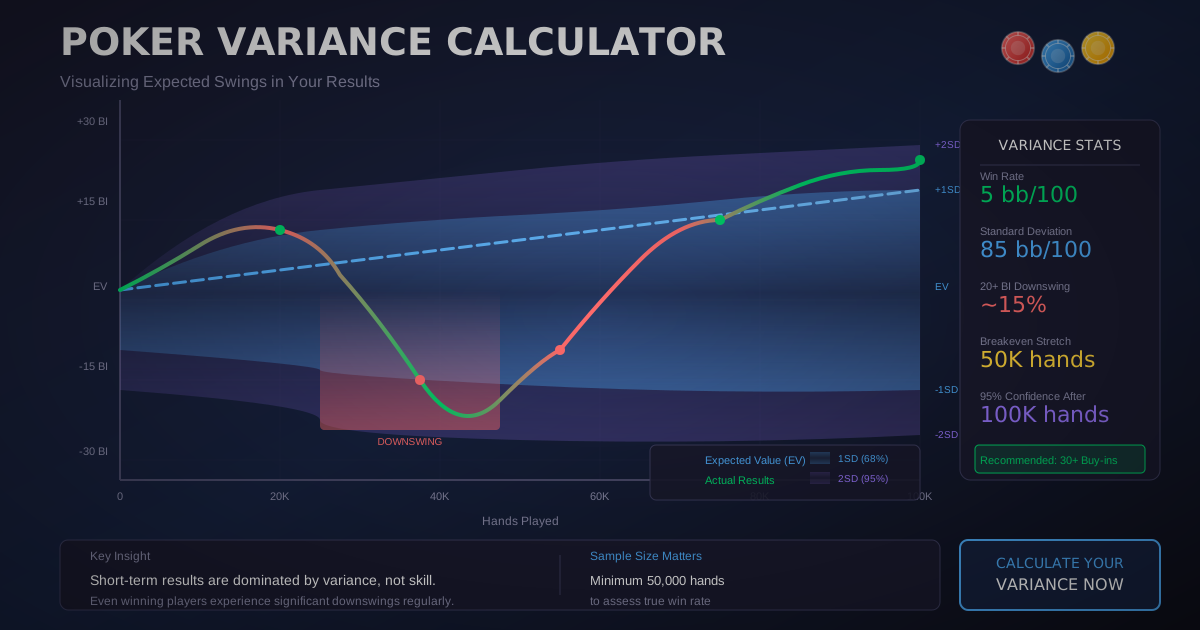
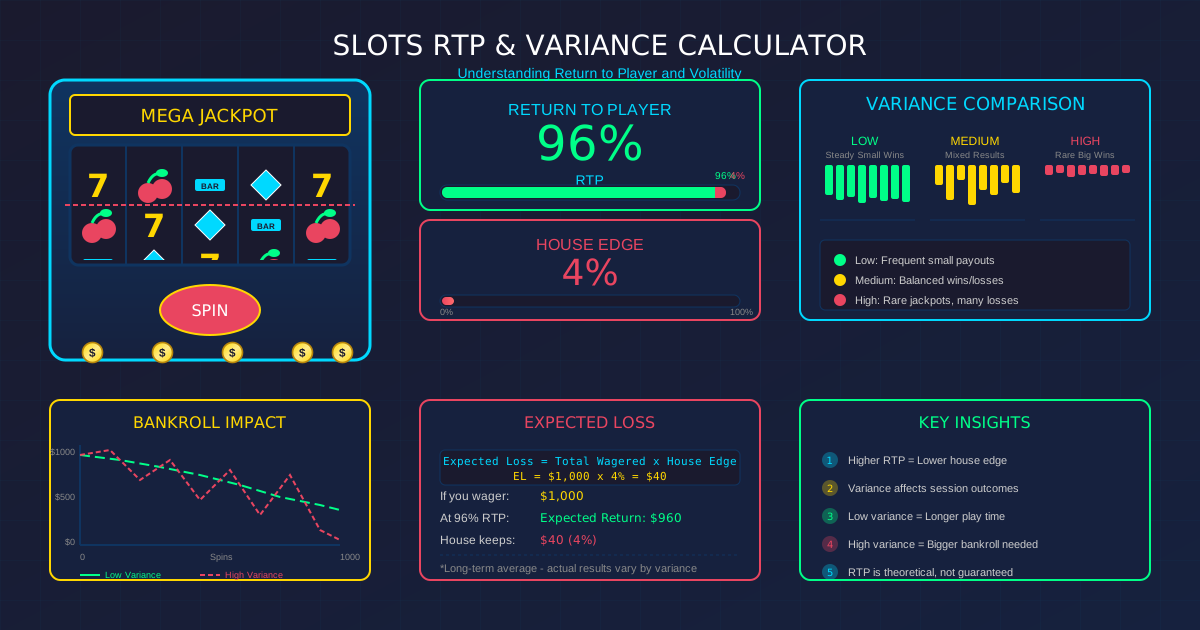
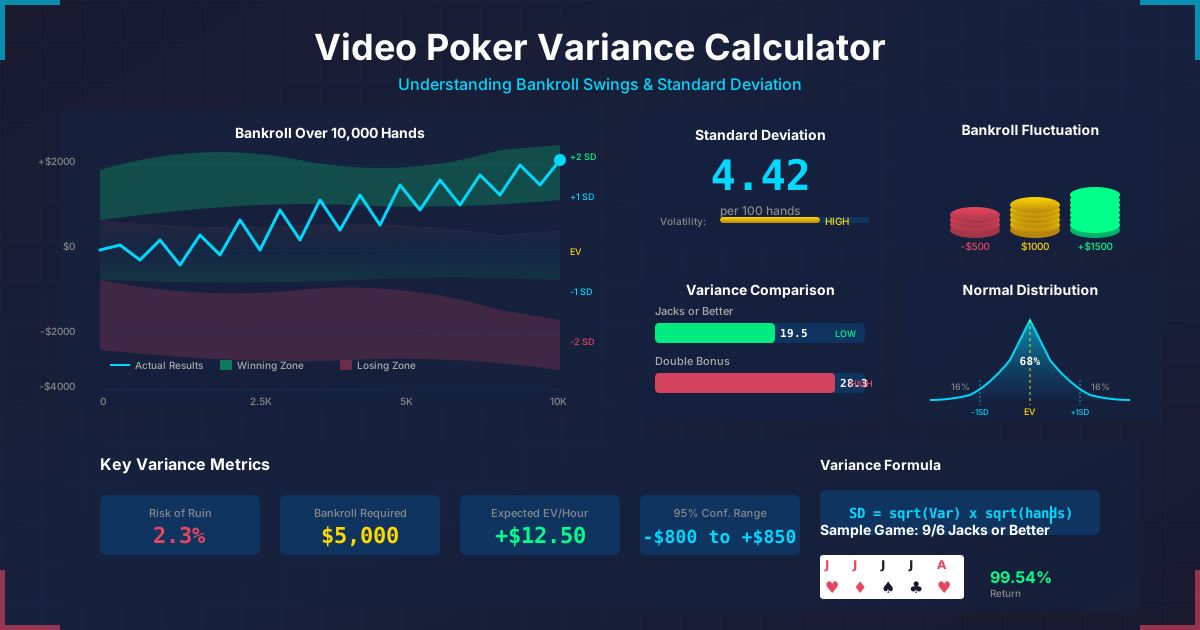
Video poker has higher short-term variance than slots because the pay table is concentrated around rare hands, especially the Royal Flush. Understanding variance helps you manage expectations and bankroll.
Video Poker Variance Calculator
Where Video Poker Returns Come From
9/6 Jacks or Better Return Breakdown:
  Royal Flush:     contributes 1.98% of total return
  Straight Flush:  0.55%
  Four of a Kind:  5.91%
  Full House:      10.36%
  Flush:           6.61%
  Straight:        4.49%
  Three of a Kind: 22.33%
  Two Pair:        25.86%
  Jacks or Better: 21.46%

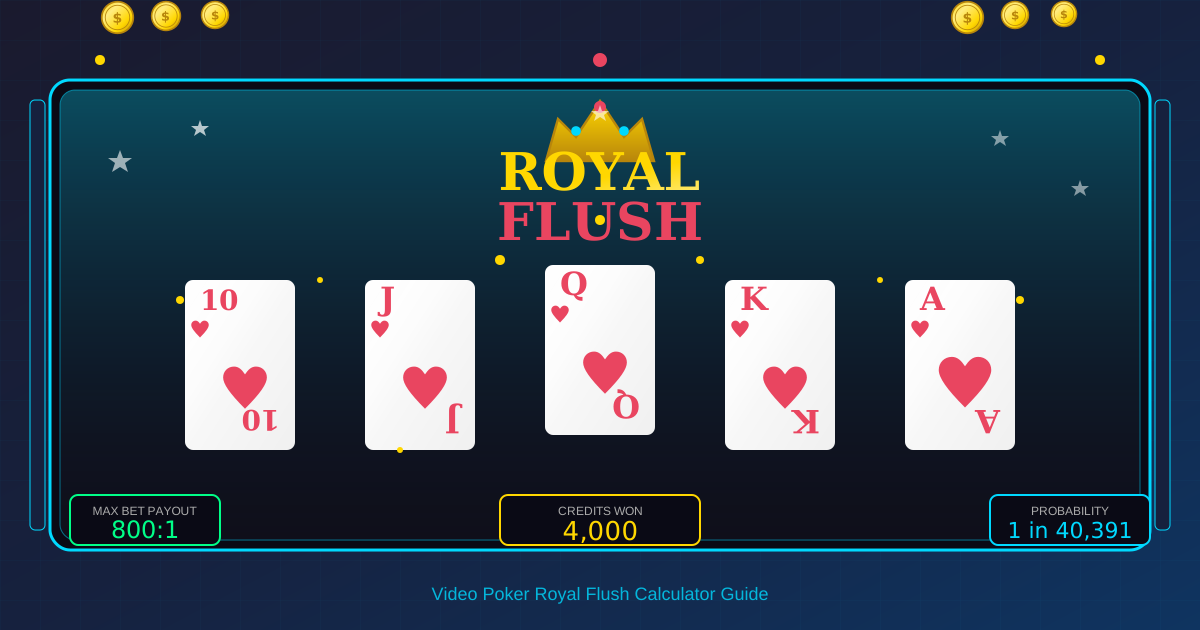
Notice: The Royal Flush (which appears roughly once per
40,000 hands) accounts for nearly 2% of the total return.
Without hitting a Royal, you are playing a 97.56% game,
not a 99.54% game.
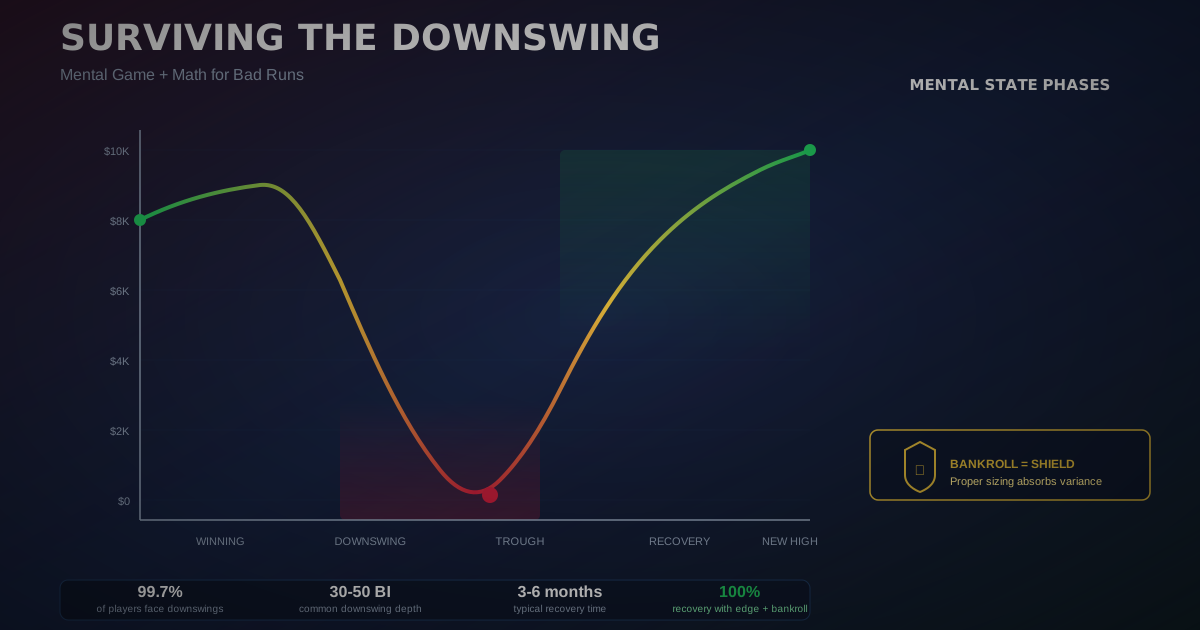
This means you will have losing streaks. You might play 20,000 hands without a Royal Flush (a perfectly normal occurrence) and be down more than expected. Then you hit a Royal for $1,000 (at $1.25/hand, 5-coin max) and recover a significant portion of your losses.
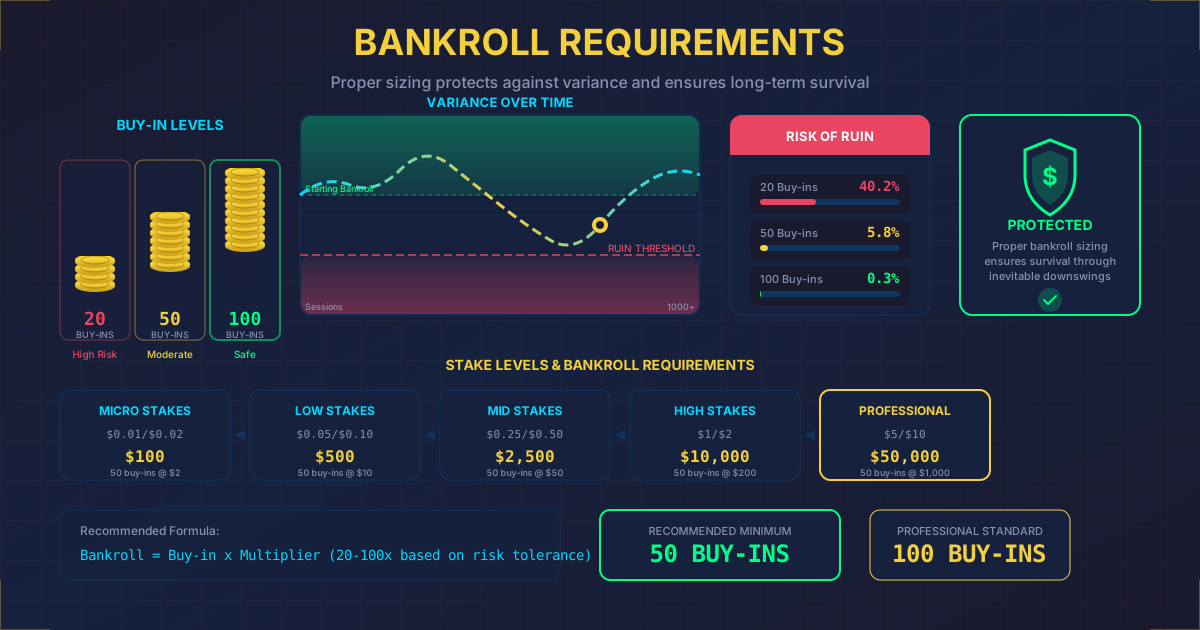
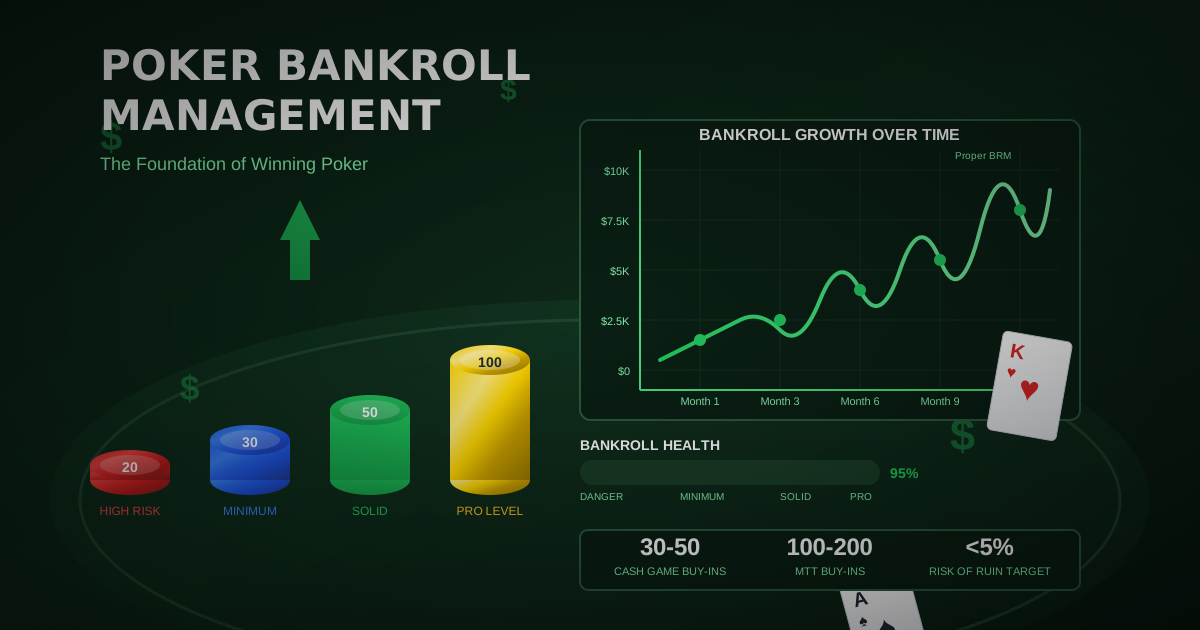
Bankroll Requirements
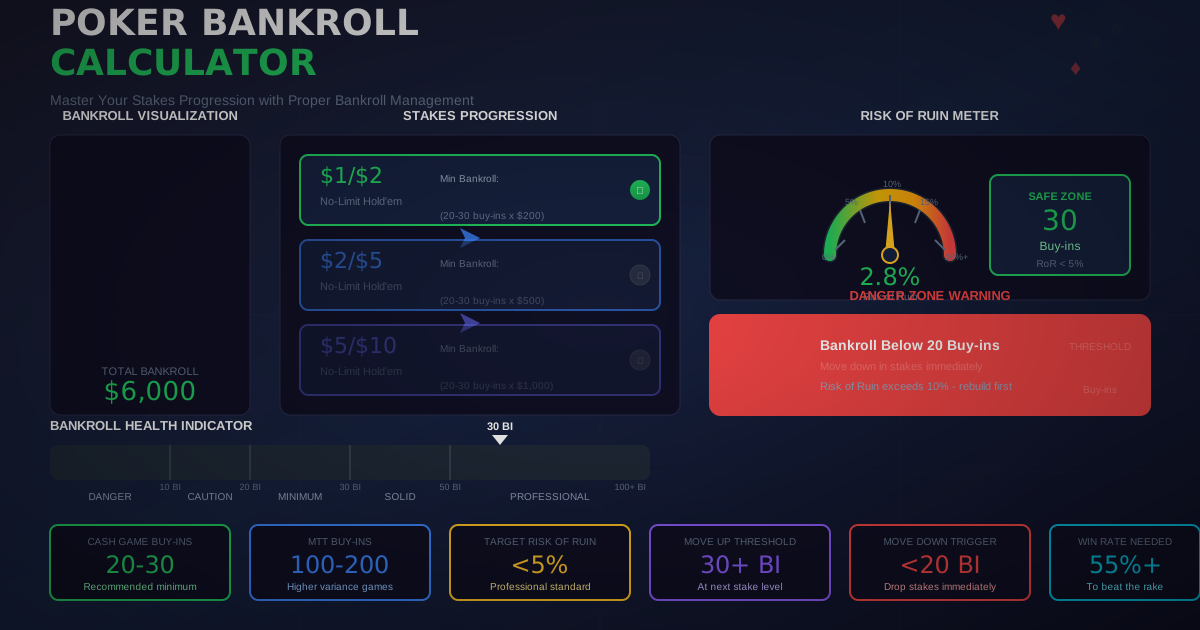
Video Poker Bankroll Calculator
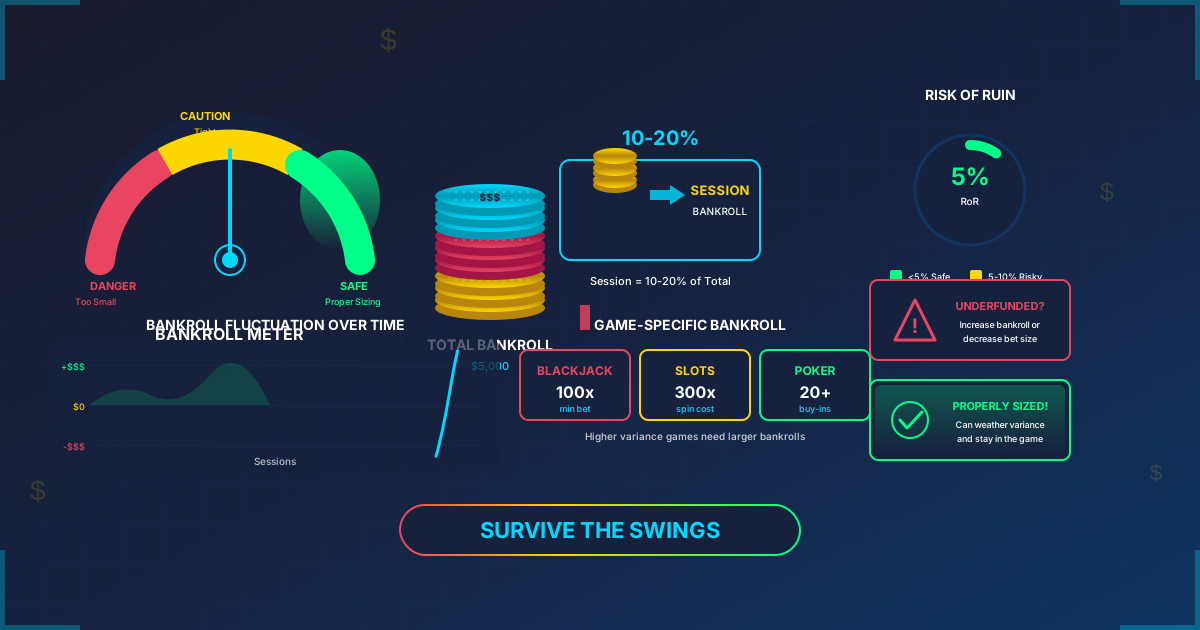
Recommended Bankroll for Sustained Play:

Session bankroll (2-3 hours):
  Jacks or Better: 200-300 x base bet = $250-$375 at $1.25/hand
  Deuces Wild:    250-350 x base bet = $312-$437 at $1.25/hand

Total bankroll (for regular play, low risk of ruin):
  Jacks or Better: 2,000-3,000 x base bet = $2,500-$3,750
  High variance games: 4,000-5,000 x base bet = $5,000-$6,250
Slots require less session bankroll because the hits are more evenly distributed (lots of small wins mixed with losses), but the expected loss rate is so much higher that your total bankroll erodes faster.
The Comps Equation
Some players argue that slots earn better comps than video poker. This is partially true but misleading.
How Comps Work
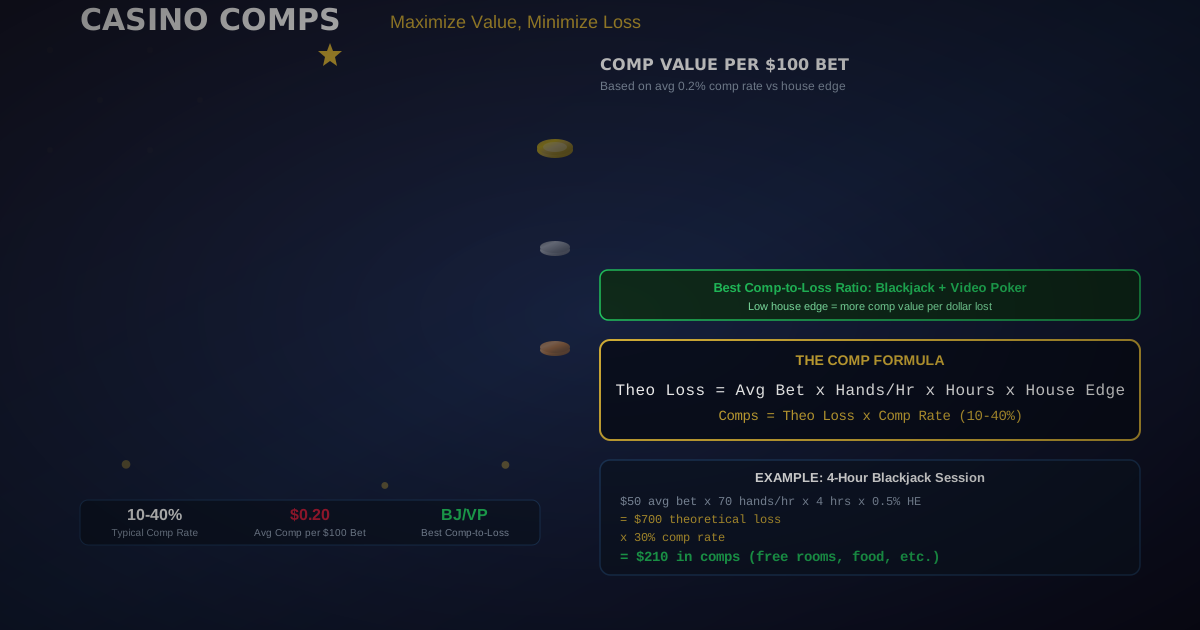
Casinos award comps based on "theoretical loss," calculated as:
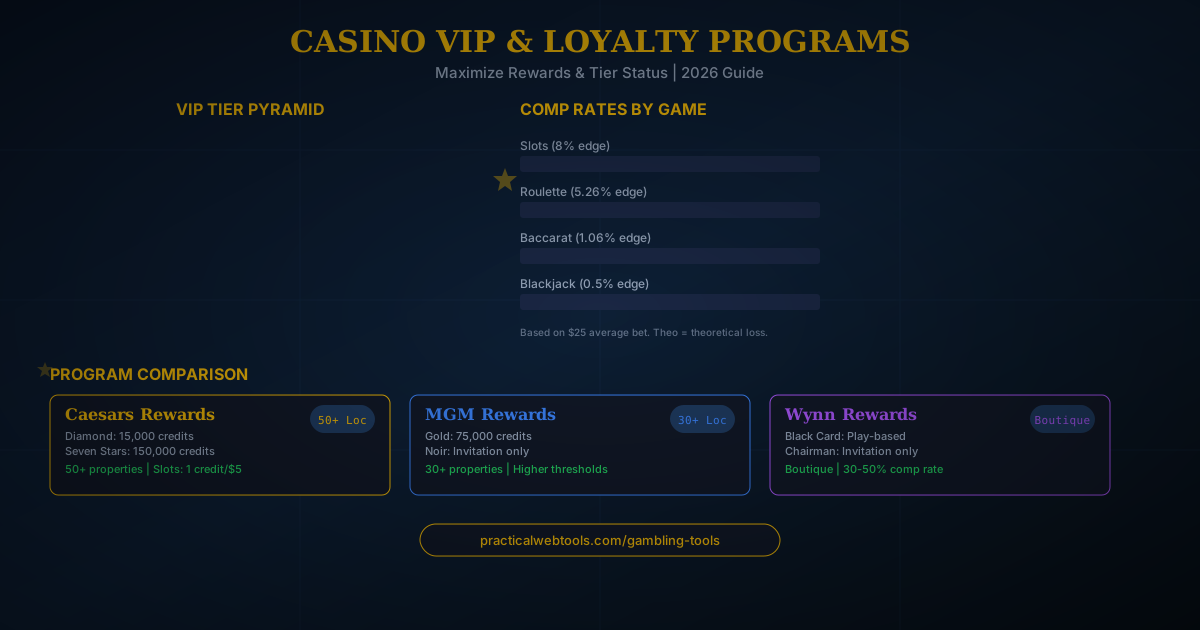
Theo Loss = Average Bet x Hands per Hour x Hours Played x House Edge

Video Poker (9/6 JoB):
  $1.25 x 600 x 4 hours x 0.0046 = $13.80 in theo loss
  Typical comp rate: 0.1-0.3% of action = $0.90-$2.70 in comps

Penny Slots:
  $0.30 x 900 x 4 hours x 0.10 = $108.00 in theo loss
  Typical comp rate: 0.1-0.3% of action = $1.08-$3.24 in comps
The slot player earns marginally more in comps ($3.24 vs. $2.70 at best), but loses $94.20 more in expected losses. You are paying $94.20 extra for $0.54 more in comp value. That is not a good deal.
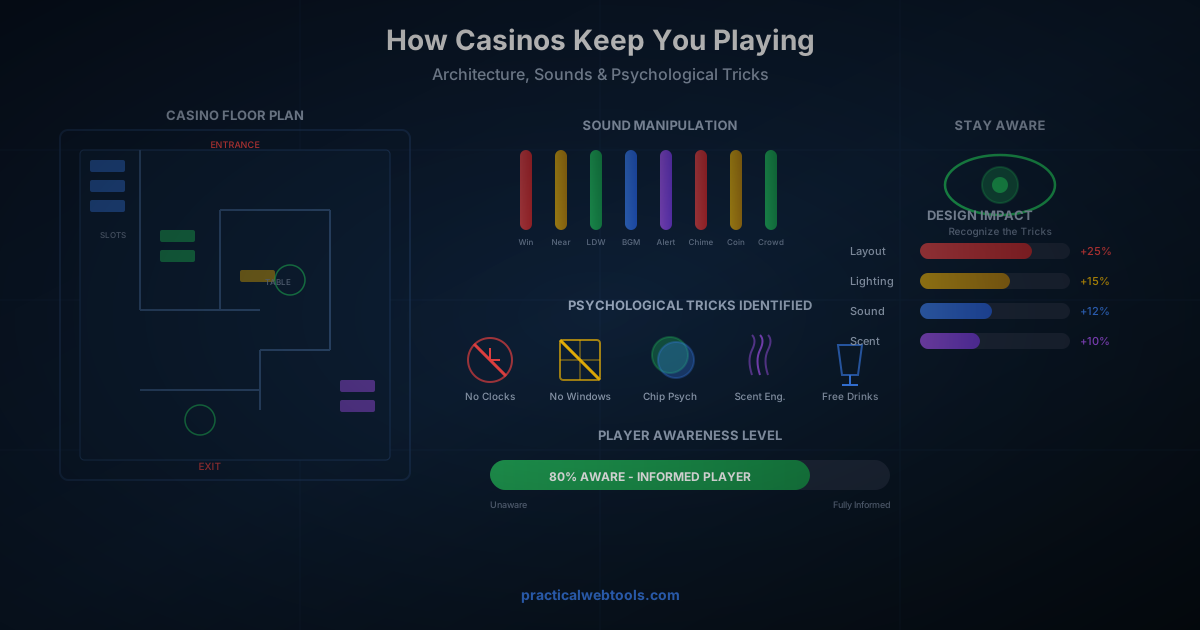
The Psychological Design Difference
Slots Are Designed to Maximize Time on Device
Modern slot machines use sophisticated psychological techniques:
- Losses disguised as wins (LDWs): Winning back 5 cents on a 30-cent bet triggers celebratory sounds and animations, creating the illusion of a win when you actually lost 25 cents.
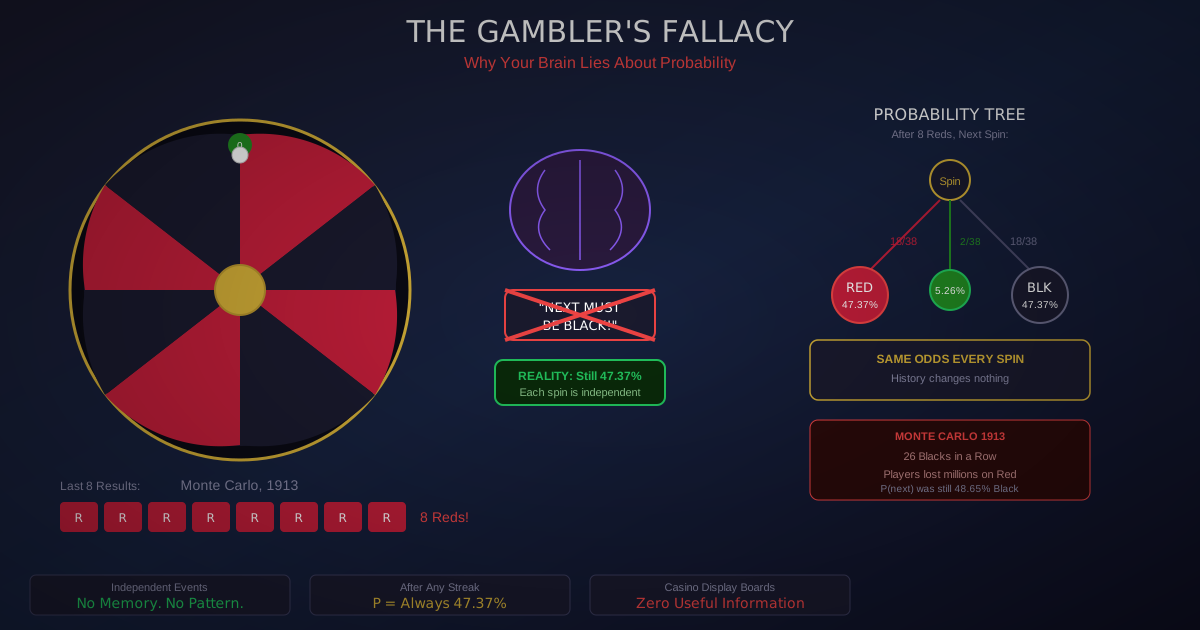
- Near misses: Symbols that nearly complete winning combinations increase arousal and encourage continued play, even though they have no predictive value.
- Variable reward schedules: Unpredictable timing of wins creates the same dopamine response pattern as social media notifications.
- Sound design: Winning sounds are loud and prolonged. Losing sounds are quiet or absent.
- Session pacing: Games are designed to maintain a specific spin rate that maximizes hourly revenue.
Video Poker Rewards Rational Thinking
Video poker, by contrast, rewards analytical thinking. Every hand presents a problem with a correct solution. The satisfaction comes from making good decisions, not from random bells and whistles. The feedback loop reinforces skill development rather than superstitious behavior.
This difference matters for your psychological well-being and your wallet. Games that reward skill tend to produce healthier gambling habits than games that rely on sensory manipulation.
Frequently Asked Questions
Is video poker really better than slots? Yes, mathematically and unambiguously. The best video poker games have a house edge under 0.5% with optimal strategy, while slot machines typically carry 5-15% house edges. At typical playing speeds, a video poker player might lose $3-4 per hour while a slot player loses $25-90 per hour. Use our Video Poker EV Calculator to calculate your exact expected return on any pay table.
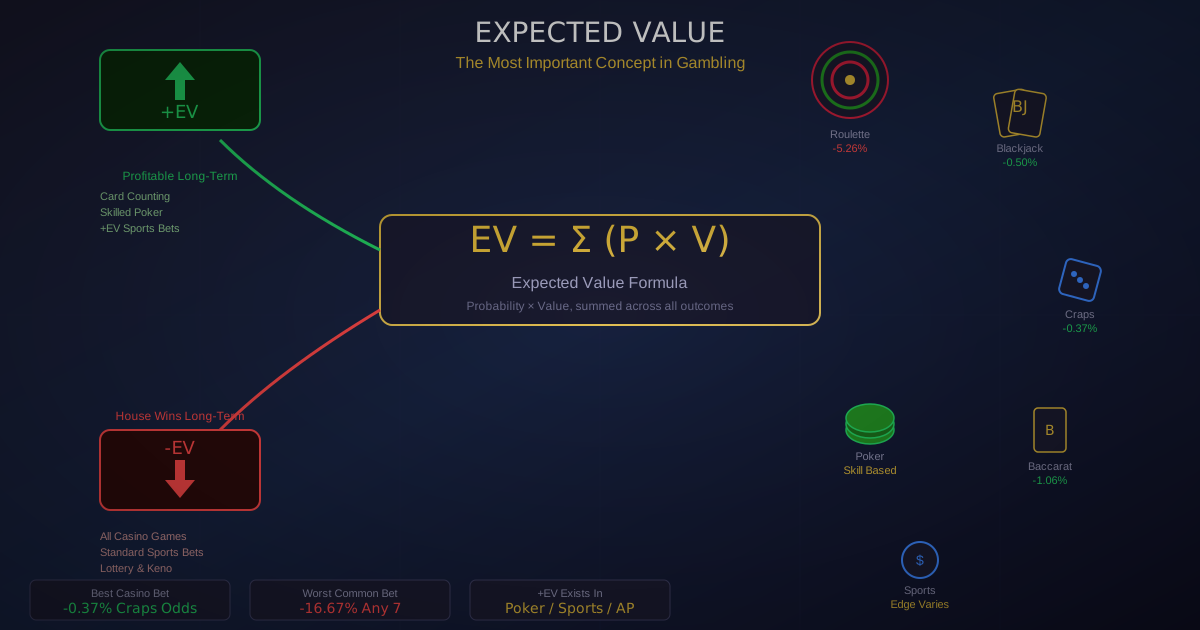
Can you actually win at video poker long term? A few full-pay video poker games (like Deuces Wild at 100.76%) have a positive expected return with perfect strategy, meaning you have a mathematical edge over the casino. However, these games are rare, and the edge is small enough that variance dominates short-term results. Most players should treat even positive-EV video poker as entertainment with a very low expected cost. Analyze specific games with our Video Poker Pay Table Analyzer.
How long does it take to learn video poker strategy? Most players can learn the basic strategy for Jacks or Better in 2-4 hours of practice. A strategy card (which many casinos allow you to use at the machine) covers all decisions. Within 10-20 hours of play, common decisions become automatic. Use our Jacks or Better Strategy Calculator to practice.
What is the best video poker game to play? Full-pay 9/6 Jacks or Better is the most widely available good video poker game, returning 99.54% with optimal strategy. If you can find full-pay Deuces Wild (100.76%) or 10/7 Double Bonus (100.17%), those are even better but require more complex strategies. Check the pay table before sitting down and use our Video Poker Odds Calculator to verify the return.
Do slots ever have better odds than video poker? No standard slot machine has published odds as good as a 9/6 Jacks or Better video poker machine. Some very high denomination slots ($25-$100) may approach 97-98% return, but this is still worse than good video poker and requires enormously higher bet sizes. Use our Expected Value Calculator to compare any two games.
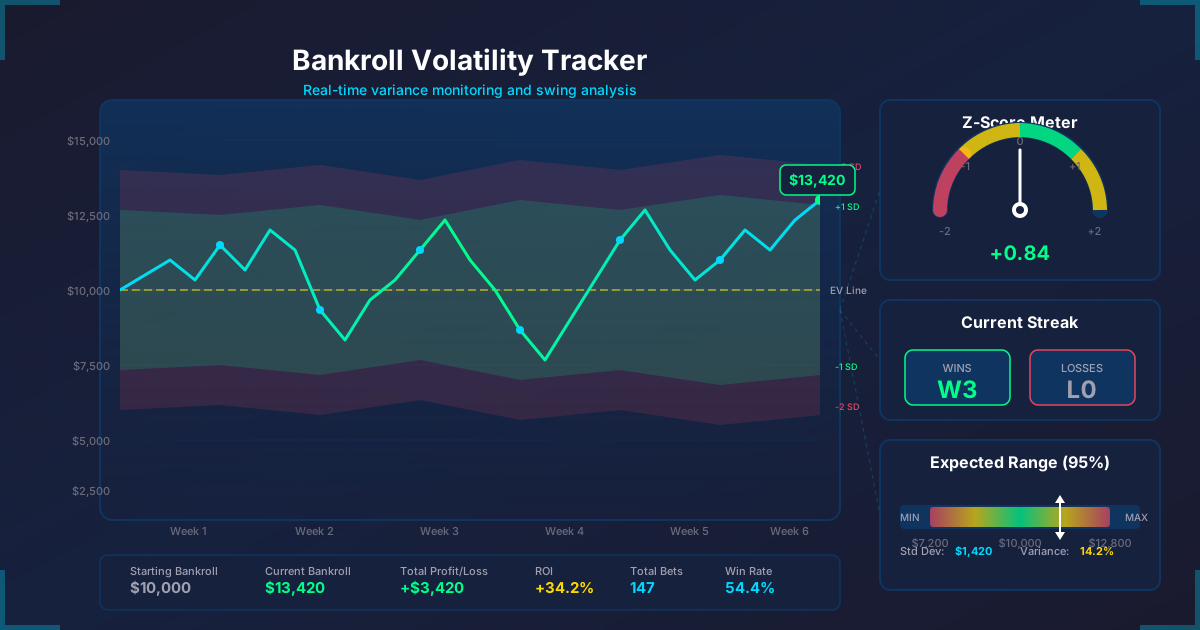
Why do casinos still offer video poker if the house edge is so low? Casinos profit because most video poker players do not use optimal strategy. The average recreational player adds 1-3% to the house edge through suboptimal decisions. Additionally, casinos increasingly offer short-pay tables (8/5, 7/5, 6/5) that have higher house edges. Use our Bankroll Volatility Tracker to see how strategy errors affect long-term results.
Should I play multi-hand video poker? Multi-hand video poker (3-hand, 5-hand, 10-hand, 50-hand, 100-hand) does not change the house edge per hand, but it dramatically increases variance and speed of play. Your hourly expected loss multiplies with each additional hand. Only play multi-hand if you have the bankroll to support it and are comfortable with larger swings. Use our Video Poker Variance Calculator to model the variance impact.
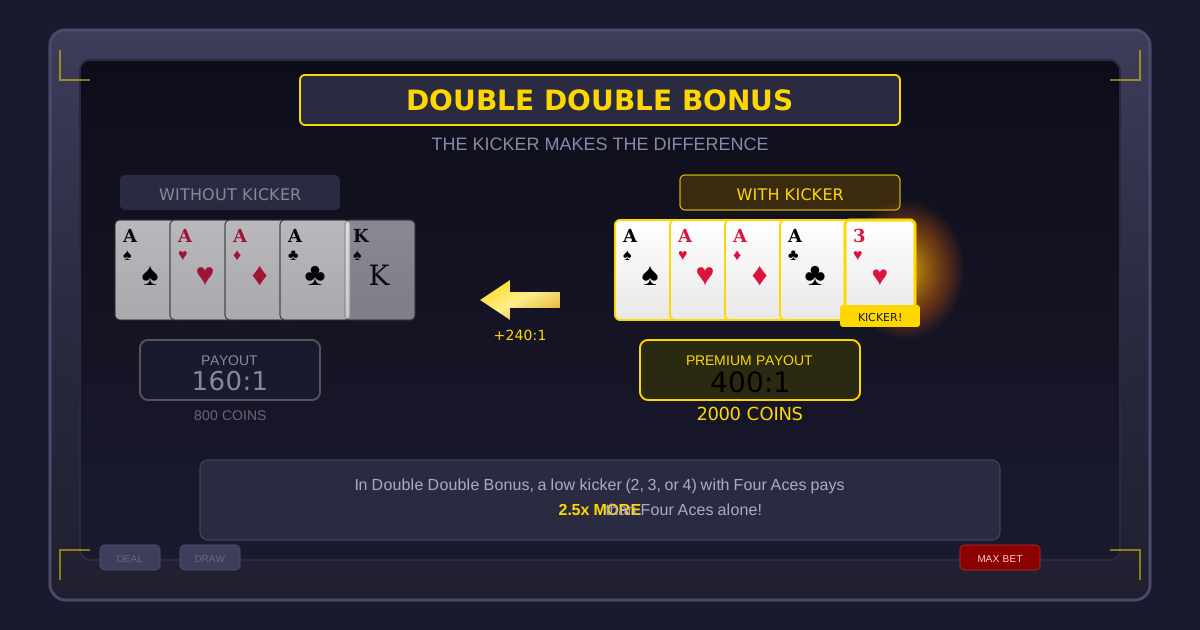
What is the Royal Flush worth in terms of overall return? The Royal Flush contributes approximately 2% of total return in Jacks or Better. Without hitting a Royal (which occurs roughly once per 40,000 hands), you are playing a game that returns about 97.5% instead of 99.5%. This means Royal Flush hits are essential to achieving the theoretical return. Use our Double Bonus Strategy Calculator for games where four-of-a-kind payouts matter more than the Royal.
Related Tools
- Video Poker Pay Table Analyzer - Calculate exact return for any video poker pay table
- Video Poker EV Calculator - Compute expected value per hand
- Video Poker Odds Calculator - See probabilities for every hand outcome
- Video Poker Variance Calculator - Understand swings and standard deviation
- Video Poker Bankroll Calculator - Determine proper bankroll for your game
- Jacks or Better Strategy Calculator - Perfect strategy for the most popular VP game
- Deuces Wild Strategy Calculator - Optimal play for the best VP game
- Double Bonus Strategy Calculator - Strategy for high-variance Double Bonus
- Expected Value Calculator - Compare any two wagers
- Bankroll Volatility Tracker - Model bankroll fluctuations over time
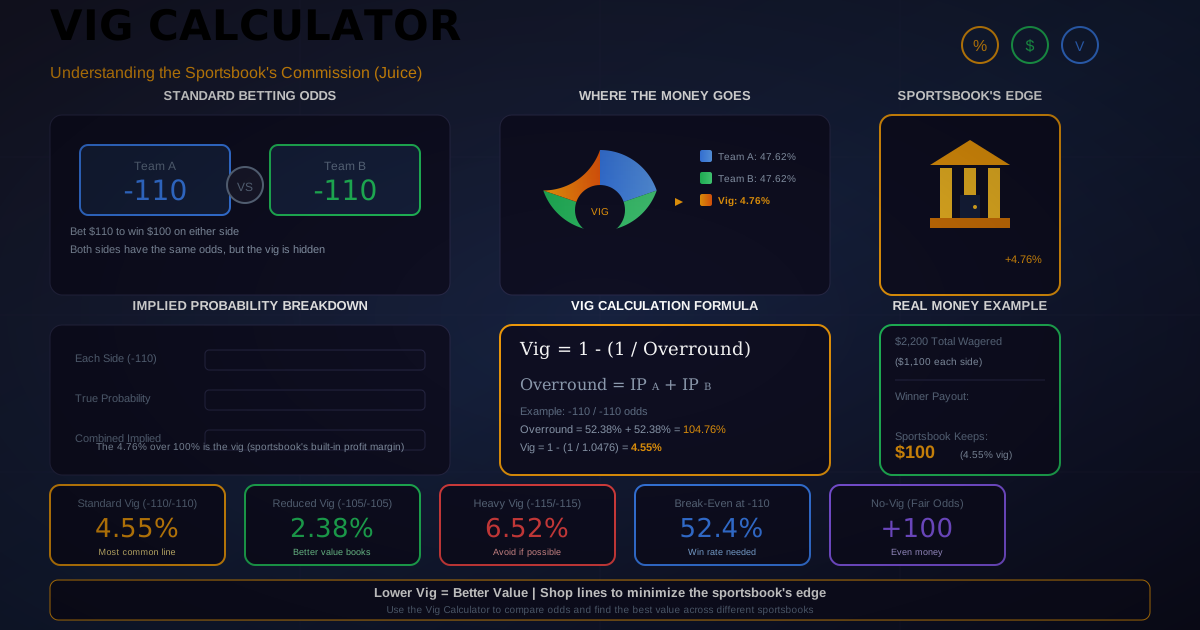
- Hold/Vig Calculator - Calculate the true cost of the house edge
- Blackjack House Edge Calculator - Compare video poker to blackjack
- Roulette House Edge Calculator - Compare video poker to roulette
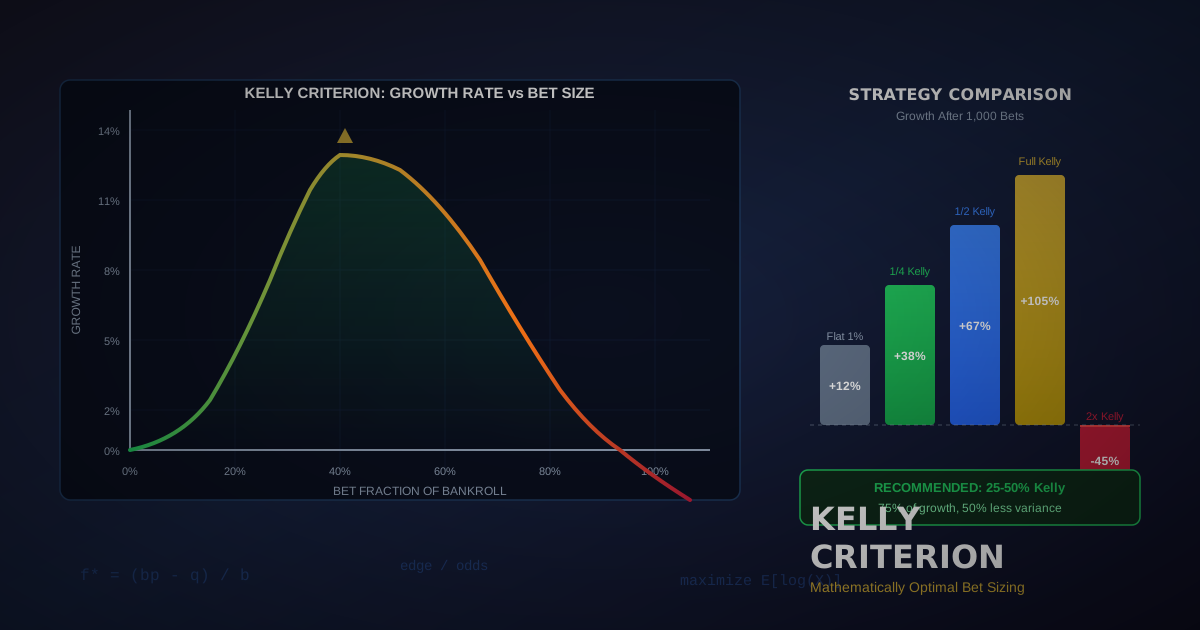
- Kelly Criterion Calculator - Optimal bet sizing for positive EV games
- Roulette EV Calculator - Cross-game expected value comparison
Conclusion
The choice between video poker and slots is not a matter of preference. It is a matter of mathematics. Video poker offers transparent odds, strategic decision-making, house edges under 1%, and expected hourly losses measured in single-digit dollars. Slot machines hide their odds, offer no strategic control, carry house edges of 5-15%, and cost $25-$90+ per hour in expected losses.
If you are going to spend time and money at a machine game, learn basic video poker strategy and find a 9/6 Jacks or Better machine. Your bankroll will last 5-10 times longer, your expected losses will drop by 90% or more, and you will be playing a game where your decisions actually matter.
Use our Video Poker Pay Table Analyzer to evaluate any machine before you play, and our Jacks or Better Strategy Calculator to practice optimal decisions. The math is clear, and the math does not lie.
Gambling involves risk. This content is for educational and informational purposes only. Always gamble responsibly, set limits you can afford, and seek help if gambling becomes a problem. Visit the National Council on Problem Gambling or call 1-800-522-4700 for support.