Prediction Markets vs. Sportsbooks: How Polymarket and Kalshi Compare to Traditional Betting (2026)

Prediction markets handled over $35 billion in trading volume in 2025, with Polymarket alone processing $9.2 billion, yet most sports bettors have never placed a single prediction market trade. The line between prediction markets and traditional sportsbooks is blurring fast. Both allow you to wager on future outcomes, both use probability-based pricing, and both can be profitable for informed participants. But the differences in fee structures, market types, liquidity, regulation, and odds formats create distinct advantages for each platform depending on what you want to bet on and how you want to bet.
This guide is a complete comparison of prediction markets (Polymarket, Kalshi, PredictIt) versus traditional sportsbooks (FanDuel, DraftKings, BetMGM, Bet365). You will learn how each platform works, where the value exists, how to read and compare odds across platforms, where arbitrage opportunities hide, and how the regulatory landscape is shaping the future of both industries.
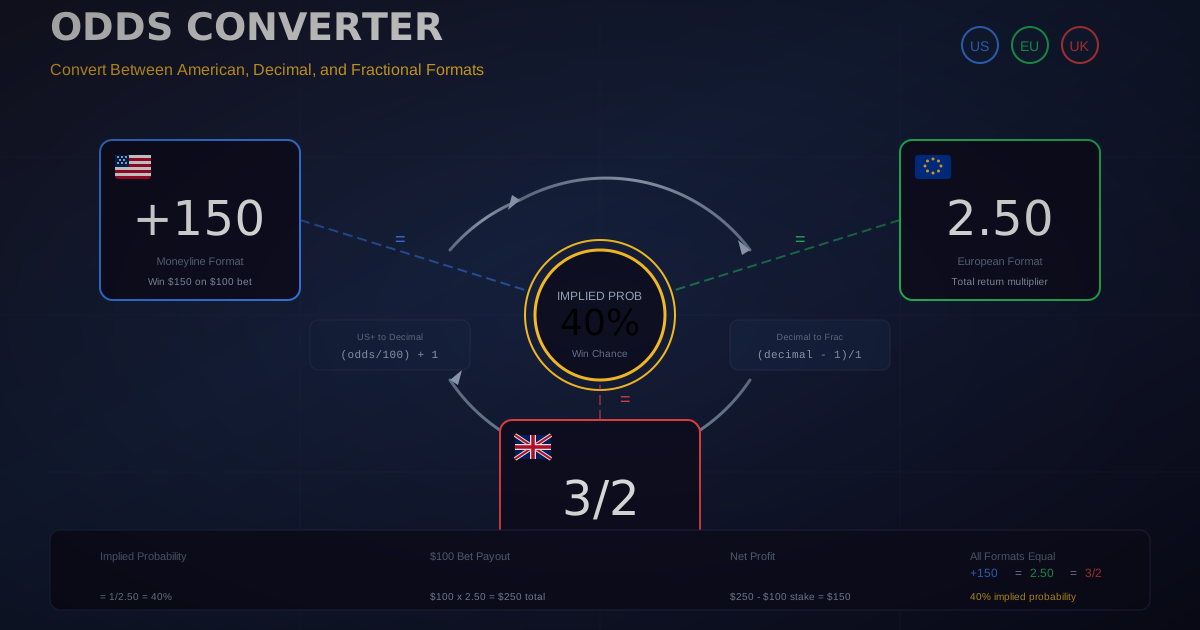
Convert between prediction market prices and traditional odds with our free Odds Converter.
What Are Prediction Markets and How Do They Work?
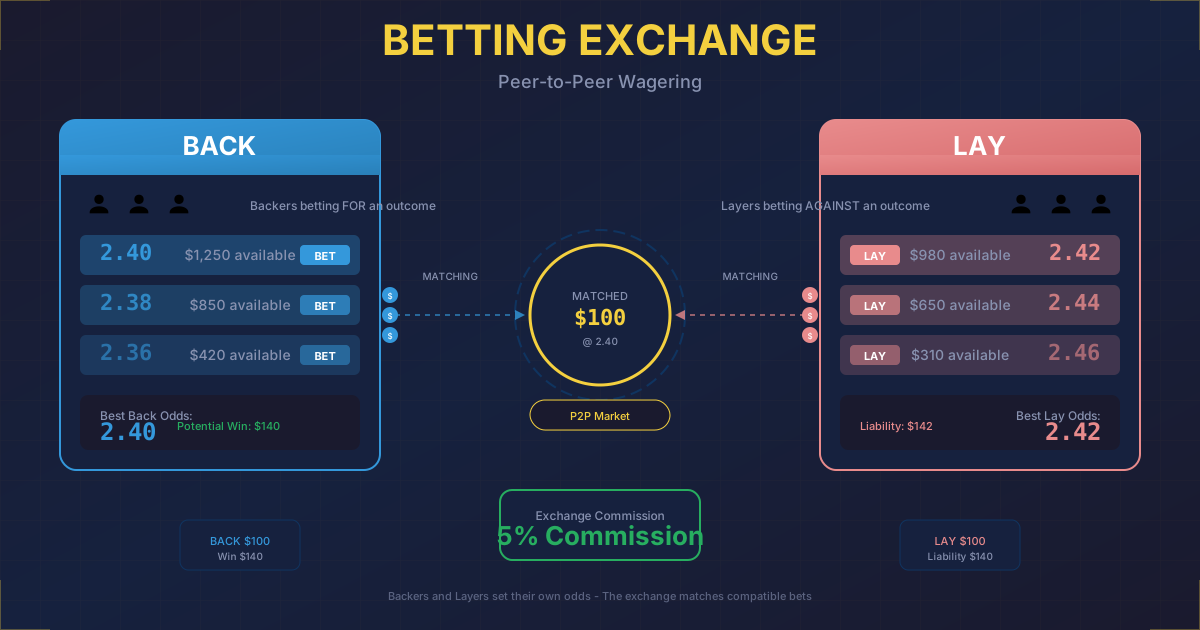
Prediction markets are exchange-based platforms where participants buy and sell shares (also called contracts) that pay out based on whether a future event occurs. Each share is priced between $0.01 and $1.00, where the price represents the market's consensus probability of the event happening. If the event occurs, "Yes" shares pay $1.00; if it does not, "No" shares pay $1.00.
How Prediction Market Pricing Works
| Concept | Prediction Market | Traditional Sportsbook |
|---|---|---|
| Odds expression | Price: $0.01-$1.00 (= probability) | American: -110, +200; Decimal: 1.91, 3.00 |
| Who sets the odds | Market participants (supply/demand) | Sportsbook oddsmakers + market adjustment |
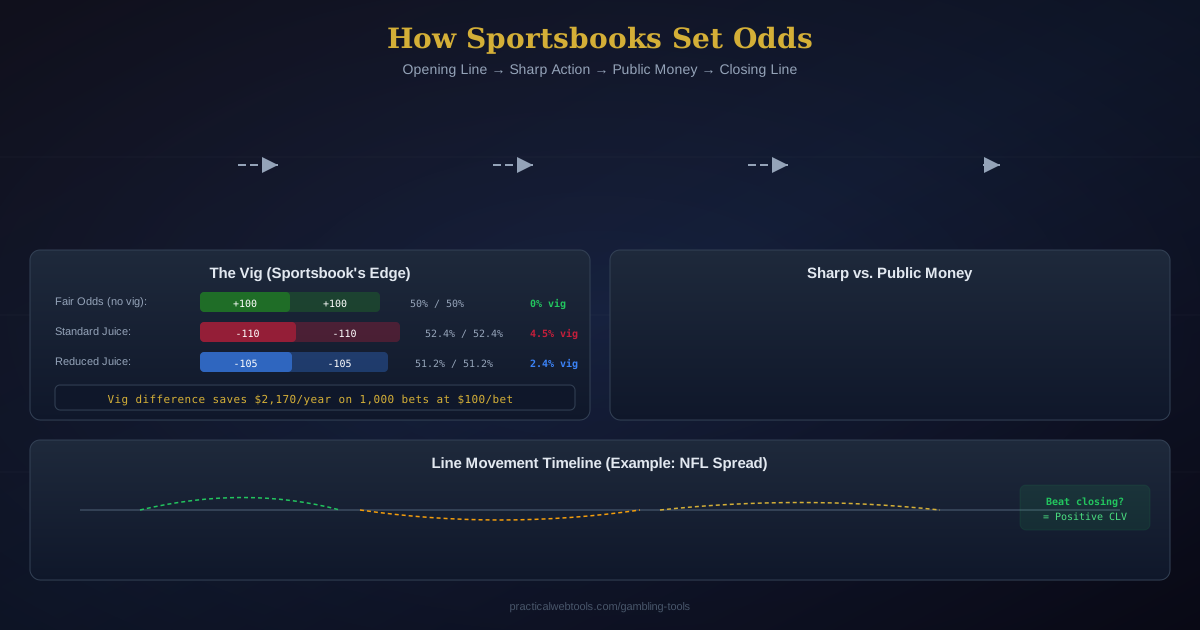
| How odds change | Buying pushes price up, selling pushes down | Sharp money moves lines, book adjusts |
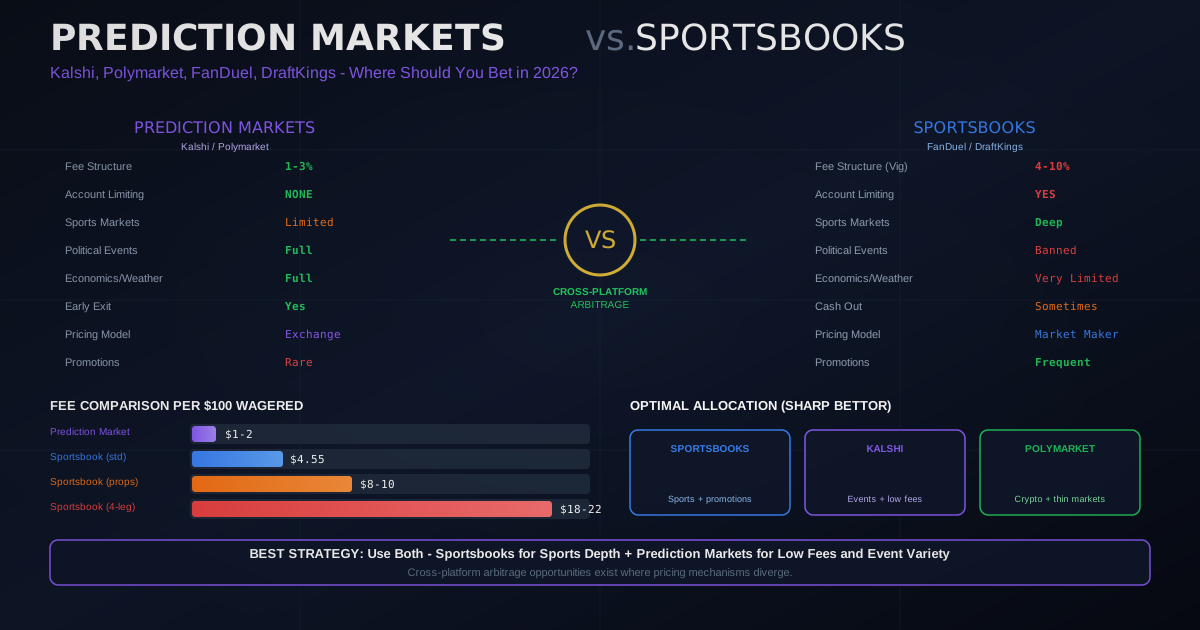
| Fee model | Trading fee (1-5% per trade) | Vig embedded in odds (4-20%) |
| When you can exit | Anytime (sell your position) | Generally cannot exit (some cash-out options) |
| Settlement | Binary ($0 or $1) at resolution | Fixed payout based on odds at bet time |
| Counterparty | Other market participants | The sportsbook |
Converting Between Prediction Market Prices and Betting Odds
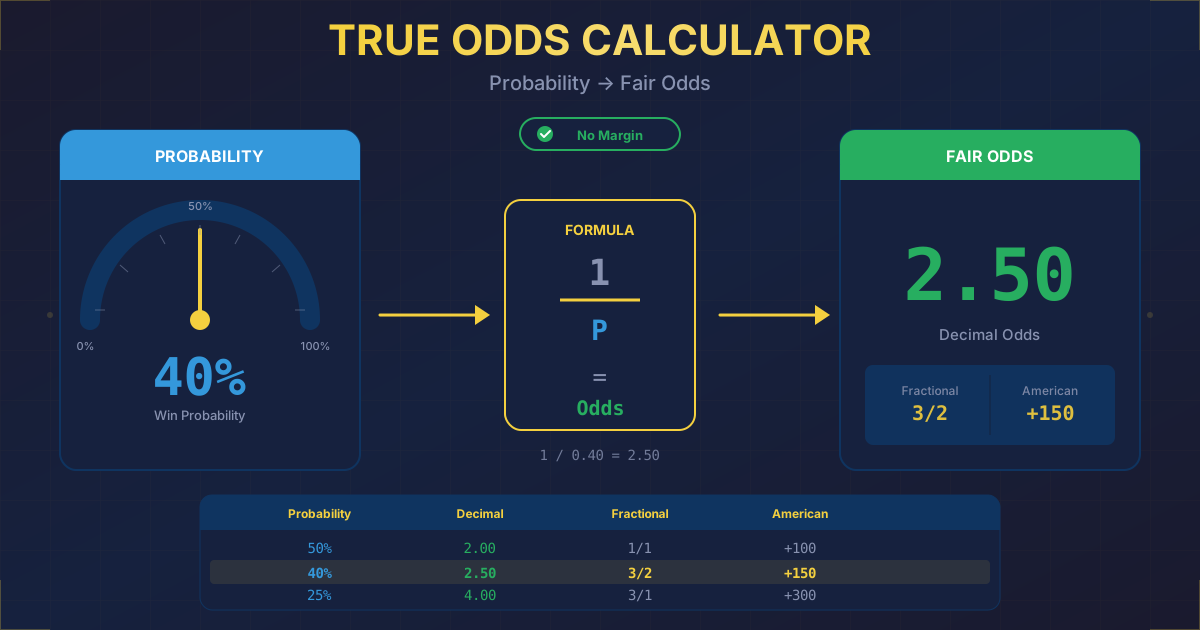
Understanding how prediction market prices translate to traditional betting odds is essential for comparing value across platforms.
| Prediction Market Price | Implied Probability | American Odds | Decimal Odds | Fractional Odds |
|---|---|---|---|---|
| $0.10 | 10% | +900 | 10.00 | 9/1 |
| $0.20 | 20% | +400 | 5.00 | 4/1 |
| $0.30 | 30% | +233 | 3.33 | 7/3 |
| $0.40 | 40% | +150 | 2.50 | 3/2 |
| $0.50 | 50% | +100 | 2.00 | 1/1 |
| $0.60 | 60% | -150 | 1.67 | 2/3 |
| $0.70 | 70% | -233 | 1.43 | 3/7 |
| $0.80 | 80% | -400 | 1.25 | 1/4 |
| $0.90 | 90% | -900 | 1.11 | 1/9 |
| $0.95 | 95% | -1900 | 1.05 | 1/19 |
Convert any prediction market price to traditional odds with our Odds Converter.
The Key Advantage: Selling Your Position
The most significant structural difference between prediction markets and sportsbooks is the ability to sell your position before the event resolves. If you buy "Yes" shares at $0.40 and the price rises to $0.65, you can sell for a guaranteed $0.25 profit per share without waiting for the event to occur. This is impossible at traditional sportsbooks (though some now offer limited "cash out" features at unfavorable rates).
| Scenario | Prediction Market | Traditional Sportsbook |
|---|---|---|
| Buy at 40% probability | Buy Yes at $0.40 | Bet at +150 |
| Event probability rises to 65% | Sell Yes at $0.65 (profit: $0.25/share) | Cash out at sportsbook (typically 60-70% of theoretical value) |
| Event probability drops to 20% | Sell Yes at $0.20 (loss: $0.20/share) | Total loss of bet |
| Hold to resolution (event happens) | Receive $1.00 (profit: $0.60/share) | Receive $250 on $100 bet (profit: $150) |
| Hold to resolution (event doesn't happen) | Receive $0.00 (loss: $0.40/share) | Lose $100 bet |
How Do Polymarket, Kalshi, and PredictIt Compare?
The three major prediction market platforms each have distinct characteristics, user bases, fee structures, and regulatory environments. Understanding these differences is critical for choosing the right platform and identifying where the best value exists.
Platform Comparison
| Feature | Polymarket | Kalshi | PredictIt |
|---|---|---|---|
| Founded | 2020 | 2021 | 2014 |
| Regulatory status | Offshore (Polygon blockchain) | CFTC-regulated (US) | CFTC no-action letter (limited) |
| US accessibility | Gray area (accessible via VPN) | Fully legal in most US states | Legal but limited markets |
| Currency | USDC (cryptocurrency) | US Dollars | US Dollars |
| Trading fees | 0% on trades, 2% on winnings | $0.01-$0.03 per contract (varies) | 5% on profits + 5% withdrawal |
| Max position | No limit | $25,000+ (varies by market) | $850 per contract |
| Settlement | Smart contract (automated) | CFTC-regulated (centralized) | Centralized |
| Market types | Politics, crypto, entertainment, sports, weather, science | Economics, politics, weather, finance, events | Politics primarily |
| Liquidity | Very high (top markets) | Moderate to high | Low to moderate |
| Market creation | Anyone can propose | Kalshi team creates | PredictIt team creates |
| Mobile app | Web only (mobile optimized) | iOS, Android, Web | Web only |
Volume and Liquidity Comparison
| Metric (2025) | Polymarket | Kalshi | PredictIt |
|---|---|---|---|
| Total volume | $9.2 billion | $2.8 billion | $320 million |
| Peak daily volume | $450 million | $120 million | $28 million |
| Active markets | 3,000+ | 800+ | 100-150 |
| Avg trade size | $85 | $42 | $18 |
| Spread (top markets) | 1-2 cents | 1-3 cents | 2-5 cents |
| Spread (thin markets) | 3-8 cents | 5-10 cents | 5-15 cents |
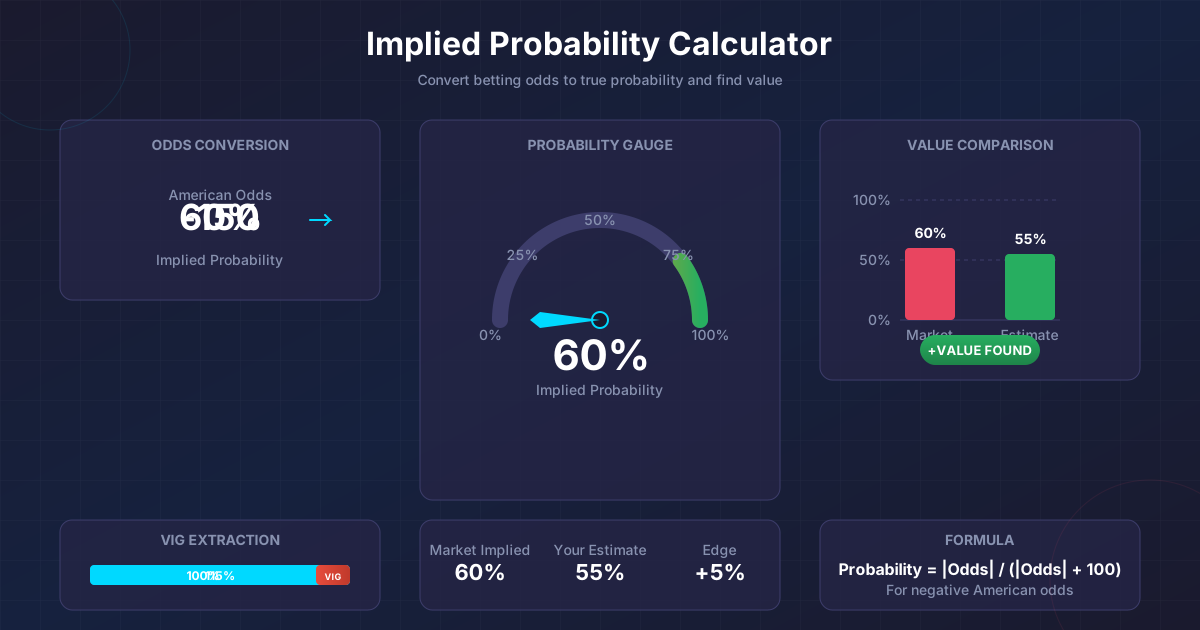
Calculate the implied probability of any prediction market price with our Implied Probability Calculator.
Fee Structure Deep Dive
The true cost of trading on each platform is more complex than headline fees suggest. Here is a comprehensive comparison:
| Fee Type | Polymarket | Kalshi | PredictIt | Traditional Sportsbook |
|---|---|---|---|---|
| Trading fee (per contract) | $0 | $0.01-$0.03 | $0 | N/A |
| Winning fee | 2% of profit | $0 | 5% of profit | 0% (embedded in vig) |
| Withdrawal fee | Gas fees ($0.50-$5) | $0 | 5% of withdrawal | $0-$25 |
| Deposit fee | $0 (crypto) | $0 | $0 | $0 |
| Spread cost | 1-2 cents (liquid) | 1-3 cents (liquid) | 2-5 cents (liquid) | N/A (vig instead) |
| Effective total cost | 2-4% per winning trade | 2-6% per trade | 10-15% per winning trade | 4-20% (vig) |
What Can You Bet On in Prediction Markets vs. Sportsbooks?
The range of available markets is the most striking difference between prediction markets and sportsbooks. While sportsbooks focus almost exclusively on sporting events, prediction markets cover politics, economics, weather, entertainment, science, cryptocurrency, and more.
Market Category Comparison
| Market Category | Polymarket | Kalshi | PredictIt | Sportsbooks |
|---|---|---|---|---|
| US Politics | Extensive | Extensive | Extensive | Limited (entertainment props) |
| International Politics | Extensive | Moderate | Limited | Very Limited |
| Sports | Growing (limited) | Some markets | Very Limited | Core business |
| Economics (GDP, inflation, jobs) | Moderate | Extensive | Limited | Not Available |
| Weather (temperature, storms) | Limited | Extensive | Not Available | Not Available |
| Crypto prices | Extensive | Limited | Not Available | Not Available |
| Entertainment (Oscars, TV) | Moderate | Limited | Limited | Moderate |
| Science/Technology | Moderate | Limited | Not Available | Not Available |
| Corporate events (IPOs, mergers) | Growing | Growing | Not Available | Not Available |
| Social media metrics | Growing | Limited | Not Available | Not Available |
Example Markets Unique to Prediction Platforms
| Market | Platform | Current Price | Implied Probability | Resolution |
|---|---|---|---|---|
| US GDP growth above 2.5% in 2026 | Kalshi | $0.58 | 58% | Federal Reserve data release |
| Will Bitcoin exceed $150K by Dec 2026 | Polymarket | $0.32 | 32% | Market price verification |
| Category 5 hurricane makes US landfall 2026 | Kalshi | $0.22 | 22% | NOAA classification |
| Will SpaceX launch Starship 10 times in 2026 | Polymarket | $0.45 | 45% | SpaceX public records |
| Federal Reserve cuts rates in March 2026 | Kalshi | $0.71 | 71% | FOMC announcement |
| Oscar Best Picture: specific film | Polymarket | Various | Various | Academy Awards ceremony |
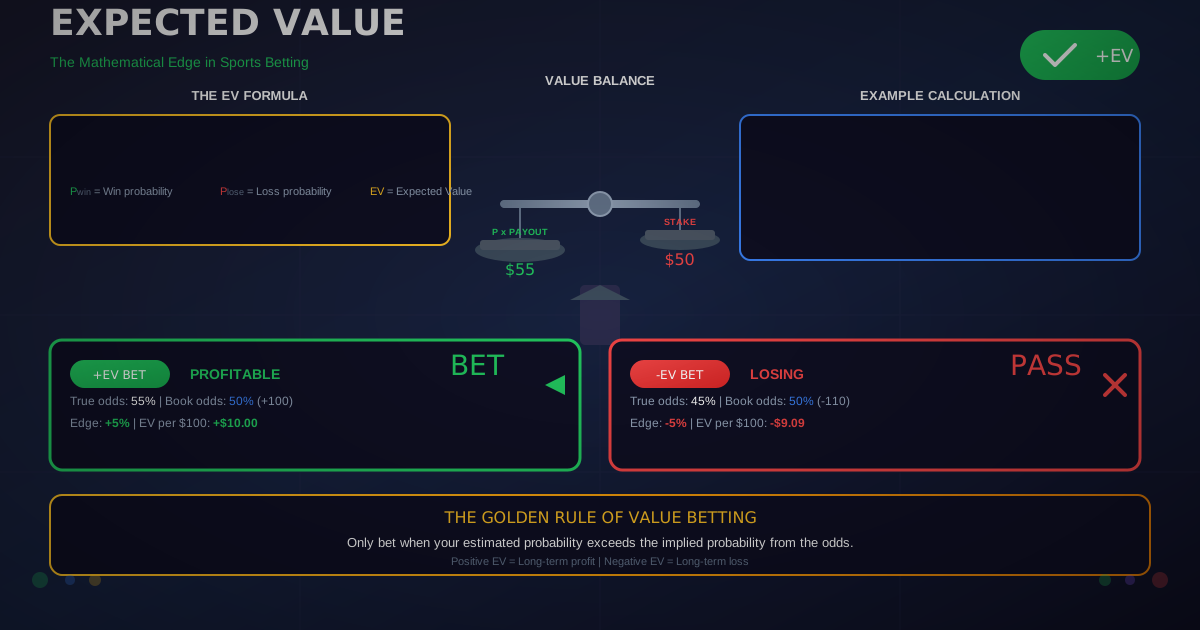
Calculate the expected value of political and event bets with our Expected Value Calculator.
Sports Markets: Where They Overlap
The sports betting overlap between prediction markets and sportsbooks is growing. Here is how the same event might be priced on each:
| Event | Sportsbook (American Odds) | Sportsbook (Implied %) | Polymarket Price | Kalshi Price | Difference |
|---|---|---|---|---|---|
| Team A wins Super Bowl | +650 | 13.3% | $0.14 | $0.13 | 0-1.3% |
| Player X wins MVP | +300 | 25% | $0.26 | $0.24 | 1-2% |
| Over 10.5 wins Team B | -130 | 56.5% | $0.55 | N/A | 1.5% |
| Will Team C make playoffs | -200 | 66.7% | $0.64 | $0.65 | 1.7-2.7% |
The pricing differences between platforms create arbitrage opportunities, which we will discuss in detail below.
How Do Fee Structures Compare?
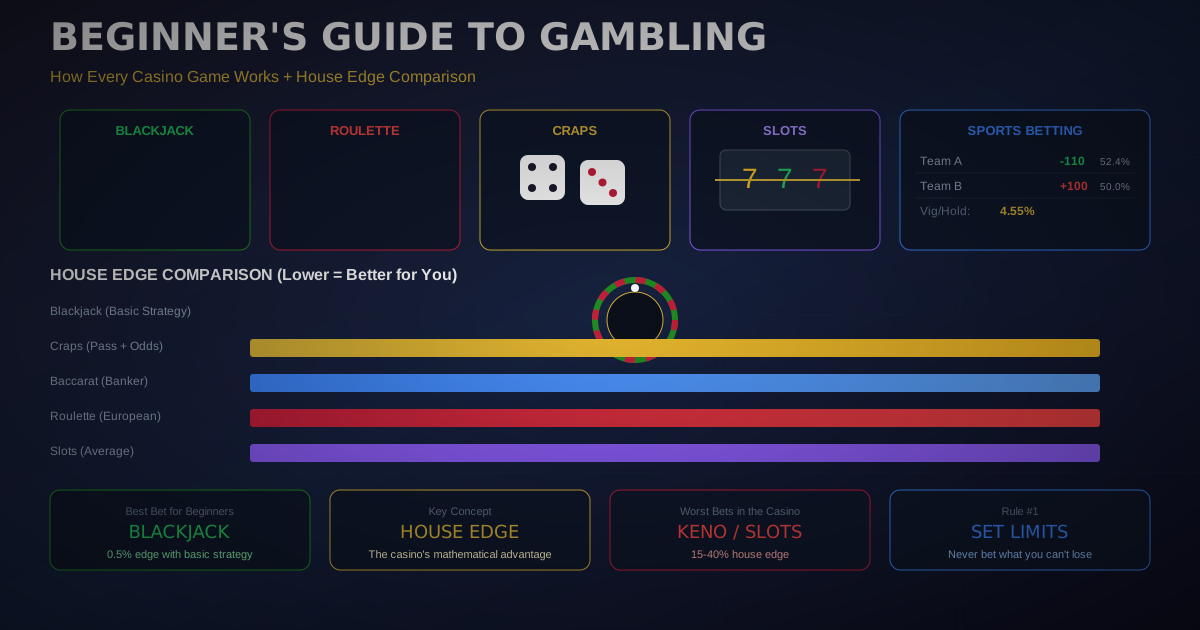
Understanding the true cost of placing a bet or trade on each type of platform is essential for calculating your actual expected value. The fee structures differ fundamentally: sportsbooks embed their margin in the odds (vig), while prediction markets charge explicit trading fees.
Total Cost Analysis for a $100 Position
| Scenario | Traditional Sportsbook | Polymarket | Kalshi | PredictIt |
|---|---|---|---|---|
| Bet $100 at 50% probability, WIN | Cost: $4.55 (vig at -110) | Cost: $1.00 (2% of $50 profit) | Cost: $1.00-$3.00 (per-contract) | Cost: $2.50 (5% of $50) + $2.50 withdrawal |
| Bet $100 at 50% probability, LOSE | Cost: $100 (total loss) | Cost: $100 (total loss) | Cost: $100 + $1-3 fees (total loss + fees) | Cost: $100 (total loss) |
| Sell position before resolution (price moves 10% in your favor) | Cash out: ~$106-108 (sportsbook takes 2-4%) | Sell: $110 (full $10 profit minus 2% = $9.80) | Sell: $110 minus $1-3 fee | Sell: $110 minus 5% profit fee = $109.50 |
| True break-even win rate needed | 52.4% (at -110) | 51.0% (at 2% fee) | 51.5-53.0% (varies by fee) | 55.0%+ (5%+5% fees) |
When Prediction Markets Are Cheaper
| Situation | Cheaper Platform | Cost Difference | Why |
|---|---|---|---|
| Heavy favorite bets (-300 or more) | Prediction market | 2-8% | Sportsbook vig is % of implied probability |
| Long-shot bets (+500 or more) | Depends on spread | 0-3% | Prediction market spreads wider on thin markets |
| Early exit (selling before resolution) | Prediction market | 5-15% | Sportsbook cash-out rates are poor |
| High-volume trading (many positions) | Prediction market | Cumulative savings | Sportsbook vig compounds per bet |
| Political/non-sport events | Prediction market (only option) | N/A | Sportsbooks do not offer these markets |
| Standard sports bets (-110 range) | Sportsbook | 0-2% | Sportsbook vig is competitive at standard lines |
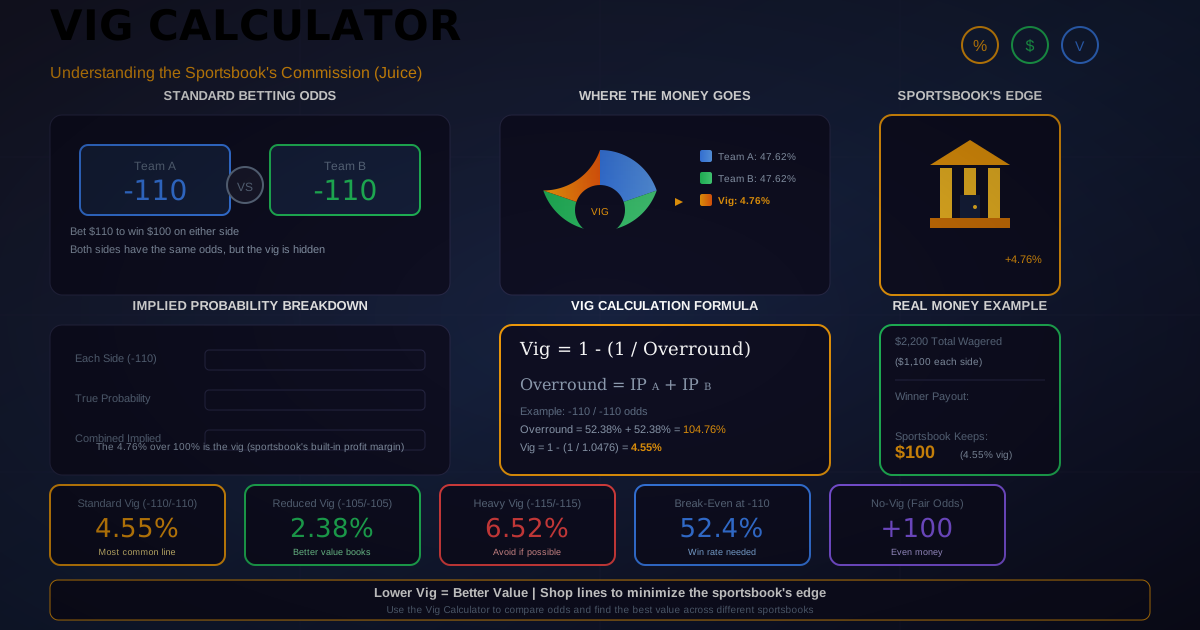
Calculate the vig on any sportsbook market with our Hold/Vig Calculator.
Where Do Prediction Markets Have an Edge Over Sportsbooks?
Prediction markets offer several structural advantages over traditional sportsbooks that make them the superior choice for certain types of wagering. Understanding these advantages helps you allocate your capital to the most efficient platform for each bet.
Advantages of Prediction Markets
| Advantage | Explanation | Impact on Bettor |
|---|---|---|
| Position flexibility | Buy and sell anytime | Lock in profits, cut losses early |
| Price transparency | All trades visible, order book public | Better price discovery |
| Non-sport markets | Politics, economics, weather, crypto | Access to unique opportunities |
| Lower fees on favorites | 2% profit fee vs. 8-15% vig on heavy favorites | Significant savings on likely outcomes |
| No limits on sharp bettors | Markets welcome informed traders | No account restrictions for winning |
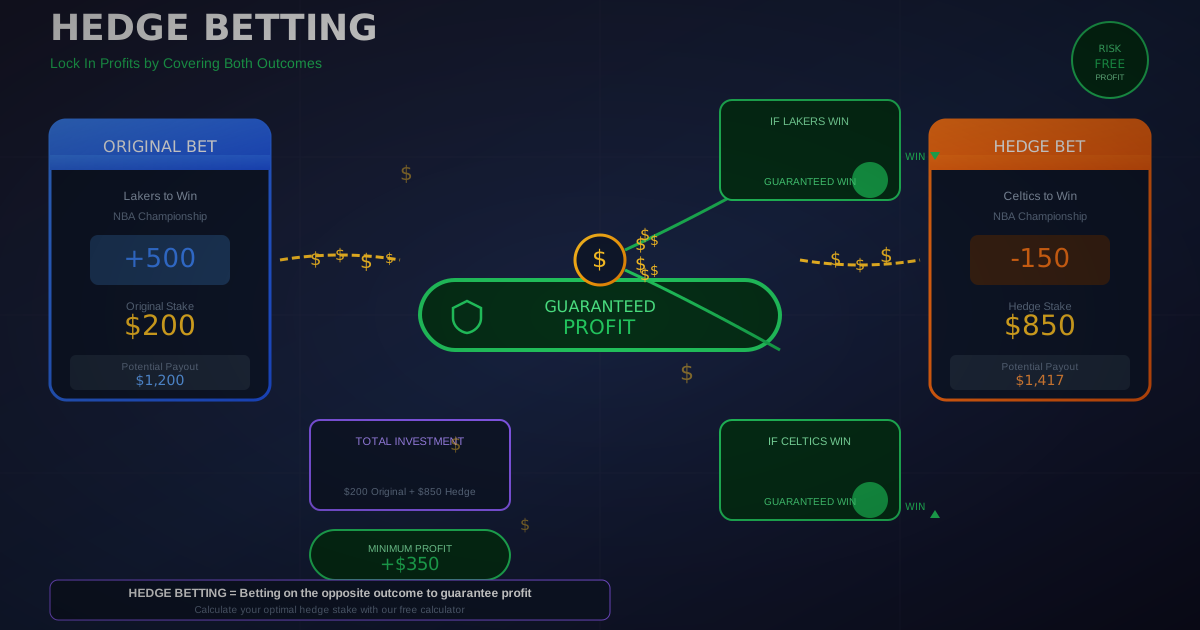
| Hedging simplicity | Sell your position to hedge | More efficient than hedging at a sportsbook |
| Information aggregation | Market price = consensus probability | Best available probability estimate |
| Global access | Polymarket accessible worldwide | Not limited by state/country regulations |
The Political Betting Advantage
Prediction markets are overwhelmingly superior for political betting. Traditional sportsbooks offer limited political props (if any, depending on jurisdiction), while prediction markets provide deep, liquid markets on every major election, policy decision, and political event.
| Political Market | Polymarket Volume (2024) | Sportsbook Availability | Edge |
|---|---|---|---|
| US Presidential Election | $3.5 billion | Very Limited (most states ban) | Prediction markets only real option |
| Congressional races | $800 million | Not available at most books | Deep markets with real liquidity |
| State elections | $200 million | Not available | Growing coverage |
| Policy decisions (Fed rates) | $1.2 billion | Not available | Unique to prediction markets |
| Supreme Court rulings | $150 million | Not available | Niche but liquid |
| International elections | $500 million | Very limited | Polymarket dominates |
Find cross-platform arbitrage between political prediction markets and offshore sportsbooks with our Arbitrage Calculator.
When Sportsbooks Are Better
| Sportsbook Advantage | Explanation | Impact on Bettor |
|---|---|---|
| Sports market depth | Hundreds of props per game | More betting opportunities |
| Promotional offers | Free bets, boosts, deposit bonuses | Direct value for new/existing customers |
| Live betting speed | Dedicated infrastructure for in-game | Faster execution on sports |
| Player props | Individual player performance markets | Unique to sportsbooks |
| Parlay/accumulator options | Combine multiple selections | Higher potential payouts |
| Regulated consumer protections | Licensed, insured, dispute resolution | Stronger legal protections |
| Cash-out reliability | Funds in USD, regulated banking | No crypto volatility risk |
| Tax reporting simplicity | W-2G forms, clear reporting | Easier tax compliance |
How Do You Find Arbitrage Between Prediction Markets and Sportsbooks?
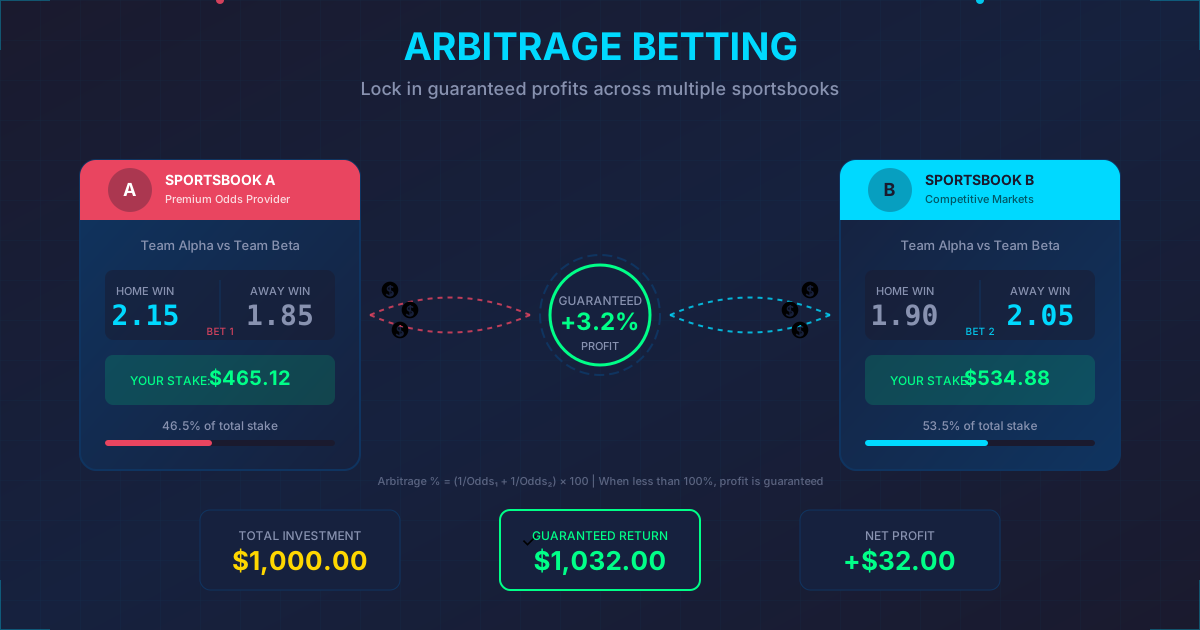
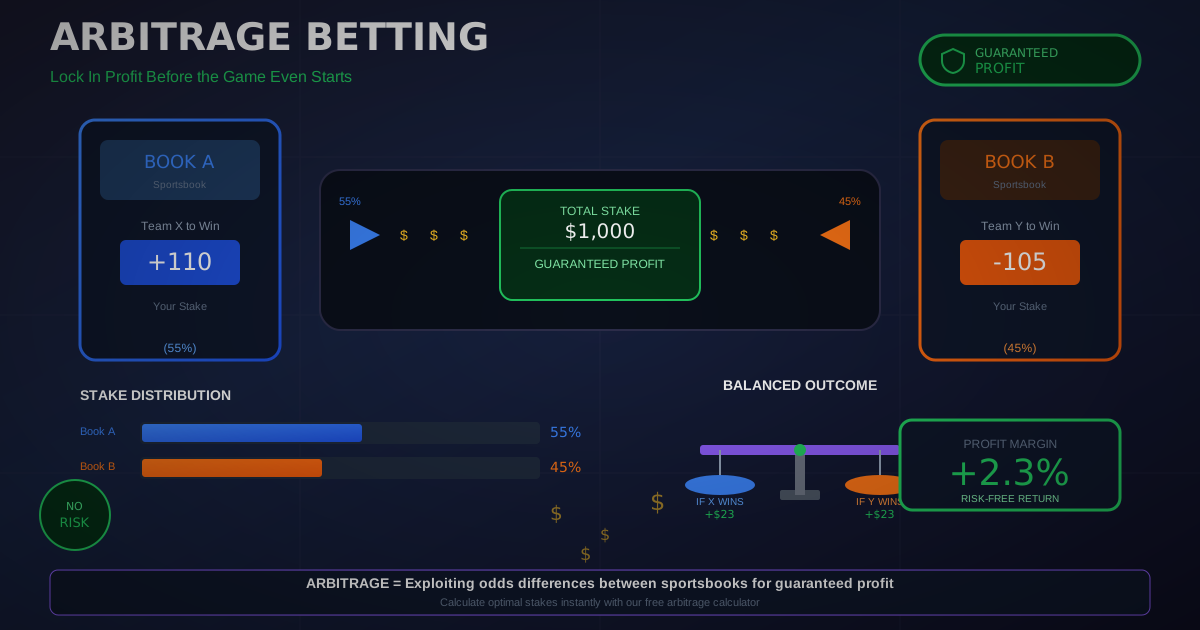
One of the most exciting opportunities in 2026 betting is cross-platform arbitrage between prediction markets and traditional sportsbooks. Because the two ecosystems have different participant bases, information sources, and pricing mechanisms, the same event is sometimes priced differently enough to create guaranteed profit opportunities.
How Cross-Platform Arbitrage Works
| Step | Action | Example |
|---|---|---|
| 1 | Identify overlapping markets | "Will Team A win the Super Bowl?" |
| 2 | Compare implied probabilities | Sportsbook: 20% (at +400), Polymarket: 24% ($0.24) |
| 3 | Check if probabilities sum to <100% | If you can buy "No" at one and "Yes" at another for <$1 combined, you have arbitrage |
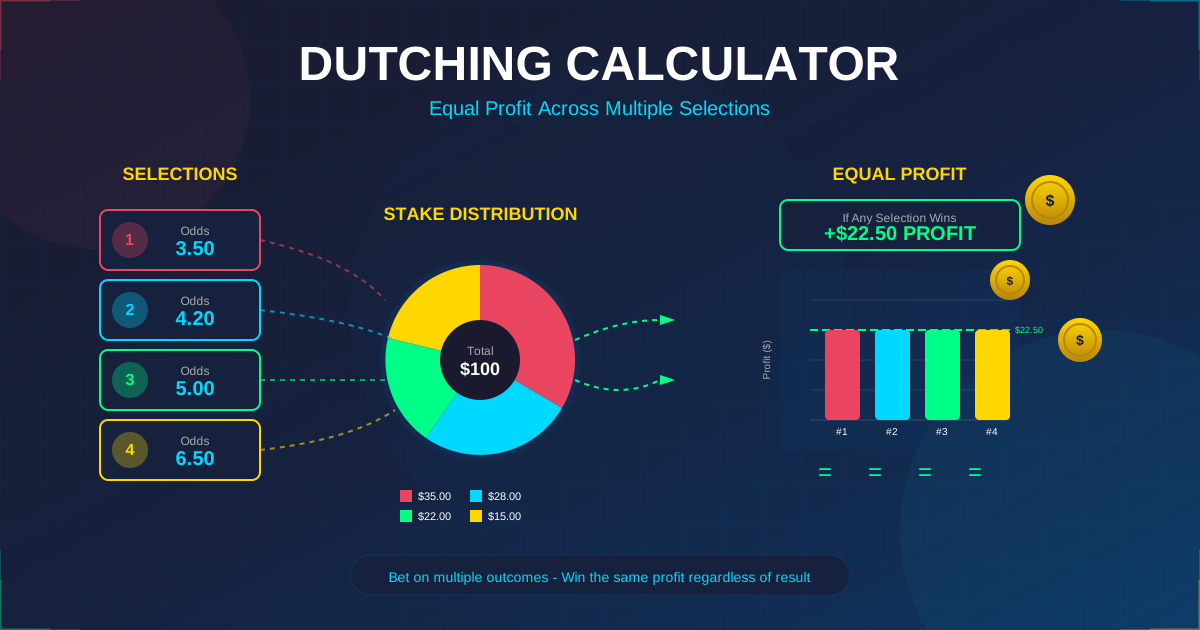
| 4 | Calculate stake allocation | Proportional to each side's payout |
| 5 | Execute simultaneously | Place sportsbook bet and prediction market trade at the same time |
| 6 | Lock in guaranteed profit | Profit regardless of outcome |
Real Arbitrage Example
Suppose the following prices exist simultaneously:
| Platform | Position | Price/Odds | Implied Probability |
|---|---|---|---|
| FanDuel | Team A to win championship: Yes | +450 (implied 18.2%) | 18.2% |
| Polymarket | Team A to win championship: No | $0.78 | 22.0% No (78.0%) |
Total implied probability: 18.2% + 78.0% = 96.2%. Since this is below 100%, an arbitrage exists.
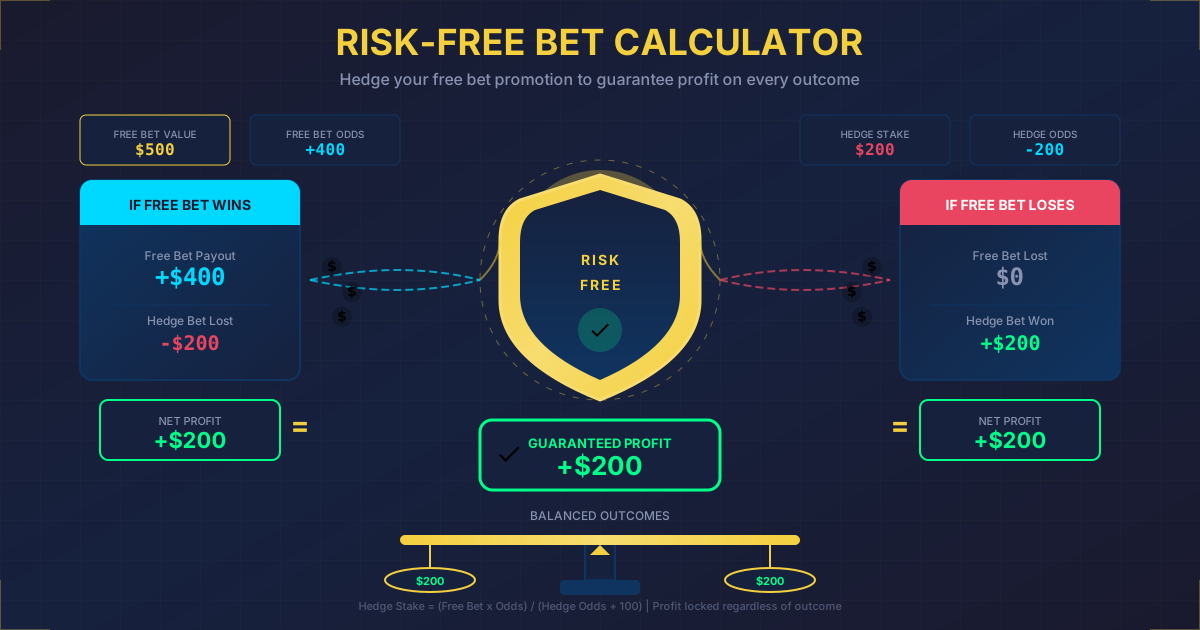
- Bet $100 on "Yes" at FanDuel (wins $450 if Yes)
- Buy 578 "No" shares at $0.78 on Polymarket ($450.84 cost, wins $578 if No)
- Total invested: $550.84
- If Yes: $100 + $450 (FanDuel) - $450.84 (Polymarket loss) = $99.16 profit
- If No: -$100 (FanDuel loss) + $578 (Polymarket) - $450.84 (Polymarket cost) = $27.16 profit
Calculate your arbitrage allocations precisely with our Arbitrage Calculator.
Frequency and Size of Arbitrage Opportunities
| Market Type | Arb Frequency | Typical Edge | Duration Before Close | Challenge |
|---|---|---|---|---|
| Championship futures | Moderate (weekly) | 1-4% | 2-24 hours | Capital locked for months |
| Political events | Frequent (daily) | 2-8% | 4-48 hours | Different settlement criteria |
| Awards shows | Occasional | 3-10% | Days to weeks | Low limits at sportsbooks |
| Economic indicators | Rare (Kalshi only) | 1-3% | Hours | Complex hedging required |
| Individual game outcomes | Very Rare | 0.5-2% | Minutes | Fast execution needed |
Risks and Challenges of Cross-Platform Arbitrage
| Risk | Explanation | Mitigation |
|---|---|---|
| Settlement differences | Platforms may resolve the same event differently | Read resolution criteria carefully before trading |
| Counterparty risk | Offshore prediction markets may not honor payouts | Use regulated platforms (Kalshi) when possible |
| Timing risk | Prices change between placing bets on different platforms | Use fast execution, place higher-volume side first |
| Currency risk | Polymarket uses USDC, sportsbooks use USD | USDC should maintain $1 peg but depegging is possible |
| Account restrictions | Sportsbooks may limit accounts that consistently arb | Diversify across multiple sportsbook accounts |
| Fee erosion | Trading fees and withdrawal fees can eat into small arb edges | Only pursue arbs with 3%+ edge after all fees |
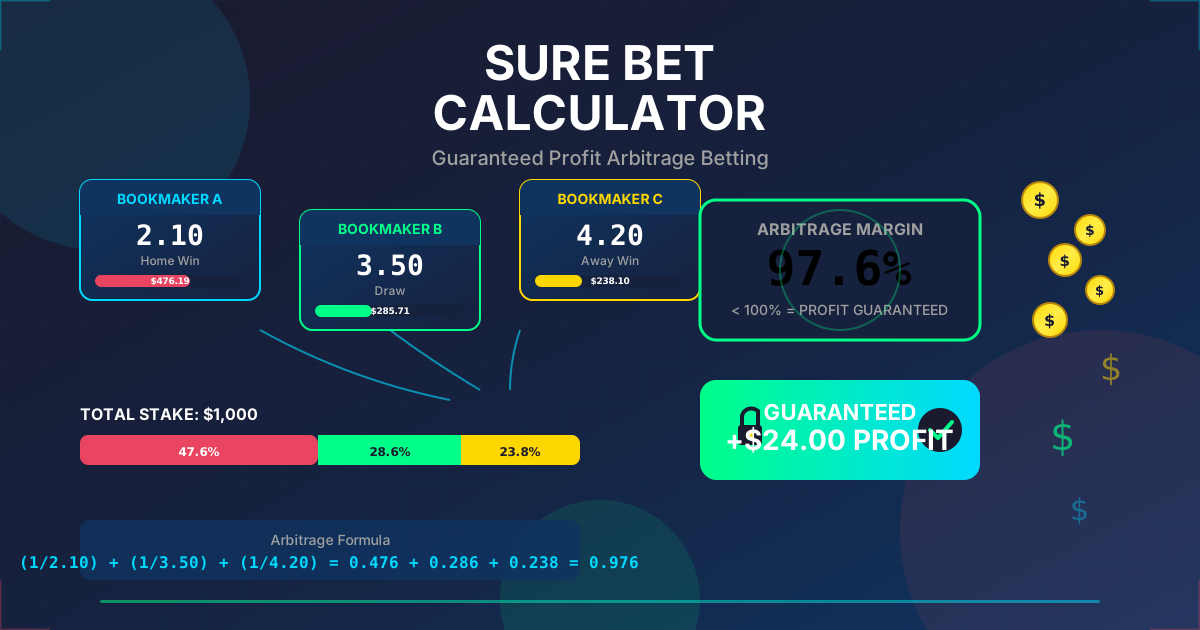
Identify guaranteed profit opportunities with our Sure Bet Calculator.
How Do You Read and Interpret Prediction Market Data?
Prediction markets generate a wealth of data beyond just the current price, and learning to read this data gives you an informational advantage. Volume, order depth, price history, and participant behavior all contain actionable signals.
Key Data Points to Monitor
| Data Point | What It Tells You | Where to Find It |
|---|---|---|
| Current price | Market's consensus probability | Main market page |
| 24-hour volume | How actively traded the market is | Market statistics |
| Price history chart | How probability has changed over time | Chart tab on market page |
| Order book depth | How much liquidity exists at each price level | Order book/depth chart |
| Bid-ask spread | How expensive it is to trade (tighter = better) | Order book |
| Open interest | Total positions currently held by traders | Market statistics |
| Recent trades | Who is buying vs selling and at what size | Trade history |
| Price momentum | Direction and speed of price movement | Technical analysis of price chart |
Reading the Order Book
| Order Book Element | Meaning | Trading Implication |
|---|---|---|
| Thick bids near current price | Strong buying support | Price unlikely to drop much |
| Thick asks near current price | Strong selling pressure | Price unlikely to rise much |
| Large bid-ask spread (5+ cents) | Illiquid market, high trading cost | Avoid or use limit orders only |
| Tight bid-ask spread (1-2 cents) | Liquid market, low trading cost | Can trade efficiently |
| Large order ("whale") above current price | Someone expects price to rise | Follow or front-run if you agree |
| Sudden volume spike | News event or insider information | Investigate before trading |
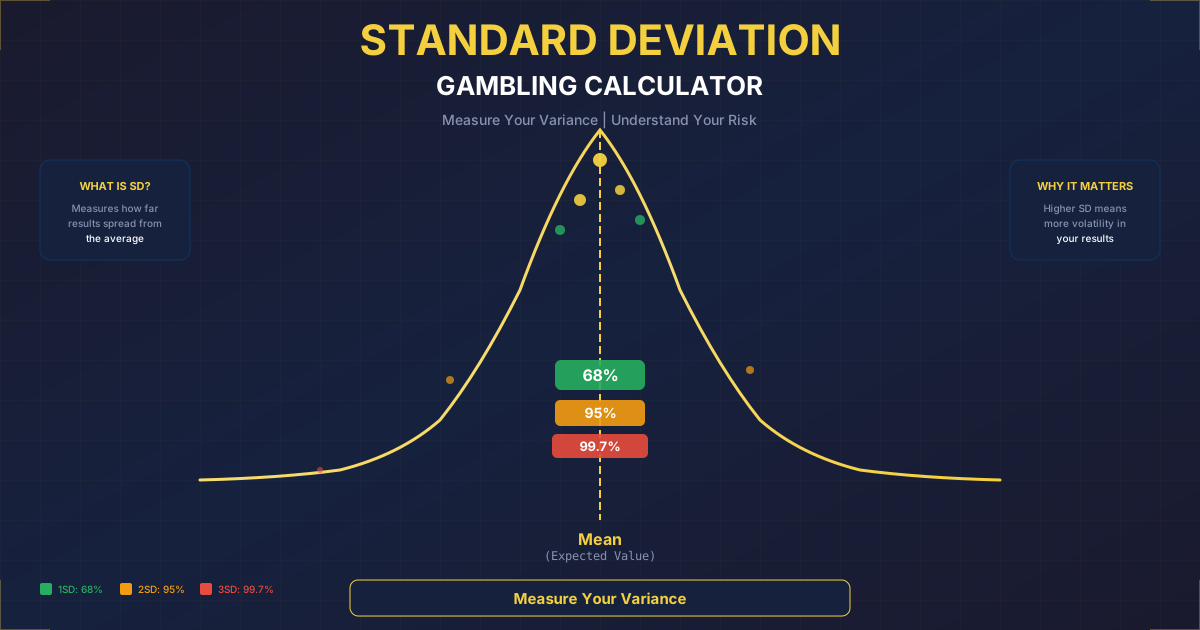
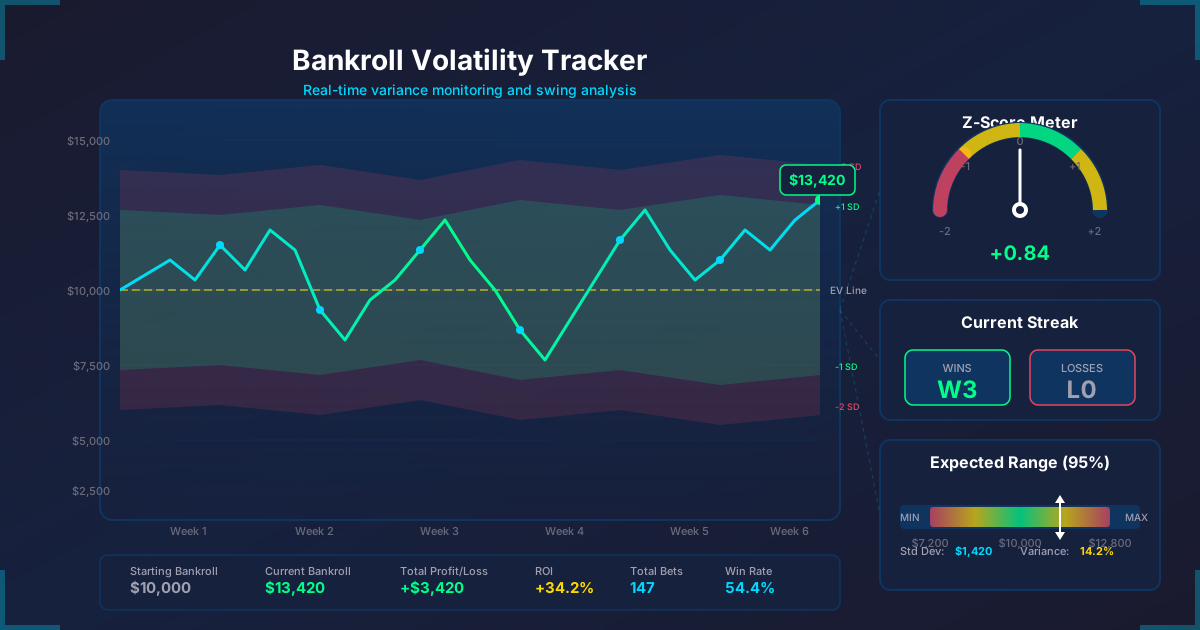
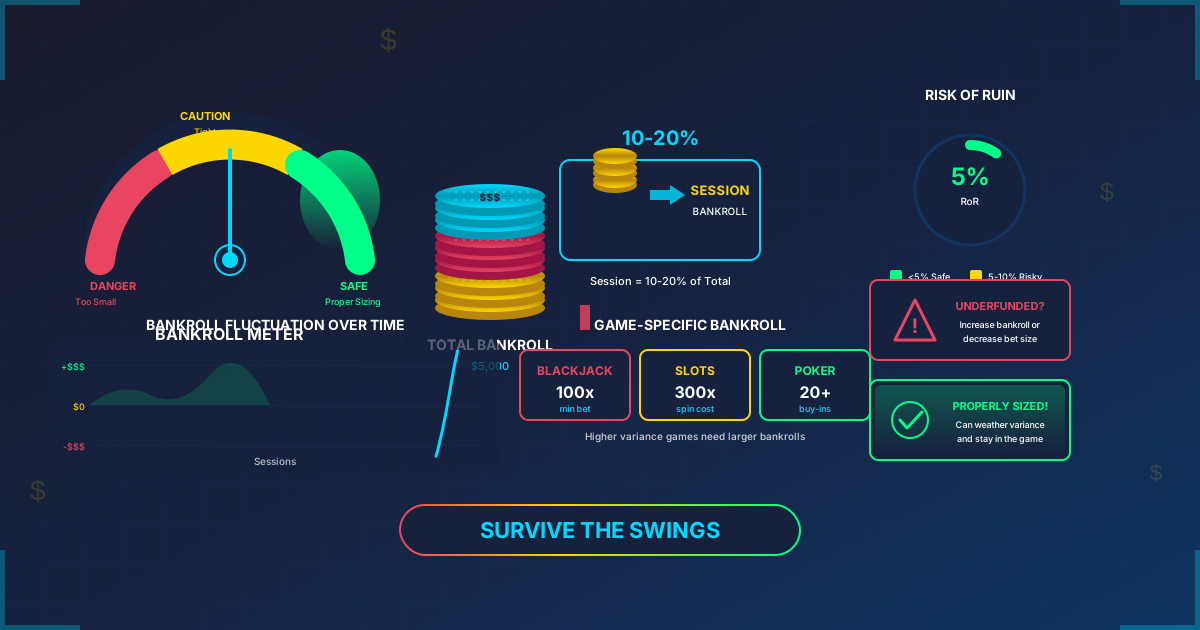
Track your prediction market positions alongside sportsbook bets with our Bankroll Volatility Tracker.
Using Prediction Markets as Information Sources
Even if you never trade on a prediction market, the prices are invaluable as probability estimates for your sportsbook betting. Prediction market prices are generally more accurate than sportsbook implied probabilities because:
- They are not inflated by vig
- They aggregate information from a diverse set of participants
- They adjust in real-time to new information
- They have a track record of accuracy (Polymarket 2024 election markets were within 2% of actual results)
| Use Case | How to Apply Prediction Market Data |
|---|---|
| Assessing sportsbook value | Compare sportsbook implied probability to prediction market price. If the sportsbook implies 40% but the prediction market shows 35%, the sportsbook odds may be overvalued. |
| Hedging timing | Watch prediction market price trends to time your sportsbook hedges optimally |
| Event probability estimation | Use prediction market prices as your baseline probability estimate, then adjust based on your analysis |
| Information flow | Prediction markets often move before sportsbook lines, giving you early signals |
What Is the Regulatory Landscape for Prediction Markets?
The regulatory environment for prediction markets is complex, evolving, and significantly different from sports betting regulation. Understanding the rules is essential for ensuring you are trading legally and your funds are protected.
Current Regulatory Status (2026)
| Platform | Primary Regulator | US Legal Status | Key Restriction |
|---|---|---|---|
| Kalshi | CFTC | Legal in most states | Limited market types (no sports in most markets) |
| Polymarket | None (offshore) | Gray area for US residents | Officially blocks US users, accessible via VPN |
| PredictIt | CFTC no-action letter | Legal but limited | $850 max per contract, limited markets |
| Traditional sportsbooks | State gaming commissions | Legal in 38+ states | Sports only, state-by-state licensing |
CFTC Regulation Explained
The Commodity Futures Trading Commission (CFTC) regulates prediction markets in the US as "event contracts." Kalshi's approval by the CFTC in 2020 was a landmark moment, establishing that certain event contracts are legally tradeable financial instruments rather than gambling.
| CFTC Rule | Impact on Prediction Markets | Impact on Bettors |
|---|---|---|
| Event contracts must serve economic purpose | Limits purely entertainment-based markets | Fewer frivolous markets available |
| Position limits required | Caps maximum exposure per trader | Limits how much you can invest in one market |
| Segregated customer funds | Funds held separately from company assets | Stronger protection than offshore platforms |
| Market manipulation prohibited | Illegal to trade on insider info or manipulate prices | Level playing field (in theory) |
| Reporting requirements | Large positions must be reported | Transparency but also surveillance |
| Sports markets: evolving | CFTC approved Kalshi sports contracts in late 2024/2025 | Expanding overlap with sportsbooks |
The Battle for Sports Event Contracts
The legal battle between the CFTC, Kalshi, and traditional sportsbook interests over sports-related event contracts is one of the most significant regulatory developments in betting. Kalshi won a federal court ruling in 2024 allowing political event contracts, and is pushing to expand into sports event contracts.
| Development | Date | Significance |
|---|---|---|
| Kalshi founded, CFTC approval | 2021 | First fully regulated prediction market exchange |
| CFTC blocks political contracts | 2023 | Attempted to prevent election betting |
| Federal court overrules CFTC on political contracts | 2024 | Landmark ruling for prediction markets |
| Kalshi launches limited sports markets | 2025 | Direct competition with sportsbooks begins |
| State gaming commissions push back | 2025-2026 | Jurisdictional battle between CFTC and state regulators |
| Polymarket volume exceeds $9B | 2025 | Offshore platforms grow despite regulatory uncertainty |
Calculate the effective fee on any prediction market trade with our Hold/Vig Calculator.
How Do Odds Formats Differ Between Platforms?
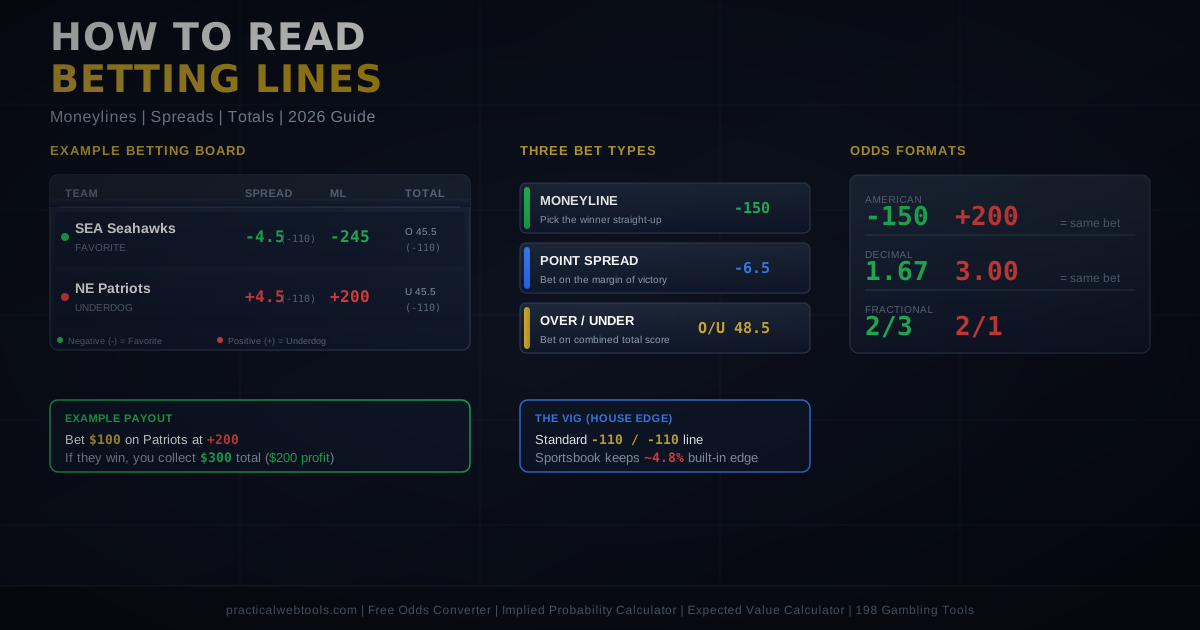
One of the biggest practical barriers for bettors moving between sportsbooks and prediction markets is the different odds/price formats. Traditional bettors are used to American odds (-110, +200), while prediction market traders work in cent-denominated probabilities ($0.45, $0.72). Converting between these formats quickly is essential for identifying value.
Quick Conversion Reference
| What You See | Platform Type | What It Means | Equivalent Formats |
|---|---|---|---|
| $0.35 | Prediction Market | 35% probability, pays $1 if correct | +186 American, 2.86 Decimal, 13/7 Fractional |
| -150 | Sportsbook | 60% implied probability, risk $150 to win $100 | $0.60 PM price, 1.67 Decimal, 2/3 Fractional |
| +200 | Sportsbook | 33.3% implied probability, risk $100 to win $200 | $0.33 PM price, 3.00 Decimal, 2/1 Fractional |
| $0.85 | Prediction Market | 85% probability, pays $1 if correct | -567 American, 1.18 Decimal, 3/17 Fractional |
Understanding the "Remove the Vig" Calculation
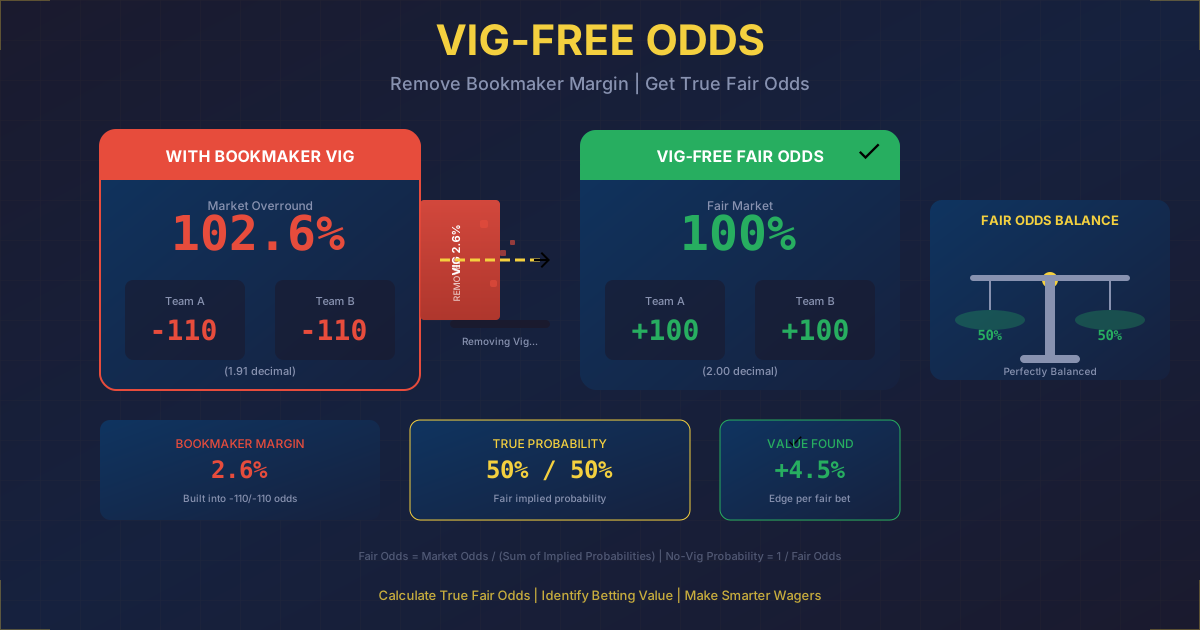
When comparing sportsbook odds to prediction market prices, you must first remove the sportsbook's vig to get a true implied probability. Without this step, you will overestimate the sportsbook's probability and miss genuine value.
Example: A sportsbook offers Yes -140 / No +120 on a proposition.
| Step | Calculation | Result |
|---|---|---|
| 1. Convert to raw probabilities | -140: 140/(140+100) = 58.3%; +120: 100/(120+100) = 45.5% | 58.3% + 45.5% = 103.8% |
| 2. Calculate overround | 103.8% - 100% = 3.8% | 3.8% vig |
| 3. Remove vig (proportional) | 58.3%/103.8% = 56.2%; 45.5%/103.8% = 43.8% | True: 56.2% Yes, 43.8% No |
| 4. Compare to prediction market | If Polymarket shows Yes at $0.52 | Sportsbook says 56.2%, market says 52% |
| 5. Identify value | Sportsbook overvalues Yes by 4.2% | Bet No at sportsbook or buy No on Polymarket |
Remove the vig from any sportsbook market with our Hold/Vig Calculator and compare to prediction market probabilities.
What Are the Best Strategies for Using Both Platforms?
The most sophisticated bettors in 2026 use both prediction markets and traditional sportsbooks as complementary tools. Each platform has situations where it offers superior value, and combining them creates a more robust overall approach.
Platform Selection Strategy
| Situation | Recommended Platform | Why |
|---|---|---|
| Standard sports betting (NFL, NBA, MLB) | Sportsbook | Better odds, more markets, promos |
| Political/election betting | Prediction market | Only option with real liquidity |
| Long-term futures (6+ months out) | Prediction market | Ability to sell position before resolution |
| Heavy favorite bets | Prediction market | Lower effective fee than sportsbook vig |
| Longshot bets | Sportsbook | Better pricing due to promotional offers |
| Live/in-play sports betting | Sportsbook | Faster execution, more markets |
| Economic/financial events | Prediction market (Kalshi) | Unique market access |
| Player props | Sportsbook | Only available at sportsbooks |
| Hedging existing positions | Whichever has best price | Compare both before hedging |
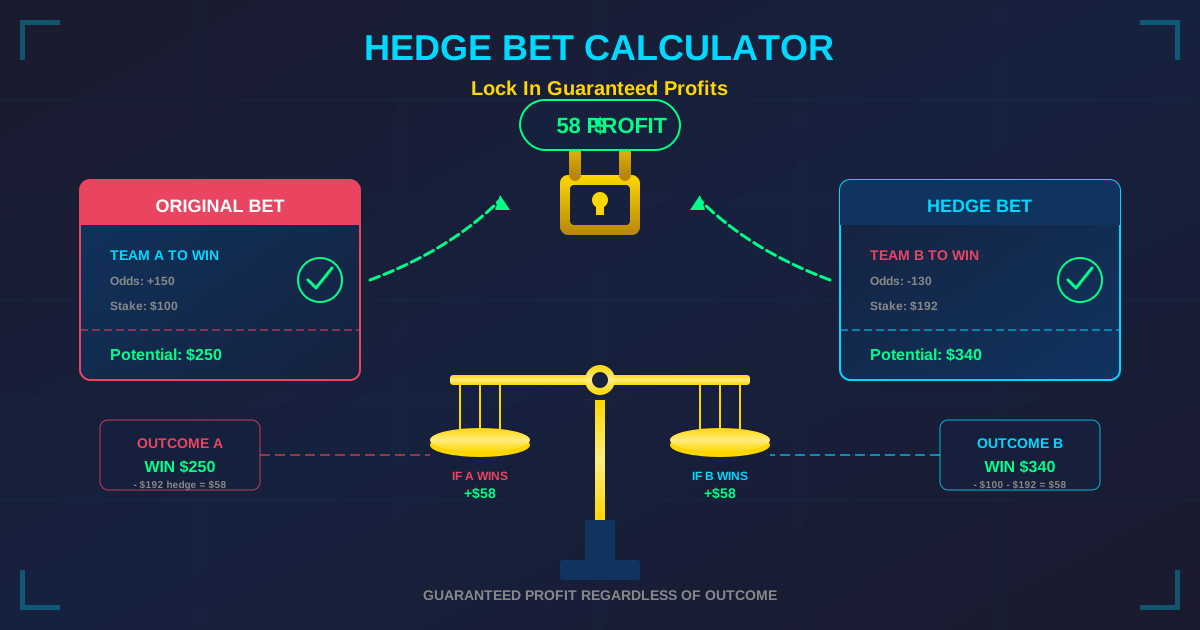
Combining Platforms for Hedging
| Original Position | Platform | Hedge Position | Platform | Result |
|---|---|---|---|---|
| Team A championship futures at +600 | Sportsbook | Team A "No" shares if they make finals | Prediction market | Lock in profit if team advances |
| Candidate X at $0.30 | Polymarket | Candidate X "No" at longer odds | Sportsbook (if available) | Arbitrage or reduced risk |
| Over 10.5 wins Team B | Sportsbook | Under wins market on Kalshi | Kalshi | Cross-platform hedge |
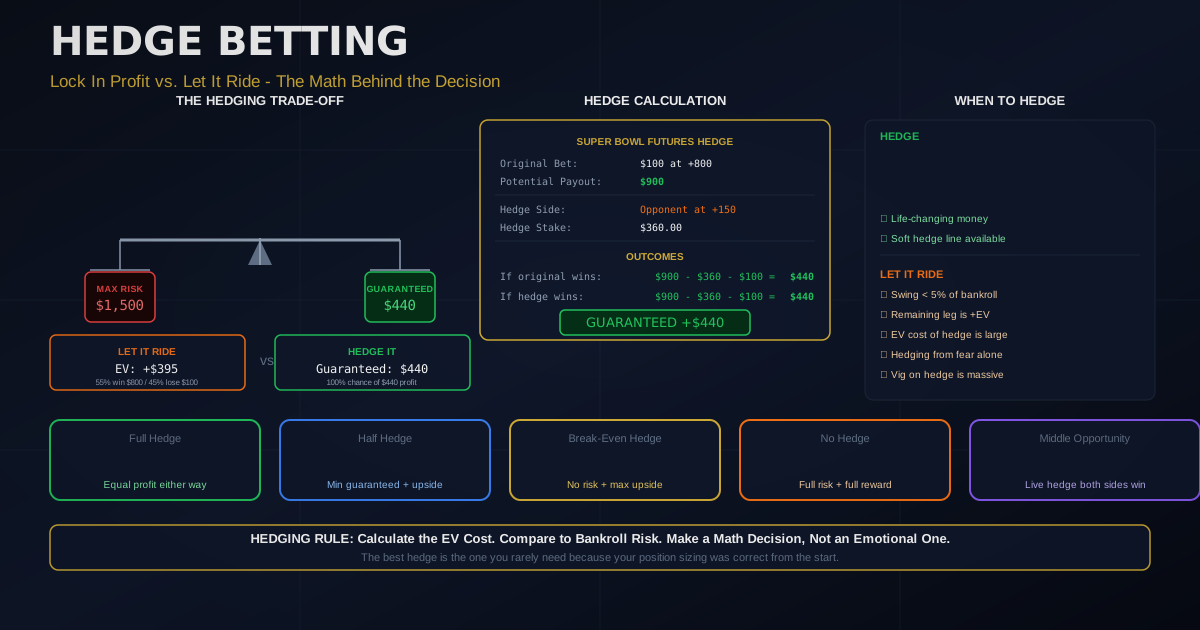
Calculate optimal hedge positions across platforms with our Hedge Calculator.
The Information Arbitrage Strategy
Even without placing cross-platform trades, you can use prediction market data to inform your sportsbook betting:
- Check Polymarket/Kalshi prices before placing any sportsbook futures bet
- If the sportsbook implied probability is 5%+ higher than the prediction market price, the sportsbook is overvaluing that outcome: bet the other side
- If the prediction market moves before the sportsbook line, place your sportsbook bet in the direction of the prediction market move
- Track prediction market price changes for major events to anticipate sportsbook line movements
| Information Flow Pattern | Frequency | Action |
|---|---|---|
| Prediction market moves first, sportsbook follows | Common (daily) | Bet sportsbook in direction of PM move |
| Sportsbook moves first, prediction market follows | Less common | Trade PM in direction of sportsbook move |
| Markets diverge (disagree) | Occasional | Investigate why; potential arbitrage |
| Both move simultaneously | During major news | No edge; information already priced in |
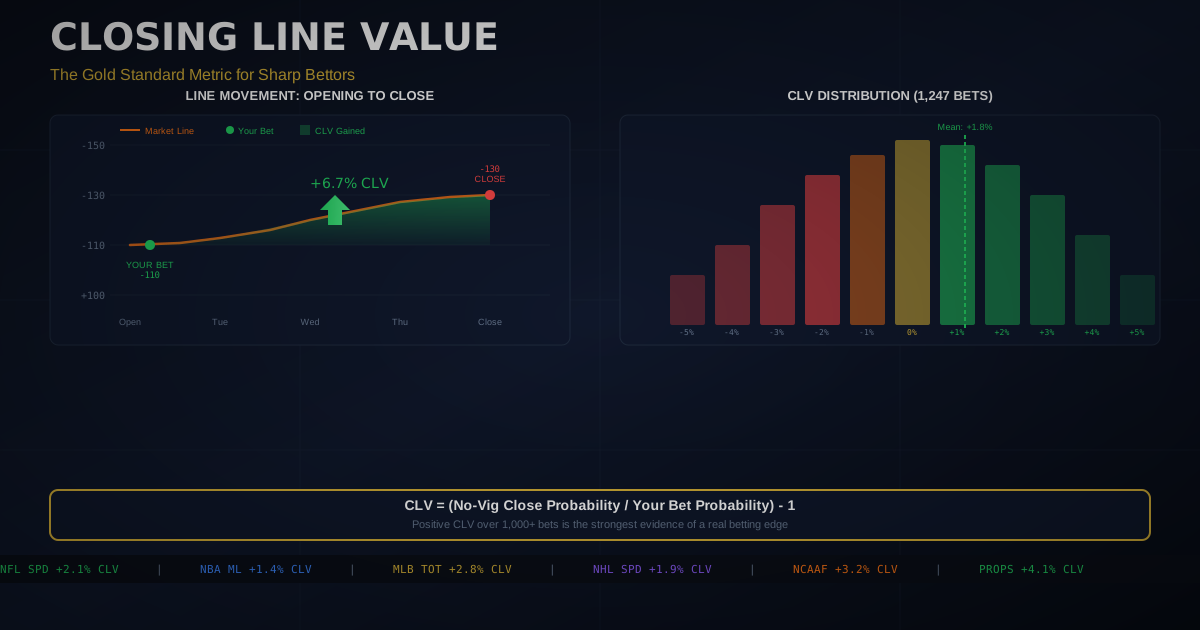
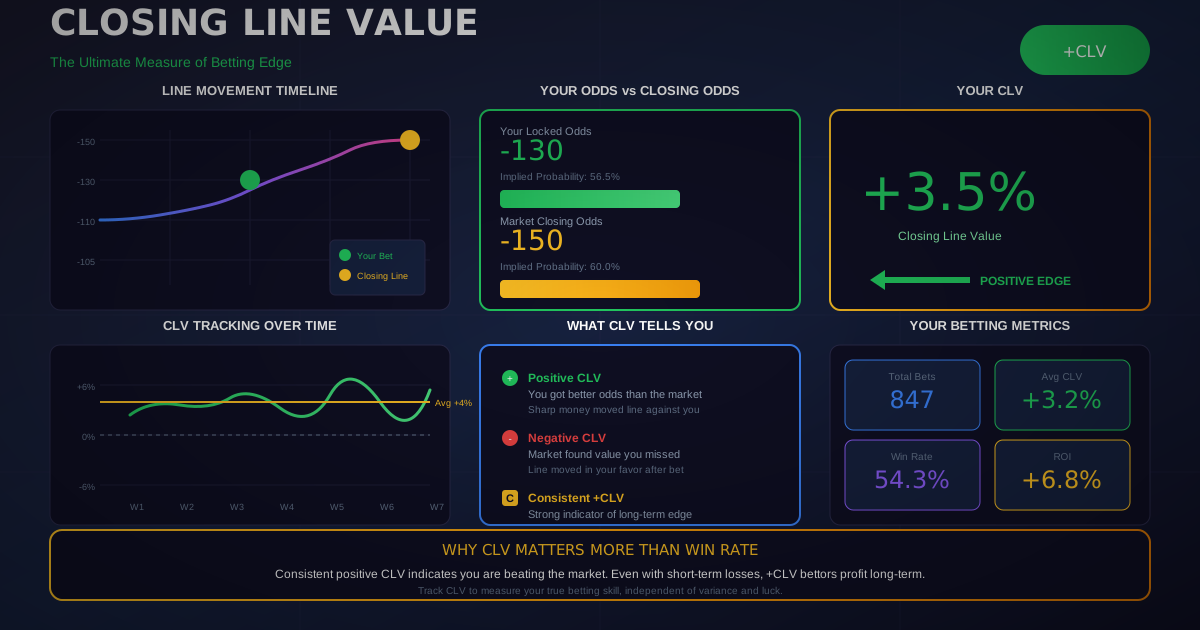
Track your cross-platform value with our CLV Tracker.
What Does the Future Hold for Prediction Markets and Sportsbooks?
The convergence of prediction markets and traditional sportsbooks is accelerating, and the next 2-5 years will likely reshape both industries fundamentally. Understanding the trajectory helps you position yourself to take advantage of emerging opportunities.
Market Projections
| Metric | 2025 (Actual) | 2026 (Est.) | 2028 (Proj.) | 2030 (Proj.) |
|---|---|---|---|---|
| Prediction market total volume | $35B | $55B | $120B | $250B+ |
| US legal sports betting handle | $120B | $145B | $180B | $220B |
| Cross-platform arbitrage opportunities | Frequent | Growing | Peak | Declining (convergence) |
| Prediction markets offering sports | 3 platforms | 5 platforms | 8+ platforms | Mainstream |
| Sportsbooks offering prediction-style products | 2 | 5 | 10+ | Most major operators |
| Regulatory clarity | Low | Moderate | High | Settled |
Key Trends to Watch
| Trend | Timeline | Impact |
|---|---|---|
| Sportsbooks launching exchange products | 2026-2027 | Blurred line between betting and trading |
| Prediction markets adding sports depth | 2026-2028 | Direct competition with sportsbooks |
| CFTC-state regulator jurisdictional clarity | 2026-2028 | Determines which products are legal where |
| Blockchain-based sportsbooks | 2027-2030 | Transparent, low-fee, global access |
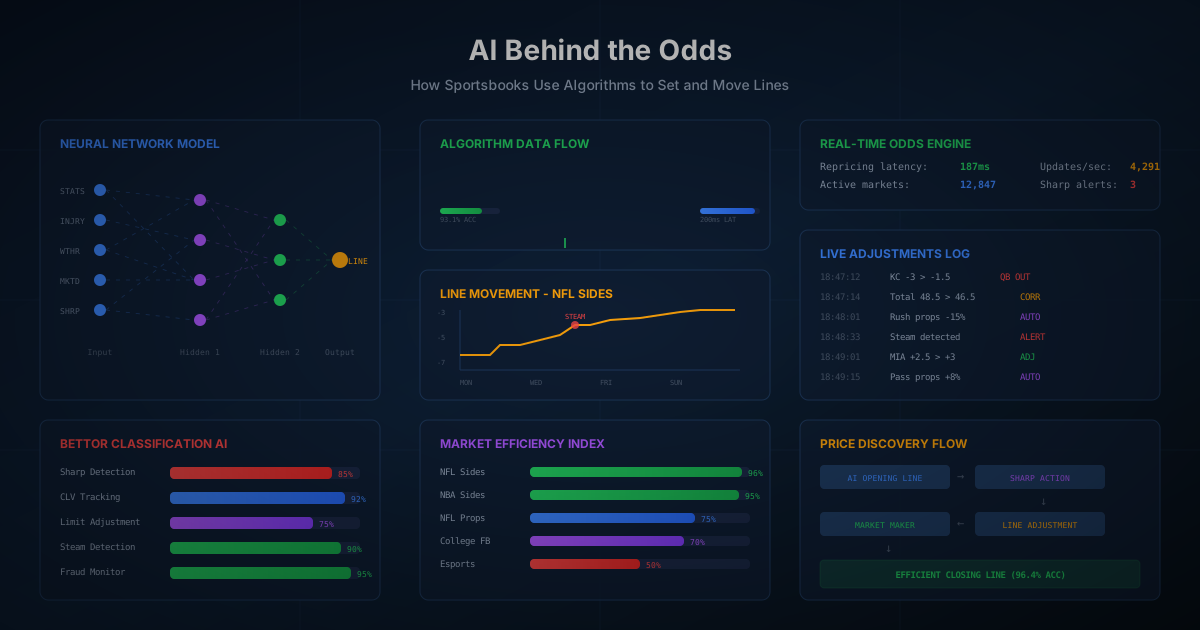
| AI-powered prediction market making | 2026-2028 | Tighter spreads, more efficient markets |
| Institutional capital entering prediction markets | 2026-2030 | Higher liquidity, lower spreads, harder to beat |
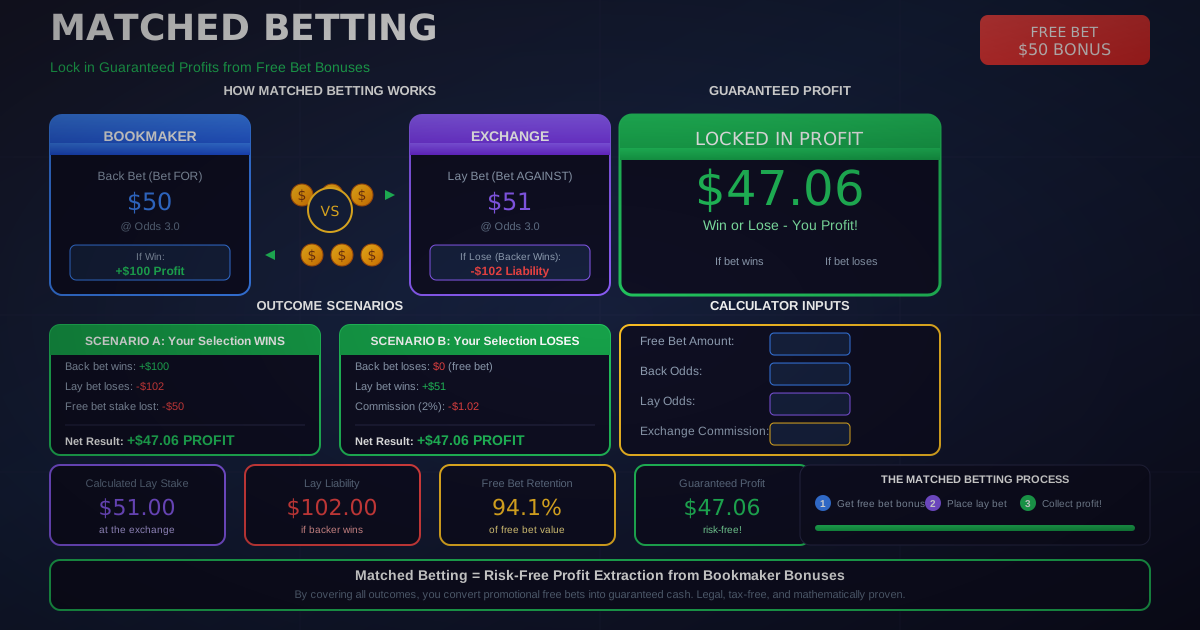
Prepare for the future of cross-platform betting with our Matched Betting Calculator.
Frequently Asked Questions
What is the difference between a prediction market and a sportsbook? A prediction market is an exchange where participants buy and sell contracts based on event outcomes (priced $0-$1 representing probability), while a sportsbook is a business that sets odds and takes bets directly against the bettor. The key structural differences are: prediction markets allow you to sell your position before resolution, charge explicit fees rather than embedded vig, and offer non-sport markets like politics and economics.
Is Polymarket legal in the United States? Polymarket is technically an offshore platform built on the Polygon blockchain, and it officially blocks US-based users. However, it remains accessible through VPNs, and enforcement against individual US users has been minimal. Kalshi, by contrast, is fully CFTC-regulated and legal for US residents in most states.
Are prediction markets more accurate than sportsbooks? Research consistently shows that prediction market prices are slightly more accurate probability estimates than sportsbook implied probabilities, primarily because prediction market prices do not include vig inflation. The 2024 US Presidential election markets on Polymarket were within 2% of actual results across major races. However, sportsbook lines for standard sports markets are also highly efficient.
Can you make money on prediction markets? Yes, but like sports betting, consistent profitability requires an informational or analytical edge. The average prediction market trader, like the average sports bettor, loses money after fees. The most profitable traders specialize in specific market types (politics, economics, or specific sports) and combine deep domain knowledge with disciplined risk management.
How do I transfer money to Polymarket? Polymarket operates on the Polygon blockchain and uses USDC (a stablecoin pegged to the US dollar). You need to purchase USDC through a cryptocurrency exchange (Coinbase, Kraken) and transfer it to a Polygon-compatible wallet. Kalshi and PredictIt accept standard US bank transfers and credit/debit cards.
What is arbitrage between prediction markets and sportsbooks? Cross-platform arbitrage occurs when the same event is priced differently enough between a prediction market and a sportsbook to guarantee profit regardless of the outcome. For example, if a sportsbook prices an event at 45% probability and a prediction market prices "No" at $0.50 (50%), you can bet both sides for a guaranteed profit. These opportunities are most common in long-term futures and political markets.
Should I use Kalshi or Polymarket? If you are a US resident who values regulatory protection and plans to trade economics, weather, or politics markets, Kalshi is the safer choice. If you want the deepest liquidity, widest market selection, and lowest fees, Polymarket offers more despite its regulatory gray area. Many active traders use both.
How do prediction market fees compare to sportsbook vig? For standard bets at even-money odds, prediction market fees (2-5% on Polymarket/Kalshi) are similar to sportsbook vig (4-5% at -110). For heavy favorites (-300 or more), prediction markets are significantly cheaper because their fees are flat or percentage-based on profit, while sportsbook vig is embedded in the probability. For longshots, sportsbooks are sometimes cheaper due to promotional pricing.
Related Tools
Navigate prediction markets and sportsbooks with these free tools:
- Odds Converter - Convert between prediction market prices and American, decimal, and fractional odds
- Expected Value Calculator - Calculate EV on any prediction market trade or sportsbook bet
- Implied Probability Calculator - Convert odds and prices to true implied probabilities
- Arbitrage Calculator - Find guaranteed profit opportunities between prediction markets and sportsbooks
- Sure Bet Calculator - Identify cross-platform sure bets with precise stake allocation
- Hold/Vig Calculator - Calculate the true cost of trading on any platform
- Hedge Calculator - Optimize cross-platform hedging strategies
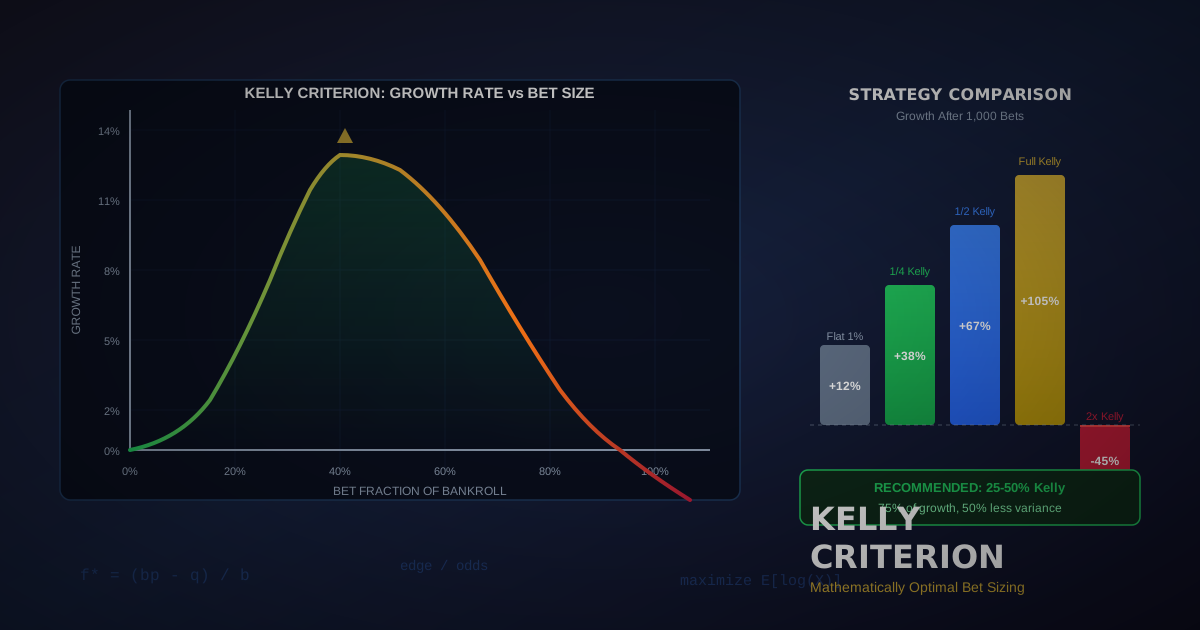
- Kelly Criterion Calculator - Size your prediction market positions based on estimated edge
- Bankroll Volatility Tracker - Monitor your combined sportsbook and prediction market bankroll
- CLV Tracker - Track your closing line value across both platforms
- Matched Betting Calculator - Calculate guaranteed returns from promotional offers
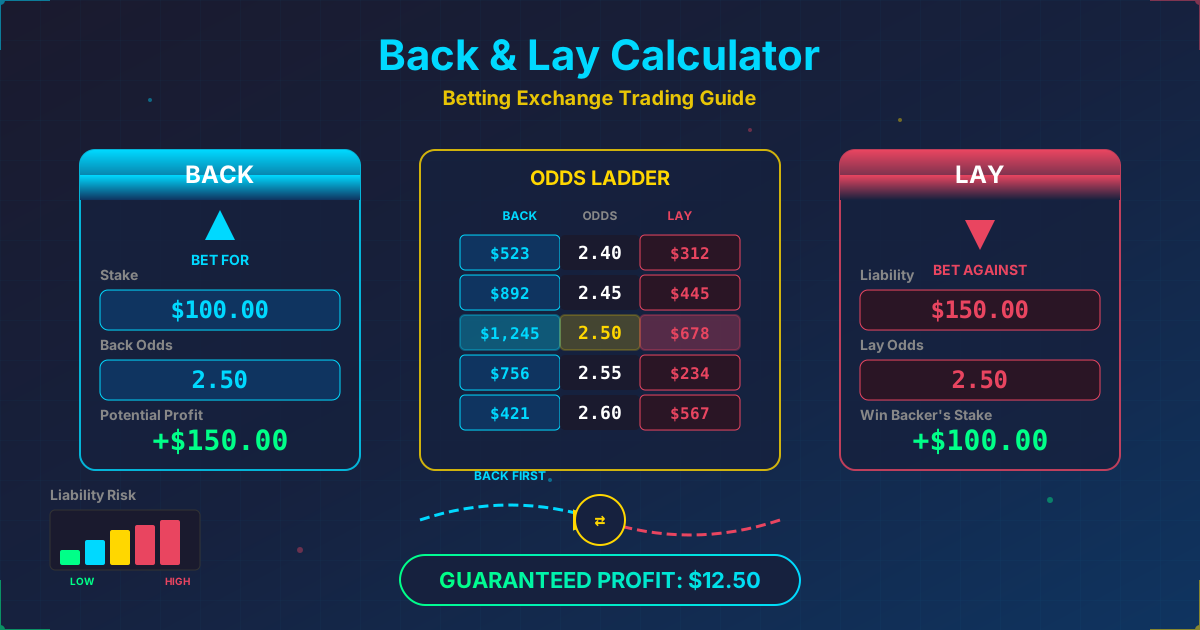
- Back/Lay Calculator - Calculate optimal positions for exchange-style prediction market trades
How Do You Get Started With Prediction Markets?
Getting started with prediction markets requires different steps depending on which platform you choose. Here is a practical guide for each major platform.
Getting Started With Polymarket
| Step | Action | Time Required | Notes |
|---|---|---|---|
| 1 | Create a cryptocurrency wallet (MetaMask or Coinbase Wallet) | 5-10 minutes | Download browser extension or mobile app |
| 2 | Purchase USDC on an exchange (Coinbase, Kraken) | 10-15 minutes | USDC is pegged to $1 USD |
| 3 | Bridge USDC to the Polygon network | 5-10 minutes | Polymarket runs on Polygon for lower fees |
| 4 | Connect wallet to Polymarket.com | 2 minutes | One-click wallet connection |
| 5 | Browse markets and place first trade | 5 minutes | Start with a highly liquid market |
| 6 | Set position alerts | 2 minutes | Get notified when prices move |
Getting Started With Kalshi
| Step | Action | Time Required | Notes |
|---|---|---|---|
| 1 | Create a Kalshi account | 5 minutes | Standard US account signup |
| 2 | Complete identity verification (KYC) | 5-15 minutes | Required by CFTC regulation |
| 3 | Link bank account or debit card | 3-5 minutes | Instant deposits available |
| 4 | Deposit funds (min $1) | 1-2 minutes | Funds available immediately |
| 5 | Browse event categories | 5 minutes | Start with a category you know well |
| 6 | Place first trade | 2 minutes | Use limit orders for better prices |
Platform Selection Decision Tree
| If You Want... | Best Platform | Why |
|---|---|---|
| Widest market selection | Polymarket | 3,000+ markets across all categories |
| US regulatory protection | Kalshi | CFTC-regulated, segregated funds |
| Lowest fees | Polymarket | 0% trading fee, 2% on winnings |
| Easiest funding (USD) | Kalshi | Standard bank transfer |
| Political betting specifically | Both | Polymarket has more liquidity |
| Economic/weather events | Kalshi | Strongest in economic indicators |
| Maximum position size | Polymarket | No position limits |
| To start with under $50 | Kalshi ($1 min) or Polymarket ($5 min) | Both accessible at small stakes |
Convert your first prediction market position into traditional odds with our Odds Converter.
What Are Common Mistakes When Using Prediction Markets?
Prediction markets have unique pitfalls that differ from traditional sportsbook betting. New traders often make systematic errors that experienced participants exploit.
Top Prediction Market Mistakes
| Mistake | Description | How to Avoid |
|---|---|---|
| Ignoring the spread | Buying at the ask without checking bid-ask width | Always use limit orders in thin markets |
| Holding to resolution | Refusing to sell a winning position when you could lock in profit | Set profit targets and sell when reached |
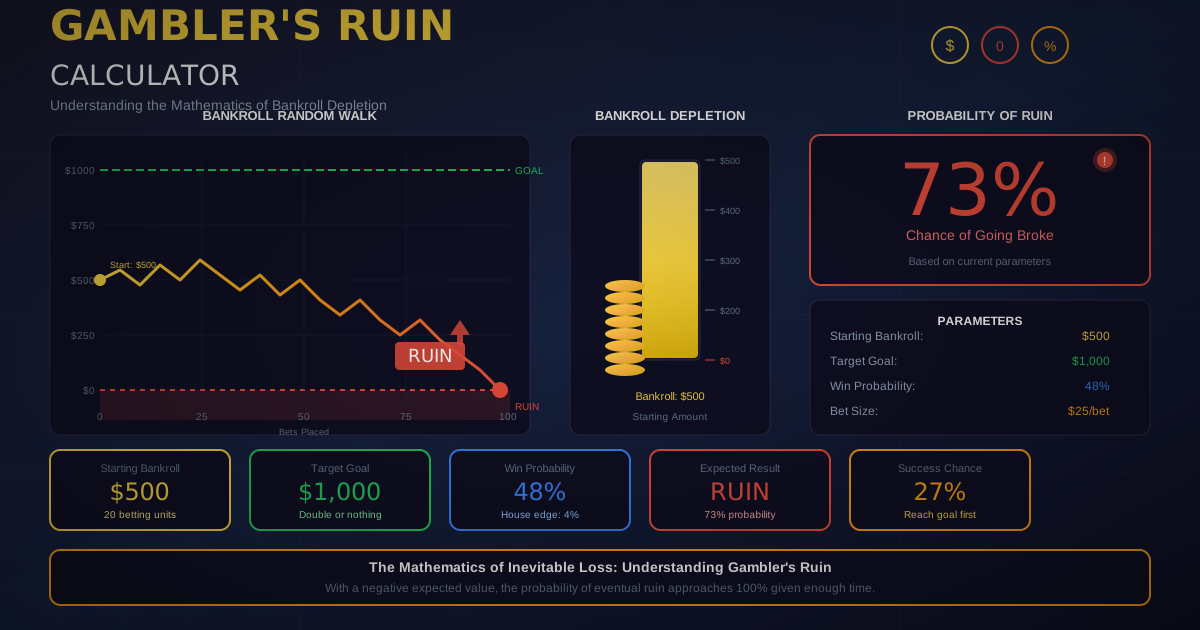
| Overconcentration | Putting too much capital in one market | Max 10-15% of bankroll per market |
| Ignoring resolution criteria | Not reading the fine print on how a market resolves | Always read resolution rules before trading |
| Panic selling on news | Selling after a sudden price drop without analysis | Wait 5-10 minutes for the market to stabilize |
| Confusing price with probability | Assuming a $0.70 price is exactly 70% probability | Factor in spreads and market efficiency |
| Neglecting opportunity cost | Capital locked in long-term markets earning nothing | Balance short-term and long-term positions |
| Not tracking across platforms | Losing track of positions on multiple platforms | Use a master spreadsheet for all positions |
The Resolution Criteria Trap
One of the most costly mistakes in prediction markets is not reading the resolution criteria carefully. Two seemingly identical markets can resolve differently based on their specific rules.
| Example Market | Resolution Criteria | Common Misunderstanding |
|---|---|---|
| "Will Bitcoin reach $100K in 2026?" | Closing price on any single day (UTC midnight) | Does not mean intraday spike counts |
| "Will Team X make the playoffs?" | Based on regular season final standings | Does not include play-in tournaments unless specified |
| "Will the Fed cut rates in March?" | Based on the FOMC target rate announcement | Does not mean the effective rate, only the announced target |
| "Will it snow in NYC on Christmas?" | 0.1+ inches measured at Central Park weather station | Does not count other NYC boroughs |
Calculate whether a prediction market position offers positive expected value with our Expected Value Calculator.
The convergence of prediction markets and traditional sportsbooks is creating the most dynamic and opportunity-rich period in betting history. Bettors who understand both ecosystems, can read and compare odds across platforms, and maintain disciplined bankroll management across their entire portfolio will have a significant advantage. The platforms are different tools, and the smartest bettors use the right tool for each situation.
Start comparing prediction market and sportsbook odds with our Odds Converter and find where the value is.
Gambling involves risk and should be approached as entertainment, not as a source of income. Always bet within your means, set strict bankroll limits, and never chase losses. If you or someone you know has a gambling problem, contact the National Council on Problem Gambling at 1-800-522-4700 or visit ncpgambling.org. Must be 21+ to gamble in most US jurisdictions. Please play responsibly.