Casino Game Selection Strategy: How to Pick the Right Table Every Time (2026)
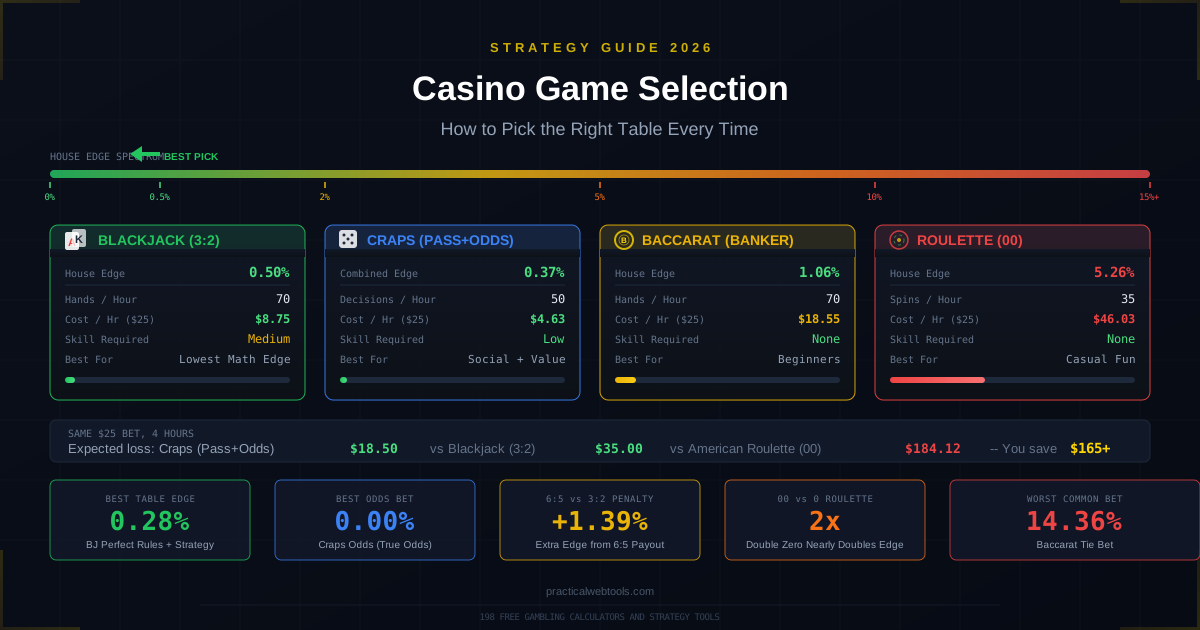
The single biggest decision you make at a casino is not how you play -- it is what you play. Most gamblers obsess over strategy charts, betting systems, and hot streaks, but they never stop to ask whether they are even sitting at the right table in the first place. A player using perfect blackjack strategy at a 6:5 table is paying nearly four times more per hand than a player using the same strategy at a 3:2 table across the pit. A roulette enthusiast at a double-zero wheel is hemorrhaging money at almost twice the rate of the player ten feet away at the single-zero wheel. Game selection is not glamorous, it does not involve card counting or dice setting, but it is the closest thing to a genuine edge that any recreational player can get -- and most people walk right past it.
Calculate the House Edge for Any Game with Our Free Tools ->
Why Game Selection Matters More Than Any Strategy
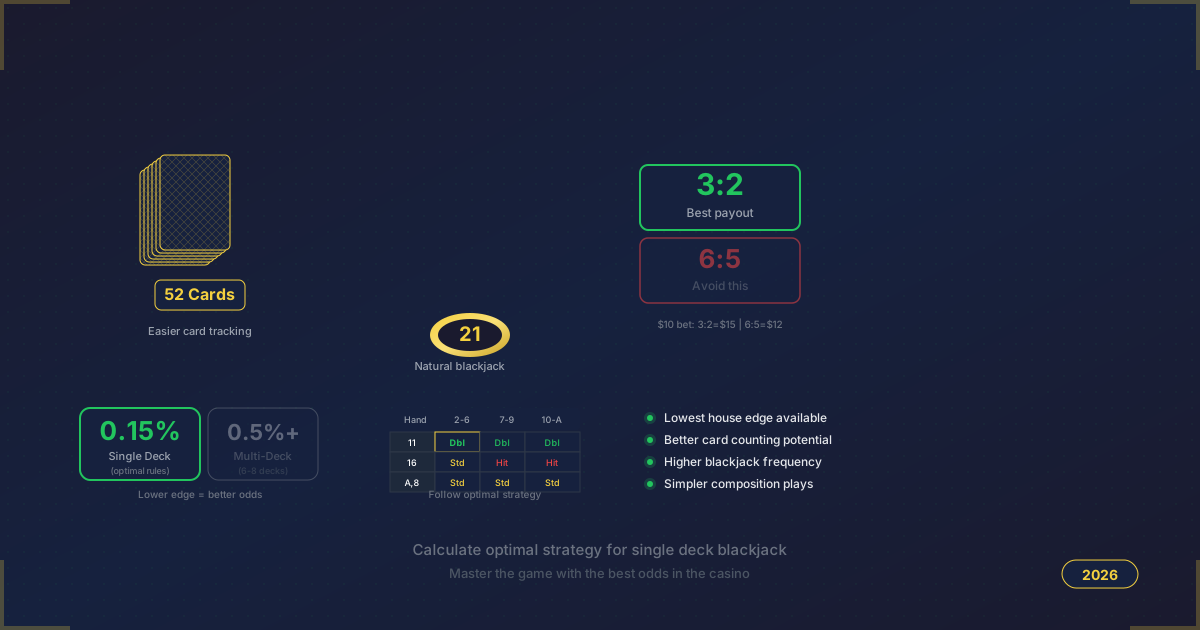
Here is a truth that casino marketing departments hope you never internalize: the game you choose determines your expected cost per hour more than any strategy you apply while playing. Perfect blackjack basic strategy reduces the house edge by maybe 2-3 percentage points compared to a total beginner. But choosing a 3:2 blackjack table over a 6:5 table saves you roughly 1.4 percentage points all by itself -- no memorization required, no strategy charts, no math during play. You just sit somewhere different.
And it goes further than that. Consider these two players who each bring $500 and plan to play for four hours on a Saturday night:
| Decision | Player A (Smart Selection) | Player B (Random Walk-Up) |
|---|---|---|
| Game | 3:2 Blackjack, S17, DAS | 6:5 Blackjack, H17 |
| House Edge | 0.45% | 2.02% |
| Average Bet | $25 | $25 |
| Hands per Hour | 70 | 70 |
| Total Wagered (4 hrs) | $7,000 | $7,000 |
| Expected Loss | $31.50 | $141.40 |
| Cost per Hour | $7.88 | $35.35 |
Player A pays about $8 per hour for entertainment -- roughly the cost of a movie ticket. Player B pays $35 per hour for the exact same game at the exact same bet size. The only difference is which table they sat down at. Over a three-day weekend with 12 hours of play, that gap becomes $94.50 versus $424.20. Player B is paying an extra $330 because they did not look at the felt before they sat down.
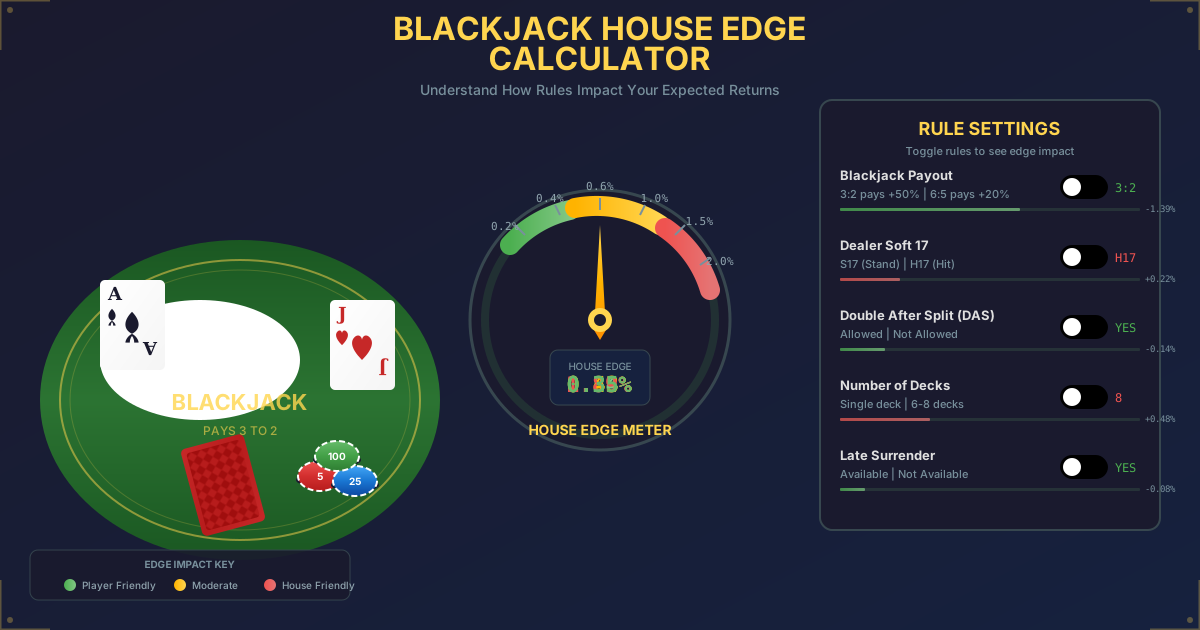
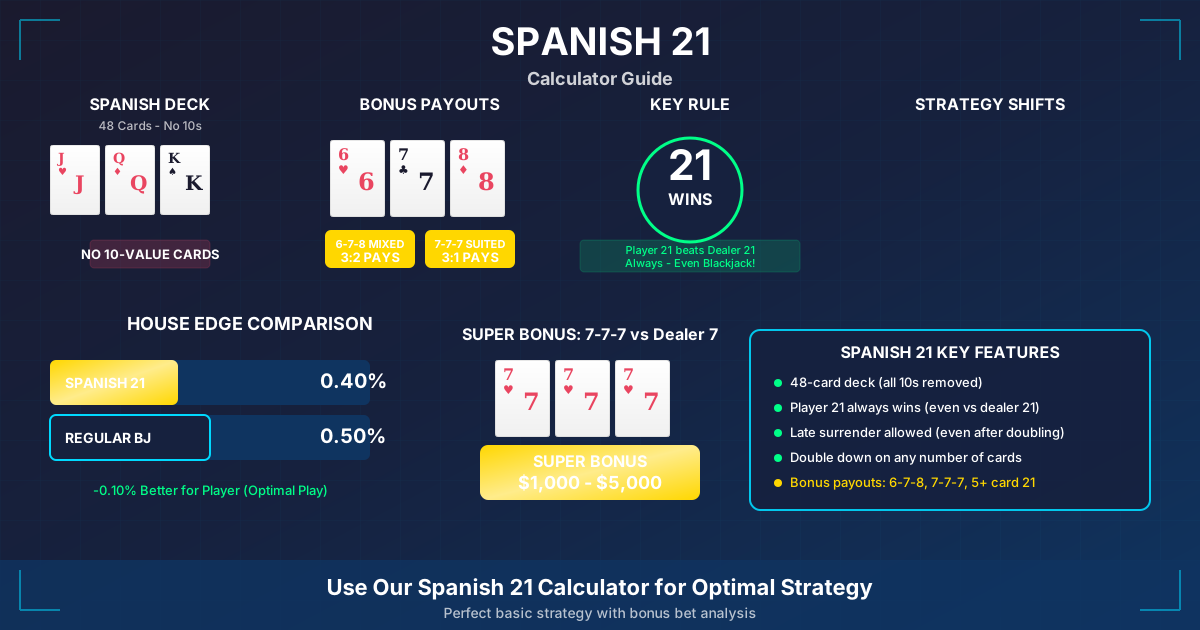
The blackjack house edge calculator lets you input specific table rules and see exactly how they affect your bottom line.
The Entertainment Cost Framework
Instead of thinking about gambling as winning or losing, think about it as buying entertainment with a variable price tag. Every casino game has an hourly cost you can calculate:
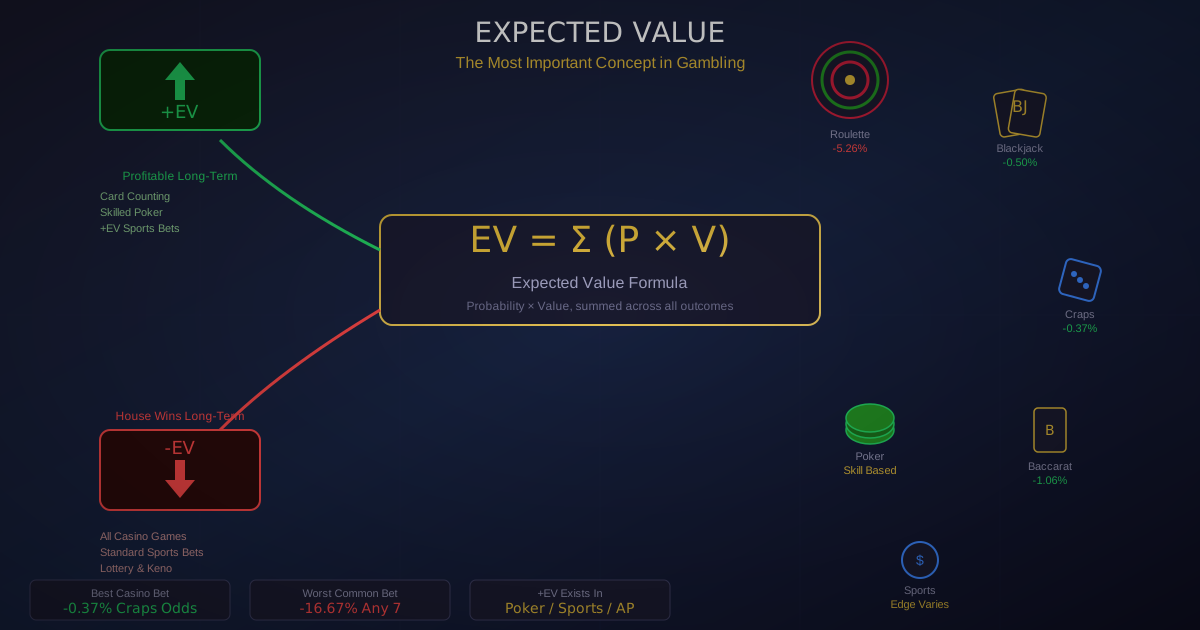
Hourly Cost = House Edge x Bets per Hour x Average Bet Size
When you walk onto a casino floor, you are essentially shopping for entertainment. The games are products, the house edge is the price, and the experience is what you are buying. Would you pay $50 per hour for an experience when an equally fun one costs $8? Most people would not -- if they knew the prices. The problem is that casinos do not put price tags on their tables.
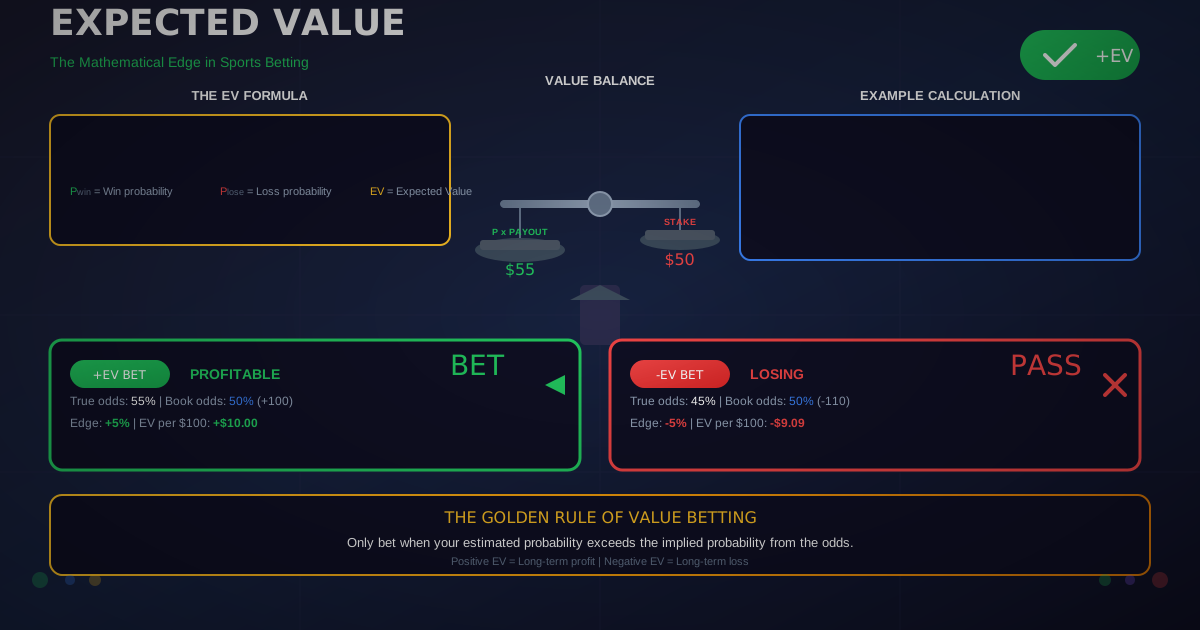
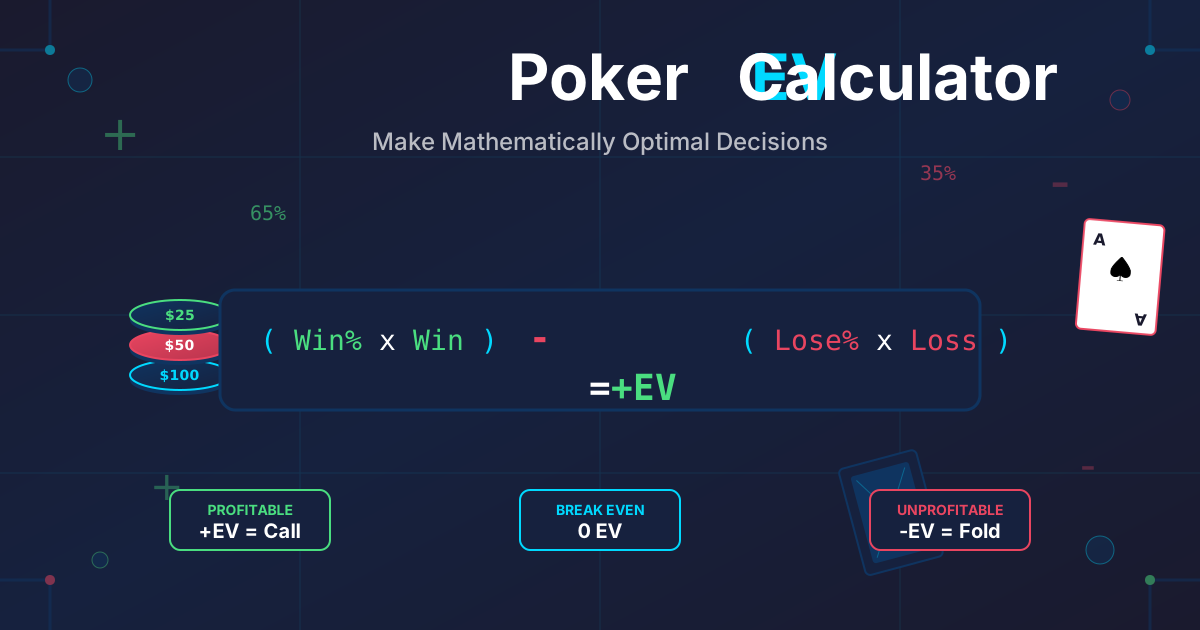
The expected value calculator lets you run these numbers for any game, bet size, and pace of play.
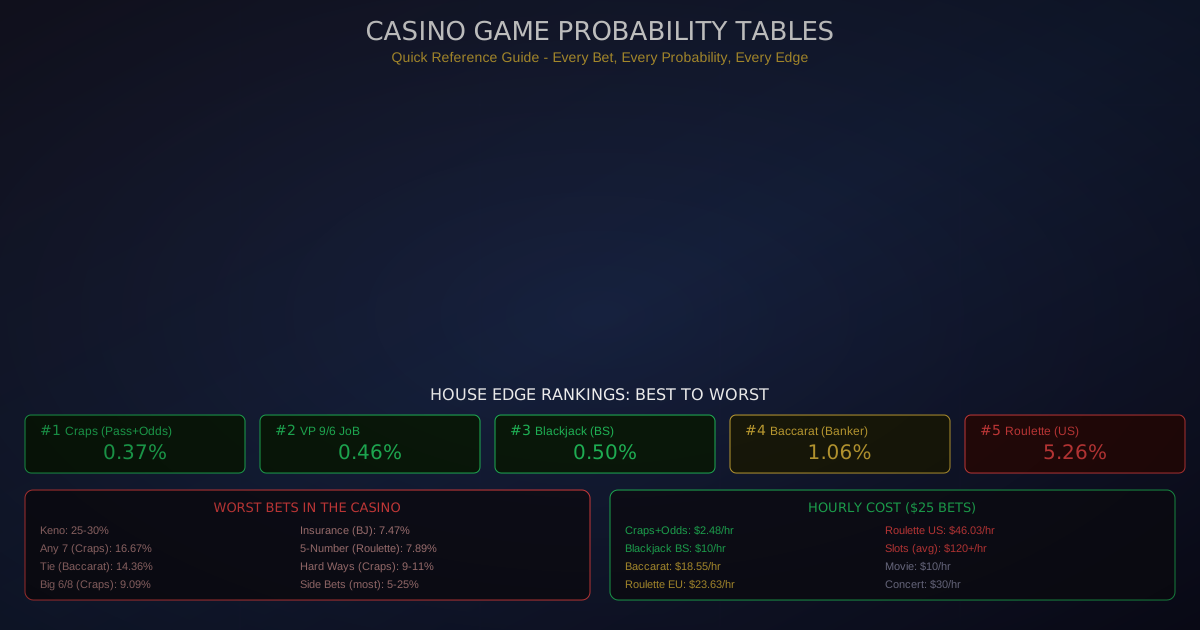
The House Edge Spectrum: Best to Worst Bets in the Casino
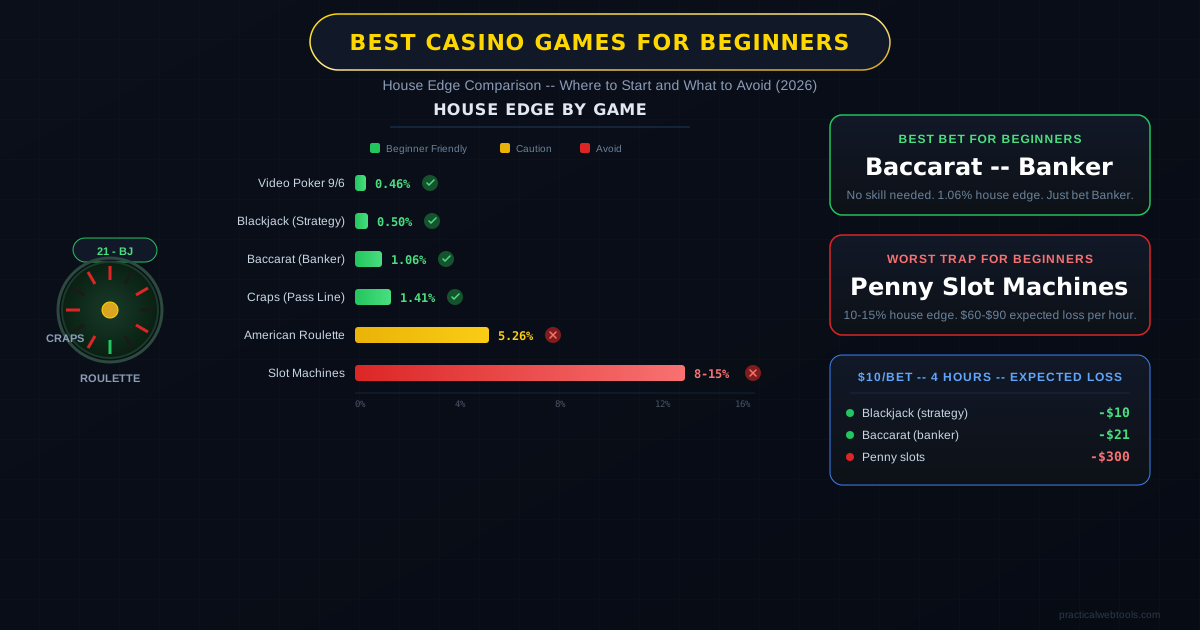
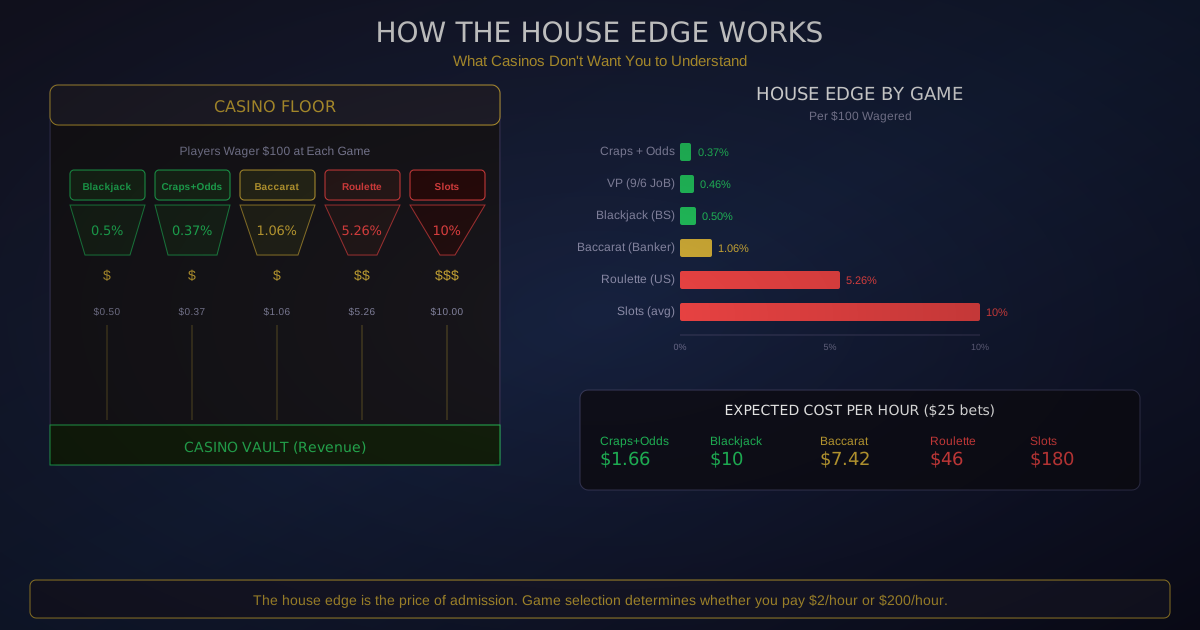
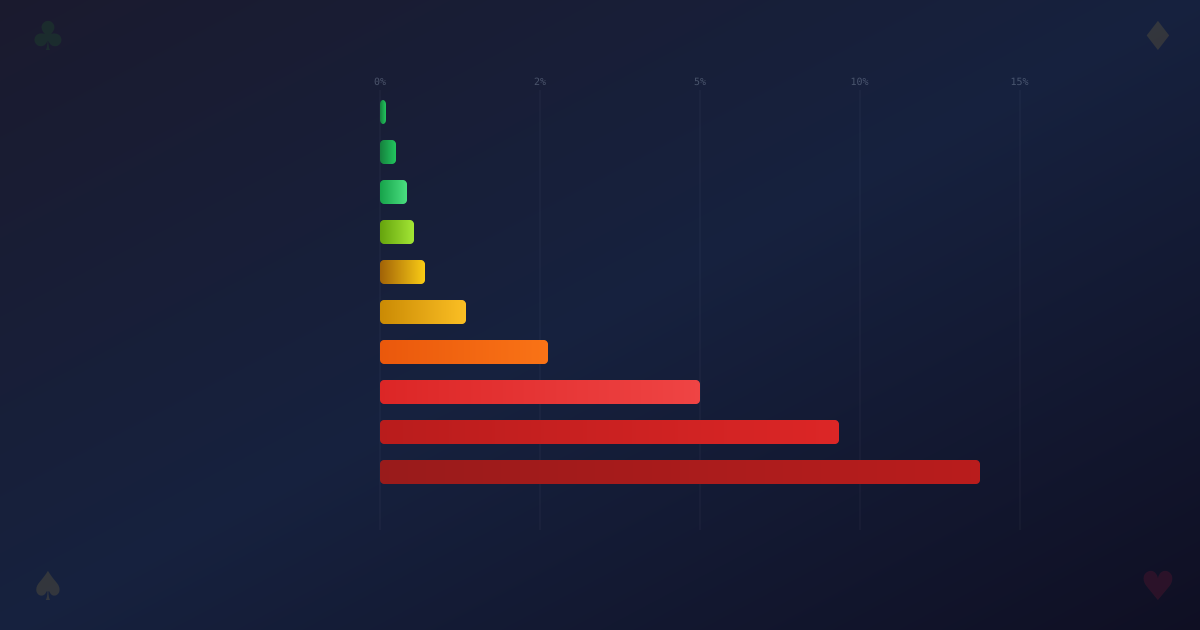
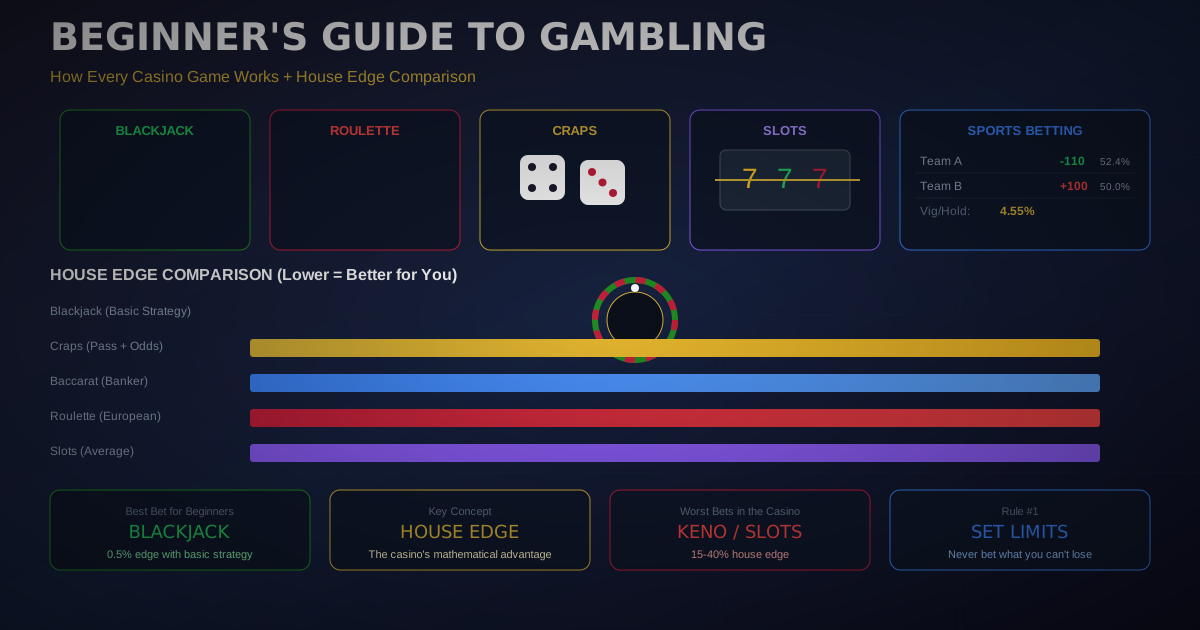
Not all bets are created equal. The house edge ranges from literally zero (the odds bet in craps) to over 25% (some Big Six wheel segments and keno bets). Here is a comprehensive look at where every major game falls on that spectrum.
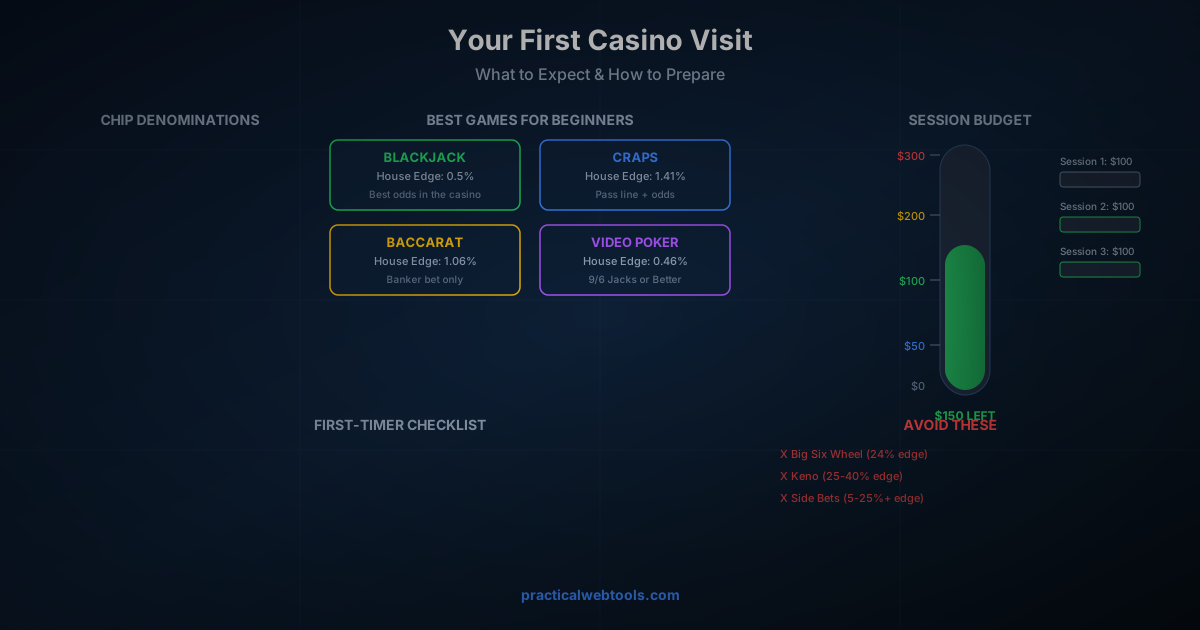
Tier 1: The Best Bets in the House (Under 1.5%)
These are the games where the casino's mathematical advantage is smallest. If you are trying to stretch your bankroll and minimize expected losses, this is your territory.
| Game & Bet | House Edge | Key Conditions | Hands/Hour | Cost per Hour ($25 bet) |
|---|---|---|---|---|
| Craps - Don't Pass + 100x Odds | 0.02% | Requires 100x odds (rare) | 50 | $0.25 |
| Blackjack (Basic Strategy, Best Rules) | 0.28% | 3:2, S17, DAS, RSA, LS | 70 | $4.90 |
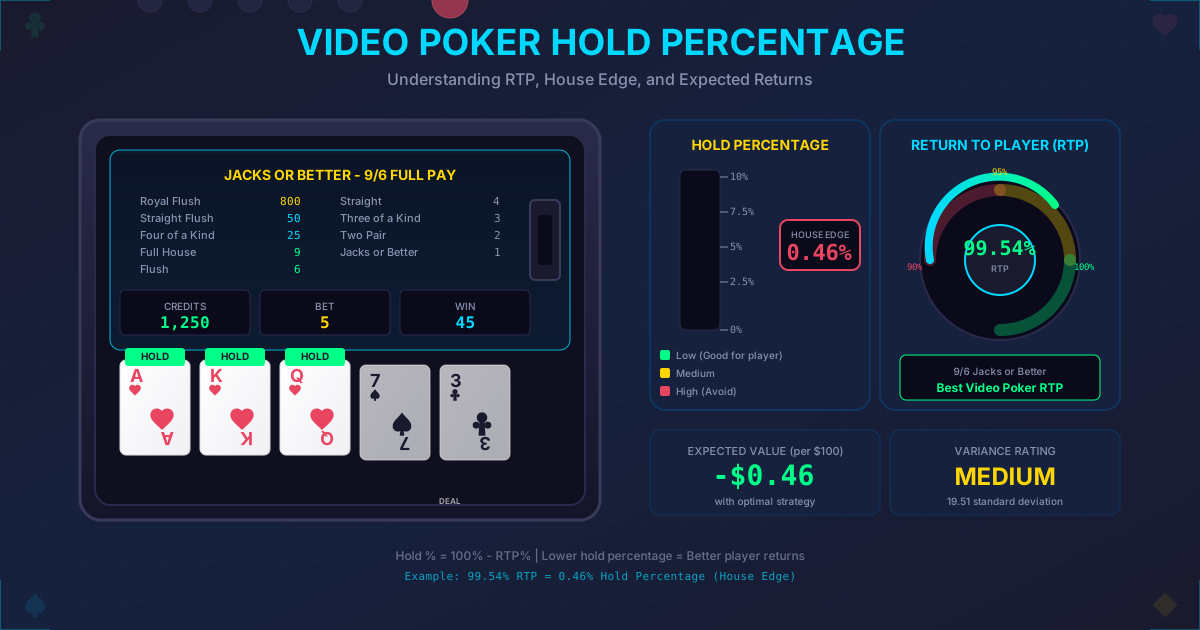
| Video Poker (9/6 Jacks or Better) | 0.46% | Perfect strategy required | 600 | $69.00* |
| Blackjack (Basic Strategy, Good Rules) | 0.50% | 3:2, S17, DAS | 70 | $8.75 |
| Craps - Don't Pass + 3-4-5x Odds | 0.37% | Most common on Strip | 50 | $4.63 |
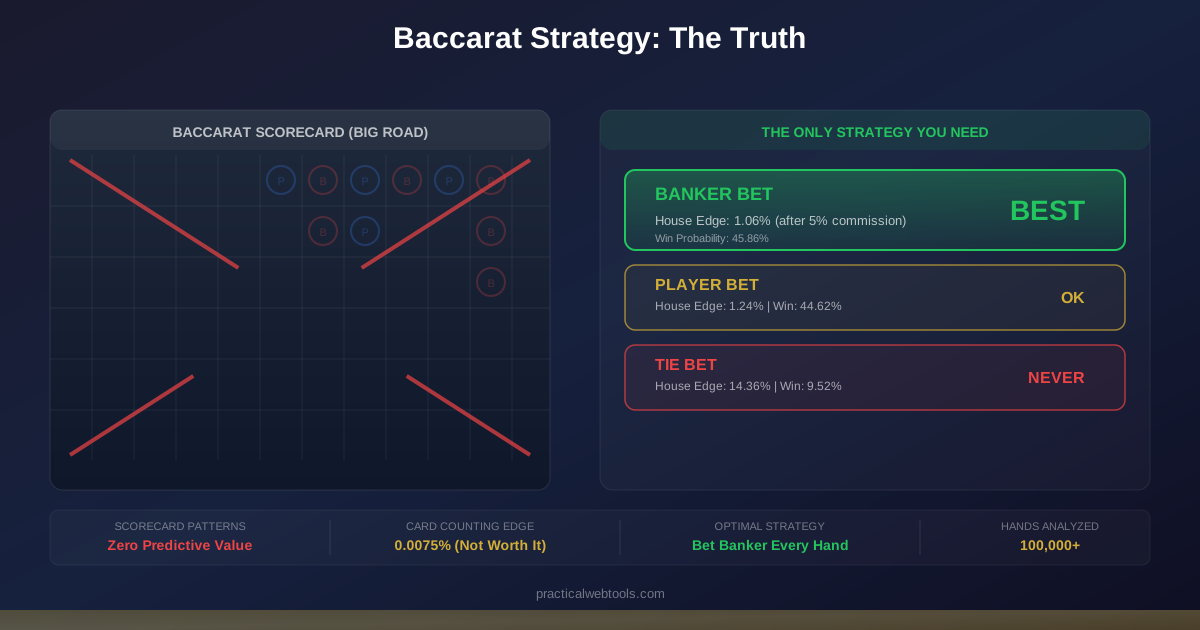
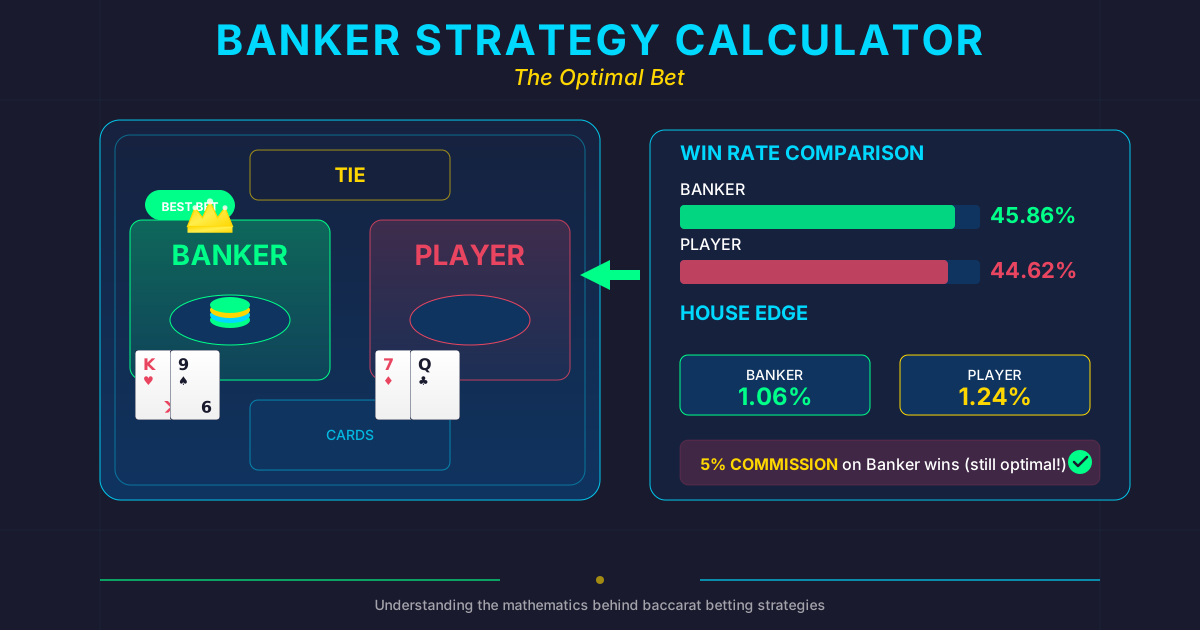
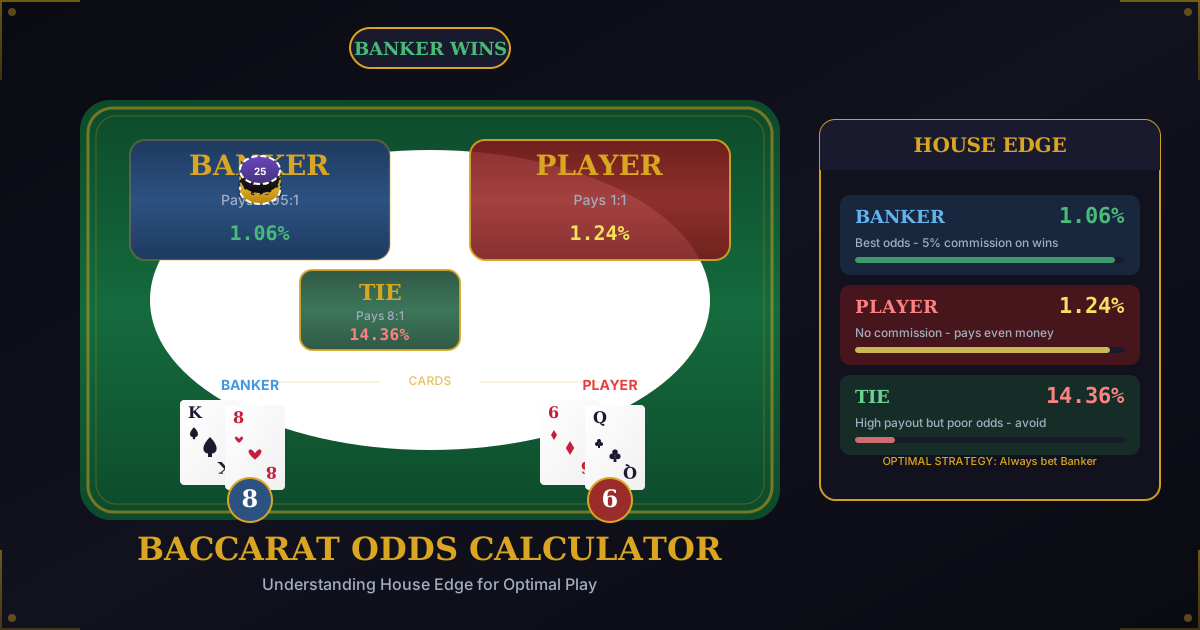
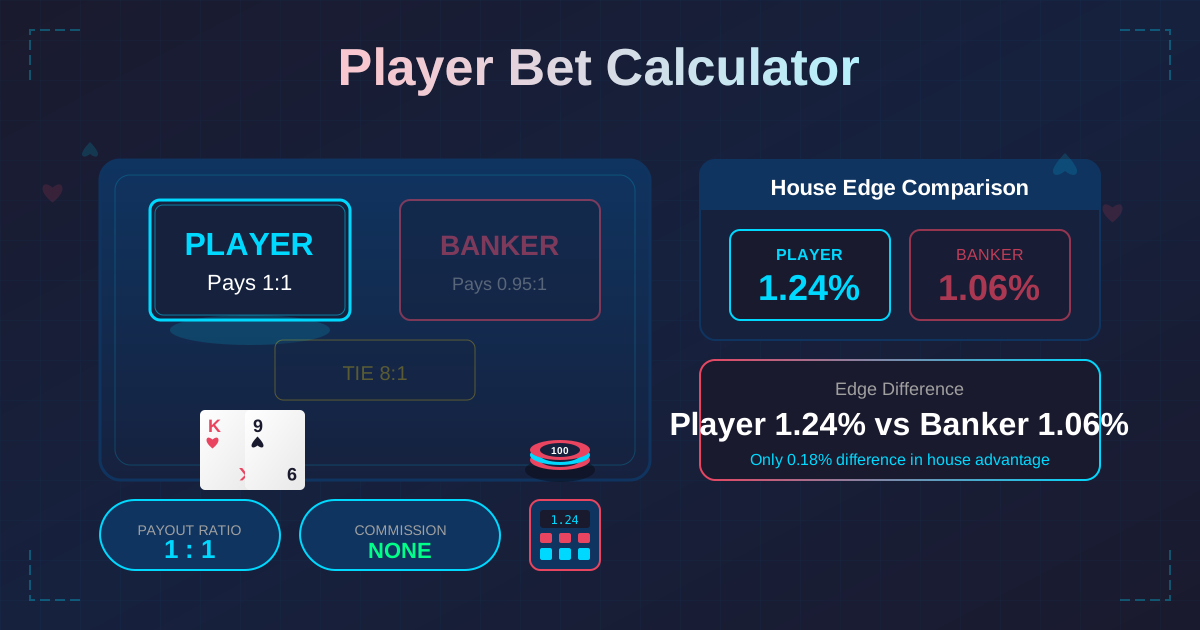
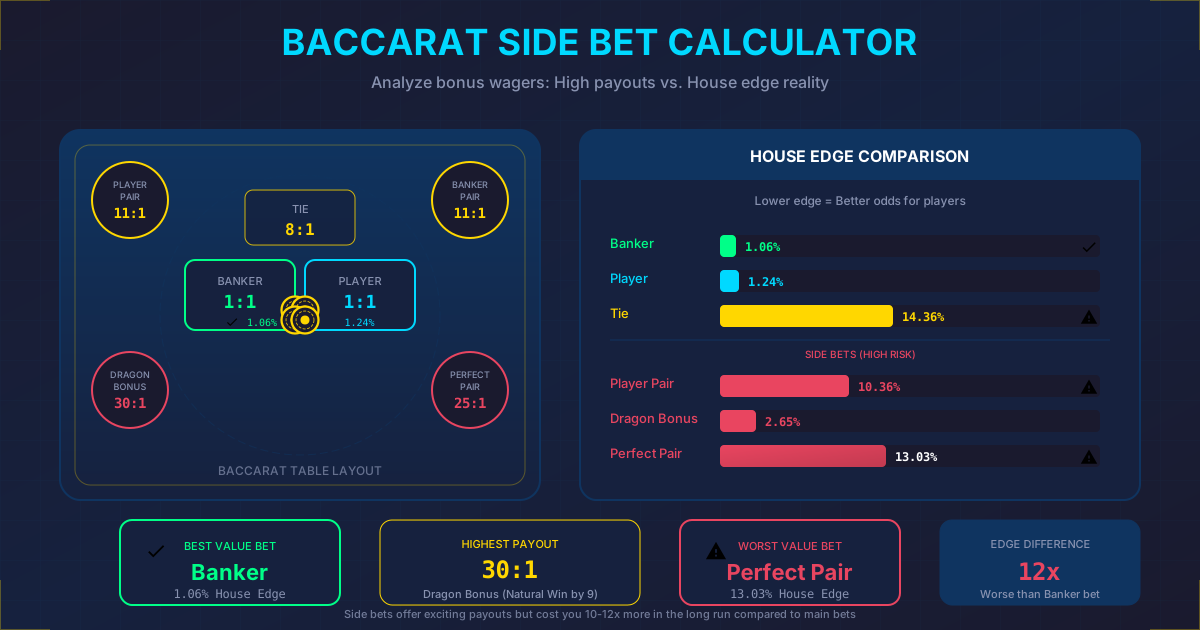
| Baccarat - Banker | 1.06% | After 5% commission | 70 | $18.55 |
| Baccarat - Player | 1.24% | No commission | 70 | $21.70 |
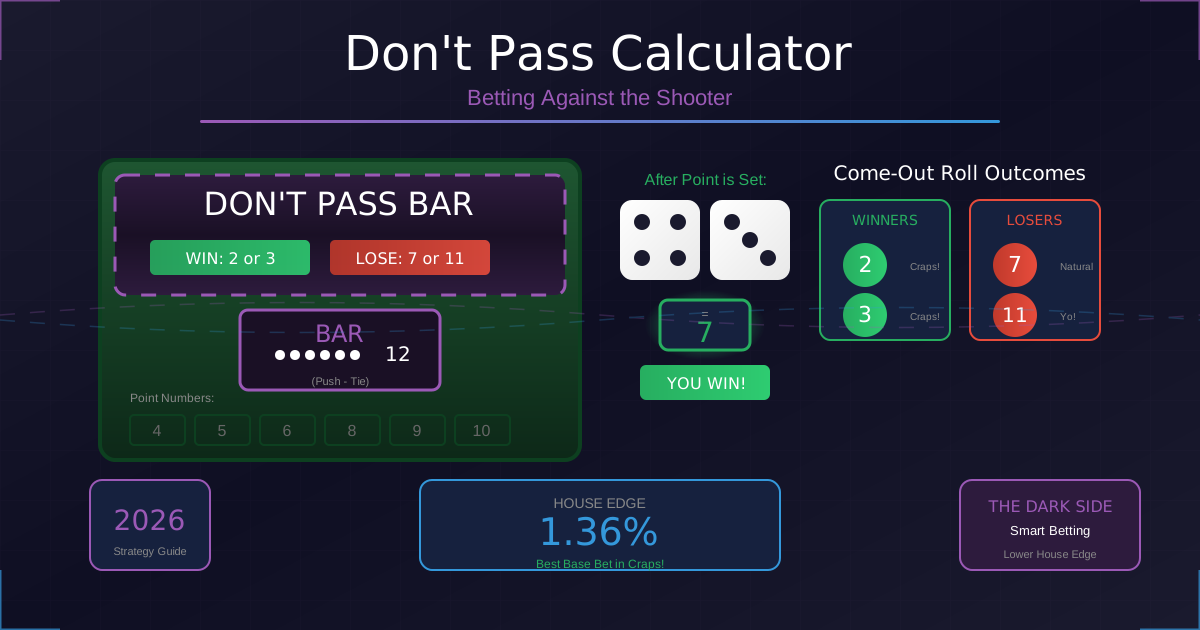
| Craps - Pass Line | 1.41% | Flat bet, no odds | 50 | $17.63 |
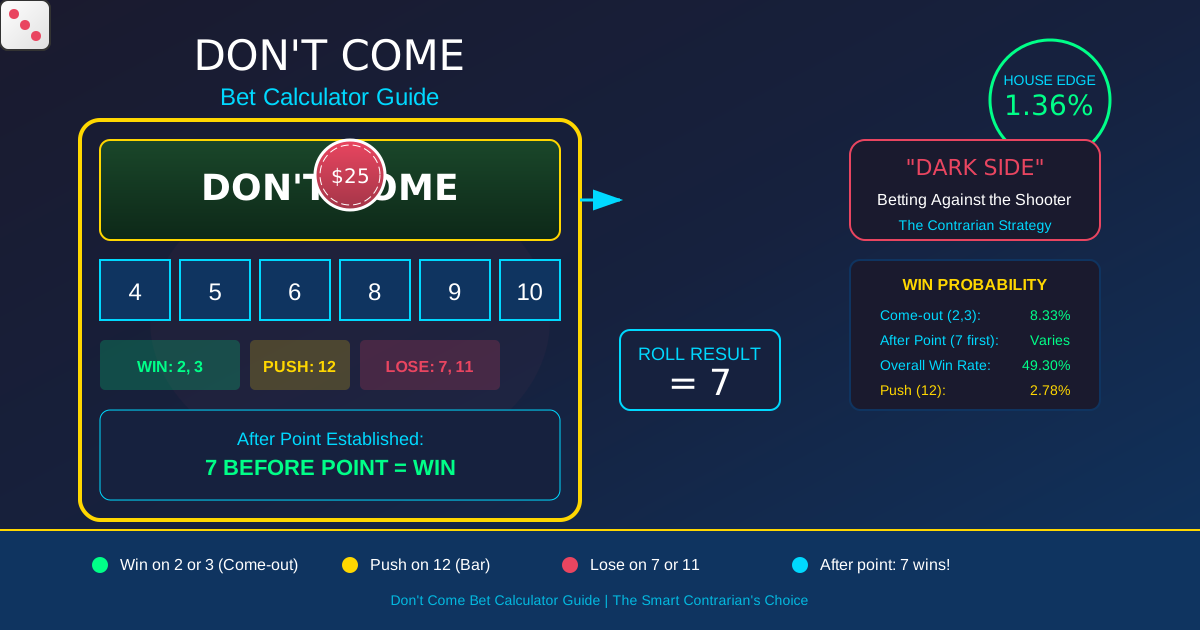
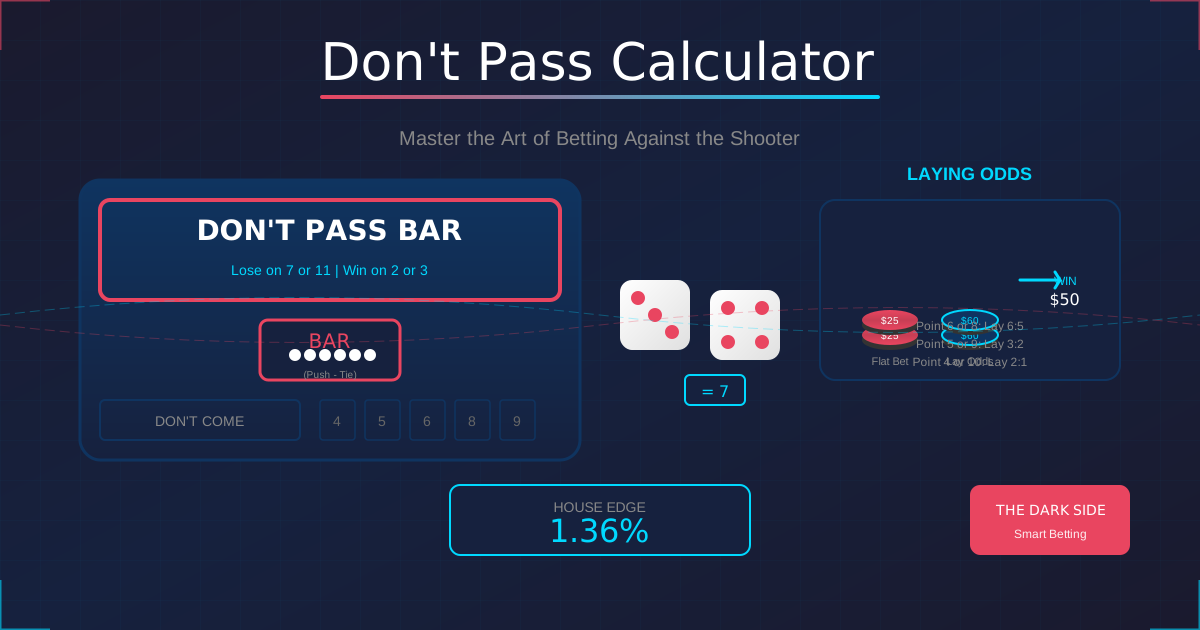
| Craps - Don't Pass | 1.36% | Flat bet, no odds | 50 | $17.00 |
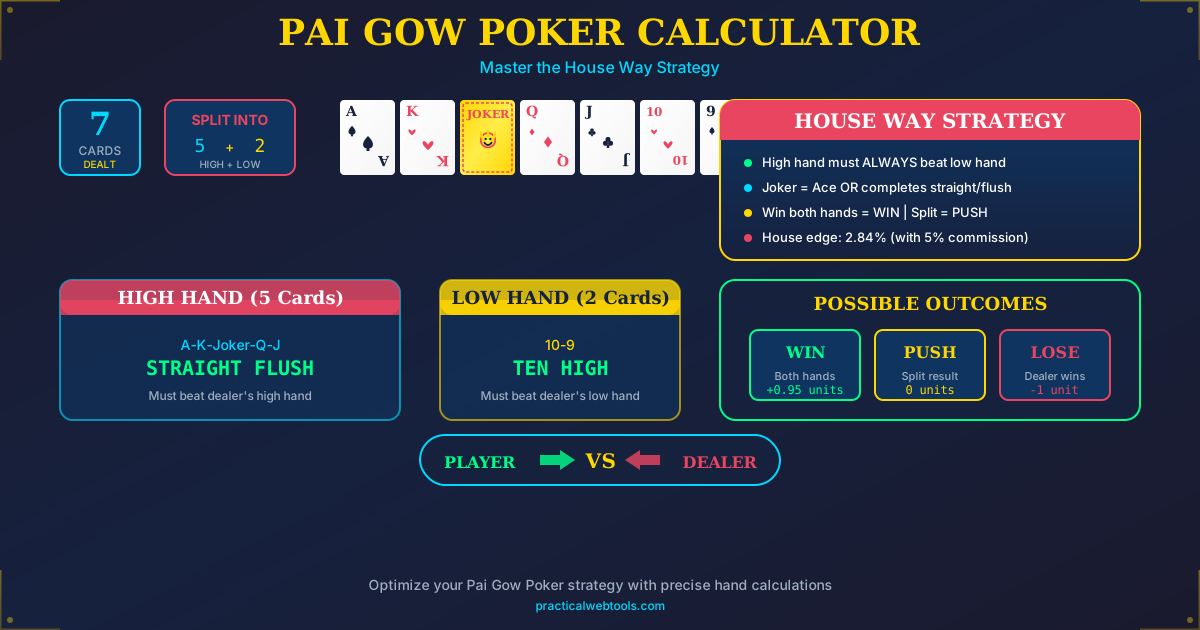
| Pai Gow Poker | 1.46% | With optimal strategy | 30 | $10.95 |
*Video poker hands per hour is much higher than table games, so despite the low house edge, the hourly cost at max bet ($1.25 x 5 coins = $6.25) is about $17.25 per hour, which is still competitive. The $25 per hand figure assumes higher denomination machines.
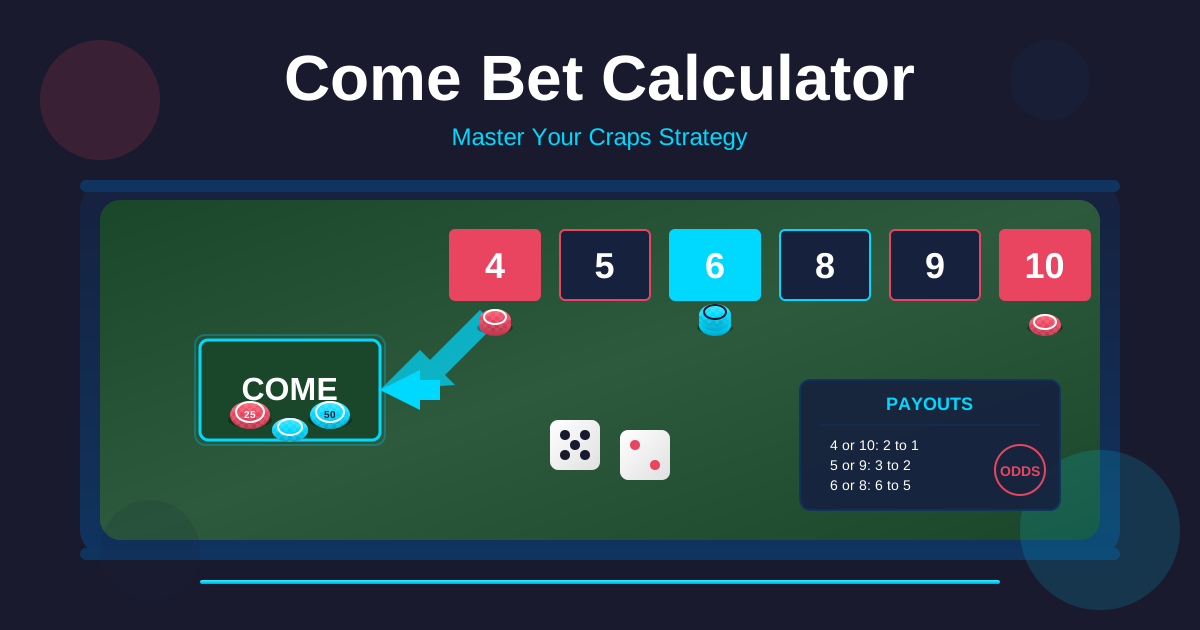
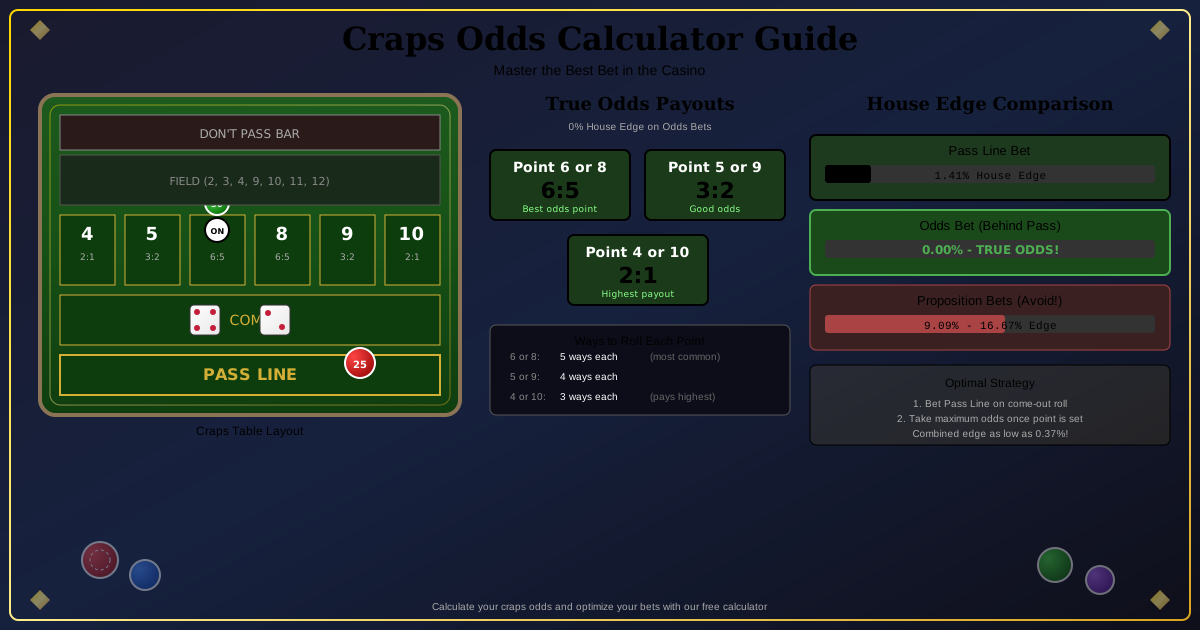
The takeaway: Craps with odds bets and well-ruled blackjack are the undisputed best values on the casino floor. The craps odds calculator shows exactly how taking or laying odds behind a line bet reduces the combined house edge, and the craps house edge calculator breaks down every possible craps bet.
Tier 2: Reasonable Bets (1.5% to 3%)
These games will cost you more per hour but still provide decent value for entertainment spending.
| Game & Bet | House Edge | Notes |
|---|---|---|
| Blackjack (Basic Strategy, Average Rules) | 1.0% - 1.5% | 6:5 starts creeping in here |
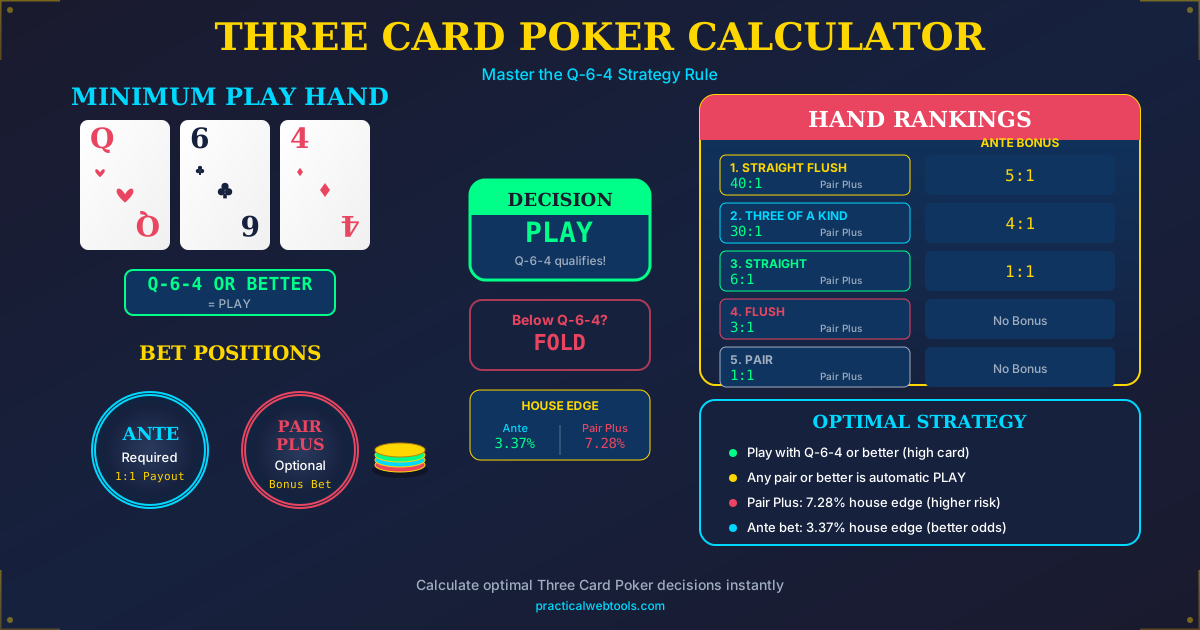
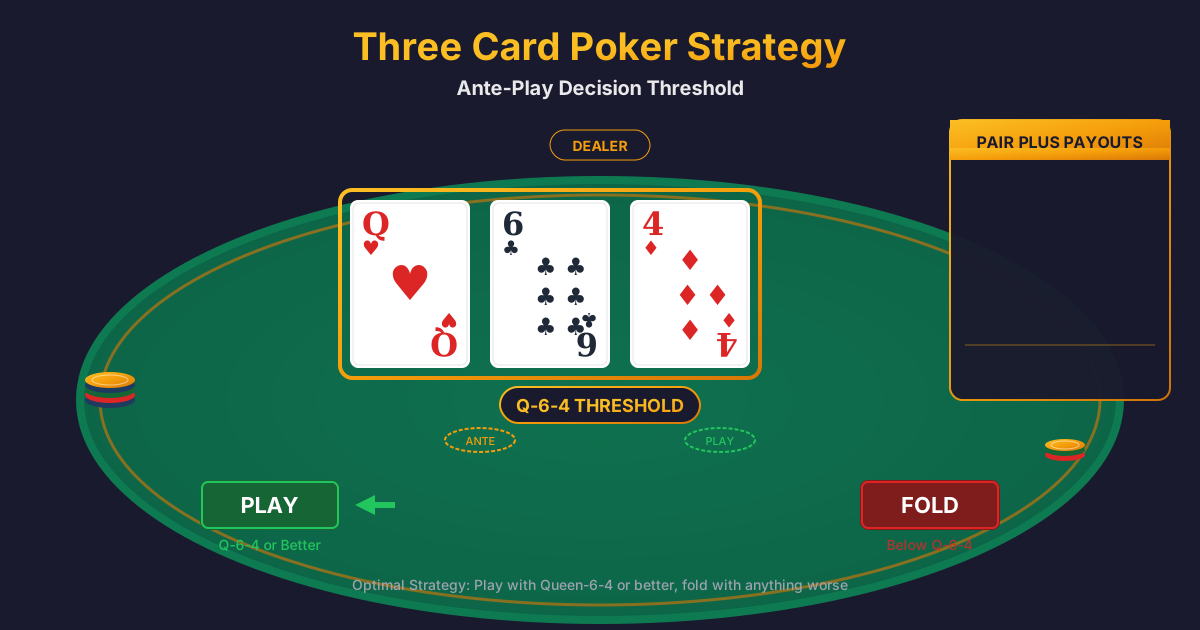
| Three Card Poker - Ante/Play | 2.01% | With optimal strategy |
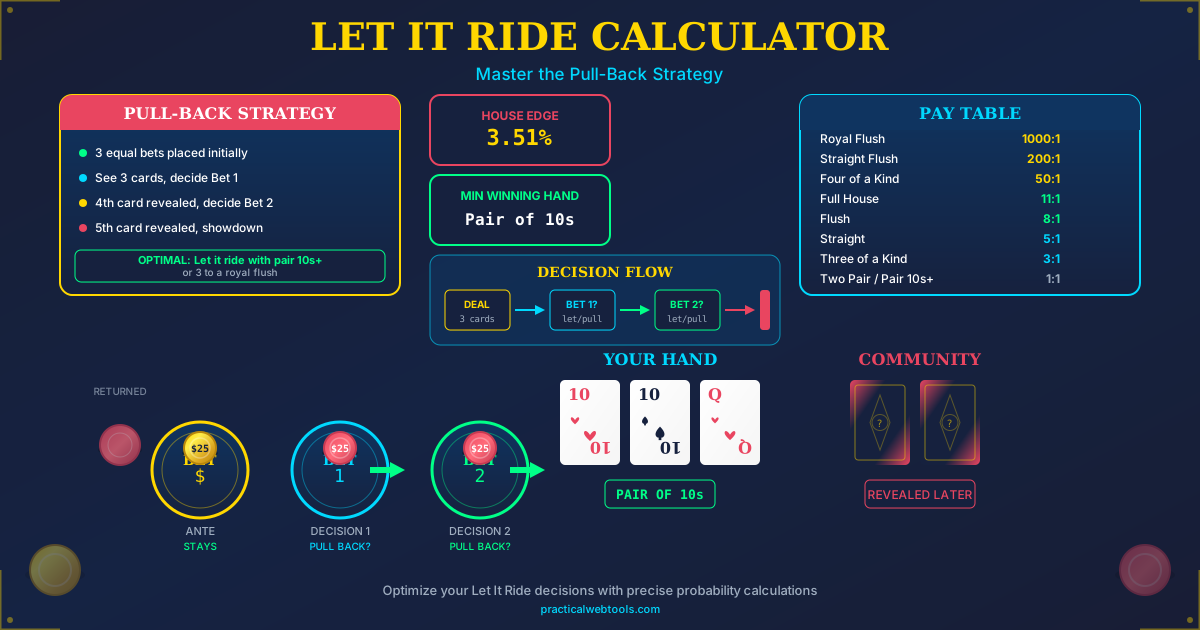
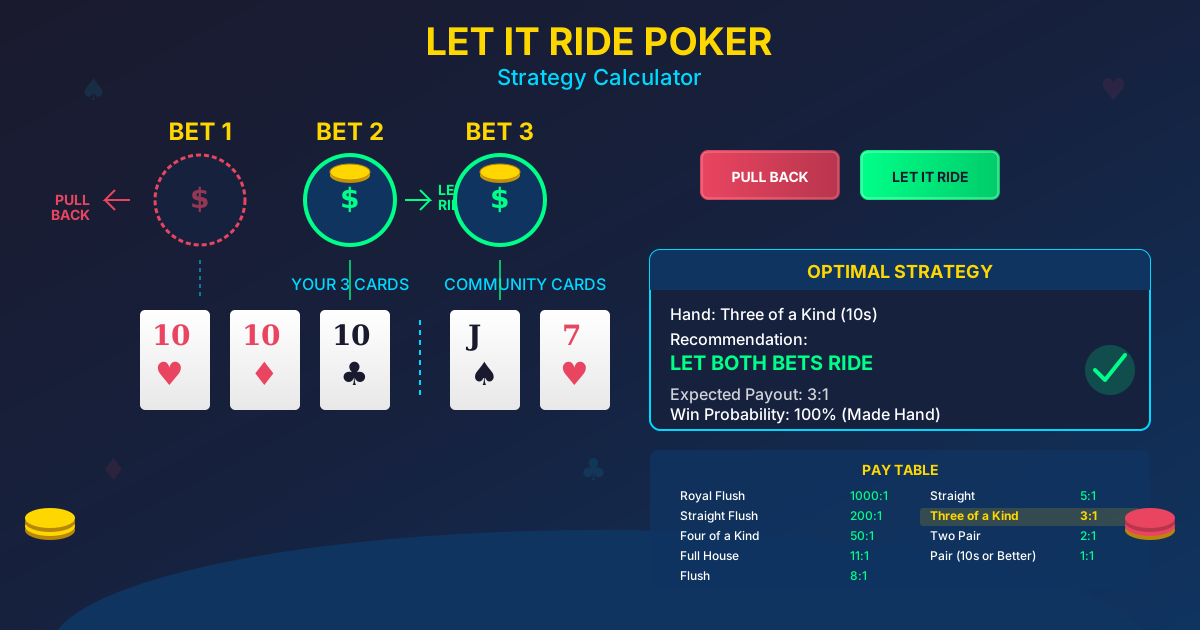
| Let It Ride | 2.32% | Optimal strategy assumed |
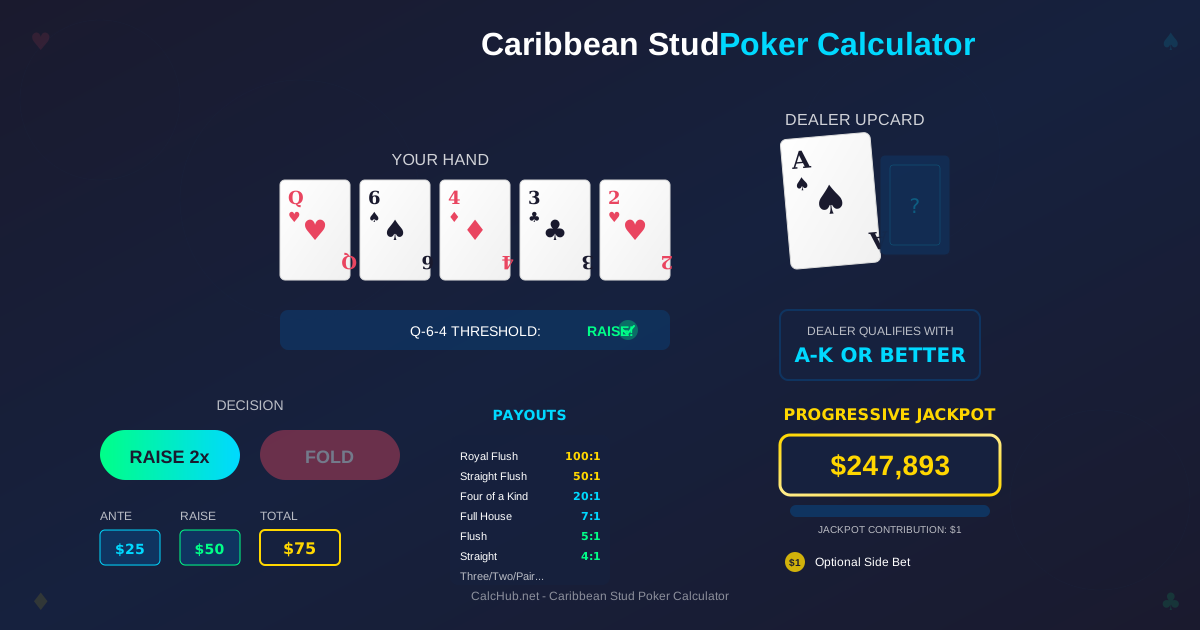
| Caribbean Stud | 2.56% | Optimal strategy, no progressive |
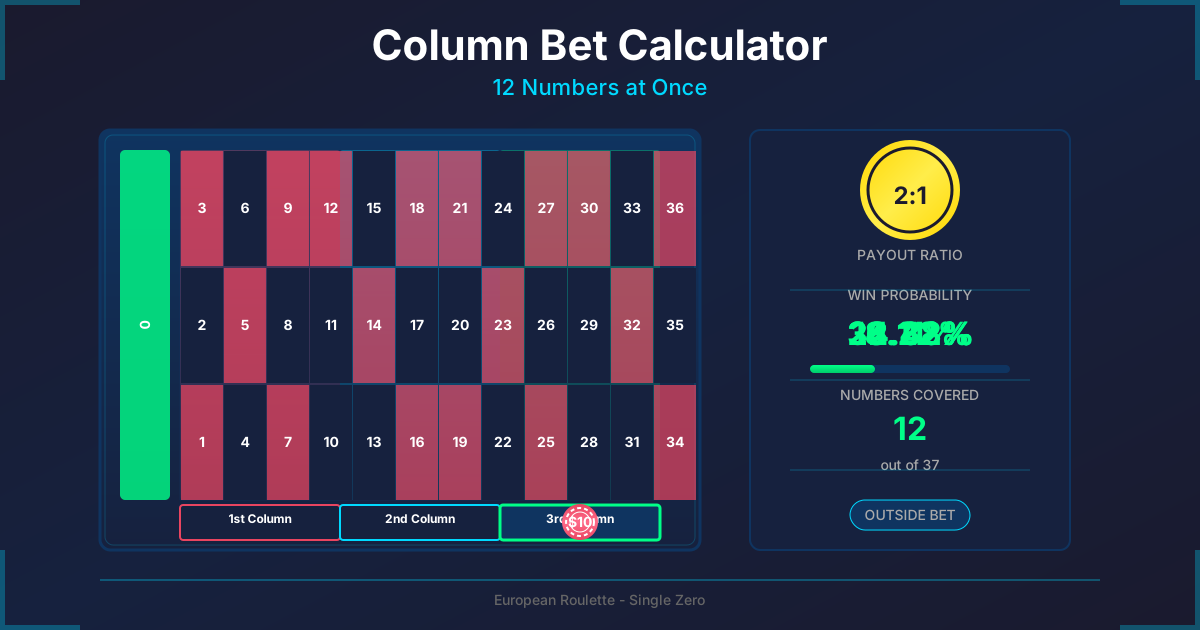
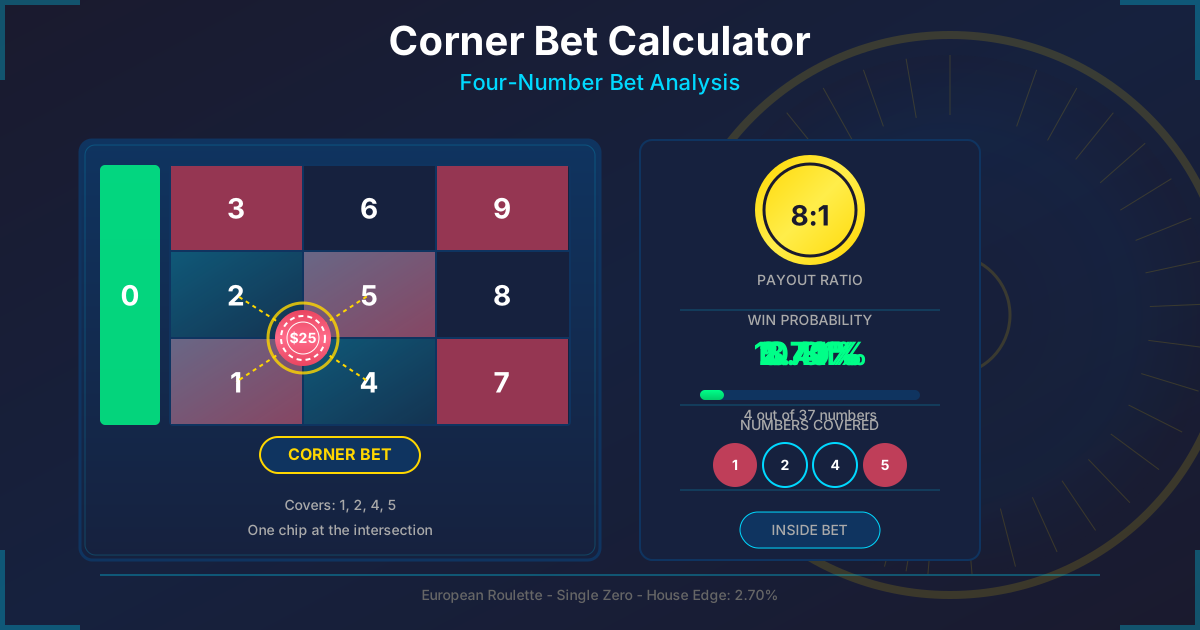
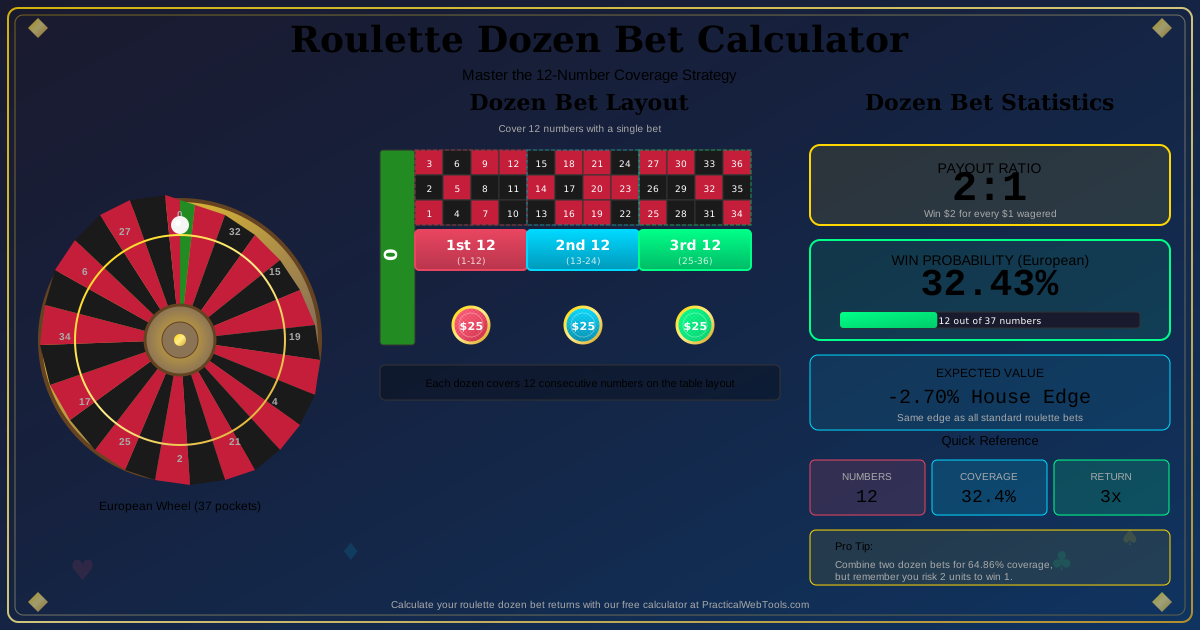
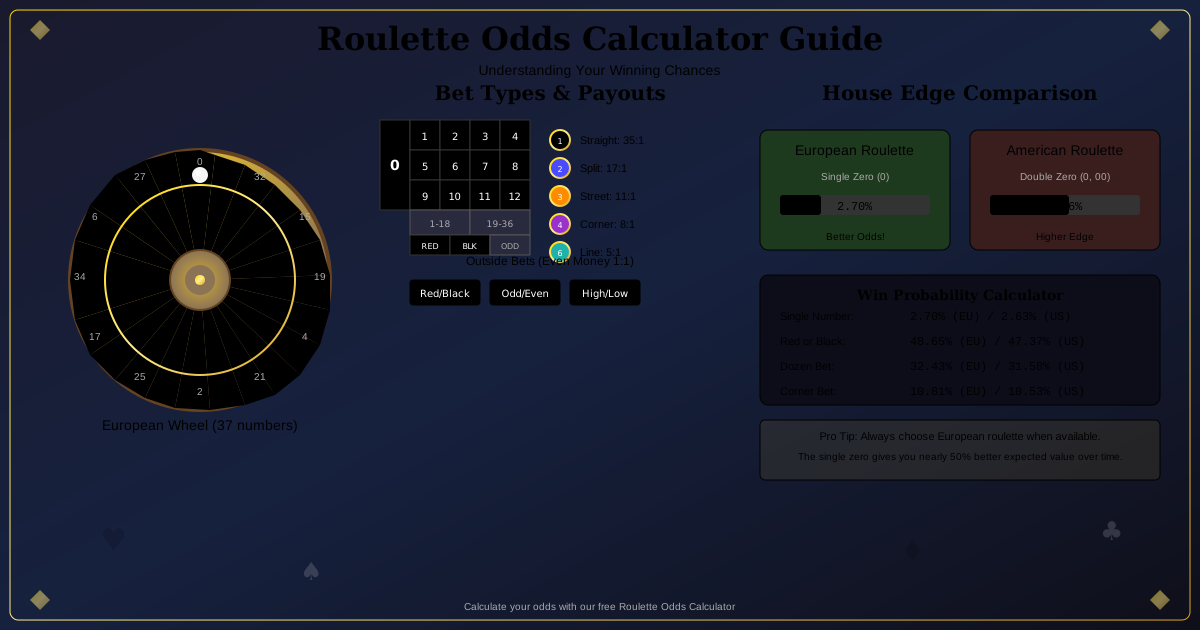
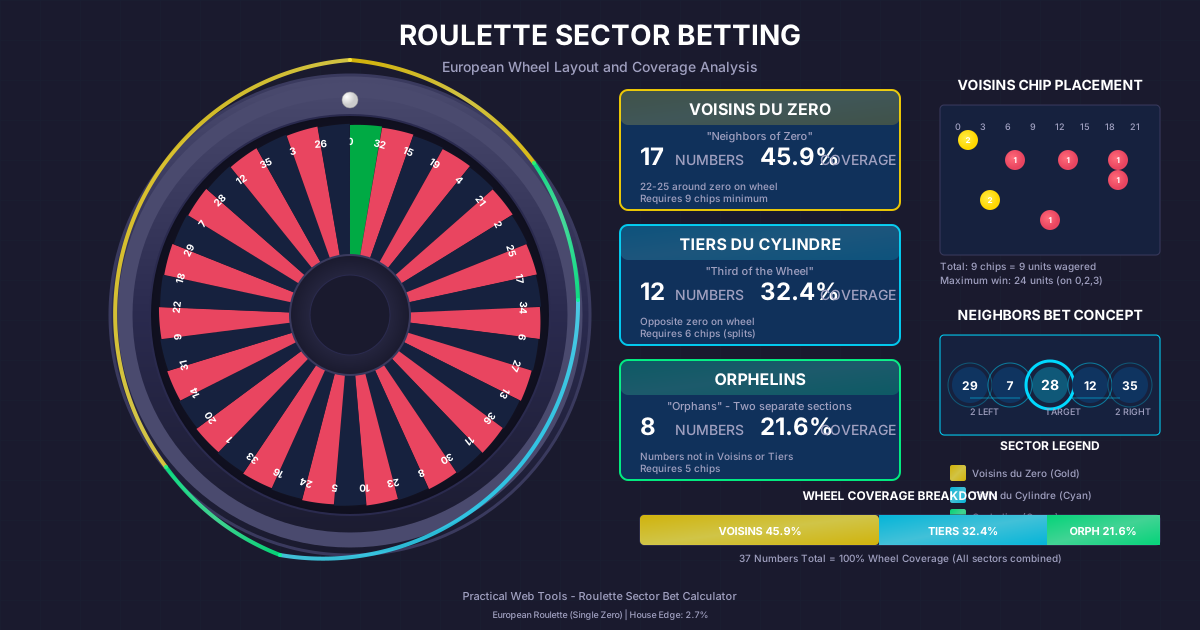
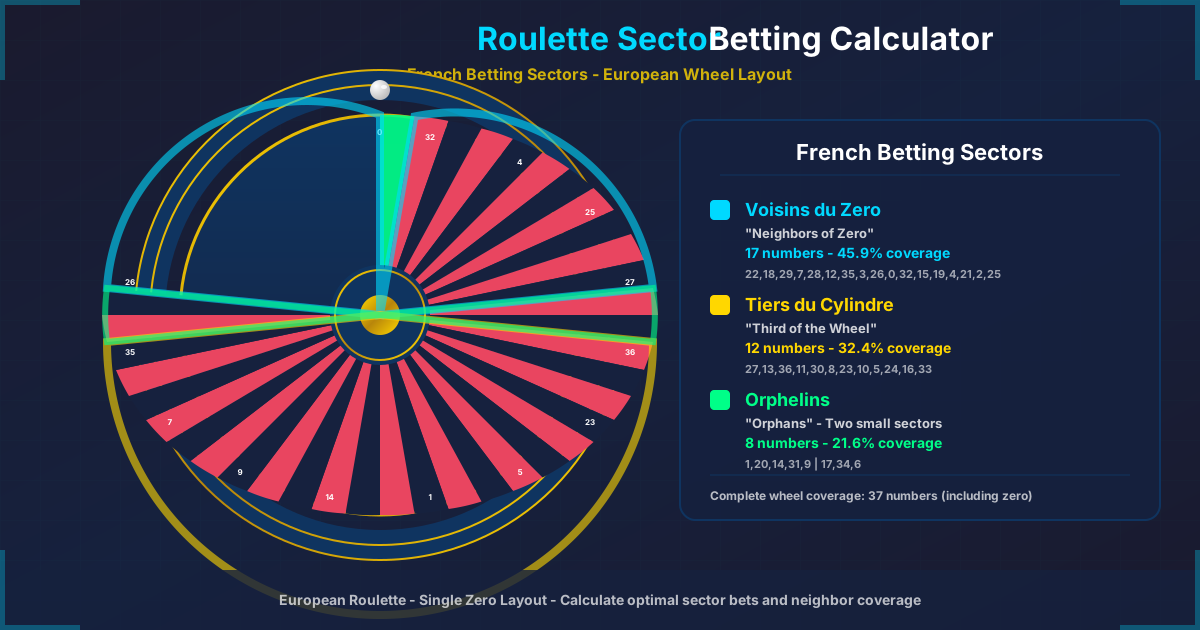
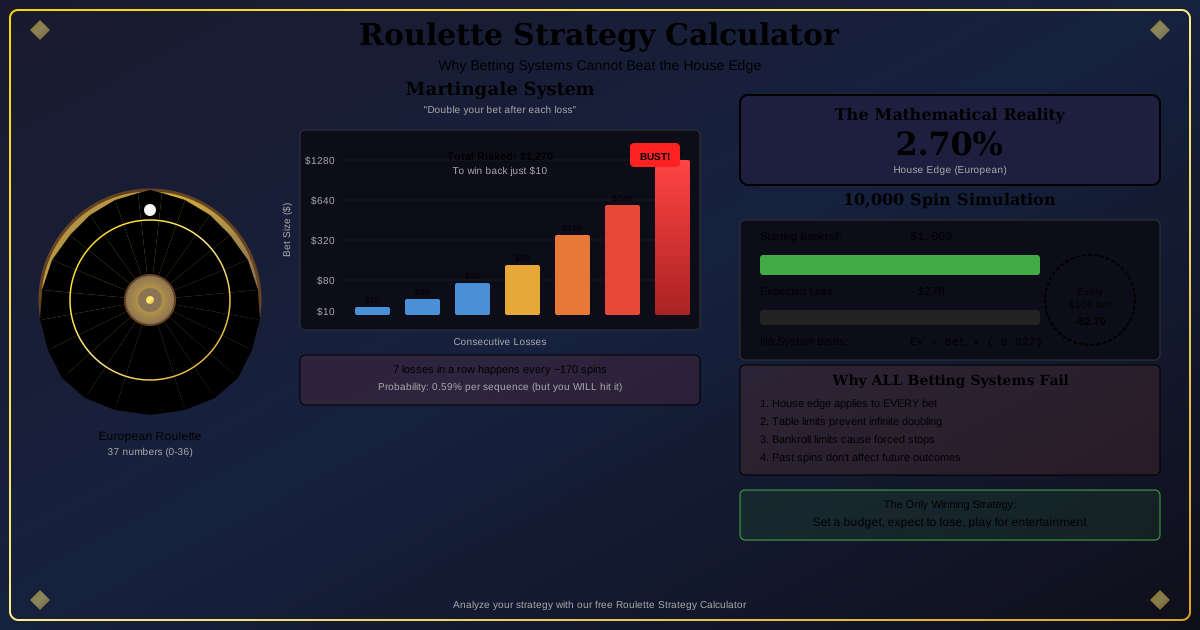
| European Roulette (Single Zero) | 2.70% | All bets except special rules |
| Pai Gow Tiles | 2.5% | Complex strategy, slow game |
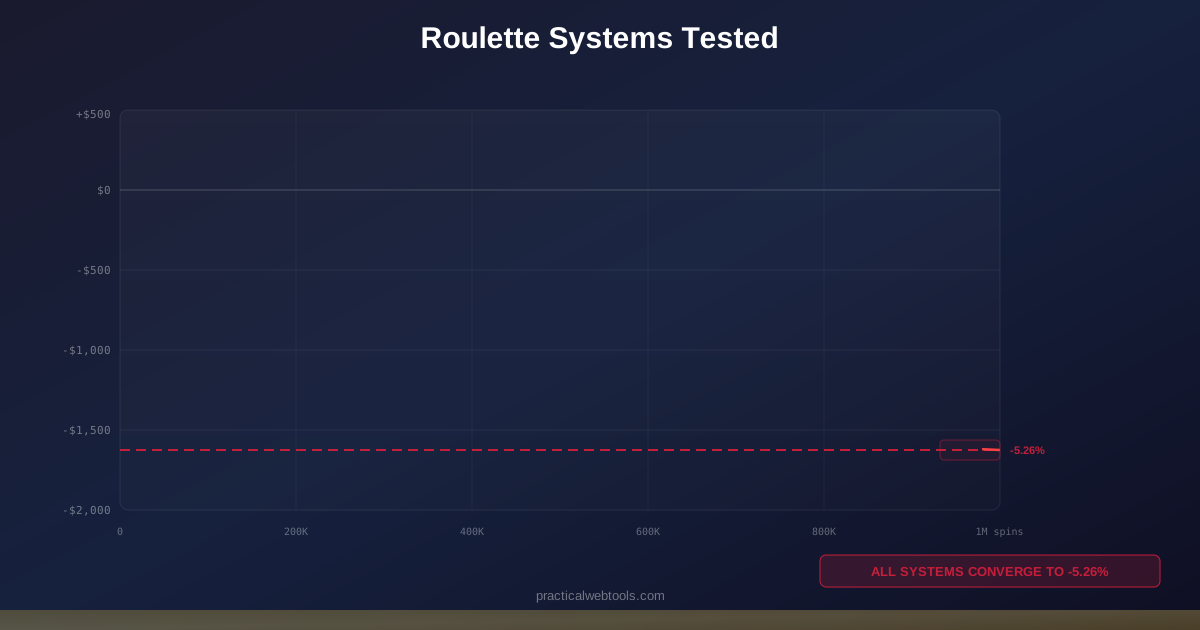
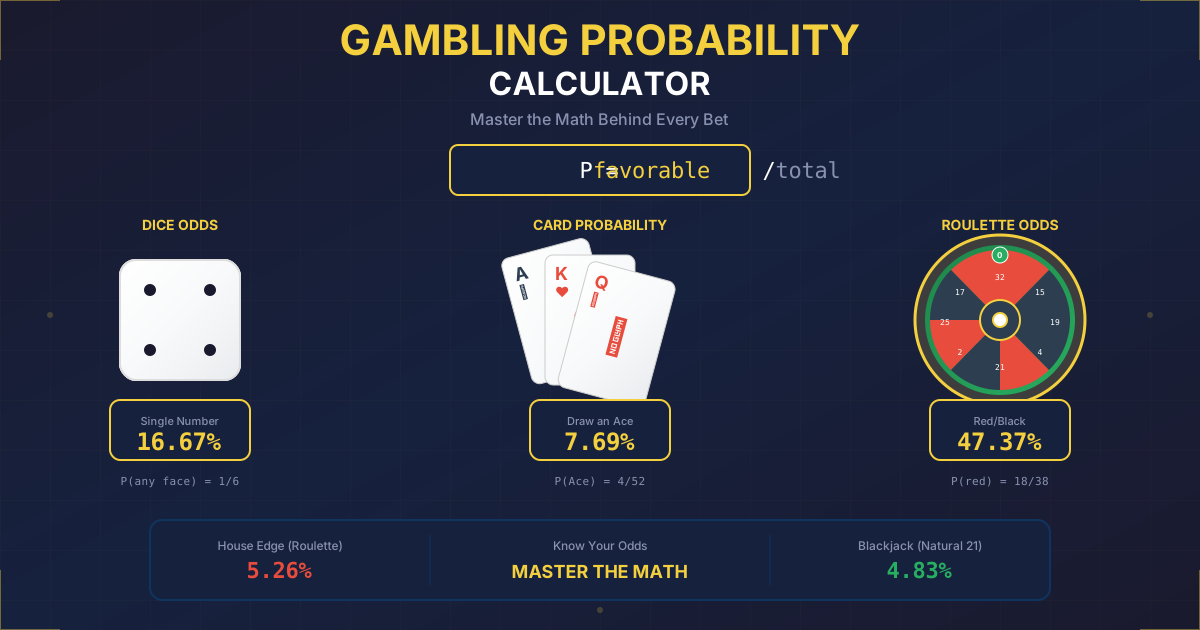
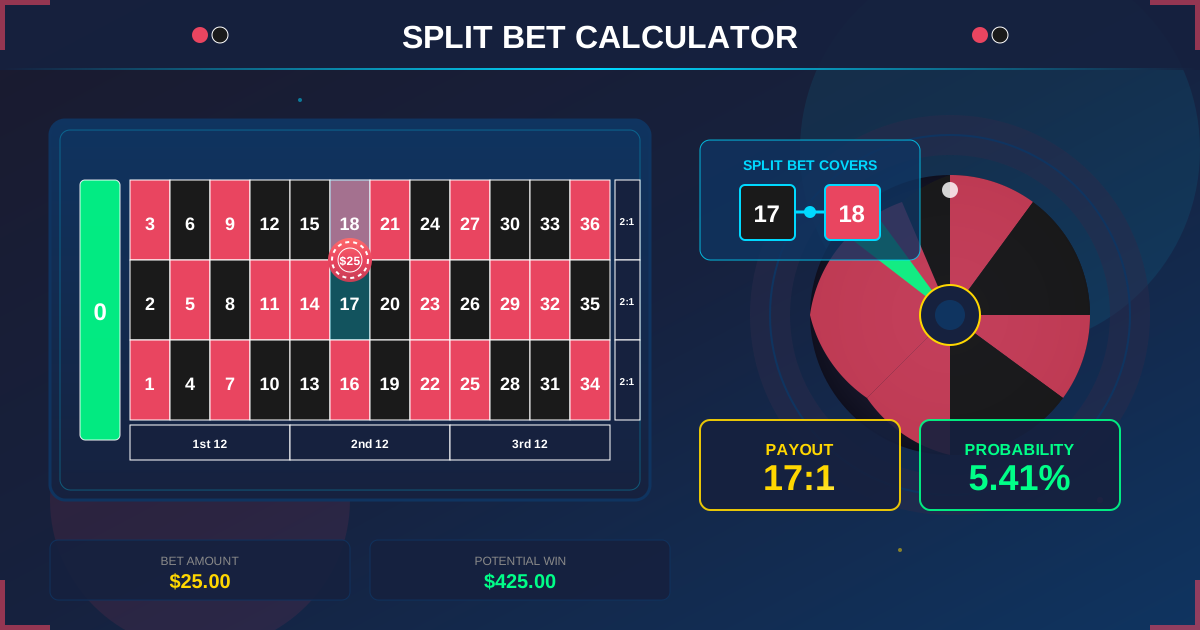
European roulette at 2.70% is dramatically better than the American version at 5.26%. If your casino offers both, always choose the single-zero wheel. The roulette house edge calculator compares all roulette variants side by side.
Tier 3: High-Cost Bets (3% to 6%)
This is where most recreational players unknowingly park themselves. The games here are popular but expensive.
| Game & Bet | House Edge | Why It's Popular Anyway |
|---|---|---|
| American Roulette (Double Zero) | 5.26% | Simple, social, iconic |
| Blackjack (6:5 payout, bad rules) | 2.0% - 2.9% | Looks like blackjack, costs more |
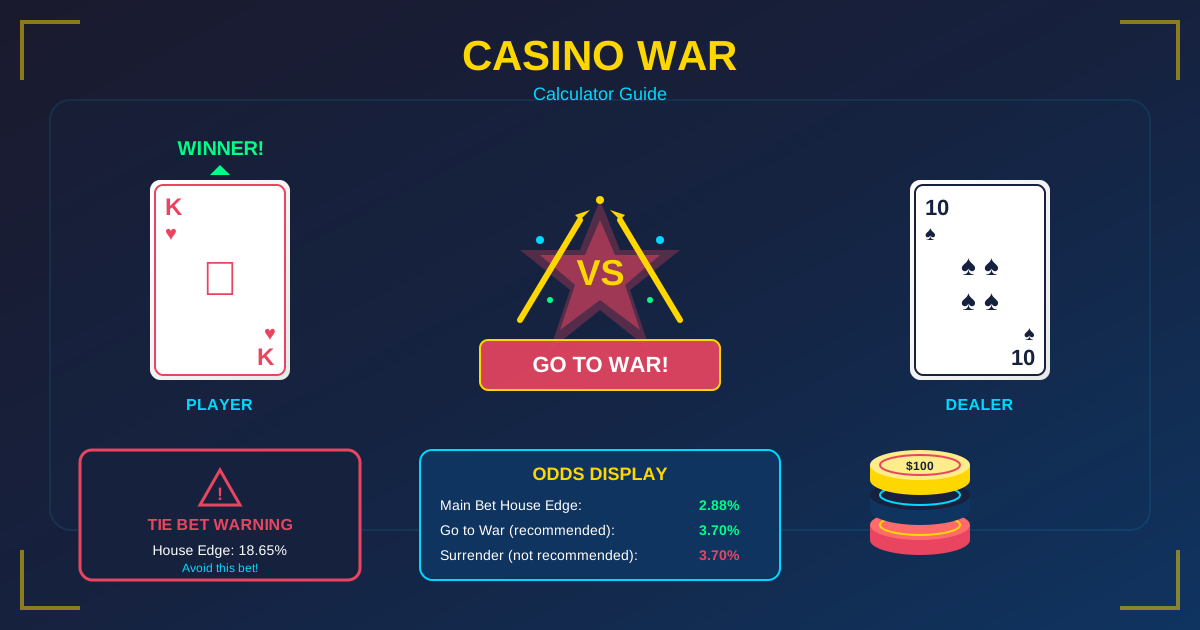
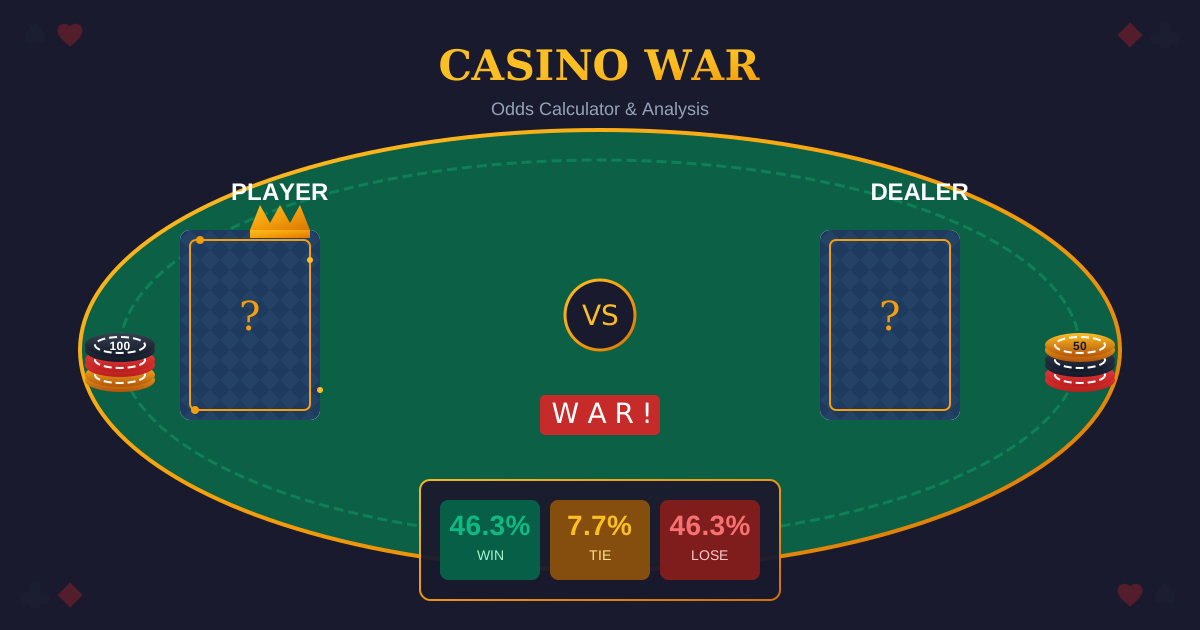
| Casino War | 2.88% | Simplest game in the casino |
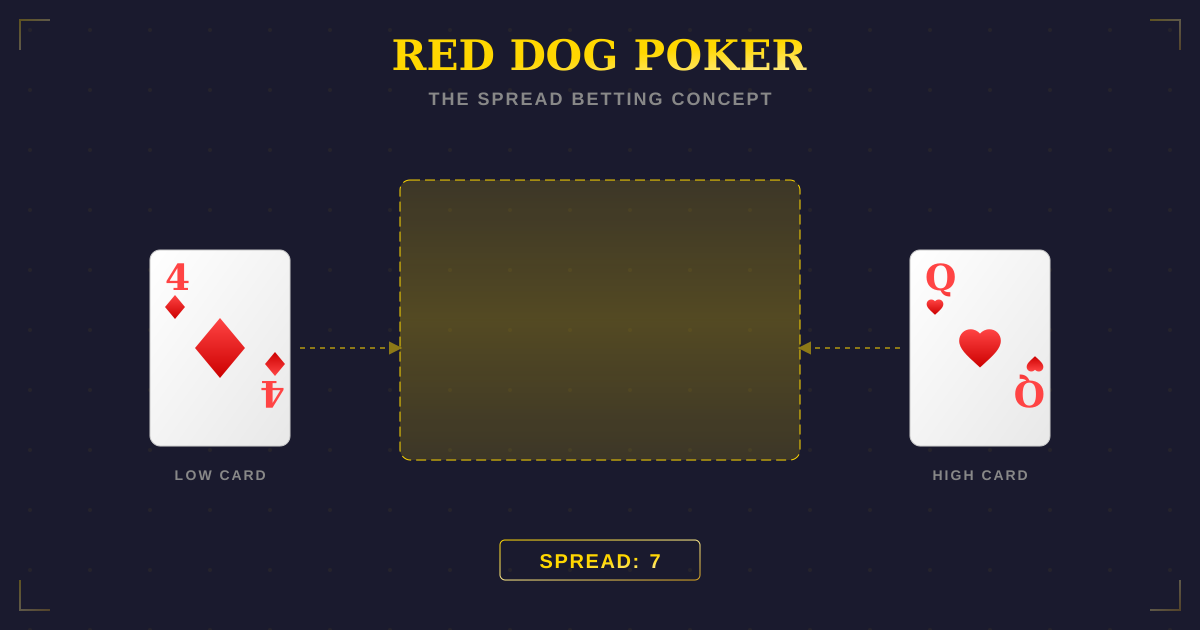
| Red Dog | 3.37% | Rare but still found |
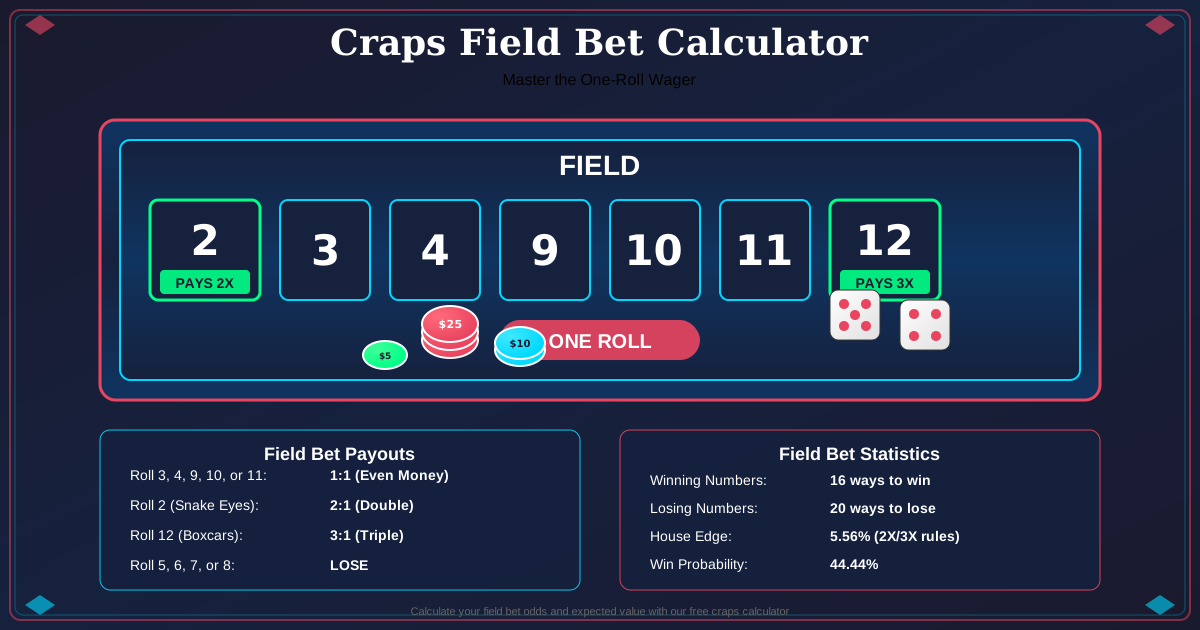
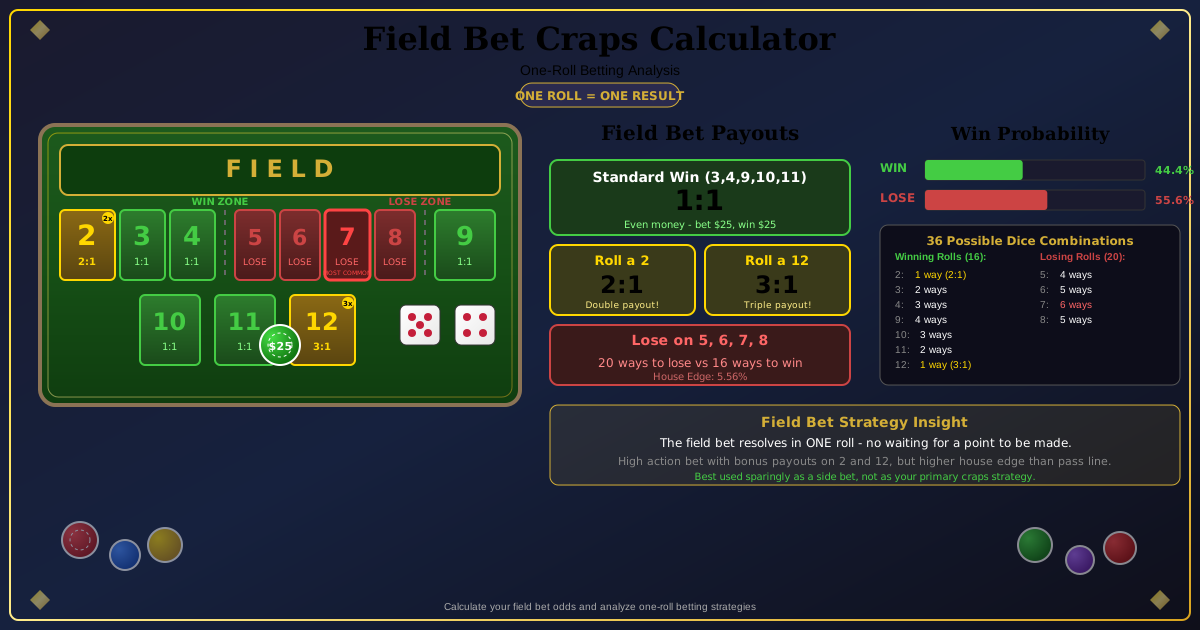
| Craps - Field Bet (2x on 12) | 5.56% | Easy to understand |
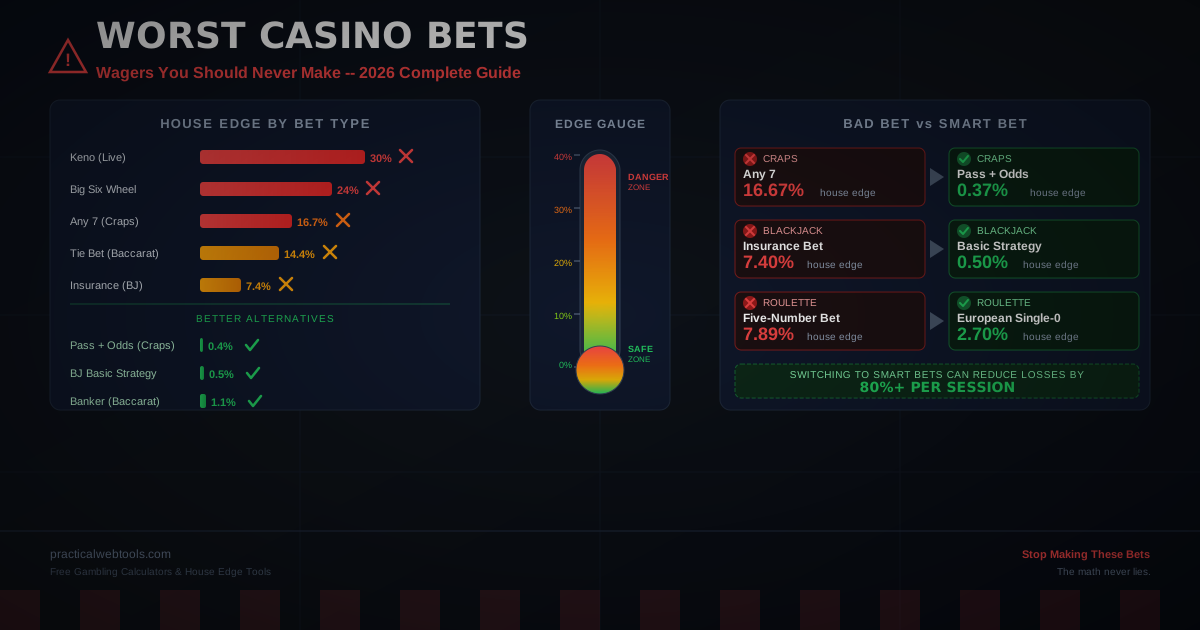
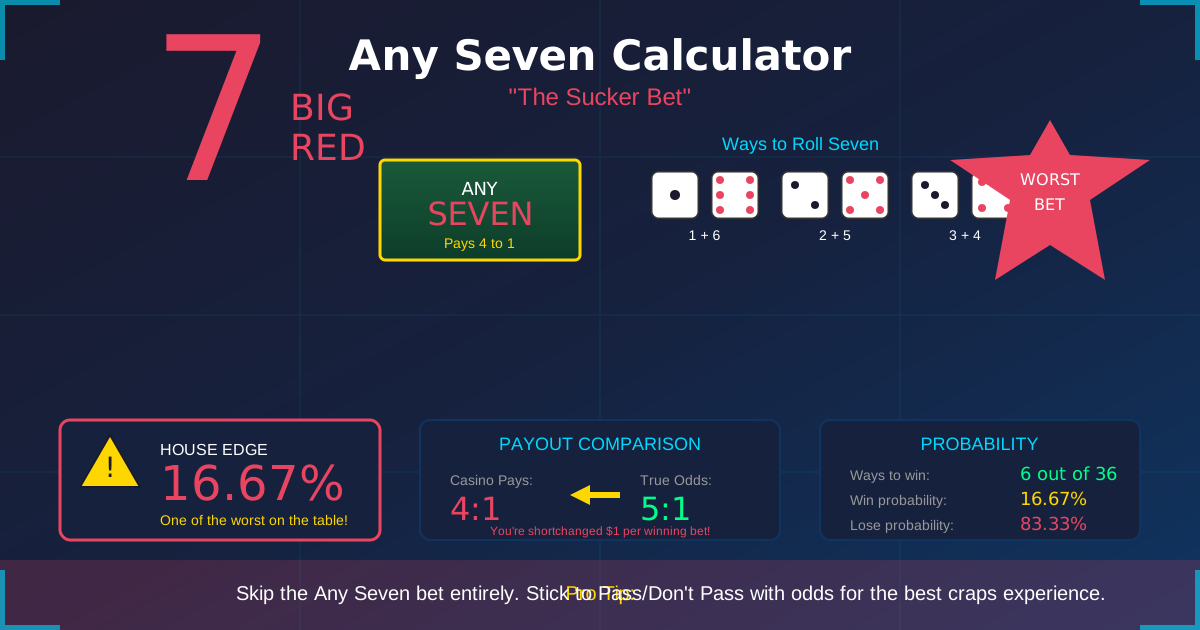
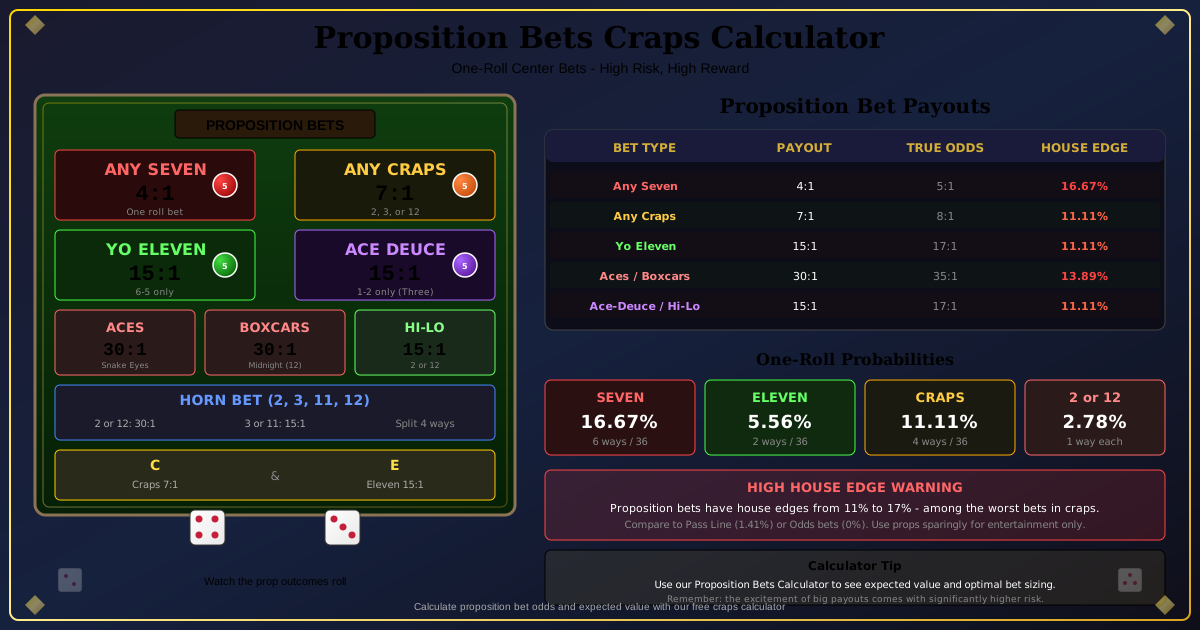
| Craps - Any 7 | 16.67% | One-roll excitement |
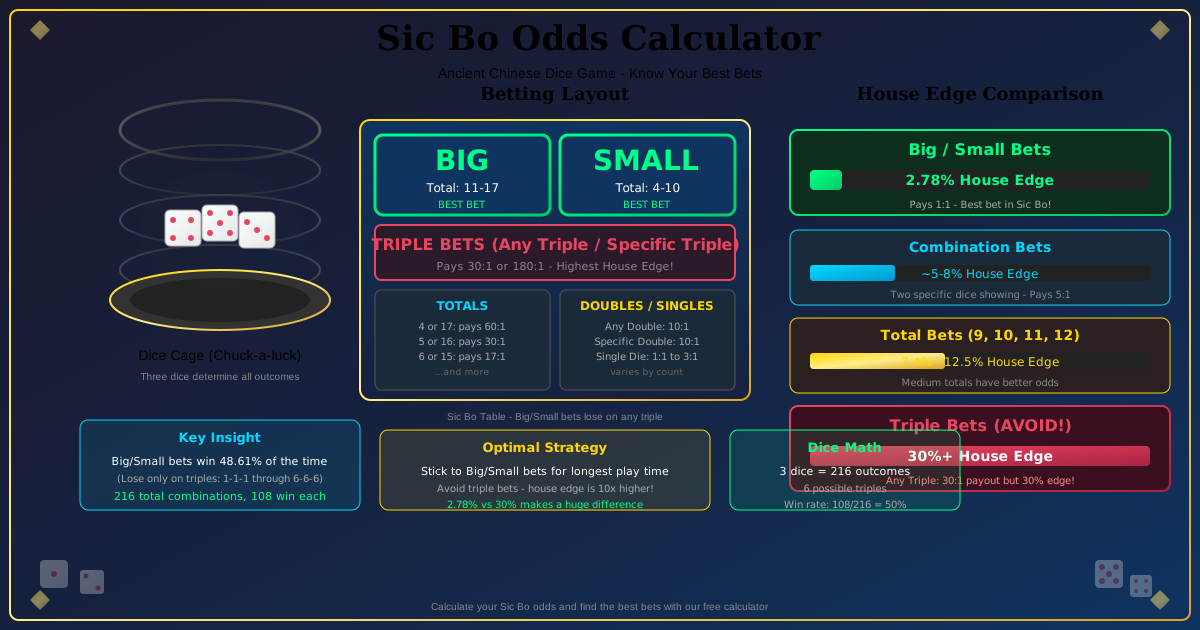
| Sic Bo (most bets) | 2.78% - 18.98% | Range depends on specific bet |
Real-world example: A player betting $15 per spin on American roulette for three hours at 35 spins per hour wagers $1,575 total. Their expected loss is $82.85. The same player at a European roulette table would expect to lose just $42.53 -- saving $40 per session by walking ten extra steps across the floor. Over a year of monthly casino visits, that is nearly $500 saved. The roulette odds calculator breaks down the math for any bet type on any wheel.
Tier 4: The Worst Bets (Over 6%)
Avoid these if you care about your bankroll at all.
| Game & Bet | House Edge | The Hard Truth |
|---|---|---|
| American Roulette - Five Number Bet | 7.89% | Worst roulette bet, mathematically |
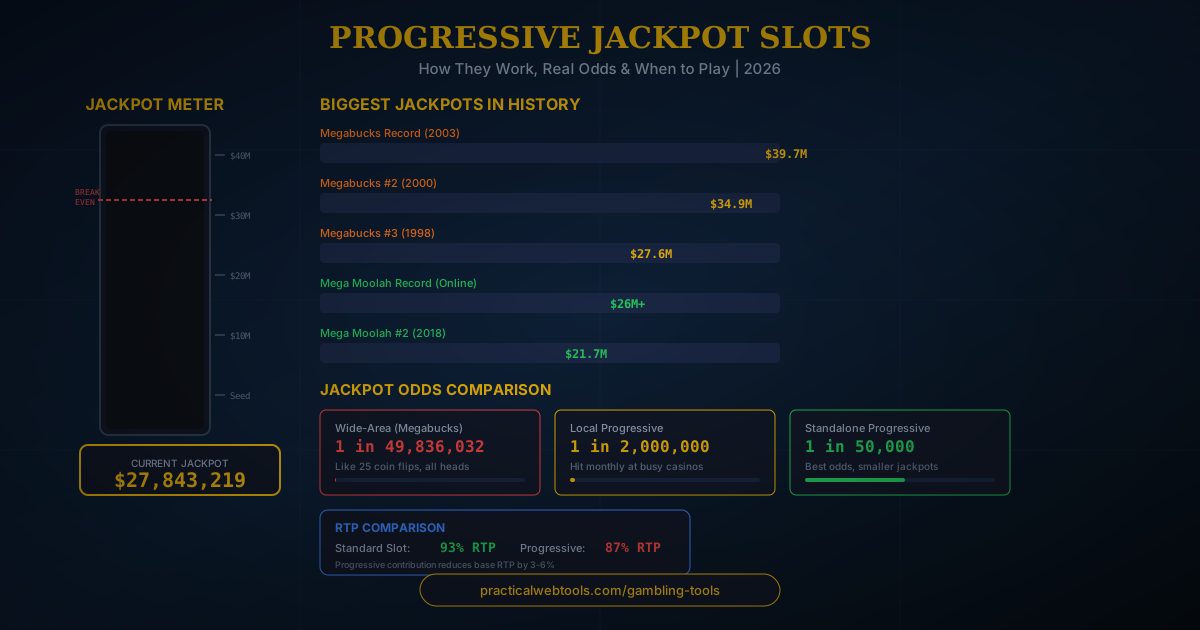
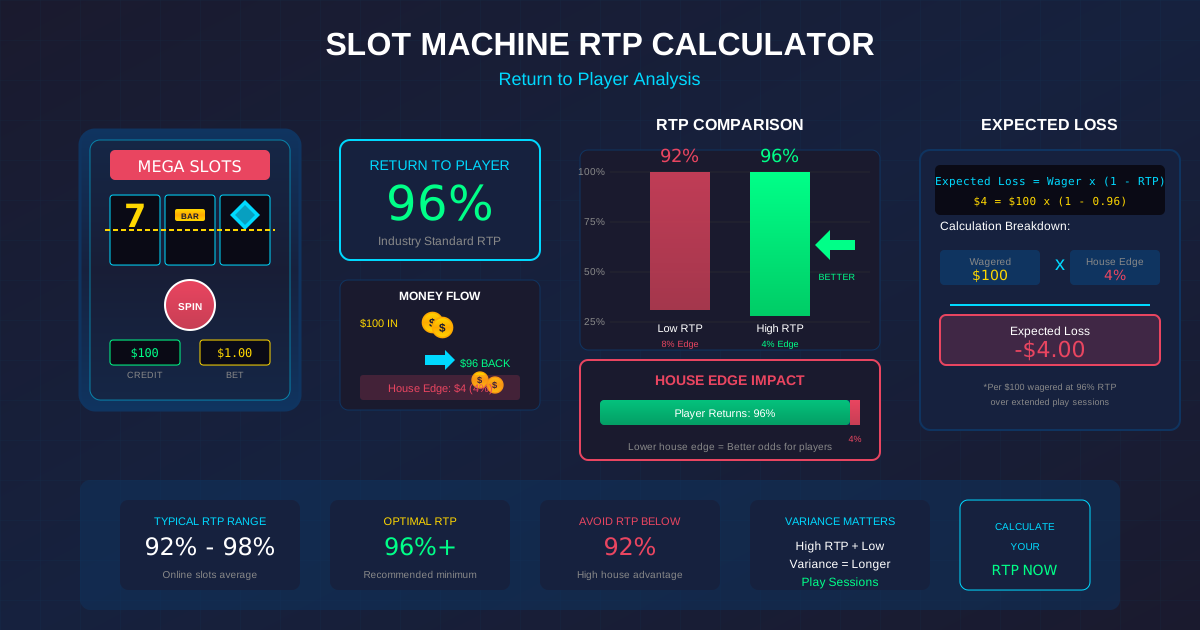
| Slot Machines (average) | 6% - 15% | Varies wildly by machine and denomination |
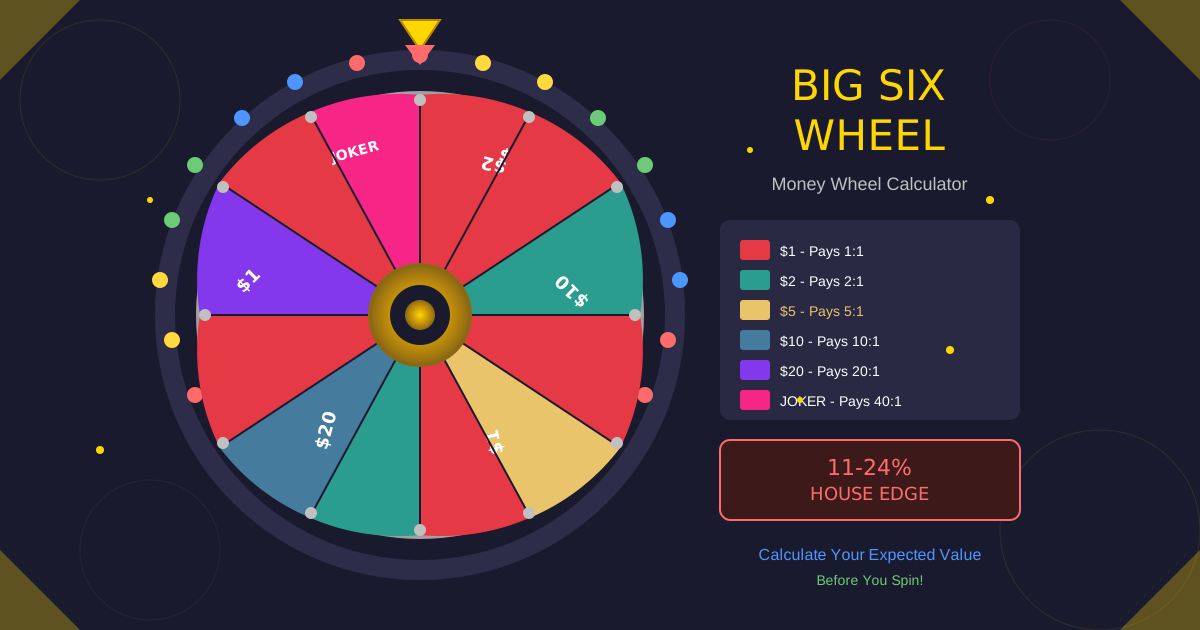
| Big Six Wheel | 11.1% - 24.1% | Depends on segment |
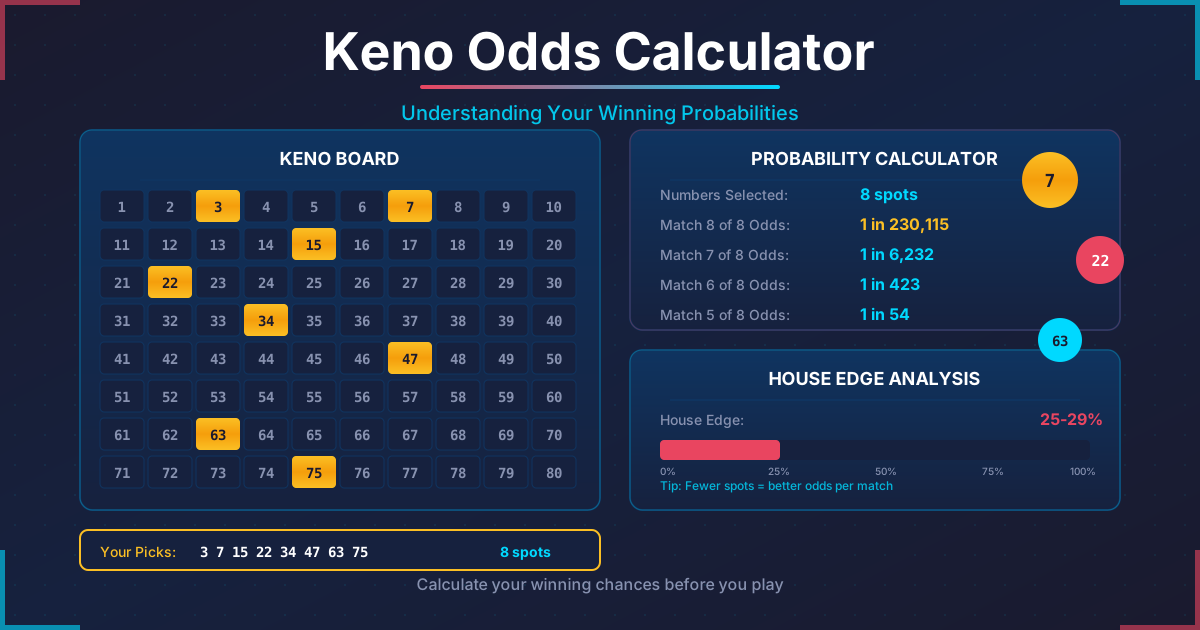
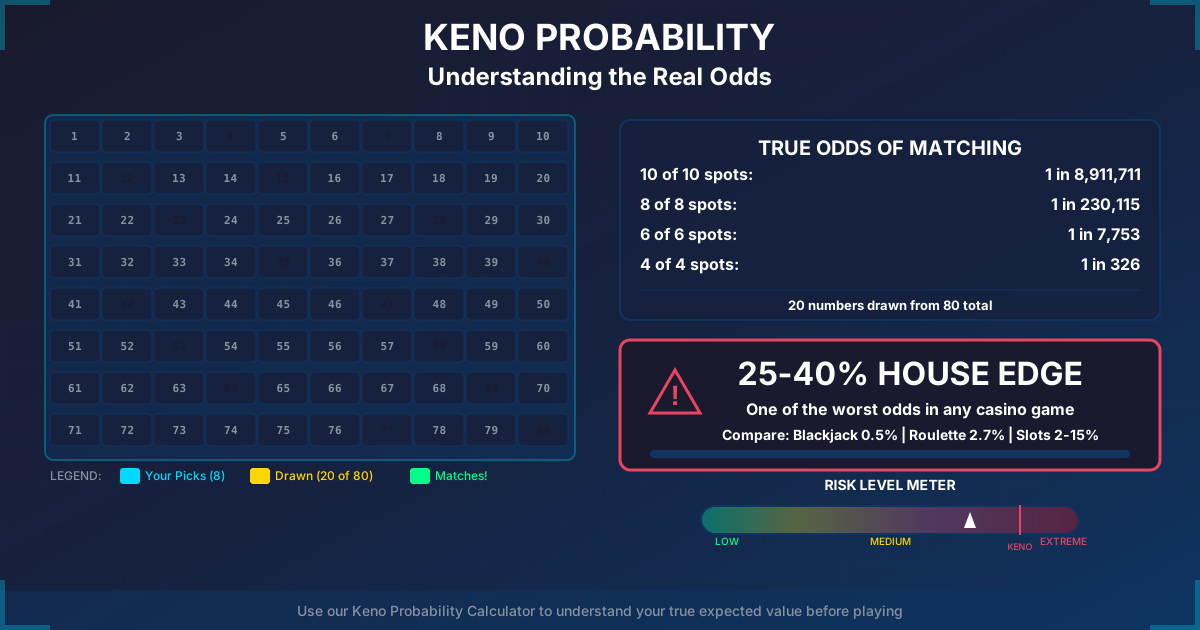
| Keno | 25% - 29% | Lottery-level odds |
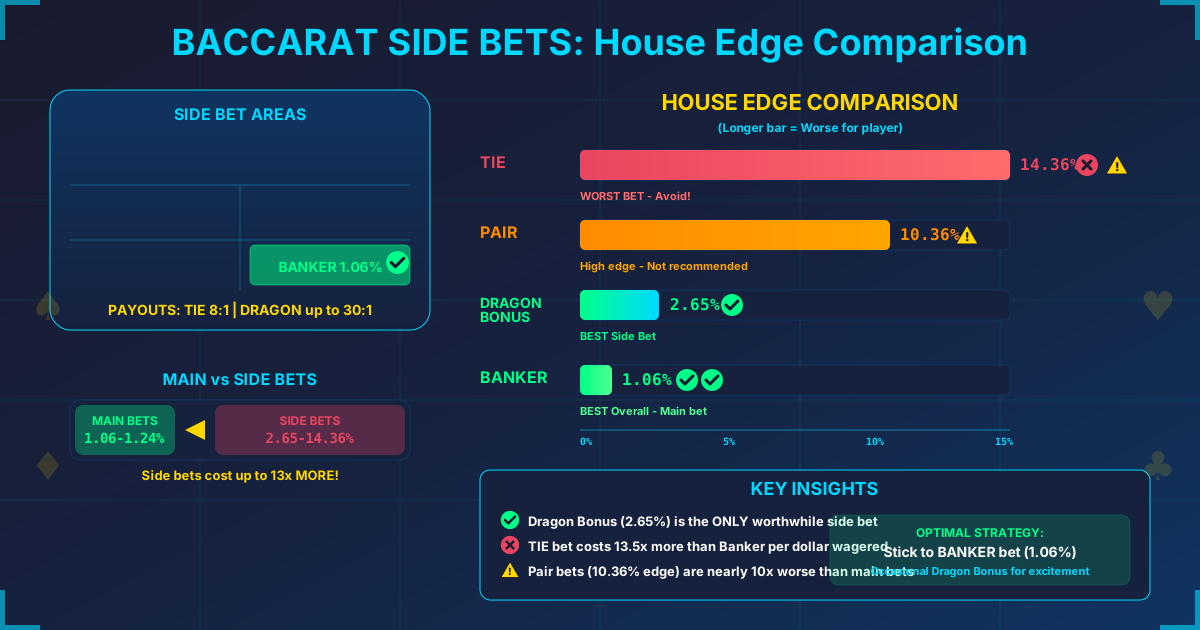
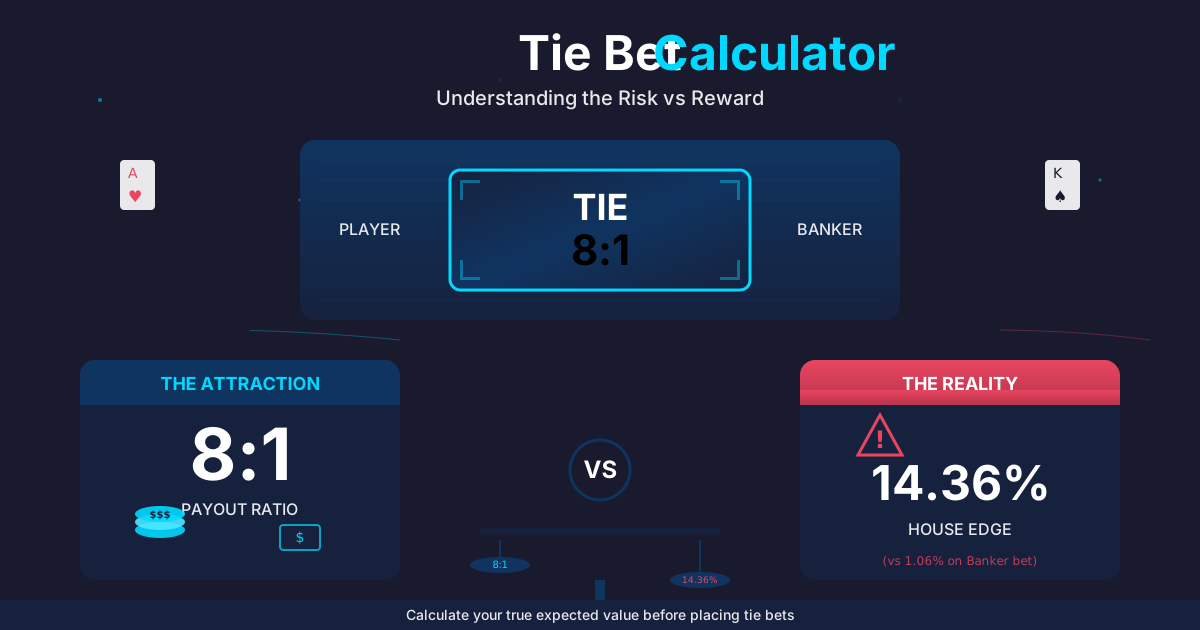
| Baccarat - Tie Bet | 14.36% | Sucker bet disguised as high-payout |
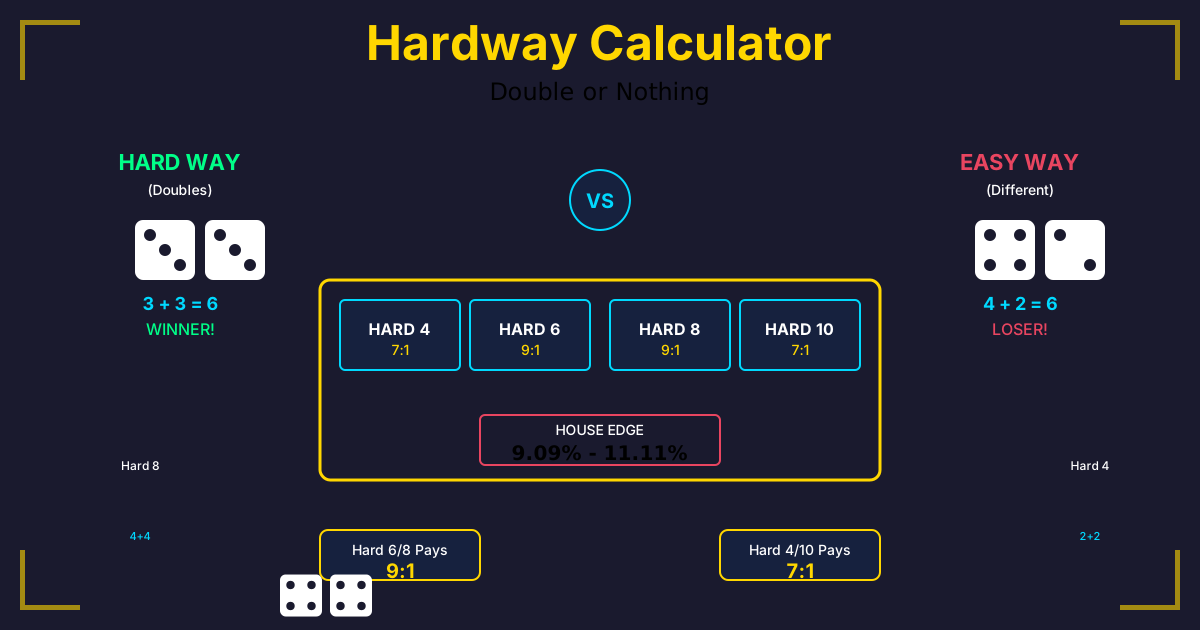
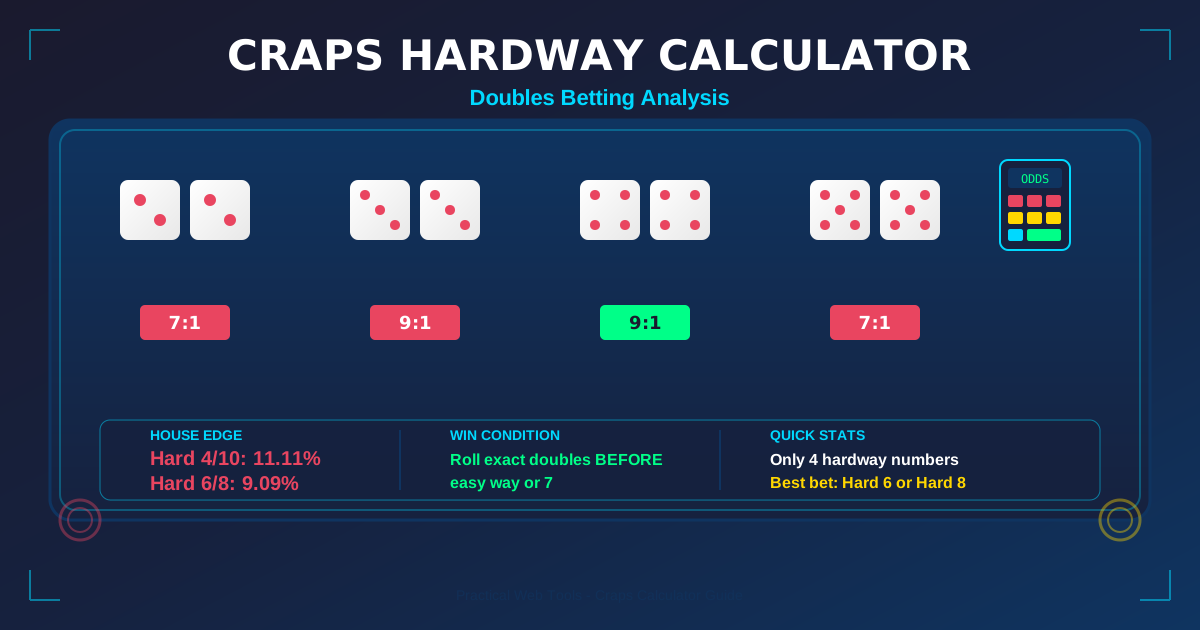
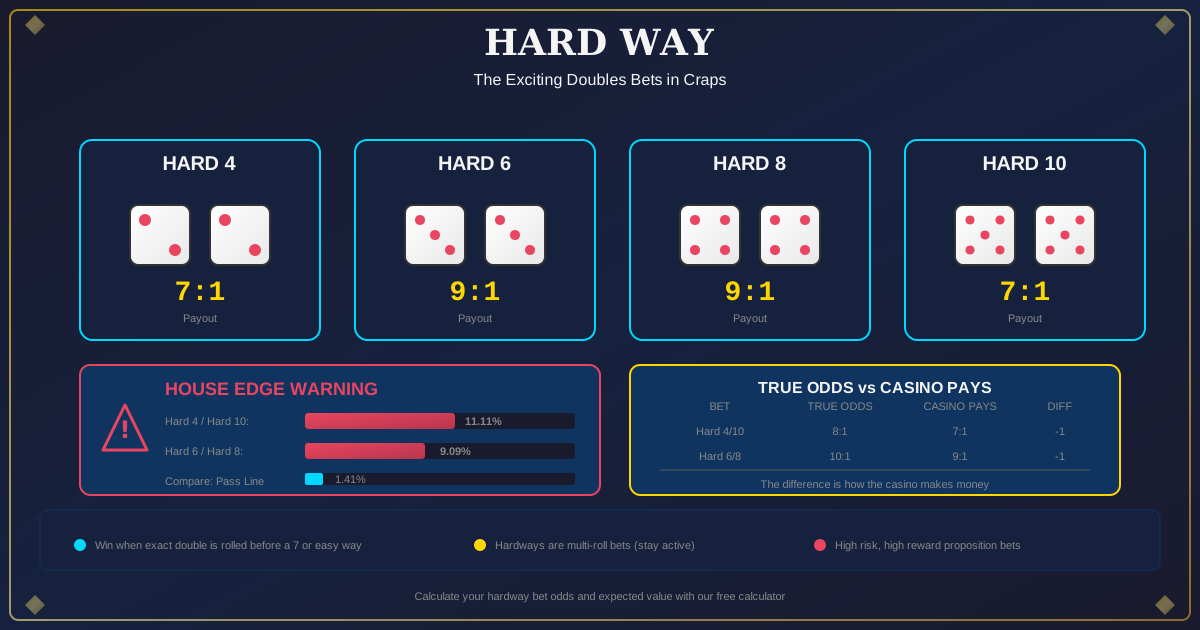
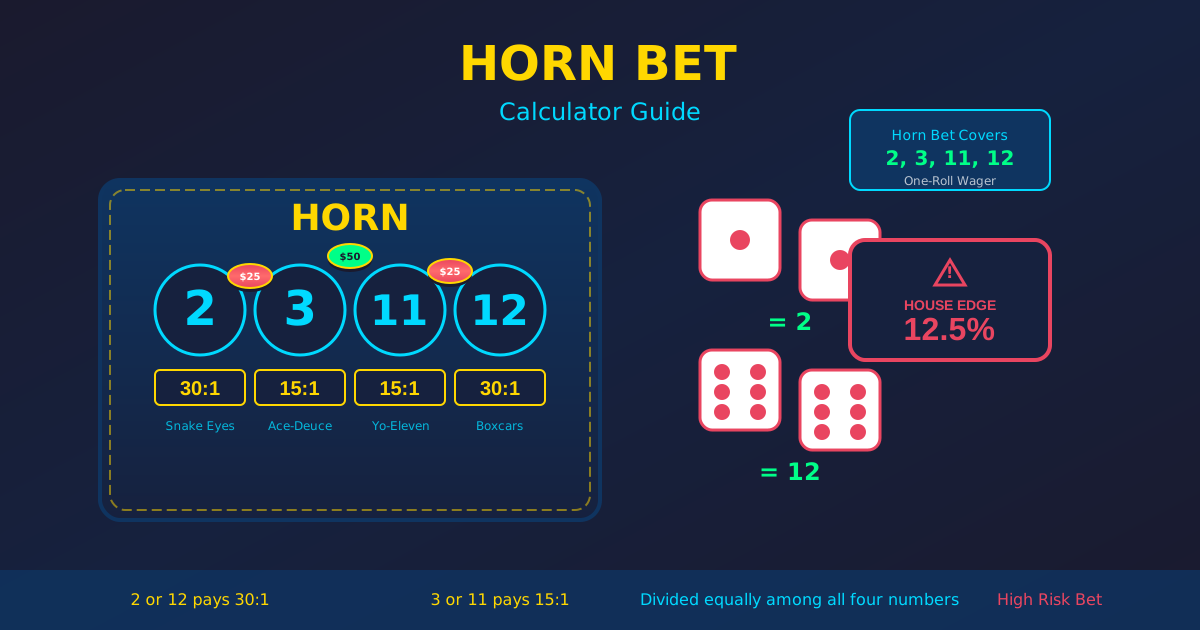
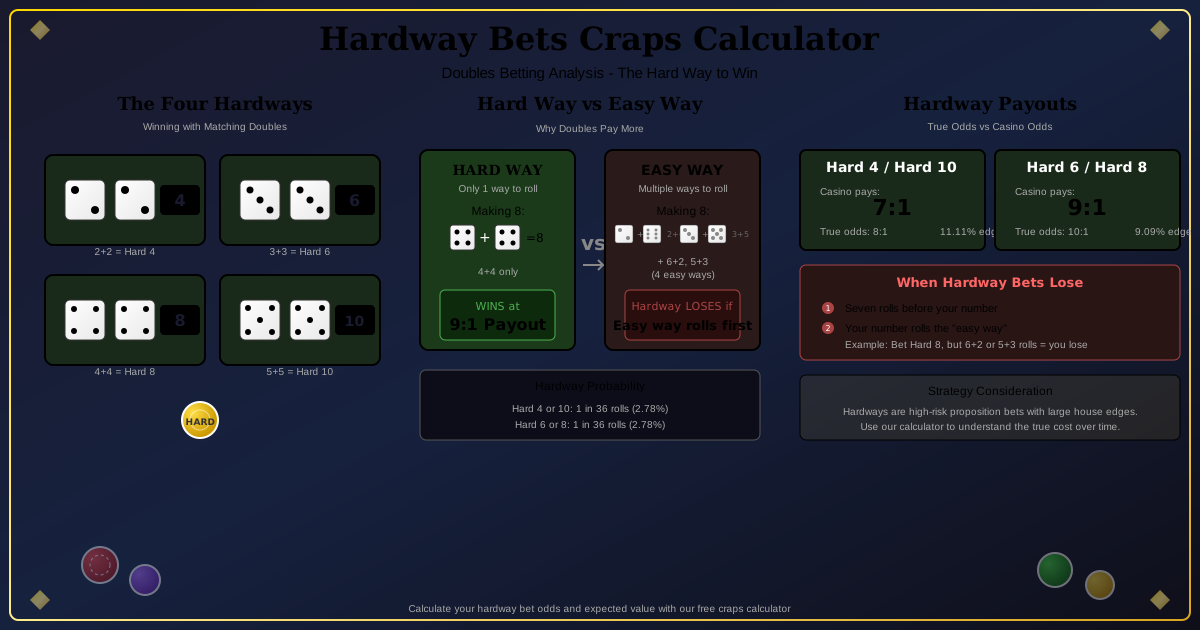
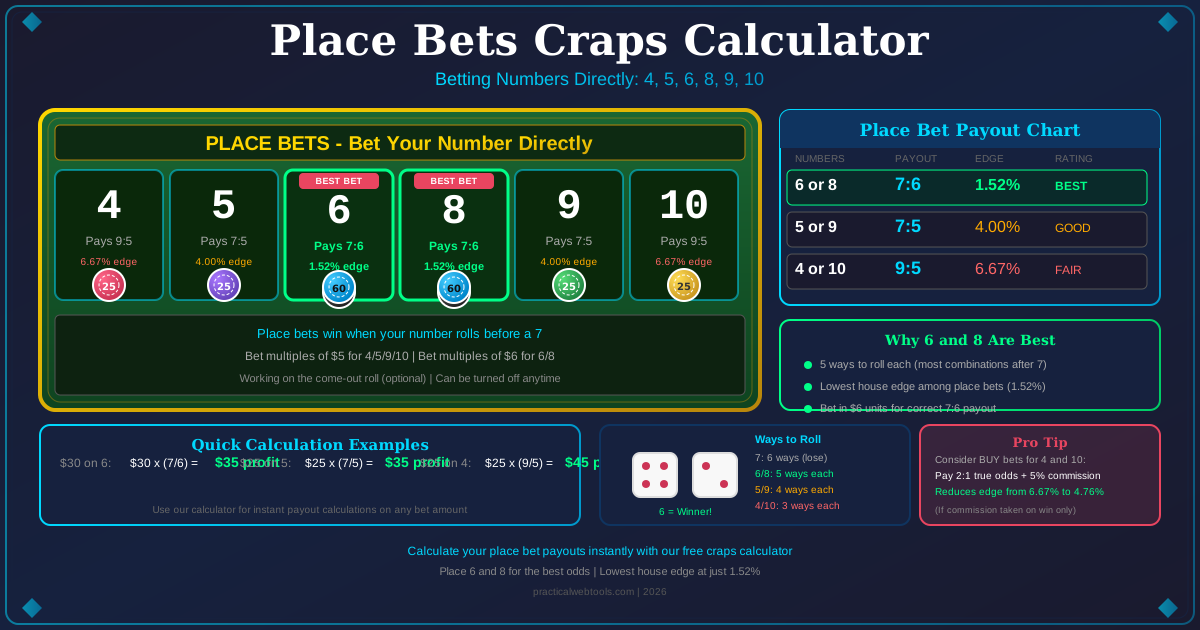
| Craps - Hardway Bets | 9.09% - 11.11% | Tempting payouts, terrible odds |
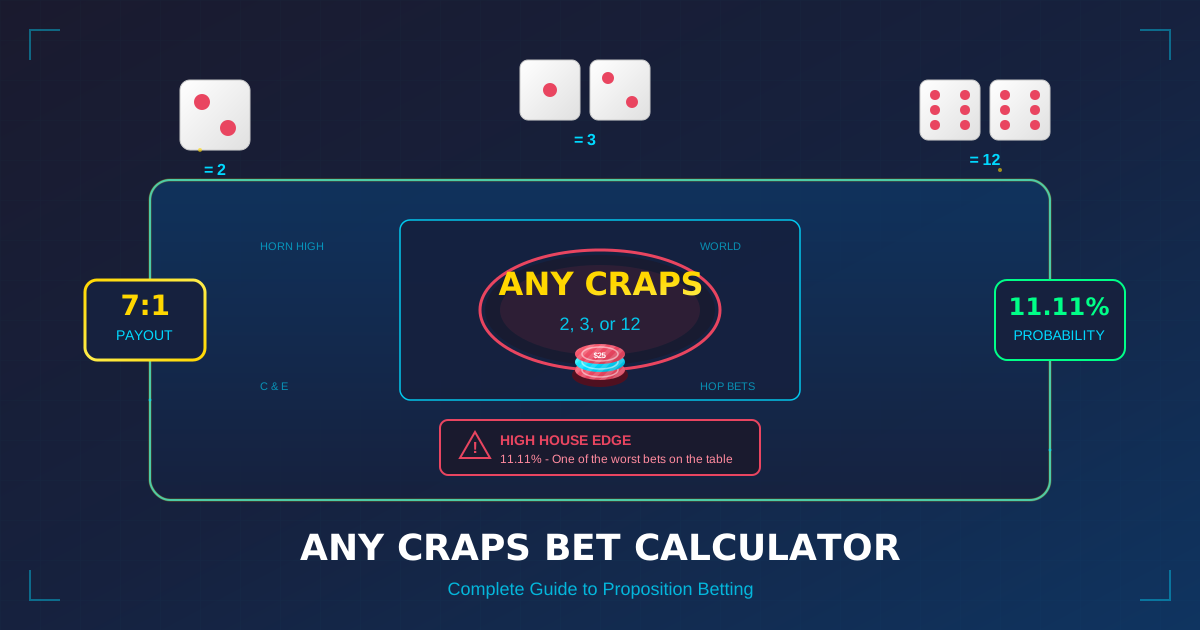
| Craps - Proposition Bets | 11.11% - 16.67% | Center of the table = center of pain |
The baccarat tie bet at 14.36% deserves special attention because it is displayed prominently on electronic scoreboards, making players think it is a regular strategic option. It is not -- it is a trap. The baccarat house edge calculator and baccarat odds calculator show exactly why.
How Rule Variations Change Everything
The same game can have dramatically different house edges depending on the specific rules in play. This is where game selection gets really granular -- and really powerful.
Blackjack Rule Impact
Blackjack has more rule variations than any other table game, and each one moves the house edge. Here is how much each rule costs or saves you:
| Rule Variation | Effect on House Edge | Direction |
|---|---|---|
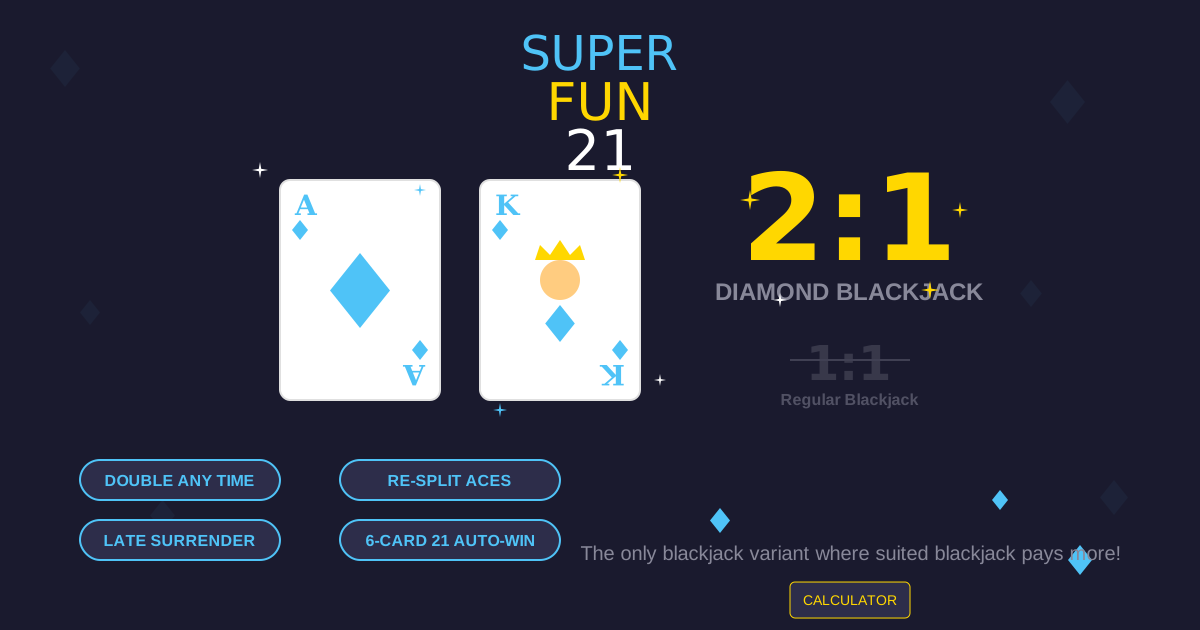
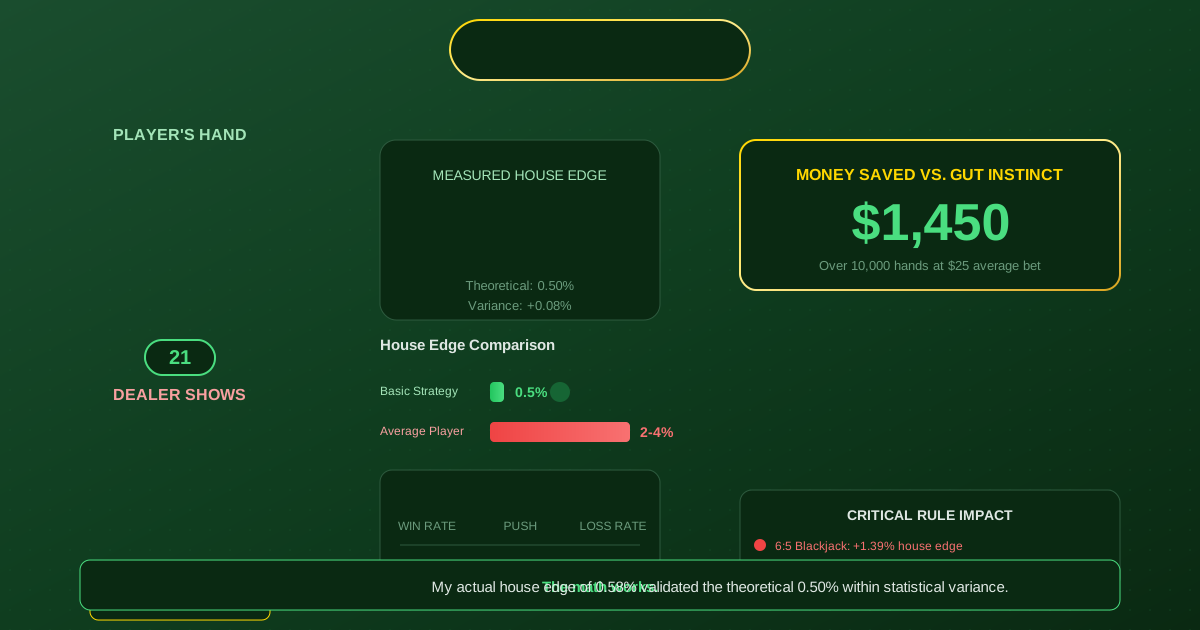
| 3:2 pays vs. 6:5 pays on blackjack | +1.39% | 6:5 is MUCH worse |
| Dealer hits soft 17 (H17) vs. stands (S17) | +0.22% | H17 is worse for player |
| Double after split allowed (DAS) | -0.14% | DAS benefits player |
| Re-splitting aces allowed (RSA) | -0.08% | RSA benefits player |
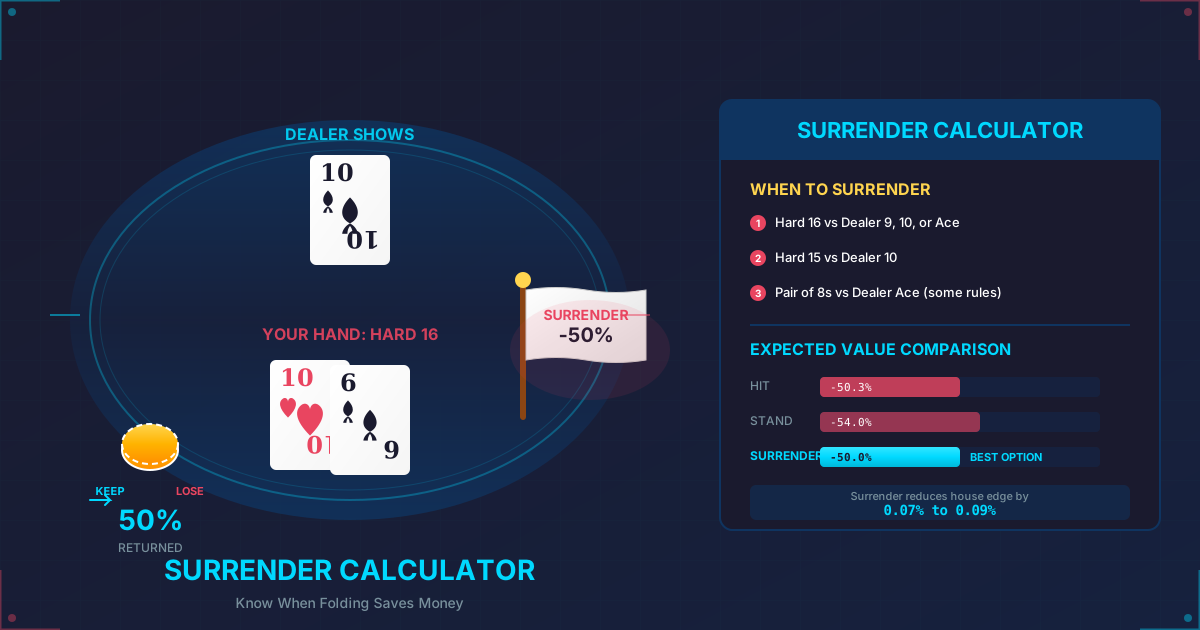
| Late surrender allowed (LS) | -0.08% | LS benefits player |
| 6 decks vs. single deck (with 3:2) | +0.58% | More decks = higher edge |
| 8 decks vs. 6 decks | +0.02% | Negligible difference |
| No hole card (European style) | +0.11% | Slightly worse for player |
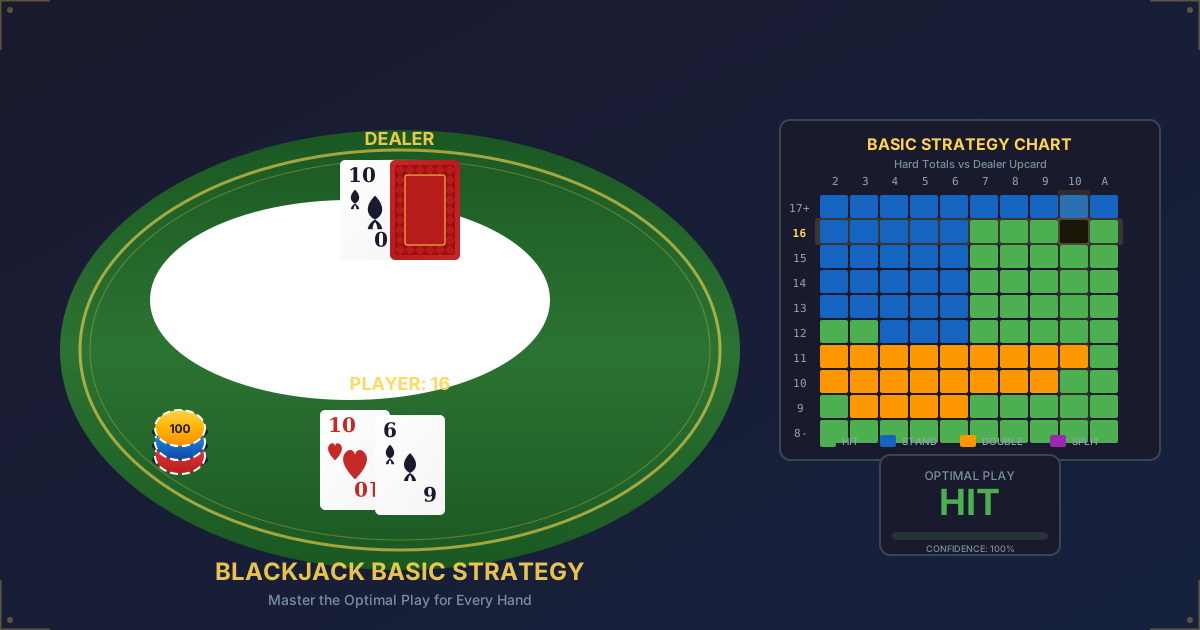
The 6:5 blackjack trap is the most important thing in this entire article. In 2024-2025, the majority of blackjack tables on the Las Vegas Strip switched to 6:5 payouts, especially at lower minimums. A natural blackjack that used to pay $37.50 on a $25 bet (3:2) now pays just $30 (6:5). Over hundreds of hands, this single rule change costs you more than every other rule variation combined. The blackjack basic strategy calculator adjusts for all rule variations.
Real-world example: At the Palms in Las Vegas, you can find $5 blackjack with 3:2 payouts -- one of the best deals on or near the Strip as of early 2025. Ten minutes away on the main Strip, $15 minimum tables with 6:5 payouts are everywhere. The player at the Palms paying $5 per hand with a 0.50% edge has an hourly expected loss of $1.75. The player on the Strip paying $15 per hand with a 2.02% edge has an hourly expected loss of $21.21. The "cheap" table actually costs twelve times more per hour.
Roulette Wheel Variations
| Wheel Type | Zeros | House Edge | Where Found |
|---|---|---|---|
| European (Single Zero) | 1 | 2.70% | Select Strip casinos, most online casinos |
| European with La Partage | 1 | 1.35% | Rare in US, common in European casinos |
| American (Double Zero) | 2 | 5.26% | Most US casinos |
| Triple Zero | 3 | 7.69% | Some Strip casinos (avoid at all costs) |
Yes, triple-zero roulette wheels exist in 2026, and they are spreading. These wheels add a third green space (usually labeled "S" or with a casino logo), pushing the house edge to a staggering 7.69%. They are typically found at lower-minimum tables on the Strip, baiting budget players with cheap entry and destroying their bankrolls with terrible math. If you see three green spaces, walk away immediately. The roulette house edge calculator lets you compare all wheel variants.
Craps Odds Multiples
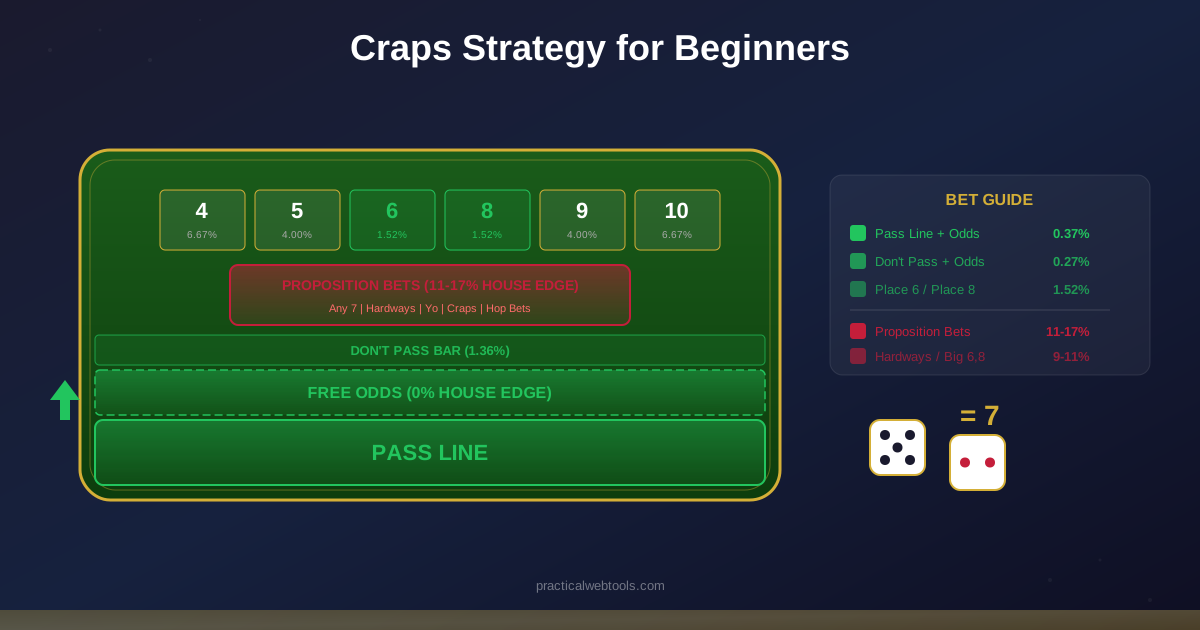
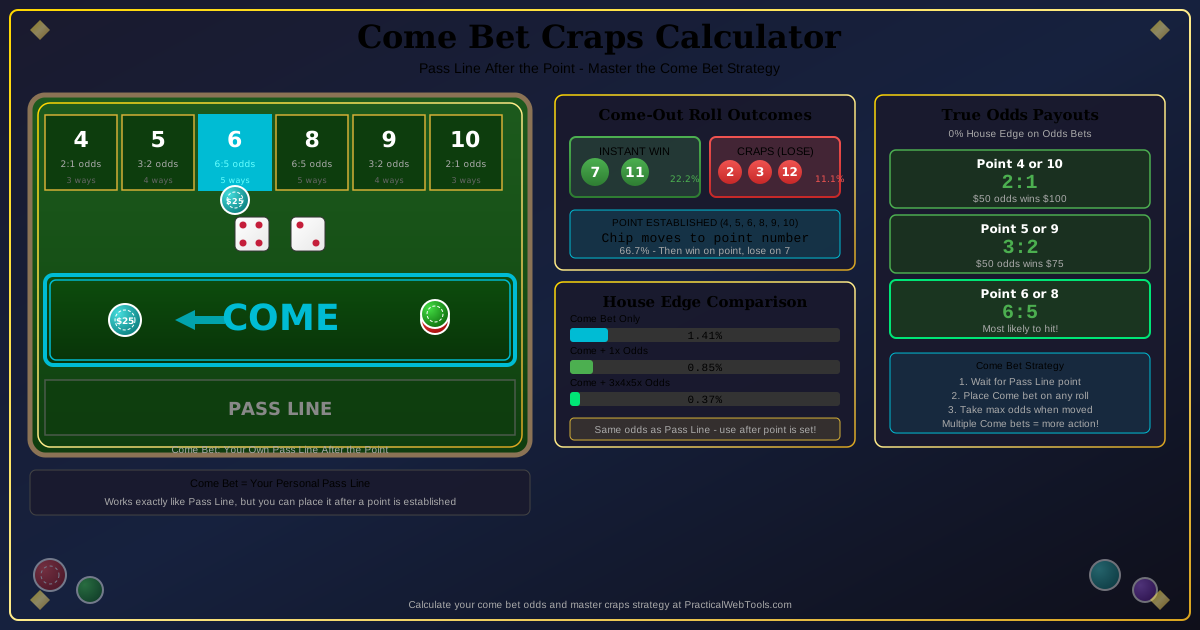
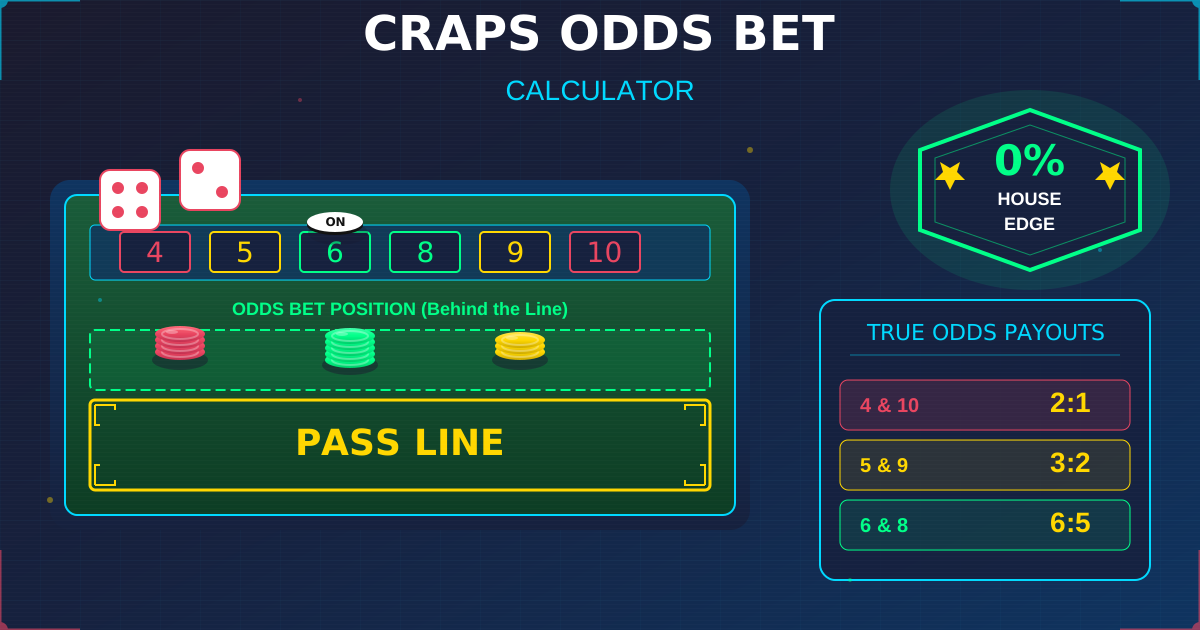
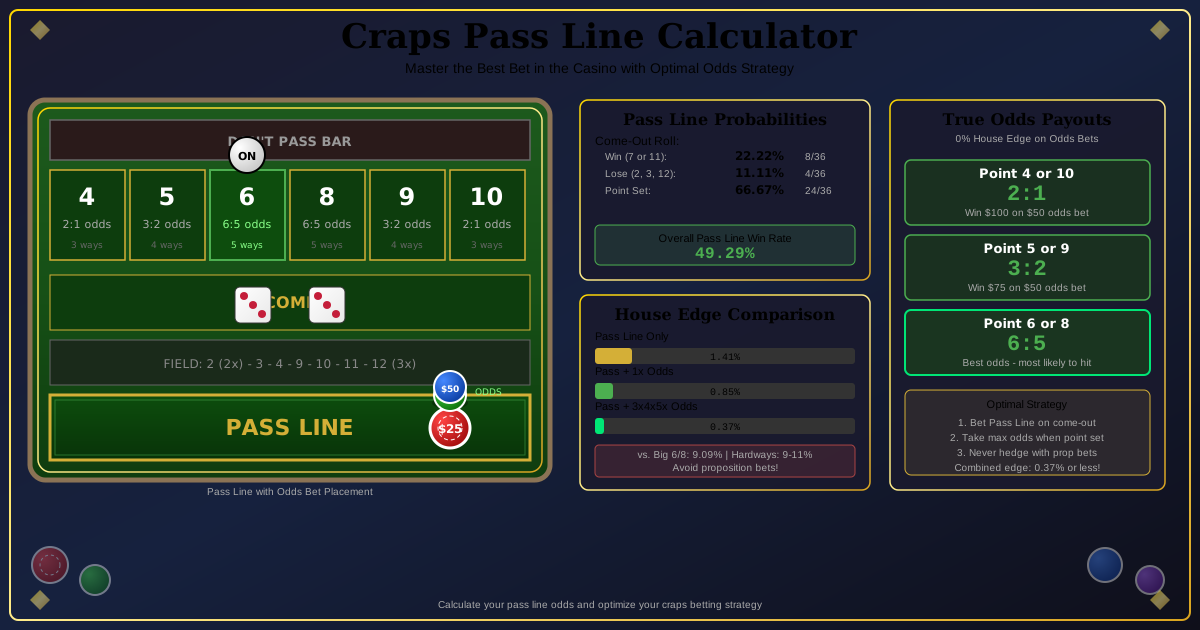
The odds bet in craps is the single best bet in the casino because it pays at true mathematical odds with zero house edge. The more you can bet in odds relative to your line bet, the lower your overall cost.
| Odds Multiple | Combined Edge (Pass + Odds) | Combined Edge (Don't Pass + Odds) |
|---|---|---|
| No Odds (flat) | 1.41% | 1.36% |
| 1x Odds | 0.85% | 0.68% |
| 2x Odds | 0.61% | 0.46% |
| 3-4-5x Odds | 0.37% | 0.27% |
| 5x Odds | 0.33% | 0.23% |
| 10x Odds | 0.18% | 0.12% |
| 20x Odds | 0.10% | 0.07% |
| 100x Odds | 0.02% | 0.01% |
Real-world example: At a $10 minimum craps table with 3-4-5x odds (standard on the Las Vegas Strip), you can put $10 on the Pass Line and then back it with $30-$50 in odds on the point. Your total action is $40-$60 per resolved bet, but the combined house edge drops to about 0.37%. At 50 decisions per hour, your expected loss is roughly $7.40 per hour. Compare that to just playing the Pass Line flat for $10 -- same minimum, same 50 decisions, but $7.05 per hour in expected losses on less total action. You are risking more per bet with odds, but the house is keeping proportionally far less of it. The craps odds calculator models any combination of line bets and odds.
Video Poker Pay Table Variations
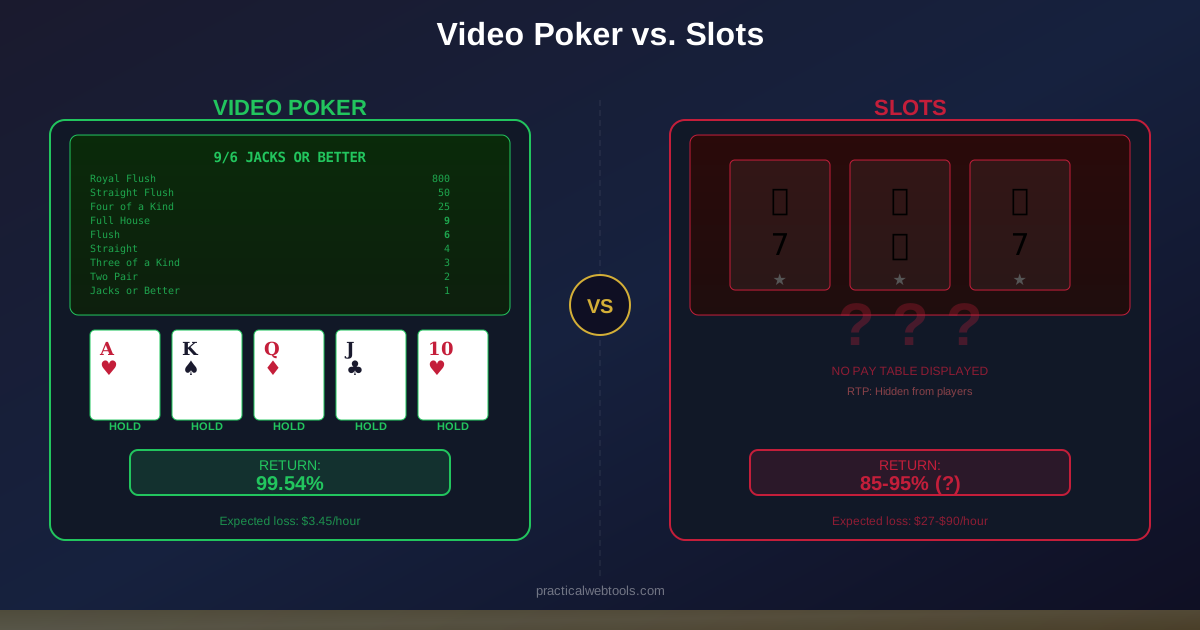
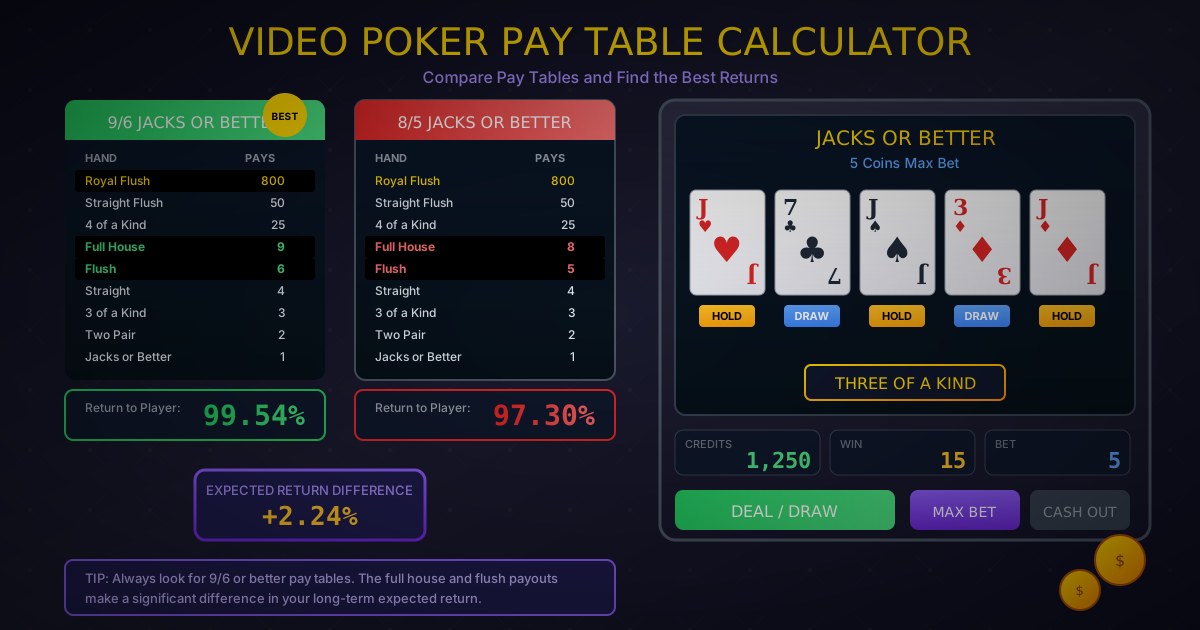
Video poker is uniquely sensitive to pay table differences. The same game (say, Jacks or Better) can range from a player advantage to a massive house edge depending on what the full house and flush pay:
| Pay Table (per coin, Jacks or Better) | Full House / Flush | House Edge | Common Name |
|---|---|---|---|
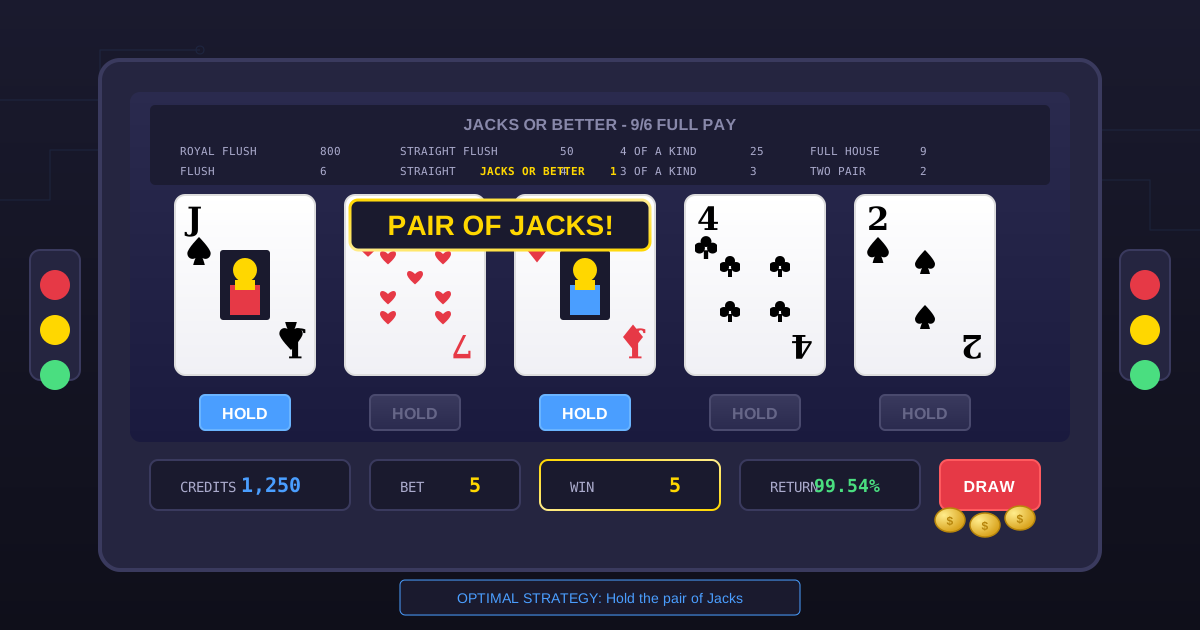
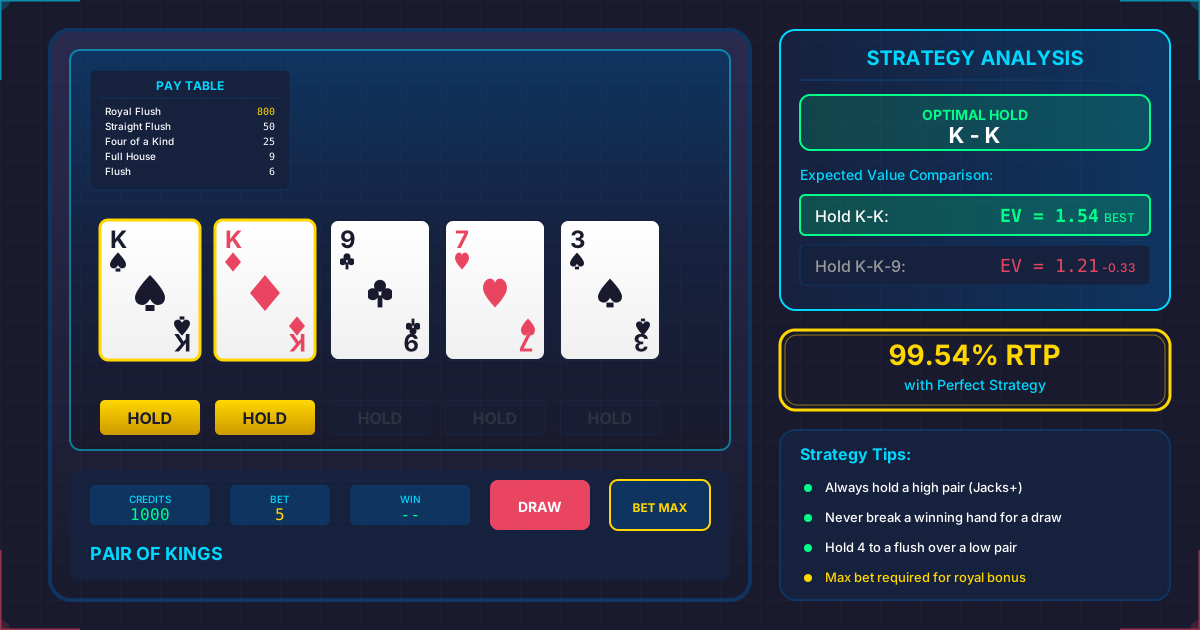
| 9/6 | 9 coins / 6 coins | 0.46% | Full Pay |
| 9/5 | 9 coins / 5 coins | 1.55% | -- |
| 8/6 | 8 coins / 6 coins | 1.62% | -- |
| 8/5 | 8 coins / 5 coins | 2.70% | Short Pay |
| 7/5 | 7 coins / 5 coins | 3.85% | -- |
| 6/5 | 6 coins / 5 coins | 5.00% | Very Short Pay |
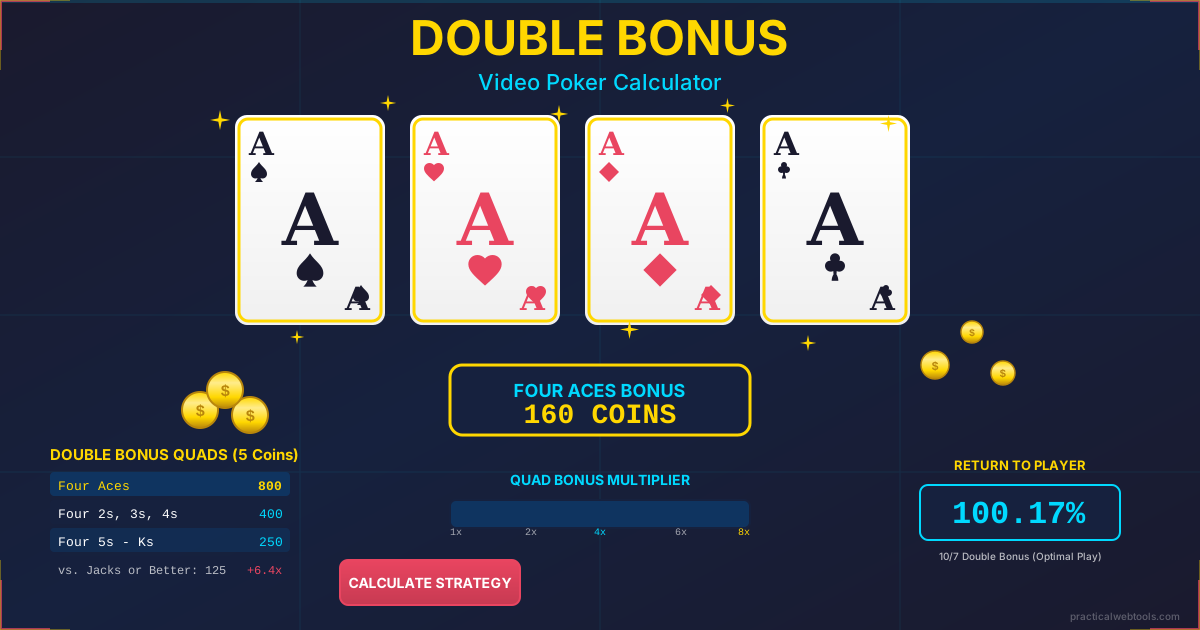
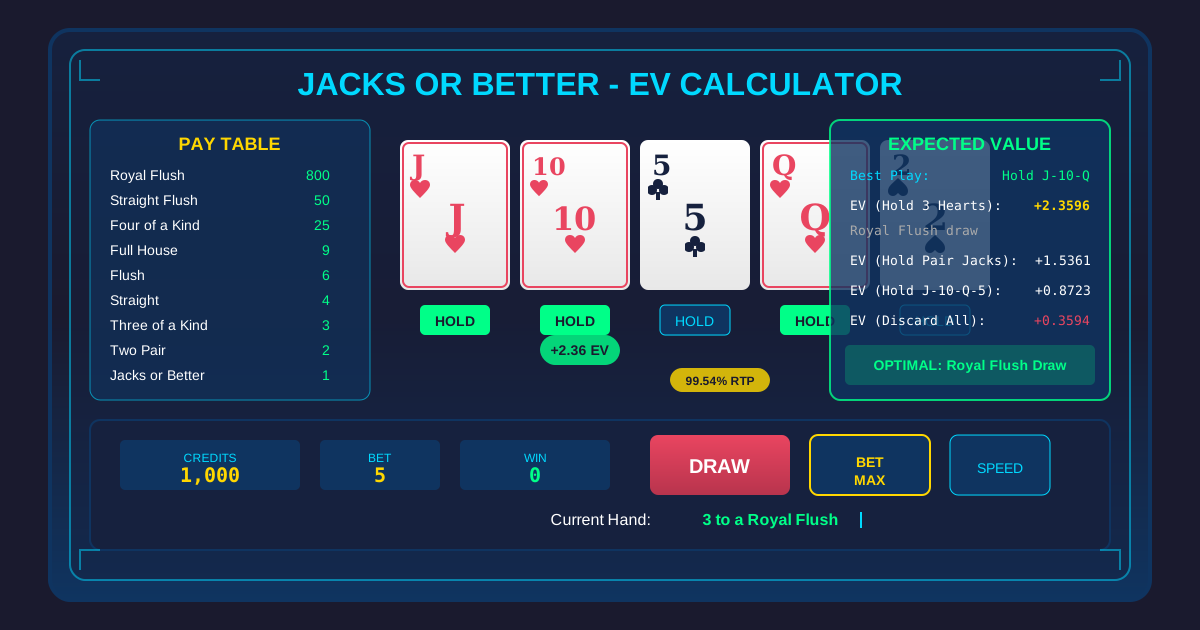
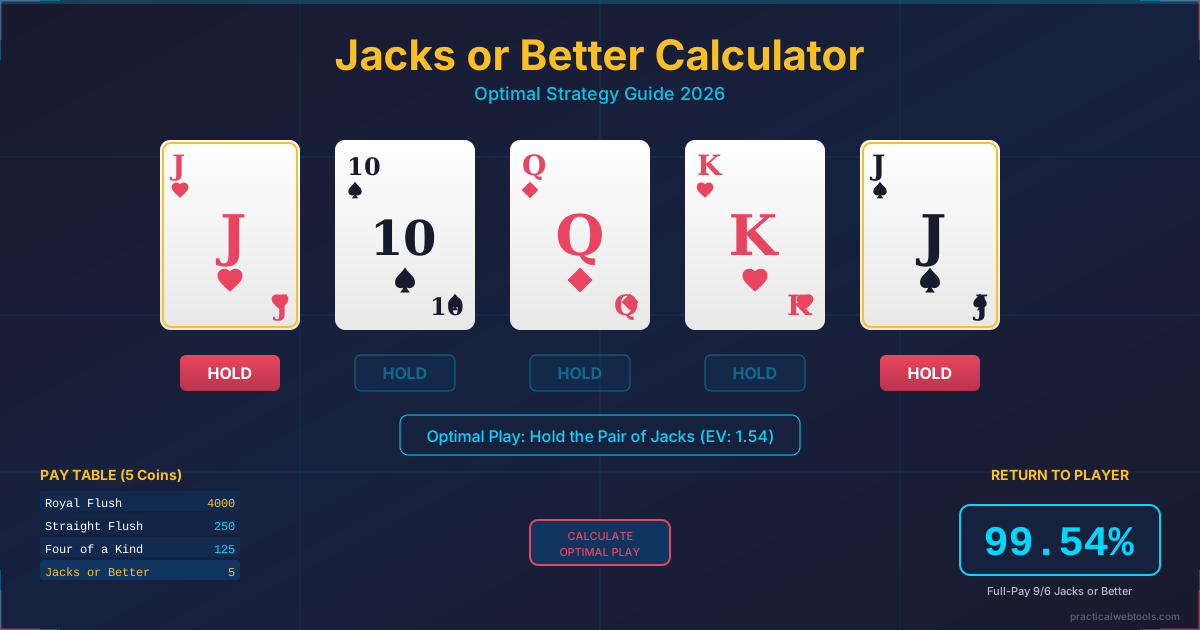
A full-pay 9/6 Jacks or Better machine with perfect strategy returns 99.54% to the player. A 6/5 machine of the same game returns only 95% -- that is a 4.54% difference based entirely on which machine you chose to sit at. Use the video poker odds calculator and video poker EV calculator to check the exact return for any pay table you encounter.
Reading the Table: What to Look for Before You Sit Down
Game selection is not just about which game has the lowest house edge. The specific table you choose within that game matters too. Here is what to evaluate.
Table Minimums: The 2026 Landscape
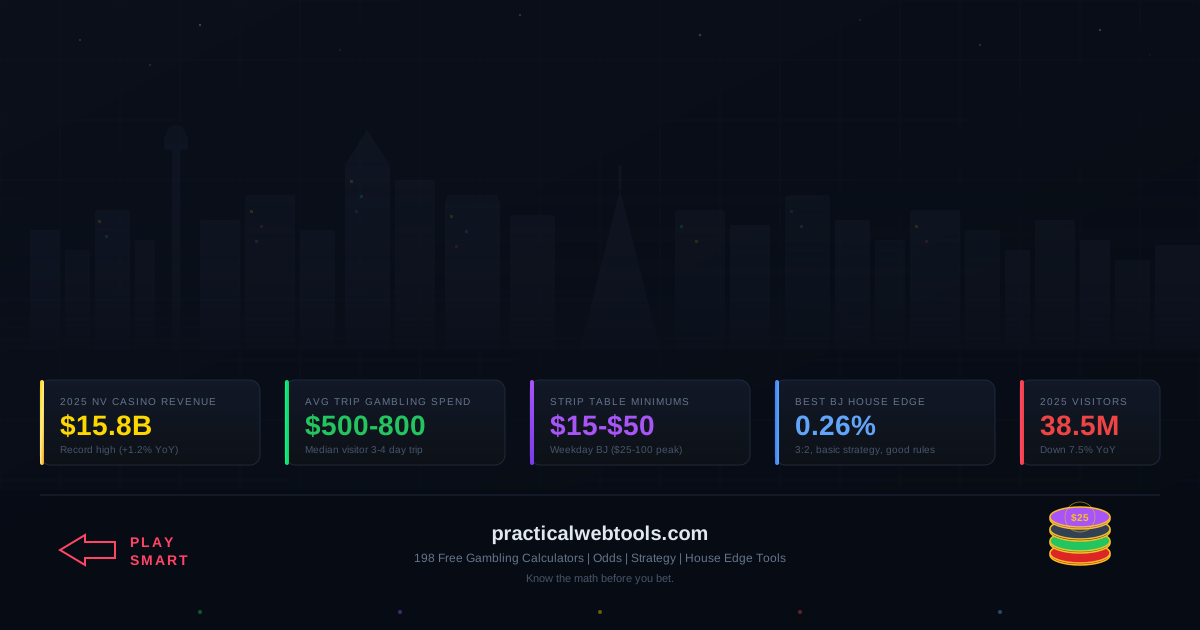
Table minimums have risen sharply since 2020 and show no signs of coming back down on the Strip. But off-Strip and downtown, there are still deals to be found.
| Casino Tier | Typical BJ Minimum (Weekday/Weekend) | Typical Craps Minimum | Typical Roulette Minimum |
|---|---|---|---|
| Strip Premium (Bellagio, Wynn, Aria) | $25-$50 / $50-$100 | $25-$50 | $25-$50 |
| Strip Mid-Tier (NYNY, Flamingo, Harrah's) | $15-$25 / $25-$50 | $15-$25 | $15-$25 |
| Strip Budget (Excalibur, Circus Circus, Strat) | $10-$15 / $15-$25 | $10-$15 | $10-$15 |
| Downtown (Golden Nugget, The D, Binion's) | $10-$15 / $15-$25 | $10-$15 | $10 |
| Off-Strip Locals (Palms, Station Casinos) | $5-$10 / $10-$15 | $5-$10 | $5-$10 |
| Off-Strip Budget (OYO, Silverton) | $1-$5 / $5-$10 | $5 | $5 |
The critical insight: Lower minimums at budget casinos often come with worse rules (6:5 blackjack, fewer odds multiples in craps, triple-zero roulette). The cheapest-looking table is not always the cheapest in terms of expected loss per hour. A $25 table with 3:2 blackjack at the Wynn (0.35% edge, $6.13/hour) can actually cost you less than a $10 table with 6:5 blackjack at the Strat (2.02% edge, $14.14/hour).
Real-world example: Downtown Grand in Las Vegas offers $1 live blackjack -- the cheapest on or near Fremont Street. At $1 per hand with roughly 70 hands per hour, even with a 2% house edge (common at those low limits), your expected cost is just $1.40 per hour. That is hard to beat for sheer entertainment value. OYO Hotel near the Strip also offers $1 blackjack 24 hours a day.
Table Speed and Pace
Not all tables deal at the same speed. Fewer players at a table means more hands per hour means more money through the house edge grinder.
| Number of Players | Approximate Hands/Hour (Blackjack) | Impact on Hourly Loss |
|---|---|---|
| 1 (heads-up) | 200-250 | Very high exposure |
| 2-3 players | 100-150 | High exposure |
| 4-5 players | 60-80 | Standard |
| 6-7 players (full) | 40-60 | Lowest exposure |
If you want to minimize your hourly cost, a full table is your friend. If you want more action and are confident in your strategy, fewer players means more opportunity in both directions. The game pace directly multiplies your expected loss (or, for skilled video poker or advantage play, your expected gain). This is not trivial -- the difference between a heads-up blackjack game and a full table is roughly a 3x to 4x difference in hourly expected loss.
Dealer Behavior and Table Atmosphere
This is more subjective but still matters for game selection:
- Friendly dealers make mistakes less stressful, pace the game better for recreational players, and enhance the entertainment value. You are paying for an experience -- make sure you enjoy it.
- Crowded, loud tables (especially craps) can be great for social players but terrible for concentration.
- Table mood matters. A losing table with frustrated players creates a tense atmosphere. You might play worse under social pressure. There is nothing wrong with scouting several tables before committing your buy-in.
- Watch before you sit. Spend five minutes observing a table. Check the minimum placard, count players, watch the pace, look at the blackjack payout signage. This five-minute investment can save you hundreds.
Game Selection by Goal: What Are You Here For?
Not everyone walks into a casino with the same objective. Your optimal game selection depends entirely on what you are trying to get out of the experience. Here is a framework.
Goal 1: Maximum Time at the Table (Bankroll Preservation)
If your primary goal is to make your money last as long as possible -- stretching a $200 budget across a full evening, for example -- you want low house edge, slow pace, and small bets.
Best choices:
-
Pai Gow Poker -- This is the bankroll stretcher's dream. The game is slow (about 30 hands per hour), a huge percentage of hands push (roughly 40%), and the house edge with optimal strategy is about 1.46%. At $10 per hand, your expected loss is about $4.38 per hour. You will sit at this table for hours.
-
Craps (Pass Line + Odds, at a full table) -- Full craps tables are festive and slow. With Pass Line plus 3-4-5x odds, your edge is 0.37% on the combined bet. At a $10 table with modest odds, expect to lose about $4-$7 per hour.
-
Baccarat (Banker bet, mini-baccarat) -- At 1.06% edge and about 70 hands per hour at $10, you will lose about $7.42 per hour. Not the slowest, but very survivable.
Avoid: Slots (high edge, extremely fast), heads-up blackjack (too many hands per hour), and any prop bets in craps.
Goal 2: Best Mathematical Odds (Profit Maximizing)
If you are laser-focused on minimizing the house's mathematical advantage -- perhaps you are a serious recreational player who tracks results -- you want the lowest combined house edge possible.
Best choices:
-
Blackjack with 3:2, best rules, and perfect basic strategy -- 0.28% to 0.50% house edge. This is the gold standard. Learn basic strategy perfectly and find a good table.
-
Craps with maximum odds -- Pass or Don't Pass plus whatever odds the casino allows. At 10x odds, the combined edge drops below 0.20%.
-
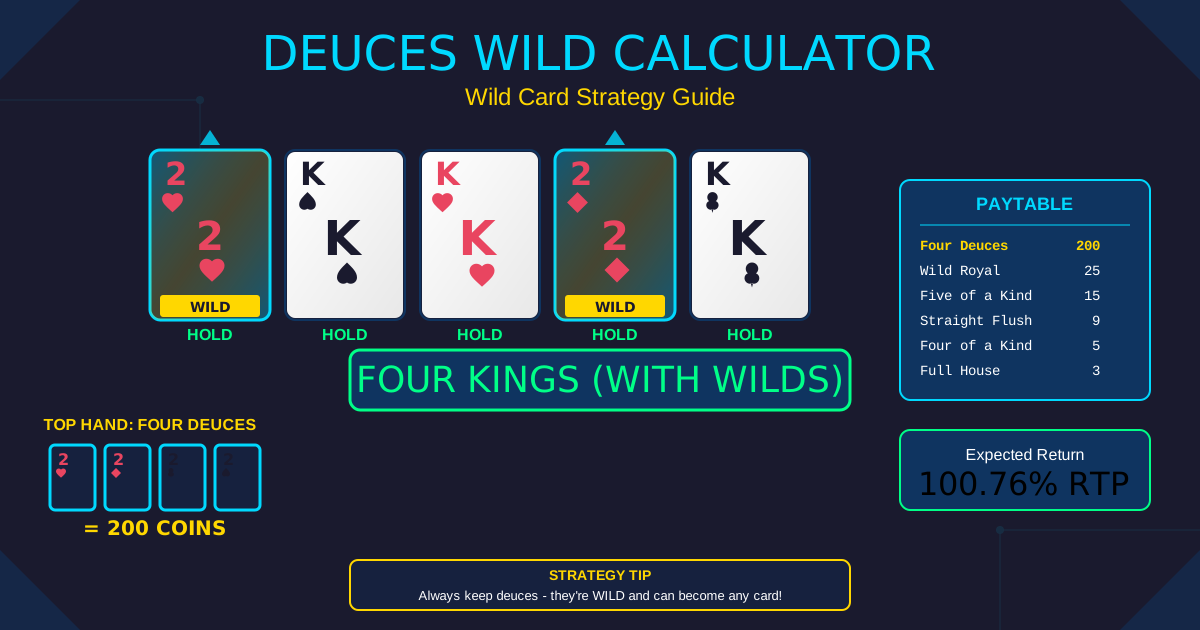
Full-pay video poker with perfect strategy -- 9/6 Jacks or Better at 0.46%, or full-pay Deuces Wild at -0.76% (yes, the player has the edge). The challenge is finding these machines in 2026 -- they are increasingly rare on the Strip but still exist at some off-Strip and downtown properties.
The video poker odds calculator helps identify which machines offer full-pay tables.
Goal 3: Social Experience and Fun
Some people go to the casino for the energy, the social interaction, and the excitement. If that is you, raw house edge matters less than atmosphere.
Best choices:
-
Craps -- Nothing in the casino matches the social energy of a hot craps table. Players cheer together, groan together, and high-five strangers. The Pass Line at 1.41% is a perfectly reasonable price for this level of entertainment. Just avoid the proposition bets in the center of the layout.
-
Blackjack -- At a friendly table with other recreational players, blackjack is conversational and engaging. Stick to tables with good rules and enjoy the camaraderie.
-
Roulette -- Simple to play, no decisions to agonize over, and the spinning wheel creates genuine suspense. If you play, choose single-zero when available.
Avoid: Video poker and electronic games if social interaction is your priority -- these are inherently solitary.
Goal 4: Quick Session, Small Budget
Maybe you are at the casino for a show and want to kill an hour with $50. You need low minimums and a game where you will not get wiped out in ten minutes.
Best choices:
-
$5 blackjack (3:2 if possible) -- At $5 per hand and 70 hands per hour, your expected loss at 0.50% is just $1.75 per hour. Your $50 buy-in will usually last well over an hour.
-
$5 craps with odds -- Pass Line at $5, back it with $10-$15 in odds. Low cost, good entertainment, can stretch $50 for a couple of hours.
-
Low-limit roulette with outside bets -- $5 even-money bets on a single-zero wheel. Expected loss is about $3.78 per hour. Boring for some, relaxing for others.
Avoid: $25 minimum tables with a $50 budget (two bad hands and you are done), and any game where the minimum bet is more than 5% of your session budget.
Game Selection Decision Matrix
Use this table to match your goal with the right game:
| Player Goal | Best Game | Best Bet | Target Edge | Ideal Minimum | Hourly Cost (est.) |
|---|---|---|---|---|---|
| Maximum table time | Pai Gow Poker | Standard bet | 1.46% | $10 | $4.38 |
| Best math odds | Blackjack (3:2) | Basic strategy | 0.28-0.50% | $10-$25 | $1.96-$8.75 |
| Social experience | Craps | Pass + Odds | 0.37% | $10 | $4-$7 |
| Quick casual fun | Roulette (single zero) | Even money | 2.70% | $5 | $4.73 |
| High roller | Baccarat | Banker | 1.06% | $100+ | $74.20 |
| Solo, skill-based | Video Poker (9/6 JoB) | Max coins | 0.46% | $1.25 | $3.45 |
| Budget entertainment | Blackjack | Basic strategy | 0.50-2.0% | $1-$5 | $0.35-$7.00 |
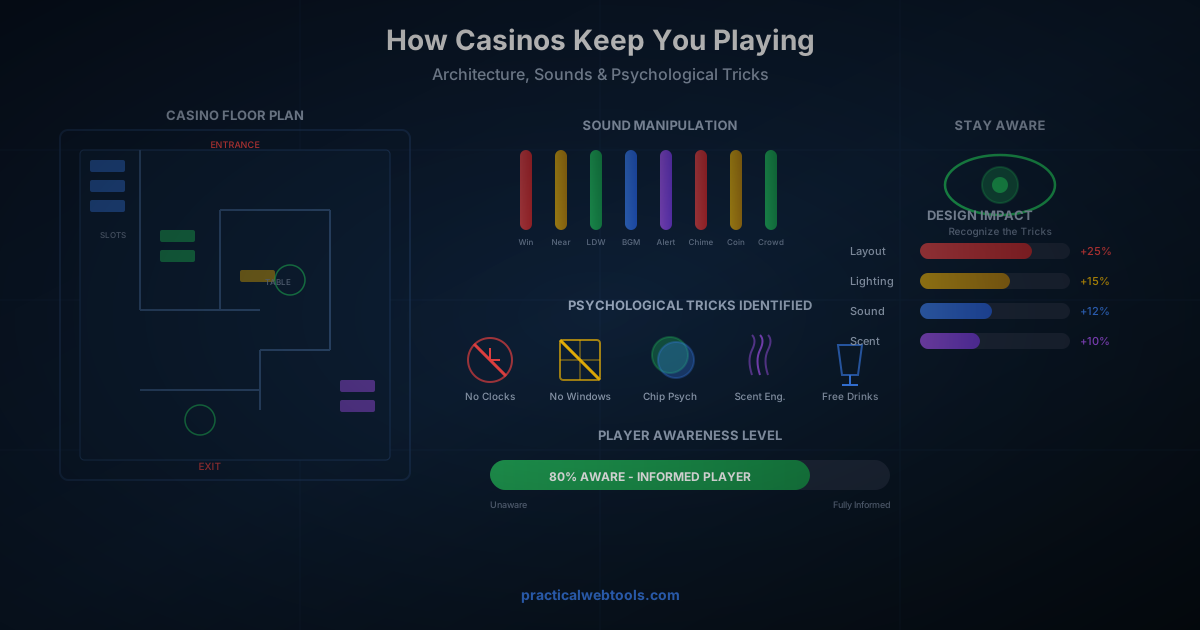
How Casinos Use Layout to Influence Your Selection
Understanding how casino floors are designed helps you resist being funneled into high-edge games.
The Entrance Trap
High-edge gaming machines -- slots with 8-12% house edges -- are strategically placed near casino entrances, hotel lobbies, elevators, and restaurant walkways. End-cap slot machines generate roughly 30% more revenue than mid-row machines of the same type. Why? Because tired, distracted, or impulsive players sit down at whatever is convenient. The casino is counting on you never making it to the table games pit.
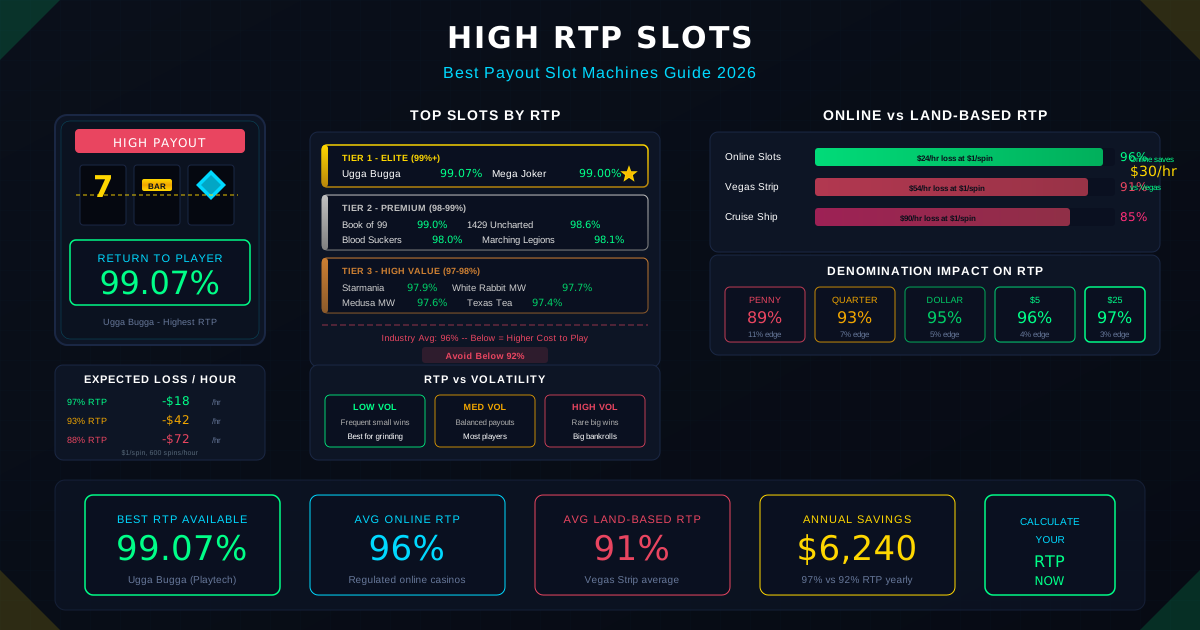
Your move: Walk past the entrance slots. Always. If you want to play slots, at least find the machines with the best posted return percentages, which are typically deeper inside the casino floor, often near the poker room or sportsbook.
The Table Games Pit Arrangement
Within the pit itself, casinos make deliberate placement decisions:
- 6:5 blackjack tables are often placed in high-traffic areas with lower minimums. They look like bargains.
- 3:2 blackjack tables are often higher minimum and placed farther from the main walkways. They are harder to find but worth the search.
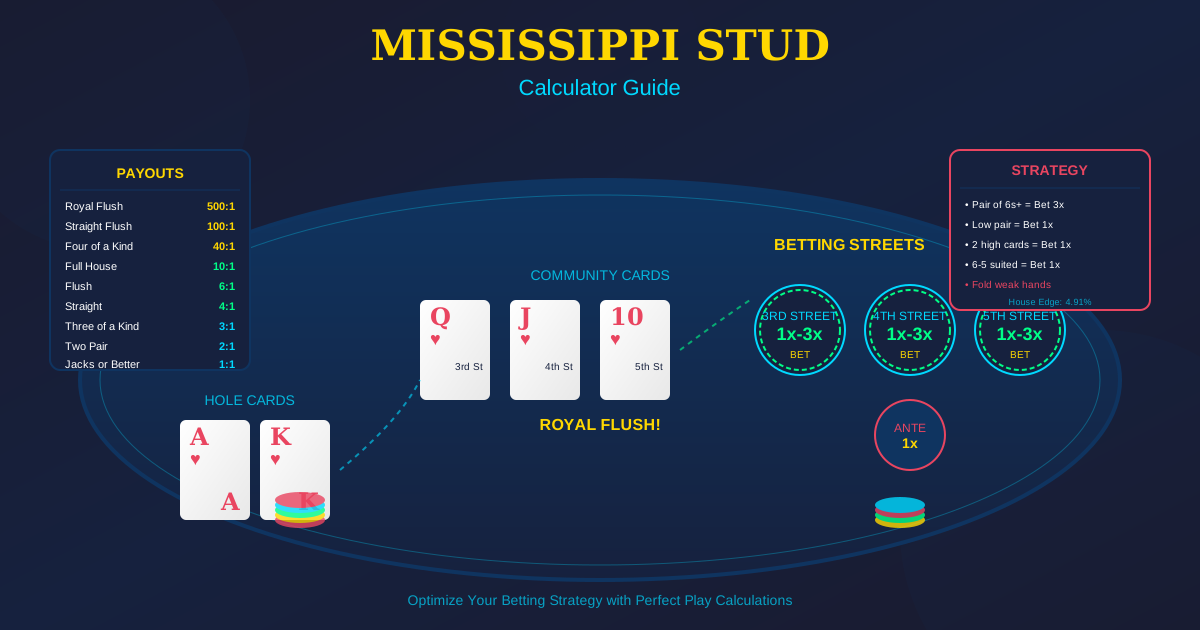
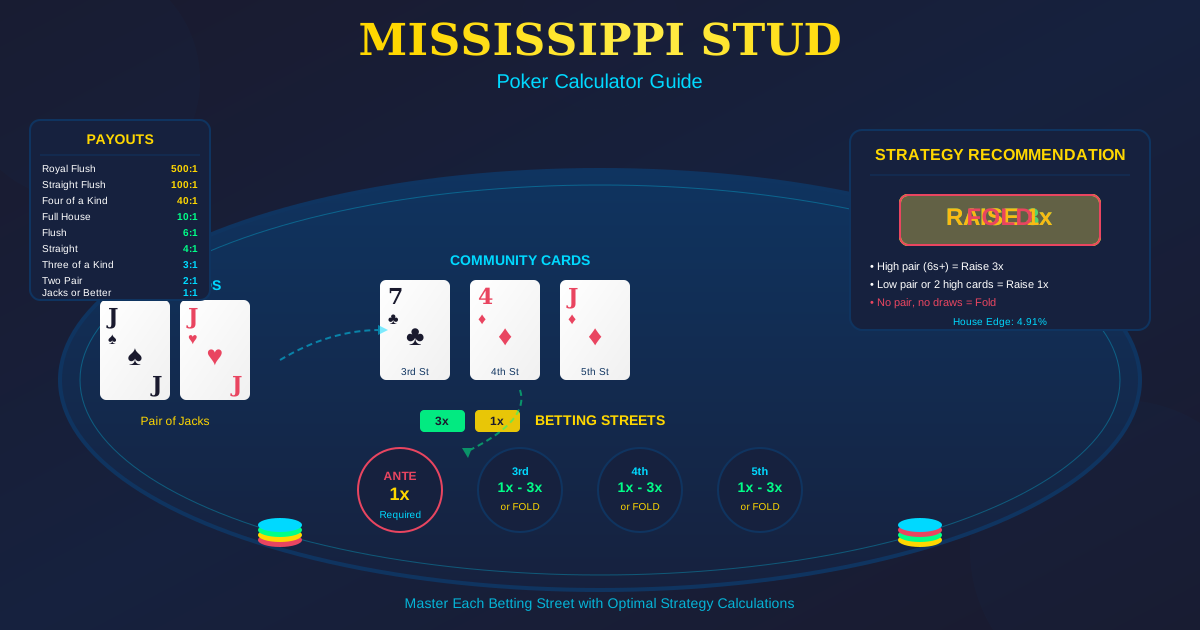
- Carnival games (Three Card Poker, Let It Ride, Mississippi Stud) with 2-5% house edges are placed prominently because they are more profitable for the casino per square foot than blackjack or craps.
- Craps and baccarat are usually placed where noise will not bother other players but can attract passersby with the excitement.
The Color and Light Psychology
Casino floors use red, gold, and purple tones to evoke excitement, luxury, and a willingness to take risks. Winning slot machines and table celebrations are amplified with sound and light to create an artificial atmosphere of success. The casino wants you to feel like everyone is winning -- even though the math guarantees the house comes out ahead.
Your move: Make your game selection decision before you walk in. Decide what you are going to play, what your budget is, and what table conditions you require. Write it down if that helps. Having a plan nullifies most of the floor layout psychology.
Online Casino Game Selection Tips
The principles translate directly to online gambling, with some important differences.
Advantages of Online Selection
- Full rule transparency. Online casinos must display pay tables, rules, and (in regulated markets) theoretical return-to-player (RTP) percentages. You never have to wonder if the blackjack pays 3:2 or 6:5 -- it is stated clearly.
- No walking required. You can switch from American roulette to European roulette with one click. No social pressure, no sunk cost from a buy-in.
- Lower minimums. Online tables often start at $0.50 to $1, making it easy to find games that match any budget.
- Game variety. Online casinos may offer 50+ blackjack variants, a dozen roulette options, and hundreds of video poker pay tables. You have far more selection power online.
Risks of Online Selection
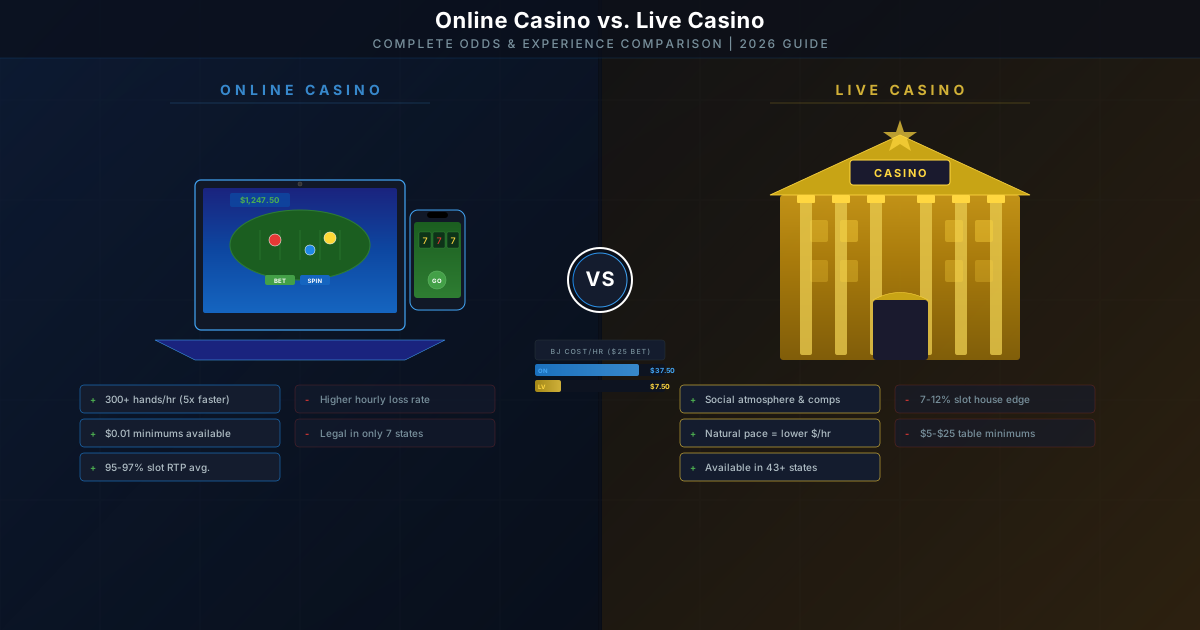
- Speed. Online games are faster. Without a physical dealer, shuffling, or other players, you might play 200-300 hands per hour in blackjack or 100+ spins per hour in roulette. This directly increases your hourly expected loss, even at the same house edge.
- Auto-play and rapid-fire features. These are designed to accelerate your play speed beyond what you would choose naturally. Avoid them.
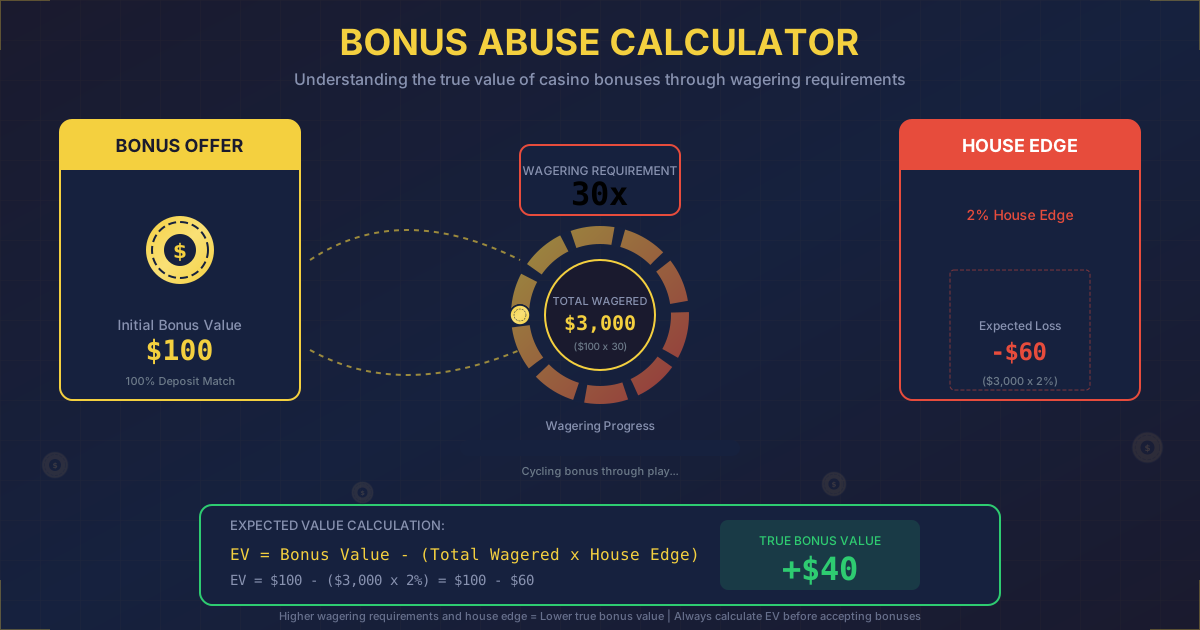
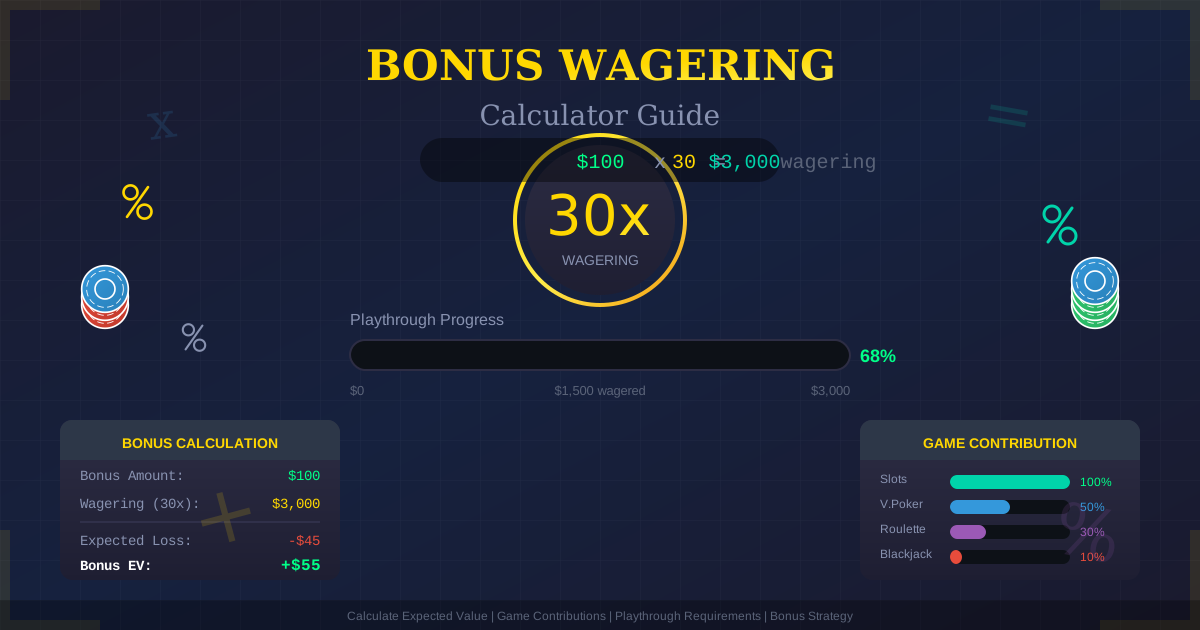
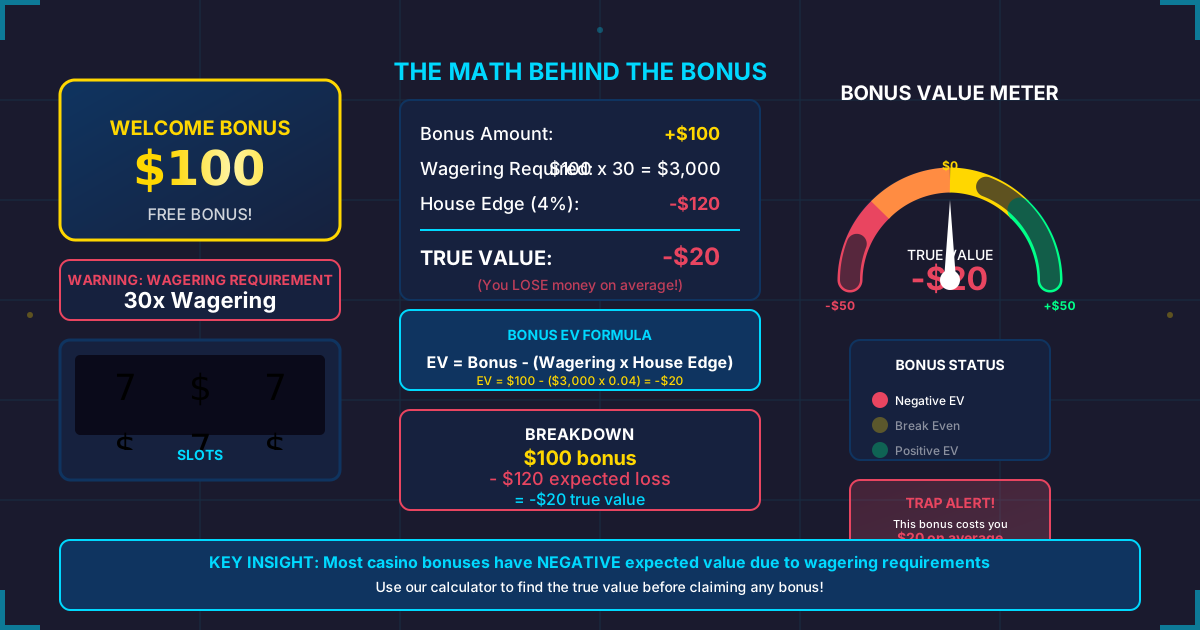
- Bonus wagering traps. Casino bonuses often come with 30x-60x wagering requirements that effectively lock you into playing long enough for the house edge to grind down your deposit plus the bonus. The casino bonus wagering calculator shows the true cost of these offers.
Online Game Selection Checklist
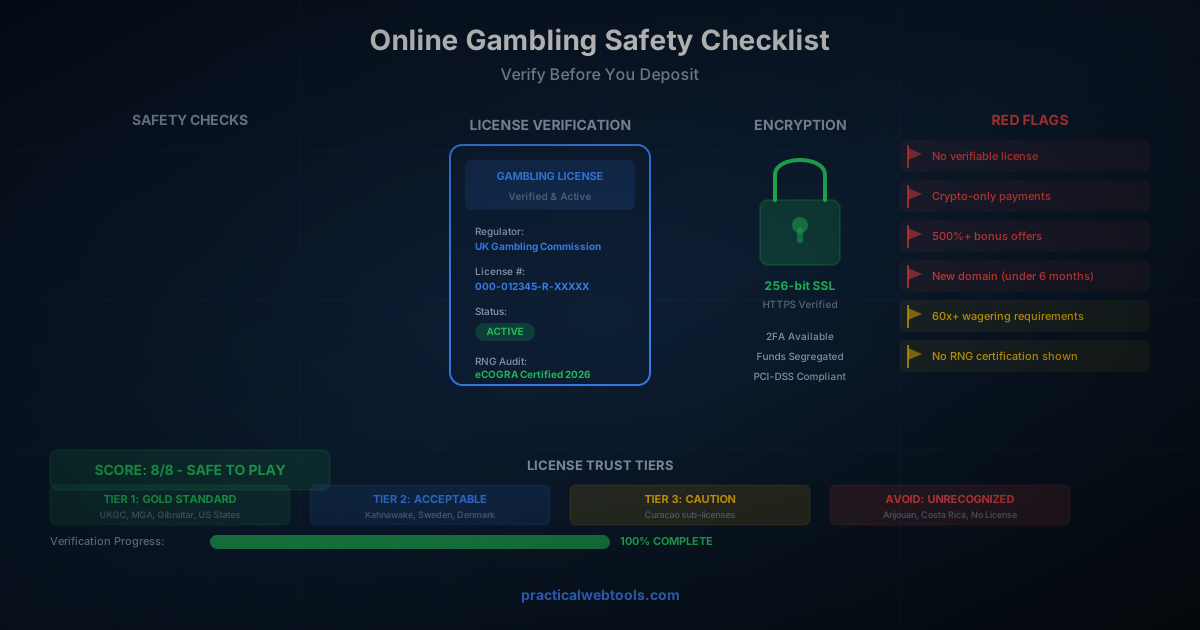
- Check the RTP. Only play games with published return-to-player percentages. For table games, look for RTP above 98% (which means house edge below 2%).
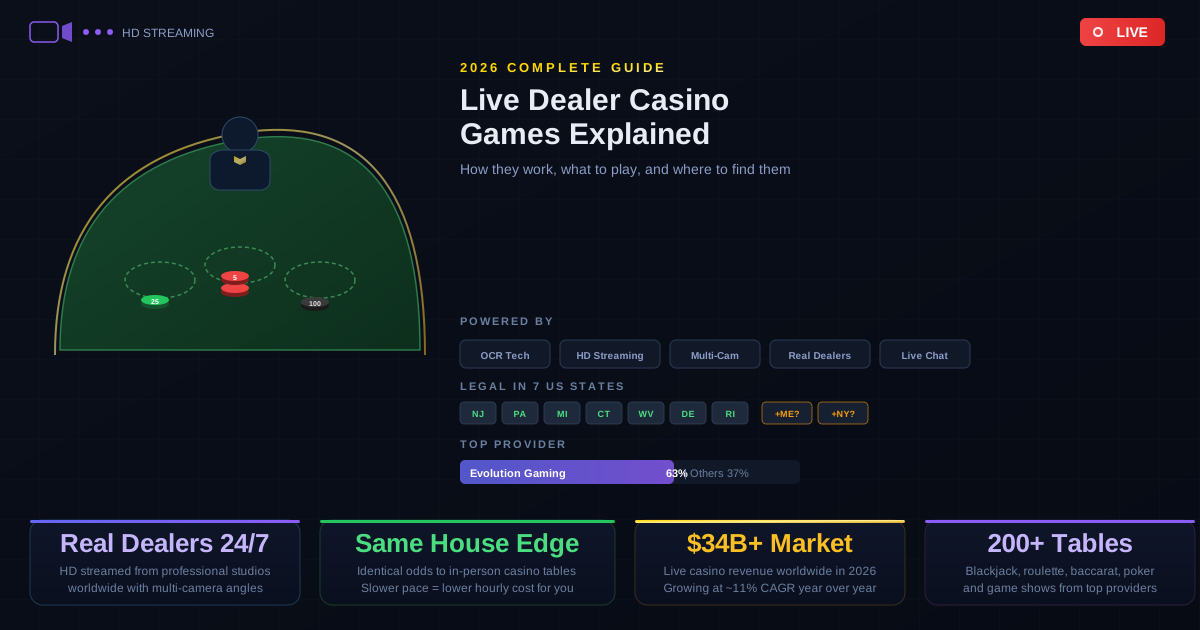
- Choose live dealer for slower pace. Live dealer games run at speeds closer to physical casinos (60-80 hands per hour vs. 200+ for automated RNG games).
- Verify the rules. Does the blackjack pay 3:2? Does the roulette have one zero or two? These details are in the game info panel.
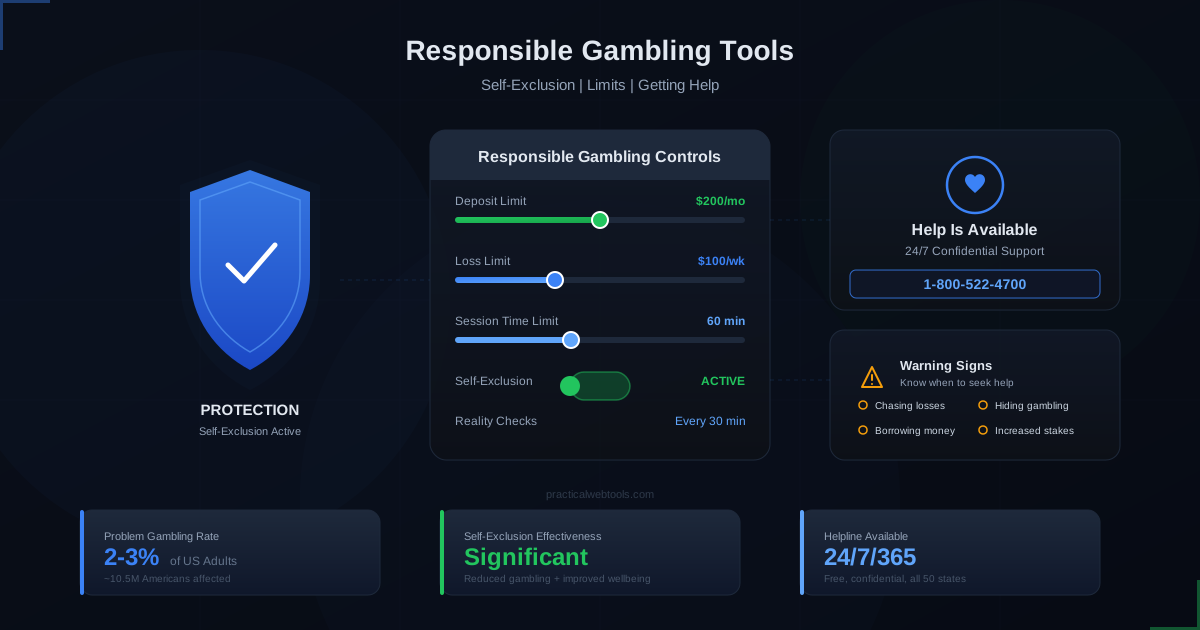
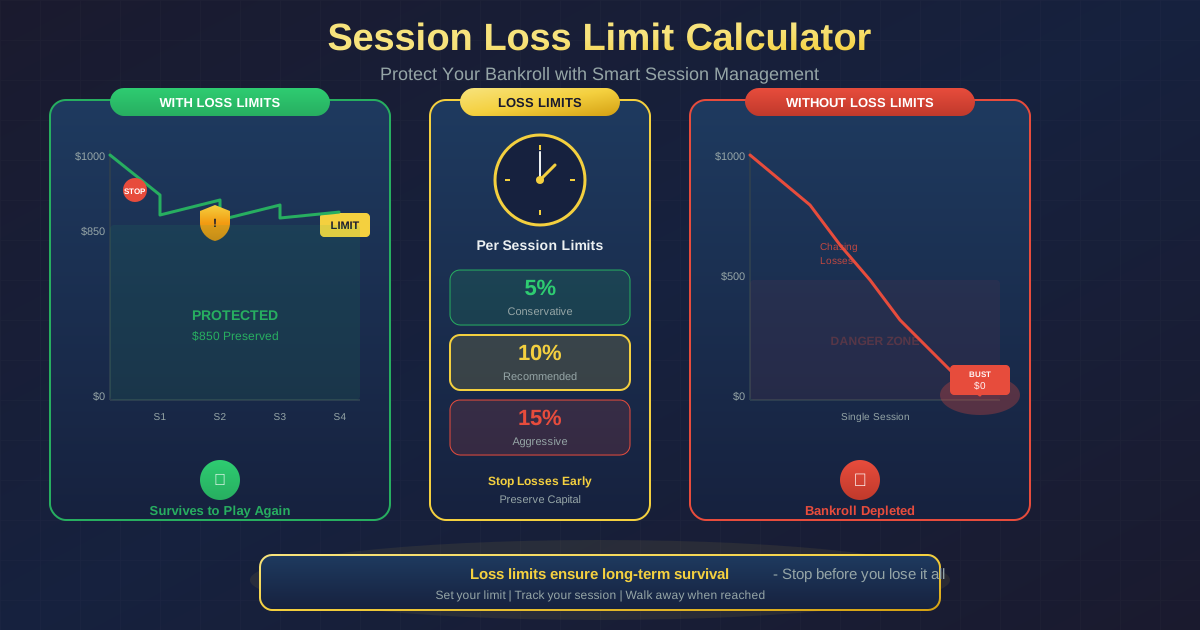
- Set deposit and loss limits before playing. Every regulated online casino is required to offer these tools. Use them.
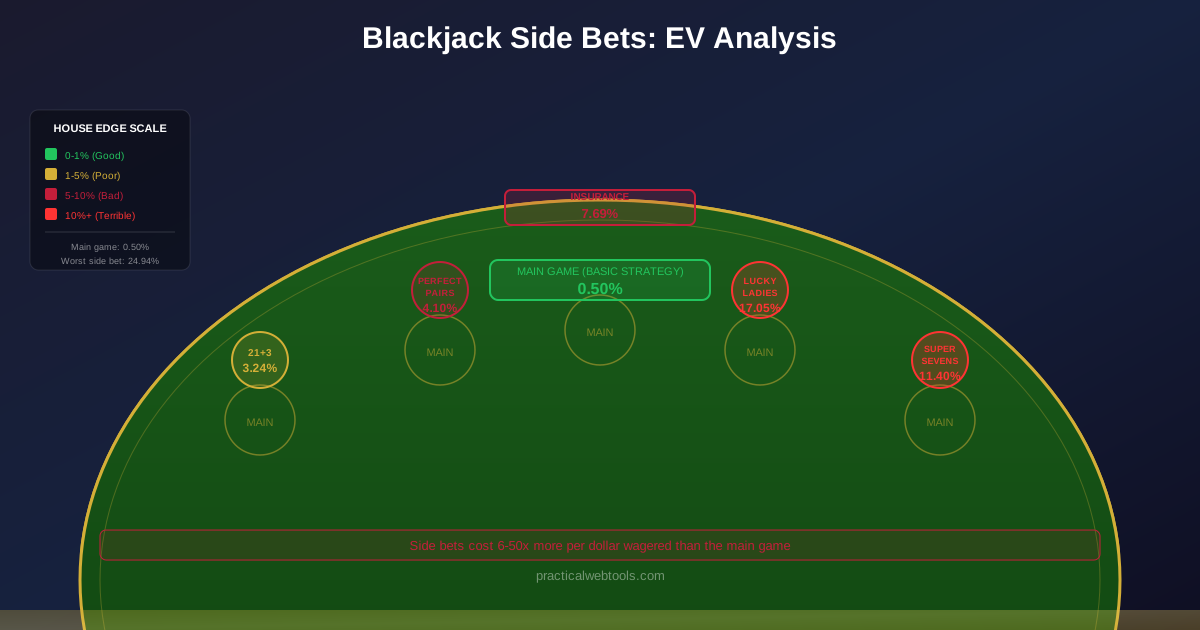
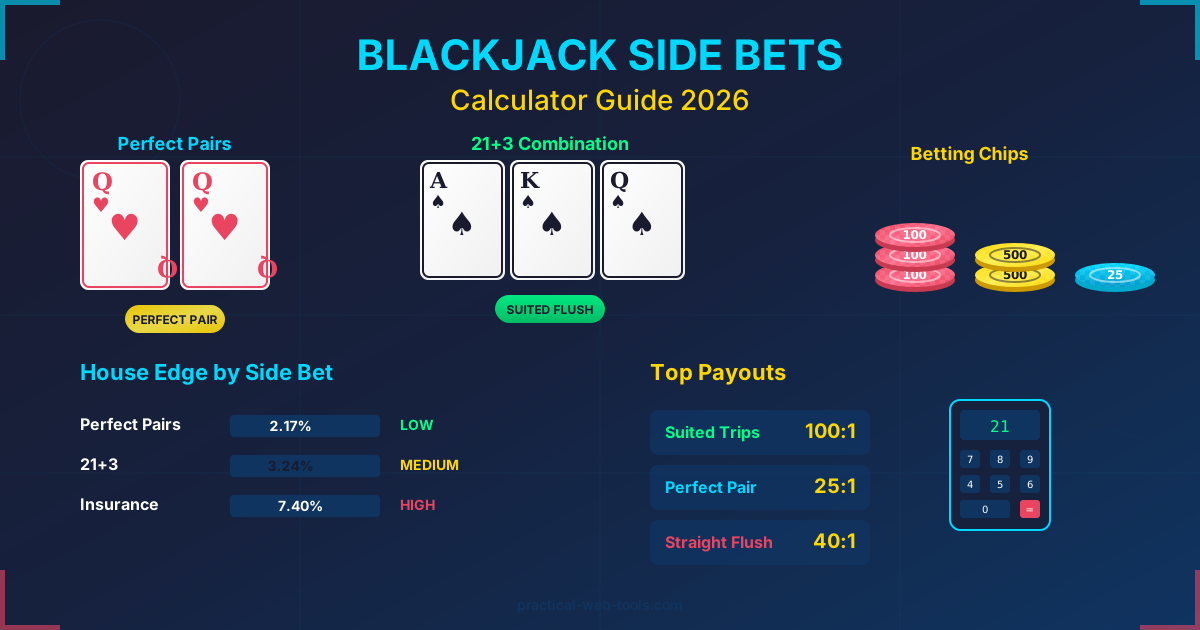
- Avoid side bets and bonus wagers. These carry the same inflated house edges online as they do in physical casinos, often worse.
Expected Loss Per Hour: The Complete Comparison
Here is the table that ties everything together. This shows what you can expect to lose per hour across every major game at typical bet sizes and speeds.
| Game | Bet | House Edge | Hands/Hour | $10 Bet Loss/Hr | $25 Bet Loss/Hr | $50 Bet Loss/Hr |
|---|---|---|---|---|---|---|
| BJ (3:2, good rules) | Basic Strategy | 0.50% | 70 | $3.50 | $8.75 | $17.50 |
| BJ (6:5, avg rules) | Basic Strategy | 2.02% | 70 | $14.14 | $35.35 | $70.70 |
| Craps | Pass + 3-4-5x Odds | 0.37%* | 50 | $1.85* | $4.63* | $9.25* |
| Craps | Pass Line (flat) | 1.41% | 50 | $7.05 | $17.63 | $35.25 |
| Baccarat | Banker | 1.06% | 70 | $7.42 | $18.55 | $37.10 |
| Baccarat | Player | 1.24% | 70 | $8.68 | $21.70 | $43.40 |
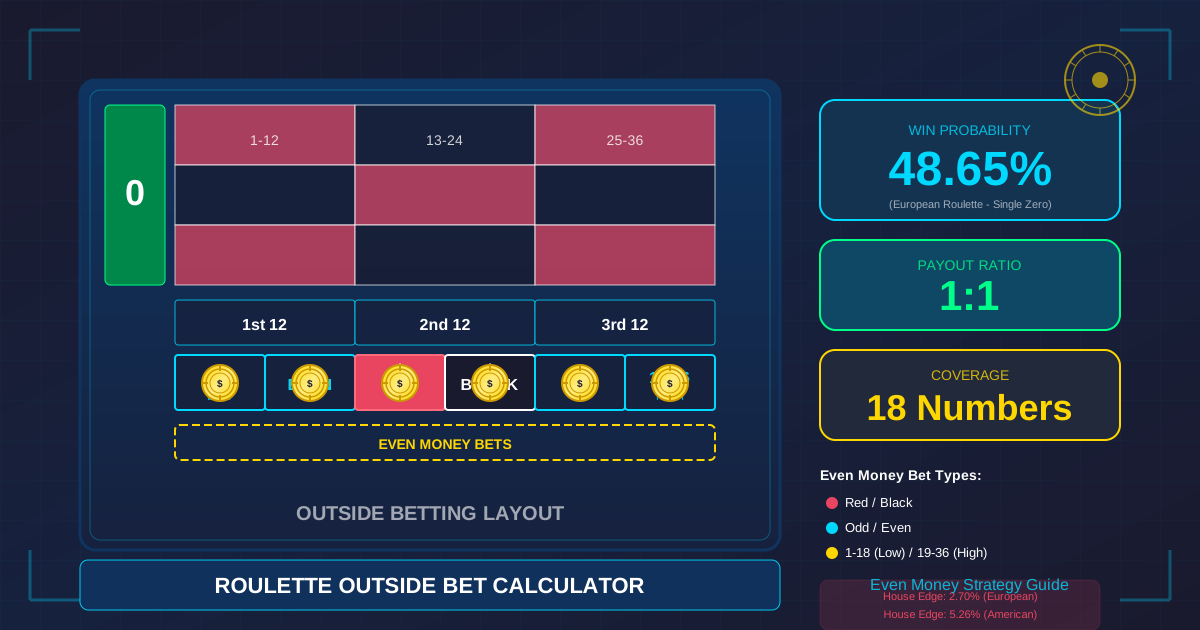
| Roulette (single zero) | Even money | 2.70% | 35 | $9.45 | $23.63 | $47.25 |
| Roulette (double zero) | Even money | 5.26% | 35 | $18.41 | $46.03 | $92.05 |
| Pai Gow Poker | Optimal strategy | 1.46% | 30 | $4.38 | $10.95 | $21.90 |
| Three Card Poker | Ante/Play | 2.01% | 55 | $11.06 | $27.64 | $55.28 |
| Video Poker (9/6 JoB) | Max coins, perfect play | 0.46% | 600 | $27.60** | $69.00** | $138.00** |
| Slots (average) | -- | 8-12% | 600 | $48-$72 | $120-$180 | $240-$360 |
*Craps with odds: the edge applies to the line bet only; the odds bet has 0% edge. The effective hourly loss depends on how much you bet in odds relative to your line bet. At $10 Pass + $30 odds, total action is higher but combined edge is much lower.
**Video poker at $10/hand implies high-denomination machines. Most players play quarter ($1.25 max) or dollar ($5 max) machines.
The big picture: At a $25 average bet, you can play well-ruled blackjack for $8.75 per hour or American roulette for $46.03 per hour. Over a four-hour session, that is $35 versus $184. Over a three-day trip with 12 hours of play, it is $105 versus $552. Game selection is worth $447 over a single weekend.
Advanced Game Selection: Putting It All Together
The Five-Step Selection Process
-
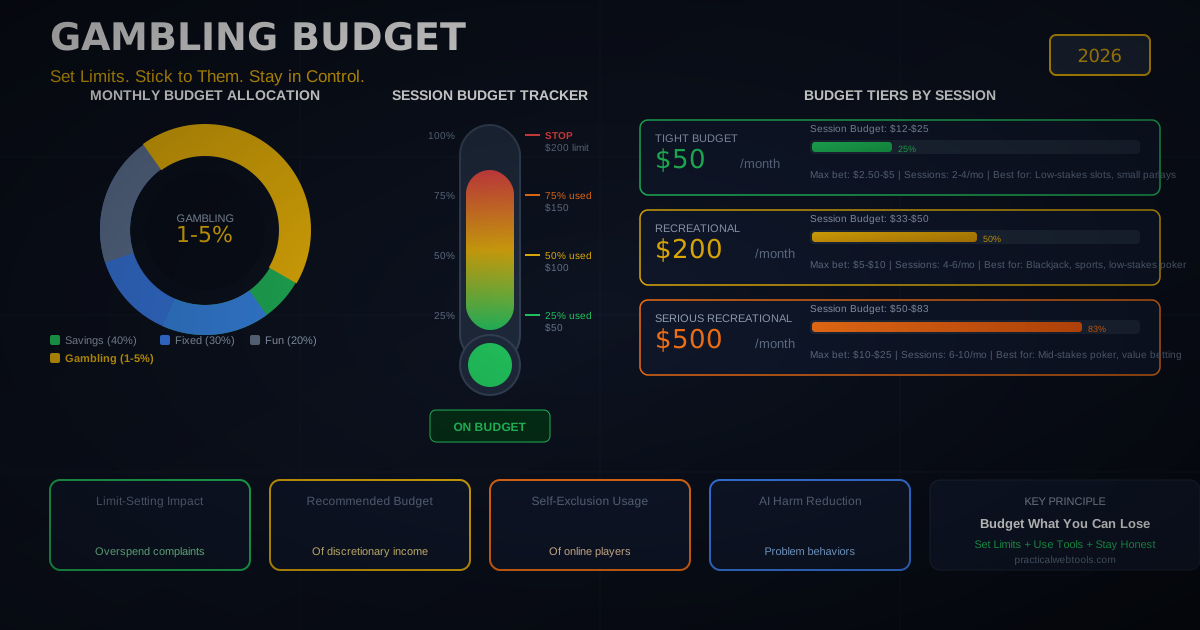
Set your budget and time. How much are you willing to lose tonight? How long do you want to play? This determines your maximum hourly loss rate. (Example: $200 budget, 5 hours = maximum $40/hour expected loss.)
-
Identify available games. Walk the floor or check the casino's table games page online. Note which games are offered, their minimums, and their rules.
-
Calculate expected hourly cost. Use the tables above or the expected value calculator to figure out what each option will cost you per hour at your intended bet size.
-
Filter by your goal. Are you here for social fun? Best odds? Maximum table time? Cross-reference with the decision matrix above.
-
Choose and commit. Pick the game that best matches your budget, goals, and entertainment preferences. Do not wander to other tables impulsively -- that is how casino floor psychology gets you.
Red Flags: When to Leave a Table
Even after good game selection, sometimes a table goes wrong. Here are signals to switch:
- Table minimum jumps mid-session. Casinos raise minimums during peak hours. If the minimum pushes you outside your comfort zone, color up and find another table.
- Dealer pushback on rules questions. If you ask about blackjack payout or odds multiples and get evasive answers, the rules probably are not in your favor.
- Your emotional state changes. If you are frustrated, chasing losses, or betting more than planned, stand up immediately. This is not about game selection anymore -- it is about self-control.
- The table is empty and you wanted social play. No shame in moving to where the energy is.
Frequently Asked Questions
What casino game has the best odds for players? Blackjack with perfect basic strategy and favorable rules (3:2 payout, dealer stands on soft 17, double after split) offers a house edge as low as 0.28%. Craps with maximum odds bets can push the combined edge even lower, potentially below 0.10% at casinos offering 10x or higher odds. Video poker on full-pay machines (9/6 Jacks or Better) has a house edge of just 0.46% with perfect strategy. For most recreational players, well-ruled blackjack is the most accessible low-edge game. Use our blackjack house edge calculator to check the edge for any specific set of rules.
Is 6:5 blackjack still worth playing? Generally, no. The 6:5 payout increases the house edge by approximately 1.39% compared to a 3:2 game, which nearly quadruples the edge for a typical six-deck shoe. At a $15 minimum with 70 hands per hour, 6:5 blackjack costs you about $21 per hour versus about $5 per hour at a 3:2 table. The only scenario where 6:5 might make sense is if the minimum bet is extremely low ($1-$3) and no 3:2 tables are available in your budget range. Even then, consider craps or baccarat as lower-edge alternatives.
How do table minimums affect my expected losses? Table minimums directly multiply your expected loss. At a 0.50% house edge with 70 hands per hour, a $5 table costs you $1.75 per hour while a $50 table costs you $17.50 per hour -- ten times more. However, higher-minimum tables often have better rules (3:2 blackjack, for example), so the total cost comparison is not always straightforward. Always calculate the expected hourly loss for the specific combination of minimum bet and house edge. The expected value calculator handles this math for you.
Should I always play the game with the lowest house edge? Not necessarily. The "best" game depends on your goals. If you want the most entertaining social experience, craps or blackjack at a lively table might be worth the slightly higher cost compared to sitting alone at a Pai Gow Poker table. If you want to stretch a small bankroll over many hours, a slow game like Pai Gow with lots of pushes might beat a fast heads-up blackjack game even though blackjack has a lower house edge. The expected loss per hour -- which factors in game speed, not just house edge -- is a better metric than house edge alone.
What is the worst bet in a casino? Keno consistently offers the highest house edge of any standard casino game, ranging from 25% to 29%. Among table games, the baccarat tie bet at 14.36% and craps proposition bets (11-17%) are the worst. The Big Six Wheel ranges from 11.1% to 24.1% depending on the segment. In roulette, the five-number bet (0, 00, 1, 2, 3) on an American wheel has a 7.89% house edge -- the worst bet on the roulette layout. Slot machines vary widely but average 6-15% on the Strip.
Do online casinos have better odds than physical casinos? Often, yes -- for equivalent games. Online blackjack commonly offers 3:2 payouts and favorable rules because the operational cost per hand is much lower than a physical table with a dealer. Online roulette frequently offers European single-zero wheels. Video poker online often has better pay tables than what you will find in a Las Vegas casino. However, online games run faster (more hands per hour), which can offset the lower house edge with higher volume. Live dealer games offer a good compromise -- better rules at physical-casino speeds.
How do I find 3:2 blackjack tables in Las Vegas? In 2026, 3:2 blackjack on the Strip is mostly found at $25+ minimums at premium properties like Bellagio, Wynn, Aria, and Venetian. For lower minimums, look off-Strip: the Palms has had $5 3:2 blackjack tables, and several Station Casinos properties offer 3:2 at $10-$15. Downtown, El Cortez, Golden Nugget, and several Fremont Street casinos still deal 3:2 at reasonable minimums. Always check the placard on the table -- it will say either "Blackjack Pays 3 to 2" or "Blackjack Pays 6 to 5."
Does the number of players at a blackjack table affect the house edge? No, the house edge stays the same regardless of how many players are at the table. However, the number of players dramatically affects your hands per hour and therefore your expected hourly loss. A heads-up game might deal 200+ hands per hour while a full seven-player table might deal only 50. Your expected hourly loss can vary by 4x based solely on how many other people are playing, even though the per-hand edge is identical.
What is the best game for a complete beginner? Baccarat is arguably the simplest table game to play because it requires zero decisions beyond choosing Banker, Player, or Tie (always choose Banker). The house edge on the Banker bet is just 1.06%, making it one of the best values in the casino with literally no strategy to learn. Roulette is similarly simple -- pick a bet, place your chips -- though the house edge is higher (2.70% for single zero, 5.26% for double zero). For beginners willing to learn basic strategy, blackjack offers the best mathematical odds, but the learning curve is real. Use the baccarat odds calculator or the baccarat house edge calculator to see the math for yourself.
Recommended Tools for Game Selection
Ready to run the numbers for your next casino visit? These free calculators will help you make informed game selection decisions:
- Blackjack Basic Strategy Calculator -- Generate the correct play for every hand under any rule set
- Blackjack House Edge Calculator -- See how specific table rules affect your expected loss
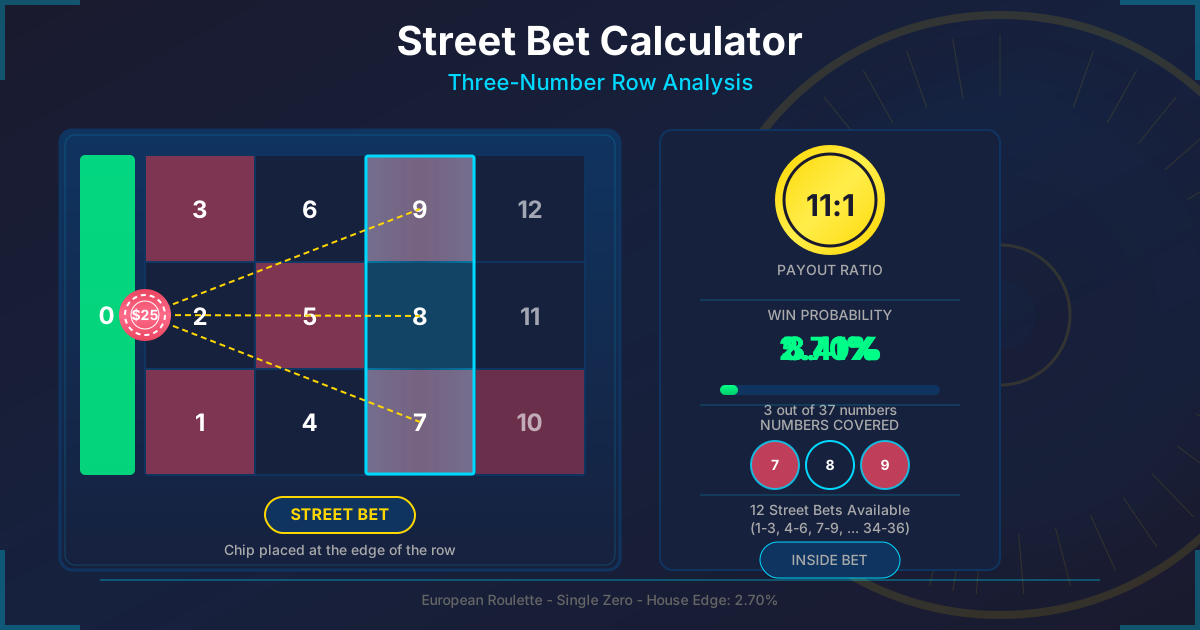
- Roulette Odds Calculator -- Calculate probabilities and payouts for any roulette bet
- Roulette House Edge Calculator -- Compare single-zero, double-zero, and triple-zero wheels
- Craps Odds Calculator -- Model Pass/Don't Pass with any odds multiple
- Craps House Edge Calculator -- See the true cost of every craps bet
- Baccarat Odds Calculator -- Probability breakdowns for Banker, Player, and Tie
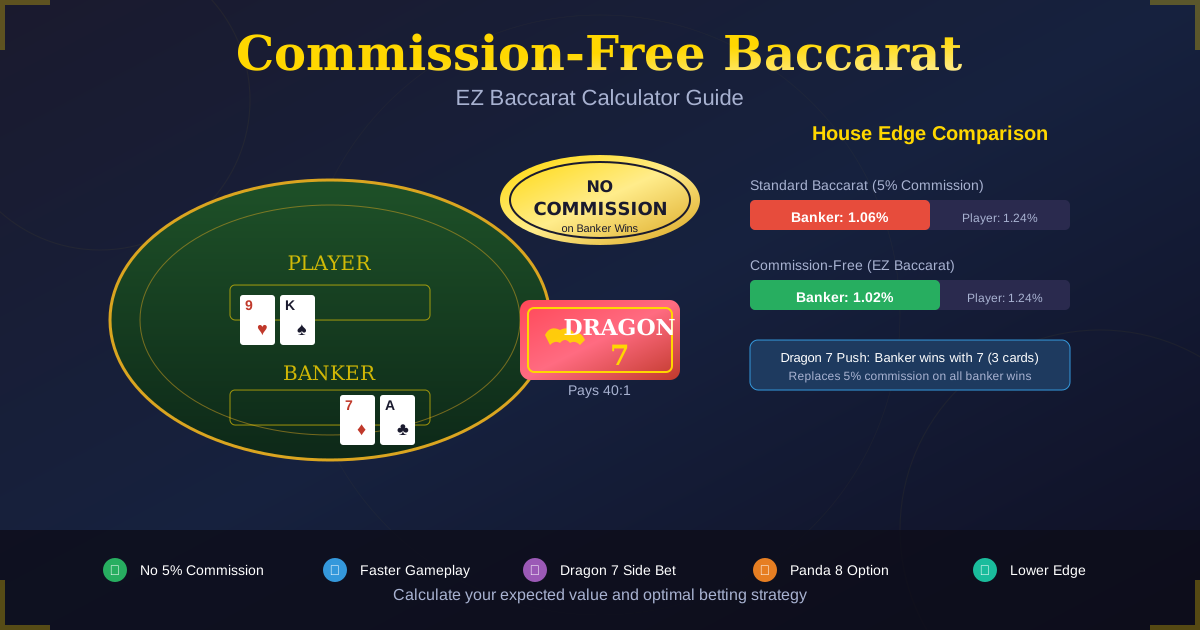
- Baccarat House Edge Calculator -- Compare commission and no-commission baccarat
- Expected Value Calculator -- Calculate EV for any bet in any game
- Video Poker Odds Calculator -- Analyze return rates for any video poker pay table
- Video Poker EV Calculator -- Calculate expected value for specific video poker hands
Conclusion
Game selection is the great equalizer. You do not need to count cards, track dice, or master complex strategy systems. You just need to understand the math behind each game, check the rules before you sit down, and choose tables that match your goals and budget. The difference between a smart selector and a random walk-up can easily be $500 or more over a single weekend trip -- and that is money you keep in your pocket without making a single change to how you actually play.
The next time you walk into a casino, take five minutes before you sit down. Check the blackjack payout. Count the zeros on the roulette wheel. Ask about odds multiples at the craps table. Look at the video poker pay table. These small actions cost you nothing and can save you hundreds.
The house always has an edge. But you get to choose how big that edge is.
Gambling involves risk. This content is for educational and informational purposes only. Always gamble responsibly, set limits you can afford, and seek help if gambling becomes a problem. Visit the National Council on Problem Gambling or call 1-800-522-4700 for support.