Provably Fair Gambling: How Blockchain Proves Casino Games Aren't Rigged (2026)
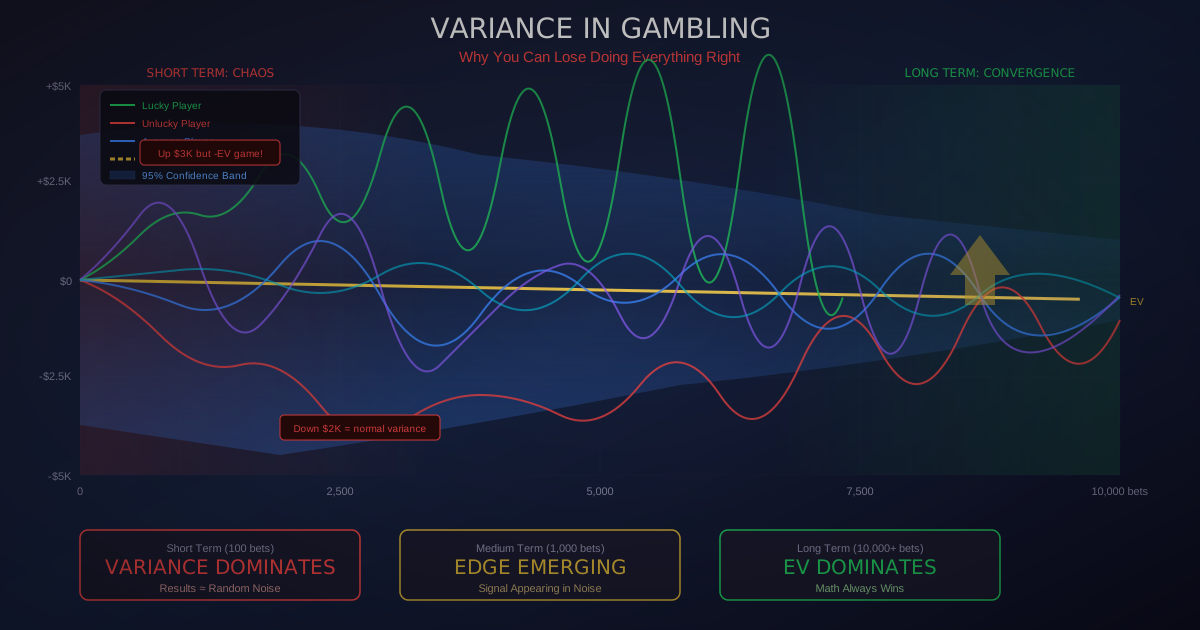
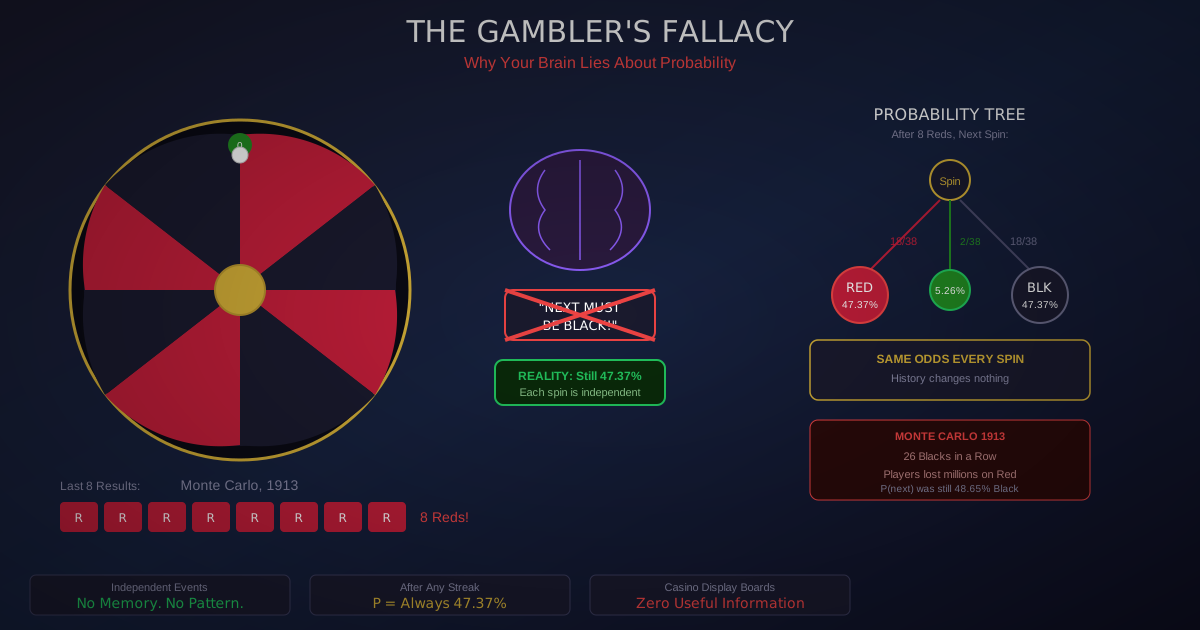
You just lost 14 blackjack hands in a row. Your gut says the casino is cheating. Your brain says variance happens. But what if you could know for certain -- mathematically, cryptographically, irrefutably -- whether the game was fair? What if every single bet you ever placed could be independently verified by you, or by anyone, without trusting the casino at all?
That is the promise of provably fair gambling. It is not a marketing slogan. It is a cryptographic system that uses the same hash functions securing billions of dollars in Bitcoin transactions to generate verifiable, tamper-proof game outcomes. When implemented correctly, provably fair technology makes it mathematically impossible for a casino to manipulate results without players being able to detect it.
In 2026, provably fair has moved from a niche feature at obscure crypto casinos to a standard expectation among informed gamblers. Major blockchain gambling platforms process billions of dollars in wagers annually using these systems, and the technology continues to evolve with smart contract casinos that remove the operator from the equation entirely.
This guide explains exactly how provably fair gambling works -- from the cryptographic primitives to the step-by-step verification process. We will cover which games support it, what it does and does not guarantee, how it compares to traditional casino auditing, and what you should look for when evaluating a provably fair casino.
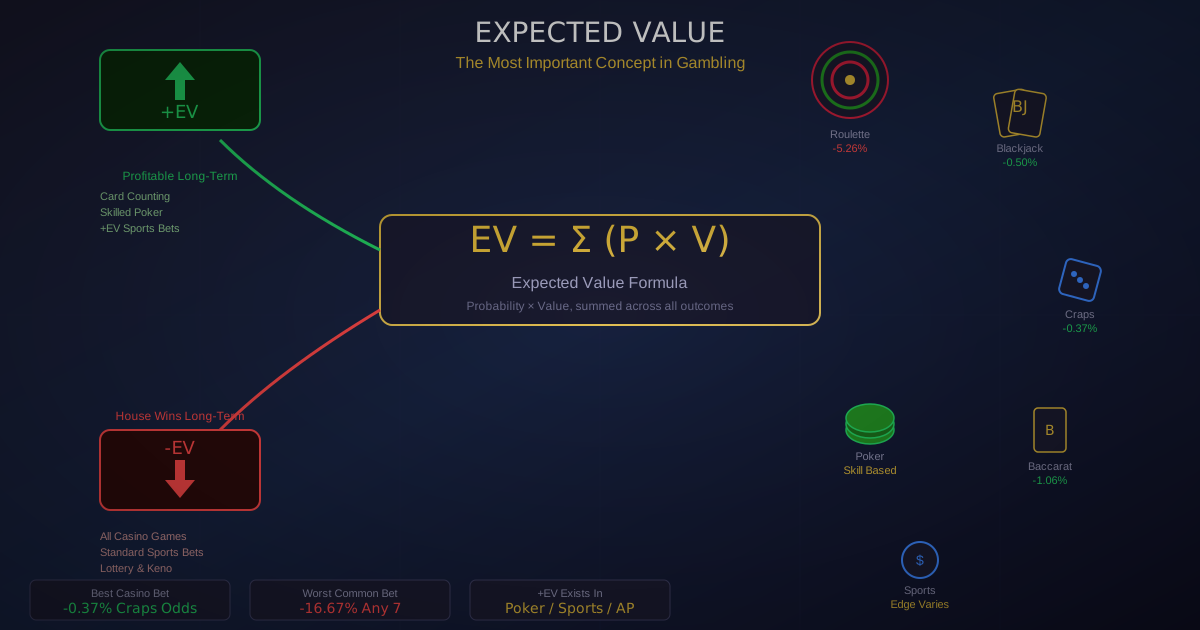
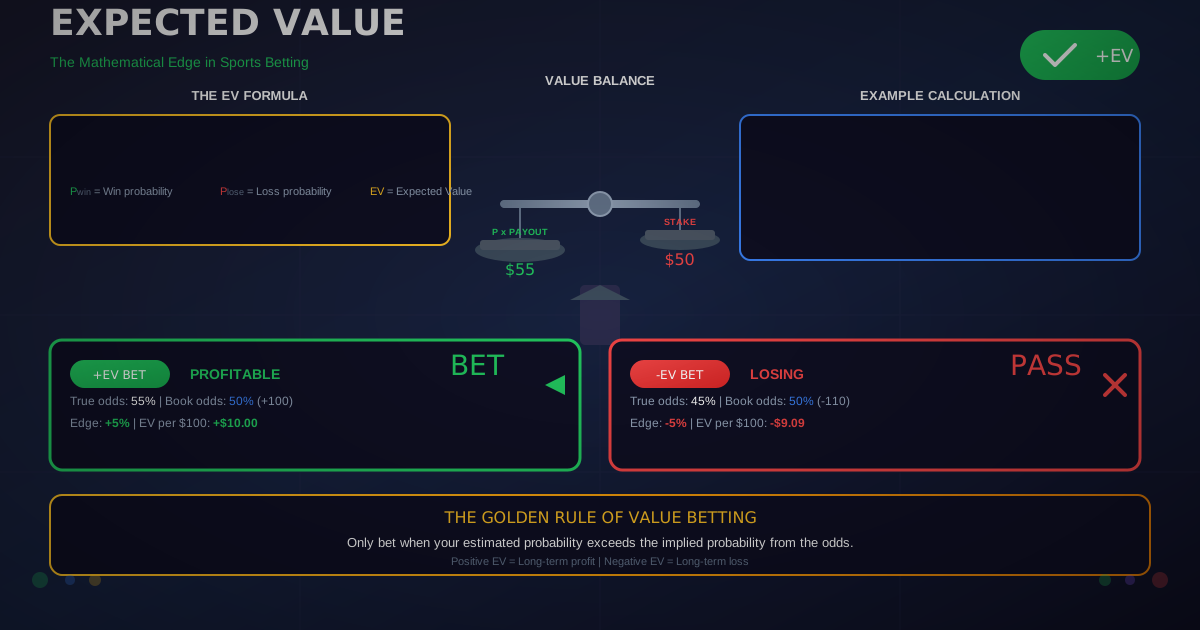
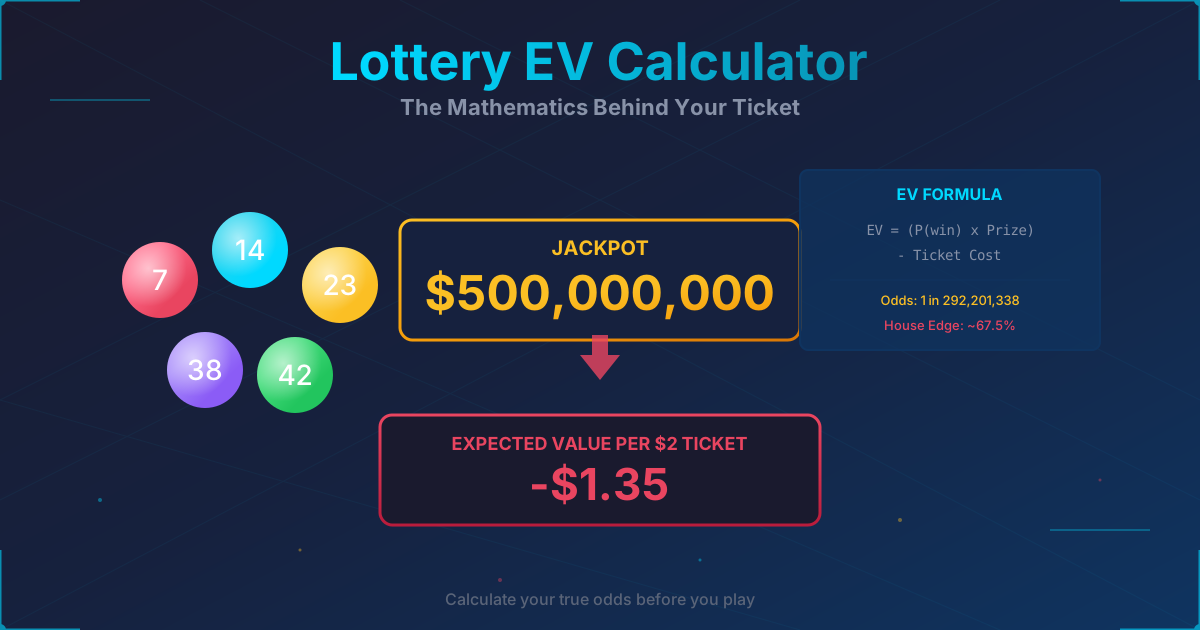
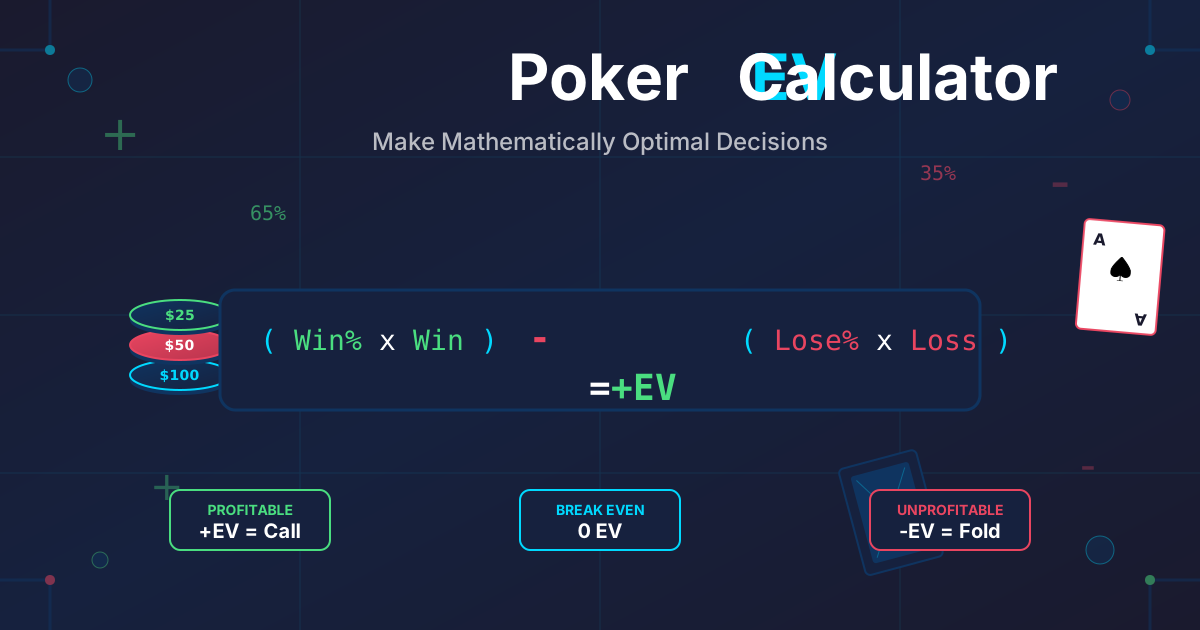
Before placing any bet, understand the house edge you are facing with our free Expected Value Calculator -- the math that determines whether a game is worth playing.
What Is Provably Fair Gambling?
Provably fair gambling is a system that uses cryptographic hash functions to generate game outcomes that are verifiable by the player after each bet. It allows players to mathematically confirm that the casino did not manipulate the result of any individual wager.
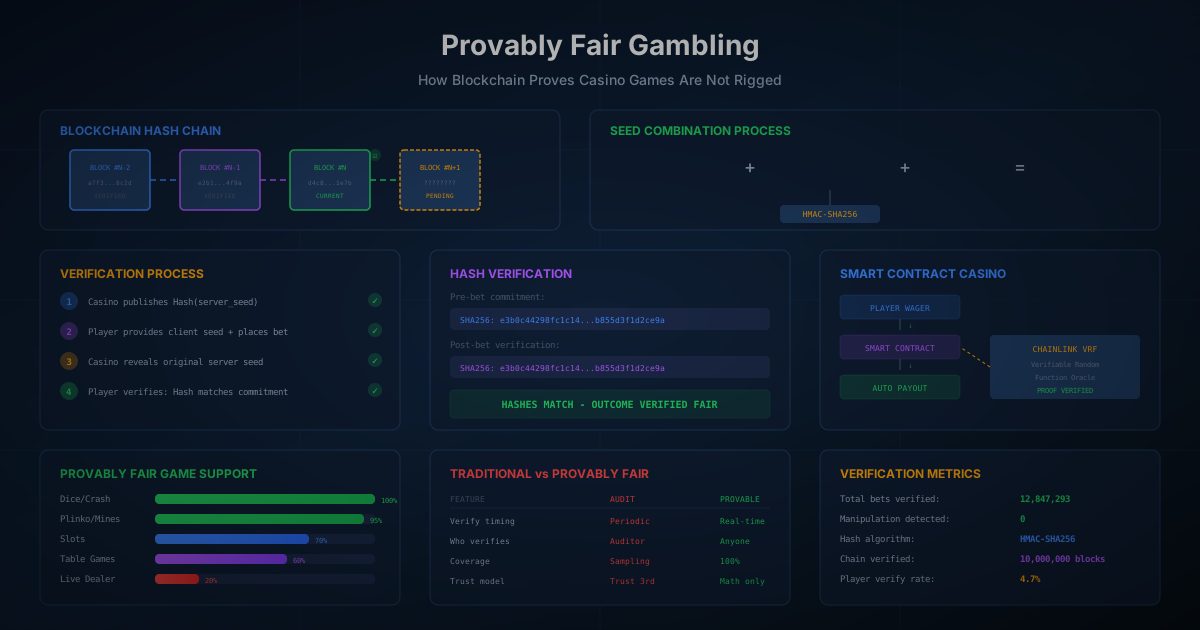
The core concept is straightforward: before each bet, the casino commits to an outcome by publishing a cryptographic hash. After the bet resolves, the casino reveals the inputs that produced that hash. The player can then independently verify that the revealed inputs produce the same hash, confirming that the outcome was determined before the bet was placed and was not altered afterward.
The Trust Problem in Online Gambling
Traditional online casinos operate on a trust model. The casino claims to use a Random Number Generator (RNG) that produces fair outcomes, and independent auditing firms (like GLI, eCOGRA, iTech Labs, or BMM Testlabs) periodically test the RNG to confirm it meets statistical fairness standards.
The problems with this model include:
| Traditional RNG Issue | Description |
|---|---|
| Opacity | Players cannot verify individual bet outcomes. They must trust the casino's claims and the auditor's reports. |
| Audit frequency | Audits are periodic, not continuous. A casino could theoretically alter its RNG between audits. |
| Auditor conflicts of interest | Auditing firms are paid by the casinos they audit, creating a potential conflict of interest. |
| Post-audit changes | There is no mechanism to verify that the audited software is the same software running on the live server. |
| Insider manipulation | A rogue employee with server access could theoretically alter outcomes without the auditing firm's knowledge. |
| Delayed detection | If manipulation occurs, it may not be detected until the next audit cycle -- weeks or months later. |
Provably fair gambling eliminates all of these issues by making every single outcome independently verifiable in real time.
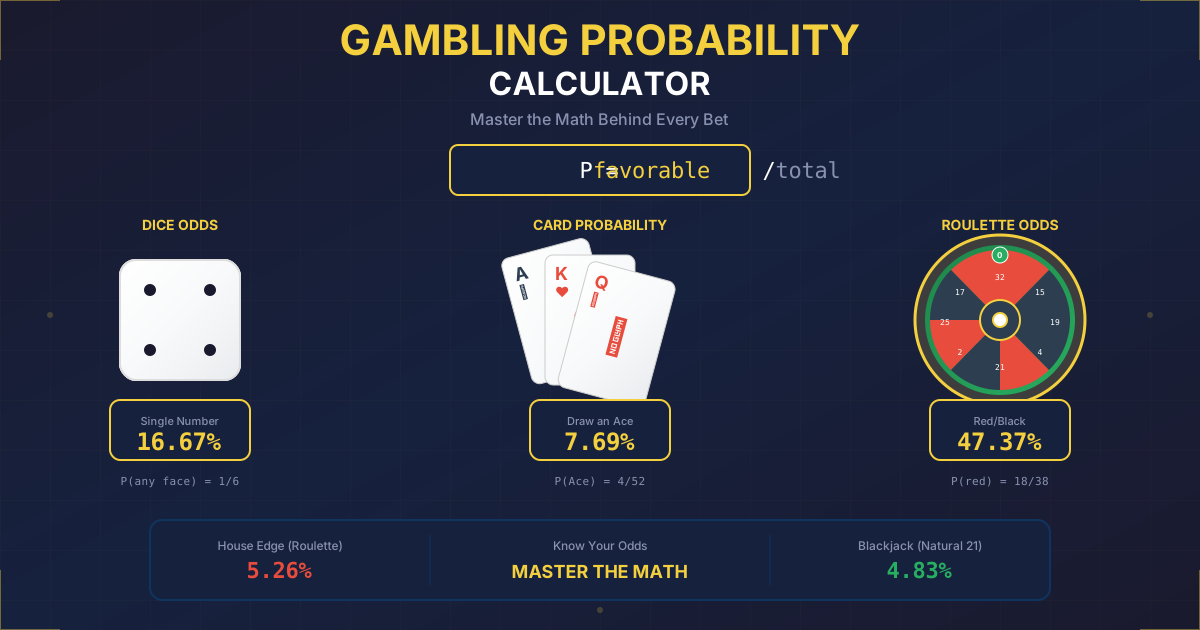
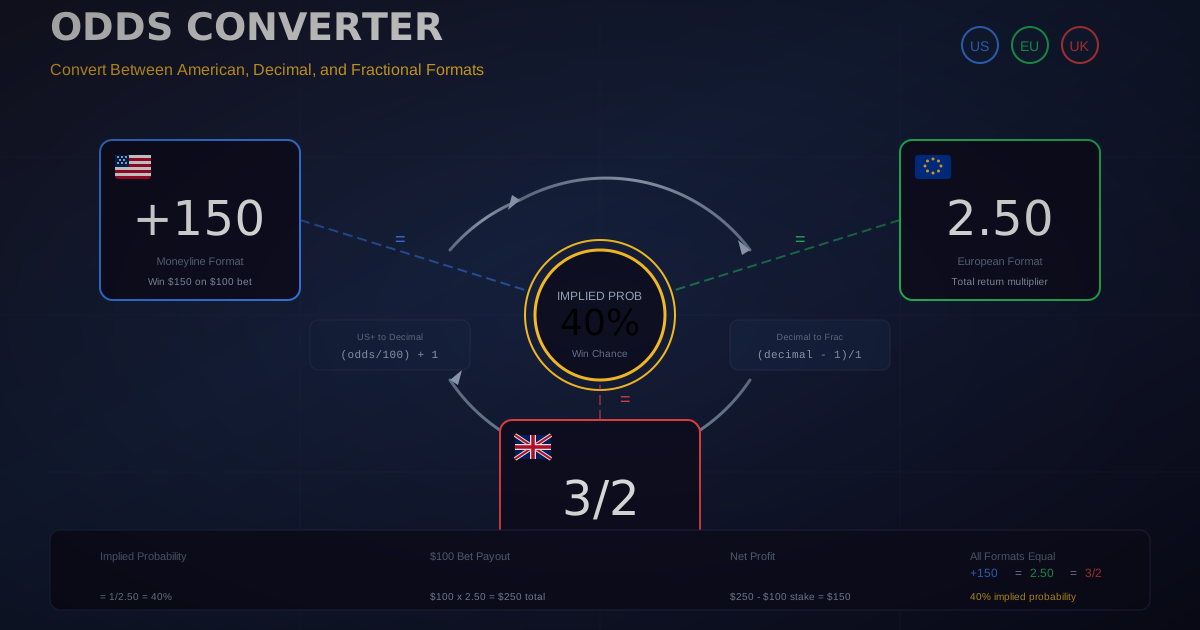
Use our Odds Converter to translate casino odds into implied probabilities and understand what you are actually being offered.
How Does the Provably Fair Algorithm Work?
The provably fair algorithm works through a three-step cryptographic process: commitment, play, and verification. Each step is designed to prevent either the casino or the player from manipulating the outcome.
Step 1: Commitment (Before the Bet)
Before a round begins, the casino generates a server seed -- a random string of characters. The casino then creates a hash of this server seed using a one-way cryptographic hash function (typically SHA-256) and shares the hash with the player.
A hash function takes any input and produces a fixed-length output (the "hash" or "digest"). Critically, it is:
- Deterministic: The same input always produces the same hash.
- One-way: Given the hash, it is computationally infeasible to determine the original input.
- Collision-resistant: It is practically impossible to find two different inputs that produce the same hash.
This means the player can see the hash of the server seed before betting, but they cannot determine the actual server seed from the hash. The casino is now "committed" to its seed -- if it changes the seed later, the hash will not match.
Step 2: Play (The Bet)
The player provides their own client seed -- a random string they choose or that is generated by their browser. Some implementations also include a nonce (a counter that increments with each bet) to ensure that even with the same server and client seeds, each bet produces a different outcome.
The game outcome is then derived from the combination of:
Outcome = Hash(server_seed + client_seed + nonce)
Because the player contributes the client seed, the casino cannot pre-determine the outcome (it does not know the client seed in advance). Because the casino committed to the server seed via its hash, it cannot change its seed after seeing the player's input.
Step 3: Verification (After the Bet)
After the round, the casino reveals the original server seed (the unhashed version). The player can now:
- Hash the revealed server seed themselves.
- Compare their computed hash to the hash the casino published before the bet.
- If the hashes match, the server seed is authentic.
- Combine the verified server seed with their client seed and nonce.
- Run the same outcome calculation algorithm.
- Confirm that the calculated outcome matches the result they experienced.
If everything checks out, the player has mathematical proof that the game outcome was fair -- determined by the committed server seed and their own client seed, with no possibility of manipulation.
The Cryptographic Flow (Visual Summary)
| Step | Casino Action | Player Action | What Player Sees |
|---|---|---|---|
| 1. Pre-bet | Generates server seed, publishes Hash(server_seed) | Provides client seed | Hashed server seed (commitment) |
| 2. Bet placed | Calculates outcome from server_seed + client_seed + nonce | Places bet, receives result | Game outcome (win/loss/amount) |
| 3. Post-bet | Reveals original server seed | Verifies Hash(revealed_seed) matches commitment | Full verification data |
| 4. Verification | N/A | Recalculates outcome independently | Confirmed fair or detected manipulation |
Calculate the expected value of any casino bet with our Expected Value Calculator to see if the math favors you.
How Do Server Seeds, Client Seeds, and Nonces Work Together?
The three-component system (server seed, client seed, nonce) is designed to ensure that neither the casino nor the player can unilaterally control or predict the outcome.
Server Seed
The server seed is a random string generated by the casino's server. It is typically 64 characters of hexadecimal (representing 256 bits of entropy). The casino generates a new server seed periodically (often at the start of a session or after the player requests a rotation) and commits to it by publishing its SHA-256 hash.
Key properties:
- Generated by the casino before the player bets
- Hidden from the player until revealed (only the hash is shared)
- Cannot be changed after the hash is published without detection
- Rotated periodically for security
Client Seed
The client seed is provided by the player. It can be:
- Auto-generated by the player's browser (default on most platforms)
- Manually entered by the player (recommended for maximum trust)
- Changed at any time by the player
Key properties:
- Controlled entirely by the player
- Unknown to the casino before the player submits their bet
- Ensures the casino cannot pre-calculate the outcome
- Can be any string -- common to use random characters or memorable phrases
Nonce
The nonce is a sequential counter that starts at 0 and increments by 1 with each bet placed under the same server seed / client seed pair. It ensures that each bet produces a unique outcome even when the seeds remain constant.
Key properties:
- Automatically incremented with each bet
- Prevents identical outcomes from repeated seed combinations
- Publicly visible and verifiable
Why All Three Are Necessary
| Component | What It Prevents |
|---|---|
| Server seed (hashed commitment) | Prevents the casino from changing the outcome after seeing the player's input |
| Client seed | Prevents the casino from pre-determining the outcome before the bet |
| Nonce | Prevents identical outcomes when seeds are reused across multiple bets |
Without the server seed, the player could manipulate outcomes by choosing a client seed that produces a favorable result (since they would know the complete input). Without the client seed, the casino could pre-calculate outcomes and only offer unfavorable ones. Without the nonce, every bet with the same seeds would produce the same result.
Understand the house edge on roulette before you play with our Roulette House Edge Calculator.
How Do You Actually Verify a Provably Fair Bet?
Verifying a provably fair bet requires access to three pieces of information and a way to compute a SHA-256 hash. Here is the step-by-step process.
Step-by-Step Verification
1. Collect the verification data from the casino: After a bet resolves (and after rotating to a new server seed, in some implementations), the casino provides:
- The original server seed (unhashed)
- Your client seed
- The nonce for that specific bet
2. Verify the server seed commitment: Take the revealed server seed and compute its SHA-256 hash. Compare this computed hash to the hash the casino published before the bet. They must match exactly. If they do not match, the casino changed the server seed after the bet -- proof of manipulation.
3. Compute the game outcome: Using the casino's documented algorithm, combine the server seed, client seed, and nonce to produce the game result. The exact method varies by game:
For a dice game (result 0-99.99):
HMAC_SHA256(server_seed, client_seed:nonce:round)
Take first 8 hex characters
Convert to decimal
Divide by a scaling factor
Apply modulo operation to get result in desired range
For a crash game (multiplier result):
HMAC_SHA256(server_seed, client_seed:nonce)
Take first 52 bits (13 hex characters)
Apply house edge calculation
Convert to crash multiplier
4. Compare the computed result to the actual game result: If your independently computed result matches what the casino displayed, the bet was fair. If it does not match, you have evidence of manipulation.
Verification Tools
Most provably fair casinos provide built-in verification tools on their platform. However, for maximum trust, you should use an independent third-party verifier or compute the hash yourself. Available options include:
| Verification Method | Trust Level | Technical Skill Required |
|---|---|---|
| Casino's built-in verifier | Low (casino controls the tool) | None |
| Third-party verification websites | Moderate | Low |
| Browser-based SHA-256 calculator | High | Moderate |
| Running the algorithm in Python/JavaScript locally | Highest | High |
| Independent smart contract verification (on-chain) | Highest | Moderate |
For technically inclined players, here is a simple verification approach using any SHA-256 tool:
- Go to any SHA-256 hash generator (many free ones exist online)
- Input the revealed server seed
- Check that the output matches the pre-bet hash commitment
- Use the casino's documented algorithm to combine server seed + client seed + nonce
- Verify the result matches
Calculate the precise odds on any roulette bet with our Roulette Odds Calculator.
Which Casino Games Support Provably Fair Technology?
Provably fair technology works best with games that have simple, discrete outcomes that can be derived from a single random number or a short sequence of random numbers. Here is a comprehensive overview of game compatibility.
Fully Compatible Games
| Game | How Provably Fair Applies | Verification Complexity |
|---|---|---|
| Dice | Single random number determines roll result | Very Low -- direct hash to number |
| Crash | Hash chain determines crash multiplier | Low -- multiplier derived from hash |
| Coin Flip | Binary outcome from hash | Very Low |
| Plinko | Each pin bounce derived from sequential hash bits | Moderate -- multiple steps per round |
| Mines | Mine locations determined by seed combination | Low -- mine positions from hash |
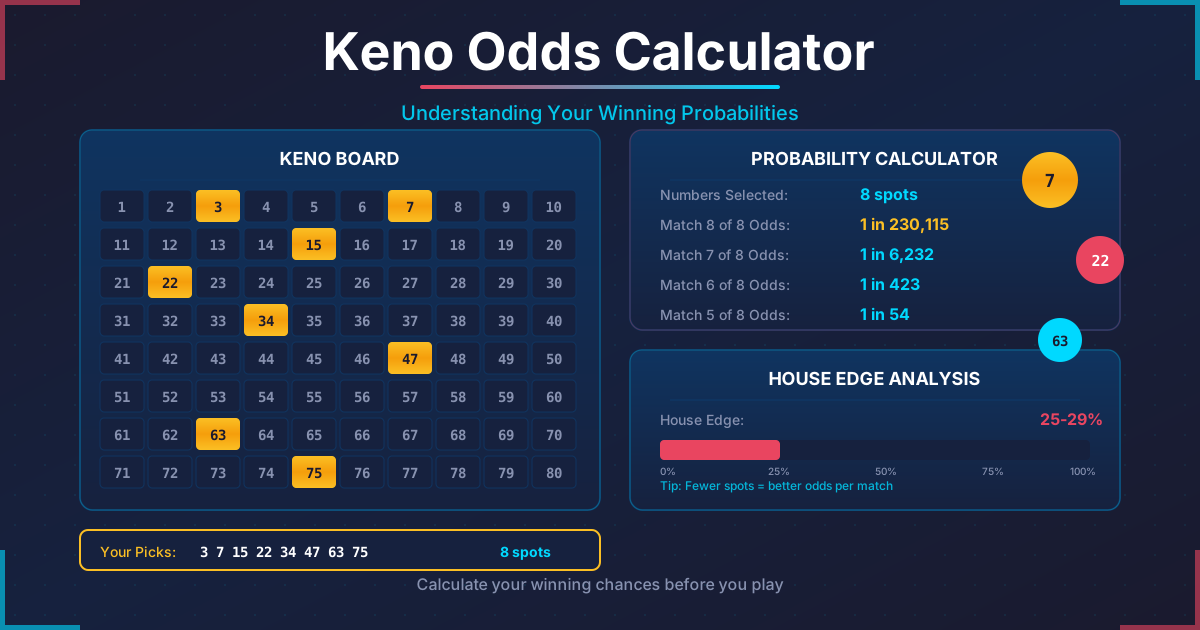
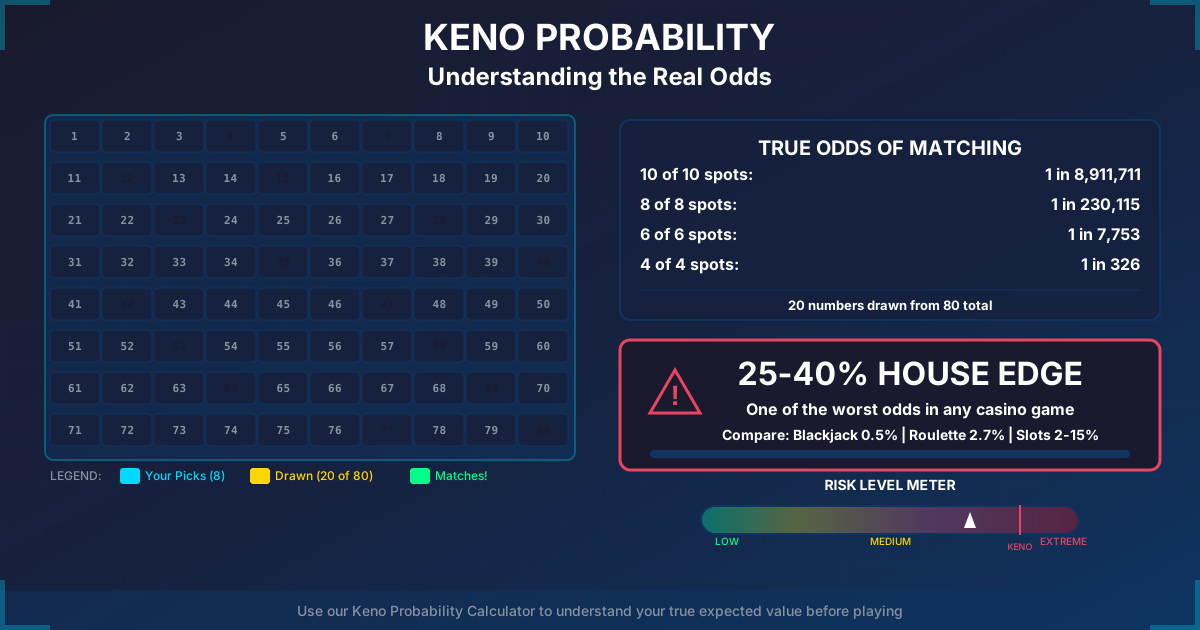
| Keno | Number selections derived from hash sequence | Low to Moderate |
| Limbo | Target multiplier from hash calculation | Low |
| Tower | Safe tile positions from seed combination | Low |
| Wheel | Wheel position from hash | Low |
Partially Compatible Games
| Game | How Provably Fair Applies | Limitations |
|---|---|---|
| Slots | Reel positions derived from hash | Complex -- many symbols and paylines make verification tedious |
| Blackjack | Card sequence derived from seed-based shuffle | Moderate -- requires tracking entire shoe |
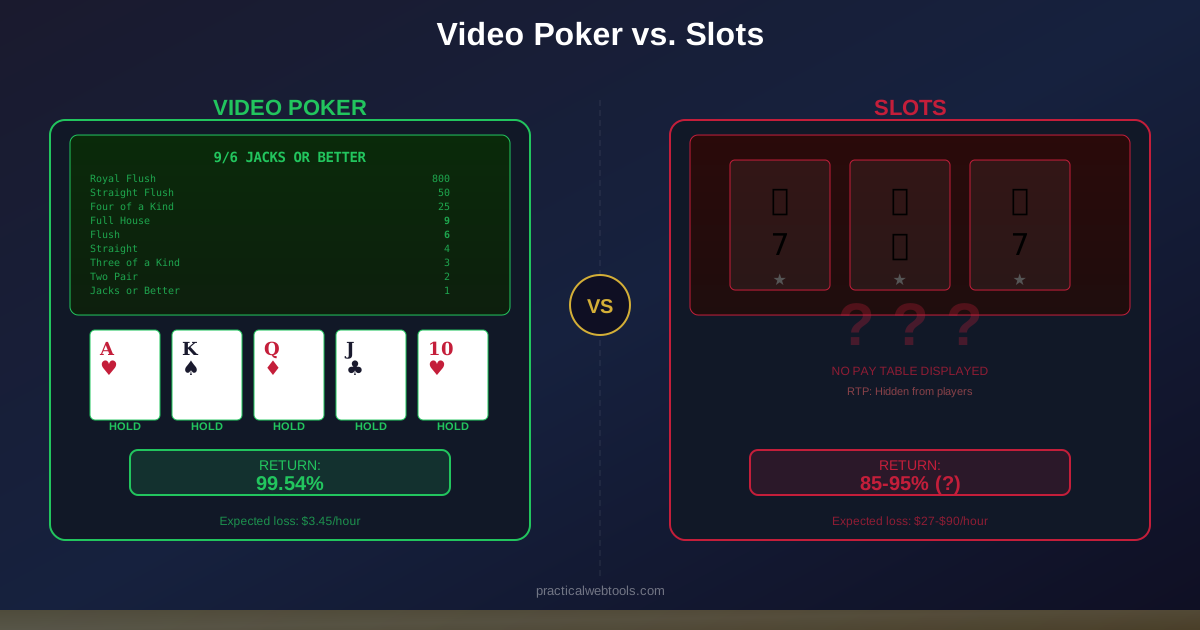
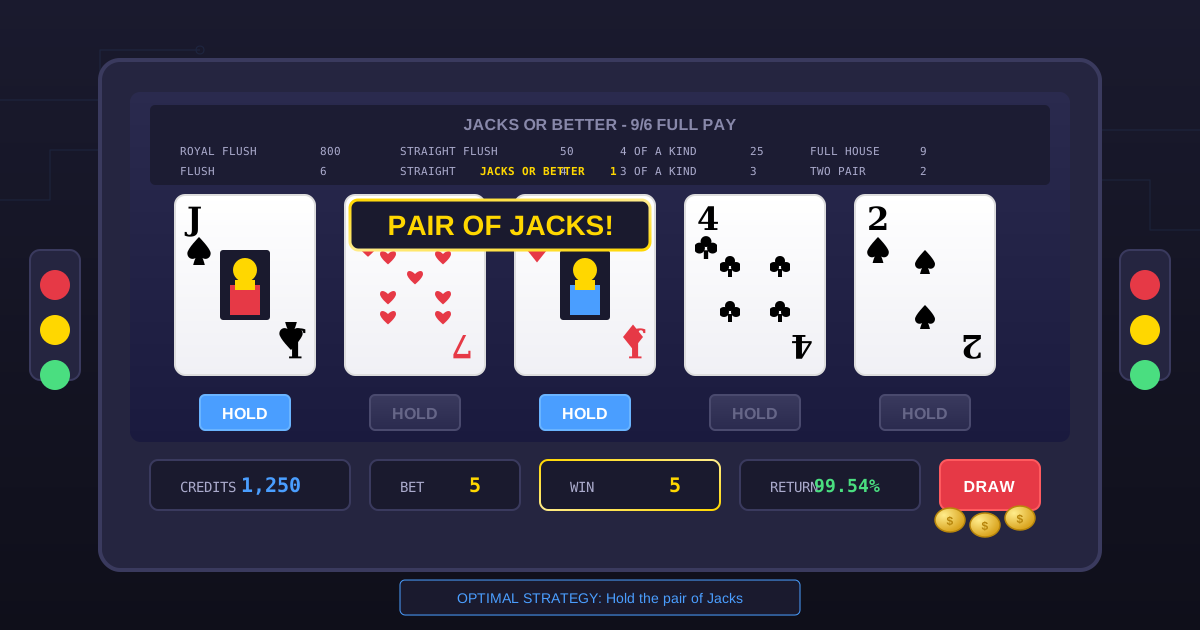
| Video Poker | Card deal and draw from seed-based shuffle | Moderate -- initial deal and draw cards both verifiable |
| Baccarat | Card sequence from seed | Moderate -- similar to blackjack |
| Roulette | Ball landing position from hash | Low -- but visual animation may not match computed result in some implementations |
Games with Limited Provably Fair Support
| Game | Challenge |
|---|---|
| Live dealer games | Physical card shuffles and roulette spins are difficult to integrate with cryptographic verification |
| Progressive jackpots | Jackpot triggers across multiple players add complexity |
| Multiplayer poker | Each player's hand must be hidden from others until showdown, complicating real-time verification |
| Skill-based games | Player decisions affect outcomes, making pre-commitment to a complete outcome sequence impractical |
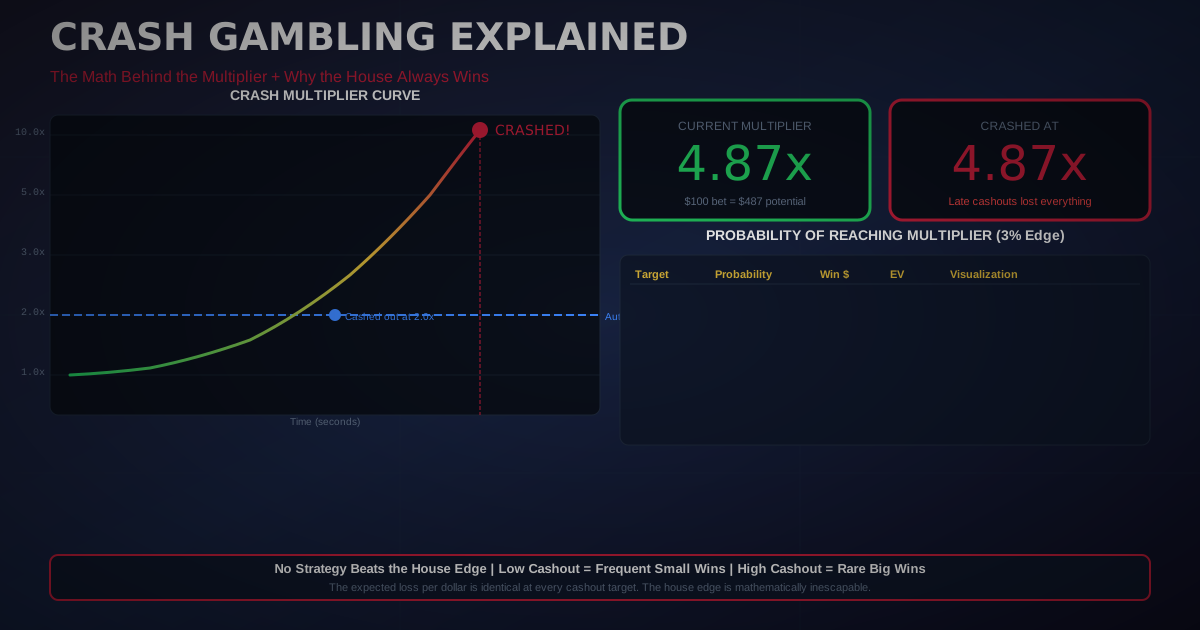
The Hash Chain System for Crash Games
Crash games deserve special attention because they use a particularly elegant provably fair system called a hash chain. Here is how it works:
- The casino generates a single seed.
- It hashes this seed to produce the result for game #10,000,000 (the last game in the chain).
- It then hashes that result to produce game #9,999,999, and so on, creating a chain of 10 million pre-determined results.
- The hash of the very first game in the chain (game #1) is published publicly before the system goes live.
- As each game is played, the casino reveals the hash for that game. Players can verify that hashing the revealed seed produces the hash from the previous game, confirming the chain's integrity.
This means the entire sequence of 10 million crash multipliers was determined before the first game was played, and the integrity of the chain can be verified after each game.
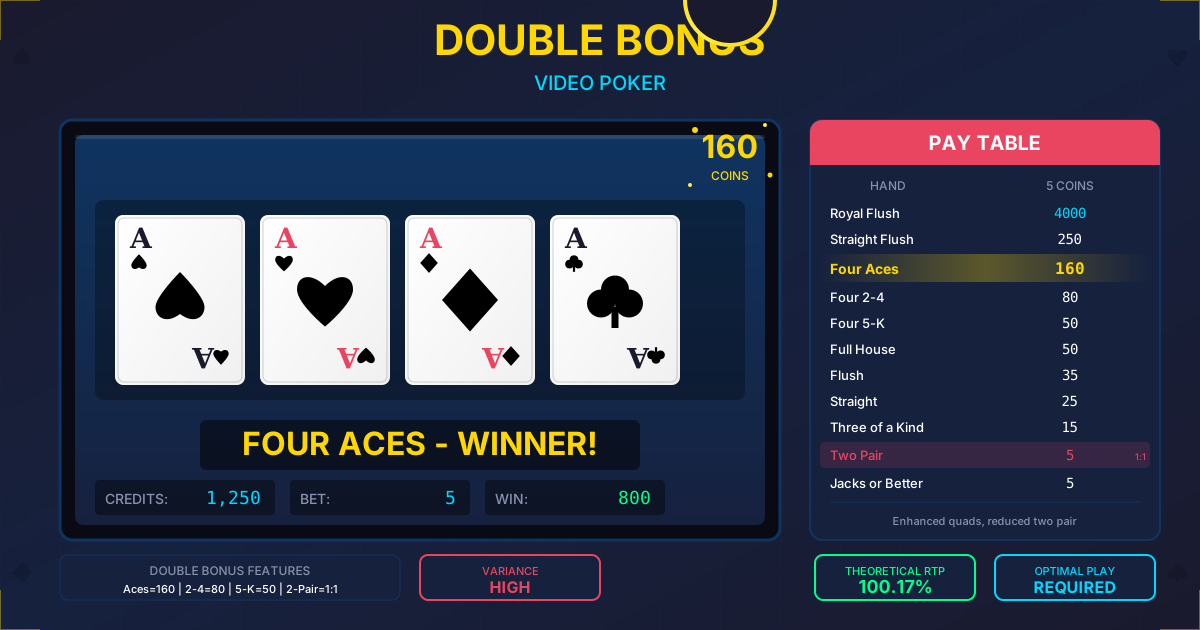
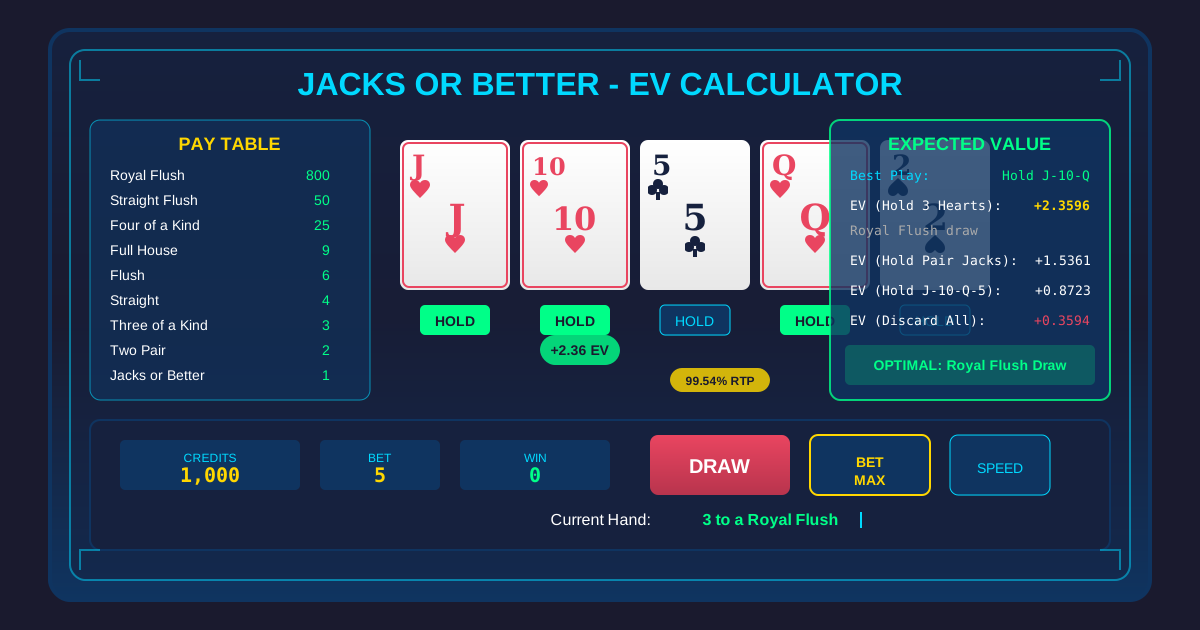
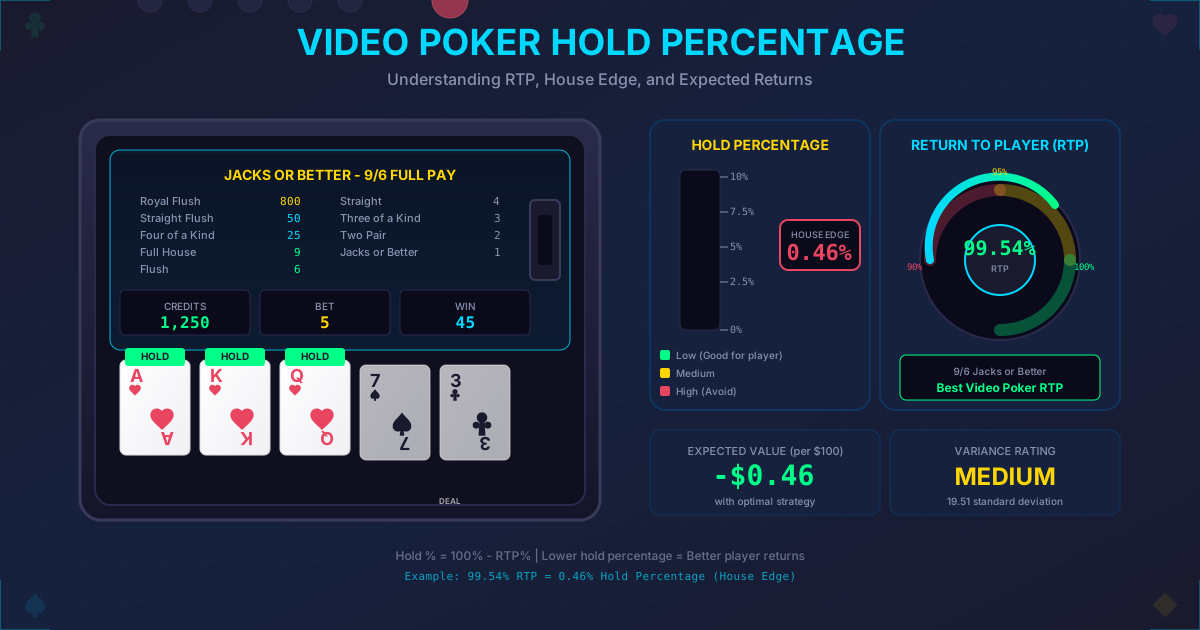
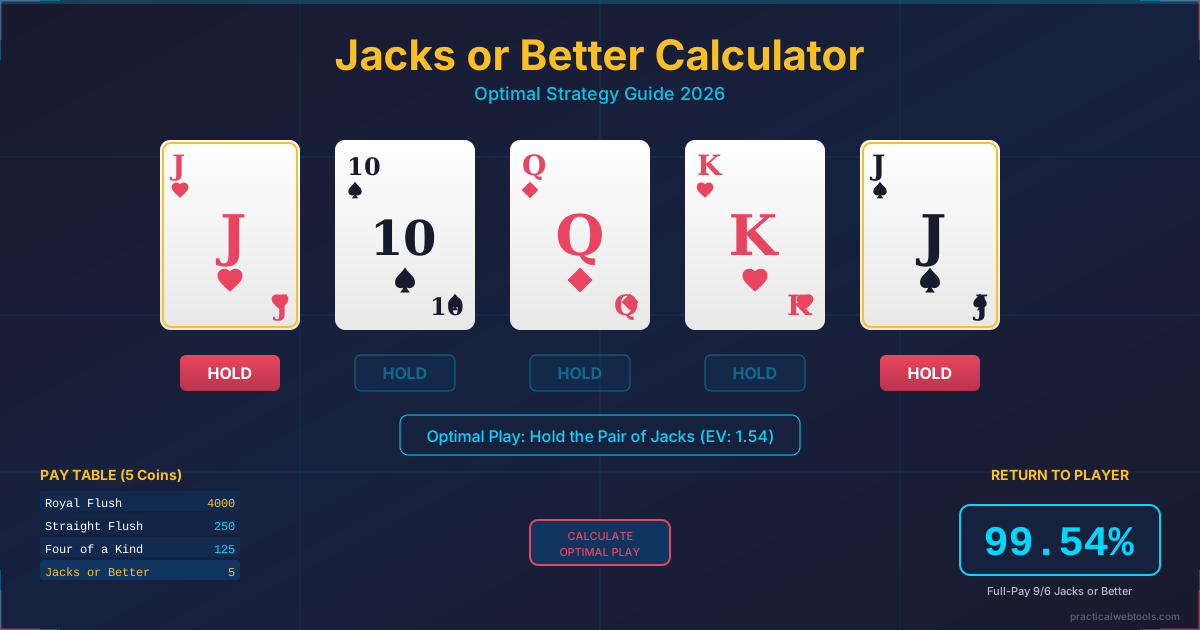
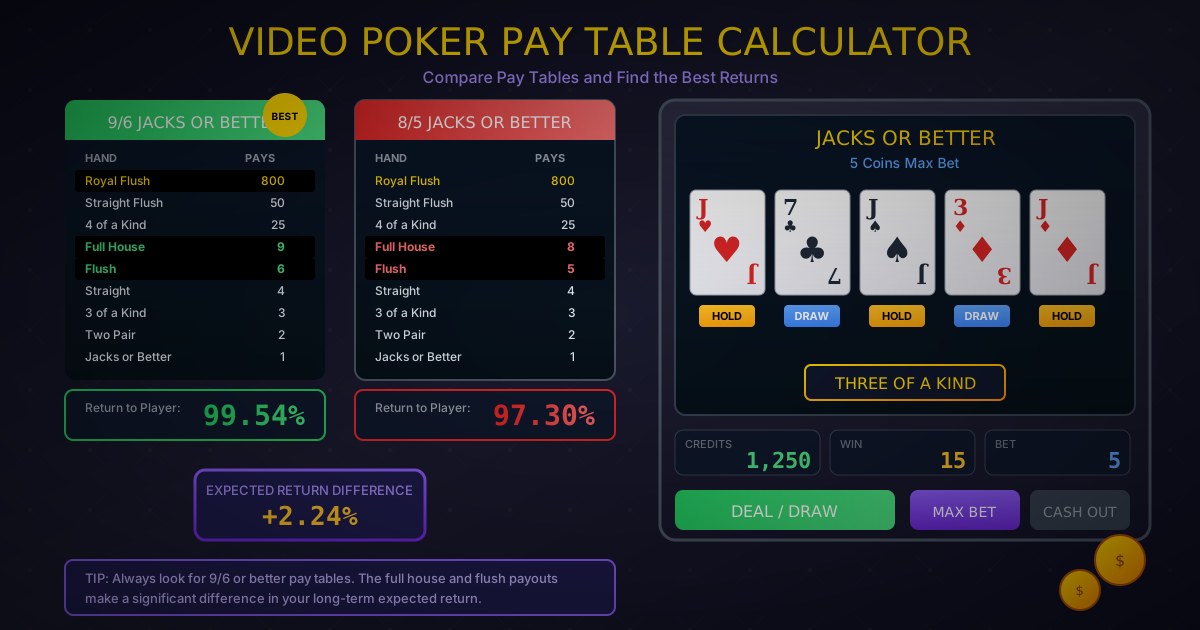
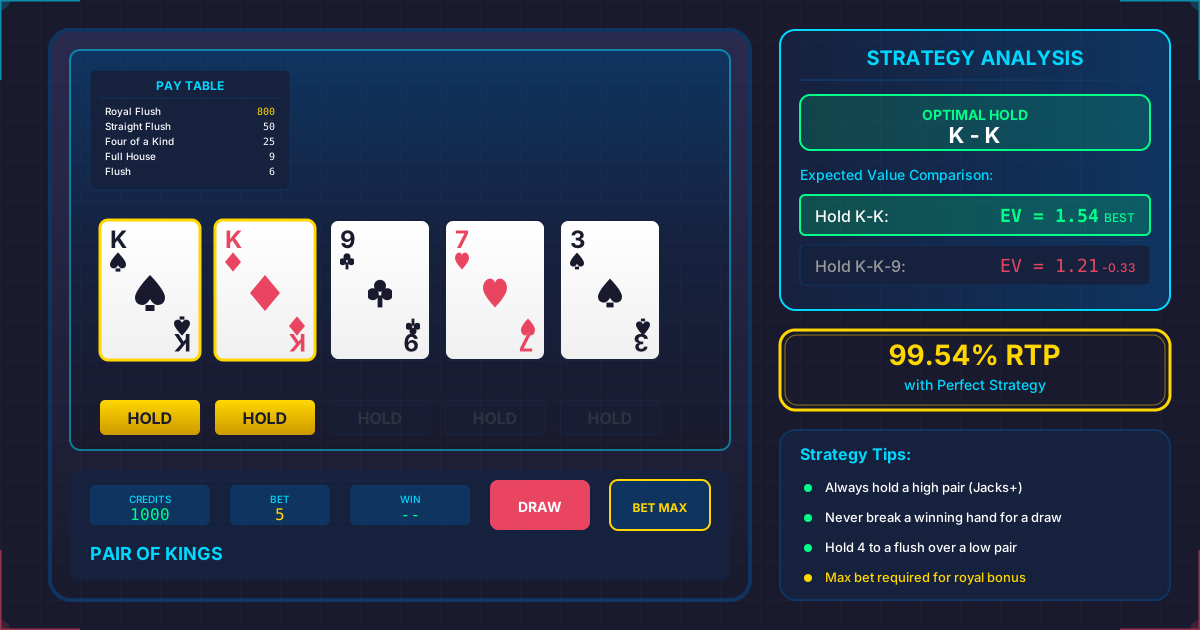
Check the house edge on video poker variants to find the best pay tables with our Video Poker EV Calculator.
How Does Provably Fair Compare to Traditional Casino Auditing?
Traditional online casinos rely on independent auditing firms to verify the fairness of their Random Number Generators. Provably fair offers a fundamentally different approach. Here is a detailed comparison.
Side-by-Side Comparison
| Feature | Traditional Auditing (GLI, eCOGRA) | Provably Fair (Blockchain) |
|---|---|---|
| Verification timing | Periodic (monthly, quarterly, annually) | Every single bet, in real time |
| Who can verify | Only the auditing firm | Any player, any time |
| Verification scope | Statistical sampling of RNG output | 100% of all outcomes |
| Trust model | Trust the auditor and the casino | Trust mathematics only |
| Manipulation window | Between audits, manipulation is theoretically possible | No manipulation window -- commitment is per-bet |
| Cost | $50,000-$500,000+ per year for the casino | Built into the platform -- minimal ongoing cost |
| Regulatory acceptance | Universally accepted by gambling regulators | Limited regulatory recognition in 2026 |
| Player effort | None -- player trusts the badge | Some technical knowledge helpful (but tools simplify this) |
| Proof of fairness | Audit certificate (statistical confidence) | Cryptographic proof (mathematical certainty) |
| Transparency | Audit reports may be summarized or delayed | Full transparency by design |
Strengths of Traditional Auditing
Traditional auditing is not without merit:
- Regulatory compliance: Licensed casinos in jurisdictions like the UK, Malta, and New Jersey are required to use certified RNGs and undergo regular auditing. This legal framework provides consumer protection and dispute resolution mechanisms.
- Comprehensive scope: Auditors evaluate not just the RNG but also the game logic, payout percentages, and software integrity.
- Accessibility: Players do not need any technical knowledge to benefit from audited fairness.
- Track record: Major auditing firms have been operating for decades with established reputations.
Strengths of Provably Fair
- Mathematical certainty: Rather than statistical confidence from sampling, provably fair provides cryptographic proof for every single bet.
- Real-time verification: No waiting for audit reports. Every outcome can be verified immediately.
- Eliminates trust: You do not need to trust the casino, the auditor, or anyone else. The mathematics speak for themselves.
- Tamper detection: Any manipulation is immediately detectable by any player.
The Hybrid Future
The most trustworthy gambling platforms in 2026 are beginning to combine both approaches: provably fair cryptographic verification for individual bet outcomes, plus traditional regulatory licensing and auditing for overall business practices, responsible gambling compliance, and financial solvency.
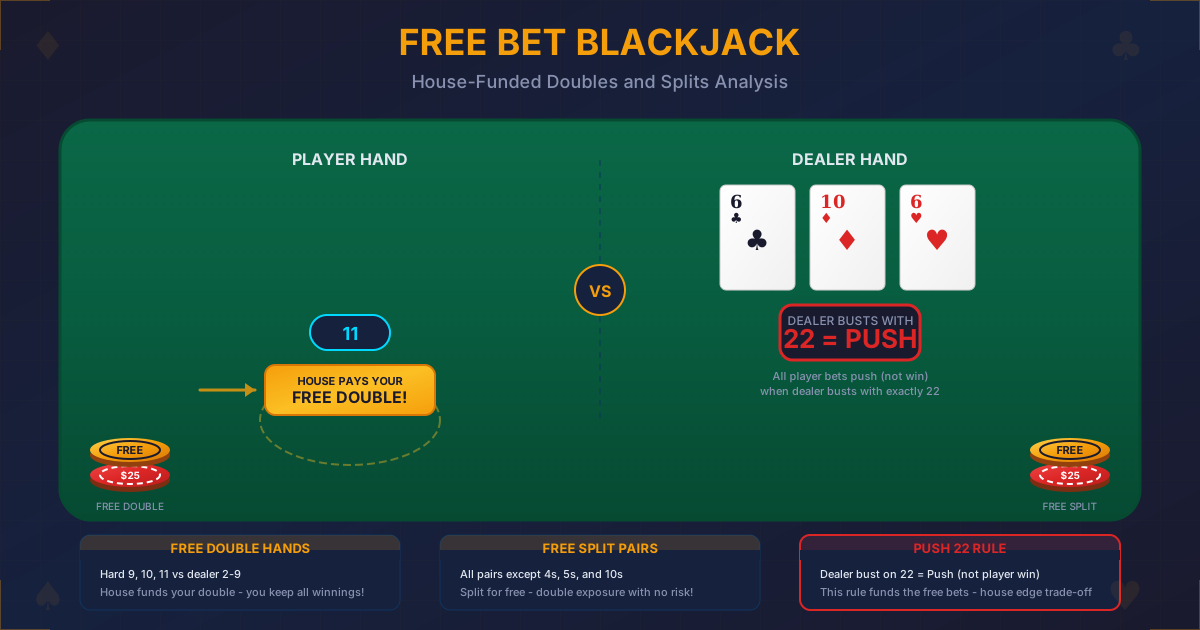
Understand the true house edge in blackjack under different rule sets with our Blackjack House Edge Calculator.
What Are Smart Contract Casinos and How Do They Work?
Smart contract casinos represent the next evolution of provably fair gambling. Instead of trusting a centralized operator to implement the provably fair algorithm correctly, the entire game logic runs on a blockchain through self-executing smart contracts.
How Smart Contract Casinos Differ
| Feature | Traditional Provably Fair Casino | Smart Contract Casino |
|---|---|---|
| Game logic | Runs on the casino's server | Runs on the blockchain |
| Outcome determination | Casino's server computes, player verifies | Smart contract computes on-chain |
| Funds custody | Casino holds player deposits | Smart contract holds funds in escrow |
| Payout execution | Casino initiates payout | Smart contract automatically pays winners |
| Code transparency | Algorithm documented but code often closed-source | Smart contract code is publicly auditable on the blockchain |
| Operator involvement | Operator runs the server, manages the platform | Operator deploys the contract but cannot alter it afterward |
| Manipulation risk | Low (provably fair prevents outcome manipulation) | Very low (no server-side manipulation possible) |
| Speed | Fast (server-side computation) | Slower (blockchain confirmation required) |
| Cost per bet | Minimal | Gas fees (variable, can be significant on some chains) |
How a Smart Contract Casino Game Works
- The player connects their crypto wallet (MetaMask, Phantom, etc.) to the smart contract casino.
- The player sends their wager to the smart contract along with their client seed.
- The smart contract uses a verifiable random function (VRF) -- often Chainlink VRF on Ethereum-compatible chains -- to generate a provably random outcome.
- The smart contract determines the result based on the random number and the game rules encoded in the contract.
- If the player wins, the smart contract automatically sends the payout to their wallet.
- The entire transaction is recorded on the blockchain and can be independently verified by anyone.
Verifiable Random Functions (VRFs)
VRFs are cryptographic functions that produce a random output along with a proof that the output was generated correctly. Chainlink VRF, the most widely used in gambling applications, works as follows:
- The smart contract requests a random number from the Chainlink VRF oracle.
- The oracle generates a random number using its private key and the request parameters.
- The oracle provides both the random number and a cryptographic proof to the smart contract.
- The smart contract verifies the proof on-chain before using the random number.
- If the proof is invalid, the random number is rejected.
This eliminates the need for a server seed entirely -- the randomness comes from a decentralized oracle network, and the proof verification happens on the blockchain where everyone can see it.
Current Limitations
Smart contract casinos face several challenges in 2026:
- Gas fees: On Ethereum mainnet, gas fees can make small wagers impractical. Layer 2 solutions (Arbitrum, Optimism, Base) and alternative chains (Solana, Avalanche) help, but fees still exist.
- Speed: Blockchain confirmation times (2-15 seconds depending on the chain) make fast-paced games less fluid than centralized alternatives.
- Game variety: Complex games (live dealer, sophisticated slots with many features) are difficult to implement entirely on-chain.
- User experience: Connecting wallets, managing gas, and understanding blockchain transactions is still a barrier for many players.
- Regulatory uncertainty: Most gambling regulators do not have frameworks for licensing smart contract casinos.
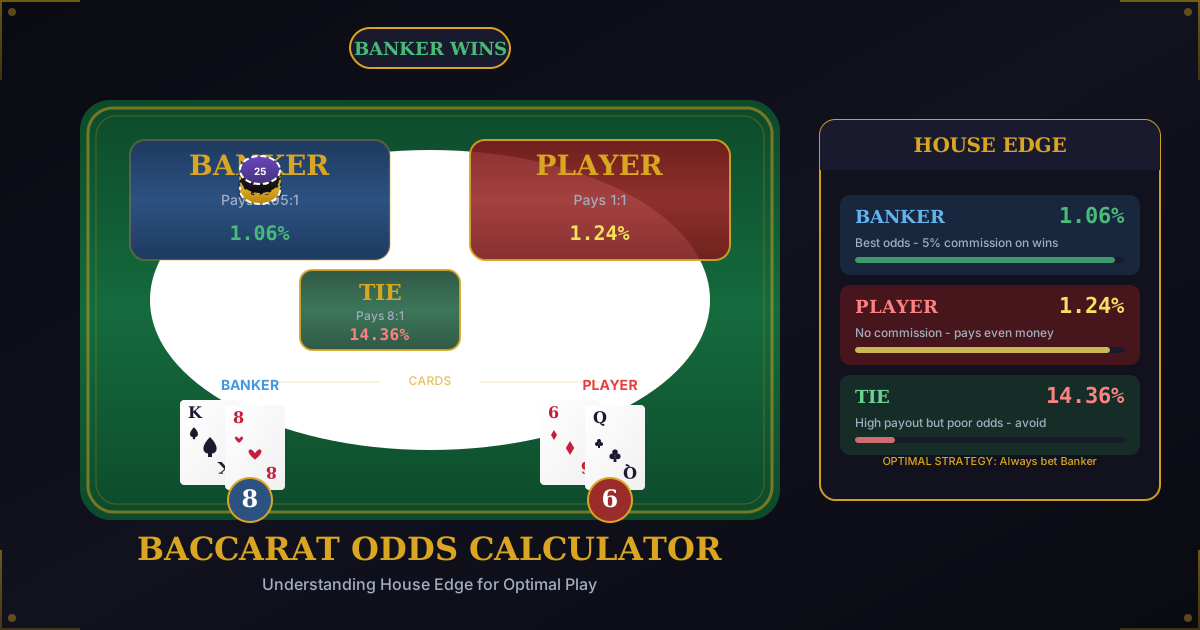
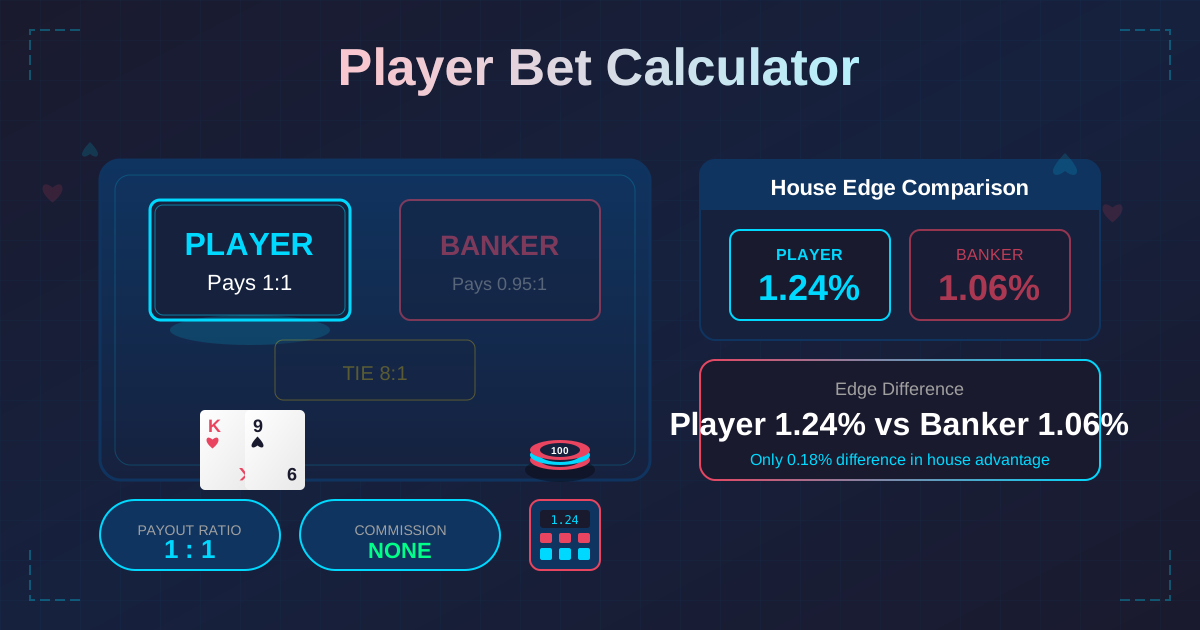
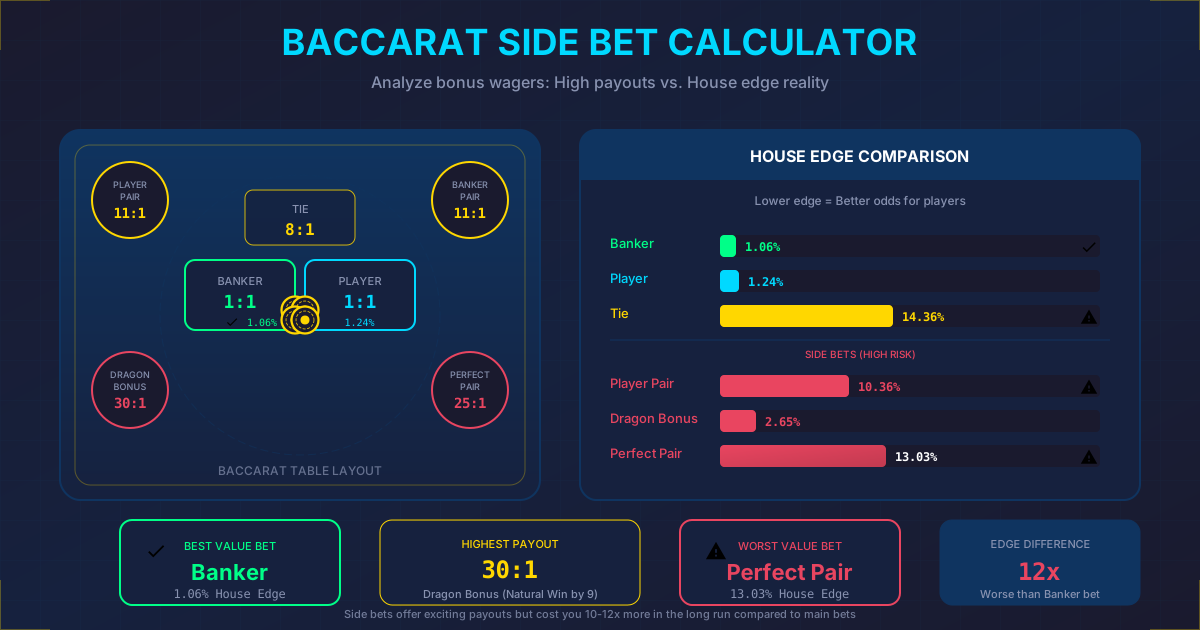
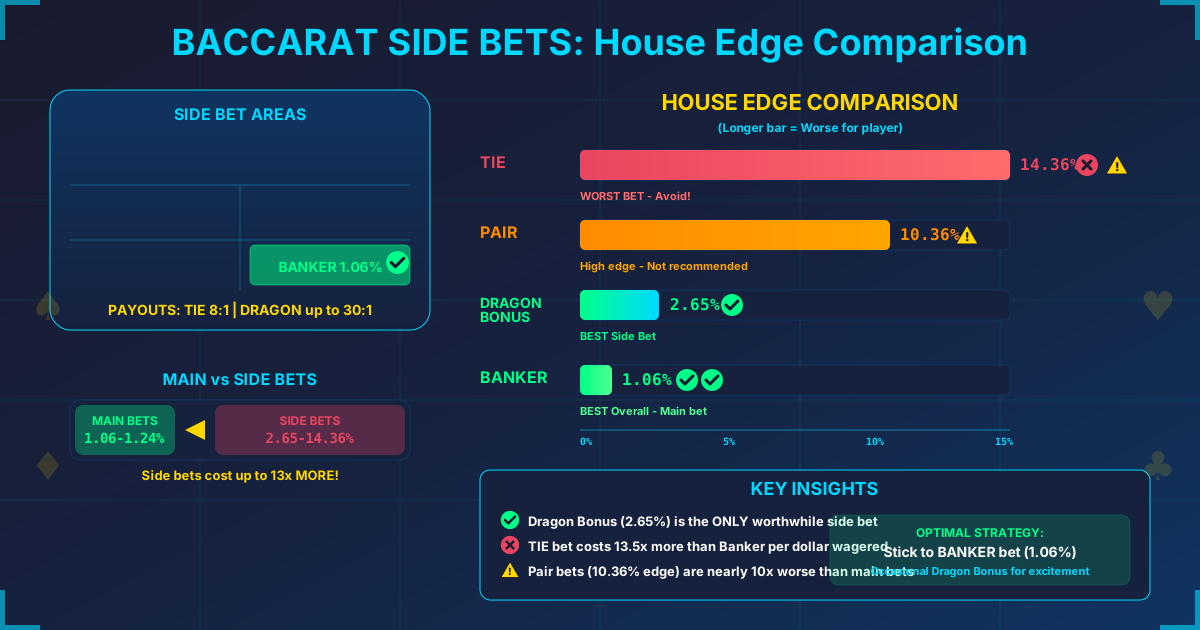
Compare baccarat house edges across different bet types with our Baccarat House Edge Calculator.
What Does Provably Fair NOT Guarantee?
This is a critical section. Many players misunderstand what provably fair technology actually proves. Understanding its limitations is as important as understanding its strengths.
What Provably Fair Proves
- The outcome of each individual bet was determined before you placed your wager.
- The casino did not change the outcome after seeing your bet.
- The outcome matches the committed server seed combined with your client seed and nonce.
- The game result was not manipulated on a per-bet basis.
What Provably Fair Does NOT Prove
| Common Misconception | Reality |
|---|---|
| "The house edge is fair" | Provably fair only verifies randomness, not the house edge. A provably fair dice game could have a 1% or a 50% house edge -- both are "provably fair" in terms of outcome integrity. |
| "The payout table is accurate" | A provably fair slot machine generates verifiable random numbers, but the payout table mapping those numbers to outcomes could still be unfavorable. |
| "The casino will pay you" | Provably fair does not guarantee the casino has sufficient funds to pay your winnings or that they will process your withdrawal. (Smart contract casinos address this.) |
| "The casino is legitimate" | A provably fair algorithm can be implemented by a scam casino. The algorithm only ensures fair randomness -- it does not verify the operator's identity, licensing, or business practices. |
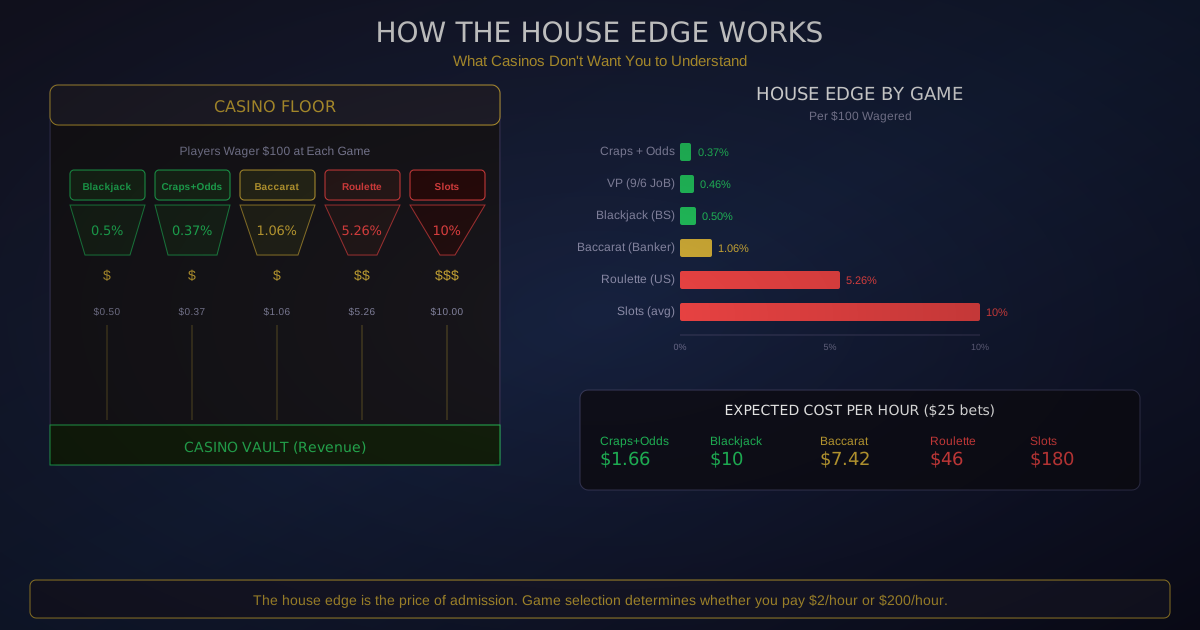
| "You will win in the long run" | Provably fair games still have a house edge. Over time, the house edge ensures the casino profits. Provably fair simply guarantees the house edge is the stated one, not that it does not exist. |
| "All games on the platform are fair" | Provably fair verification only applies to games that implement the system. Other games on the same platform may use traditional RNGs. |
| "The RTP is as advertised" | The Return to Player percentage should be verifiable through provably fair if you have enough data, but a small sample of bets may deviate significantly from the theoretical RTP. |
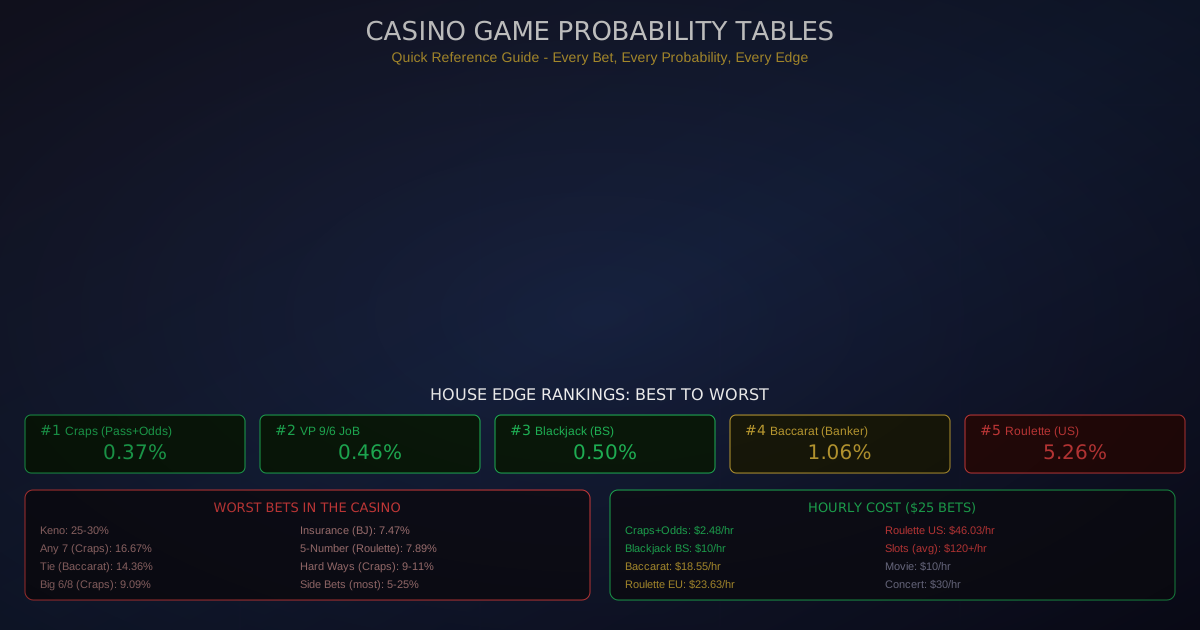
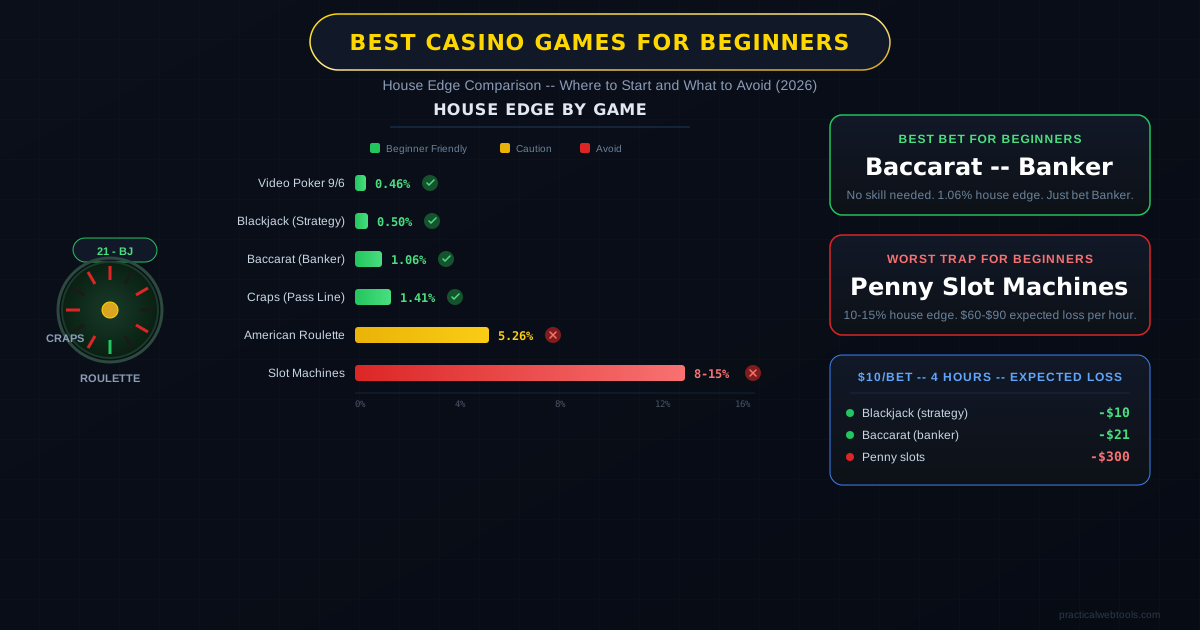
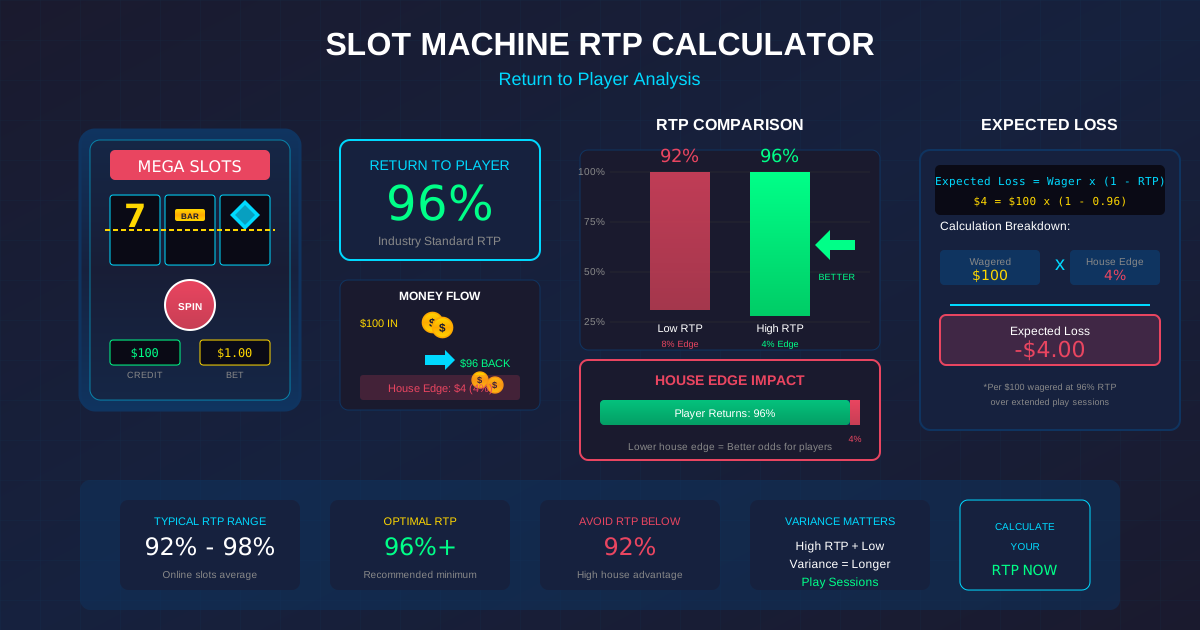
The House Edge Still Matters
Even in a perfectly provably fair game, the house edge determines your long-term expected losses. For example:
| Provably Fair Game | Typical House Edge | Expected Loss per $1,000 Wagered |
|---|---|---|
| Dice (1% edge) | 1.00% | $10 |
| Crash (1% edge) | 1.00% | $10 |
| Plinko (varies) | 1-3% | $10-$30 |
| Mines (varies by risk) | 1-3% | $10-$30 |
| Provably fair slots | 2-5% | $20-$50 |
| Provably fair blackjack | 0.5-2% | $5-$20 |
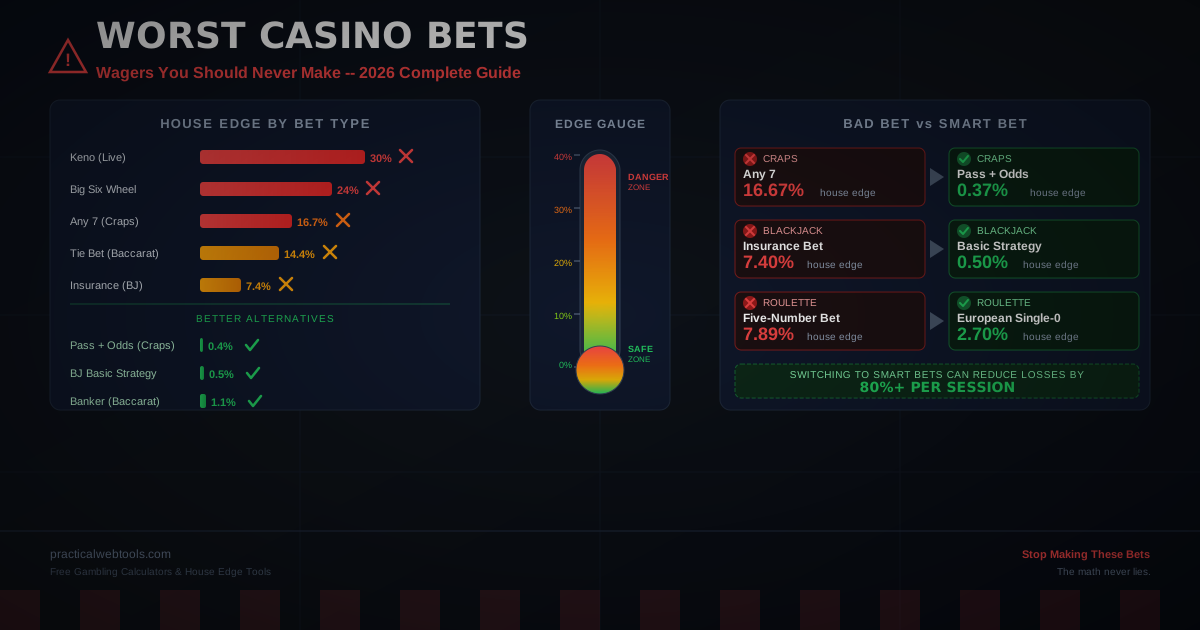
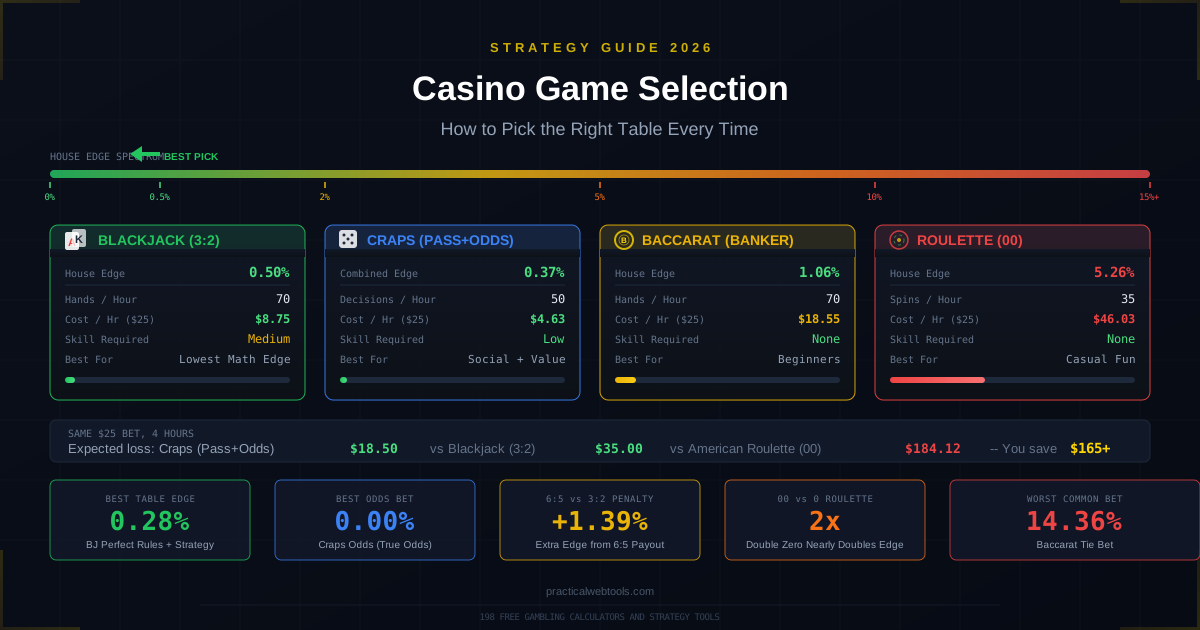
Provably fair guarantees that these house edges are accurately applied -- but it does not eliminate them. The house always has a mathematical edge, and no verification system changes that fundamental reality.
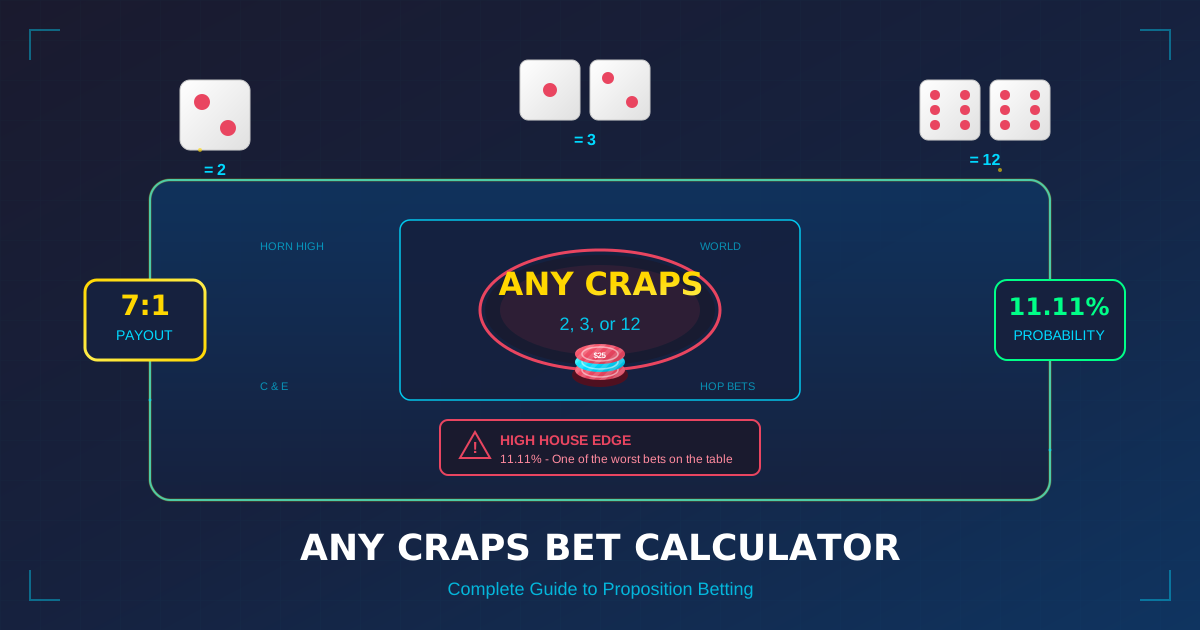
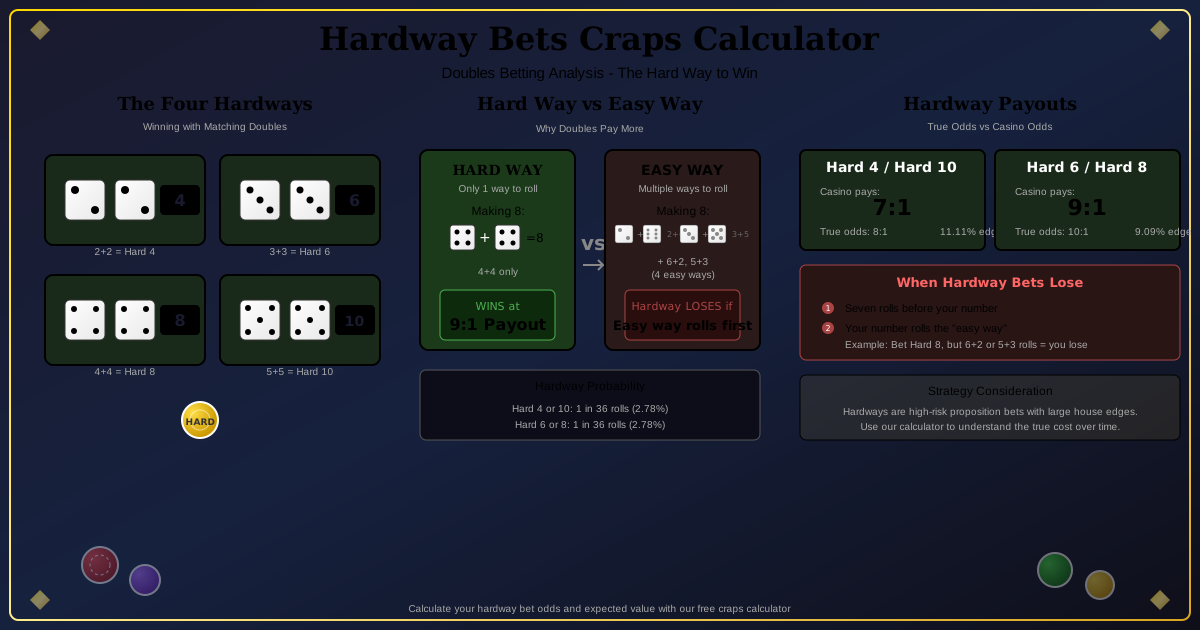
Calculate the house edge on any craps bet with our Craps House Edge Calculator to understand your expected cost of play.
How Do You Evaluate a Provably Fair Casino?
Not all provably fair implementations are created equal. Here is a comprehensive checklist for evaluating whether a provably fair casino is trustworthy.
Technical Evaluation Criteria
| Criterion | What to Look For | Red Flag |
|---|---|---|
| Algorithm documentation | Clear, detailed explanation of the provably fair algorithm used | Vague descriptions or missing documentation |
| Hash function | SHA-256 or HMAC-SHA256 (industry standard) | Obscure or proprietary hash functions |
| Client seed control | Player can set their own client seed | Client seed is fixed or hidden |
| Server seed rotation | Clear process for rotating server seeds with hash commitment | Seeds never rotate or rotation is opaque |
| Verification tools | Built-in verifier plus ability to verify independently | No built-in verifier or independent verification blocked |
| Source code availability | Open-source game logic (ideal) or detailed algorithm documentation | Completely closed-source with no documentation |
| Third-party audits | Provably fair implementation reviewed by independent security firms | No independent review |
| Historical verification | Past bets remain verifiable after the session ends | Verification data deleted after session |
| Nonce transparency | Nonce is visible and sequential | Nonce is hidden or can be manipulated by the casino |
Business and Operational Evaluation
Technical fairness is necessary but not sufficient. Also evaluate:
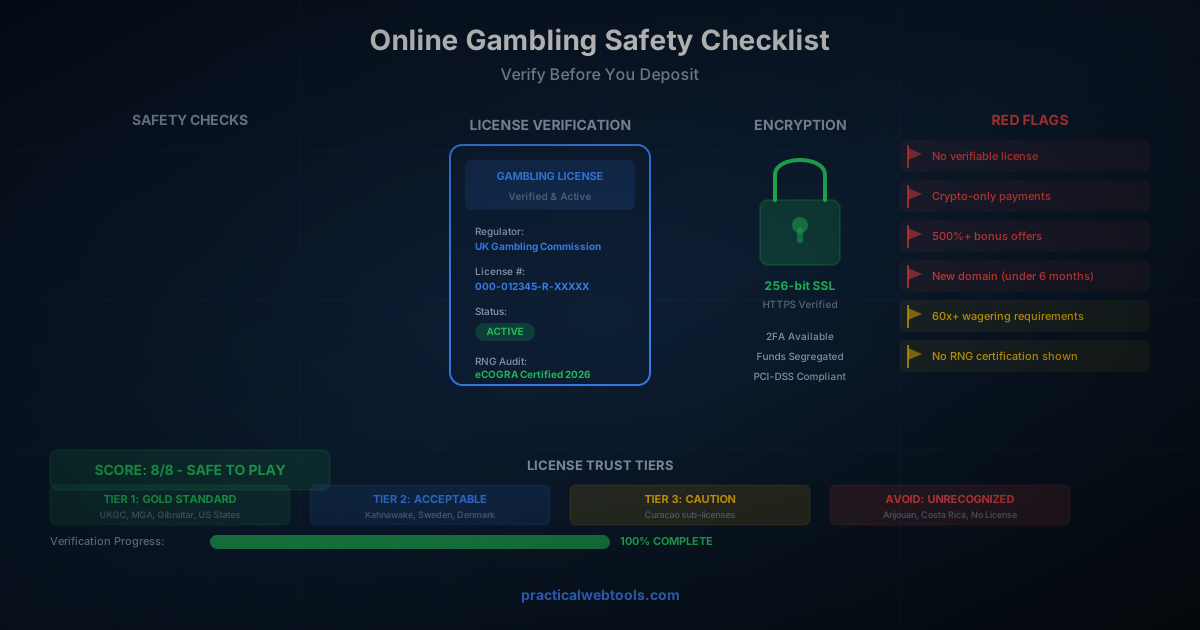
- Licensing and jurisdiction: Is the casino licensed by a reputable gambling authority? (Curacao is common for crypto casinos but offers minimal player protection. Malta, Gibraltar, and Isle of Man are stronger.)
- Withdrawal history: Do players report timely withdrawal processing? Check independent forums and review sites.
- Responsible gambling features: Does the platform offer deposit limits, loss limits, self-exclusion, and reality checks?
- Customer support: Is responsive customer support available?
- Financial reserves: Does the casino demonstrate sufficient reserves to pay large wins? (Smart contract casinos with on-chain reserves are most transparent here.)
- Track record: How long has the casino been operating? New platforms carry higher risk regardless of provably fair implementation.
Provably Fair Casino Comparison (2026 Landscape)
| Platform Type | Provably Fair Quality | Typical House Edge | Regulatory Status | Withdrawal Speed |
|---|---|---|---|---|
| Major crypto casinos (Stake-like) | Strong implementation, well-documented | 1-3% | Curacao or similar | Crypto: minutes; Fiat: 1-3 days |
| Smart contract casinos | Strongest -- fully on-chain | 1-2% | Mostly unregulated | Instant (on-chain) |
| Hybrid crypto/fiat casinos | Varies widely | 2-5% | Varies | Crypto: hours; Fiat: 3-7 days |
| Traditional casinos adding provably fair | Often limited implementation | 2-5% | Fully regulated | 1-7 days |
| Unverified "provably fair" claims | Potentially fake | Unknown | Often unlicensed | Unreliable |
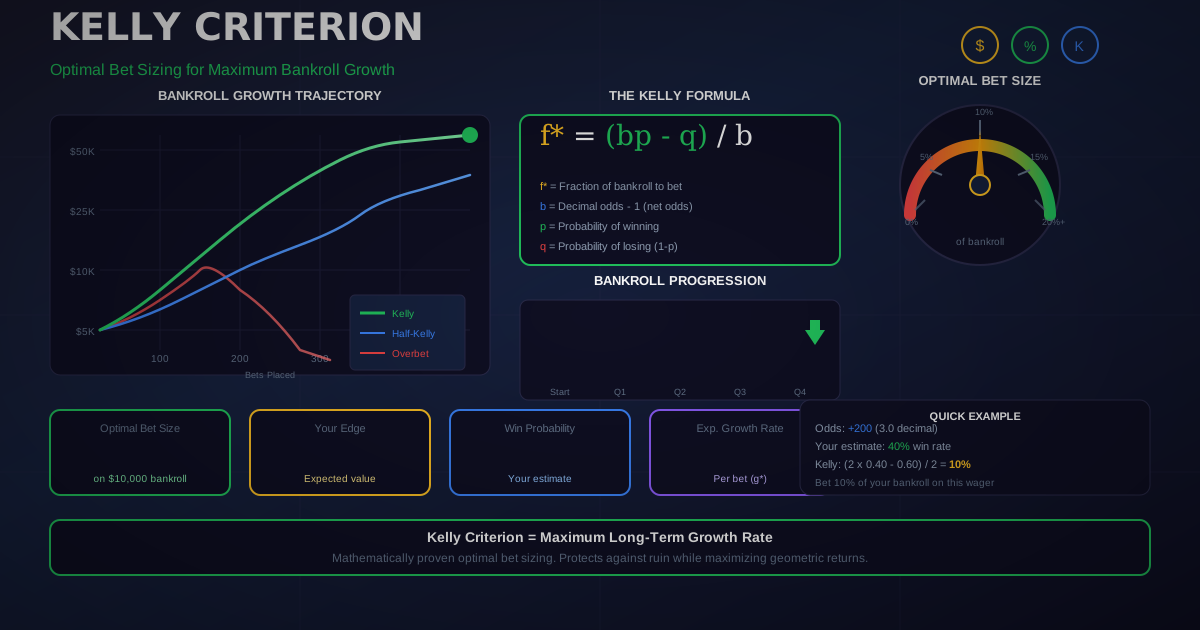
Use our Kelly Criterion Calculator to determine optimal bet sizing even at provably fair casinos -- the house edge still demands bankroll discipline.
How Does Provably Fair Handle Multi-Player Games?
Multi-player games like poker present unique challenges for provably fair systems because information must be selectively hidden -- each player should see only their own cards, not their opponents'.
The Challenge
In a standard provably fair system, the outcome is revealed after the bet resolves and can be fully verified. But in poker:
- Cards must be dealt face-down (hidden from opponents)
- The full deal cannot be revealed until the hand is complete
- Players who fold should not learn what cards they would have received
- The server must prevent collusion between players
Mental Poker Protocols
The cryptographic solution is a class of algorithms called "mental poker" protocols. These allow fair card dealing without a trusted third party:
- Each player generates a key pair (public and private keys).
- The deck is encrypted by the server using the server's key.
- Each card is additionally encrypted by each player using their individual keys.
- To deal a card to Player A, all other players and the server remove their encryption layers from that card, leaving only Player A's encryption -- which only Player A can decrypt.
- At showdown, all encryption keys are revealed, and the entire deal can be verified.
This is computationally expensive and adds latency, which is why fully provably fair multi-player poker remains rare in 2026. Most crypto poker platforms use a hybrid approach: provably fair single-player games with traditional server-managed multi-player poker.
Alternatives for Multi-Player Fairness
| Approach | How It Works | Trust Level |
|---|---|---|
| Mental poker protocol | Full cryptographic card dealing | Highest -- no trust required |
| Server-managed with post-hand verification | Server deals cards, reveals server seed after hand completes | Moderate -- must trust server during hand |
| Blockchain-recorded hands | All actions recorded on-chain for post-hoc audit | Moderate -- prevents retroactive changes |
| Multi-party computation (MPC) | Shared computation ensures no single party controls the deck | High -- cutting-edge, limited deployment |
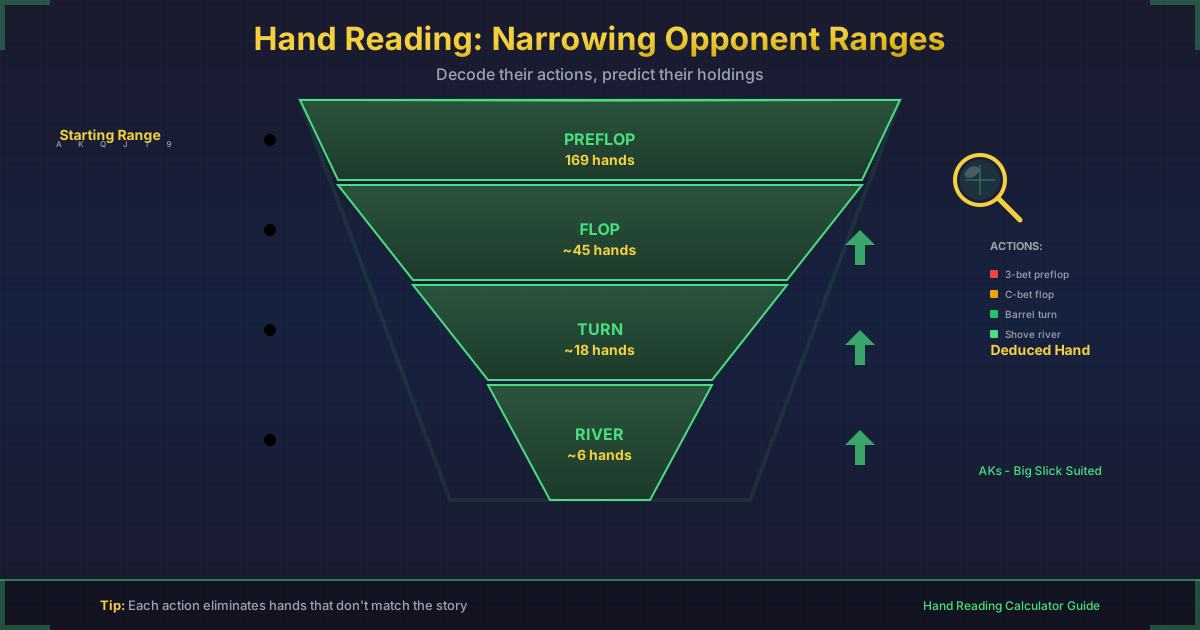
Calculate your poker equity in any situation with our Poker Equity Calculator.
What Are the Risks and Limitations of Provably Fair Gambling?
Despite its advantages, provably fair gambling is not a silver bullet. Players should be aware of several important limitations and risks.
Technical Limitations
-
Complexity barrier: Most players do not verify their bets. Research from blockchain analytics firms suggests that fewer than 5% of provably fair casino users ever verify a single bet. This means the deterrent effect depends on the possibility of verification, not the actuality.
-
Algorithm errors: The provably fair algorithm itself could contain bugs. If the implementation incorrectly maps hash outputs to game outcomes, the game could be unfair even though individual outcomes are "verifiable." This is why independent code audits matter.
-
Seed generation quality: If the casino uses a weak random number generator to create server seeds (e.g., using a predictable system clock instead of a cryptographically secure source), the seeds could be predictable despite being properly hashed.
-
Client seed manipulation: On some platforms, the default client seed is generated by JavaScript running in the player's browser -- which is served by the casino's website. A malicious casino could theoretically serve JavaScript that generates a client seed it already knows.
-
Selective revealing: A dishonest casino could generate multiple server seeds, hash all of them, and then selectively reveal the one that produces the worst outcome for the player. The hash chain system used by crash games prevents this, but simpler implementations may be vulnerable.
Operational Risks
| Risk | Description | Mitigation |
|---|---|---|
| Casino insolvency | The casino runs out of funds and cannot pay winners | Use smart contract casinos with on-chain reserves |
| Exit scam | The casino disappears with player funds | Only deposit what you can afford to lose; use platforms with long track records |
| Regulatory action | Government shuts down the platform, freezing funds | Use platforms with clear jurisdictional compliance |
| Smart contract bugs | A bug in the smart contract could lock or drain funds | Use audited contracts from reputable firms (Certik, OpenZeppelin, Trail of Bits) |
| Network attacks | 51% attacks on smaller blockchains could enable transaction reversal | Use established chains (Ethereum, Bitcoin) rather than obscure ones |
The Psychological Trap
Perhaps the most significant risk is psychological. Provably fair gives players a sense of security that can paradoxically encourage riskier behavior:
- "The game is provably fair, so I know I am not being cheated" can become "The game is provably fair, so I should bet more."
- The mathematical certainty of fairness does not change the mathematical certainty of the house edge.
- Players who feel the game is "trustworthy" may gamble longer and lose more than they otherwise would.
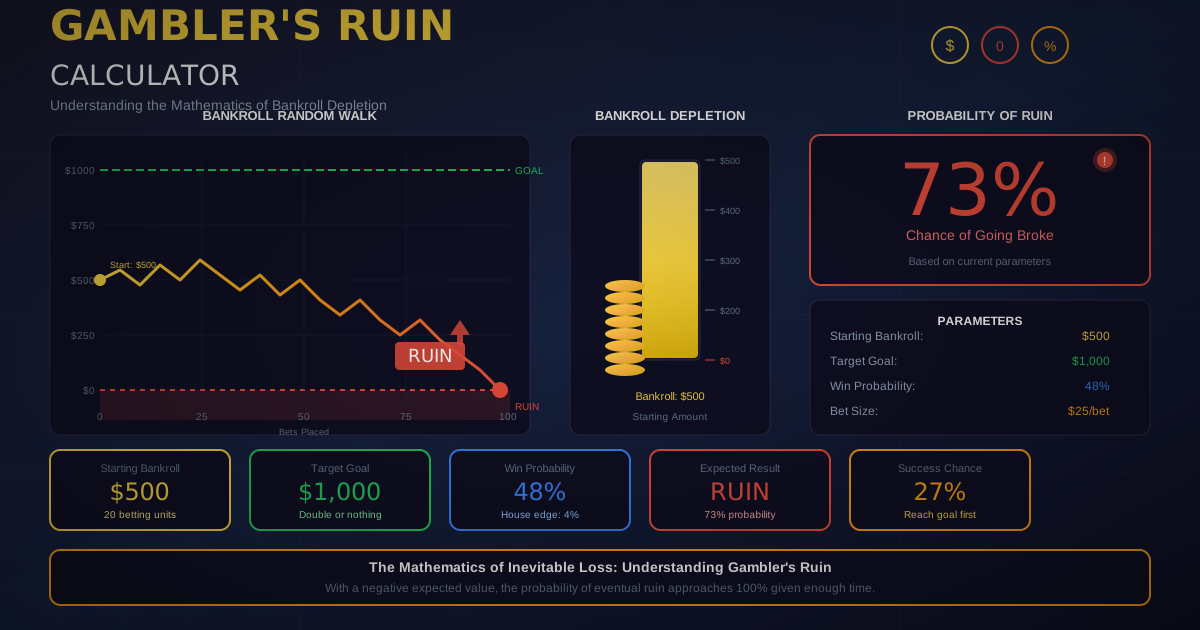
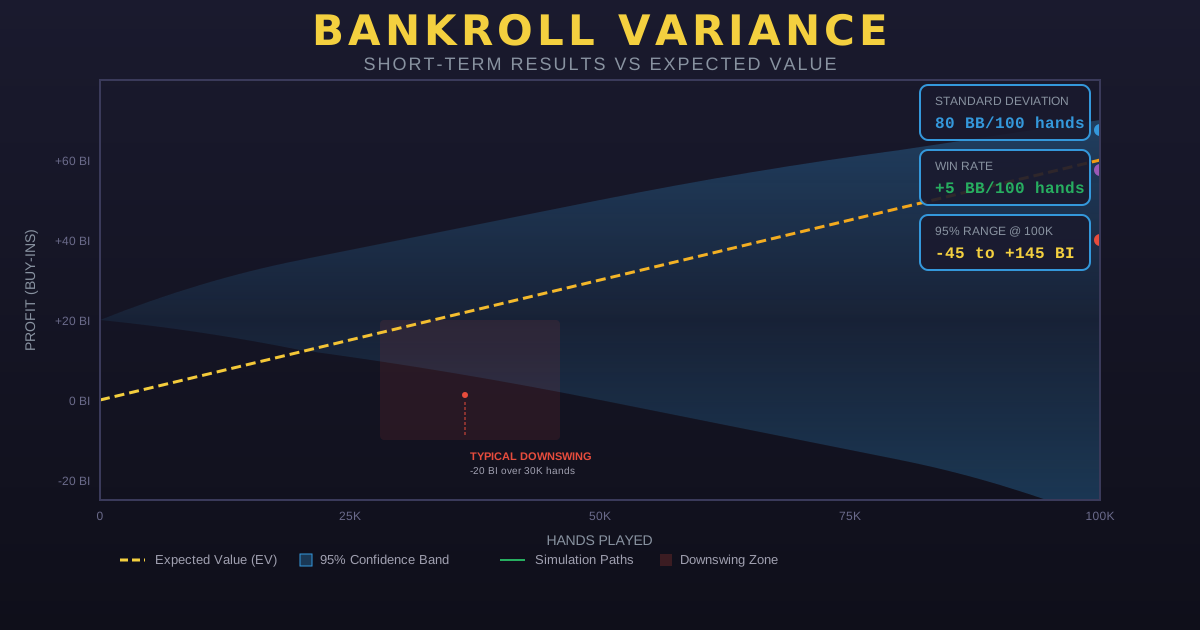
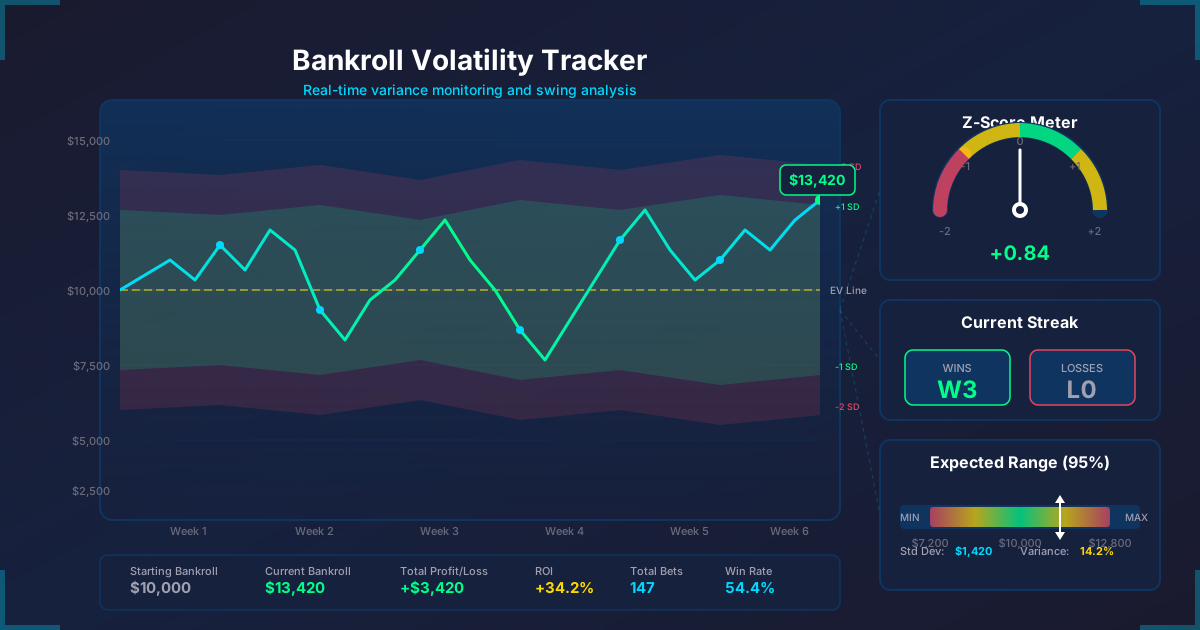
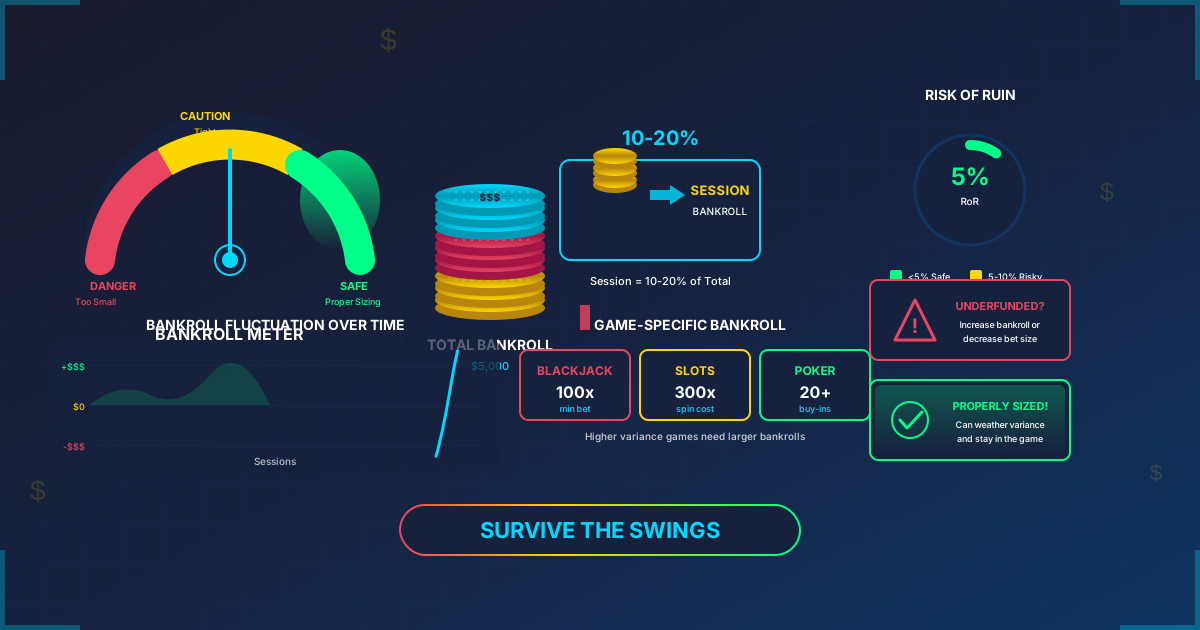
Monitor your bankroll health and understand your risk of ruin with our Bankroll Volatility Tracker.
How Is Provably Fair Technology Evolving in 2026?
The provably fair landscape is advancing rapidly, with several important developments reshaping how cryptographic fairness is implemented and verified.
Zero-Knowledge Proofs
Zero-knowledge proofs (ZKPs) allow one party to prove something is true without revealing any underlying information. In gambling applications, ZKPs could enable:
- A casino to prove it is using a specific algorithm without revealing the algorithm's source code
- A player to prove they have a winning hand without revealing the hand to other players
- A platform to prove its total reserves exceed its liabilities without revealing individual account balances
ZK-rollups (Layer 2 scaling solutions that use zero-knowledge proofs) are already being used by some gambling platforms to reduce gas fees while maintaining on-chain verifiability.
Cross-Chain Verification
As gambling platforms operate across multiple blockchains, cross-chain verification protocols allow provably fair outcomes to be verified regardless of which blockchain the player uses. This is facilitated by:
- Blockchain bridges with cryptographic verification
- Interoperability protocols like Chainlink CCIP
- Multi-chain smart contract deployments
Improved User Experience
The biggest evolution is in usability. Modern provably fair platforms are making verification seamless:
- One-click verification buttons with visual confirmation
- Browser extensions that automatically verify every bet in the background
- Mobile apps with push notifications when verification detects anomalies
- Social verification -- where community members collectively verify large samples of bets
Use our Video Poker Pay Table Analyzer to find the best-paying video poker variants at any casino.
Frequently Asked Questions
Can a provably fair casino still cheat players? A properly implemented provably fair system makes it mathematically impossible to manipulate individual game outcomes without detection. However, a casino can still be dishonest in other ways: setting an unfavorable house edge, delaying or refusing withdrawals, offering misleading bonus terms, or manipulating the client seed generation in the browser. Provably fair verifies outcome integrity, not the overall business practices of the operator.
Do I need to understand cryptography to use provably fair casinos? No. Most provably fair casinos provide simple one-click verification tools. You press a button, and the platform confirms (or denies) that the bet was fair. However, for maximum trust, using a third-party verification tool or manually checking the hash provides stronger assurance. The technical understanding helps you evaluate whether a platform's implementation is sound, but it is not required for basic use.
Is provably fair the same as blockchain gambling? Not exactly. Provably fair is a specific cryptographic technique for verifying game outcomes. Blockchain gambling refers more broadly to any gambling that uses blockchain technology, which could include cryptocurrency payments, smart contract execution, NFT-based games, or decentralized autonomous organizations (DAOs) running casinos. Provably fair can exist without blockchain (using standard cryptographic hashes), and blockchain gambling can exist without provably fair (using blockchain only for payments).
Why don't regulated casinos use provably fair technology? Some are beginning to, but adoption is slow for several reasons: regulatory frameworks were designed around traditional RNG auditing and do not yet accommodate provably fair systems; implementing provably fair requires significant technical investment; and the traditional audit model is deeply entrenched in the industry. Additionally, many regulated casinos see provably fair as primarily a crypto-native feature and are hesitant to adopt technology associated with the less-regulated crypto gambling space.
How can I tell if a casino's provably fair claim is legitimate? Verify these elements: (1) The casino publishes the hashed server seed before you bet. (2) You can set your own client seed. (3) The nonce is visible and sequential. (4) After the bet, you can access the unhashed server seed. (5) Hashing the revealed server seed matches the pre-bet commitment. (6) The algorithm for converting the seed combination into a game outcome is documented. (7) Third-party verification tools or independent calculations confirm the result. If any of these elements are missing, the provably fair claim may be unreliable.
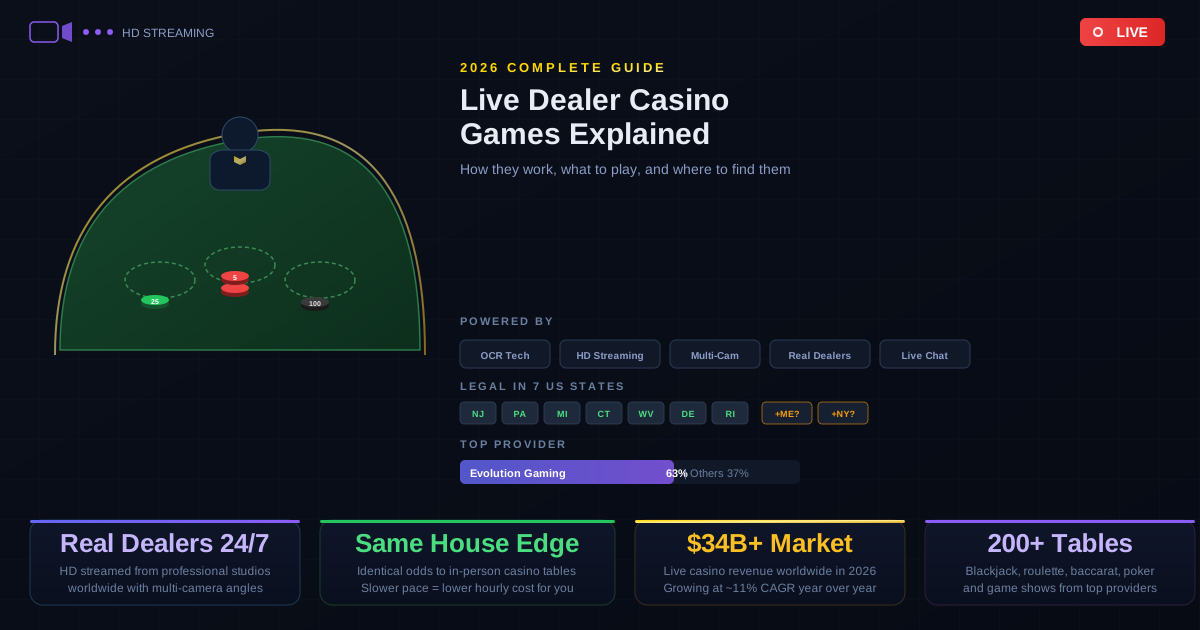
Does provably fair work for live dealer games? Not in the traditional sense. Live dealer games use physical cards and roulette wheels, which cannot be pre-committed via cryptographic hashes. Some platforms attempt hybrid approaches -- using provably fair to determine the order of a virtual shoe that is then dealt by a live dealer, or using computer vision to verify that the physical outcome matches the pre-committed digital one. These are experimental and not yet standard.
What is the difference between provably fair and a certified RNG? A certified RNG is a random number generator that has been tested by an independent laboratory and certified to meet statistical fairness standards. It is a black-box approach: you trust the certification. Provably fair is a transparent approach: you verify each outcome yourself using cryptographic proofs. Both can produce fair outcomes, but provably fair provides per-bet mathematical certainty rather than statistical confidence based on periodic sampling.
Related Gambling Tools
Explore these free tools to make better-informed gambling decisions:
- Expected Value Calculator -- Calculate the EV of any casino bet
- Odds Converter -- Convert between American, decimal, and fractional odds
- Implied Probability Calculator -- See the true probability behind any odds
- Kelly Criterion Calculator -- Optimal bet sizing for your edge
- Roulette House Edge Calculator -- Compare house edges across roulette variants
- Roulette Odds Calculator -- Calculate precise odds for any roulette bet
- Blackjack House Edge Calculator -- See how rules affect the blackjack edge
- Craps House Edge Calculator -- Compare house edges on all craps bets
- Video Poker EV Calculator -- Find the expected value of video poker variants
- Video Poker Pay Table Analyzer -- Evaluate pay table quality
- Baccarat House Edge Calculator -- House edges for banker, player, and tie bets
- Bankroll Volatility Tracker -- Monitor bankroll swings and risk of ruin
- Poker Equity Calculator -- Calculate hand equity in poker
Conclusion
Provably fair gambling represents a genuine technological breakthrough in the relationship between casinos and players. For the first time in the history of gambling, players can independently verify -- with mathematical certainty, not trust -- that game outcomes were not manipulated.
The cryptographic system is elegant in its simplicity: the casino commits to an outcome before you bet, you contribute randomness the casino cannot predict, and after the bet you verify everything matches. No trust required. No auditor needed. Just mathematics.
But provably fair is not a license to gamble recklessly. The house edge still exists in every game, and no verification system changes the fundamental economics of casino gambling. A provably fair game with a 3% house edge will still cost you 3% of every dollar wagered over the long run.
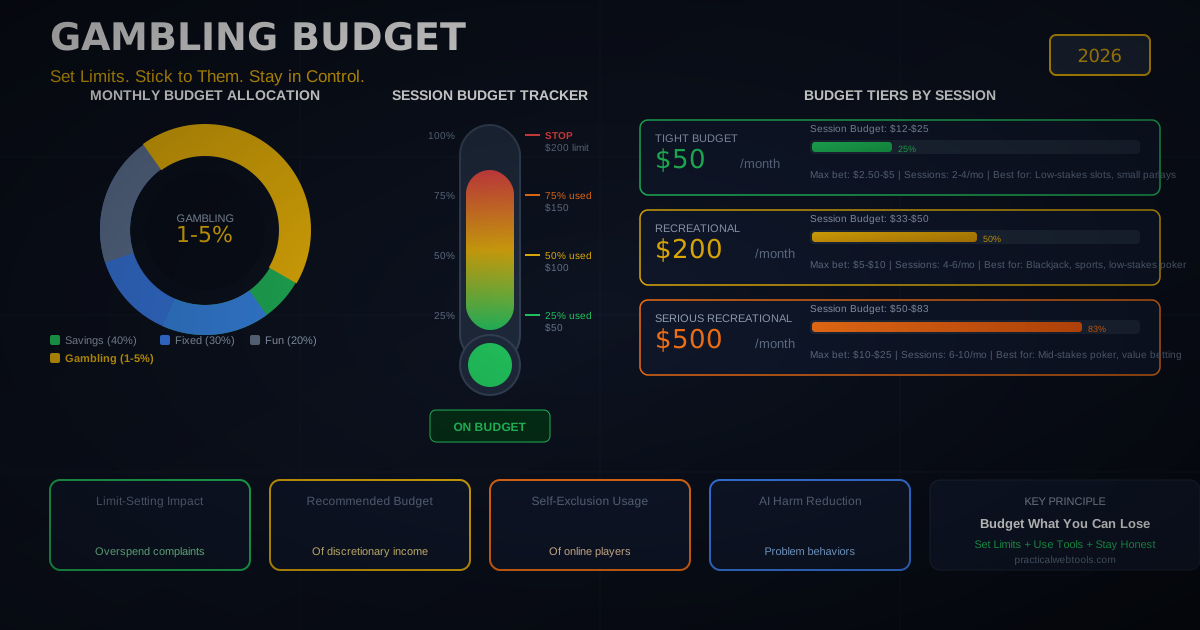
Use provably fair verification as one tool in your gambling toolkit -- alongside bankroll management, house edge awareness, game selection, and disciplined play. Verify your bets. Understand the mathematics. And never bet more than you can afford to lose, regardless of how fair the game provably is.
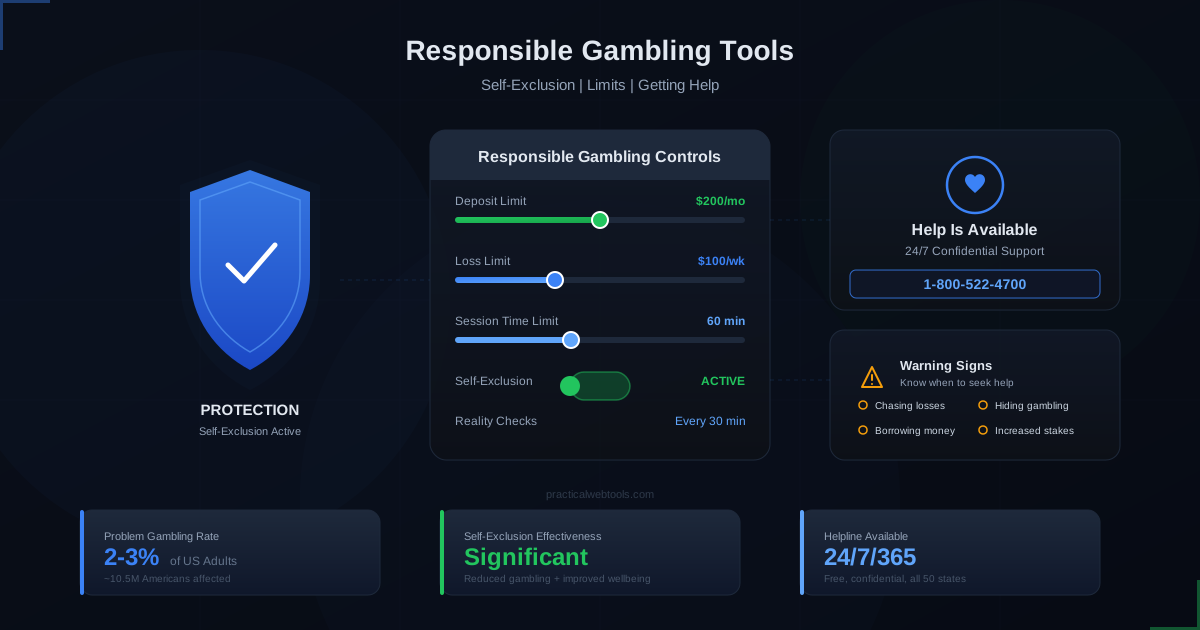
Explore our complete suite of Gambling Tools to analyze every aspect of casino games -- from house edges to expected value to optimal bet sizing.
Gambling involves risk and should be approached as entertainment, not as a source of income. Always bet within your means, set strict bankroll limits, and never chase losses. If you or someone you know has a gambling problem, contact the National Council on Problem Gambling at 1-800-522-4700 or visit ncpgambling.org. Must be 21+ to gamble in most US jurisdictions. Please play responsibly.