Weather and Sports Betting: How Wind, Rain, and Temperature Affect the Lines (2026)

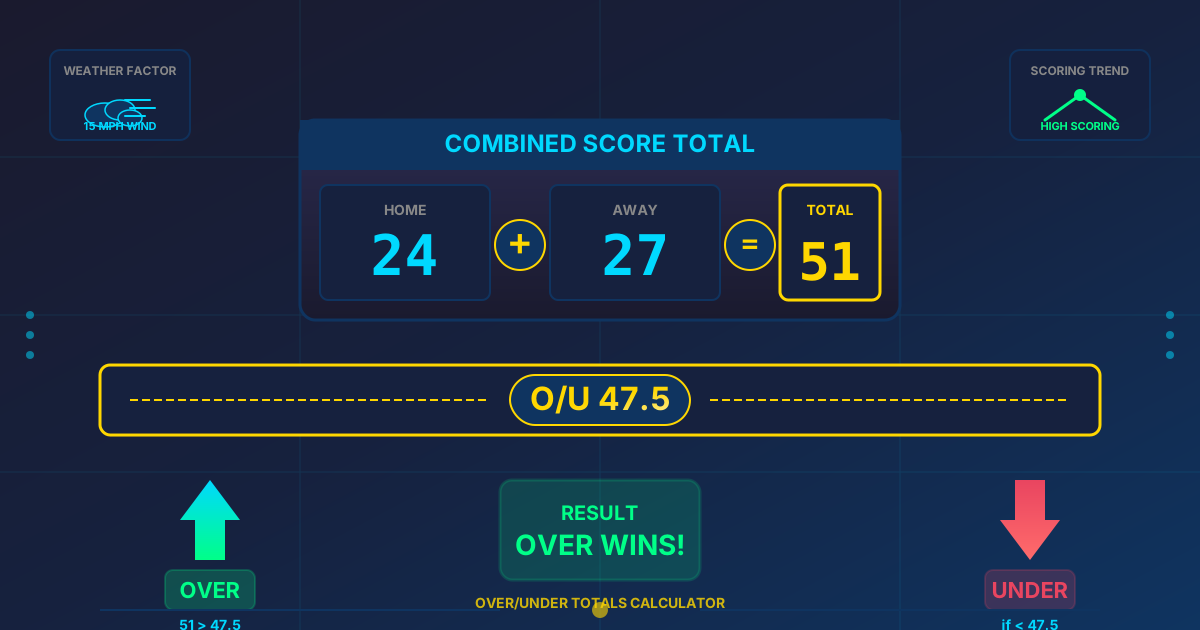
A 25-mph gust at Soldier Field turned a projected 47.5-point NFL total into a 38.5-point defensive slog -- and the sharps who tracked the forecast cashed their under tickets before the public even checked the weather app. Weather is one of the most consistently underpriced variables in sports betting. While sportsbooks do adjust lines for severe conditions, they frequently underreact to moderate weather changes, and recreational bettors almost never factor wind speed, humidity, or temperature into their handicapping process.
This guide breaks down exactly how weather affects outcomes across every major outdoor sport, with specific data points, historical trends, and actionable strategies you can use to gain an edge in 2026. You will learn which weather thresholds actually move lines, how to access reliable forecasting data, and when weather creates genuine betting value versus when the market has already priced it in.
Calculate the expected value of any weather-influenced wager with our free Expected Value Calculator -- the foundation of every data-driven betting approach.
How Does Wind Speed Affect NFL Totals and Passing Games?
Wind is the single most impactful weather variable in NFL betting. Sustained winds above 15 mph reduce average total points scored by approximately 3-5 points, and gusts above 20 mph can suppress passing production by 15-25%, making the under a historically profitable side.
Wind Speed Thresholds and Point Impact
The relationship between wind speed and NFL scoring is not linear. Light breezes under 10 mph have virtually no measurable effect. But once sustained winds cross 15 mph, the data shifts dramatically. Here is a breakdown based on historical NFL game data from 2015-2025:
| Sustained Wind Speed | Avg Total Points Scored | Points Below Indoor Average | Over Hit Rate | Under Hit Rate |
|---|---|---|---|---|
| 0-5 mph | 45.8 | -0.2 | 50.3% | 49.7% |
| 6-10 mph | 45.2 | -0.8 | 49.1% | 50.9% |
| 11-15 mph | 43.6 | -2.4 | 46.2% | 53.8% |
| 16-20 mph | 41.3 | -4.7 | 40.8% | 59.2% |
| 21-25 mph | 38.7 | -7.3 | 34.1% | 65.9% |
| 25+ mph | 35.4 | -10.6 | 27.5% | 72.5% |
When sustained winds exceed 20 mph, the under has hit at roughly a 65% clip over the past decade. That is a substantial edge, and it comes from a simple, publicly available data point.
How Wind Disrupts the Passing Game
Wind affects the passing game through multiple mechanisms. Spiral stability deteriorates in crosswinds, reducing completion percentage on throws over 15 air yards by approximately 12-18% in 20+ mph winds. Deep balls -- the highest expected-points-added plays in football -- become borderline unthrowable, forcing offenses into shorter, lower-efficiency passing concepts and a heavier ground game.
Quarterbacks with lower arm strength are disproportionately affected. Historically, quarterbacks ranking in the bottom third of average air yards per attempt see their completion rates drop by an additional 3-5% in windy conditions compared to strong-armed quarterbacks.
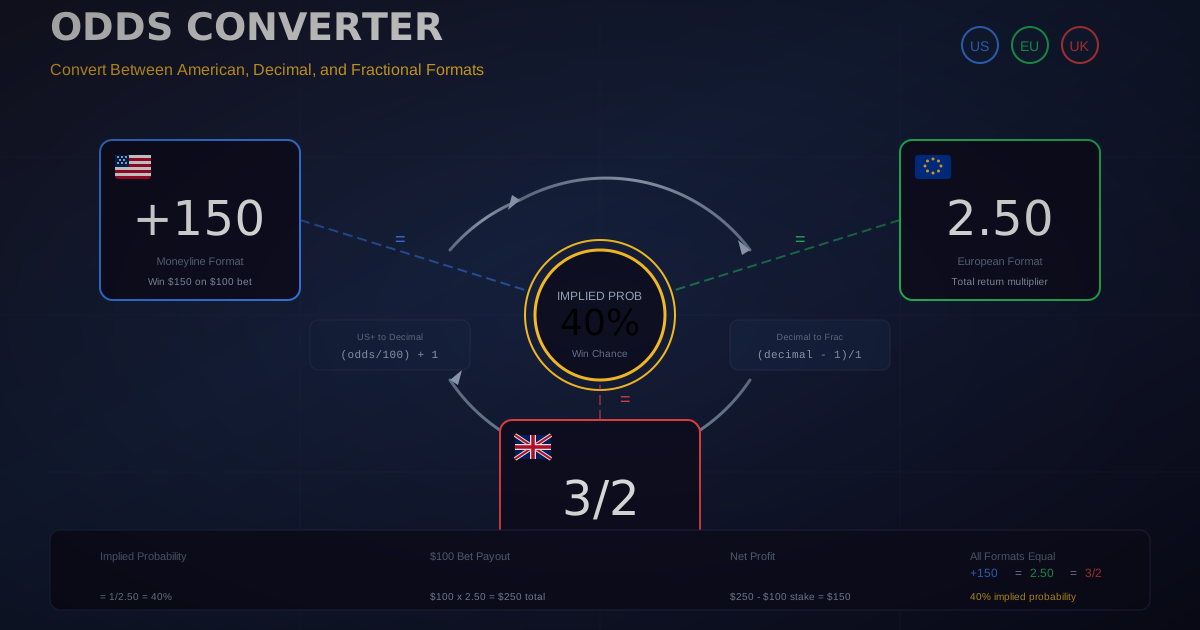
Use our Odds Converter to compare totals odds across sportsbooks and find the best line for your weather-driven under bets.
Wind and Field Goal Accuracy
Field goals are perhaps the most directly measurable wind casualty. NFL kickers convert approximately 85% of field goal attempts between 30-49 yards in calm conditions. In sustained winds above 15 mph, that conversion rate drops to roughly 74%. For kicks of 50 yards or longer, the drop is even steeper -- from about 64% in calm conditions to approximately 48% in high wind.
This has direct implications for the total. If teams settle for punts instead of field goal attempts, or if they go for it on fourth down and fail, the scoring impact compounds. Sharps regularly adjust their power ratings by 1-2 points for kicking alone in windy games.
Wind Direction Matters
Not all wind is created equal. A strong tailwind can actually help passing production for the team with it at their back, while the opposing offense faces a headwind. Crosswinds are the most universally disruptive because they affect both teams' kickers and passers regardless of direction. Sportsbooks tend to price sustained headwinds and tailwinds more accurately than crosswinds, which creates occasional value.
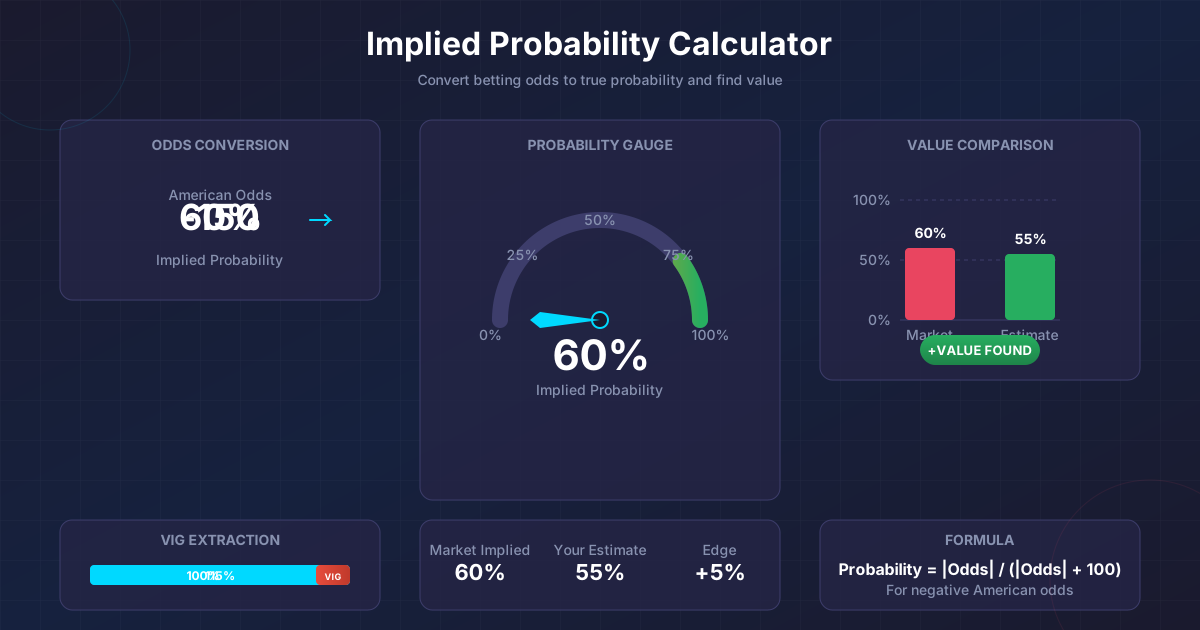
Calculate the true probability implied by current odds using our Implied Probability Calculator.
How Does Rain Affect Turnovers and Scoring in Football?
Rain increases the fumble rate in NFL games by approximately 25-35% and reduces total scoring by an average of 2-4 points. The impact is most pronounced in heavy, sustained precipitation rather than light drizzle or intermittent showers.
Rain Intensity and Turnover Data
Not all rain is equal in its effect on football outcomes. Light rain barely registers in the data, while heavy downpours create a measurably different game.
| Rain Condition | Avg Fumbles Per Game | Change vs Dry | Avg Interceptions Per Game | Total Scoring Impact |
|---|---|---|---|---|
| No rain | 2.1 | Baseline | 2.0 | Baseline |
| Light rain / drizzle | 2.3 | +9.5% | 2.1 | -0.5 pts |
| Moderate rain | 2.7 | +28.6% | 2.2 | -2.3 pts |
| Heavy rain | 3.1 | +47.6% | 2.5 | -4.1 pts |
| Heavy rain + wind | 3.4 | +61.9% | 2.7 | -6.8 pts |
The combination of rain and wind is particularly devastating. When both conditions are present, the under has historically hit at approximately 62-67% depending on the severity.
Wet Field and Running Game Impact
Contrary to popular belief, rain does not always benefit the running game. While offensive coordinators may call more run plays, the footing issues affect offensive linemen and running backs as much as defenders. On natural grass fields in heavy rain, yards per carry actually drops by about 0.3 yards compared to dry conditions. The bigger effect is on explosive plays -- runs of 20+ yards decline by roughly 18% in heavy rain because backs cannot plant and cut as effectively.
Turf fields mitigate rain impact significantly. Modern synthetic turf drains well and maintains consistent footing, so rain on turf has approximately half the statistical impact as rain on grass. Always check the field surface before factoring rain into your handicap.
Rain and Specific Team Profiles
Teams built around short passing and a strong running game tend to be less affected by rain. Conversely, teams reliant on deep passing and aggressive downfield concepts see their offensive efficiency drop more sharply. In 2025, run-heavy offenses saw only a 3% decline in offensive EPA in rainy conditions, while pass-heavy teams saw a 12% decline.
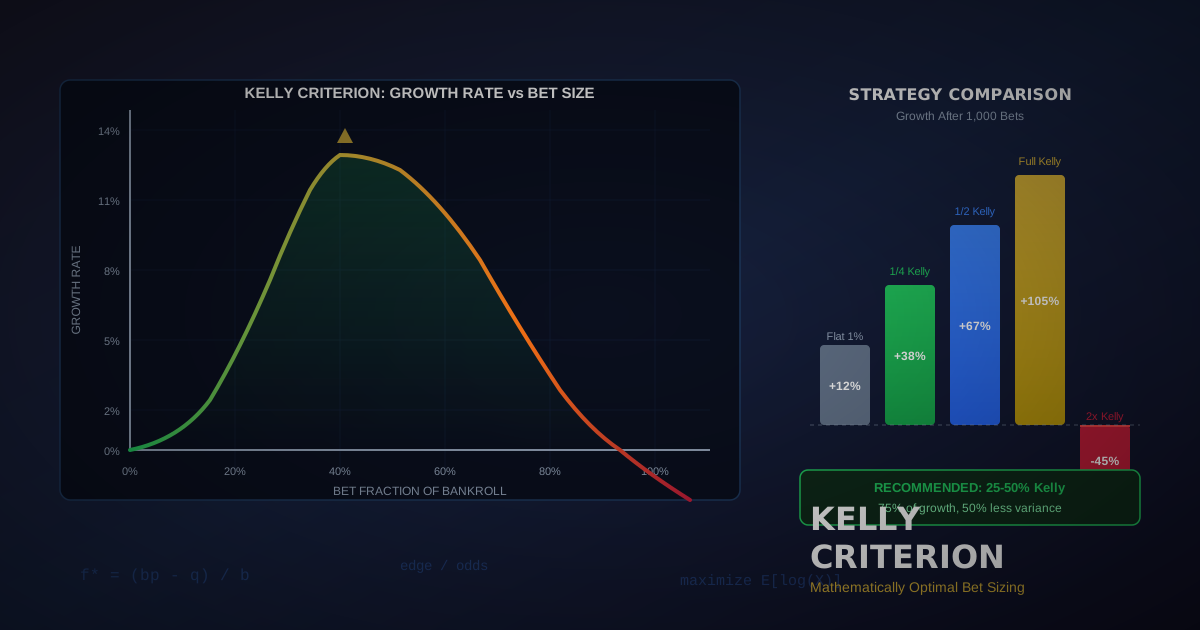
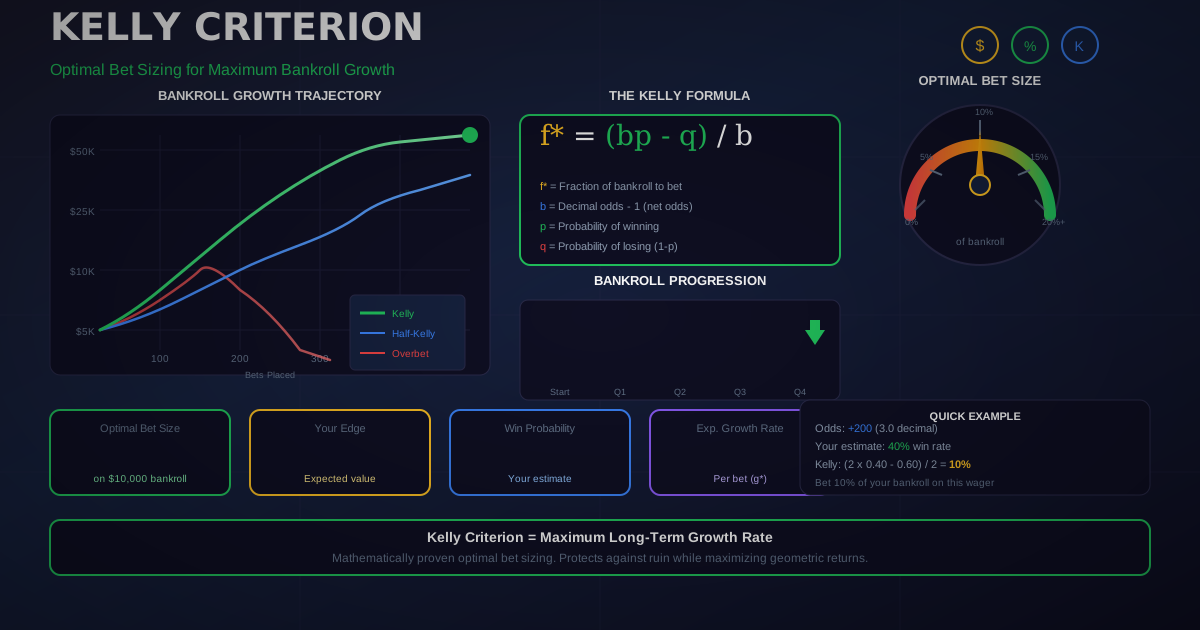
Evaluate whether a weather-adjusted bet meets your bankroll criteria with our Kelly Criterion Calculator.
What Is the Temperature Effect on NFL and MLB Scoring?
Temperature affects player performance, ball physics, and scoring patterns differently across sports. In the NFL, cold weather (below 32 degrees F) reduces total scoring by approximately 2-3 points. In MLB, a 10-degree increase in temperature adds roughly 0.5-0.8 runs per game due to decreased air density.
NFL Cold Weather Trends
Cold-weather NFL games -- defined as those played in temperatures below 32 degrees Fahrenheit -- historically average 2.5 fewer total points than games played between 50-70 degrees. The effect comes from multiple factors: reduced grip strength, stiffer muscles that limit receiver route-running, and more conservative play-calling.
| Temperature Range | Avg NFL Total Points | Points vs 60-Degree Baseline | Over Rate |
|---|---|---|---|
| Below 20 F | 39.8 | -5.7 | 38.4% |
| 20-32 F | 42.1 | -3.4 | 42.7% |
| 33-50 F | 44.2 | -1.3 | 47.8% |
| 51-70 F | 45.5 | Baseline | 50.2% |
| 71-85 F | 45.9 | +0.4 | 50.9% |
| Above 85 F | 44.7 | -0.8 | 48.1% |
Interestingly, extreme heat also slightly suppresses scoring, likely due to fatigue effects in the second half. But the sample size for NFL games above 85 degrees is smaller, so the data is less robust.
Temperature and Baseball Home Runs
Baseball is where temperature has its most scientifically documented effect. Warmer air is less dense, which means a batted ball travels farther. Researchers at the University of Texas found that a ball hit at 100 mph and a 25-degree launch angle travels approximately 375 feet at 55 degrees Fahrenheit but 385 feet at 85 degrees -- a 10-foot difference that turns warning-track flyouts into home runs.
The data supports this at scale. MLB games played in temperatures above 80 degrees average approximately 0.35 more home runs per game than those below 60 degrees. For total runs, the effect translates to roughly 0.5-0.8 additional runs per game for every 15-degree increase above 60 degrees F.
Run the numbers on your temperature-adjusted bets across a parlay using our Parlay Calculator.
Dome and Retractable Roof Considerations
Dome stadiums neutralize weather entirely, and retractable roof stadiums introduce a unique variable. When the roof is open in favorable conditions, scoring patterns match outdoor stadiums. When the roof is closed, conditions revert to a controlled environment. Sharp bettors always verify whether retractable roof stadiums plan to be open or closed, especially in cities with variable weather like Houston, Milwaukee, and Phoenix.
How Does Wind at Wrigley Field Affect MLB Totals?
Wrigley Field in Chicago is the most weather-sensitive venue in Major League Baseball. When the wind blows out to center field at 15+ mph, total runs increase by an average of 2.5-3.5 runs compared to days when the wind blows in. The over/under market at Wrigley is one of the most exploitable weather-driven edges in all of sports betting.
Wrigley Field Wind Direction Data
Wrigley's orientation makes wind direction uniquely consequential. The ballpark faces northeast, and wind blowing from the southwest pushes batted balls toward the outfield bleachers. Wind blowing from the northeast suppresses fly balls and turns potential home runs into routine outs.
| Wind Direction at Wrigley | Avg Runs Per Game | Avg Home Runs Per Game | Over Hit Rate (2015-2025) |
|---|---|---|---|
| Wind blowing out (SW, 10+ mph) | 10.8 | 2.9 | 58.7% |
| Wind blowing out (SW, 15+ mph) | 12.3 | 3.7 | 63.2% |
| No significant wind | 8.9 | 2.1 | 49.4% |
| Wind blowing in (NE, 10+ mph) | 7.2 | 1.3 | 41.8% |
| Wind blowing in (NE, 15+ mph) | 6.4 | 0.8 | 36.5% |
| Crosswind | 8.5 | 1.9 | 47.6% |
The swing between strong wind blowing out and strong wind blowing in is nearly 6 runs per game. That is an enormous edge if you can access accurate wind direction forecasts before the sportsbooks adjust their lines.
Other Wind-Sensitive MLB Ballparks
While Wrigley gets the most attention, several other MLB stadiums show significant wind sensitivity:
- Oracle Park (San Francisco): Wind blowing in from McCovey Cove suppresses right-handed power. Games with strong winds in have historically averaged 1.2 fewer runs than calm-day games.
- Kauffman Stadium (Kansas City): Open outfield design makes it vulnerable to wind. Strong winds out increase run scoring by approximately 1.5 runs per game.
- Coors Field (Denver): Already a hitter's park due to altitude, wind blowing out can push totals into extreme territory. The combination of thin air and outbound wind has produced some of the highest-scoring games in MLB history.
- Target Field (Minnesota): Cold early-season winds blowing in from left field suppress offense significantly in April and May.
Check whether your wind-adjusted line offers positive expected value with our Expected Value Calculator.
Humidity and Ball Flight
Humidity has a counterintuitive effect on ball flight. Many bettors assume humid air is "heavier," but in reality, water vapor is lighter than dry air. Humid air is actually less dense, meaning baseballs travel slightly farther in humid conditions. The effect is small -- approximately 1-2 feet on a 400-foot fly ball -- but it compounds with temperature and altitude effects.
In practice, the humidity effect is dwarfed by temperature and wind. It is a marginal tiebreaker rather than a primary handicapping factor.
How Does Weather Affect Soccer Matches and Betting Lines?
Weather impacts soccer primarily through pitch conditions and playing style rather than direct scoring effects. Heavy rain on natural grass pitches increases the speed of ground passes, favors direct play over possession-based systems, and raises the probability of draws by approximately 3-5%.
Rain and Pitch Conditions
A waterlogged pitch fundamentally alters how soccer is played. The ball skids faster along wet grass, making long-range shooting more dangerous because goalkeepers struggle to handle skidding shots. Passing accuracy decreases, which benefits defensively organized teams that rely on counter-attacking rather than sustained possession.
| Pitch Condition | Avg Goals Per Match | Draw Probability | Favorite Win Rate |
|---|---|---|---|
| Dry, firm | 2.68 | 25.1% | 48.3% |
| Lightly wet | 2.61 | 26.4% | 47.1% |
| Heavy rain / wet | 2.44 | 28.9% | 44.7% |
| Waterlogged / postponement risk | 2.31 | 31.2% | 42.1% |
| Frozen / hard ground | 2.52 | 27.8% | 45.5% |
The key takeaway for bettors is that rain tends to level the playing field, reducing the advantage that technically superior teams have in dry conditions. This makes the draw and underdog slightly more valuable in wet weather.
Wind in Soccer
Wind has a less dramatic effect in soccer than in American football or baseball, but it still matters. Strong crosswinds affect crossing accuracy and make aerial duels more unpredictable. Headwinds reduce the effectiveness of long balls and clearances, while tailwinds can help teams playing direct football.
The biggest wind impact in soccer is on set pieces. Free kicks and corners in high wind are less accurate, which slightly reduces the expected goals from dead-ball situations -- a factor worth considering when betting on total goals or the total corners market.
Cold Weather and European Leagues
Winter fixtures in Northern European leagues (Premier League, Bundesliga, Eredivisie) are played in conditions that Southern European teams rarely experience. Visiting teams from warmer climates playing in freezing English conditions have historically underperformed their expected results by approximately 5-8% in Champions League and Europa League group-stage matches.
Find guaranteed profits from weather-adjusted line discrepancies using our Arbitrage Calculator.
How Does Weather Affect Golf Tournaments and Betting?
Wind is the dominant weather variable in golf. When sustained winds exceed 15 mph, scoring averages increase by 2-3 strokes per round, and the variance between golfers widens. This favors experienced links-style players and creates value in head-to-head matchup markets.
Wind Speed and Scoring Averages
Professional golfers at the highest level are remarkably skilled at managing wind, but there is a clear threshold where conditions become genuinely difficult. The data from PGA Tour events over the past decade shows a consistent pattern:
| Wind Speed | Avg Score Relative to Par | Birdie Rate Change | Bogey Rate Change |
|---|---|---|---|
| Calm (0-5 mph) | -2.8 | Baseline | Baseline |
| Light (6-10 mph) | -2.1 | -4% | +6% |
| Moderate (11-15 mph) | -1.2 | -11% | +15% |
| Strong (16-20 mph) | +0.3 | -22% | +29% |
| Very strong (20+ mph) | +1.9 | -35% | +44% |
In very strong wind, the difference between a golfer who excels in wind and one who does not can be 4-6 strokes per round. This creates enormous value in head-to-head matchup bets and outright markets if you can identify which players have strong wind-performance records.
Players Who Thrive in Wind
Historically, golfers from links golf backgrounds (Scottish, Irish, and Northern European players) tend to outperform in windy conditions. Players who hit a lower ball flight, have strong iron play, and rely less on distance advantage tend to move up leaderboards in wind. The data shows that players ranked in the top 20 for "strokes gained in wind" outperform their overall ranking by an average of 8-12 positions in tournaments with sustained winds above 15 mph.
Rain and Course Conditions in Golf
Rain softens courses, which typically benefits longer hitters because soft fairways reduce roll and soft greens hold approach shots better. Conversely, rain negatively affects players whose advantage comes from course management and scrambling, since softer conditions reduce the penalty for missing fairways.
For total scoring markets, rain generally pushes scores lower (better) because soft greens accept approach shots more readily, producing more birdie opportunities. This is the opposite of what many casual bettors expect.
Assess the value of your golf outright bets using our Implied Probability Calculator.
What Are the Best Weather Data Sources for Sports Bettors?
The best weather data sources for sports bettors in 2026 are the National Weather Service (NWS), Weather Underground station-level data, and dedicated sports-weather services that provide venue-specific forecasts. Free sources are often sufficient, but paid services can provide the 30-minute resolution data that serious bettors need.
Free Weather Resources
| Source | Data Quality | Sports Relevance | Update Frequency | URL |
|---|---|---|---|---|
| National Weather Service | High | Moderate (general forecasts) | Hourly | weather.gov |
| Weather Underground | High | High (station-level) | 15-30 min | wunderground.com |
| OpenWeather | Moderate | Moderate | Hourly | openweathermap.org |
| Windy.com | High | High (wind visualization) | 15 min | windy.com |
| Dark Sky / Apple Weather | High | Moderate | Hourly | Built into Apple devices |
For NFL bettors, the key is checking weather at approximately the stadium zip code, ideally 3-4 hours before kickoff, when forecasts are most accurate. Wind speed at field level is often 20-40% lower than the reported speed due to stadium walls blocking airflow, which is why open-end stadiums (Soldier Field, Lambeau Field, Arrowhead Stadium) are more wind-exposed than fully enclosed open-air stadiums.
Paid and Premium Services
Several services cater specifically to sports bettors with weather data:
- RotoGrinders Weather Dashboard: Provides game-time forecasts for every outdoor NFL and MLB game, including wind direction relative to the field orientation. This is particularly valuable for Wrigley Field wind direction.
- DonBest Weather Feed: Real-time weather data integrated with live odds. Professional bettors use this to correlate weather changes with line movements.
- Stadium-Specific Weather Stations: Some venues have on-site weather stations. Checking these provides the most accurate readings but data is not always publicly available.
Timing Your Weather Bets
The optimal timing for weather-based betting depends on the sport:
- NFL: Bet Sunday morning games on Saturday evening when weather models have high confidence for the next 18-24 hours. Lines may not adjust until early Sunday morning.
- MLB: Check weather 2-3 hours before first pitch. Wind direction can shift significantly, and sportsbooks are quick to adjust MLB totals for weather.
- Golf: Weather during a multi-day tournament creates wave advantages (morning tee times vs. afternoon). Bet outright and matchup markets after the tee time draw when you can see which players face favorable conditions.
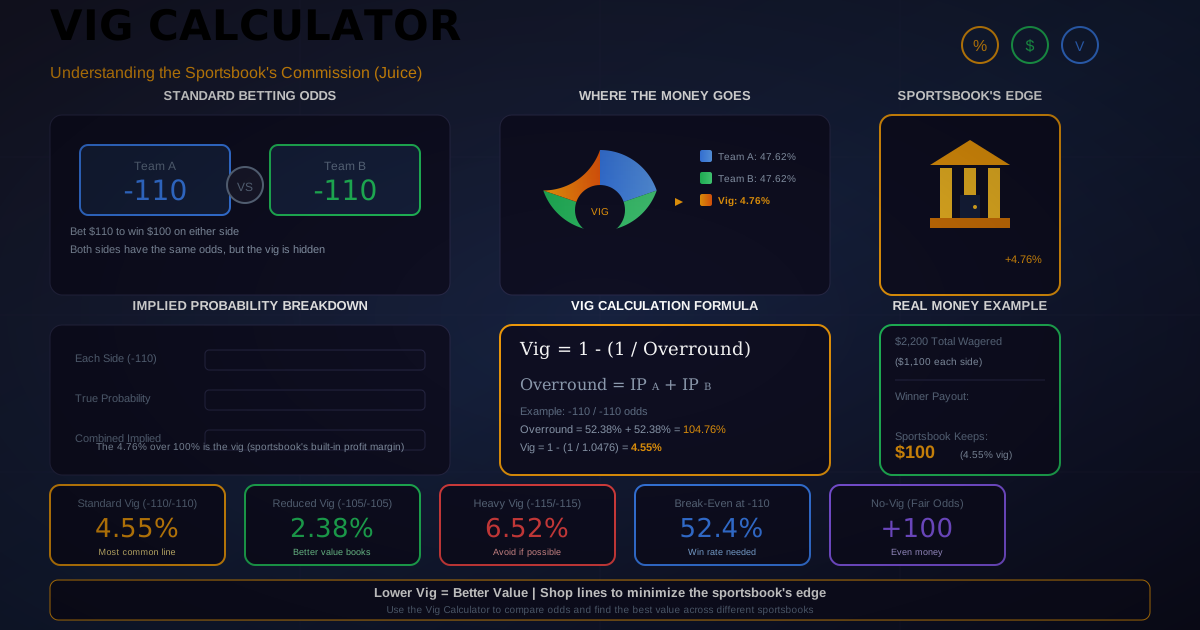
Compare juice across books to find the best price on your weather bet using our Hold/Vig Calculator.
When Do Sportsbooks Adjust Lines for Weather?
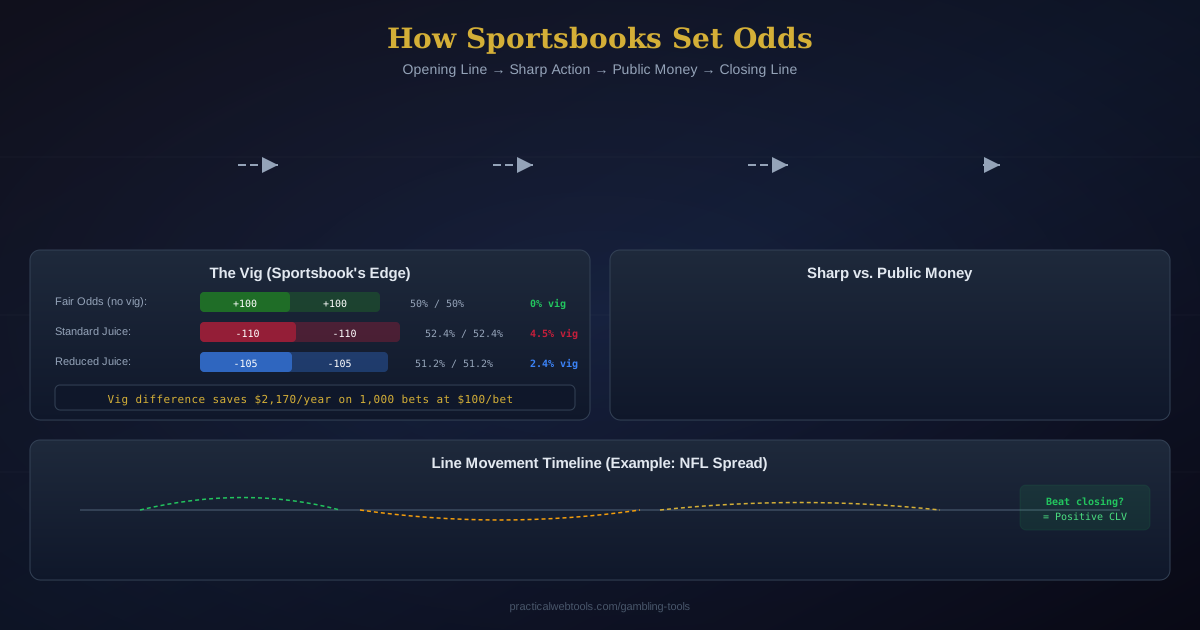
Sportsbooks typically adjust lines for weather when conditions cross specific severity thresholds. Most books begin moving NFL totals when sustained winds are forecast above 15-18 mph or when heavy precipitation is expected. The adjustment process is partially automated but often includes manual oversight for unusual situations.
How the Adjustment Process Works
Modern sportsbooks use weather feeds integrated into their pricing models. The general workflow:
- 48 hours before game time: Weather data begins influencing the model, but adjustments are minor because forecasts this far out have significant uncertainty.
- 24 hours before: If severe weather is forecast with high confidence, the opening total or spread may reflect weather. Lines posted midweek for NFL typically include a weather estimate.
- 6-12 hours before: This is when meaningful weather-driven line movement usually occurs. Forecasts become more reliable, and sportsbooks begin manual reviews.
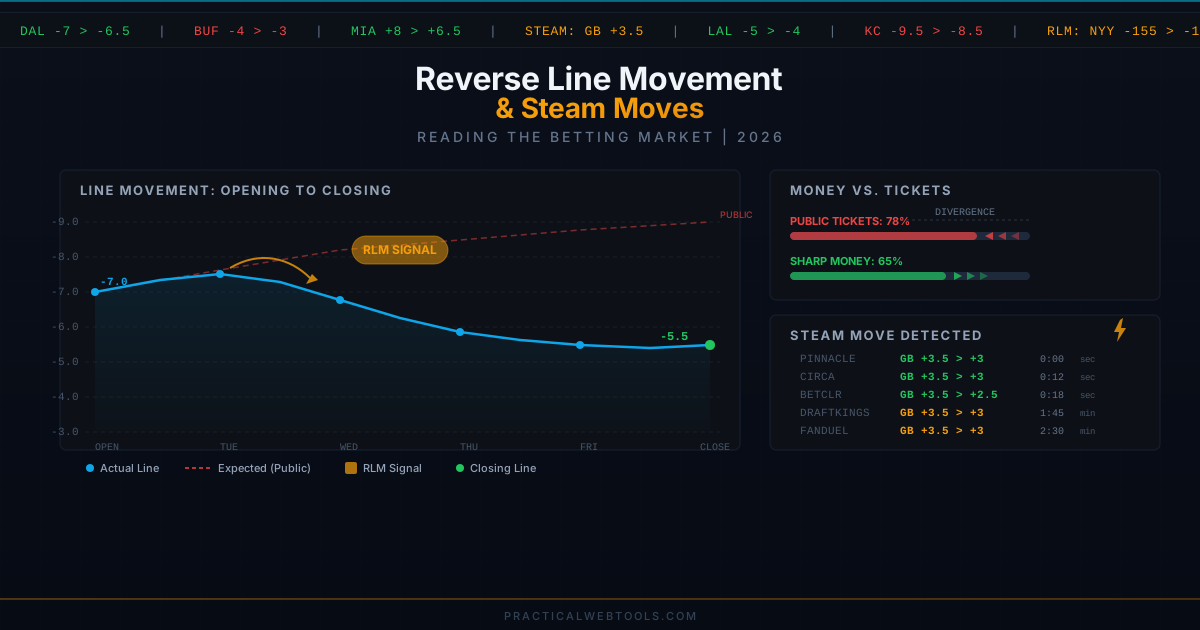
- 2-4 hours before: Final adjustments. This is the window where sharp bettors with superior weather data can capture the most value -- if they have already placed bets, they have locked in pre-adjustment lines.
- At game time: Lines reflect the known conditions. Any remaining edge requires real-time changes (a sudden storm, wind shift) that create live betting opportunities.
Market Efficiency by Sport
| Sport | Weather Adjustment Speed | Market Efficiency | Bettor Opportunity Window |
|---|---|---|---|
| NFL | 6-12 hours pre-game | High | Saturday evening to Sunday AM |
| MLB | 2-4 hours pre-game | Moderate-High | 3-4 hours before first pitch |
| Golf | Variable (round-based) | Moderate | After tee times announced |
| Soccer | 2-6 hours pre-match | Moderate | Day of match |
| College Football | 4-8 hours pre-game | Moderate | Saturday morning |
The general rule: the more recreational money a sport attracts, the slower the market adjusts to weather. College football, where public betting volume is enormous but less sophisticated, tends to be slower to react to weather than NFL.
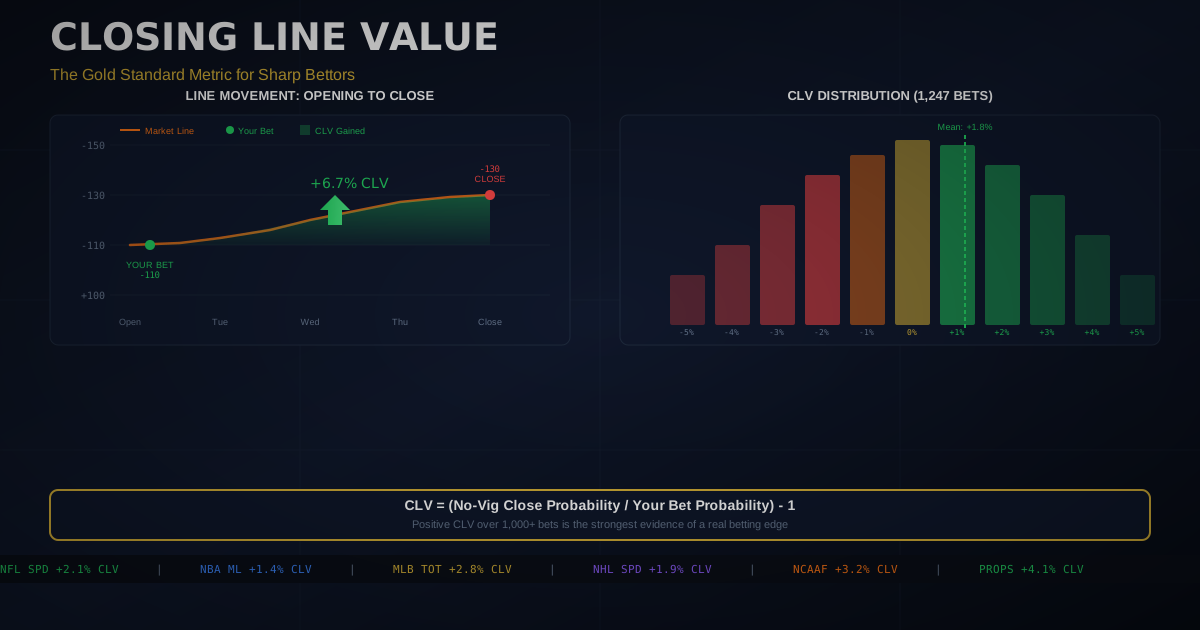
Calculate your closing line value on weather-driven bets with our CLV Tracker.
How Should You Adjust Your Models for Weather Variables?
You should adjust your predictive models by incorporating weather as a modifier to your baseline projection rather than as a standalone variable. The most effective approach is applying weather multipliers to team-specific offensive and defensive efficiency ratings.
Building a Weather Adjustment Framework
A practical approach for handicappers:
- Establish baseline projections for each game without weather.
- Apply a wind modifier to the passing component of each team's offense. For every 5 mph of sustained wind above 10 mph, reduce projected passing yards by 5-8% and passing touchdowns by 8-12%.
- Apply a precipitation modifier to turnover projections. In rain, increase projected fumbles by 15-25% and interceptions by 5-10%.
- Apply a temperature modifier to total scoring. For every 10 degrees below 40 F, reduce the projected total by 0.5-1.0 points.
- Compare your adjusted projection to the current market line. If your projection differs by more than 1.5 points, you may have found value.
Example Weather Adjustment Calculation
Here is a worked example for an NFL game:
| Component | Baseline Projection | Weather Condition | Adjustment | Adjusted Projection |
|---|---|---|---|---|
| Team A passing yards | 245 | 18 mph sustained wind | -12% | 215.6 |
| Team B passing yards | 220 | 18 mph sustained wind | -12% | 193.6 |
| Total projected points | 46.5 | Wind + light rain | -4.2 pts | 42.3 |
| Market line | 44.5 | -- | -- | -- |
| Edge | -- | -- | -- | Under by 2.2 pts |
In this example, your weather-adjusted model projects 42.3 points while the market is set at 44.5. The 2.2-point gap suggests value on the under, though you would want to confirm this edge meets your minimum threshold before wagering.
Determine optimal bet sizing for your weather edge with the Kelly Criterion Calculator.
Common Weather Modeling Mistakes
- Overweighting wind on run-heavy teams. Wind primarily affects the passing game and kicking game. A team that runs 60% of the time is less impacted than one that passes 65% of the time.
- Ignoring field surface. Rain on turf is a much smaller factor than rain on grass. Always check the surface.
- Double-counting. If the market has already moved 3 points for weather, your model needs to find value beyond that adjustment, not just confirm that weather matters.
- Using airport weather data. Airport weather stations are often 5-15 miles from the stadium. Use stadium-area data whenever possible.
Which NFL Stadiums Are Most Affected by Weather?
The NFL stadiums most affected by weather are open-air venues with minimal wind protection, located in cold-weather climates. Soldier Field (Chicago), Lambeau Field (Green Bay), and Highmark Stadium (Buffalo) consistently produce the largest weather-driven scoring differences.
Stadium Weather Vulnerability Rankings
| Stadium | Team | Open/Dome | Wind Exposure | Cold Games per Year | Weather Impact Score |
|---|---|---|---|---|---|
| Soldier Field | Bears | Open | Very High | 6-8 | 9.5/10 |
| Lambeau Field | Packers | Open | High | 7-9 | 9.2/10 |
| Highmark Stadium | Bills | Open | Very High | 6-8 | 9.0/10 |
| Arrowhead Stadium | Chiefs | Open | High | 5-7 | 8.4/10 |
| Gillette Stadium | Patriots | Open | Moderate-High | 5-7 | 8.0/10 |
| MetLife Stadium | Giants/Jets | Open | Moderate | 4-6 | 7.5/10 |
| Lincoln Financial | Eagles | Open | Moderate | 4-6 | 7.2/10 |
| Acrisure Stadium | Steelers | Open | Moderate | 5-7 | 7.0/10 |
| Paycor Stadium | Bengals | Open | Moderate | 4-6 | 6.8/10 |
| Empower Field | Broncos | Open | Moderate | 4-6 | 6.5/10 |
Dome stadiums (SoFi, US Bank, Allegiant, Mercedes-Benz, Caesars Superdome, Lucas Oil, State Farm, NRG) are immune to weather effects, obviously. But retractable-roof stadiums add complexity -- always check whether the roof is open or closed.
Visiting Teams and Weather Disadvantage
Warm-weather and dome teams traveling to cold, windy outdoor stadiums in December and January consistently underperform. Historical data shows that teams from warm-weather climates (Miami, Jacksonville, Tampa Bay, Los Angeles) playing in below-freezing conditions on the road cover the spread only about 40% of the time. This is a well-known trend, but it still holds value because the public often backs these teams when they have strong records.
Compare odds across sportsbooks on weather-impacted games using our Sure Bet Calculator.
How Does Altitude Affect Sports Betting at Venues Like Denver?
Altitude has a significant and well-documented effect on sports at venues above 5,000 feet elevation. In Denver (5,280 feet), baseballs travel approximately 5-7% farther than at sea level, NFL kickers gain 3-5 yards on field goal range, and visiting athletes experience measurable performance decreases due to reduced oxygen availability.
The Denver Effect Across Sports
| Sport | Denver Venue | Altitude Effect | Betting Implication |
|---|---|---|---|
| MLB | Coors Field | +9-12% more runs, +20-30% more HR | Totals consistently higher; overs at Coors are heavily bet |
| NFL | Empower Field | +3-5 yards kicking range, +2% passing distance | Slight total inflation, visiting team fatigue in 4th quarter |
| NBA | Ball Arena | Visiting teams show 1.5-2.0% lower FG% in 2nd half | Nuggets second-half advantage historically profitable |
| NHL | Ball Arena | Minimal direct effect, but visiting team fatigue observable | Slight home advantage boost |
| MLS | Dick's Sporting Goods Park | Visiting teams show significant 2nd half decline | Rapids home advantage larger than league average |
The key betting insight is that altitude effects compound with game duration. Visiting teams tend to fade in the second half as oxygen debt accumulates. This is particularly pronounced when teams arrive less than 24 hours before the game.
Other High-Altitude Venues
- Mexico City (7,350 feet): Used for NFL international games and Liga MX. The altitude effect here is approximately 40% greater than Denver. NFL games in Mexico City have historically featured longer field goals and visiting teams struggling in the fourth quarter.
- Salt Lake City (4,226 feet): Real Salt Lake enjoys a measurable home advantage from altitude, and the Jazz historically perform well at home partly due to altitude effects.
- Colorado Springs (6,035 feet): Air Force Academy games at Falcon Stadium benefit from thin air.
Calculate the true cost of juice on altitude-adjusted totals with our Hold/Vig Calculator.
What Weather Betting Strategies Have the Best Historical ROI?
The weather betting strategies with the best historical ROI focus on extreme conditions that create clear, measurable impacts: NFL unders in high wind, MLB overs with wind blowing out at Wrigley, and golf matchup bets favoring wind-experienced players.
Top Historical Weather Strategies
| Strategy | Sport | Conditions | Historical Win Rate | Avg ROI |
|---|---|---|---|---|
| Under in 20+ mph sustained wind | NFL | Wind > 20 mph | 65.9% | +12.4% |
| Wrigley over when wind out 15+ mph | MLB | SW wind > 15 mph at Wrigley | 63.2% | +9.8% |
| Under in heavy rain + wind | NFL | Rain + wind > 15 mph | 67.1% | +14.2% |
| Warm-weather team unders in cold | NFL | Visiting warm team, < 25 F | 58.5% | +6.3% |
| Links players outright in wind | Golf | Sustained > 15 mph | 55.2% (top 10 hit) | +8.1% |
| Cold-weather game 1H under | NFL | < 25 F | 57.8% | +5.9% |
| Coors Field 1st inning over | MLB | Temperature > 80 F, wind out | 56.4% | +4.7% |
These strategies are not guaranteed to work going forward, but they have shown consistent profitability over large sample sizes spanning 10+ years. The key is discipline -- only betting when conditions clearly meet the threshold and getting the best available price.
Combining Weather With Other Factors
Weather is most valuable when combined with other handicapping angles:
- Weather + game script: A team expected to play from behind in windy conditions is especially vulnerable because they will be forced to pass against the wind in the fourth quarter.
- Weather + personnel: A team missing its starting running back in a rainy game cannot effectively pivot to a run-heavy approach.
- Weather + travel: A warm-weather team traveling to a cold, windy outdoor stadium for a 1 PM kickoff (minimal acclimation time) faces compounding disadvantages.
Build multi-factor weather bets into a round robin for diversified exposure using our Round Robin Calculator.
Bankroll Management for Weather Bets
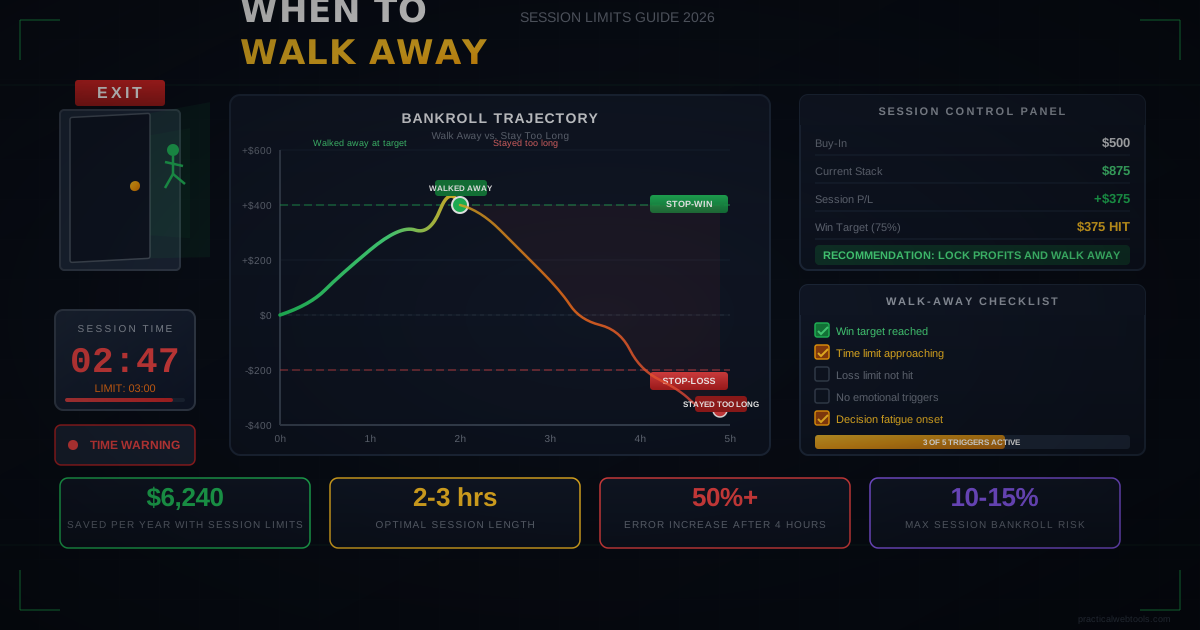
Weather-driven edges tend to appear in clusters (a stormy weekend can produce 3-4 actionable games) followed by long stretches of no plays. This uneven distribution requires disciplined bankroll management. Never overextend on a single stormy weekend just because multiple games meet your criteria. A standard 1-3% bankroll per bet approach works well for weather plays, with higher conviction reserved for the most extreme conditions.
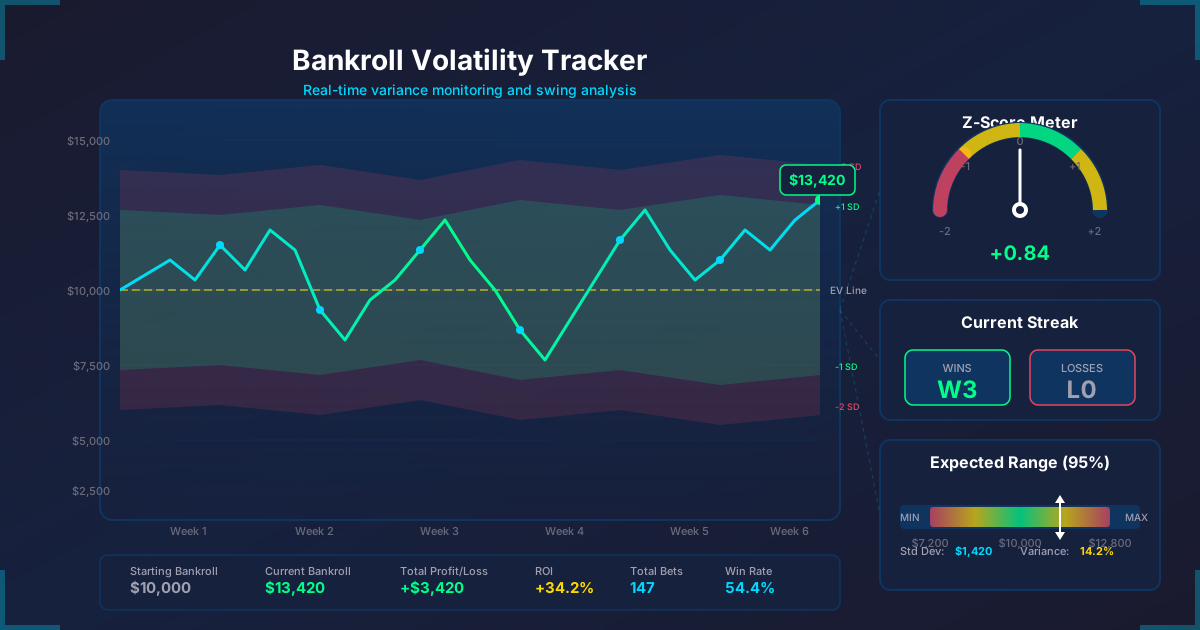
Track the volatility of your weather betting strategy with our Bankroll Volatility Tracker.
How Do You Build a Weather Handicapping Checklist?
A weather handicapping checklist should cover wind speed and direction, precipitation type and intensity, temperature, field surface, stadium openness, and team-specific vulnerabilities. Running through this checklist for every outdoor game ensures you never miss a weather-driven edge.
Pre-Game Weather Checklist
Use this checklist every time you handicap an outdoor game:
- Wind speed and direction: Is sustained wind above 15 mph? Is it crosswind, headwind, or tailwind relative to the field? What is the gust factor?
- Precipitation: Is rain, snow, or sleet forecast? What is the intensity and duration? Will it last the entire game or clear by halftime?
- Temperature: Is the temperature below 35 F or above 85 F? Is there a significant temperature differential between the teams' home climates?
- Field surface: Is the field natural grass or synthetic turf? How well does the stadium drain?
- Stadium design: Is the stadium fully open, partially enclosed, or domed? How much does the structure block wind at field level?
- Team profiles: Is each team built for passing or running? How does each quarterback perform in adverse weather historically?
- Kicker reliability: How do the kickers perform in wind and cold? Have they historically been accurate in adverse conditions?
- Timing: When did you check the forecast? Has the forecast changed since you placed your bet?
Integrating Weather Into Your Overall Handicapping Process
Weather should be one factor among many -- it rarely warrants a bet on its own unless conditions are extreme. The most profitable approach is to use weather as a filter: identify games you already have an opinion on, then check whether weather supports or contradicts your lean. If you like the under in a game and 20 mph winds are forecast, you have a high-conviction play. If you like the over but heavy rain is expected, you may want to pass.
Run the final numbers on any weather-impacted bet with our Expected Value Calculator.
Frequently Asked Questions
How much does wind actually affect NFL scoring? Sustained winds above 15 mph reduce average NFL total points by approximately 3-5 points compared to calm conditions. The effect is most pronounced on the passing game and field goal kicking. Winds above 20 mph have historically produced under results at a 65% clip, making it one of the most reliable weather-based betting angles available.
Does rain always mean bet the under? Not always. Light rain or drizzle has minimal impact on scoring, particularly on turf fields. The under becomes significantly more profitable only in heavy, sustained rain, especially when combined with wind. On natural grass, heavy rain increases fumble rates by 25-35% and reduces offensive efficiency, which supports the under. But on modern synthetic turf, rain effects are approximately half as impactful.
Is weather already priced into the lines? Sportsbooks do adjust lines for severe weather, typically when conditions cross key thresholds like 15-18 mph sustained winds or heavy precipitation. However, the adjustments are often insufficient for the most extreme conditions, and sportsbooks tend to react slowly to moderate weather compared to sharp bettors who act early. The best value window is 6-24 hours before game time, after forecasts become reliable but before the market fully adjusts.
What is the best weather data source for NFL betting? The National Weather Service (weather.gov) provides free, high-quality forecasts. For stadium-specific data, Weather Underground offers nearby weather station readings. For dedicated sports weather data, RotoGrinders provides game-time forecasts for every outdoor event. The key is checking forecasts 3-6 hours before kickoff when accuracy is highest and comparing stadium-area data rather than city-wide averages.
Does cold weather really hurt warm-weather NFL teams? Yes, but the effect is often overstated by casual bettors and understated by the market. Warm-weather and dome teams playing in below-freezing conditions cover the spread approximately 40% of the time historically, which represents a meaningful edge. The effect is strongest in the fourth quarter when fatigue and cold combine.
How does altitude affect Coors Field totals? At 5,280 feet elevation, the thin air at Coors Field causes baseballs to travel 5-7% farther than at sea level. This results in approximately 20-30% more home runs and 9-12% more total runs than the league average. Sportsbooks account for this with higher totals, but the variance at Coors is also much higher, which creates value in specific wind and temperature combinations.
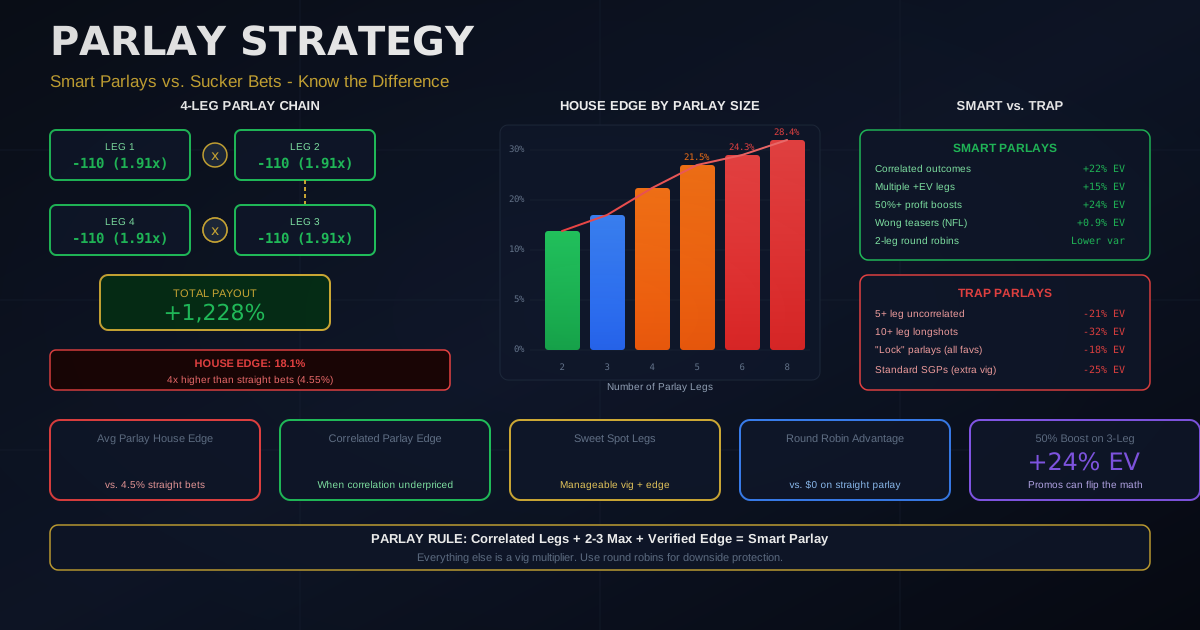
Should I factor weather into parlay bets? Weather-driven bets can be good parlay components because they tend to have slightly higher hit rates than the market implies. However, avoid parlaying multiple weather-driven unders on the same day, as atmospheric conditions affecting one game may affect others in the same region, creating correlated risk. Mixing weather plays across sports or regions provides better diversification.
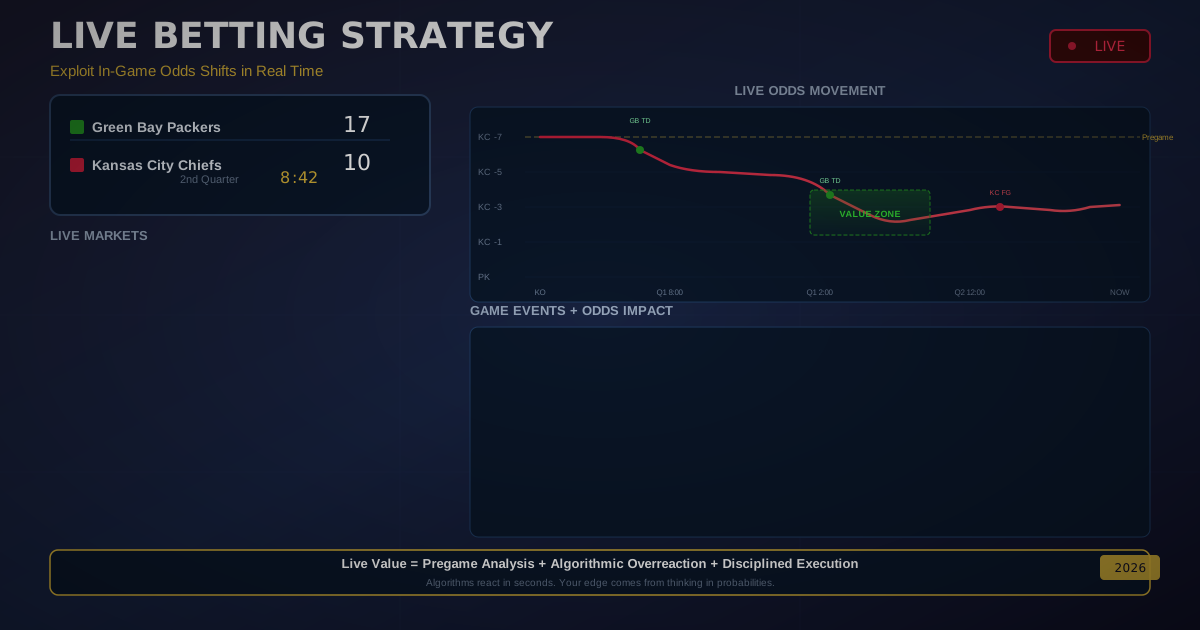
How does weather affect live betting opportunities? Weather changes during a game create some of the best live betting opportunities. A sudden thunderstorm or wind shift mid-game can dramatically change the scoring environment, and live odds may not adjust instantly. Bettors who monitor real-time weather alongside the game can spot these changes before the market fully reacts.
Related Tools
- Odds Converter: Convert between American, decimal, and fractional odds to compare weather-adjusted lines across sportsbooks.
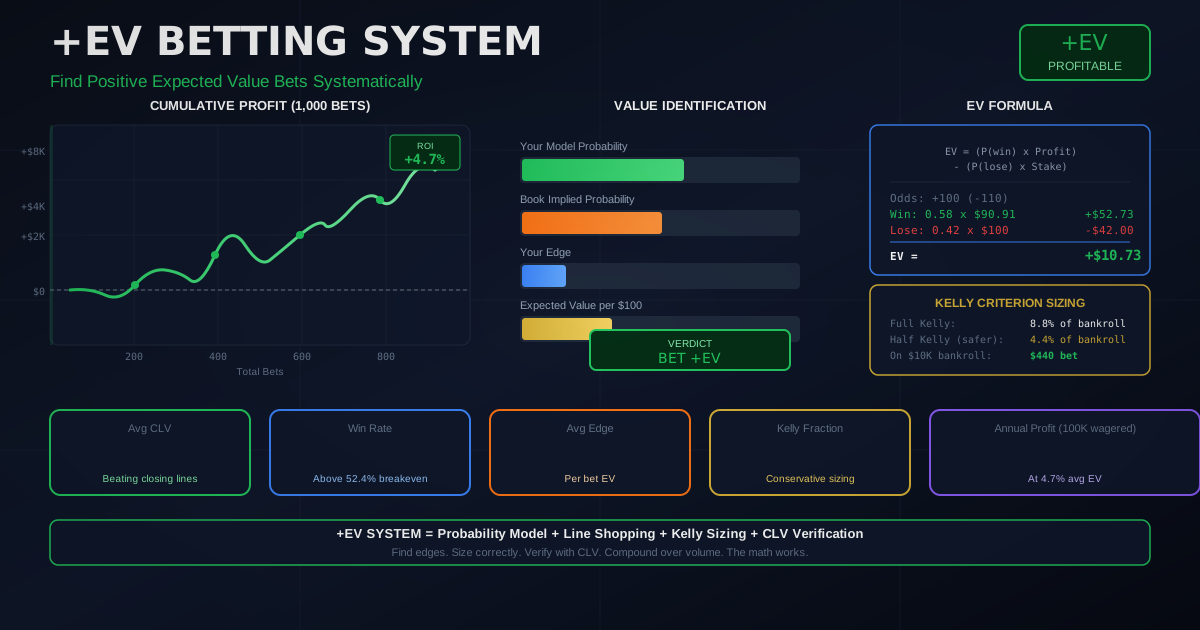
- Expected Value Calculator: Calculate whether your weather-adjusted probability gives you a positive EV bet at the current odds.
- Kelly Criterion Calculator: Determine the optimal bet size based on your weather-derived edge and bankroll.
- Parlay Calculator: Build multi-game parlays combining weather-driven bets across sports.
- Hedge Calculator: Lock in profits on weather bets when conditions change or lines move in your favor.
- Arbitrage Calculator: Find risk-free opportunities when weather moves lines differently across sportsbooks.
- Implied Probability Calculator: Understand the true probability implied by current odds on weather-affected games.
- Bankroll Volatility Tracker: Monitor your bankroll swings from weather-based betting strategies over time.
- Hold/Vig Calculator: Calculate the sportsbook's margin on weather-impacted lines to find the best value.
- CLV Tracker: Track whether your pre-weather-adjustment bets consistently beat the closing line.
- Sure Bet Calculator: Identify guaranteed profit opportunities from weather-driven line discrepancies.
- Round Robin Calculator: Diversify your weather-based bets across multiple combinations for risk management.
Weather is one of the few sports betting variables that is publicly available, objectively measurable, and consistently underpriced by the market. You do not need a Ph.D. in meteorology or a $10,000 data subscription to gain an edge -- you need a reliable forecast, an understanding of the key thresholds, and the discipline to bet only when conditions clearly support your analysis. Check the forecast, run the numbers, and let the weather work for you.
Start evaluating your next weather-driven bet with our free Expected Value Calculator -- no signup required.
Gambling involves risk and should be approached as entertainment, not as a source of income. Always bet within your means, set strict bankroll limits, and never chase losses. If you or someone you know has a gambling problem, contact the National Council on Problem Gambling at 1-800-522-4700 or visit ncpgambling.org. Must be 21+ to gamble in most US jurisdictions. Please play responsibly.