Over/Under 13 Blackjack Calculator: Total Prediction Side Bet (2026)
Over/Under 13 Blackjack Calculator: Predicting Your Total
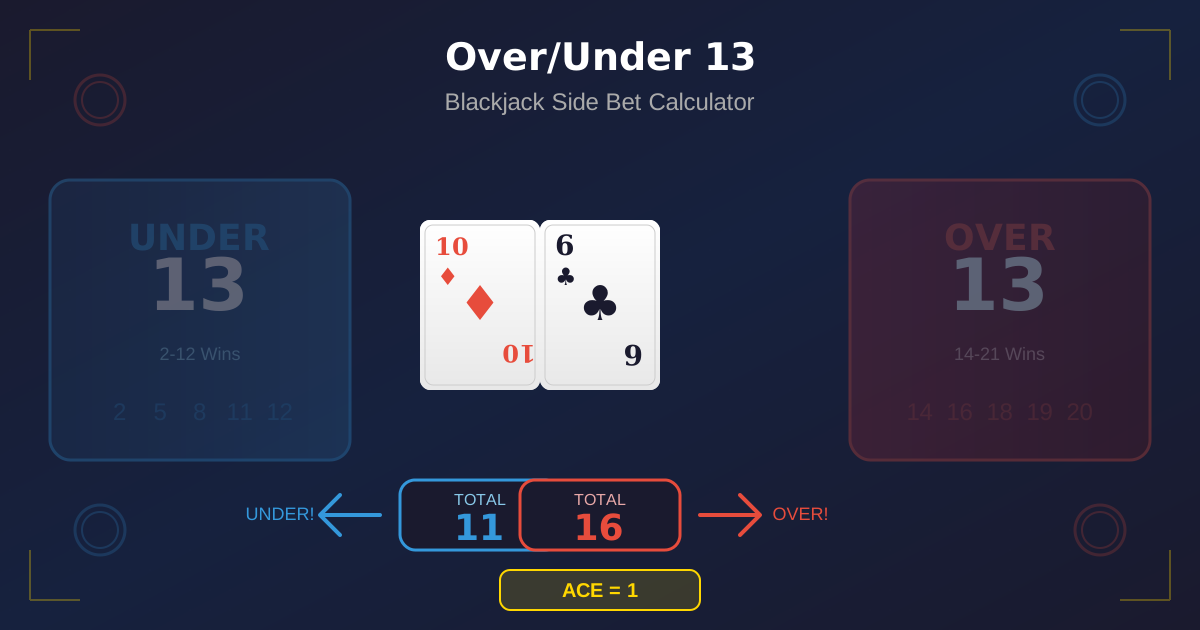
Over/Under 13 is a simple blackjack side bet—will your first two cards total over 13, under 13, or exactly 13? Aces count as 1, making this pure number prediction. Our calculator reveals why Under 13 offers better odds than Over.
What Is Over/Under 13?
Over/Under 13 is a side bet where you predict whether your first two cards will total more than 13 (Over), less than 13 (Under), or exactly 13. Aces always count as 1 for this bet. Totals of exactly 13 typically lose both bets or have special rules.
Quick Answer: Over/Under 13 = bet on your two-card total. Aces = 1 (always). Under 13: ~10% edge. Over 13: ~6.5% edge. Exactly 13: Typically loses both. Over is better mathematically. Simple prediction bet. House edge varies by payout.
How to Use Our Calculator
Use the Over/Under 13 Calculator →
Calculate probabilities for each outcome.
Step-by-Step Instructions
-
Select Bet Type: Over or Under
-
View Probability: Win chance
-
Check 13 Rule: What happens on exactly 13
-
Calculate House Edge: True cost
-
Compare Options: Over vs Under
Input Fields Explained
| Field | Description | Example |
|---|---|---|
| Bet Type | Over or Under | Over 13 |
| Your Total | Two-card sum | 15 |
| Probability | Win chance | 51.3% |
| Exactly 13 | Special rule | Loses |
| House Edge | True cost | 6.5% |
| Payout | If win | 1:1 |
How It Works
Ace Counts as 1
Critical rule:

Aces ALWAYS count as 1
Not 11 like in blackjack

Example:
A-K = 1 + 10 = 11 (Under 13)
A-A = 1 + 1 = 2 (Under 13)

This affects all calculations
Possible Totals
Two-card totals with ace = 1:

Minimum: 2+2 = 4 (or A+A = 2)
Actual minimum: 2 (A+A)
Maximum: K+K = 20

Range: 2-20
Midpoint: 13
Exactly 13 Rules
When total = 13:

Standard rule: Both bets lose
Some casinos: Push (tie)
Some casinos: Special payout

Check local rules
13 is the pivot point
Probability Analysis
Under 13 Probability
Totals 2-12 probability:

With aces = 1:
Many low combinations
~44.4% of hands

But 13 loses too
Effective win rate matters
Over 13 Probability
Totals 14-20 probability:

High cards + face cards
~45.3% of hands

Slightly more common
Because high cards cluster
Exactly 13 Distribution
Total = 13:

Ways to make 13:
3+10, 4+9, 5+8, 6+7
A+Q, A+K, 2+J, etc.

Probability: ~10.3%
This hurts both bets
House Edge Breakdown
Under 13 Edge
Under 13 analysis:

Win (2-12): ~44.4%
Lose (13+): ~55.6%

At 1:1 payout:
EV = 0.444 - 0.556 = -0.112
House edge: ~11.2%

That's HIGH!
Over 13 Edge
Over 13 analysis:

Win (14-20): ~45.3%
Lose (2-13): ~54.7%

At 1:1 payout:
EV = 0.453 - 0.547 = -0.094
House edge: ~9.4%

Still high, but better than Under
Why Over Is Better
Simple explanation:

More ways to get 14+ than 2-12
Ace = 1 reduces low totals
Face cards common
Over 13 wins slightly more

Still negative EV
But less negative
Pay Table Variations
Standard 1:1
Even money payouts:

Over 13: 1:1 (edge ~6.5%)
Under 13: 1:1 (edge ~10%)
Exactly 13: Loses

Common structure
High house edge
Enhanced Payouts
Some casinos offer:

Over 13: 1:1
Under 13: 1:1
Exactly 13: 10:1 (special bet)

Adds another option
Exactly 13 edge varies
Real-World Examples
Example 1: Under 13 Win
Low total:
Side bet: $5 on Under 13
Your cards: 5♠ 6♦

Total: 11 (Under 13)

Result: WIN
Payout: $5

Simple prediction correct
Example 2: Over 13 Win
High total:
Side bet: $5 on Over 13
Your cards: K♣ 8♥

Total: 18 (Over 13)

Result: WIN
Payout: $5

Face cards help Over
Example 3: Exactly 13
The losing middle:
Side bet: $5 on Under 13
Your cards: 4♠ 9♦

Total: 13 (Exactly)

Result: LOSE (typically)

13 hurts both bets
10% of hands
Example 4: Ace Calculation
Remember ace = 1:
Side bet: $5 on Under 13
Your cards: A♠ J♥

Total: 1 + 10 = 11 (Under 13)

Result: WIN

Ace as 1, not 11
Would be 21 in blackjack
Here it's 11
Strategy Considerations
Over vs Under
Which to bet:

Over 13: ~6.5% edge (better)
Under 13: ~10% edge (worse)

Always choose Over if playing
But still negative EV
No Skill Element
Pure prediction:

Can't influence cards
Random outcome
No strategy helps

Decision: Bet or not
Which type to bet
That's all
Bankroll Impact
Adding Over/Under 13:

Main bet: $25
Side bet: $5

100 hands:
Main game loss: ~$12.50
Side bet loss: ~$32.50

Triples expected loss!
High edge bet
Common Mistakes
1. Choosing Under 13
Mistake: 50/50 thinking Problem: Under has higher edge Fix: Always Over if playing
2. Forgetting Ace Rule
Mistake: Counting ace as 11 Problem: Misunderstanding outcomes Fix: Ace ALWAYS equals 1
3. Regular Betting
Mistake: Every hand Problem: 6-10% edge adds up fast Fix: Occasional entertainment
4. Large Side Bets
Mistake: $10-25 per hand Problem: Significant losses Fix: Minimal bets only
Frequently Asked Questions
Why does Under 13 have worse odds?
With aces counting as 1, low totals (2-12) are less common than high totals (14-20). The distribution favors Over.
How does the ace rule change things?
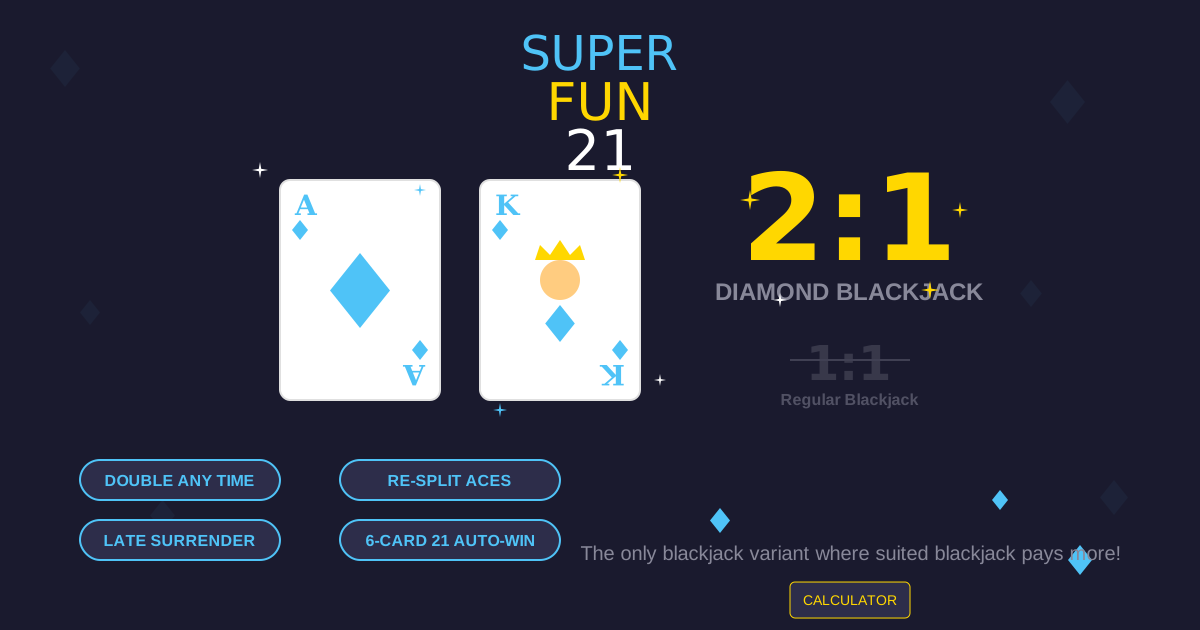
Dramatically. A-K in blackjack = 21, but in Over/Under 13 = 11 (Under). Aces always count as 1 here.
Is Over/Under 13 a good bet?
No. 6-10% house edge is high. Better than some side bets but worse than main blackjack game.
What happens on exactly 13?
Usually both bets lose. Some casinos push. Always check local rules.
Should I ever bet Under 13?
Mathematically, Over is always better. Only bet Under if that's your only option (rare).
Can I count cards for this?
Minimal value. Knowing remaining cards helps slightly but edge gained is small.
Pro Tips
-
Over beats Under: ~6.5% vs ~10% edge
-
Ace always = 1: Different from blackjack
-
Exactly 13 loses: ~10% of hands
-
High edge bet: Entertainment only
-
Small bets: Don't compound losses
Related Calculators
- Blackjack Odds Calculator - Main game
- Perfect Pairs Calculator - Lower edge
- 21+3 Calculator - Lower edge
- House Edge Calculator - Compare games
- Expected Value Calculator - Bet analysis
Conclusion
Over/Under 13 offers simple prediction gambling—will your total exceed 13?—but carries 6-10% house edge depending on which side you bet. Our calculator reveals why Over 13 is mathematically superior and how the ace-counts-as-1 rule shapes all the probabilities.
Calculate Over/Under 13 Odds Now →
Your A-K totals 11 here (ace = 1), not 21. Our calculator shows why Over 13 beats Under 13 and how the unique ace rule creates an asymmetric probability distribution.