The Sunk Cost Trap: Why Chasing Losses Is the Fastest Way to Go Broke (2026)
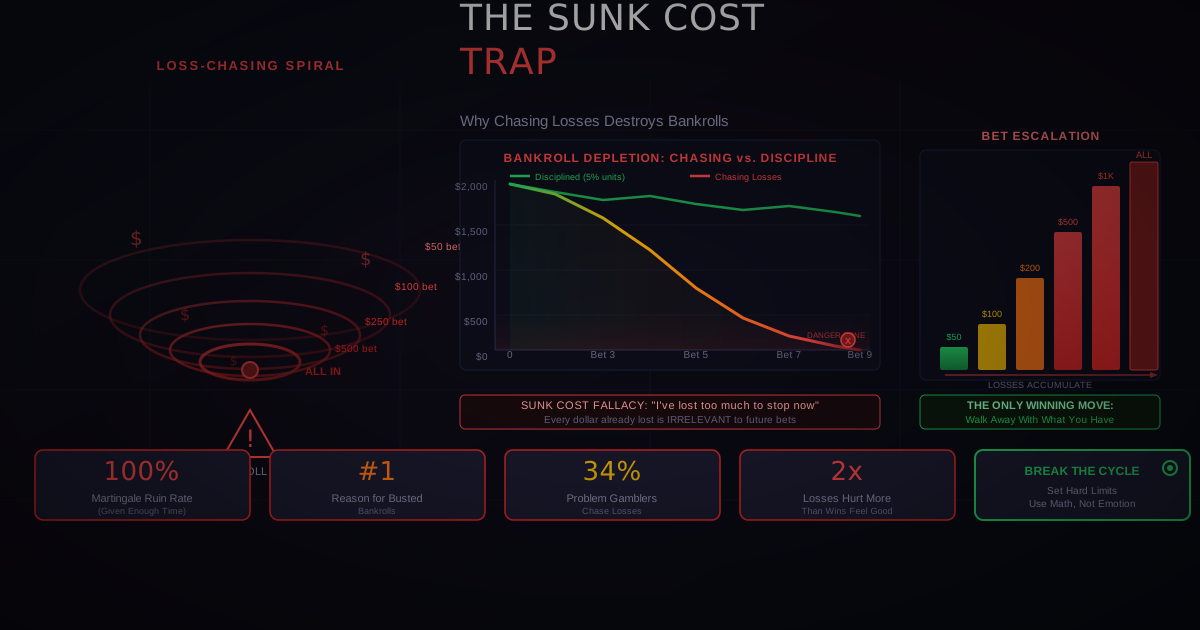
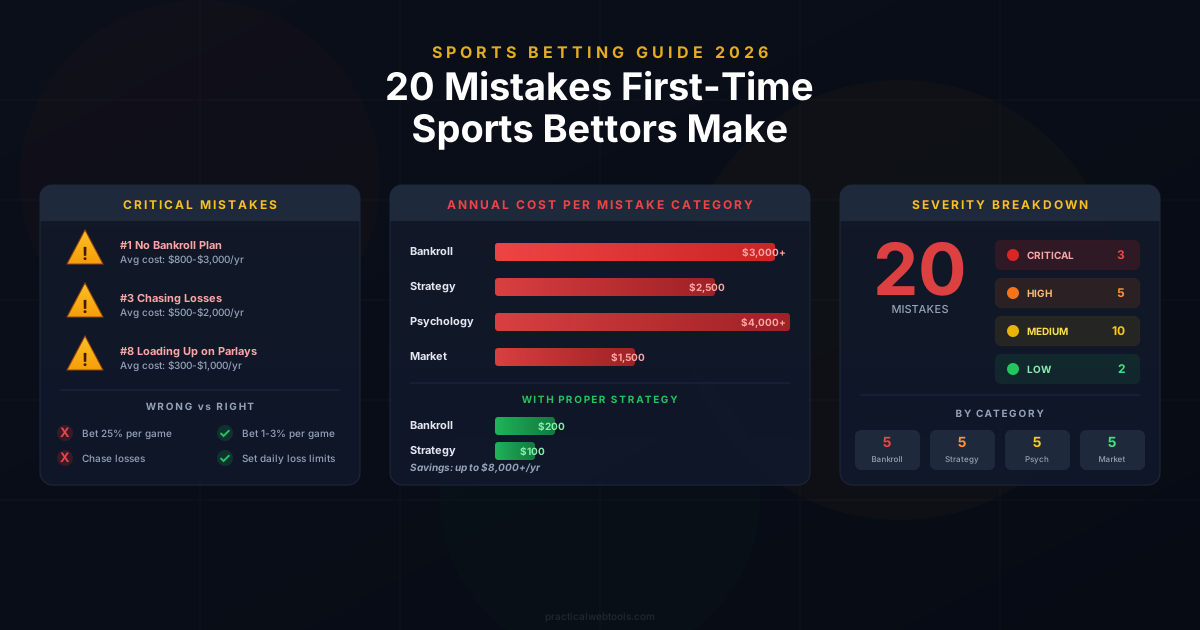
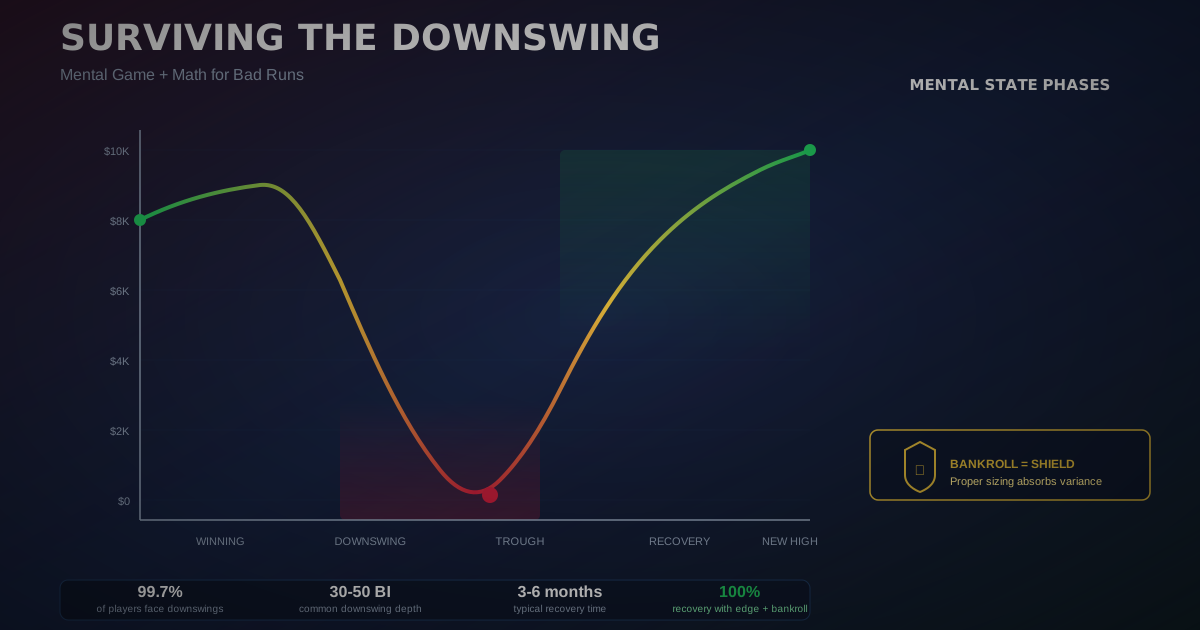
Chasing losses is the single most destructive behavior in all of gambling. It is not close. Card counting mistakes, poor bankroll management, tilted bet sizing, bad game selection--none of them come close to the catastrophic damage caused by a gambler who decides to "win it back." Every dollar you have ever lost at a casino or sportsbook was, at some point, a sunk cost. And the moment you bet more money to recover a sunk cost, you have entered a death spiral that has bankrupted more gamblers than any house edge ever could.
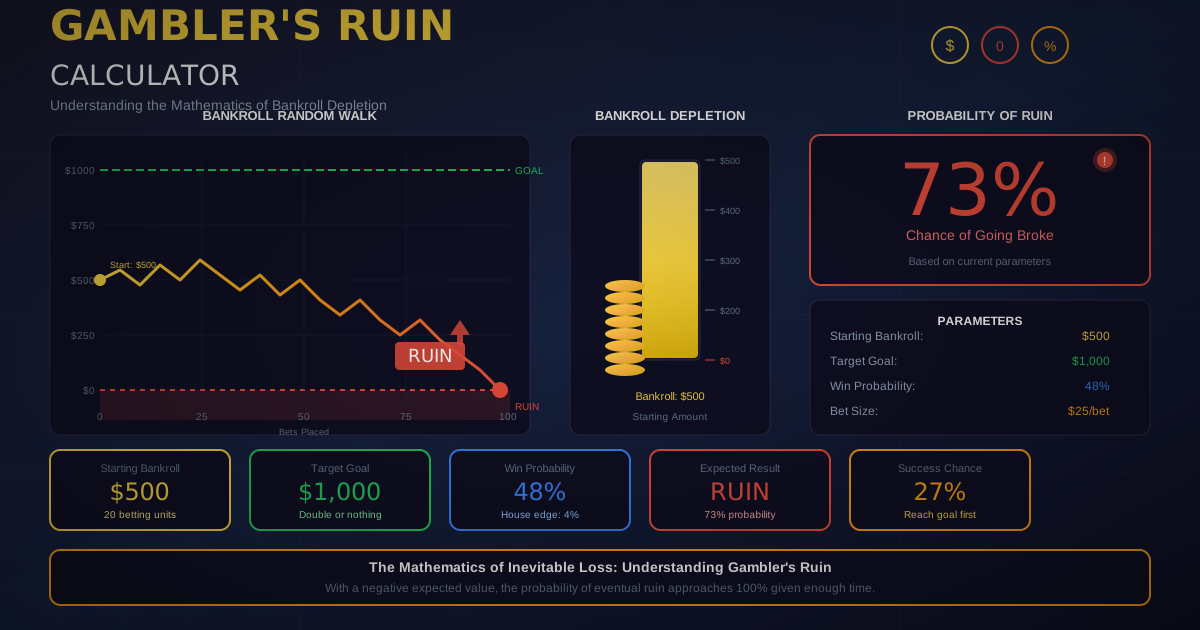
The research is unambiguous. Loss-chasing behavior is present in approximately 34% of problem gamblers compared to just 11% of recreational gamblers. It is a defining diagnostic criterion for gambling disorder in the DSM-5. Clinicians who treat gambling addiction consistently identify chasing losses as the single most frequent destructive behavior among their patients. And the math behind it is devastating: a gambler who doubles down after every loss using a martingale strategy faces a 100% probability of ruin given enough time, regardless of their edge, their bankroll size, or the game they are playing.
This is not a guide about moderation or tips for better bets. This is a detailed breakdown of exactly why your brain convinces you that chasing losses is rational when it is, in mathematical terms, the fastest path to zero.
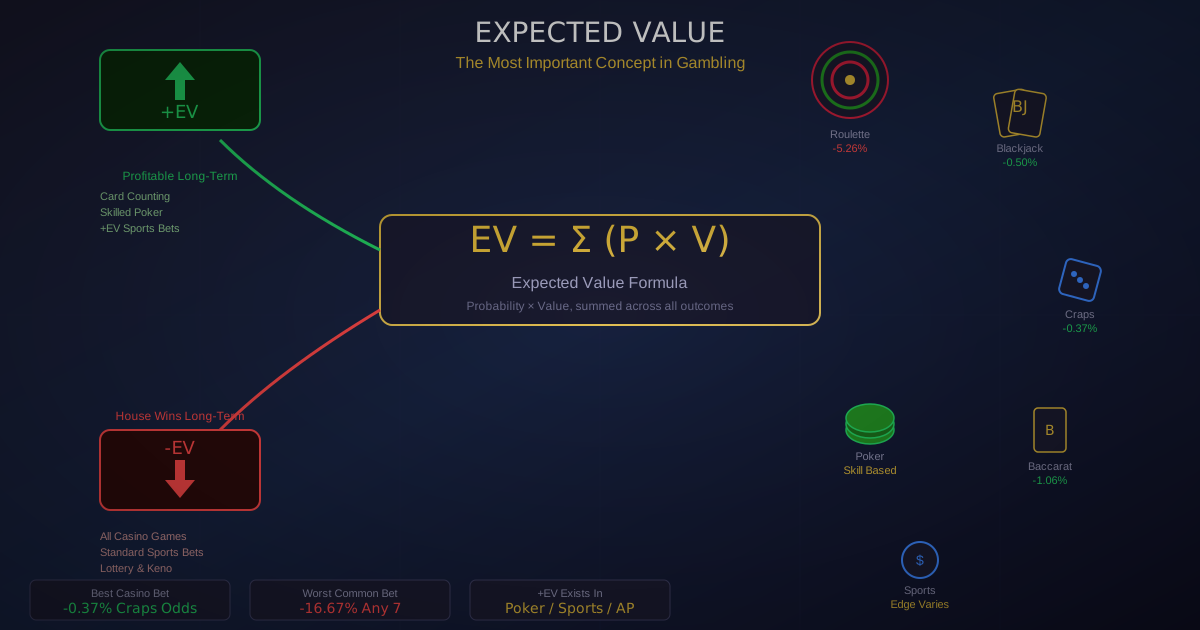
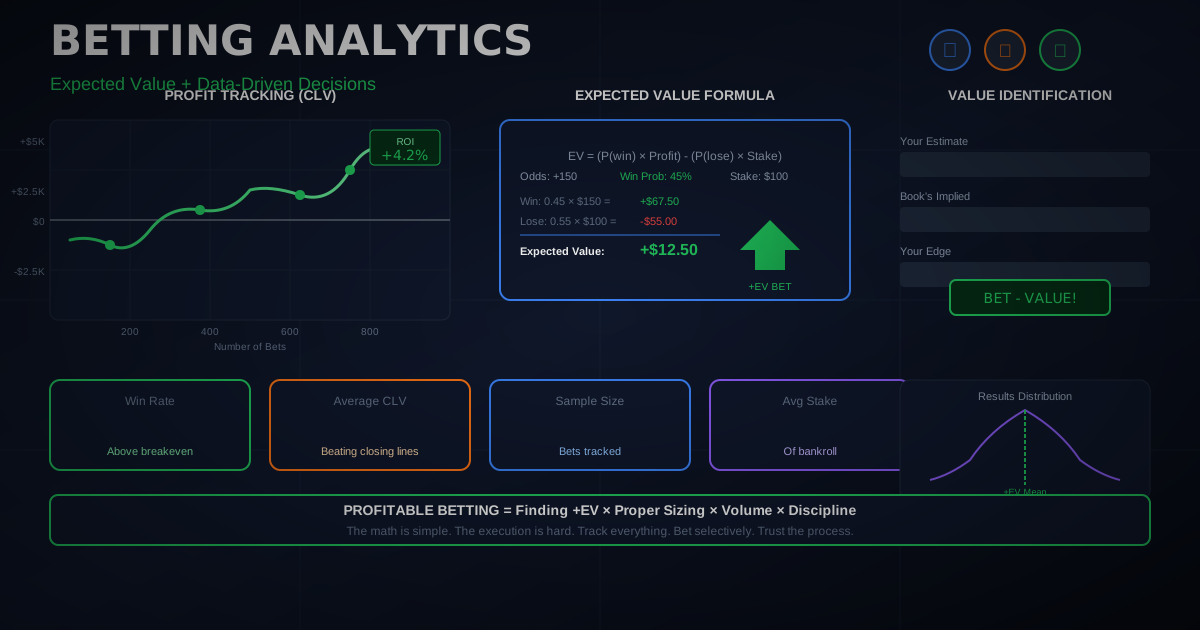
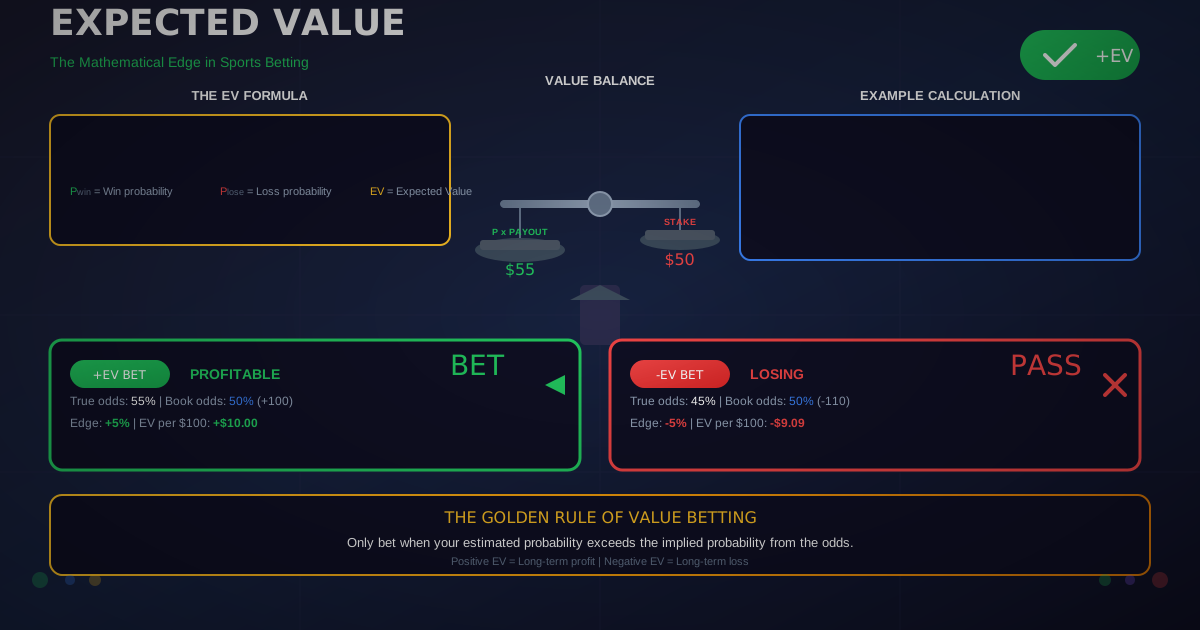
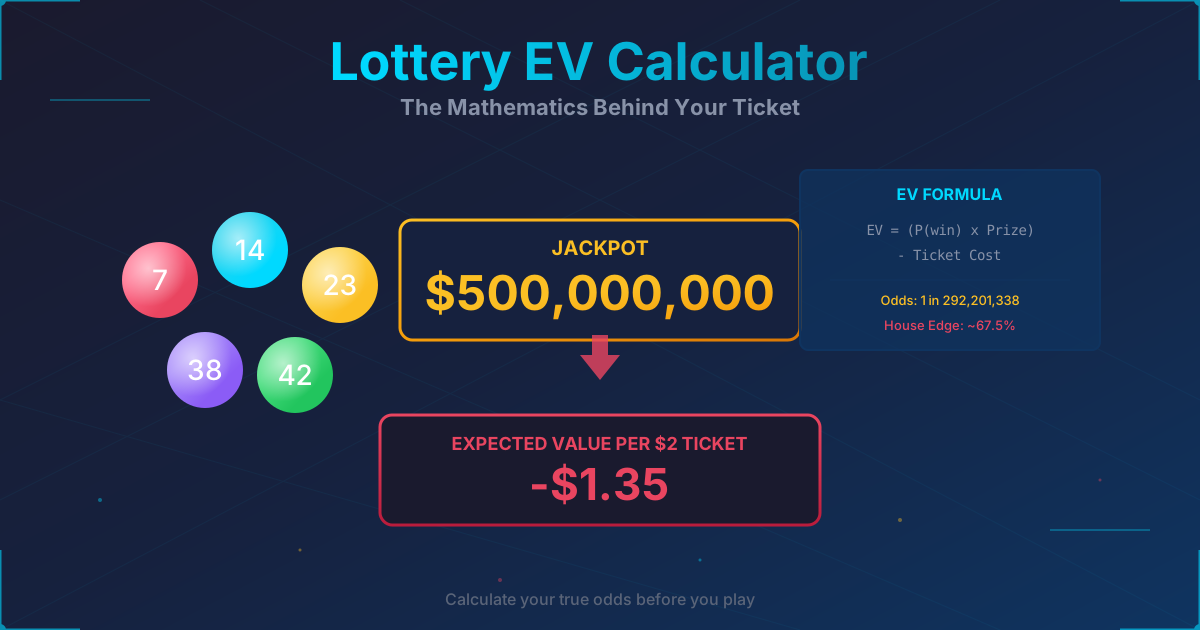
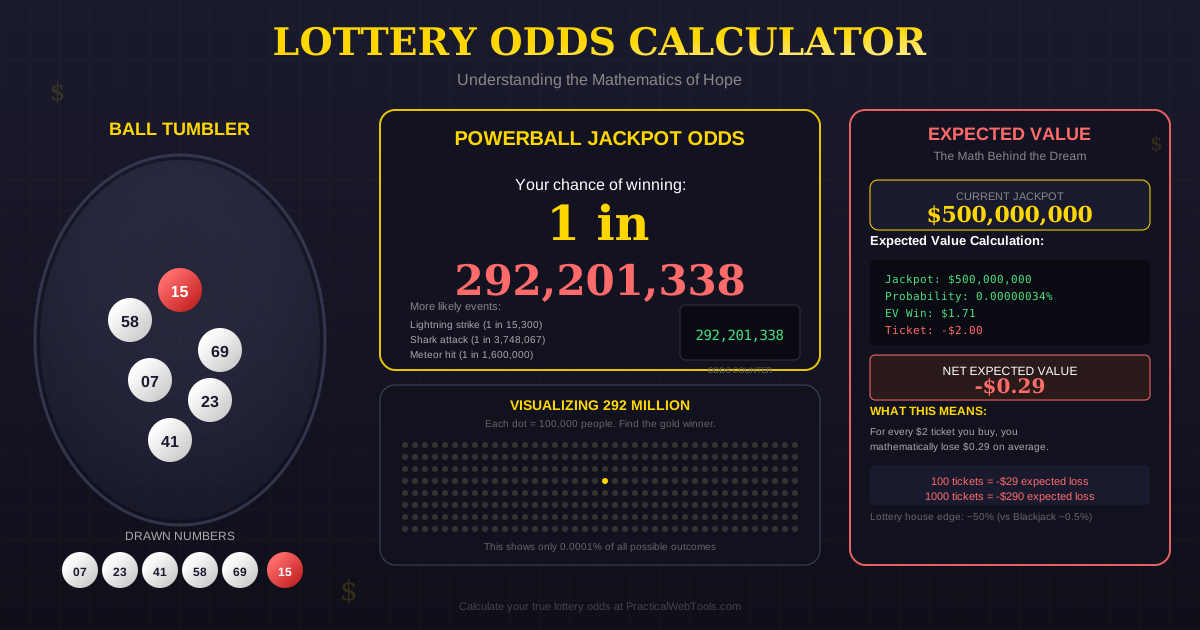
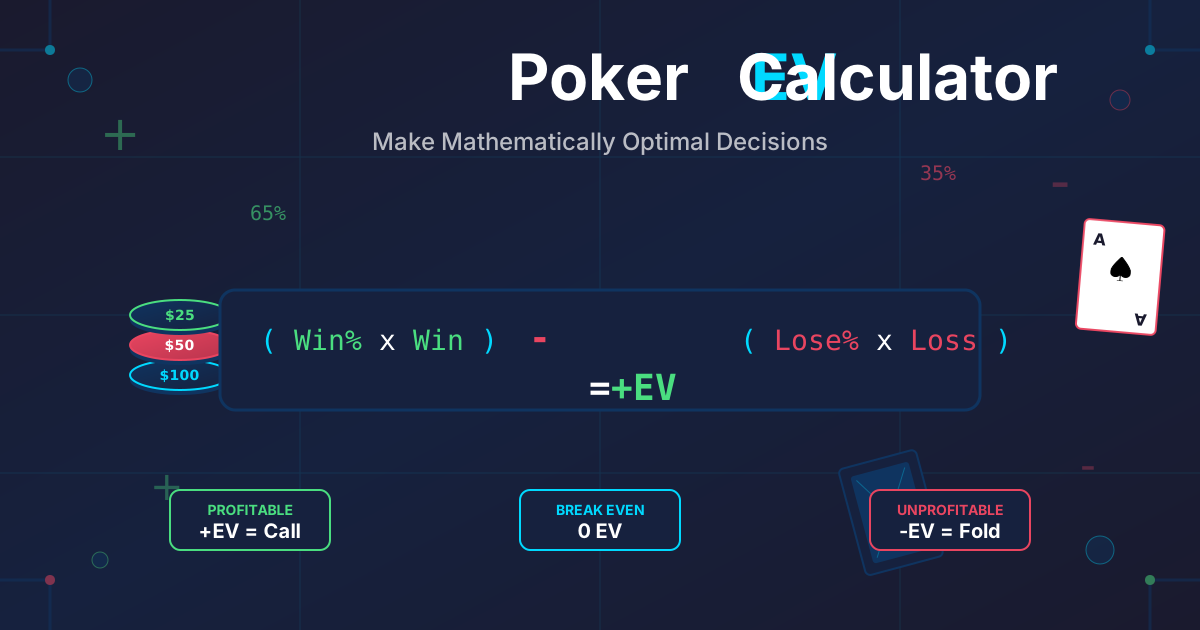
Calculate whether any bet actually has positive expected value before you place it with our free Expected Value Calculator.
The Sunk Cost Fallacy Explained: Why Your Brain Lies to You
The sunk cost fallacy is a cognitive bias where past investments--time, money, effort--influence your decision to continue an activity, even when continuing is objectively harmful. In rational decision-making, only future costs and benefits should matter. What you have already spent is gone. It cannot be recovered by spending more.
In gambling, this manifests as a simple and dangerous thought: "I am already down $500, so I need to keep playing to get it back."
That thought feels logical. It feels like common sense. And it is completely, provably wrong.
Why Sunk Costs Are Irrelevant to Future Bets
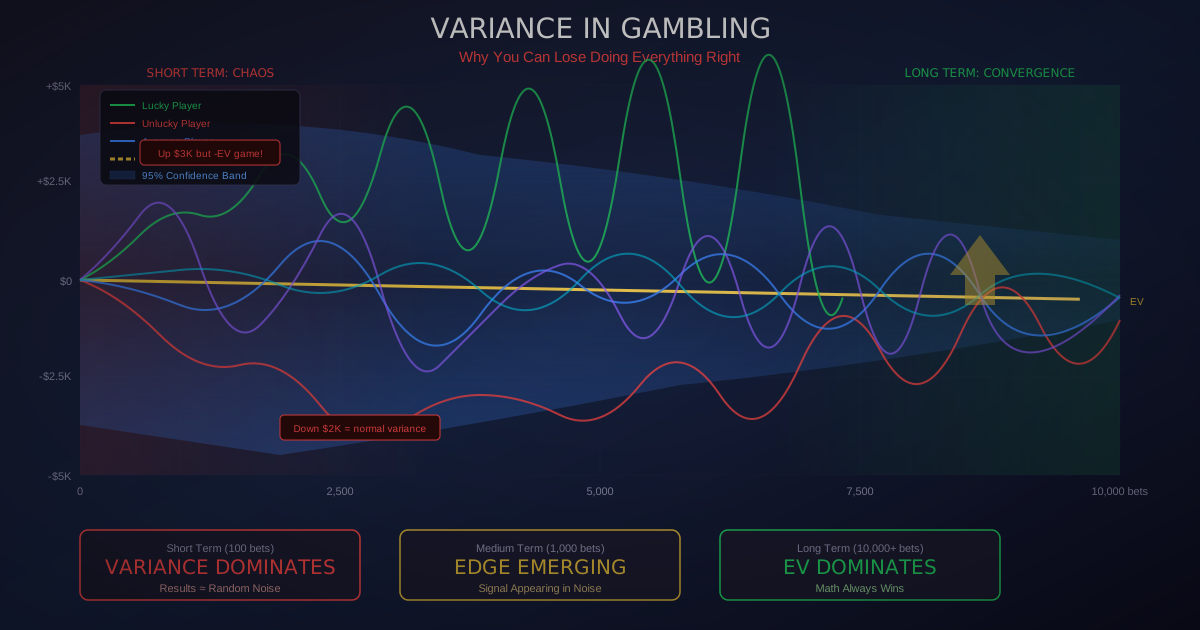
Every bet you place is an independent event with its own expected value. Whether you are up $10,000 or down $10,000 for the session, the next bet has the exact same odds, the exact same house edge, and the exact same expected value. The cards do not know you are losing. The roulette wheel does not owe you a win. The point spread on tonight's game does not adjust because you went 0-4 on the afternoon slate.
Consider two gamblers sitting side by side at a blackjack table:
- Gambler A just sat down with a fresh $500 bankroll
- Gambler B started with $1,500, has lost $1,000, and is now playing with $500
Both have $500 in front of them. Both face identical odds on the next hand. But Gambler B's brain is screaming that he needs to win back that $1,000. So he increases his bet size, plays hands he should sit out, and makes decisions based on emotional desperation rather than mathematical logic.
The $1,000 already lost has zero relevance to any future outcome. This is not an opinion. It is a mathematical fact.
The Neuroscience Behind Loss Chasing
An fMRI study published in the journal Neuropsychopharmacology found that individuals with gambling disorder show altered neural responses when processing sunk costs. Their brains exhibit heightened activation in the amygdala (the emotional processing center) and reduced activity in the prefrontal cortex (the rational decision-making center) when faced with escalating losses.
In plain language: losing money literally impairs your ability to think rationally about the next bet. The more you lose, the worse your decision-making becomes--at exactly the moment when good decisions matter most.
Assess your actual risk of ruin before making emotional decisions with our Poker Risk of Ruin Calculator.
Why Loss Chasing Feels Rational (But Is Not)
The terrifying thing about chasing losses is that it does not feel like irrational behavior. Your brain constructs entirely logical-sounding justifications for every escalation. Understanding these false rationalizations is the first step to defeating them.
The Five Rationalizations of Loss Chasing
| Rationalization | What Your Brain Tells You | The Mathematical Reality |
|---|---|---|
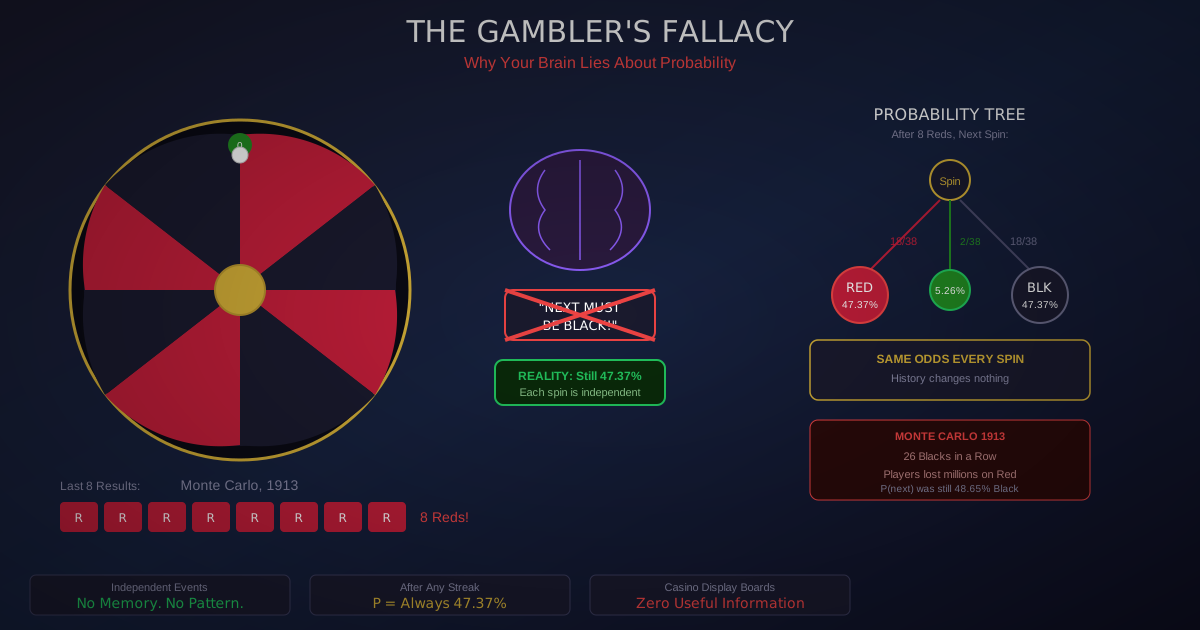
| "I am due for a win" | After a losing streak, a win must be coming | Each bet is independent; past losses do not affect future odds |
| "I just need to get back to even" | Breaking even is a reasonable, modest goal | The house edge makes "getting even" progressively harder the more you play |
| "I am playing with house money" | Once you win some back, you can be more aggressive | All money in front of you is YOUR money; there is no such thing as "house money" |
| "One big win fixes everything" | A single large bet can erase hours of losses | Large bets have the same (or worse) expected value as small bets, with higher variance |
| "I know this game, I just got unlucky" | Skill will overcome the current losing streak | Even skilled players face negative EV in most casino games; skill does not eliminate house edge |
Each of these rationalizations contains a kernel of emotional truth wrapped in mathematical fiction. The gambler's fallacy--the belief that independent events somehow "balance out"--is one of the most persistent cognitive errors in human psychology.
Loss Aversion: Why Losses Hurt Twice as Much
Nobel laureate Daniel Kahneman's prospect theory demonstrates that humans feel losses approximately twice as intensely as equivalent gains. Losing $100 produces roughly twice the emotional pain that winning $100 produces in pleasure.
This asymmetry is devastating for gamblers. When you lose $500, your brain does not calmly evaluate the situation. It experiences a pain response that demands action--any action--to make the pain stop. And the most immediately available action in a casino or on a sportsbook app is to place another bet.
This is not weakness. It is hardwired neurobiology. Recognizing it does not make you immune to it, but it does give you a chance to override it with pre-planned strategies.
The Math of Martingale and Doubling Down
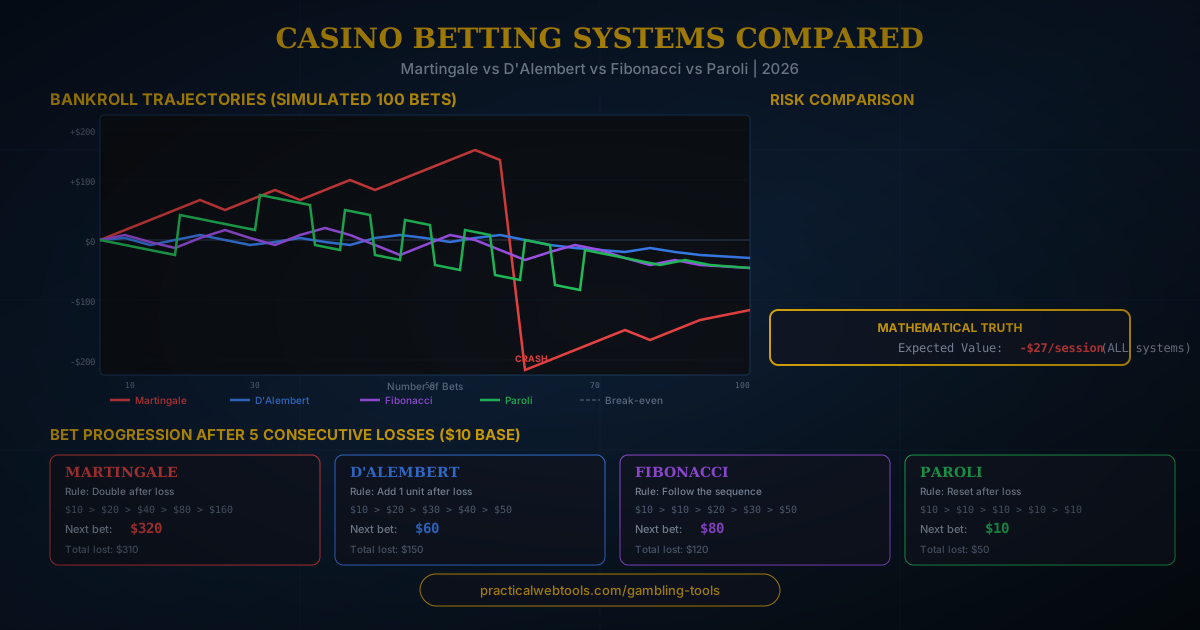
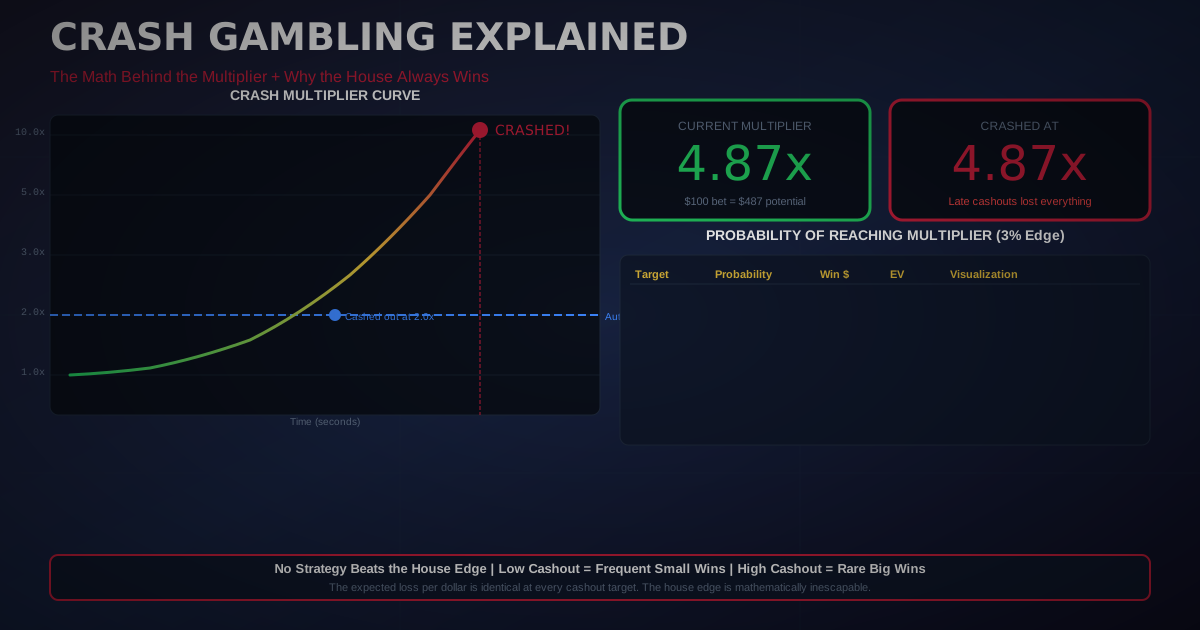
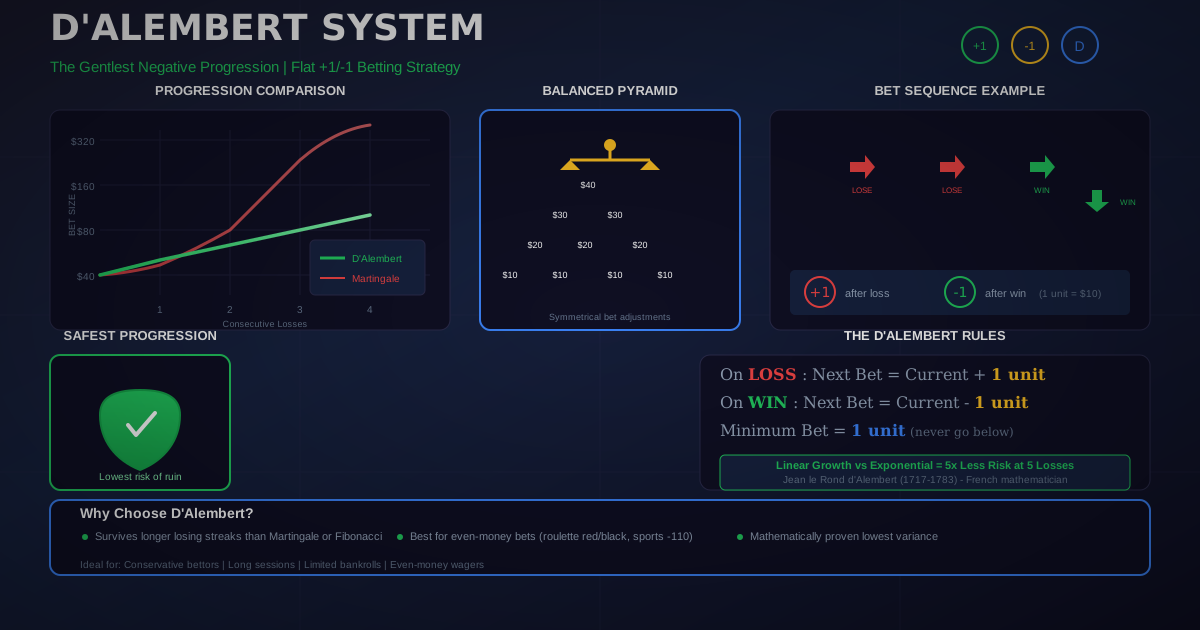
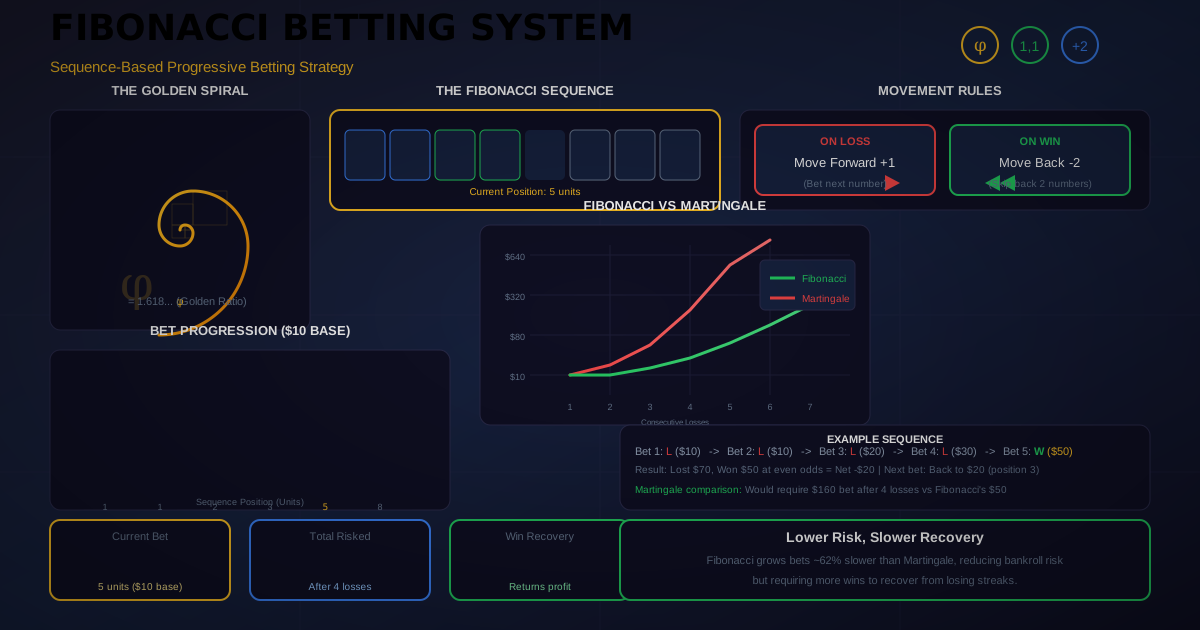
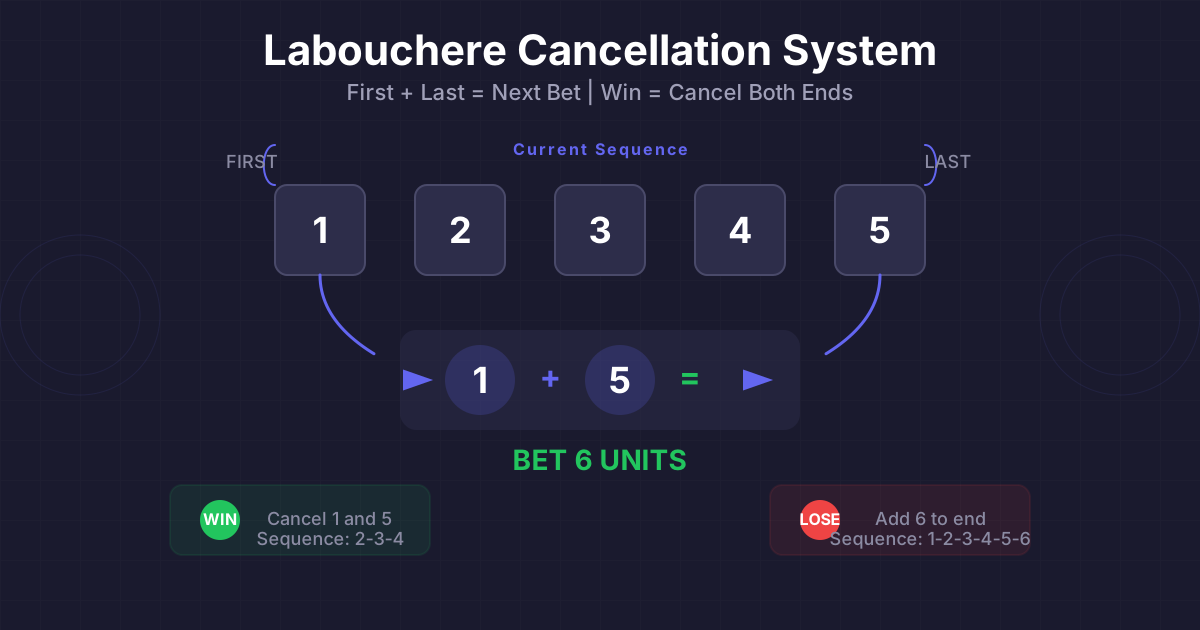
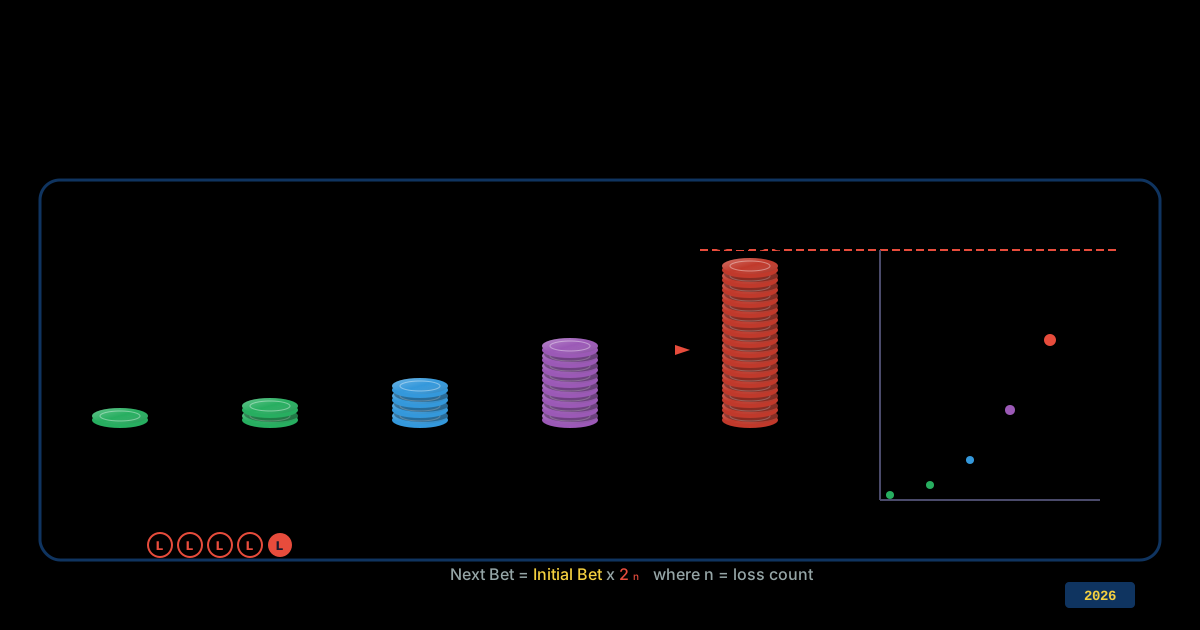
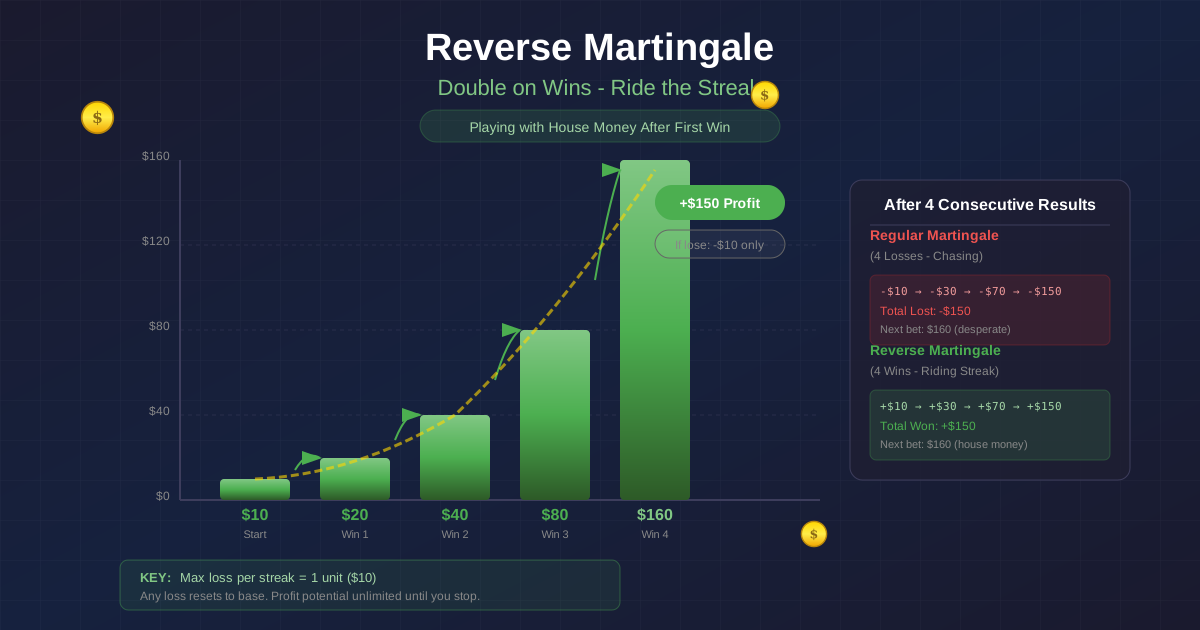
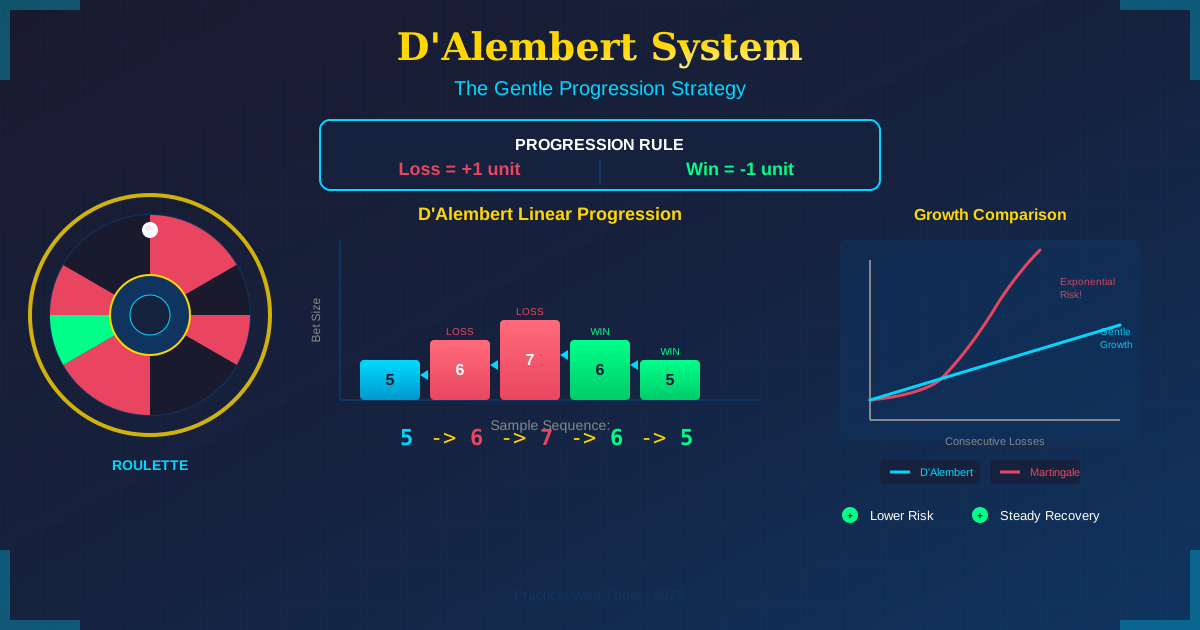
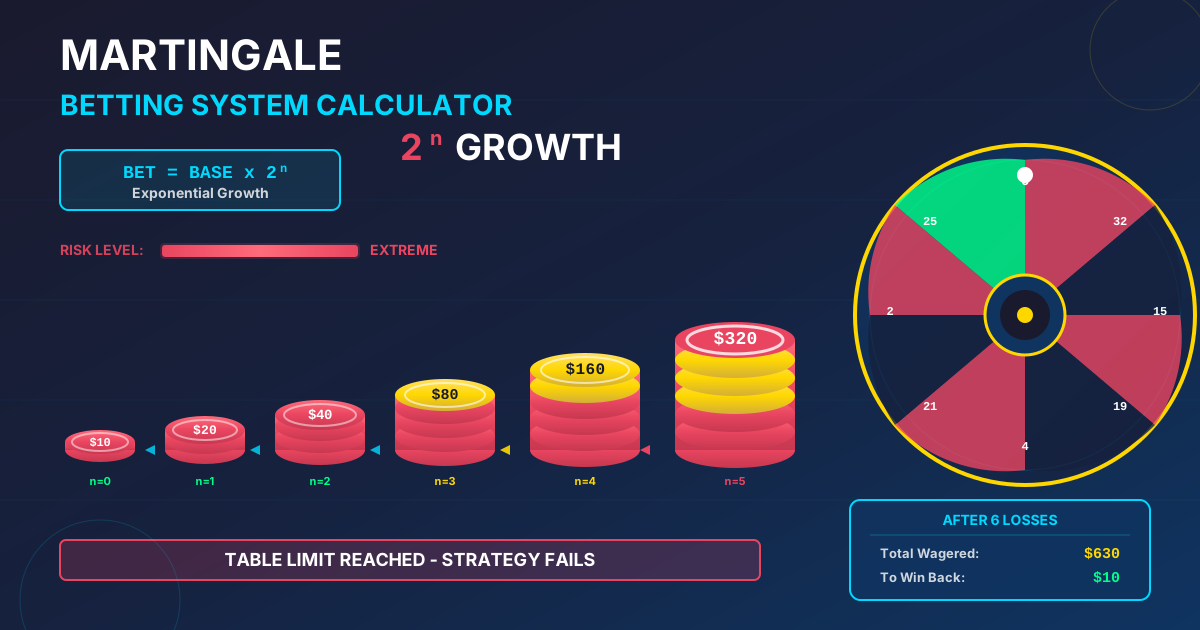
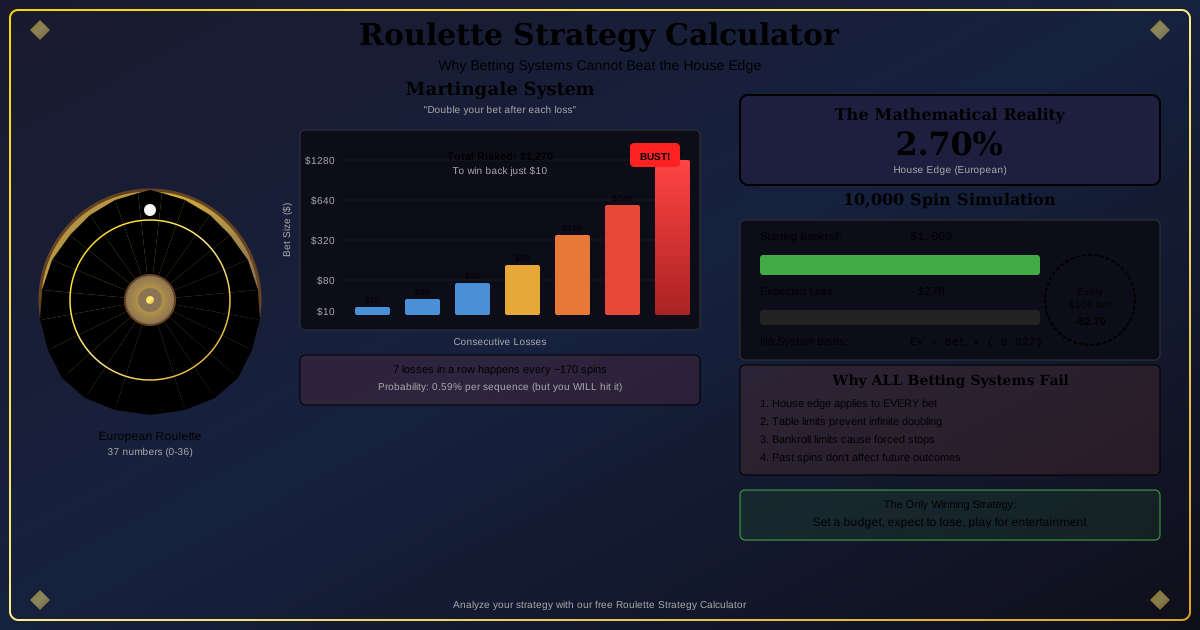
The martingale strategy is the purest expression of loss chasing reduced to a system. The logic is seductive: after every loss, double your bet. When you eventually win, you recover all previous losses plus a one-unit profit. It sounds mathematically perfect. It is mathematically guaranteed to fail.
How Martingale Works (and Fails)
Starting with a $10 bet at an even-money game (like a coin flip):
| Round | Bet Size | Total Invested | Win Payout | Net If Win | Net If Lose |
|---|---|---|---|---|---|
| 1 | $10 | $10 | $20 | +$10 | -$10 |
| 2 | $20 | $30 | $40 | +$10 | -$30 |
| 3 | $40 | $70 | $80 | +$10 | -$70 |
| 4 | $80 | $150 | $160 | +$10 | -$150 |
| 5 | $100 | $310 | $320 | +$10 | -$310 |
| 6 | $320 | $630 | $640 | +$10 | -$630 |
| 7 | $640 | $1,270 | $1,280 | +$10 | -$1,270 |
| 8 | $1,280 | $2,550 | $2,560 | +$10 | -$2,550 |
| 9 | $2,560 | $5,110 | $5,120 | +$10 | -$5,110 |
| 10 | $5,120 | $10,230 | $10,240 | +$10 | -$10,230 |
After just 10 consecutive losses, you have wagered over $10,000 to win a single $10 profit. And the probability of 10 consecutive losses at a fair game? Approximately 1 in 1,024. That might sound rare, but a gambler playing 200 rounds per session will encounter this roughly once every 5 sessions.
Why Martingale Guarantees Ruin
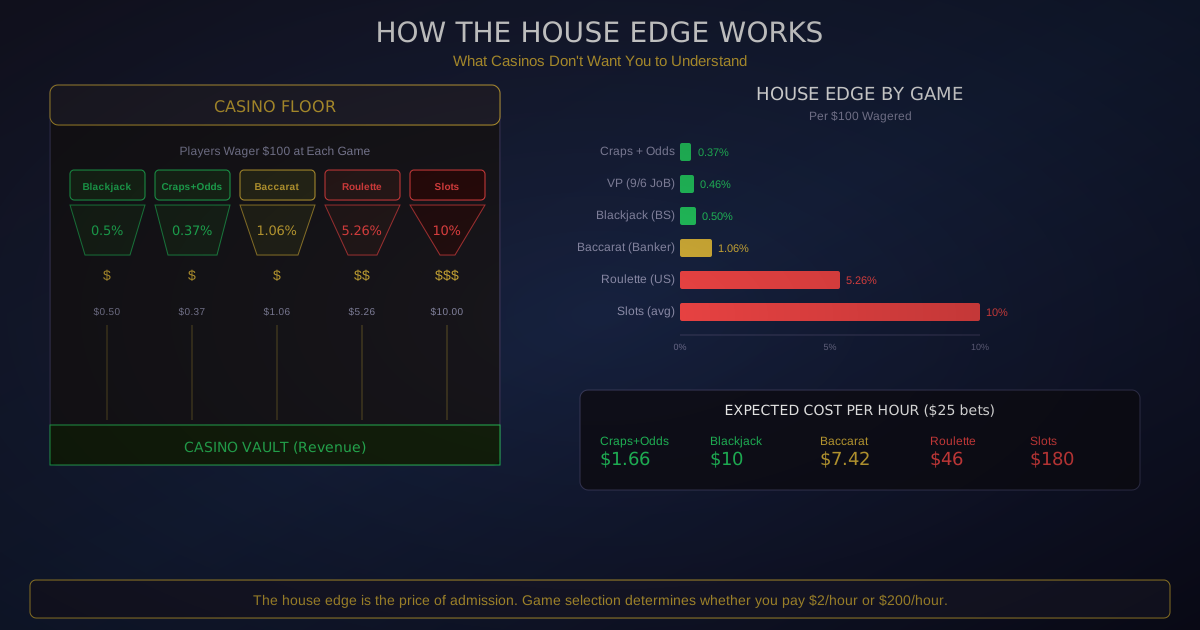
The mathematical proof of martingale failure comes from the optional stopping theorem. In any game with a negative expected value (which includes every casino game), no betting system can turn a negative expectation into a positive one. The expected value of the entire sequence of bets is simply the sum of the expected values of each individual bet--and the sum of negative numbers is always negative.
The three walls that destroy martingale:
-
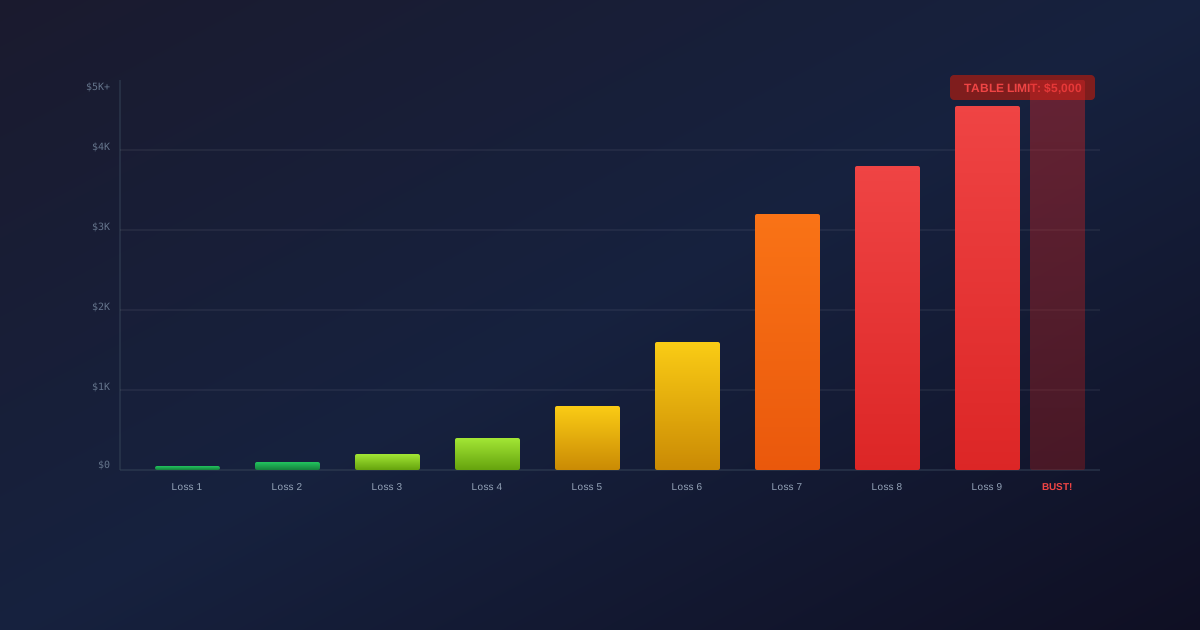
Table limits: Every table has a maximum bet. A $10 minimum bet table with a $5,000 maximum allows only 9 doublings before the system physically cannot continue.
-
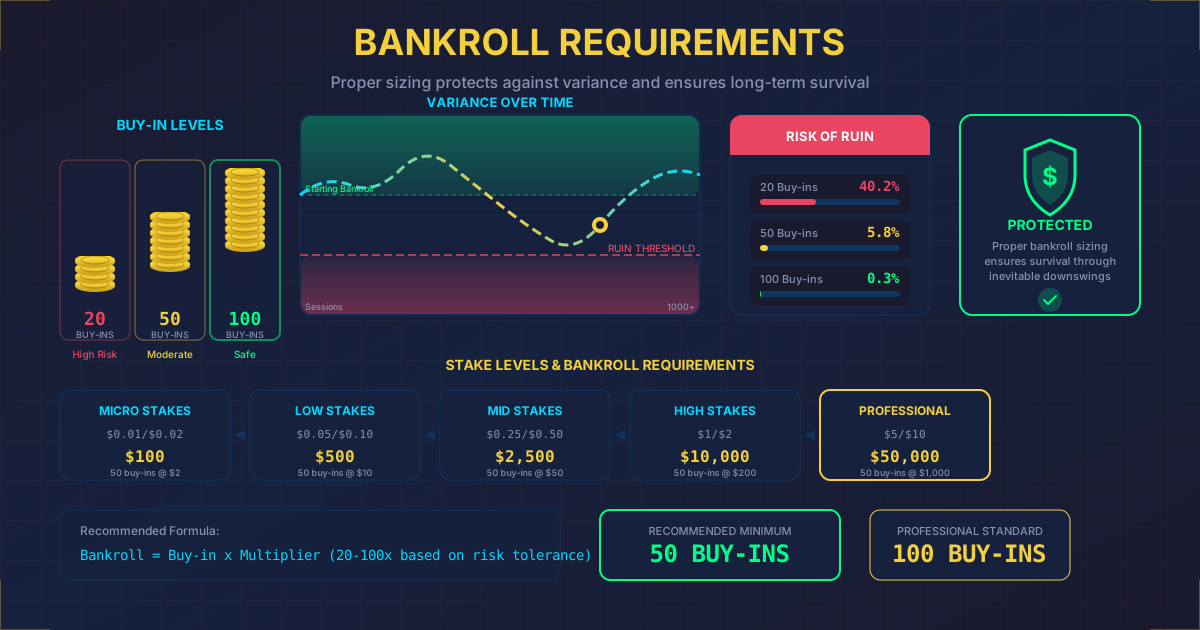
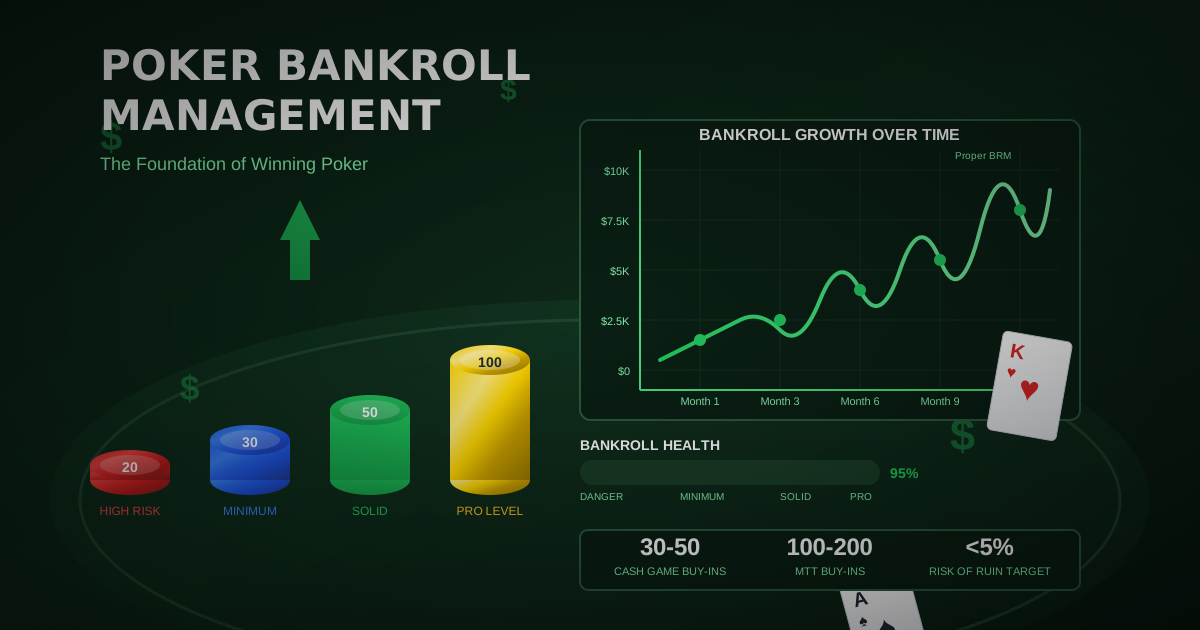
Finite bankroll: No one has infinite money. A $10,000 bankroll supports approximately 10 doublings from a $10 base bet. After that, you are broke.
-
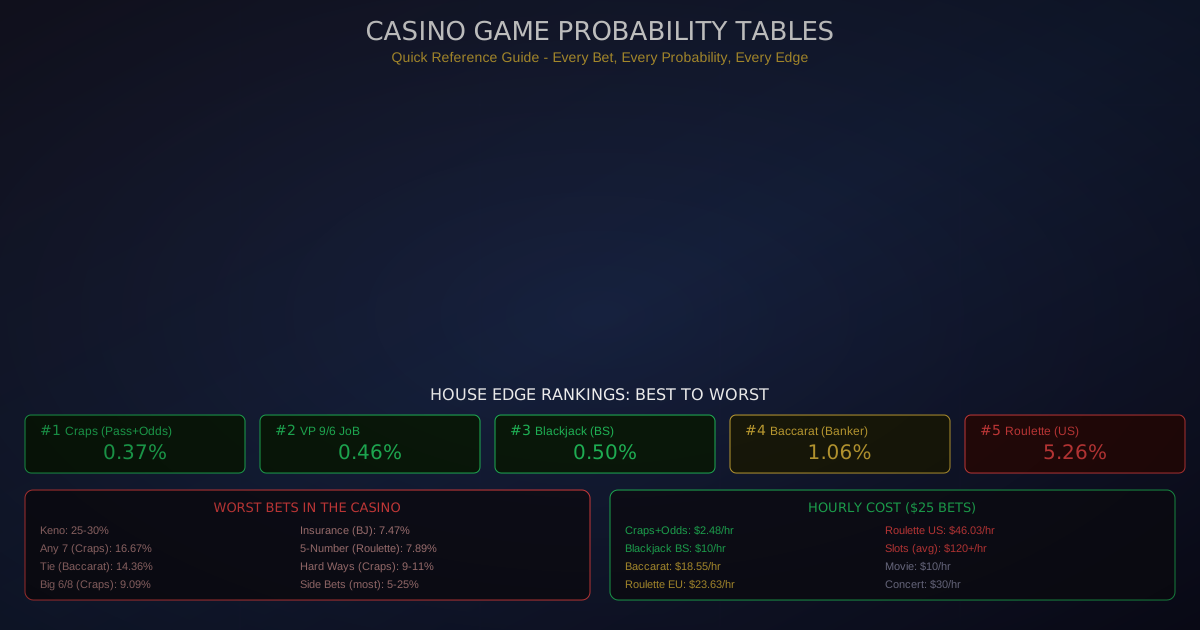
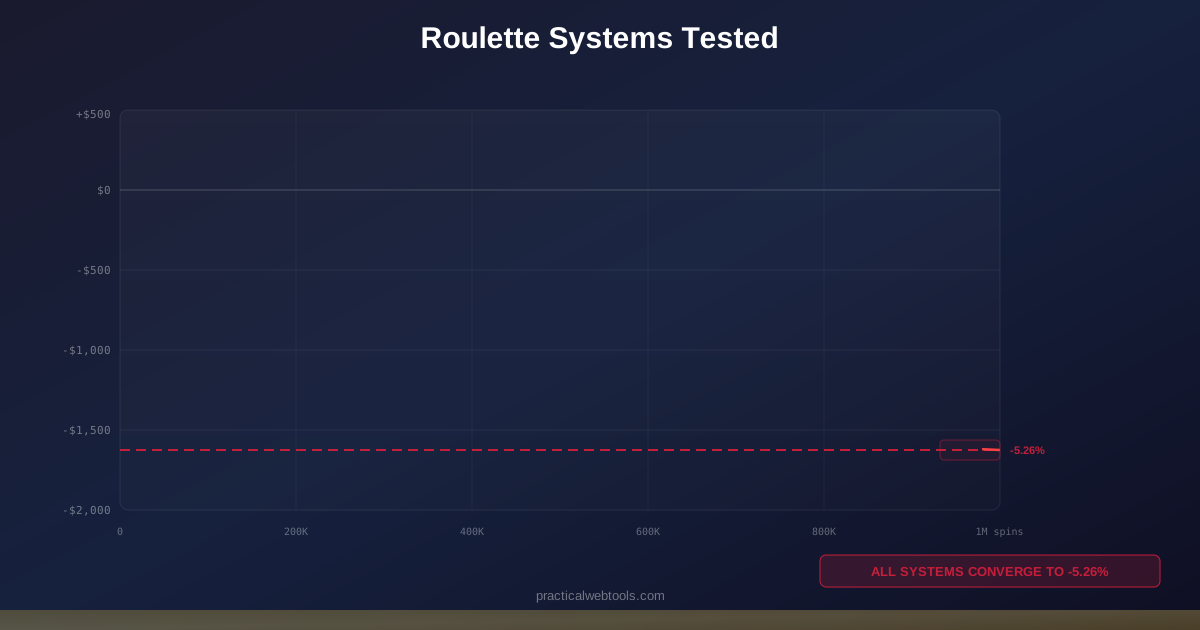
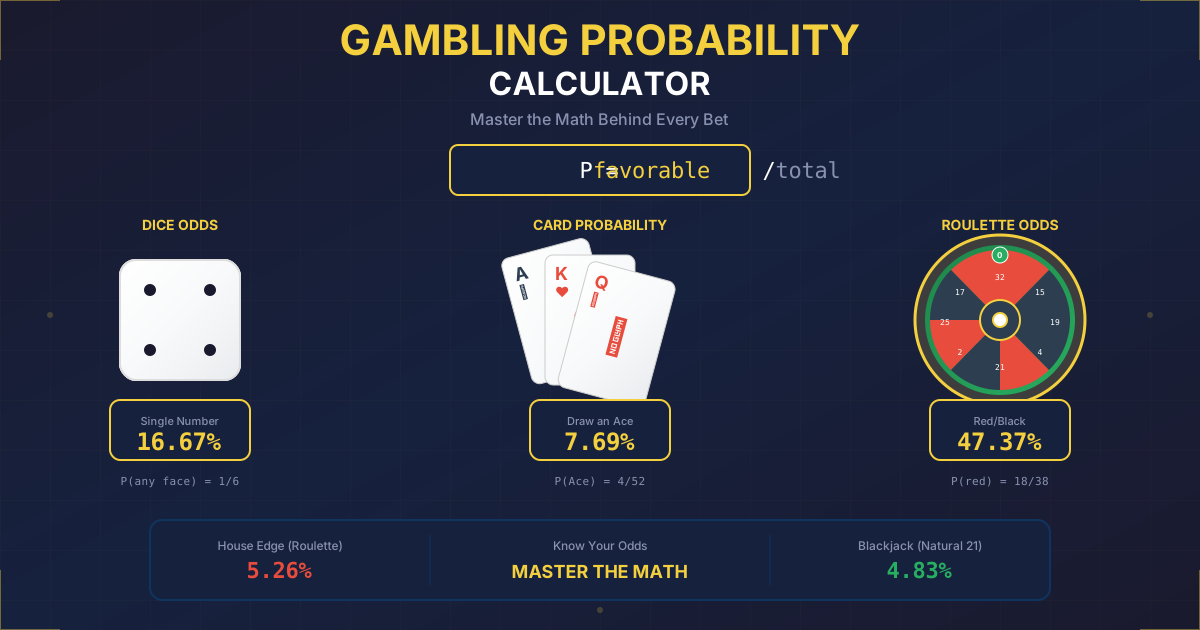
The house edge: Even on "fair" looking bets, the house edge compounds. Roulette's even-money bets have a 5.26% edge (American) or 2.70% edge (European). Over a martingale sequence, this edge eats away at expected value on every single bet.
Martingale Failure Rates by Bankroll Size
| Starting Bankroll | Base Bet | Max Doublings | Losing Streak to Bust | Probability of Bust per Attempt | Expected Sessions Before Bust |
|---|---|---|---|---|---|
| $500 | $10 | 5 | 6 losses | 1.56% (fair) / 2.13% (roulette) | ~64 / ~47 |
| $1,000 | $10 | 6 | 7 losses | 0.78% / 1.07% | ~128 / ~94 |
| $5,000 | $10 | 8 | 9 losses | 0.20% / 0.27% | ~512 / ~375 |
| $10,000 | $10 | 9 | 10 losses | 0.10% / 0.13% | ~1,024 / ~750 |
| $50,000 | $10 | 12 | 13 losses | 0.012% / 0.017% | ~8,192 / ~6,000 |
The critical insight: every row in this table ends the same way. Given enough time, the bust probability reaches 100%. You are not avoiding ruin with a larger bankroll. You are delaying it while risking more money.
Run your own risk-of-ruin calculations with our Poker Risk of Ruin Calculator.
Real Escalation Scenarios: The Math of Going Broke
Abstract math is easy to dismiss. Concrete dollar amounts are not. Here are five detailed scenarios showing exactly how loss chasing destroys real bankrolls.
Scenario 1: The Sports Bettor Who "Just Needed One More Win"
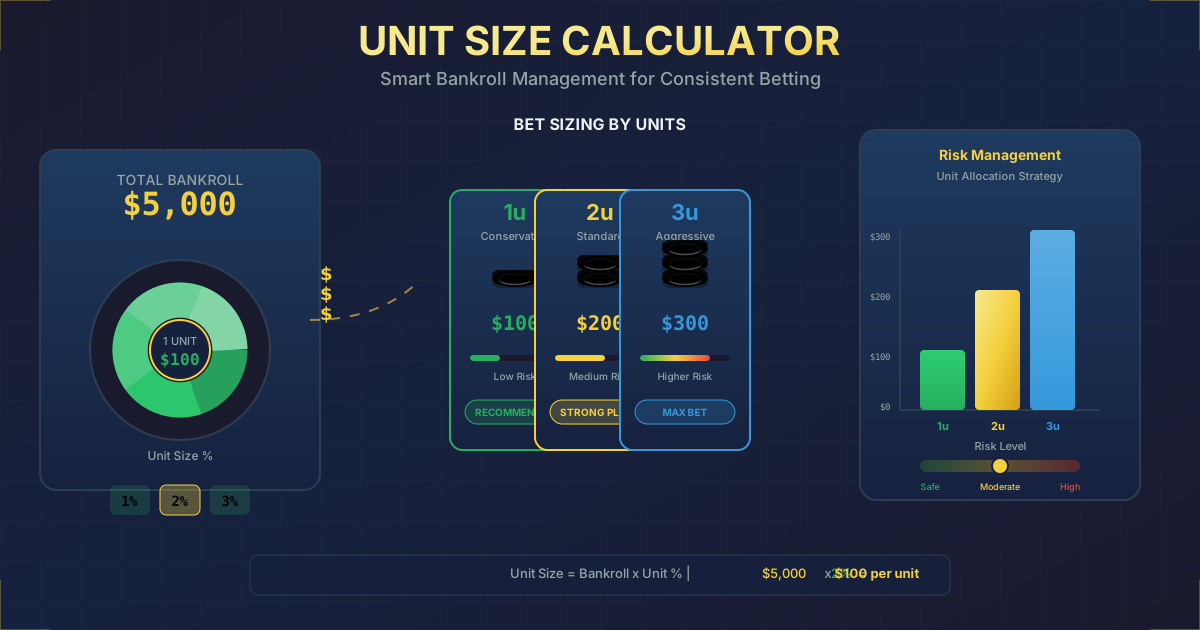
Starting bankroll: $2,000 Typical bet size: $100 (5% of bankroll) Game: NFL point spreads at -110
The afternoon starts with three losing bets: -$330 (including vig).
| Decision Point | Bankroll | Rational Bet | Actual Bet (Chasing) | Reasoning |
|---|---|---|---|---|
| After 3 losses (-$330) | $1,670 | $85 (5%) | $200 | "I need to make up ground" |
| Loss 4 (-$220) | $1,450 | $75 | $300 | "Just one hit gets me close to even" |
| Loss 5 (-$330) | $1,120 | $56 | $500 | "Can't leave this down" |
| Loss 6 (-$550) | $570 | $29 | $570 (all in) | "Last game of the night, I feel good about this one" |
| Loss 7 | $0 | -- | -- | Bankroll gone |
Going 0-7 on an NFL Sunday is not unusual. Respected cappers have losing weeks constantly. But the disciplined bettor who stuck to 5% units would still have $1,330 remaining. The chaser is broke.
Net result of chasing: Lost $2,000 instead of $670. A 199% increase in losses from chasing behavior alone.
Scenario 2: The Blackjack Player Who Doubled Into Disaster
Starting bankroll: $1,000 Starting bet size: $25 Game: Blackjack with 0.5% house edge
After losing 8 of 10 hands (-$225 including splits and doubles), the player begins chasing:
- Increases base bet to $50: loses 4 of 6 hands (-$175 net)
- Remaining bankroll: $600. Increases to $100 per hand
- Wins 3 hands, loses 5: net -$175
- Remaining bankroll: $425. Goes to $200 per hand
- Loses 2 in a row: -$400
- Remaining bankroll: $25. Cannot even meet the minimum bet at most tables.
Total session time: 90 minutes Total hands played: ~40 Result with disciplined $25 bets: Would have lost approximately $125 over the same stretch (statistical average given the loss rate), with $875 remaining. Result with chasing: Lost $975, nearly the entire bankroll.
Scenario 3: The Roulette Martingale Catastrophe
Starting bankroll: $5,000 System: Martingale on red/black Table minimum: $25 | Table maximum: $5,000
The player arrives confident. The system "works" for 45 minutes, accumulating $375 in small $25 profits. Then:
- Bet $25 on red. Black. (-$25, down $25)
- Bet $50 on red. Black. (-$75 total)
- Bet $100 on red. Black. (-$175 total)
- Bet $200 on red. Black. (-$375 total, profits erased)
- Bet $400 on red. Black. (-$775 total)
- Bet $800 on red. Black. (-$1,575 total)
- Bet $1,600 on red. Black. (-$3,175 total)
- Bet $3,200 on red. Remaining bankroll is only $1,825. Cannot complete the doubling.
Result: The player can bet $1,825 and pray. If black hits again (47.37% chance on American roulette), they are done. Eight consecutive same-color results happen approximately once every 170 spins on an American wheel. In a typical 3-hour session of 120+ spins, this is far from a rare event.
Scenario 4: The Online Slots Deposit Spiral
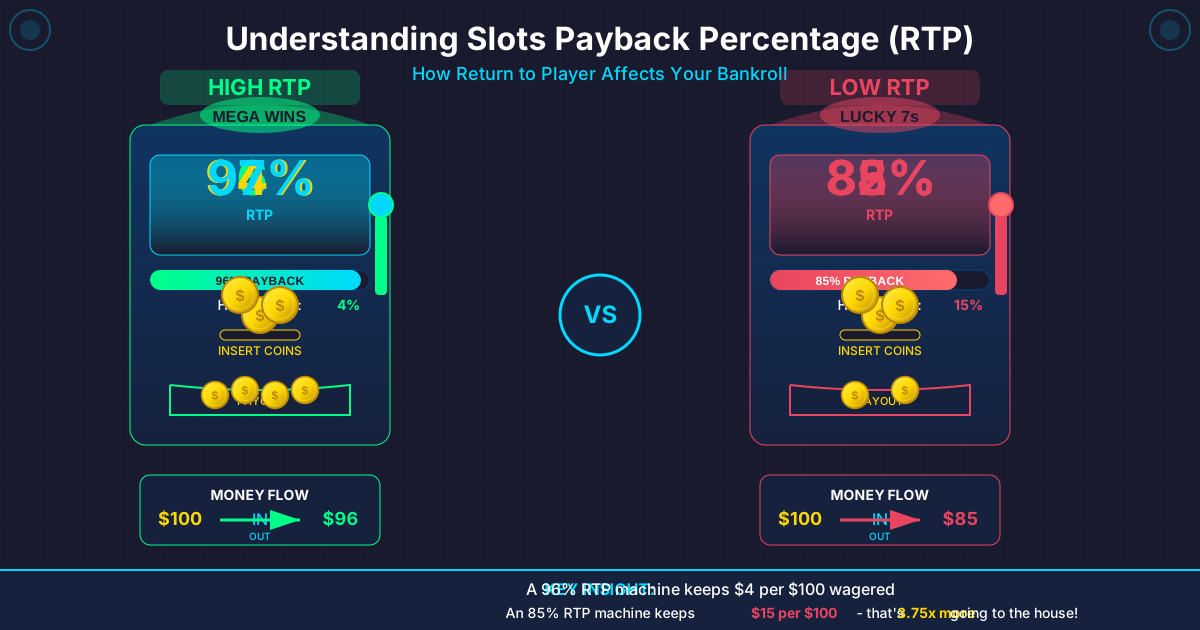
Initial deposit: $200 Game: Online slots with 96% RTP
The player burns through $200 in 30 minutes (standard for high-volatility slots). Then the deposit spiral begins:
| Deposit Number | Amount | Time Until Depleted | Total Invested | Emotional State |
|---|---|---|---|---|
| 1 | $200 | 30 minutes | $200 | Excited, exploring |
| 2 | $200 | 25 minutes | $400 | "Warming up, due for a bonus" |
| 3 | $300 | 20 minutes | $700 | Frustrated, increasing bet size |
| 4 | $500 | 15 minutes | $1,200 | Desperate, max betting |
| 5 | $500 | 10 minutes | $1,700 | Numb, mechanical clicking |
| 6 | $300 | 8 minutes | $2,000 | Final deposit, "last chance" |
Total time: Under 2 hours Total lost: $2,000 Expected loss at original bet size over 2 hours: Approximately $200-$300
The escalating deposits accelerated her losses by 7-10x compared to staying at her original bet level. Each deposit felt justified because of the last one. Each one was a sunk cost fueling the next.
Scenario 5: The Poker Player Who Could Not Leave the Table
Starting bankroll: $3,000 (30 buy-ins for $1/$2 NL Hold'em) Starting buy-in: $200 (standard 100bb)
After two brutal coolers (set over set, nut flush vs. straight flush), the player is down $600. Rather than accepting variance, they begin chasing:
- Rebuys for $300 (150bb), playing loose-aggressive to "get it back fast"
- Tilted play leads to another $300 loss
- Moves to $2/$5 table to "recover faster" with a $500 buy-in
- Overplays marginal hands against tighter competition, loses $500
- Returns to $1/$2 with $1,300 remaining, buys in for $500 again
- Eight hours into the session, exhausted and tilted, makes increasingly poor decisions
- Loses another $800
Total session loss: $2,700 (90% of bankroll) Expected loss range for a winning player running bad: $400-$800 over the same period with disciplined play
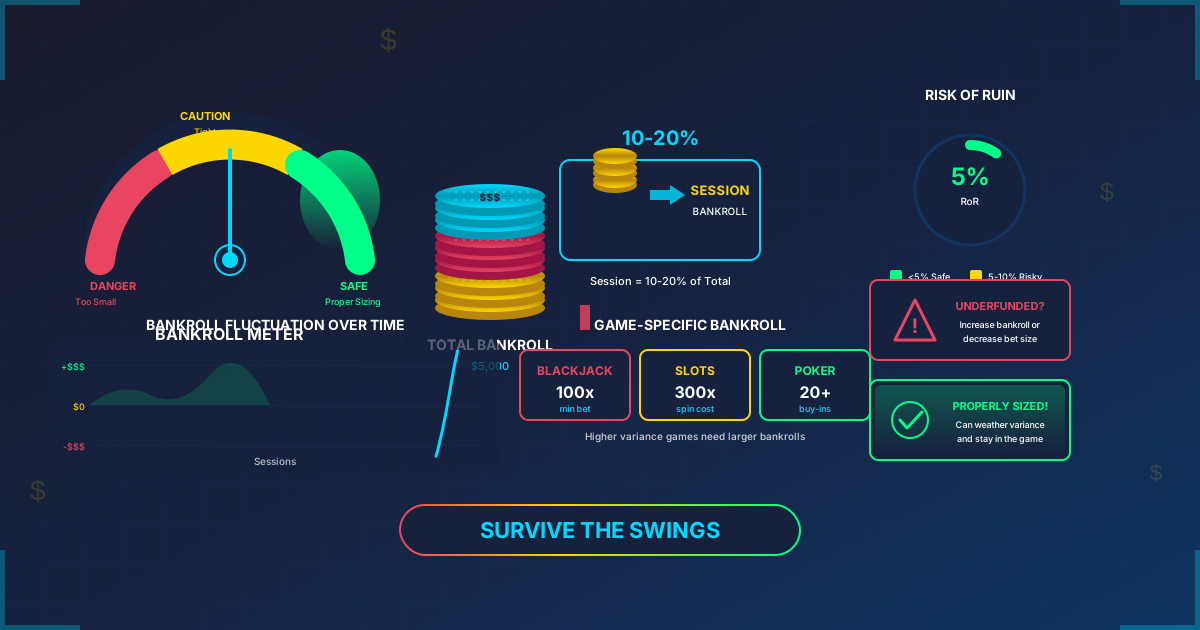
Use our Poker Bankroll Requirements Calculator to set clear stop-loss limits before every session.
The Emotional Stages of Loss Chasing
Loss chasing follows a predictable psychological escalation pattern. Recognizing which stage you are in can help you stop before reaching the point of no return.
Stage 1: Denial ($0 - 20% of Bankroll Lost)
"This is just a bad run. It will turn around." Bet sizes remain normal or increase slightly. The gambler is still making mostly rational decisions but is starting to ignore stop-loss guidelines.
Stage 2: Frustration (20% - 40% of Bankroll Lost)
"This is ridiculous. I am playing well and getting unlucky." Bet sizes increase noticeably. The gambler starts making bets they would not normally consider--parlays instead of straight bets, side bets at the table, higher-volatility games.
Stage 3: Desperation (40% - 60% of Bankroll Lost)
"I just need ONE good hit." Bet sizes become disproportionate to the remaining bankroll. The gambler is now making decisions based entirely on emotion. Strategy is abandoned in favor of anything that offers a path back to even.
Stage 4: Panic (60% - 80% of Bankroll Lost)
"I cannot go home like this." The gambler may begin accessing money that was not designated for gambling--credit cards, ATM withdrawals, borrowed funds. Bet sizing becomes erratic. Every decision is filtered through the desperation to avoid the reality of the losses.
Stage 5: Capitulation (80% - 100% of Bankroll Lost)
"I am already down this much, what difference does the rest make?" The remaining bankroll is treated as insignificant. The gambler either goes all-in on a single bet or makes a series of reckless max-bets until the money is gone.
| Stage | Bankroll Remaining | Bet Size vs. Normal | Decision Quality | Can You Still Recover? |
|---|---|---|---|---|
| 1 - Denial | 80-100% | 1-1.5x normal | Mostly rational | Yes, walk away now |
| 2 - Frustration | 60-80% | 1.5-2x normal | Declining | Yes, but discipline required |
| 3 - Desperation | 40-60% | 2-4x normal | Emotion-driven | Unlikely without stopping |
| 4 - Panic | 20-40% | 4-10x normal | Severely impaired | Only by stopping immediately |
| 5 - Capitulation | 0-20% | All-in / max bet | Non-existent | No, damage is done |
The key insight: the transition from Stage 1 to Stage 5 can happen in minutes. Online gambling in particular compresses these stages because there is no physical barrier between losing and depositing more money.
How Sportsbooks and Casinos Encourage Loss Chasing
The gambling industry does not passively benefit from loss chasing--it actively engineers it. Understanding these tactics makes you harder to manipulate.
Targeted "Second Chance" Promotions
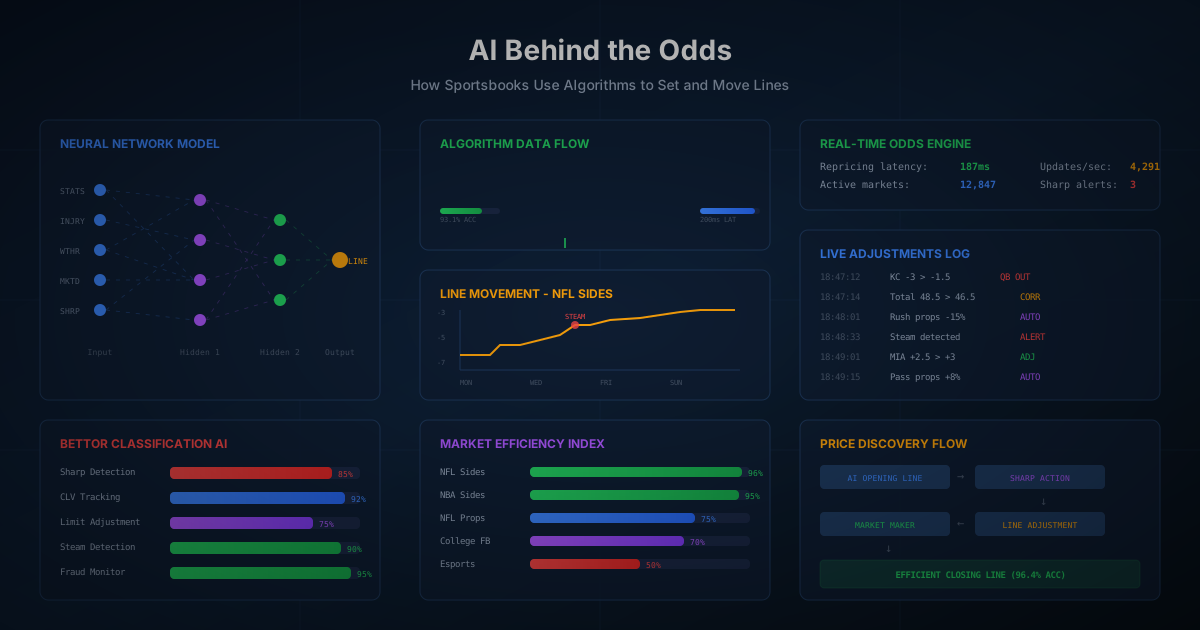
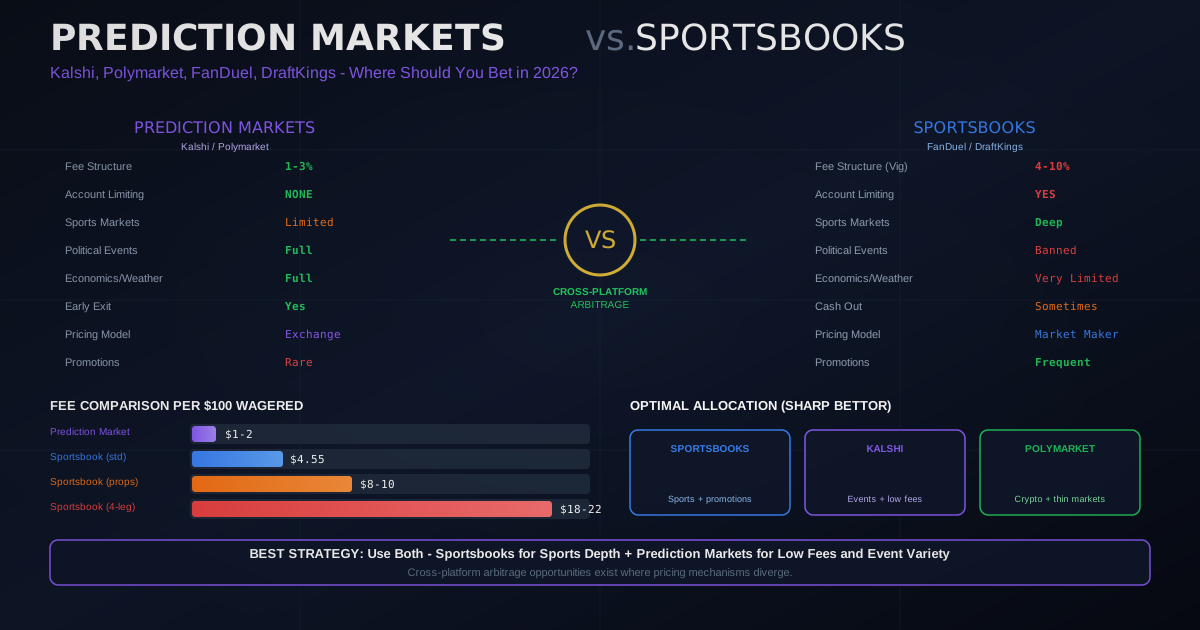
Sports betting platforms use behavioral data and machine learning algorithms to identify when users are most susceptible to continued betting. After a losing streak, the app may push a notification: "Second chance bet: Get up to $50 back if your next bet loses!" This conditions users to view continued betting after losses as a low-risk recovery strategy.
The reality: the refunded amount comes as site credit, not cash. It requires additional wagering to withdraw. The promotion is designed to keep you betting through a losing streak, not to protect you from one.
Near-Miss Engineering
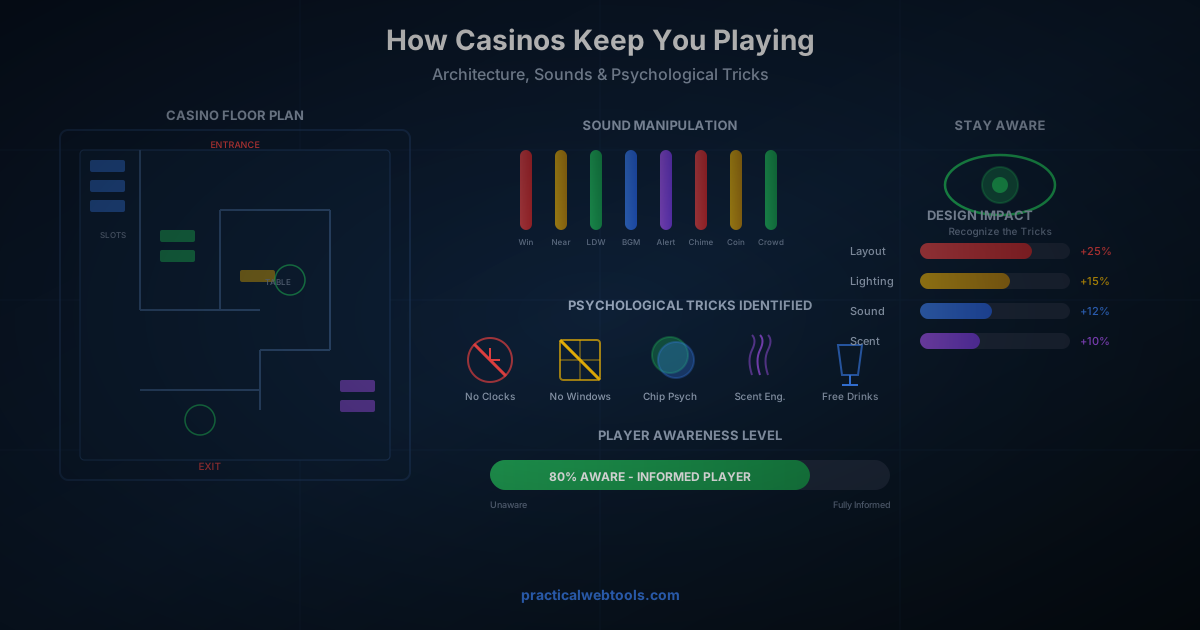
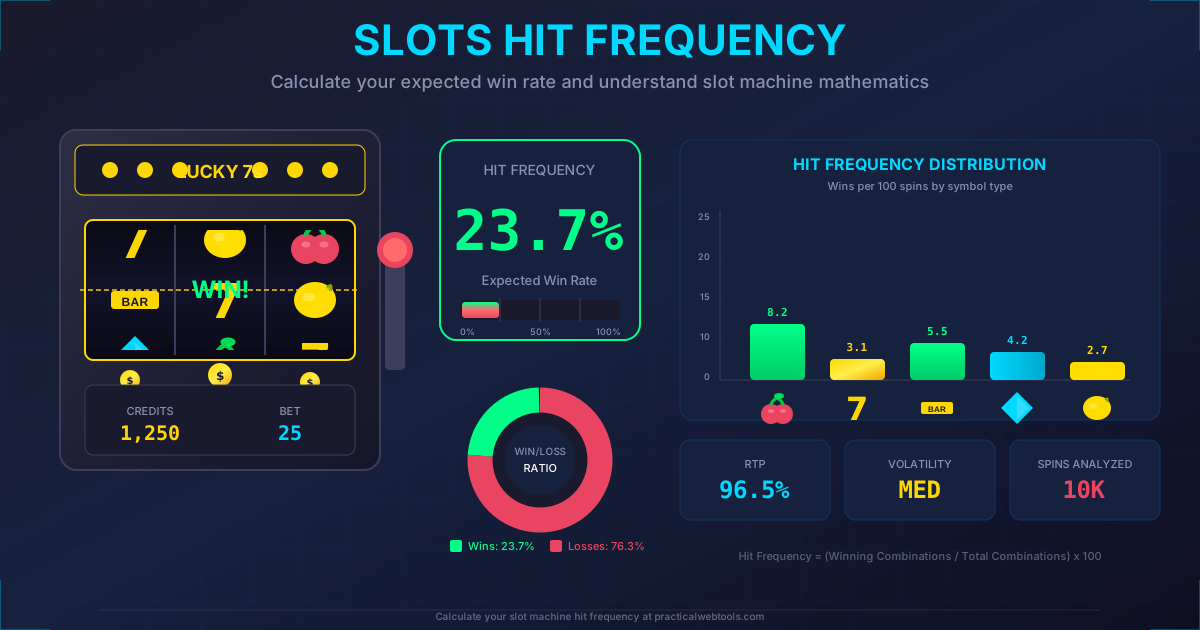
Slot machines are designed so that near-misses (two jackpot symbols with the third just above or below the payline) occur more frequently than pure randomness would produce. Research shows near-misses trigger the same brain reward pathways as actual wins, creating the feeling that a jackpot is "close" when the odds have not changed at all.
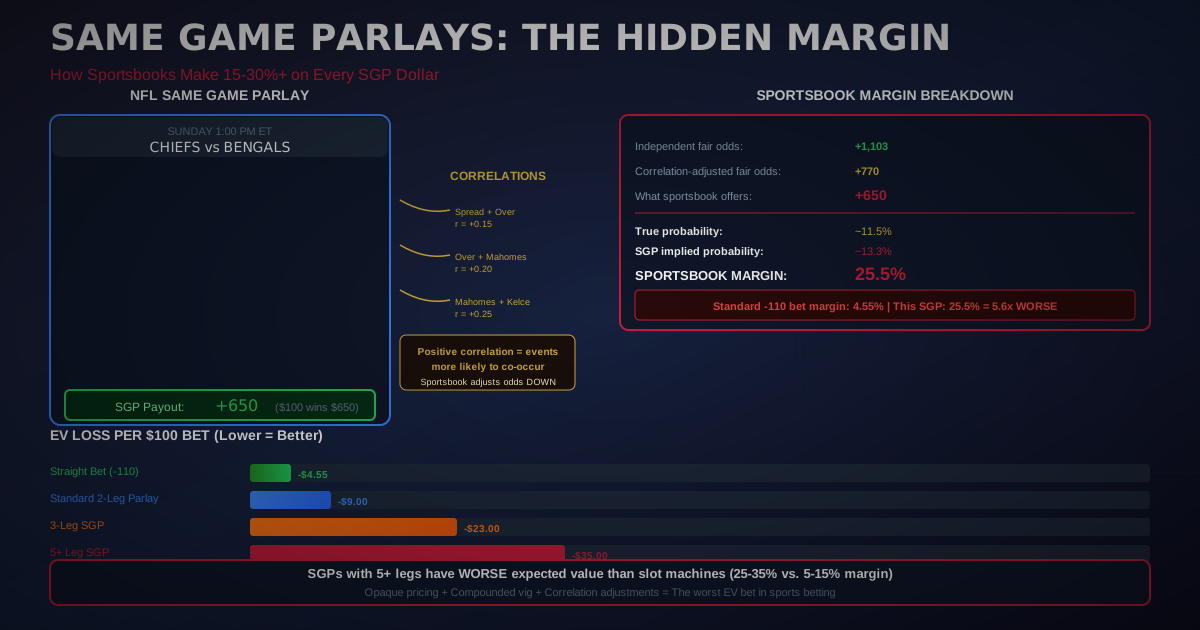
Sportsbooks exploit this same principle with parlay insurance: "Hit 9 of 10 legs? Get your stake back!" This highlights how close you came to winning and encourages another attempt, even though 10-leg parlays have catastrophically negative expected value.
Deposit Bonus Traps
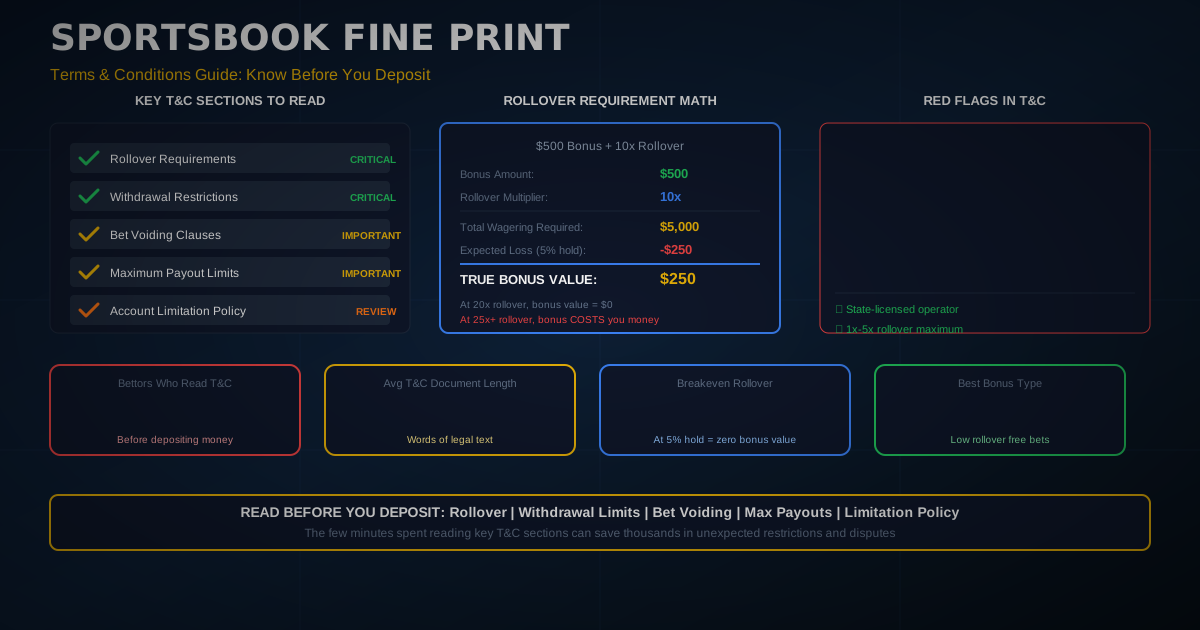
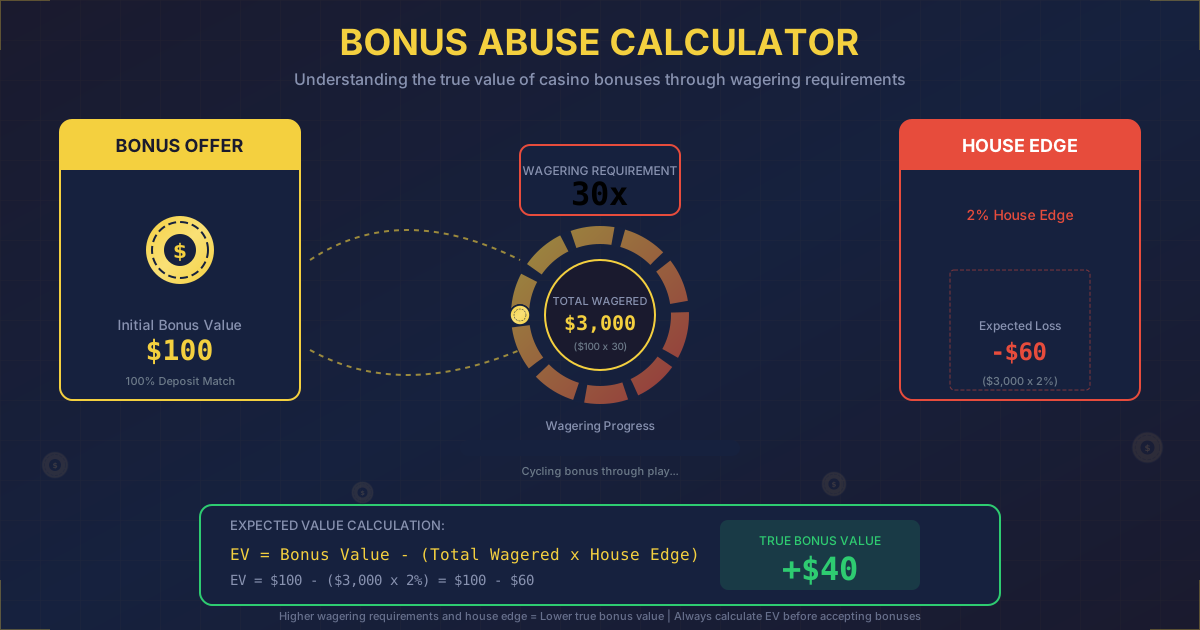
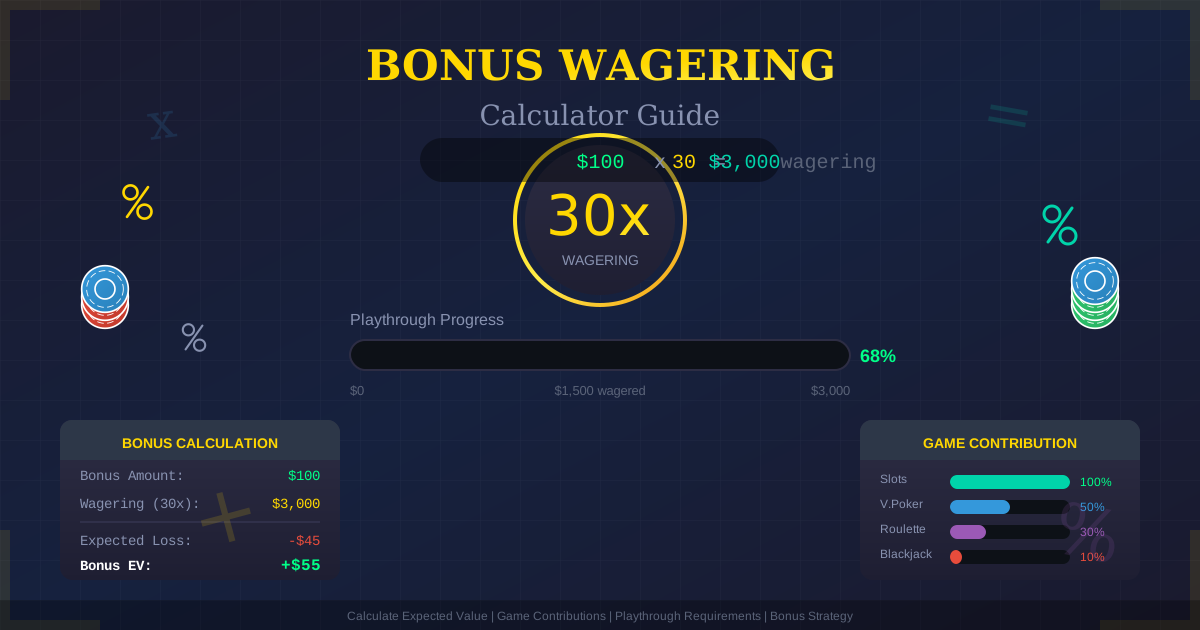
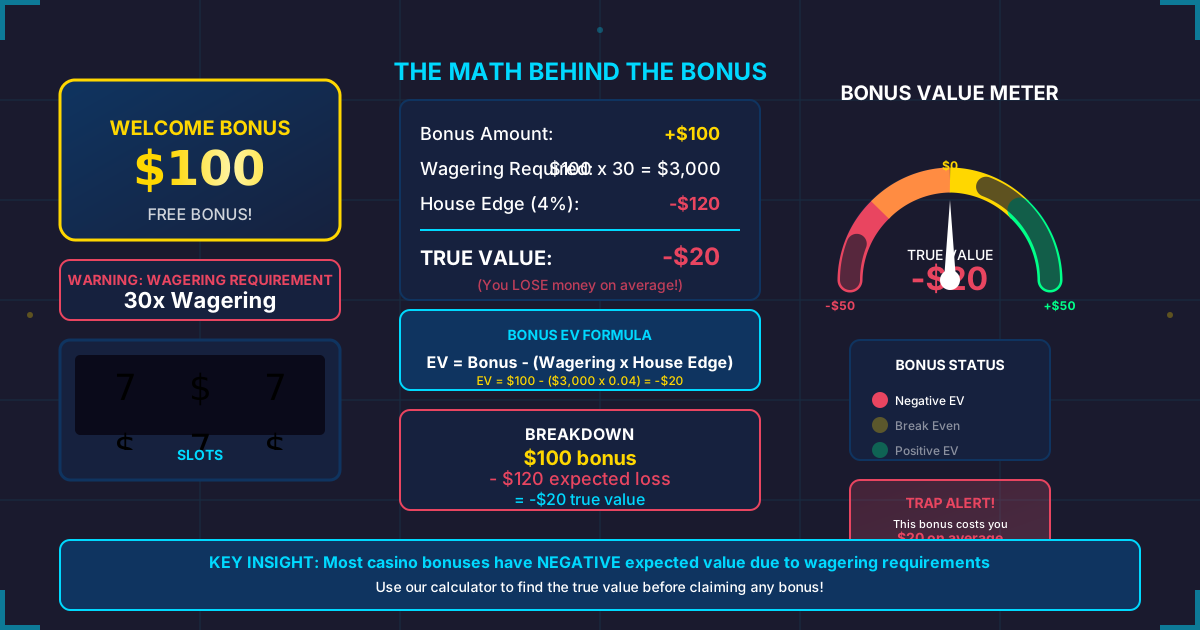
After a losing session, many online platforms offer deposit match bonuses: "Deposit $500, play with $1,000!" The bonus funds come with rollover requirements (typically 10-30x the bonus amount). To unlock a $500 bonus, you may need to wager $5,000-$15,000--virtually guaranteeing additional losses through the house edge.
The 3 AM Push Notification
Studies show that operators algorithmically identify customers who just lost and target them with bonuses during vulnerable moments--late at night, immediately after a losing session, or during emotionally charged live events. This is not coincidence. It is behavioral targeting designed to catch you at your weakest.
The Cashout Friction Problem
Notice how depositing money takes seconds (saved credit card, Apple Pay, one tap) while withdrawing requires verification, wait periods, and minimum thresholds? This asymmetry is designed to keep money flowing in one direction--toward the house--especially during the critical moments after a loss when a gambler might otherwise walk away.
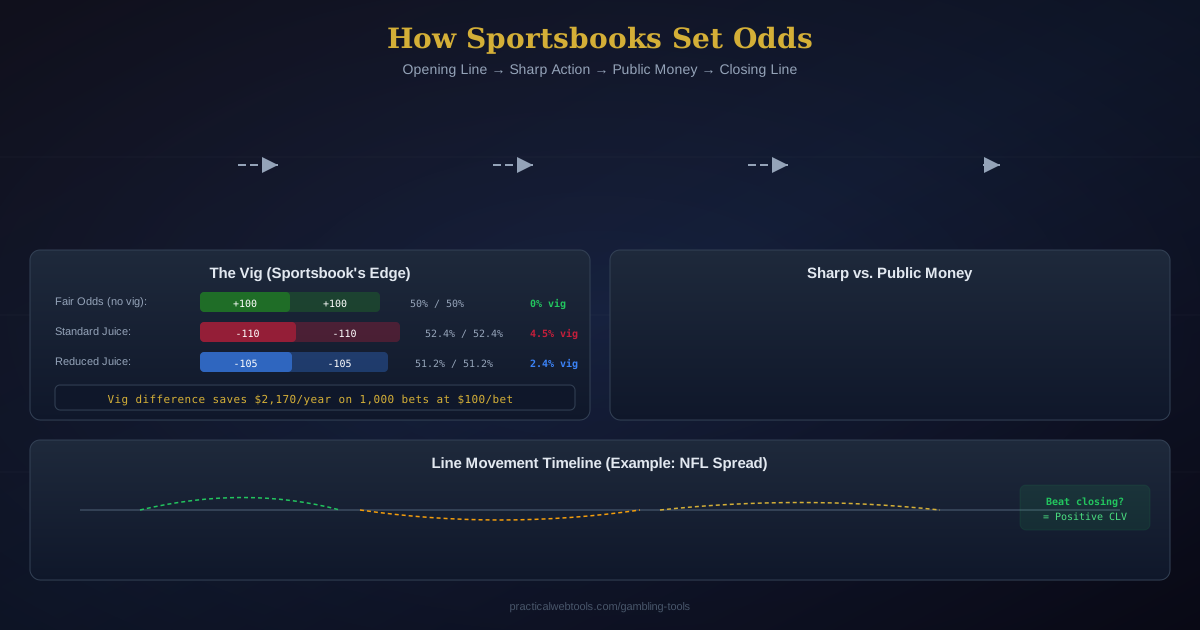
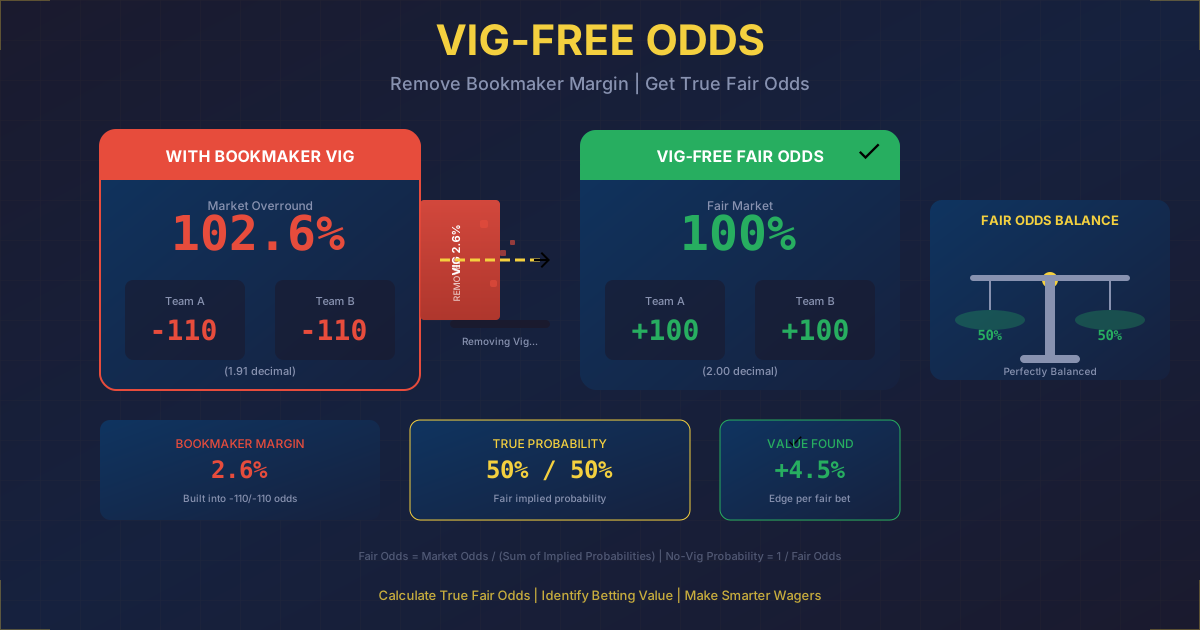
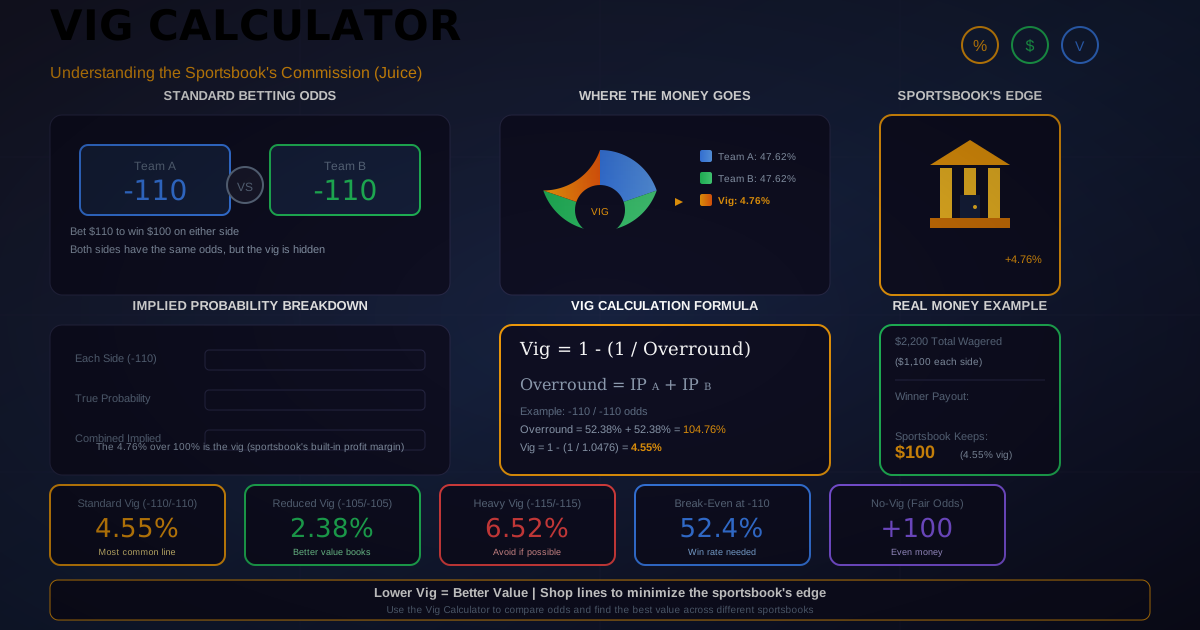
Calculate the true cost of any bet after accounting for vig with our Hold/Vig Calculator.
Breaking the Cycle: Practical Strategies That Actually Work
Knowing that loss chasing is destructive is not enough. You need concrete, pre-planned systems that protect you from your own emotional responses.
Strategy 1: The Hard Stop-Loss Rule
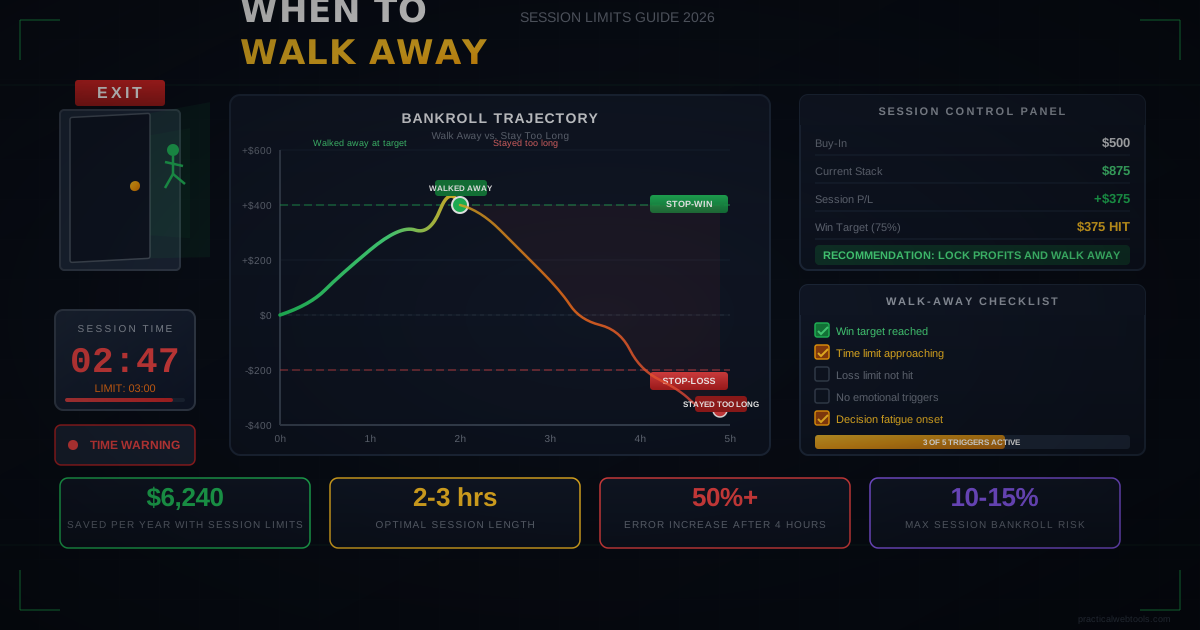
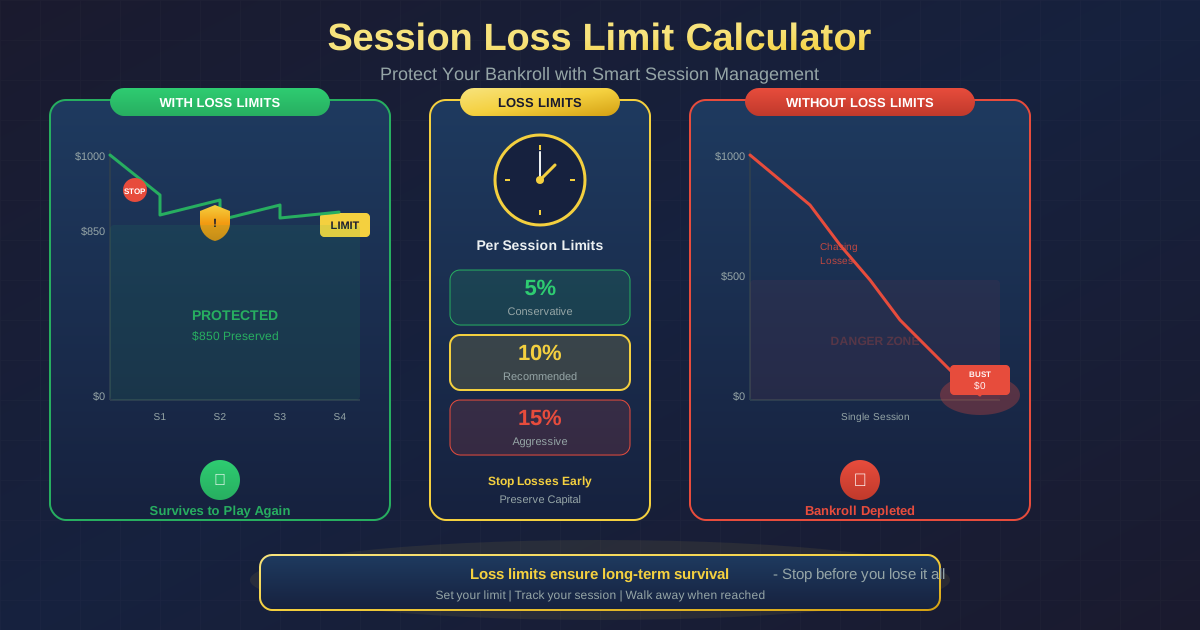
Before any gambling session, set an absolute maximum loss amount. Write it down. Tell someone. Set a timer on your phone.
The rule: When you hit your stop-loss, you stop. No exceptions. No "just one more bet." No "I will stop after the next win." You stop.
Recommended stop-loss levels:
| Gambling Activity | Conservative Stop-Loss | Moderate Stop-Loss | Maximum Stop-Loss |
|---|---|---|---|
| Sports betting (daily) | 2% of bankroll | 3% of bankroll | 5% of bankroll |
| Casino session | 10% of bankroll | 15% of bankroll | 20% of bankroll |
| Poker session | 2 buy-ins | 3 buy-ins | 4 buy-ins |
| Online slots | Set deposit amount | -- | Never exceed deposit |
Strategy 2: The Cooling-Off Period
Institute a mandatory waiting period between the urge to chase and the act of placing a bet. Research on impulse control shows that even a 10-minute delay significantly reduces impulsive decision-making.
Implementation:
- After hitting your stop-loss, leave the environment entirely (walk outside, drive home, close the app)
- Set a 24-hour minimum before placing your next bet
- During the cooling-off period, calculate what your expected loss would be if you continued (use our Expected Value Calculator)
- Journal the amount lost, the emotions you felt, and the rationalizations your brain produced
Strategy 3: Separate and Lock Your Bankroll
Never gamble with money that is accessible beyond your pre-determined session bankroll.
- Bring only cash to physical casinos (leave cards at home or in the hotel safe)
- Use a dedicated gambling bank account with transfer limits
- Set deposit limits on all online gambling accounts (every major platform offers this)
- Remove saved payment methods from gambling apps
Strategy 4: The "What Would I Do With Fresh Money?" Test
When you feel the urge to chase, ask yourself: "If I had zero losses today and someone handed me this amount of money, would I make this exact bet at this exact size?"
If the answer is no--and it almost always will be--the bet is not a strategic decision. It is a loss-chasing decision.
Strategy 5: Track Every Bet, Every Dollar
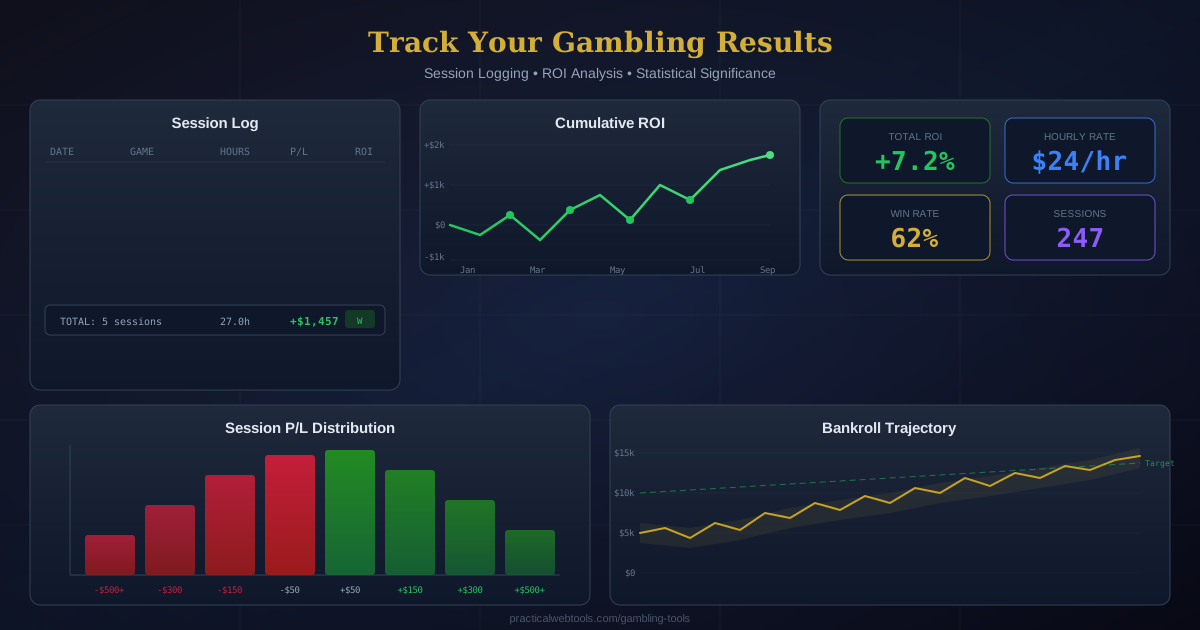
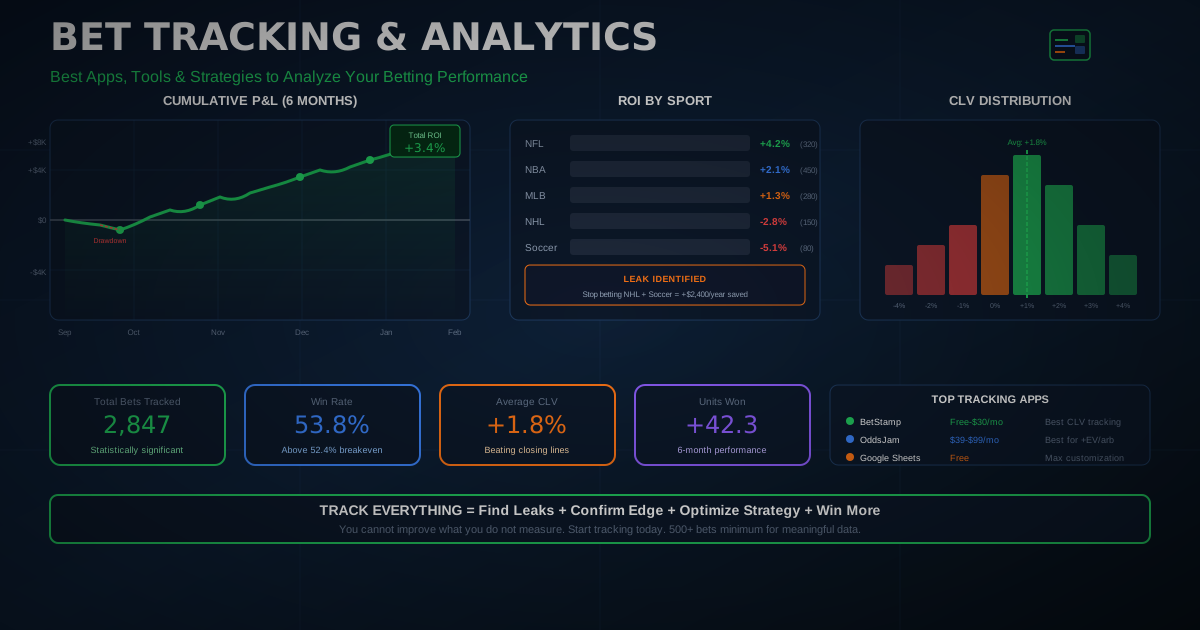
Loss chasers frequently lose track of how much they have actually lost. The deposits blur together. The "small" bets add up. Tracking creates accountability and eliminates the denial that allows chasing to continue.
Use a simple spreadsheet with these columns:
- Date and time
- Bet type and amount
- Result
- Running total (profit/loss)
- Emotional state (1-10 scale)
When you see the numbers in black and white, the rationalizations lose their power.
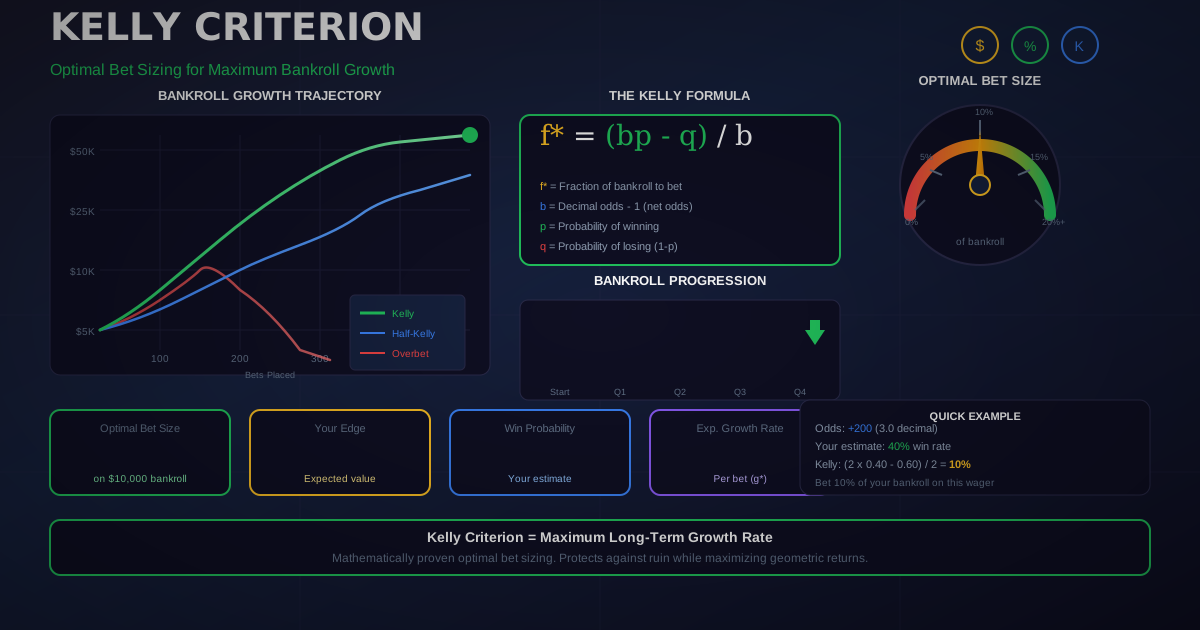
Analyze whether your betting strategy has positive expected value with our Kelly Criterion Calculator.
Pre-Commitment and Automatic Limits: Your Best Defense
The most effective strategy against loss chasing is removing the ability to chase before the urge strikes. Pre-commitment tools are powerful because they work when your willpower does not.
Platform-Level Tools
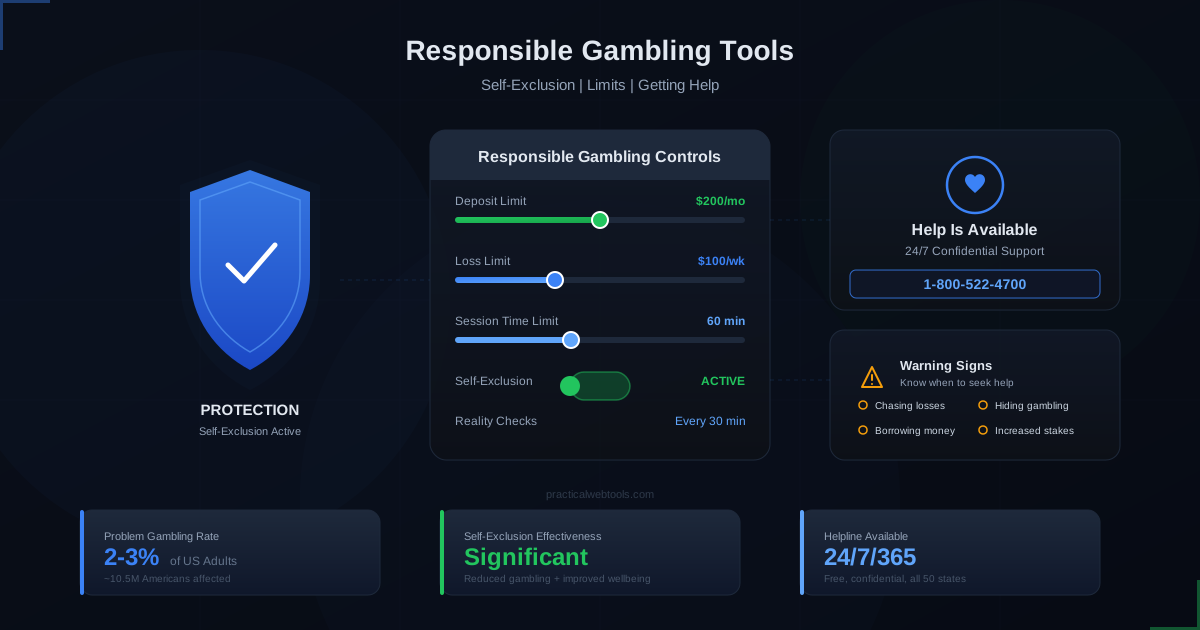
Every reputable online gambling platform now offers:
- Deposit limits: Set daily, weekly, or monthly maximum deposits. Once reached, you physically cannot deposit more.
- Loss limits: Set a maximum amount you can lose per day or week. The account freezes when the limit is hit.
- Session time limits: Set maximum time per session. The platform will force you off.
- Reality checks: Pop-up notifications showing time played and net results at regular intervals.
- Self-exclusion: Voluntarily ban yourself from a platform for a set period (typically 6 months to 5 years) or permanently.
Setting Limits That Actually Protect You
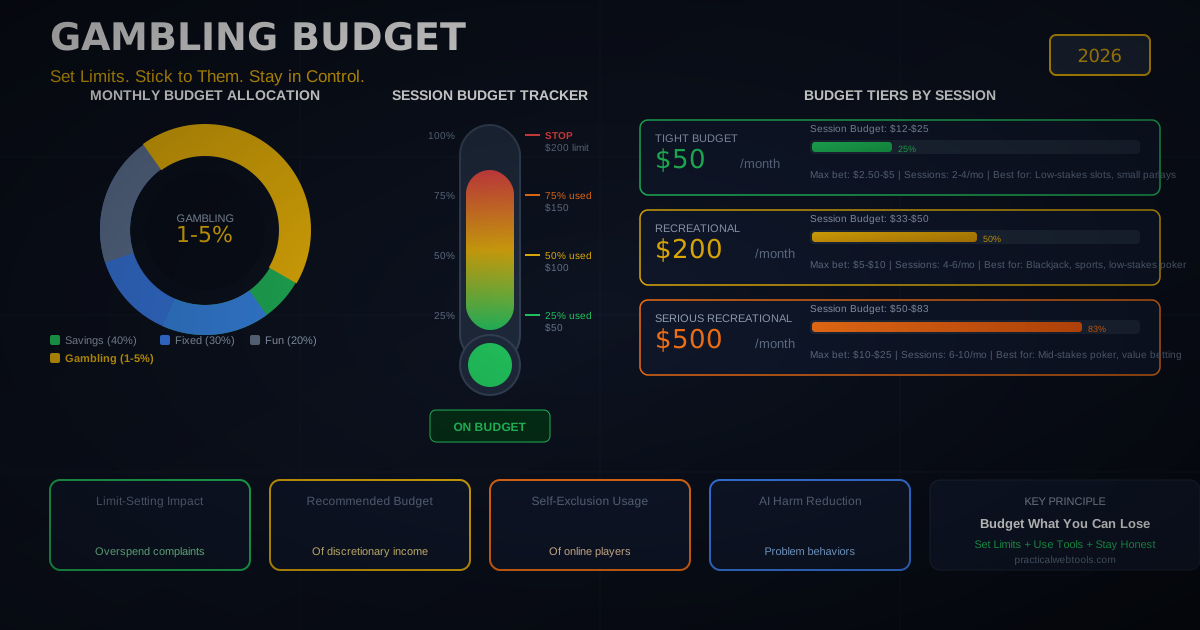
The key to effective limits is setting them when you are calm, rational, and not in the middle of a gambling session. Set them during a weekday morning when you are clear-headed, not on a Saturday night after a losing afternoon.
Recommended approach:
- Set deposit limits first (this is the most important barrier)
- Set loss limits at 50-75% of your deposit limit (so you never lose your full deposit)
- Set session time limits at 1-2 hours for casino games
- Enable reality checks every 30 minutes
- Make these limits difficult to change (most platforms require a 24-72 hour cooling-off period to increase limits)
The Nuclear Option: Self-Exclusion
If you have ever lost more than you can afford, self-exclusion is not an overreaction. It is the most rational decision you can make. Self-exclusion programs allow you to voluntarily ban yourself from:
- Individual online platforms
- All casinos in a state or region (through state gaming commissions)
- Multiple platforms simultaneously (through third-party services like GamStop in the UK)
Self-exclusion works because it creates an external barrier that does not depend on your willpower during moments of weakness.
When Chasing Losses Signals a Bigger Problem
Loss chasing exists on a spectrum. Occasional frustration-driven bets after a bad session are human. But certain patterns indicate that chasing has crossed from poor discipline into gambling disorder.
Warning Signs That Require Professional Help
- You have chased losses with money designated for rent, bills, or essential expenses
- You have lied to family or friends about the amount you have lost
- You have borrowed money, taken cash advances, or sold possessions to fund gambling
- You experience intense restlessness or irritability when trying to stop or reduce gambling
- You find yourself gambling to escape problems, anxiety, or depression
- Your chasing episodes have escalated in frequency and dollar amounts over time
- You have tried to stop chasing multiple times and failed
The DSM-5 Diagnostic Criteria
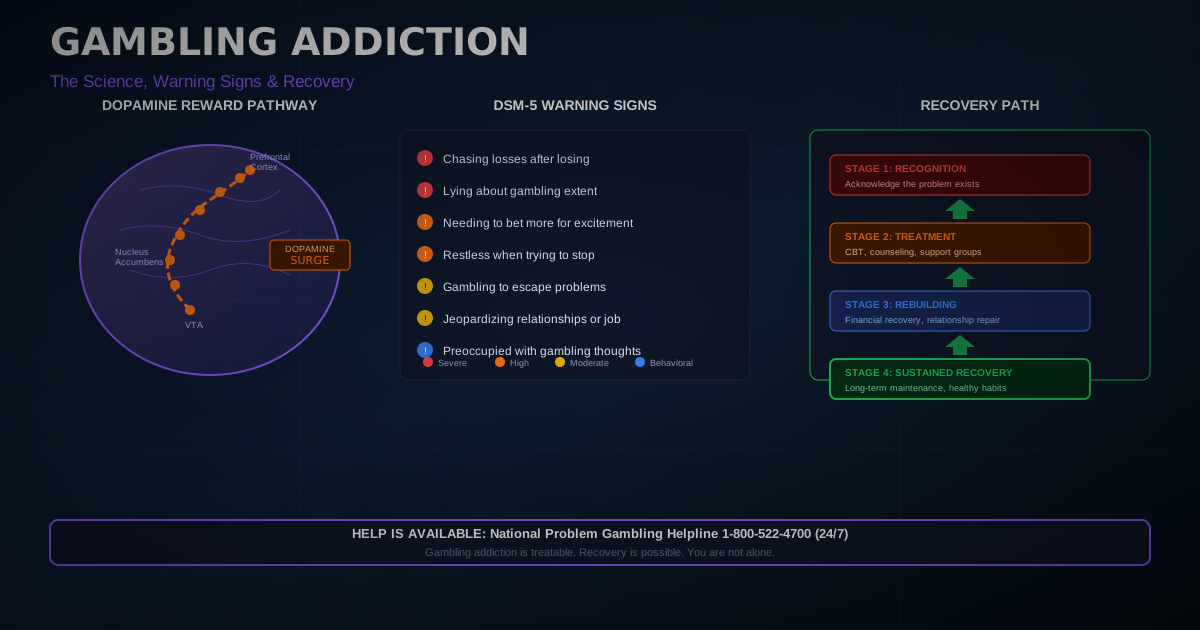
Loss chasing is one of nine criteria for Gambling Disorder in the DSM-5. A diagnosis requires meeting four or more criteria within a 12-month period. If loss chasing is your primary behavior, there is a high probability that other criteria are also present:
- Needing to gamble with increasing amounts to achieve excitement
- Restlessness when trying to cut back
- Repeated unsuccessful efforts to control gambling
- Preoccupation with gambling
- Gambling when feeling distressed
- Chasing losses (returning to gamble after losing)
- Lying to conceal gambling involvement
- Jeopardizing relationships, jobs, or opportunities
- Relying on others to provide money to relieve gambling-caused financial situations
Getting Help
If any of the above resonates, professional help is available and effective. Cognitive Behavioral Therapy (CBT) has strong clinical evidence for treating gambling disorder, with studies showing significantly reduced gambling severity, fewer cognitive distortions, and improved quality of life after treatment.
Resources:
- National Council on Problem Gambling: 1-800-522-4700 (24/7 confidential helpline)
- Gamblers Anonymous: www.gamblersanonymous.org
- SAMHSA National Helpline: 1-800-662-4357
- Crisis Text Line: Text HOME to 741741
The Expected Value of Walking Away
Here is the most powerful reframe for anyone struggling with loss chasing: walking away from a losing session is not losing. It is the highest expected value play available.
The math of stopping vs. chasing:
| Scenario | Stop Now (Keep Remaining Bankroll) | Chase for 2 More Hours | Difference |
|---|---|---|---|
| Down $500, have $1,500 left | Keep $1,500 (guaranteed) | Expected: lose additional $50-$150 (house edge) | Stopping saves $50-$150+ |
| Down $300 on sports, 2 games left | Keep remaining bankroll | Each bet at -110: expected loss of 4.55% per wager | Stopping avoids additional -EV bets |
| Down 2 buy-ins at poker | Keep remaining bankroll | Tilted play reduces win rate, increasing losses | Stopping preserves future earning potential |
In every scenario, the expected value of stopping exceeds the expected value of continuing--because you are gambling against a house edge while in a compromised emotional state. The "loss" you feel from walking away is purely emotional. The loss you would incur from continuing is financial and real.
Verify the math yourself with our Expected Value Calculator.
Frequently Asked Questions
Is chasing losses always irrational, even if I have a genuine edge?
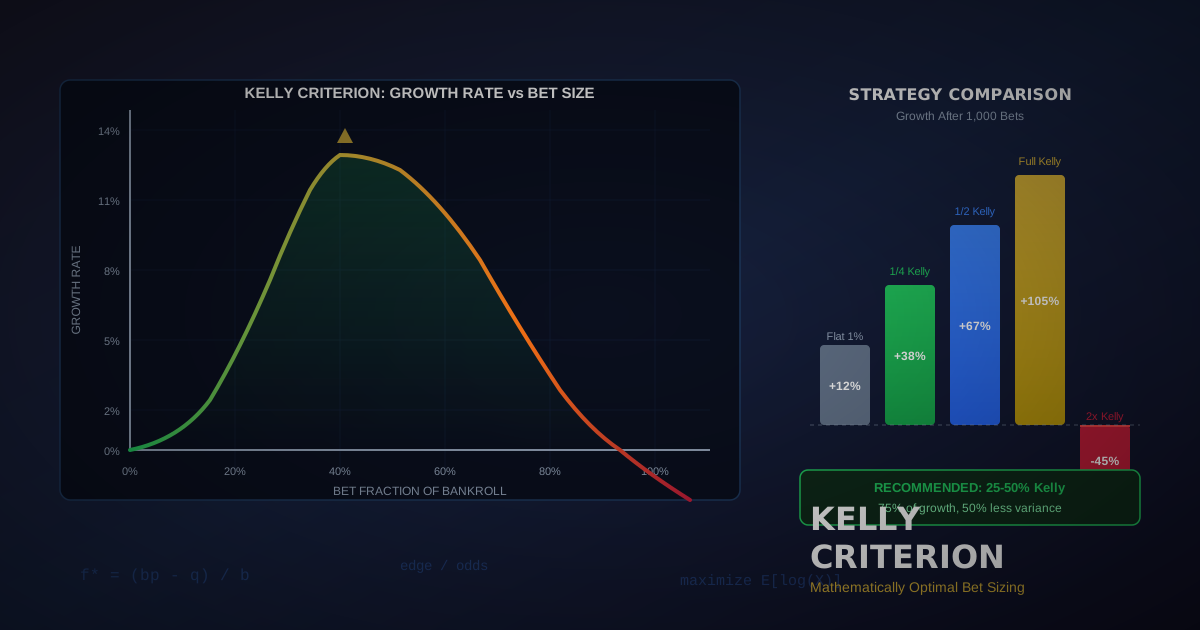
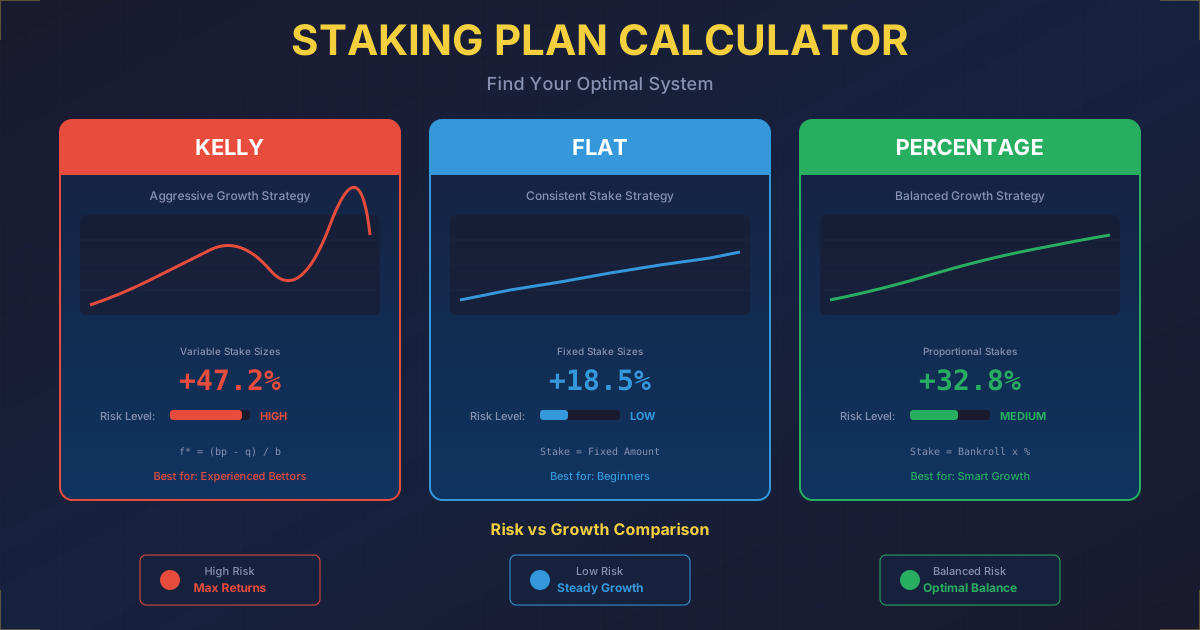
Even with a genuine mathematical edge (such as a winning poker player or a sharp sports bettor), chasing losses is still destructive. The problem is not the edge--it is the behavior. Chasing causes you to increase bet sizes beyond your bankroll management guidelines, play when you are emotionally compromised, and make decisions based on recovering past losses rather than maximizing future expected value. A 5% edge means nothing if you are betting 50% of your remaining bankroll per hand out of desperation. Use our Kelly Criterion Calculator to determine the mathematically optimal bet size regardless of recent results.
What is the difference between the sunk cost fallacy and the gambler's fallacy?
The sunk cost fallacy says "I have already invested too much to stop now," driving continued play based on past spending. The gambler's fallacy says "I am due for a win because I have been losing," assuming past results influence future independent events. In practice, they work together to devastating effect: the sunk cost fallacy provides the motivation to continue, and the gambler's fallacy provides the false confidence that continuing will produce different results.
Does the martingale system ever work in real-world conditions?
In the short term, martingale produces many small wins. This creates the illusion of a working system. But mathematically, the expected value of a martingale sequence is always negative in any game with a house edge. The Optional Stopping Theorem proves that no betting system can overcome a negative expected value game. Given finite time and finite money--which describe every real-world scenario--martingale guarantees eventual total loss. The probability of ruin reaches 100% over a long enough timeline.
How can I tell if I am chasing losses versus making a legitimate strategic bet?
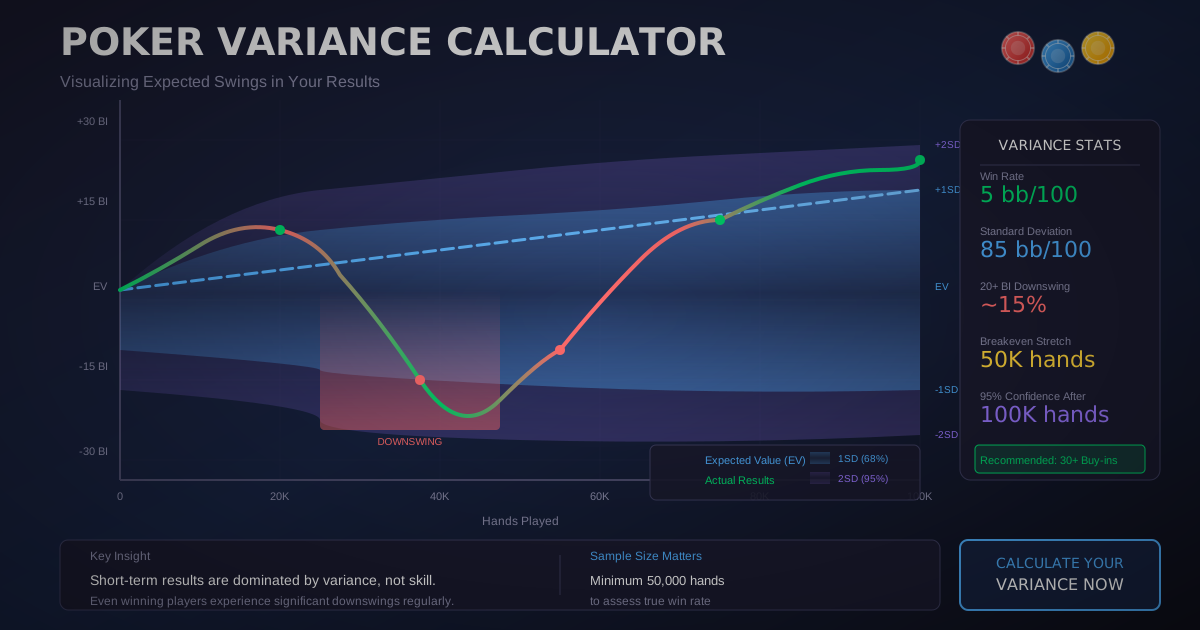
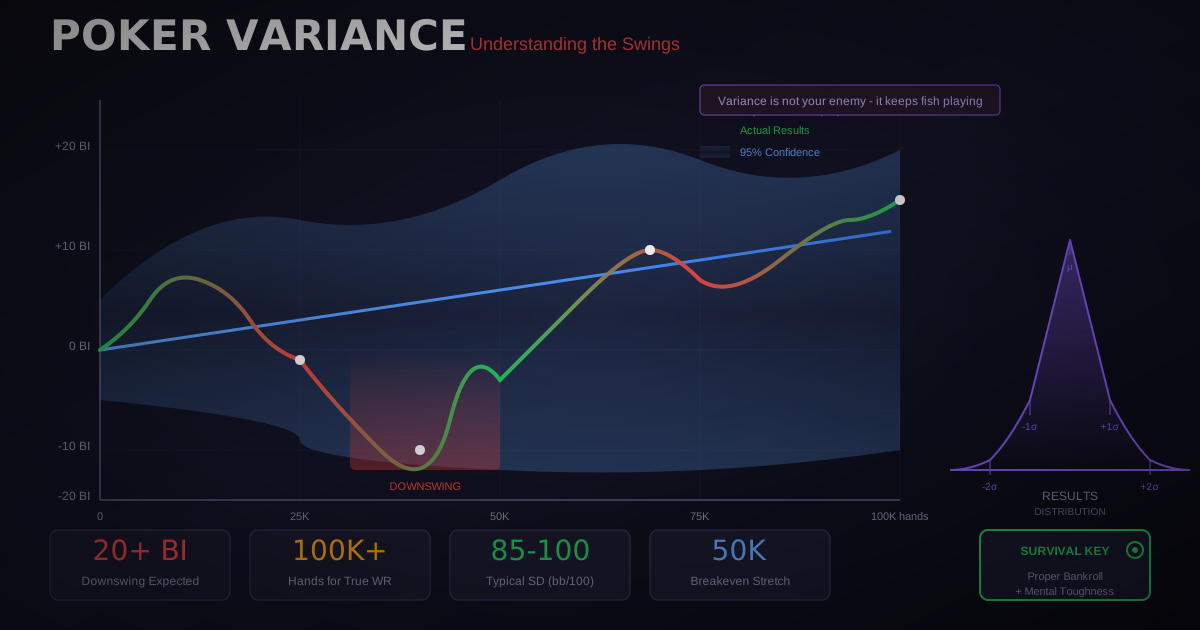
Ask yourself three questions: (1) Would I make this exact bet at this exact size if I were starting fresh with zero prior results today? (2) Does this bet conform to my pre-determined bankroll management rules? (3) Am I calm and thinking clearly, or am I feeling urgency to recover money? If the answer to any of these is "no," you are chasing. Use our Poker Variance Calculator to verify whether your current losing streak is within expected variance before changing your approach.
Why do casinos and sportsbooks make it so easy to chase losses?
Because loss chasers are the most profitable customer segment. A gambler who respects stop-losses and walks away after a set amount generates limited revenue. A gambler who chases--depositing multiple times, escalating bet sizes, playing for extended sessions--generates dramatically higher revenue per customer. Industry data shows that a significant percentage of gambling revenue comes from a small percentage of heavy users, many of whom exhibit chasing behavior. The incentive structure directly rewards operators for facilitating and encouraging loss-chasing behavior.
Can setting deposit limits actually help, or will I just find another platform?
Self-exclusion and deposit limits work best when applied comprehensively. Set limits on every platform you use, not just one. In jurisdictions with centralized self-exclusion registries (like GamStop in the UK or state-level programs in the US), a single registration can block access to all licensed operators simultaneously. Research shows that self-exclusion combined with even minimal counseling significantly reduces problem gambling behaviors.
What should I do immediately after I realize I have been chasing losses?
Stop. Immediately. Do not place one more bet. Close the app, leave the casino, shut down the computer. Then: (1) Calculate your total losses for the session and write them down. (2) Transfer your remaining bankroll somewhere you cannot access it quickly. (3) Set or reduce your deposit limits on all platforms. (4) Tell someone you trust about the session. (5) Wait at least 24 hours before gambling again. (6) Before your next session, recalculate your proper bet sizing using our Poker Bankroll Requirements Calculator.
Is loss chasing more common in online gambling than in physical casinos?
Yes. Research using player tracking data from online casinos found that the ease of depositing, the absence of physical barriers (no walk to the ATM, no wait in line), and the isolation of playing alone all accelerate chasing behavior. Online sessions tend to be faster-paced, and the gap between losing and re-depositing can be measured in seconds. Additionally, targeted promotions and push notifications from operators are specifically timed to intercept users during vulnerable post-loss windows.
Tools to Help You Gamble Responsibly
These free calculators can help you make mathematically informed decisions instead of emotional ones:
- Expected Value Calculator: Determine whether any bet has positive or negative expected value before you place it
- Kelly Criterion Calculator: Calculate the mathematically optimal bet size based on your edge and bankroll
- Poker Variance Calculator: Simulate expected variance to understand whether your current results are within normal range
- Poker Bankroll Requirements Calculator: Determine exactly how many buy-ins you need to survive natural variance
- Poker Risk of Ruin Calculator: Calculate the probability of going broke at your current stakes and bankroll level
- Hold/Vig Calculator: See exactly how much the house edge costs you on every bet
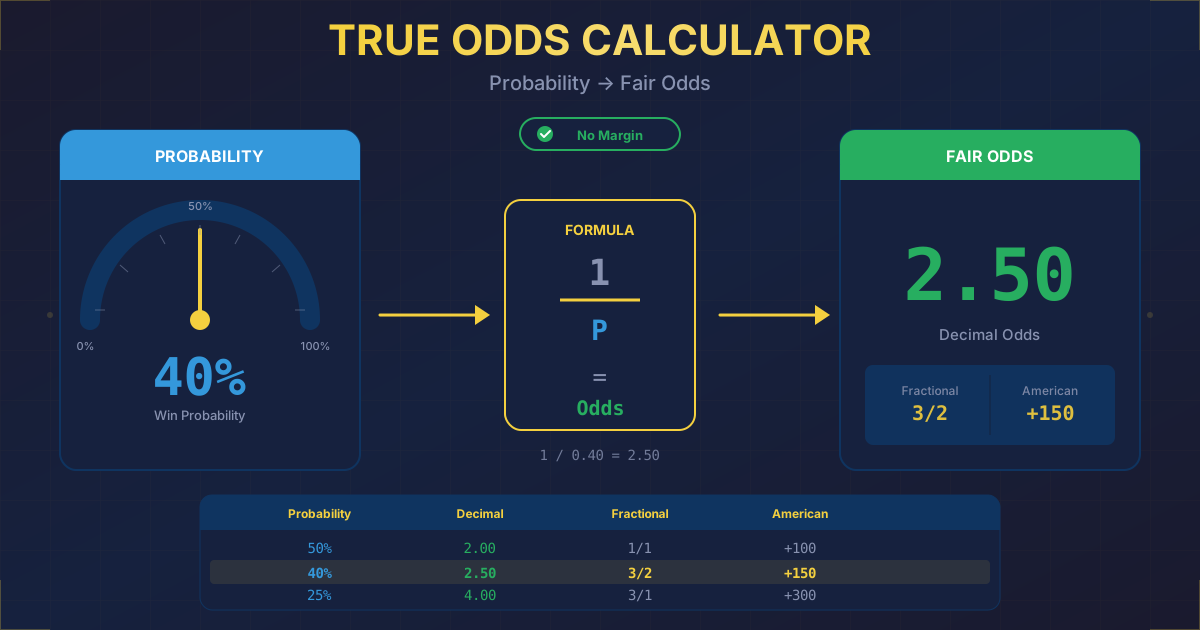
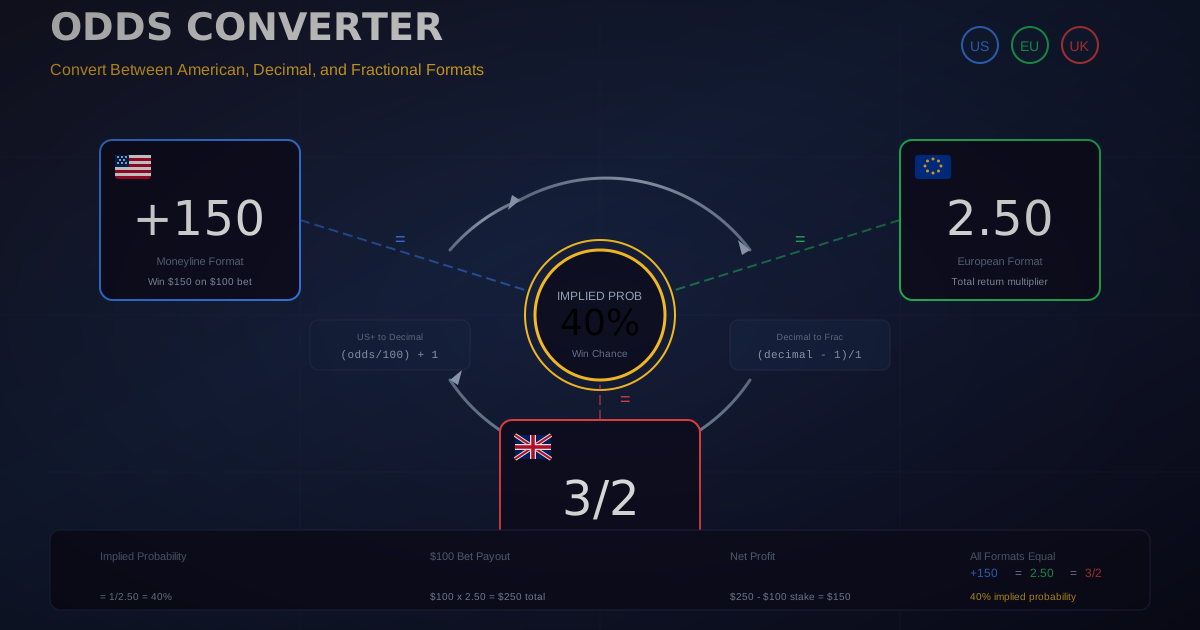
- Odds Converter: Convert between American, decimal, and fractional odds to understand true implied probabilities
Conclusion: The Only Winning Move Is to Walk Away
Chasing losses is not a strategy. It is not a system. It is not something that "works if you are disciplined enough." It is a cognitive trap that exploits your brain's hardwired loss aversion to extract maximum damage from an already-bad situation.
Every dollar you have already lost is gone. No future bet changes that. The only thing a future bet can do is put more of your money at risk in a game where the odds are not in your favor.
The math is absolute. The martingale fails. The sunk cost fallacy is a lie. The "due for a win" feeling is a neurological illusion. The sportsbook promotion after your losing streak is not generosity--it is a trap designed by behavioral scientists who understand your psychology better than you do.
The strongest play in all of gambling is the one that requires the most discipline: accepting the loss, standing up, and walking away with what you have left. That money in your pocket--whatever amount it is--has real purchasing power, real utility, and real value. The second you put it back on the table to chase a sunk cost, its expected value drops.
Protect your bankroll. Set hard limits. Use the math tools. And when the losses come--because they will--remember that the fastest way to go broke is not losing. It is trying to win it back.
Gambling involves risk. This content is for educational and informational purposes only. Always gamble responsibly, set limits you can afford, and seek help if gambling becomes a problem. Visit the National Council on Problem Gambling or call 1-800-522-4700 for support.