Scratch Off EV Calculator: Expected Value Analysis (2026)
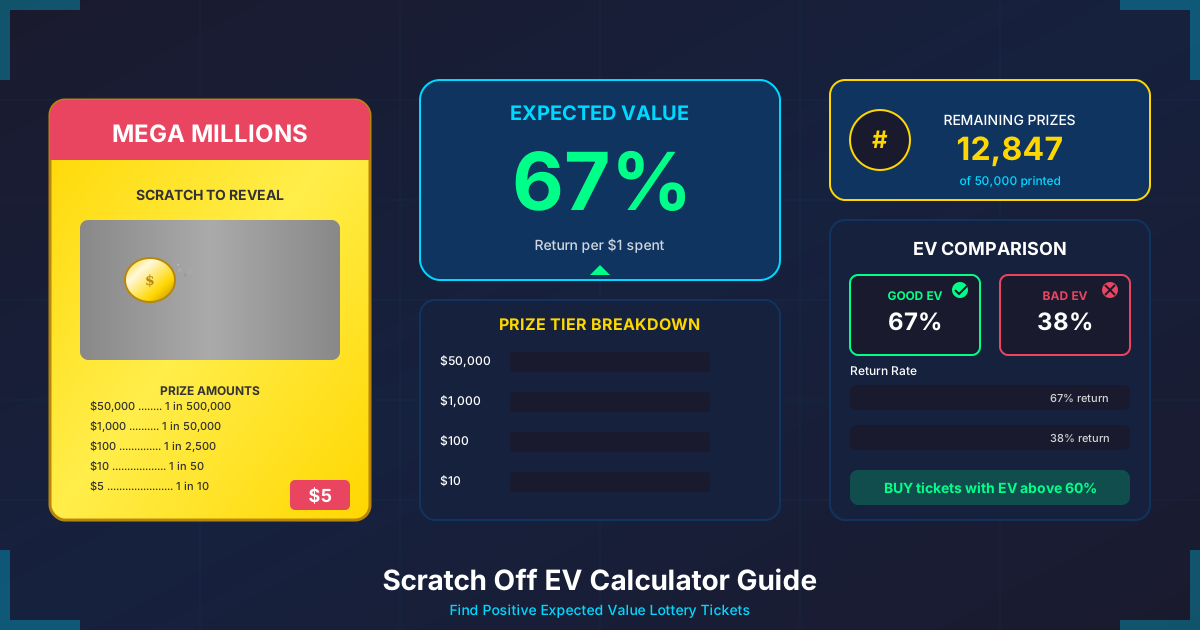
Scratch Off EV Calculator: Find the Best Tickets
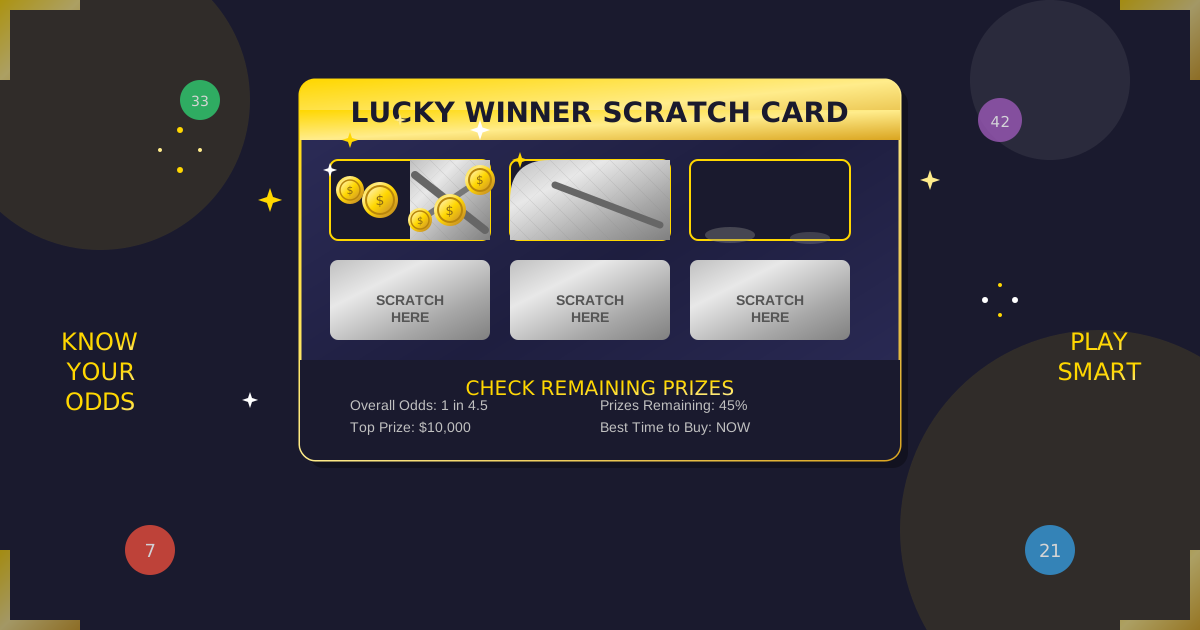
Not all scratch-off tickets are created equal. Our calculator analyzes prize pools, remaining tickets, and odds to reveal each game's expected value—helping you identify which tickets offer the best mathematical return.
What Is Scratch Off Expected Value?
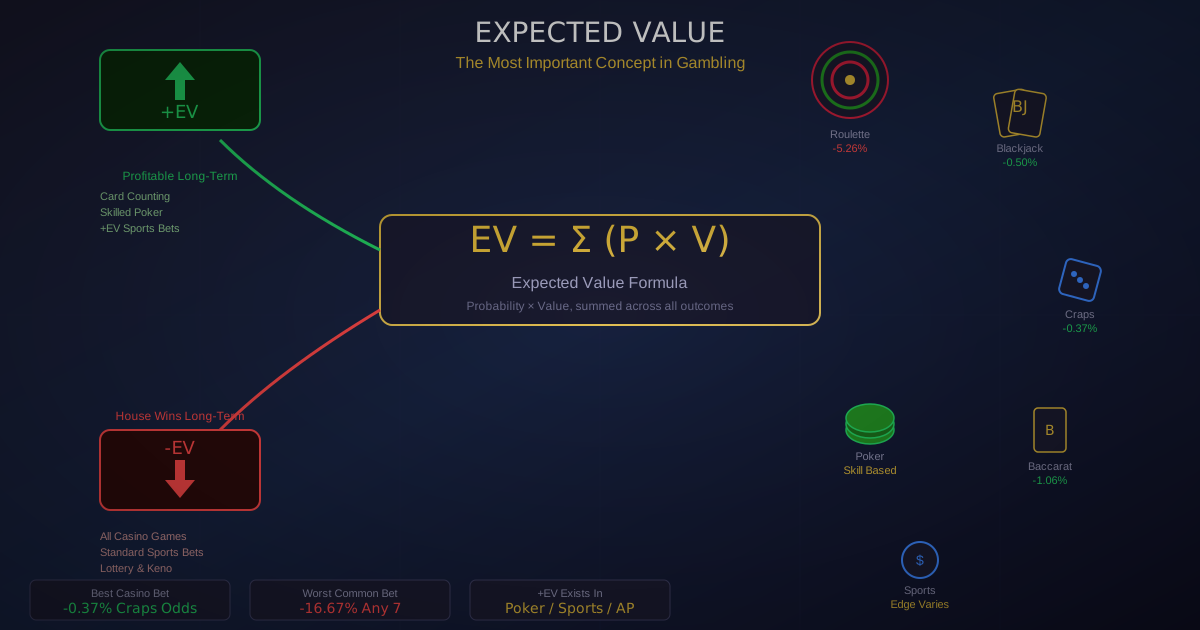
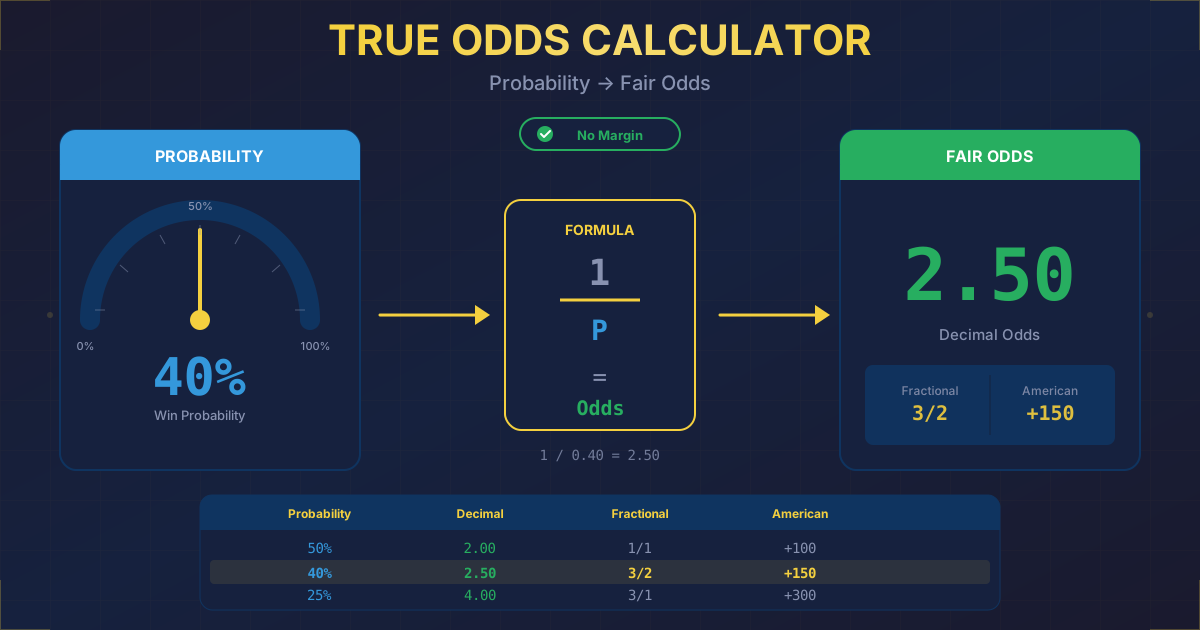
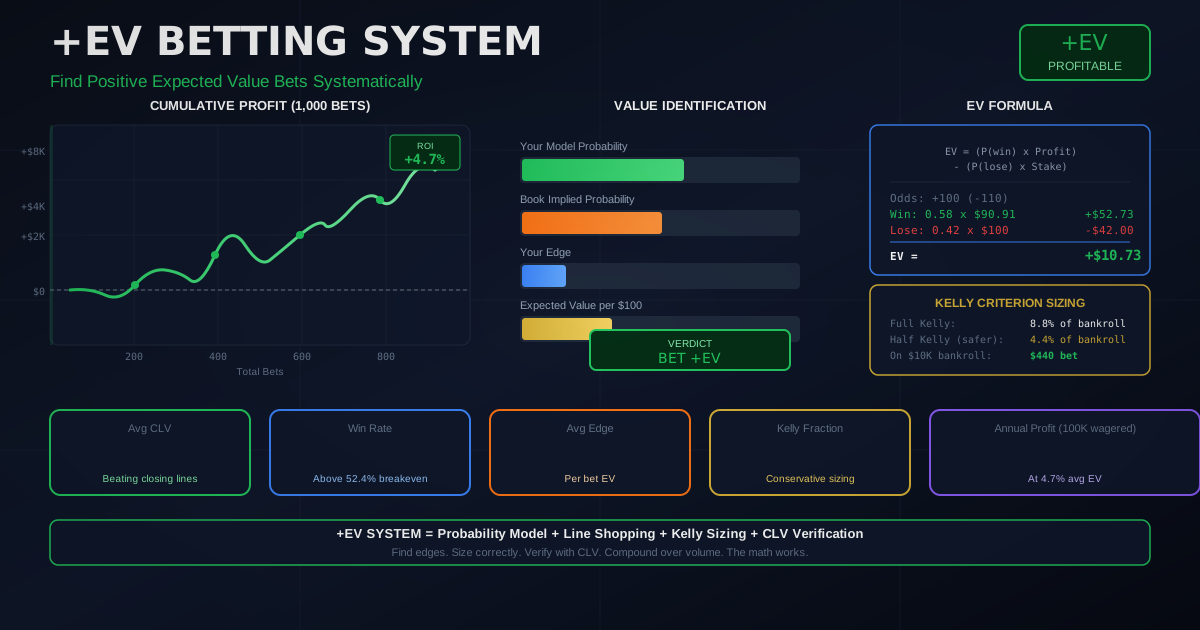
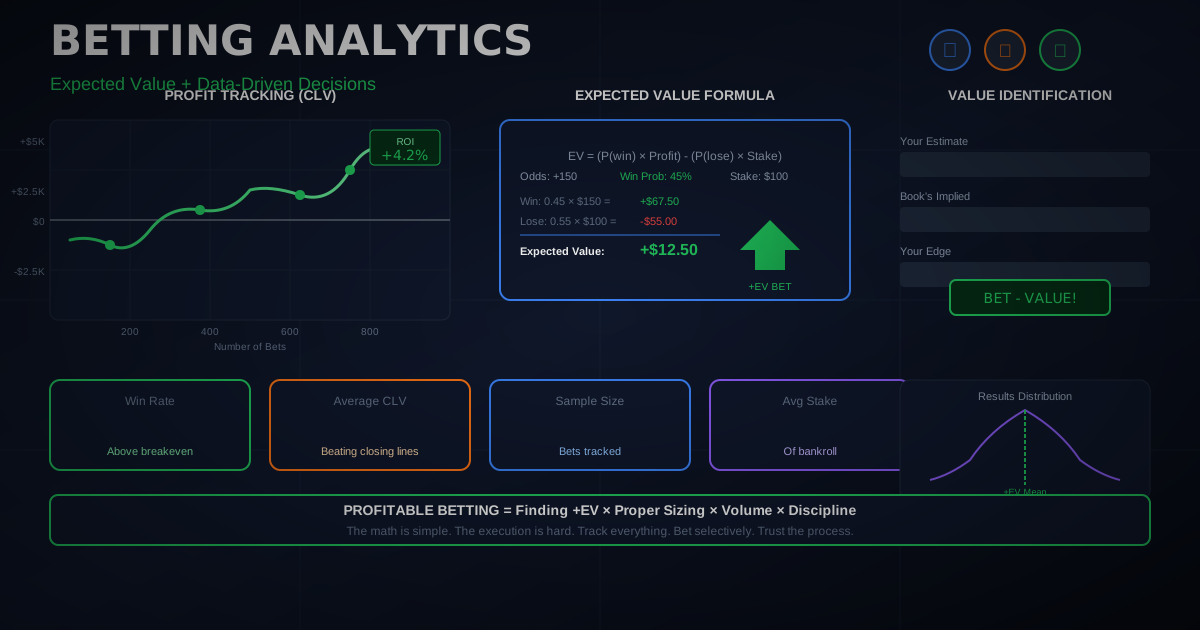
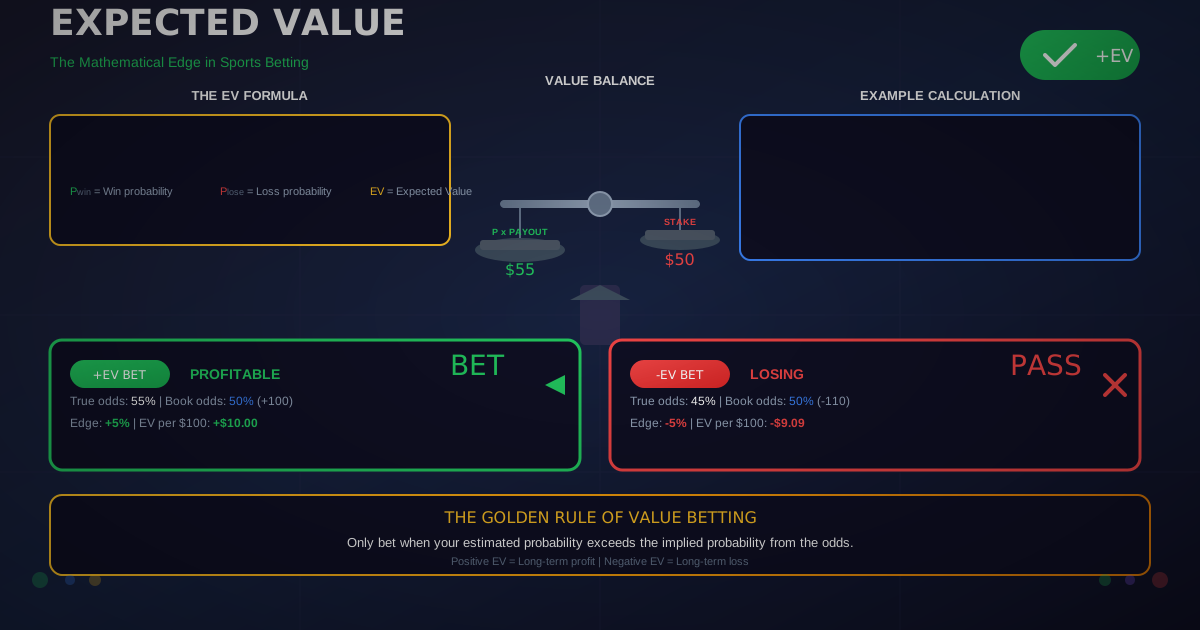
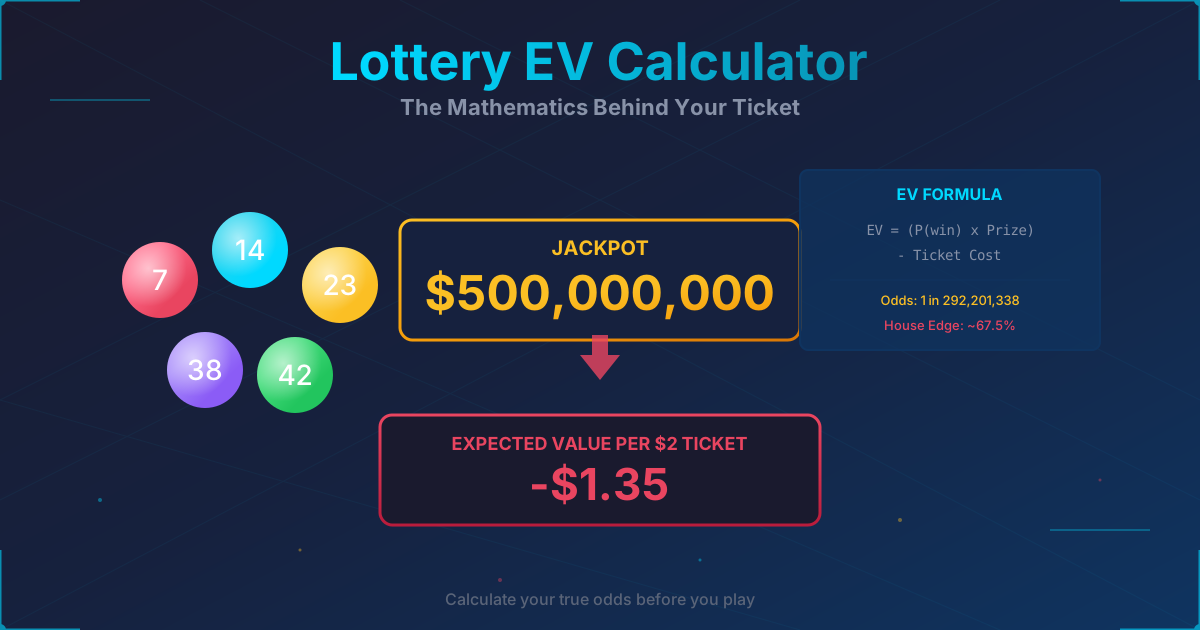
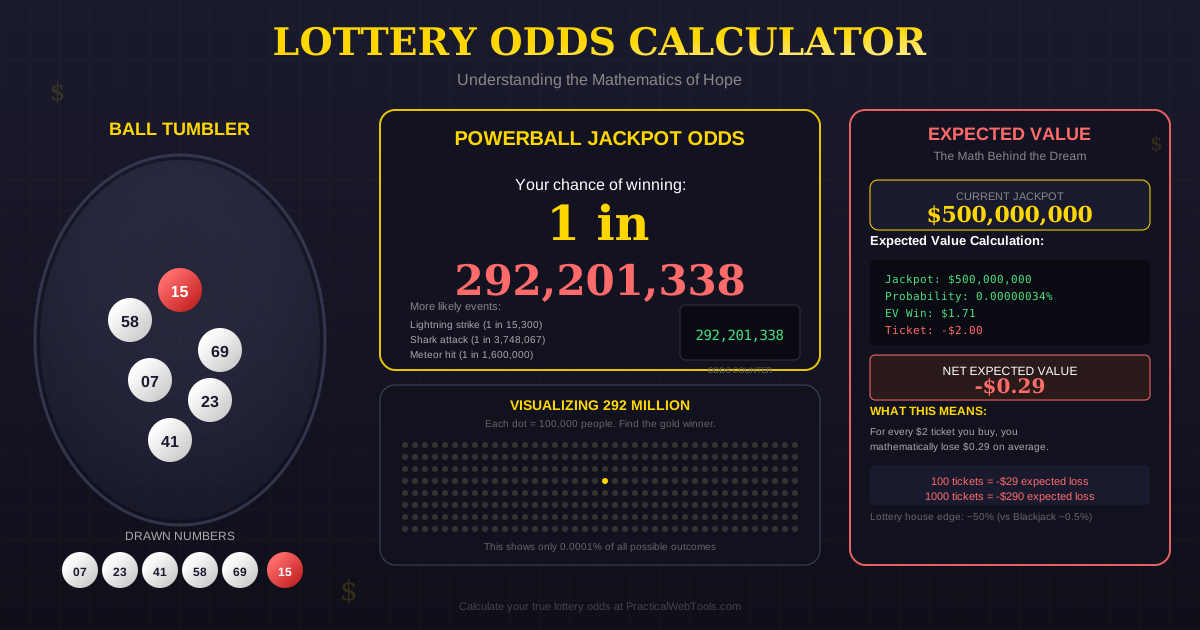
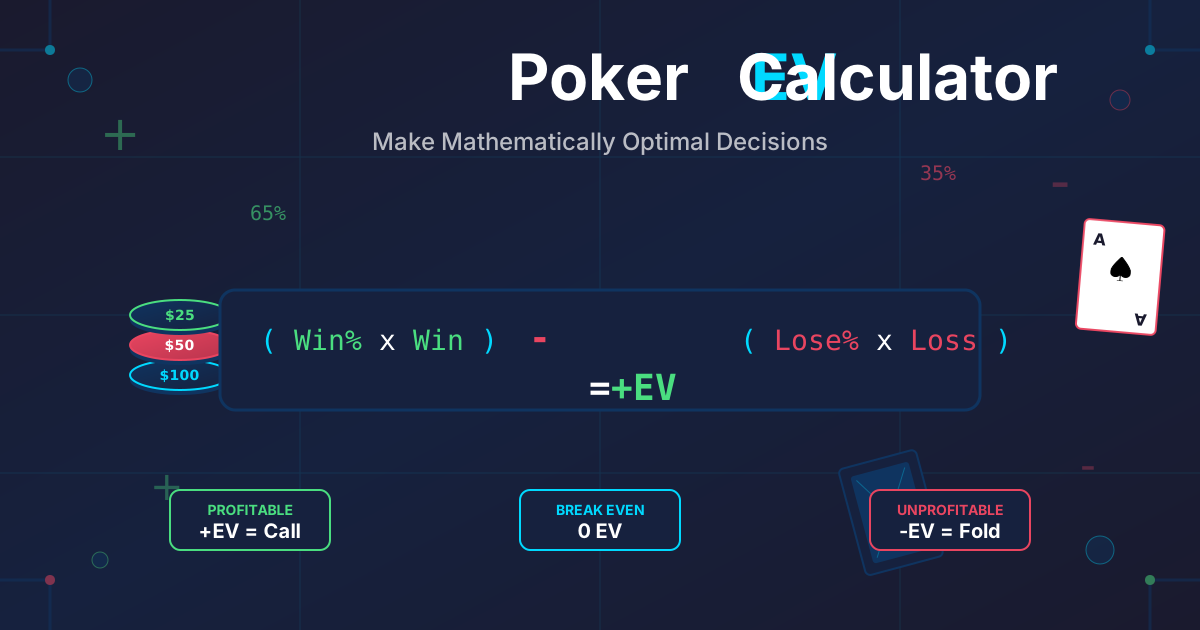
Expected Value (EV) is the average return per dollar spent on a scratch ticket. It accounts for all prize tiers, their probabilities, and remaining prizes to show the ticket's true mathematical worth.
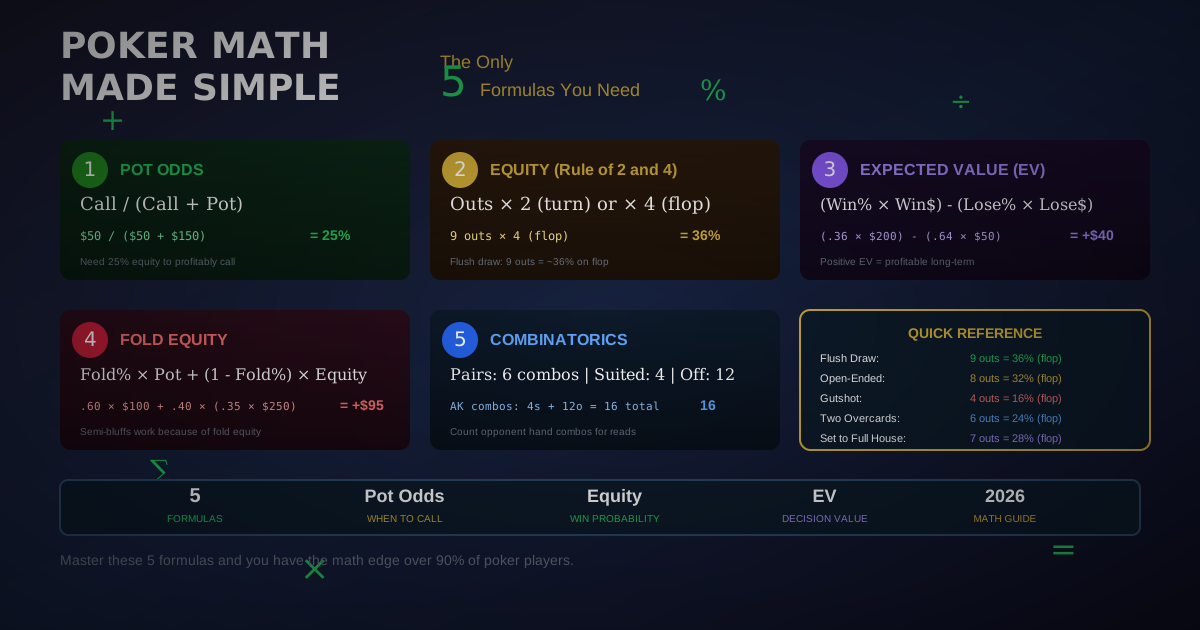
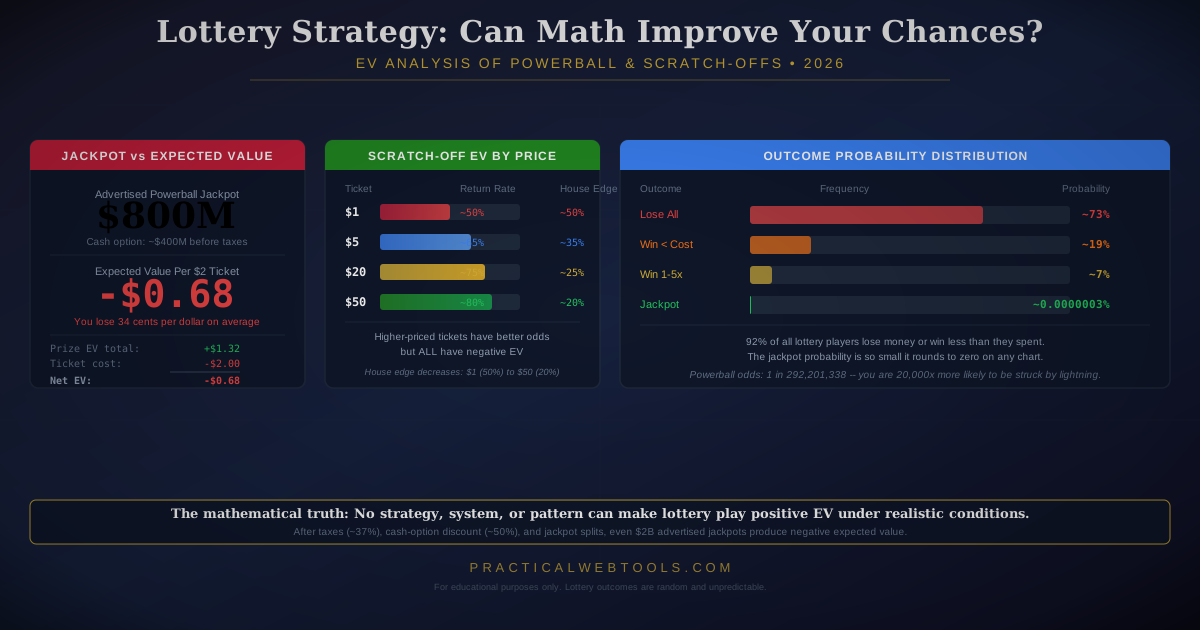
Quick Answer: EV = Σ(Prize × Probability) / Ticket Cost. Most scratch-offs have 60-70% EV (lose 30-40 cents per dollar). Occasionally, games with depleted small prizes but remaining jackpots have 80-90%+ EV. Check your state lottery's remaining prizes report—the best value is often in games near their end with large prizes still available.
How to Use Our EV Calculator
Use the Scratch Off EV Calculator →
Enter prize structure and remaining prizes to calculate expected value.
Step-by-Step Instructions
-
Select State/Game: Choose the scratch ticket
-
Enter Prize Tiers: All prize amounts
-
Input Remaining Prizes: Unclaimed at each tier
-
Enter Remaining Tickets: Total unsold
-
View EV: Expected return percentage
Input Fields Explained
| Field | Description | Example |
|---|---|---|
| Ticket Cost | Purchase price | $5 |
| Prize Tiers | All prize levels | $5 to $100,000 |
| Remaining Prizes | Unclaimed | 245,000 |
| Remaining Tickets | Unsold estimate | 1,200,000 |
| Expected Value | Return % | 67.3% |
| Net EV | Per dollar | -$0.33 |
Understanding Scratch Off Odds
Typical Prize Distribution
| Prize | Odds | Contribution |
|---|---|---|
| Ticket price | 1:8 | 12.5% |
| 2× price | 1:20 | 10% |
| 5× price | 1:50 | 10% |
| 10× price | 1:100 | 10% |
| Large prizes | 1:10,000+ | 5-10% |
| Jackpot | 1:1,000,000+ | 5-15% |
Typical Overall Odds
| Ticket Price | Win Any Prize |
|---|---|
| $1 | 1 in 4.5 |
| $2 | 1 in 4.0 |
| $5 | 1 in 3.5 |
| $10 | 1 in 3.2 |
| $20 | 1 in 3.0 |
| $30 | 1 in 2.8 |
EV by Ticket Price
Typical Returns
| Price | EV Range | Best Case |
|---|---|---|
| $1 | 55-65% | ~70% |
| $2 | 58-68% | ~75% |
| $5 | 62-72% | ~80% |
| $10 | 65-75% | ~85% |
| $20 | 68-78% | ~90% |
| $30 | 70-80% | ~95% |
Why Higher Prices = Higher EV
| Factor | Impact |
|---|---|
| Lower overhead % | Fixed costs spread |
| Better top prizes | Higher jackpot % |
| Better odds | More winners per ticket |
Finding +EV Opportunities
When EV Exceeds 100%
Rare situations where tickets may be +EV:
| Situation | Why It Happens |
|---|---|
| Jackpot heavy | Small prizes claimed, jackpot remains |
| End of game | Few tickets, disproportionate prizes |
| Promotional games | Special prize additions |
| Second chance | Uncounted value |
Red Flags for Bad EV
| Warning Sign | Meaning |
|---|---|
| All jackpots claimed | Major EV reduction |
| Many prizes remaining | Game not selling well |
| Old game, low prizes left | Picked over |
How to Analyze Remaining Prizes
Step 1: Get Data
Most state lotteries publish:
- Original prize pool
- Remaining prizes by tier
- Game end date
Step 2: Estimate Remaining Tickets
Remaining Tickets ≈ (Total Printed) × (Remaining Prizes / Original Prizes)

Or use sales velocity estimates
Step 3: Calculate Current EV
Current EV = Σ(Remaining Prize × Value) / (Remaining Tickets × Price)
Real-World Examples
Example 1: Fresh Game
$10 ticket, just launched:
- Tickets printed: 5,000,000
- Tickets sold: 100,000
- Prizes claimed: Proportional
- EV: 70% (standard)
Example 2: Depleted Game
$10 ticket, 80% sold:
- Tickets remaining: 1,000,000
- All jackpots claimed
- Small prizes depleted
- EV: 55% (poor—avoid)
Example 3: Jackpot Heavy
$10 ticket, 90% sold:
- Tickets remaining: 500,000
- 2 jackpots ($100,000) remain
- Small prizes depleted
- EV: 85% (good opportunity)
Example 4: Ideal Situation
$20 ticket, 95% sold:
- Tickets remaining: 200,000
- Top prize ($500,000) unclaimed
- Strong mid-tier prizes remain
- EV: 110% (+EV rare opportunity)
State-Specific Analysis
Data Availability by State
| State | Remaining Prizes | Update Frequency |
|---|---|---|
| Texas | Excellent | Daily |
| California | Good | Weekly |
| Florida | Good | Weekly |
| New York | Fair | Weekly |
| Others | Varies | Check lottery site |
Using Lottery Websites
| Info Needed | Where to Find |
|---|---|
| Prize structure | Game page |
| Remaining prizes | "Prizes Remaining" report |
| Overall odds | Back of ticket / website |
| Game close date | Lottery announcements |
EV Calculation Deep Dive
Full EV Formula
EV = [Σ(Prize_i × Remaining_i) / Remaining_Tickets] / Ticket_Price

Example $10 ticket:
Remaining prizes value: $4,500,000
Remaining tickets: 600,000
EV = ($4,500,000 / 600,000) / $10
EV = $7.50 / $10 = 75%
Accounting for Free Tickets
| Prize Type | Value |
|---|---|
| Free $10 ticket | $7.50 (75% of face) |
| Free $5 ticket | $3.50 (70% of face) |
| Second chance | $0.05-$0.50 estimated |
Common Scratch Off Mistakes
1. Ignoring Remaining Prizes
Mistake: Buying without checking Problem: Jackpots may be claimed Fix: Always check lottery website first
2. Buying Newest Games
Mistake: Thinking fresh = best Problem: Standard EV, no analysis possible Fix: Look for favorable remaining prize ratios
3. Store Selection Bias
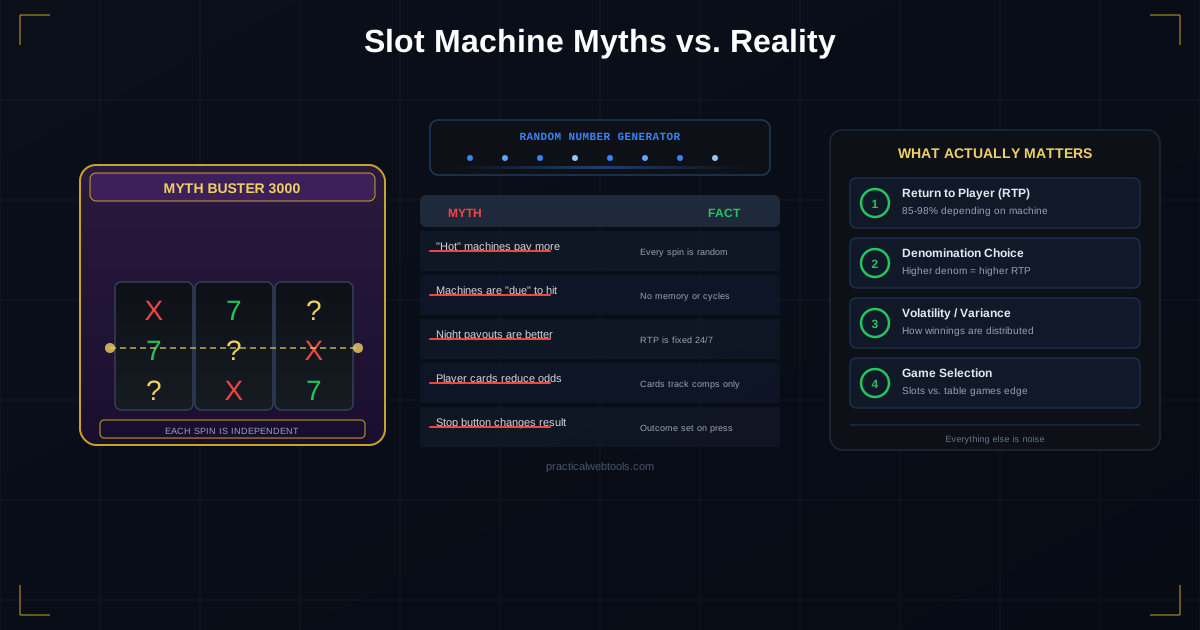
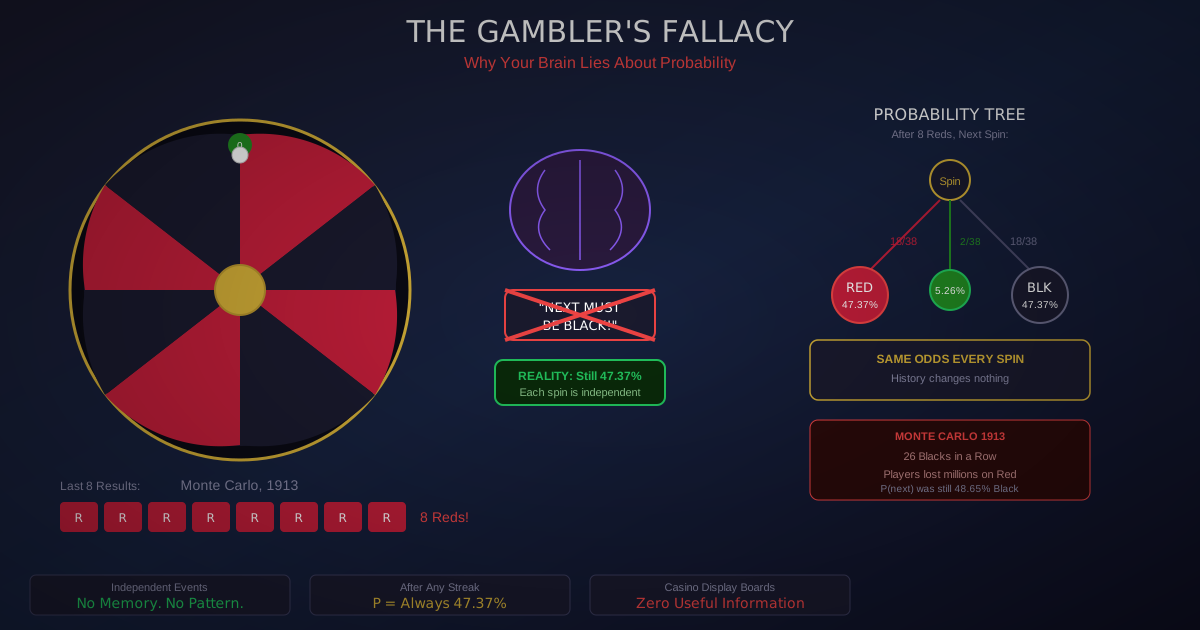
Mistake: Believing "lucky" stores matter Problem: Random distribution Fix: Buy based on game data, not location
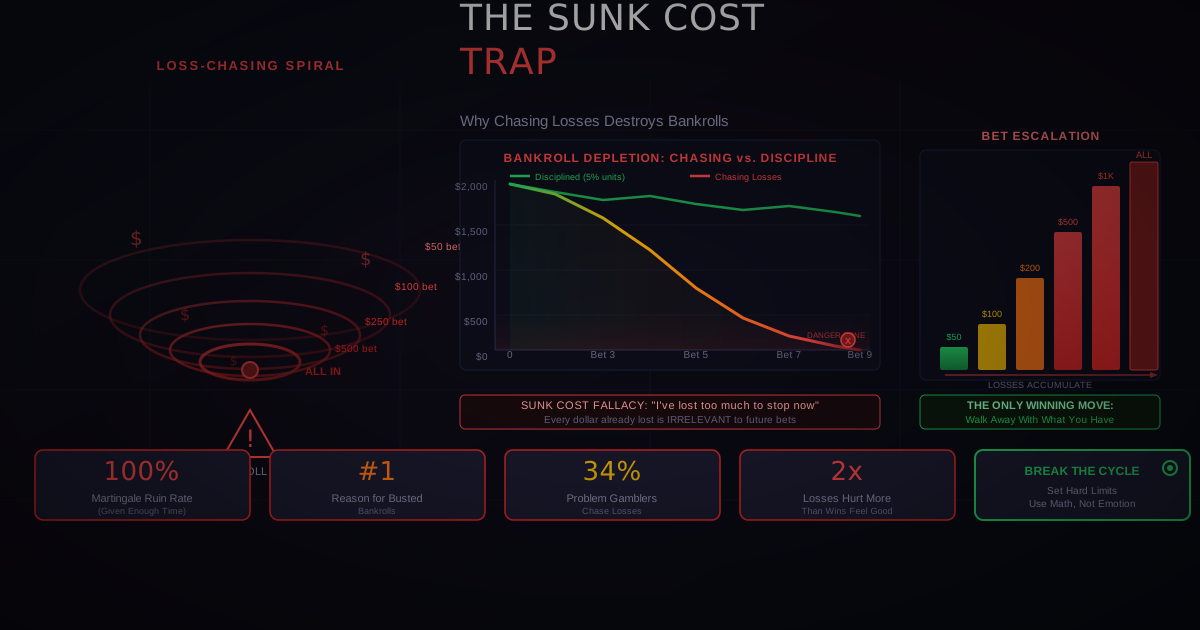
4. Chasing After Losses
Mistake: Buying more to recover Problem: Negative EV compounds Fix: Fixed budget, walk away
Frequently Asked Questions
Which scratch-off has the best odds?
Higher-priced tickets typically have better overall odds and EV, but specific games with depleted small prizes and remaining jackpots offer the best actual value.
Should I buy multiple tickets of the same game?
If the game has favorable EV, yes. Each ticket is independent—odds don't improve buying from same roll, but good EV is good EV.
Do "lucky" stores actually win more?
No. Wins are randomly distributed. High-volume stores sell more winners because they sell more tickets, not better odds.
When is the best time to buy?
When remaining prizes analysis shows favorable EV. Often mid-to-late in a game's life when small prizes are depleted but jackpots remain.
Can scratch-offs ever be +EV?
Rarely. Most games are 60-75% EV. Occasionally, specific games with unusual remaining prize distributions exceed 100% EV.
How do I find remaining prizes?
Your state lottery website has a "remaining prizes" or "prize remaining" report. Check before every purchase.
Advanced EV Concepts
True Odds vs Published Odds
| Measure | Definition |
|---|---|
| Published odds | Odds at game start |
| Current odds | Based on remaining prizes |
| Adjusted odds | Accounting for pack distribution |
Roll Theory
| Theory | Claim | Reality |
|---|---|---|
| Prizes per roll | Fixed winners per roll | Varies by game |
| End of roll advantage | Better odds at roll end | Usually false |
| Statistical clustering | Prizes cluster | Random distribution |
Expected Utility
For risk-averse players:
Utility = EV - (Risk Premium × Variance)

Higher variance games may feel worse even at same EV
Pro Tips
-
Check remaining prizes: Always before buying
-
Higher prices usually better: But verify with data
-
End of game sweet spot: When jackpots remain
-
Track your purchases: Know your actual return
-
Budget strictly: Negative EV adds up
Related Calculators
- Scratch Off ROI Calculator - Track performance
- Lottery Odds Calculator - General lottery odds
- Lottery EV Calculator - Draw game EV
- Expected Value Calculator - General EV
- Probability Calculator - Basic probability
Conclusion
Scratch-off expected value varies dramatically based on remaining prizes and unsold tickets. Our calculator helps you analyze any game's true mathematical return, identifying opportunities where the odds tilt more favorably. While most scratch-offs are negative EV, informed selection based on remaining prize data can significantly improve your return.
Calculate Scratch Off EV Now →
Don't buy scratch-offs blind. Our calculator turns lottery data into actionable insight, showing you exactly which games offer the best mathematical return. Check remaining prizes, calculate EV, and make informed decisions about which tickets deserve your money.