Poker Variance Explained: Surviving Downswings and Understanding Your True Win Rate (2026)
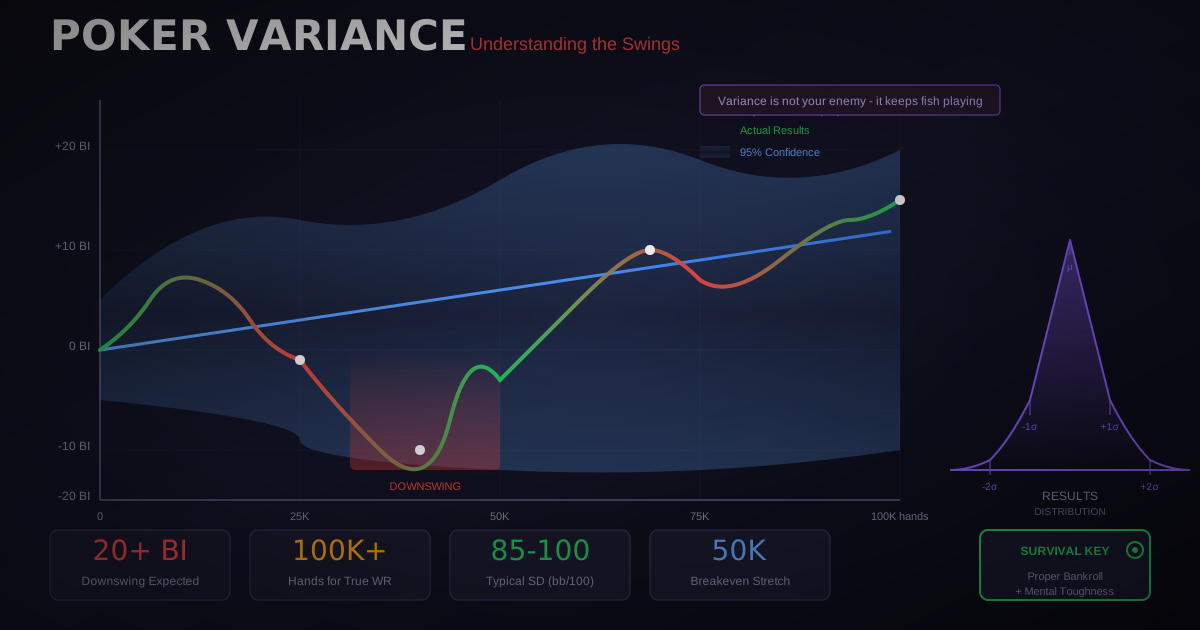
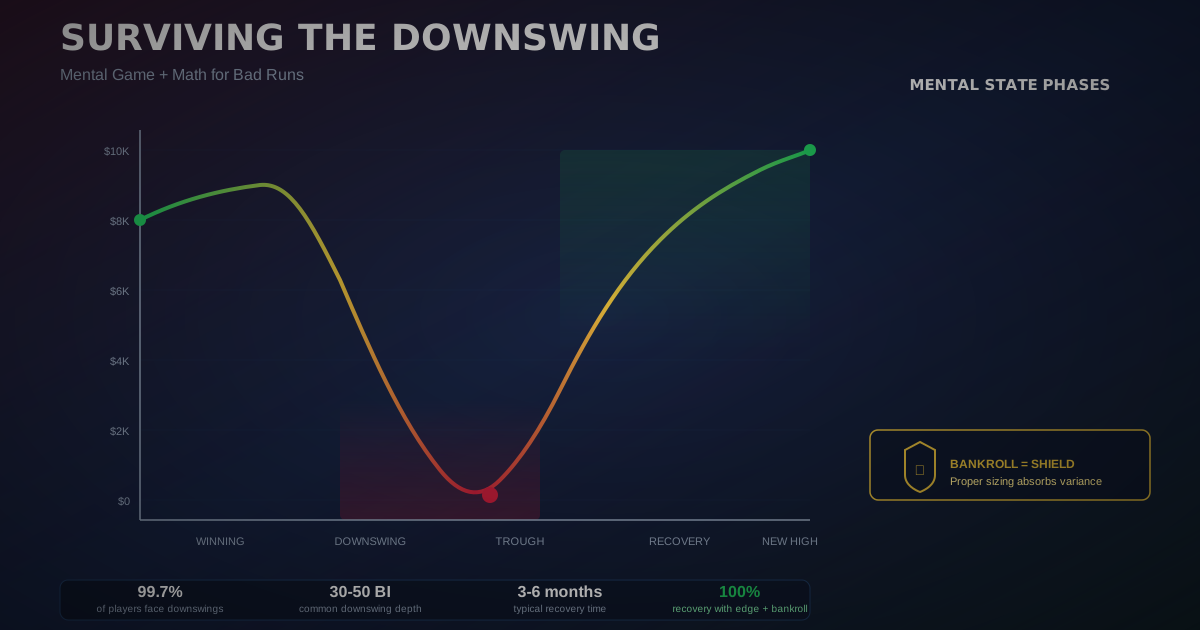
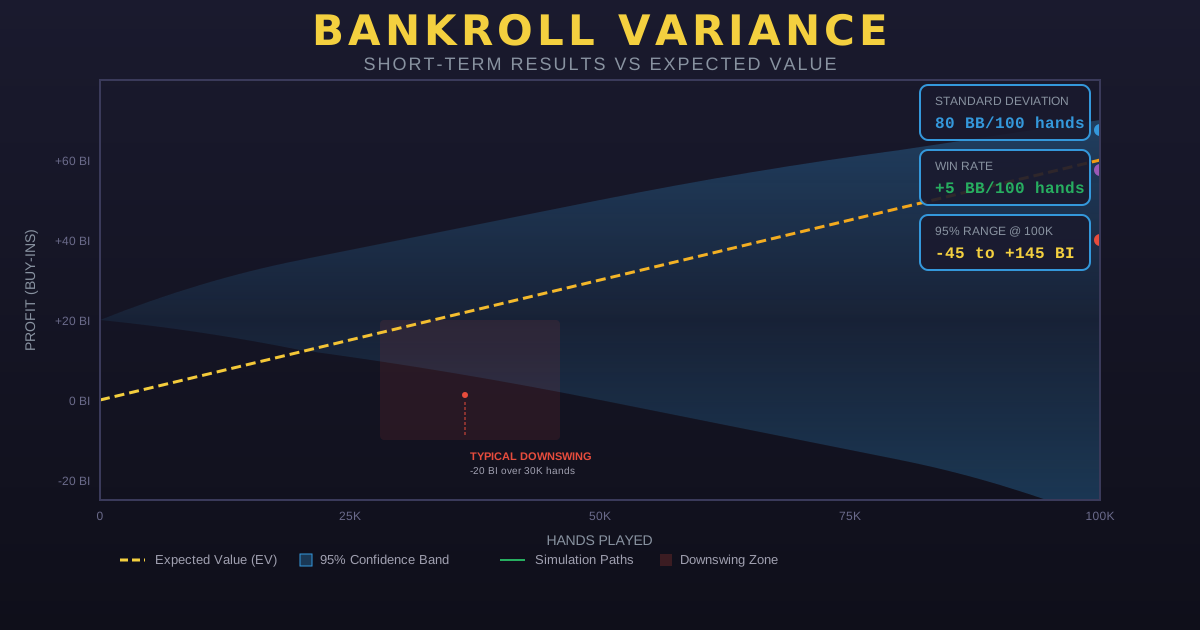
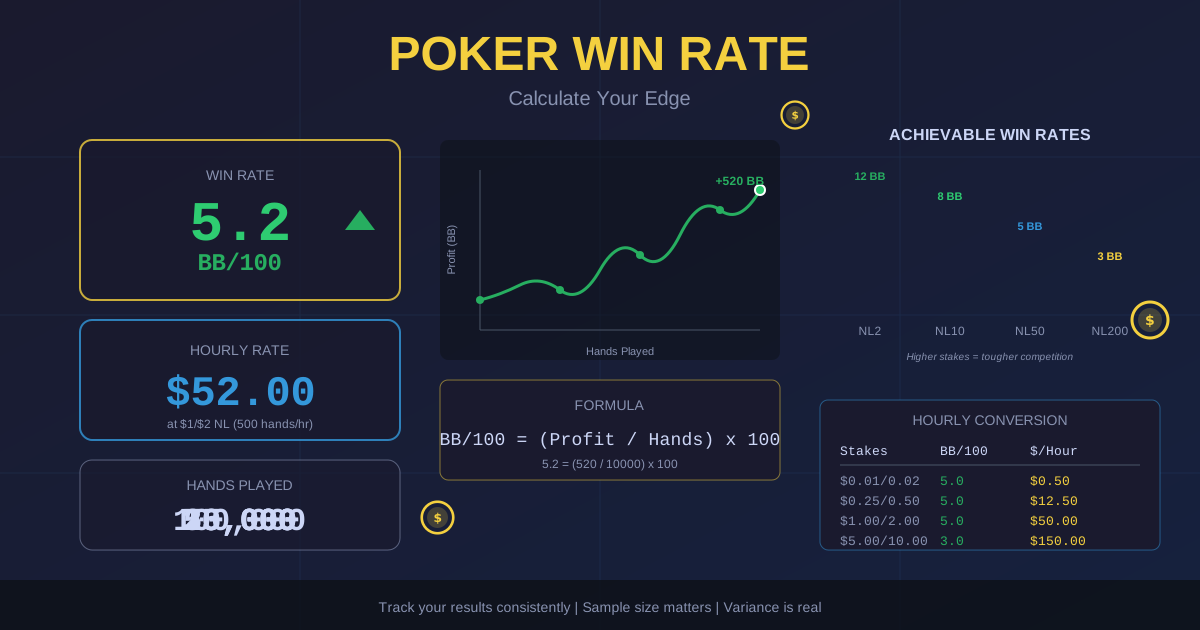
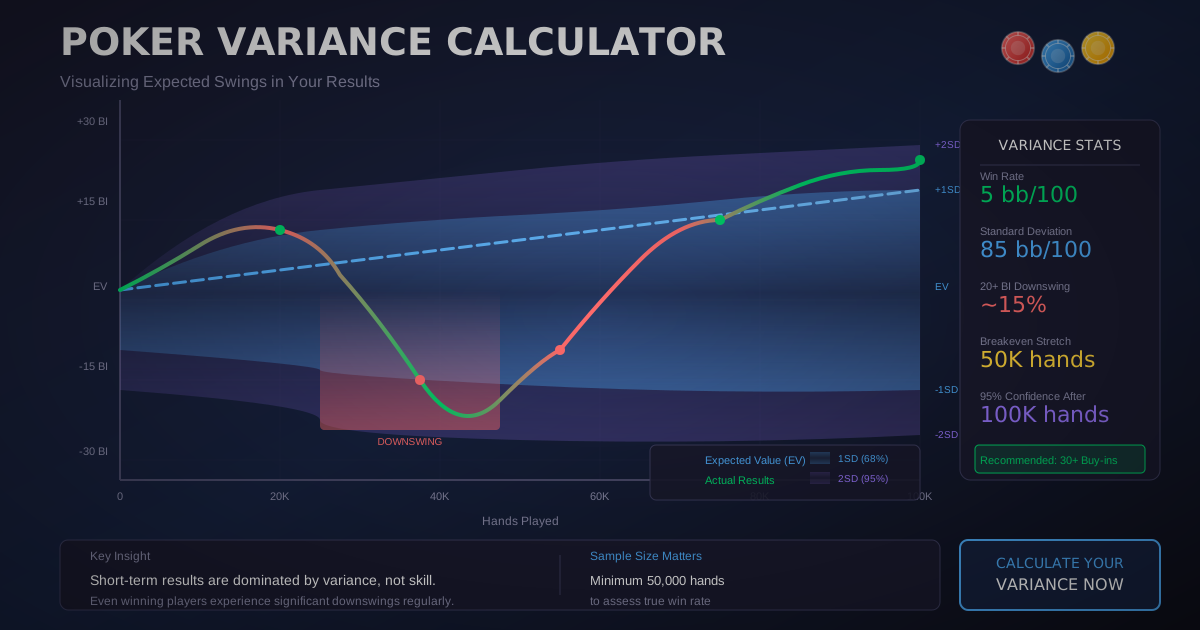
A solid winning poker player with a 5bb/100 win rate will experience a 20+ buy-in downswing in their career—and probably multiple times. This is not a flaw in their game; it is a mathematical certainty. Variance in poker is not something that happens to unlucky players. It happens to everyone, and understanding it separates professionals from recreational players who quit after their first brutal stretch.
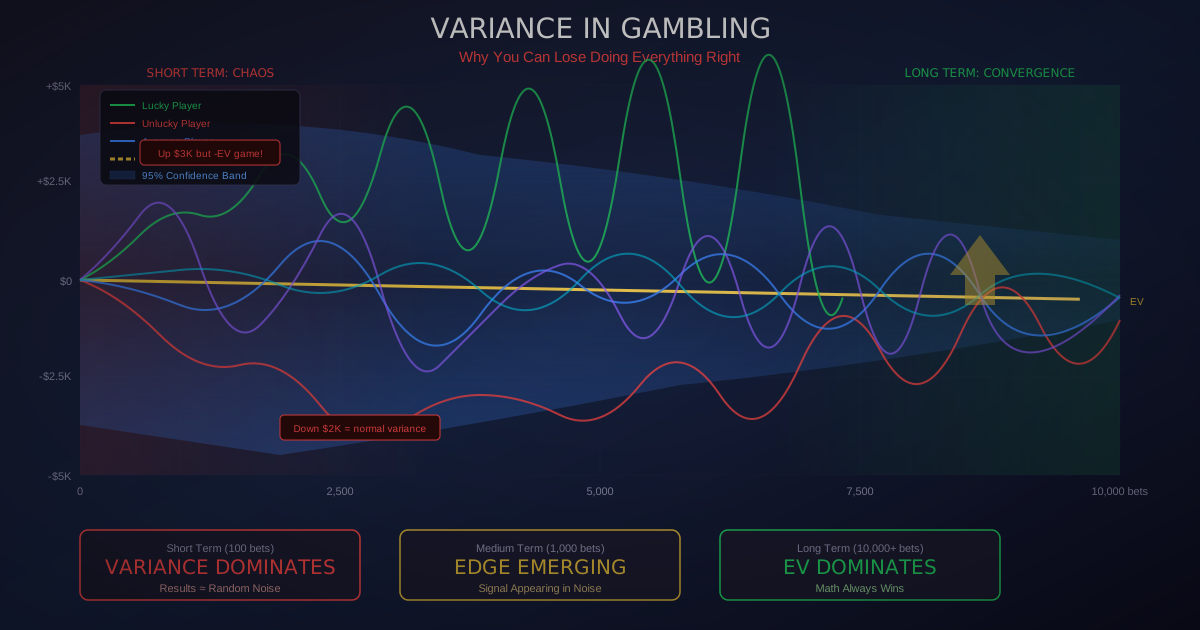
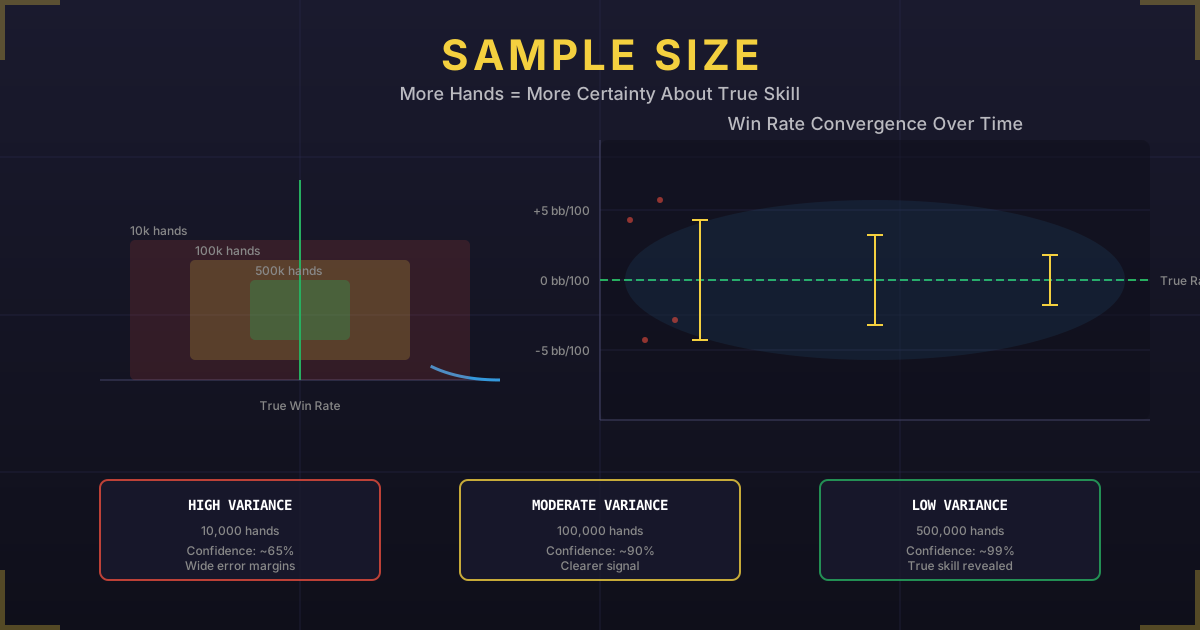
Here is the uncomfortable truth: a 10,000-hand sample is essentially meaningless for determining your true win rate. You need 100,000+ hands before variance smooths out enough to see your actual skill level reflected in your results. In that time, you will experience swings that feel like the poker gods have personally targeted you for destruction.
The good news: variance works both ways. Those stretches where you cannot lose, where every draw comes in and every opponent pays you off—that is also variance. The key is surviving the downswings so you can benefit from the upswings.
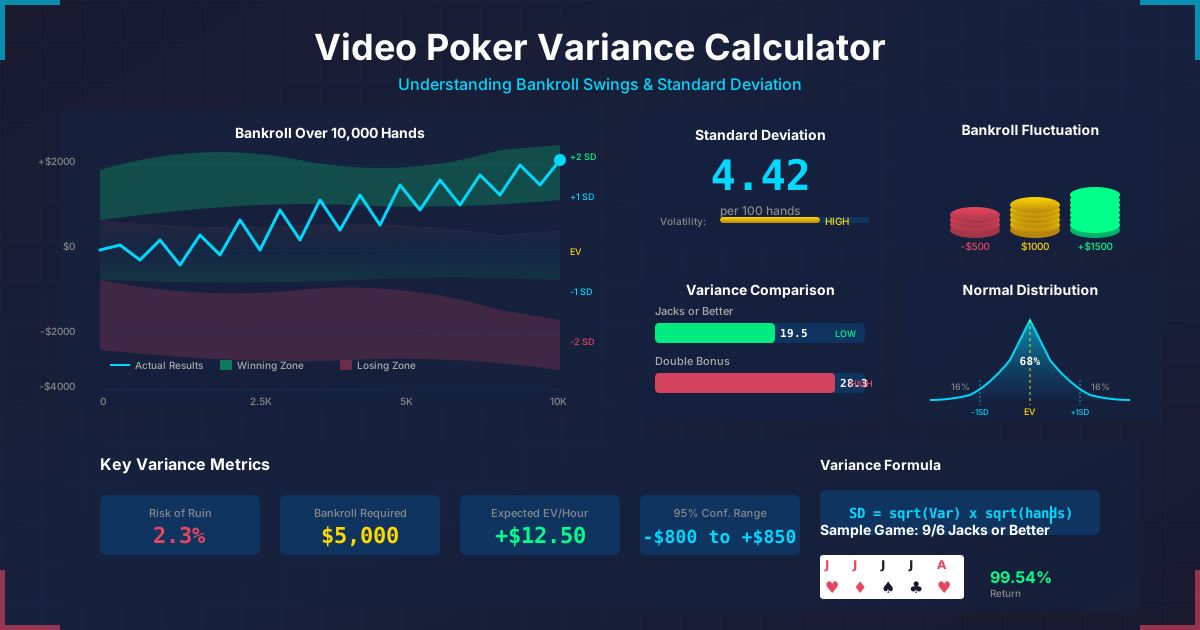
Simulate your expected variance and downswings with our free Poker Variance Calculator.
What Is Poker Variance?
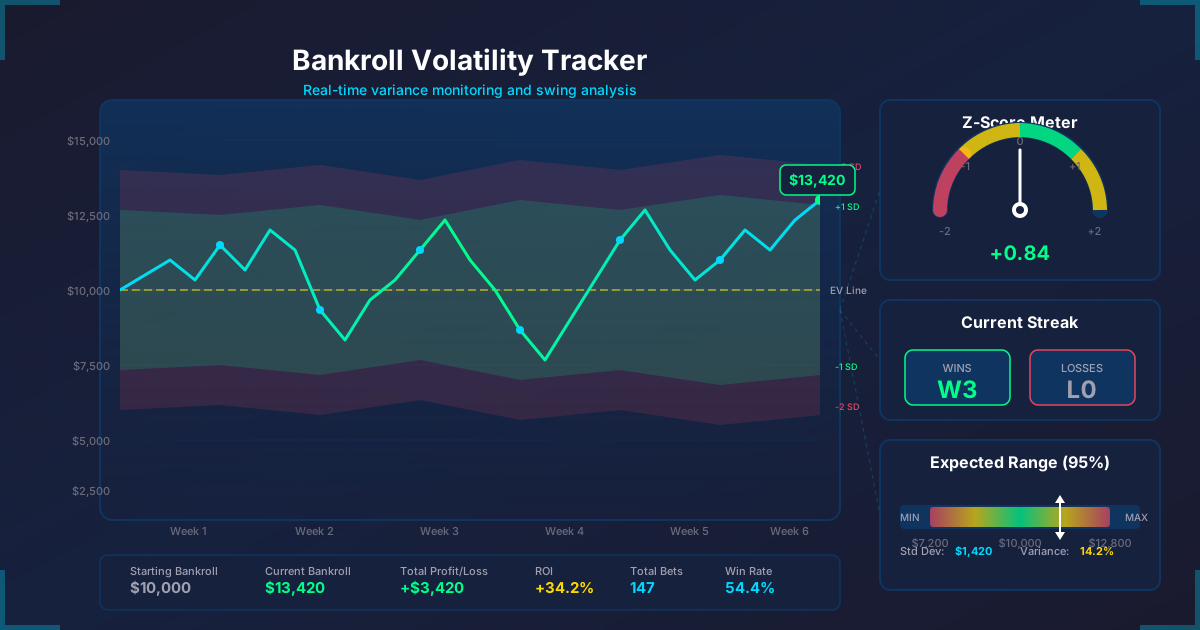
Variance in poker measures how much your results deviate from your expected value (EV) over any given sample. It is the difference between what "should" happen mathematically and what actually happens when cards hit the felt.
The Mathematics of Variance
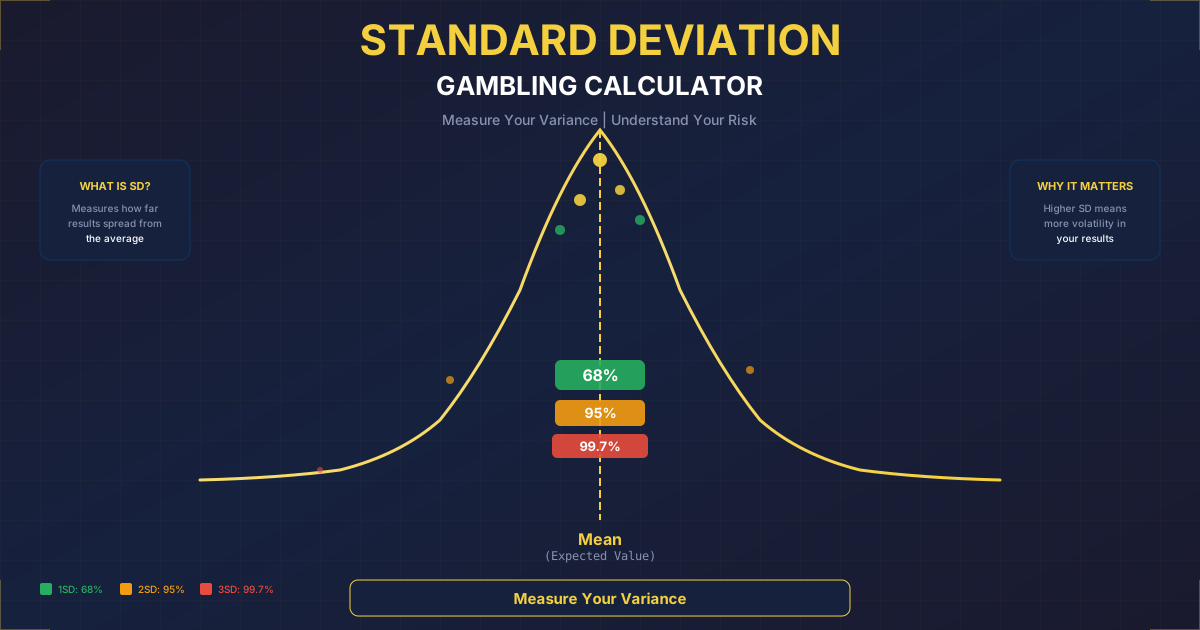
Variance is calculated using standard deviation, which measures the typical spread of your session results. In poker, standard deviation is expressed in big blinds per 100 hands (bb/100).
Typical Standard Deviations by Game Type:
| Game Type | Typical SD (bb/100) |
|---|---|
| Full Ring NL Hold'em (Tight) | 70-80 |
| 6-Max NL Hold'em (TAG) | 85-100 |
| 6-Max NL Hold'em (LAG) | 100-120 |
| Heads-Up NL Hold'em | 120-150 |
| Pot-Limit Omaha | 120-150 |
| Tournaments (MTT) | 200+ |
The higher your standard deviation, the more your results will swing from your true win rate. A loose-aggressive player will experience wilder swings than a tight-passive player, even if they have identical win rates.
Calculate your personal standard deviation with our Poker Variance Calculator.
Why Variance Exists in Poker
Poker variance exists because skill does not determine the outcome of any single hand—only long-term results. Consider these realities:
Short-Term Luck Dominates:
- AA vs KK all-in preflop: AA wins only 82% of the time
- Flopped set vs flush draw: Set wins only 65% of the time
- Even massive favorites lose regularly
Compounding Effects:
- Losing several big pots in a row is mathematically expected
- Running into the top of opponents' ranges happens
- Coolers (unavoidable big losses) cluster naturally
Sample Size Requirements:
- 10,000 hands: Results can be ±200% of true win rate
- 50,000 hands: Results within ±50% of true win rate
- 100,000+ hands: Results approaching true win rate
How Bad Can Downswings Get?
One of the most valuable uses of variance calculators is understanding how brutal downswings can realistically become. Most players dramatically underestimate potential downswings.
Expected Downswings by Win Rate
For a cash game player with 85 bb/100 standard deviation:
| Win Rate | 50% Chance of 10+ BI Downswing | 10% Chance of 20+ BI Downswing | 1% Chance of 30+ BI Downswing |
|---|---|---|---|
| 1 bb/100 | Every 15K hands | Every 40K hands | Every 150K hands |
| 3 bb/100 | Every 25K hands | Every 80K hands | Every 300K hands |
| 5 bb/100 | Every 50K hands | Every 150K hands | Every 500K hands |
| 10 bb/100 | Every 100K hands | Every 400K hands | Every 1.5M hands |
Even elite players with 10 bb/100 win rates will experience 20+ buy-in downswings. For average winning players (3-5 bb/100), these downswings come more frequently and last longer.
Simulate your specific downswing probabilities with our Poker Downswing Probability Calculator.
Real-World Downswing Scenarios
Scenario 1: The Professional Grinder
- Win rate: 5 bb/100
- Standard deviation: 90 bb/100
- Over 500,000 hands, they will almost certainly experience a 25+ buy-in downswing
- This downswing could last 50,000+ hands (several months of full-time play)
Scenario 2: The Part-Time Player
- Win rate: 3 bb/100
- Standard deviation: 85 bb/100
- Playing 20,000 hands/month, they will experience extended breakeven stretches lasting 2-3 months
- A 15 buy-in downswing is essentially guaranteed within their first year
Scenario 3: The Tournament Player
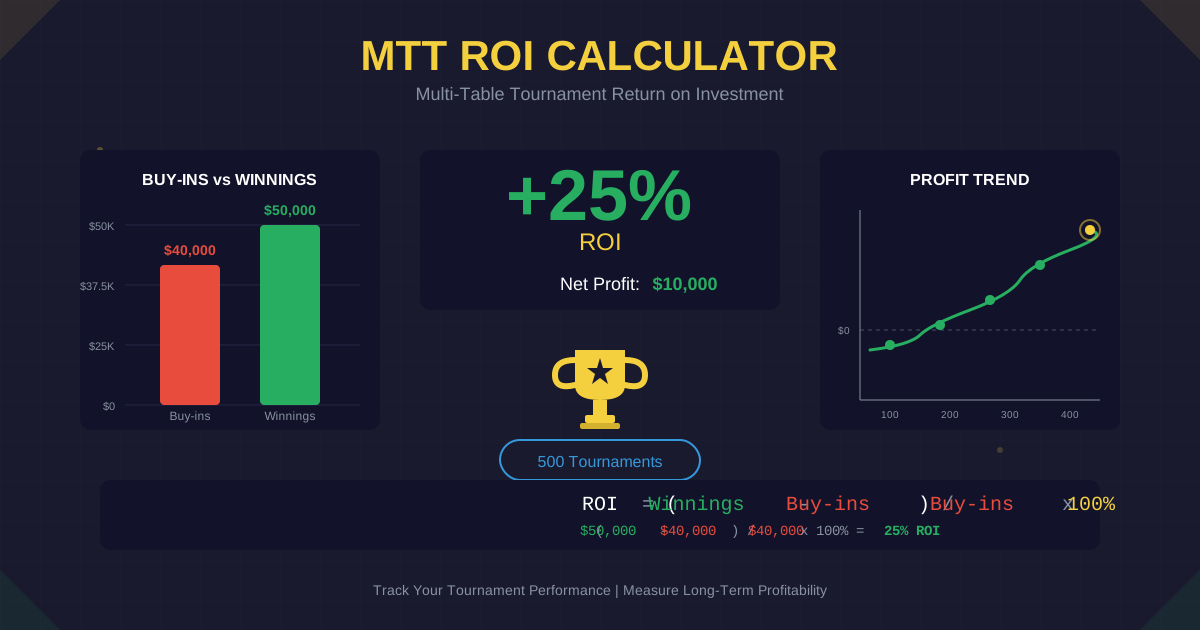
- ROI: 20% (excellent)
- Playing 500 tournaments/year
- Will have losing years even with this edge
- Will go 100+ tournaments without a significant cash multiple times
Breakeven Stretches: The Silent Killer
Downswings that cost buy-ins are painful, but breakeven stretches are often more psychologically damaging. You are playing your best, making good decisions, and your bankroll just... sits there. For weeks. Sometimes months.
Expected Breakeven Stretches
For a 5 bb/100 winner with 85 bb/100 standard deviation:
- 50% chance of a 30,000+ hand breakeven stretch at some point
- 25% chance of a 50,000+ hand breakeven stretch
- 10% chance of a 75,000+ hand breakeven stretch
At 30,000 hands per month (serious part-time play), a 75,000 hand breakeven stretch is 2.5 months of no profit. That is 2.5 months of perfect play with nothing to show for it.
Why Breakeven Stretches Are So Difficult
- No Visible Progress: Your graph goes sideways, making you question everything
- Opportunity Cost: Time spent not winning could be spent elsewhere
- Self-Doubt: "Am I actually a losing player?" becomes a recurring thought
- Temptation to Change: The urge to dramatically alter your strategy is strong
The solution is understanding that breakeven stretches are built into poker. They are not evidence of playing poorly—they are evidence of playing poker.
How to Distinguish Running Bad from Playing Bad
One of the most important skills in poker is accurately assessing whether you are experiencing negative variance or actually playing poorly. Many players blame variance when they are leaking, while others destroy their confidence by assuming they are playing badly during normal downswings.
Signs You Are Running Bad (Variance)
All-In Equity Realization: If you are consistently getting your money in good and losing, that is variance. Track your all-in EV using tracking software.
Calculate your expected value in all-in situations with our Poker All-In EV Calculator.
Cooler Frequency: Set over set, flush over flush, running into the top of opponents' ranges—these are coolers that will happen and cluster together.
Board Texture Luck: If your opponents keep hitting perfect runouts against your strong hands, that is variance in action.
Signs You Are Playing Bad (Leaks)
Consistent Pattern Losses: Losing in the same situations repeatedly (e.g., always losing big with top pair) suggests a leak, not variance.
Non-All-In Losses: If most of your losses come from situations where you fold the best hand or call with the worst hand, that is playing poorly.
Emotional Decision-Making: Making revenge calls, spite raises, or steam plays indicates tilt, not variance.
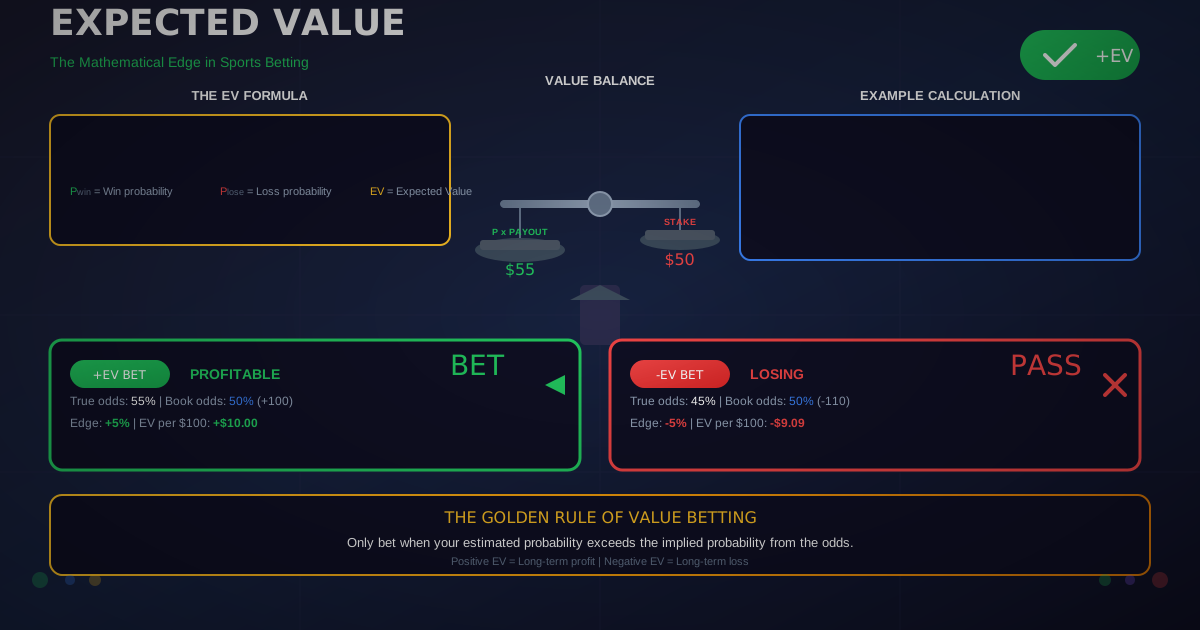
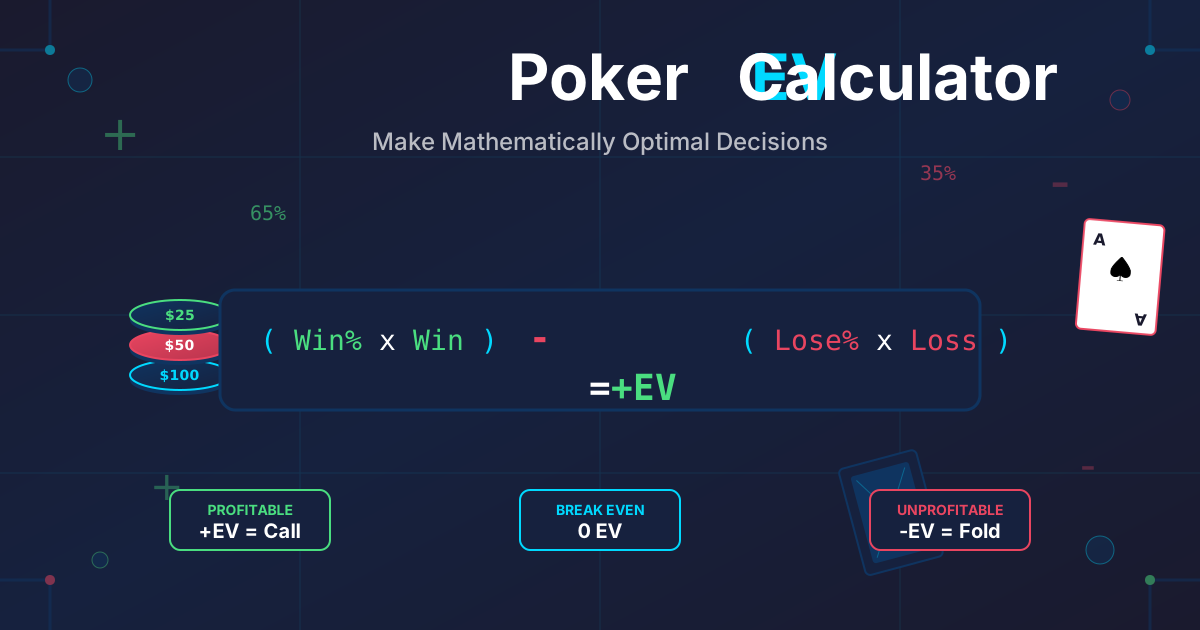
Analyze your expected value in key decisions with our Poker EV Calculator.
Using All-In EV to Diagnose
All-In Expected Value (AIEV) tracks what "should" happen when stacks go all-in. If your actual results are significantly below your AIEV over a large sample, you are running bad. If they are close or above, your losses are coming from elsewhere.
Example:
- Actual results: -15 buy-ins over 50,000 hands
- All-in EV: +5 buy-ins
- Difference: -20 buy-ins from all-in variance alone
This player is actually playing well (+5 buy-ins in EV) but running 20 buy-ins below expectation in all-in spots.
The Psychology of Variance
Understanding variance intellectually is one thing. Surviving it emotionally is another challenge entirely.
The Mental Traps of Downswings
Confirmation Bias: During downswings, you notice every bad beat while ignoring times opponents gifted you chips. Your brain creates a narrative of persecution that does not match reality.
Recency Bias: Recent results feel more significant than they are. A brutal week can make you forget months of winning that preceded it.
Tilt Spiral: Losing leads to frustration, frustration leads to poor decisions, poor decisions lead to more losing—a devastating cycle that compounds variance-based losses.
Helplessness: Extended downswings can create a feeling that nothing you do matters, leading to passive, weak play that actually does cost money.
Strategies for Mental Survival
1. Focus on Decisions, Not Outcomes After each session, ask: "Did I make good decisions?" If yes, the session was a success regardless of results.
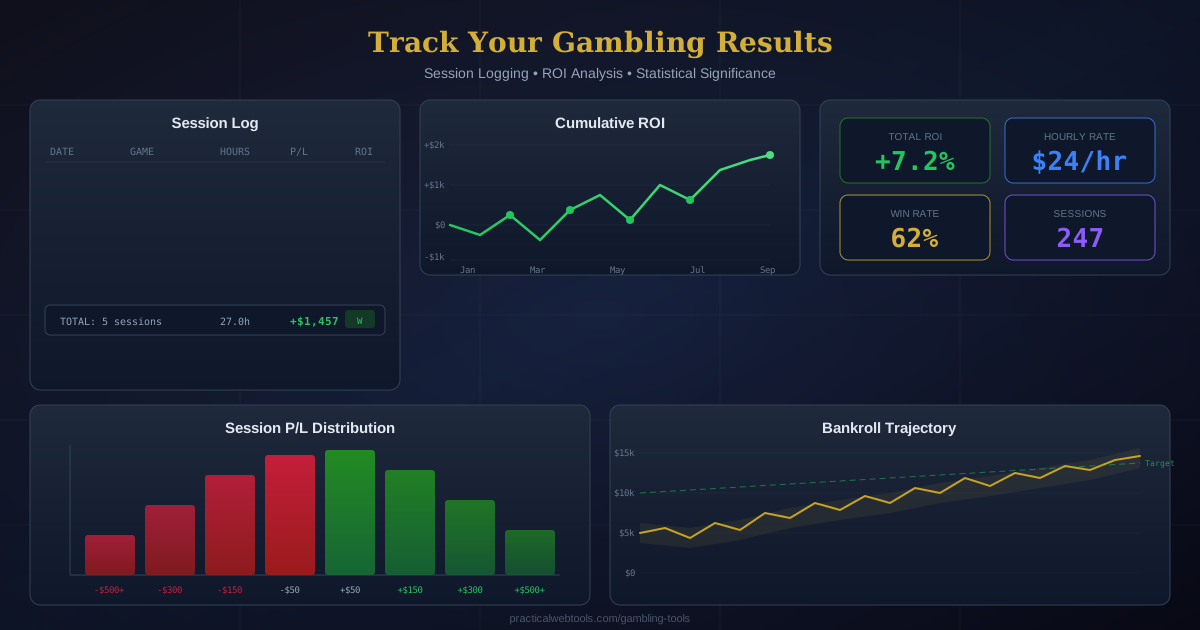
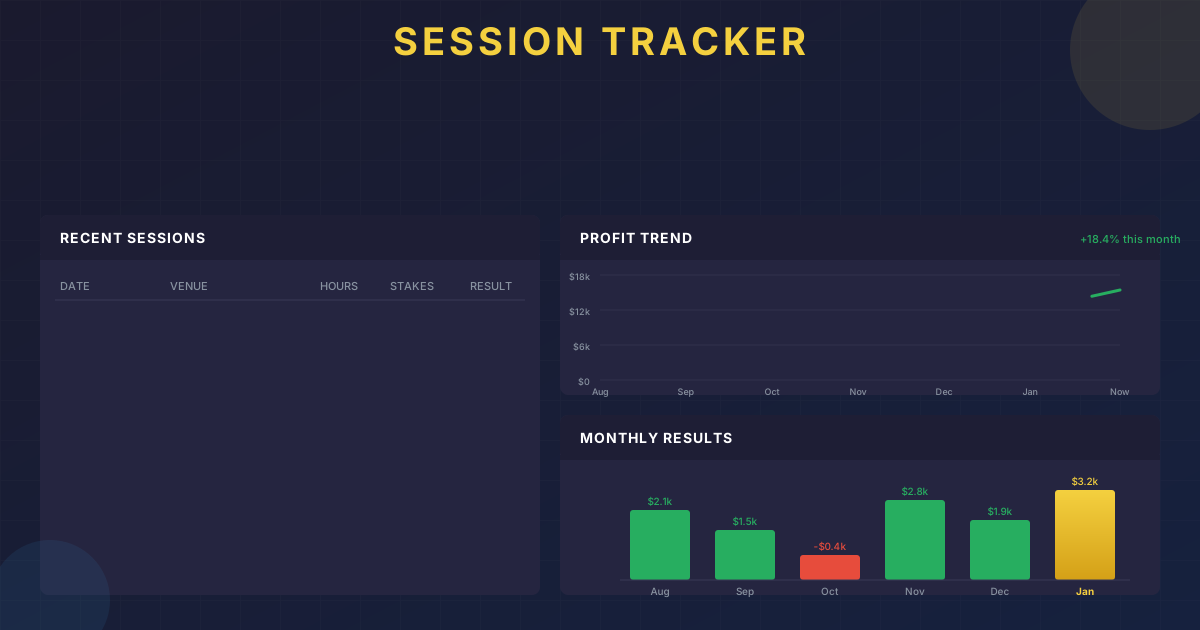
2. Keep Detailed Records Tracking your sessions provides objective data to counter the emotional narrative. Use our Poker Session Tracker to maintain perspective.
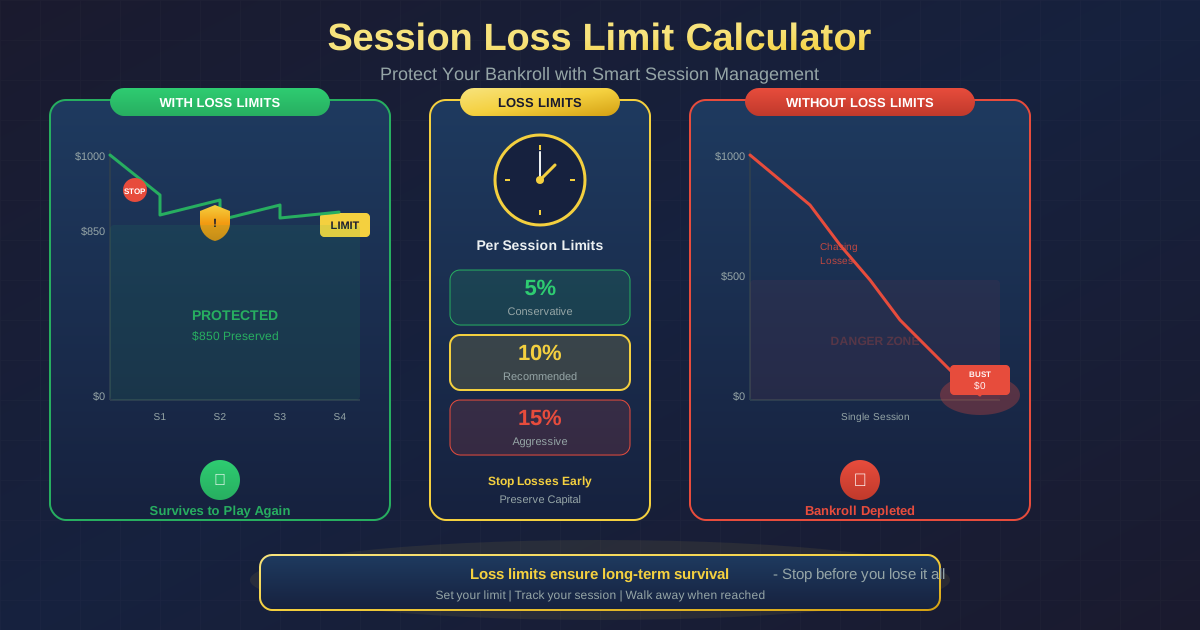
3. Set Stop-Loss Limits Pre-commit to stopping after a certain loss amount per session. This prevents downswings from compounding through tilt.
4. Take Breaks Sometimes the best play is no play. If variance has you rattled, step away until you can approach the game objectively.
5. Study During Downswings Channel frustration into improvement. Review hands, study theory, and use the downswing as motivation to plug leaks.
6. Connect with Other Players Discussing bad beats with people who understand poker variance provides perspective and emotional relief.
Variance in Different Poker Formats
Cash Game Variance
Cash games have the most predictable variance because:
- You always play 100bb+ deep
- Stack sizes are consistent
- No prize structure distortion
Standard deviation typically ranges from 70-120 bb/100 depending on your style.
Key Cash Game Variance Factors:
- Playing style (loose = higher variance)
- Number of tables (more tables = faster variance realization)
- Stake level (higher stakes often = higher skill variance)
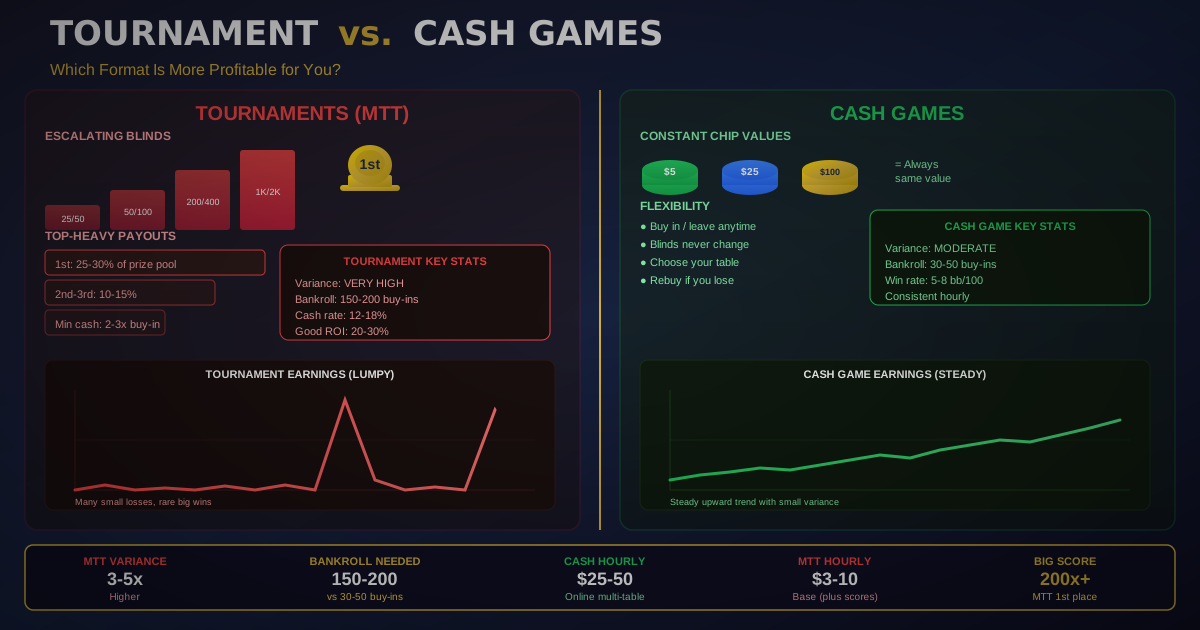
Tournament Variance
Tournaments have extreme variance because:
- You can play perfectly and bust to a single bad beat
- Prize structures are top-heavy
- Skill edge is diluted across large fields
Tournament standard deviation can exceed 200 bb/100 equivalent, and ROI calculations require thousands of tournaments to stabilize.
Tournament-Specific Considerations:
- Even 30% ROI players have losing years
- Final table experience smooths variance (field shrinks, edge compounds)
- Satellite qualification adds additional variance layer
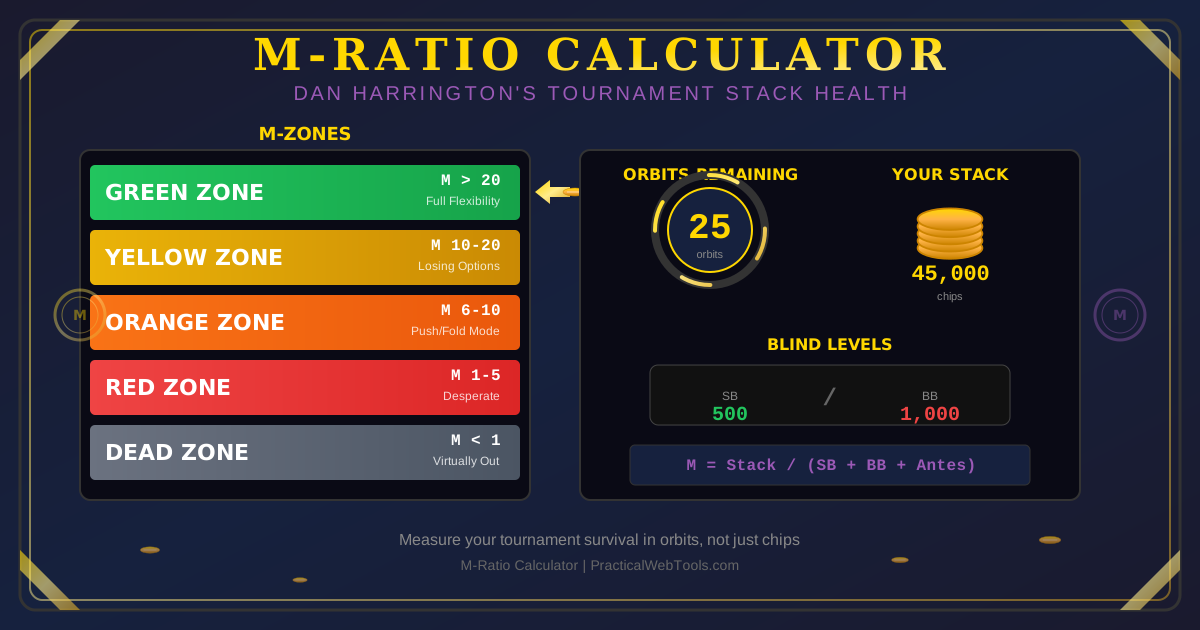
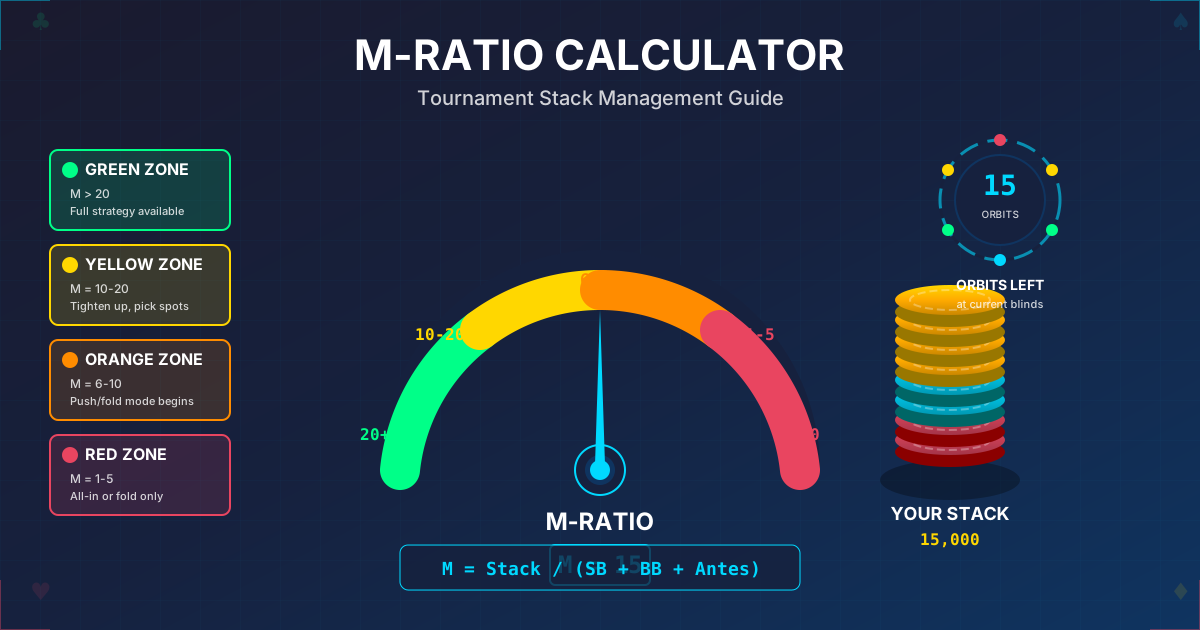
Understand your tournament M-Ratio and survival urgency with our M-Ratio Calculator.
Sit & Go Variance
Sit & Gos fall between cash games and MTTs:
- Smaller fields mean less variance than MTTs
- Fixed prize structures create consistent edge opportunities
- ICM dramatically affects optimal play
A strong SNG player with 5% ROI needs 1,000+ games before results stabilize meaningfully.
How to Calculate Your True Win Rate
Your actual win rate is hidden behind variance. Here is how to estimate it more accurately:
Sample Size Requirements
| Confidence Level | Required Hands (Cash) | Required Tournaments |
|---|---|---|
| Rough Estimate | 30,000 | 200 |
| Moderate Confidence | 100,000 | 500 |
| High Confidence | 250,000 | 1,000 |
| Near Certainty | 500,000+ | 2,500+ |
Most recreational players will never achieve "high confidence" sample sizes. This is why bankroll management must assume your win rate might be lower than your results suggest.
Confidence Interval Calculations
For a player with 3 bb/100 win rate over 50,000 hands (SD: 85 bb/100):
95% confidence interval: -0.5 bb/100 to 6.5 bb/100
This means a player showing 3 bb/100 over 50,000 hands could actually be anything from a small loser to a solid winner. The sample is simply too small to know.
Run your own confidence interval calculations with our Poker Variance Calculator.
The Standard Deviation Trap
Players with higher standard deviations need larger samples for accurate win rate assessment:
- SD 70 bb/100: 50,000 hands provides reasonable accuracy
- SD 100 bb/100: Need 100,000+ hands for similar accuracy
- SD 150 bb/100 (PLO/HU): Need 200,000+ hands
If you play a high-variance style, your results are even less reliable at typical sample sizes.
Bankroll Management in Context of Variance
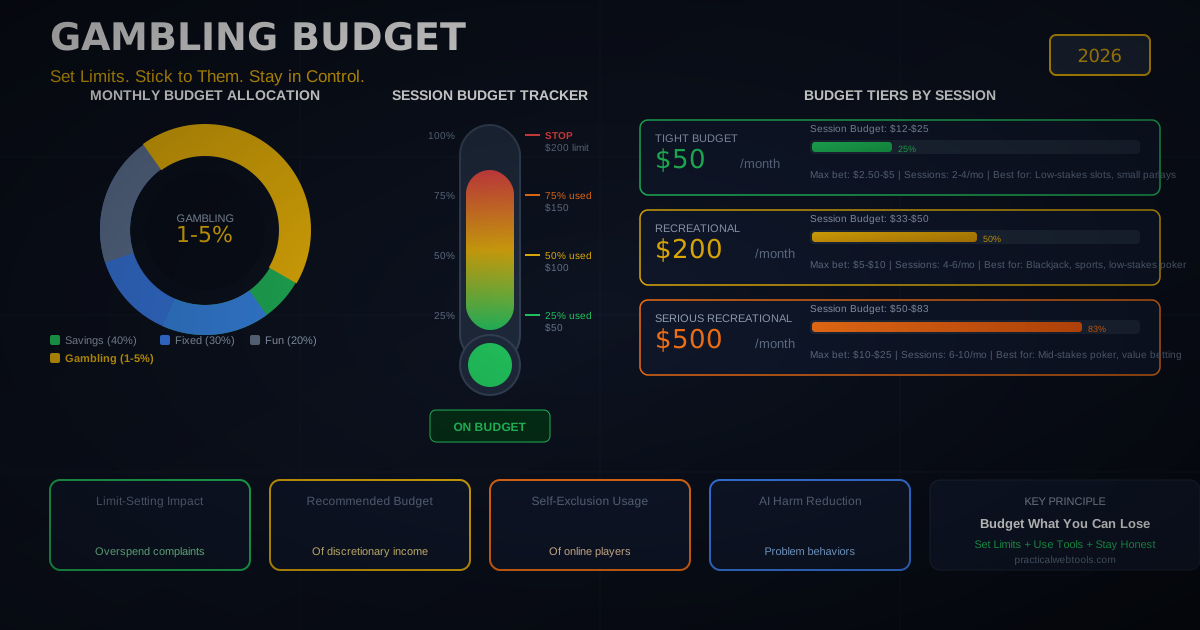
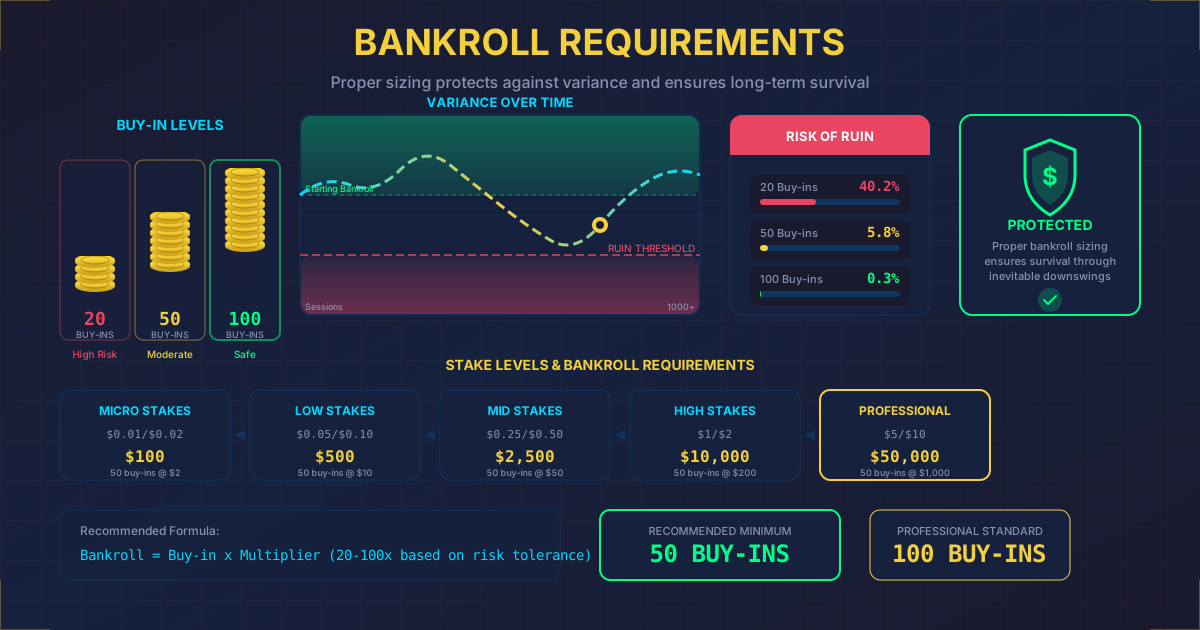
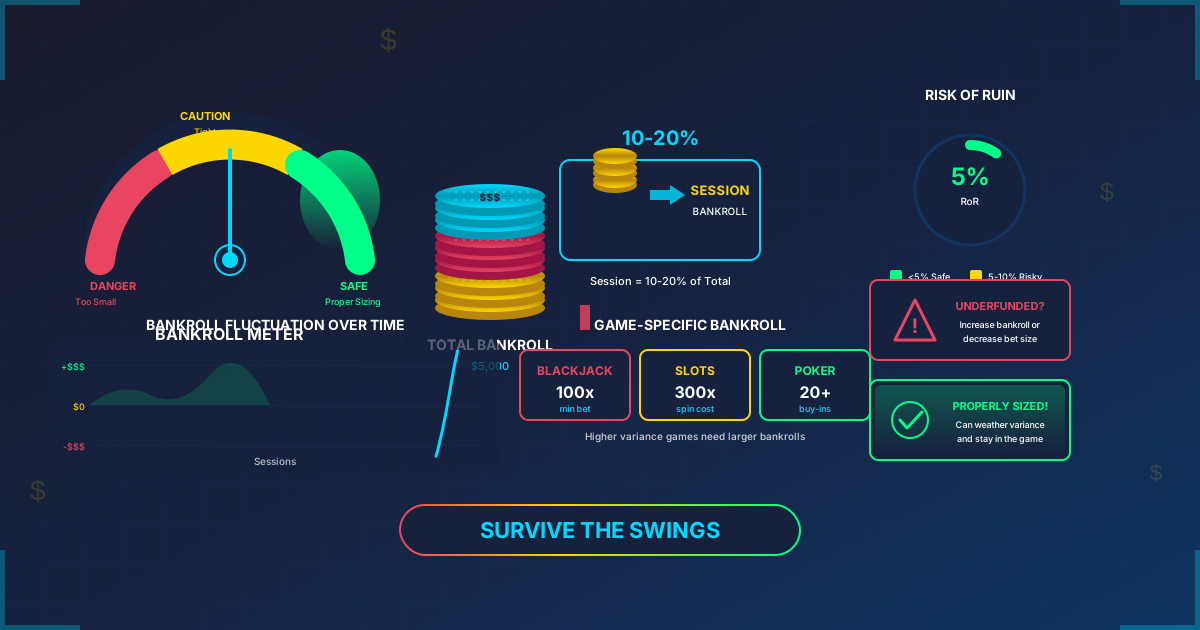
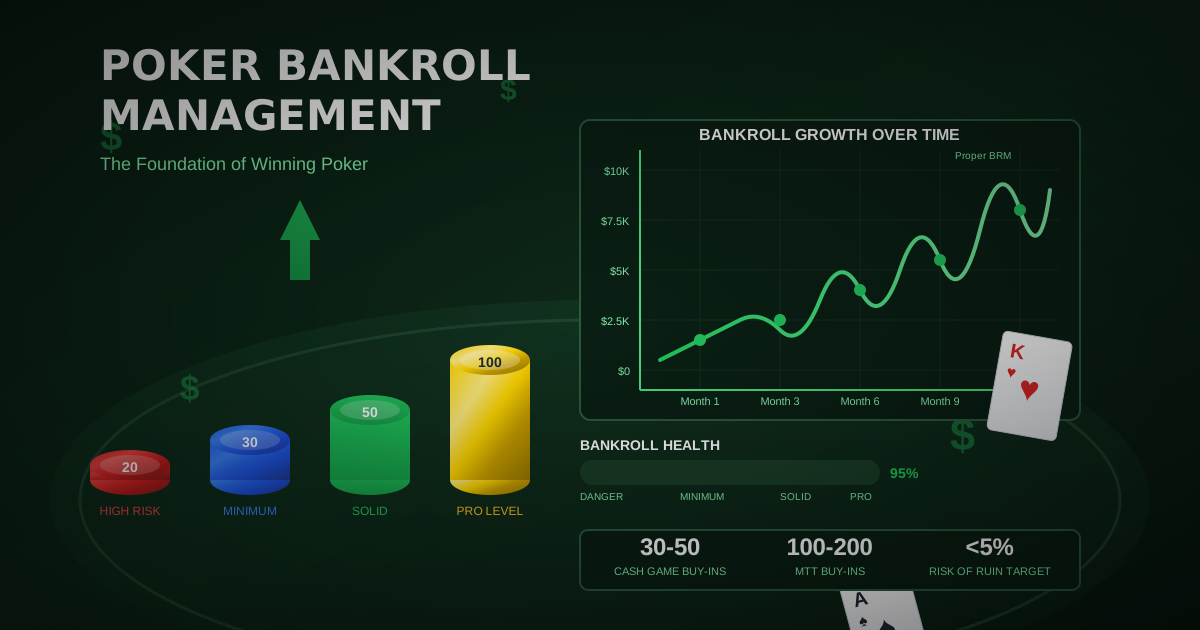
Understanding variance directly informs bankroll requirements. Your bankroll must absorb expected downswings without forcing you to play scared money.
Matching Bankroll to Variance
Higher variance (higher SD) requires more buy-ins:
| Standard Deviation | Minimum Buy-Ins | Conservative Buy-Ins |
|---|---|---|
| 70 bb/100 | 25 | 40 |
| 85 bb/100 | 30 | 50 |
| 100 bb/100 | 40 | 60 |
| 120 bb/100 | 50 | 80 |
Calculate your exact bankroll requirements with our Poker Bankroll Requirements Calculator.
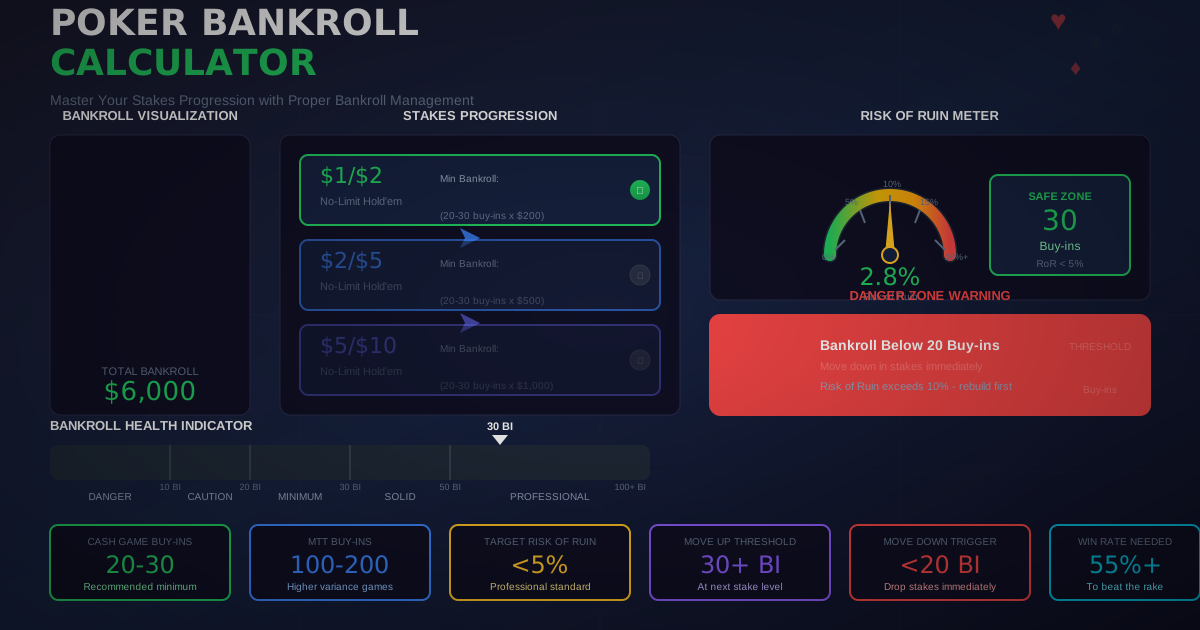
Risk of Ruin Calculations
Risk of Ruin (RoR) tells you the probability of going broke given your win rate, standard deviation, and bankroll:
| Buy-Ins | RoR (5bb/100, 85 SD) | RoR (3bb/100, 85 SD) |
|---|---|---|
| 20 | 15% | 30% |
| 30 | 5% | 15% |
| 50 | 1% | 5% |
| 100 | <0.1% | 1% |
A player with a small edge (3bb/100) needs significantly more buy-ins than commonly recommended to avoid unacceptable risk of ruin.
Calculate your risk of ruin with our Poker Risk of Ruin Calculator.
Practical Variance Management Strategies
Strategy 1: The Variance Buffer
Always maintain extra buy-ins beyond the minimum. A 20% buffer protects against the worst-case downswings your calculations did not anticipate.
Strategy 2: The Moving Average
Instead of focusing on daily results, track your 30-day moving average. This smooths variance and provides a clearer picture of your actual performance.
Strategy 3: The Results Blackout
Some players improve by hiding their results during sessions. Not seeing your stack declining prevents tilt and allows pure focus on decisions.
Strategy 4: The Scheduled Review
Review results weekly or monthly rather than daily. Daily analysis amplifies variance's psychological impact and creates noise.
Strategy 5: The Win Rate Floor
Assume your win rate is 1-2 bb/100 lower than your results suggest. This builds in safety margin and prevents overconfidence.
Strategy 6: The Variance Journal
During downswings, write down key hands where you lost. Later review often reveals these were standard variance, not bad play.
Frequently Asked Questions
What is a normal downswing in poker? For a winning cash game player, 10-20 buy-in downswings are normal and expected. 20-30 buy-in downswings happen to most serious players at some point. Downswings over 40 buy-ins are rare but possible even for winners.
How long can a breakeven stretch last? Breakeven stretches of 50,000-100,000+ hands are mathematically normal for players with modest win rates (2-5 bb/100). This can translate to weeks or months of playing without profit.
Am I running bad or playing bad? Check your all-in EV using tracking software. If you are getting money in good and losing, that is variance. If you are making poor decisions before all-ins, that is playing badly. Use our Poker EV Calculator to analyze key spots.
How many hands do I need to know my true win rate? At least 100,000 hands for moderate confidence, 250,000+ for high confidence. Most recreational players never achieve statistically meaningful sample sizes.
Does variance affect professionals and recreational players equally? Yes, mathematically. However, professionals play more volume, allowing variance to smooth faster. They also have larger bankrolls that absorb swings without lifestyle impact.
Can I reduce variance without sacrificing win rate? Somewhat. Playing tighter reduces variance but may sacrifice edge in loose games. The key is finding the optimal balance for your bankroll and mental game.
How do I stay motivated during downswings? Focus on decisions rather than results, maintain study habits, connect with other players, and remember that variance is temporary while skill is permanent.
Embracing Variance as Part of Poker
Variance is not a bug in poker—it is a feature. It is what keeps weaker players in the game, believing they can beat the odds. Without variance, fish would quickly learn they cannot win, and the games would dry up.
Your job as a winning player is to:
- Understand variance mathematically so you have realistic expectations
- Size your bankroll appropriately so downswings cannot bust you
- Maintain emotional equilibrium so variance does not compound through tilt
- Keep playing well so positive expectation eventually manifests in results
Start by simulating your expected variance with our free Poker Variance Calculator. Then ensure your bankroll can handle the swings with our Poker Bankroll Requirements Calculator. Finally, track your journey through the ups and downs with our Poker Session Tracker.
Variance will test you. Understanding it will help you pass that test.