Gambling and Relationships: How to Bet Without Damaging Your Personal Life (2026)

According to the National Council on Problem Gambling, for every person with a gambling problem, an estimated 7 to 10 additional people are directly affected -- partners, children, parents, friends, and coworkers. The financial devastation of problem gambling is well documented, but the relational damage often starts long before the money runs out. It starts with secrecy, emotional unavailability, broken promises, and the slow erosion of trust that comes from prioritizing a betting app over the people who matter most.
This is not an anti-gambling article. Millions of people enjoy sports betting, poker, and casino games responsibly as a form of entertainment. The issue is not gambling itself -- it is gambling without boundaries, without communication, and without the self-awareness to recognize when a hobby has become a problem.
The legalization of online sports betting across 38+ US states by 2026 has made gambling more accessible than ever. A Pew Research study found that 1 in 5 American adults placed a sports bet in 2025, up from 1 in 10 in 2020. With that increased participation comes an increased need for honest conversations about how gambling fits into your personal life and relationships.
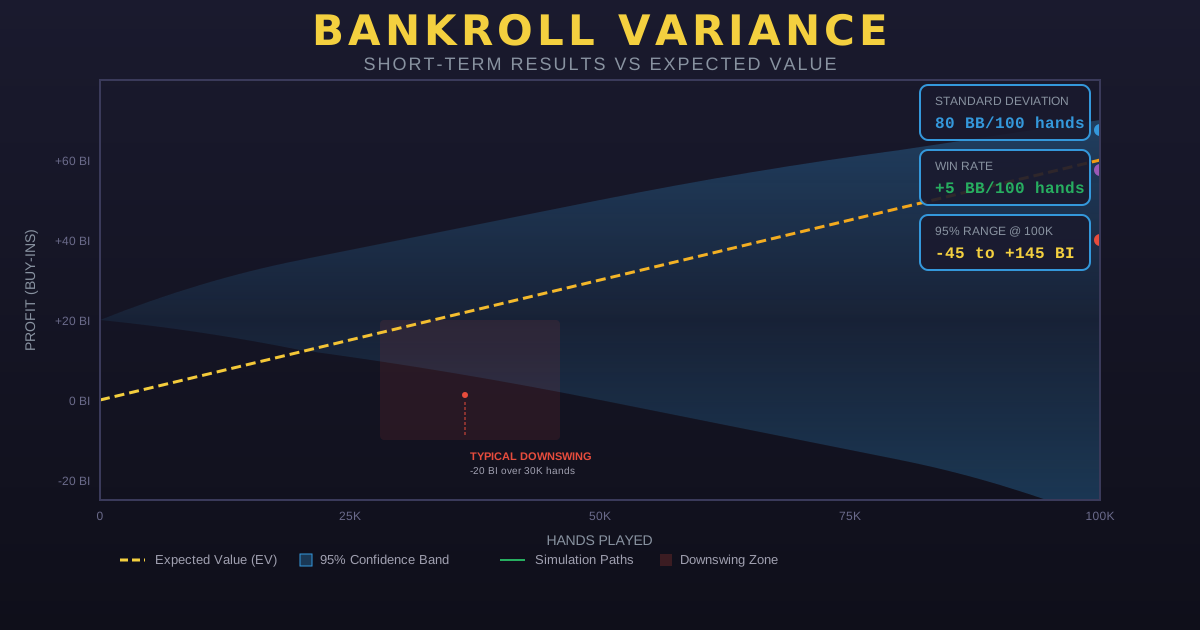
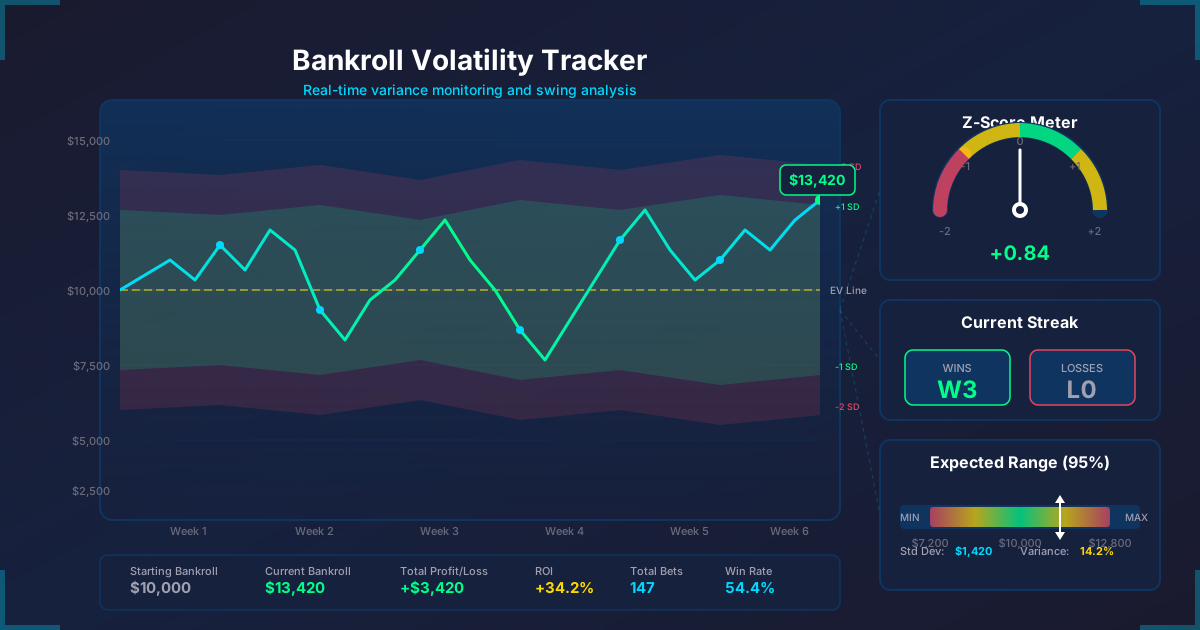
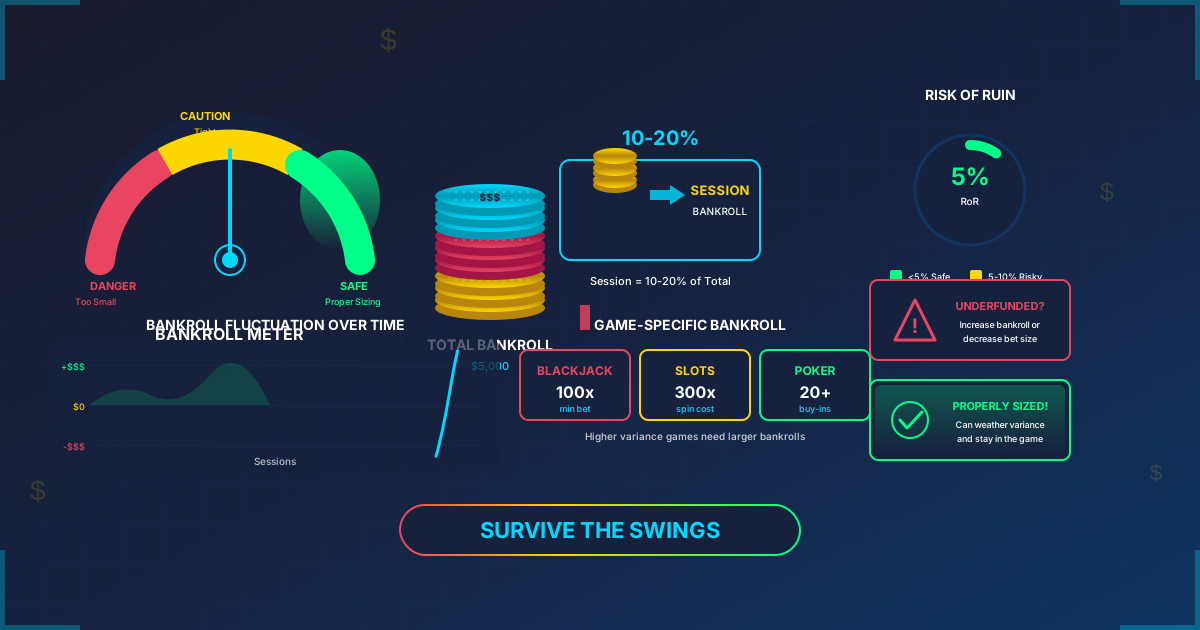
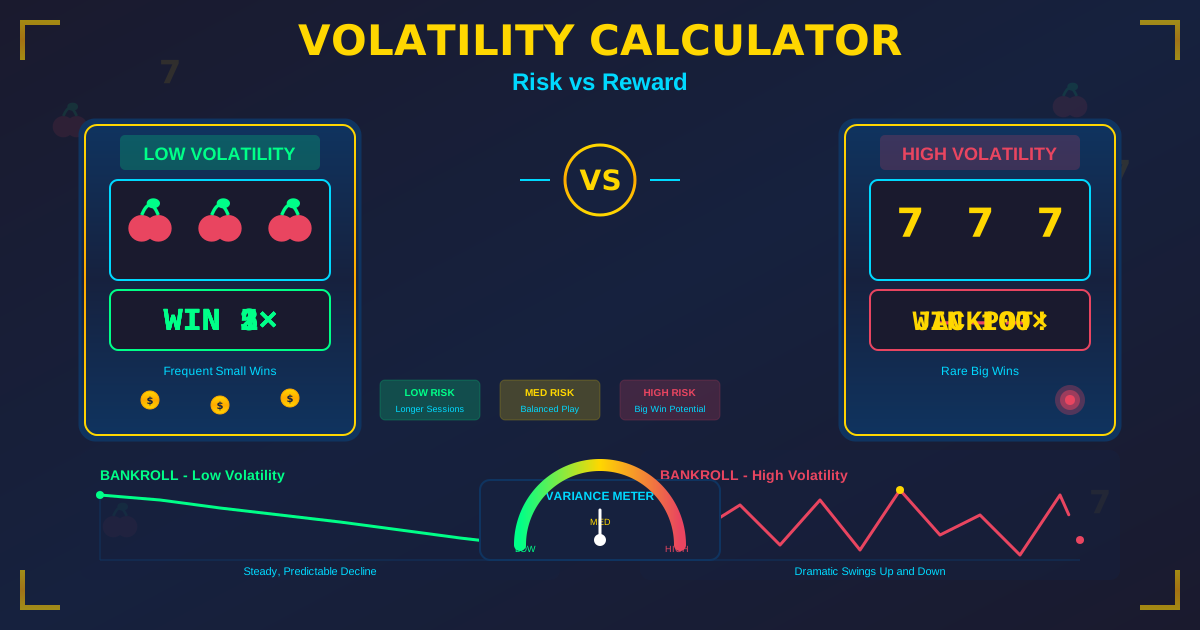
Set clear financial boundaries for your gambling with our free Bankroll Volatility Tracker.
How Does Gambling Affect Relationships?
Gambling affects relationships through four primary channels: financial stress, emotional disconnection, broken trust, and time displacement. Understanding these pathways is the first step to preventing them.
The Four Channels of Relational Impact
| Channel | How It Manifests | Early Warning | Crisis Stage |
|---|---|---|---|
| Financial stress | Unexplained expenses, depleted savings, missed bills | Partner notices small discrepancies | Debt, borrowing, financial ruin |
| Emotional disconnection | Preoccupation with bets, mood swings based on results | Less present during family time | Emotional volatility, depression, isolation |
| Broken trust | Small lies about losses, hidden accounts | Partner feels "something is off" | Discovery of hidden debt, complete trust collapse |
| Time displacement | Hours spent on research, watching games, checking apps | Missing family events occasionally | Gambling consumes all free time |
How Common Is Relationship Damage From Gambling?
| Statistic | Source | Implication |
|---|---|---|
| 54% of problem gamblers report relationship difficulties | NCPG 2024 survey | Majority experience relational impact |
| Divorce rate for problem gamblers is 2x the general population | Journal of Gambling Studies | Gambling significantly increases divorce risk |
| 23% of sports bettors report hiding losses from partners | American Gaming Association, 2025 | Secrecy is widespread even among non-problem gamblers |
| 67% of partners of problem gamblers report anxiety/depression | UK Gambling Commission research | The partner's mental health suffers too |
| Average debt at time of seeking help: $40,000-$70,000 | NCPG helpline data | Financial damage compounds before help is sought |
The most important pattern in these statistics is that relational damage starts well before gambling reaches "problem" levels. Casual bettors who hide small losses, check scores during dinner, or get irritable after bad beats are already affecting their relationships -- even if the financial impact is minimal.
Track your gambling spending transparently with our Bankroll Volatility Tracker.
How Do You Talk to Your Partner About Gambling?
Transparent communication is the single most protective factor for relationships where one or both partners gamble. The conversation can feel uncomfortable, but avoiding it creates far greater problems down the road.
Having the Initial Conversation
The first conversation about gambling with a partner should happen proactively, not in response to a crisis. Here is a framework:
| Phase | What to Say | What to Avoid |
|---|---|---|
| Opening | "I want to talk about something that is important to me and to us" | Starting when emotions are high or after a loss |
| Context | "I enjoy sports betting / poker as a hobby, and I want to be transparent about it" | Minimizing or overstating your involvement |
| Boundaries | "Here is what I have set aside as my gambling budget, separate from our shared finances" | Vague promises like "I do not bet that much" |
| Invitation | "I want you to feel comfortable asking me about it anytime" | Making your partner feel like they are being controlling if they ask questions |
| Reassurance | "Our financial goals come first, always" | Defensive reactions to legitimate concerns |
For Couples Where One Partner Gambles
If you are the gambling partner, these practices build and maintain trust:
- Full financial transparency: Your partner should have access to your gambling accounts, transaction history, and bankroll balance at all times
- Pre-agreed budget: The gambling fund amount should be agreed upon together, not decided unilaterally
- Regular check-ins: Monthly or quarterly conversations about how gambling is fitting into your life
- No gambling with shared money: The gambling bankroll must be completely separate from household funds
- Honest reporting: Share both wins and losses without minimizing or exaggerating
For Partners of Gamblers
If your partner gambles, you have a right to:
| Your Right | How to Exercise It |
|---|---|
| Know the financial exposure | Ask to see account balances and transaction history |
| Set boundaries on shared finances | Insist that household money is never used for gambling |
| Express concern without guilt | Frame concerns as "I feel worried when..." not "You always..." |
| Require transparency | Open access to all financial accounts |
| Seek outside support | Individual counseling, Gam-Anon, trusted friends |
| Set non-negotiable limits | "If gambling exceeds $X/month, we need to reassess" |
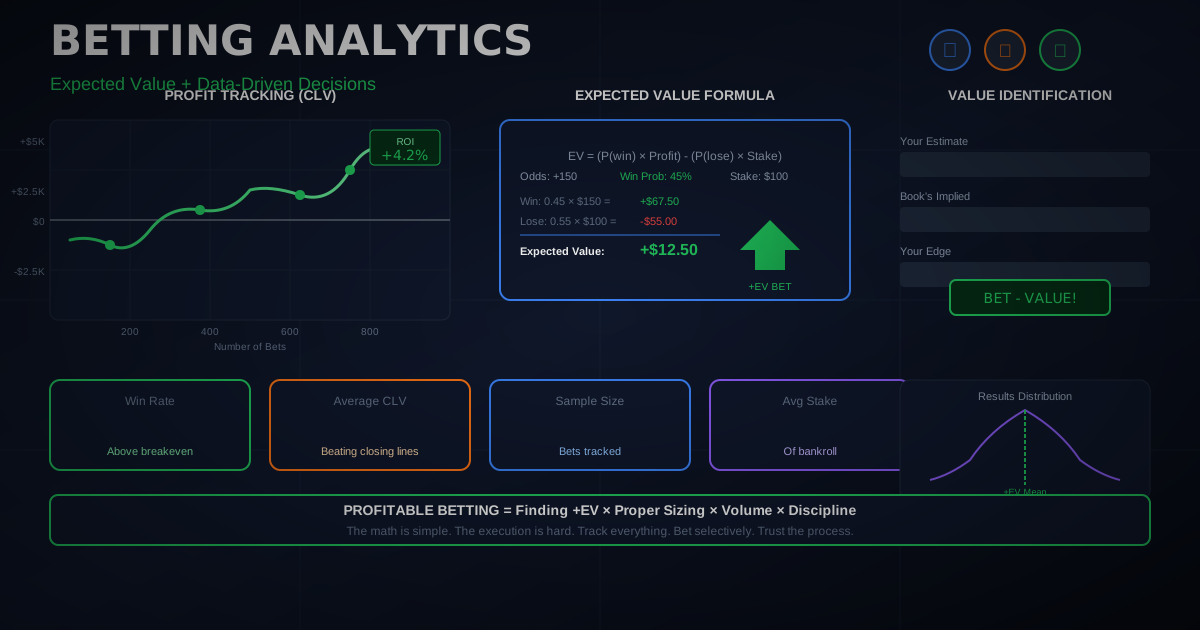
Calculate the expected losses at various betting volumes to inform your budget conversations with our Expected Value Calculator.
What Boundaries Should You Set Around Gambling?
Clear boundaries transform gambling from a potential relationship threat into a managed activity. The best boundaries are specific, measurable, and agreed upon by both partners.
Financial Boundaries
| Boundary | How to Implement | Why It Matters |
|---|---|---|
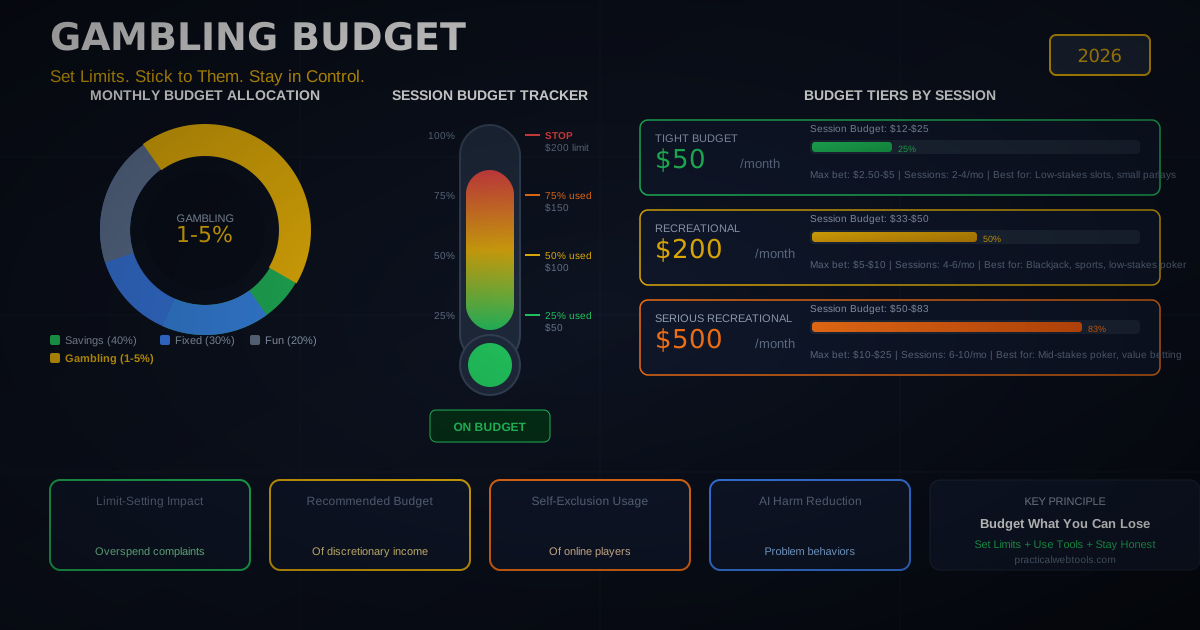
| Fixed monthly budget | Deposit a set amount into a separate gambling account on the 1st of each month | Prevents creep and stops "just one more deposit" |
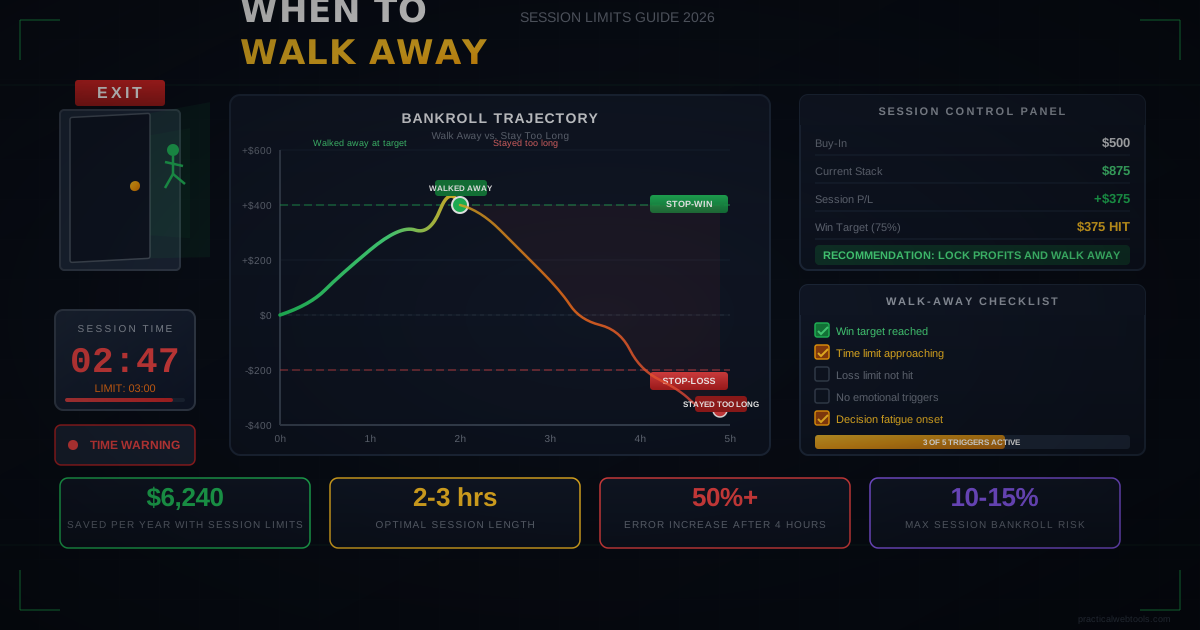
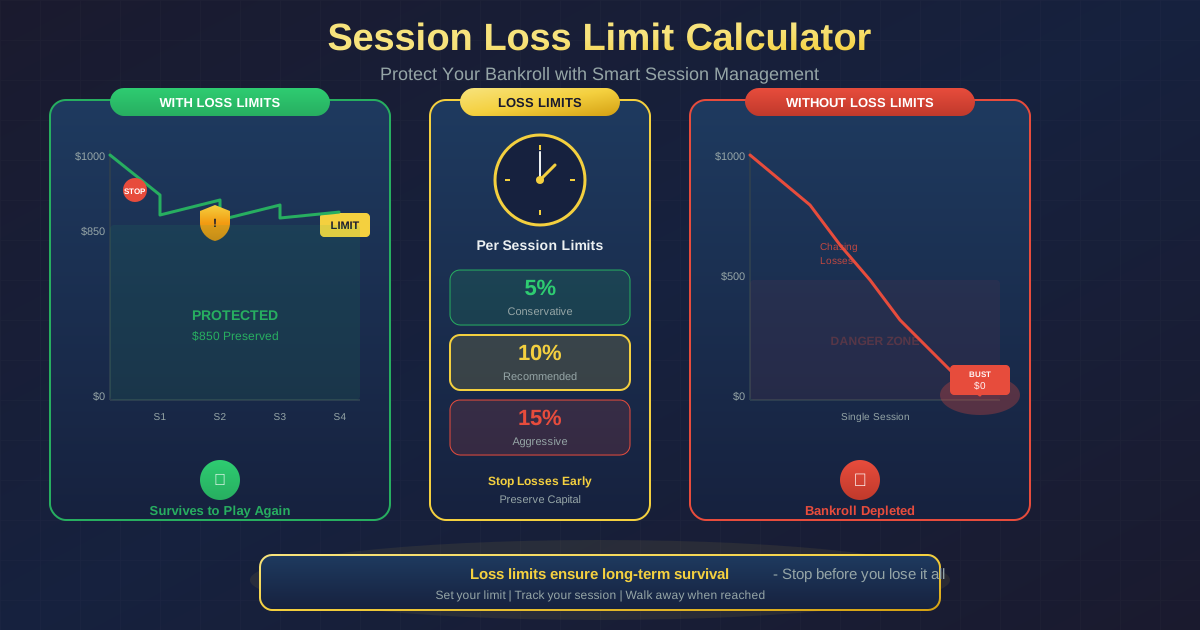
| Loss limit (daily) | Set deposit limits on all sportsbook/casino accounts | Prevents tilt-driven losses in a single session |
| Win limit / withdrawal trigger | When bankroll reaches 2x the monthly deposit, withdraw the profit | Forces you to take money off the table |
| No credit card gambling | Only fund gambling from a dedicated debit account | Prevents high-interest debt from gambling losses |
| Emergency fund protection | Gambling budget cannot touch emergency savings | Financial security is never at risk |
| Shared financial goals first | Gambling budget is only from surplus after all savings/investment goals are met | Ensures gambling does not displace financial priorities |
Time Boundaries
| Boundary | Implementation | Purpose |
|---|---|---|
| No gambling during family time | Phone goes away during meals, outings, quality time | Prevents emotional absence |
| Maximum hours per week | Set a specific cap (e.g., 5 hours/week for research + betting) | Prevents time displacement |
| No gambling before work/responsibilities | Morning routines and obligations come first | Keeps priorities in order |
| One "gambling day" per week | Concentrate research and betting into a designated window | Contains the activity instead of it bleeding into every day |
| No late-night gambling | Set a hard stop time (e.g., 10 PM) | Prevents sleep disruption and late-night tilt |
Emotional Boundaries
| Boundary | What It Looks Like | Violation Warning Sign |
|---|---|---|
| No mood dependency on results | Can lose a bet and remain emotionally present | Irritability, silence, or anger after losses |
| No gambling to cope with stress | Never betting "to feel better" after a bad day | Using gambling as emotional escape |
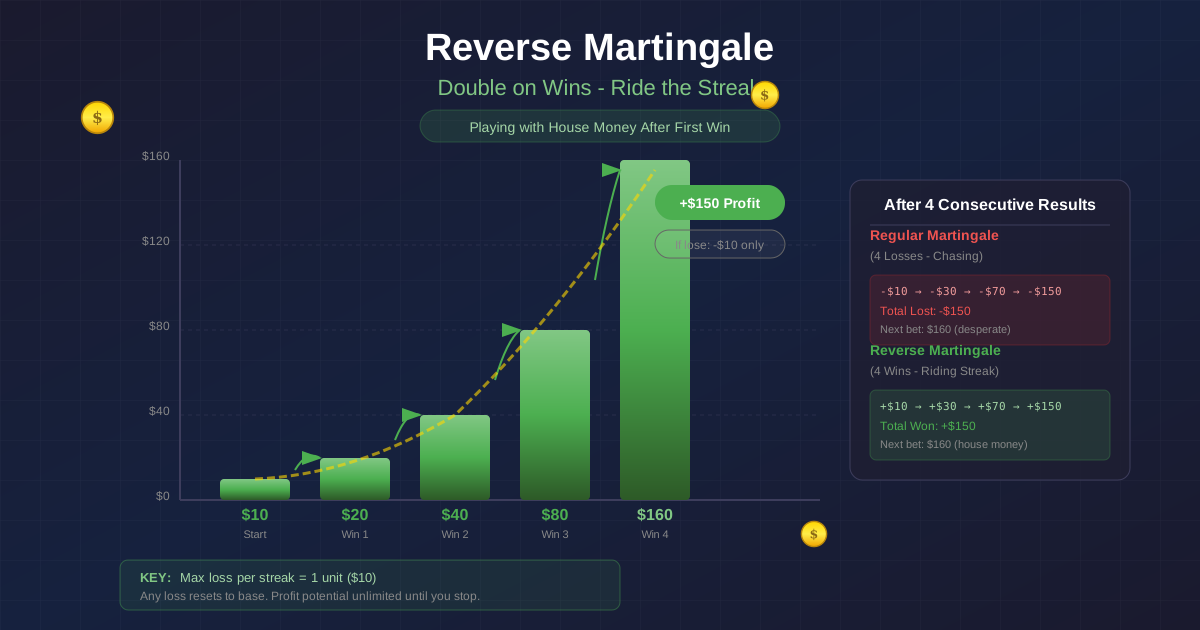
| Celebration without escalation | A winning streak does not lead to bigger bets | Increasing stakes after wins |
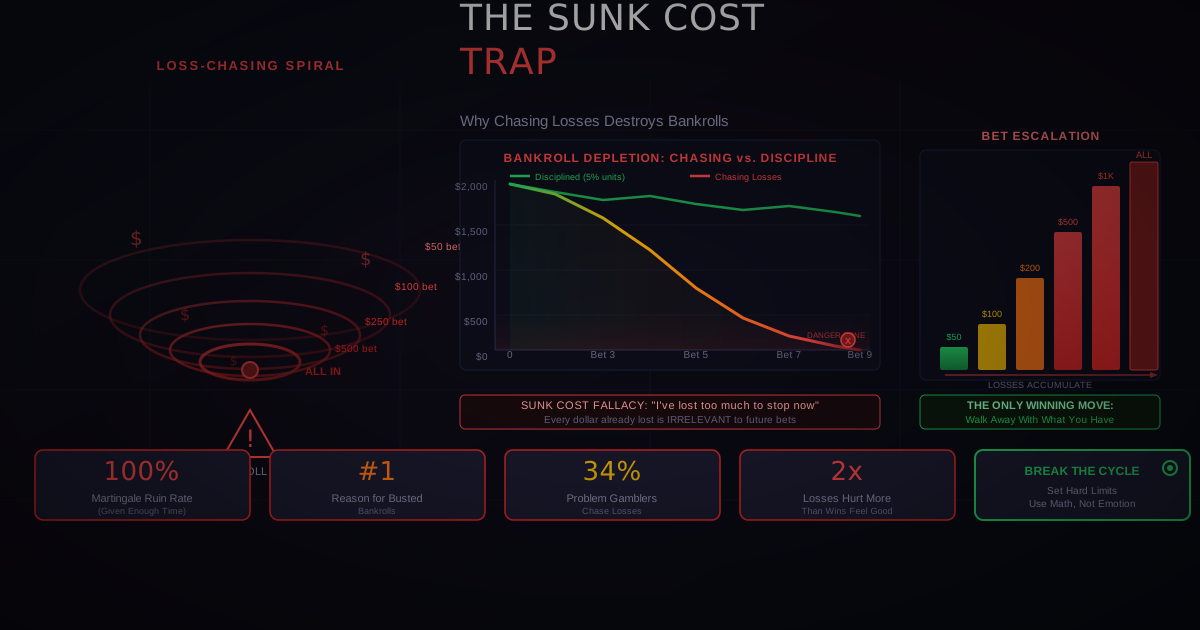
| Losing without chasing | Accepting losses as part of the hobby | Placing additional bets to "get back to even" |
Set deposit limits aligned with your boundaries using insights from our Bankroll Volatility Tracker.
What Are the Warning Signs That Gambling Is Affecting Your Relationship?
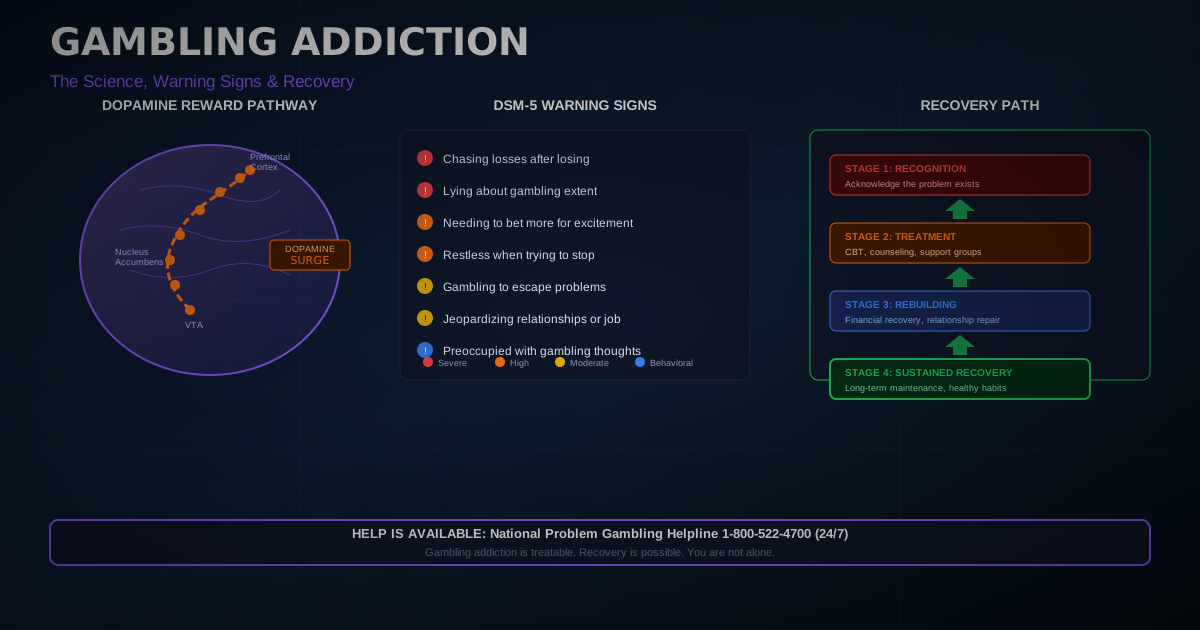
Recognizing warning signs early is critical because relationship damage from gambling is cumulative and often invisible until it reaches a crisis point. These warning signs are organized from earliest (most subtle) to latest (most severe).
Early Warning Signs (Stage 1)
| Warning Sign | What It Looks Like | What to Do |
|---|---|---|
| Checking phone during quality time | Glancing at scores, checking bet status during dinner or conversations | Acknowledge the habit and set phone-away times |
| Minor mood shifts after losses | Slightly irritable or quiet after a losing day | Notice the pattern and develop coping strategies |
| Small omissions about losses | "I broke even today" when you actually lost $50 | Commit to complete honesty, even about small amounts |
| Slight budget creep | Depositing $20 more than planned this month | Reset to the agreed budget immediately |
| Decreased interest in non-gambling activities | Skipping gym, hobbies, or social events to watch games | Reconnect with non-gambling interests actively |
Moderate Warning Signs (Stage 2)
| Warning Sign | What It Looks Like | What to Do |
|---|---|---|
| Hiding gambling activity | Using a separate phone, clearing browser history | Have an honest conversation immediately |
| Gambling with money earmarked for other things | Using grocery or bill money for bets | Stop gambling entirely until finances are stabilized |
| Regular mood swings tied to results | Good days and bad days clearly correlated with wins/losses | Seek individual counseling |
| Missing family events | Choosing to stay home and watch games instead of attending family gatherings | Recognize this as a serious boundary violation |
| Partner expressing concern | "You seem different lately" or "Are you gambling more?" | Listen without defensiveness; your partner sees what you may not |
| Increasing bet sizes | Needing bigger stakes for the same excitement | This is tolerance, a classic addiction indicator |
Severe Warning Signs (Stage 3)
| Warning Sign | What It Looks Like | Immediate Action |
|---|---|---|
| Lying about amounts lost | Telling partner you lost $200 when you lost $2,000 | Full disclosure and professional help |
| Borrowing money to gamble | Taking loans, cash advances, or borrowing from friends/family | Stop all gambling; contact NCPG helpline |
| Chasing losses obsessively | Staying up all night trying to win back money | This is crisis behavior; seek help immediately |
| Stealing or selling assets | Pawning items, withdrawing retirement funds | Contact NCPG at 1-800-522-4700 |
| Suicidal thoughts | Feeling hopeless about financial or relational losses | Call 988 Suicide & Crisis Lifeline immediately |
| Partner threatening to leave | "If you do not stop, I am leaving" | Treat this as the emergency it is |
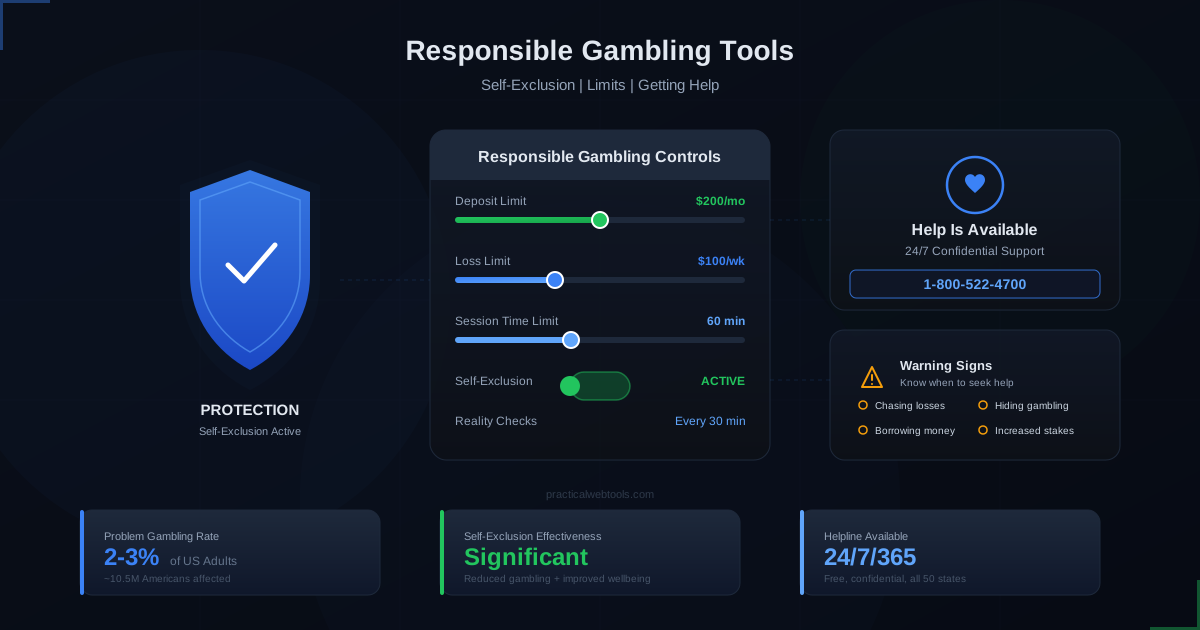
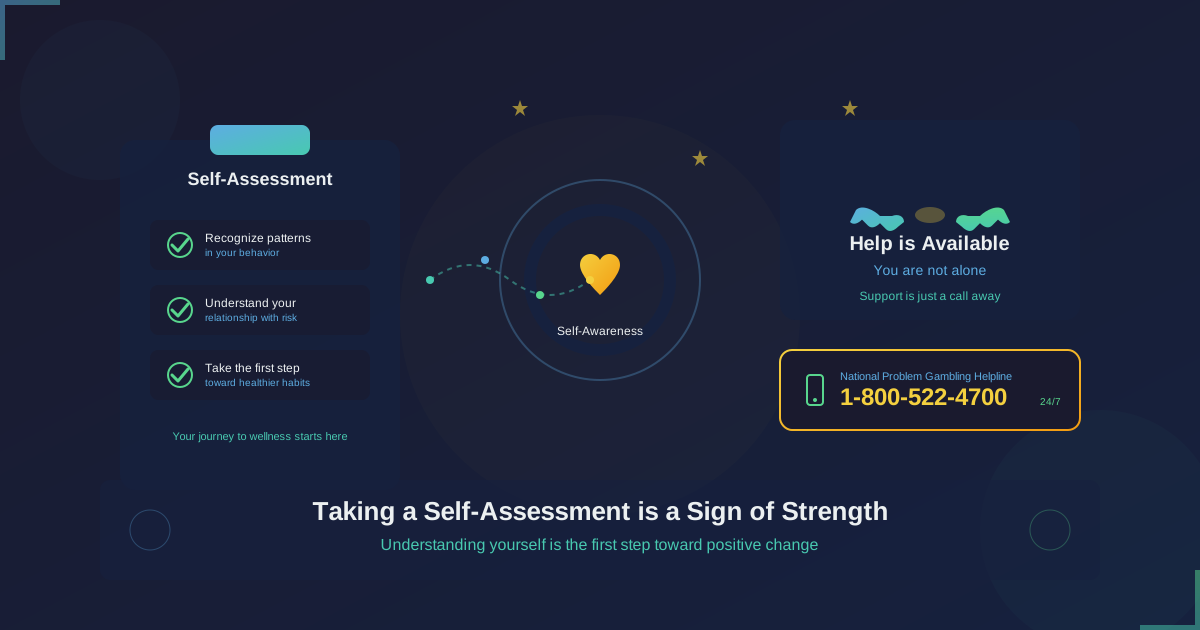
If you recognize yourself in Stage 2 or Stage 3, please reach out for help. The National Council on Problem Gambling helpline (1-800-522-4700) is free, confidential, and available 24/7.
How Does Gambling Affect Marriage and Joint Finances?
Marriage adds complexity to gambling because finances are typically shared, and financial decisions affect both partners. The stakes are higher, and the need for boundaries and transparency is even greater.
Joint Finance Structures for Gambling Couples
| Structure | How It Works | Best For |
|---|---|---|
| Fully joint + gambling allowance | All income goes to joint account; each partner gets a personal spending allowance that can be used for gambling | Couples who want full financial unity with individual freedom |
| Yours/mine/ours | Each partner keeps a personal account plus a joint account for shared expenses | Couples who value financial independence |
| Joint primary + separate gambling account | Joint for all household needs; gambling partner has a separate, transparent account | Couples where only one partner gambles |
| Monthly budget allocation | A specific line item in the household budget for gambling, just like entertainment or dining out | Budget-conscious couples who want gambling treated as a normal expense |
What to Include in a Gambling Financial Agreement
For married couples or those with shared finances, a clear financial agreement around gambling prevents most conflicts:
| Agreement Element | Details |
|---|---|
| Monthly gambling budget | Fixed amount, agreed upon by both partners |
| Source of funds | Which account(s) fund gambling |
| Reporting frequency | Monthly review of gambling P&L |
| Profit handling | What happens to winnings (reinvest? withdraw? split?) |
| Loss escalation | What happens if the monthly budget is exceeded |
| Annual review | Yearly assessment of whether the arrangement is working |
| Exit criteria | Conditions under which gambling should stop temporarily or permanently |
The Trust Equation in Marriage
Trust in a gambling context follows a simple formula:
Trust = Transparency + Consistency + Time
- Transparency: Open access to all gambling accounts and financial information
- Consistency: Following the agreed-upon rules every month without exception
- Time: Trust builds slowly through repeated positive behavior
Broken trust follows the inverse: one act of dishonesty can destroy months or years of built-up trust. A single hidden $5,000 loss can undo years of transparent $200/month gambling.
Model your expected gambling results over time with our Expected Value Calculator.
How Do You Help a Partner Who Has a Gambling Problem?
If your partner has crossed from recreational gambling into problem gambling, navigating the situation requires a careful balance of compassion, firmness, and self-protection.
The Difference Between Helping and Enabling
| Helping | Enabling |
|---|---|
| Expressing concern honestly and lovingly | Ignoring the problem to avoid conflict |
| Setting clear boundaries and consequences | Threatening consequences but never following through |
| Supporting their decision to seek help | Making excuses for their behavior to others |
| Protecting shared finances | Paying off their gambling debts repeatedly |
| Attending support groups (Gam-Anon) | Isolating yourself and suffering in silence |
| Allowing natural consequences | Bailing them out before they feel the impact |
| Maintaining your own mental health | Sacrificing your wellbeing to manage their addiction |
Steps to Help Without Enabling
-
Educate yourself. Understand that problem gambling is a recognized behavioral addiction with neurological underpinnings. It is not a moral failing or a lack of willpower.
-
Choose the right time to talk. Do not bring it up when they are in the middle of gambling, have just lost, or when emotions are elevated. Find a calm, private moment.
-
Use "I" statements. "I feel scared when I see hidden transactions" is more effective than "You are lying about your gambling."
-
Set clear boundaries with consequences. "If gambling debts appear again, I will separate our finances completely" -- and follow through if the boundary is violated.
-
Offer to help them find resources. NCPG helpline (1-800-522-4700), Gamblers Anonymous (gamblersanonymous.org), and individual therapy specializing in behavioral addiction.
-
Protect yourself financially. If your partner has a gambling problem, you may need to separate finances, remove yourself from joint credit accounts, and secure shared assets.
-
Seek your own support. Gam-Anon (gam-anon.org) provides support for the family members and friends of people with gambling problems. You need help too.
When Professional Help Is Needed
| Indicator | Action |
|---|---|
| They cannot stop despite wanting to | Suggest Gamblers Anonymous or individual therapy |
| Financial damage exceeds $5,000+ | Financial counseling in addition to gambling treatment |
| Relationship is at breaking point | Couples counseling with a therapist experienced in addiction |
| Mental health crisis (depression, anxiety, suicidal thoughts) | Immediate professional mental health support |
| Legal issues (fraud, theft, debt default) | Legal counsel plus gambling treatment |
What Role Does Couples Counseling Play in Gambling Issues?
Couples counseling is one of the most effective interventions for relationships affected by gambling, whether the gambling has reached problem levels or is simply causing tension between partners.
What Couples Counseling Addresses
| Issue | Counseling Approach | Expected Outcome |
|---|---|---|
| Trust repair | Structured transparency agreements, accountability systems | Gradual trust rebuilding over 6-12 months |
| Communication breakdown | Teaching "I" statements, active listening, non-defensive dialogue | Better conflict resolution skills |
| Financial recovery | Joint financial planning, debt management strategies | Concrete repayment plan and future protection |
| Boundary setting | Collaborative creation of clear, enforceable gambling boundaries | Written agreement both partners buy into |
| Emotional processing | Working through anger, betrayal, grief, and fear | Reduced emotional volatility and resentment |
| Relapse prevention | Identifying triggers, creating an emergency plan | Both partners know what to do if gambling escalates |
Finding the Right Therapist
Not all therapists are equipped to handle gambling-specific relationship issues. Look for:
- Licensed Marriage and Family Therapist (LMFT) or Licensed Professional Counselor (LPC) with experience in behavioral addictions
- Certification in gambling treatment from NCPG or equivalent body
- Experience with both addiction and relationship work -- these are two separate specializations, and you need someone who understands both
- Willingness to include financial planning in the therapy process
What to Expect in Counseling
| Phase | Duration | Focus |
|---|---|---|
| Assessment | 1-2 sessions | Understanding the scope of gambling behavior and relational impact |
| Crisis stabilization | 2-4 sessions | Immediate financial protection, safety planning |
| Communication rebuilding | 4-8 sessions | Establishing honest dialogue patterns |
| Boundary development | 2-4 sessions | Creating a specific, written gambling agreement |
| Trust restoration | Ongoing (6-12+ months) | Consistent behavior change over time |
| Maintenance | Monthly check-ins | Ongoing monitoring and adjustment |
Use our Bankroll Volatility Tracker as a transparency tool that both partners can access.
How Does Gambling Affect Children and Family Life?
Children are often the invisible victims of gambling-related relationship stress. Even when parents believe children are unaware, research consistently shows that children absorb the tension, secrecy, and financial stress in the household.
Impact on Children by Age Group
| Age Group | How They Experience It | Common Responses |
|---|---|---|
| Under 5 | Sense tension, react to parental mood | Clinginess, sleep disturbances, regression |
| 5-12 | Notice financial changes, overhear arguments | Anxiety, behavioral problems at school, guilt ("it is my fault") |
| 13-17 | Understand the gambling issue directly | Anger, depression, increased risk of developing their own gambling habits |
| 18+ (adult children) | Full awareness, potential financial impact | Trust issues, difficulty with their own financial relationships |
What Research Shows
| Finding | Source | Significance |
|---|---|---|
| Children of problem gamblers are 2-4x more likely to develop gambling problems | Dowling et al., 2017 | Intergenerational transmission |
| 30% of children with a gambling-affected parent report emotional distress | UK Gambling Commission | Direct psychological impact |
| Parental gambling increases risk of childhood anxiety and depression | Darbyshire et al., 2001 | Mental health consequences |
| Academic performance declines correlate with parental gambling severity | Vitaro et al., 2008 | Educational impact |
Protecting Children in a Gambling Household
- Never gamble in front of young children. They learn by observation, and normalizing gambling behavior increases their future risk.
- Keep financial arguments private. Children should not hear gambling-related financial disputes.
- Do not let gambling reduce quality time. If your gambling is taking time away from your children, that is a clear boundary violation.
- Model healthy financial behavior. Teach children about saving, budgeting, and the difference between entertainment spending and investing.
- Be honest at age-appropriate levels. Older children deserve honest answers about gambling as an activity with risks, just like any other adult behavior.
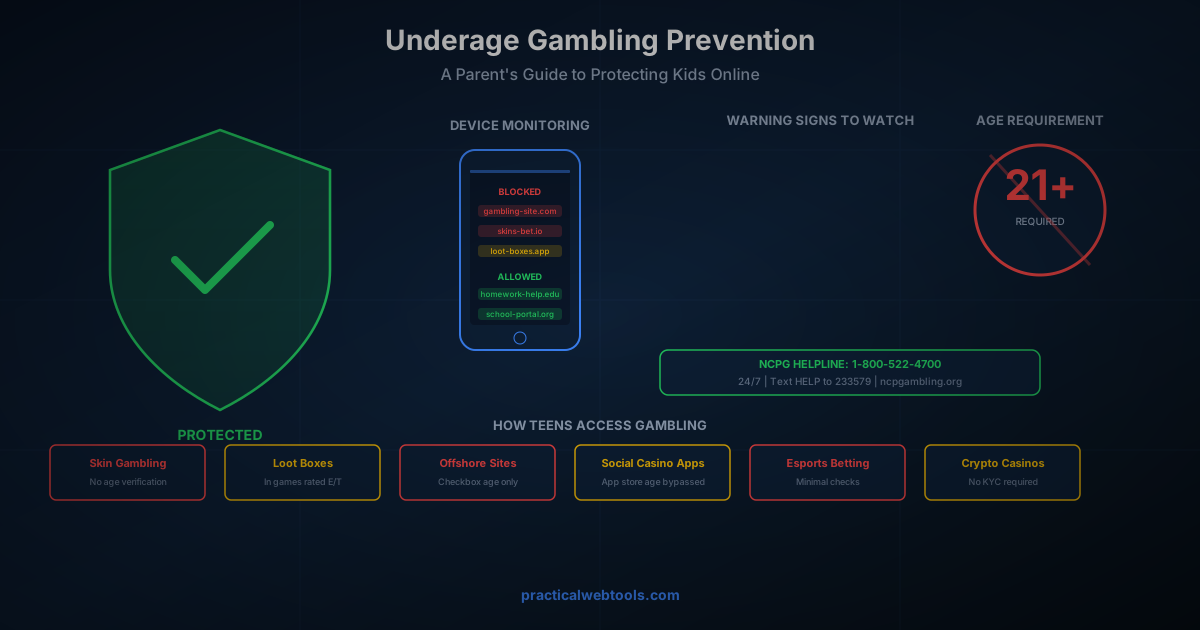
- Monitor adolescents' gambling exposure. With mobile betting apps and gaming-adjacent gambling (loot boxes, skin betting), teenagers are increasingly exposed to gambling mechanics.
What Is the Difference Between Social Gambling and Solo Gambling?
The context in which you gamble significantly affects its impact on your relationships. Social gambling (poker nights with friends, attending a horse race together, March Madness office pools) tends to be less problematic than solo gambling (late-night mobile betting, isolated online poker sessions, solitary casino visits).
Social vs. Solo Gambling Comparison
| Factor | Social Gambling | Solo Gambling |
|---|---|---|
| Social connection | Built into the activity | Isolated, disconnected |
| Natural time limits | Event-based (poker night ends at midnight) | No natural stopping point |
| Peer accountability | Friends notice if you seem agitated or are betting too much | No external check on behavior |
| Emotional regulation | Social environment buffers losses | Losses are felt alone, increasing tilt risk |
| Access frequency | Scheduled events (weekly, monthly) | Available 24/7 on mobile apps |
| Relationship impact | Often neutral or positive (shared activity) | Often negative (time away from partner) |
| Escalation risk | Lower (social norms constrain behavior) | Higher (no external limits) |
Making Solo Gambling Safer
If you do gamble solo (which most online sports bettors do), these practices reduce the relational risk:
| Practice | Implementation |
|---|---|
| Set a timer | Use your phone's timer app to limit sessions |
| Gamble in common spaces | Bet at the kitchen table, not hidden in a bedroom |
| Share your activity | "I am placing my bets for this week" -- let your partner know |
| Use sportsbook deposit limits | Every major sportsbook allows you to set daily/weekly/monthly limits |
| Keep your phone visible | No hidden apps or secret accounts |
| Log every bet | Maintain a spreadsheet your partner can access |
Track all of your gambling activity in one place with our Bankroll Volatility Tracker.
How Do You Maintain Balance Between Gambling and Personal Life?
Balance is the key word for anyone who wants to enjoy gambling without it consuming their personal life. Here is a practical framework for maintaining that balance.
The Life Audit for Gamblers
Periodically (monthly or quarterly), ask yourself these questions honestly:
| Question | Healthy Answer | Concerning Answer |
|---|---|---|
| How many hours per week do I spend gambling? | Within my set limit (e.g., 5 hours) | More than planned, and increasing |
| Has my gambling budget been exceeded this month? | No, I am within budget | Yes, I deposited extra money |
| Have I missed any personal commitments because of gambling? | No | Yes, even once |
| Does my partner seem comfortable with my gambling? | Yes, we discuss it openly | They seem tense or avoidant about it |
| Do I feel anxious when I cannot place bets? | No, it is just entertainment | Yes, I feel restless without access |
| Am I enjoying gambling, or does it feel compulsive? | Enjoyable, like any hobby | More compulsive than enjoyable |
| Are my other hobbies and interests thriving? | Yes, gambling is one of several activities | Gambling has replaced other interests |
| Is my sleep affected by gambling? | No | Yes, I stay up checking results or placing bets |
If you answer "concerning" to two or more questions, it is time to reduce or pause your gambling activity and have an honest conversation with your partner or a professional.
The 80/20 Rule for Gambling Time
A useful guideline: gambling-related activities (research, betting, watching games you have bet on) should occupy no more than 20% of your free time. If you have 25 hours of free time per week, gambling should not exceed 5 hours.
| Time Allocation | Hours/Week | Percentage | Health |
|---|---|---|---|
| Partner/family time | 10-15 | 40-60% | Strong relationships |
| Non-gambling hobbies/exercise | 5-8 | 20-32% | Personal wellbeing |
| Gambling-related | 3-5 | 12-20% | Sustainable hobby |
| Social time (non-family) | 2-4 | 8-16% | Social connection |
When to Take a Break
Sometimes the healthiest thing a gambler can do is take a voluntary break. Signs that a break would benefit your relationships:
- Your partner has asked you to cut back (even once)
- You have exceeded your budget two months in a row
- Gambling feels more like an obligation than entertainment
- Your mood is consistently affected by betting results
- You are spending more time thinking about gambling than about your partner, children, or goals
A 30-day break from all gambling can serve as a reset. If the break feels impossibly difficult, that difficulty itself is information about your relationship with gambling.
Use our Expected Value Calculator to understand the long-term math of your gambling -- knowing the expected loss can help set realistic expectations.
How Does the Digital Age Make Gambling Harder on Relationships?
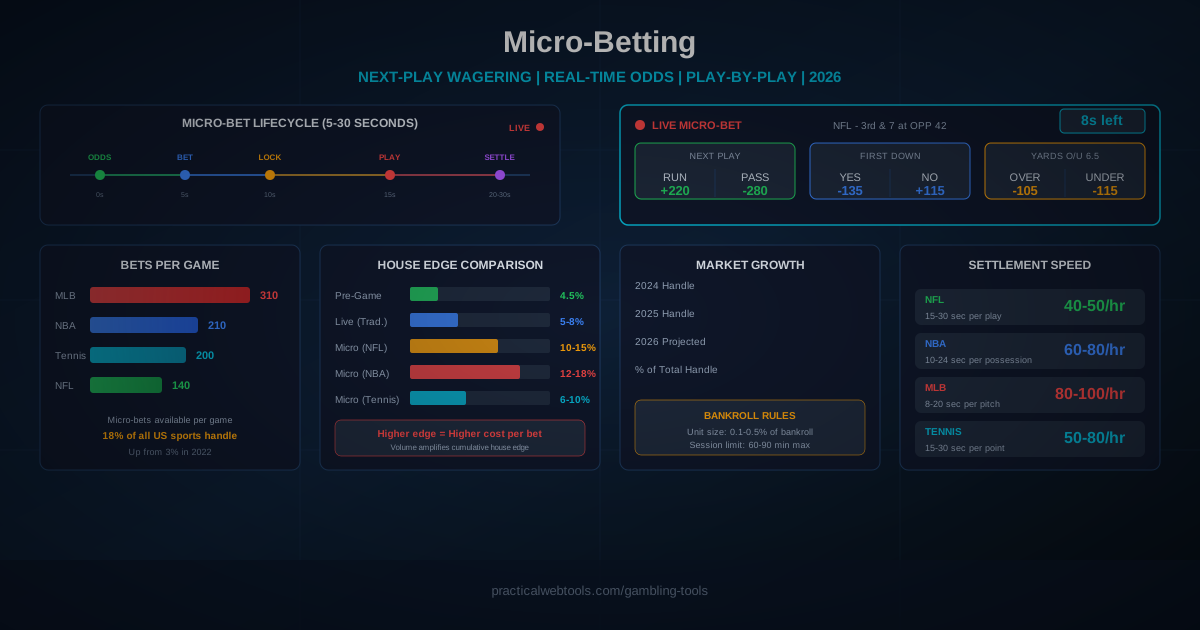
The explosion of mobile sports betting has fundamentally changed the relationship dynamics around gambling. Before smartphones, gambling required physical action: going to a casino, visiting a bookie, or at minimum sitting at a computer. Now, a bet can be placed in three seconds from anywhere -- the dinner table, the bedroom, a child's soccer game.
The Mobile Gambling Challenge
| Factor | Pre-Mobile Era | Mobile Betting Era |
|---|---|---|
| Access | Required travel to venue | Available 24/7 from any location |
| Visibility | Partner could see you leave | Partner may not know you are betting |
| Frequency | Limited by physical access | Unlimited, impulse bets anytime |
| Time consumption | Contained to specific periods | Bleeds into all parts of life |
| Social context | Often social (casino, track) | Almost always solo |
| Financial tracking | Cash-based, more tangible | Digital, less psychologically real |
| Notifications | None | Push notifications trigger betting urges |
| In-play betting | Did not exist for most | Available throughout every game |
The Notification Problem
Sportsbook apps are designed to maximize engagement. Push notifications like "Your team is playing! Place a bet now" or "LIVE: 4th quarter, Chiefs vs. Bills -- bet now!" are engineered to trigger dopamine anticipation and drive impulsive betting. For someone trying to maintain healthy gambling boundaries, these notifications are a constant threat.
How to manage notifications for better relationship health:
| Action | How to Do It | Why It Helps |
|---|---|---|
| Disable all sportsbook push notifications | Settings > Notifications > Off for each app | Removes external triggers |
| Disable marketing emails/texts | Opt out in each sportsbook's settings | Stops promotional triggers |
| Set "Do Not Disturb" schedules | Phone DND during family time, meals, bedtime | Protects quality time |
| Use screen time limits | iOS Screen Time or Android Digital Wellbeing | Caps daily sportsbook app usage |
| Designate a "betting device" | Use a tablet or secondary device only for gambling | Keeps gambling off your primary phone |
Social Media and Gambling Pressure
Social media has created a culture where gambling wins are celebrated publicly while losses are hidden. This creates a distorted perception of gambling success that can pressure people to bet more than they should.
| Social Media Factor | Impact on Relationships | Protective Measure |
|---|---|---|
| "Big win" posts from friends | Creates FOMO, pressure to bet more | Mute gambling content on social feeds |
| Betting influencer content | Normalizes high-stakes, frequent betting | Unfollow gambling influencers |
| Group chats sharing picks | Creates social obligation to bet | Set boundaries on group chat participation |
| Fantasy sports integration | Blurs line between hobby and gambling | Track all fantasy spending as gambling |
Track the true cost of your digital gambling habits with our Bankroll Volatility Tracker.
What Financial Recovery Looks Like After Gambling Damage
If gambling has already caused financial damage to your relationship, recovery is possible but requires a structured approach. Financial recovery and relationship recovery must happen simultaneously.
The Financial Recovery Roadmap
| Phase | Timeline | Actions | Relationship Focus |
|---|---|---|---|
| 1. Full Disclosure | Day 1 | Complete honesty about all debts, losses, and hidden accounts | Rebuilding starts with total transparency |
| 2. Assessment | Week 1-2 | List all debts, assets, and monthly obligations | Partner must be involved in the full picture |
| 3. Stabilization | Month 1-3 | Stop all gambling, create basic budget, address high-interest debt | Regular check-ins, couples counseling begins |
| 4. Repayment Plan | Month 3-12 | Structured debt repayment (avalanche or snowball method) | Monthly financial reviews together |
| 5. Rebuilding | Year 1-3 | Restore savings, rebuild credit, create emergency fund | Trust building through consistent positive behavior |
| 6. New Normal | Year 3+ | Healthy financial position restored | Gambling discussion revisited with new boundaries |
The Cost of Secrecy vs. Honesty
Many gamblers delay disclosure because they believe they can "win it back" before their partner notices. Research consistently shows this strategy fails:
| Approach | Average Outcome |
|---|---|
| Immediate disclosure at $2,000 loss | Relationship stress but manageable; recovery within 6-12 months |
| Delayed disclosure at $10,000 loss | Significant trust damage; recovery takes 1-2 years |
| Discovery by partner at $25,000+ | Severe trust damage; relationship survival uncertain |
| Never disclosed (partner discovers through collections/legal action) | Relationship crisis; separation/divorce common |
The pattern is clear: the earlier you disclose gambling losses, the better the outcome for both your finances and your relationship. Every day of secrecy compounds both the financial and relational damage.
Understand the mathematical reality of "winning it back" with our Expected Value Calculator -- the expected outcome of continued gambling while in debt is more debt, not recovery.
How Can Couples Enjoy Gambling Together?
For couples where both partners enjoy gambling or want to share the activity, gambling can actually strengthen a relationship when approached correctly.
Shared Gambling Activities
| Activity | Relationship Benefit | Tips |
|---|---|---|
| Attending a horse race | Shared experience, social event | Set a fun budget; treat it as a date |
| Poker night with friends | Social connection, couple vs. the table | Keep stakes low and friendly |
| March Madness bracket | Shared excitement, conversation starter | Make it about fun, not money |
| Casino trip (vacation) | Adventure, shared memories | Set a strict loss limit for the trip; stop when it is gone |
| Fantasy sports league | Season-long shared activity | Low buy-in; about strategy, not money |
| Joint sports betting picks | Collaborative research and discussion | Agree on a small shared bankroll |
Rules for Couples Who Gamble Together
- Separate the gambling from the relationship. A bad bet should never lead to blaming the other person.
- Set a shared budget. Agree on what you are willing to spend together before you start.
- Keep it lighthearted. The moment gambling stops being fun for either partner, stop.
- Do not keep score against each other. This is a shared activity, not a competition.
- Have a stop-loss agreement. When the fun money is gone, the gambling is over.
Frequently Asked Questions About Gambling and Relationships
How do I tell my partner I want to start sports betting?
Choose a calm, private moment and be honest about your interest. Explain what sports betting involves, how much you plan to budget for it, and how you intend to keep it from affecting your shared finances or quality time together. Be prepared for questions and concerns, and approach them with patience rather than defensiveness. Offer full transparency from the start -- it is much easier to build trust than to repair it.
My partner does not know I gamble. Should I tell them?
Yes. Hiding gambling from a partner is a form of financial dishonesty that, if discovered, causes significantly more damage than an honest conversation would. The longer the secret continues, the worse the discovery will be. If you are hiding gambling because you fear your partner's reaction, that fear itself is worth examining -- either the gambling is at a level that warrants concern, or the relationship needs to develop better communication around difficult topics.
How much gambling is "too much" for a relationship?
There is no universal number. Gambling is "too much" when it causes any of the following: financial stress beyond what was agreed upon, emotional unavailability to your partner, secrecy or dishonesty, missing important commitments, or your partner expressing concern. The threshold varies by couple, which is why open communication and jointly agreed boundaries are essential.
Can a relationship survive a gambling addiction?
Yes, but it requires genuine commitment to recovery from the gambling partner and tremendous patience from the affected partner. Professional treatment (therapy, Gamblers Anonymous), couples counseling, and a structured recovery plan are typically necessary. Recovery takes time -- most experts suggest 1-2 years of consistent positive behavior before trust is substantially restored. Not all relationships survive, and that is a valid outcome too.
What if my partner gambles more than they admit?
If you suspect your partner is gambling more than they acknowledge, look for signs: unexplained financial transactions, secretive phone behavior, mood swings tied to sports results, or a defensive reaction when you ask about gambling. Approach the conversation with concern rather than accusation: "I have noticed some things that worry me, and I want to talk about it because I care about us." If the conversation does not resolve your concerns, couples counseling can provide a safe space for honest dialogue.
Should I monitor my partner's gambling accounts?
In a healthy relationship, monitoring should be collaborative, not covert. Both partners should have open access to all financial accounts, including gambling accounts, as part of normal financial transparency. If you feel the need to secretly check your partner's gambling activity, the trust issue in the relationship is the real problem that needs to be addressed -- whether through conversation or counseling.
Is it okay to gamble when I am stressed or upset?
Using gambling as an emotional coping mechanism is one of the strongest predictors of developing a gambling problem. If you notice that you gamble more when stressed, anxious, lonely, or upset, this pattern needs to be addressed directly. Healthy alternatives for emotional regulation include exercise, talking to a friend, journaling, meditation, or therapy. Gambling should only happen when you are in a neutral or positive emotional state.
How do I set gambling limits on sportsbook apps?
Every major US sportsbook (DraftKings, FanDuel, BetMGM, Caesars, etc.) offers responsible gambling tools in their account settings. You can set deposit limits (daily, weekly, monthly), loss limits, session time limits, and even self-exclusion periods. Setting these limits is one of the most effective concrete steps you can take to protect both your finances and your relationships.
Related Tools for Responsible Gambling
Bankroll Management Tools
- Bankroll Volatility Tracker: Track all gambling activity and model expected variance
- Kelly Criterion Calculator: Size bets mathematically to prevent overbetting
- Expected Value Calculator: Understand the long-term math of your bets
Understanding the Math
- Implied Probability Calculator: Convert odds to real-world probability
- Hold/Vig Calculator: Understand how much the house takes
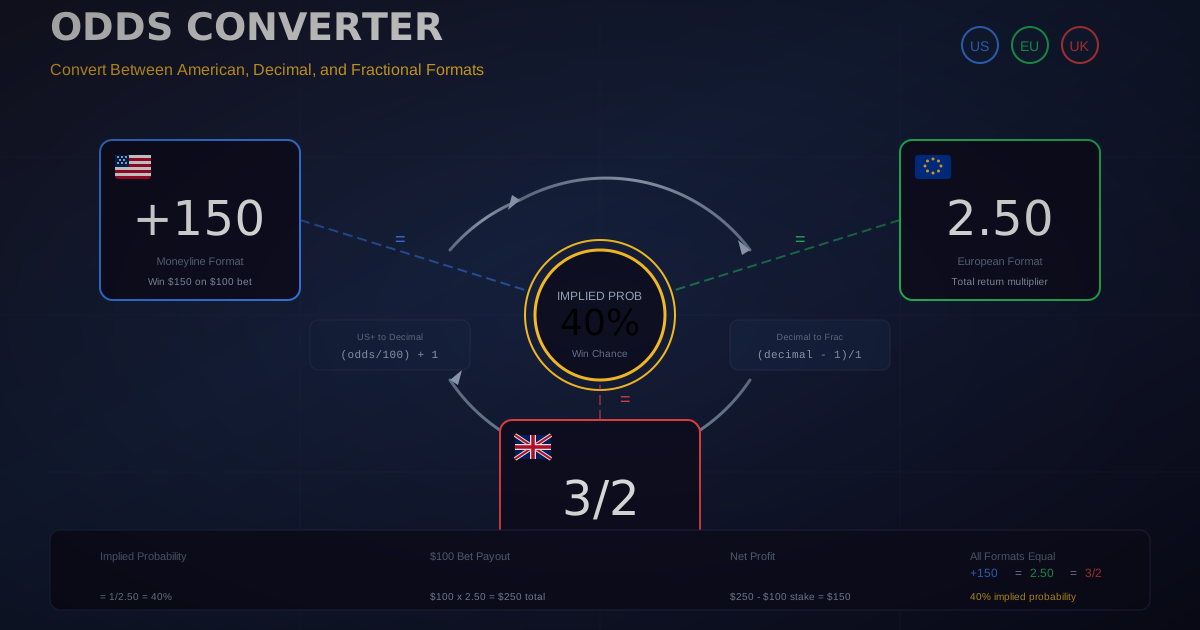
- Odds Converter: Make sense of different odds formats
- Roulette House Edge Calculator: Understand the built-in casino advantage
- Blackjack House Edge Calculator: Know what you are up against
Tracking and Transparency
- Poker Session Tracker: Log every poker session with transparent results
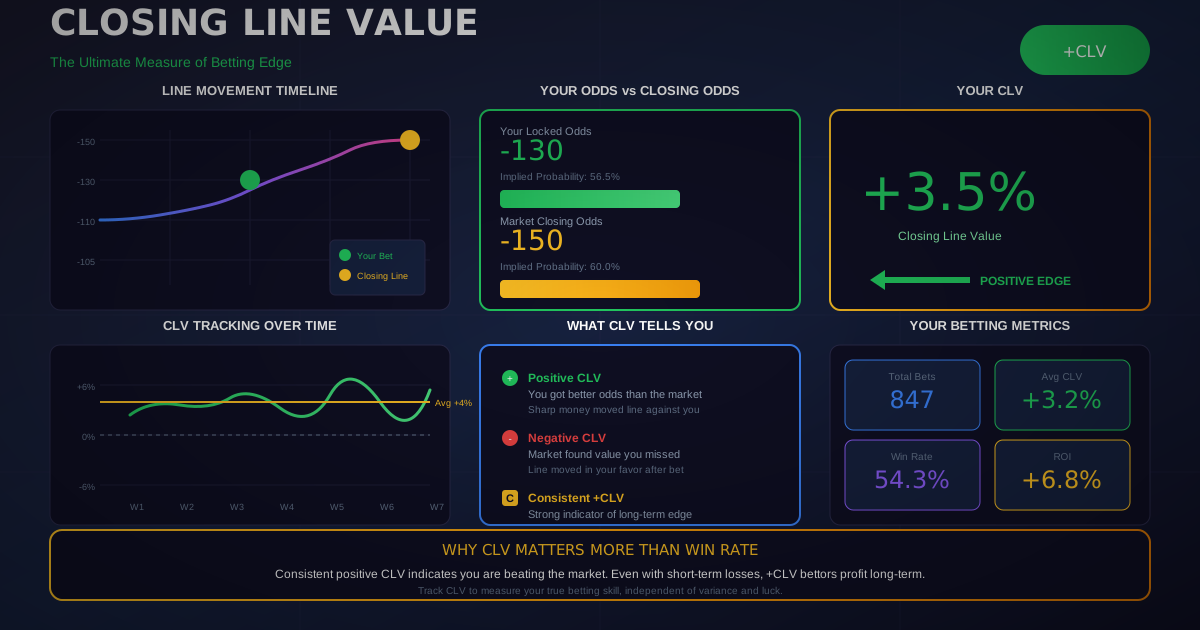
- CLV Tracker: Track your sports betting performance objectively
- Parlay Calculator: Understand true parlay odds before betting
Additional Tools
- Hedge Calculator: Calculate hedges to lock in profit
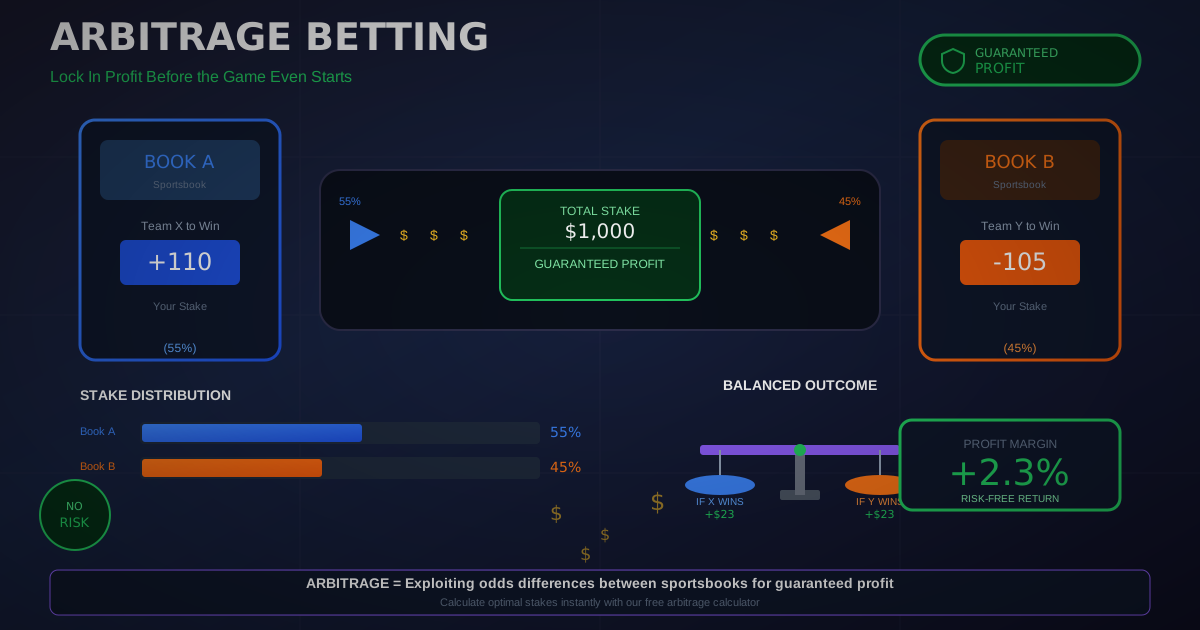
- Arbitrage Calculator: Identify lower-risk betting opportunities
- Matched Betting Calculator: Extract value from promotions with less risk
The Bottom Line: Gambling and Your Relationships
Gambling does not have to damage your relationships. Millions of people enjoy betting as a hobby while maintaining healthy, transparent, and loving partnerships. The difference between gambling that enriches your life and gambling that destroys it comes down to three things: honesty, boundaries, and self-awareness.
Be honest with your partner about your gambling. Set clear financial and time boundaries before problems develop, not after. And develop the self-awareness to recognize when your gambling is shifting from entertainment to compulsion.
If you are reading this article because you are worried about your own gambling or its effect on your relationships, that concern is itself a positive sign. It means you care about the people in your life more than you care about the next bet. Hold on to that.
Track your gambling responsibly with our free Bankroll Volatility Tracker. Understand the math behind your bets with our Expected Value Calculator. And if you need help, the National Council on Problem Gambling is available 24/7 at 1-800-522-4700.
The best bet you can make is on your relationships.
Gambling involves risk and should be approached as entertainment, not as a source of income. Always bet within your means, set strict bankroll limits, and never chase losses. If you or someone you know has a gambling problem, contact the National Council on Problem Gambling at 1-800-522-4700 or visit ncpgambling.org. Must be 21+ to gamble in most US jurisdictions. Please play responsibly.