Draw No Bet Calculator: Eliminate the Draw and Secure Your Wager (2026)
Draw No Bet Calculator: Remove Draw Risk From Your Soccer Wagers
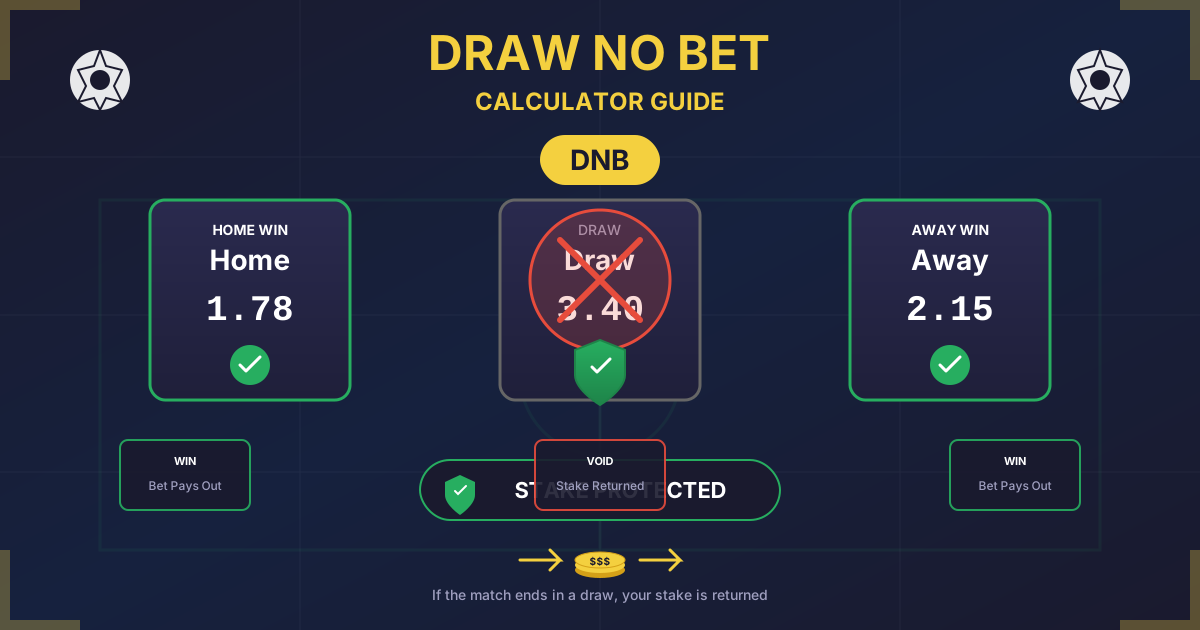
Draw No Bet (DNB) is one of soccer betting's most popular insurance options. By eliminating the draw outcome, you get your stake back if neither team wins outright. Our Draw No Bet calculator shows you the adjusted odds, potential returns, and helps you decide whether the reduced odds justify the added protection.
What Is Draw No Bet?
Draw No Bet is a soccer betting market where you bet on either team to win, with your stake returned if the match ends in a draw. Unlike a standard 1X2 bet where a draw loses, DNB gives you a safety net. The trade-off is reduced odds compared to straight win bets since you're essentially buying insurance against the draw.
Quick Answer: Draw No Bet removes the draw from your bet. If your team wins, you collect at reduced odds. If the match draws, you get your stake back. If your team loses, you lose your stake. The formula to estimate DNB odds from 1X2 odds is: DNB Odds = (1X2 Win Odds × Draw Probability) / (1 - Draw Probability). Example: Team A at 2.50 to win with draw at 3.20 converts to approximately DNB odds of 1.78.
How to Use Our Calculator
Use the Draw No Bet Calculator →
Step-by-Step Instructions
- Enter Team's Win Odds: Input the standard 1X2 win odds
- Enter Draw Odds: Input the draw odds for the match
- Enter Your Stake: Input how much you want to bet
- View DNB Odds: See the calculated Draw No Bet equivalent
- Analyze Returns: Compare potential returns with and without draw protection
Input Fields
| Field | Description | Example |
|---|---|---|
| Home Win Odds | Standard 1X2 home win price | 2.40 |
| Draw Odds | Standard 1X2 draw price | 3.30 |
| Away Win Odds | Standard 1X2 away win price | 3.00 |
| Stake Amount | Your bet size | $50 |
| Odds Format | Decimal, American, or Fractional | Decimal |
Understanding DNB Odds Conversion
The Mathematics Behind DNB
DNB removes one outcome from three-way betting:

Standard 1X2 Market:
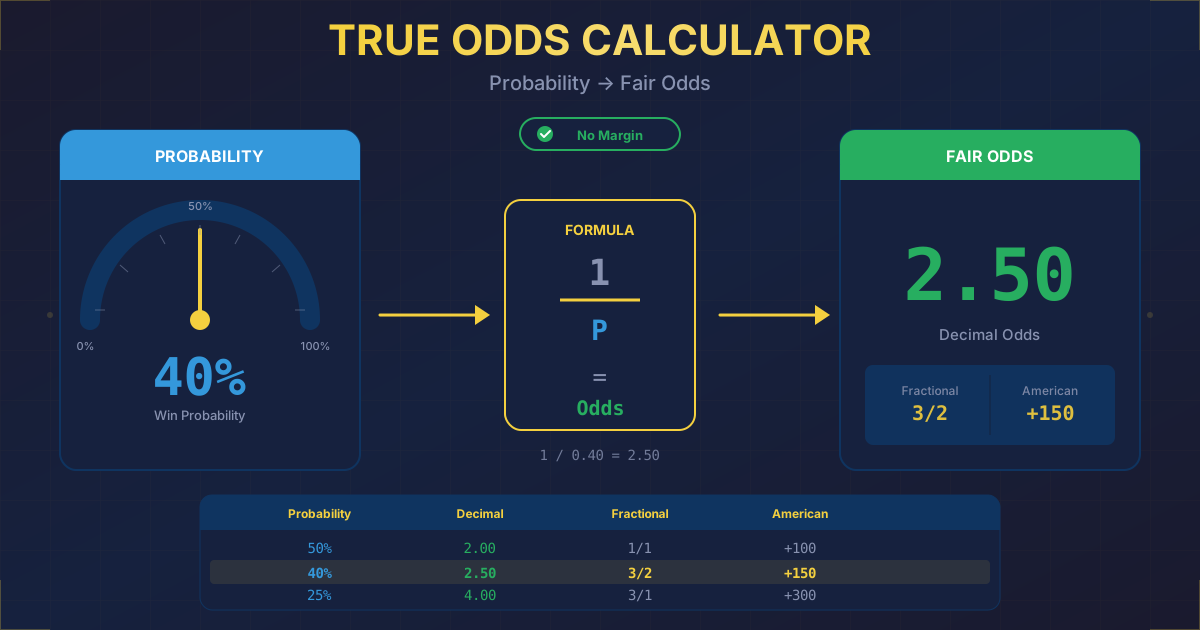
- Home Win: Probability = 1/odds
- Draw: Probability = 1/odds
- Away Win: Probability = 1/odds

DNB Conversion Formula:
DNB Odds = Win Odds / (1 - Draw Implied Probability)

Or more precisely:
DNB Odds = 1 / (Win Probability / (Win Probability + Opponent Win Probability))

Example Calculation:
Home Win: 2.40 (41.67% implied)
Draw: 3.30 (30.30% implied)
Away Win: 3.00 (33.33% implied)

Home DNB = 1 / (0.4167 / (0.4167 + 0.3333))
Home DNB = 1 / (0.4167 / 0.75)
Home DNB = 1 / 0.556
Home DNB = 1.80
Comparing DNB to Standard Win Bets
Match: Manchester United vs Chelsea

Standard 1X2 Odds:
- Man Utd: 2.20
- Draw: 3.40
- Chelsea: 3.25

DNB Odds (calculated):
- Man Utd DNB: 1.65
- Chelsea DNB: 1.95

Odds Reduction:
- Man Utd: 2.20 → 1.65 (25% reduction)
- Chelsea: 3.25 → 1.95 (40% reduction)

The bigger underdog sees larger relative reduction
because draw probability is higher relative to their win probability
When to Use Draw No Bet
Ideal Scenarios for DNB
1. Close Matches Between Evenly Matched Teams
   - High draw probability (28%+ implied)
   - DNB provides valuable protection
   - Worth the odds reduction

2. Cup Matches Where Form Is Unpredictable
   - One-off games have higher variance
   - DNB reduces risk of surprise draws

3. Protecting Value Bets
   - You found value on a team to win
   - DNB locks in edge while reducing variance

4. Conservative Bankroll Management
   - Newer bettors building confidence
   - Reducing volatility in early sessions
When to Avoid DNB
1. Heavy Favorites (odds below 1.40)
   - DNB odds become extremely short
   - Low value for the protection

2. Matches Where Draw Is Unlikely
   - High-scoring leagues
   - Mismatched opponents

3. When You Can Find Better Asian Handicap Value
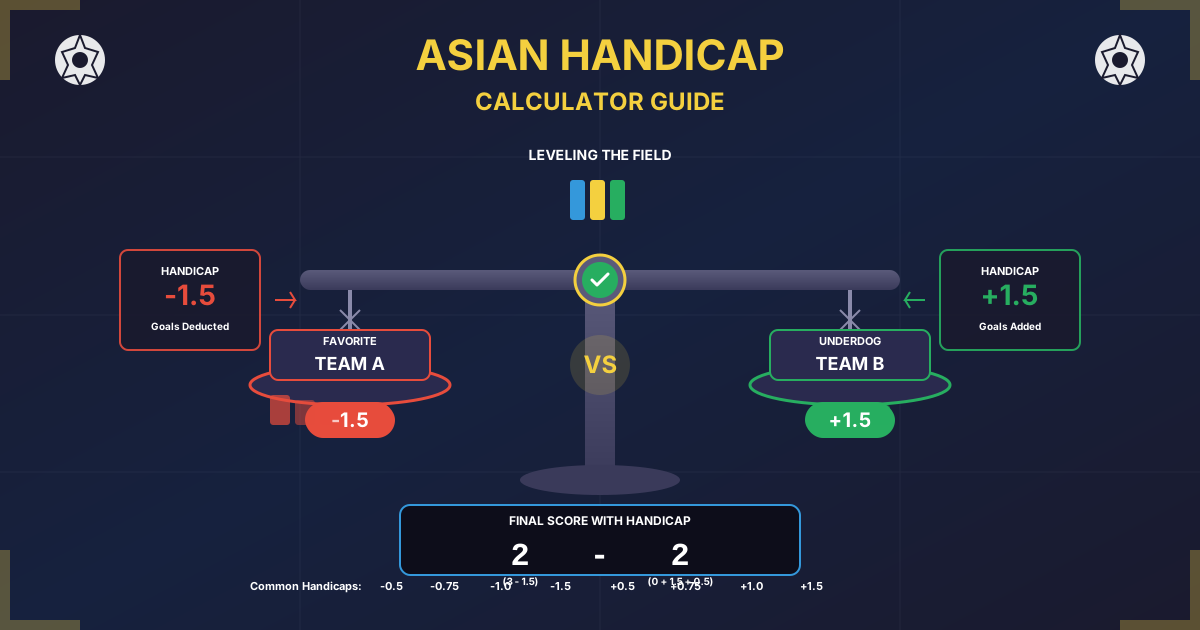
   - -0.5 Asian Handicap is identical to DNB
   - Sometimes AH markets have better odds
DNB vs Asian Handicap 0
Understanding the Equivalence
Draw No Bet = Asian Handicap 0

Both markets work identically:
- Win: You win at the posted odds
- Draw: Stake returned (push)
- Lose: You lose your stake

Why both exist:
- DNB: Popular in European markets
- AH 0: Standard in Asian markets
- Odds may differ slightly between markets
- Shop both for best value
Comparing Lines
Example Match: Liverpool vs Everton

European DNB Odds:
- Liverpool DNB: 1.55
- Everton DNB: 2.35

Asian Handicap 0:
- Liverpool AH 0: 1.58
- Everton AH 0: 2.42

In this case, AH market offers better value
Always compare before placing your bet
Real-World Examples
Example 1: Premier League Match
Situation:
Match: Arsenal vs Tottenham (North London Derby)
1X2 Odds: Arsenal 2.10 | Draw 3.50 | Tottenham 3.60
Stake: $100
Analysis:
Draw Implied Probability: 1/3.50 = 28.57%

Arsenal DNB Calculation:
Arsenal Win Prob: 1/2.10 = 47.62%
Tottenham Win Prob: 1/3.60 = 27.78%

Arsenal DNB = 1 / (0.4762 / (0.4762 + 0.2778))
Arsenal DNB = 1 / (0.4762 / 0.754)
Arsenal DNB = 1 / 0.632
Arsenal DNB = 1.58

Return Comparison:
Standard Win: $100 × 2.10 = $210 (lose on draw)
DNB Win: $100 × 1.58 = $158 (push on draw)
Result:
If Arsenal wins: DNB returns $158 vs $210 standard
If Draw: DNB returns $100 vs $0 standard
If Tottenham wins: Both lose $100

DNB sacrifices $52 potential profit
to protect $100 on the draw outcome
Example 2: Champions League Knockout
Situation:
Match: Real Madrid vs Bayern Munich (Quarter-Final)
1X2 Odds: Real Madrid 2.75 | Draw 3.20 | Bayern 2.65
Stake: $75
Analysis:
Very close match with high draw probability

Draw Implied: 1/3.20 = 31.25%

Real Madrid DNB:
Win Prob: 1/2.75 = 36.36%
Bayern Win Prob: 1/2.65 = 37.74%

Real Madrid DNB = 1 / (0.3636 / (0.3636 + 0.3774))
Real Madrid DNB = 1 / 0.491
Real Madrid DNB = 2.04

This is an excellent DNB spot because:
- High draw probability (31.25%)
- DNB odds still attractive (2.04)
- Protection against likely draw scenario
Result:
Standard bet at 2.75: High risk, ~36% win rate
DNB at 2.04: Moderate odds, ~49% success rate (win + push)

The DNB converts a speculative bet into
a more bankroll-friendly proposition
Example 3: League Match with Clear Favorite
Situation:
Match: Manchester City vs Burnley
1X2 Odds: Man City 1.25 | Draw 6.00 | Burnley 11.00
Stake: $200
Analysis:
Heavy favorite scenario - is DNB worth it?

Draw Implied: 1/6.00 = 16.67%

Man City DNB:
Win Prob: 1/1.25 = 80%
Burnley Win Prob: 1/11.00 = 9.09%

Man City DNB = 1 / (0.80 / (0.80 + 0.0909))
Man City DNB = 1 / 0.898
Man City DNB = 1.11

At 1.11 odds, you risk $200 to win $22
This is poor value for heavy favorite DNB
Result:
Standard: $200 at 1.25 = $250 return ($50 profit)
DNB: $200 at 1.11 = $222 return ($22 profit)

You sacrifice 56% of your profit for draw protection
When draw is only 16.67% likely, this is inefficient
Better to accept standard win bet risk here
Example 4: Underdog Selection
Situation:
Match: Wolverhampton vs Liverpool
1X2 Odds: Wolves 4.50 | Draw 3.80 | Liverpool 1.75
You like Wolves at home - considering DNB
Stake: $50
Analysis:
Underdog DNB often provides excellent risk/reward

Draw Implied: 1/3.80 = 26.32%

Wolves DNB:
Win Prob: 1/4.50 = 22.22%
Liverpool Win Prob: 1/1.75 = 57.14%

Wolves DNB = 1 / (0.2222 / (0.2222 + 0.5714))
Wolves DNB = 1 / 0.280
Wolves DNB = 3.57

Comparison:
Standard: 4.50 odds, 22% implied probability
DNB: 3.57 odds, 28% implied (includes push on draw)
Result:
At 3.57, Wolves DNB is attractive because:
- Still offers strong payout (3.57 to 1)
- 28% chance of positive outcome (win + push)
- Suitable for underdog plays with draw protection

Risk $50:
Win: Collect $178.50
Draw: Get $50 back
Lose: Lose $50
Expected Value Analysis
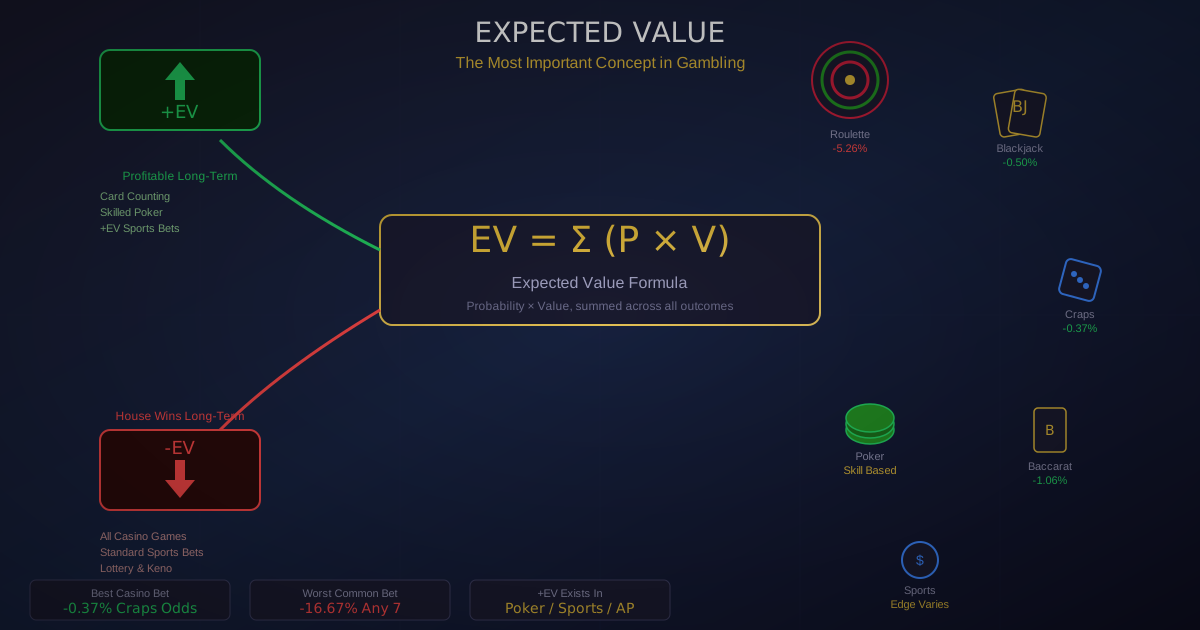
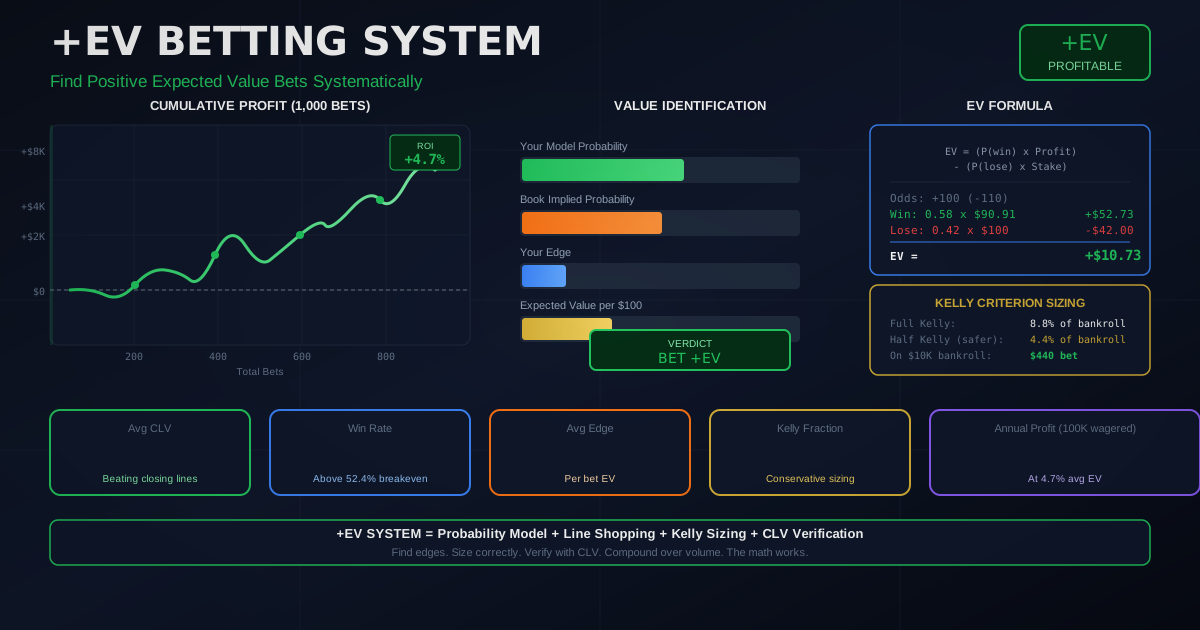
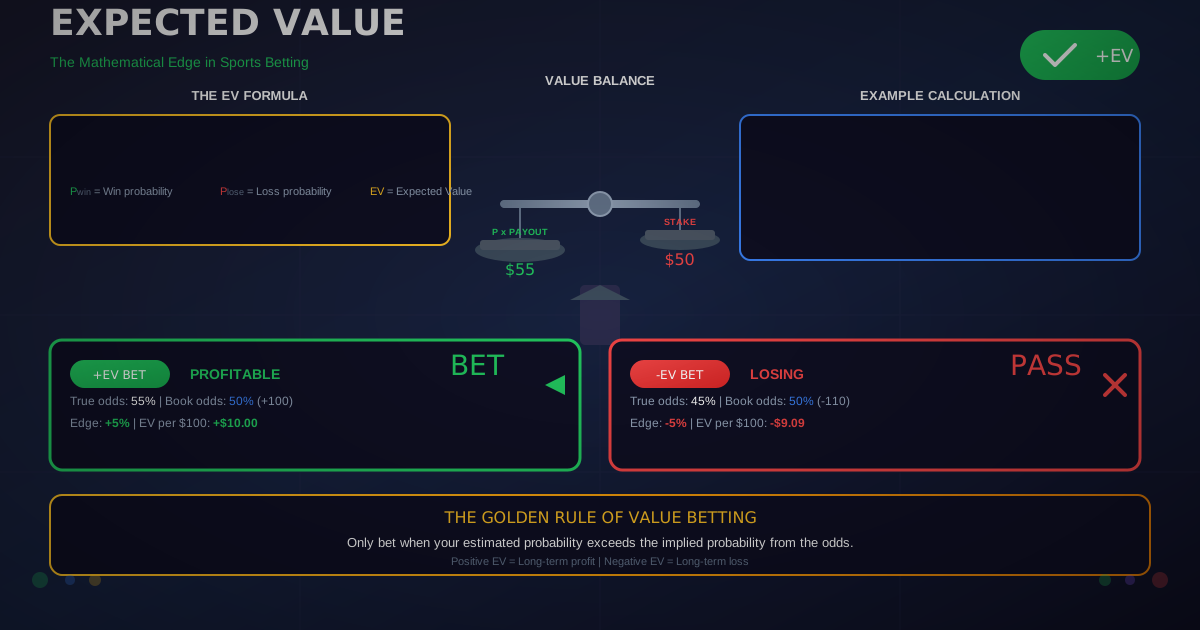
Calculating DNB EV
DNB Expected Value Formula:

EV = (Win Prob × (DNB Odds - 1)) + (Draw Prob × 0) - (Lose Prob × 1)

Or simplified:
EV = (Win Prob × DNB Odds) - (1 - Draw Prob)

Example:
True Win Probability: 45%
True Draw Probability: 28%
True Lose Probability: 27%
DNB Odds: 1.75

EV = (0.45 × 1.75) - (1 - 0.28)
EV = 0.7875 - 0.72
EV = 0.0675 or +6.75%

Positive EV indicates a valuable DNB bet
Break-Even Analysis
DNB Break-Even Win Rate:

Required Win% = (1 - Draw%) / DNB Odds

Example: DNB odds of 1.80, Draw probability 28%

Required Win% = 0.72 / 1.80
Required Win% = 40%

If you believe the team wins more than 40%
of non-draw games, the DNB has positive EV
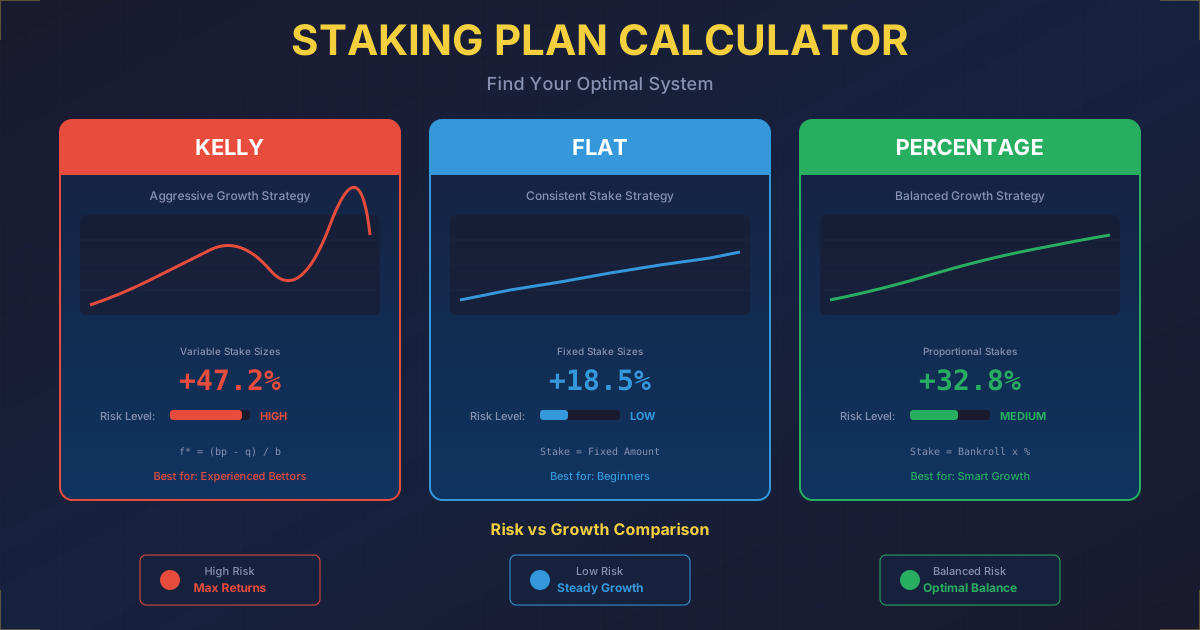
DNB Staking Strategies
Flat Staking with DNB
Conservative DNB Approach:
- Fixed stake regardless of odds
- Suitable for recreational bettors
- Example: $50 on every DNB selection

Pros:
- Simple to manage
- Limits downside on losses
- Consistent risk exposure

Cons:
- Doesn't maximize value opportunities
- May understake strong selections
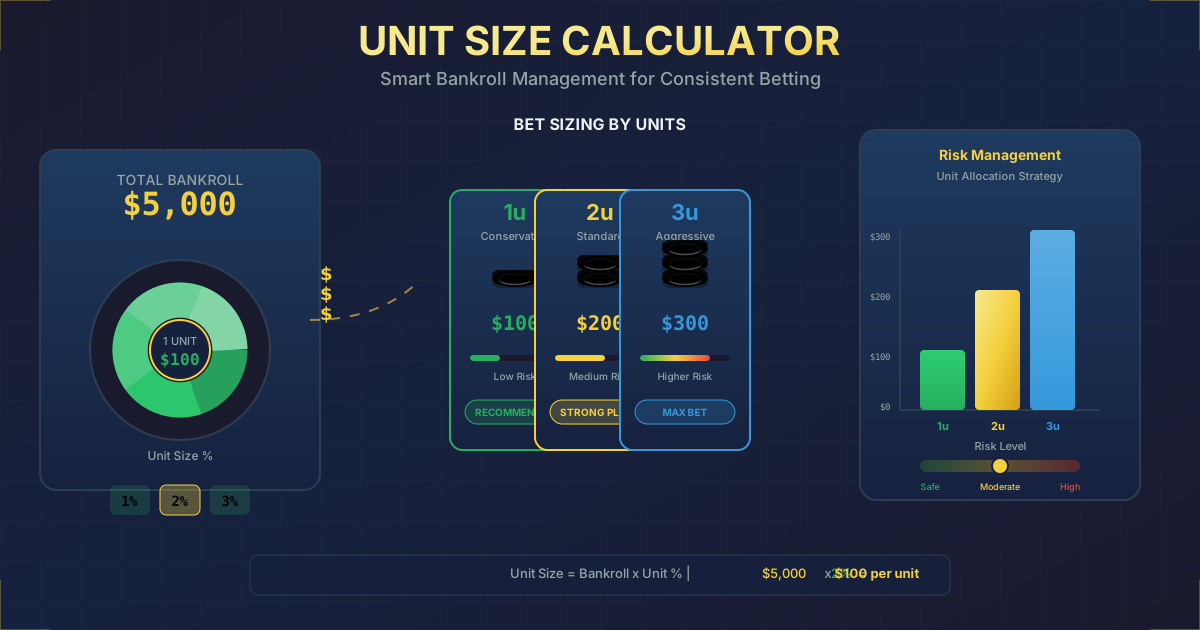
Proportional Staking
Stake Based on Confidence:
Low confidence: 1 unit
Medium confidence: 2 units
High confidence: 3 units

Example Portfolio:
- Arsenal DNB (2 units): Medium confidence
- Chelsea DNB (1 unit): Low confidence
- Liverpool DNB (3 units): High confidence

Total risk managed across selections
Common Mistakes to Avoid
-
Using DNB on Heavy Favorites: When win odds are below 1.50, DNB odds become extremely short. The protection isn't worth the severe odds reduction.
-
Ignoring the Draw Probability: Not all draws are equal. A 35% draw probability match is very different from a 20% draw match. Calculate whether DNB protection is priced fairly.
-
Not Comparing to Asian Handicap 0: AH 0 is mathematically identical to DNB. Always check both markets for the best odds.
-
Overusing DNB Out of Fear: DNB should be a strategic choice, not a crutch. Sometimes accepting draw risk at better odds is the smarter play.
-
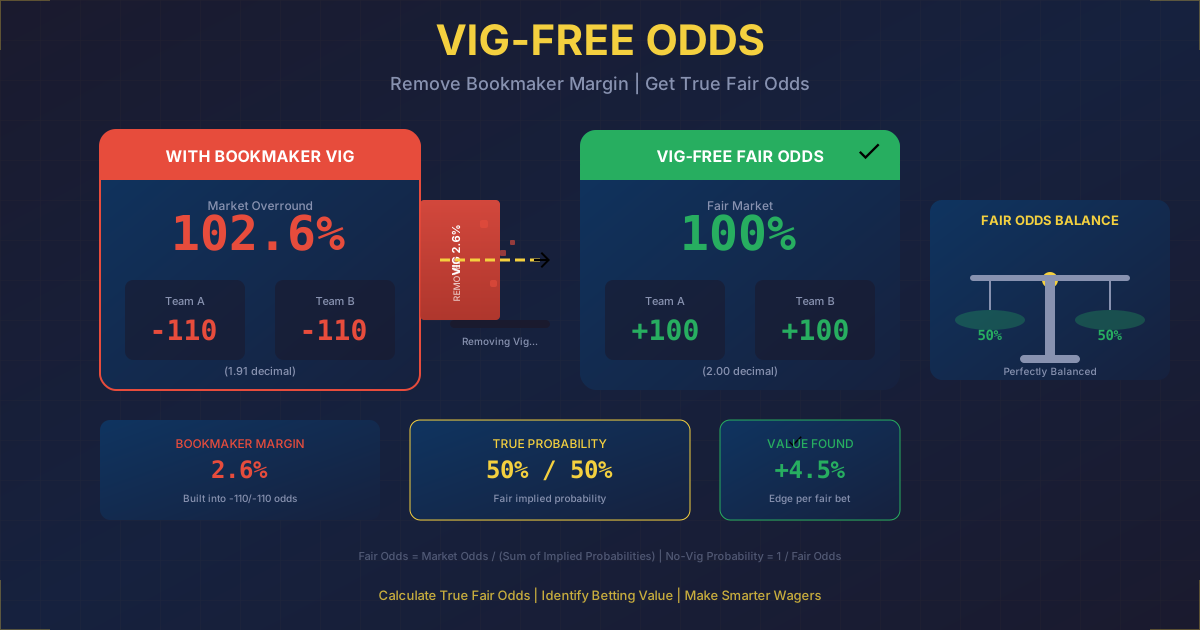
Forgetting to Factor Margin: Bookmaker margins apply to DNB too. The conversion formula gives theoretical odds; actual DNB lines include markup.
-
Using DNB in Accumulators Without Adjustment: A DNB selection that pushes in an accumulator may void the entire bet or reduce odds. Know your bookmaker's rules.
Frequently Asked Questions
What happens if the match ends in a draw with a DNB bet?
Your stake is returned in full. Draw No Bet specifically removes the draw as a losing outcome. It's like the bet never happened - you neither win nor lose.
Is Draw No Bet the same as Asian Handicap 0?
Yes, they are mathematically identical. DNB on Home Team = Home Team Asian Handicap 0. The only potential difference is the odds offered, so always compare both markets.
When is DNB better than a standard win bet?
DNB is better when you want reduced variance and are willing to accept lower odds for protection. It's ideal for close matches, cup games, and when building a bankroll conservatively.
How much do DNB odds typically reduce compared to win odds?
The reduction depends on draw probability. For matches with 30% draw odds, expect roughly 25-35% lower DNB odds. For 20% draw matches, reduction is typically 15-25%.
Can I use DNB in accumulator bets?
Yes, but check your bookmaker's rules. Most bookmakers will return your stake for that leg if it draws, reducing the overall accumulator odds rather than voiding the entire bet.
Is Draw No Bet good for beginners?
Yes, DNB is excellent for beginners because it reduces variance and provides a safety net. It helps new bettors build confidence while learning to analyze matches without the full three-way risk.
Pro Tips
- Always compare DNB odds to Asian Handicap 0 before placing your bet - the same outcome can be priced differently
- Use DNB strategically in derbies and cup matches where draw rates historically run higher
- Calculate the "cost" of draw protection by comparing potential returns to standard win bets
- Consider DNB for away teams in leagues where home advantage strongly favors draws
- Track your DNB results separately to understand if the protection is providing value for your betting style
Related Calculators
- Asian Handicap Calculator - Alternative to DNB with more options
- Soccer Betting Calculator - General soccer wagering tools
- Expected Value Calculator - Calculate bet profitability
- Odds Converter - Convert between odds formats
- Bankroll Calculator - Manage your betting funds
Conclusion
Draw No Bet is a powerful tool for soccer bettors who want to eliminate one source of variance. By removing the draw outcome, you convert a three-way bet into a two-way proposition with your stake protected. Our calculator helps you determine whether the reduced odds justify the protection based on match specifics and your risk tolerance.
The key is using DNB strategically - not as a default option, but when match conditions make draw protection particularly valuable. Close matches, knockout games, and underdog plays often benefit most from DNB structure.