10 Gambling Myths That Are Costing You Money (Exposed with Math) (2026)
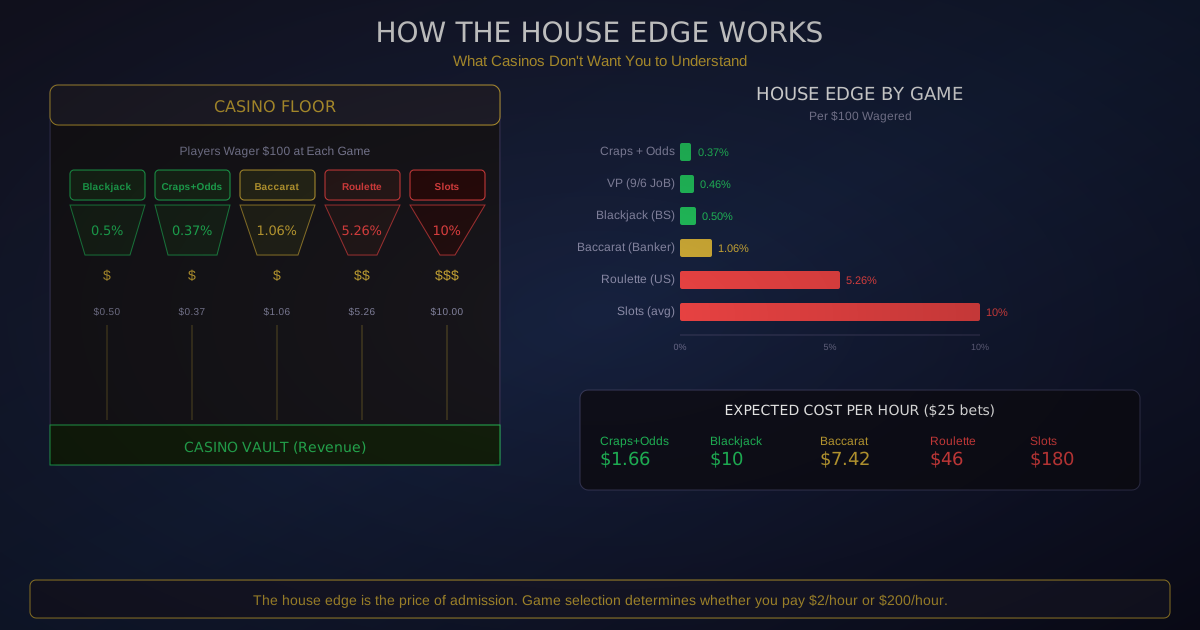
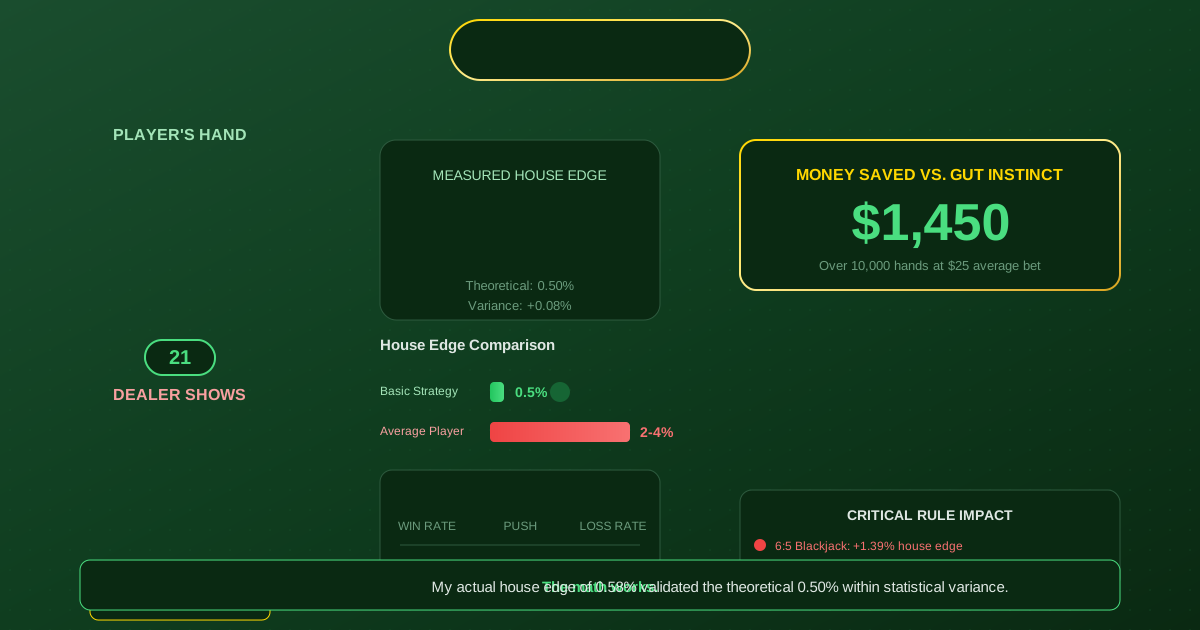
The average casino gambler loses more money to myths and misconceptions than to the house edge itself. A player using perfect blackjack basic strategy faces a 0.50% house edge. That same player, making decisions based on common myths -- standing when they should hit because "the next card will be a bust card," taking insurance to "protect" a good hand, or switching tables because this one is "cold" -- inflates their effective house edge to 2-4%. That's four to eight times more money lost, driven entirely by beliefs that feel true but crumble under mathematical scrutiny.
This guide dismantles the 10 most expensive gambling myths with specific calculations, probability formulas, and simulation data. Every myth includes the math that disproves it, so you can see exactly why it's wrong and how much it's costing you.
Run the Numbers Yourself with Our Probability Calculators ->
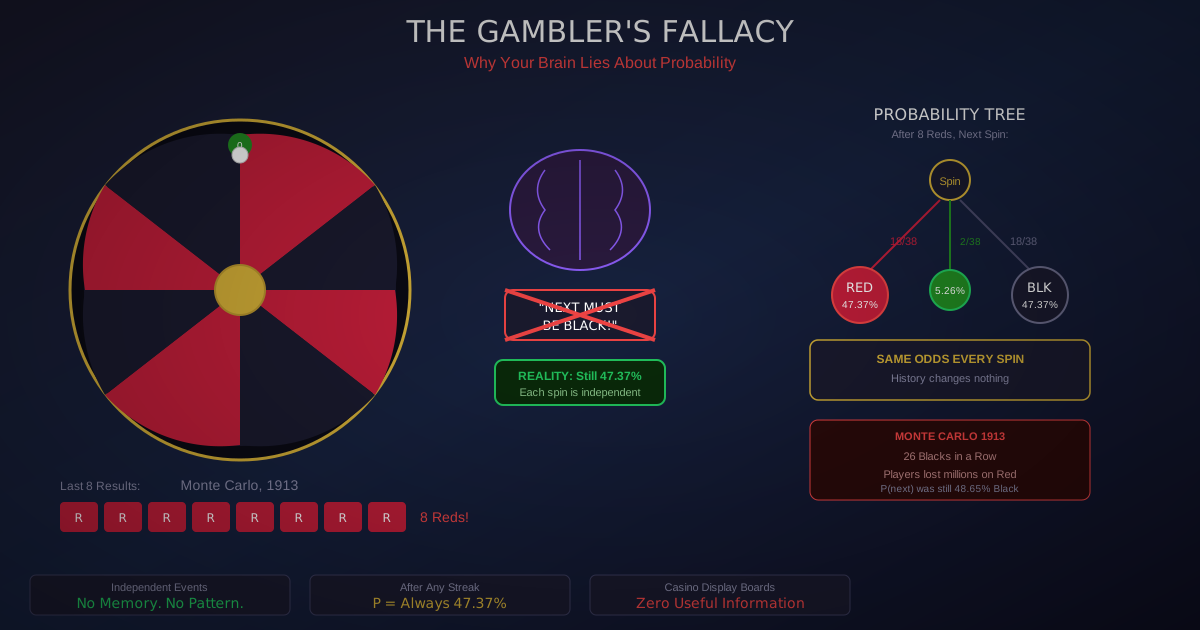
Myth #1: "The Roulette Wheel Is Due for Red After a Streak of Black"
The Myth: After a long streak of one color, the other color becomes more likely. If black has hit 10 times in a row, red is "due."
The Math That Destroys It:
Each spin of a roulette wheel is an independent event. The wheel has no memory. The probability of red on any given spin is always:
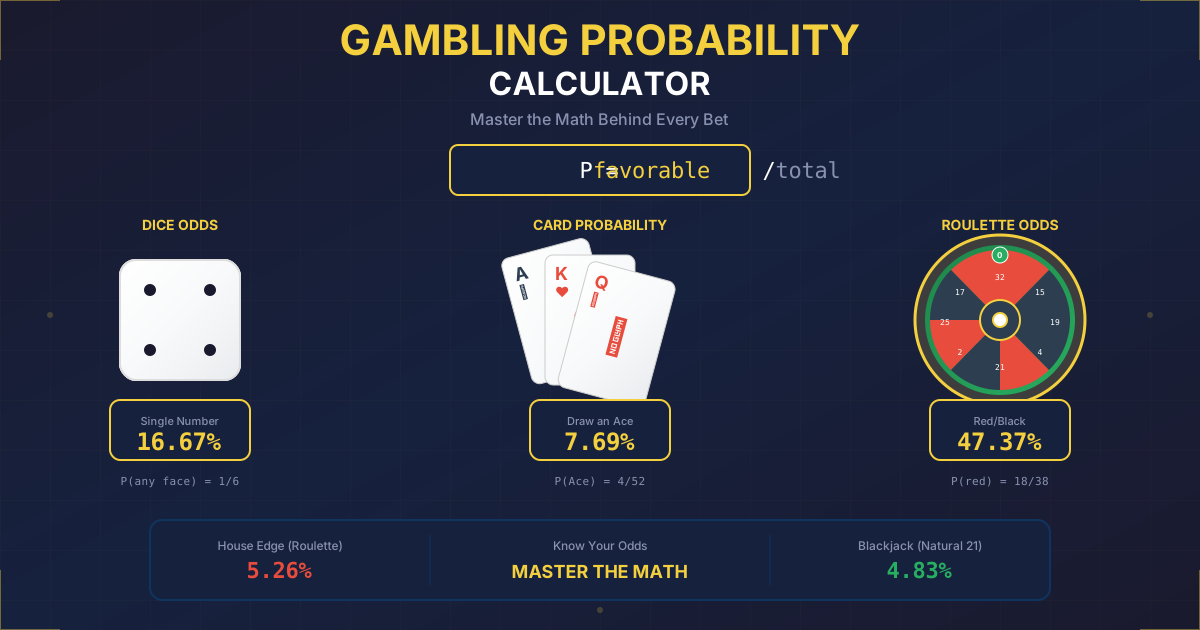
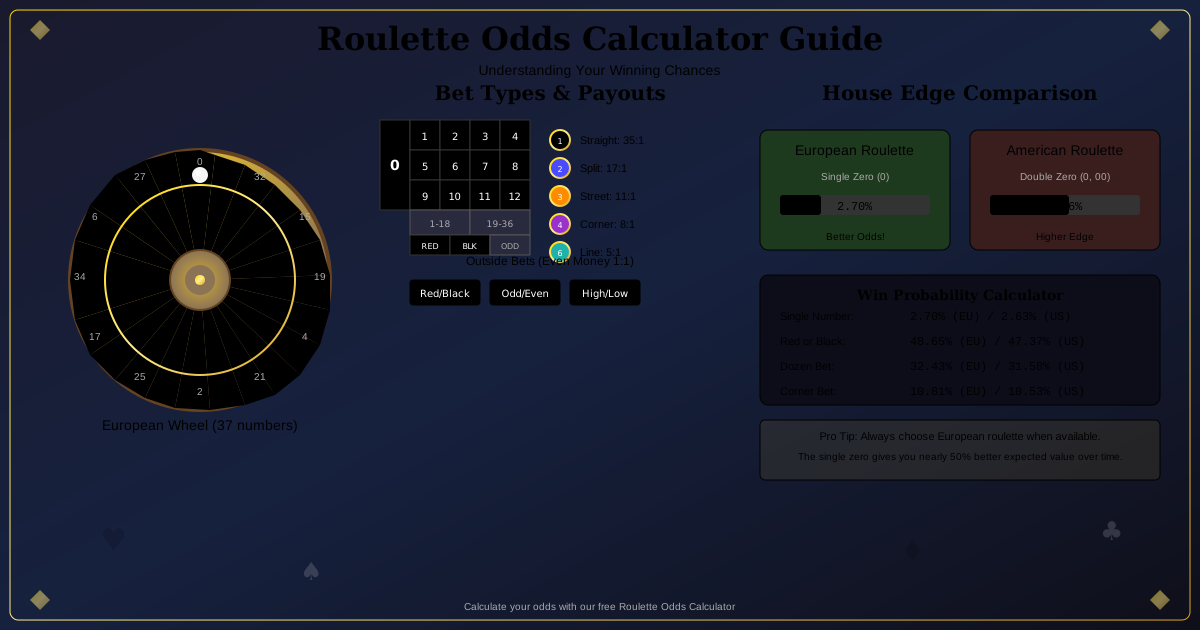
American Roulette: P(red) = 18/38 = 47.37%
European Roulette: P(red) = 18/37 = 48.65%
After 10 consecutive blacks:
P(red on spin 11) = 18/38 = 47.37%
P(black on spin 11) = 18/38 = 47.37%
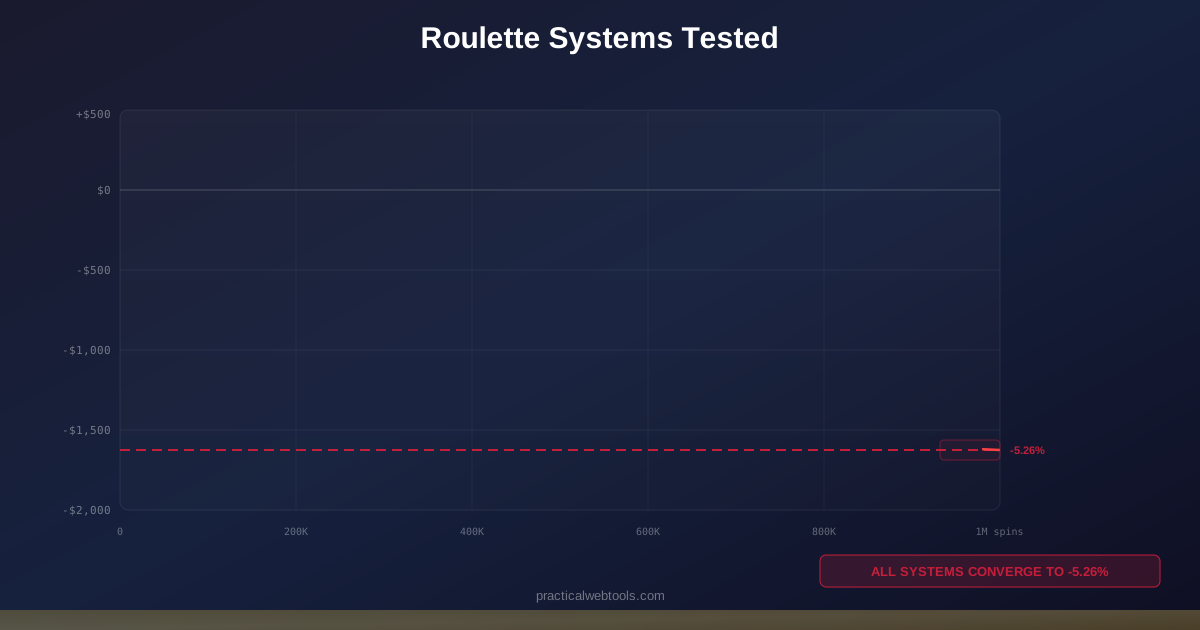
P(green on spin 11) = 2/38 = 5.26%
The probability hasn't changed by a single fraction. The previous 10 spins are irrelevant.
Why It Feels True:
The probability of seeing 11 blacks in a row is extremely low:
P(11 consecutive blacks) = (18/38)^11 = 0.0348% (about 1 in 2,873)
But that's the probability of 11 blacks in a row calculated before any spins happen. Once 10 blacks have already occurred, that's history. The conditional probability of one more black is just 47.37%. This is the classic Gambler's Fallacy, and it's been mathematically proven wrong since the 18th century.
What It Costs You: Players who bet against streaks often increase their bets as streaks grow longer, combining the Gambler's Fallacy with the Martingale system (Myth #4). The roulette probability calculator and the roulette betting simulator let you simulate thousands of spins to see streaks happen at exactly the predicted frequency -- randomly and without pattern.
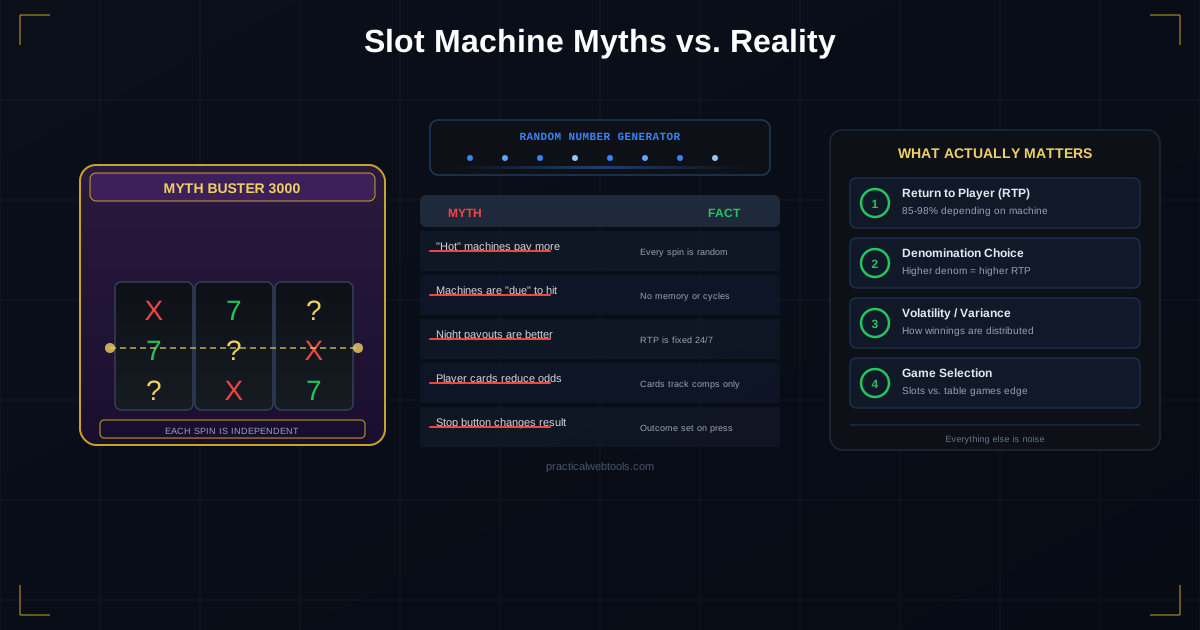
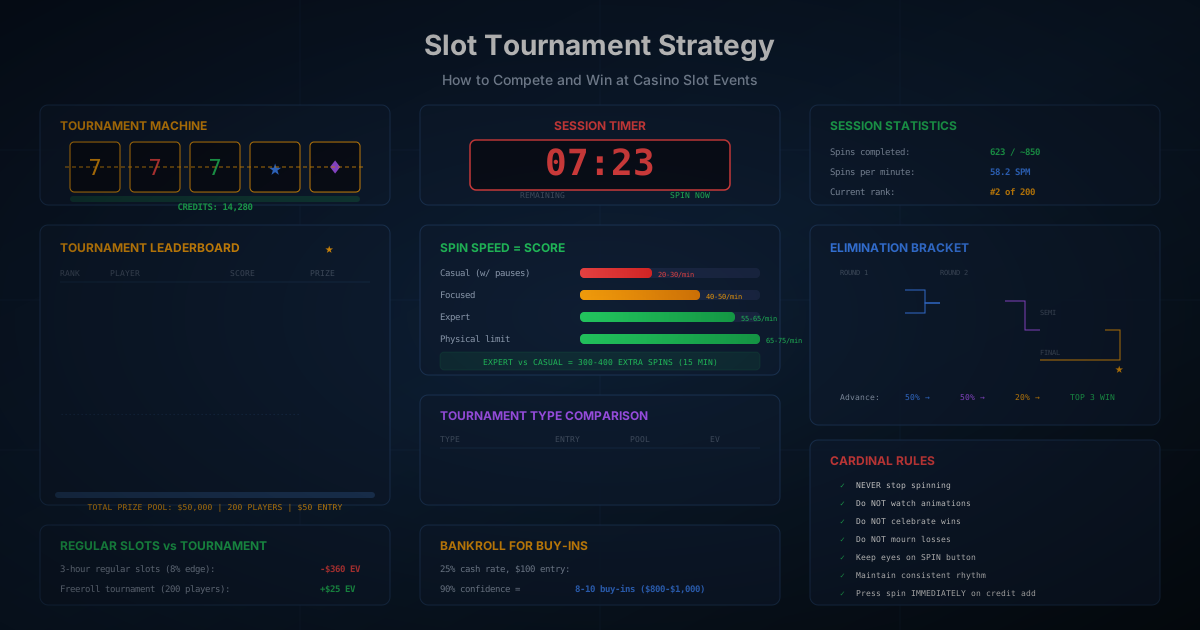
Myth #2: "Slot Machines Get Hot and Cold"
The Myth: Slot machines go through cycles. A machine that hasn't paid out in a while is "due" for a hit. A machine that just paid a jackpot is "cold" and should be avoided.
The Math That Destroys It:
Modern slot machines use Random Number Generators (RNGs) that produce outcomes independently on every spin. The RNG cycles through millions of numbers per second, and the outcome is determined the instant you press the button.
Each spin probability: Fixed by the RNG algorithm
Previous outcomes: Have zero effect on future spins
"Hot" machine: Statistical noise (random variance)
"Cold" machine: Also statistical noise
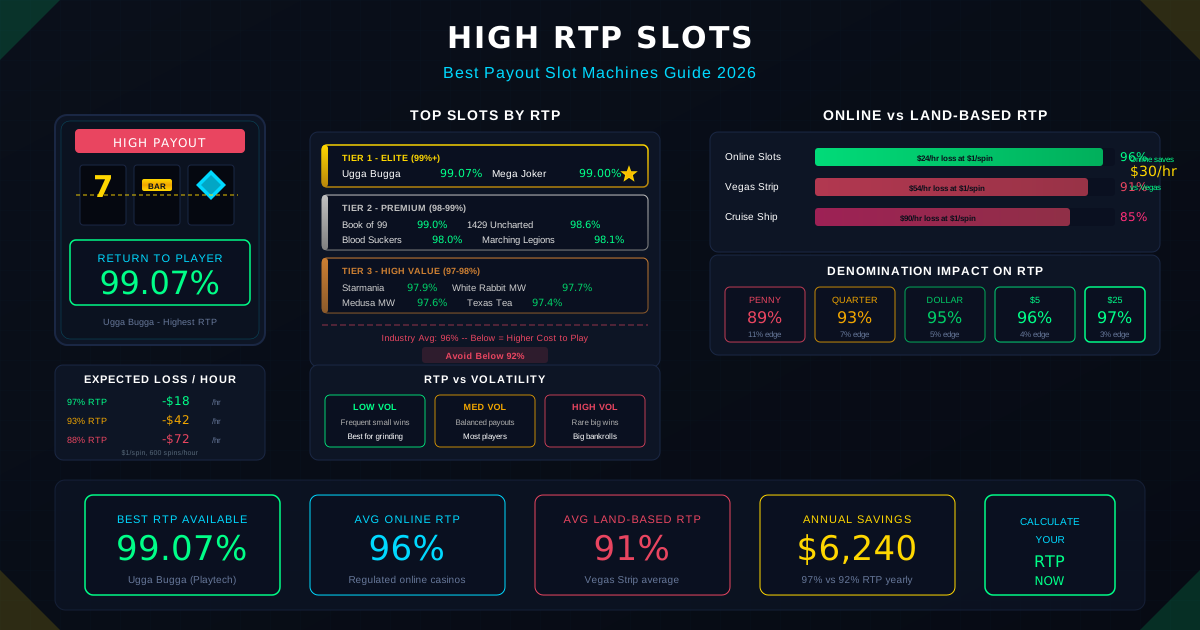
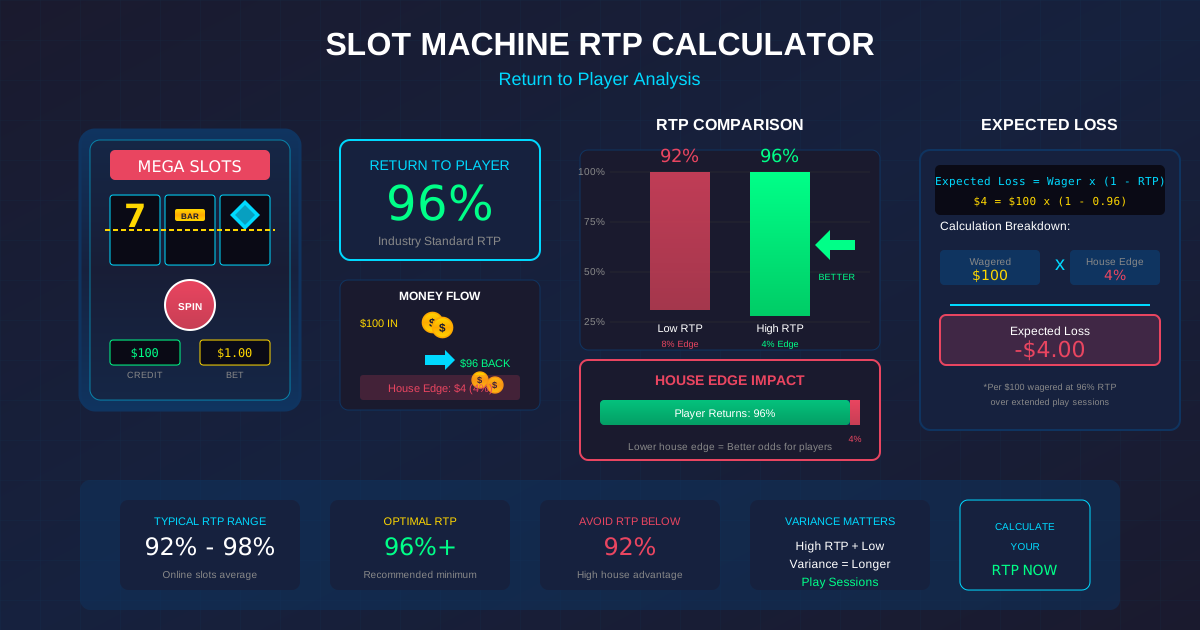
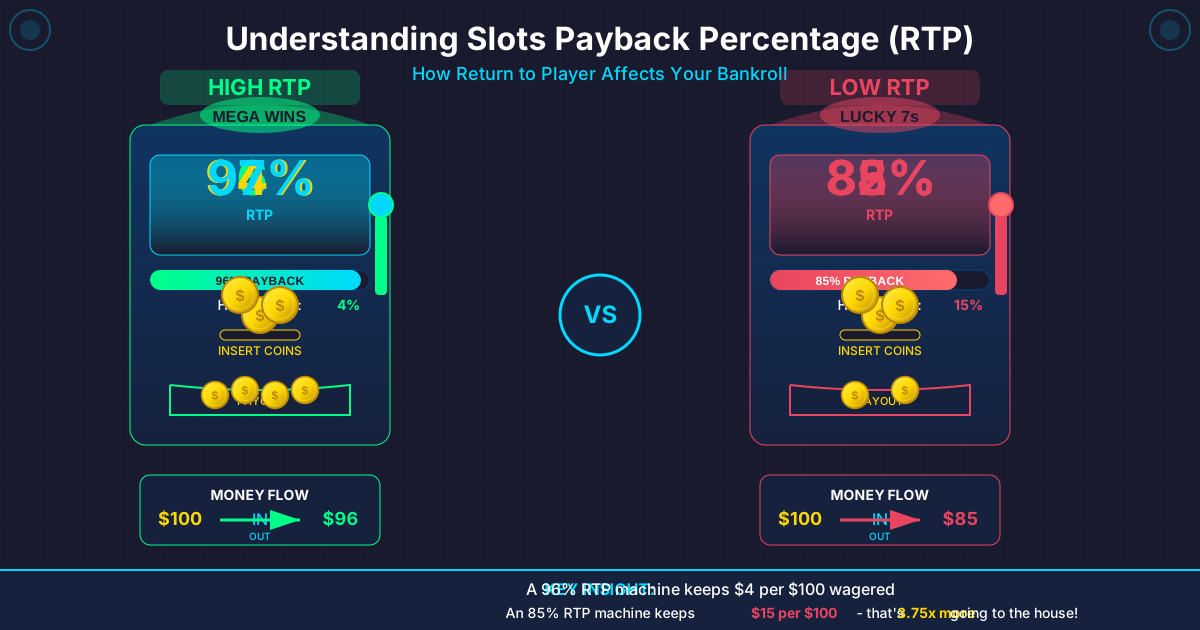
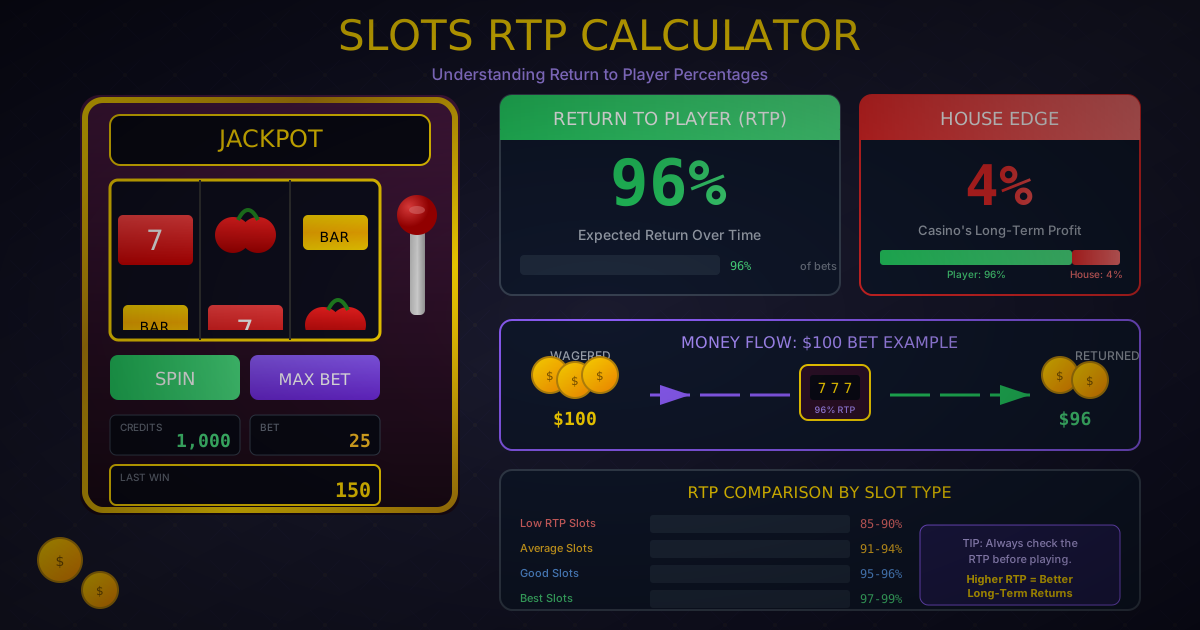
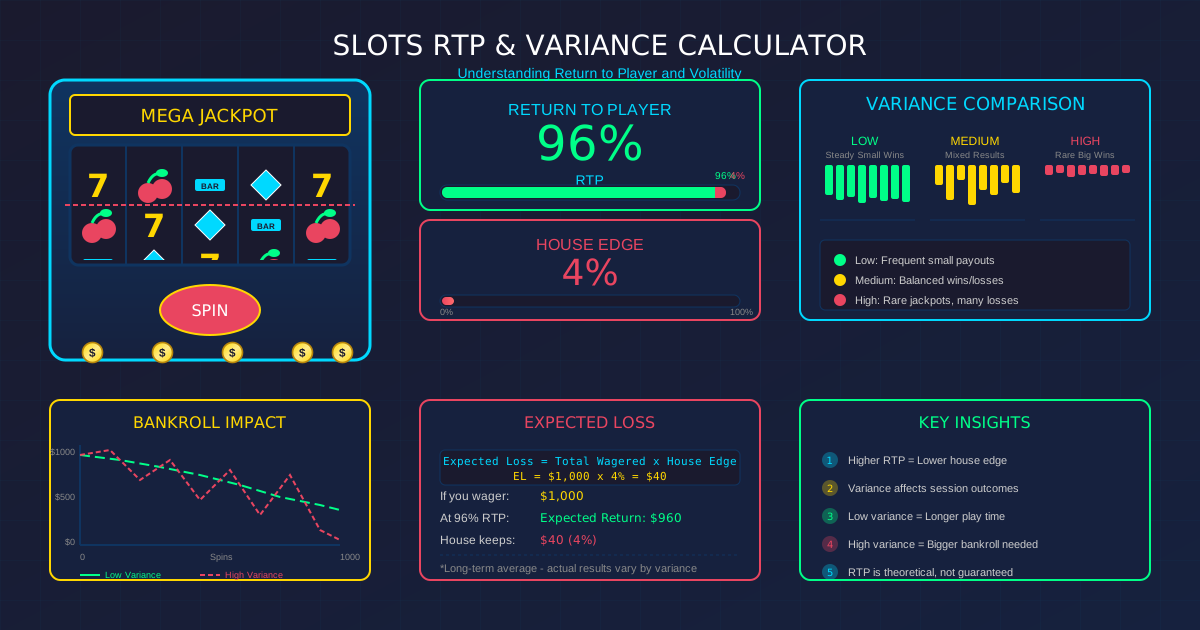
A slot machine programmed to return 92% of wagers (8% house edge) will approach that figure over millions of spins. In any short session, results can vary wildly:
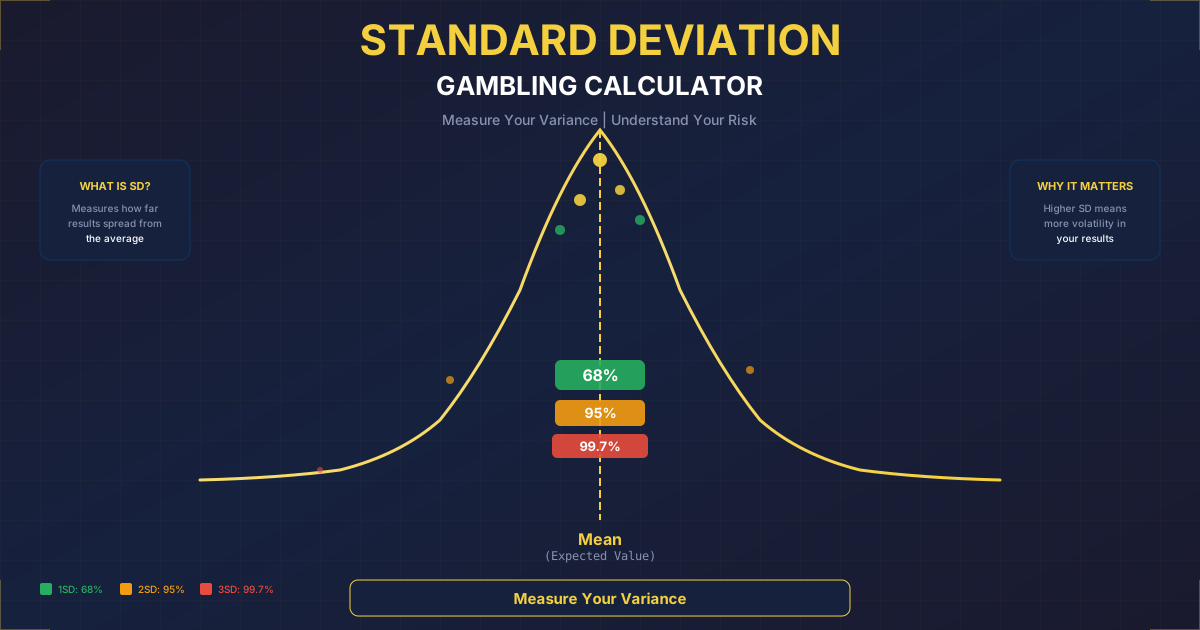
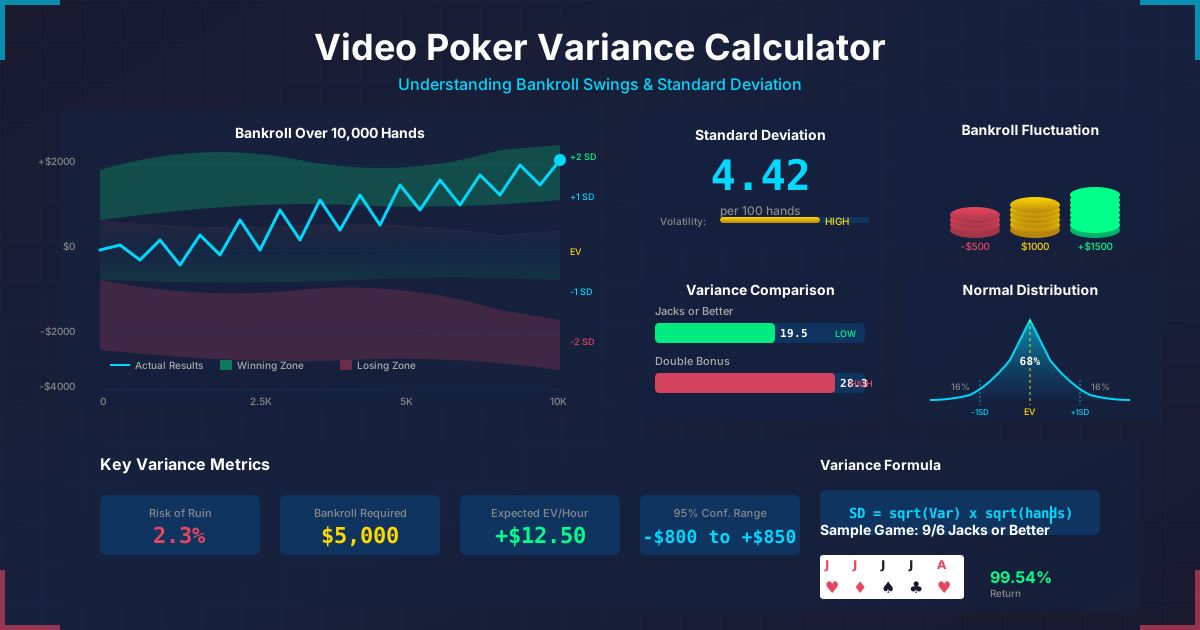
Standard deviation for 1,000 slot spins at $1:
SD = sqrt(n) x unit_SD ≈ $31.62 x variance_factor

This means in 1,000 spins, your actual return could easily be
85% to 99%, even though the expected return is 92%.
The Evidence: Regulated casinos are required to use certified RNGs. Gaming commissions test these systems rigorously. The machines don't "know" they haven't paid out recently, because each spin's outcome is determined by a single random number at the moment of play.
What It Costs You: Players chasing "hot" machines or avoiding "cold" ones spend time wandering the floor rather than playing. Since all machines of the same denomination typically have similar return percentages, this behavior doesn't change expected outcomes but can lead to poor bankroll management and emotional decision-making. The expected value calculator confirms that EV doesn't change based on previous outcomes.
Myth #3: "Card Counting Is Illegal"
The Myth: Card counting in blackjack is illegal, and casinos will have you arrested if they catch you.
The Reality:
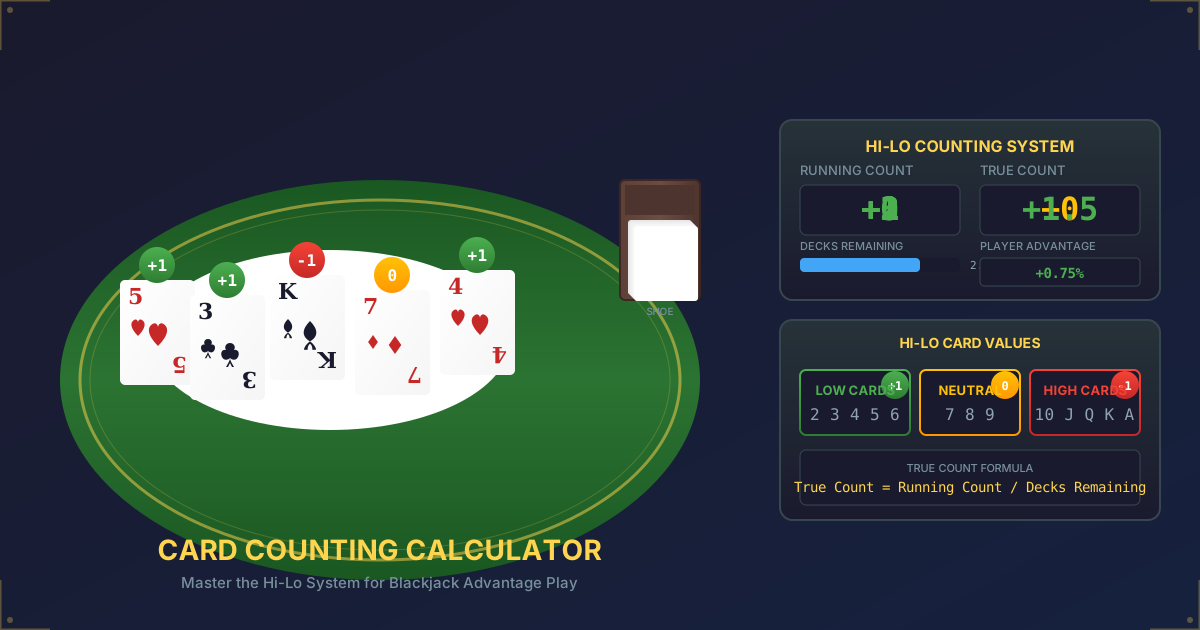
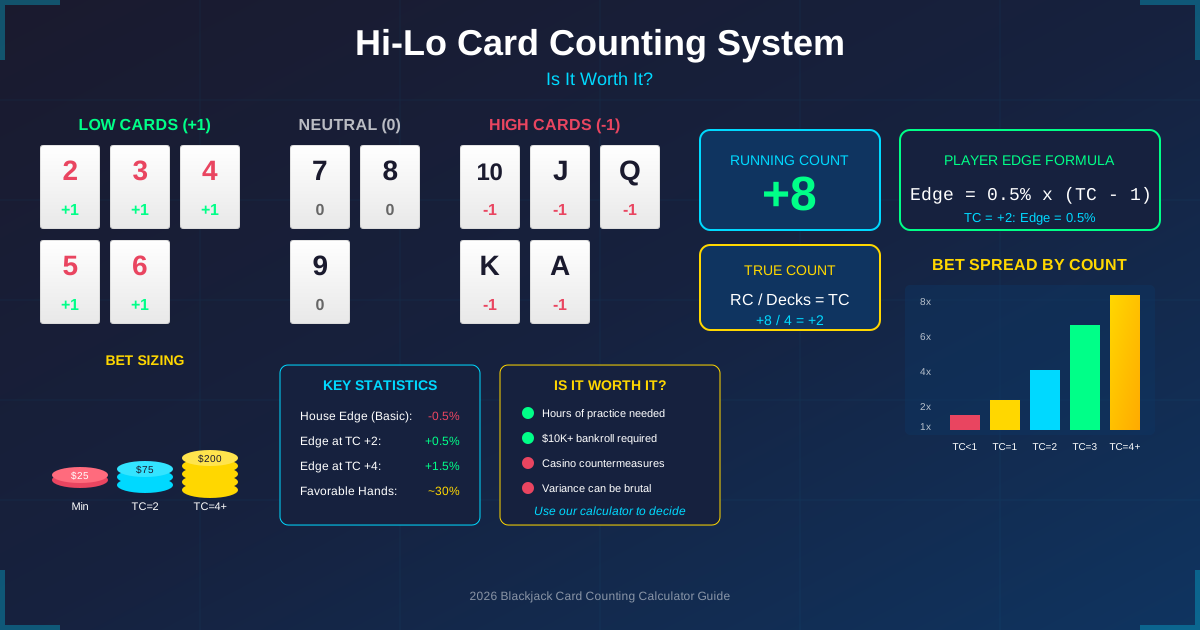
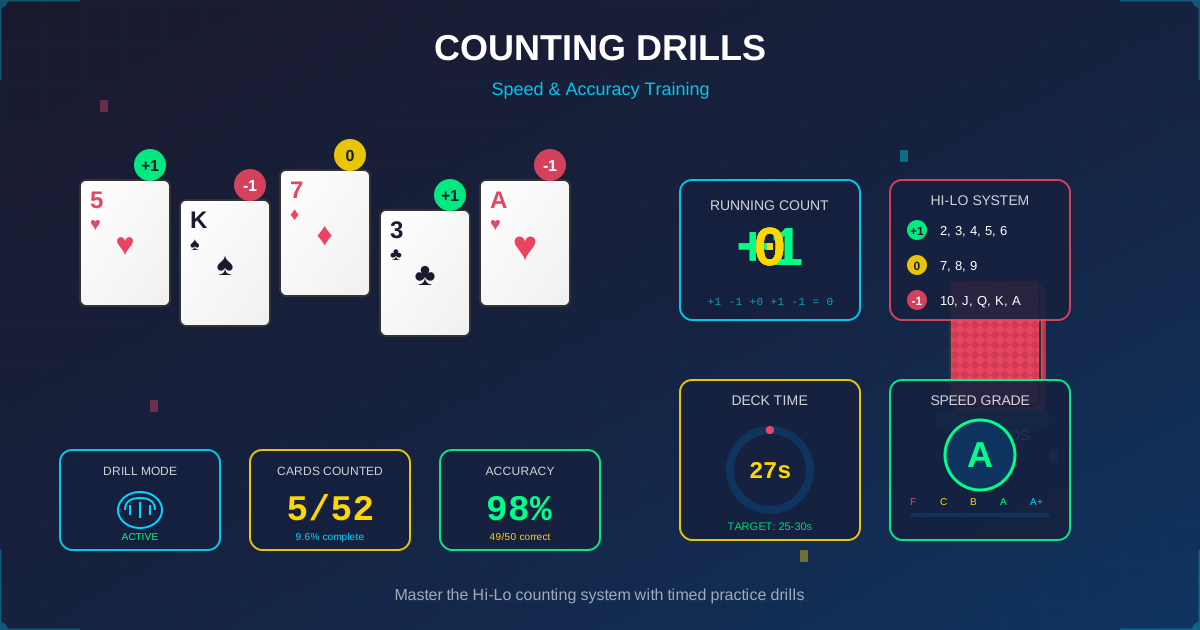
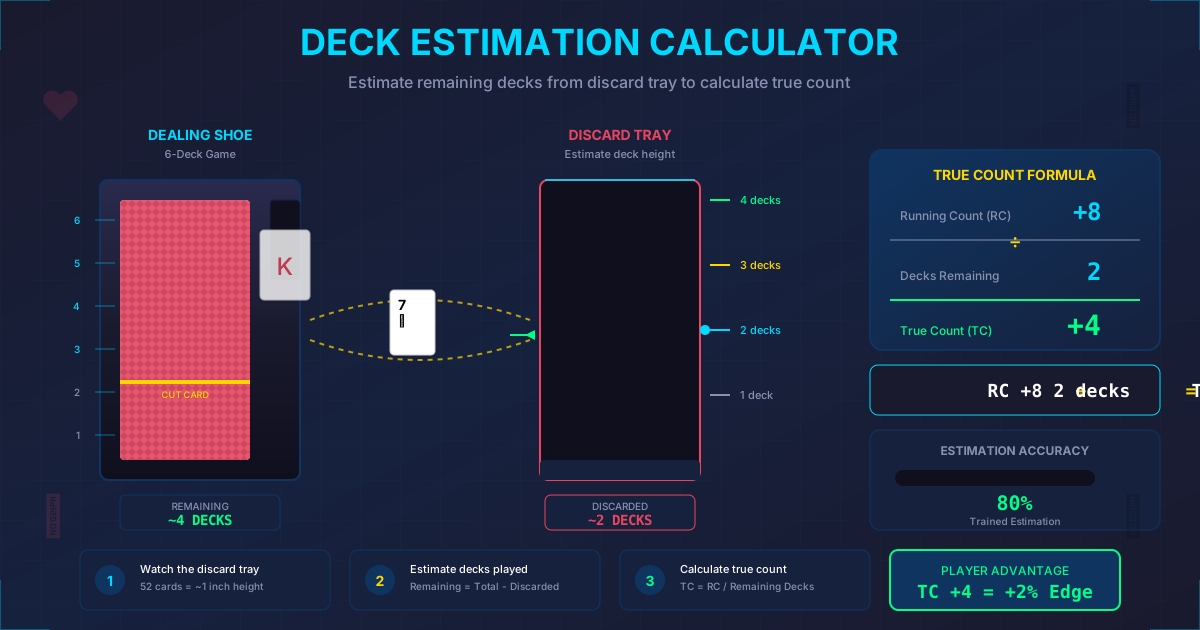
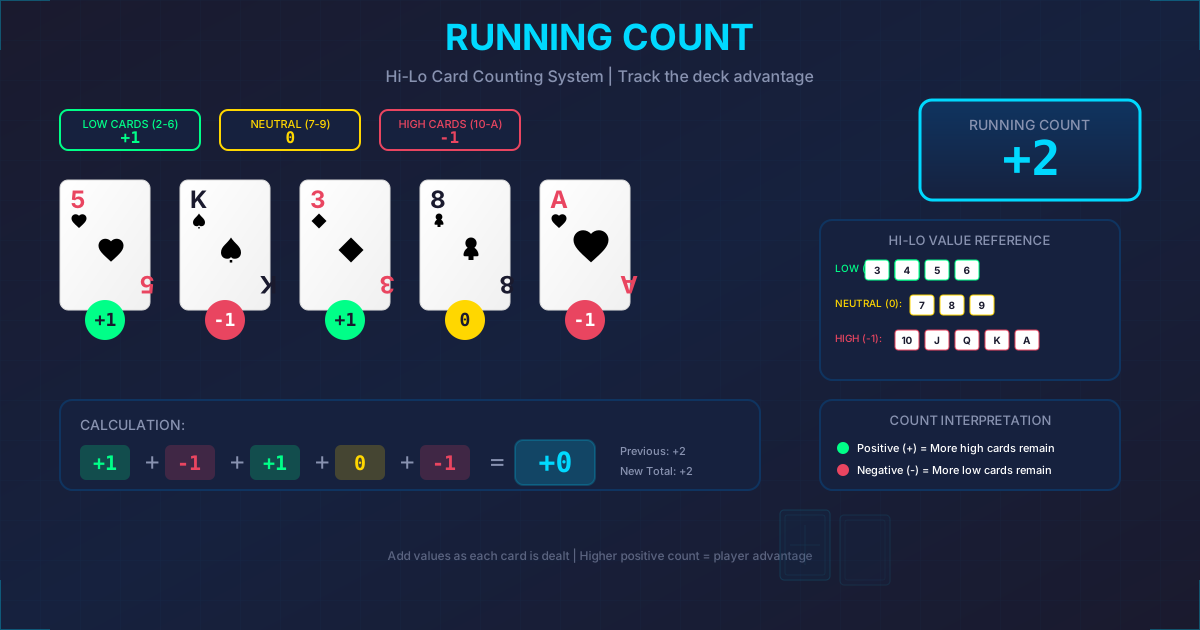
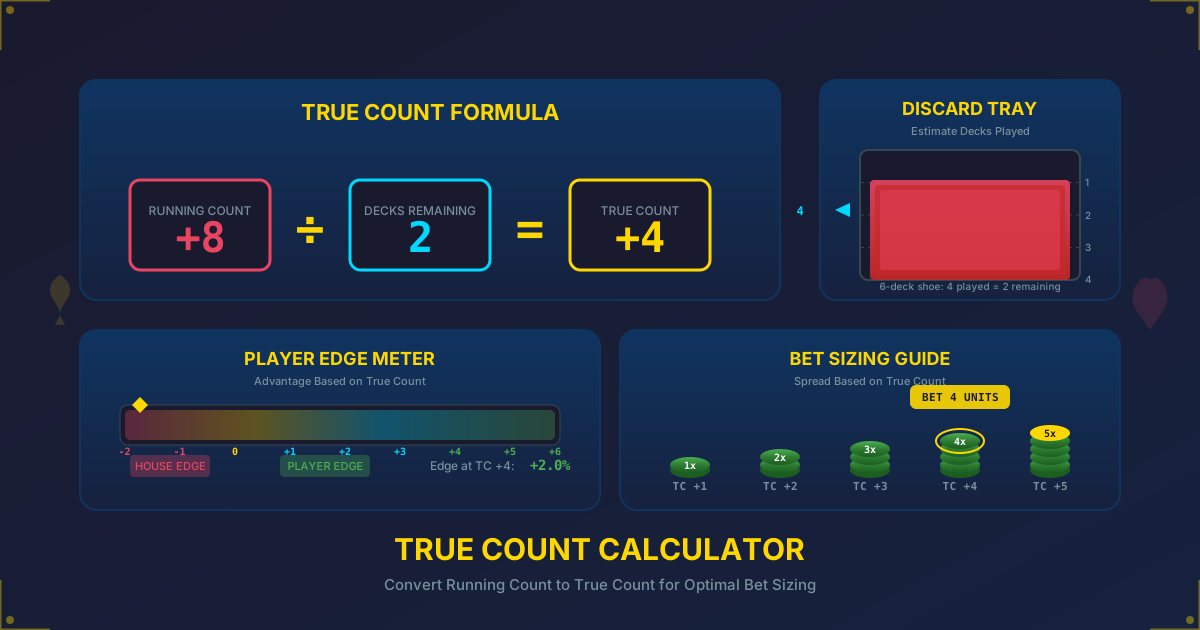
Card counting is 100% legal in the United States and most jurisdictions worldwide. It involves using your brain to track publicly available information (the cards that have been dealt). There is no law against thinking.
However:
Legal status: Completely legal
Casino response: They can ask you to leave (trespass)
Criminal penalties: None
Nevada law: Casinos can ban players for any reason
Atlantic City law: Casinos cannot ban counters (but use countermeasures)
Casinos combat counting through:
- Continuous Shuffling Machines (CSMs) that eliminate penetration
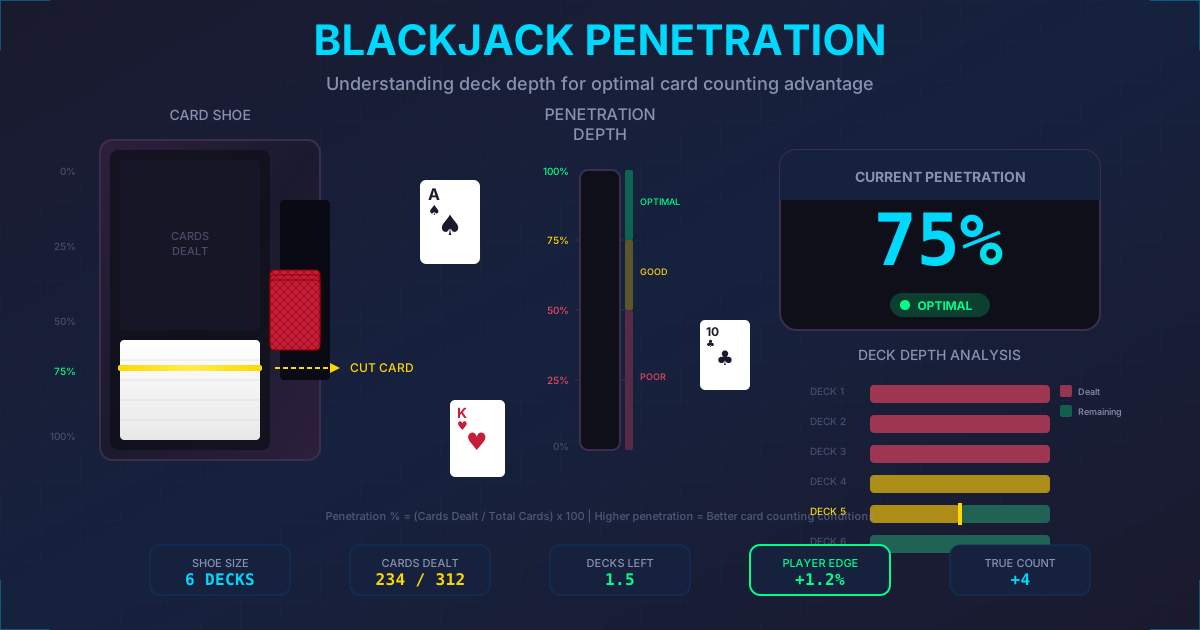
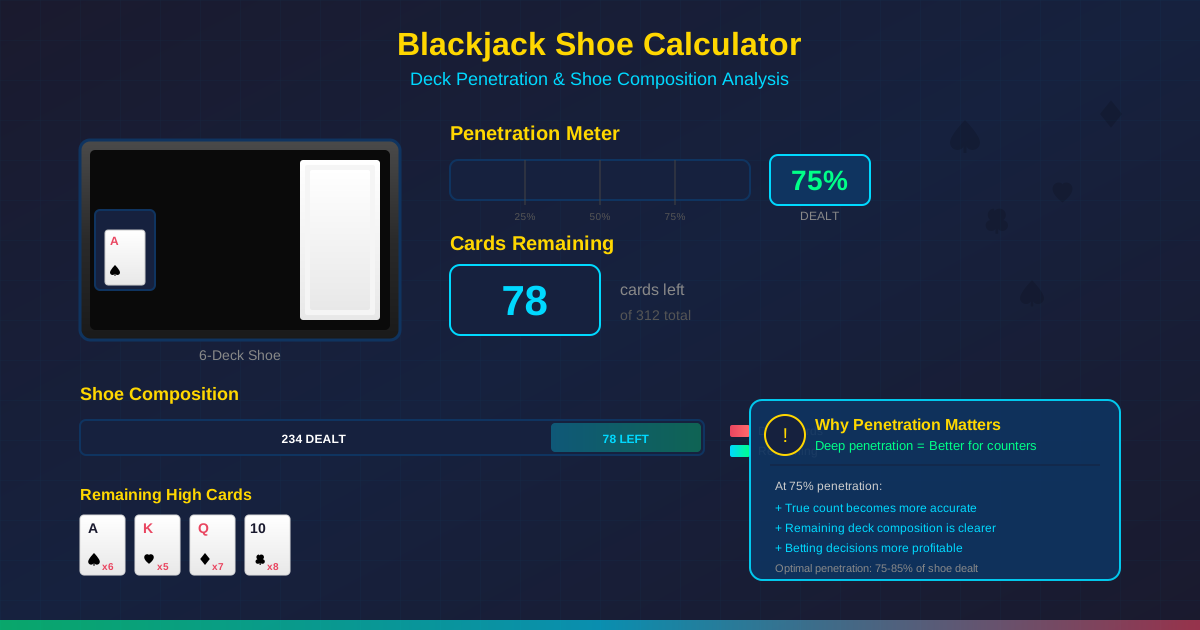
- Shallow deck penetration (shuffling with 2+ decks remaining)
- Reducing bet spread tolerance
- Asking suspected counters to leave ("backing off")
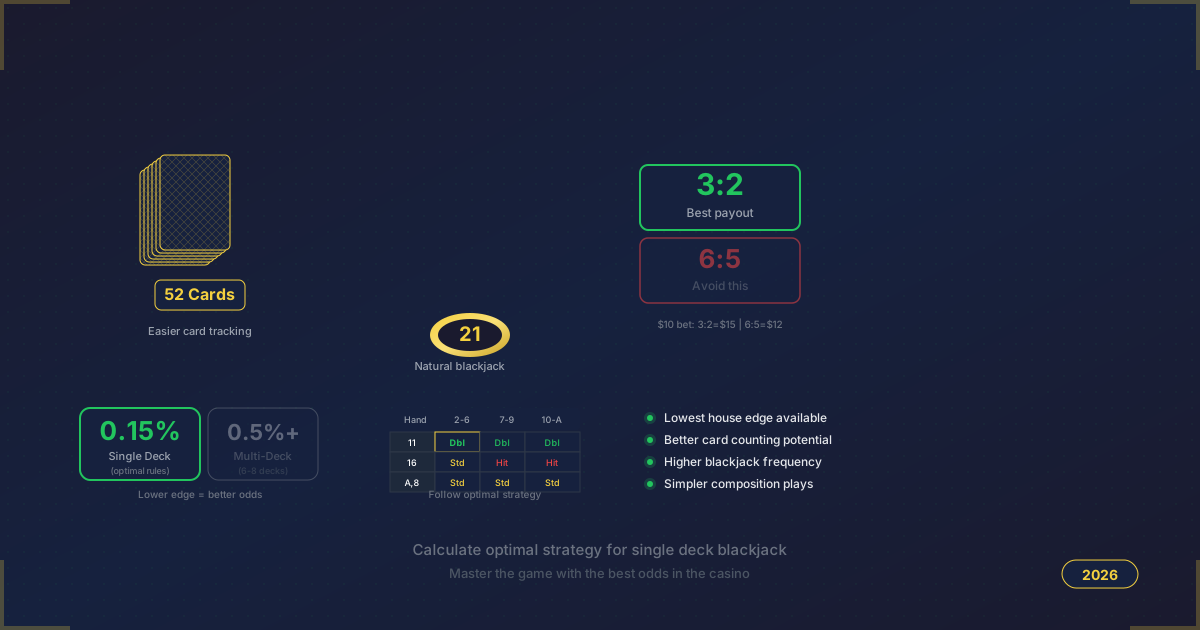
- Using 6:5 blackjack payouts that negate counting advantages
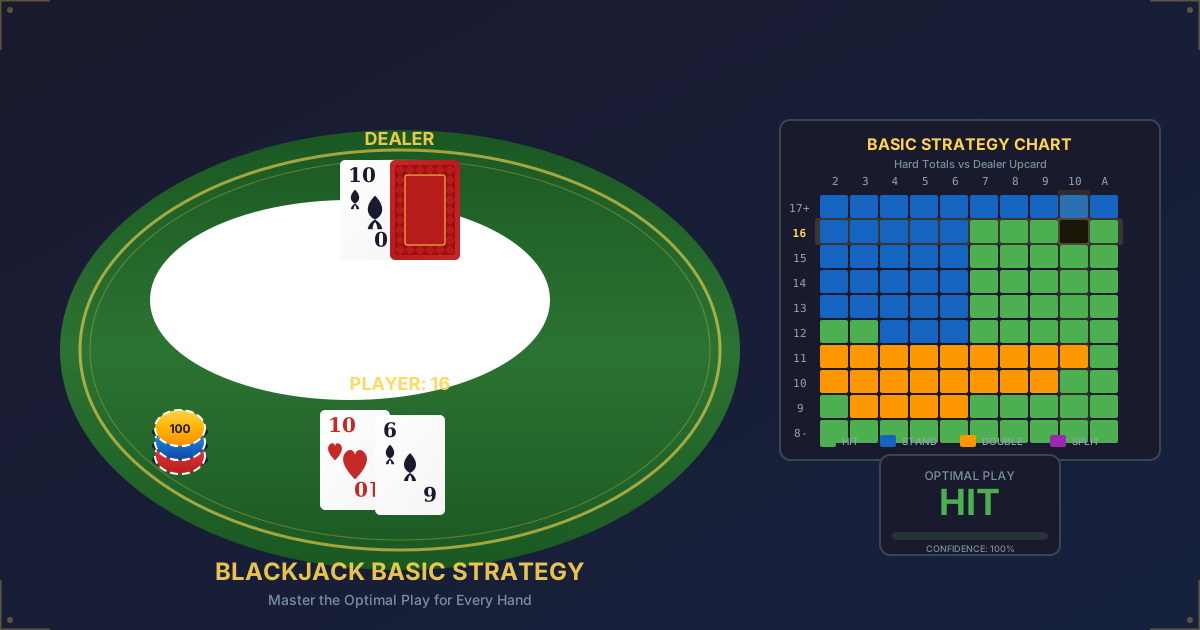
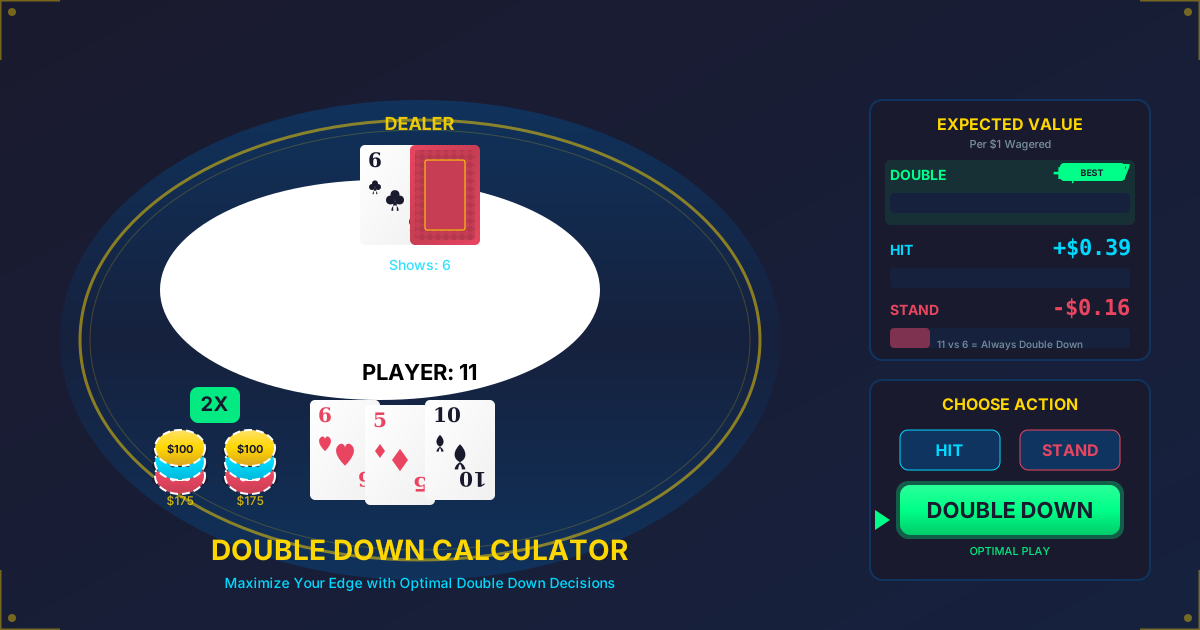
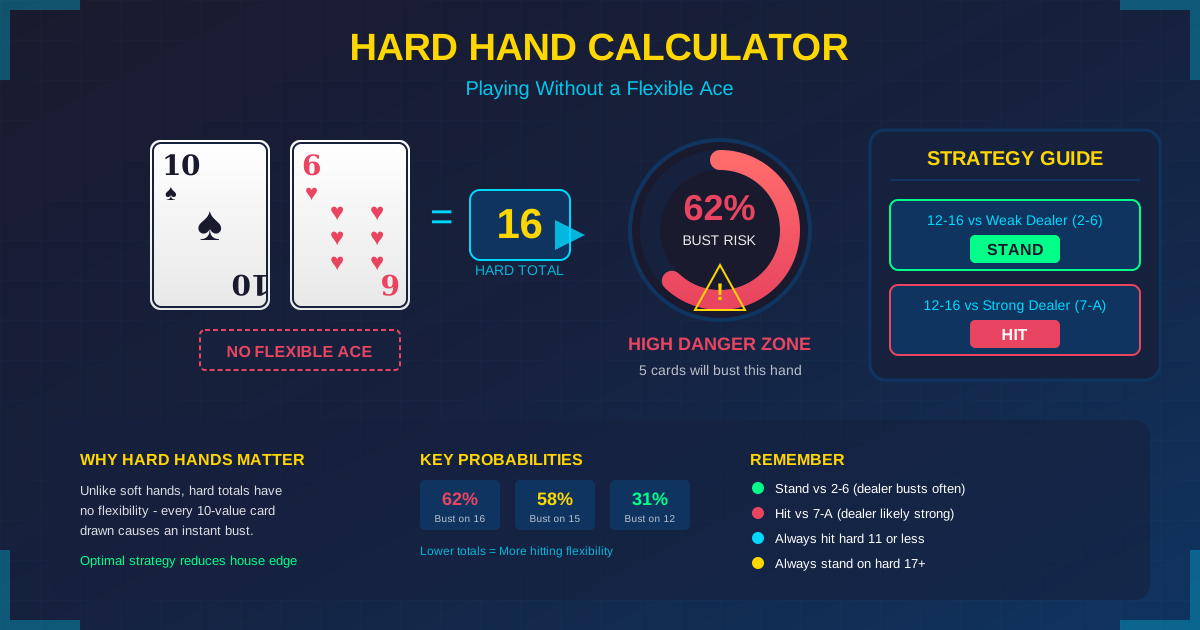
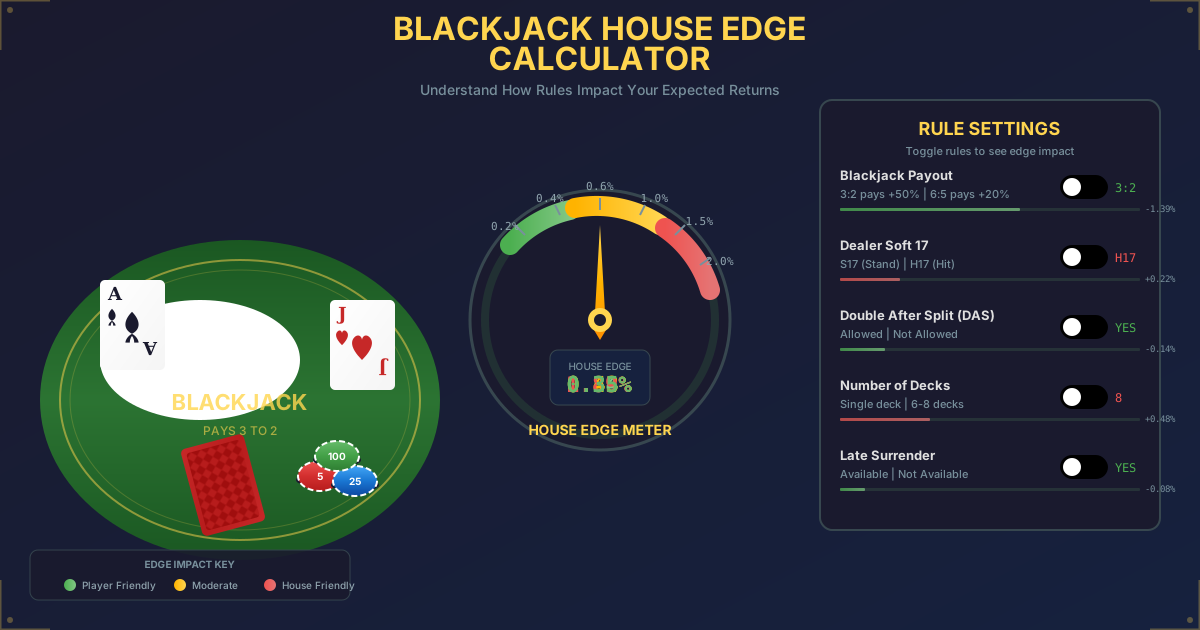
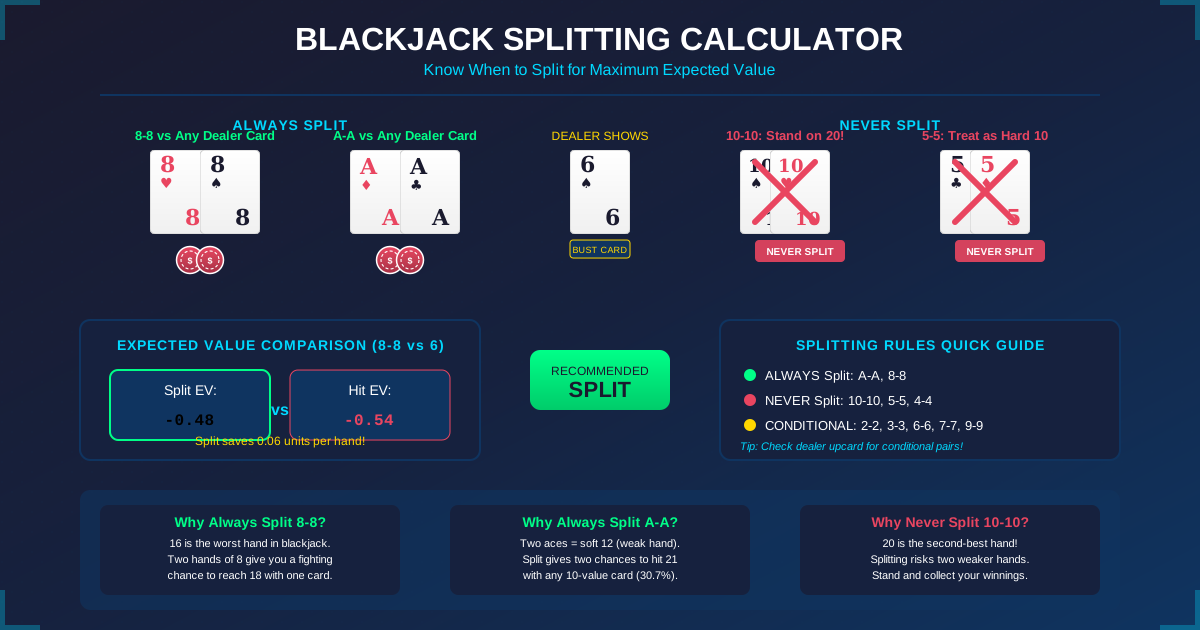
What The Confusion Costs You: The myth that counting is illegal scares players away from learning basic strategy, because they confuse "playing optimally" with "counting cards." Basic strategy is not counting. It's simply making the mathematically correct decision for every hand, and no casino will ever object to it. The blackjack basic strategy tool and blackjack house edge calculator help you learn the legal, optimal way to play.
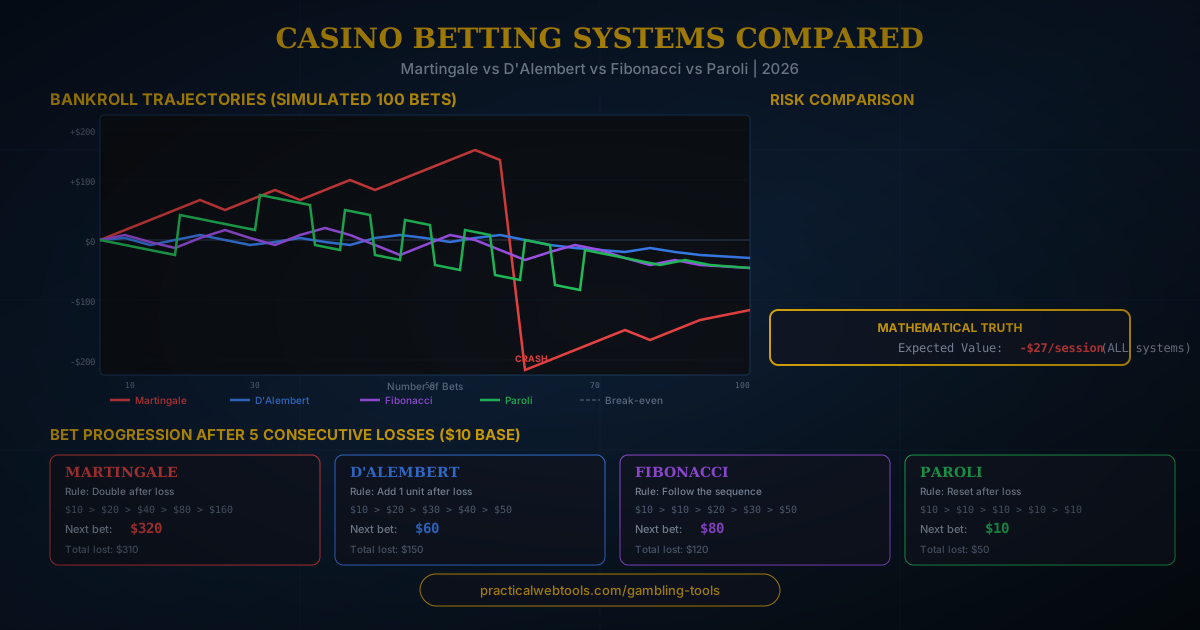
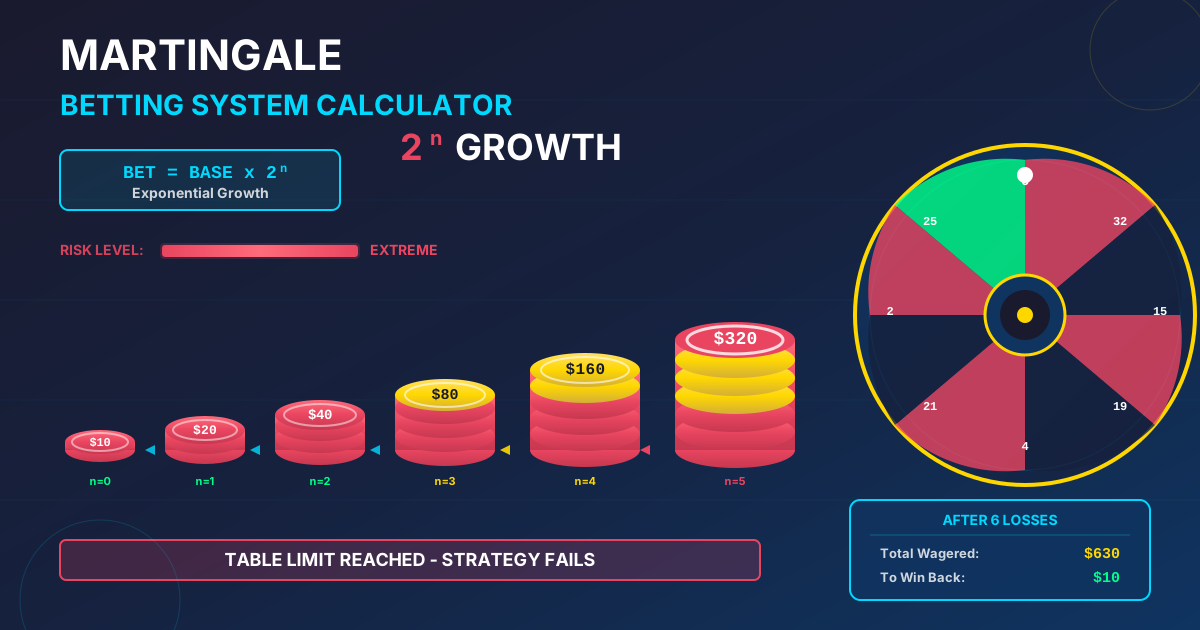
Myth #4: "The Martingale System Beats the House"
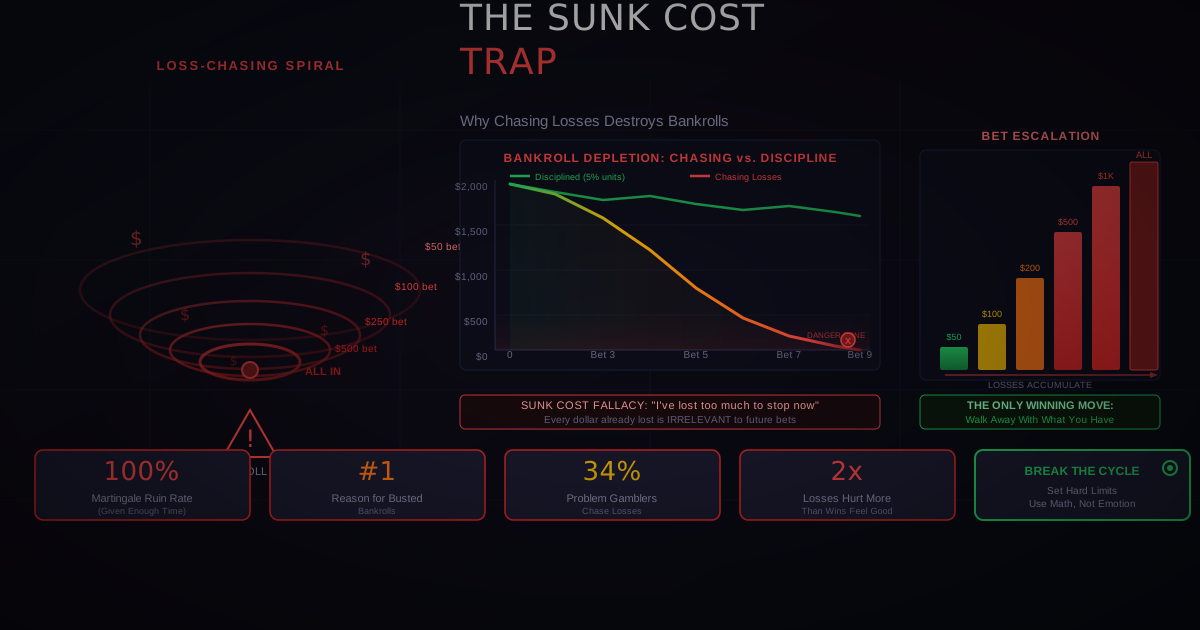
The Myth: If you double your bet after every loss, you'll eventually win and recover all losses plus one unit of profit. It's a guaranteed winning system.
The Math That Destroys It:
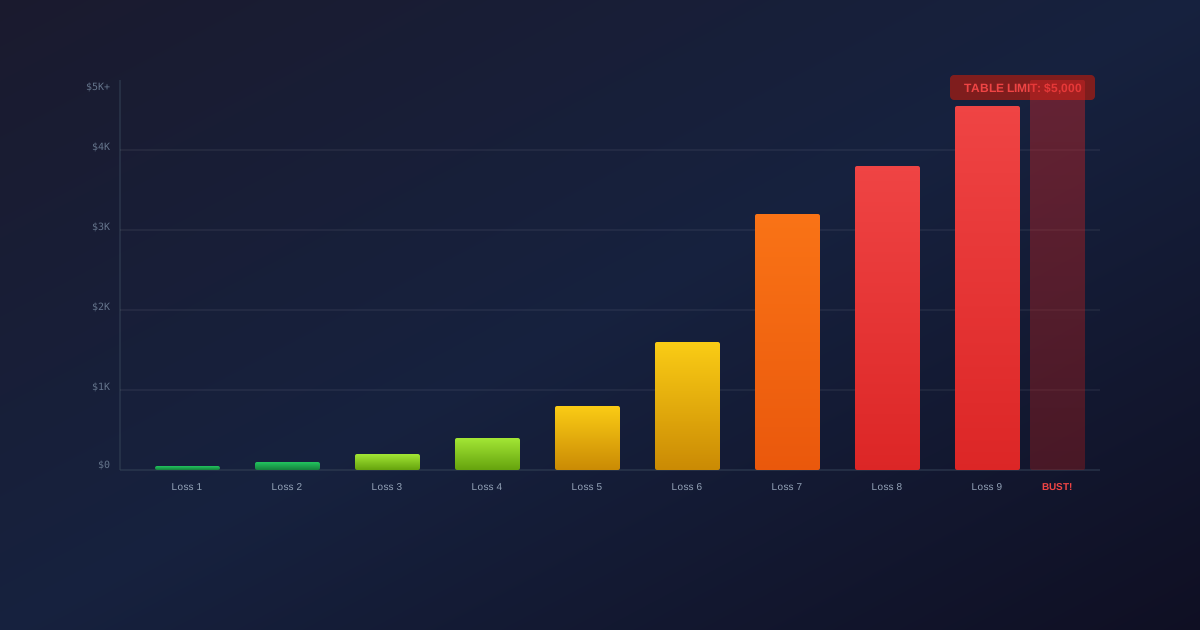
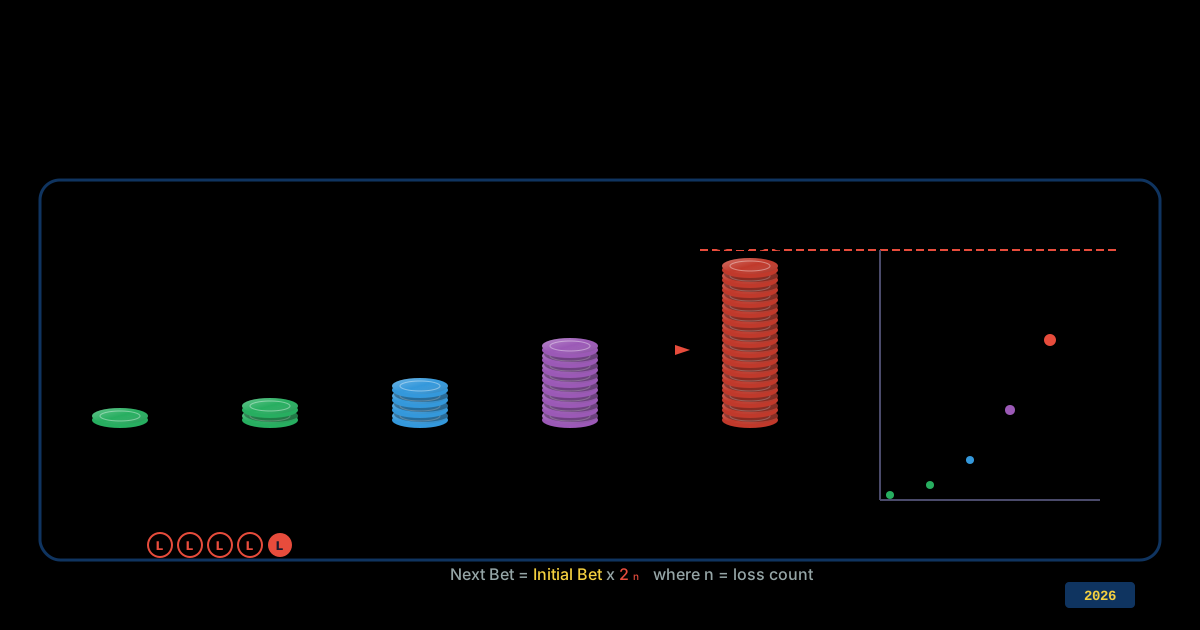
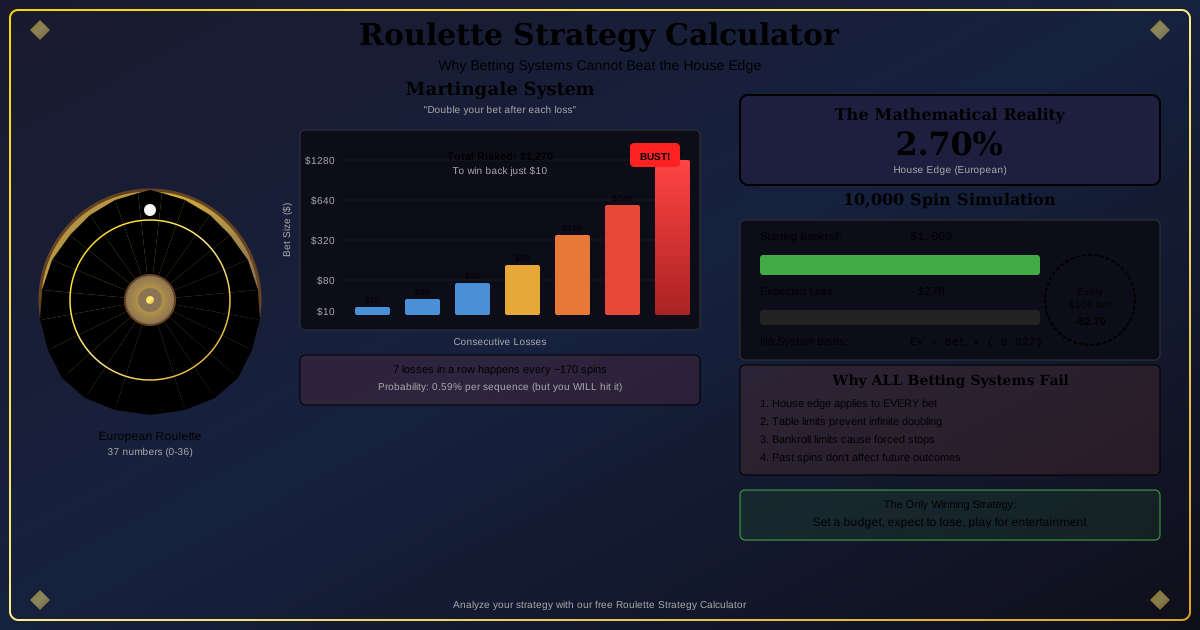
The Martingale works like this on a coin-flip bet (like roulette red/black):
| Loss # | Bet Size | Cumulative Loss | Win Recovery |
|---|---|---|---|
| 1 | $10 | $10 | $10 profit |
| 2 | $20 | $30 | $10 profit |
| 3 | $40 | $70 | $10 profit |
| 4 | $80 | $150 | $10 profit |
| 5 | $160 | $310 | $10 profit |
| 6 | $320 | $630 | $10 profit |
| 7 | $640 | $1,270 | $10 profit |
| 8 | $1,280 | $2,550 | $10 profit |
| 9 | $2,560 | $5,110 | $10 profit |
| 10 | $5,120 | $10,230 | $10 profit |
After 10 losses, you need to bet $5,120 to win back $10. And the probability of 10 consecutive losses on American roulette red/black:
P(10 losses in a row) = (20/38)^10 = 0.162% (about 1 in 617)
Over 617 sequences, you'd win $10 about 616 times (+$6,160) and lose $10,230 once (-$10,230). Net result: -$4,070. The expected value is negative because no betting system can change the expected value of a negative EV game.
The formal proof:
EV per resolved Martingale sequence = (P(win) x $10) - (P(table limit bust) x Total Loss)

On American roulette at a $5,000 table limit:
P(win before bust) = 1 - (20/38)^9 = 99.837%
P(bust) = (20/38)^9 = 0.163%

EV = (0.99837 x $10) - (0.00163 x $5,110)
EV = $9.98 - $8.33
EV = $1.65 per sequence... but wait.

Average bet size per sequence: $31.45
House edge on average bet: 5.26%
Expected loss per sequence: $31.45 x 0.0526 = $1.65

The Martingale produces EXACTLY the same expected loss as flat betting.
The roulette betting simulator lets you simulate thousands of Martingale runs and see the inevitable catastrophic losses. The roulette EV calculator confirms the expected value is always negative.
What It Costs You: Martingale players frequently experience short-term "success" that reinforces the myth. They win small amounts consistently until one devastating loss wipes out all profits and more. The system doesn't change expected value; it simply trades many small wins for rare, massive losses.
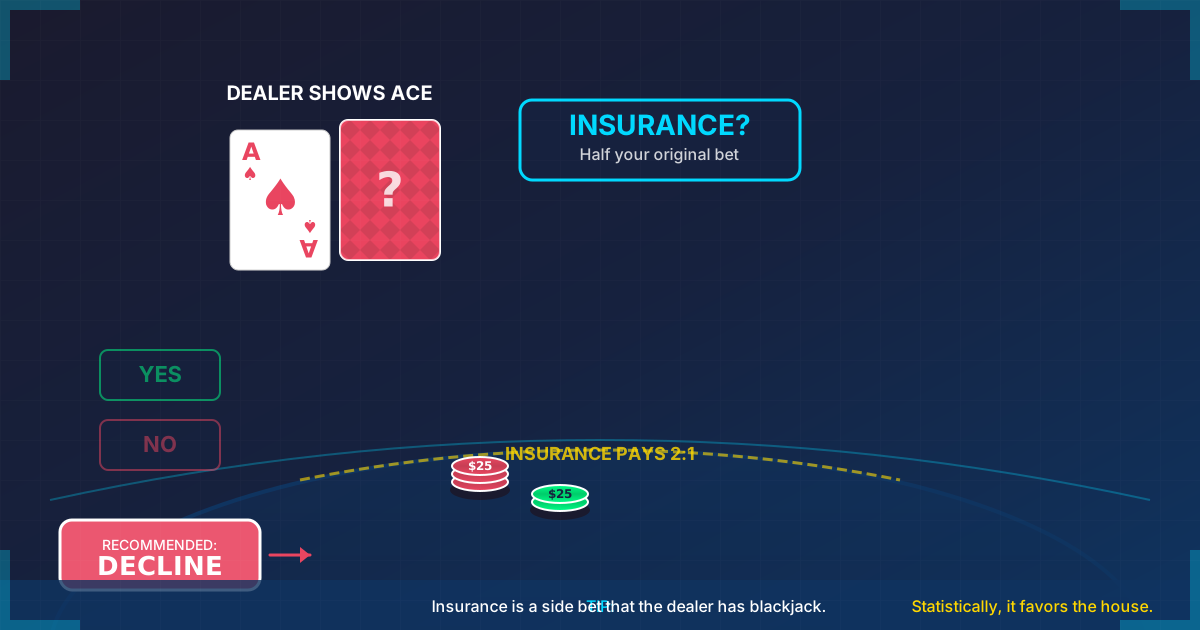
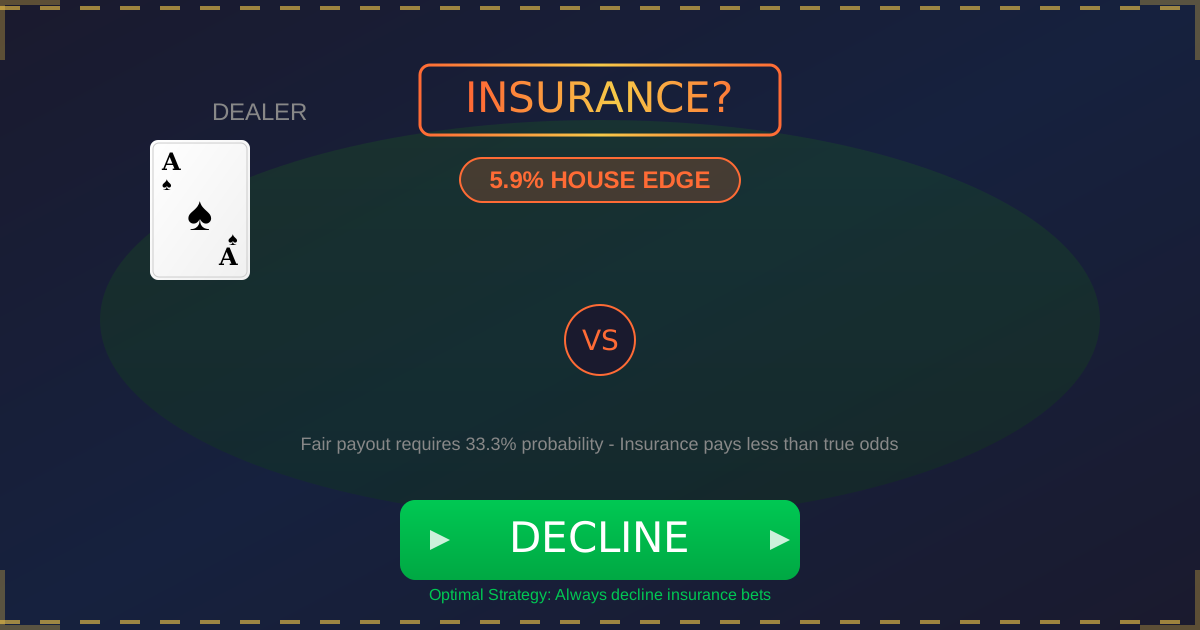
Myth #5: "You Should Always Take Insurance in Blackjack When You Have a Good Hand"
The Myth: When the dealer shows an ace and you have a strong hand (like 20), you should take insurance to "protect" your investment.
The Math That Destroys It:
Insurance is a completely separate bet from your hand. It pays 2:1 if the dealer has blackjack. The probability of the dealer having a 10-value hole card:
In a fresh 6-deck shoe (312 cards):
10-value cards: 96 (16 per deck x 6 decks)
Non-10 cards: 216

After seeing dealer's Ace and your two cards (say, two 10s):
Remaining 10-value cards: 94
Remaining total cards: 309

P(dealer blackjack) = 94/309 = 30.42%
P(no dealer blackjack) = 214/309 = 69.58%

Insurance pays 2:1
EV of insurance = (0.3042 x $2) - (0.6958 x $1)
EV = $0.6084 - $0.6958
EV = -$0.0874 per $1 insured

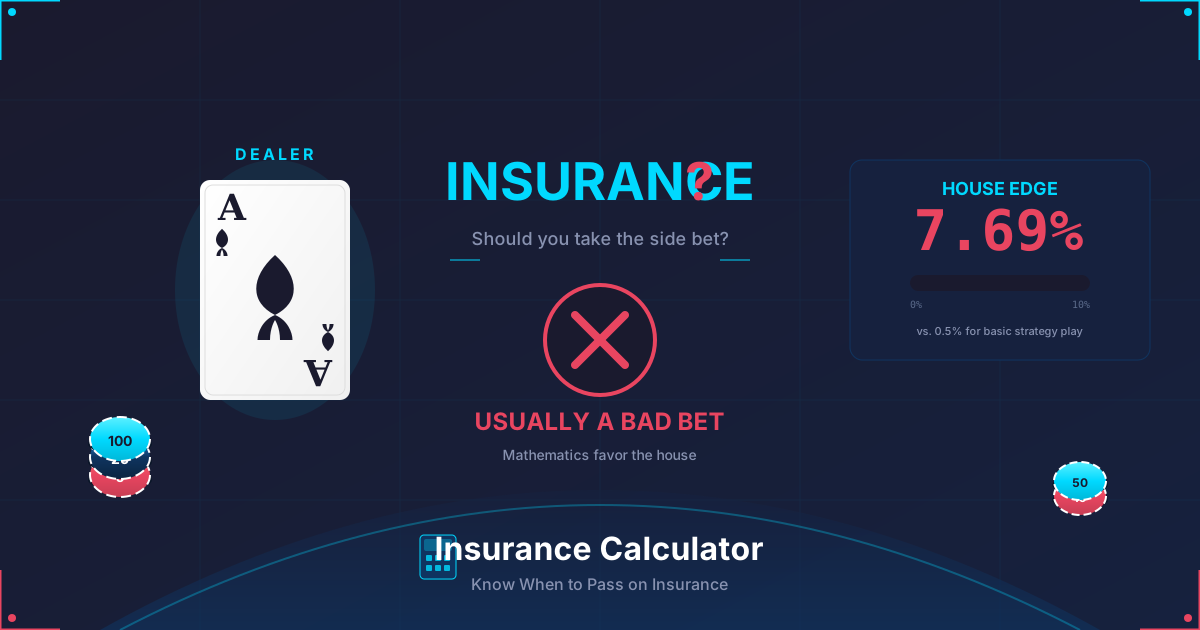
House edge on insurance ≈ 8.74%
Even when you have 20 (meaning two fewer 10s are available for the dealer), the insurance bet is still a losing proposition. Your hand strength is irrelevant to the insurance calculation.
Without adjusting for your cards (simplified):
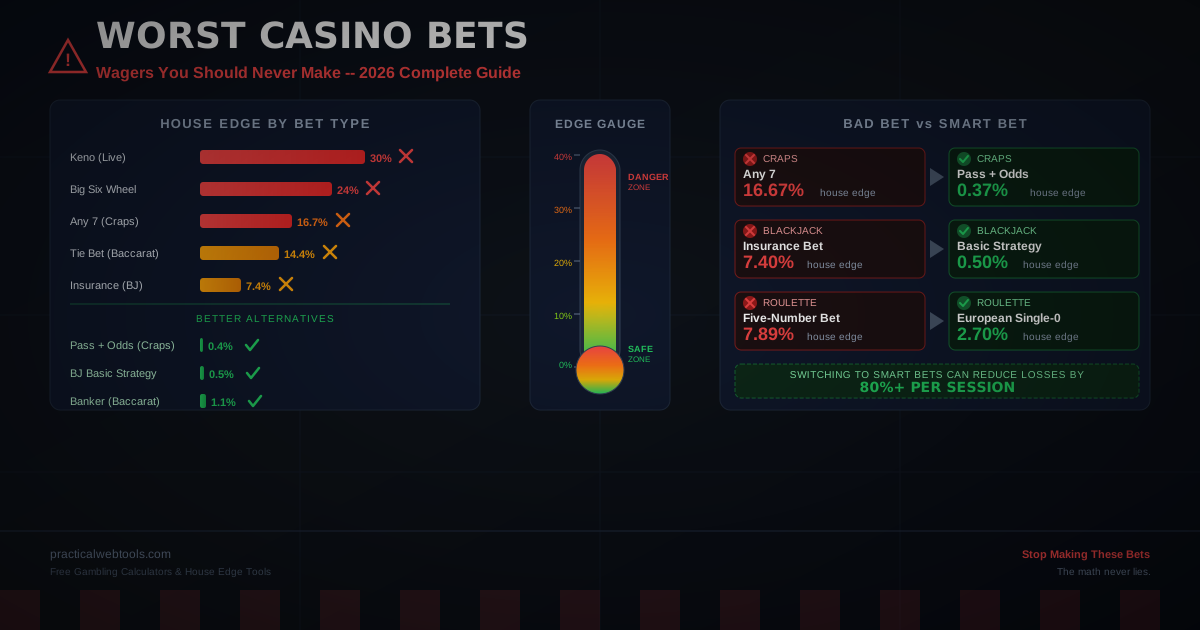
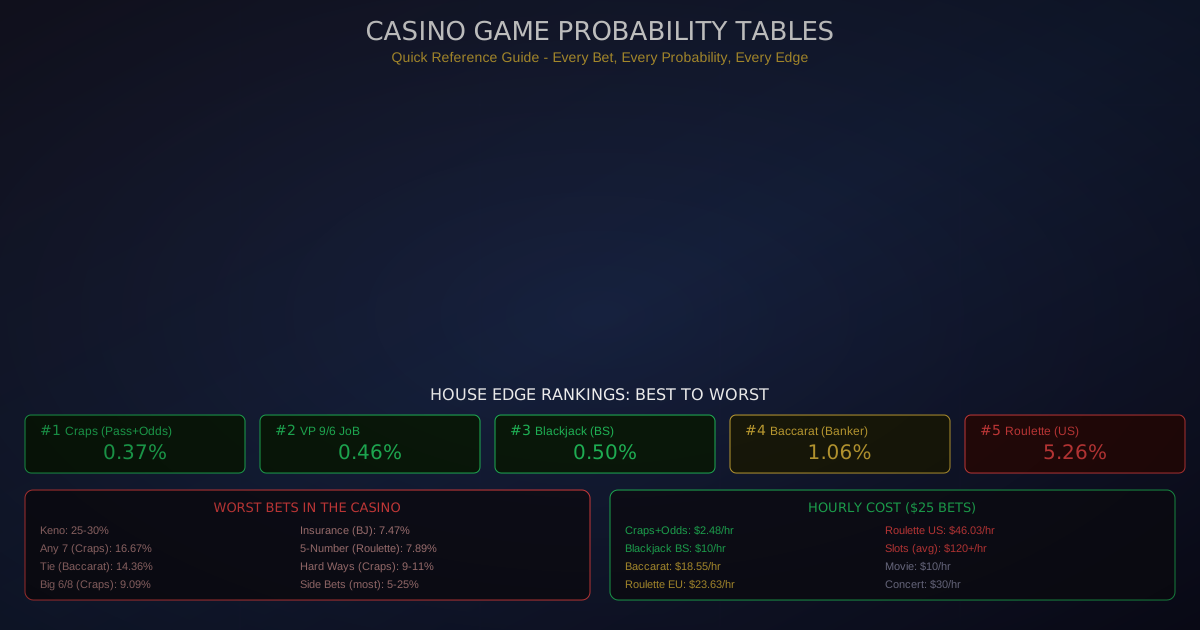
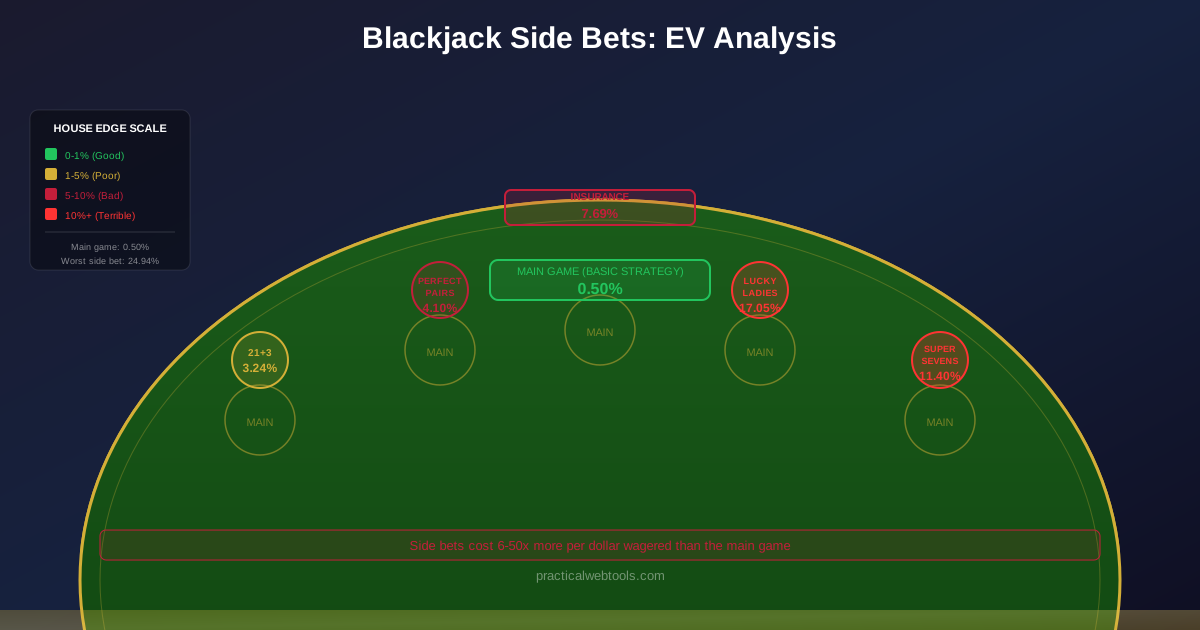
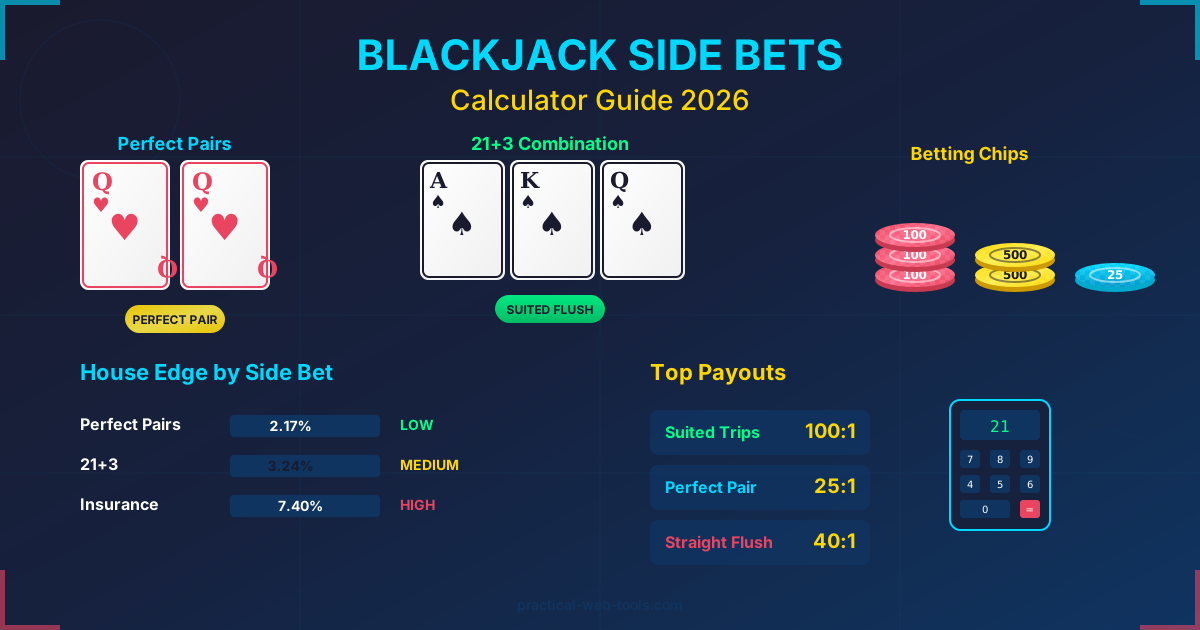
Standard insurance house edge = 7.40%
This makes insurance one of the worst bets at the blackjack table. The blackjack EV calculator and the blackjack house edge calculator both confirm insurance is always negative EV for basic strategy players.
What It Costs You: If you take insurance every time it's offered (about 7.7% of hands when the dealer shows an ace), you're adding approximately 0.57% to the effective house edge. On $25 bets at 70 hands per hour, that costs an additional $10 per hour.
Myth #6: "Bad Players at Third Base Ruin the Table"
The Myth: The player sitting at third base (the last seat before the dealer) controls the flow of cards. If they make a bad decision, it hurts everyone else at the table.
The Math That Destroys It:
This is one of the most persistent myths in blackjack, and it's completely false. A bad player's decision is equally likely to help the table as to hurt it.
Scenario: Third base hits when they "should" stand, taking
the dealer's bust card.

What actually happens:
- Sometimes the "wrong" hit takes a card that would have
  helped the dealer (the table benefits)
- Sometimes it takes a card that would have busted the
  dealer (the table suffers)
- The distribution is RANDOM because the player doesn't
  know the next card

P(bad play helps table) = P(bad play hurts table)

Over thousands of hands: Net effect = 0
Computer simulations of millions of hands have confirmed this. Adding a player who makes random decisions to a table of perfect basic strategy players does not change the other players' expected results. The cards are shuffled randomly. Taking one card instead of another doesn't systematically favor or harm any particular outcome.
What It Costs You: This myth causes table-switching (wasting time), arguments with other players (wasting energy and creating tilt), and emotional decision-making. Players who believe this myth often deviate from basic strategy to "compensate" for bad players, which actually does hurt their own results. The blackjack basic strategy tool shows the correct play regardless of table composition.
Myth #7: "Betting Systems Can Overcome the House Edge"
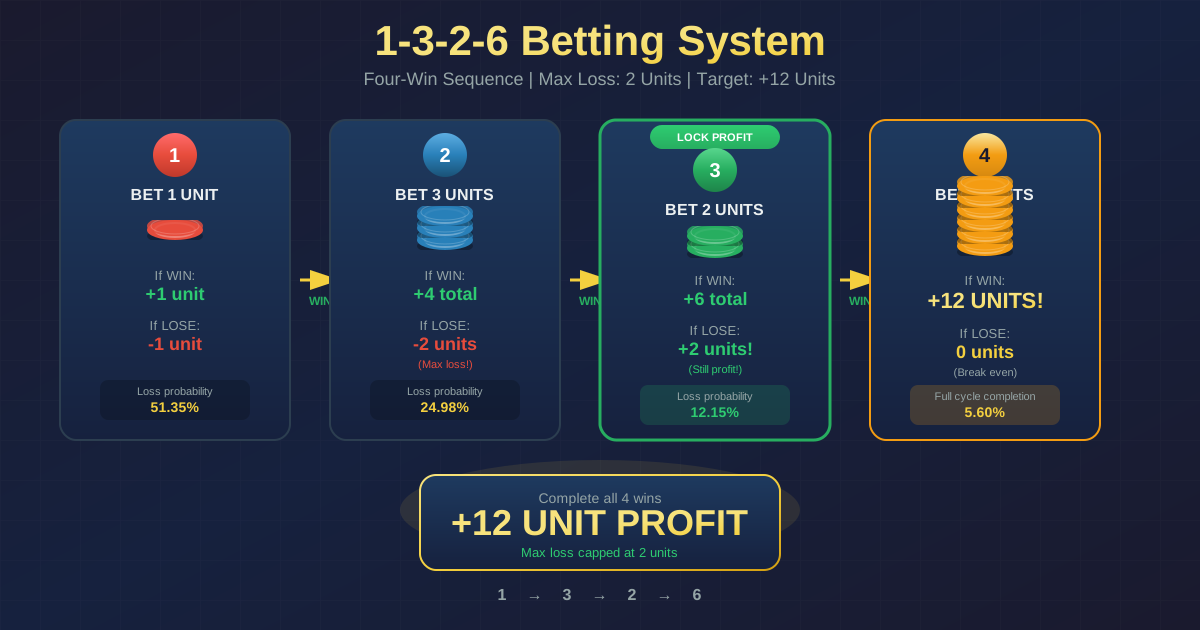
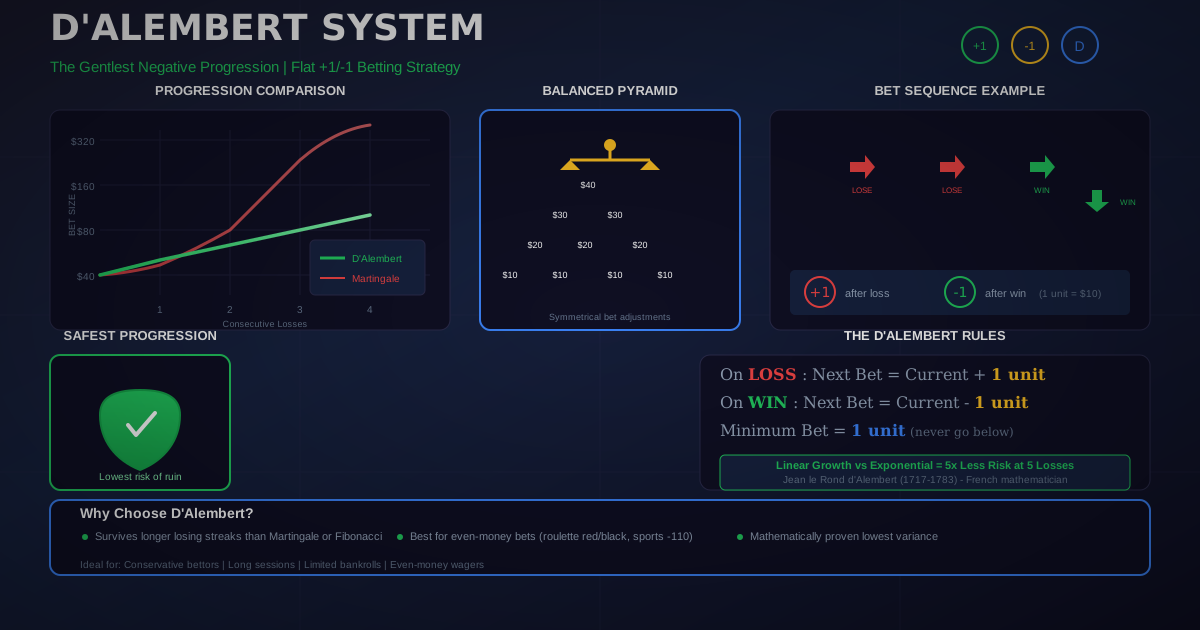
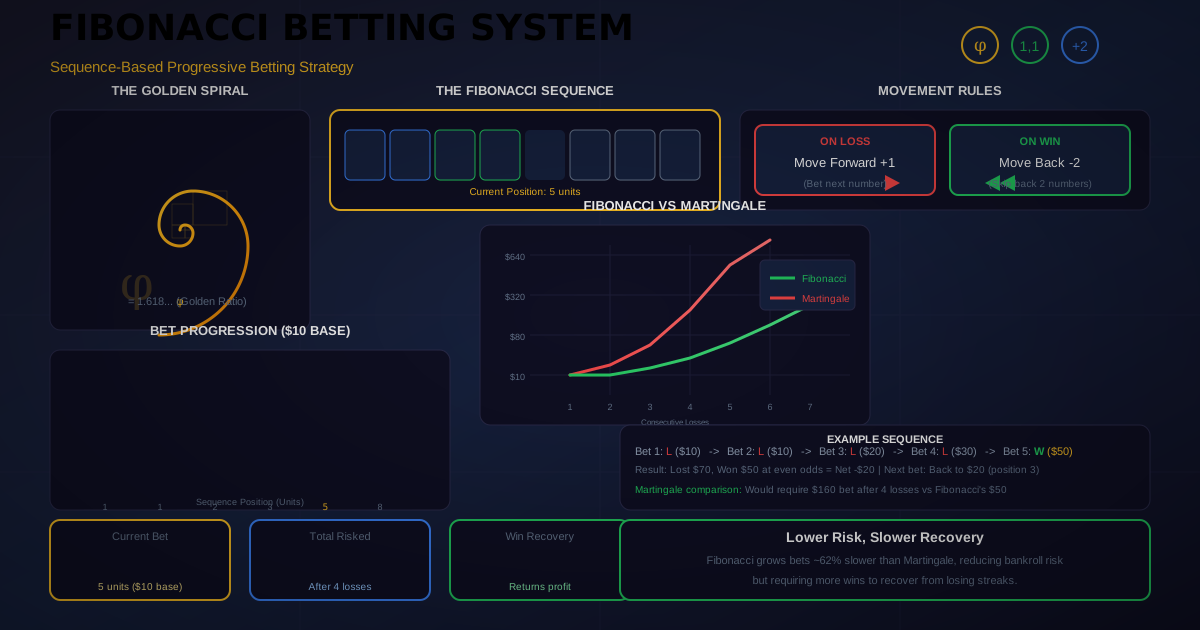
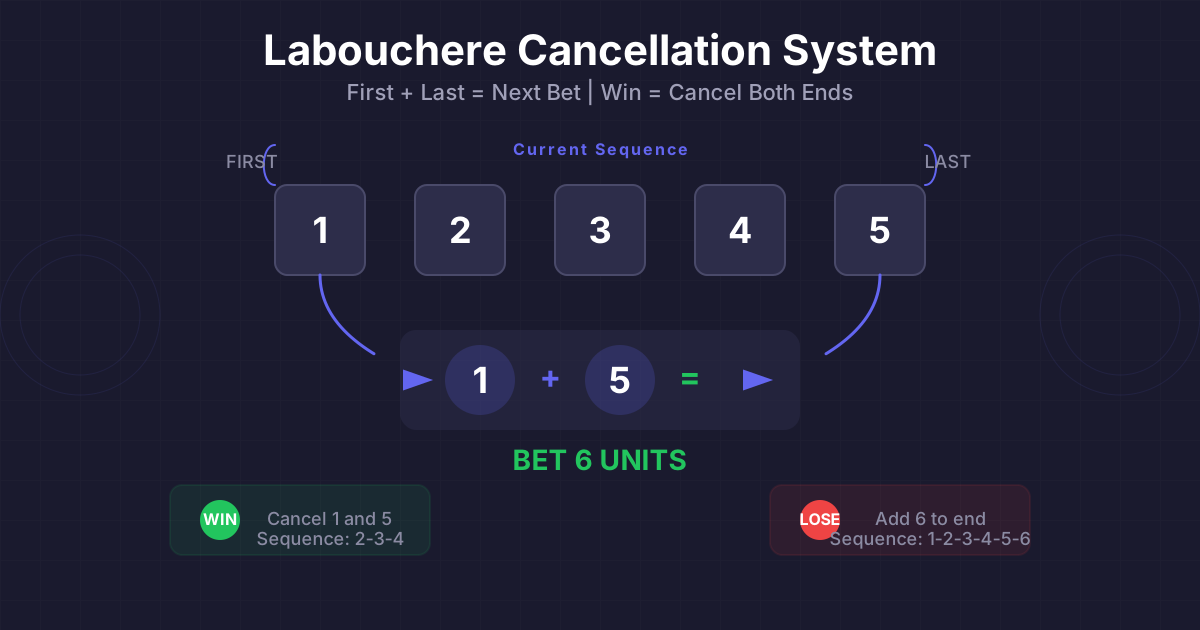
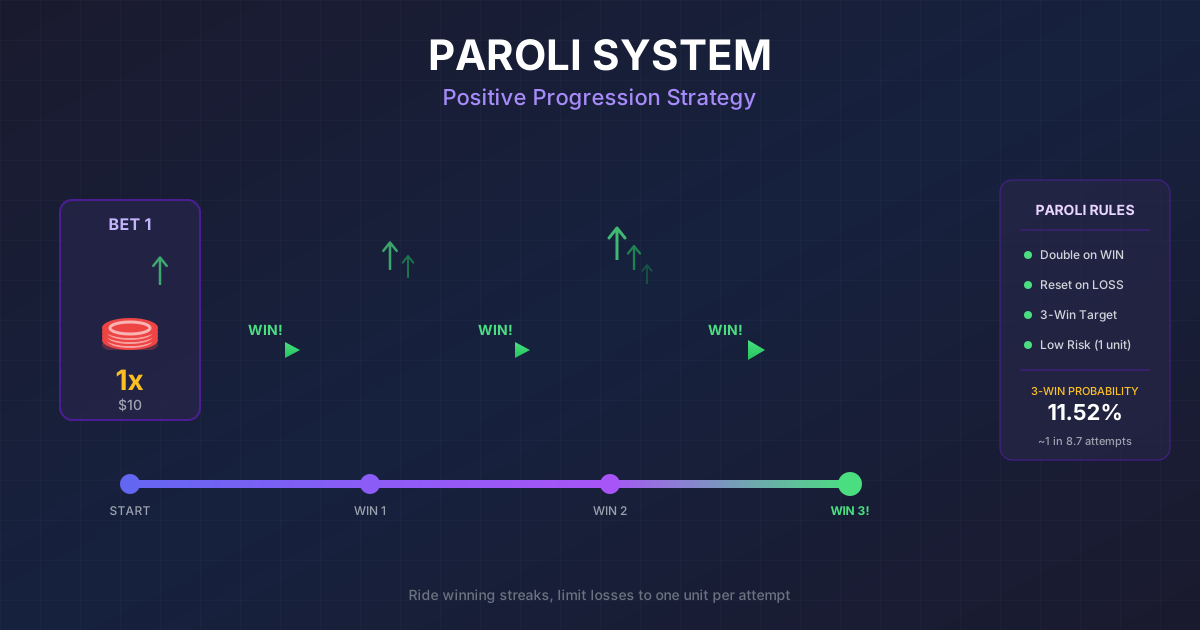
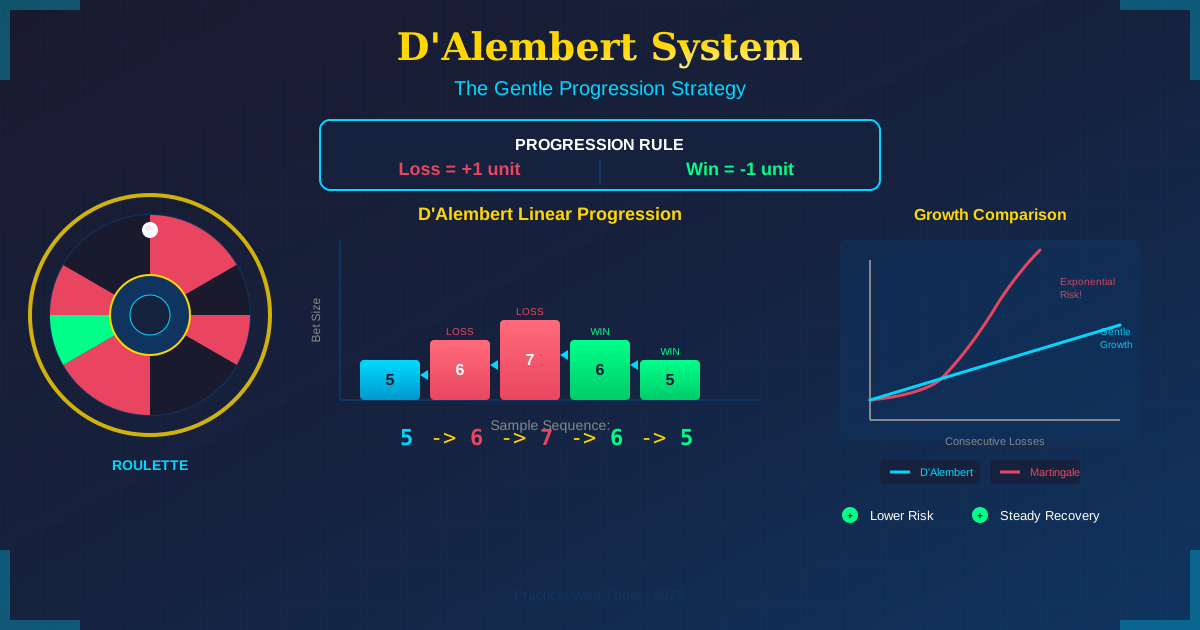
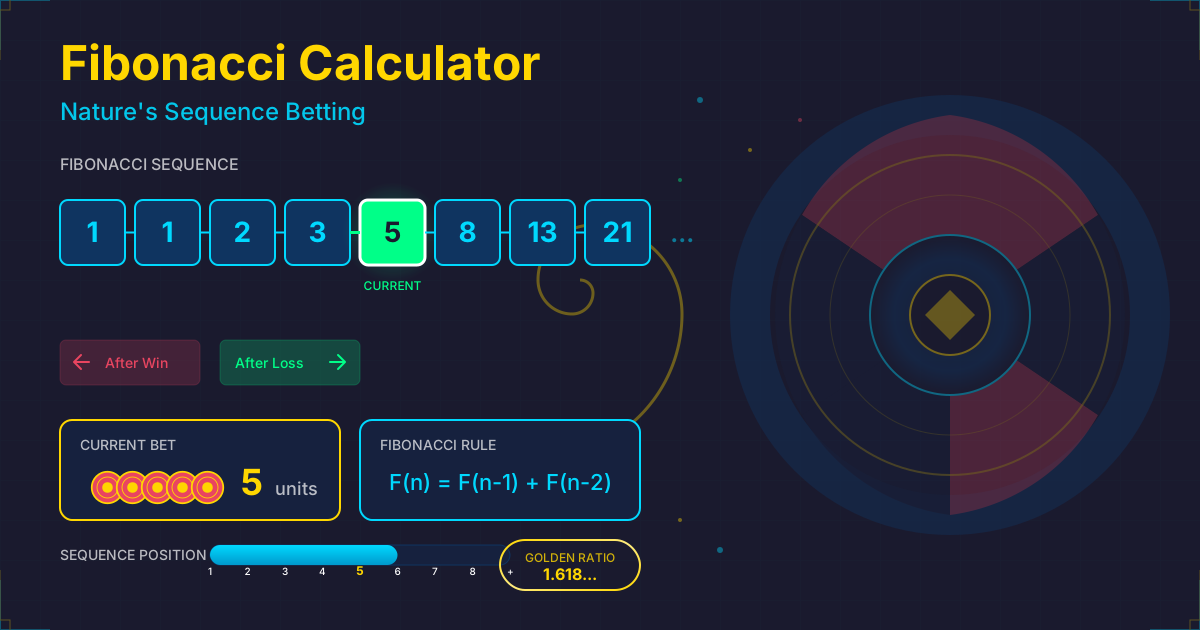
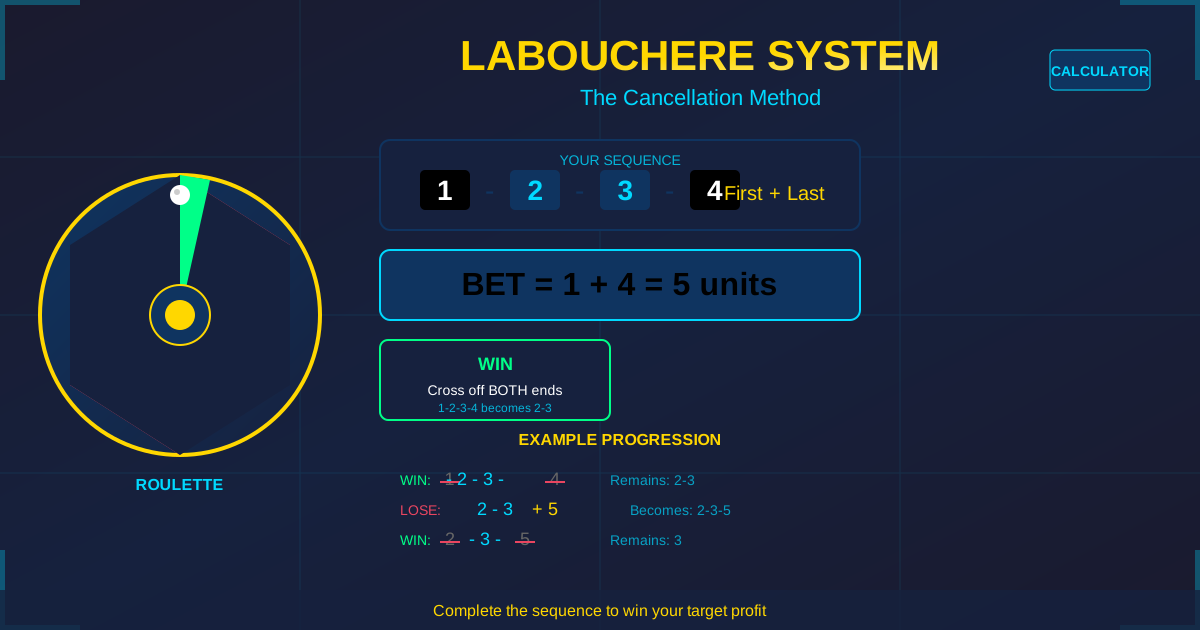
The Myth: Progressive betting systems like Fibonacci, D'Alembert, Labouchere, and 1-3-2-6 can overcome the house edge through clever bet sizing.
The Math That Destroys It:
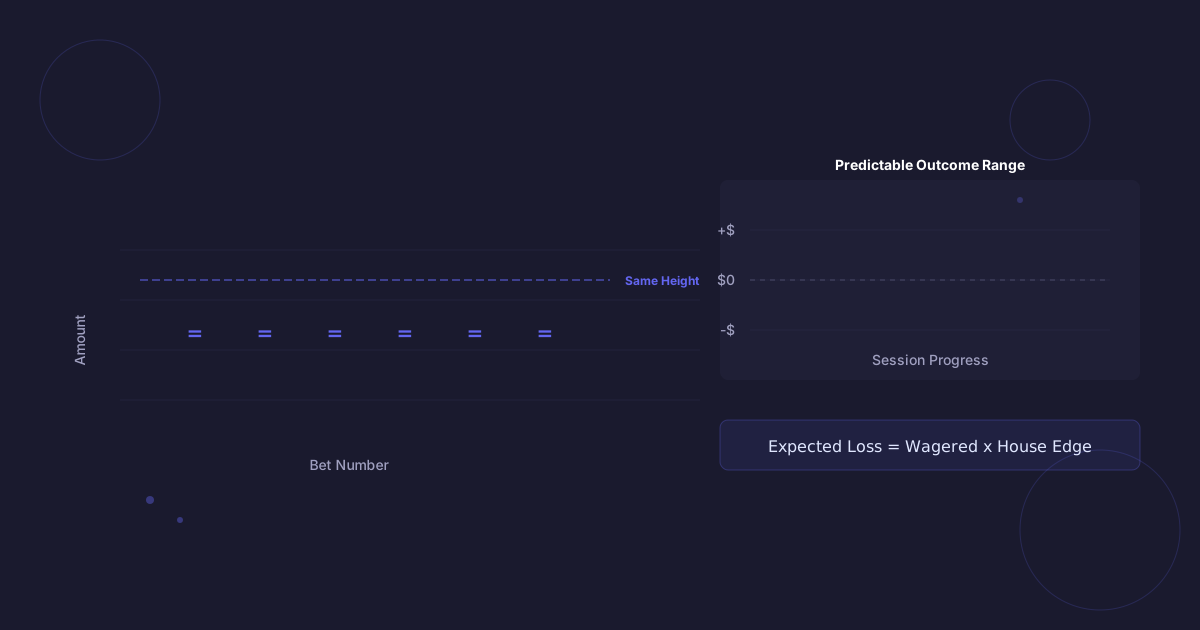
This is a generalization of Myth #4. No matter how you size your bets, the expected value of each individual bet is negative. The total expected loss is:
Total Expected Loss = Sum of (Each Bet x House Edge)

For ANY betting system:
E[Loss] = House Edge x Total Amount Wagered

This is true whether you:
- Flat bet $10 for 100 hands: E[Loss] = 0.0526 x $1,000 = $52.60
- Martingale starting at $10: E[Loss] = 0.0526 x Total Wagered = same ratio
- Fibonacci progression: E[Loss] = 0.0526 x Total Wagered = same ratio
- Any other system: E[Loss] = 0.0526 x Total Wagered = same ratio
The mathematical proof is straightforward. Expected value is additive across independent bets:
E[total] = E[bet1] + E[bet2] + ... + E[betN]

If each E[betK] < 0 (negative EV game),
then E[total] < 0 regardless of bet sizing pattern.

No arrangement of negative numbers sums to a positive number.
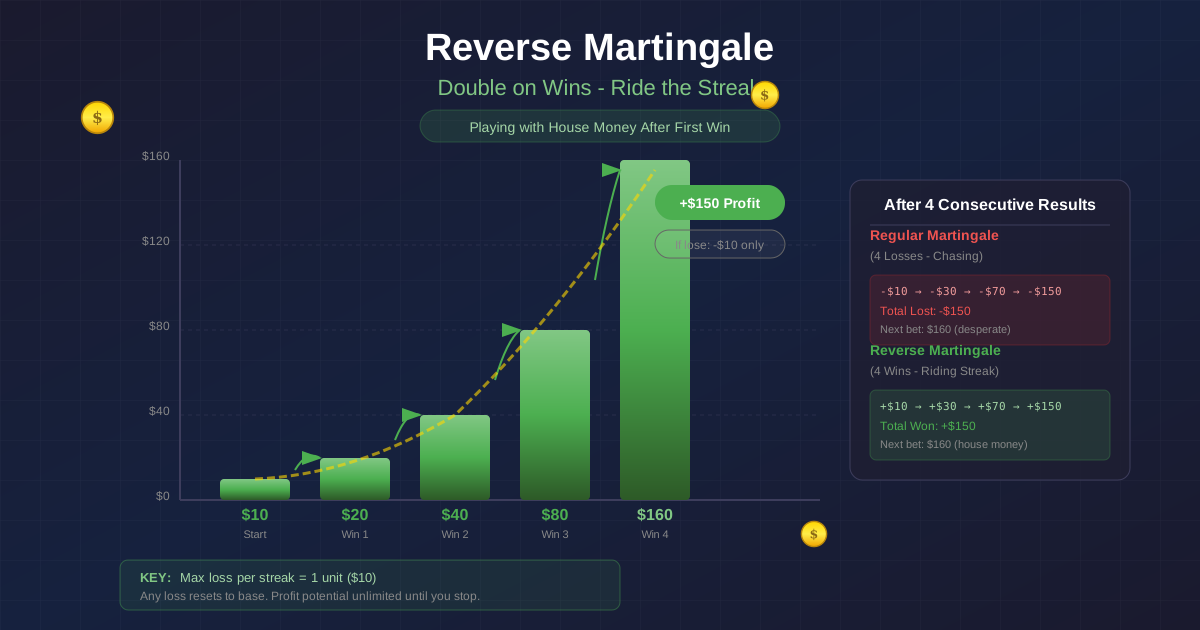
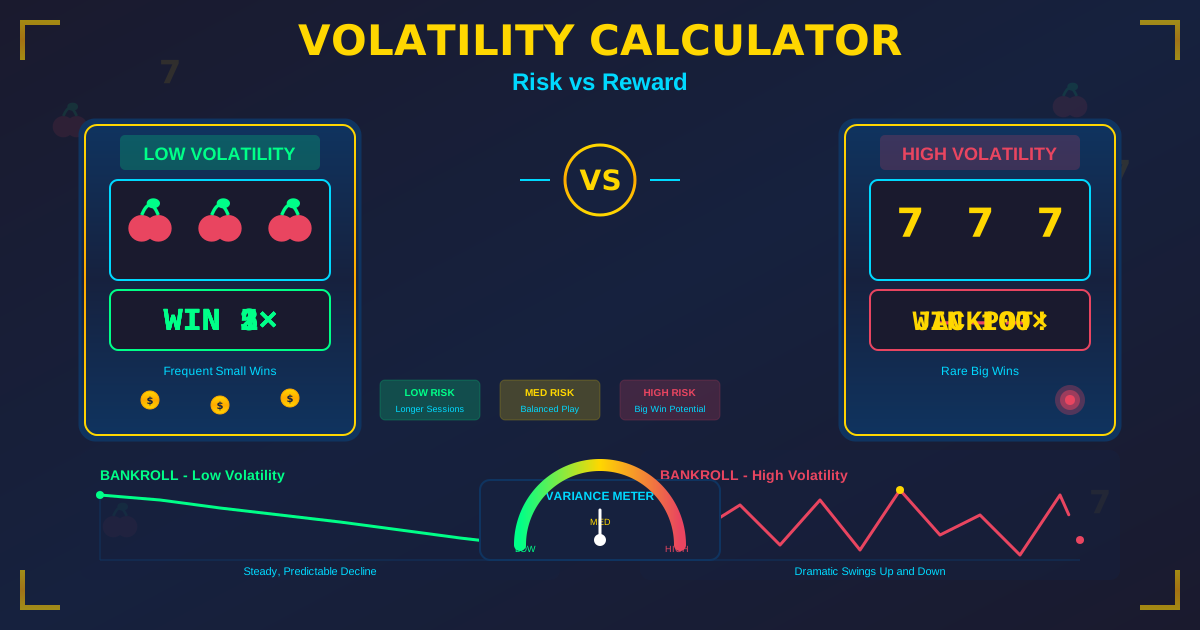
Different systems change the variance (the distribution of outcomes) but not the expected value. Martingale creates low-variance positive sessions punctuated by catastrophic losses. Anti-Martingale creates many small losses with occasional big wins. Both lose the same amount in expectation.
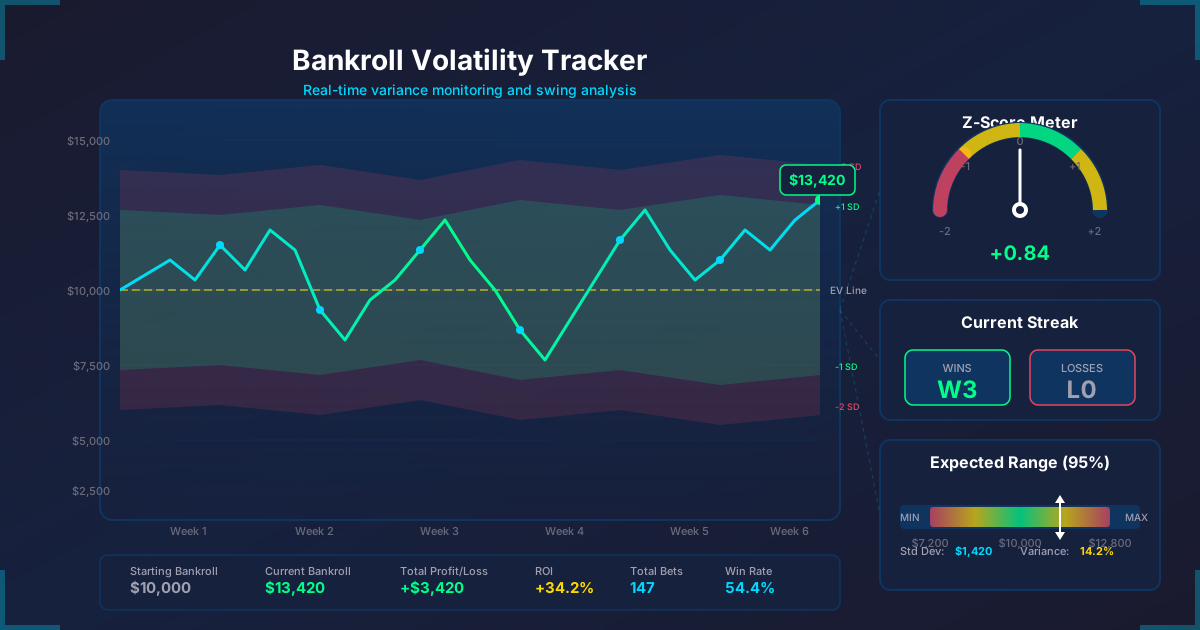
What It Costs You: System bettors often wager more total money than flat bettors because progressive systems increase bet sizes. Since expected loss equals total wagered times house edge, higher total wagering means higher expected losses. The roulette betting simulator and bankroll volatility tracker demonstrate this clearly across thousands of simulated sessions.
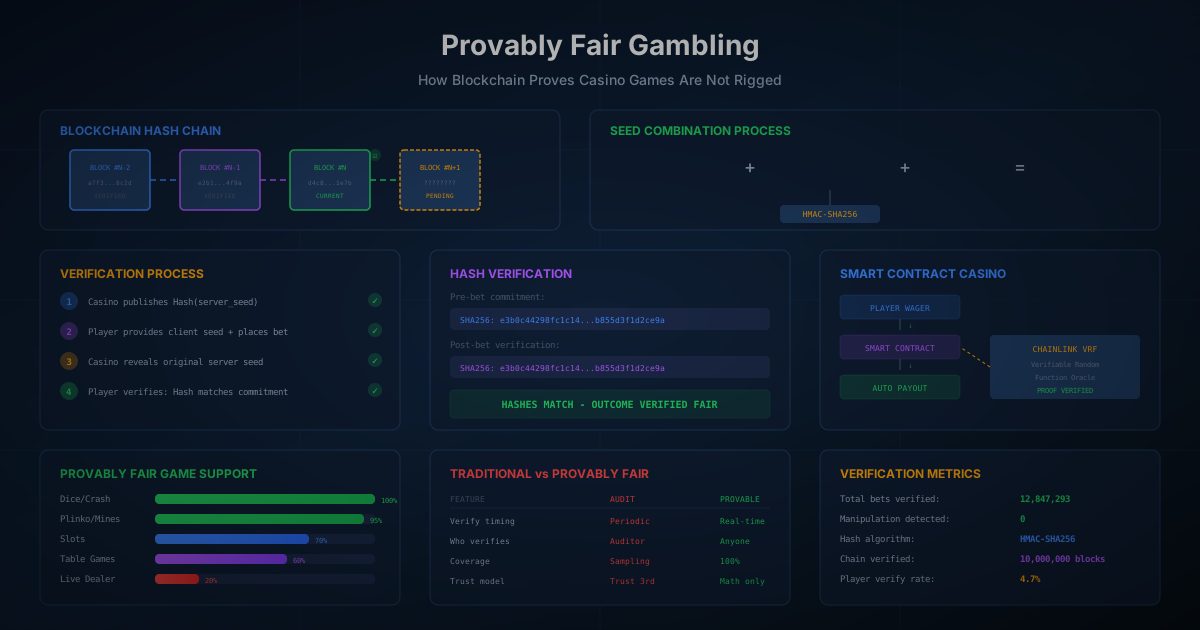
Myth #8: "Casino Games Are Rigged"
The Myth: Casinos manipulate games to ensure players lose. The cards are stacked, the roulette wheels are biased, the slots are programmed to stop paying when you're ahead.
The Math That Destroys It:
Casinos don't need to cheat. The house edge, built into the rules of every game, guarantees long-term profit mathematically:
Casino annual revenue from house edge alone:

Blackjack table: $25 avg bet x 70 hands/hr x 16 hrs/day x 365 days
= $10,220,000 total action per table per year
At 2% effective house edge (avg player): $204,400 profit per table

Roulette: $10 avg bet x 35 spins/hr x 16 hrs/day x 365 days
= $2,044,000 total action per table per year
At 5.26% house edge: $107,515 profit per table

One slot machine: $1 x 600 spins/hr x 20 hrs/day x 365 days
= $4,380,000 total action per machine per year
At 8% house edge: $350,400 profit per machine
Cheating would risk:
- Criminal prosecution
- Loss of gaming license (worth hundreds of millions)
- Regulatory fines
- Reputation destruction
The house edge already makes casinos enormously profitable. Cheating would be high risk with almost no additional reward. Gaming commissions regularly test equipment, audit operations, and investigate complaints.
What It Costs You: Players who believe games are rigged often make worse decisions. They don't learn strategy because "it doesn't matter if the game is rigged." They attribute normal variance (losing streaks) to rigging rather than understanding probability. The roulette house edge calculator and craps house edge calculator show that the built-in mathematical advantage is more than sufficient for casino profitability.
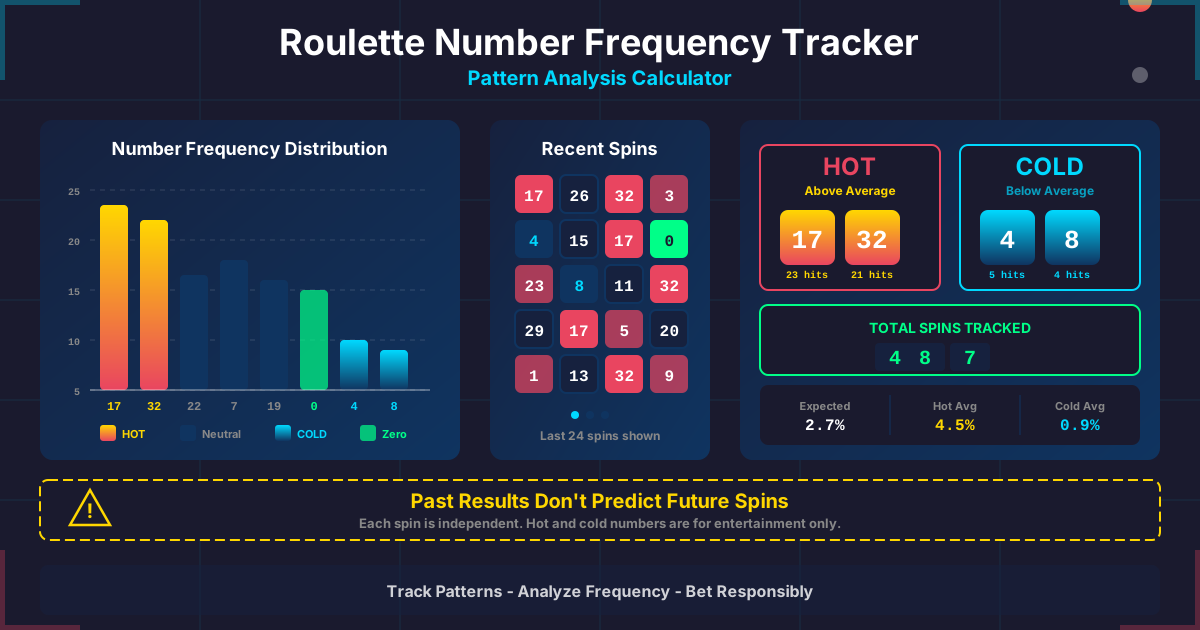
Myth #9: "You Can Predict Roulette Outcomes by Tracking Previous Numbers"
The Myth: By tracking which numbers have come up, you can identify patterns and predict future outcomes. Casinos display previous numbers on electronic boards for a reason.
The Math That Destroys It:
Casinos display previous numbers precisely because they know it encourages this myth. It causes players to bet more and bet poorly.
Each roulette spin is independent. The probability of any number on any spin:
American Roulette: P(any specific number) = 1/38 = 2.632%
European Roulette: P(any specific number) = 1/37 = 2.703%

After number 17 hits: P(17 next spin) = 1/38 = 2.632%
After number 17 misses 100 times: P(17 next spin) = 1/38 = 2.632%
After analyzing 10,000 previous spins: P(17 next spin) = 1/38 = 2.632%
The only scenario where tracking matters is if the wheel is physically biased -- mechanically imperfect in a way that favors certain numbers. Modern casino wheels are precision-engineered and regularly inspected. Any bias is far too small to overcome the house edge, and casinos rotate and maintain wheels specifically to prevent exploitation.
Statistical test for bias: To detect a 1% bias with 95% confidence, you'd need approximately 10,000 spins of data -- about 300 hours of observation. Even then, the detected bias would likely be smaller than the house edge.
The roulette probability calculator and roulette odds calculator let you verify that the math remains constant regardless of historical outcomes.
What It Costs You: Number trackers spend extra time at the table (more bets placed = more money lost), bet with false confidence (often increasing bet sizes), and make decisions based on meaningless patterns rather than mathematical reality.
Myth #10: "You Should Quit While You're Ahead"
The Myth: If you're winning, you should stop playing to "lock in" your profits. The casino will "take it back" if you keep playing.
The Nuanced Math:
This one is partially true but for the wrong reasons. Let's break it down:
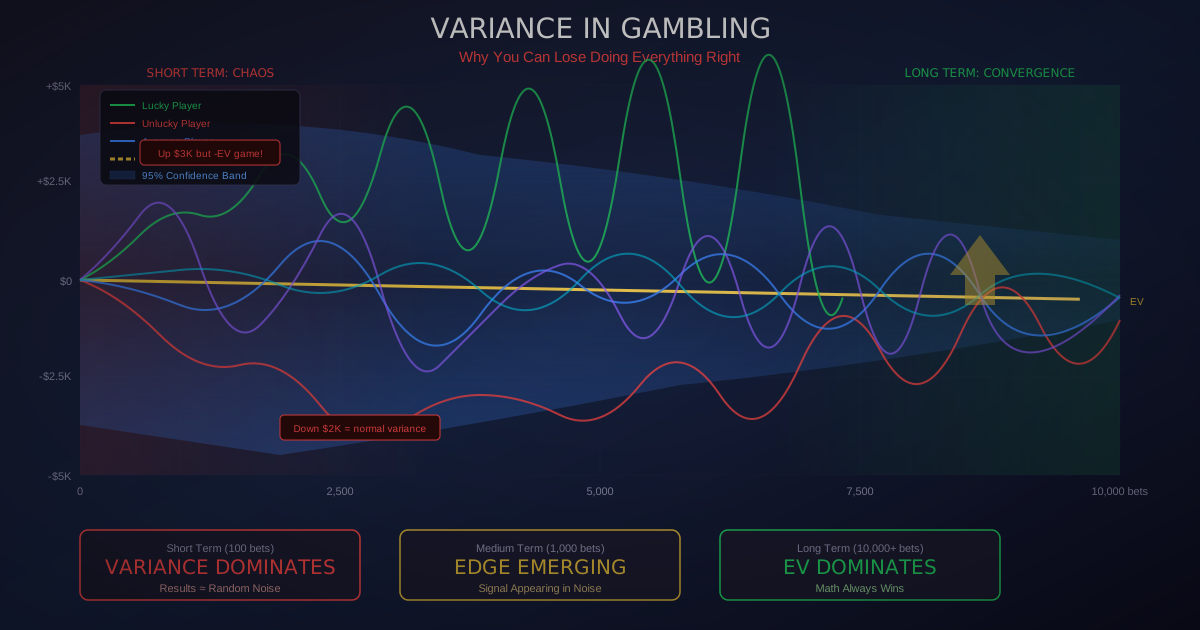
Why it feels true: The longer you play, the more likely your results converge to the expected (negative) value. This is the Law of Large Numbers:
Short session (100 bets): High variance, could be up or down significantly
Medium session (1,000 bets): Results approaching expected value
Long session (10,000+ bets): Results very close to expected value

P(ahead after 100 roulette bets at $10): ~47%
P(ahead after 1,000 roulette bets at $10): ~32%
P(ahead after 10,000 roulette bets at $10): ~4%
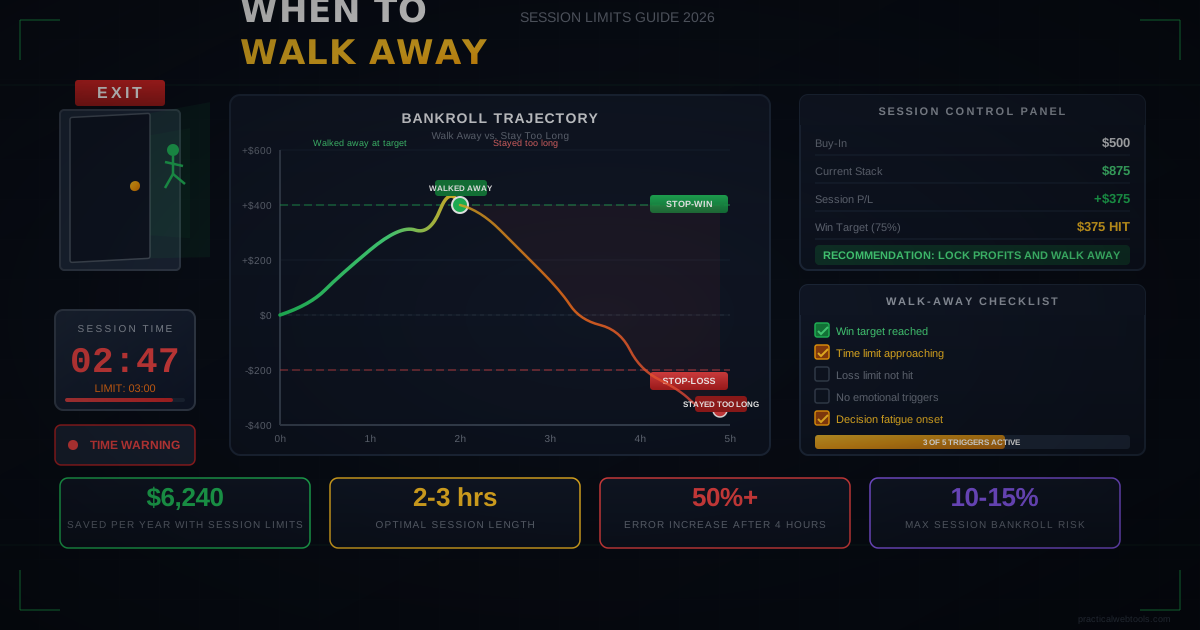
Why the reasoning is wrong: The casino isn't "taking it back." Each additional bet has the same negative expected value as the first bet. Your current bankroll doesn't affect future probabilities. Whether you're up $500 or down $500, the next bet has the same -5.26% expected value on American roulette.
What's actually true: Setting a stop-win point is a valid bankroll management strategy -- not because the math changes, but because:
- It prevents emotional escalation (increasing bets while ahead)
- It ensures you experience some winning sessions
- It provides psychological satisfaction
But mathematically, the expected value of your gambling is:
EV = Total Amount Wagered x House Edge

Whether in one session or ten, same total wagering = same expected loss.
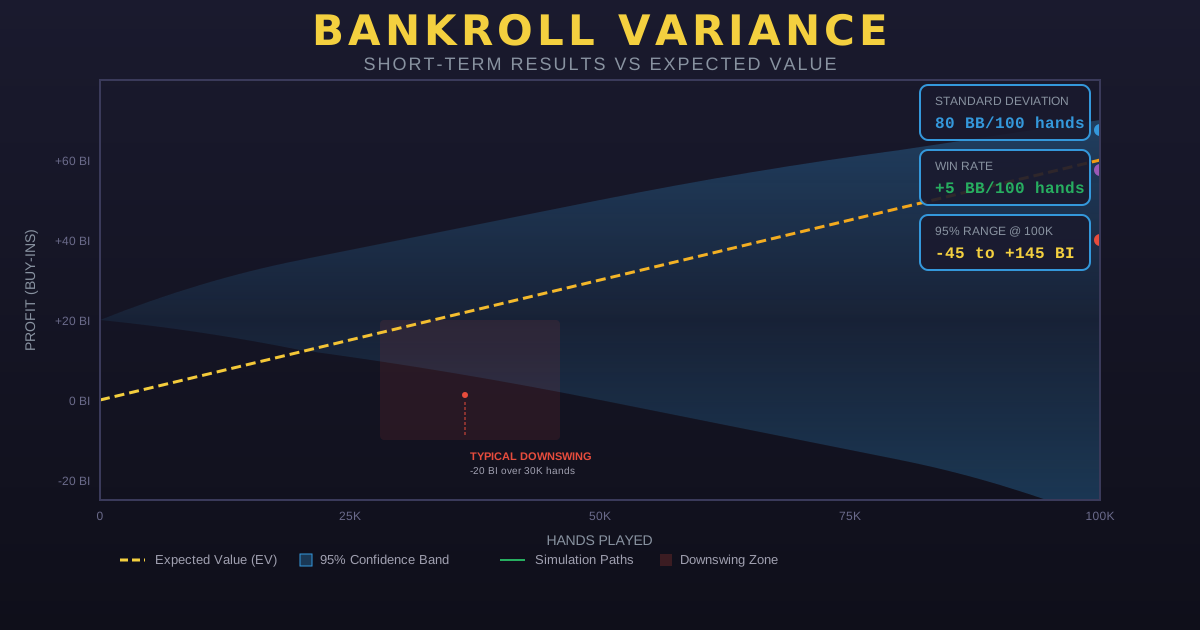
The bankroll volatility tracker models how stop-win and stop-loss points affect the distribution of outcomes without changing the expected value. The expected value calculator confirms that EV depends only on total action, not session structure.
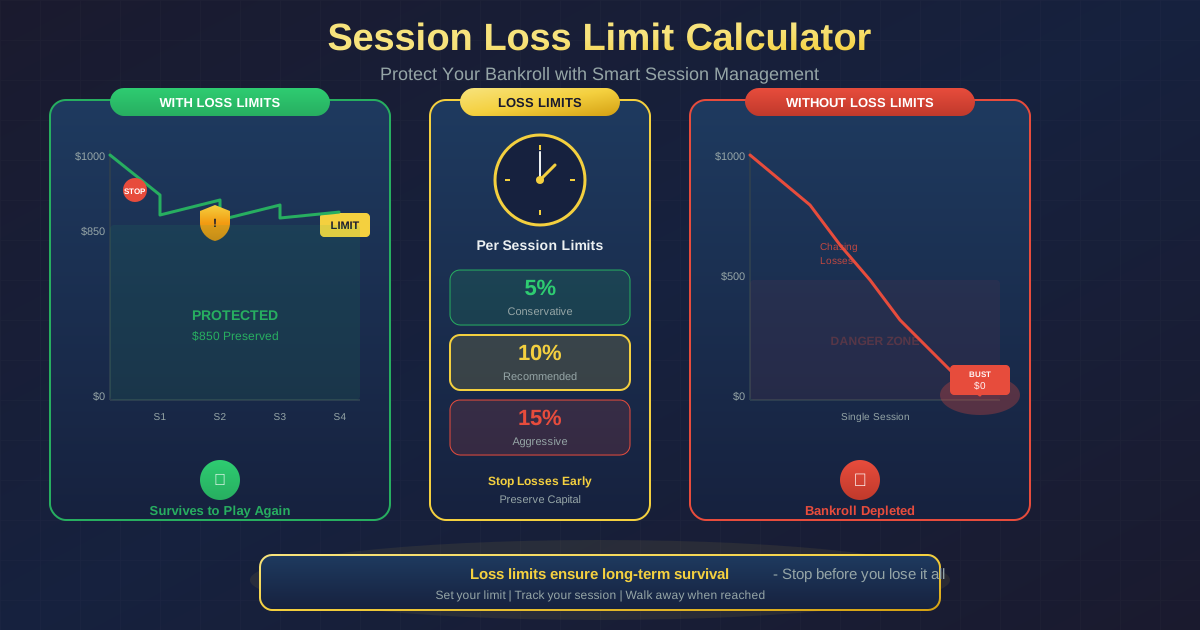
What It Costs You: The biggest cost of this myth is when players apply it backwards -- believing they should keep playing when losing because they're "due" to recover (combining this myth with Myth #1). Rational bankroll management means setting limits before you play and sticking to them regardless of whether you're winning or losing.
The Real Cost of Gambling Myths: A Comprehensive Calculation
Let's calculate how much these myths cost a typical recreational player over a year:
Profile: Weekend player, $25 bets, 4 hours per session, 2 sessions per month
| Behavior | Extra Cost Per Year |
|---|---|
| Not using basic strategy (2% extra edge) | $1,680 |
| Taking insurance (0.57% extra edge) | $479 |
| Table-hopping based on streaks | $200 (estimated extra play) |
| Betting systems (increased total action) | $500 (estimated) |
| Playing 6:5 blackjack instead of 3:2 | $1,168 |
| Total Myth Tax | $4,027 |
Compare to optimal play cost: 4 hrs x 70 hands x $25 x 0.50% x 24 sessions = $840/year.
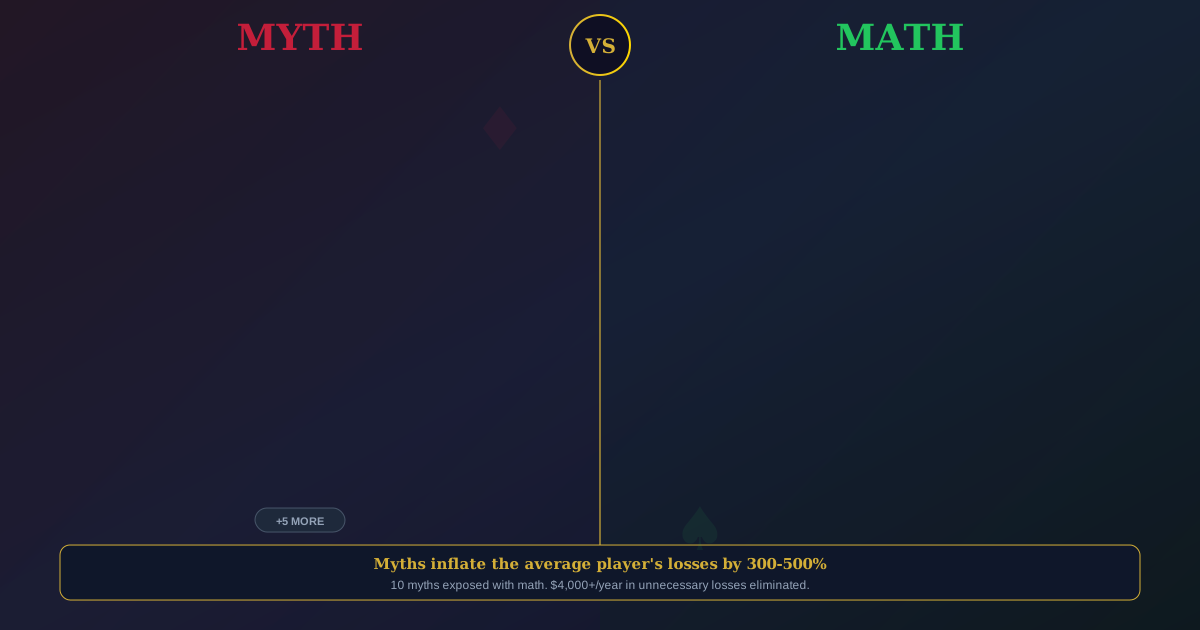
Myths inflate the annual cost from $840 to nearly $4,867 -- a 480% increase. The blackjack EV calculator and baccarat house edge calculator can help you model your own specific costs.
Frequently Asked Questions
If gambling myths are so obviously wrong, why do so many people believe them?
Cognitive biases. The human brain is wired to find patterns, even in random data (apophenia). We remember hits and forget misses (confirmation bias). We give more weight to recent events (recency bias). Emotional experiences in casinos -- the excitement of a win, the frustration of a loss -- amplify these biases. Casinos understand this and design environments that reinforce mythical thinking (displaying previous roulette numbers, celebrating jackpots).
Doesn't the law of averages mean things eventually even out?
The Law of Large Numbers says relative frequencies converge to expected probabilities. But "evening out" doesn't happen through compensating streaks -- it happens because future results dilute past anomalies. If you're 10 reds ahead after 20 spins, you don't get 10 extra blacks. Instead, after 10,000 more spins, those 10 extra reds become insignificant relative to the total.
Are there any legitimate advantages a player can gain?
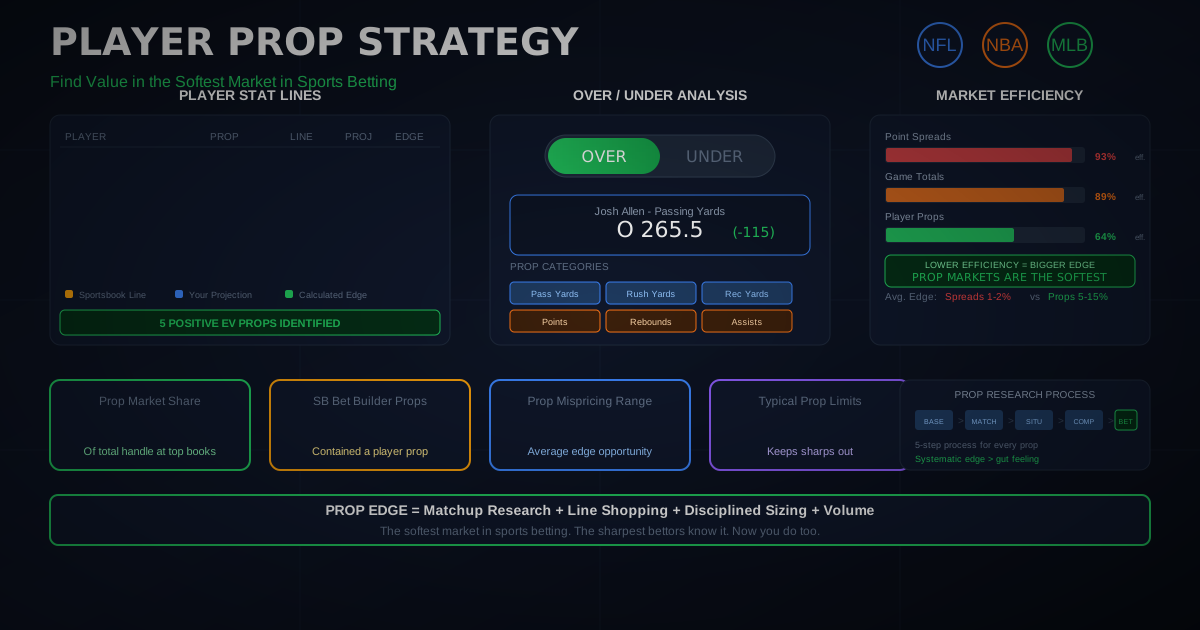
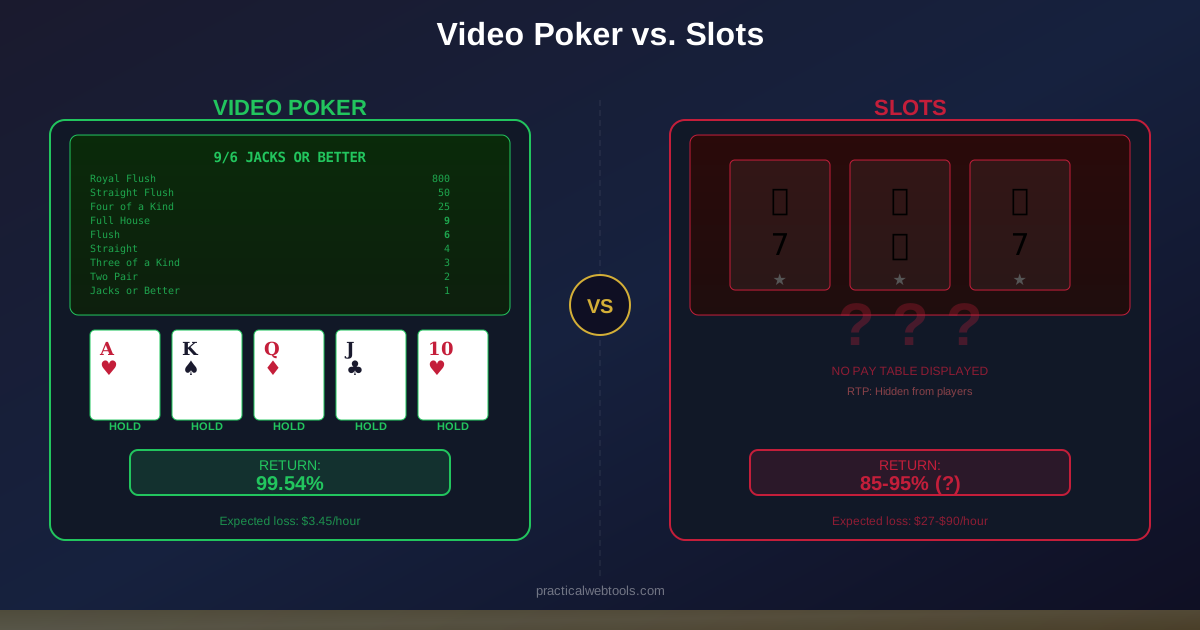
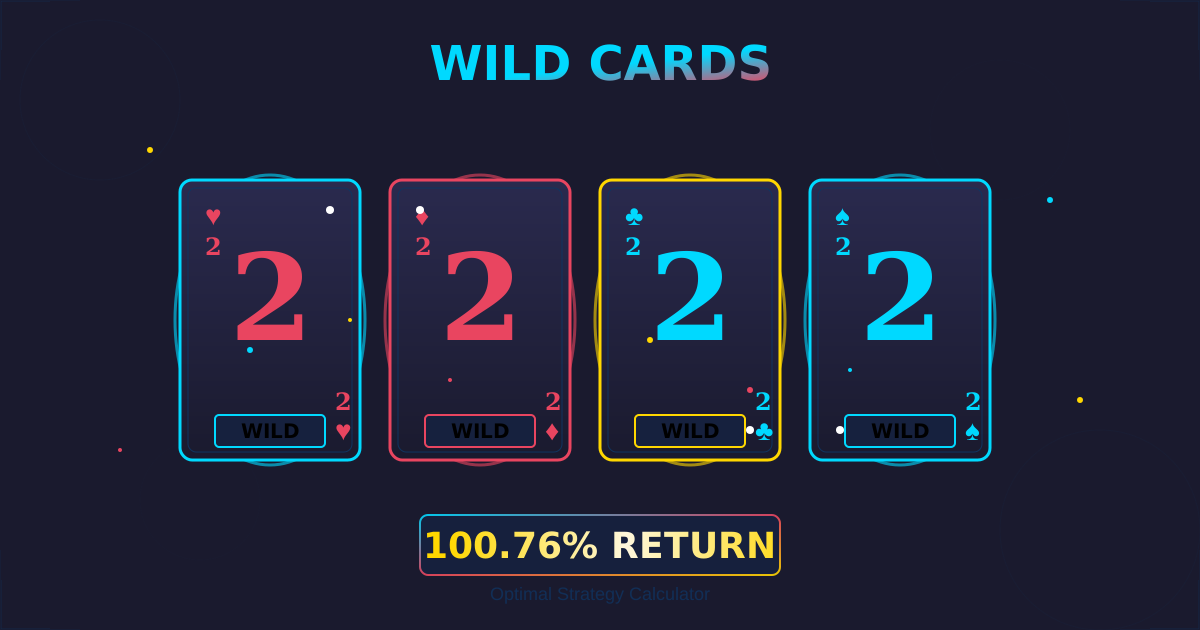
Yes, but they're limited: card counting in blackjack (legal but difficult, and casinos can ban you), finding full-pay video poker with perfect strategy (player edge of 0.76%), poker (skill game against other players, not the house), and sports betting with genuine information advantages. All require significant study, discipline, and practice.
My friend uses the Martingale and always wins. How do you explain that?
Your friend is experiencing survivorship bias and selective reporting. They remember and report the sessions where the system "worked" (many small wins) and downplay or omit the sessions where catastrophic losses occurred. Over enough time, their total losses will converge to the expected value, which is negative. Ask them to track every session over six months -- the results will match the math.
Do online casinos have different odds than brick-and-mortar casinos?
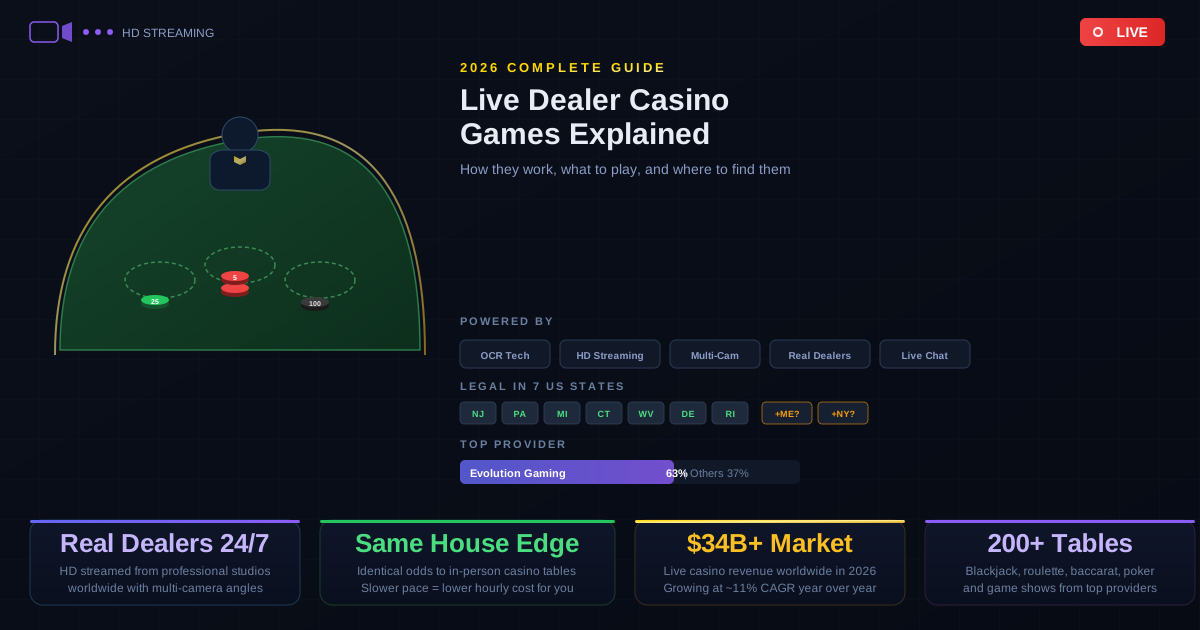
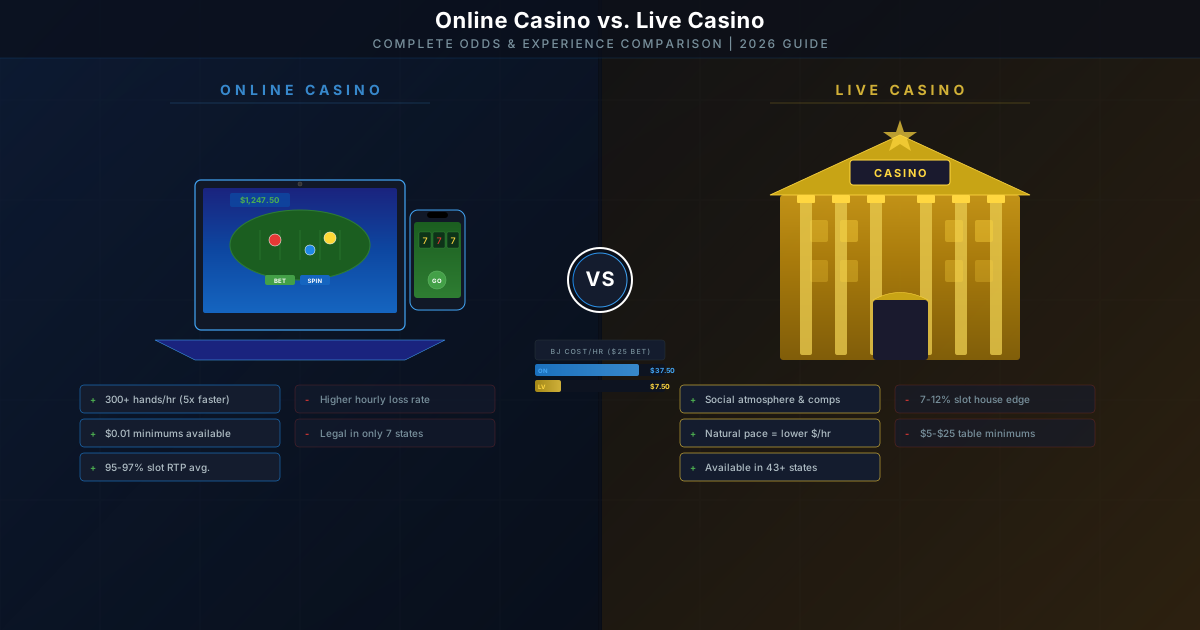
Regulated online casinos use certified RNGs and typically offer similar or slightly better odds than physical casinos. Online slots often return 94-97% (vs. 88-93% for many physical slots) because operating costs are lower. However, online play tends to be faster, which increases total action per hour and expected loss per hour despite better per-bet odds. The roulette house edge calculator applies equally to online and physical games.
If the house always wins in the long run, why gamble at all?
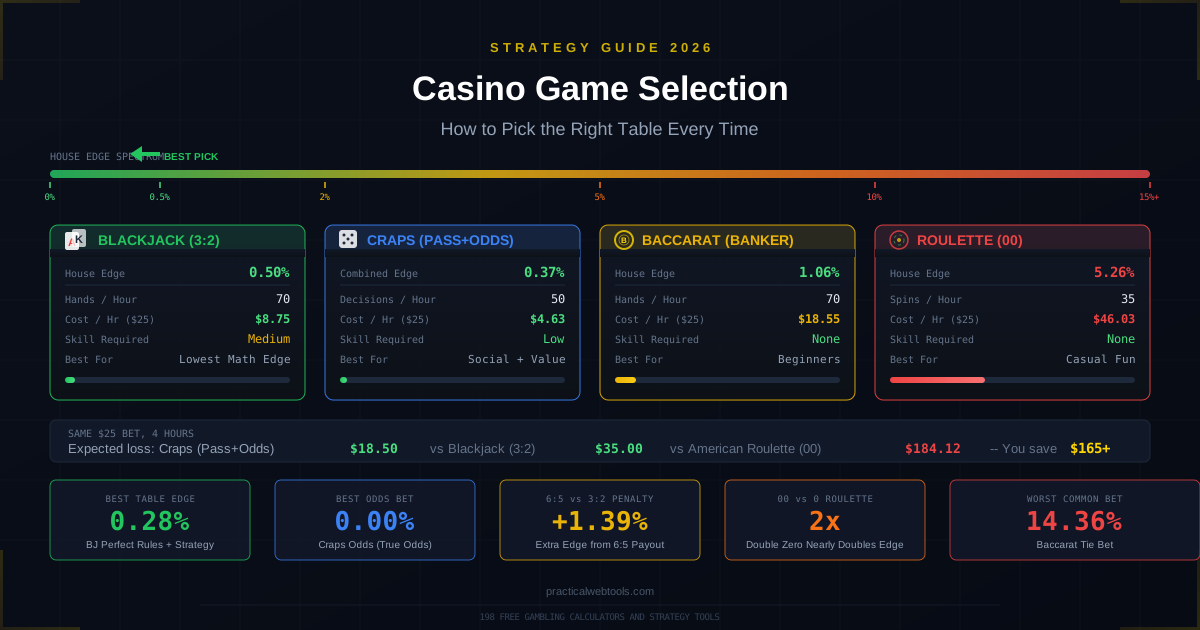
Entertainment value. Many people enjoy gambling as entertainment, just like going to movies, concerts, or sporting events. The key is understanding the cost. At a 0.50% house edge with $25 bets, blackjack costs about $8.75 per hour -- cheaper than many forms of entertainment. The problem arises when people gamble expecting to profit or spend more than they can afford.
What's the single most important thing I can learn to lose less money gambling?
Learn blackjack basic strategy. It reduces the house edge from 2-4% (average player) to 0.50% -- a 75-90% reduction in expected losses. It's free to learn, legal to use, and the most impactful single improvement any recreational gambler can make. The blackjack basic strategy chart is your starting point.
How can I tell if my gambling beliefs are costing me money?
Ask yourself: "Is this belief based on a mathematical principle, or does it just feel true?" If you can't express the reasoning in a formula, it's probably a myth. Use our calculators to verify any claim: the roulette probability calculator, blackjack EV calculator, and baccarat odds calculator can fact-check almost any gambling claim.
Related Tools
- Roulette Probability Calculator - Verify probability claims for any roulette scenario
- Roulette EV Calculator - Calculate expected value for any roulette bet
- Roulette Betting Simulator - Simulate betting systems over thousands of spins
- Blackjack EV Calculator - Expected value for every blackjack decision
- Blackjack House Edge Calculator - Calculate exact house edge by rules
- Blackjack Basic Strategy - The optimal play for every hand
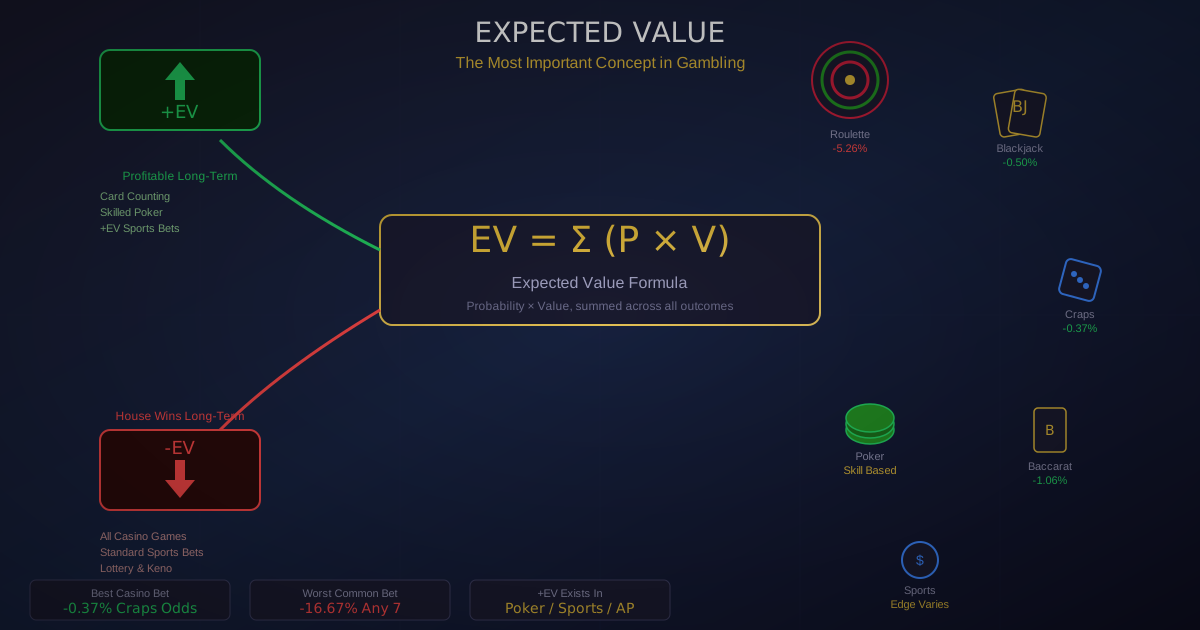
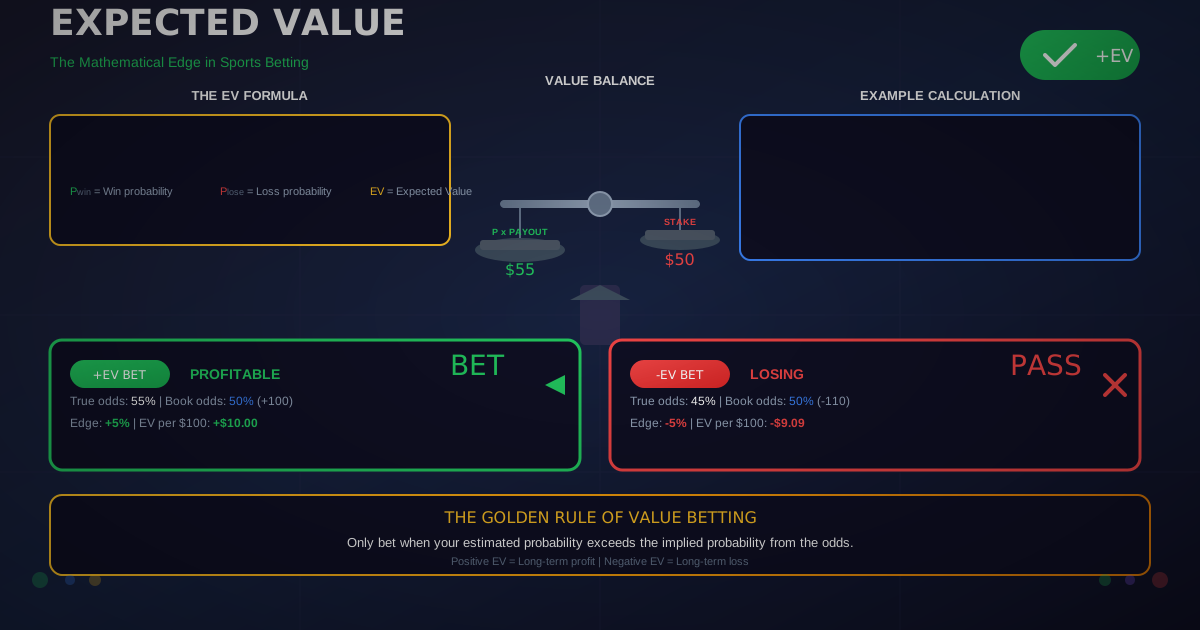
- Expected Value Calculator - Universal EV calculator
- Roulette House Edge Calculator - Compare roulette variants
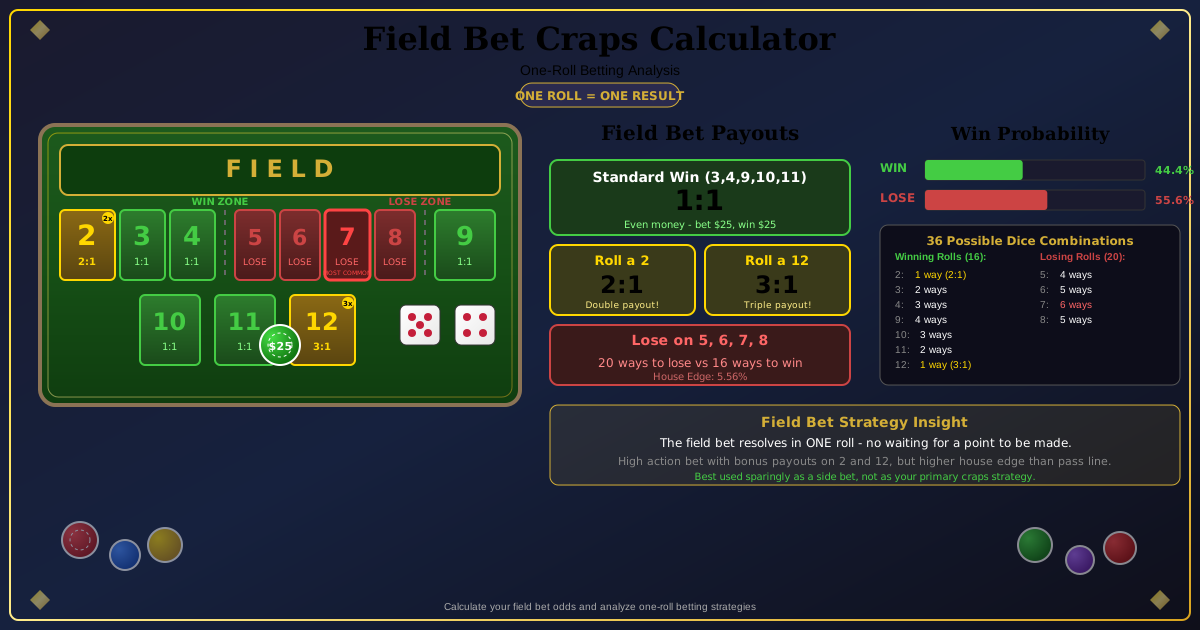
- Craps House Edge Calculator - Analyze every craps bet
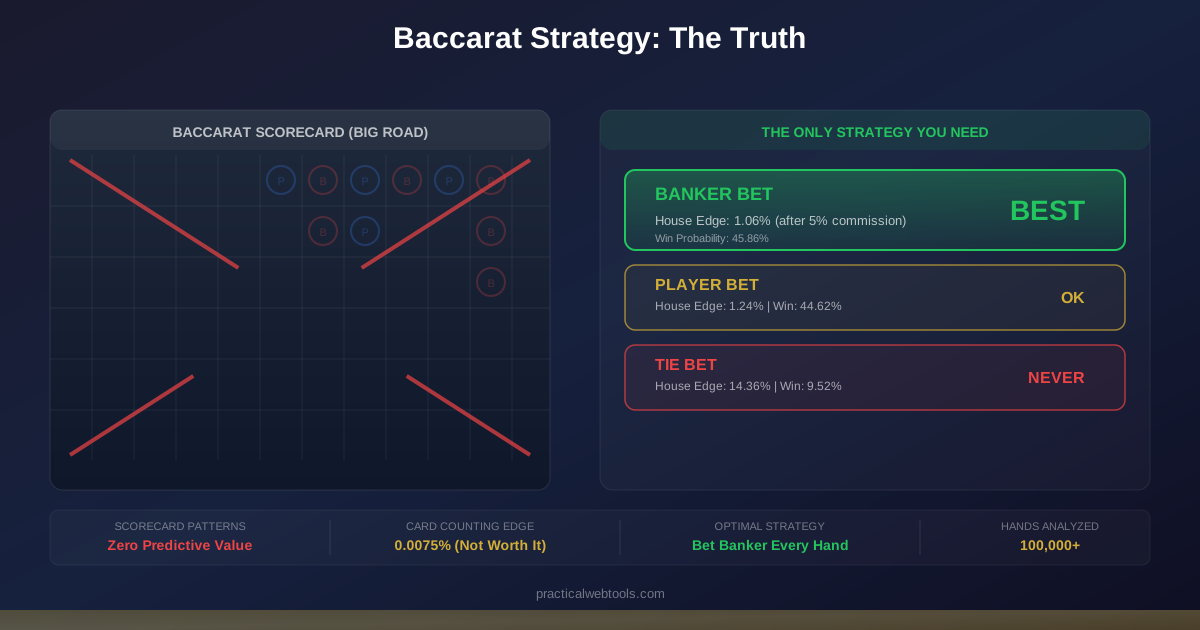
- Baccarat House Edge Calculator - Baccarat bet comparison
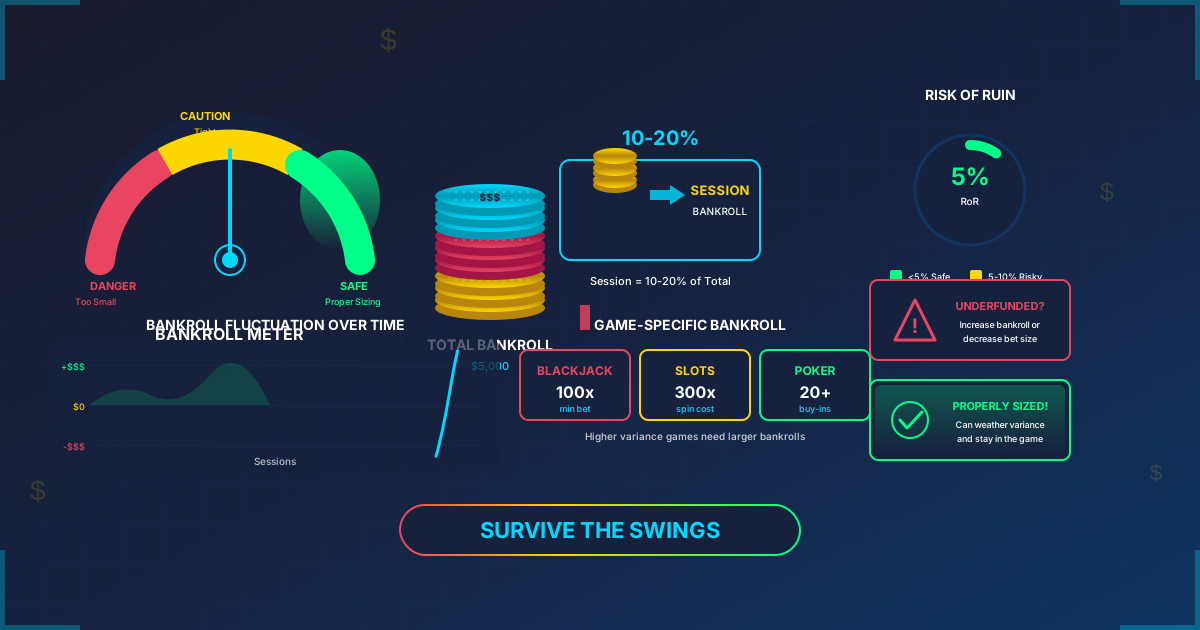
- Bankroll Volatility Tracker - Model variance over time
- Hold/Vig Calculator - Understand the hold percentage
- Roulette Odds Calculator - Odds for any roulette bet
- Baccarat Odds Calculator - Baccarat probability analysis
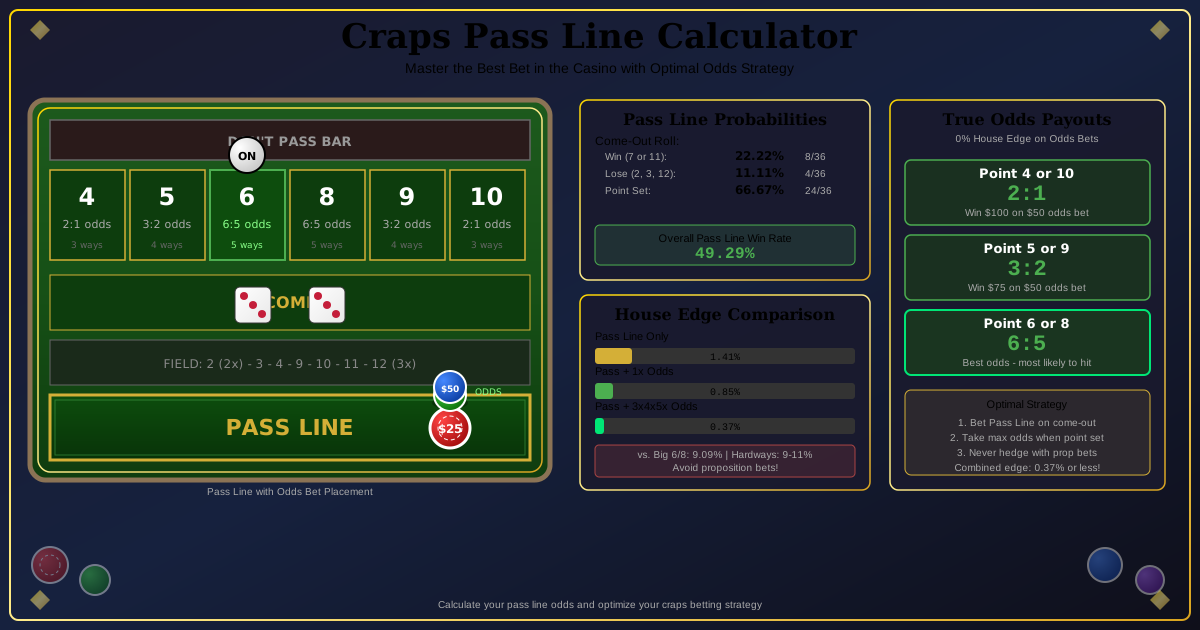
- Craps Pass Line Calculator - Pass line expected value
Conclusion
Every gambling myth shares a common flaw: it substitutes feeling for math. Streaks feel meaningful because our brains evolved to detect patterns. Insurance feels protective because the word "insurance" implies safety. Betting systems feel clever because they add complexity. But the mathematics of probability doesn't care about feelings.
The house edge is a mathematical constant. No belief, system, ritual, or strategy based on false premises can change it. What you can change is your approach: learn the actual math, use tools that calculate real probabilities, and make decisions based on expected value rather than intuition.
The myths exposed in this guide collectively cost the average recreational gambler thousands of dollars per year. Eliminating them doesn't guarantee winning -- the house still has an edge. But it ensures you lose the minimum possible, and that's the only rational goal in games designed for the house to profit.
Verify the Math with Our Free Gambling Calculators ->
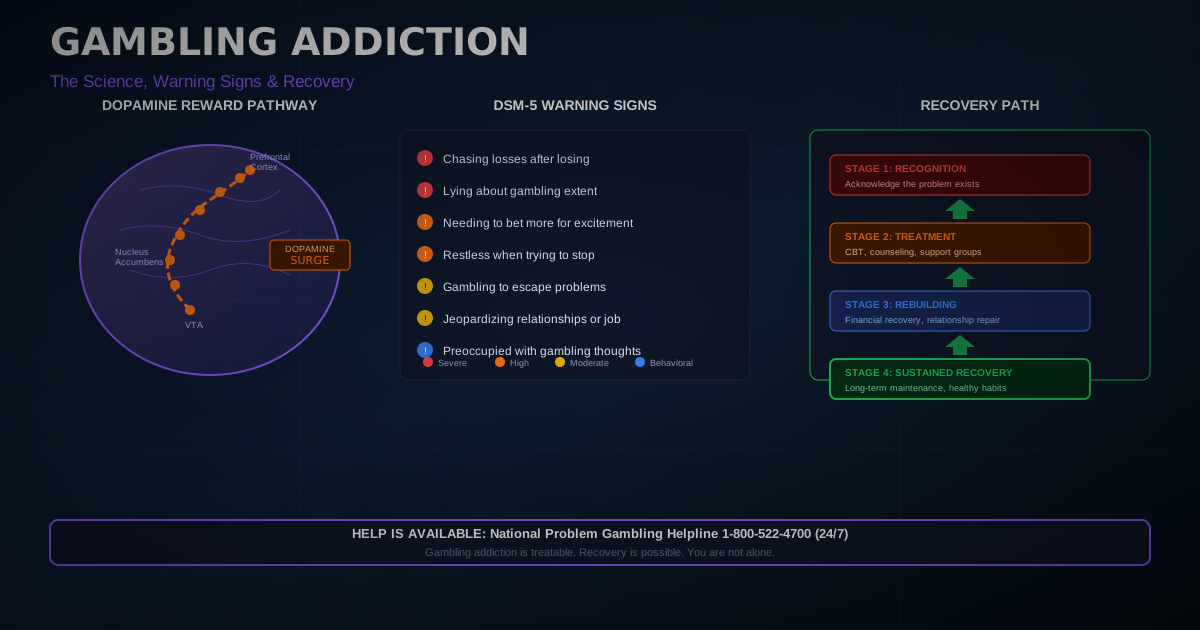
Gambling involves risk. This content is for educational and informational purposes only. Always gamble responsibly, set limits you can afford, and seek help if gambling becomes a problem. Visit the National Council on Problem Gambling or call 1-800-522-4700 for support.