AI in Sports Betting: How Data and Machine Learning Are Changing the Game (2026)
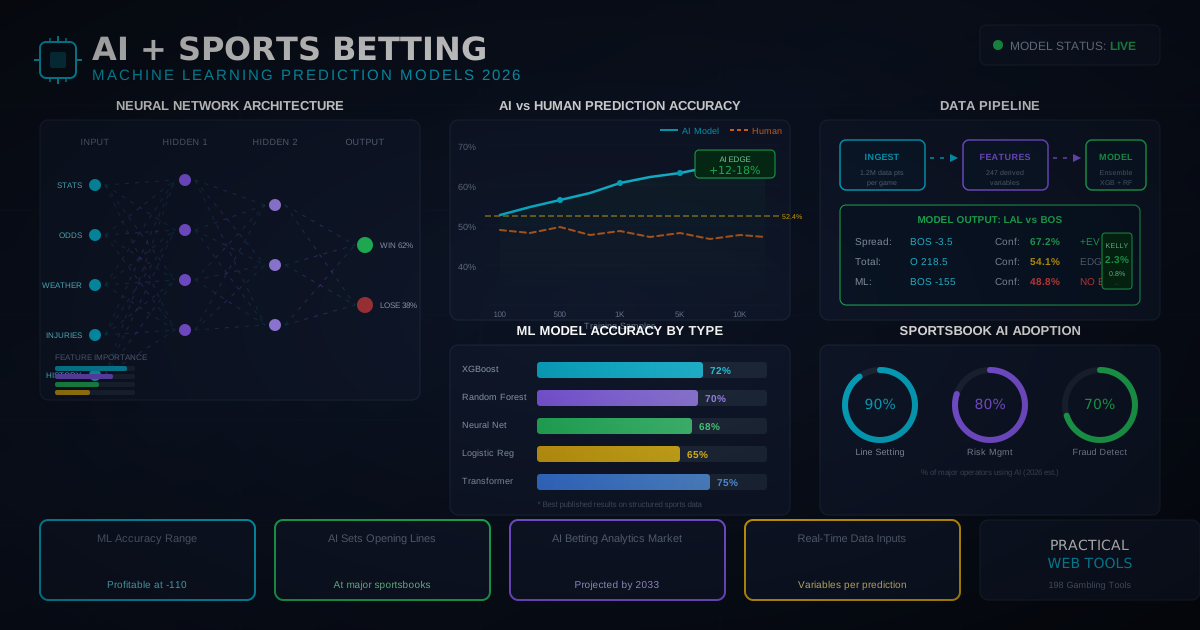
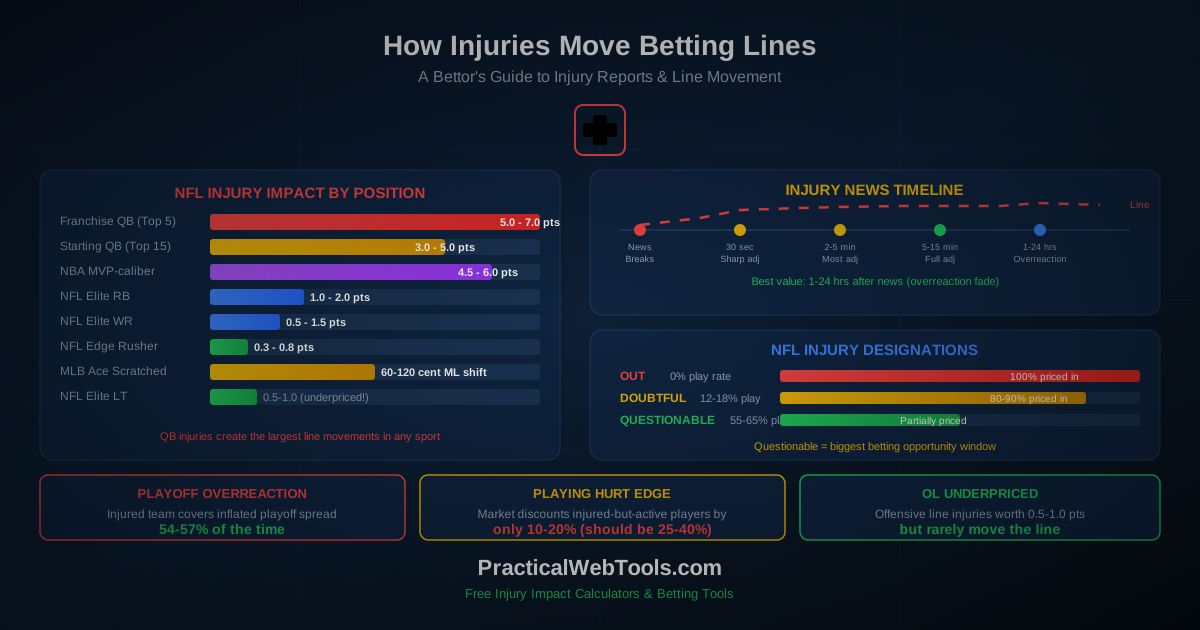
The line moved three points in under a second. A starting quarterback was ruled out, and before any human handicapper could react, algorithms at every major sportsbook had already repriced the spread, the total, and dozens of player props. No meeting. No phone call. No gut instinct. Just data in, new line out, in less time than it takes to blink.
This is sports betting in 2026. Artificial intelligence and machine learning have moved from the back office to the front lines, and they are reshaping who wins, who loses, and how the entire $300+ billion global sports wagering industry operates. The sportsbooks use AI to set sharper lines. Professional syndicates use AI to find edges faster. And a growing ecosystem of consumer-facing AI tools promises to give retail bettors an analytical advantage that was previously reserved for quantitative trading desks.
But here is the uncomfortable truth that most "AI picks" services will not tell you: the house is using better AI than you are. The question is not whether AI matters in sports betting -- it clearly does. The question is whether you, as an individual bettor, can realistically use machine learning to gain an edge, or whether AI has simply made the market more efficient and harder to beat.
This guide breaks it all down. We will cover how sportsbooks deploy AI behind the scenes, which machine learning models actually work for sports prediction, what the research says about accuracy and limitations, and how you can use data-driven tools to make smarter bets -- without falling for hype.
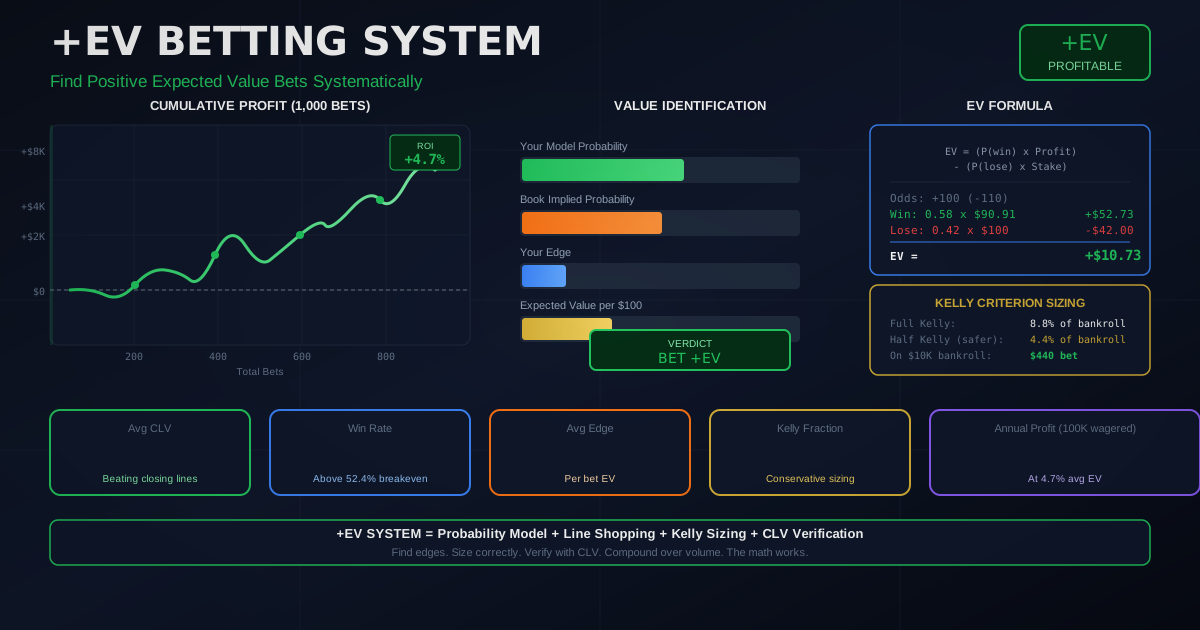
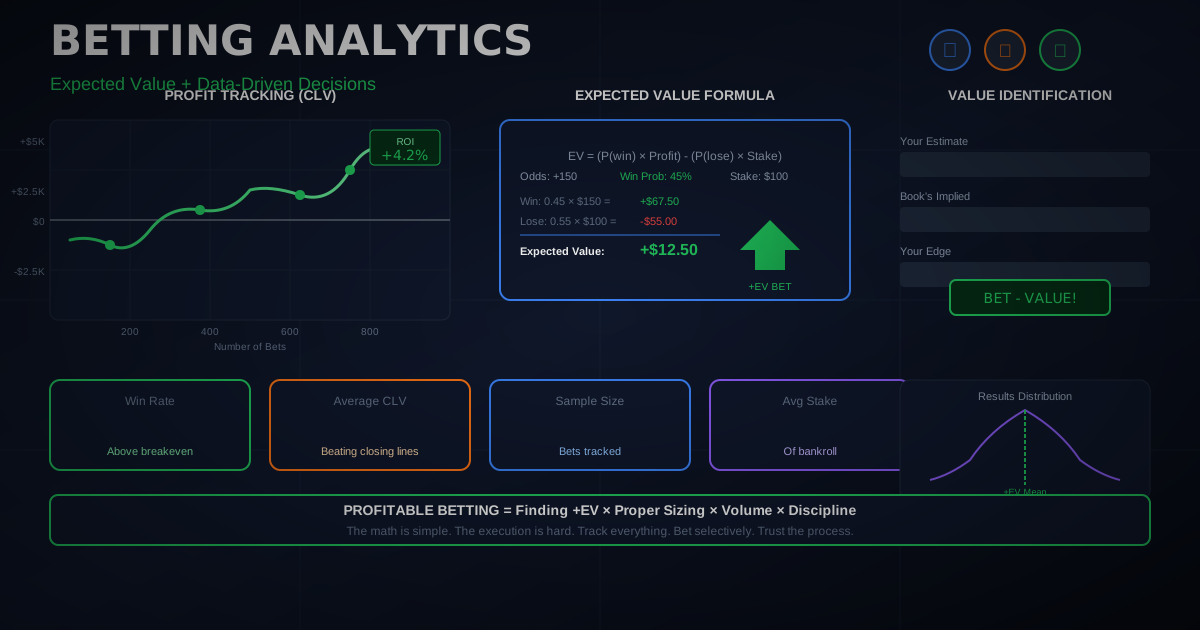
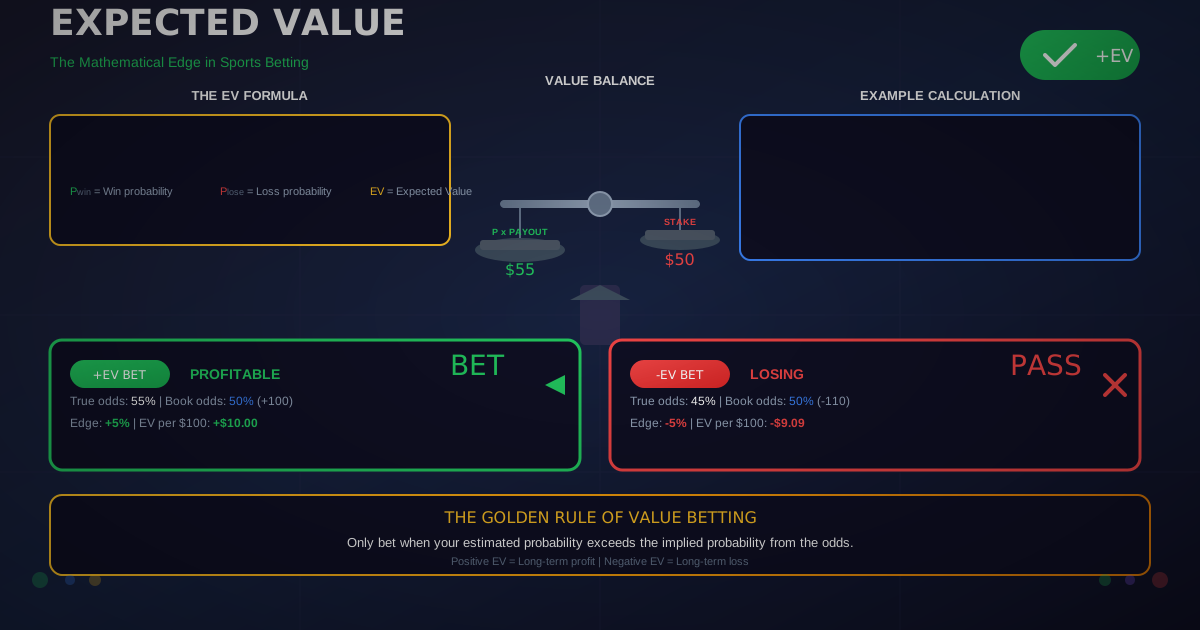
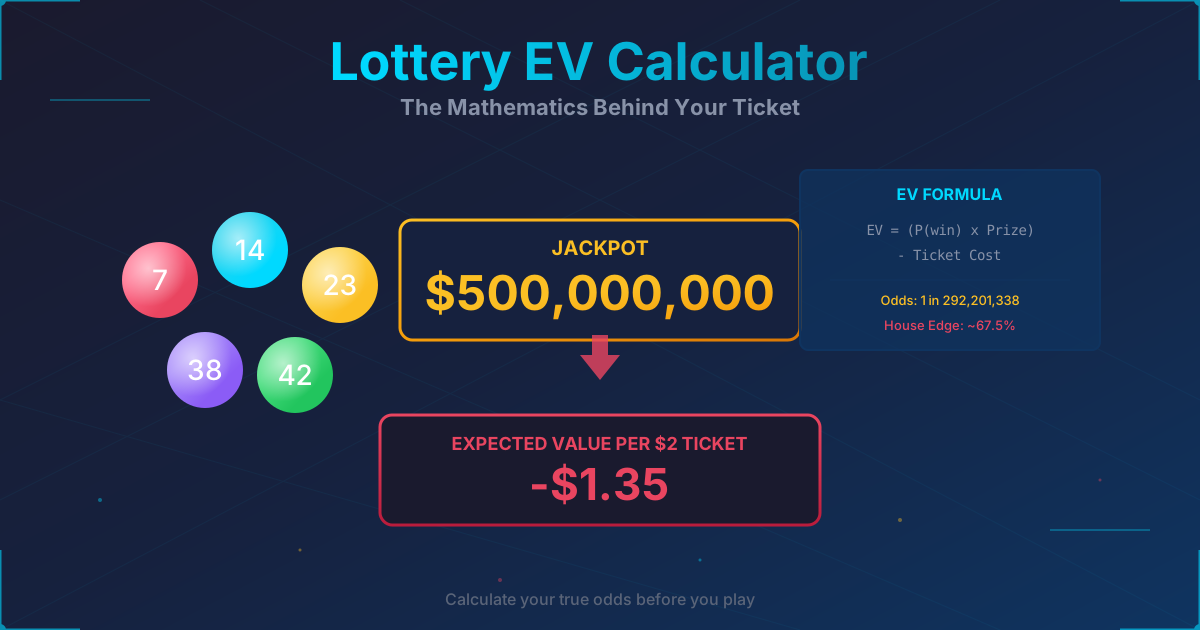
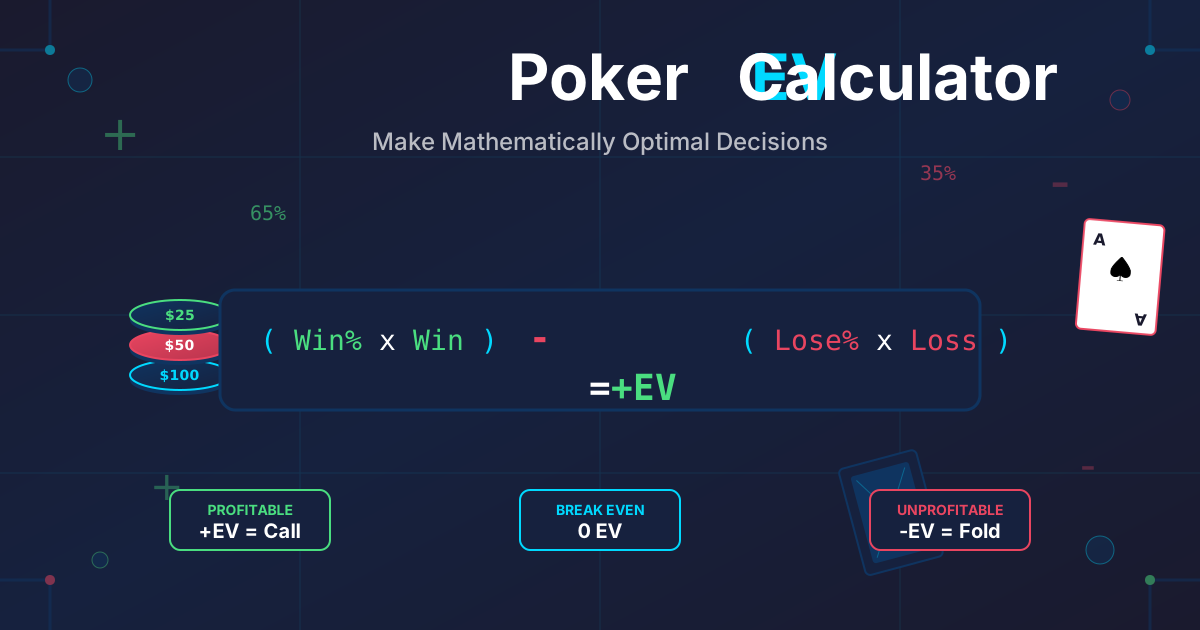
Analyze expected value on any wager with our free Expected Value Calculator -- the foundation of every data-driven betting strategy.
How Sportsbooks Use AI: The House's Technological Edge
Before you can beat the books with AI, you need to understand how the books use AI against you. The days of a Las Vegas oddsmaker sitting in a smoky room circling numbers on a chalkboard are long gone. Modern sportsbooks are technology companies that happen to take bets.
Algorithmic Line Setting
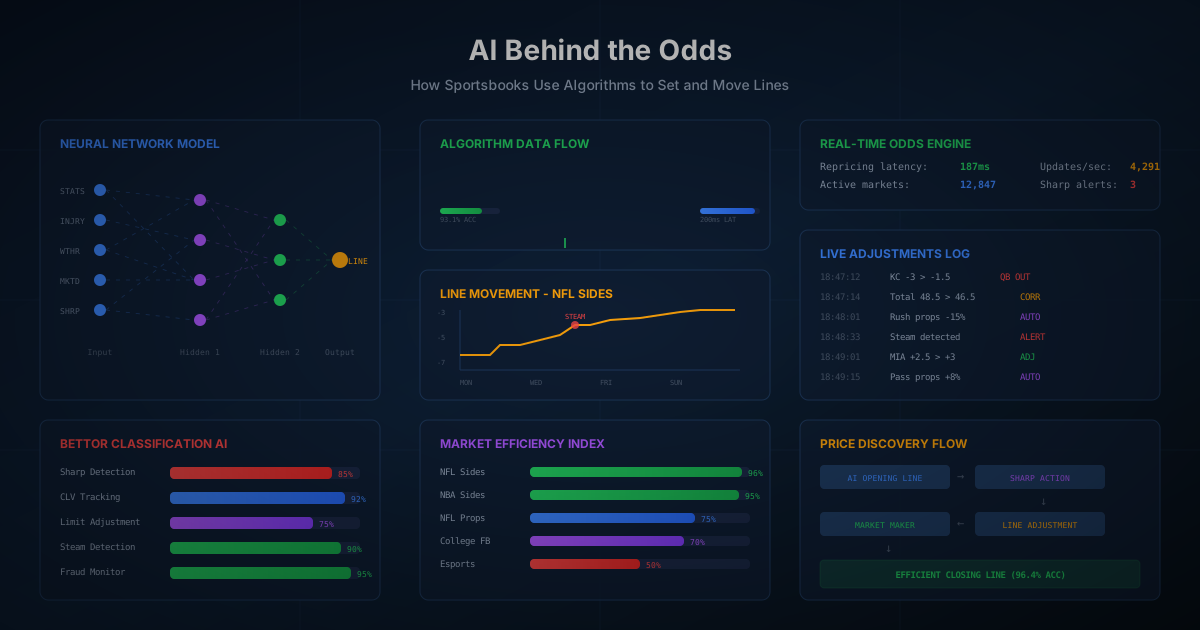
Major sportsbooks now rely on proprietary machine learning models to generate opening lines and adjust them in real time. These systems ingest thousands of variables simultaneously:
- Historical team and player performance data spanning decades
- Real-time injury reports and player availability updates
- Weather conditions and their sport-specific impact
- Referee and umpire tendencies
- Travel schedules and rest day analysis
- Public betting percentages and handle distribution
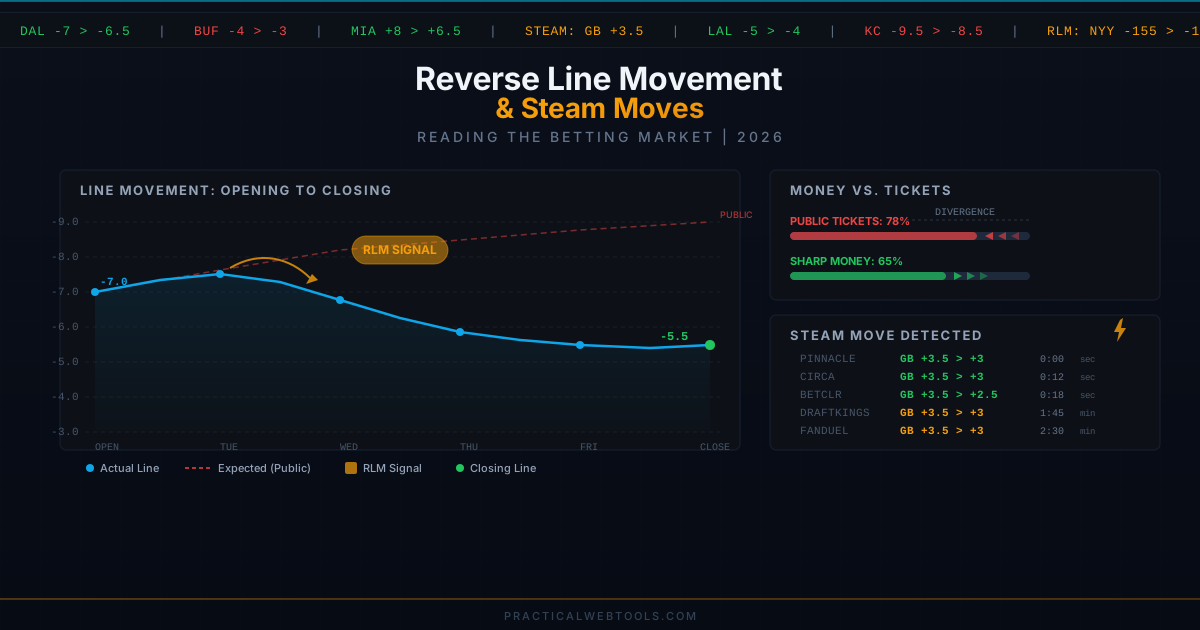
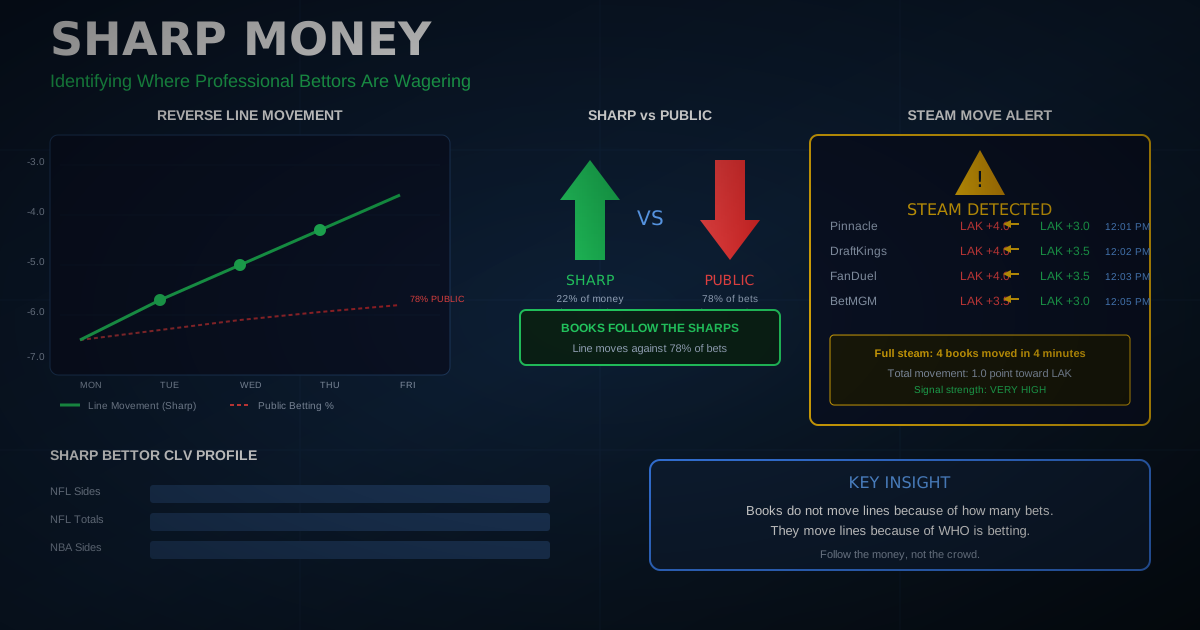
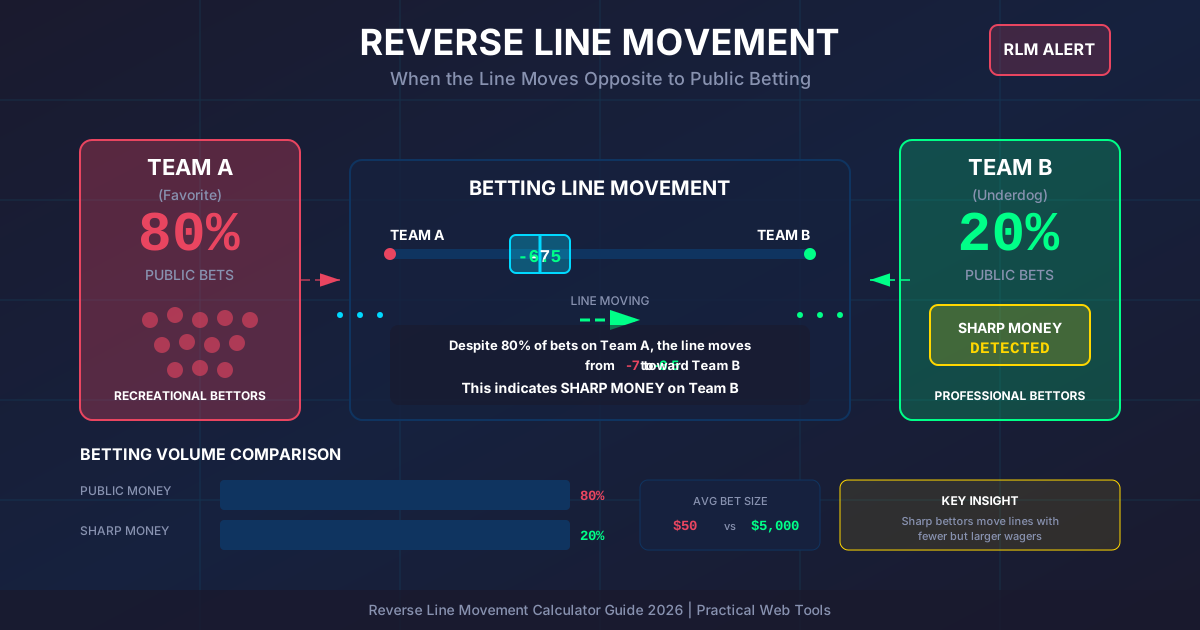
- Sharp money signals from known professional bettors
- Line movement across competing sportsbooks
By 2026, estimates suggest that AI sets or significantly influences 85-95% of opening lines at major U.S. sportsbooks. Human oddsmakers still exist, but their role has shifted from creating lines to overseeing algorithms and making judgment calls on edge cases -- unusual situations where the models lack sufficient training data.
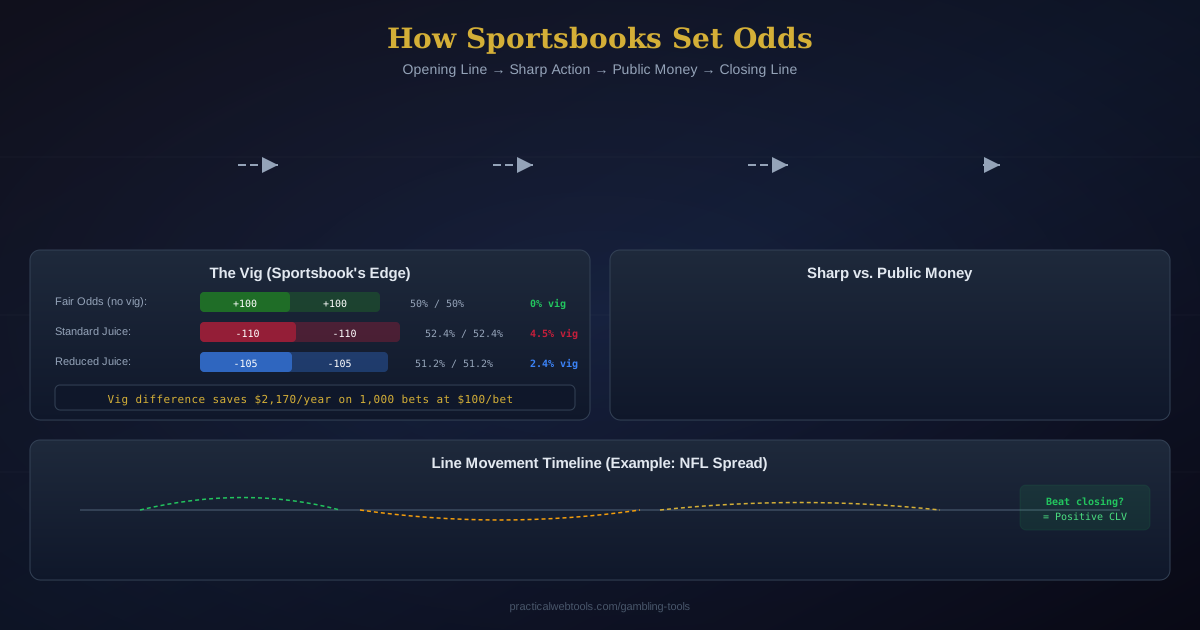
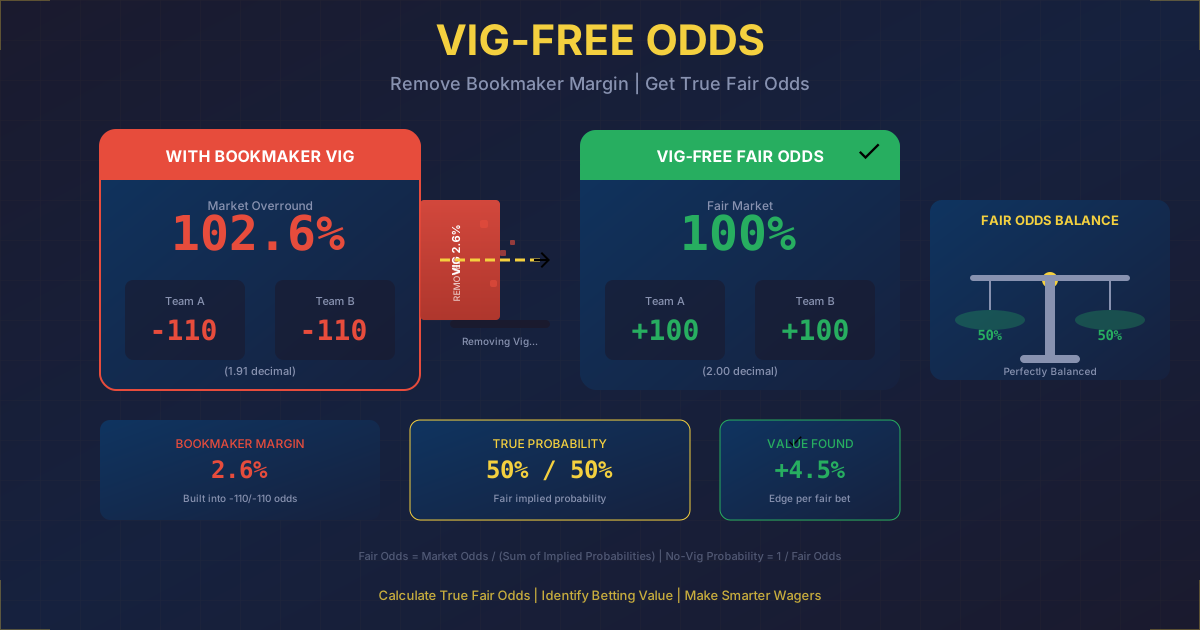
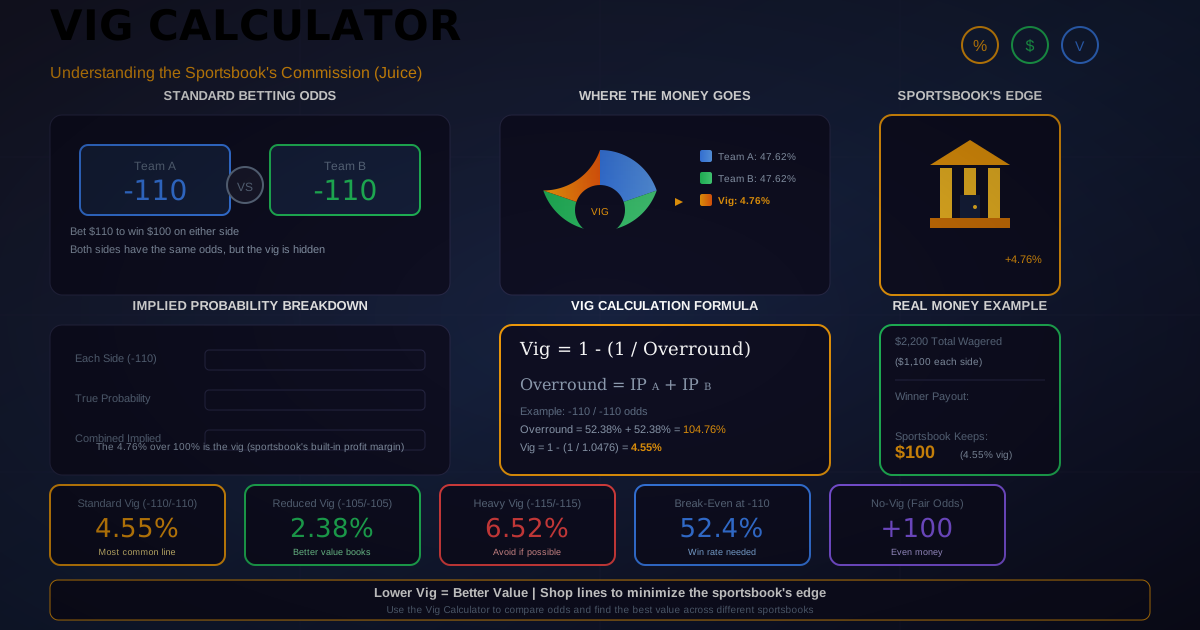
The result is tighter, more efficient markets. The average "hold" (the sportsbook's effective margin) on NFL sides has compressed from roughly 4.5% a decade ago to under 3.5% at the sharpest books, precisely because AI-driven pricing leaves fewer gaps to exploit.
Real-Time Line Adjustments
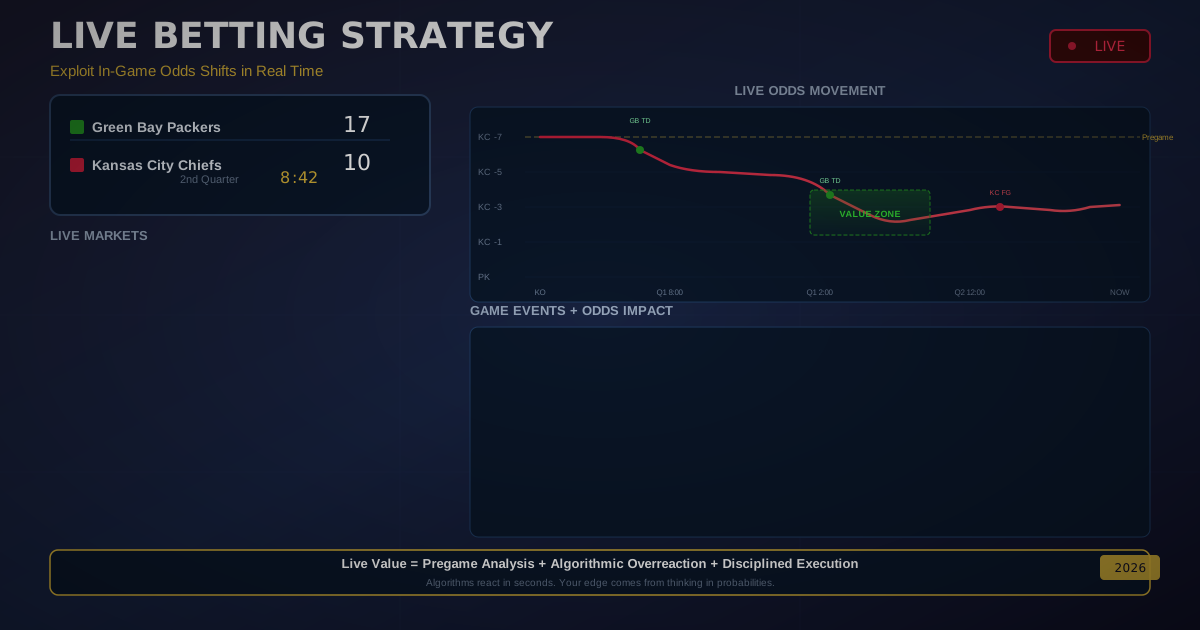
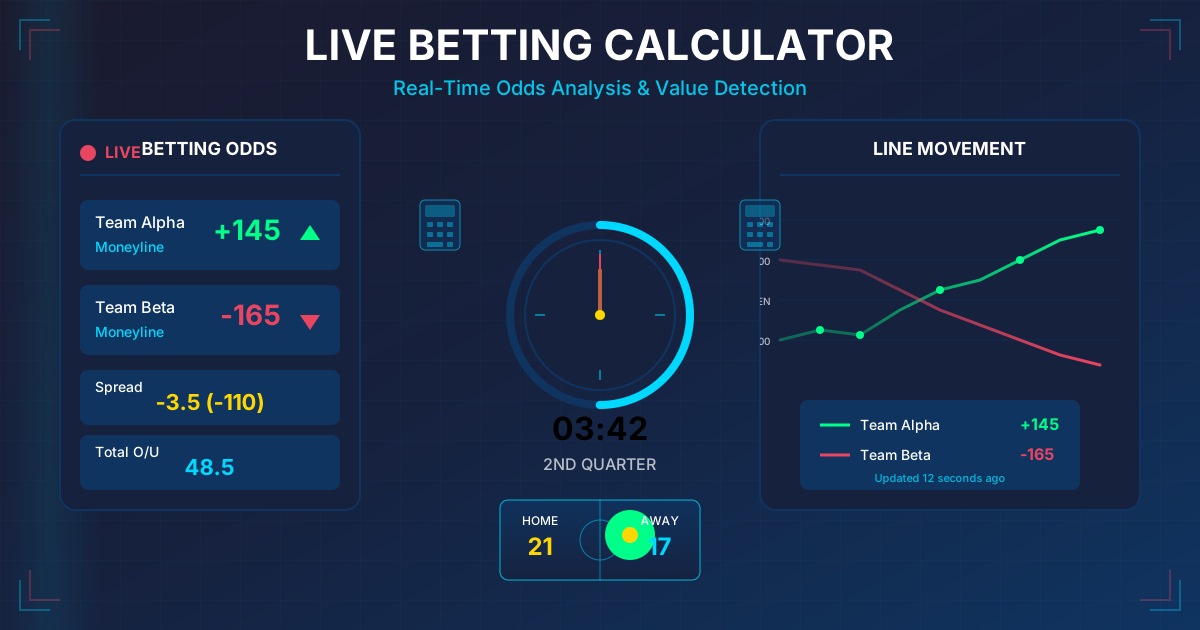
One of the most significant AI applications is live, in-game odds pricing. During an NFL game, the model is continuously updating probabilities based on:
| Data Input | Update Frequency | Impact on Line |
|---|---|---|
| Score changes | Instant | Major -- full repricing |
| Possession / field position | Every play | Moderate |
| Time remaining | Continuous | Moderate |
| Player substitutions | Real-time | Variable |
| Injury during play | Seconds after confirmed | Major |
| Weather changes | Every 5-15 minutes | Minor to moderate |
| In-game momentum metrics | Proprietary | Minor |
These models can reprice hundreds of live markets in under 200 milliseconds. A human bettor watching the same game processes maybe two or three factors simultaneously. The speed asymmetry is enormous.
Limit and Risk Management
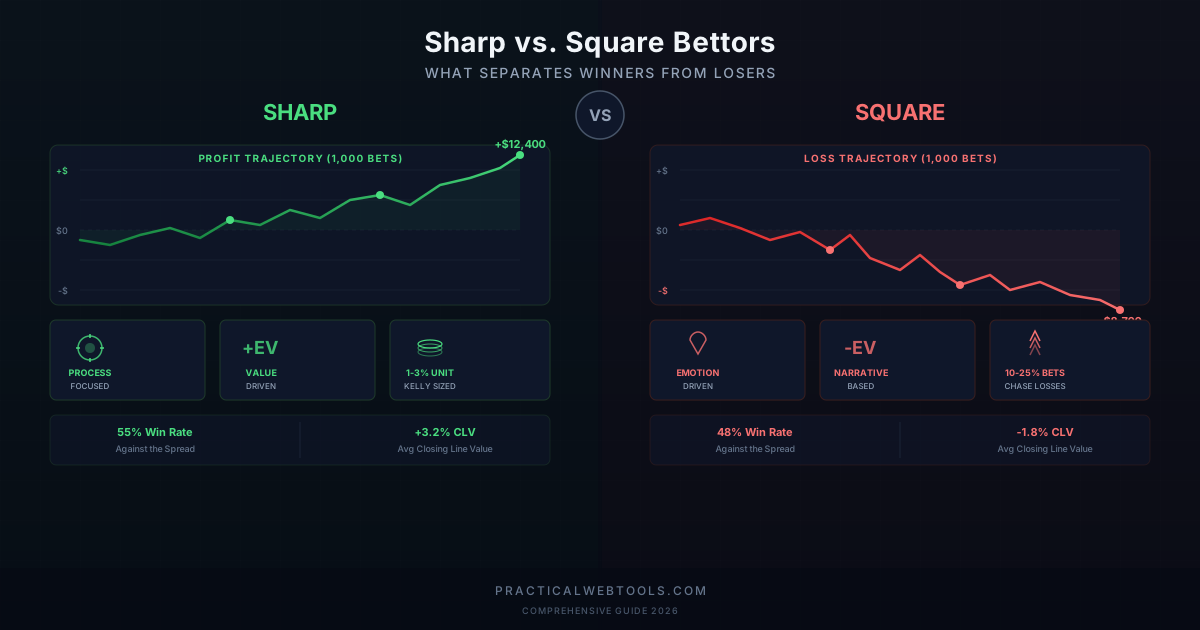
Sportsbooks also use AI to decide how much to let you bet. Machine learning models profile each bettor based on their historical wagering patterns, win rate, timing (betting early vs. late), sport/market selection, and whether their action correlates with known sharp groups.
If the model flags you as a likely sharp, your limits get cut -- sometimes within a few dozen bets. A 2025 analysis from a major data provider estimated that sportsbooks using AI-driven risk management reduced their exposure to sharp action by approximately 40% compared to manual review systems.
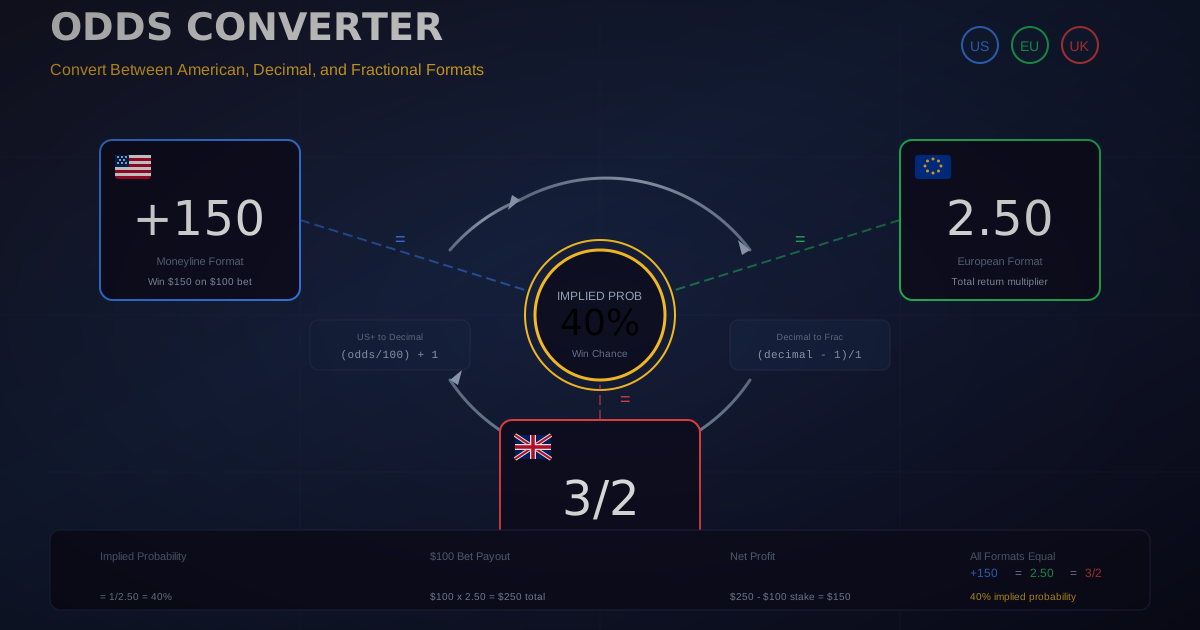
Convert between odds formats to understand what the books are really offering with our Odds Converter.
Fraud and Match-Fixing Detection
AI monitors betting patterns for anomalies that could indicate match-fixing or insider information leaks. When wagering volume on a specific market suddenly spikes from unusual geographic locations or account clusters, the system flags it for review. The International Betting Integrity Association reported in 2025 that AI-assisted monitoring now covers over 600,000 sporting events annually.
Machine Learning Model Types for Sports Prediction
Not all AI is created equal. Different machine learning approaches have distinct strengths and weaknesses when applied to sports prediction. Here is what the academic literature and industry practice tell us about each major model type.
Model Comparison Table
| Model Type | How It Works | Best For | Typical Accuracy | Complexity | Data Needed |
|---|---|---|---|---|---|
| Logistic Regression | Linear probability estimation | Binary outcomes (win/loss) | 58-65% | Low | Moderate |
| Random Forest | Ensemble of decision trees | Multi-feature classification | 62-70% | Medium | Moderate |
| Gradient Boosting (XGBoost/LightGBM) | Sequential tree refinement | Structured tabular data | 63-72% | Medium-High | Moderate-Large |
| Neural Networks (MLP) | Multi-layer pattern recognition | Complex nonlinear relationships | 60-72% | High | Large |
| LSTM / Recurrent NN | Sequential/temporal modeling | Time-series performance data | 62-70% | High | Large |
| Transformer Models | Attention-based sequence modeling | Multi-variable dependencies | 64-75% | Very High | Very Large |
| Ensemble / Stacking | Combines multiple models | Maximizing robustness | 65-75% | Very High | Large |
Logistic Regression: The Underrated Baseline
Despite being the simplest model on this list, logistic regression remains surprisingly competitive for sports prediction. A 2025 study on English Premier League match outcomes found that logistic regression achieved an F1 score of 0.61 -- only marginally behind more complex models. Its advantage is interpretability: you can see exactly which features are driving the prediction and by how much.
For individual bettors building their first model, logistic regression is the recommended starting point. It is fast to train, resistant to overfitting on small datasets, and forces you to think carefully about feature engineering -- which is where the real edge lives.
Random Forest: The Workhorse
Random forest models build hundreds or thousands of decision trees, each trained on a random subset of the data, and aggregate their predictions. In tennis prediction, random forest achieved training accuracy of 73.5% and cross-validation accuracy of 69.7%. For soccer, it showed the highest overall accuracy at 69% among single-model approaches.
The key strength is robustness. Random forests handle noisy data, missing values, and nonlinear relationships without extensive preprocessing. They are also relatively resistant to overfitting compared to deep learning approaches.
Gradient Boosting: The Current Industry Standard
XGBoost, LightGBM, and CatBoost are the most commonly used models in production sports prediction systems as of 2026. These models build trees sequentially, with each new tree specifically targeting the errors of previous trees.
Professional betting syndicates and data analytics firms favor gradient boosting because:
- It handles mixed data types (numerical + categorical) natively
- Training is fast even on large datasets
- Feature importance scores help identify what actually matters
- It wins the majority of structured data competitions on platforms like Kaggle
A sports analytics firm reported in late 2025 that their XGBoost ensemble for NBA totals achieved a 57.2% hit rate against the closing line over a 3,000-game sample -- enough to be profitable at standard -110 juice.
Deep Learning: Promise and Limitations
Neural networks, LSTMs, and Transformer architectures have grabbed headlines, but their real-world performance in sports betting is more nuanced than the marketing suggests.
What deep learning does well:
- Identifying complex, nonlinear interactions between dozens or hundreds of features
- Processing sequential data (a team's trajectory over a season)
- Handling unstructured data (player tracking data, video analysis)
- A 2025 study using a hybrid CNN-Transformer approach achieved 75-80% accuracy on soccer match outcomes
What deep learning struggles with:
- Small sample sizes (individual sports seasons have limited games)
- Overfitting -- a deep network can memorize 5 seasons of data and fail on season 6
- Interpretability -- you often cannot explain why the model likes a bet
- Computational cost -- training requires significant GPU resources
- Calibration -- high accuracy does not necessarily mean well-calibrated probabilities
A critical insight from recent research: for sports betting, model calibration matters more than raw accuracy. A model that says "this team wins 62% of the time" needs that 62% to be genuinely accurate, not just directionally correct. A 2025 review in the journal Machine Learning for Sports Betting argued that poorly calibrated models can achieve high accuracy while still producing negative-EV betting decisions.
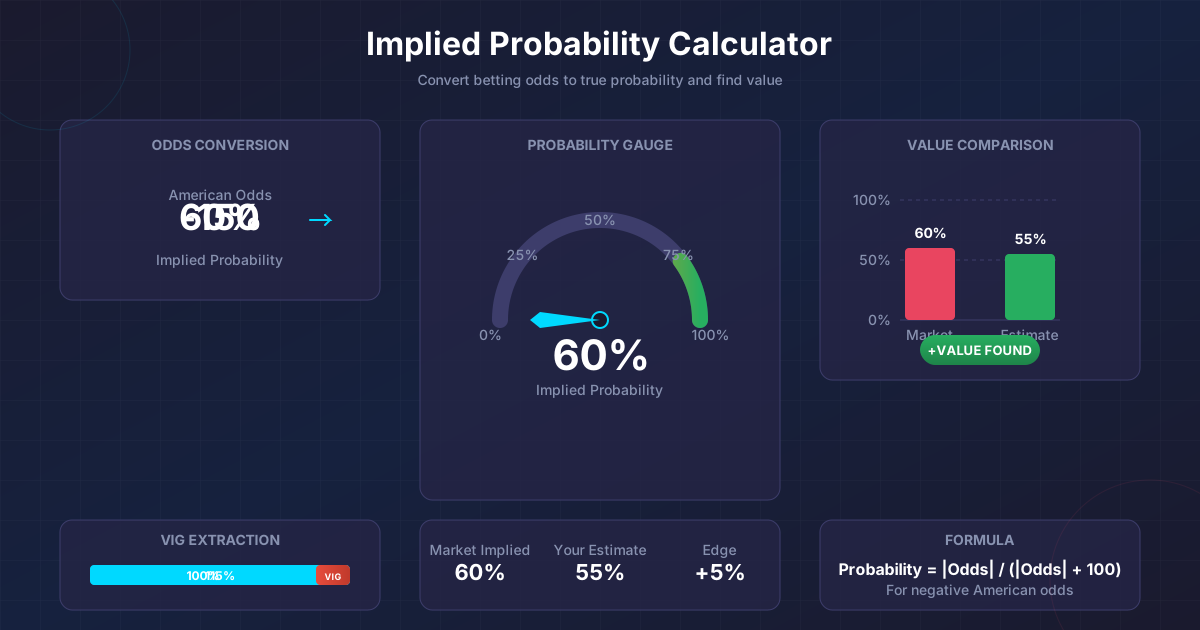
Calculate implied probability from any odds format with our Implied Probability Calculator.
Building Your Own AI Betting Model: A Practical Framework
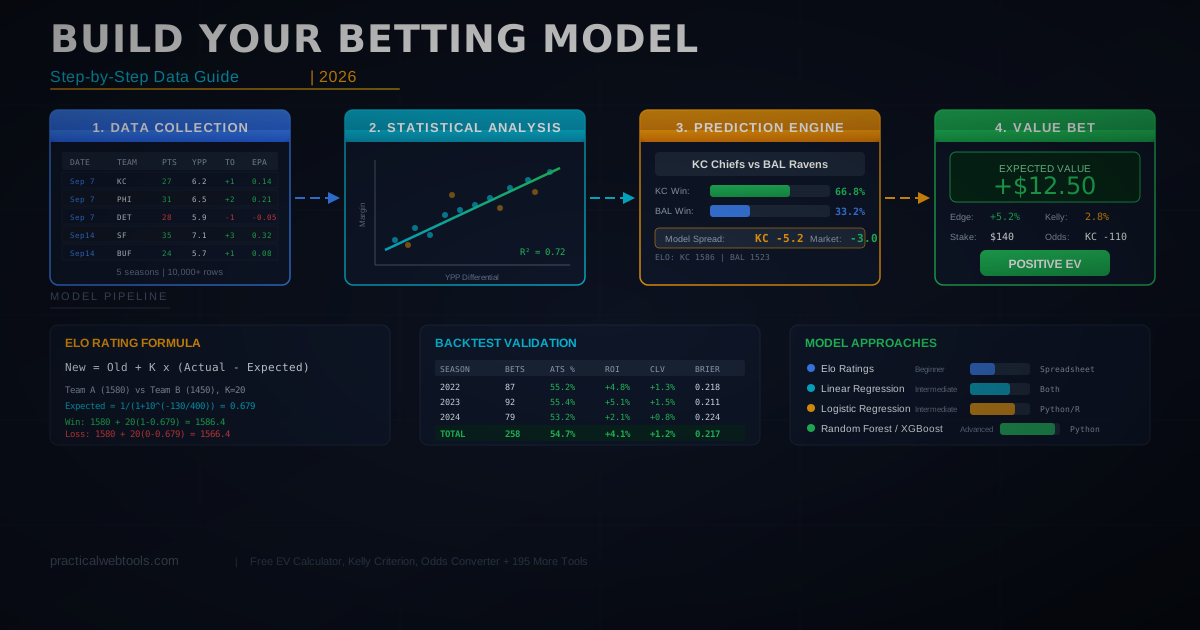
You do not need a PhD in machine learning to build a functional sports prediction model. Here is a realistic, step-by-step framework for a technically inclined bettor.
Step 1: Define Your Market
Do not try to build a model that predicts everything. Start narrow:
- One sport (e.g., NBA)
- One market (e.g., totals/over-unders)
- One specific angle (e.g., pace-adjusted totals for back-to-back games)
Specialization is your edge. The sportsbook's model is general-purpose; your model can be hypertuned for a niche.
Step 2: Gather and Clean Data
Data sources for sports betting models:
| Source | Data Type | Cost | Quality |
|---|---|---|---|
| Sports-Reference / Basketball-Reference | Historical stats | Free | High |
| ESPN API / NBA API | Live and historical | Free | Medium-High |
| Covers / Odds Portal | Historical odds and results | Free | Medium |
| Sportradar / Genius Sports | Official league data | $$$$ | Very High |
| Action Network / The Lines | Live odds movement | $-$$ | High |
| Player tracking data (Second Spectrum, etc.) | Advanced analytics | $$$$ | Very High |
The uncomfortable truth: data quality matters more than model sophistication. A logistic regression on clean, well-engineered features will outperform a transformer trained on noisy data almost every time.
Step 3: Engineer Features
This is where most of the actual edge comes from. Raw stats are priced into the market. You need derived features that capture something the market might underweight:
- Pace-adjusted efficiency metrics (not just points per game)
- Rest advantage differentials
- Home/away splits with recency weighting
- Performance against specific defensive schemes
- Regression-to-the-mean indicators for hot/cold streaks
- Injury-adjusted lineup strength ratings
Step 4: Train, Validate, and Backtest
- Split data into training (70%), validation (15%), and test (15%) sets
- Use walk-forward validation (train on past, test on future -- never the reverse)
- Track both accuracy AND calibration (Brier score is the gold standard)
- Backtest against historical closing lines, not opening lines
- Account for vig -- your model needs to beat the closing line, not just predict winners
Step 5: Paper Trade Before Risking Real Money
Run your model for at least 200-500 predictions before betting real money. Track:
- Hit rate vs. predicted probability
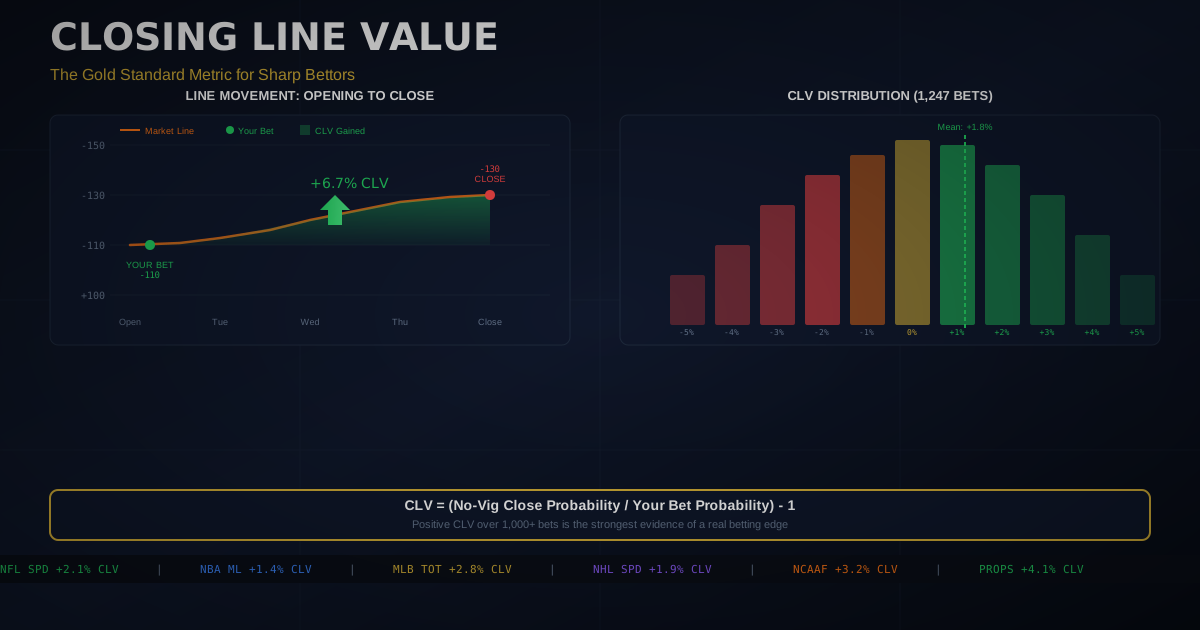
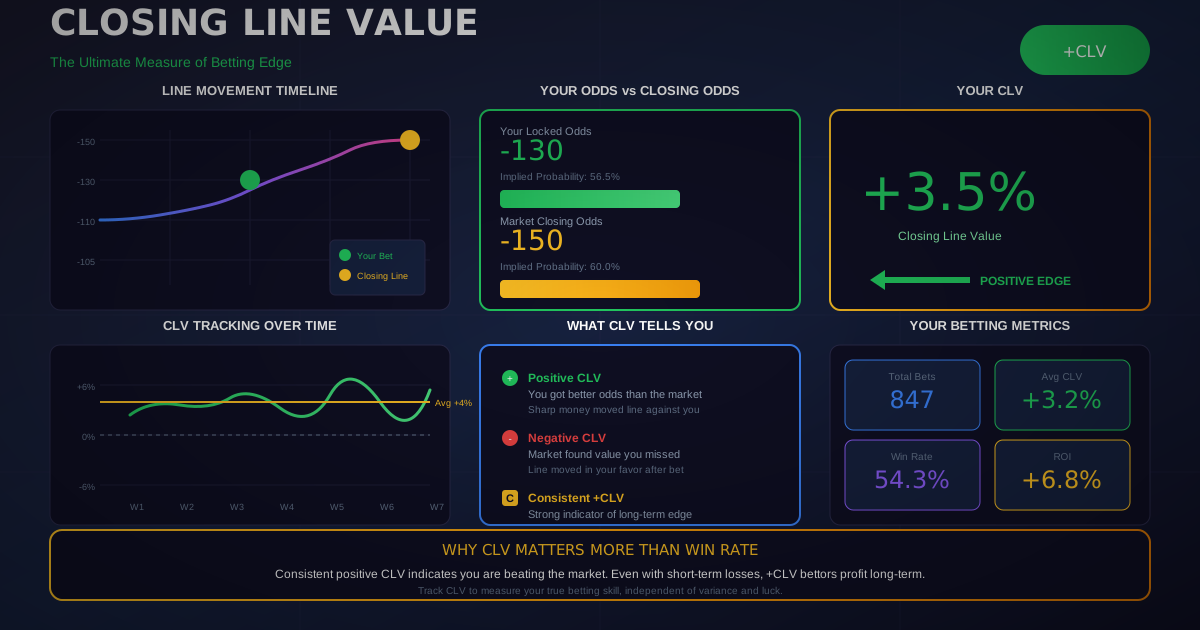
- Closing Line Value (CLV)
- Theoretical ROI at various confidence thresholds
- Maximum drawdown during losing streaks
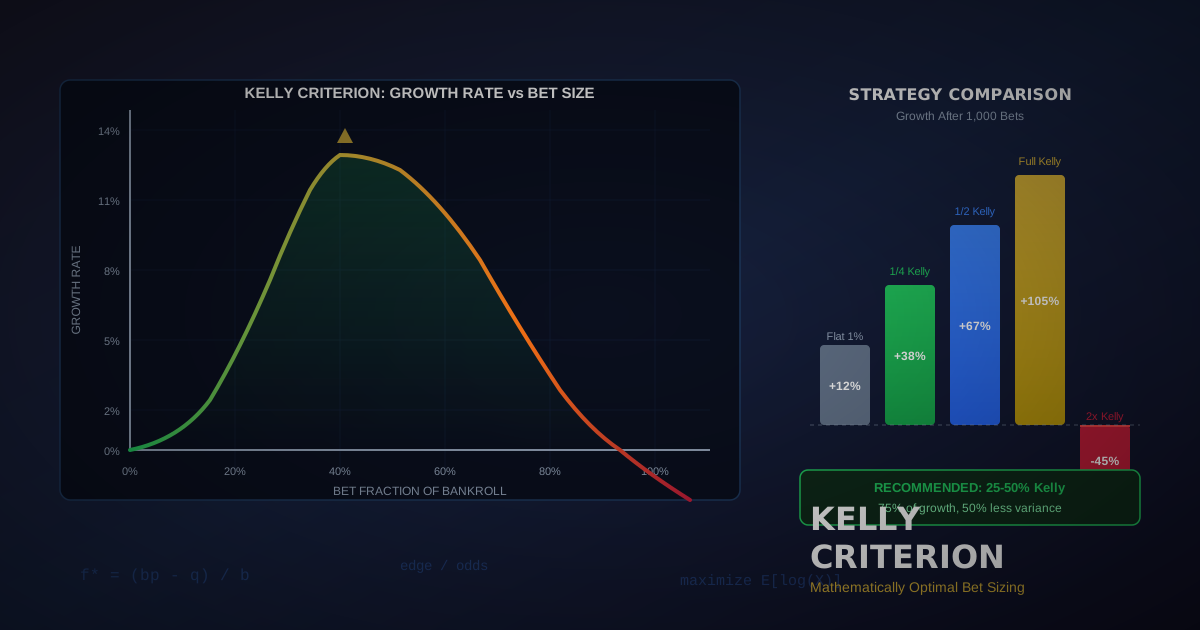
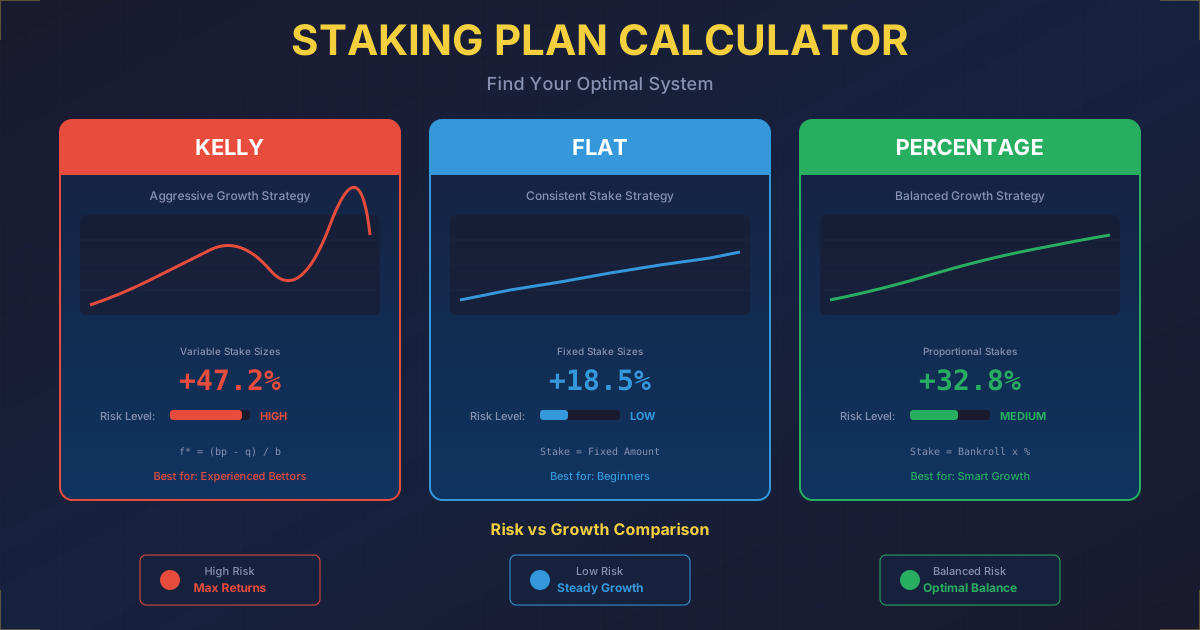
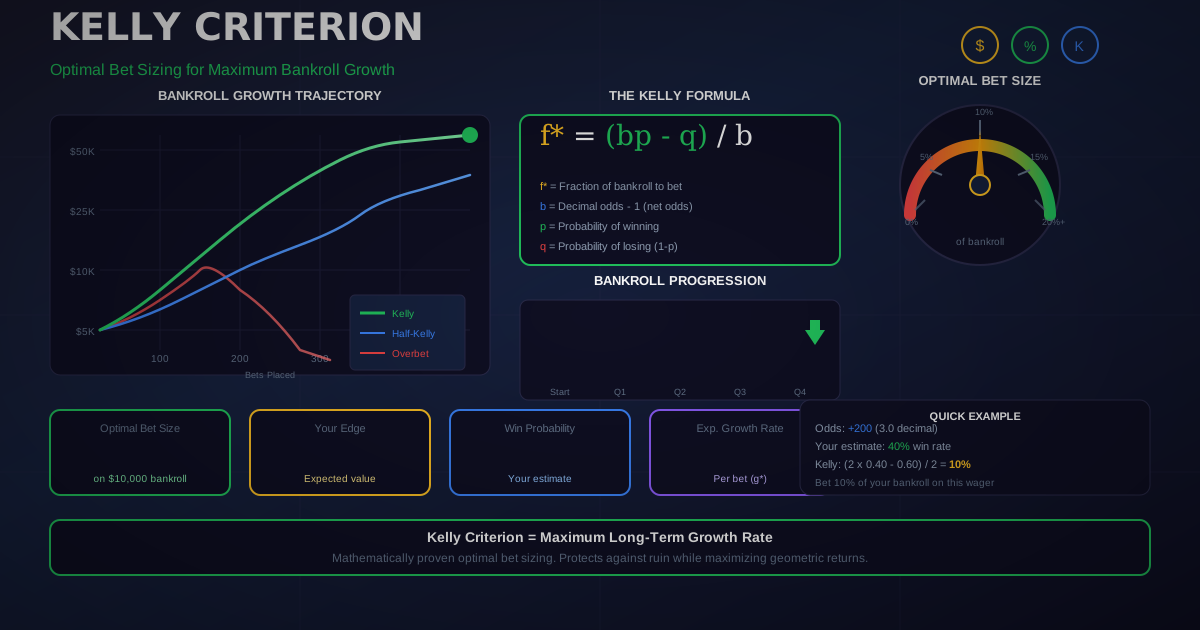
Use our Kelly Criterion Calculator to determine optimal bet sizing based on your model's measured edge.
Common Mistakes That Kill DIY Models
| Mistake | Why It Fails | How to Avoid It |
|---|---|---|
| Training and testing on same data | Overfitting illusion | Strict walk-forward splits |
| Using only win/loss accuracy | Ignores calibration | Track Brier score + CLV |
| Ignoring closing line movement | Your edge evaporates | Benchmark against close |
| Betting too many games | Dilutes edge, increases variance | Confidence thresholds |
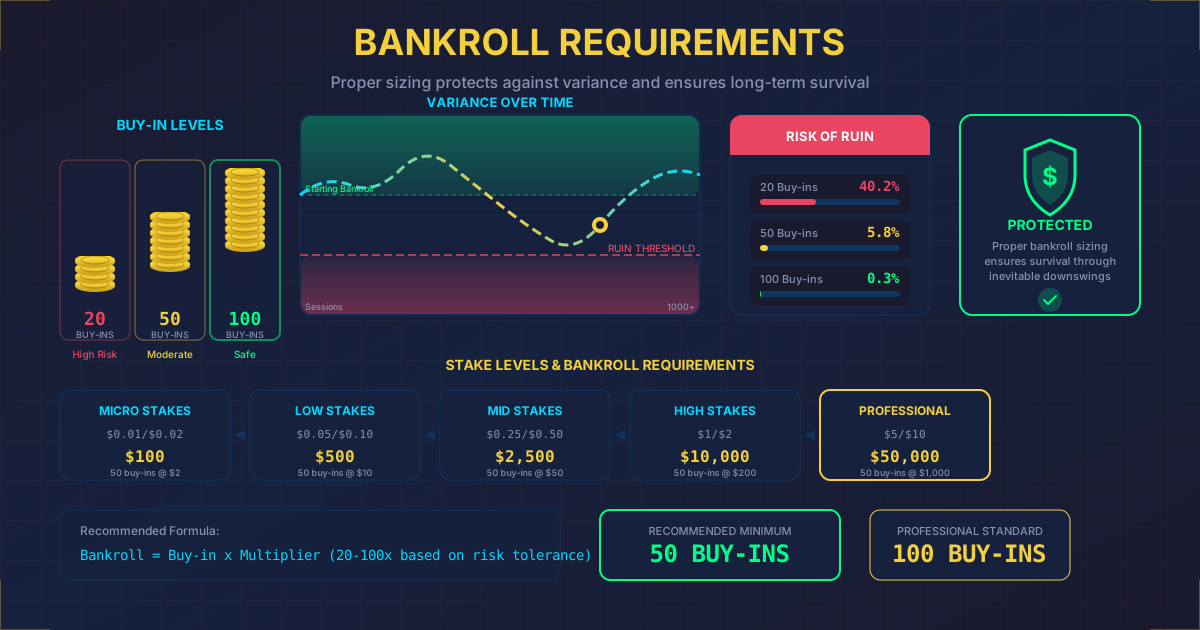
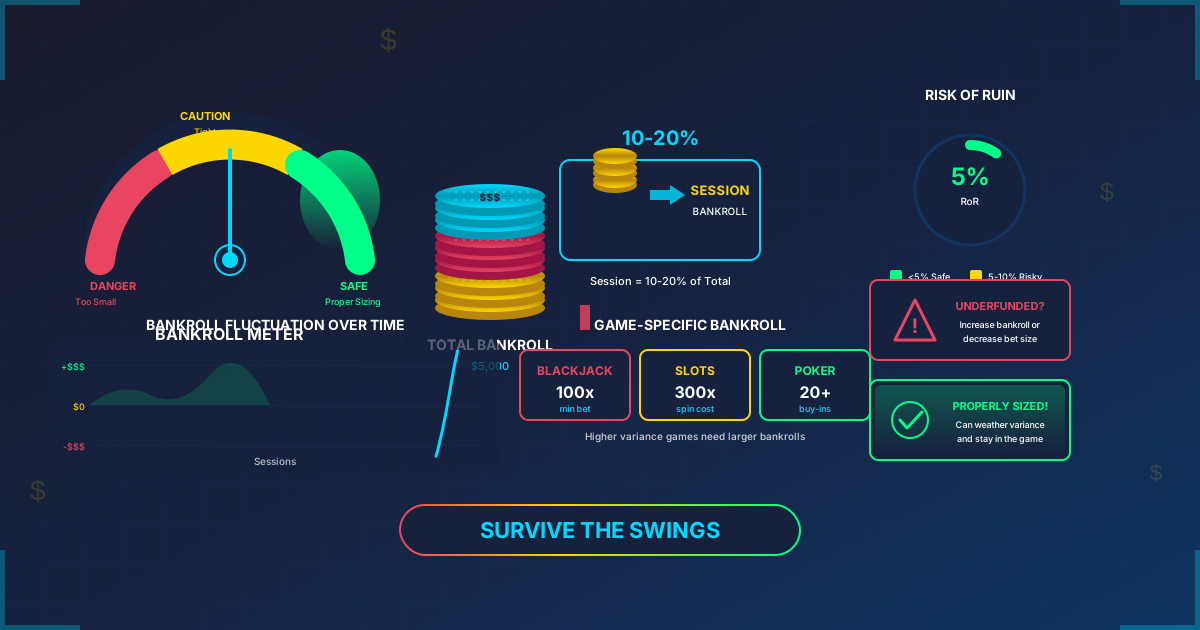
| No bankroll management | One bad streak wipes you | Kelly or fractional Kelly |
| Chasing model complexity | More parameters != more edge | Start simple, add only if justified |
AI Betting Tools Available to Retail Bettors
A growing market of consumer-facing AI tools promises to bring machine learning analytics to everyday bettors. Here is an honest assessment of what is available in 2026.
AI Betting Service Comparison
| Service / Tool | What It Does | Model Transparency | Claimed Accuracy | Cost | Best For |
|---|---|---|---|---|---|
| Rithmm | AI-powered picks with "Smart Signals" | Medium -- explains reasoning | 55-60% | Free tier + premium | Bettors wanting explained picks |
| Leans.AI (Remi) | Daily AI picks across major sports | Low -- proprietary models | 52-58% | Free | Casual exploration of AI picks |
| Pikkit (Action Network) | Personal betting assistant, trend analysis | Medium | Varies by user | Subscription | Portfolio-style bet management |
| Juice Reel | AI bots trained on 15M+ verified bets | Medium -- shows bot records | 50-58% | Freemium | Tracking AI bot performance |
| Sports-AI.dev | Value bet identification | Medium | 54-60% claimed | Subscription | Value bet hunters |
| OddsJam / Unabated | Line shopping + EV calculation | High -- shows math | N/A (tool, not picks) | $50-200/mo | Serious +EV bettors |
What to Look For (and What to Avoid)
Green flags:
- Service shows historical, verified results with timestamps
- Transparent about methodology or model type
- Reports CLV (Closing Line Value), not just win percentage
- Acknowledges that no model wins every bet
- Flat pricing (not tiered based on "premium" picks)
Red flags:
- Claims 70%+ win rate on sides/totals (almost certainly fabricated or cherry-picked)
- "Guaranteed" profits or "locks"
- Only shows recent winning streaks, not full historical record
- Charges per pick rather than flat subscription
- No mention of bankroll management or risk
- Uses phrases like "insider information" or "fixed games"
The Honest Truth About AI Picks Services
The brutal reality is that most consumer-facing AI picks services operate at 50-58% accuracy on sides and totals. Given standard -110 juice, you need 52.4% to break even. An AI service hitting at 55% generates roughly +4.8% ROI -- meaningful, but not the 300% returns that marketing materials imply.
More importantly, past performance of any model is not a guarantee of future results. Market efficiency increases over time, and edges that existed six months ago may have already been priced away.
Run your own expected value calculations on any bet with our Expected Value Calculator.
What AI Can and Cannot Predict in Sports Betting
Setting realistic expectations is critical. Machine learning is powerful, but sports have irreducible randomness that no algorithm can fully capture.
What AI Does Well
Pricing efficiency: AI excels at integrating large volumes of structured data to produce accurate probability estimates. Modern models capture baseline matchup dynamics, rest and scheduling effects, and roster construction interactions far better than any individual human.
Pattern recognition at scale: AI can identify subtle correlations across thousands of games that no human could process -- for example, how a specific defensive scheme performs against high-pace offenses on the second night of back-to-backs at altitude.
Speed: When news breaks (injury, lineup change, weather), AI can reprice markets in milliseconds. Early line movement often reflects AI, not human handicappers.
Discipline: AI does not go on tilt. It does not chase losses. It does not have "gut feelings." Every decision is mathematically grounded.
What AI Cannot Predict
| Unpredictable Factor | Why AI Fails Here | Real-World Example |
|---|---|---|
| Locker room chemistry | No structured data exists | A team with talent implodes due to internal conflict |
| Motivation / effort | Unquantifiable | Veterans "mailing it in" during meaningless late-season games |
| Referee randomness | Judgment calls vary wildly | A borderline penalty in the final minute changes the outcome |
| In-game injuries | Cannot predict when they happen | Star player tears ACL in the first quarter |
| Weather microbursts | Localized weather is unpredictable | Sudden wind gust turns a field goal into a miss |
| Individual brilliance / collapse | Talent has variance | A quarterback throws 4 interceptions despite elite season stats |
| Coaching decisions | Irrational choices happen | Going for it on 4th-and-8 from your own 30 |
| Black swan events | No training data | COVID-era bubble games had no historical precedent |
The floor on prediction error in major sports is estimated at roughly 30-40% -- meaning even a perfect model would still get 3-4 out of every 10 games wrong. The inherent randomness in athletic competition simply cannot be modeled away.
The Accuracy Ceiling
Research across dozens of academic papers and industry reports suggests these approximate accuracy ceilings for AI models on moneyline/spread outcomes:
| Sport | AI Accuracy Ceiling | Closing Line Efficiency | Edge Opportunity |
|---|---|---|---|
| NFL (sides) | 55-60% | Very high | Narrow |
| NBA (sides) | 56-62% | Very high | Narrow |
| MLB (moneyline) | 57-63% | High | Moderate |
| NHL (moneyline) | 55-60% | High | Moderate |
| Soccer (1X2) | 52-58% | Moderate | Moderate |
| Tennis (match winner) | 65-72% | Moderate | Wider |
| College sports | 55-65% | Lower | Wider |
Note that "accuracy ceiling" refers to the best published academic and industry results, not what a typical consumer tool achieves. Also note that college sports and tennis offer wider edges primarily because the markets are less efficient and the betting limits are lower.
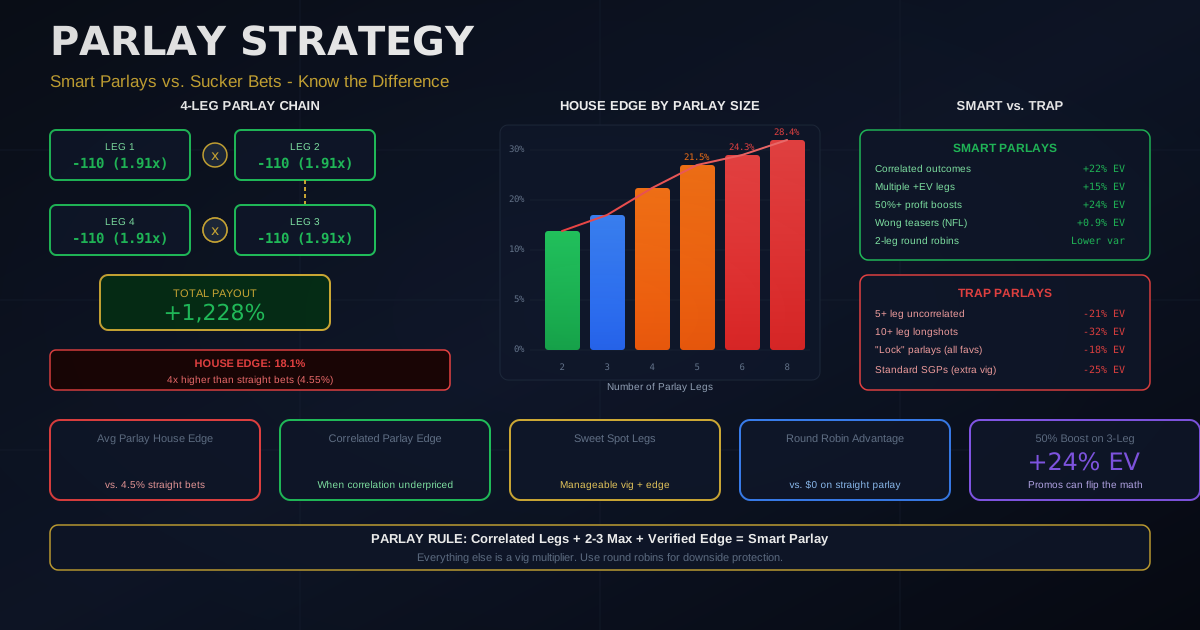
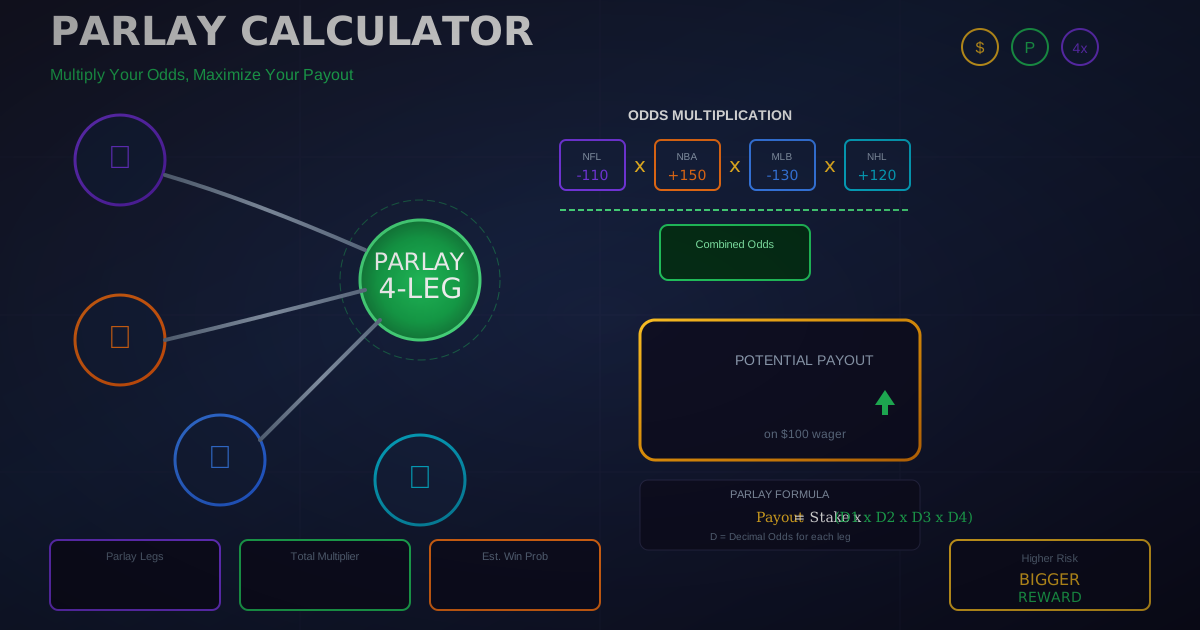
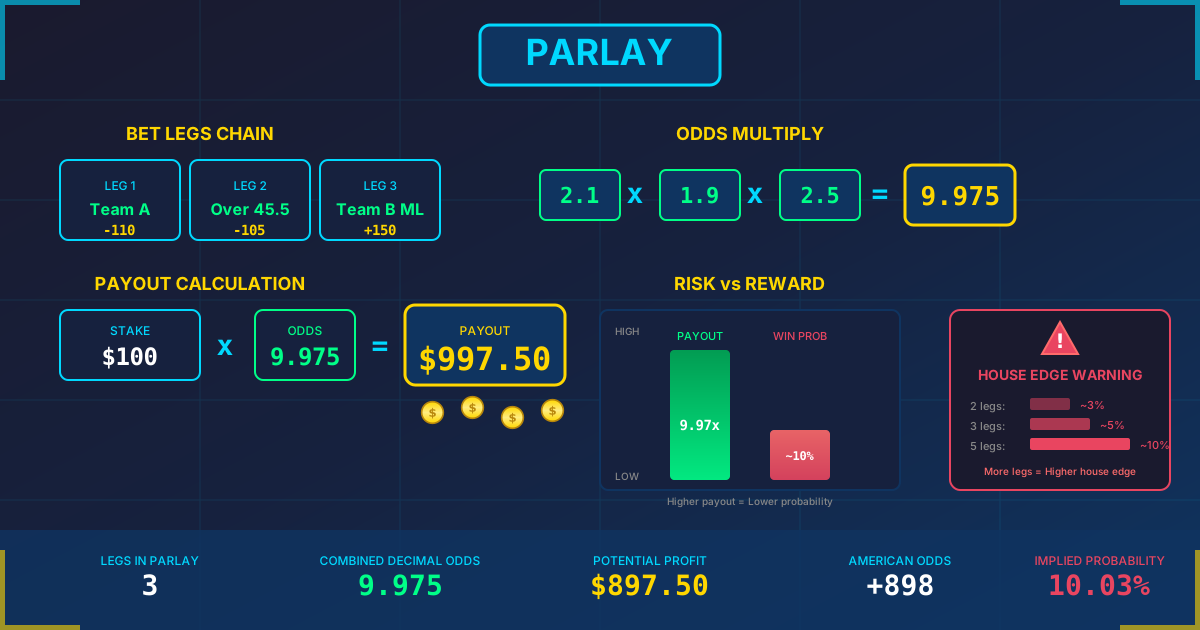
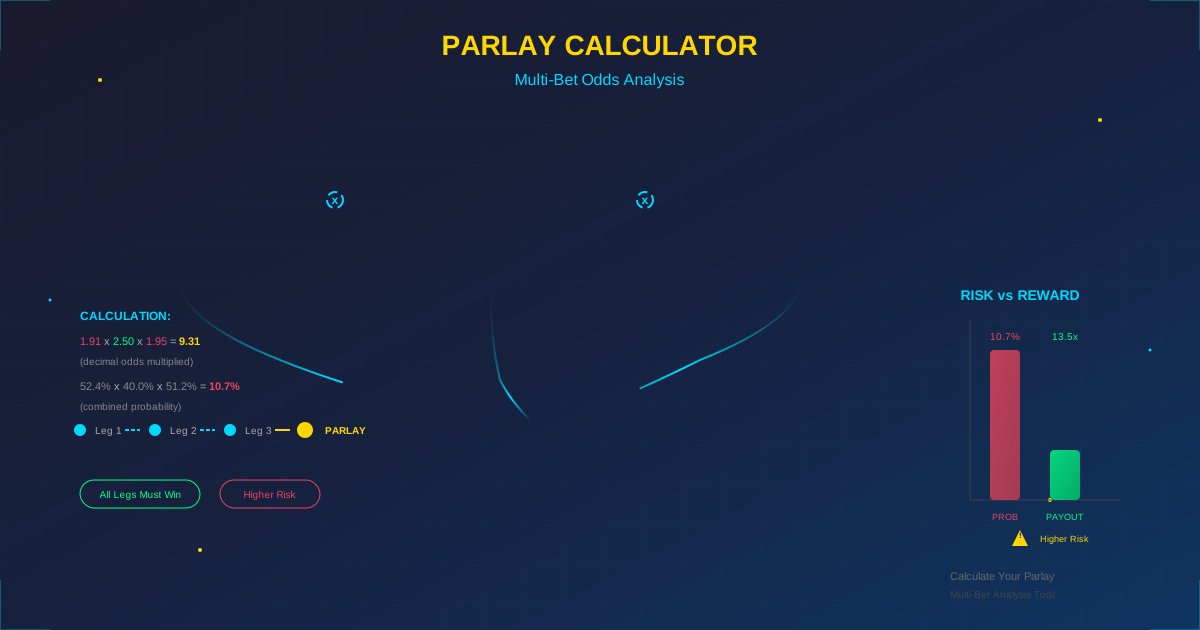
Analyze multi-leg bet risk and reward with our Parlay Calculator.
The Arms Race: Bettors vs. Books
The relationship between AI-equipped bettors and AI-equipped sportsbooks is an escalating arms race, and the books have structural advantages.
The Sportsbook Advantages
- Data access: Sportsbooks see every bet placed, including size, timing, and account history. They know the market better than any individual participant.
- Capital: Major operators spend $10-50 million annually on data science and technology infrastructure.
- The vig: Even a perfectly efficient market generates profit for the book through juice.
- Account limits: If you consistently beat their model, they can simply refuse your action.
- Speed: Their systems are colocated and optimized for millisecond response.
Where Retail Bettors Can Compete
Despite these disadvantages, individual bettors retain some structural edges:
- Niche specialization: A bettor who spends 40 hours per week studying mid-major college basketball can develop knowledge that the book's general-purpose model underweights.
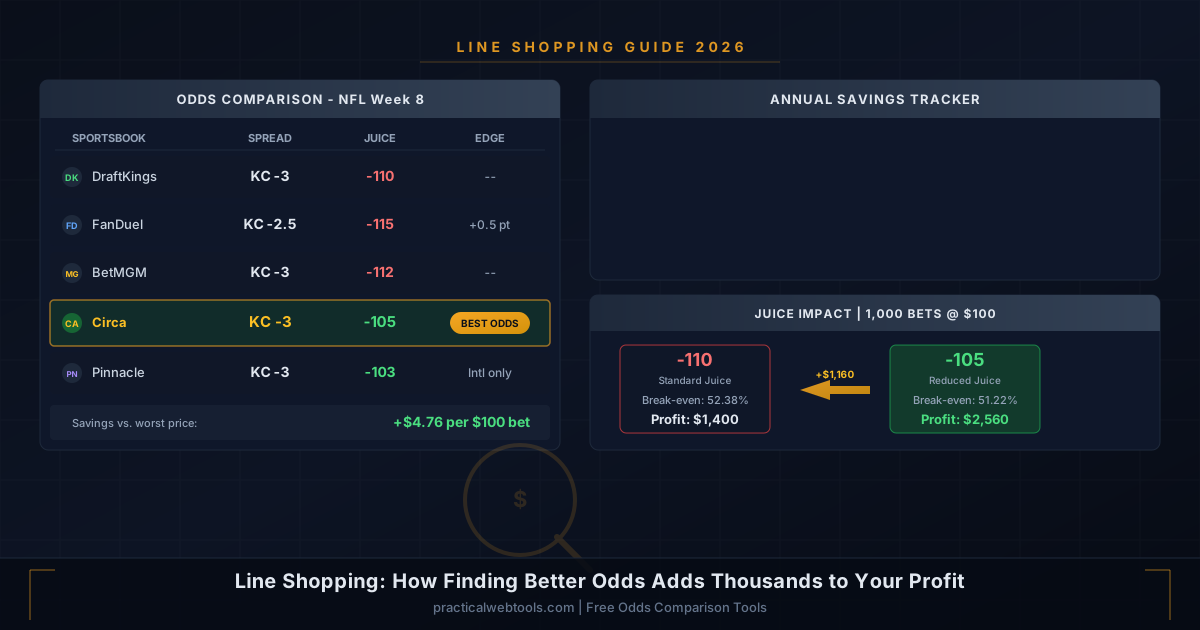
- Line shopping: Books compete on lines. Using odds comparison tools to always get the best number adds 1-3% to your ROI.
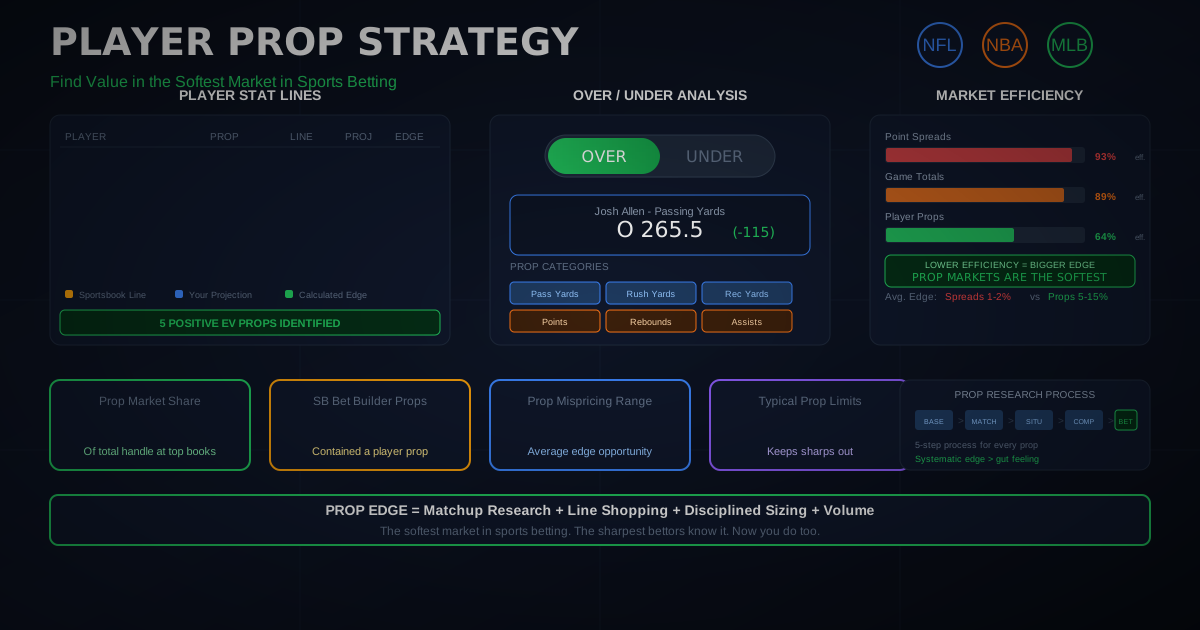
- Prop market inefficiency: Player props and derivative markets are newer, less liquid, and often less precisely modeled than sides and totals.
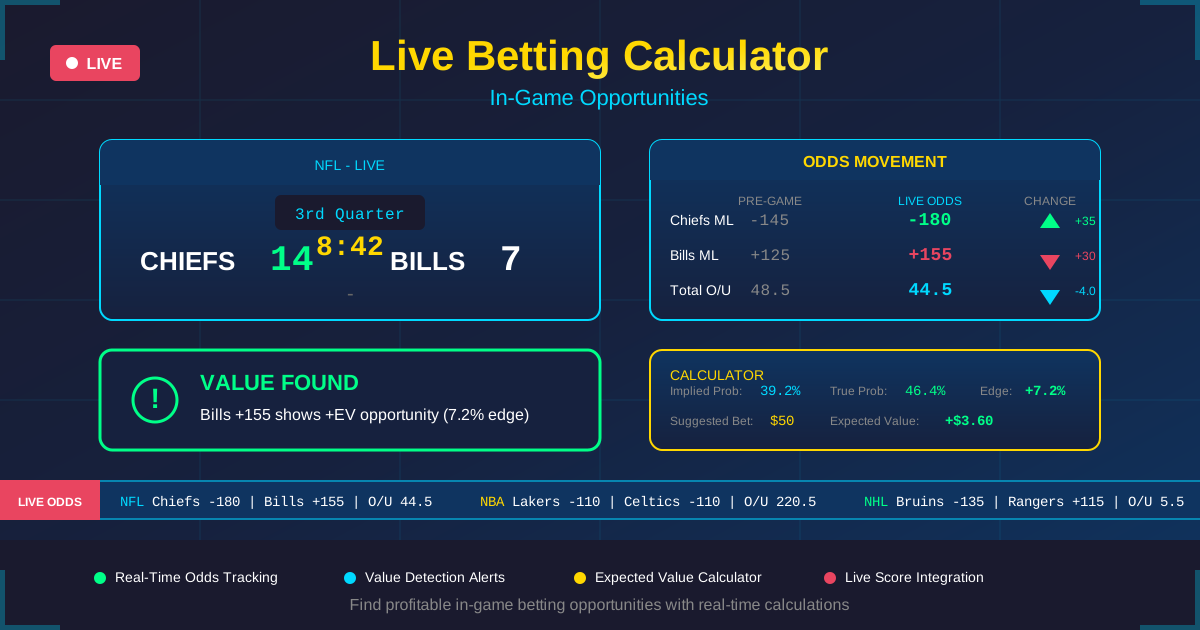
- Live betting windows: During live betting, there are brief moments where the model has not yet fully adjusted to new information and a human watching the game has an informational edge.
- Low limits as a feature: Sportsbooks do not invest heavily in modeling markets with low volume. A $500-per-bet bettor can exploit inefficiencies that are not worth fixing for the book.
The Investment Parallel
Think of sports betting markets like financial markets. Large-cap stocks (NFL sides) are extremely efficiently priced, and beating the market is extraordinarily difficult. Small-cap stocks (niche props, lower-tier leagues) have more information asymmetry and more opportunity -- but also more volatility and lower liquidity.
The smartest AI-equipped bettors in 2026 are not trying to beat the NFL closing line on primetime games. They are finding pricing errors in second-tier markets where the book's model has fewer data points and less incentive to optimize.
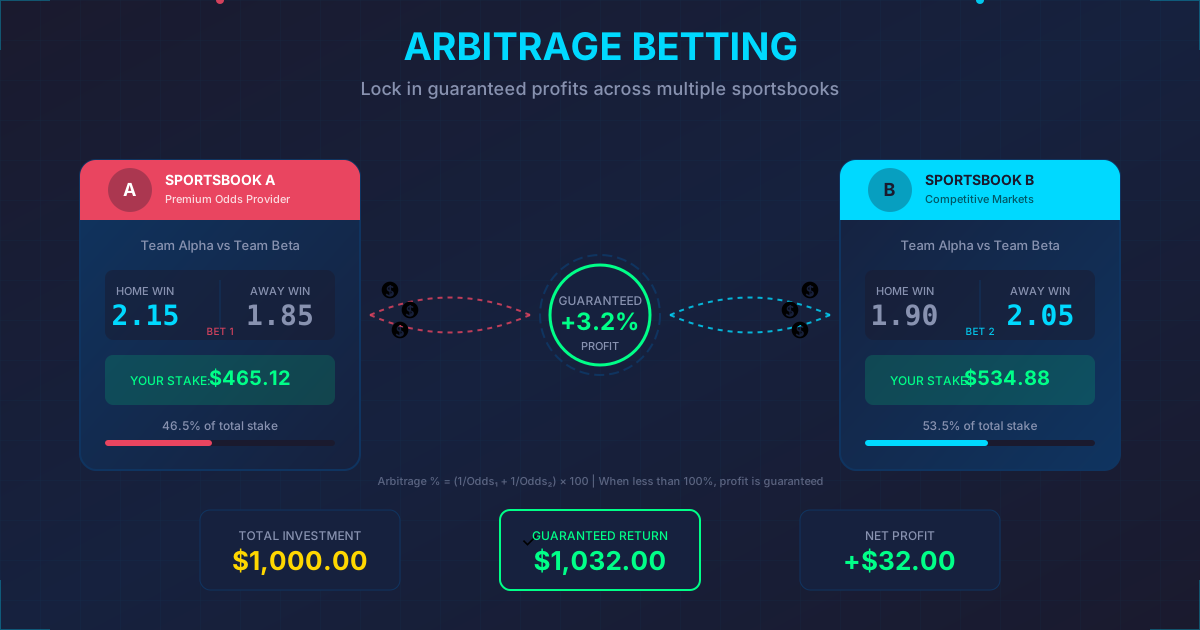
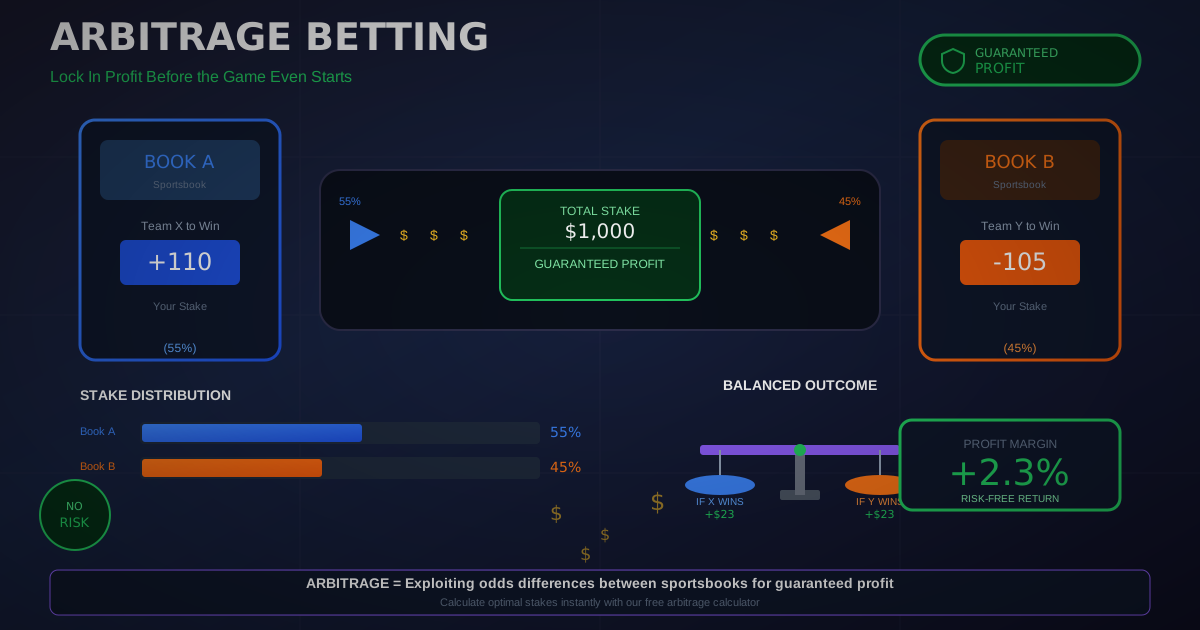
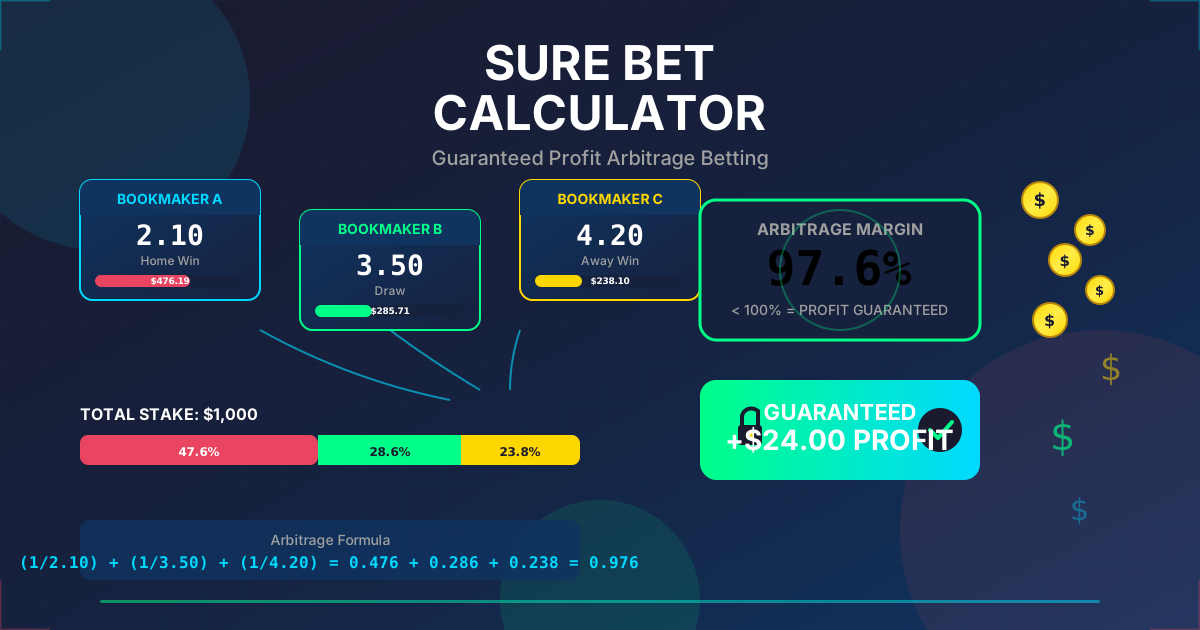
Find risk-free opportunities across sportsbooks with our Arbitrage Calculator.
Real-World Examples: AI's Impact by the Numbers
To ground this discussion in reality, here are documented examples of AI's financial impact on sports betting.
Example 1: Starlizard -- The $1+ Billion AI Betting Operation
UK-based Starlizard, founded by Tony Bloom, reportedly generates over $1 billion in annual betting turnover using proprietary statistical models. With a team of over 160 analysts and data scientists, they feed models that price sports markets independently of the sportsbooks. When their price differs significantly from the market, they bet aggressively. Bloom's personal net worth is estimated at over $1.5 billion, built largely on model-driven sports betting.
Example 2: Haralabos Voulgaris -- NBA Modeling Pioneer
Before joining the Dallas Mavericks front office, Haralabos Voulgaris built quantitative NBA models that reportedly earned him $1-5 million per year in the late 2000s and 2010s. His approach focused on live betting and exploiting slow-moving lines before AI made real-time repricing standard. His edge narrowed as sportsbook technology improved -- a textbook example of the arms race.
Example 3: CRIS/Pinnacle Market Efficiency
Pinnacle Sports, widely considered the sharpest sportsbook in the world, has publicly shared data showing that their NFL closing lines are approximately 97% efficient -- meaning only about 3% of edge theoretically remains for the market to find. Their model-driven approach reduced their hold from roughly 4% to under 2.5% on major markets while increasing total handle. The takeaway: AI has made the sharpest markets almost perfectly efficient.
Example 4: DraftKings AI-Powered Personalization
DraftKings disclosed in 2025 investor materials that their AI systems increased same-game parlay handle by approximately $280 million year-over-year by using machine learning to generate personalized bet suggestions pushed to users via the app. This is AI working for the sportsbook's bottom line, not the bettor's.
Example 5: Academic Benchmark -- Beating the Closing Line at 57%
A peer-reviewed 2025 study in Machine Learning for Sports Betting documented an XGBoost ensemble that achieved 57.2% accuracy against NBA closing spreads over a three-season, 3,000-game sample. At -110 standard juice, this translates to approximately +8.7% ROI -- significant, but the researchers noted that their model's edge was concentrated in specific game types (high rest-differential, altitude-related, early-season) and degraded as the season progressed and the market learned.
Ethical Considerations and Responsible AI in Betting
The intersection of AI and sports betting raises legitimate ethical concerns that the industry and regulators are only beginning to address.
Predatory Targeting
The most serious concern is that sportsbooks use AI to identify and target vulnerable users. Machine learning can detect behavioral patterns associated with problem gambling -- erratic bet sizing, chasing losses, prolonged sessions -- and instead of intervening, some operators may use those signals to push bonuses and promotional offers that keep at-risk users gambling longer.
A 2025 University of Florida study warned that AI's propensity for risk optimization, when applied to gambling marketing, could "worsen a growing addiction crisis." DraftKings data from Massachusetts showed that less than 3% of users activated any responsible gambling tools -- suggesting most protections are opt-in rather than default.
Regulatory Gaps
The regulatory landscape has not kept pace with AI adoption:
| Jurisdiction | AI-Specific Gambling Regulation | Status as of 2026 |
|---|---|---|
| United States (Federal) | SAFE Bet Act (proposed) | Stalled in committee |
| European Union | EU AI Act (partial coverage) | Enacted but not gambling-specific |
| United Kingdom | Gambling Commission review | Ongoing consultations |
| Australia | No AI-specific rules | Relies on general advertising regulations |
| Nevada | Gaming Control Board guidance | Case-by-case review |
The proposed SAFE Bet Act in the U.S. would ban AI-driven player tracking for promotional targeting and require algorithmic transparency in odds setting, but as of early 2026, it has not advanced beyond committee.
The Responsible AI Use Case
AI can also be used for harm reduction. Responsible AI applications include:
- Early warning systems that detect problem gambling patterns and trigger automatic cooling-off periods
- Spend-rate monitoring that alerts users when their betting velocity exceeds historical norms
- Self-exclusion enforcement using identity verification AI to prevent excluded individuals from creating new accounts
- Transparent AI disclosures that tell users when odds or promotions are being personalized by algorithms
The International Gaming Standards Association announced in 2025 that it would develop a best practices framework for ethical AI use in gambling -- a step in the right direction, though voluntary standards lack enforcement power.
Your Ethical Obligations as an AI-Equipped Bettor
If you build or use AI models for betting, consider:
- Do not share or sell AI picks to vulnerable populations without appropriate responsible gambling disclosures
- Do not claim certainty. No model is right all the time. Overclaiming accuracy is misleading.
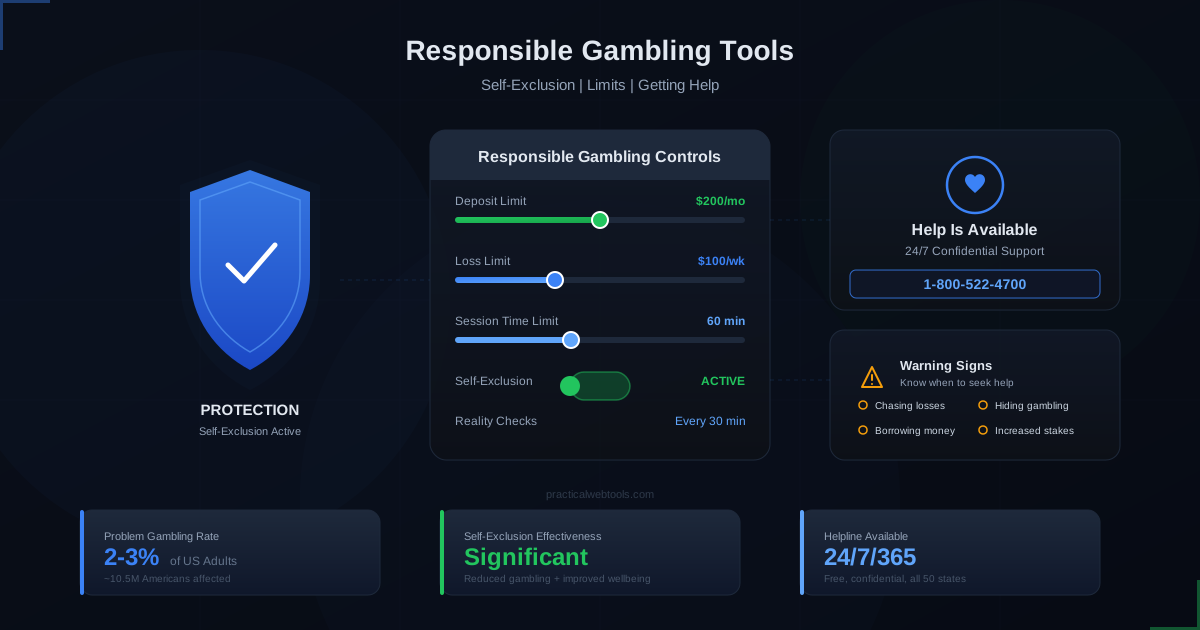
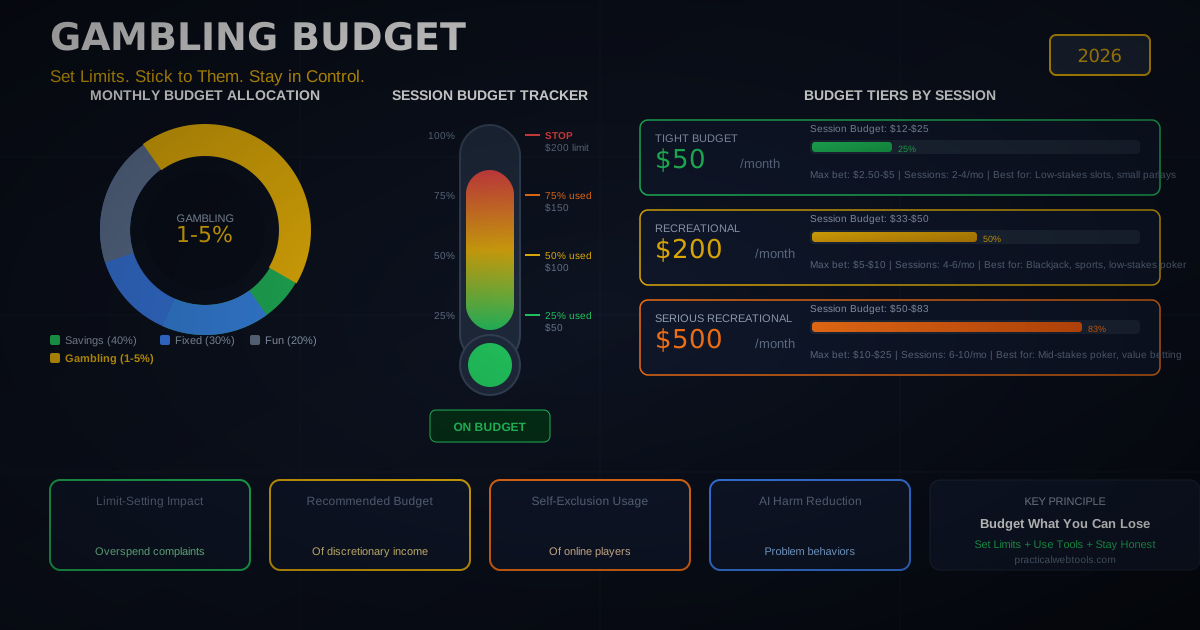
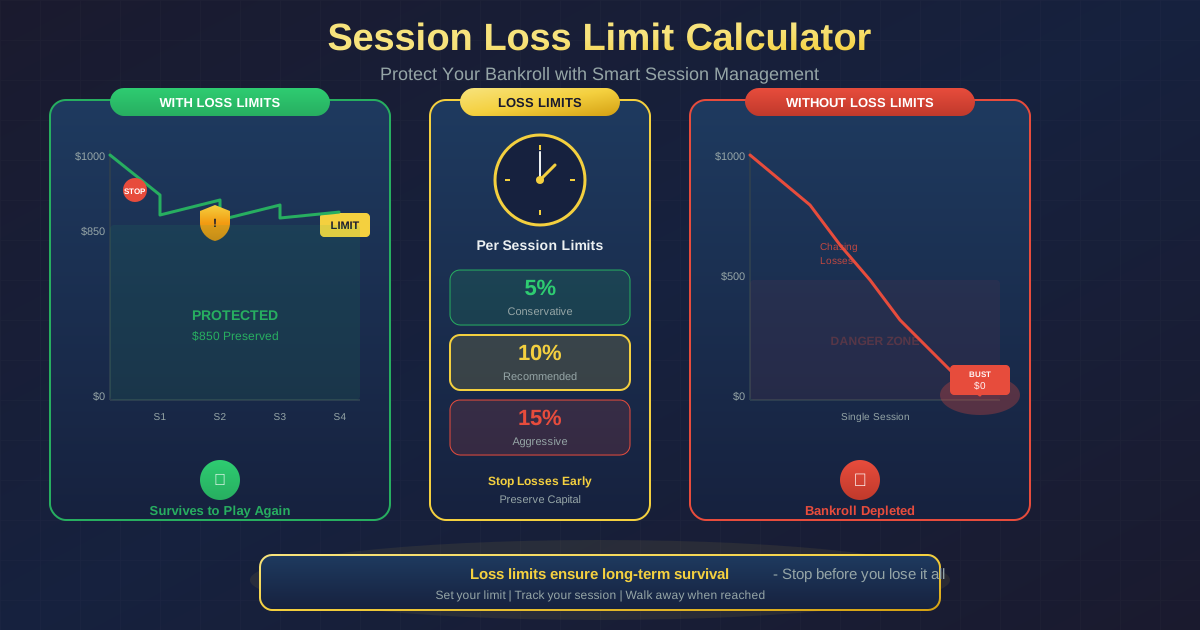
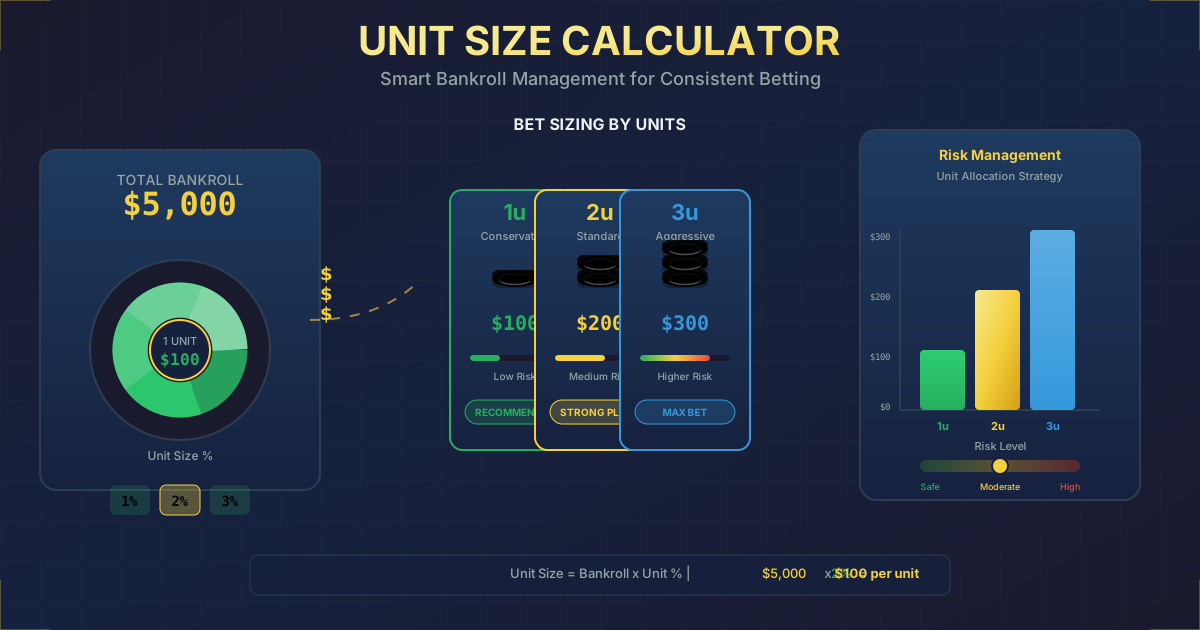
- Practice bankroll management -- never risk money you cannot afford to lose, regardless of what the model says
- Set loss limits that are independent of your model's output
- Recognize when the hobby becomes a problem -- AI tools can create a false sense of control
The Future of AI in Sports Betting (2026-2030)
Trends Already Underway
Real-time player tracking data integration. The NBA, NFL, and MLB have all deployed optical tracking systems that capture player movement at 25+ frames per second. As this data becomes more accessible, models will incorporate spatial dynamics that were previously impossible to quantify. Expect props related to player speed, distance covered, and positioning efficiency to become standard markets.
Generative AI for betting analysis. Large language models are beginning to synthesize scouting reports, press conference transcripts, and social media sentiment into structured inputs for prediction models. This does not replace statistical modeling, but it adds a qualitative layer that traditional quant models lacked.
On-device AI for live bettors. Mobile sportsbook apps are beginning to offer AI-powered "copilots" that run lightweight models directly on the user's phone, providing real-time analysis of live betting markets. Action Network's Playbook tool is an early example of this trend.
Blockchain-verifiable AI records. Some newer platforms are using blockchain timestamps to create verifiable records of AI predictions, making it harder for picks services to selectively delete losing bets from their public records.
What the Market Will Look Like in 2030
| Aspect | 2026 (Current) | 2030 (Projected) |
|---|---|---|
| % of lines set by AI | 85-95% | 98%+ |
| Average retail bettor edge | -3% to -5% | -4% to -6% (markets tighten further) |
| AI picks service accuracy (sides) | 50-58% | 50-55% (edges compress) |
| Live bet share of total handle | ~35% | 50-60% |
| AI responsible gambling tools | Opt-in | Likely mandated in regulated markets |
| Retail access to tracking data | Limited | More accessible but still costly |
The likely trajectory is increasing market efficiency. As both sides of the betting equation deploy better models, the available edge for any individual participant -- human or AI-assisted -- will continue to narrow. This is exactly what happened in financial markets as algorithmic trading matured.
The implication for retail bettors: AI will not make sports betting easy money. It will make it harder. The winners will be those who combine AI with genuine domain expertise, strict discipline, and a willingness to specialize in markets where the big money has not yet arrived.
Should You Trust AI Picks Services?
Let us answer this directly: probably not as your sole decision-making tool.
Here is a decision framework:
When AI Picks Services Make Sense
- You use them as one input among many, not as gospel
- You verify their historical record with independent timestamp verification
- You understand their methodology at least at a high level
- You apply your own bankroll management regardless of their "confidence levels"
- The service focuses on Closing Line Value (CLV) as a key metric, not just win rate
When AI Picks Services Are Dangerous
- You follow picks blindly without understanding the reasoning
- You increase bet sizes based on "high confidence" designations
- You are chasing losses and hoping AI will save you
- The service has no verified track record or only shows selective results
- You are betting money you cannot afford to lose
The Best Approach: AI as a Tool, Not a Crutch
The most profitable bettors in 2026 use AI as one component of a larger analytical framework:
- Their own model or analysis provides the primary probability estimate
- AI tools and services serve as a sanity check or second opinion
- Line shopping tools ensure they always get the best available price
- Bankroll management calculators determine bet sizing independently of confidence
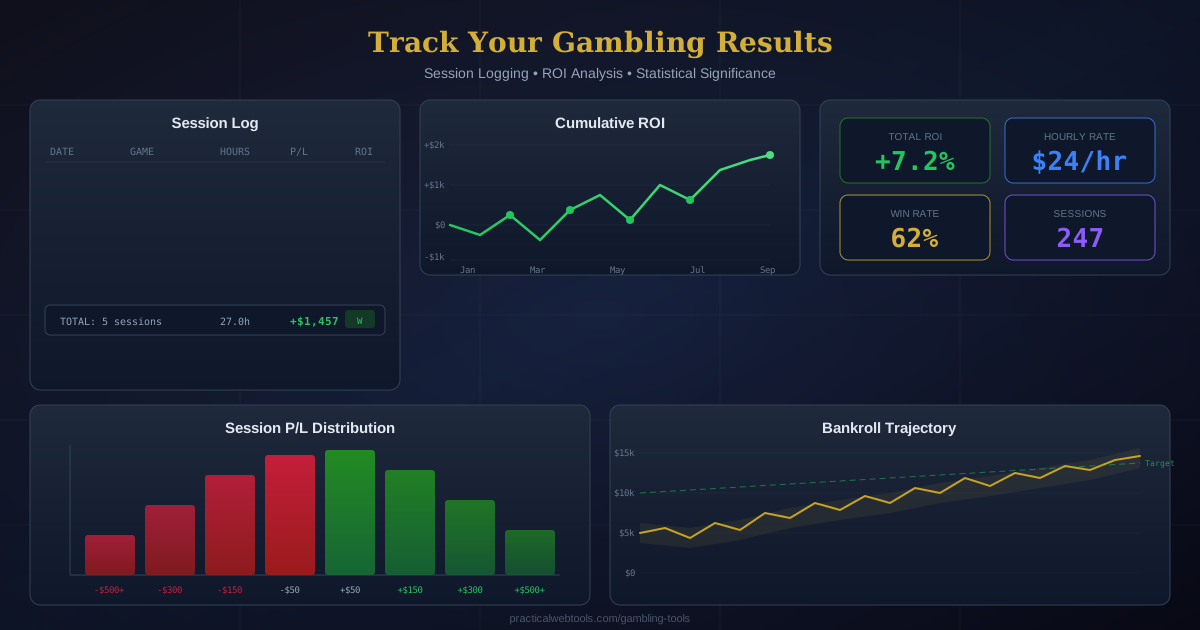
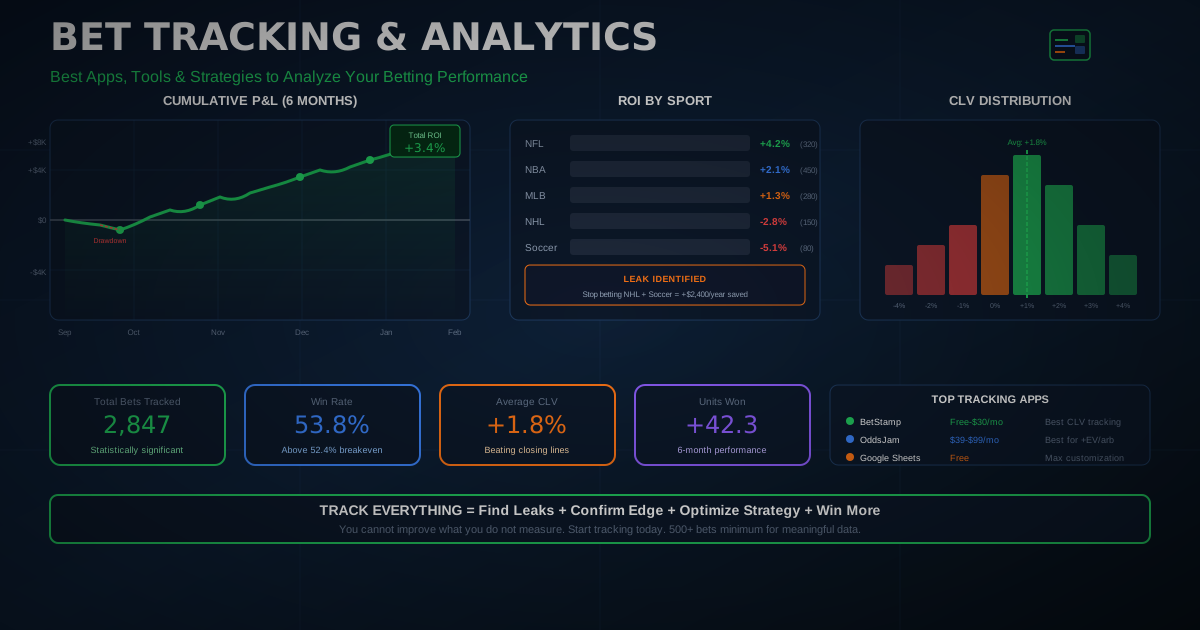
- Tracking and record-keeping provide honest feedback on actual performance
Size every bet optimally with our Kelly Criterion Calculator.
Frequently Asked Questions
Can AI really predict sports outcomes accurately? AI models can predict moneyline winners and spread outcomes in major sports with 55-65% accuracy under ideal conditions, which is above the 52.4% break-even threshold at standard -110 odds. However, the best published results are in controlled academic studies. Real-world performance, after accounting for vig, line movement, and execution costs, typically falls in the 52-58% range for profitable systems. AI does not eliminate the inherent randomness in sports -- it simply prices probabilities more efficiently.
What machine learning model is best for sports betting? Gradient boosting models (XGBoost, LightGBM) are the current industry standard for structured sports data because they handle mixed feature types, train quickly, and resist overfitting. For sequential data like player trajectory over a season, LSTMs and Transformers show promise. However, research consistently shows that feature engineering and data quality matter more than model choice. A well-tuned logistic regression on excellent features can outperform a deep neural network on poor features.
How much does it cost to build a sports betting AI model? You can build a functional model for free using open-source tools (Python, scikit-learn, publicly available data from Basketball-Reference or similar sources). A competitive model that uses premium data feeds from providers like Sportradar or Genius Sports can cost $500-$5,000+ per month for data alone. Professional syndicates invest millions annually. The diminishing returns are significant -- the gap between a $0 model and a $500/month model is much larger than the gap between $500/month and $50,000/month.
Are AI sports betting picks services worth paying for? Most are not. The average AI picks service hits at 50-58% on sides and totals, which produces modest ROI of -2% to +5% after vig. Many services cherry-pick results, show only recent winning streaks, or inflate accuracy claims. If a service claims 70%+ accuracy on sides, it is almost certainly misrepresenting its record. The services worth considering are those that transparently report CLV, show timestamped full records, and charge flat fees rather than per-pick pricing.
Will AI make sports betting unprofitable for everyone? Not entirely, but AI is making markets more efficient, which compresses edges for all participants. The analogy to financial markets is instructive: algorithmic trading made stock picking harder, but active managers who specialize in illiquid or niche markets still outperform. In sports betting, the future edge likely lives in niche markets (lower-tier leagues, complex props, live betting windows) where the sportsbook's general-purpose models are weaker.
How do sportsbooks use AI against bettors? Sportsbooks use AI for line setting (85-95% of opening lines are AI-generated), real-time odds adjustment, bettor profiling (to identify and limit sharp accounts), personalized promotional targeting (to maximize handle from recreational bettors), same-game parlay pricing, and fraud detection. The most profitable application for sportsbooks is personalized marketing -- AI-driven push notifications and bet suggestions generate significantly more handle than static promotions.
Is it legal to use AI for sports betting? Using AI and machine learning models to inform your own betting decisions is legal in all U.S. states where sports betting is legal. There are no laws prohibiting the use of statistical models or algorithms for personal wagering. However, selling AI picks may require compliance with state-specific regulations around sports betting advice, and some sportsbooks' terms of service technically prohibit "automated" betting (bot-placed wagers), though personal analysis tools are universally permitted.
What data do I need to build a sports prediction model? At minimum, you need historical game results (scores, outcomes) and historical odds or closing lines. Better models incorporate team and player statistics, schedule/rest data, injury reports, and weather conditions. The highest-performing models also use player tracking data, advanced efficiency metrics, and line movement data. Most of this base data is freely available through sports reference sites and public APIs. Premium data from providers like Sportradar significantly improves model quality but at substantial cost.
Essential Tools for Data-Driven Sports Bettors
Whether you are building your own AI model or simply using data-driven principles to bet smarter, these tools provide the mathematical foundation:
- Expected Value Calculator -- Determine if any bet has positive or negative expected value based on your probability assessment
- Kelly Criterion Calculator -- Calculate mathematically optimal bet sizing based on your edge and bankroll
- Odds Converter -- Convert between American, decimal, and fractional odds to compare lines across sportsbooks
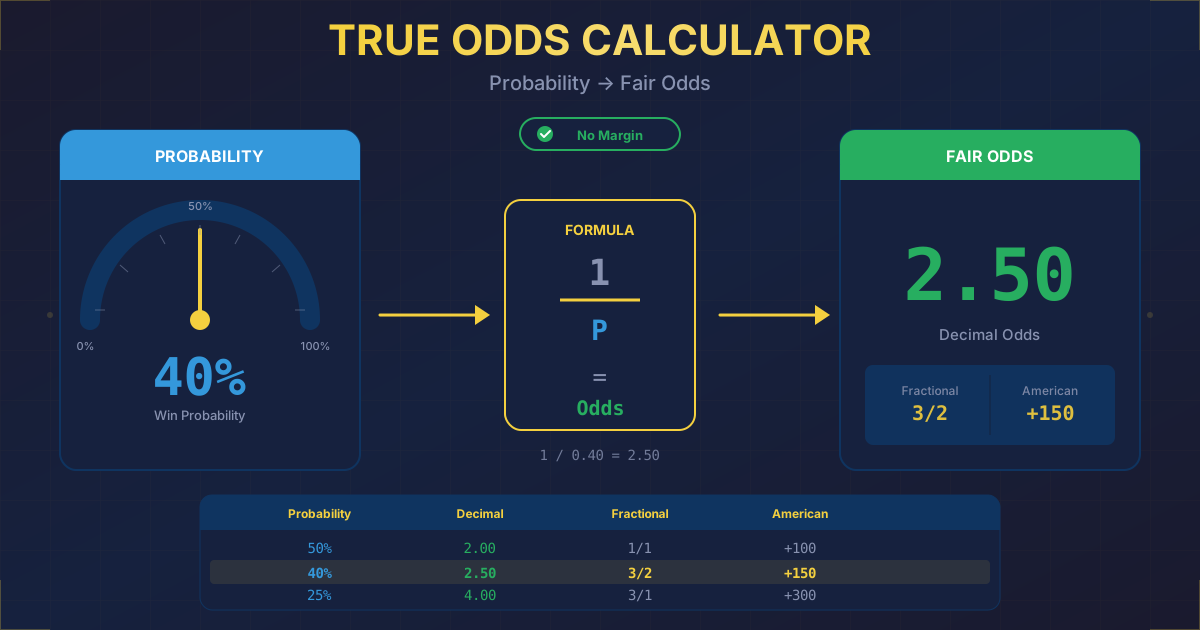
- Implied Probability Calculator -- Extract the true probability the sportsbook is pricing into any line
- Parlay Calculator -- Analyze multi-leg bet payouts and understand the compounding effect of parlay vig
- Arbitrage Calculator -- Identify and calculate risk-free arbitrage opportunities across sportsbooks
Conclusion: AI Is a Tool, Not a Crystal Ball
AI and machine learning have fundamentally changed sports betting. The sportsbooks are sharper. The markets are tighter. The days of casual handicappers consistently beating the number by watching games and trusting their instincts are numbered.
But AI is not magic. It does not see the future. It processes data, identifies patterns, and generates probability estimates -- estimates that are subject to the same irreducible randomness that makes sports compelling in the first place.
The bettors who will thrive in the AI era are those who treat it as a tool within a disciplined framework: clear edge identification, proper bankroll management, relentless record-keeping, and the intellectual honesty to admit when their model is wrong.
Do not chase the fantasy of an unbeatable algorithm. Instead, build a sustainable, data-informed approach that accepts variance, respects the market, and focuses on long-term expected value over short-term results.
The math is on your side -- but only if you use it correctly.
Gambling involves risk. This content is for educational and informational purposes only. Always gamble responsibly, set limits you can afford, and seek help if gambling becomes a problem. Visit the National Council on Problem Gambling or call 1-800-522-4700 for support.