Gambling on a Budget: How to Set Limits and Actually Stick to Them (2026)
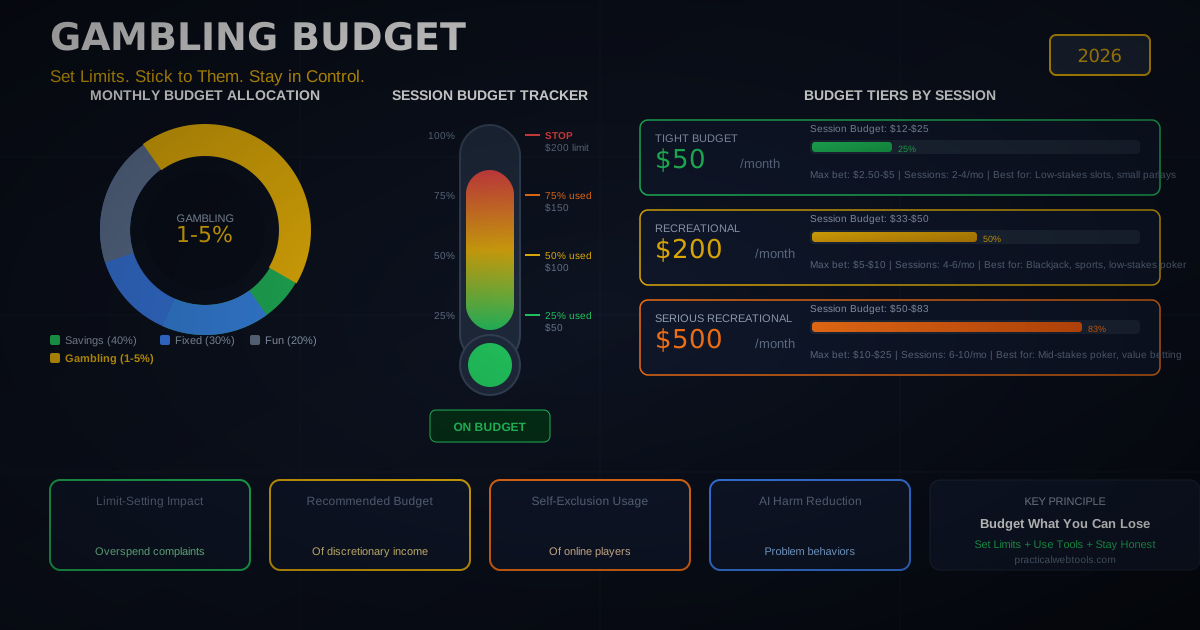
Most people who gamble do not have a budget. And most people who gamble lose money. That is not a coincidence. According to the National Council on Problem Gambling, nearly 20 million American adults report experiencing at least one problematic gambling behavior multiple times per year. The single most effective barrier between recreational fun and financial ruin is a written, enforced gambling budget.
Here is the reality: 55% of U.S. adults participated in some form of gambling in 2024. The average American sports bettor spent $3,284 on gambling over 12 months, but the median was just $750, meaning a small group of heavy spenders is pulling that average way up. Most recreational gamblers can absolutely enjoy the experience without damaging their finances. The key is a budget that accounts for variance, sets hard limits, and uses every available tool to enforce discipline when willpower alone is not enough.
This guide provides exact dollar amounts, session templates, and game-specific strategies at the $50/month, $200/month, and $500/month budget levels. If you have ever finished a gambling session feeling sick about what you spent, this is the guide that fixes that.
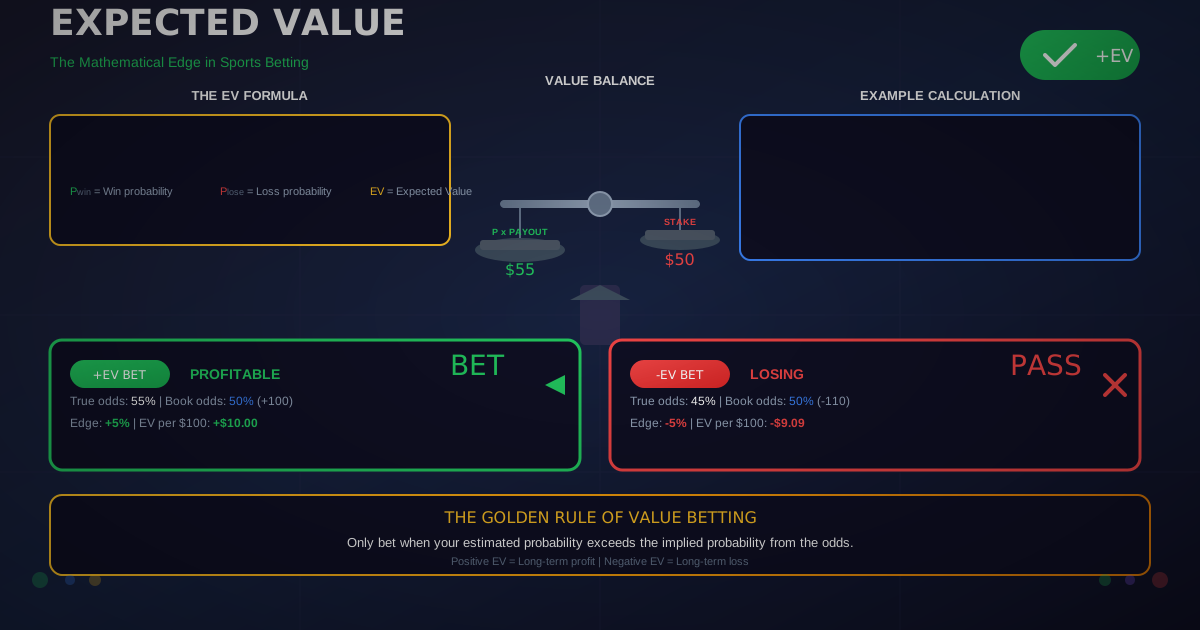
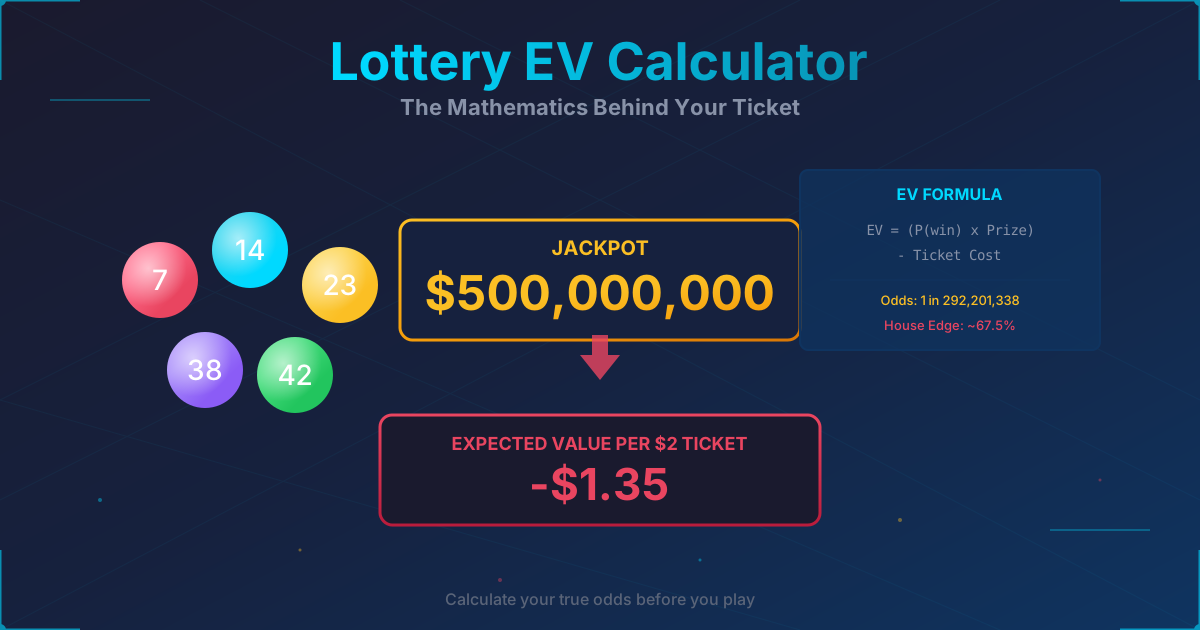
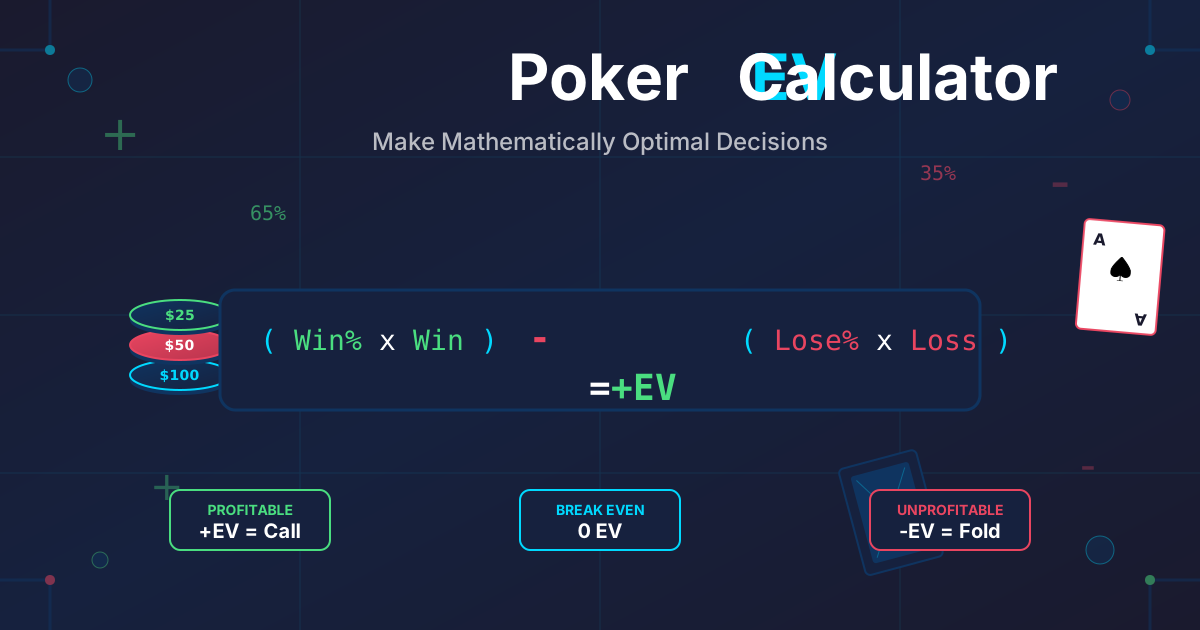
Calculate the expected value of any bet before you place it with our free Expected Value Calculator.
Why Most Gamblers Do Not Budget (And Why That Is Dangerous)
Gambling is one of the only entertainment categories where most participants have zero idea what they spend. People track their Netflix subscription, their gym membership, their dining budget. But gambling? Most people guess, and they guess low.
There are several reasons for this:
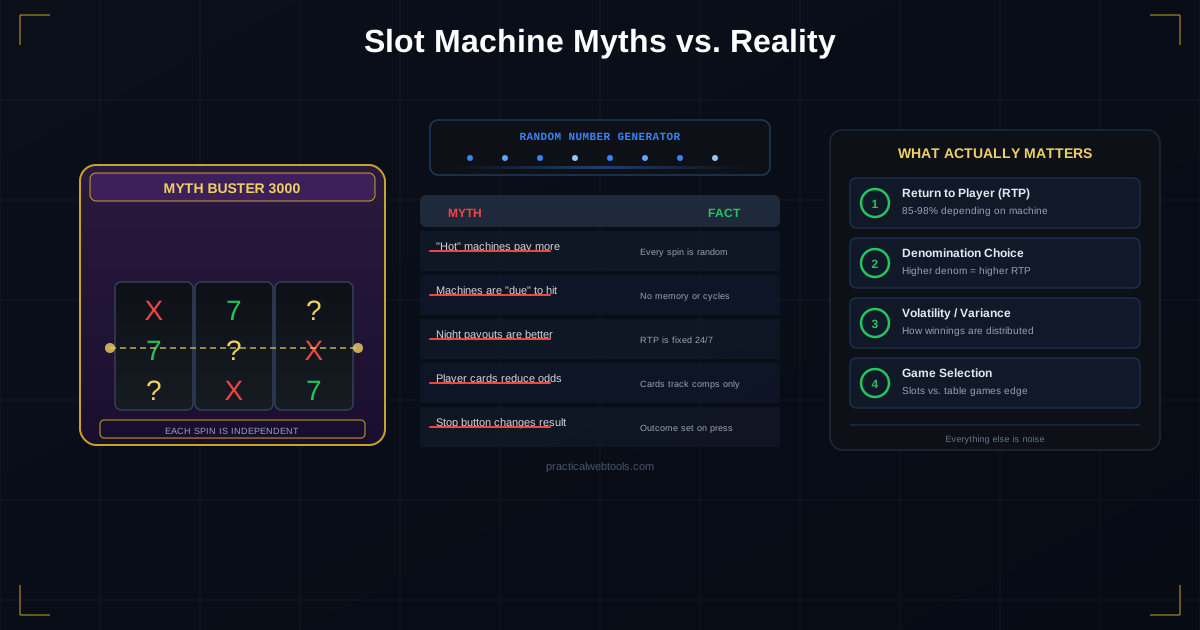
The "house money" illusion. After a win, many gamblers mentally separate that money from "real" money. A $200 win becomes play money that does not count when it is lost back. But it was real money the moment it hit your account.
Variable spending hides the total. A $20 scratch ticket here, a $50 sports bet there, a $100 casino night once a month. None of those individual amounts feels alarming. But $20 + $50 + $100 repeated monthly is $2,040 per year.
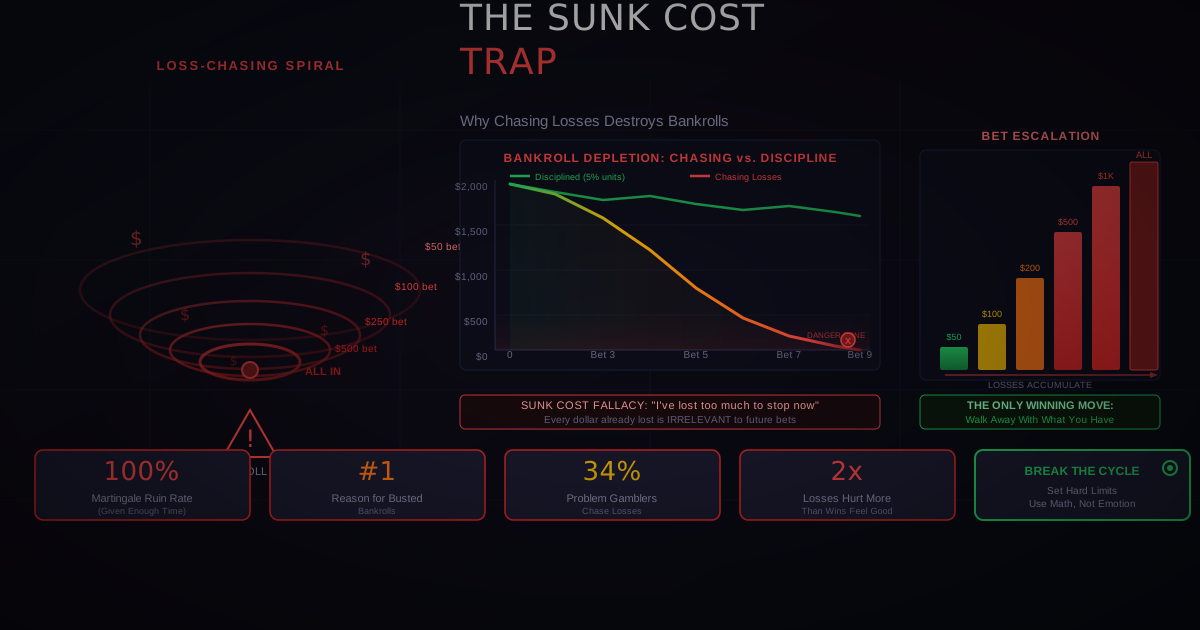
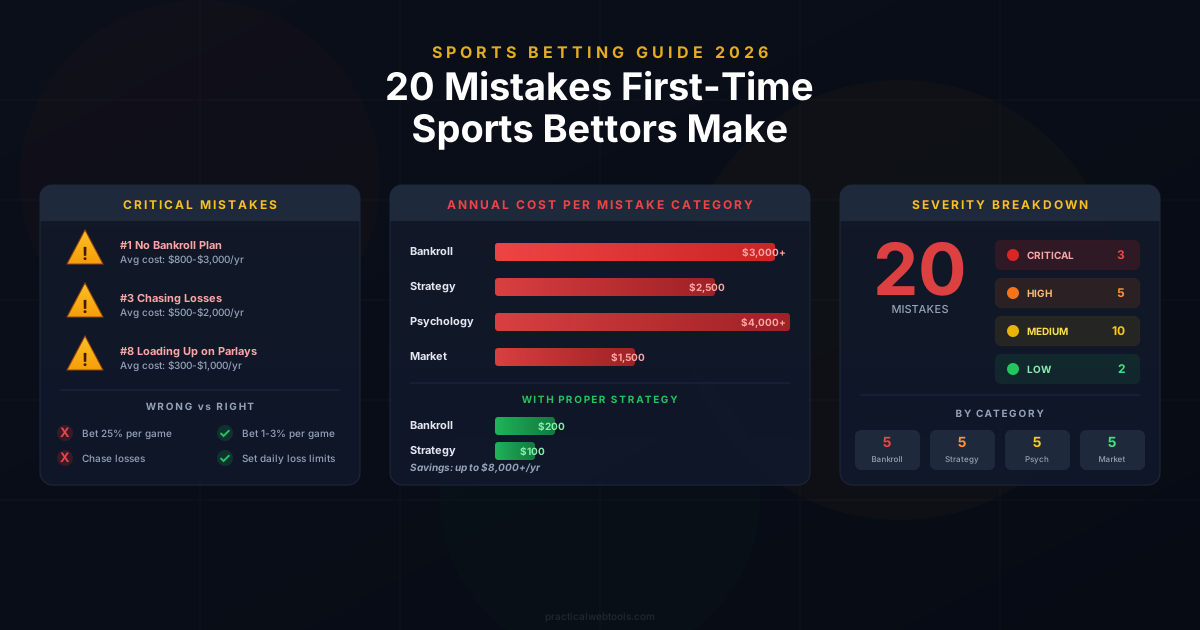
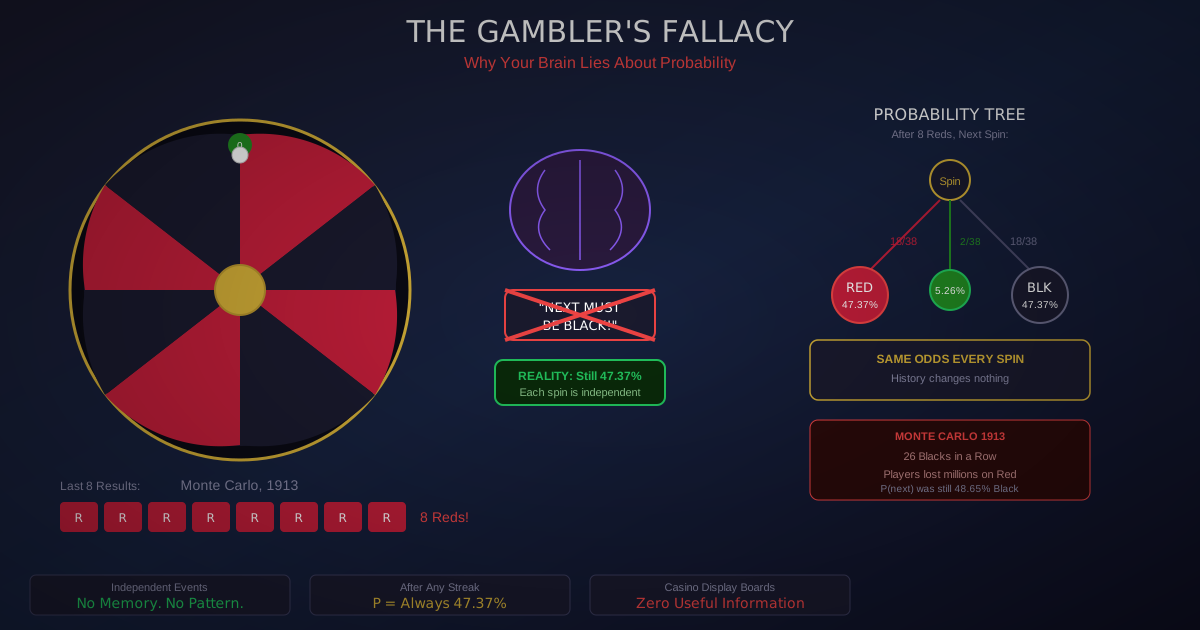
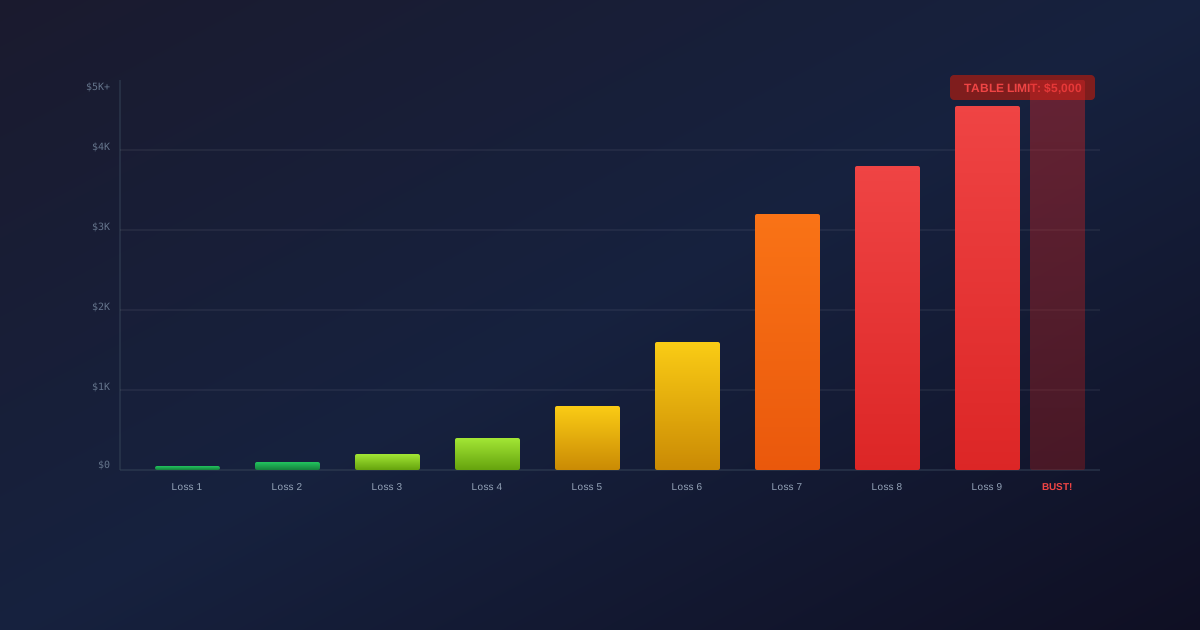
Loss chasing distorts single sessions. Research from the University of British Columbia found that loss chasing is reported by 60% of gamblers who met one diagnostic criterion for disordered gambling and by 80% of those who met three or four criteria. A $100 budget becomes $300 spent because "I was due for a win."
Winning sessions create false confidence. One big win can fund months of losses and create the illusion of being "ahead" when the overall picture tells a different story.
The Real Cost of Not Budgeting
A 2025 U.S. News survey found that 1 in 4 sports bettors have missed bill payments due to wagers. That statistic alone should end any debate about whether gambling budgets matter. When gambling money and living money share the same mental account, the boundary between entertainment and financial harm disappears.
| Scenario | Monthly Spend | Annual Cost | 5-Year Cost |
|---|---|---|---|
| "Just a few bets" (untracked) | $150-$400 | $1,800-$4,800 | $9,000-$24,000 |
| Budgeted recreational gambler | $50-$200 | $600-$2,400 | $3,000-$12,000 |
| Budget with bankroll strategy | $50-$200 | $400-$1,800* | $2,000-$9,000* |
*Lower annual costs reflect smarter game selection and bet sizing that reduces expected loss rate.
The difference between the untracked gambler and the budgeted gambler is not luck. It is awareness. You cannot manage what you do not measure.
How to Calculate Your Gambling Budget: The 1-5% Rule
The most widely recommended guideline from responsible gambling experts is allocating between 1% and 5% of your monthly disposable income to gambling. Disposable income means what remains after taxes, rent/mortgage, utilities, groceries, insurance, debt payments, savings contributions, and all other fixed obligations.
This is money you would otherwise spend on entertainment, not money you need for anything.
Step-by-Step Budget Calculation
- Calculate your monthly take-home pay (after taxes)
- Subtract all fixed expenses (rent, utilities, insurance, debt payments, subscriptions)
- Subtract savings and investment contributions (minimum 10-15% of income)
- Subtract variable necessities (groceries, gas, medical co-pays)
- The remainder is your discretionary income
- Allocate 1-5% of discretionary income to gambling (not 1-5% of total income)
Gambling Budget by Income Level
| Monthly Take-Home | Fixed Expenses | Savings (15%) | Discretionary | 1% Gambling Budget | 3% Budget | 5% Budget |
|---|---|---|---|---|---|---|
| $3,000 | $2,200 | $450 | $350 | $3.50 | $10.50 | $17.50 |
| $4,000 | $2,600 | $600 | $800 | $8 | $24 | $40 |
| $5,000 | $3,200 | $750 | $1,050 | $10.50 | $31.50 | $52.50 |
| $6,000 | $3,600 | $900 | $1,500 | $15 | $45 | $75 |
| $8,000 | $4,500 | $1,200 | $2,300 | $23 | $69 | $115 |
| $10,000 | $5,500 | $1,500 | $3,000 | $30 | $90 | $150 |
| $15,000 | $7,500 | $2,250 | $5,250 | $52.50 | $157.50 | $262.50 |
Notice something important: at $3,000/month take-home, even the 5% allocation only gives you $17.50. That is not a lot. And that is the point. If your disposable income is tight, gambling should be a very small part of your entertainment budget, or possibly not part of it at all.
Use our Kelly Criterion Calculator to determine optimal bet sizing once you have established your budget.
The "Entertainment Dollar" Test
Here is a simple gut check: compare your gambling budget to other entertainment spending.
| Entertainment Category | Typical Monthly Cost | Hours of Entertainment |
|---|---|---|
| Streaming services (2-3) | $30-$50 | 40-60 hours |
| Dining out (2x/month) | $60-$120 | 4-6 hours |
| Movie theater (2x) | $30-$50 | 4-6 hours |
| Gambling (budgeted) | $50-$200 | 8-20 hours |
| Concert/live event | $50-$200 | 3-5 hours |
If your gambling budget is dramatically higher than all your other entertainment combined, that is a signal to recalibrate. Gambling should be one line item in a balanced entertainment budget, not the entire category.
Session Limits and Stop-Loss Rules That Actually Work
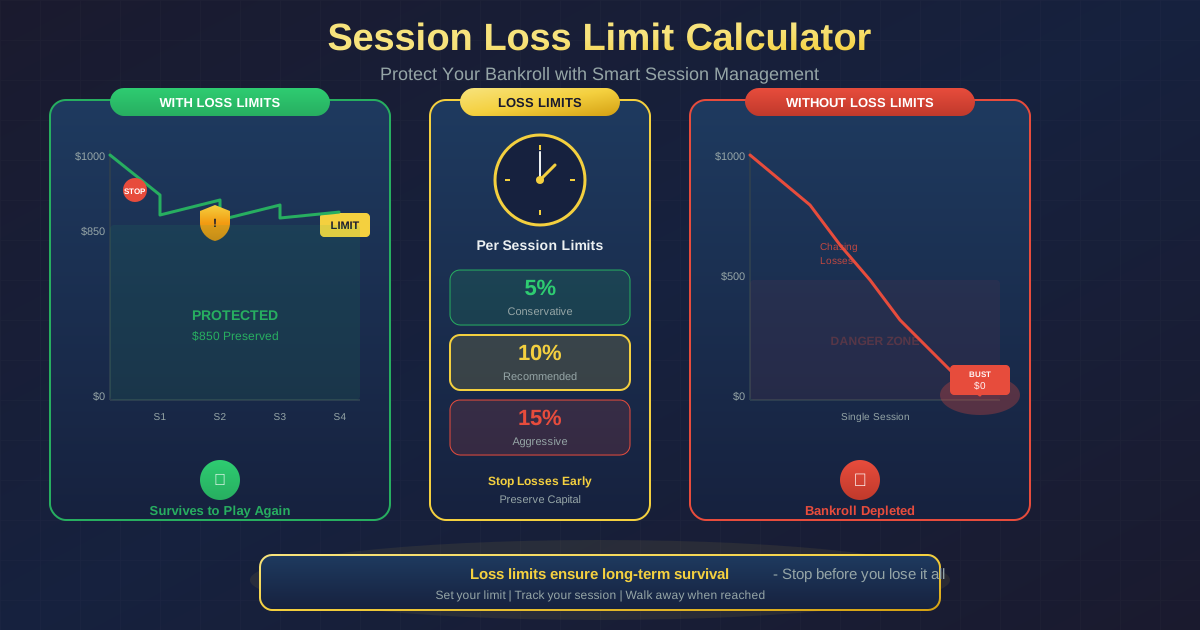
A monthly budget is only useful if it translates into session-level discipline. This is where most gamblers fail. They set a monthly number but have no plan for individual sessions, so one bad night wipes out the entire month's allocation.
The Session Budget Framework
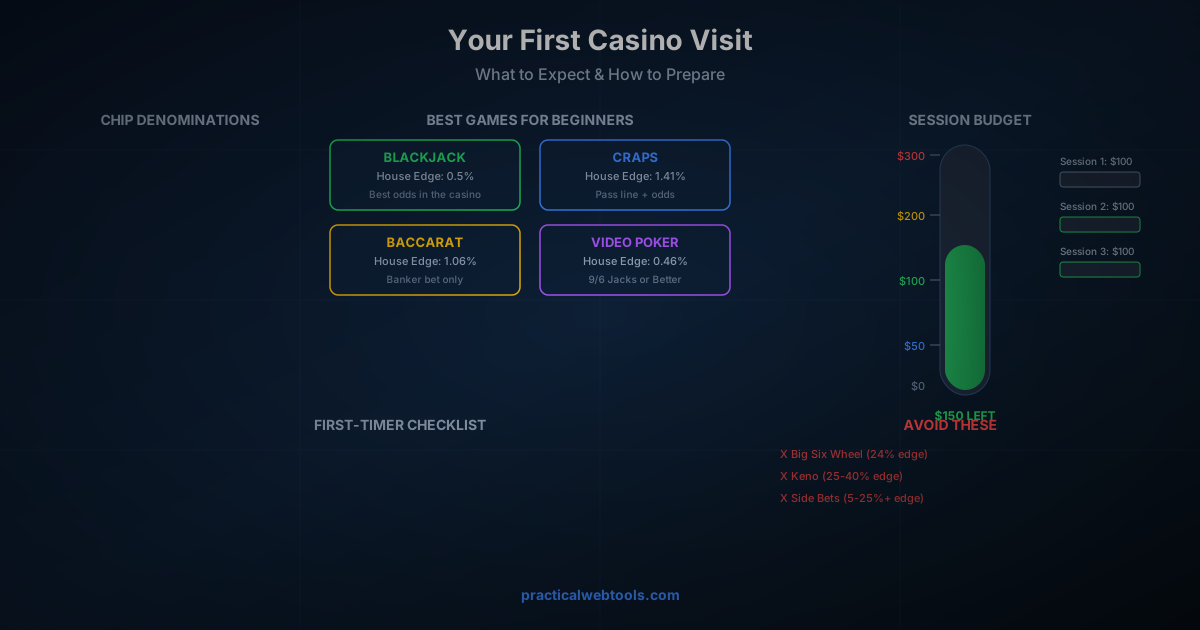
Divide your monthly gambling budget into a fixed number of sessions. Do not gamble more often than planned, and do not exceed the session budget under any circumstance.
$50/Month Budget (Tight Budget Gambler)
| Parameter | Value |
|---|---|
| Monthly budget | $50 |
| Sessions per month | 2-4 |
| Budget per session | $12.50-$25 |
| Maximum single bet | $2.50-$5 (10-20% of session) |
| Stop-loss per session | $12.50-$25 (100% of session budget) |
| Win goal per session | $25-$50 (double session budget) |
| Best game types | Low-stakes slots, penny poker, small sports parlays |
At $50/month, you are optimizing for entertainment hours, not profit. This budget works best with low-minimum games where $25 can buy you 1-2 hours of play. Sports betting at this level means $2-$5 bets on games you genuinely enjoy watching.
$200/Month Budget (Recreational Gambler)
| Parameter | Value |
|---|---|
| Monthly budget | $200 |
| Sessions per month | 4-6 |
| Budget per session | $33-$50 |
| Maximum single bet | $5-$10 (10-20% of session) |
| Stop-loss per session | $33-$50 (100% of session budget) |
| Win goal per session | $75-$100 |
| Best game types | Blackjack, sports straight bets, low-stakes poker, craps |
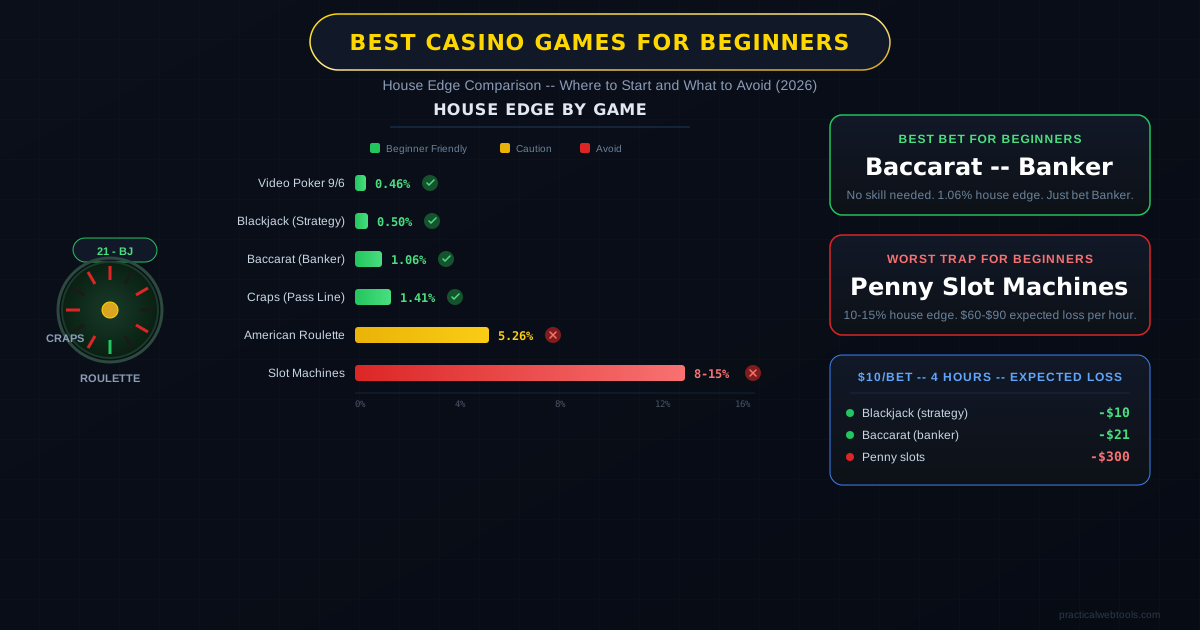
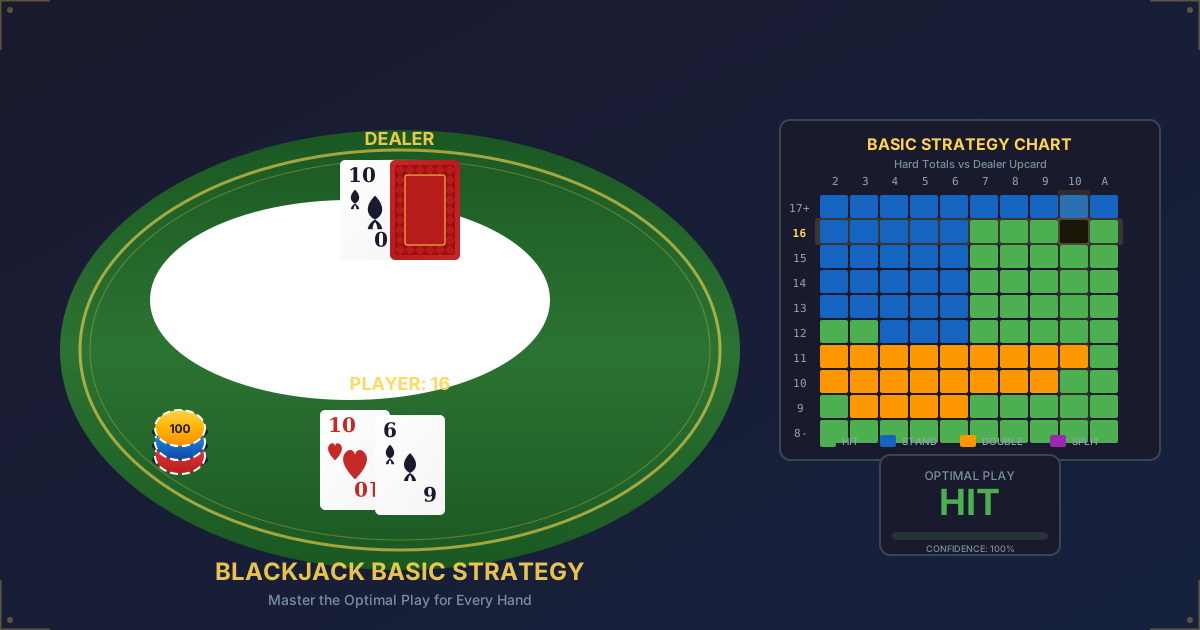
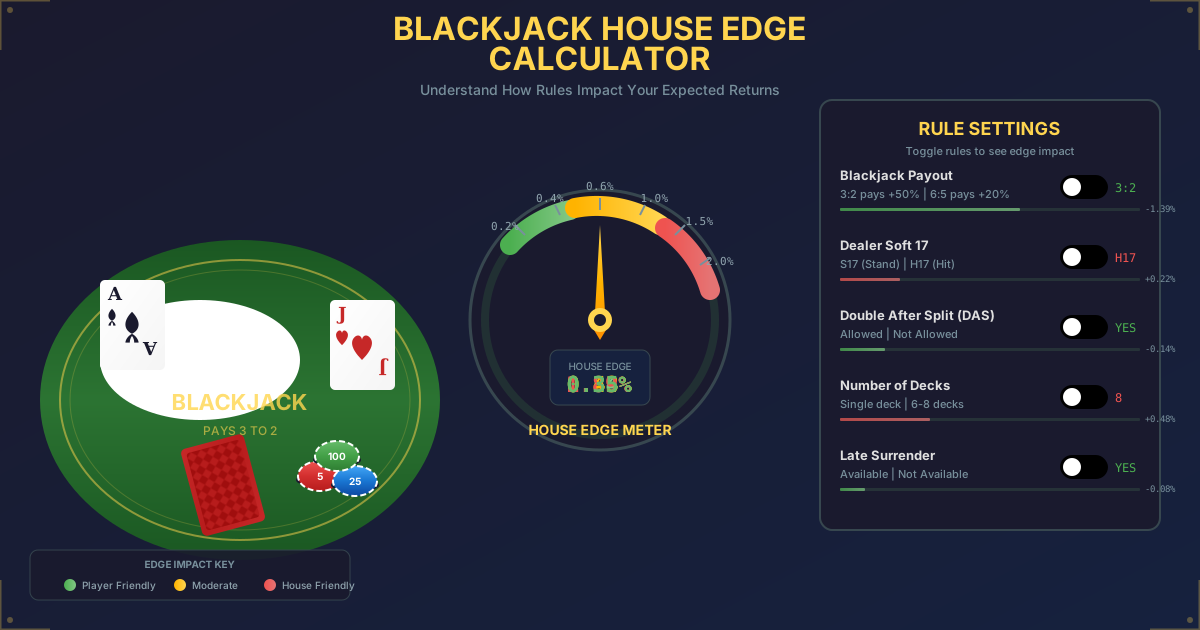
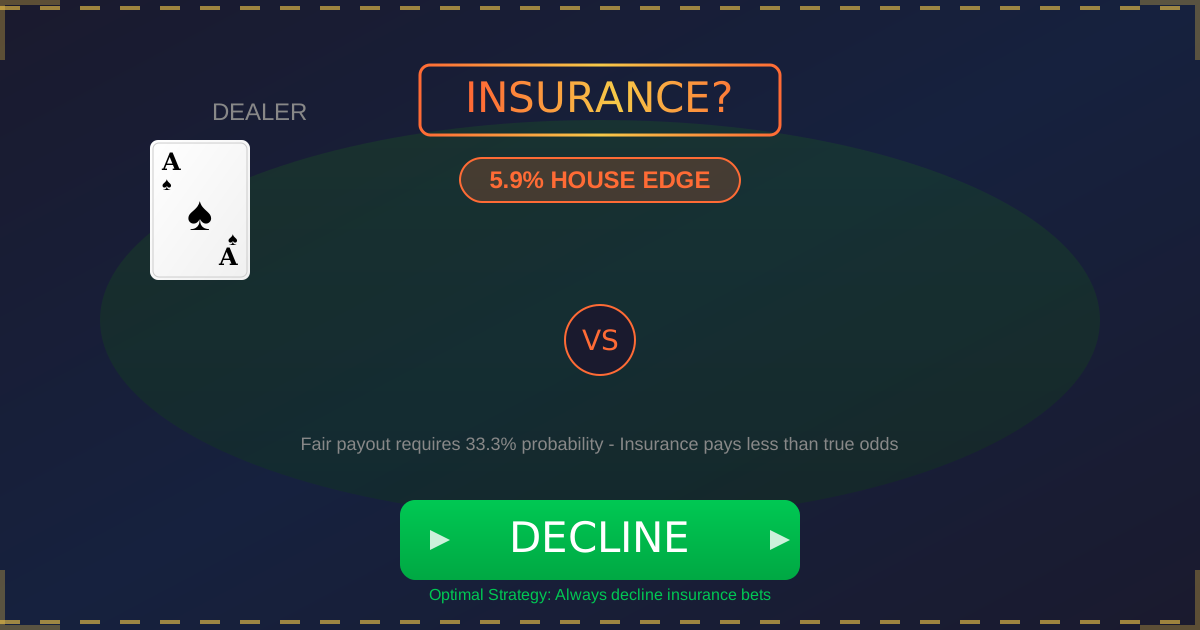
At $200/month, you have enough to play games with better odds. Blackjack with basic strategy has a house edge of only 0.5-1%. Low-stakes poker ($1/$2 or $1/$3 cash games) lets you play a skill-based game where your edge matters. Sports betting becomes viable with $10 straight bets rather than high-risk parlays.
$500/Month Budget (Serious Recreational Gambler)
| Parameter | Value |
|---|---|
| Monthly budget | $500 |
| Sessions per month | 6-10 |
| Budget per session | $50-$83 |
| Maximum single bet | $10-$25 (10-20% of session) |
| Stop-loss per session | $50-$83 (100% of session budget) |
| Win goal per session | $150-$250 |
| Best game types | Mid-stakes poker, sports value betting, blackjack with larger bets, craps with full odds |
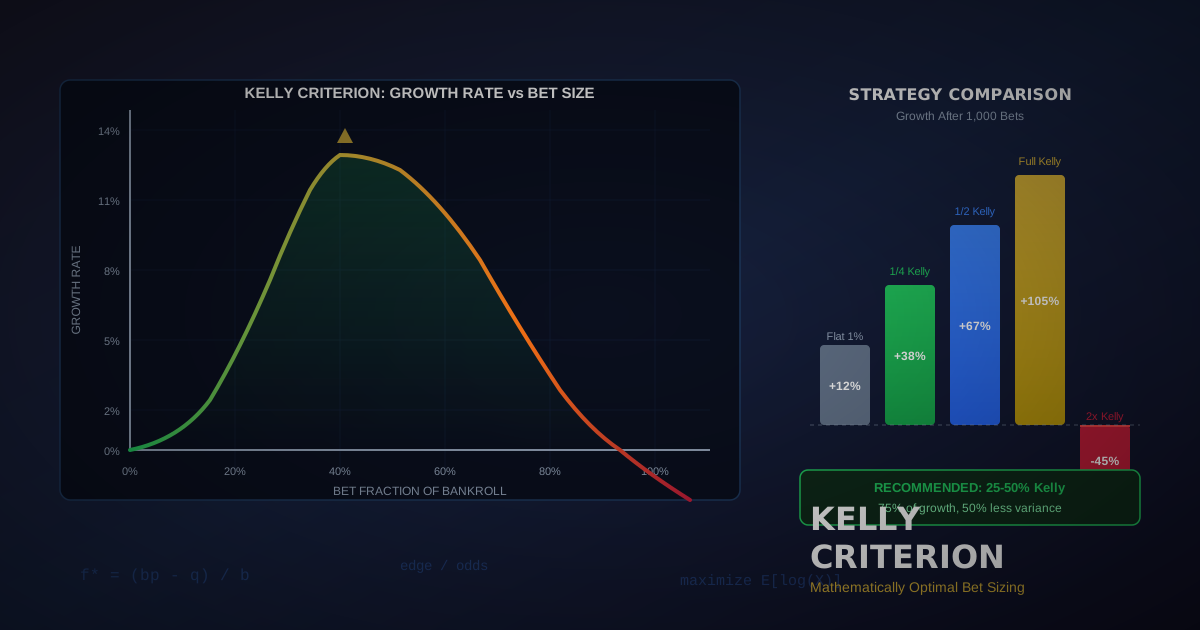
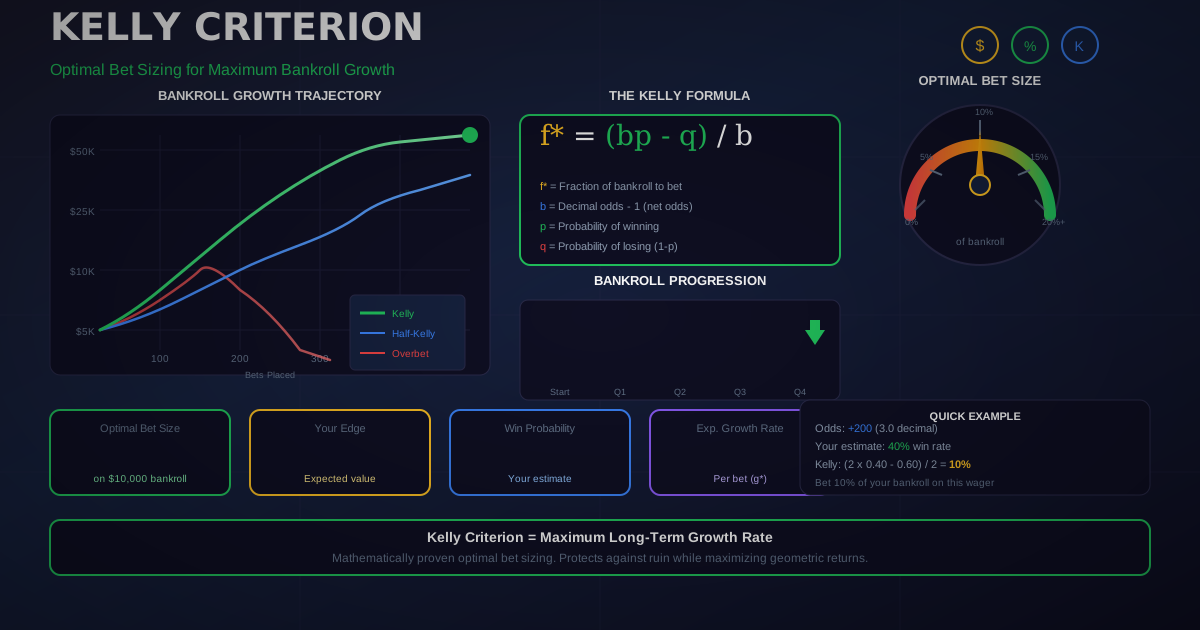
At $500/month, you can start applying more sophisticated bankroll management. Sports bettors can use the Kelly Criterion for optimal sizing. Poker players can take proper shots at $1/$2 or $1/$3 live games with a starting stack of $200-$300. This level also supports building a separate poker bankroll over time.
The Three Stop-Loss Rules
Every session needs three hard stops. Write them down before you start playing, and follow them without exception.
1. Dollar Stop-Loss: When your session budget hits zero, you are done.
This is non-negotiable. If you brought $50 to the session and you have lost $50, you stand up and leave. You do not go to the ATM. You do not "borrow" from next week's budget. You do not put it on a credit card. You are done.
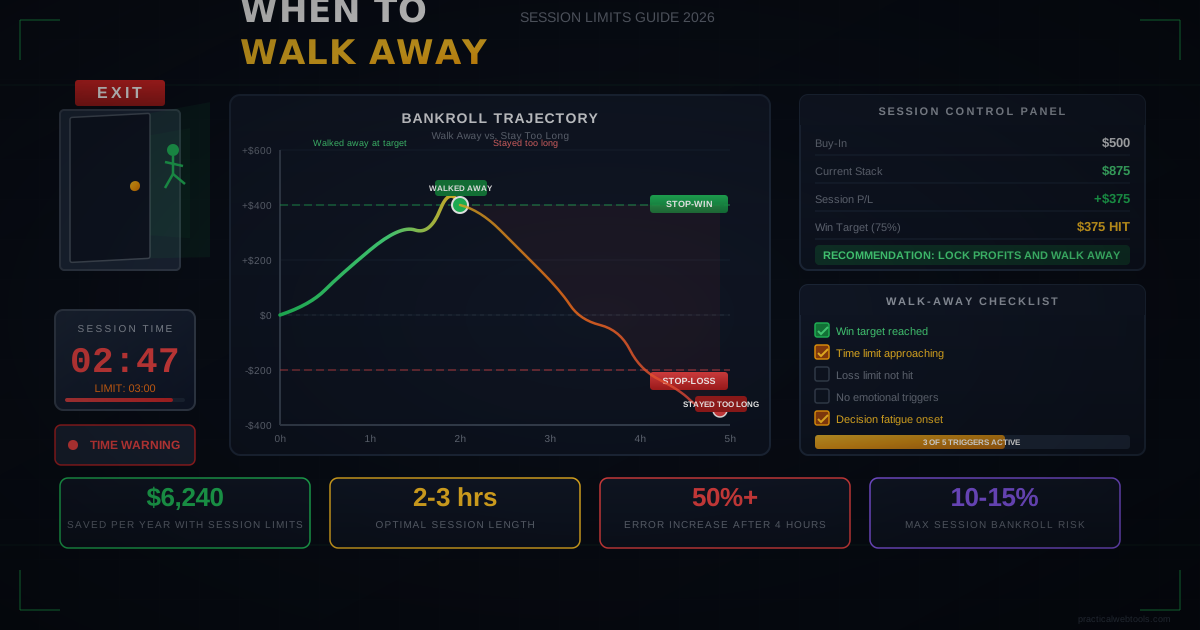
2. Time Stop-Loss: Set a maximum session length.
Even if you are winning, marathon sessions erode decision-making. Fatigue leads to bigger bets, riskier plays, and eventually losses. Set a time limit before you start:
- Casino table games: 2-3 hours maximum
- Sports betting: Predetermined games only (no live betting after your card is done)
- Poker: 4-6 hours maximum for cash games
- Online slots/casino: 60-90 minutes maximum
3. Win Stop-Loss: Lock up a percentage of winnings.
If you are ahead, protect your profits. A common approach:
- If you double your session budget, pocket the original budget amount and play with profits only
- If you hit 3x your session budget, stop completely and count it as a great day
- Never give back more than 50% of your peak winnings in a session
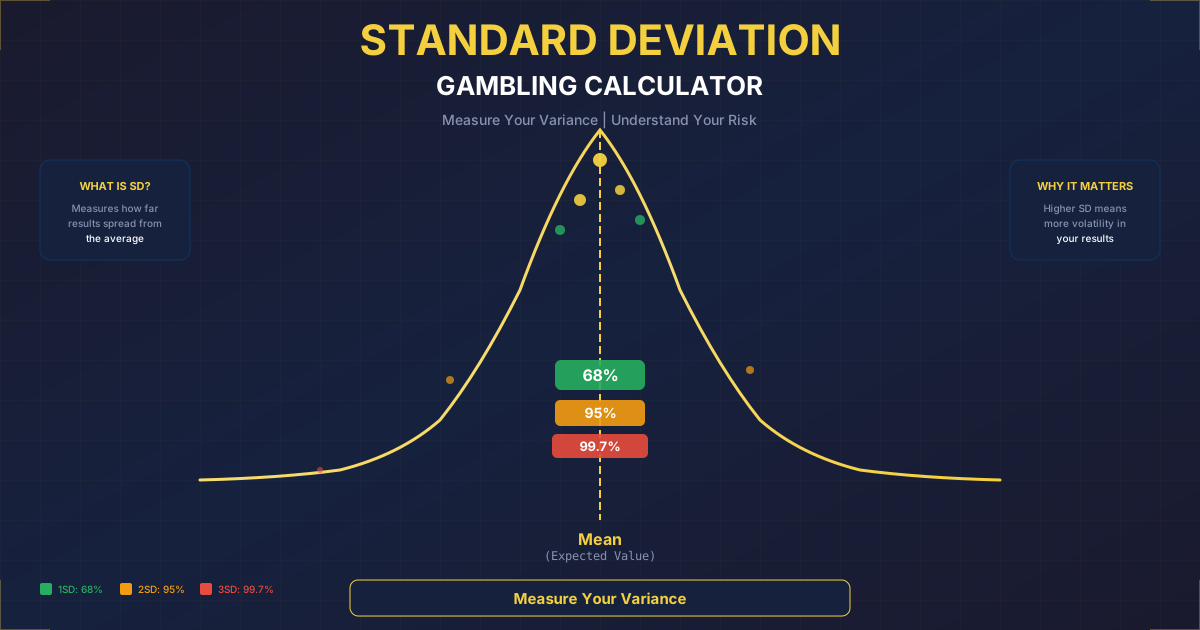
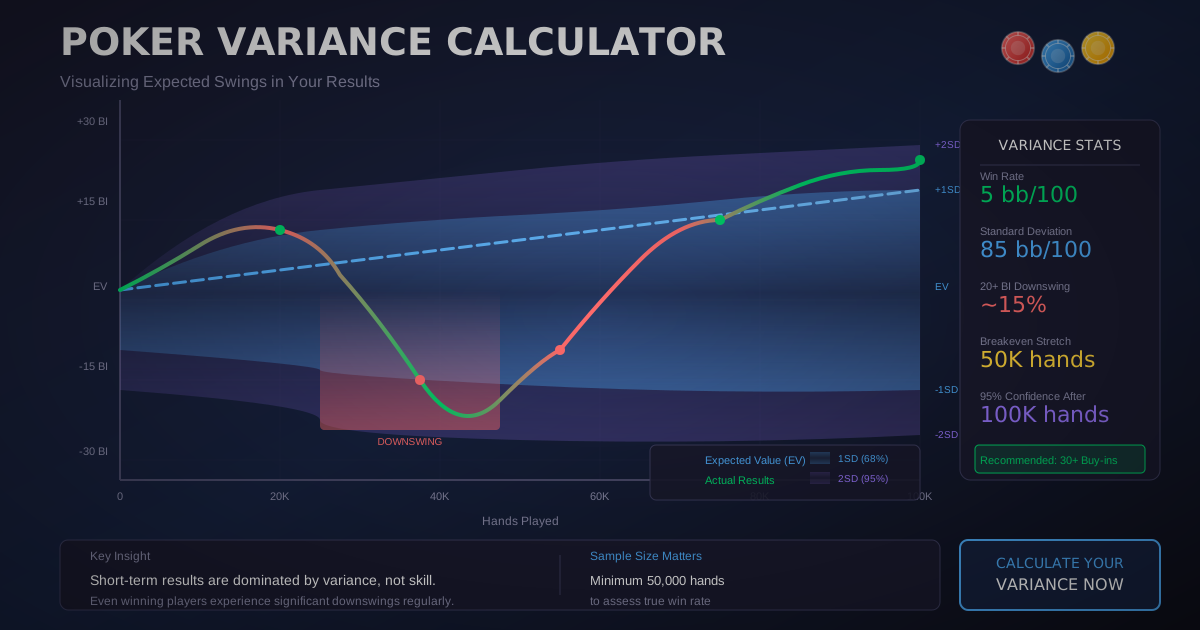
Model your expected swings with our Poker Variance Calculator to understand why stop-losses are mathematically essential.
Bankroll Management by Game Type
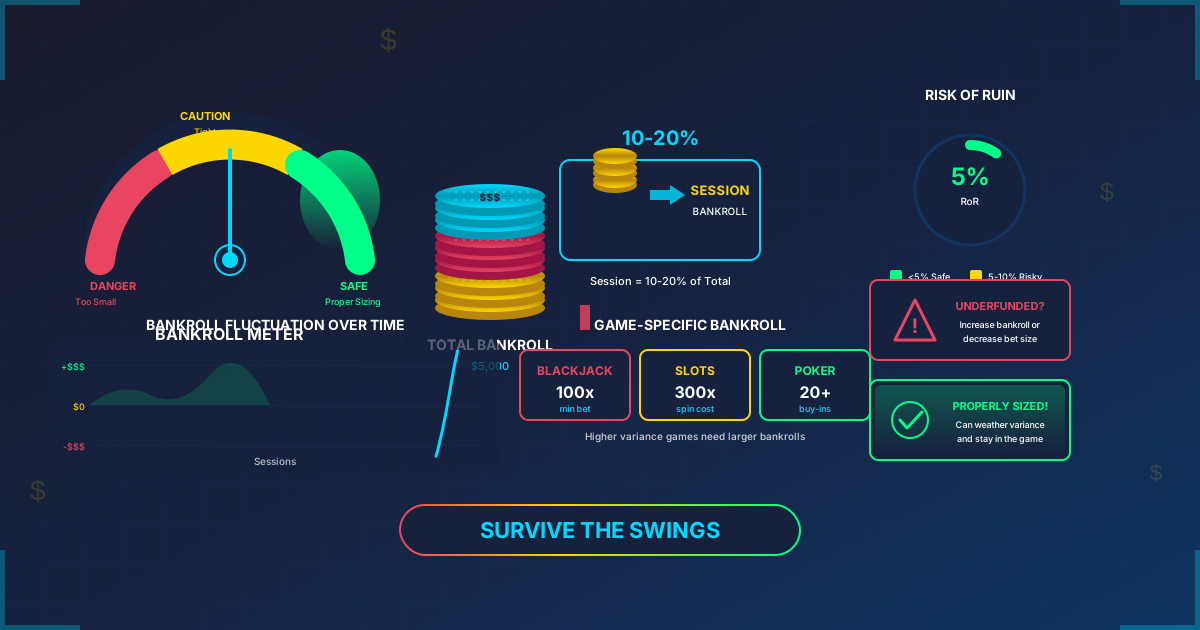
Different games have different variance profiles, different house edges, and therefore different bankroll requirements. A $200 monthly budget means very different things depending on what you play.
Sports Betting Bankroll Management
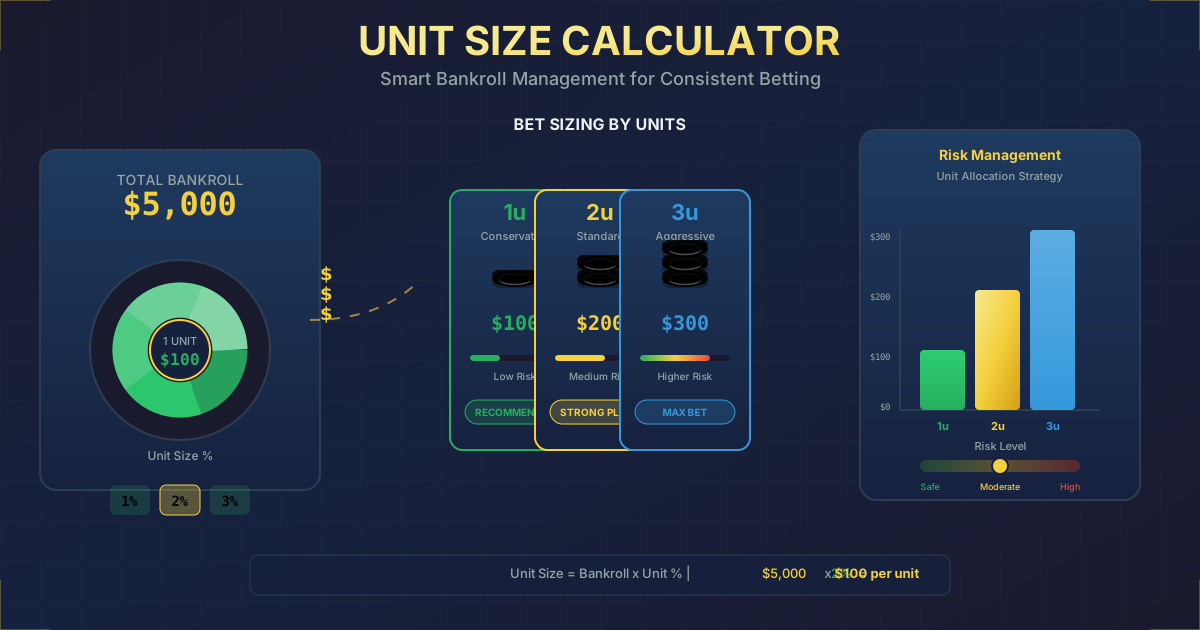
Sports betting bankroll management follows a unit-based system. Your "unit" is a fixed percentage of your total bankroll, typically 1-3%.
| Total Bankroll | 1% Unit | 2% Unit | 3% Unit | Max Bet (5%) |
|---|---|---|---|---|
| $200 | $2 | $4 | $6 | $10 |
| $500 | $5 | $10 | $15 | $25 |
| $1,000 | $10 | $20 | $30 | $50 |
| $2,500 | $25 | $50 | $75 | $125 |
Key rules for sports betting on a budget:
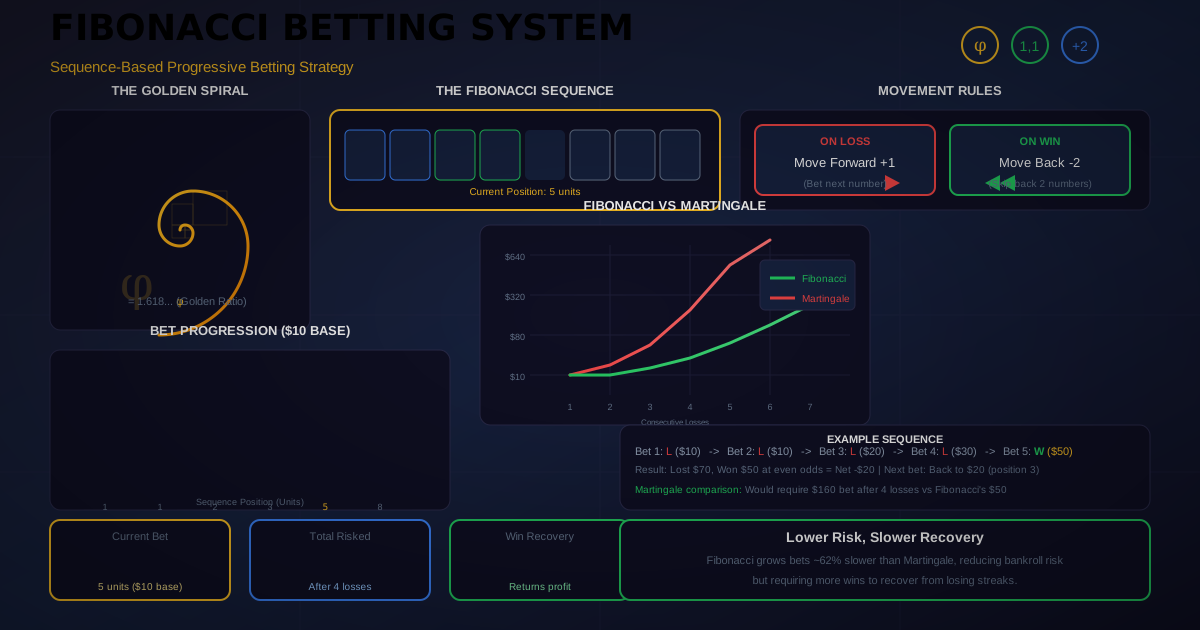
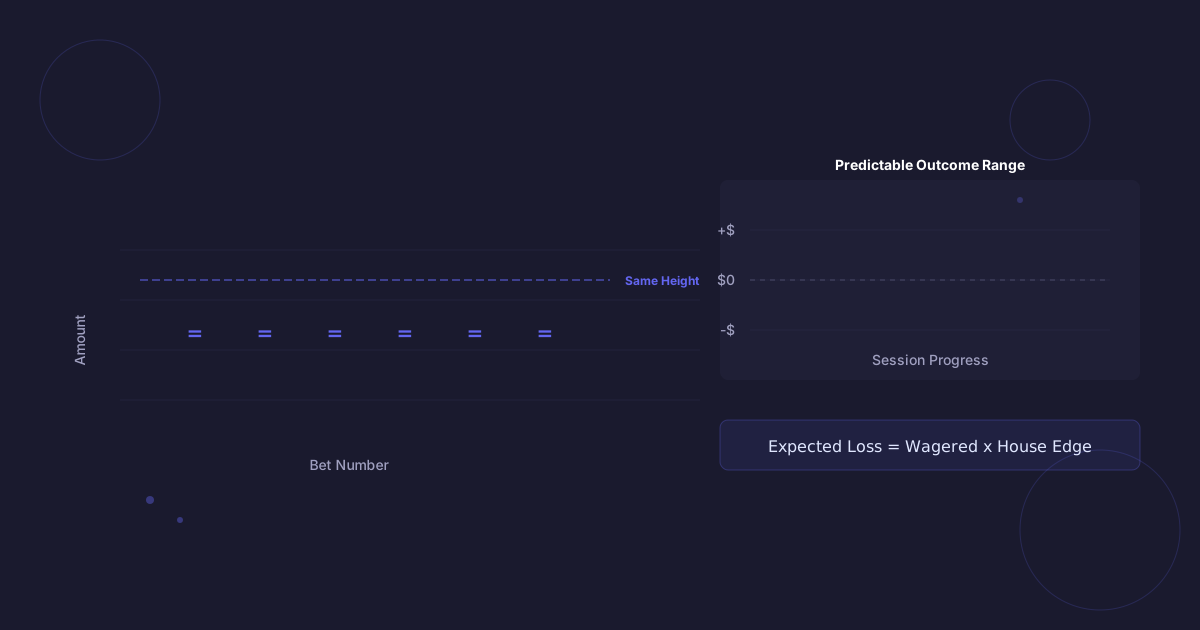
- Flat betting (same amount per bet) is safest for recreational bettors
- Never bet more than 5% of your bankroll on a single wager
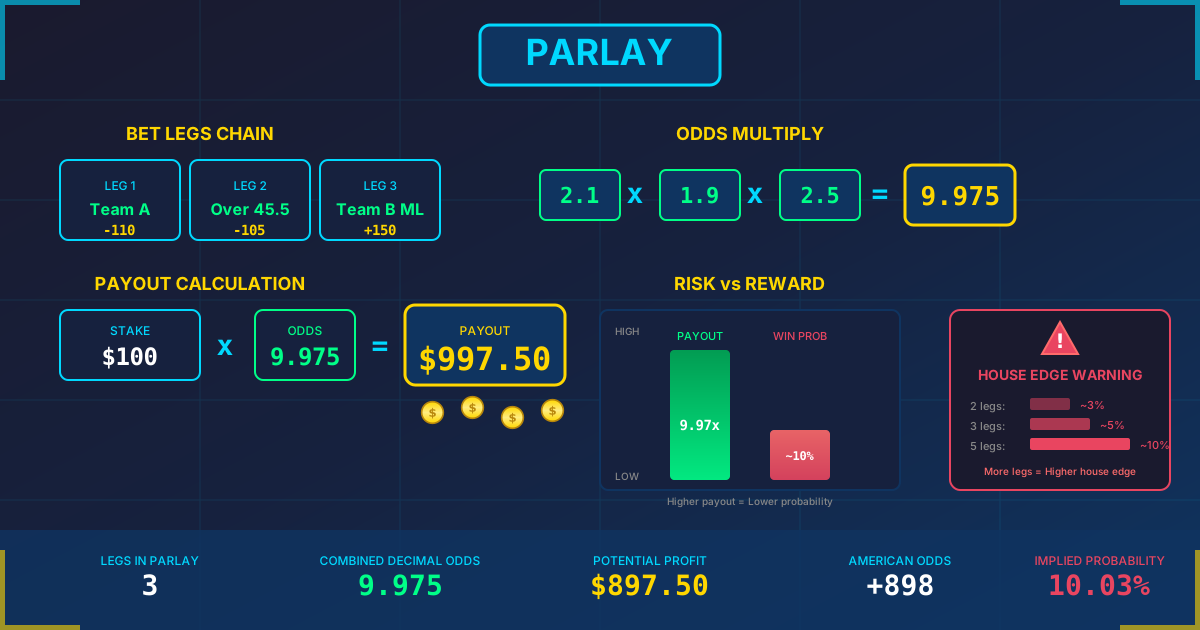
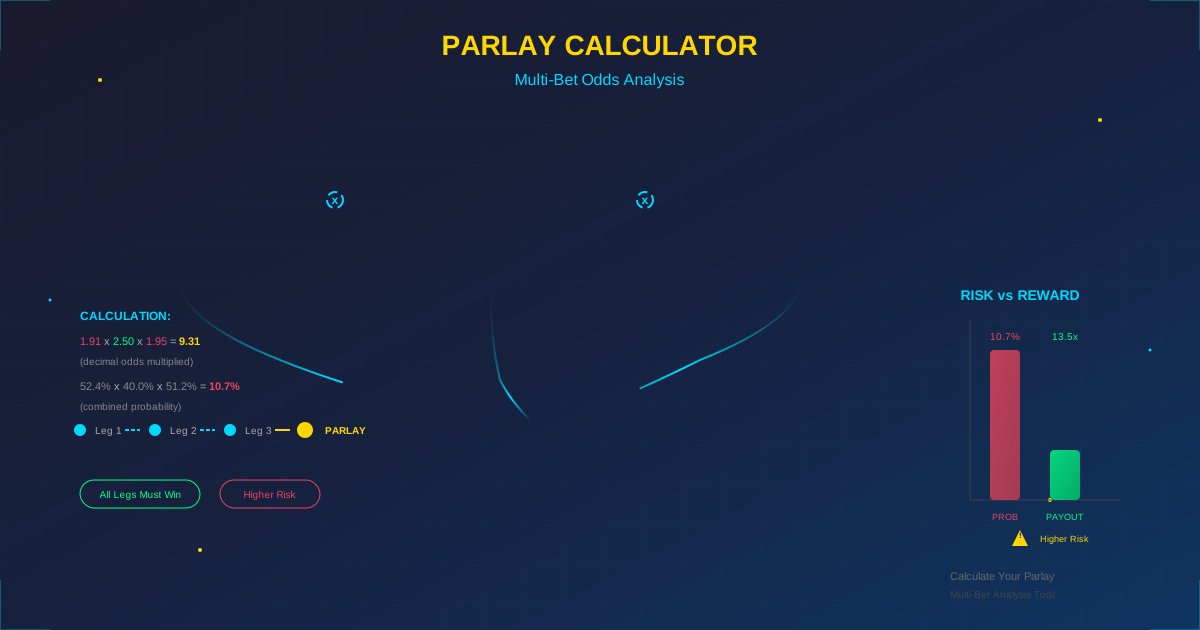
- Parlays should use 0.5-1% units because the variance is extreme
- Track every bet in a spreadsheet or app, including the reasoning behind it
- Focus on sports and leagues you actually know and follow
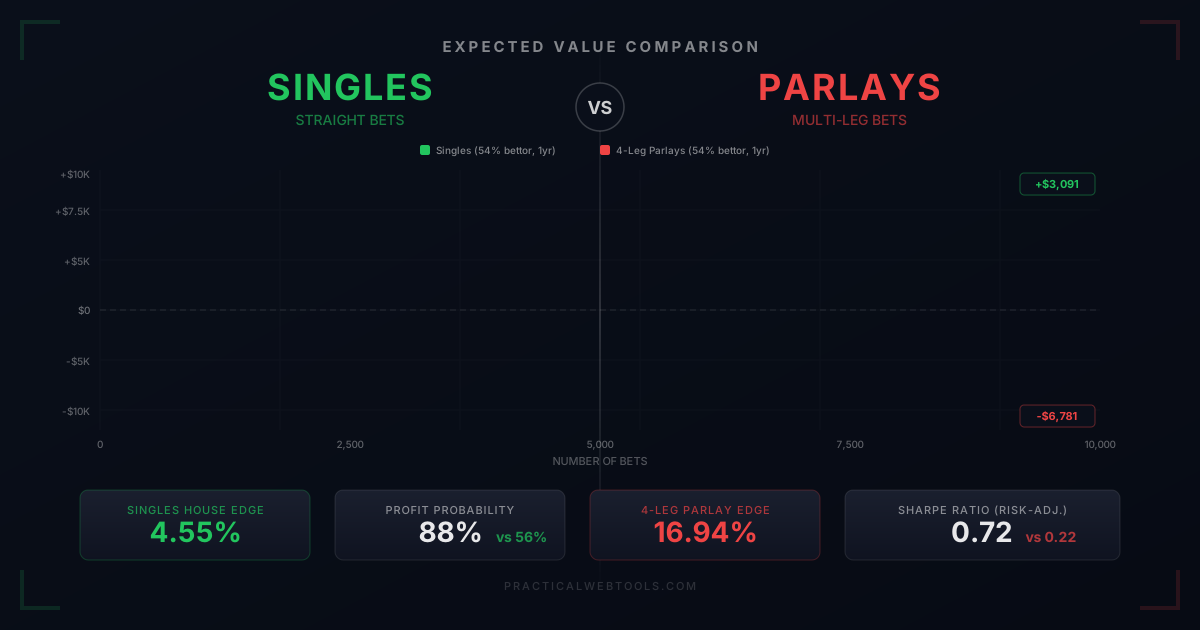
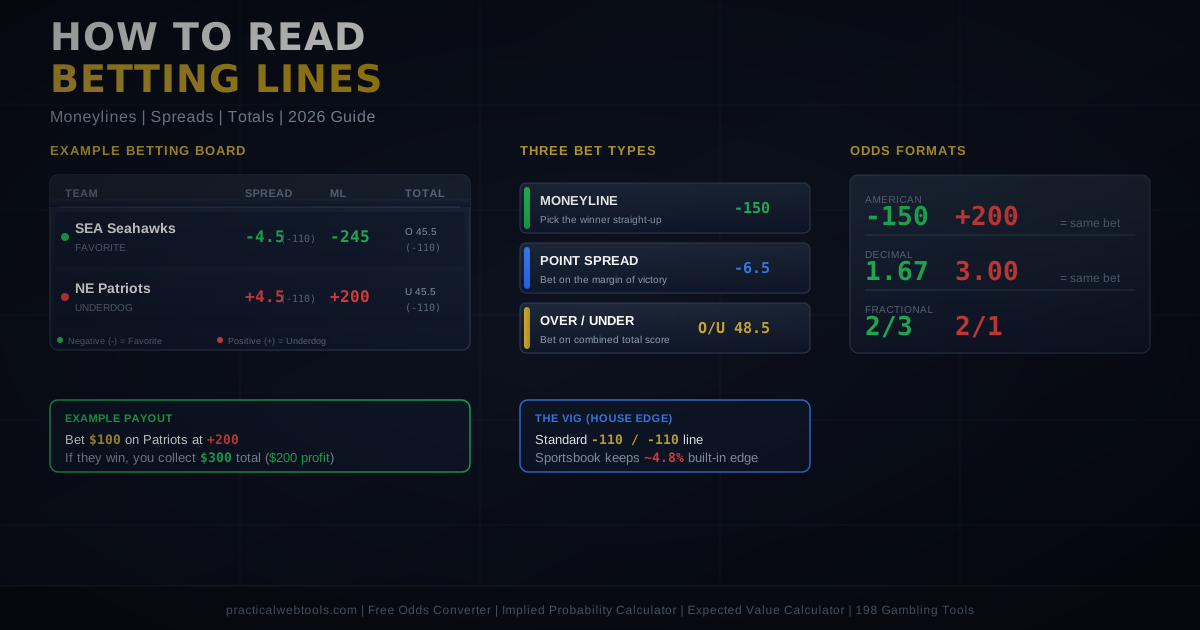
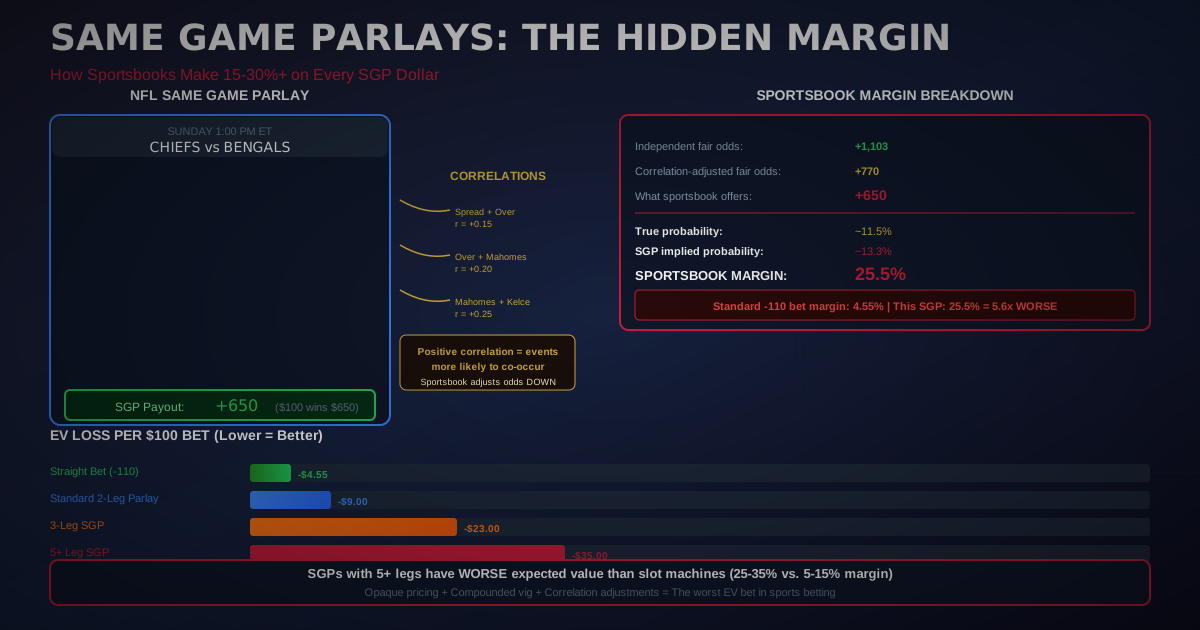
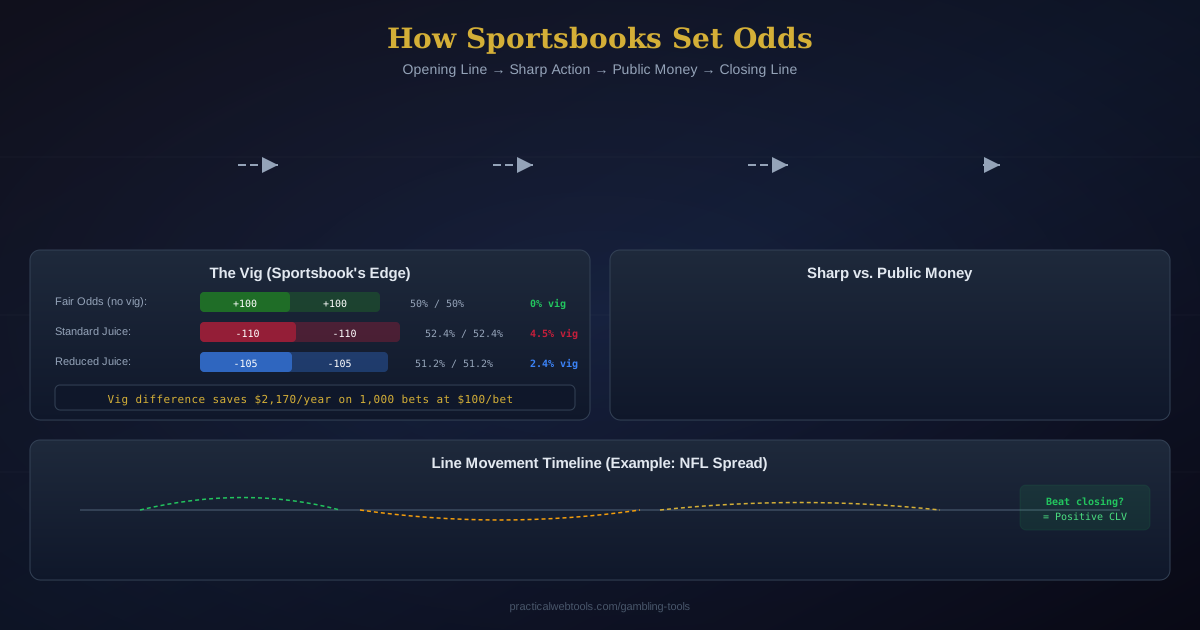
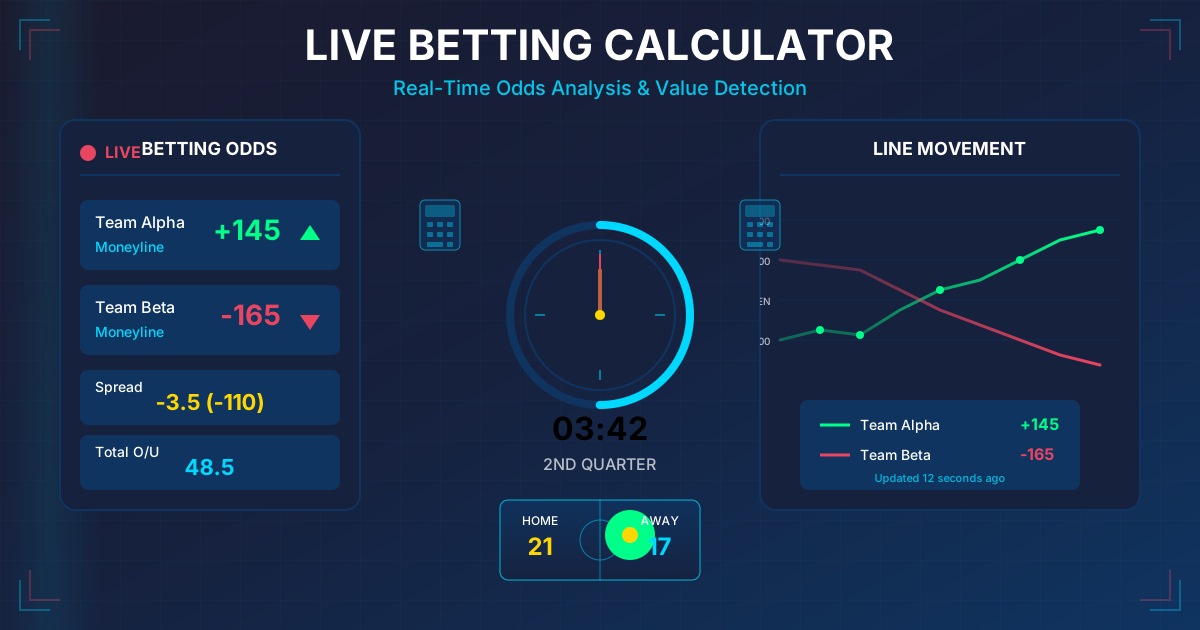
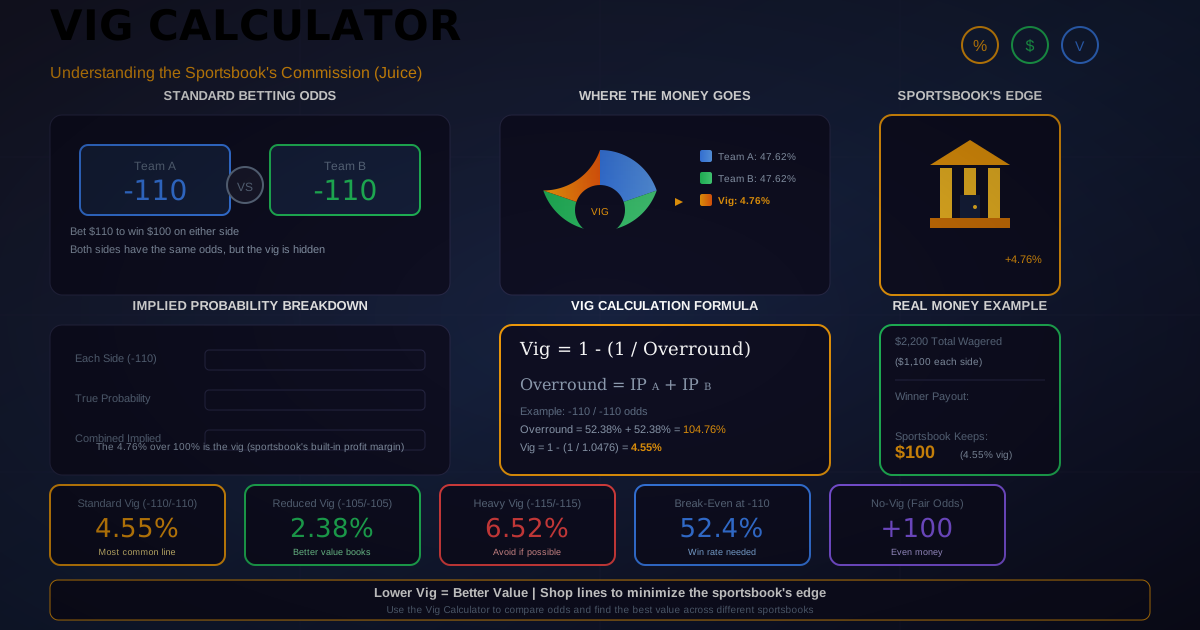
The expected loss rate for a typical recreational sports bettor is roughly 5-10% of total amount wagered (the vig). A $200/month sports betting budget means you should expect to lose $10-$20/month on average and occasionally have winning months that offset some losses.
Find positive expected value plays before you bet with our Expected Value Calculator.
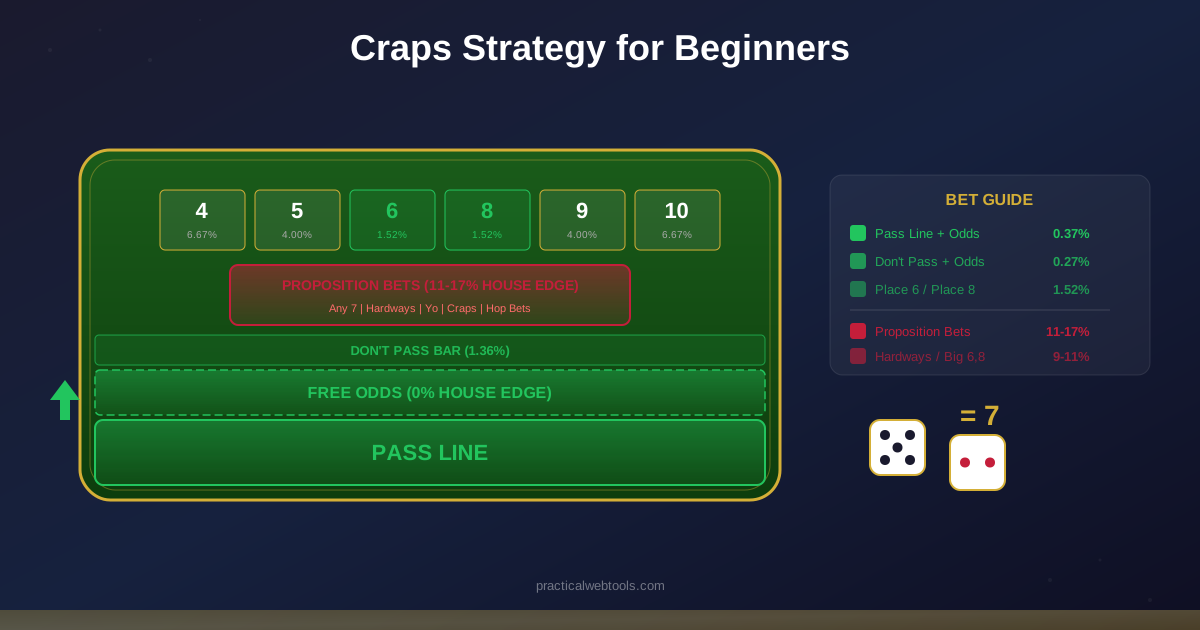
Casino Table Game Bankroll Management
Table games require enough bankroll to survive variance within a session. The general rule is 30-50 times your minimum bet for a single session.
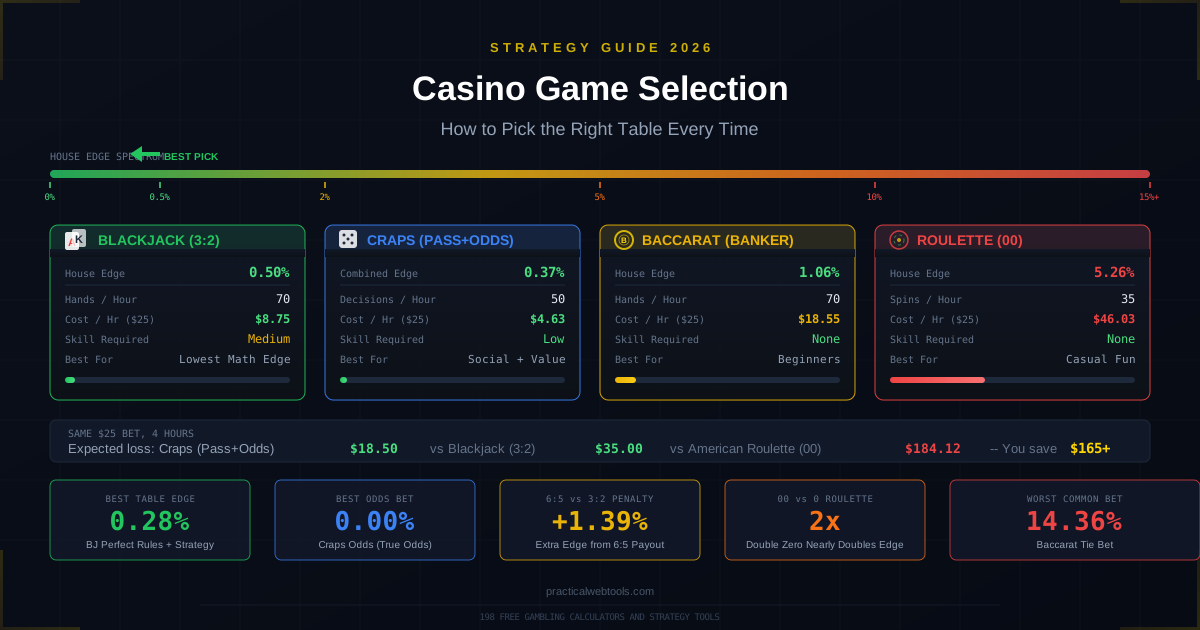
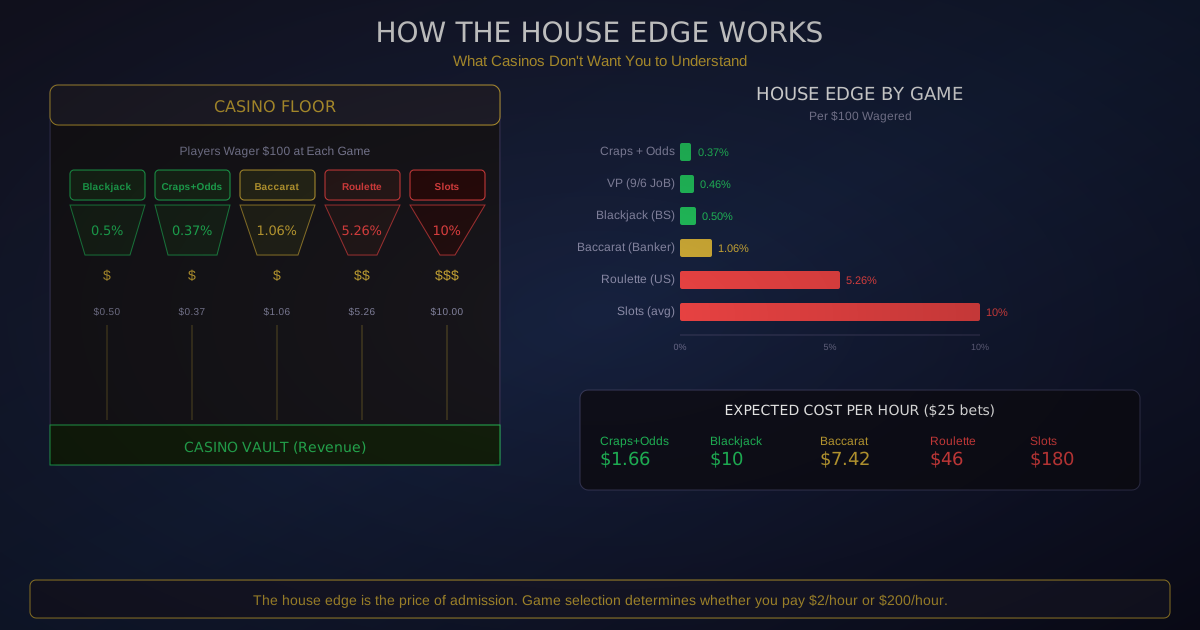
| Game | House Edge | Session Buy-In (30x min) | $50 Session | $200 Session |
|---|---|---|---|---|
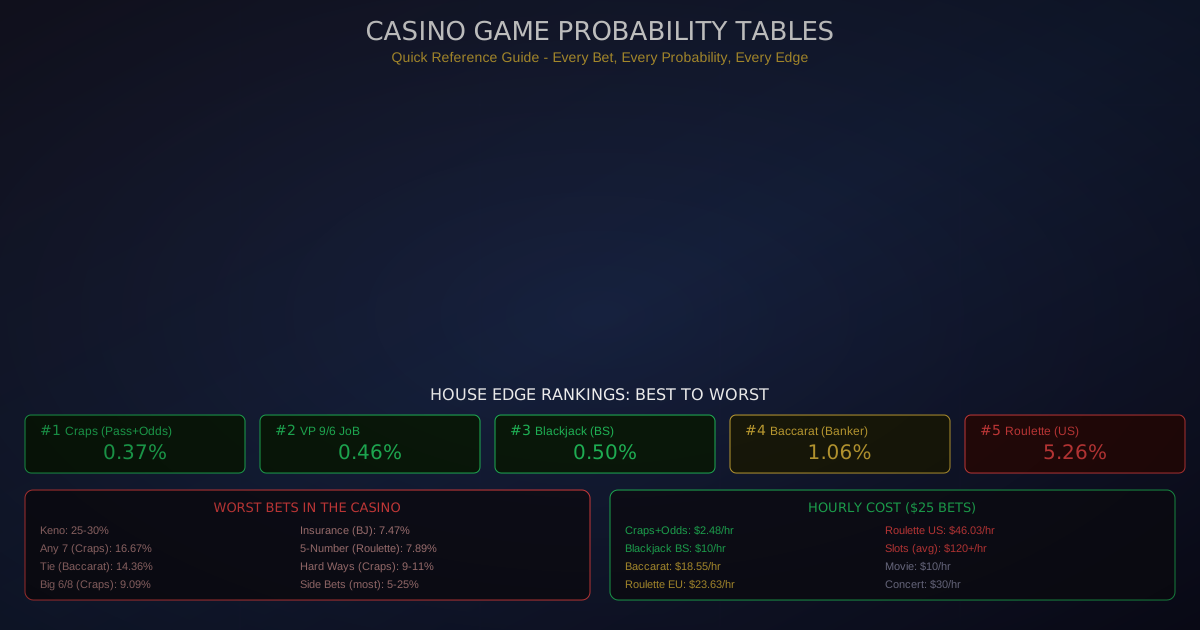
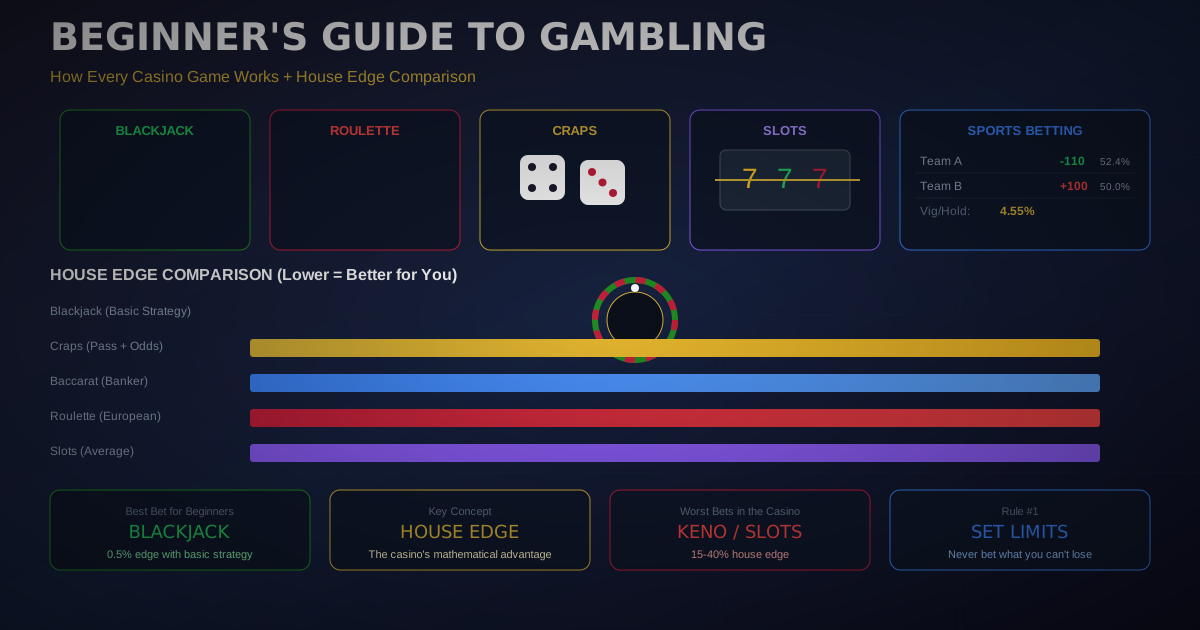
| Blackjack (basic strategy) | 0.5% | 30x min bet | $5 min bet | $5-$10 min bet |
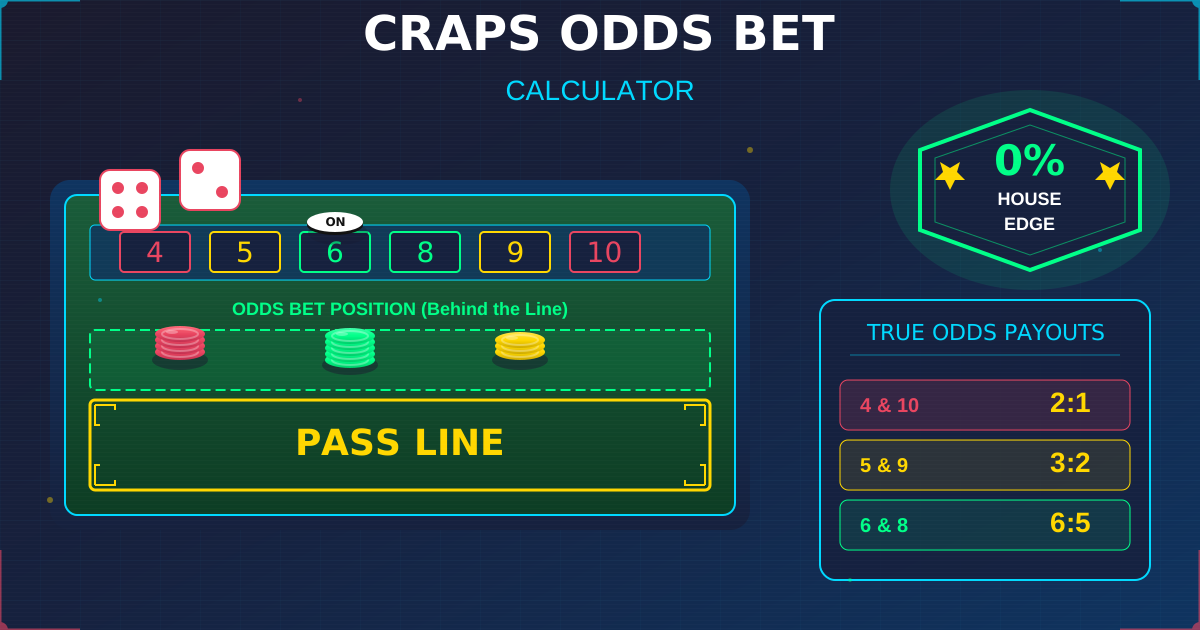
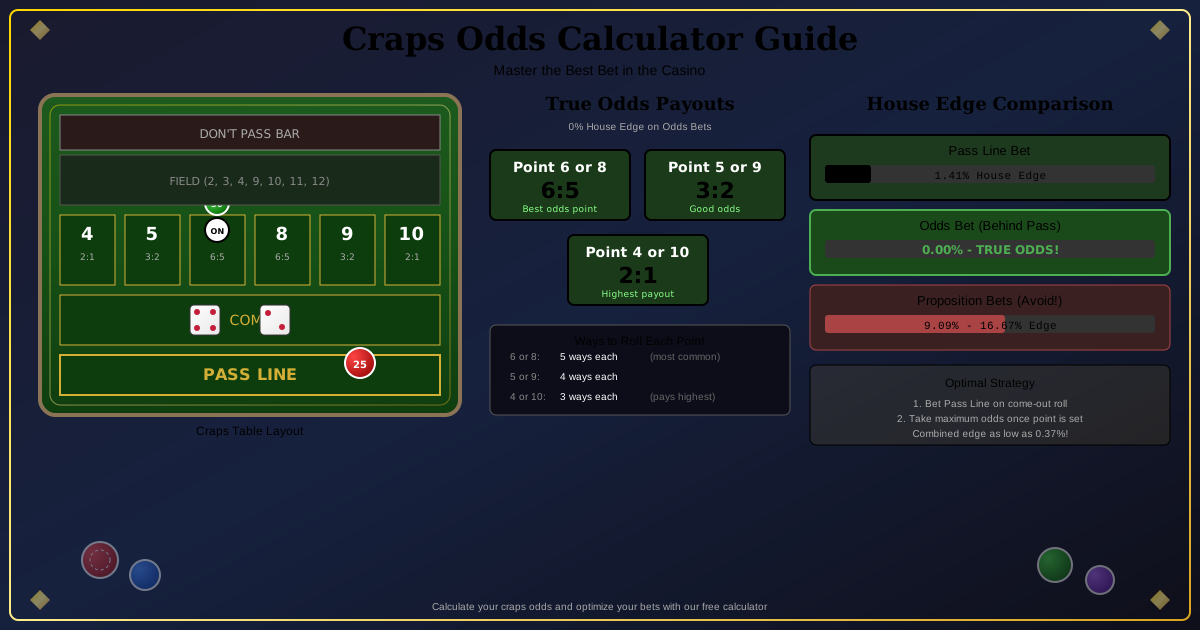
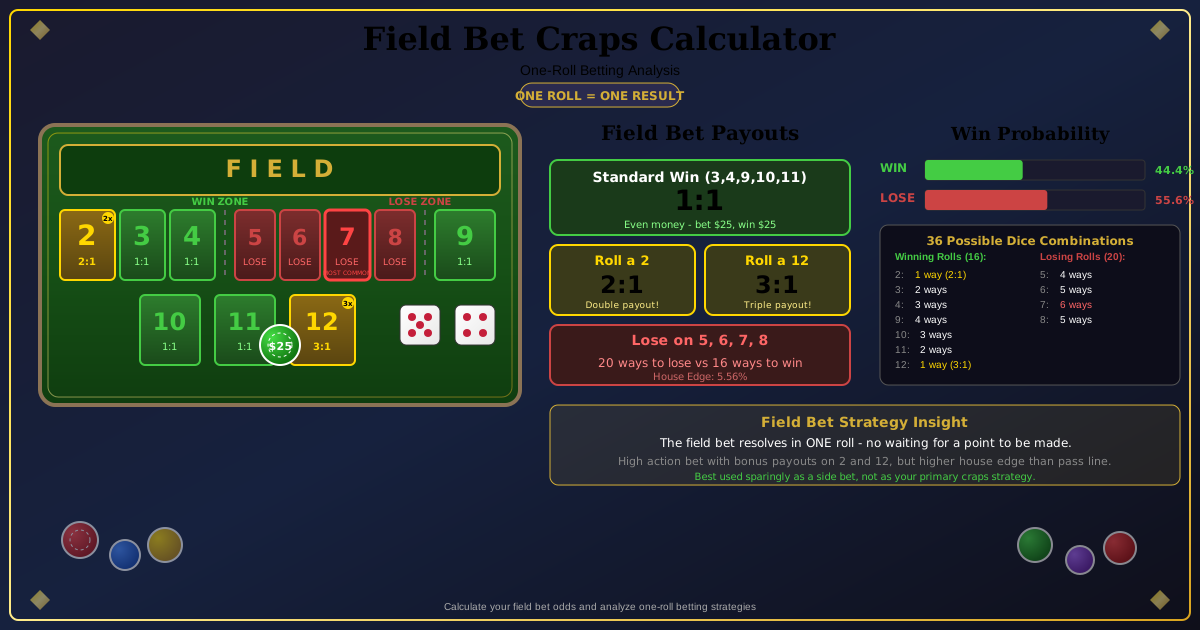
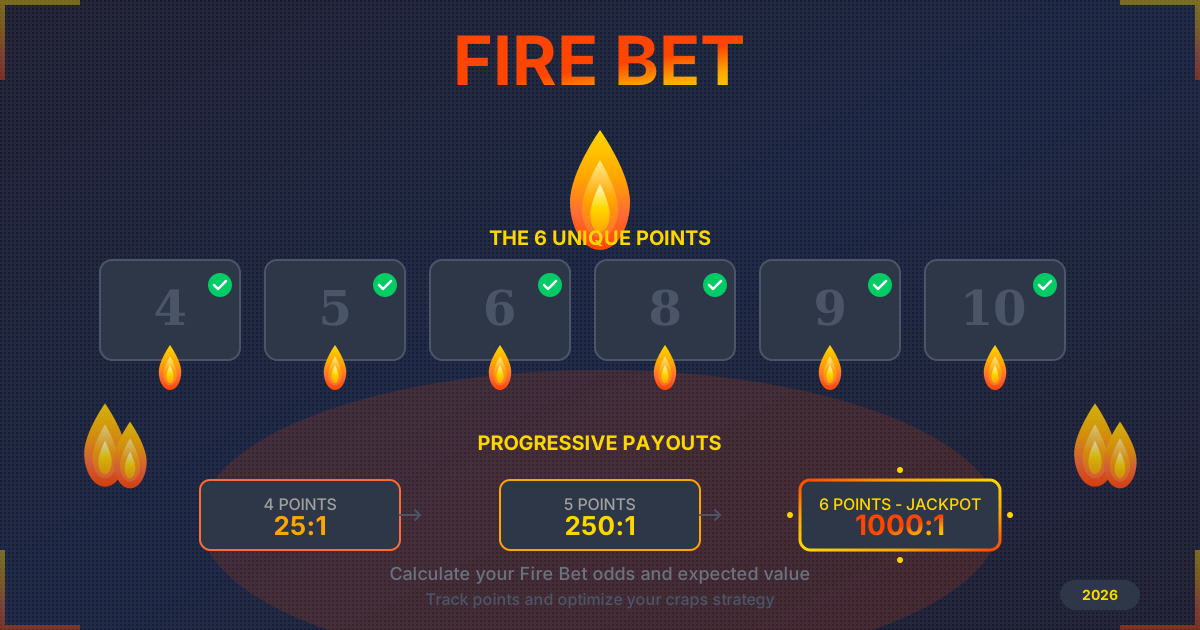
| Craps (pass + odds) | 0.8% | 30x min bet | $5 min bet | $5-$10 min bet |
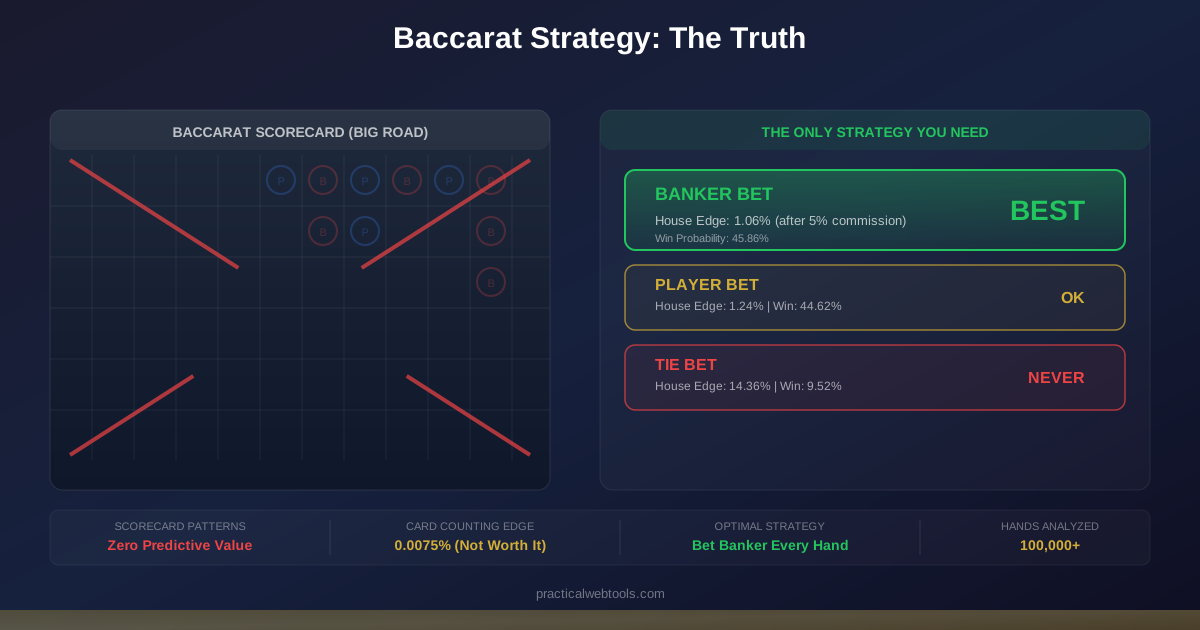
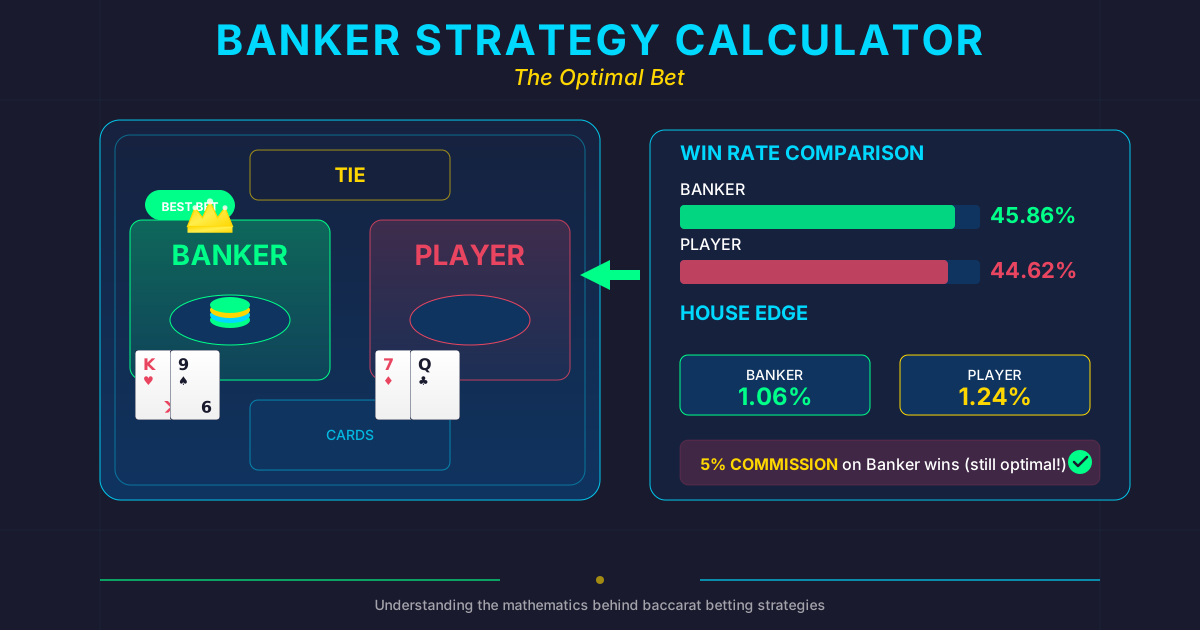
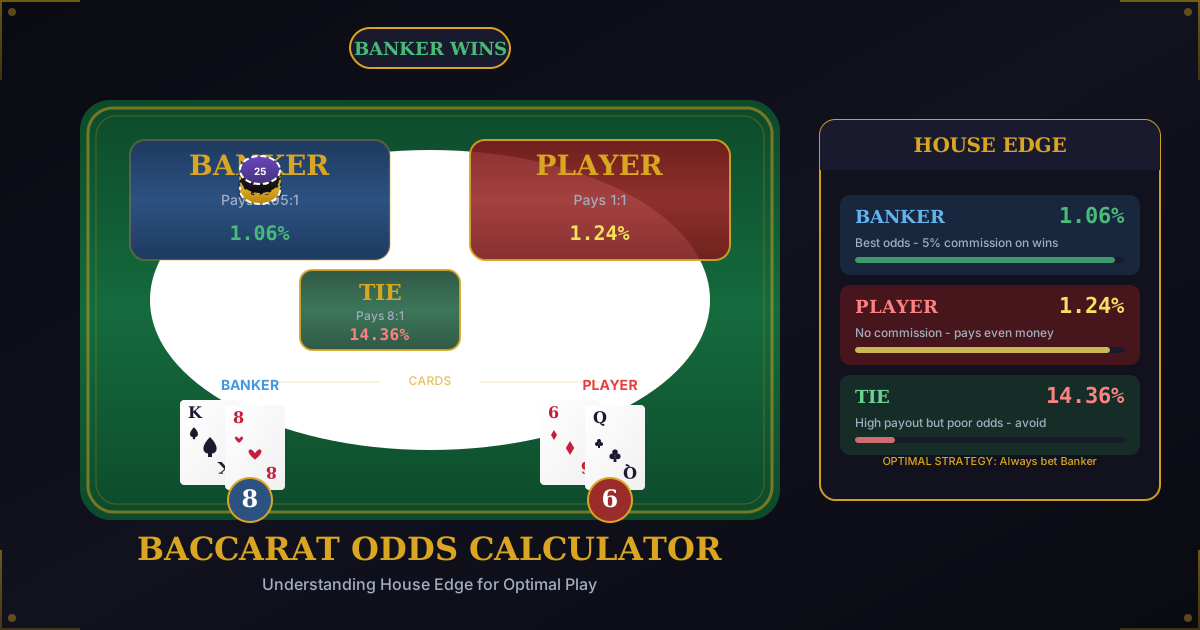
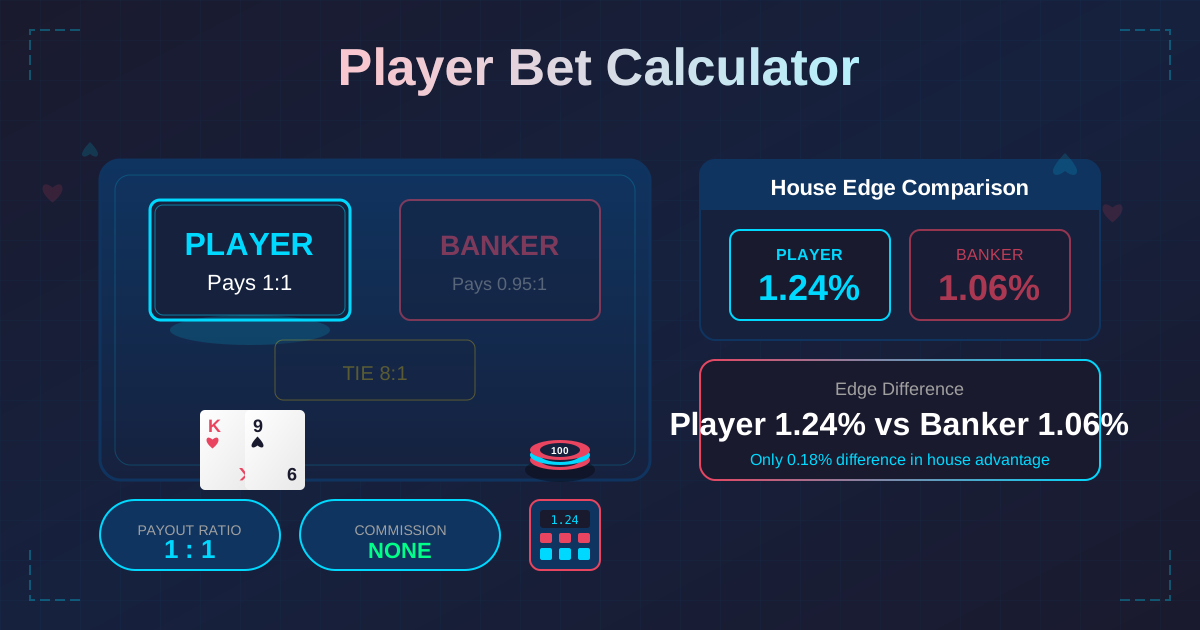
| Baccarat (banker) | 1.06% | 30x min bet | Not viable at most tables | $10 min bet |
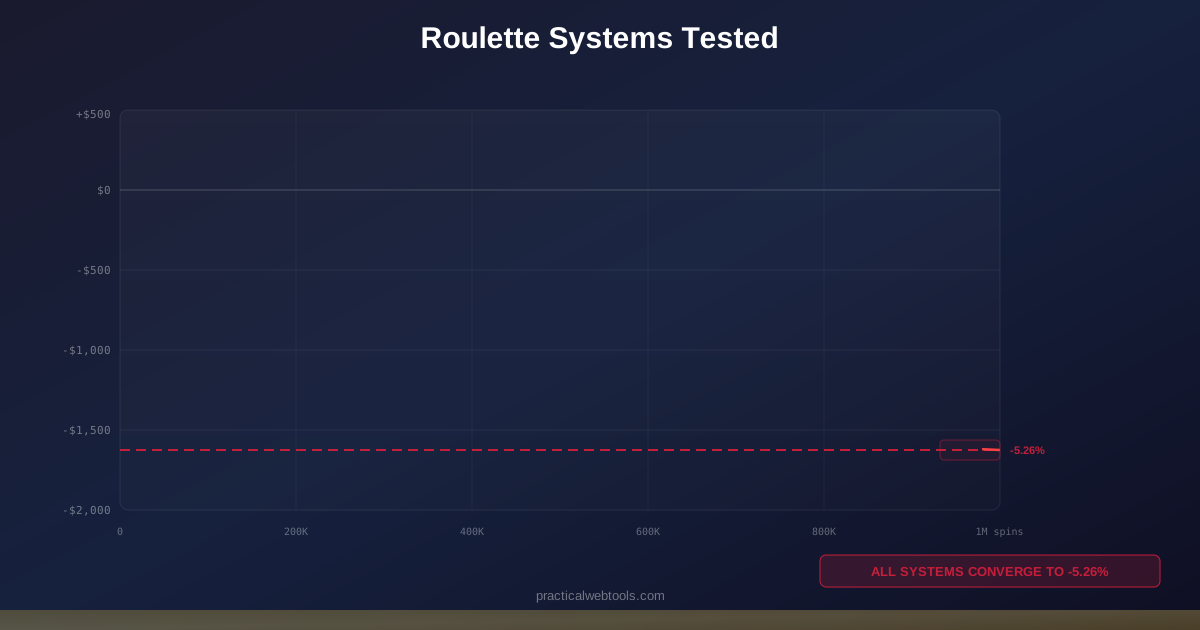
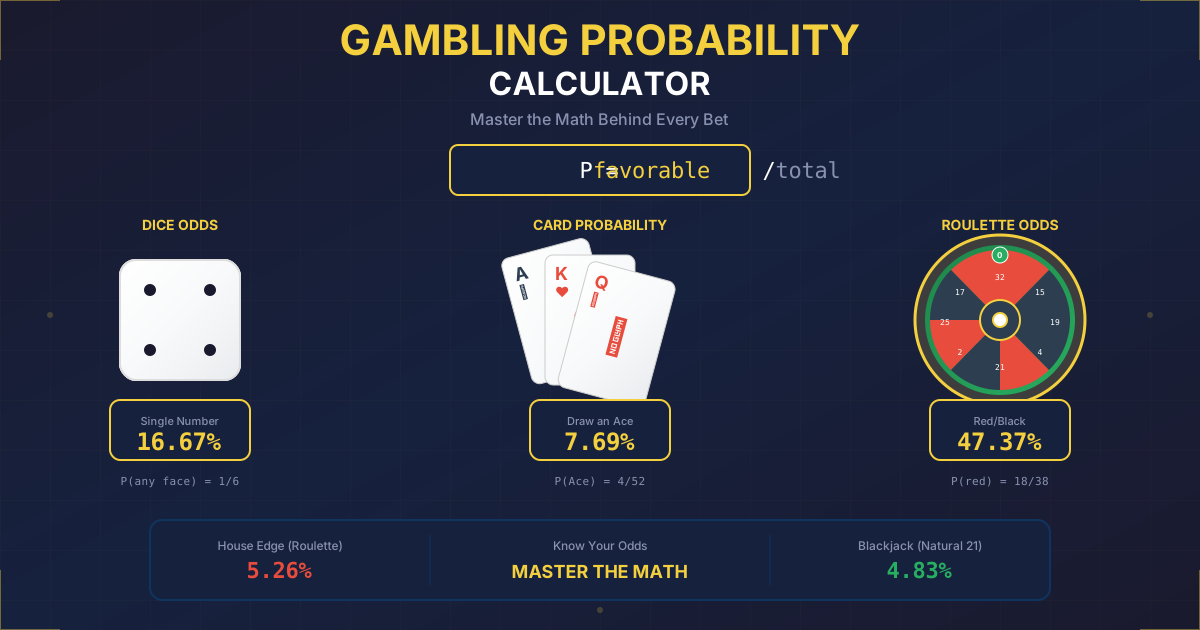
| Roulette (even money) | 2.7-5.3% | 30x min bet | $5 min bet | $5-$10 min bet |
At a $50 session budget, you are limited to $5 minimum tables and should stick to the lowest house-edge games. Blackjack with perfect basic strategy and craps with full odds behind the pass line offer the best value for budget-conscious casino players.
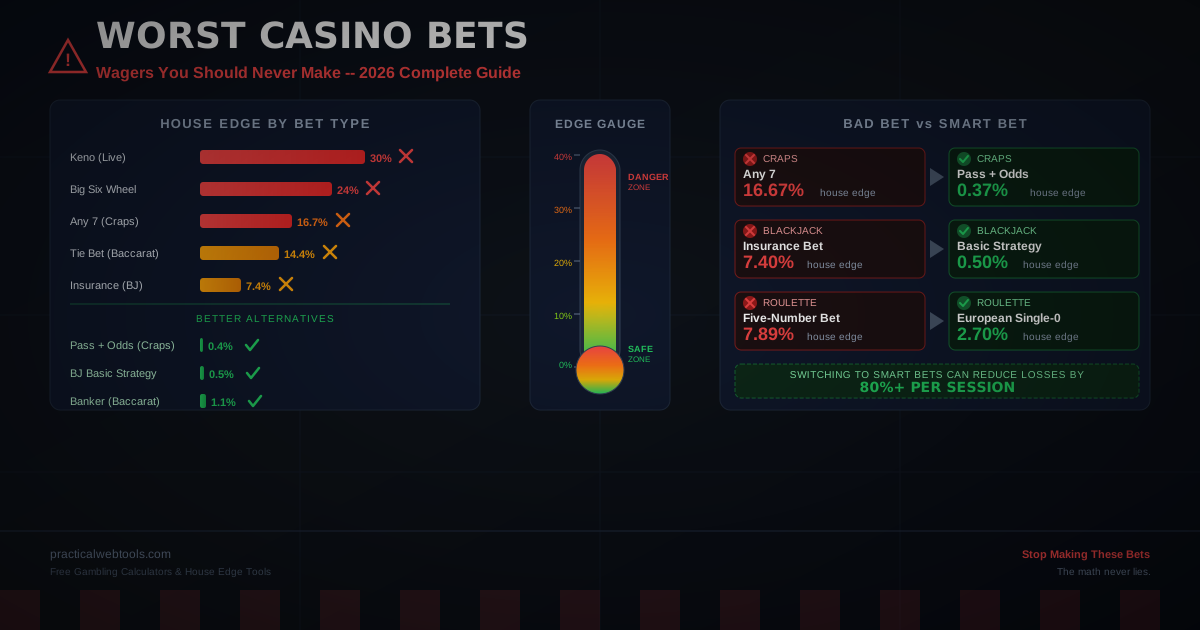
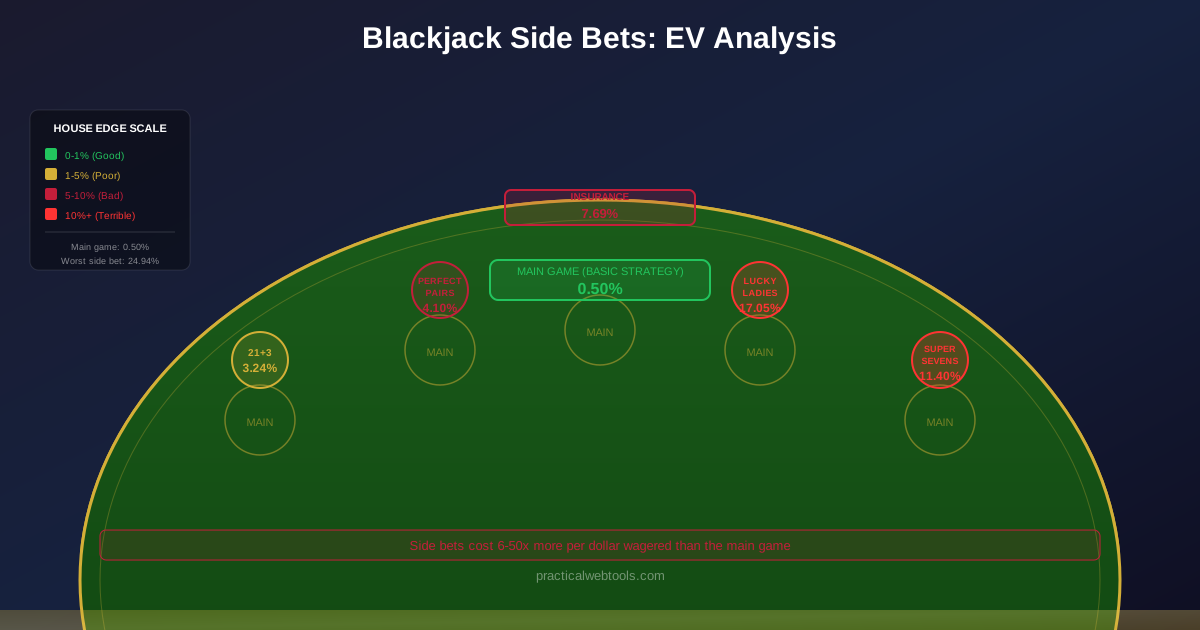
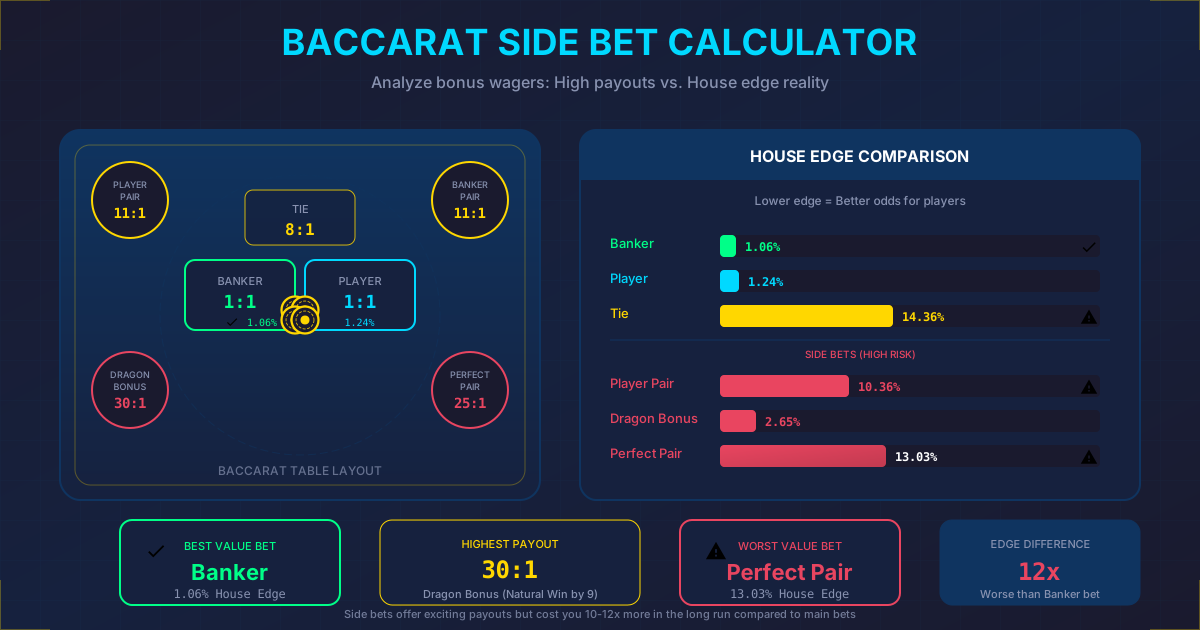
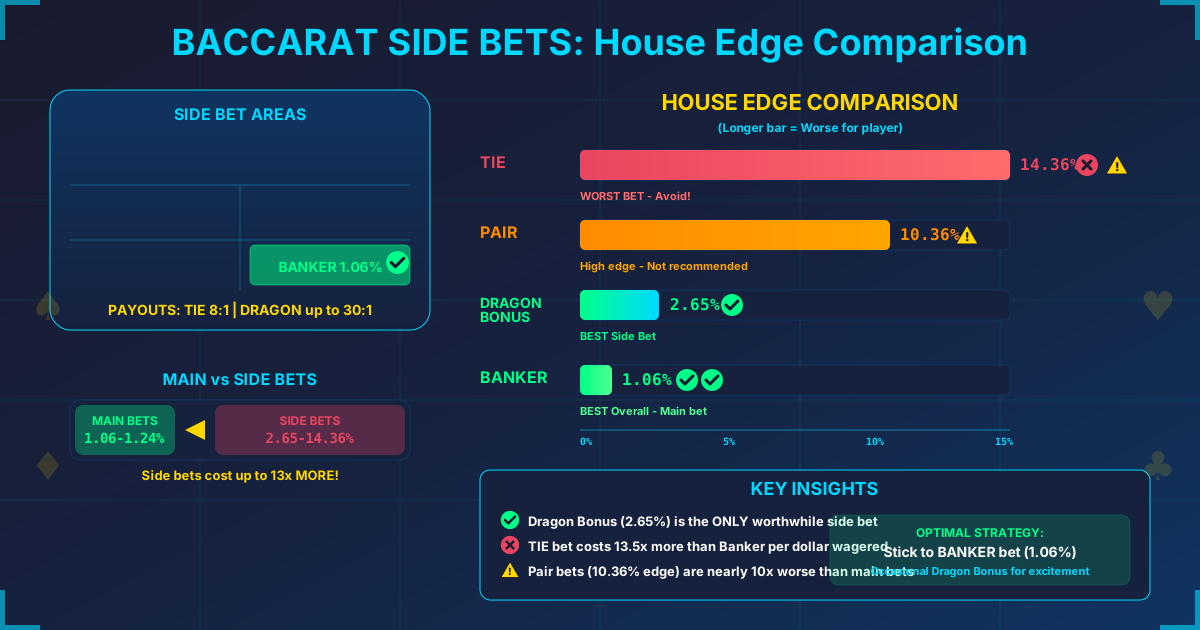
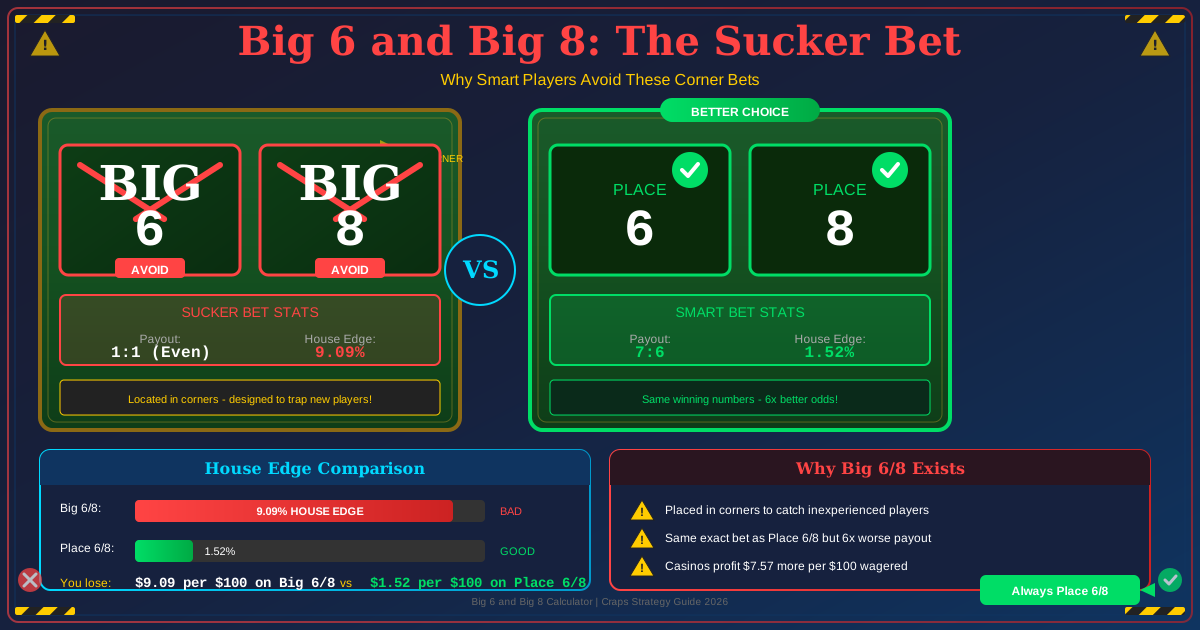
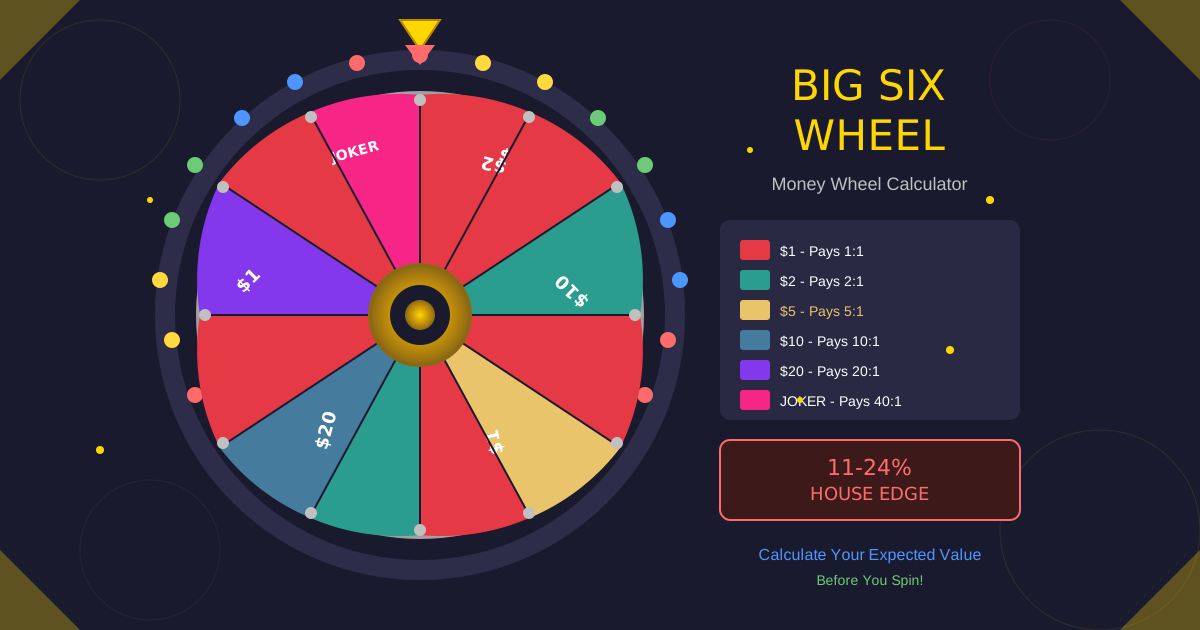
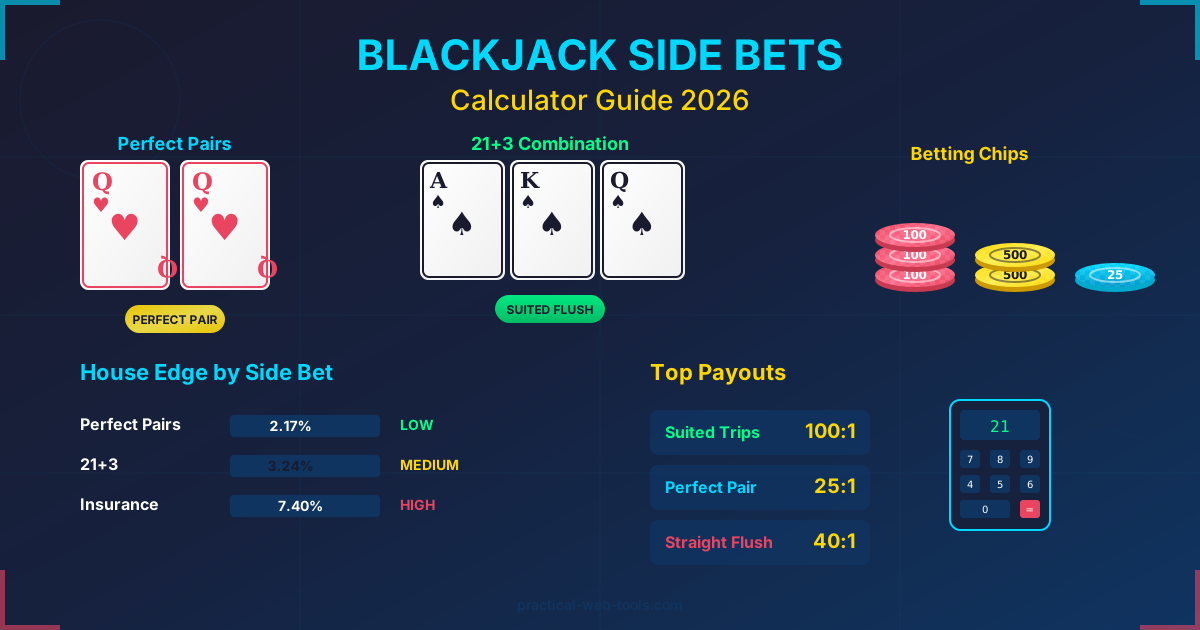
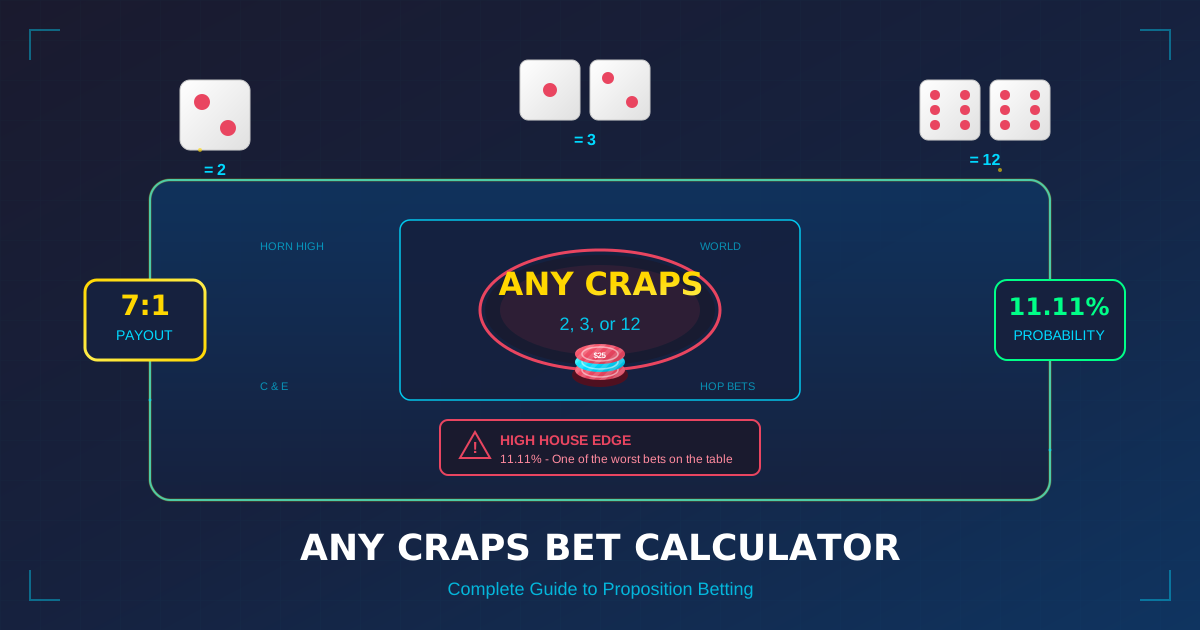
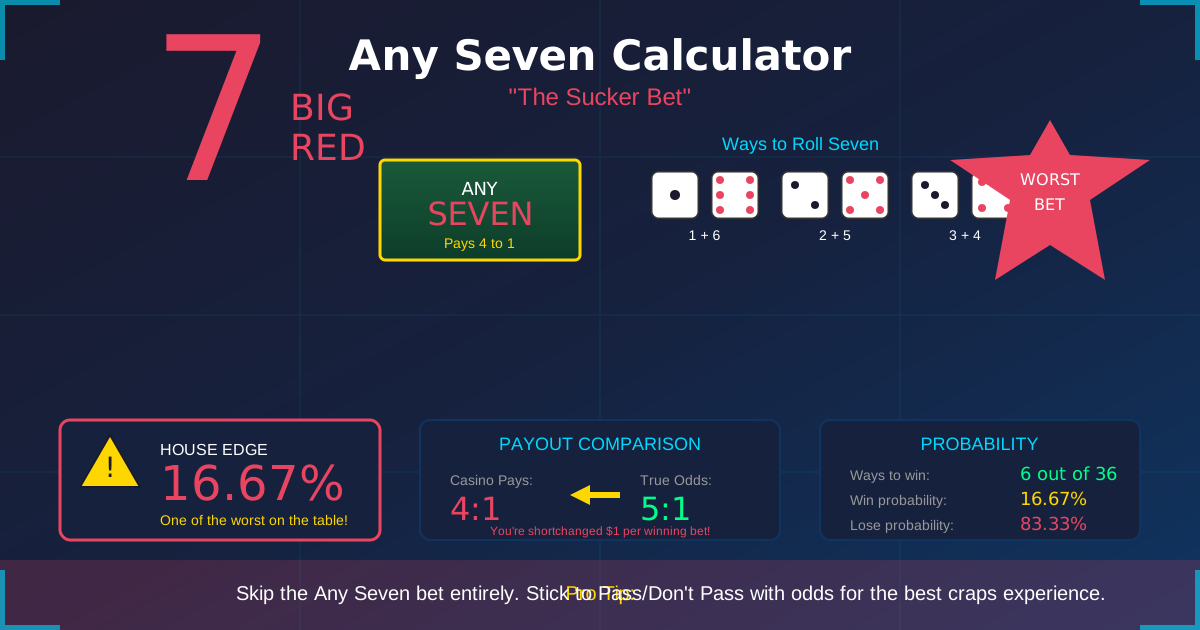
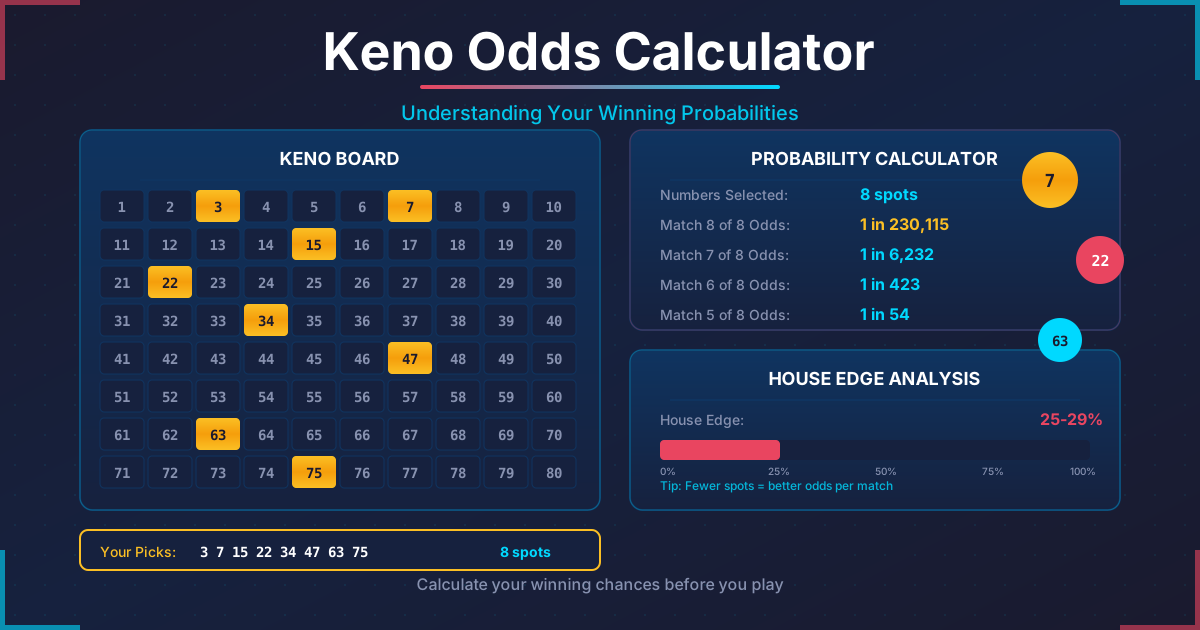
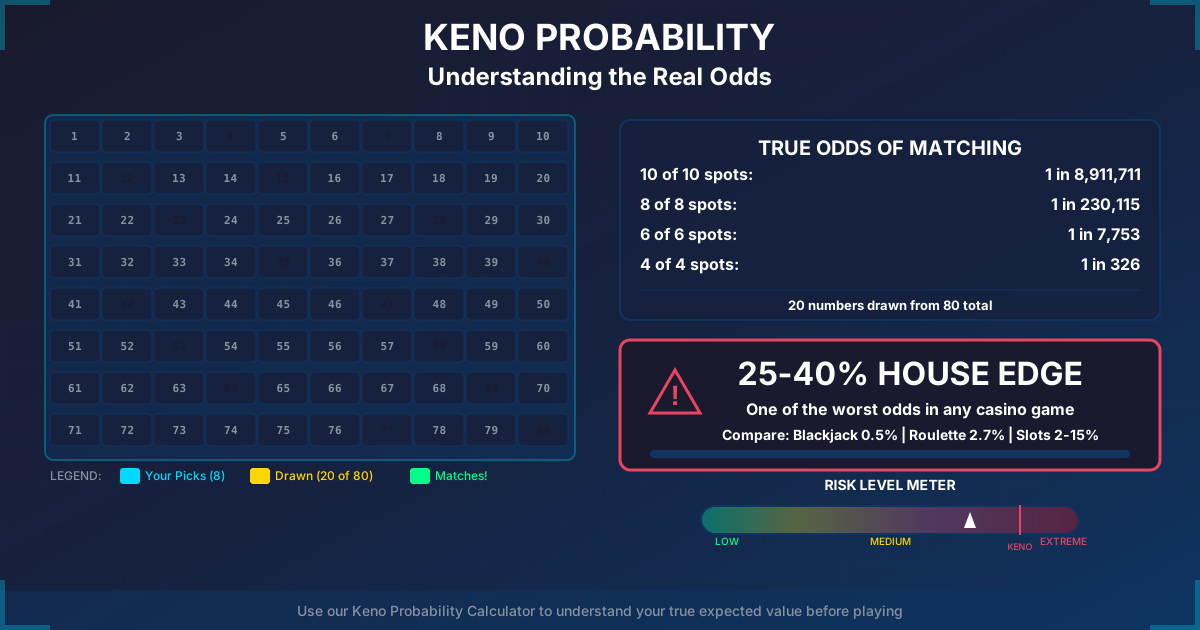
Avoid high-house-edge bets entirely: keno (25-29% edge), Big 6 wheel (11-24% edge), and most side bets on table games (2-15% edge). These bets are designed to drain budgets quickly.
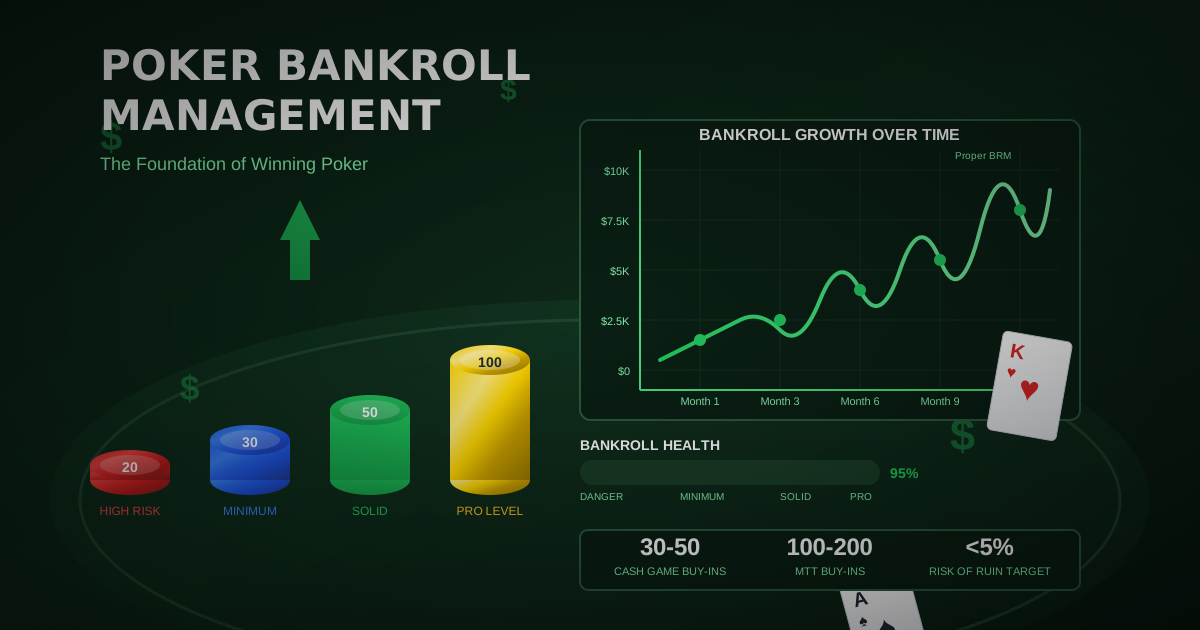
Poker Bankroll Management
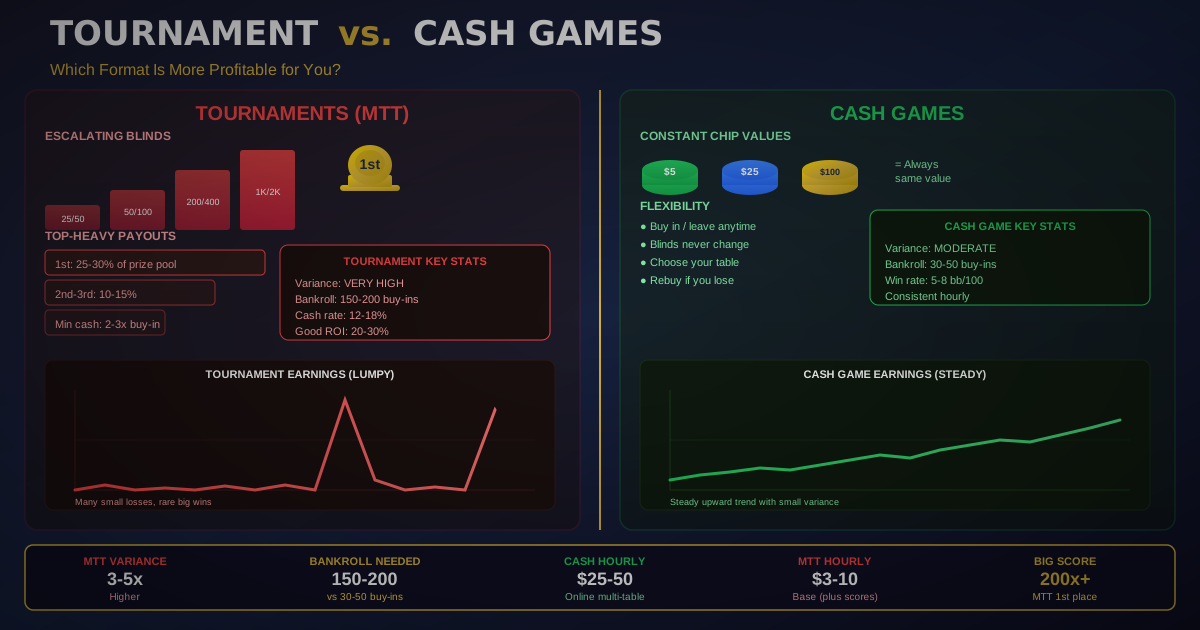
Poker is unique because you are playing against other players, not the house. The house takes a rake (typically $3-$7 per pot in live games), but a skilled player can overcome this and profit.
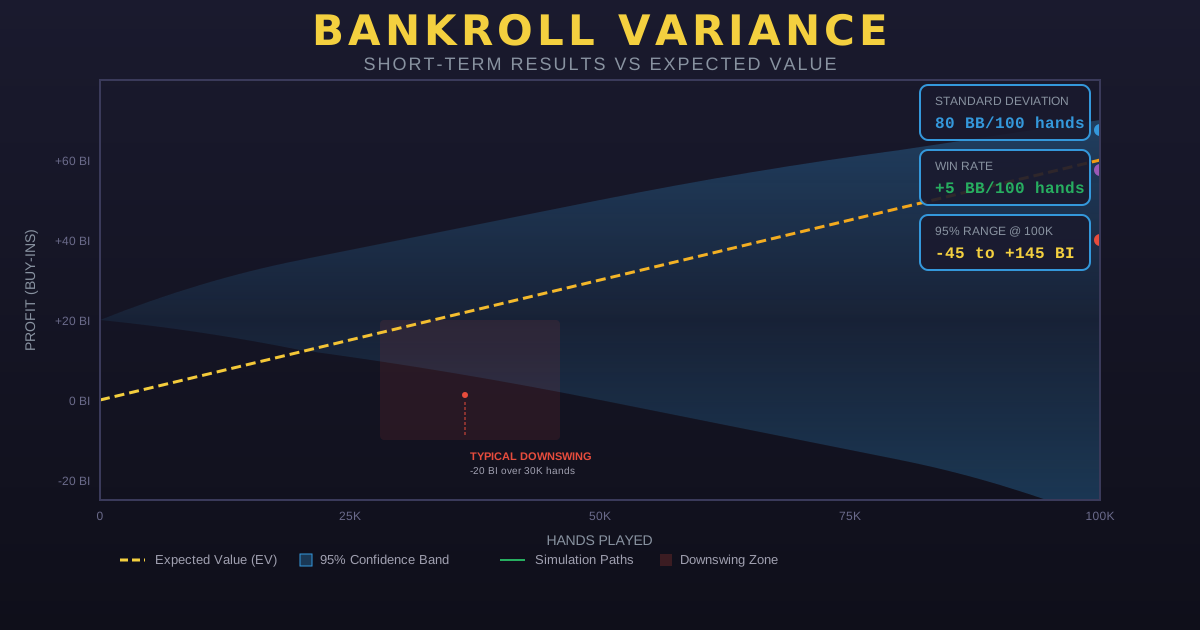
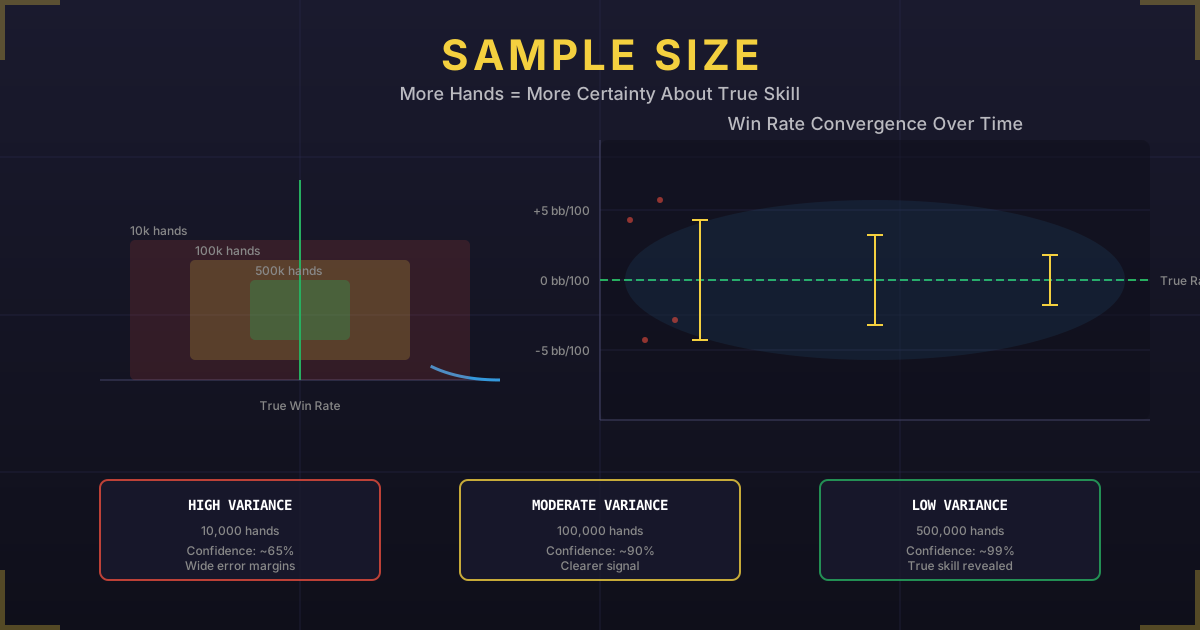
However, poker has enormous variance. A winning player at $1/$2 No-Limit Hold'em might win an average of $10-$25 per hour but can easily lose $500 in a single session due to normal variance.
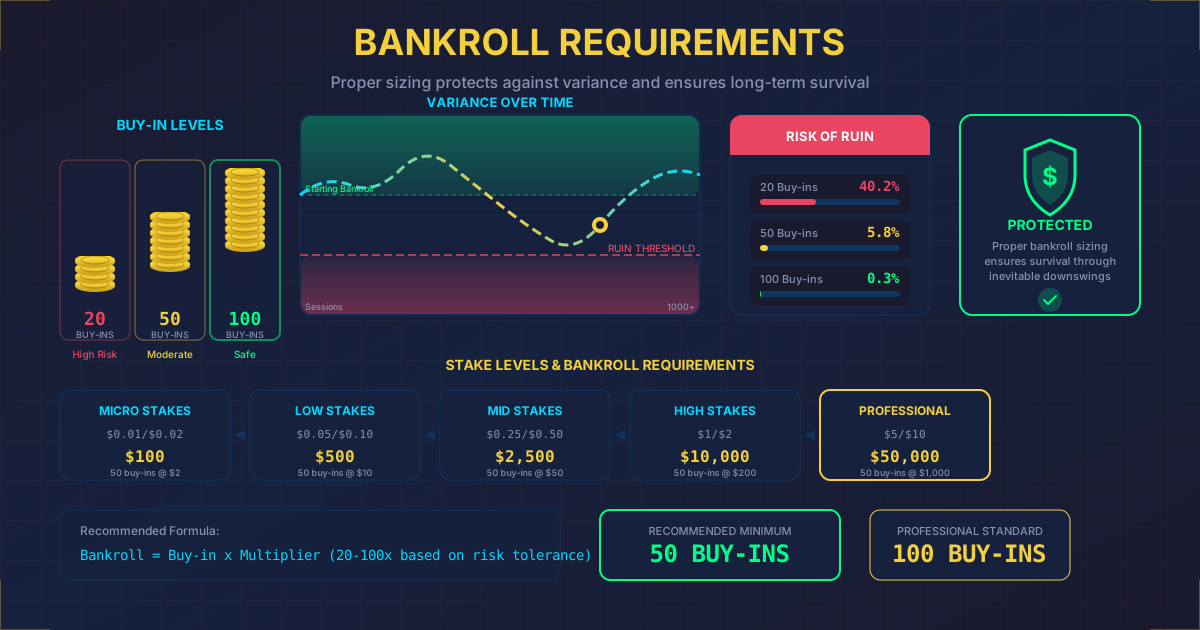
| Poker Format | Minimum Bankroll | Recommended Bankroll | For $200/month Player |
|---|---|---|---|
| $1/$2 NL Cash (live) | $4,000 (20 buy-ins) | $8,000 (40 buy-ins) | Build over 20-40 months |
| $0.25/$0.50 NL (online) | $1,000 (20 buy-ins) | $2,000 (40 buy-ins) | Build over 5-10 months |
| $20 tournament | $400 (20 buy-ins) | $800 (40 buy-ins) | Build over 2-4 months |
| $5 Sit & Go | $100 (20 buy-ins) | $200 (40 buy-ins) | Start immediately |
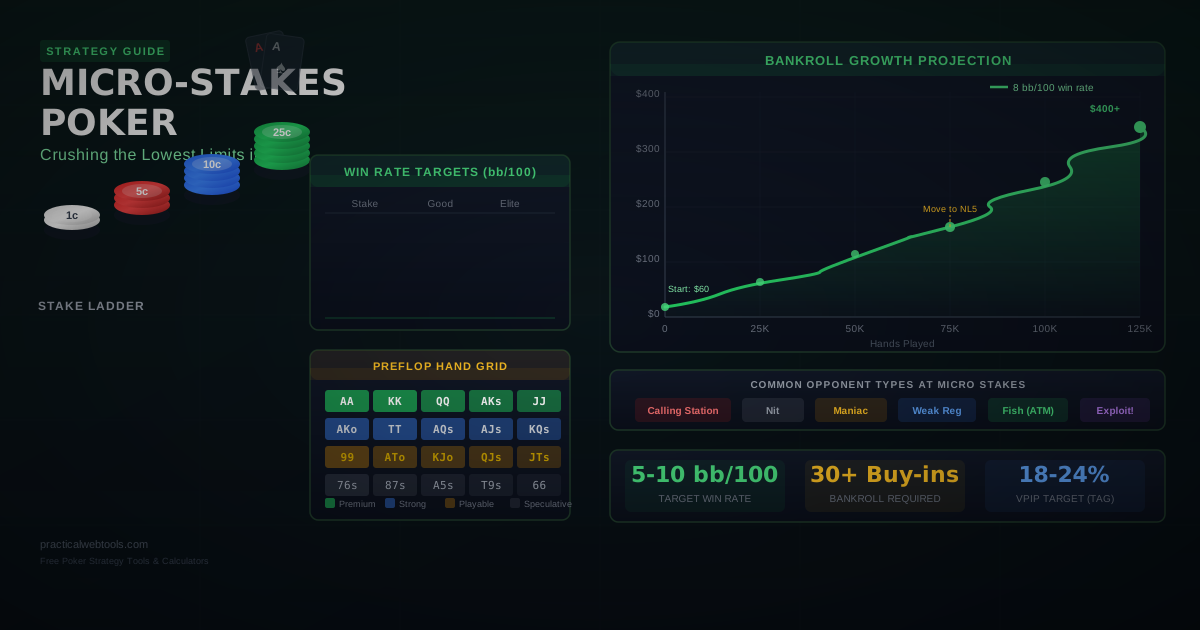
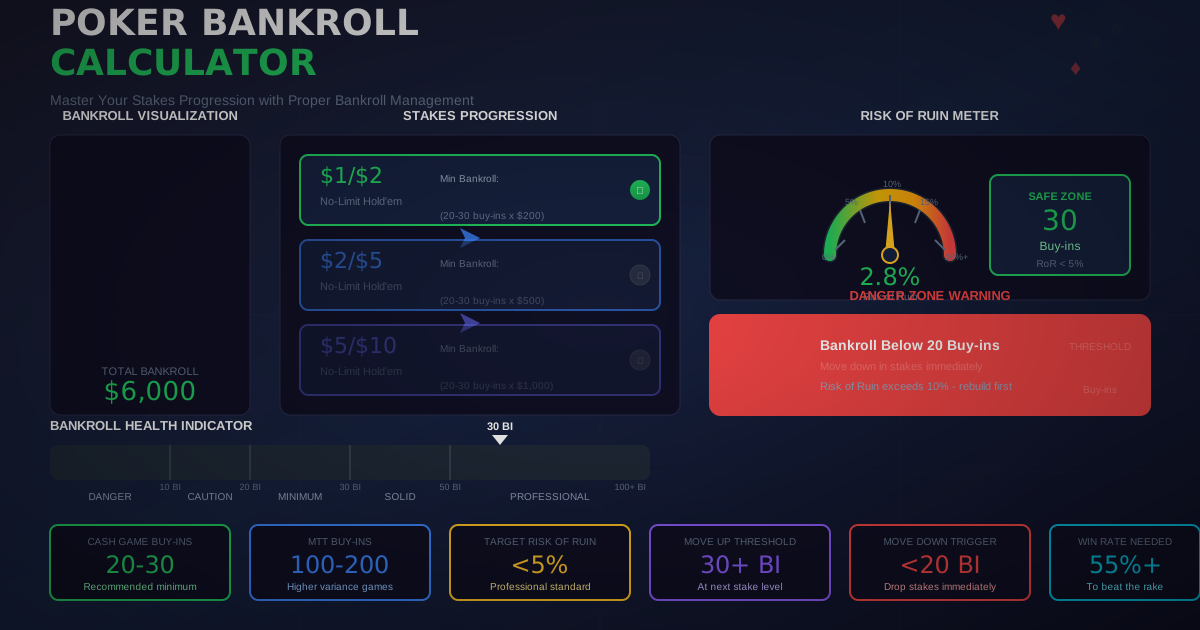
If your monthly gambling budget is $200, you cannot properly bankroll $1/$2 live poker for months. Start at the lowest stakes available, build a dedicated poker bankroll, and move up only when your bankroll supports it.
Calculate your exact risk of ruin at any stake with our Poker Risk of Ruin Calculator.
Slot Machine Bankroll Management
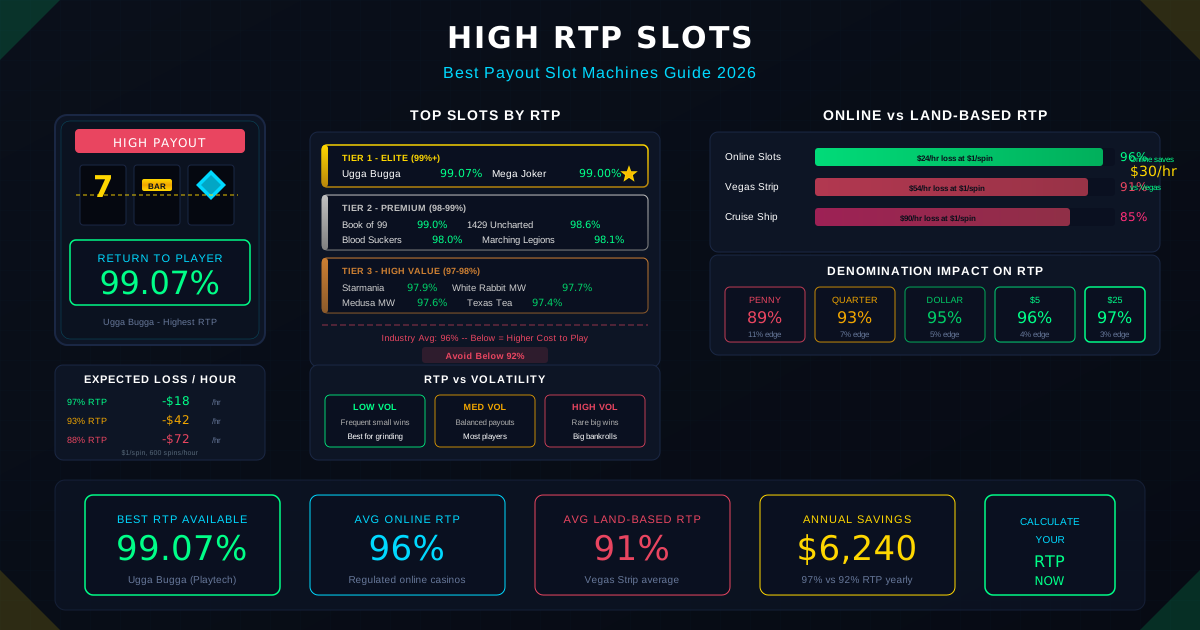
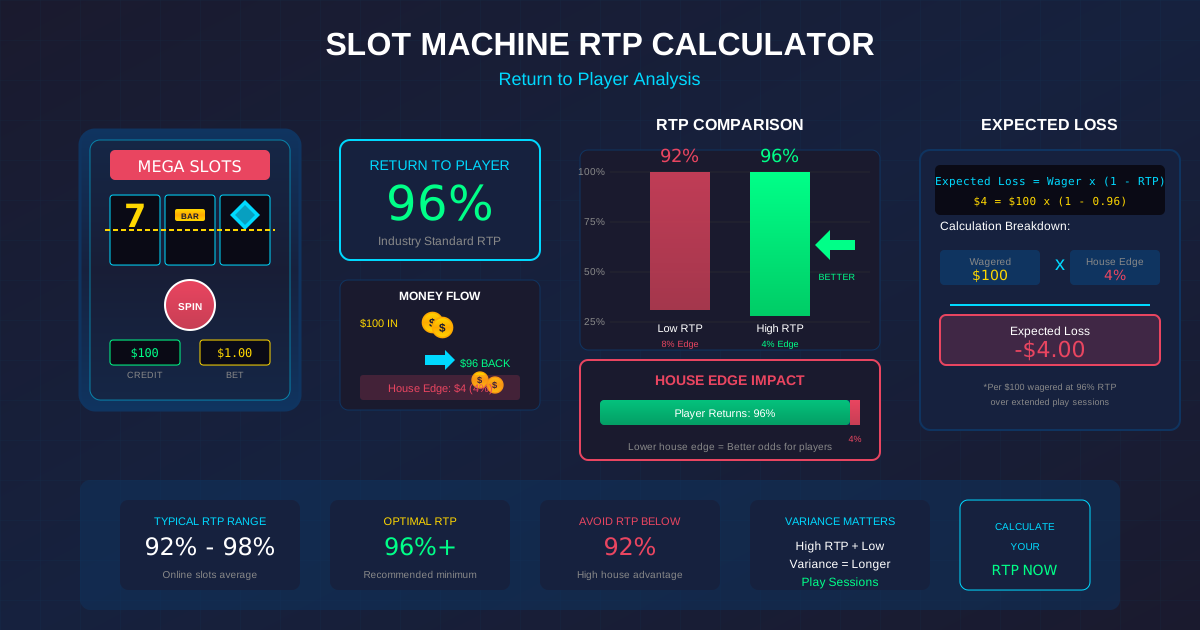
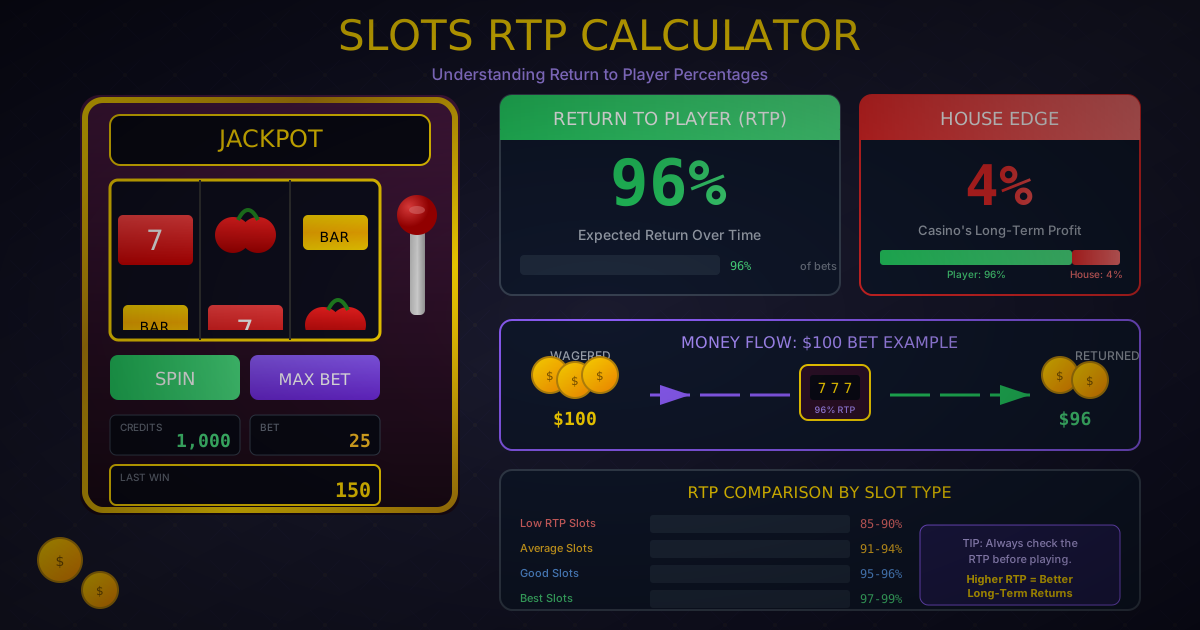
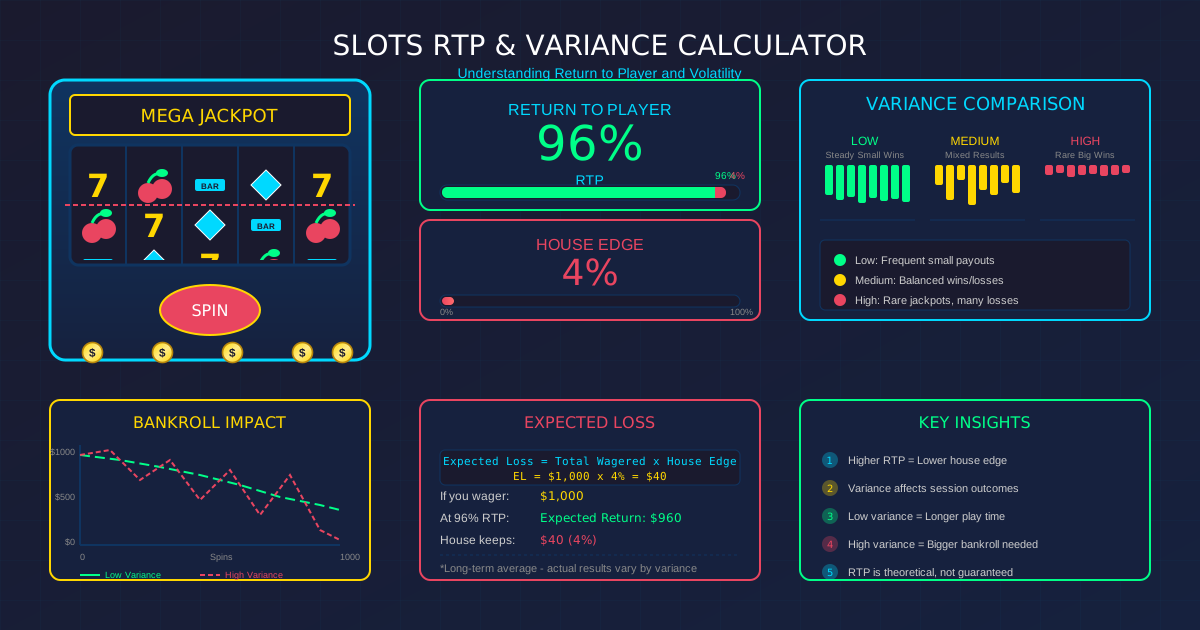
Slots have the highest variance and some of the highest house edges (2-15% depending on the machine). Budget-conscious slot players need a specific strategy:
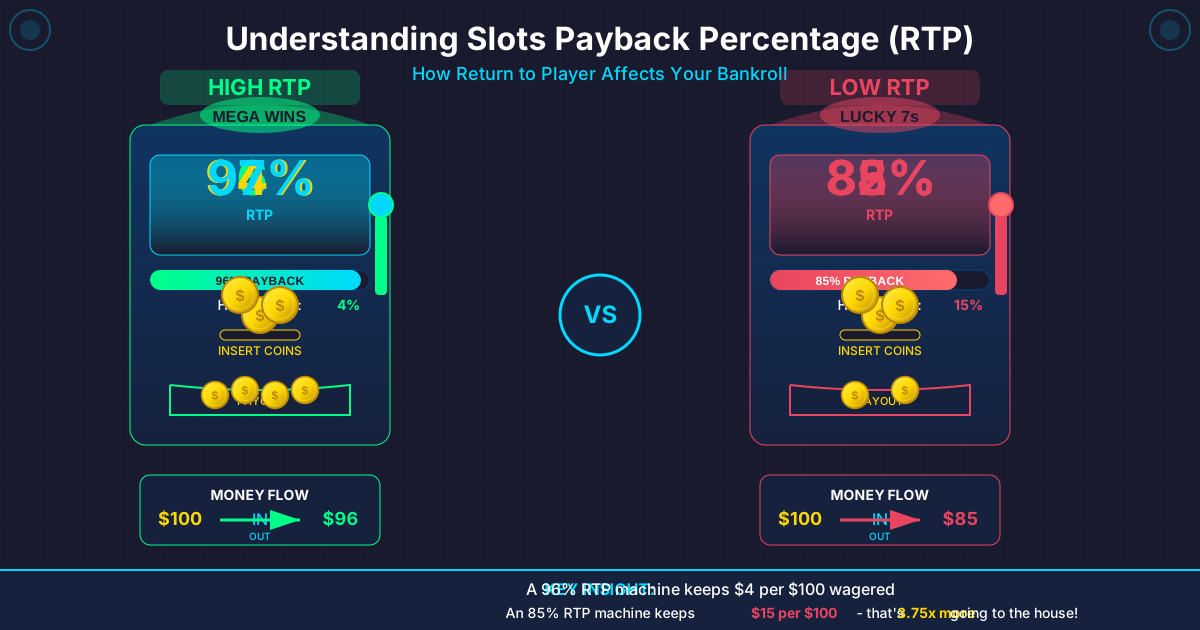
- Choose machines with stated RTP (Return to Player) of 95%+ when available
- Set a loss limit before you sit down. If the limit is $50, put $50 in and do not reload
- Use lower denominations. Penny and nickel slots stretch your budget dramatically compared to dollar slots
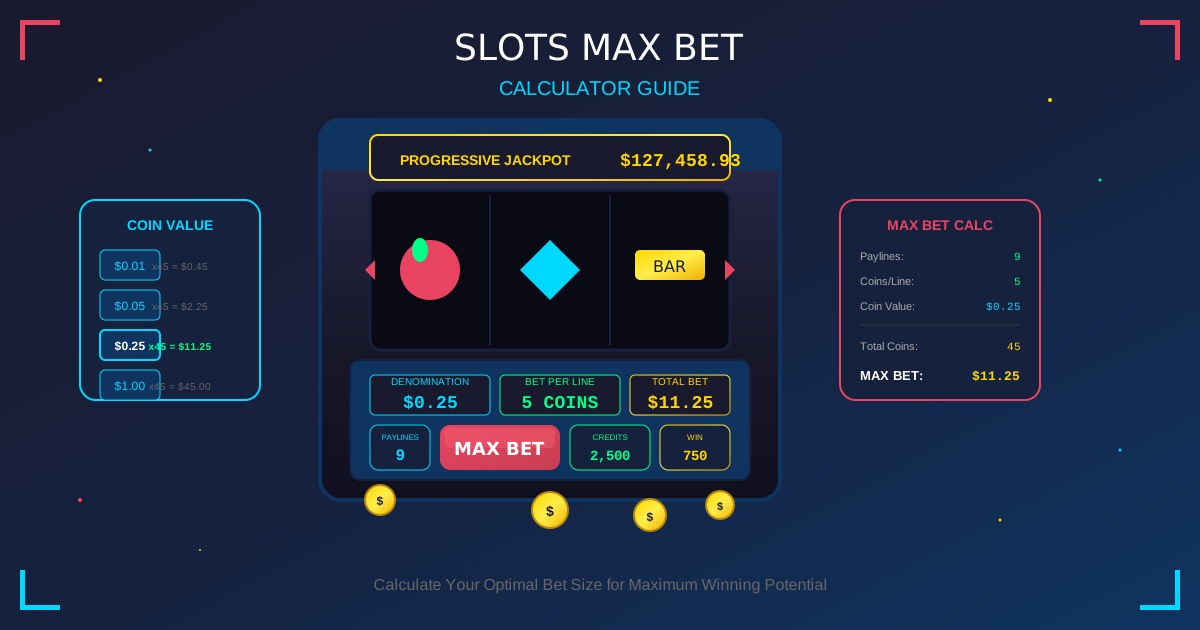
- Avoid max-bet traps. Some progressive slots require max bet for the jackpot, which can be $3-$9 per spin and burns through a budget in minutes
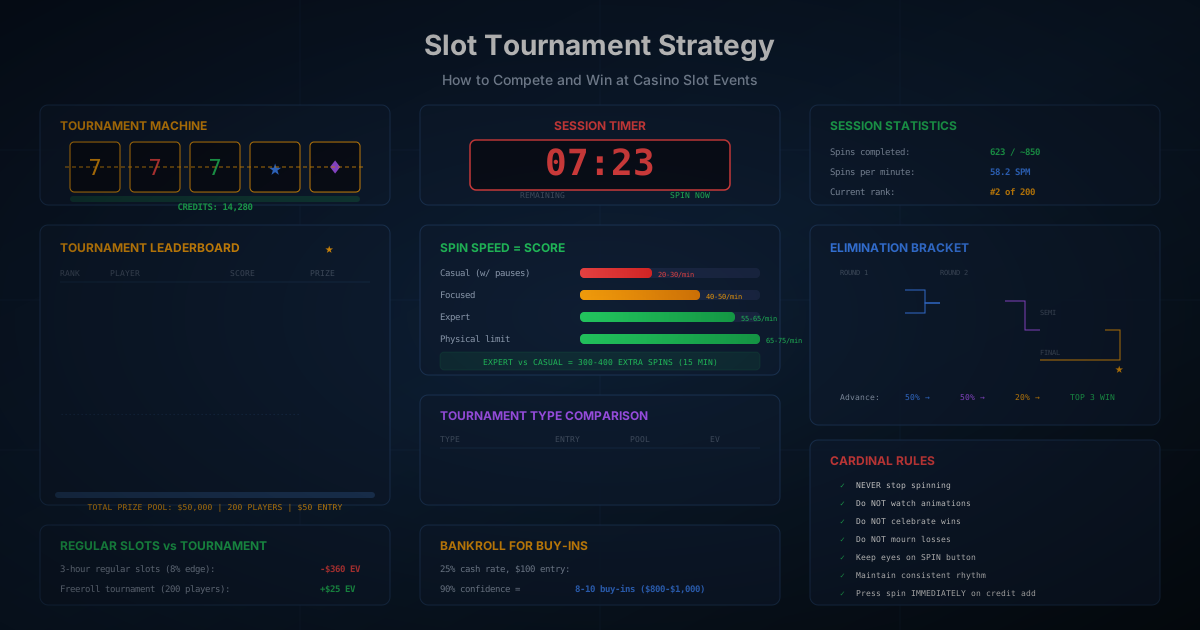
- The 250-spin rule: Divide your session budget by your bet per spin. If you cannot get at least 250 spins, your bet is too high for your budget
| Session Budget | $0.20/spin | $0.50/spin | $1.00/spin | $2.00/spin |
|---|---|---|---|---|
| $25 | 125 spins | 50 spins | 25 spins | 12 spins |
| $50 | 250 spins | 100 spins | 50 spins | 25 spins |
| $100 | 500 spins | 200 spins | 100 spins | 50 spins |
At 12 spins, you barely have time to sit down before you are broke. At 250+ spins, you get meaningful entertainment time and give the natural variance a chance to produce some winning sessions.
Technology Tools That Help You Stay on Budget
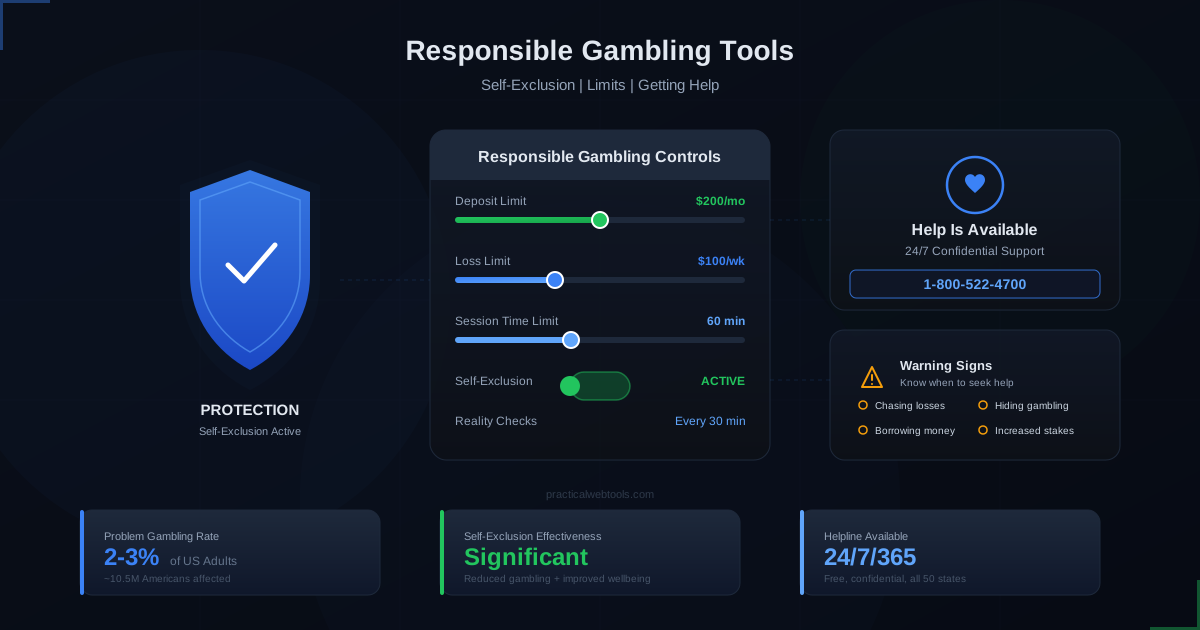
Willpower alone is not a reliable budgeting strategy. Fortunately, the gambling industry now offers a suite of tools designed to help players control their spending. A 2025 industry survey found that operators offering customizable deposit caps saw 31% fewer complaints related to excessive spending.
Deposit Limits
Every licensed online sportsbook and casino offers deposit limits. Set them immediately when you create an account.
How deposit limits work:
- You set a daily, weekly, or monthly maximum deposit amount
- The platform blocks any deposits that would exceed your limit
- Decreasing your limit takes effect immediately
- Increasing your limit requires a 24-72 hour cooling-off period (to prevent impulsive increases)
Recommended deposit limit settings by budget:
| Monthly Budget | Daily Limit | Weekly Limit | Monthly Limit |
|---|---|---|---|
| $50 | $15 | $25 | $50 |
| $200 | $50 | $75 | $200 |
| $500 | $100 | $175 | $500 |
Set your monthly deposit limit to exactly your gambling budget. This creates a hard ceiling that your future self cannot override without a waiting period.
Self-Exclusion Programs
If you find that deposit limits are not enough, self-exclusion is a more powerful tool. Approximately 23% of online casino players have used self-exclusion features at least once, and research shows it is highly effective for players who recognize they need a break.
Self-exclusion options include:
- Temporary self-exclusion: 24 hours, 7 days, 30 days, or 6 months
- Permanent self-exclusion: Lifetime ban from a platform (difficult to reverse)
- State-wide exclusion: Programs like GamStop (UK) or individual state programs in the US that cover all licensed operators
Self-exclusion is not a sign of weakness. It is a smart use of available tools when you recognize that your gambling is exceeding your budget or affecting your wellbeing.
AI-Driven Behavioral Monitoring
In 2025, 85% of online casinos use AI-driven systems to flag at-risk players. These systems monitor:
- Sudden increases in deposit frequency or amounts
- Chasing losses (increasing bets after losses)
- Playing at unusual hours
- Rapid depletion of deposited funds
When flagged, platforms may send responsible gambling messages, offer reality checks, or suggest cooling-off periods. While not perfect, data shows a 40% reduction in problem gambling behaviors when these systems are used proactively.
Practical Tech Setup for Budget Enforcement
Here is a complete technology stack for staying on budget:
- Set deposit limits on every platform you use (do this today)
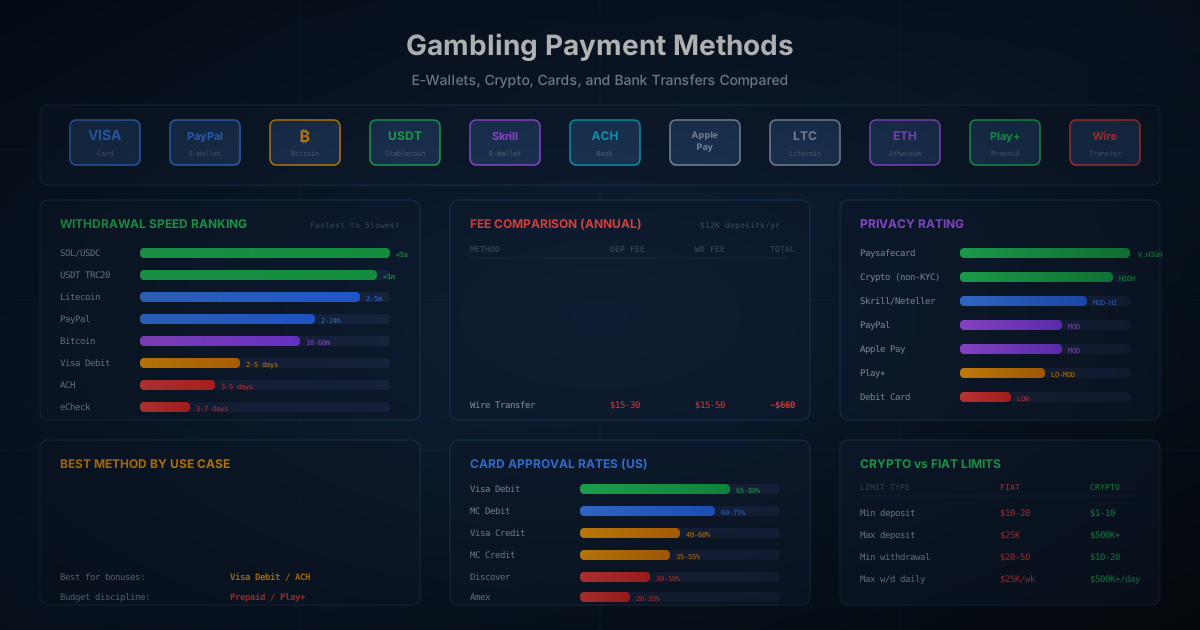
- Use a separate bank account or prepaid card for gambling funds only
- Remove saved credit cards from gambling platforms
- Enable transaction alerts on your bank account for gambling-related charges
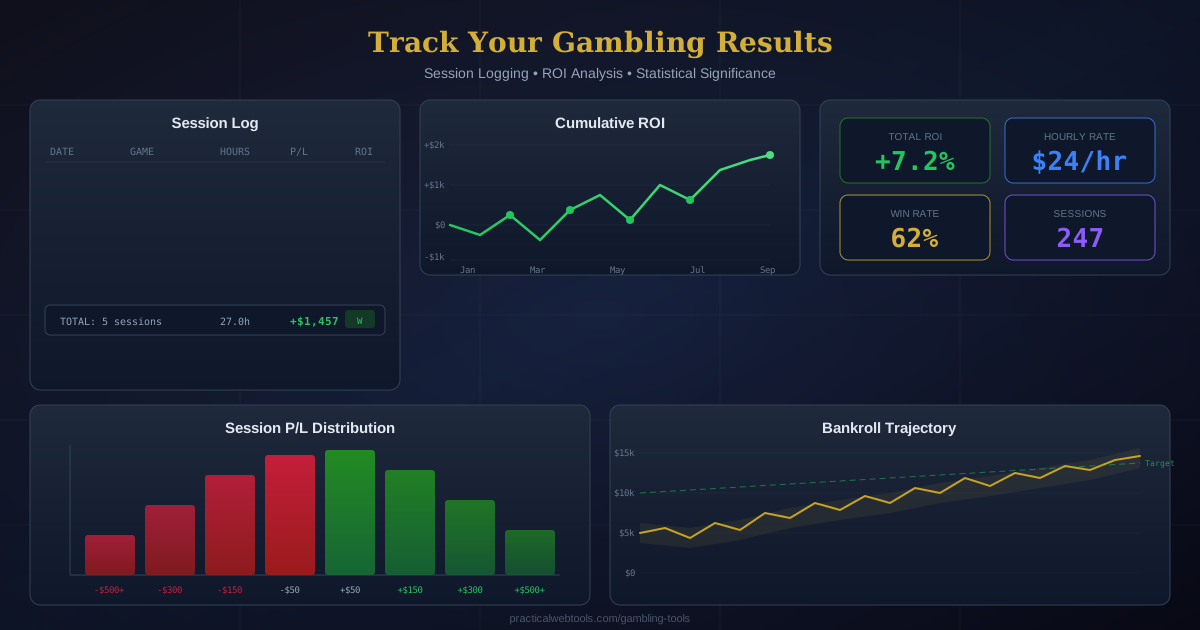
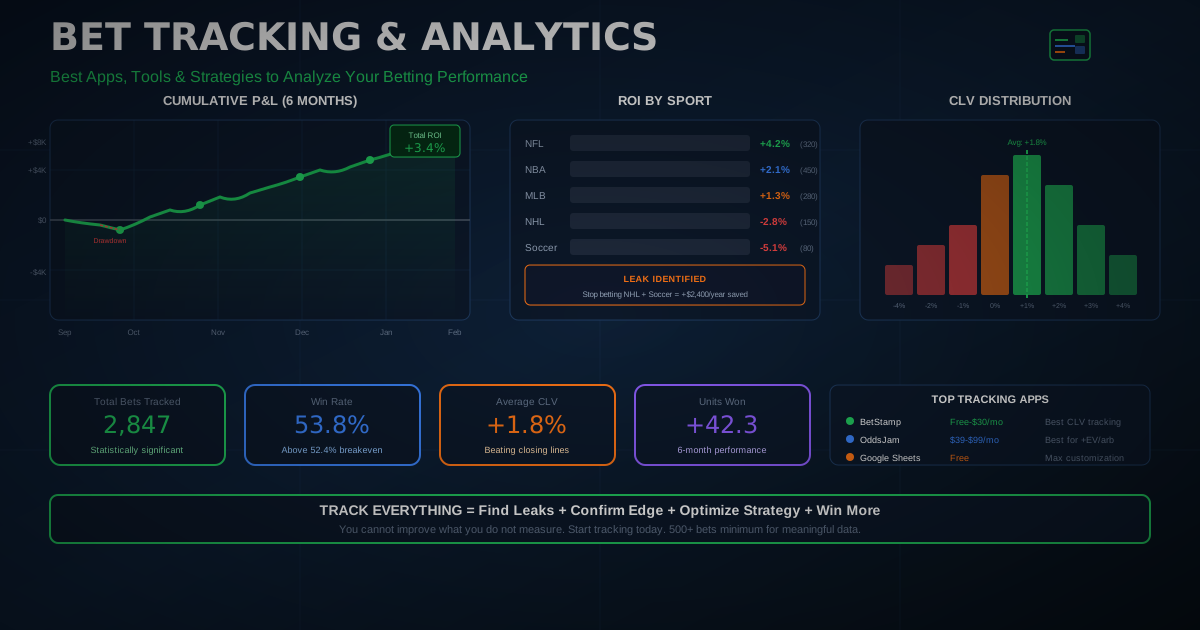
- Use a spreadsheet or betting tracker app to log every wager
- Set calendar reminders for monthly budget reviews
- Block gambling sites on your browser during work hours using a site blocker extension
The key principle: make it easy to stay on budget and hard to exceed it. Every barrier between you and impulsive overspending is a barrier worth having.
Warning Signs You Are Over Budget
Budgets only work if you are honest with yourself about following them. Here are concrete warning signs that your gambling spending has exceeded what you planned, even if you have not formally tracked it.
Financial Warning Signs
- Using credit cards to gamble. If you are borrowing money to gamble, your budget is already broken.
- Depositing more than once per session. Your session budget should be a single deposit. Going back for more means the limit has been breached.
- Skipping or reducing savings contributions to fund gambling.
- Being unable to state your total gambling spend for the past 3 months within 20% accuracy.
- Late payments on bills that coincide with gambling sessions.
- Hiding gambling transactions from a partner or family member.
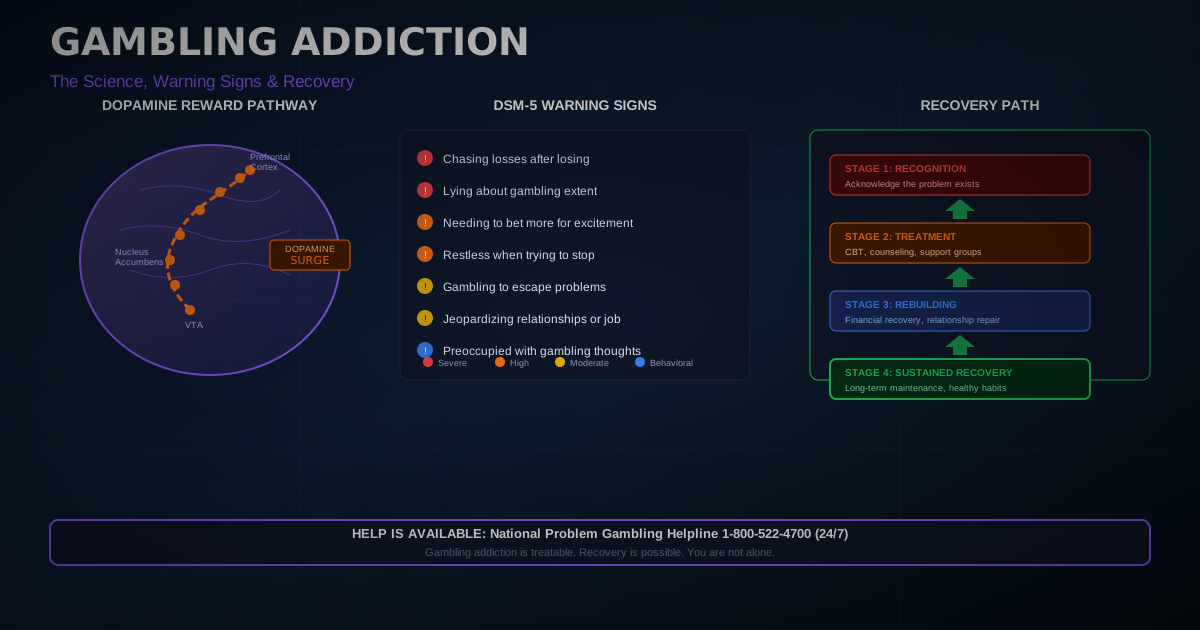
Behavioral Warning Signs
- Gambling to recover losses rather than for entertainment.
- Increasing bet sizes after a string of losses.
- Spending more time gambling than originally planned on a regular basis.
- Feeling anxious or irritable when not gambling or when unable to gamble.
- Neglecting responsibilities (work, family, health) due to gambling.
- Lying about gambling activity or spending to others.
The "Tomorrow Test"
Ask yourself after every session: "If I found out tomorrow that I could never gamble again, would I be relieved or devastated?" If the answer is relieved, your gambling has likely crossed from entertainment into compulsion, and your budget is probably not being followed.
If you recognize multiple warning signs, the appropriate response is not a bigger budget or a better strategy. It is reaching out for help. The National Council on Problem Gambling helpline (1-800-522-4700) is free, confidential, and available 24/7.
Budget Templates at Different Income Levels
Below are complete monthly gambling budget templates at three income levels. These are starting points. Adjust the numbers based on your specific financial situation, but do not adjust them upward without honest reflection.
Template 1: The $50/Month Budget (Income $3,000-$4,000/month)
This budget is for someone with limited discretionary income who wants to enjoy gambling as an occasional treat without any financial risk.
| Category | Allocation | Notes |
|---|---|---|
| Sports betting | $20/month | 4-8 bets at $2.50-$5 each |
| Casino (online) | $20/month | 2 sessions at $10 each |
| Lottery/scratch tickets | $10/month | 2-4 tickets per month |
| Reserve fund | $0 | At this budget, no reserve is practical |
| Total | $50/month | $600/year |
Rules for the $50 budget:
- No single bet exceeds $5
- No casino session exceeds $20
- If the monthly budget runs out early, do not replenish until the next month
- Track every dollar in a simple notes app or spreadsheet
- This budget should never cause financial stress. If it does, reduce it
Template 2: The $200/Month Budget (Income $5,000-$8,000/month)
This budget supports regular recreational gambling with enough room for some strategic play.
| Category | Allocation | Notes |
|---|---|---|
| Sports betting | $80/month | 10-20 bets at $4-$8 each (1-2% units) |
| Casino visits (live) | $60/month | 1-2 visits at $30-$60 session budget |
| Online casino/poker | $40/month | 4 sessions at $10 each |
| Monthly poker tournament | $20/month | 1 local tournament entry |
| Total | $200/month | $2,400/year |
Rules for the $200 budget:
- No single sports bet exceeds $15 (flat betting)
- Casino sessions have a 2-hour time limit
- Online sessions have a 90-minute time limit
- Keep a running monthly total somewhere visible
- If you are down $150+ by mid-month, stop and wait for the next cycle
- Review and adjust quarterly based on actual results
Optimize your sports betting unit size with our Kelly Criterion Calculator.
Template 3: The $500/Month Budget (Income $10,000-$15,000/month)
This budget supports a more active gambling routine with dedicated bankrolls for different activities.
| Category | Allocation | Notes |
|---|---|---|
| Sports betting bankroll | $175/month | 15-35 bets at $5-$12 each (1-2% units) |
| Live poker bankroll | $150/month | Building toward $3,000+ bankroll for $1/$2 |
| Casino entertainment | $100/month | 2-3 visits at $33-$50 session budget |
| Online poker/casino | $50/month | 4-5 sessions at $10-$12.50 each |
| Tournament fund | $25/month | 1 monthly tournament or saved for quarterly events |
| Total | $500/month | $6,000/year |
Rules for the $500 budget:
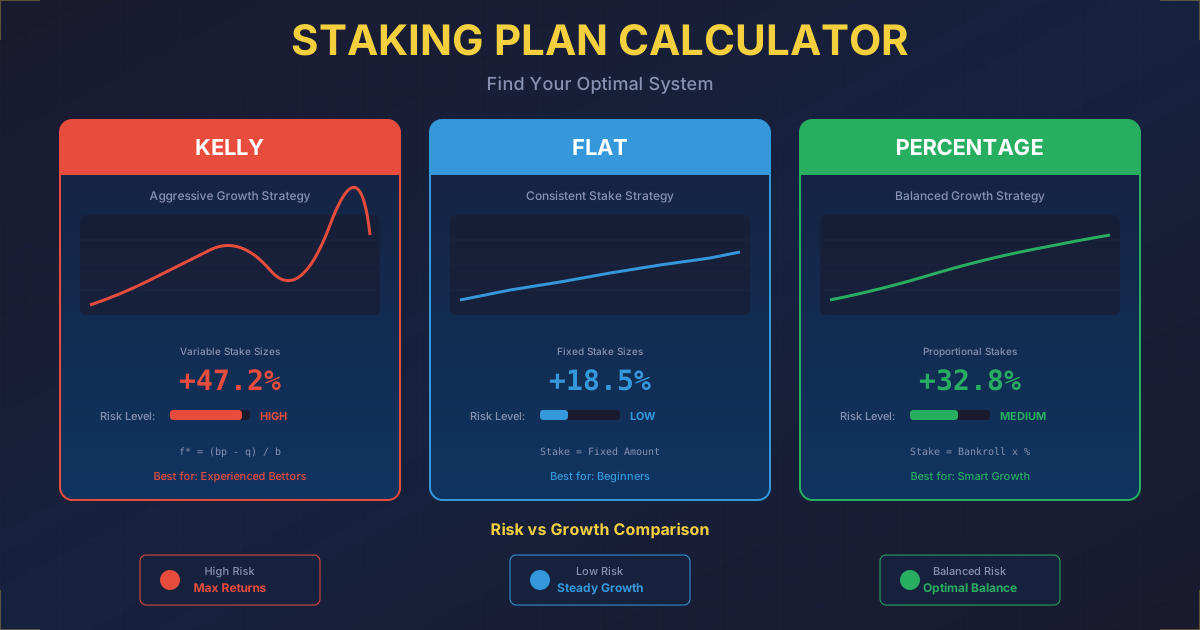
- Sports betting uses strict Kelly Criterion or flat 1-2% units
- Poker bankroll is tracked separately and not mixed with entertainment gambling
- Casino sessions never exceed 3 hours
- No single bet exceeds $25 in any category
- Monthly profit/loss tracked in a dedicated spreadsheet
- Quarterly review: if total losses exceed $2,000 in any quarter, reduce the budget by 25% for the following quarter
Check whether your poker bankroll can handle the stakes you are playing with our Poker Bankroll Requirements Calculator.
How to Actually Stick to Your Budget: The Psychology of Discipline
Setting a budget is the easy part. Following it when you are down $40 and "just know" the next bet will hit? That is where discipline lives or dies.
Pre-Commitment Strategies
The most effective budgeting tool is a decision made before emotions are involved. Research consistently shows that pre-commitment, making binding decisions in advance, dramatically outperforms in-the-moment willpower.
Physical pre-commitment:
- Leave your debit and credit cards at home when visiting a casino. Bring only your session budget in cash.
- Use a prepaid gambling card loaded with your exact session budget.
- Disable one-click deposit features on mobile gambling apps.
Digital pre-commitment:
- Set deposit limits before your first session of the month (not during or after).
- Use app timers that lock gambling apps after your session time limit.
- Schedule automatic transfers to move gambling funds into a separate account on the 1st of each month.
Social pre-commitment:
- Tell a friend or partner your budget and ask them to check in.
- Join a responsible gambling forum or community for accountability.
- Bet with a friend who also budgets, reinforcing the behavior as normal.
The "Envelope Method" for Gambling
Adapted from the classic personal finance technique:
- On the 1st of each month, withdraw your gambling budget in cash
- Divide the cash into envelopes labeled by session (e.g., "Session 1: $50," "Session 2: $50," etc.)
- When an envelope is empty, that session is over
- When all envelopes are empty, gambling is done for the month
- Any cash left in envelopes at month-end goes into a savings jar
This method works because cash makes spending tangible. Swiping a card or clicking a button feels abstract. Handing over physical bills hurts. That pain is a feature, not a bug.
Dealing With Losing Streaks
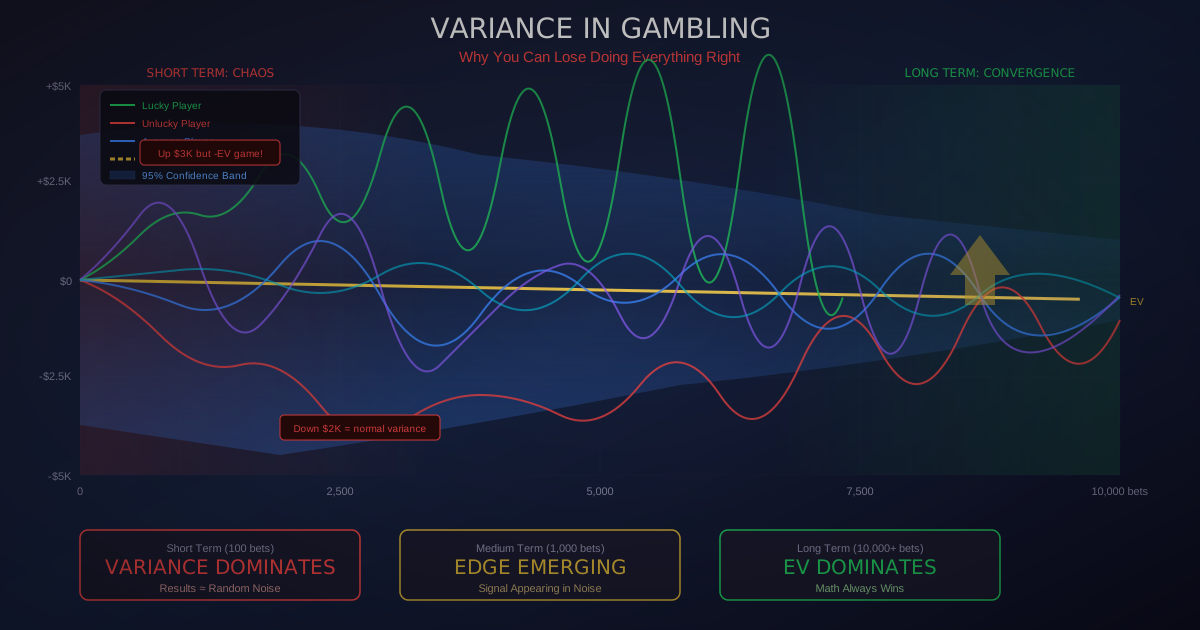
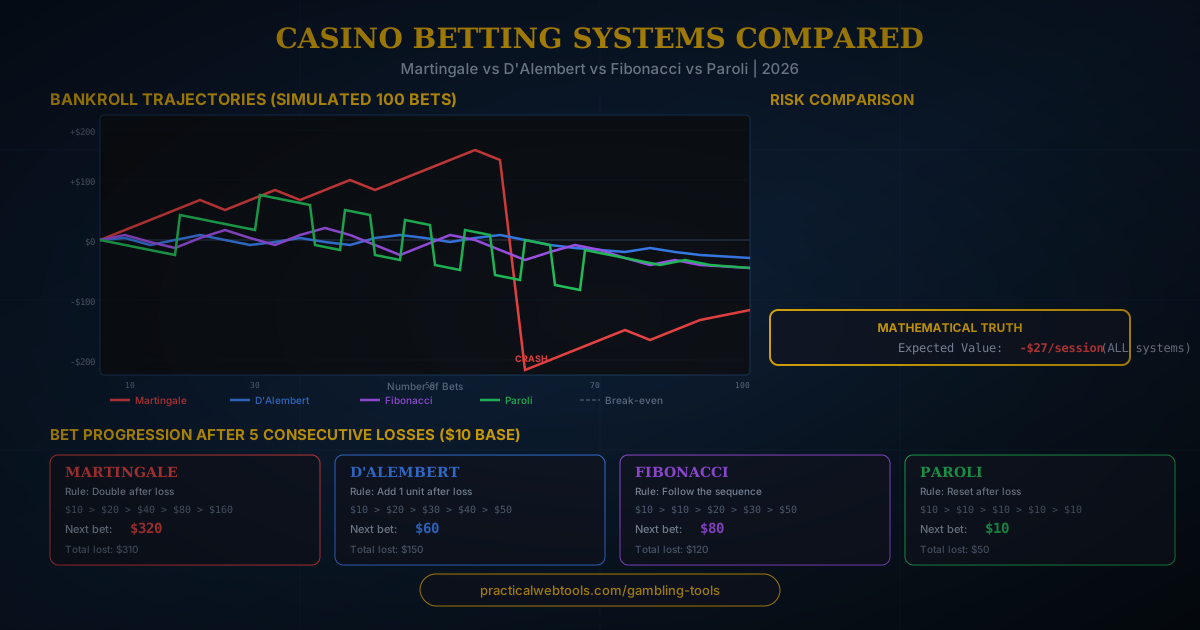
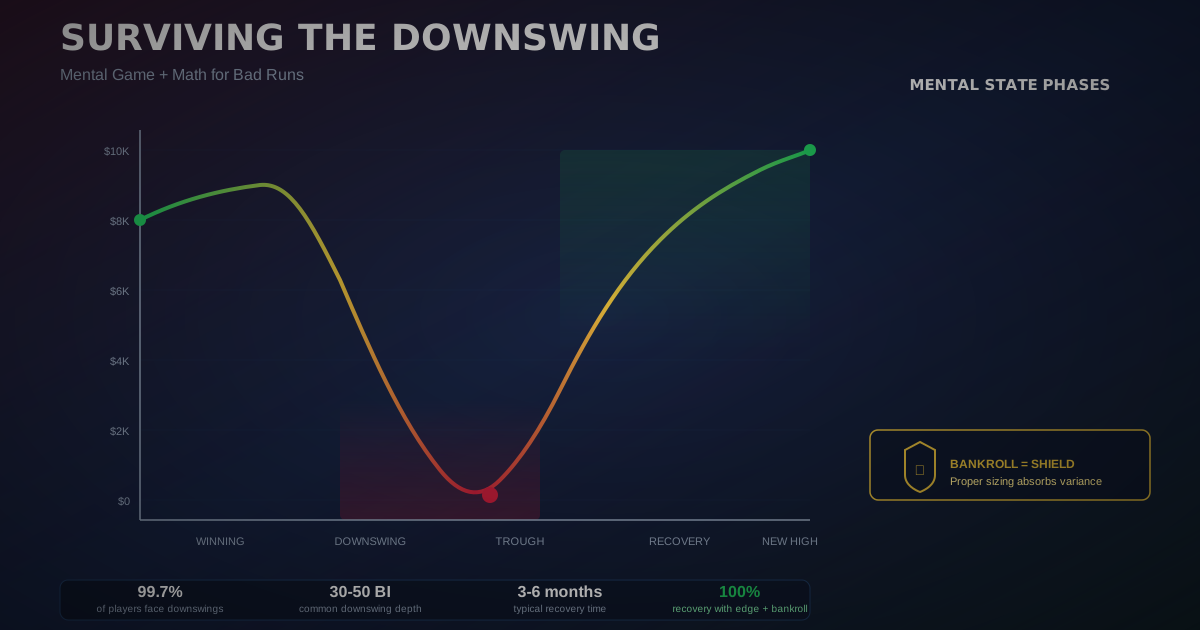
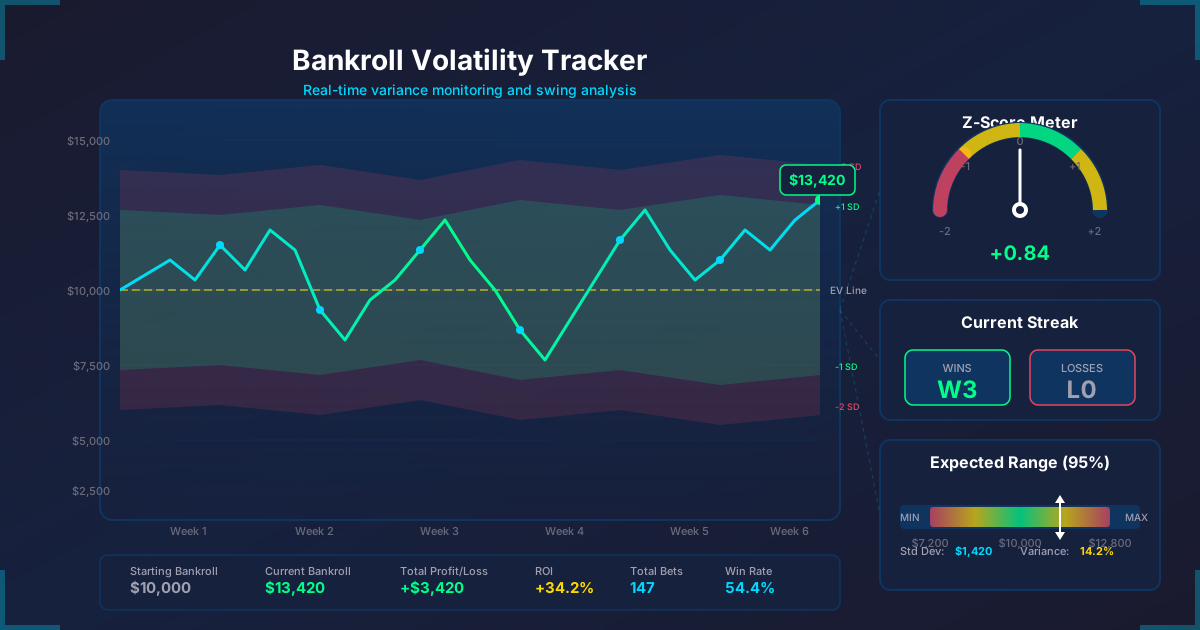
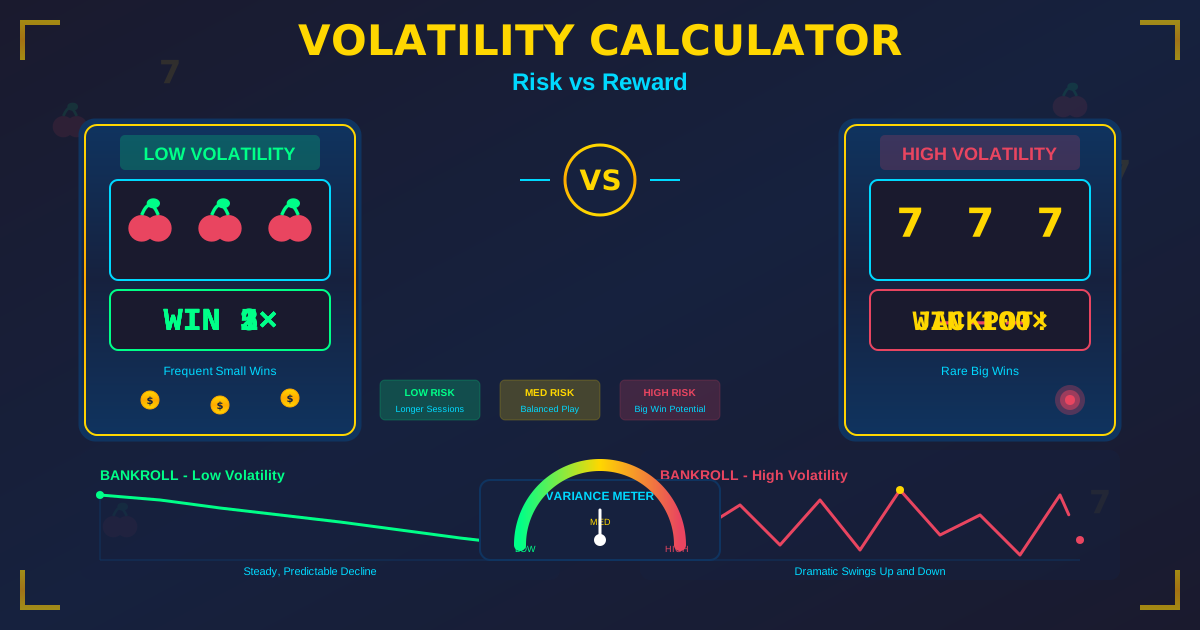
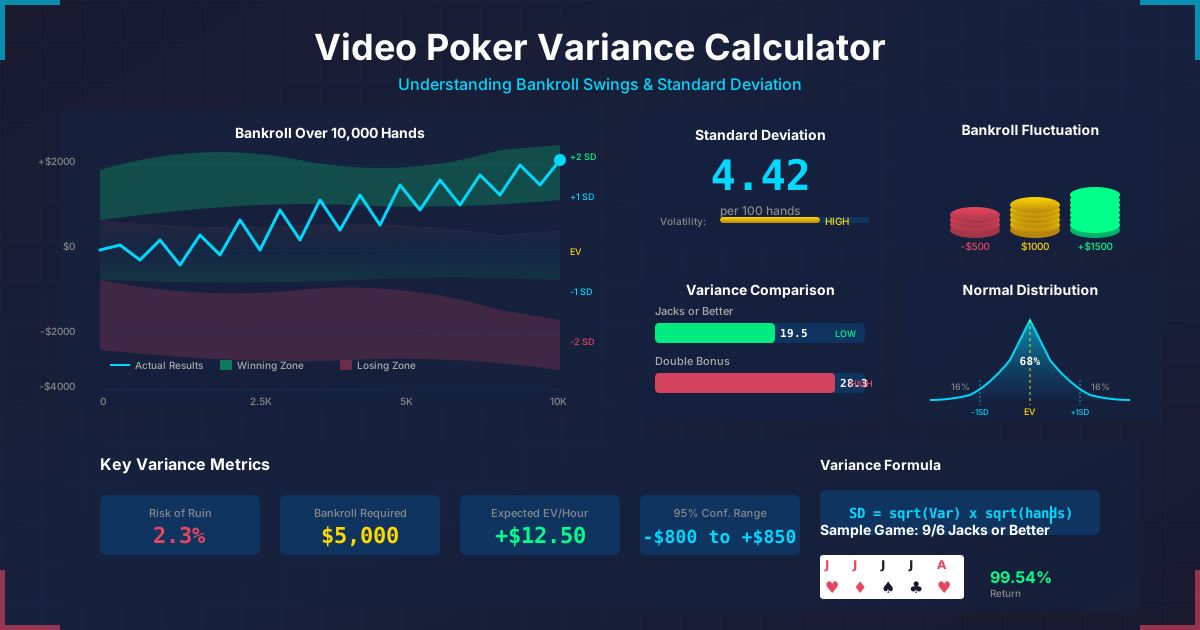
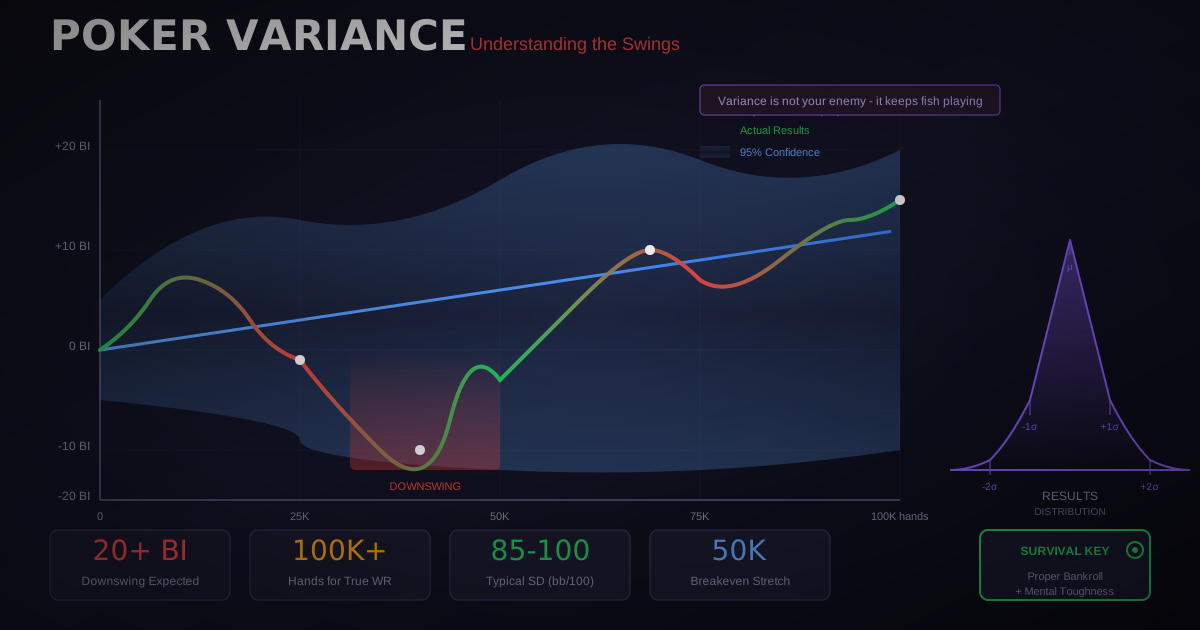
Losing streaks are mathematically inevitable. In sports betting with a 50% win rate, there is a 3.1% chance of losing 5 straight bets and a 0.1% chance of losing 10 straight. In a session of 200 slot spins at 95% RTP, you will experience runs of 20-30 consecutive non-winning spins regularly.
When you are on a losing streak:
- Acknowledge it is normal. Variance is not punishment. It is math.
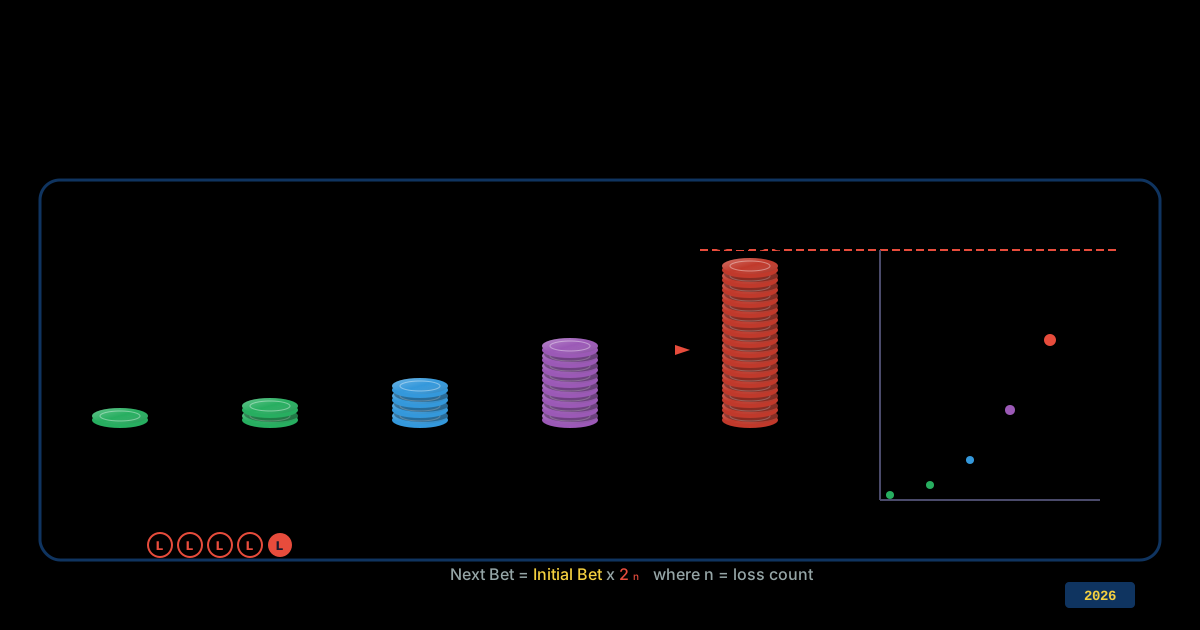
- Do not increase bet sizes. This is the loss-chasing impulse that ruins budgets.
- Take a break. Walk away for 15 minutes. Get water. Check your phone. Reset.
- Review your session budget. If you still have budget remaining, continue at your normal bet size. If not, stop.
- Zoom out. One bad session is meaningless in the context of a year. Your annual entertainment budget is what matters, not any single day.
Simulate how losing streaks affect your bankroll over time with our Poker Variance Calculator.
Celebrating Winning Sessions (Without Blowing the Budget)
Winning is fun. It is also dangerous, because the dopamine from a big win makes your brain want more. Winning sessions require discipline too.
- Never increase your next session's budget because you won this time
- Pocket at least 50% of winnings immediately (move to non-gambling account)
- Do not add winnings to your gambling bankroll unless you have a formal bankroll-building strategy
- Treat winnings as a bonus, not a signal that your edge has increased
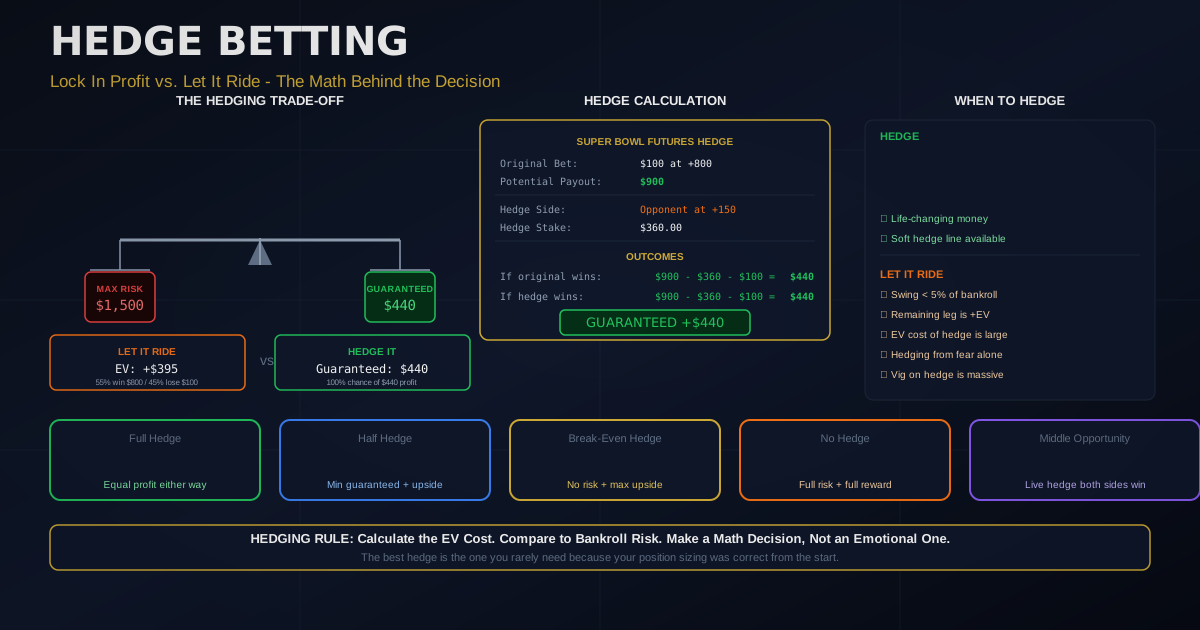
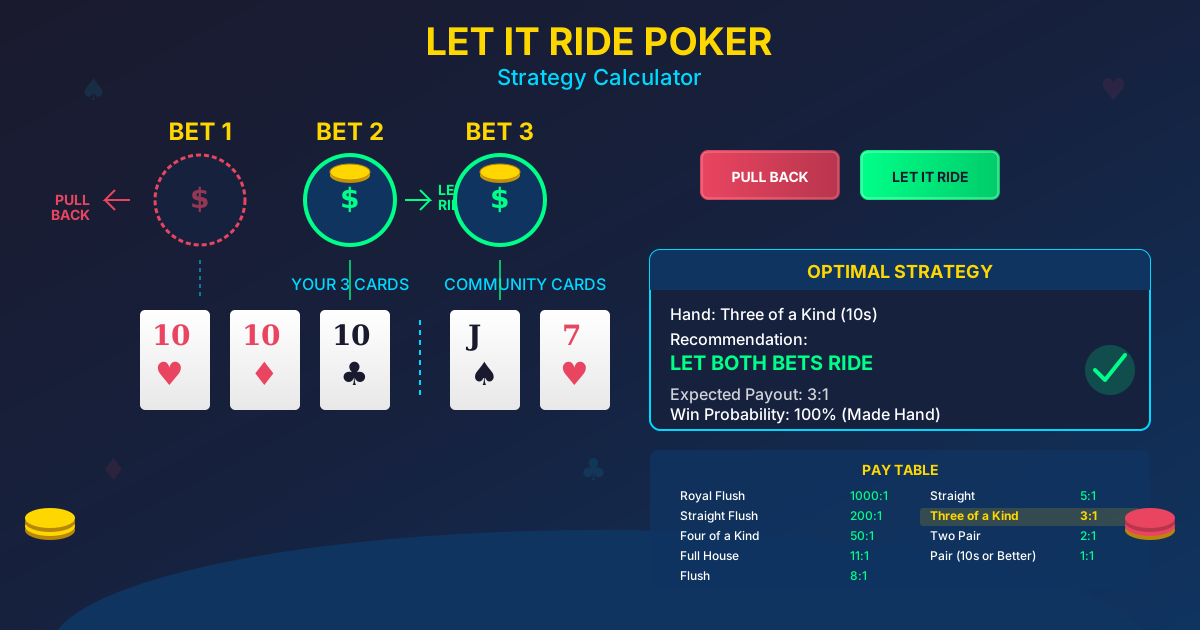
- Resist the urge to "let it ride" on the next bet
The gambler who pockets winnings and sticks to their budget consistently outperforms the gambler who keeps pressing during hot streaks.
Frequently Asked Questions
What percentage of my income should I spend on gambling?
Financial experts recommend allocating 1-5% of your monthly discretionary income (not total income) to gambling. Discretionary income is what remains after all essential expenses, savings, and debt payments. For most people, this means a gambling budget between $20 and $250 per month. If calculating 1-5% of your disposable income produces a number that feels uncomfortably high, trust that instinct and choose a lower amount.
How do I set a gambling budget if my income varies month to month?
Use the lowest income month from the past six months as your baseline. Calculate your gambling budget from that conservative figure. In higher-income months, the extra money should go to savings, debt reduction, or other financial goals, not to an increased gambling budget. Consistency in your gambling budget, even when income fluctuates, is a powerful discipline tool.
Should I count gambling winnings as part of my budget?
No. Your budget is the maximum amount you are willing to lose, independent of outcomes. If you allocate $200/month and win $300 in January, your February budget is still $200. Winnings should either be saved, spent on non-gambling activities, or, if you have a formal bankroll-building strategy, allocated to your dedicated bankroll according to predetermined rules, not used as license to increase casual betting.
What is the best game to play on a limited budget?
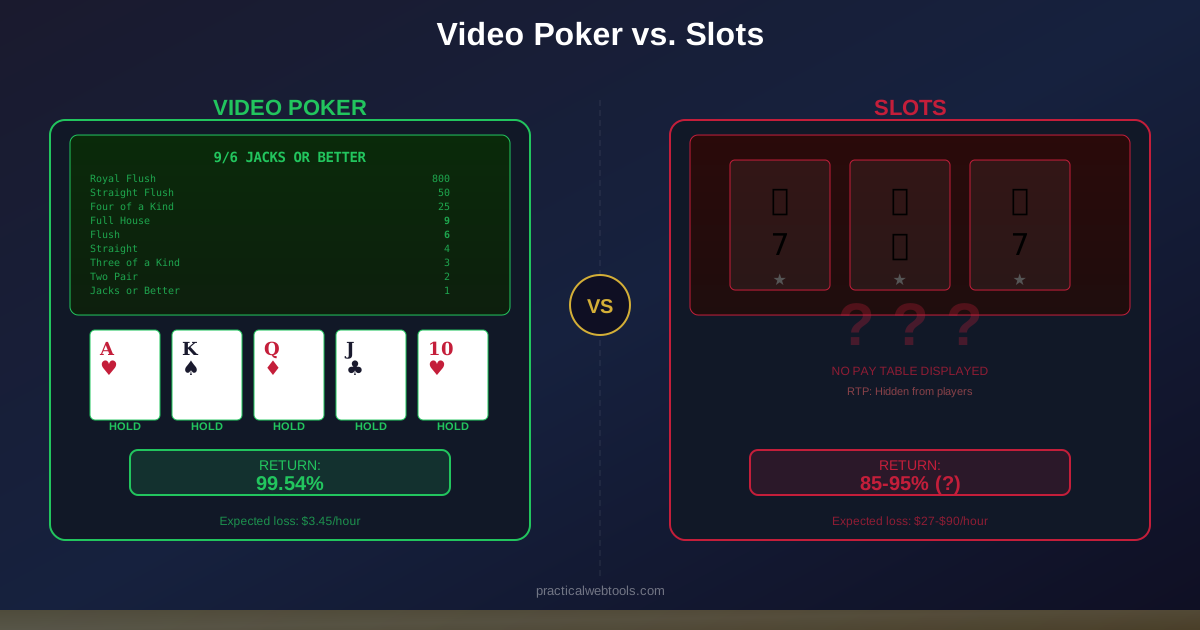
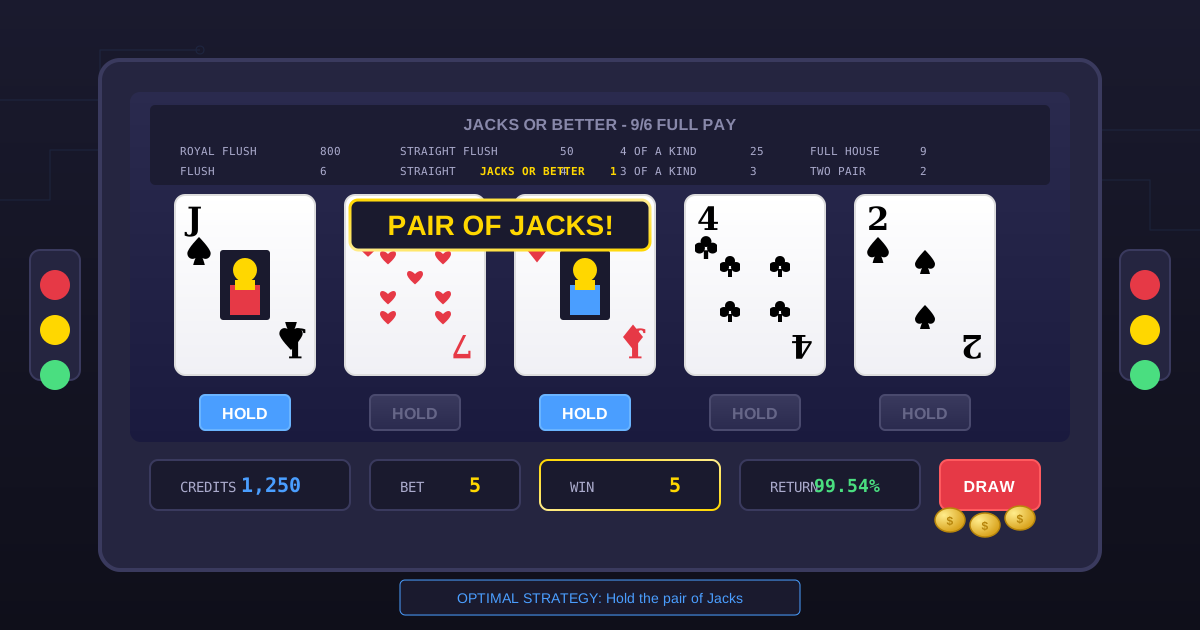
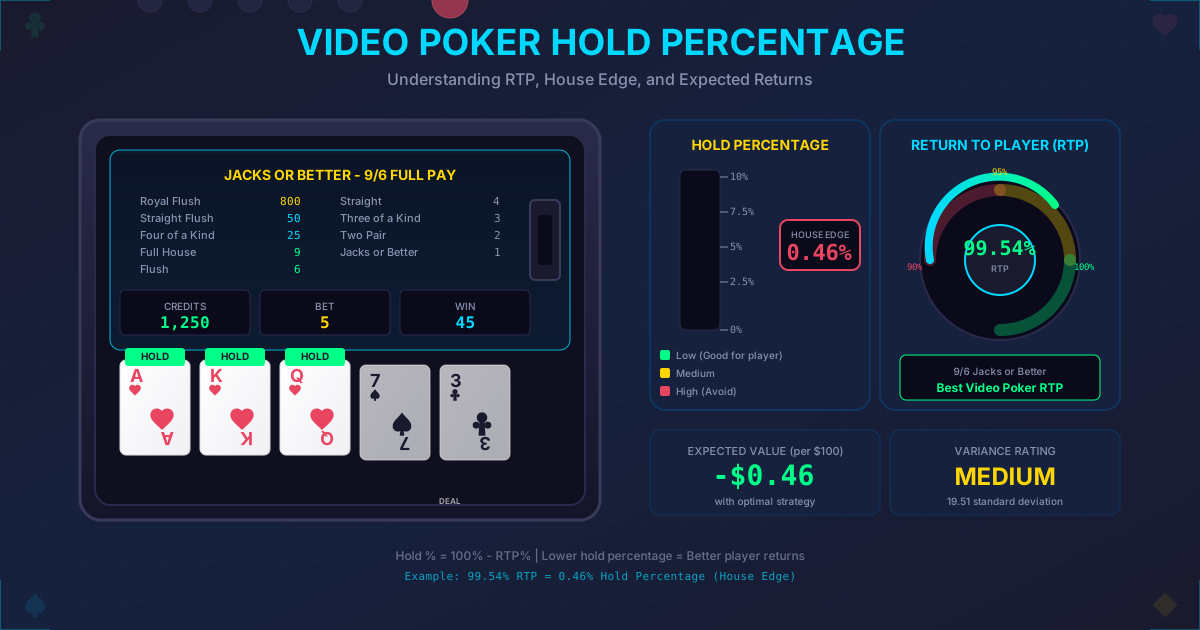
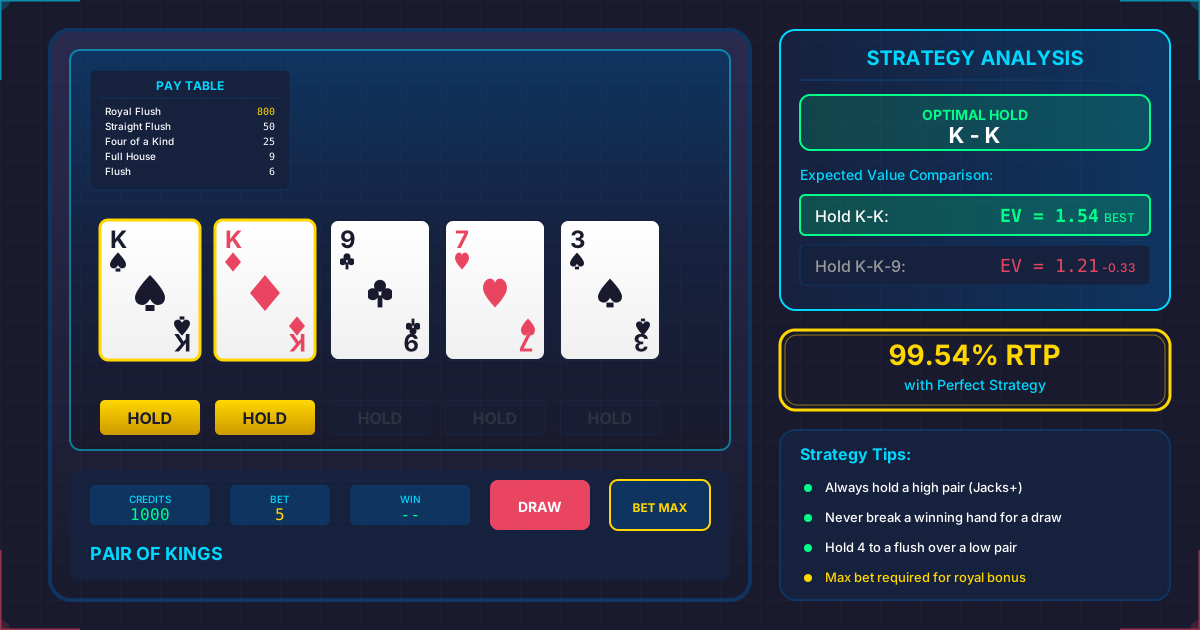
For pure entertainment hours per dollar, low-limit video poker with proper strategy (99.5%+ RTP), blackjack with basic strategy (99.5% RTP at a $5 table), and craps with full odds (effectively sub-1% house edge) offer the best value. Sports betting is good for budget players because individual bets are small and spread across multiple events over weeks. Avoid keno, Big 6, and progressive side bets if you are budget-conscious, as the house edge can exceed 10-25%.
How do I handle a partner or spouse who gambles without a budget?
Start with empathy, not accusations. Share your own budget process and invite them to create one together. Frame it as a team financial goal: "Let's make sure our fun money is planned so it does not affect our other goals." If the partner is resistant or their gambling is causing financial harm, the National Council on Problem Gambling (1-800-522-4700) offers resources specifically for family members and partners of gamblers.
Do deposit limits actually work?
Yes. A 2025 industry survey found that operators offering customizable deposit caps saw 31% fewer complaints related to excessive spending. The mandatory cooling-off period for increasing limits (usually 24-72 hours) is specifically designed to prevent impulsive decisions during loss-chasing episodes. Deposit limits work best when set proactively (before you start gambling for the month) and combined with other tools like session time limits and bet-size rules.
What should I do if I have already gone over my budget this month?
Stop gambling immediately for the rest of the month. Do not try to "win it back." Acknowledge the overspend, review what triggered it (emotional state, specific game, lack of pre-commitment), and implement a new safeguard for next month. If overspending is a pattern, reduce your budget or use stronger tools like temporary self-exclusion. One month over budget is a mistake. Multiple months over budget is a pattern that needs intervention.
Is it possible to gamble profitably on a budget?
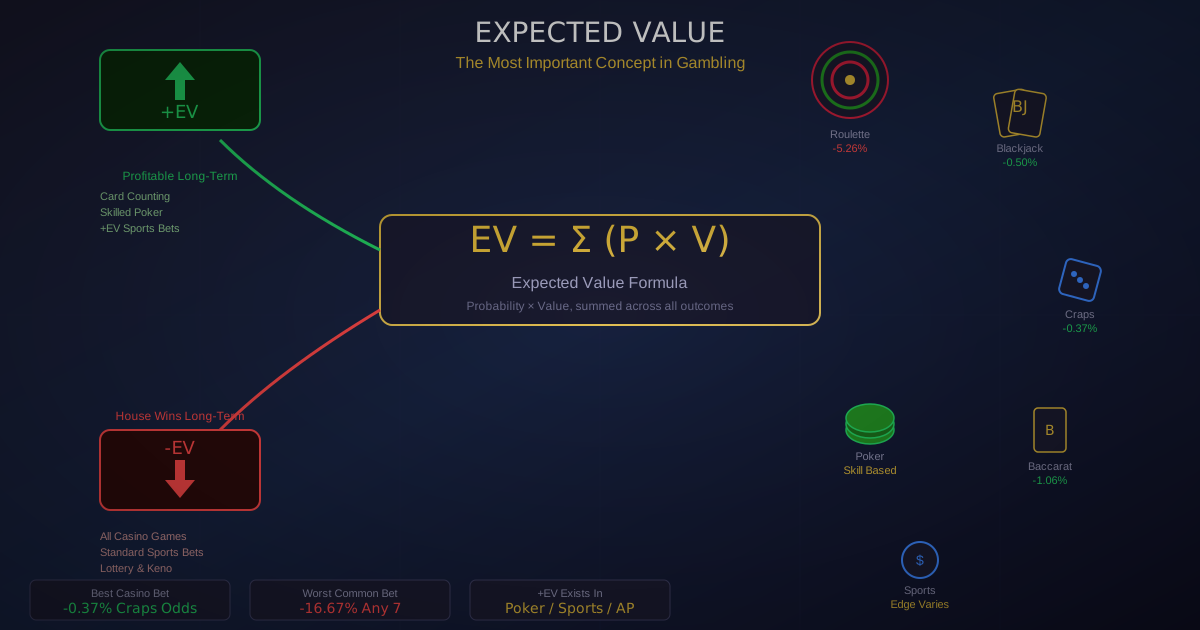
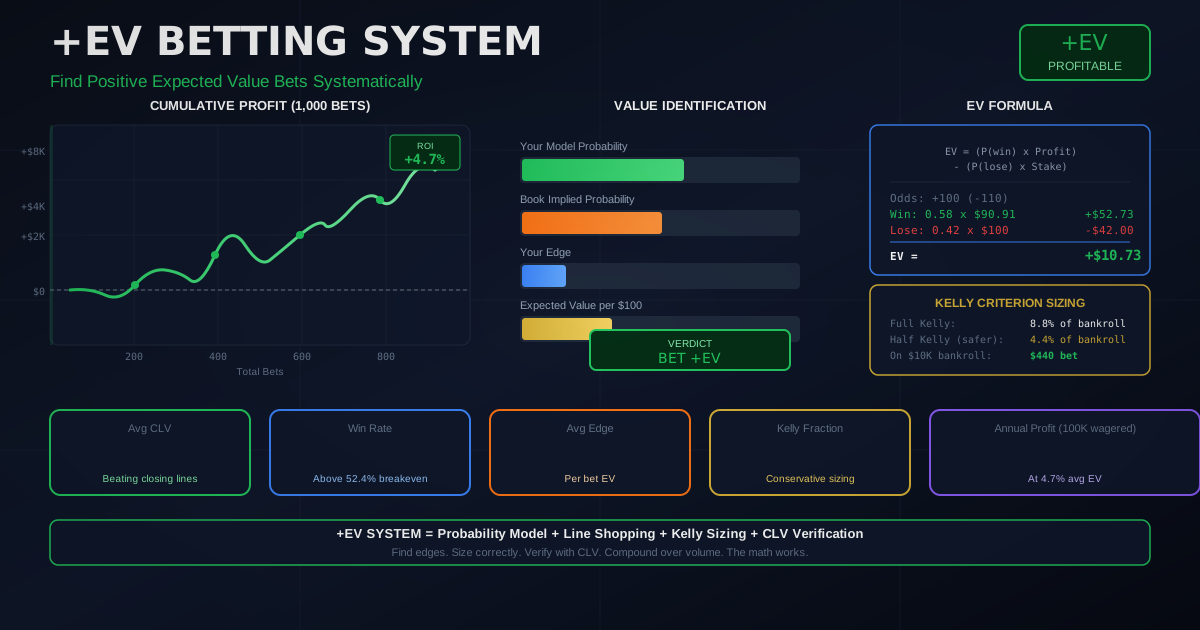
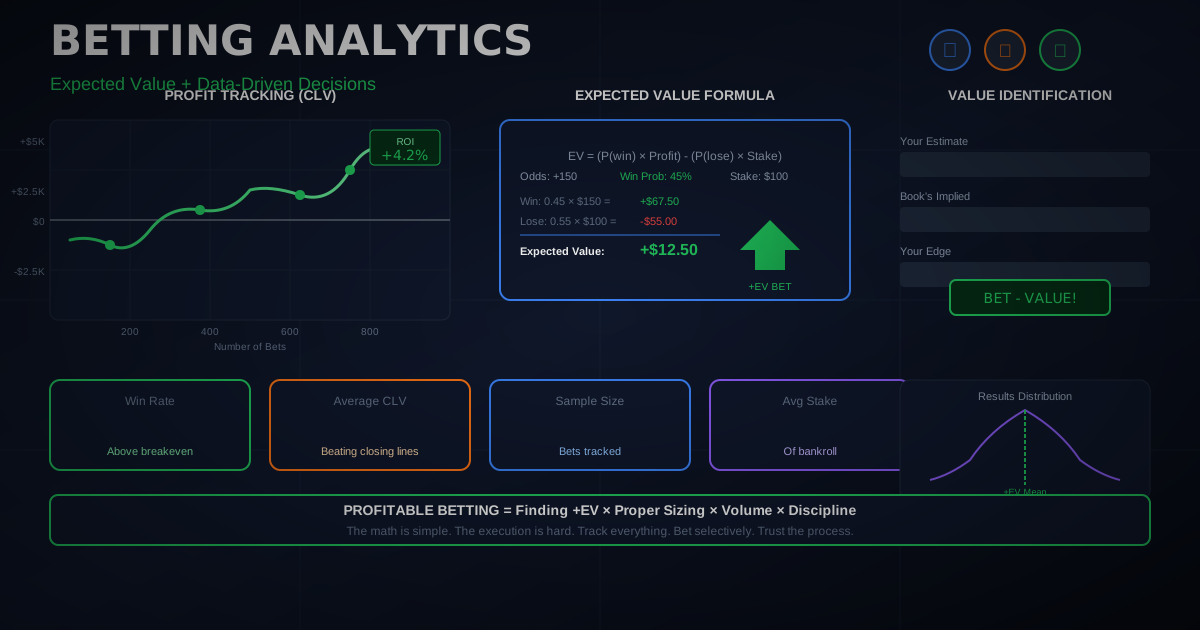
For most forms of gambling, the house has a mathematical edge, so the expected outcome over time is negative. However, poker (a skill game against other players) and sharp sports betting (finding positive expected value lines) can be profitable for a small percentage of skilled, disciplined players. Even for potential +EV activities, a budget is still essential because variance means you can lose in the short term even with an edge. Use our Expected Value Calculator to evaluate specific bets, and our Poker Risk of Ruin Calculator to assess whether your bankroll can withstand the variance.
Recommended Tools for Gambling Budget Management
Practical Web Tools offers a suite of free gambling calculators designed to support disciplined, budget-conscious gambling:
- Expected Value Calculator: Determine whether any bet has positive or negative expected value before you risk your budget on it.
- Kelly Criterion Calculator: Calculate the mathematically optimal bet size based on your edge and bankroll, preventing overbetting.
- Poker Variance Calculator: Simulate thousands of sessions to understand the range of outcomes you should expect at your stakes and budget level.
- Poker Bankroll Requirements Calculator: Find out exactly how much bankroll you need for the stakes you want to play, based on your win rate and acceptable risk of ruin.
- Poker Risk of Ruin Calculator: Calculate the probability of going broke at your current stakes given your bankroll size, win rate, and standard deviation.
These tools are free, require no sign-up, and run entirely in your browser. Use them before every session to make informed, budget-aligned decisions.
Conclusion
Gambling on a budget is not about taking the fun out of gambling. It is about making sure the fun does not turn into financial harm. The framework is straightforward: calculate what you can afford to lose, divide it into sessions, set hard stops, use every available technology to enforce your limits, and be ruthlessly honest with yourself about whether you are following the plan.
The statistics are clear. Nearly 20 million Americans experience problematic gambling behaviors. One in four sports bettors has missed bill payments. But the data also shows that players who set deposit limits experience 31% fewer spending-related problems, and that self-exclusion is highly effective for motivated players.
You do not need to stop gambling to be financially responsible. You need a budget, a plan, and the tools to execute it. Start with the templates in this guide, adjust them to your specific income and circumstances, and review your results quarterly. If the budget works, keep going. If it does not, fix it before the numbers get worse.
The best time to set a gambling budget was before your first bet. The second best time is right now.
Gambling involves risk. This content is for educational and informational purposes only. Always gamble responsibly, set limits you can afford, and seek help if gambling becomes a problem. Visit the National Council on Problem Gambling or call 1-800-522-4700 for support.