Gambling on Twitch and Kick: What You Need to Know About Live Streaming Casinos (2026)
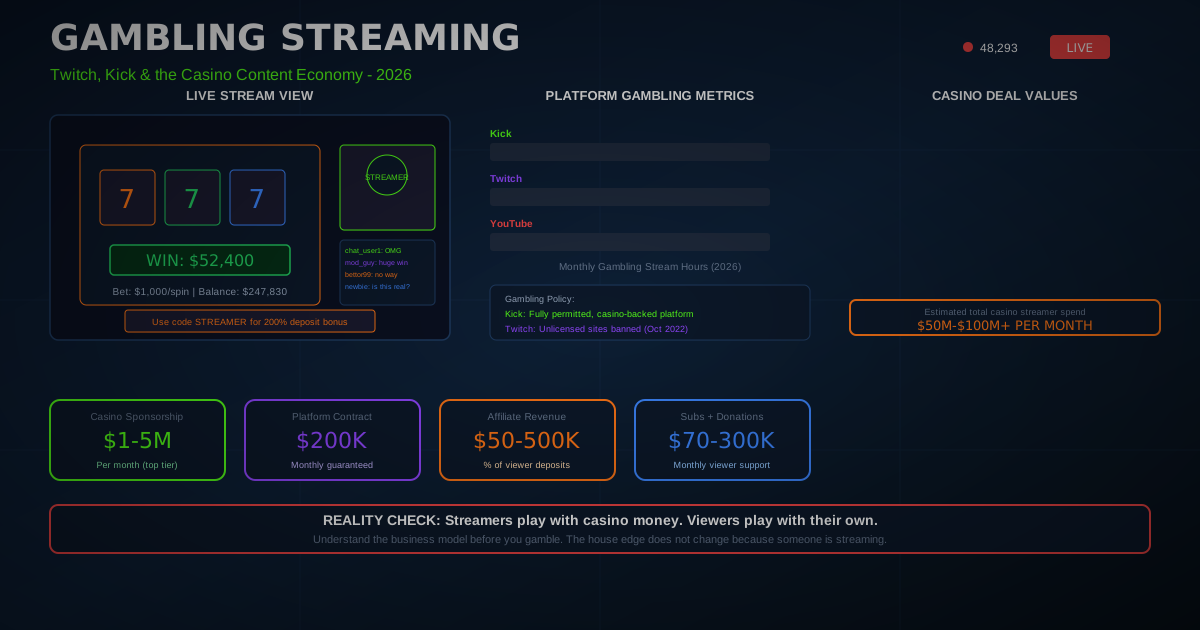
Top gambling streamers on Kick earn $1 million to $5 million per month from casino sponsorships, making gambling streaming one of the most lucrative content creation niches in the world. But behind the flashy wins, excited reactions, and massive payouts broadcast to millions of viewers lies a complex web of sponsorship deals, platform politics, regulatory gray areas, and genuine concerns about the impact on vulnerable audiences.
Gambling live streaming exploded in popularity between 2020 and 2023, peaking on Twitch before the platform's controversial ban on unlicensed gambling content in October 2022. That ban did not kill gambling streaming. It simply moved the center of gravity to Kick, a streaming platform launched in 2022 with financial backing from Stake.com, one of the world's largest crypto casinos. By 2026, Kick has become the undisputed home of casino streaming, while Twitch maintains its restrictions and a smaller but still active gambling content ecosystem.
This guide covers everything you need to know about the gambling streaming landscape in 2026: how streamers make money, what the deals look like, how to identify fake versus real play, and the responsible way to consume (or create) gambling content.
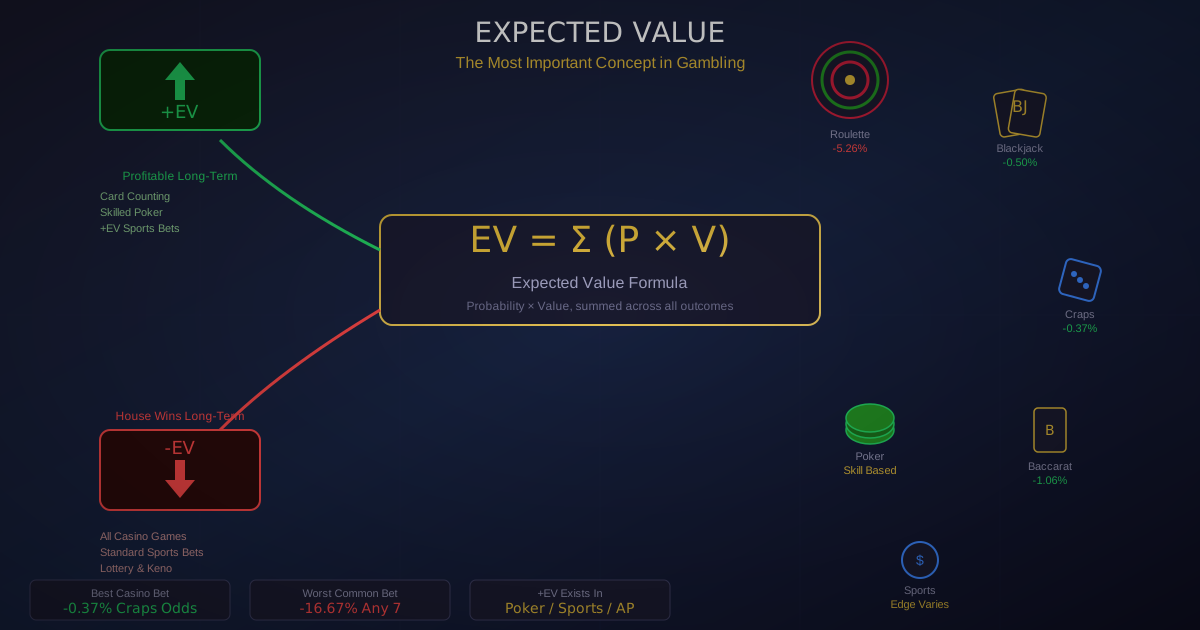
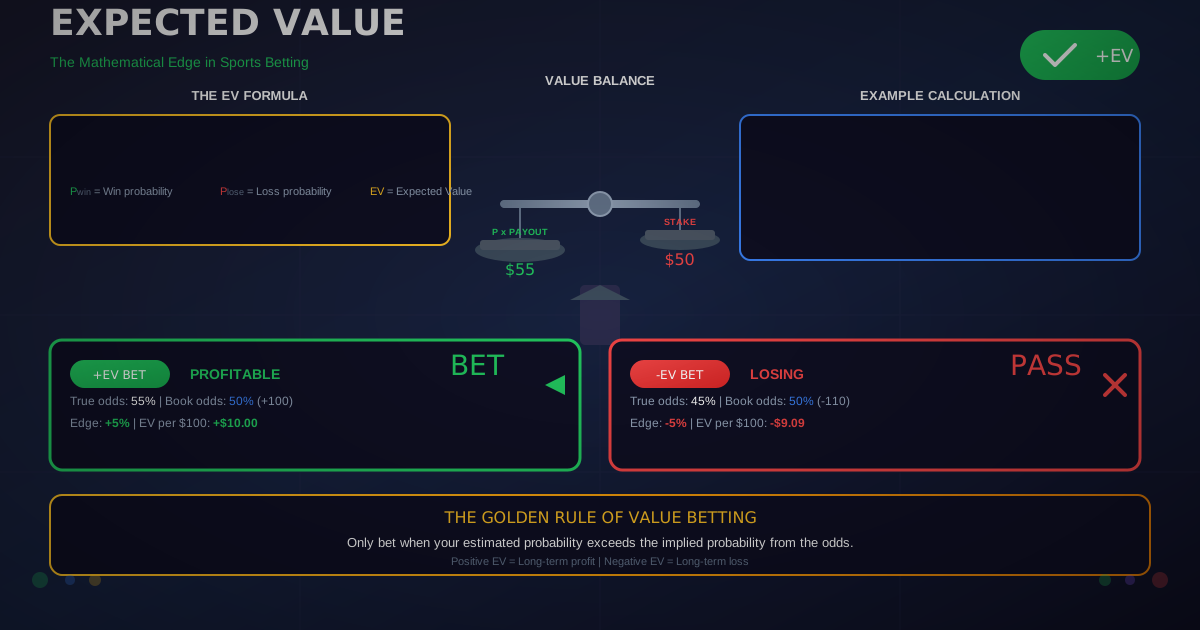
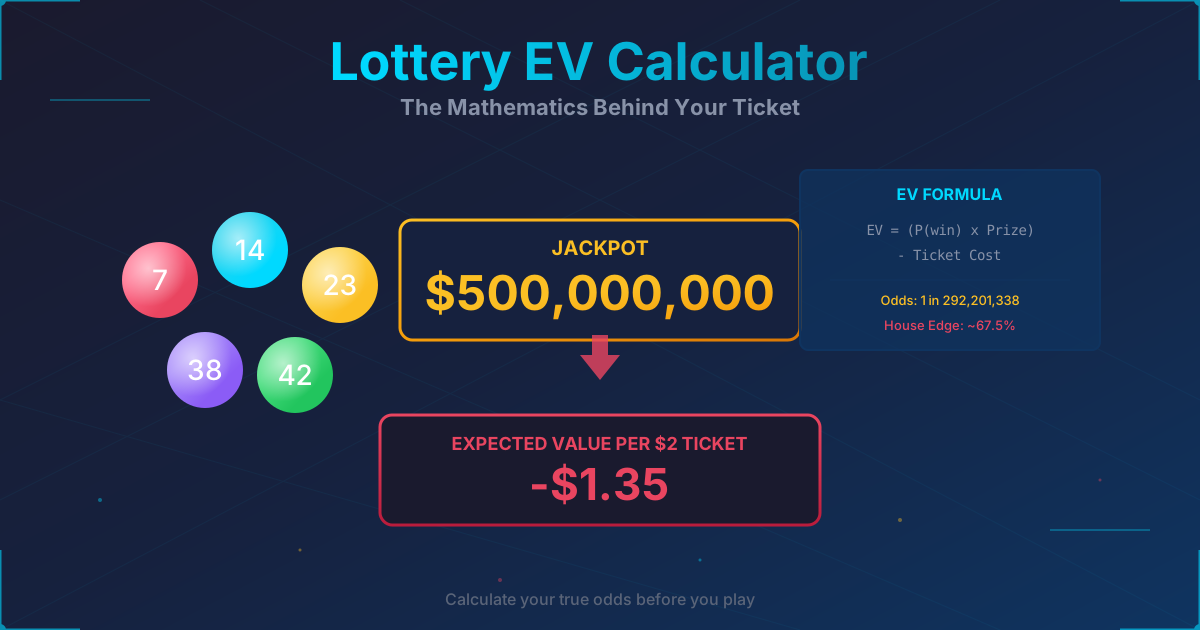
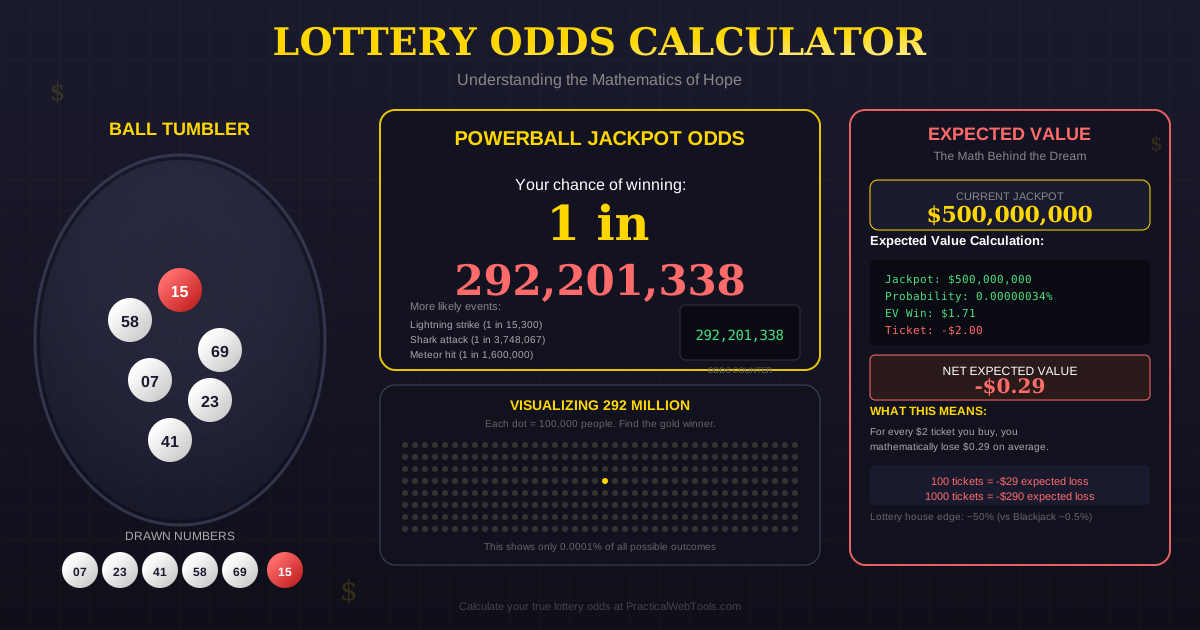
Before watching any gambling stream, understand the math behind casino games with our free Expected Value Calculator.
What Is Gambling Live Streaming?
Gambling live streaming is the practice of broadcasting real-time gambling sessions, primarily slot machines, blackjack, roulette, and poker, to an audience on platforms like Kick, Twitch, and YouTube. Viewers watch the streamer bet, win, lose, and react, creating an entertainment experience around gambling.
The Format
A typical gambling stream looks like this:
- Screen share of the casino game (slots, blackjack, etc.)
- Facecam of the streamer reacting to wins and losses
- Chat interaction with viewers commenting in real-time
- Donation/subscription notifications throughout the stream
- Affiliate codes displayed on screen for the casino being used
Why People Watch
| Viewer Motivation | Percentage (est.) | Description |
|---|---|---|
| Entertainment | 40% | Watching big wins and reactions is exciting |
| Vicarious thrill | 25% | Experiencing gambling excitement without risk |
| Community | 15% | Social interaction in chat, belonging to a community |
| Learning | 10% | Understanding games before playing themselves |
| Background content | 10% | Low-effort content to have on while doing other things |
The Scale of Gambling Streaming
| Metric | Twitch (2026) | Kick (2026) | YouTube (2026) |
|---|---|---|---|
| Gambling streams (monthly hours) | 50,000+ | 500,000+ | 100,000+ |
| Unique gambling streamers | 2,000+ | 8,000+ | 3,000+ |
| Peak concurrent viewers (top stream) | 10,000-30,000 | 50,000-150,000 | 20,000-60,000 |
| Total gambling category viewers (monthly) | 5M+ | 30M+ | 15M+ |
| Revenue generated for casinos (est.) | $100M+ | $2B+ | $500M+ |
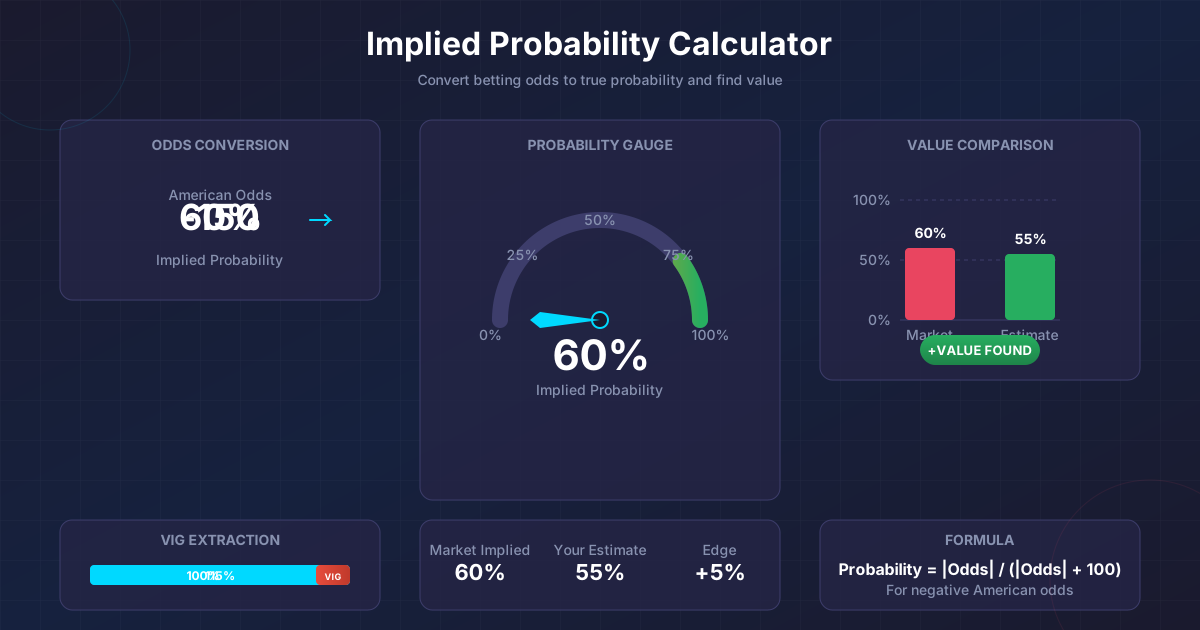
Understand the real probabilities behind slot machines with our Implied Probability Calculator.
What Happened to Gambling on Twitch?
In October 2022, Twitch banned streaming of gambling sites that are not licensed in the US or other "sufficient consumer protection" jurisdictions. This decision followed months of community pressure after high-profile scandals involving sponsored gambling content.
The Timeline of Twitch's Gambling Policy
| Date | Event | Impact |
|---|---|---|
| 2020-2021 | Gambling streaming grows rapidly on Twitch | Slots and crypto casino viewership skyrockets |
| Early 2022 | Major streamers call for gambling ban | Community debate intensifies |
| June 2022 | Scam allegations against prominent gambling streamer | Public outcry reaches peak |
| Sept 2022 | Twitch announces gambling ban | Sites not licensed in US/approved jurisdictions banned |
| Oct 2022 | Ban takes effect | Stake, Roobet, Rollbit, and similar sites prohibited |
| 2023-2024 | Gambling streamers migrate to Kick | Kick becomes dominant gambling platform |
| 2025-2026 | Twitch maintains restrictions | Sports betting and licensed sites still permitted |
What Is Still Allowed on Twitch
Twitch did not ban all gambling content. The following are still permitted:
- Sports betting (DraftKings, FanDuel, BetMGM, etc.)
- Poker (both online and live)
- Fantasy sports
- Licensed US casinos (BetMGM Casino, Caesars, etc.)
- State lottery content
What is banned:
- Unlicensed offshore casino sites (Stake, Roobet, BC.Game, etc.)
- Dice, crash, and other crypto-native gambling games on unregulated sites
- Slots on unlicensed platforms
The Impact on Viewership
The ban significantly reduced gambling content on Twitch but did not eliminate demand. Many viewers simply followed their favorite streamers to Kick, where the same content continued without restriction.
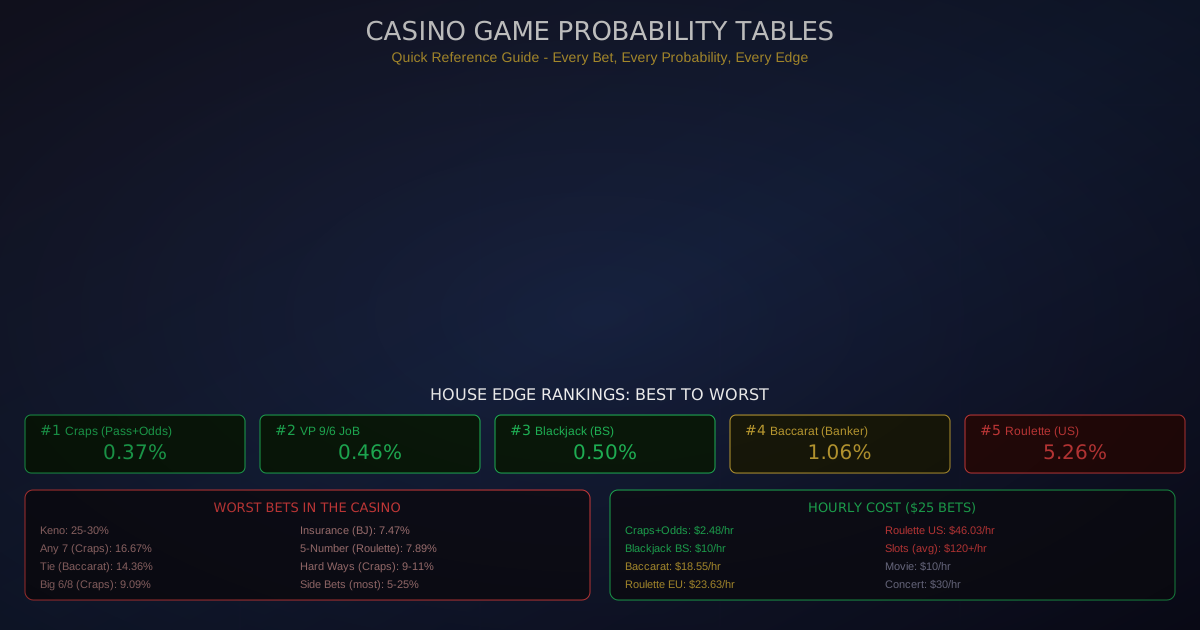
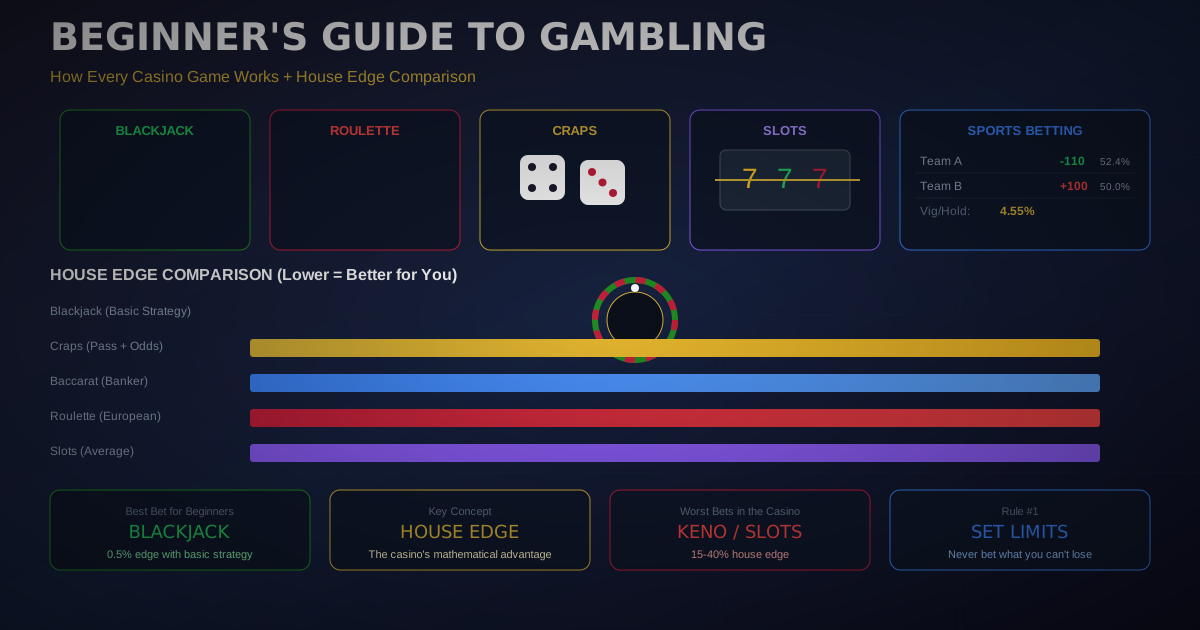
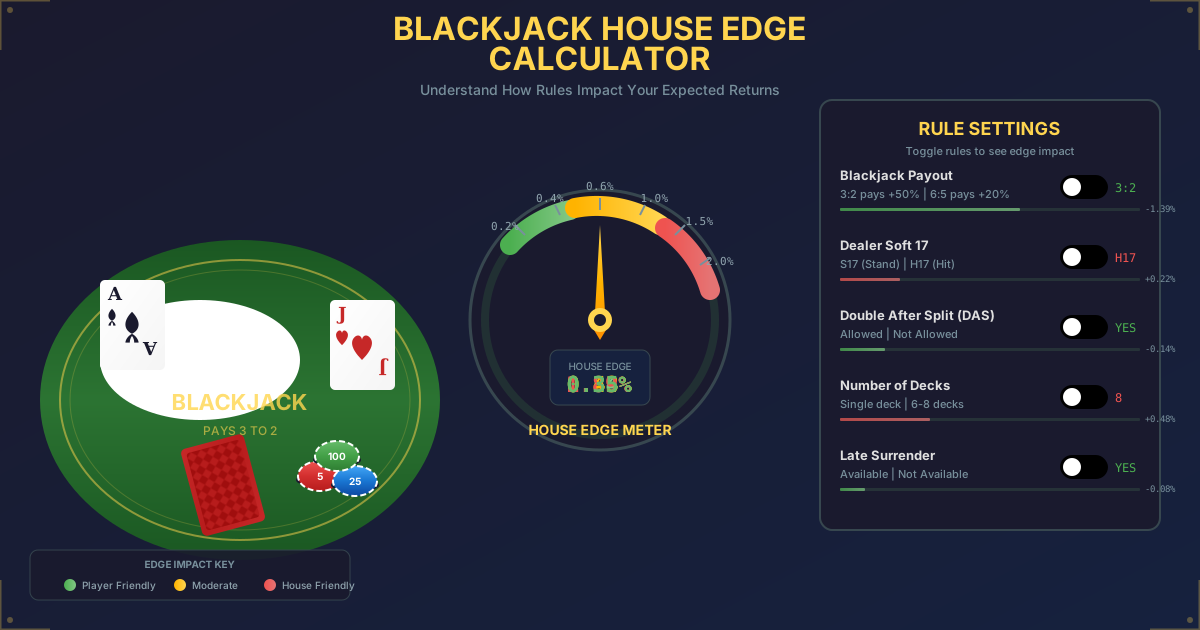
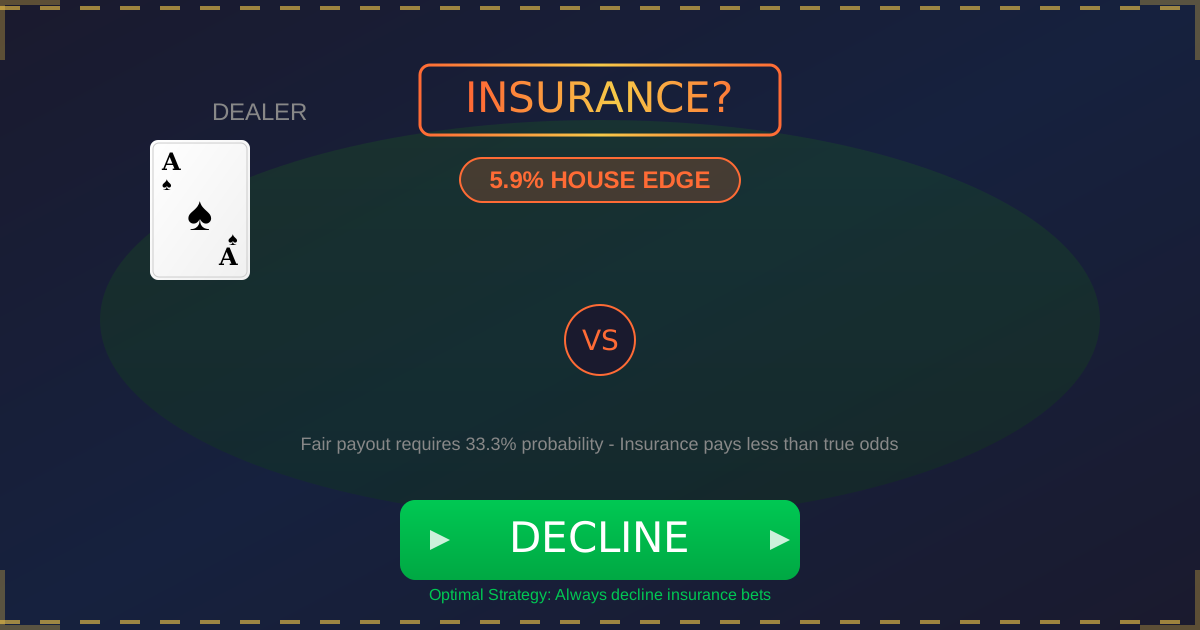
Calculate the house edge on any casino game with our Blackjack House Edge Calculator.
How Did Kick Become the Home of Gambling Streaming?
Kick launched in late 2022 with the explicit goal of attracting content creators who felt restricted by Twitch's policies. The platform's financial connection to Stake.com, the crypto casino, made gambling content a natural centerpiece of its strategy.
The Stake-Kick Connection
Kick was co-founded by Ed Craven and Bijan Tehrani, who also co-founded Stake.com. This connection means:
- Gambling content is a core platform strategy, not an afterthought
- Kick offers significantly higher revenue shares than Twitch (95/5 vs. Twitch's 50/50 or 70/30)
- Top gambling streamers receive guaranteed contracts from Kick in addition to casino sponsorships
- The platform's growth is directly tied to the gambling streaming ecosystem
Top Gambling Streamers and Their Deals
| Streamer | Platform | Est. Monthly Casino Deal | Avg. Viewers | Primary Games |
|---|---|---|---|---|
| Trainwreck | Kick | $3-5M/month | 30,000-50,000 | Slots, crash |
| Roshtein | Kick/YouTube | $2-4M/month | 20,000-40,000 | Slots |
| xQc | Kick | $2-3M/month (gambling portion) | 50,000-100,000 | Slots, variety |
| Adin Ross | Kick | $1-3M/month | 40,000-80,000 | Slots, sports betting |
| AyeZee | Kick | $1-2M/month | 15,000-25,000 | Slots |
| ClassyBeef | YouTube/Kick | $500K-1.5M/month | 10,000-20,000 | Slots |
| JuicyFruits | Kick | $500K-1M/month | 5,000-15,000 | Slots |
Note: These figures are estimates based on industry reporting and public statements. Actual deal values are confidential.
How Casino Sponsorship Deals Work
Casino streaming deals typically include several components:
| Component | Description | Value |
|---|---|---|
| Base payment | Monthly guaranteed payment for streaming hours | $100K-$5M/month |
| Bankroll top-up | Casino provides betting funds for streaming | $500K-$5M/month |
| Loss coverage | Casino covers all or most losses during streams | Varies |
| Revenue share | Percentage of deposits from streamer's affiliate code | 25-50% of net revenue |
| Bonus for milestones | Extra payment for viewer count or stream hour targets | $50K-$500K bonuses |
| Exclusivity | Streamer only promotes one casino brand | Premium on all other components |
The key detail most viewers miss: streamers playing with casino-provided bankrolls are not risking their own money. When a streamer bets $1,000 per spin on slots and loses $500,000 in a session, that loss is absorbed by the casino as a marketing expense. The streamer's personal income is the guaranteed monthly payment, completely separate from the gambling results shown on stream.
Calculate expected value to understand what the casino's real edge is with our Expected Value Calculator.
How Much Do Gambling Streamers Actually Make?
Gambling streaming income comes from multiple sources, with casino sponsorships being the dominant revenue stream for top creators. The total income for top gambling streamers rivals that of A-list athletes and entertainment celebrities.
Revenue Breakdown for a Top Gambling Streamer
| Revenue Source | Monthly Estimate | Annual Estimate | Notes |
|---|---|---|---|
| Casino sponsorship | $1,000,000-$5,000,000 | $12M-$60M | Primary income source |
| Platform contract (Kick) | $200,000-$1,000,000 | $2.4M-$12M | Guaranteed by platform |
| Subscriptions | $50,000-$200,000 | $600K-$2.4M | Viewer subscriptions |
| Donations/Tips | $20,000-$100,000 | $240K-$1.2M | Direct viewer contributions |
| Affiliate revenue | $50,000-$500,000 | $600K-$6M | Percentage of referred deposits |
| YouTube ad revenue | $10,000-$50,000 | $120K-$600K | VODs and highlights |
| Merchandise | $5,000-$50,000 | $60K-$600K | Branded merchandise |
| Total | $1.3M-$6.9M | $16M-$83M | Top 5-10 streamers |
Revenue for Mid-Tier Gambling Streamers
| Revenue Source | Monthly Estimate | Annual Estimate |
|---|---|---|
| Casino sponsorship | $50,000-$200,000 | $600K-$2.4M |
| Platform contract | $10,000-$50,000 | $120K-$600K |
| Subscriptions | $5,000-$20,000 | $60K-$240K |
| Donations | $2,000-$10,000 | $24K-$120K |
| Affiliate revenue | $10,000-$50,000 | $120K-$600K |
| Total | $77K-$330K | $924K-$3.96M |
Why Casinos Pay So Much
The economics make sense from the casino's perspective:
- A top streamer with 50,000 average viewers creates millions of impressions per stream
- Even if 1% of viewers sign up and deposit using the affiliate code, that is 500 new depositors
- Average depositing customer value: $500-$2,000 over lifetime
- Customer acquisition cost via streaming: $100-$500 per depositor
- Casino house edge ensures long-term profitability from referred players
Example calculation:
- Streamer costs casino: $2M/month
- Streamer generates: 5,000 new depositors/month
- Average lifetime value per depositor: $800
- Total value generated: $4M
- Net profit for casino: $2M/month (100% ROI on marketing spend)
Compare the house edge across different casino games with our Hold/Vig Calculator.
How Can You Tell If a Gambling Stream Is Fake or Real?
One of the most controversial aspects of gambling streaming is the question of authenticity. Are streamers playing with real money? Are the games rigged for better results? Are the big wins genuine? The answer is complicated.
Types of Gambling Stream Authenticity
| Type | Description | How Common | Viewer Impact |
|---|---|---|---|
| Real money, own funds | Streamer bets their own money | Rare among top streamers | Highest authenticity |
| Real money, casino-funded | Casino provides bankroll; wins/losses are real | Most common for sponsored | Misleading about risk |
| Demo/practice mode | Free play mode that simulates real gambling | Used by some smaller streamers | No real money at stake |
| Enhanced RTP | Casino adjusts return-to-player for streamer | Alleged but hard to prove | Deceptive |
| Completely fake | Simulated gambling software with scripted outcomes | Rare but documented | Fraud |
Red Flags to Watch For
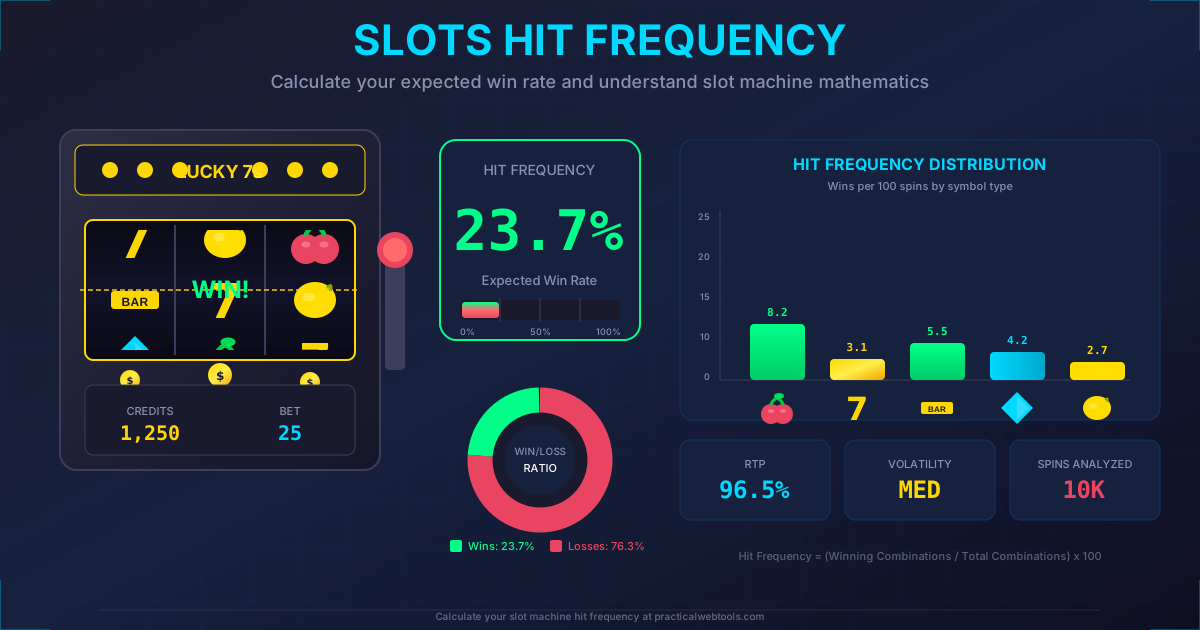
1. Unrealistic win rates. If a slots streamer seems to hit bonuses far more frequently than probability suggests, something may be off. Standard slot bonus frequency is 1 in 150-400 spins depending on the game.
2. No visible losses. Real gambling involves significant losing streaks. A streamer who only shows highlights or only streams when they are winning is presenting a distorted picture.
3. Enormous bet sizes with no apparent bankroll concern. A streamer betting $1,000/spin for hours with no visible stress or bankroll impact is almost certainly not risking their own money.
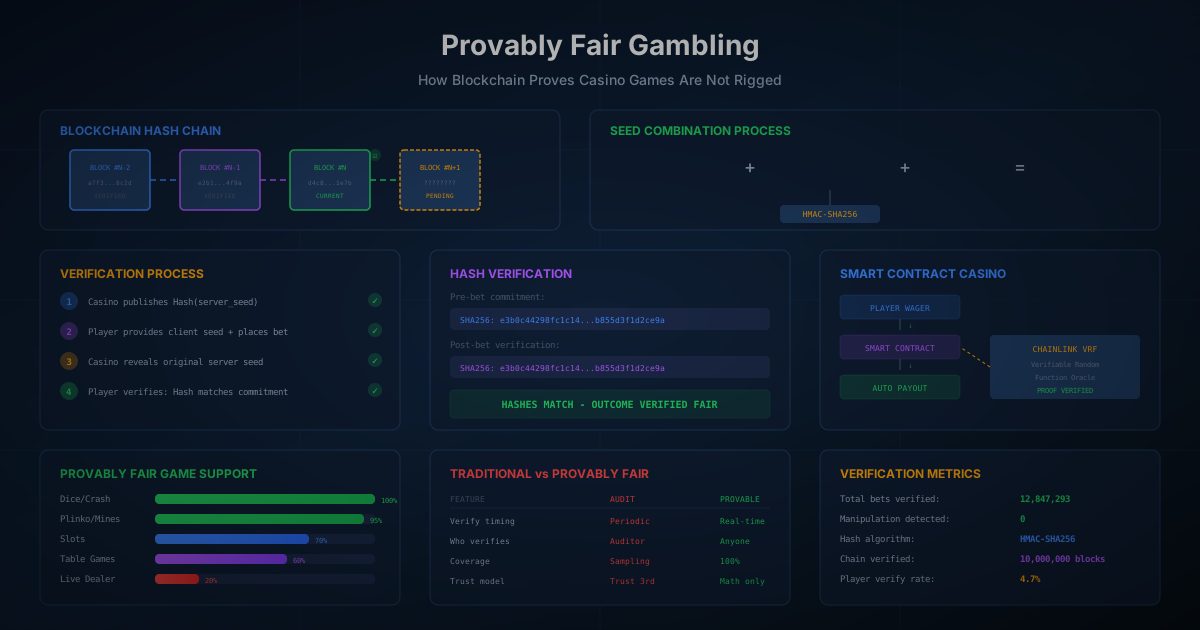
4. Refusal to verify game authenticity. Provably fair games allow verification. If a streamer will not demonstrate that their games are provably fair, question why.
5. Unusual bonus behavior. Some viewers have noted patterns where streamers seem to trigger bonus rounds at suspiciously convenient times (right when viewership peaks or after a long losing streak).
How to Evaluate a Gambling Streamer
| Criterion | Trustworthy Sign | Red Flag |
|---|---|---|
| Transparency about sponsorship | Clearly discloses casino deal | Hides or minimizes sponsorship |
| Bankroll source disclosure | States whether playing with own money | Claims to play with own money when sponsored |
| Win/loss tracking | Shows overall results including losses | Only shows wins or highlights |
| Responsible gambling messaging | Promotes limits, warns about addiction | Encourages viewers to gamble like them |
| Affiliate code pressure | Mentions code occasionally | Constantly pushes affiliate code |
| Game selection honesty | Explains house edge and odds | Implies skill or strategy in pure chance games |
| Reaction authenticity | Genuine emotional range (frustration + excitement) | Consistently over-the-top positive reactions |
Understand the real math behind slot machines with our Expected Value Calculator.
What Is the Affiliate Code System and How Much Is It Worth?
Nearly every gambling streamer promotes an affiliate code that gives viewers a sign-up bonus while earning the streamer a percentage of the viewer's losses. This affiliate system is the backbone of the gambling streaming economy.
How Affiliate Codes Work
- Viewer clicks streamer's affiliate link or enters their code during casino registration
- Viewer receives a sign-up bonus (typically 100-200% deposit match)
- Viewer deposits and plays at the casino
- Streamer earns a percentage of the casino's net revenue from that player
- Revenue share continues for the lifetime of the player's account (or a set period)
Affiliate Revenue Models
| Model | How It Works | Streamer Earnings |
|---|---|---|
| Revenue Share | Streamer gets 25-50% of casino's net revenue from referred players | $50-$300/player/month (for active players) |
| CPA (Cost Per Acquisition) | Flat payment for each new depositing player | $100-$500 per depositor |
| Hybrid | CPA upfront + smaller ongoing revenue share | $200 CPA + 15-25% revenue share |
| Sub-affiliate | Streamer recruits other affiliates, earns percentage of their referred revenue | 5-10% of sub-affiliate revenue |
The Value Chain Explained
When you sign up with a gambling streamer's code and deposit $500:
| Step | What Happens | Who Benefits |
|---|---|---|
| 1. Sign-up | You create an account with the affiliate code | You get a bonus; streamer gets credit |
| 2. Deposit $500 | Money enters the casino system | Casino holds funds |
| 3. Receive bonus | Casino adds $500 match (you now have $1,000) | You have more to play with |
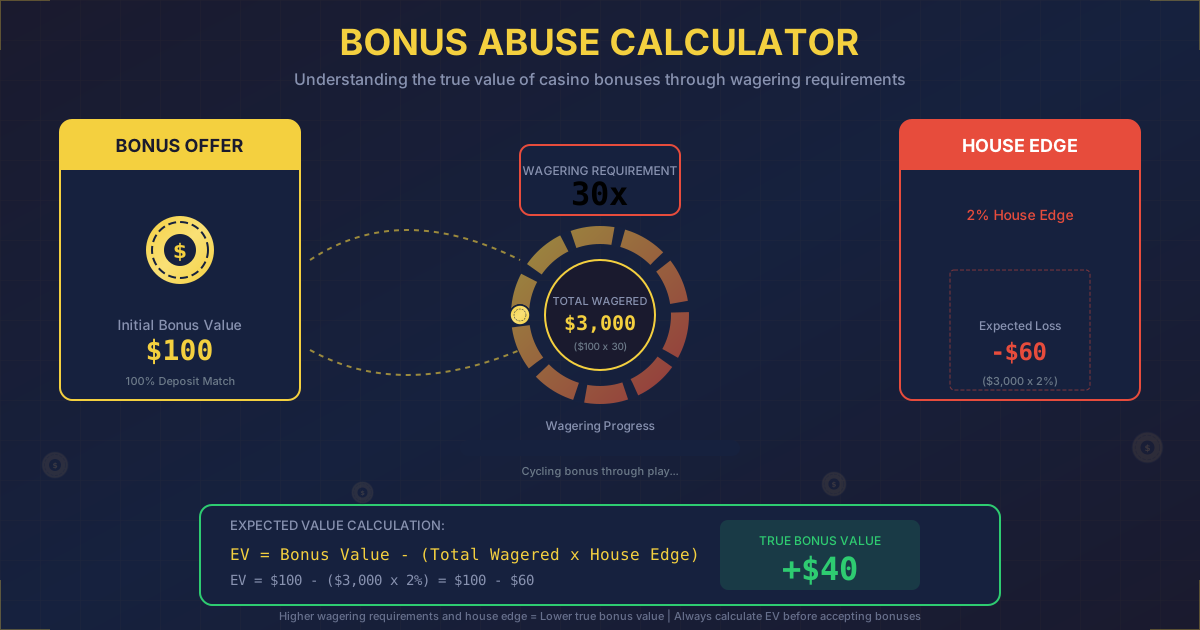
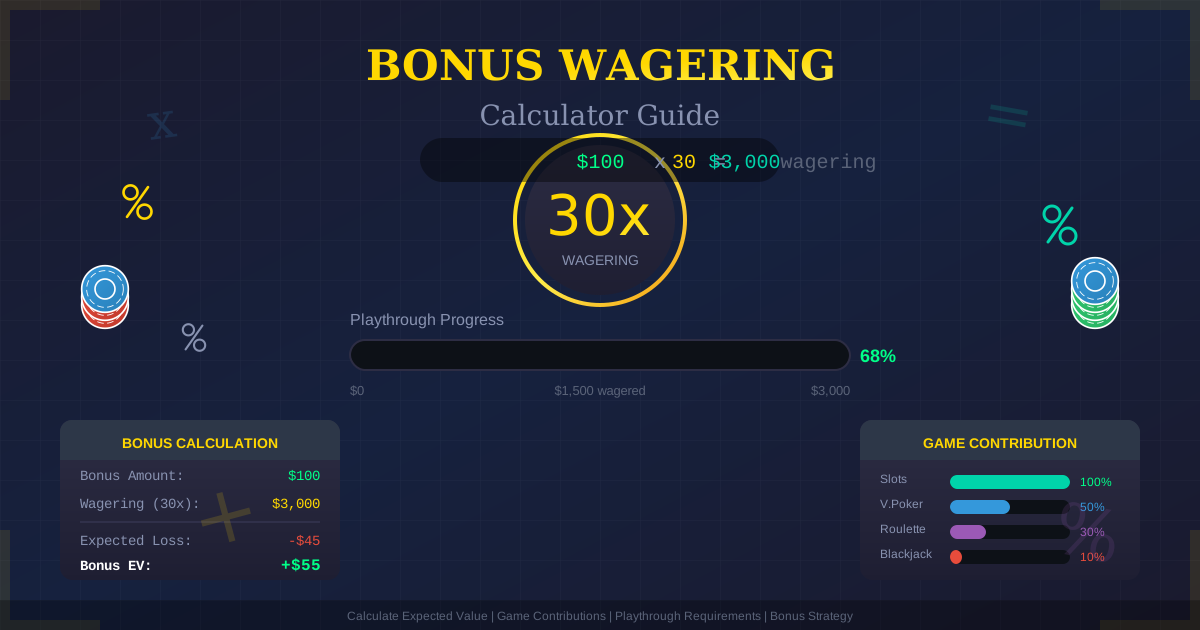
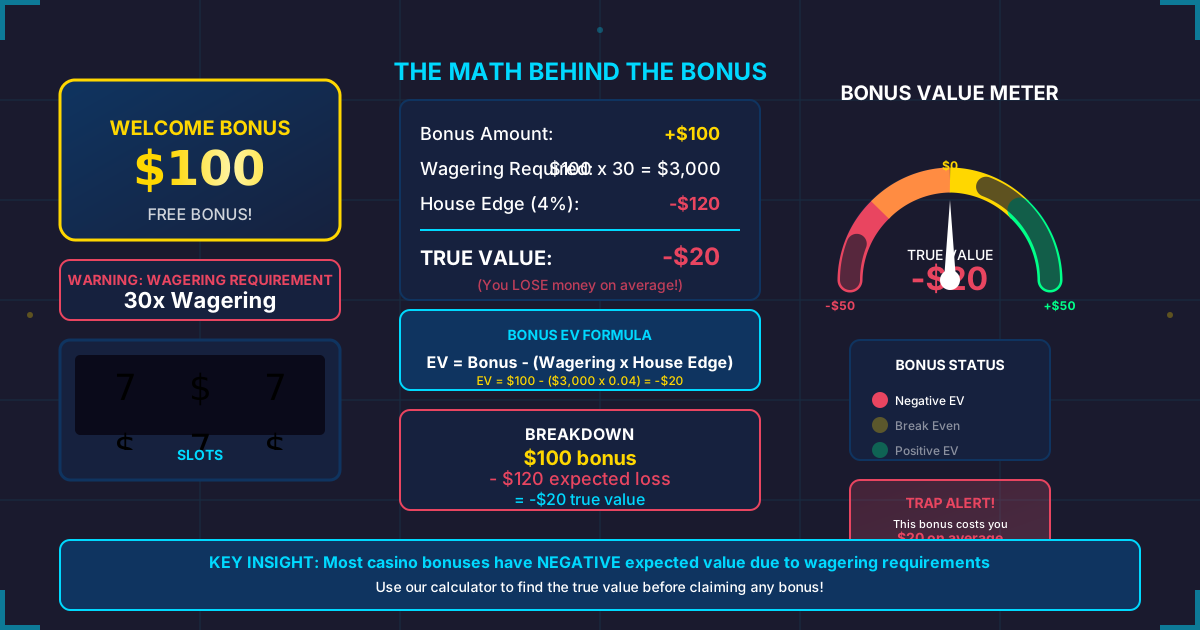
| 4. Wagering requirement | You must bet 35x the bonus ($17,500) before withdrawing | Casino edge grinds down your balance |
| 5. Expected loss | At 3% house edge on $17,500, you lose ~$525 | Casino profits ~$525 |
| 6. Streamer cut | Streamer gets 30% of net revenue (~$157) | Streamer earns from your play |
| 7. Long-term | If you continue depositing, the cycle repeats | Casino and streamer continue profiting |
Why Viewers Should Be Cautious
The affiliate system creates an inherent conflict of interest. The streamer profits when viewers gamble and lose. This means:
- Every recommendation to "sign up with my code" is financially motivated
- The more you play (and lose), the more the streamer earns
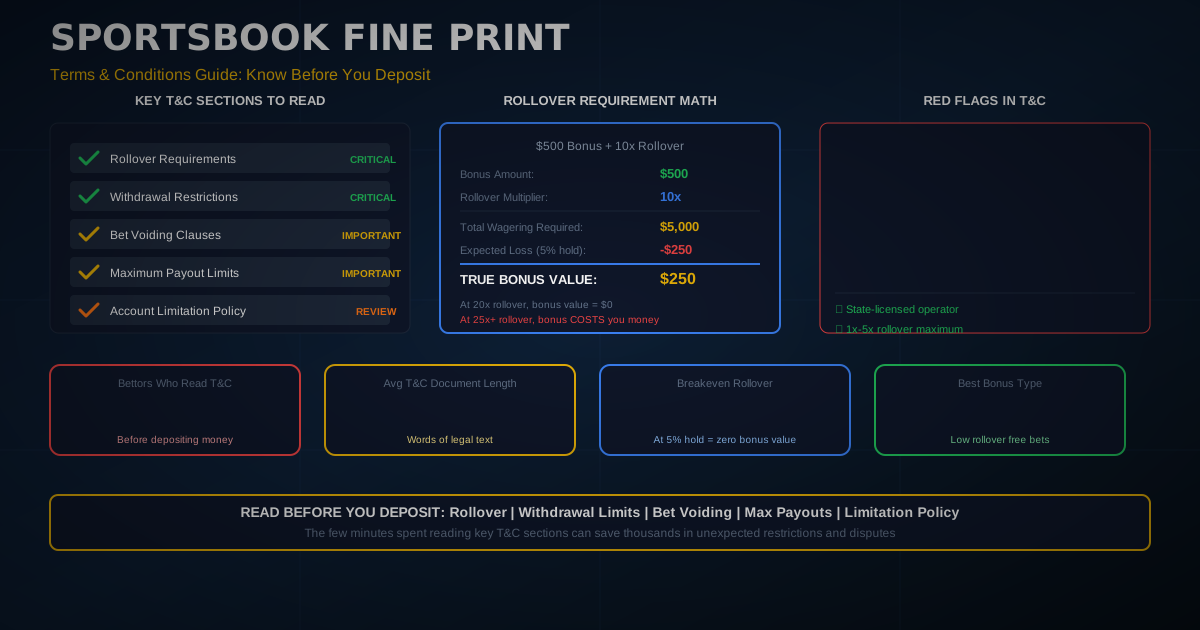
- Sign-up bonuses have wagering requirements that make them less valuable than they appear
- The streamer's displayed lifestyle is funded by viewer losses
Calculate the real value of a casino bonus after wagering requirements with our Expected Value Calculator.
What Are the Ethical Concerns Around Gambling Streaming?
Gambling streaming raises significant ethical questions about the impact on viewers, particularly younger audiences, and the responsibilities of streamers, platforms, and casinos.
Impact on Younger Audiences
| Concern | Evidence | Severity |
|---|---|---|
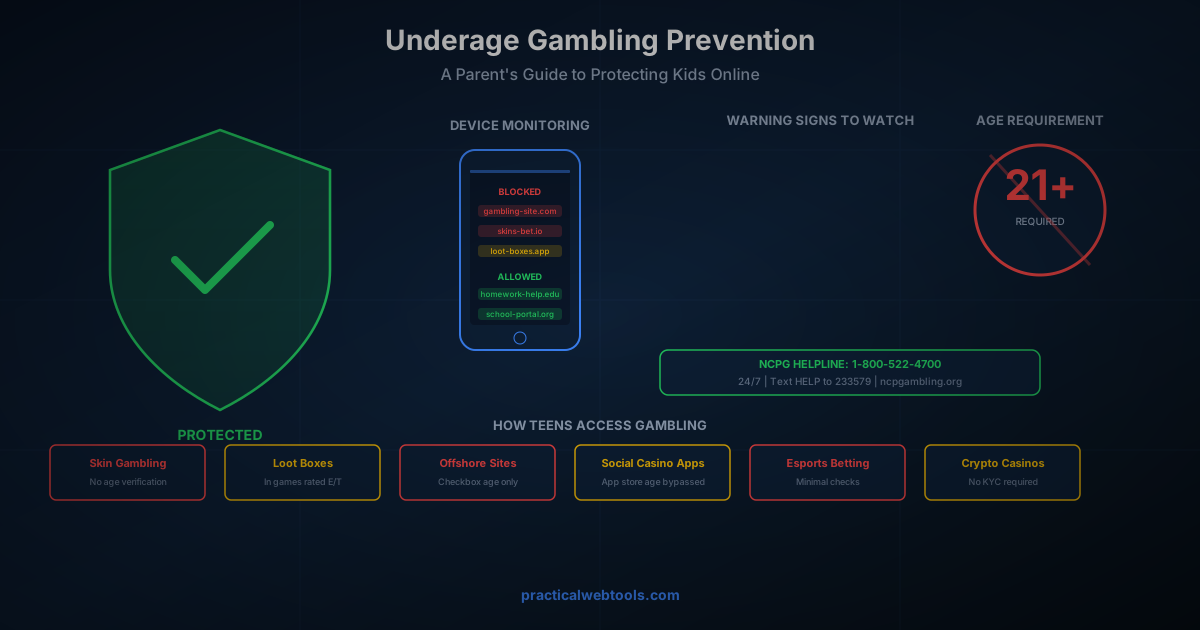
| Underage exposure | Kick/Twitch have age minimums but no robust verification | High |
| Normalization of gambling | Gambling presented as entertainment and lifestyle | High |
| Parasocial influence | Viewers feel personal connection to streamer and trust their behavior | Very High |
| Glamorization of losses | Large losses presented as exciting content rather than financial harm | High |
| Gateway to gambling | Studies show gambling content increases likelihood of gambling | Moderate-High |
| Misleading about odds | Streamer wins are not representative of typical player experience | Very High |
The Parasocial Relationship Problem
Viewers, particularly younger ones, develop parasocial relationships with streamers. They feel like the streamer is their friend. When that "friend" gambles with apparent excitement and success, it sends powerful messages:
- "Gambling is fun and exciting" (true, but incomplete)
- "Big wins happen regularly" (misleading; streamers play far more than shown)
- "This streamer does it, so it must be okay for me" (false; streamer is not risking their own money)
- "If I use their code, I will get the same experience" (false; typical experience is net loss)
Responsible Content Creation Guidelines
For streamers who want to create gambling content responsibly:
| Guideline | Implementation |
|---|---|
| Full disclosure | State clearly whether playing with own money or casino bankroll |
| Age warnings | Implement age-gate warnings and remind viewers of age requirements |
| Loss transparency | Show full session results including losses, not just highlights |
| Odds education | Explain house edge and expected loss for every game played |
| Limit encouragement | Actively encourage deposit limits and responsible gambling |
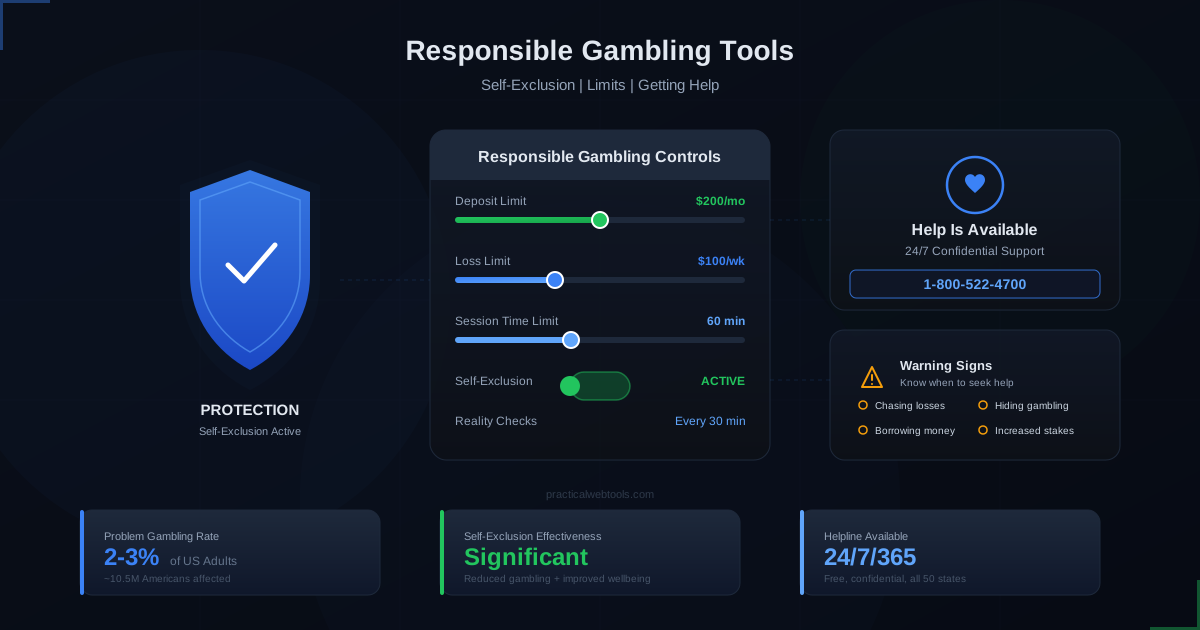
| Resource links | Display problem gambling resources (1-800-522-4700) on stream |
| No pressure | Never pressure viewers to sign up, deposit, or continue playing |
| Reality checks | Periodically remind viewers that streaming results are not typical |
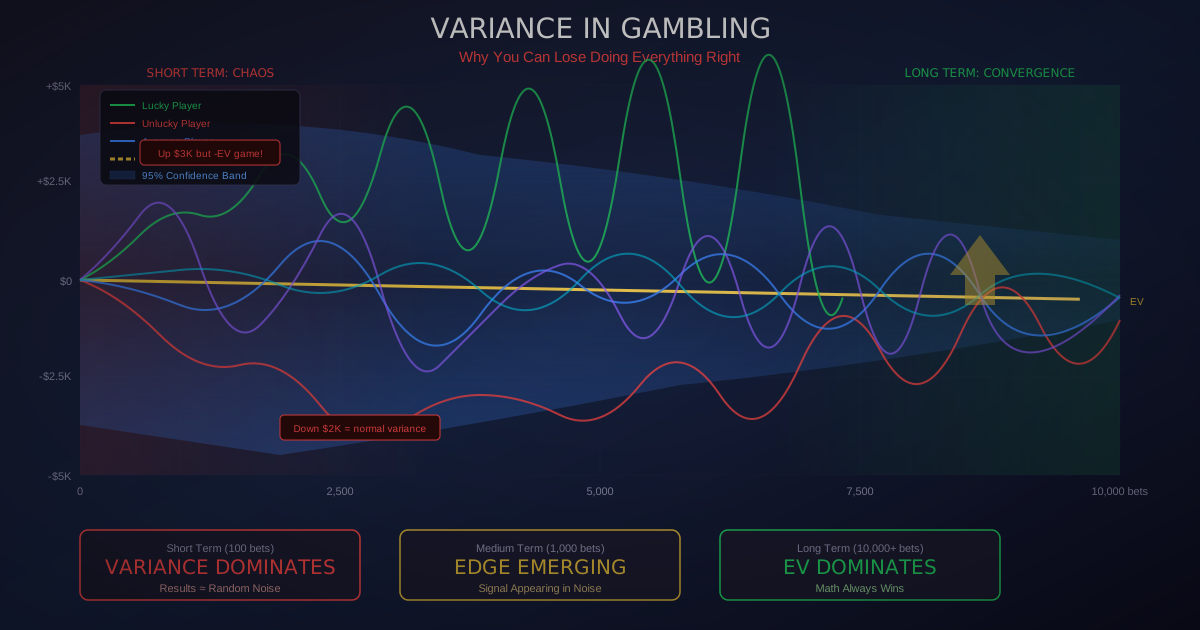
Learn the real mathematics behind every casino game with our Hold/Vig Calculator.
How Are Regulators Responding to Gambling Streaming?
Regulatory bodies worldwide are increasingly paying attention to gambling streaming, with some jurisdictions introducing specific rules for gambling content creators.
Regulatory Actions by Region
| Region | Action Taken | Status (2026) |
|---|---|---|
| United Kingdom | UKGC requires all gambling ads to include responsible gambling messaging | Enforced |
| Australia | ACMA cracking down on offshore gambling promotion | Active enforcement |
| United States | FTC requires disclosure of sponsorships; state regulators monitoring | Evolving |
| European Union | Digital Services Act applies to gambling advertising in streams | Implementation phase |
| Canada | AGCO requires Ontario-licensed operators to follow advertising guidelines | Enforced |
| Sweden | Spelinspektionen restricts gambling advertising, including streaming | Strict enforcement |
| Belgium | Complete ban on gambling advertising | Enforced |
Key Regulatory Trends
1. Disclosure Requirements Most jurisdictions now require streamers to clearly disclose gambling sponsorships. The FTC in the US, ASA in the UK, and similar bodies elsewhere mandate that paid partnerships are visible and unambiguous.
2. Content Restrictions Some regions are considering or have implemented restrictions on:
- Times of day gambling content can be streamed
- Age verification for viewers of gambling content
- Types of gambling that can be promoted
- Minimum odds/probability disclosures
3. Platform Liability Emerging regulations are beginning to hold platforms responsible for the gambling content they host, not just the individual streamers.
4. Influencer-Specific Rules Some jurisdictions are developing regulations specifically targeting influencer gambling promotion, requiring:
- Clear disclosure of house edge for every game promoted
- Presentation of expected loss over time
- Mandatory responsible gambling warnings
- Prohibition of "guaranteed win" claims
What to Expect in 2026-2027
- Stricter FTC enforcement of disclosure requirements in the US
- Possible Kick-specific regulations due to the platform's gambling focus
- International coordination on gambling advertising in digital content
- Increased age verification requirements for gambling content viewers
- Potential requirement for streamers to show long-term P&L records
Understand the probability behind any bet with our Implied Probability Calculator.
How Do You Evaluate Gambling Streamer Claims?
Critical thinking is essential when watching gambling streams. Streamers make implicit and explicit claims about gambling that viewers should evaluate skeptically.
Common Claims and Reality
| Claim | Reality | How to Verify |
|---|---|---|
| "I just won $500,000!" | Real win, but may be with casino money and preceded by $1M+ in losses | Ask for full session P&L |
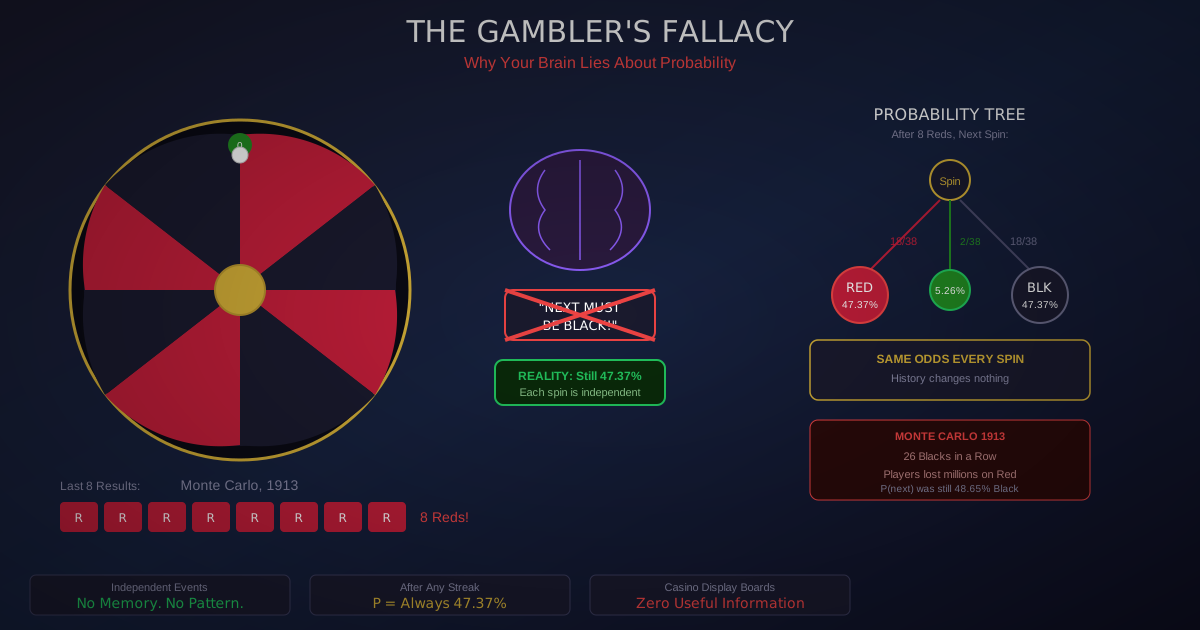
| "This slot is hot right now" | Slots use RNG; past results do not predict future outcomes | Understand RNG mechanics |
| "I always play with my own money" | Many top streamers play with casino-funded bankrolls | Check for sponsorship disclosures |
| "You can win big with small deposits" | Possible but statistically unlikely; most small depositors lose everything | Calculate expected loss |
| "This strategy works" | No strategy overcomes the house edge in pure chance games | Verify mathematically |
| "I turned $100 into $50,000" | May be true once, but the thousands of times it did not work are not shown | Ask about overall win rate |
Questions to Ask Yourself While Watching
-
Is this streamer playing with their own money? If sponsored, the risk dynamic is completely different from a viewer depositing their own paycheck.
-
What is the house edge on the game they are playing? If it is a slot with a 5% house edge, the expected loss on $10,000 in bets is $500.
-
How much has the streamer lost in total? One big win does not erase months of losses. Ask about the complete record.
-
Am I feeling the urge to gamble because of this content? If watching a stream makes you want to deposit money, recognize that this is the intended effect of the content.
-
Would I bet this much if no one were watching? The social environment of a stream can encourage larger and more frequent bets.
Run the numbers yourself with our Expected Value Calculator before placing any bet.
How Do You Get Started as a Gambling Streamer?
If you are considering entering the gambling streaming space, understand that the landscape is highly competitive, ethically complex, and requires significant initial investment.
Requirements for Starting
| Requirement | Details | Estimated Cost |
|---|---|---|
| Streaming setup | PC, webcam, microphone, capture card, lighting | $2,000-$5,000 |
| Gambling bankroll | Your own money to play with (initially) | $5,000-$20,000 |
| Platform account | Kick, Twitch, and/or YouTube accounts | Free |
| Casino accounts | Multiple licensed casino accounts | Free (deposits separate) |
| Streaming software | OBS Studio or Streamlabs | Free |
| Overlays and branding | Custom graphics, alerts, layouts | $200-$1,000 |
| Legal entity | LLC or similar for business operations | $500-$2,000 |
| Streaming schedule | 4-8 hours/day, 5-7 days/week | Time investment |
The Path to Sponsorship
Getting a casino sponsorship deal is the goal for most gambling streamers, but it requires:
- Build an audience first. Stream consistently for 3-6 months, grow to 50-200 concurrent viewers.
- Create entertaining content. Your personality, reactions, and interaction quality matter more than the gambling itself.
- Demonstrate professionalism. Casinos want streamers who are reliable, on-brand, and compliant with regulations.
- Apply to affiliate programs. Start with basic affiliate codes before seeking larger deals.
- Negotiate deals carefully. Understand the terms, especially bankroll provisions, content requirements, and exclusivity clauses.
Financial Reality Check for New Streamers
| Month | Typical Revenue | Expenses | Net Income |
|---|---|---|---|
| 1-3 | $0-$500 | $500-$2,000/month | -$500 to -$2,000 |
| 4-6 | $500-$2,000 | $500-$1,500/month | -$1,000 to +$500 |
| 7-12 | $2,000-$10,000 | $1,000-$2,000/month | $0 to +$8,000 |
| Year 2 | $5,000-$50,000/month | $2,000-$5,000/month | $3,000 to +$45,000 |
| Year 3+ (with sponsorship) | $50,000-$500,000/month | $5,000-$20,000/month | $45,000 to +$480,000 |
Most gambling streamers never reach the sponsorship tier. The market is competitive, and casinos only sponsor streamers who deliver measurable results (new depositors, volume).
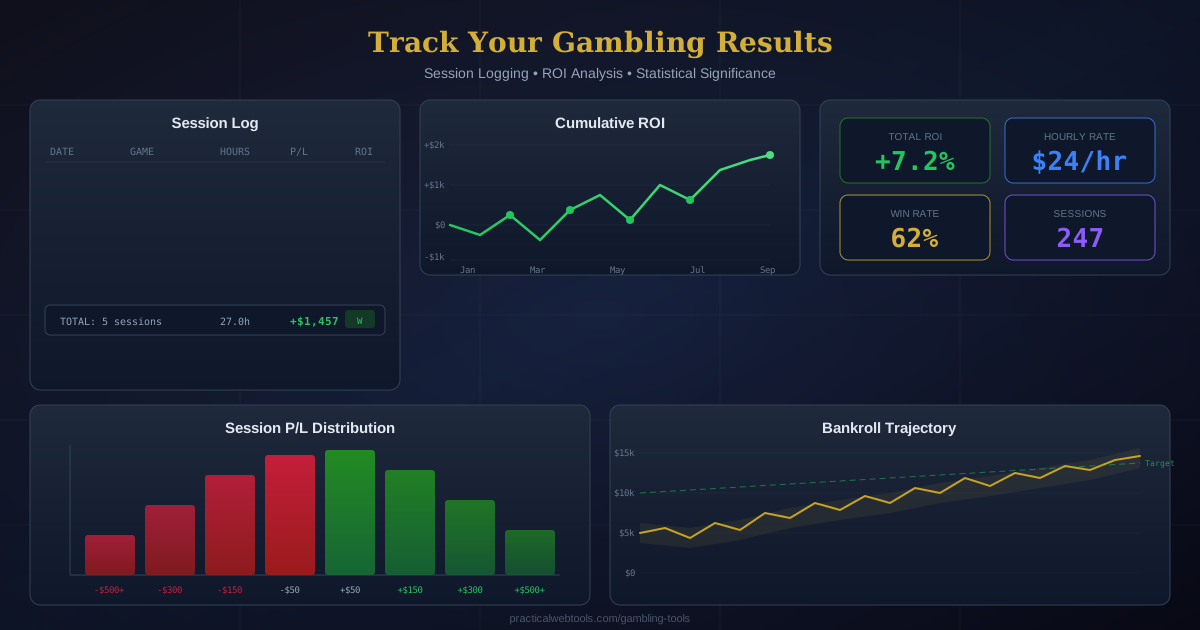
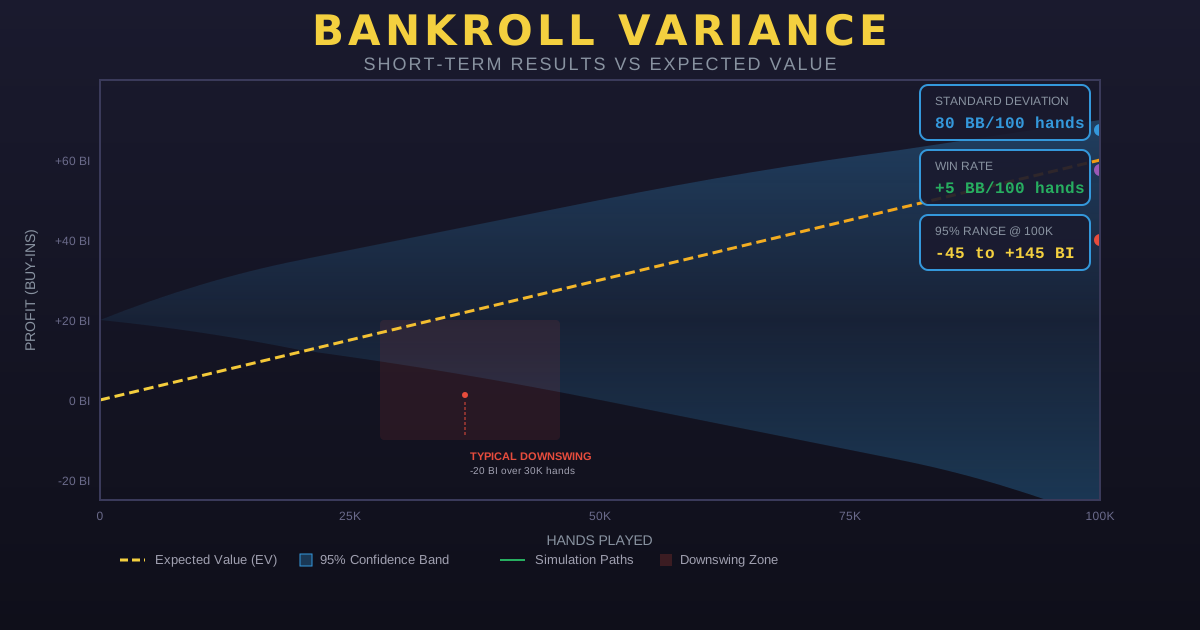
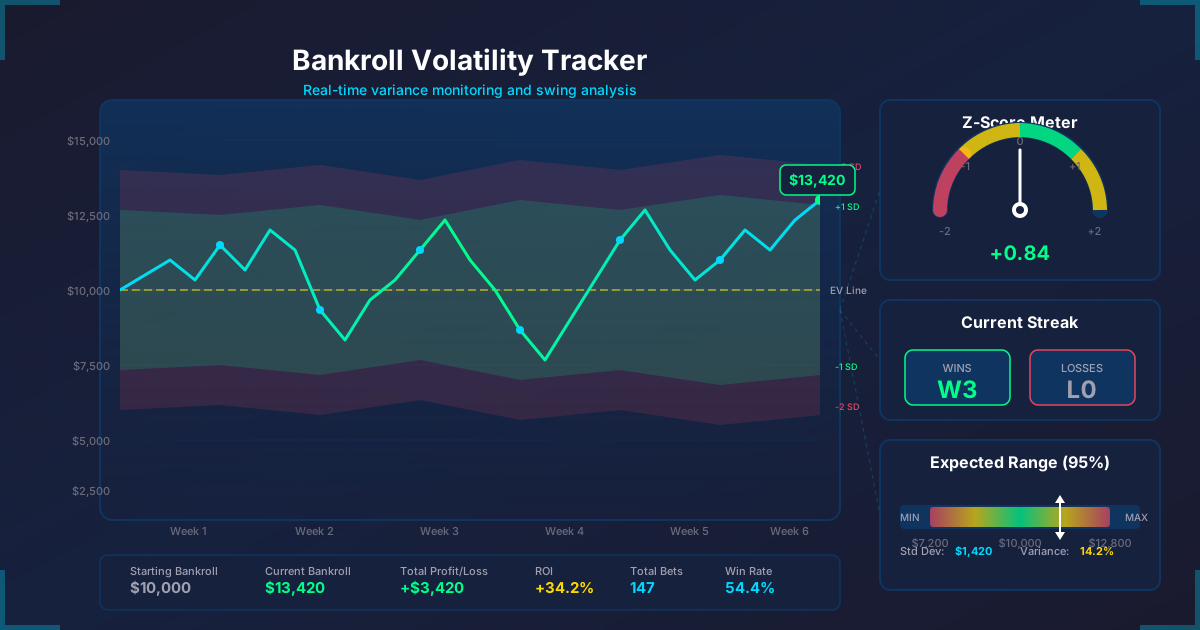
Track your gambling results accurately with our Bankroll Volatility Tracker.
What Does Responsible Gambling Content Look Like?
Creating or consuming gambling content responsibly requires awareness of the risks, honest communication, and commitment to harm reduction.
For Viewers: A Responsible Viewing Checklist
- Recognize that streamer results are not typical and often funded by casinos
- Set a strict budget before any gambling activity inspired by streams
- Never deposit money you cannot afford to lose
- Understand the house edge of every game you play
- Use deposit limits and self-exclusion tools on every casino site
- Take regular breaks from both watching and gambling
- If gambling stops being fun, stop immediately
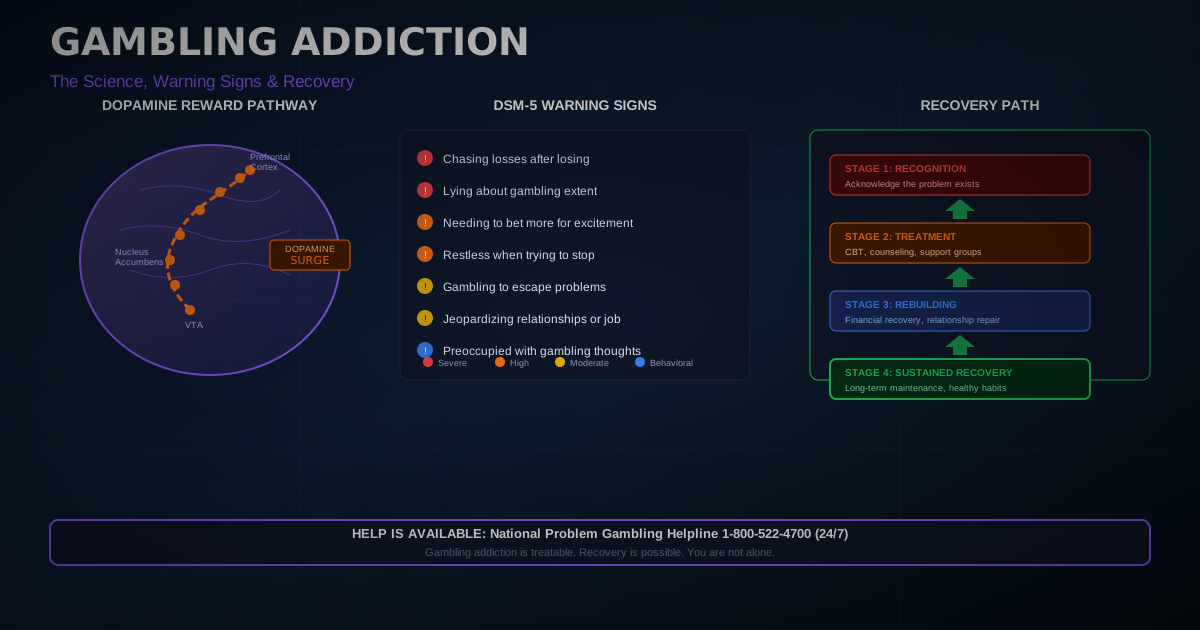
- If you feel you cannot control your gambling, seek help immediately
For Streamers: Responsible Content Standards
| Practice | Why It Matters |
|---|---|
| Display responsible gambling hotline (1-800-522-4700) | Provides immediate help for viewers in crisis |
| Disclose all sponsorships clearly | Legal requirement and ethical obligation |
| Show full session results including losses | Prevents false perception of easy wins |
| Explain house edge for every game | Educates viewers about mathematical reality |
| Never target underage audiences | Legal and ethical imperative |
| Encourage deposit limits | Helps viewers protect themselves |
| Take visible breaks | Models healthy behavior |
| Never imply gambling is a reliable income source | Prevents financially harmful decisions |
Resources for Problem Gambling
If you or someone you know is struggling with gambling:
- National Council on Problem Gambling: 1-800-522-4700
- National Suicide Prevention Lifeline: 988
- Gamblers Anonymous: ga.org
- GamTalk: Free online peer support
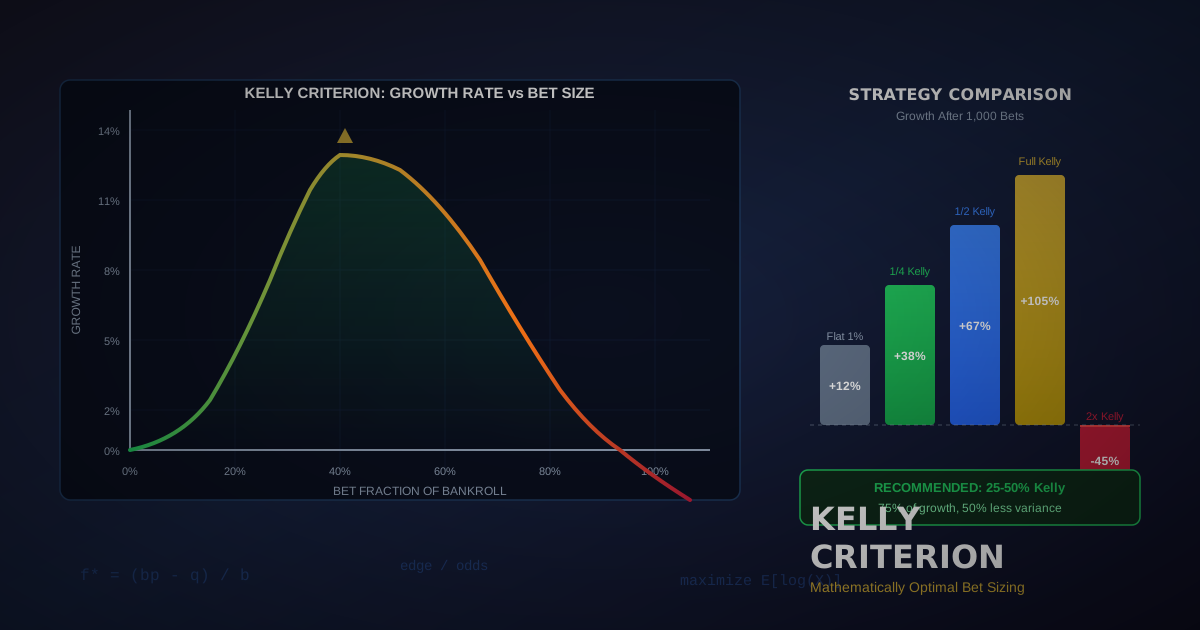
Use our Kelly Criterion Calculator to ensure you never bet more than a mathematically appropriate amount.
What Is the Real Mathematics Behind Gambling Stream Highlights?
Understanding the math behind what you see on gambling streams is essential to maintaining realistic expectations. The highlight reels and big-win moments that populate YouTube and social media represent a tiny fraction of the actual gambling experience.
The Math of Slots Streaming
A typical gambling stream involves thousands of spins per session. Here is what the math actually looks like:
| Metric | Value | Reality |
|---|---|---|
| Average spins per hour | 400-600 | Each spin takes 6-10 seconds |
| Average stream length | 4-8 hours | 1,600-4,800 spins per stream |
| Bonus frequency (typical slot) | 1 in 150-400 spins | 4-32 bonuses per stream |
| Big win frequency (100x+) | 1 in 2,000-10,000 spins | 0-2 per stream |
| Mega win frequency (500x+) | 1 in 20,000-100,000 spins | Happens once every 5-25+ streams |
| Max win clips shown on YouTube | 3-10 per compilation | Cherry-picked from hundreds of hours |
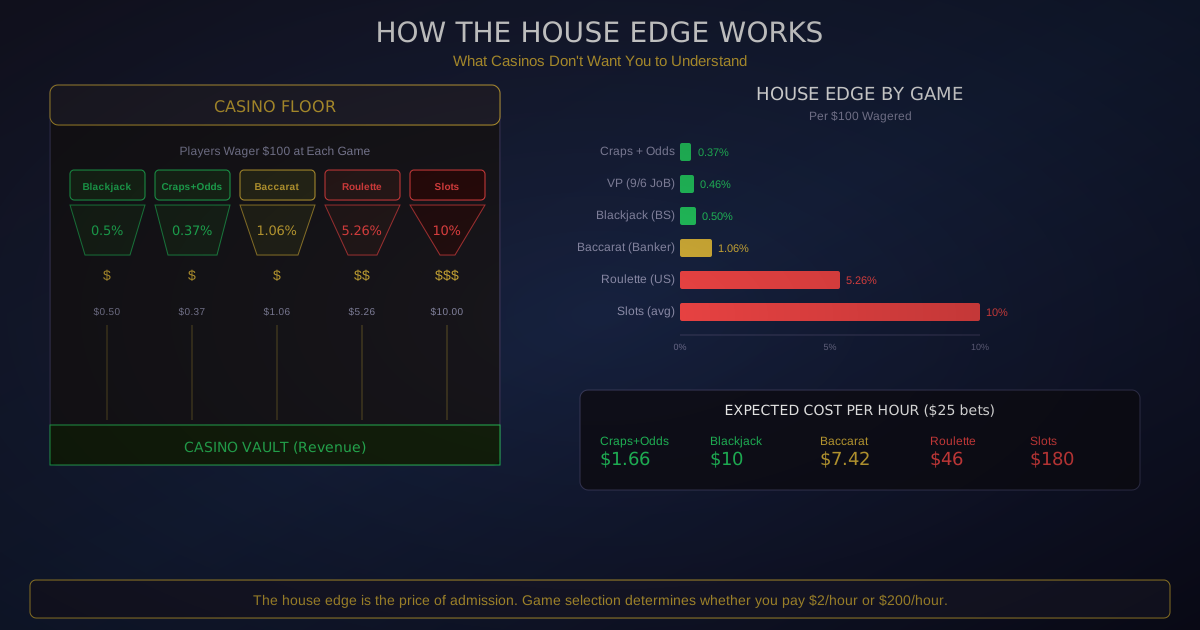
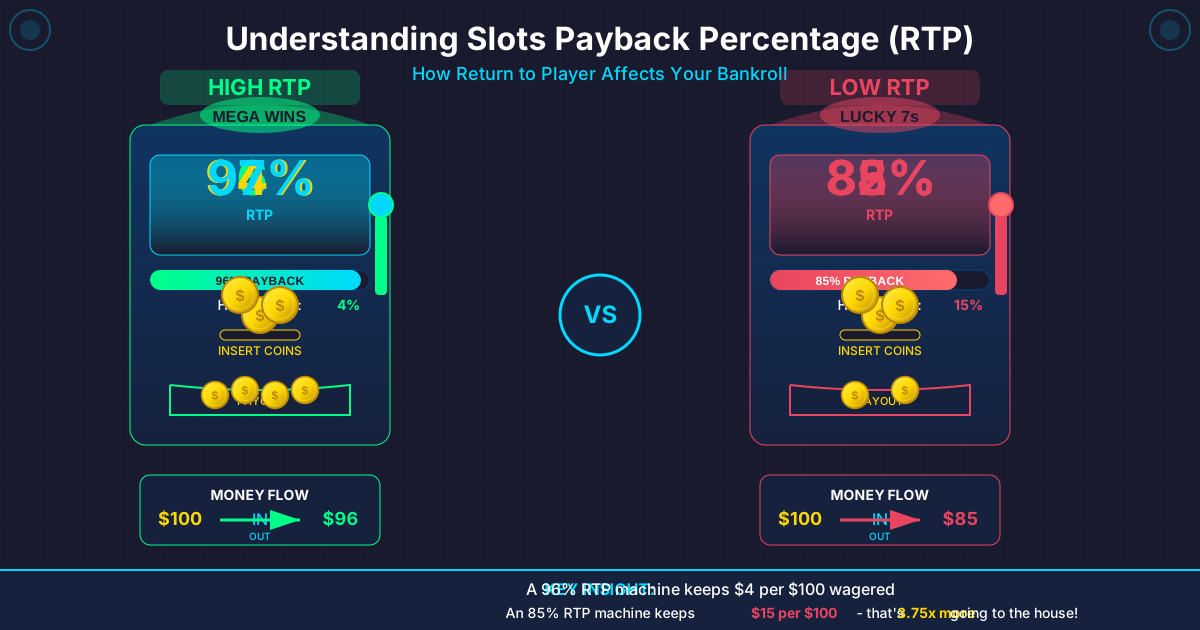
| House edge (typical slot) | 3-8% | Expected loss: $3-$8 per $100 wagered |
What $1,000/Spin Actually Costs
When a streamer bets $1,000 per spin for 4 hours:
| Calculation | Value |
|---|---|
| Spins per hour | 500 |
| Hours streamed | 4 |
| Total spins | 2,000 |
| Total wagered | $2,000,000 |
| House edge (5%) | $100,000 expected loss |
| Actual result range | -$300,000 to +$200,000 (high variance) |
The streamer's expected mathematical loss is $100,000 for that single session. This is why casinos are happy to provide the bankroll. Even if the streamer hits a $500,000 jackpot on camera, the casino expects to profit over many sessions.
Why Highlight Reels Are Misleading
A YouTube compilation titled "BIGGEST WINS OF THE MONTH" showing 10 massive wins represents:
- 10 individual moments from potentially 200+ hours of streaming
- Thousands of losing spins that were not shown
- An overall net loss for the streamer (covered by the casino)
- A survival bias problem: you only see the wins that made the cut
Calculate the true expected value of any casino bet with our Expected Value Calculator.
The Conversion Pipeline: How Casino Deals Profit from Viewers
The entire gambling streaming ecosystem is built on a specific conversion pipeline designed to turn viewers into depositing casino customers:
| Stage | What Happens | Conversion Rate (est.) |
|---|---|---|
| 1. Impression | Viewer sees the stream | 100% (base) |
| 2. Engagement | Viewer watches for 10+ minutes | 30-50% |
| 3. Curiosity | Viewer visits casino site | 5-15% |
| 4. Registration | Viewer creates casino account | 2-5% |
| 5. First deposit | Viewer deposits money | 1-3% |
| 6. Active player | Viewer becomes regular player | 0.5-1.5% |
| 7. Lifetime value | Player deposits $500-$2,000 over their lifetime | Varies |
For a streamer with 50,000 average viewers per stream:
- 1,500 viewers visit the casino site (3%)
- 500 create accounts (1%)
- 250 deposit (0.5%)
- Average first deposit: $200
- Total first deposits: $50,000
- Lifetime value per depositor: $800
- Total lifetime value generated: $200,000 per stream
This explains why casinos pay streamers $1-5M per month. The ROI on streamer marketing far exceeds traditional advertising channels.
Understand the house edge that makes this pipeline profitable for casinos with our Hold/Vig Calculator.
Frequently Asked Questions
Is gambling streaming legal?
Gambling streaming itself is legal in most jurisdictions. However, the legality depends on the casino being streamed (licensed vs. unlicensed), the streamer's location, the viewer's location, and whether proper disclosures are made. In the US, streaming licensed casino games and sports betting is legal, but promoting unlicensed offshore casinos may violate state advertising laws. Always check local regulations.
How much do gambling streamers make per month?
Top gambling streamers earn $1M-$5M+ per month from casino sponsorships alone, plus platform contracts, subscriptions, and affiliate revenue. Mid-tier streamers (5,000-15,000 average viewers) earn $50K-$300K per month. Small gambling streamers (under 1,000 viewers) typically earn $1K-$10K per month, often less than their gambling losses.
Are gambling streams rigged?
There is no definitive proof that major licensed casinos rig games specifically for streamers, as this would jeopardize their gaming licenses. However, some concerns exist: streamers may play with casino-provided funds (reducing risk), may only stream winning sessions, and the enhanced RTP theory (casino adjusts return for streamers) has been alleged but not proven. Use provably fair verification when available.
Why did Twitch ban gambling?
Twitch banned unlicensed gambling sites in October 2022 following community pressure from major streamers and concerns about the impact on younger viewers. Several scandals involving gambling streamers, including allegations of scams and undisclosed sponsorships, accelerated the decision. Twitch still allows sports betting and licensed gambling content.
Is Kick owned by a casino?
Kick is co-founded by Ed Craven and Bijan Tehrani, who also co-founded Stake.com, a major crypto casino. While Kick and Stake are technically separate entities, the financial and leadership overlap is significant. This connection is why gambling content is prominently featured on Kick and why the platform offers generous terms to gambling streamers.
Do gambling streamers actually lose money?
It depends on the deal structure. Streamers playing with casino-provided bankrolls do not personally lose money when they lose on stream. The casino absorbs those losses as marketing costs. Some streamers do play with their own money, particularly when not under sponsorship. Top streamers earn guaranteed monthly payments regardless of gambling results, so their personal finances are disconnected from on-stream outcomes.
How do I avoid developing a gambling problem from watching streams?
Set strict boundaries: never gamble more than you can afford to lose, recognize that streamer results are not typical, use deposit limits on all gambling sites, take regular breaks from gambling content, and seek help immediately if you feel you are losing control. The National Council on Problem Gambling (1-800-522-4700) offers free, confidential support 24/7.
What percentage of gambling streamers are profitable overall?
As streamers, the vast majority who secure sponsorships are profitable because their income comes from sponsorship deals, not gambling results. As gamblers playing with their own money, the same mathematical realities apply: the house edge means the vast majority lose over time. The distinction is critical, the streamer is not a profitable gambler; they are a profitable content creator whose content happens to be gambling.
Related Tools for Understanding Casino Gambling
Educate yourself on the mathematics behind gambling with these free tools:
- Expected Value Calculator - Calculate the expected profit or loss on any bet
- Implied Probability Calculator - Convert odds to real probabilities
- Hold/Vig Calculator - Understand the house edge on any game
- Blackjack House Edge Calculator - Calculate exact house edge for blackjack variants
- Roulette Odds Calculator - See probabilities for every roulette bet
- Video Poker EV Calculator - Find the expected return on video poker games
- Kelly Criterion Calculator - Calculate mathematically optimal bet sizing
- Bankroll Volatility Tracker - Model your expected swings over time
- Odds Converter - Convert between American, decimal, and fractional odds
- Parlay Calculator - Calculate parlay odds and expected returns
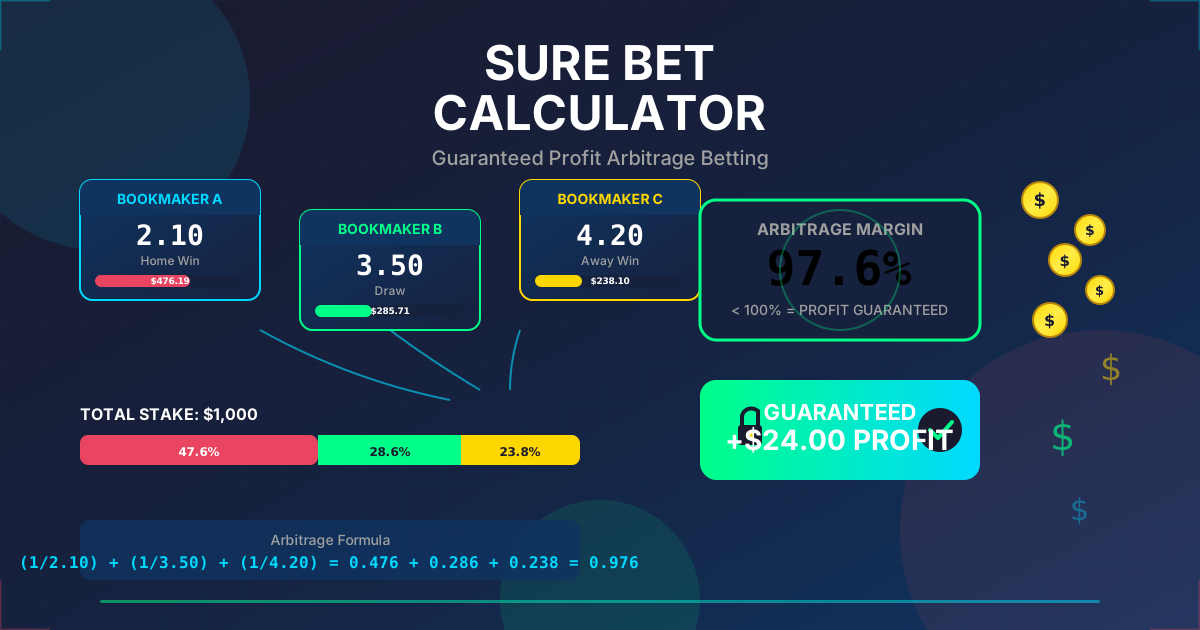
- Sure Bet Calculator - Identify arbitrage opportunities between sportsbooks
How Has Gambling Streaming Changed the Online Casino Industry?
Gambling streaming has fundamentally altered how online casinos acquire customers, how players discover new platforms, and how the industry markets itself. The impact extends far beyond entertainment.
Before and After Gambling Streaming
| Aspect | Pre-Streaming Era (Before 2018) | Streaming Era (2022-2026) |
|---|---|---|
| Customer Acquisition | Banner ads, affiliate websites, SEO | Streamer partnerships, live content |
| Average Acquisition Cost | $200-$400 per depositor | $100-$250 per depositor (via streamers) |
| Player Trust | Brand reputation, licensing | Streamer endorsement (parasocial trust) |
| Game Discovery | Casino lobbies, review sites | Watching streamers play new games |
| Engagement Model | Solo experience, grinding bonuses | Social, community-driven |
| Marketing Budget Allocation | 60% traditional, 40% digital | 30% traditional, 40% digital, 30% influencer |
| Deposit Sizes | Lower average deposits | Higher average deposits (influenced by streamer bet sizes) |
The Ripple Effects on Game Design
Casino game developers have adapted their products specifically for streaming audiences:
- Visual spectacle slots designed to produce dramatic, stream-worthy moments
- Community features built into games (group bonus rounds, shared jackpots)
- Higher volatility models that produce bigger individual wins (and bigger losses) for more exciting content
- Branded partnership slots featuring streamer names and likenesses
- Provably fair integration to address authenticity concerns
The Creator Economy Within Gambling
Gambling streaming has created an entire ecosystem of supporting roles:
| Role | What They Do | Income Range |
|---|---|---|
| Top streamer | Primary gambling content creator | $500K-$5M/month |
| Clip editor | Cuts highlights into viral YouTube/TikTok content | $3K-$15K/month |
| Moderator | Manages chat, enforces rules during streams | $1K-$5K/month |
| Affiliate manager | Manages streamer-casino relationships | $5K-$30K/month |
| Analytics provider | Tracks streamer performance metrics | SaaS revenue |
| Stream overlay designer | Creates custom graphics and alerts | $500-$5K/project |
| Legal counsel | Advises on disclosure, compliance | $300-$600/hour |
The gambling streaming industry is fascinating, lucrative for those at the top, and deeply concerning in its potential impact on vulnerable viewers. Whether you watch gambling streams for entertainment or aspire to create them, understanding the business model, the mathematics, and the ethical dimensions is essential. The house always has an edge. The streamer always has a deal. And the viewer is the one putting their own money at risk.
Gambling involves risk and should be approached as entertainment, not as a source of income. Always bet within your means, set strict bankroll limits, and never chase losses. If you or someone you know has a gambling problem, contact the National Council on Problem Gambling at 1-800-522-4700 or visit ncpgambling.org. Must be 21+ to gamble in most US jurisdictions. Please play responsibly.