Moneyline vs. Spread vs. Totals: When to Use Each Bet Type (2026)

Most bettors pick their favorite bet type and hammer it on every game. That is a losing strategy. The sharps who actually make money in sports betting treat moneyline, spread, and totals as three distinct tools in a toolbox, and they pull out the right one based on the specific situation. A moneyline bet that crushes it in MLB is often the worst choice in NFL. A spread that prints money in college basketball could be dead weight in hockey. And totals--the most overlooked of the three--are sometimes where the real edge hides.
The U.S. sports betting market surpassed $100 billion in handle in 2026, and parlays alone now account for roughly 35% of total handle according to industry tracking data. But the bettors who sustain profits over time are not just throwing darts. They are methodically choosing the right bet type for the right matchup, sport, and situation.
This guide breaks down exactly when each bet type gives you the best expected value, sport by sport, with real numbers and scenarios you can apply today.
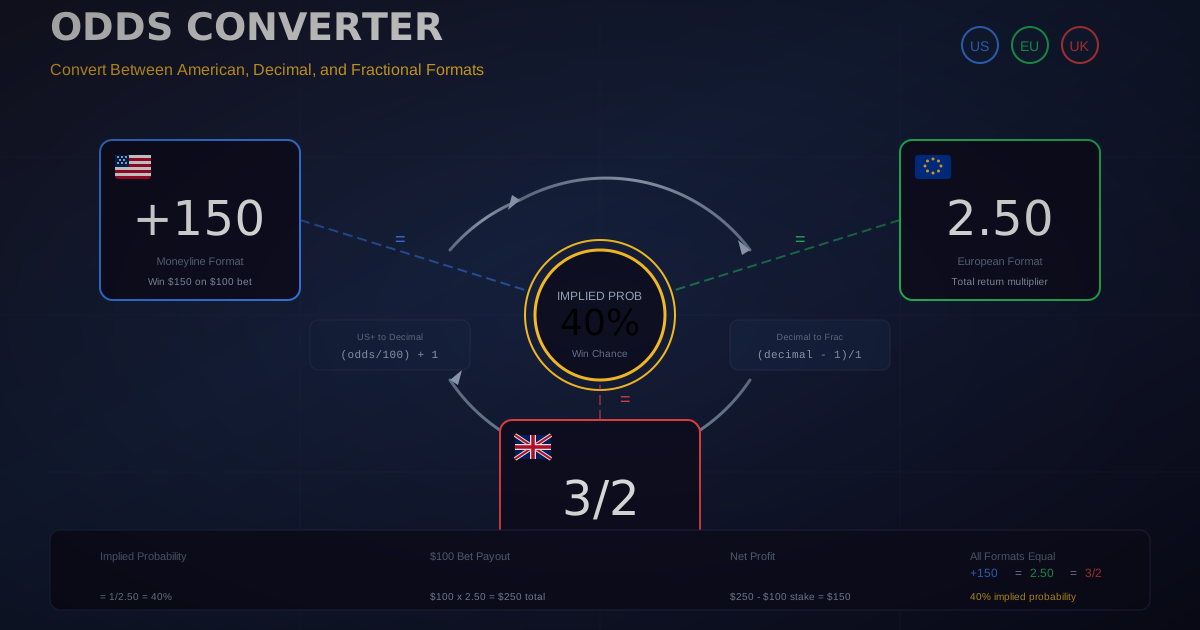
Convert any odds format and see implied probabilities instantly with our free Odds Converter.
The Three Core Bet Types: A Quick Refresher
Before we dig into strategy, here is a concise breakdown of each bet type for anyone who needs a quick refresher.
Moneyline: Pick the Winner
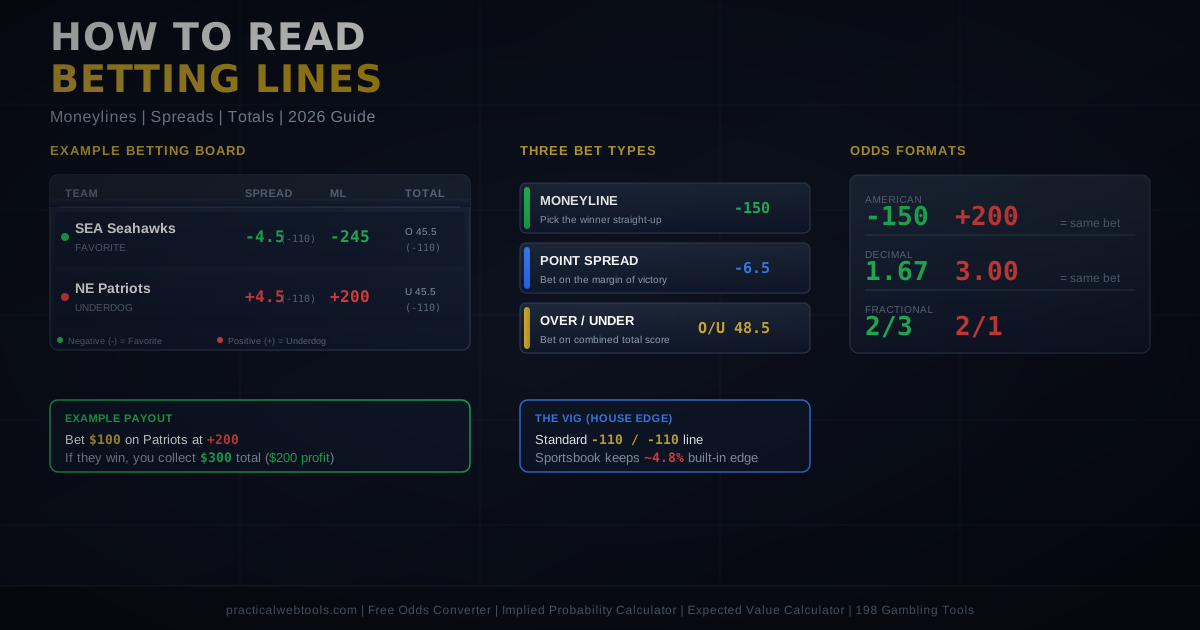
A moneyline bet is the simplest wager in sports betting. You pick which team wins the game. That is it. No margin of victory, no total score--just who wins.
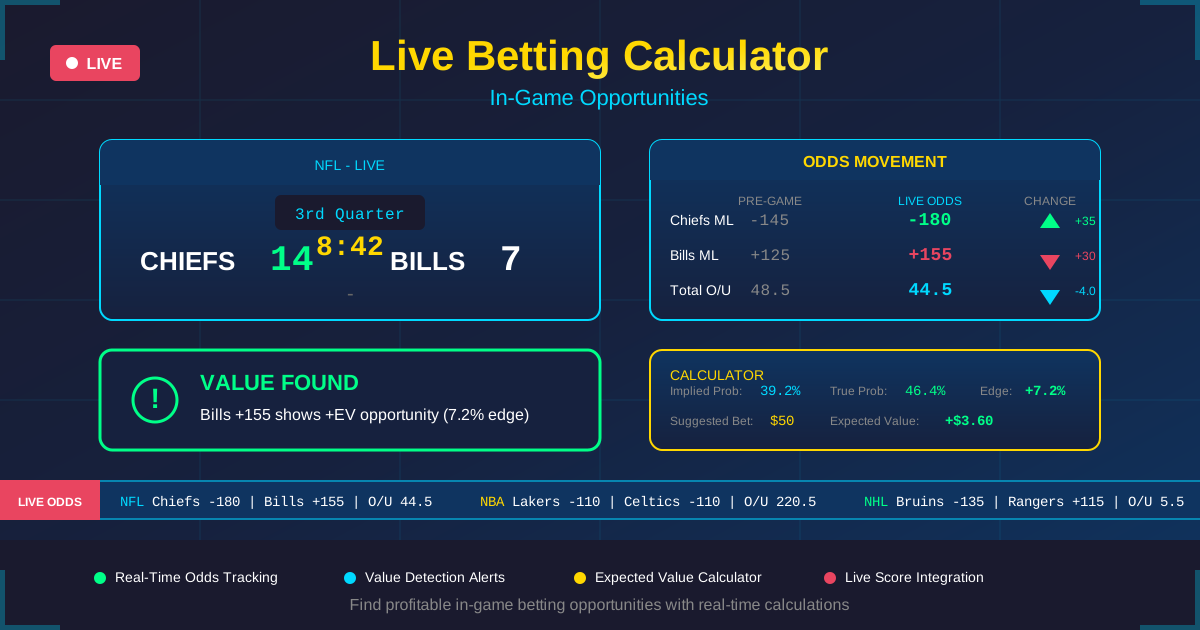
- Favorites have negative odds (e.g., -180), meaning you risk more to win less
- Underdogs have positive odds (e.g., +155), meaning you risk less to win more
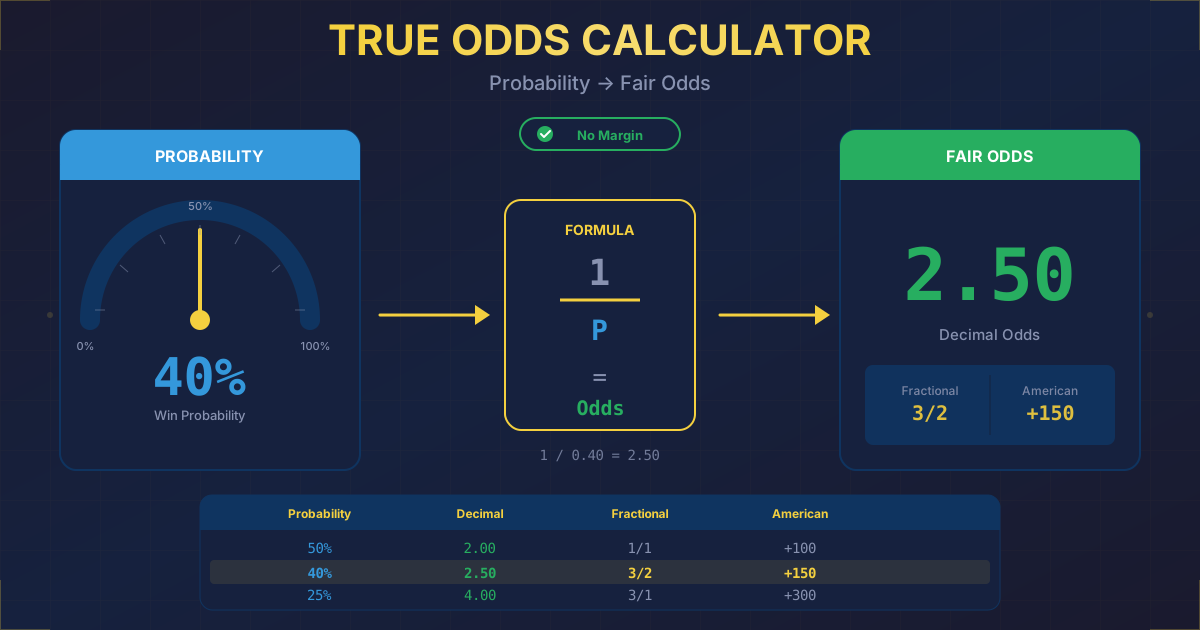
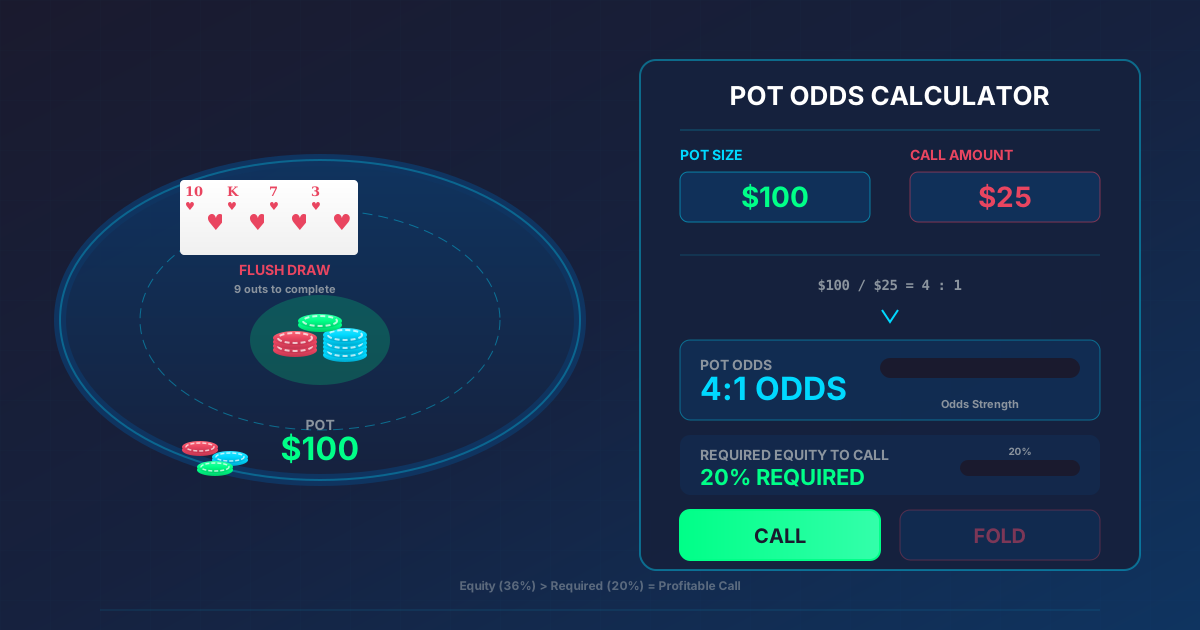
- Break-even point varies by odds: at -150, you need a 60% win rate to profit; at +150, you only need 40%
Example: The Kansas City Chiefs are -200 favorites against the Tennessee Titans at +170. A $200 bet on the Chiefs returns $100 in profit if they win. A $100 bet on the Titans returns $170 in profit if they pull the upset.
Spread (Point Spread / Run Line / Puck Line)
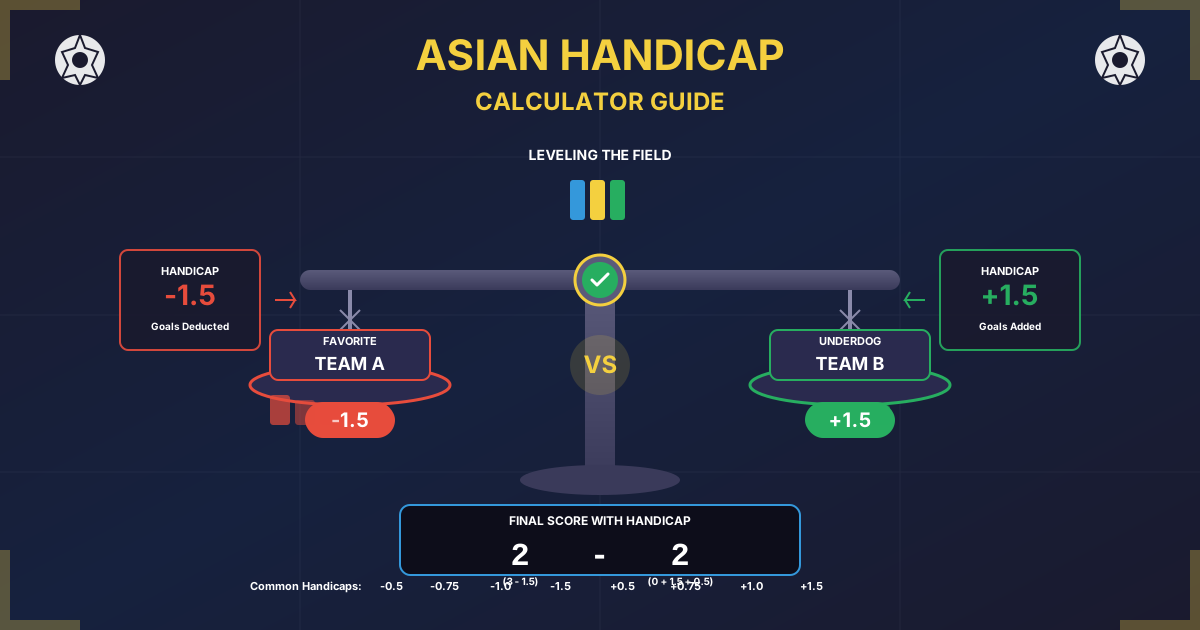
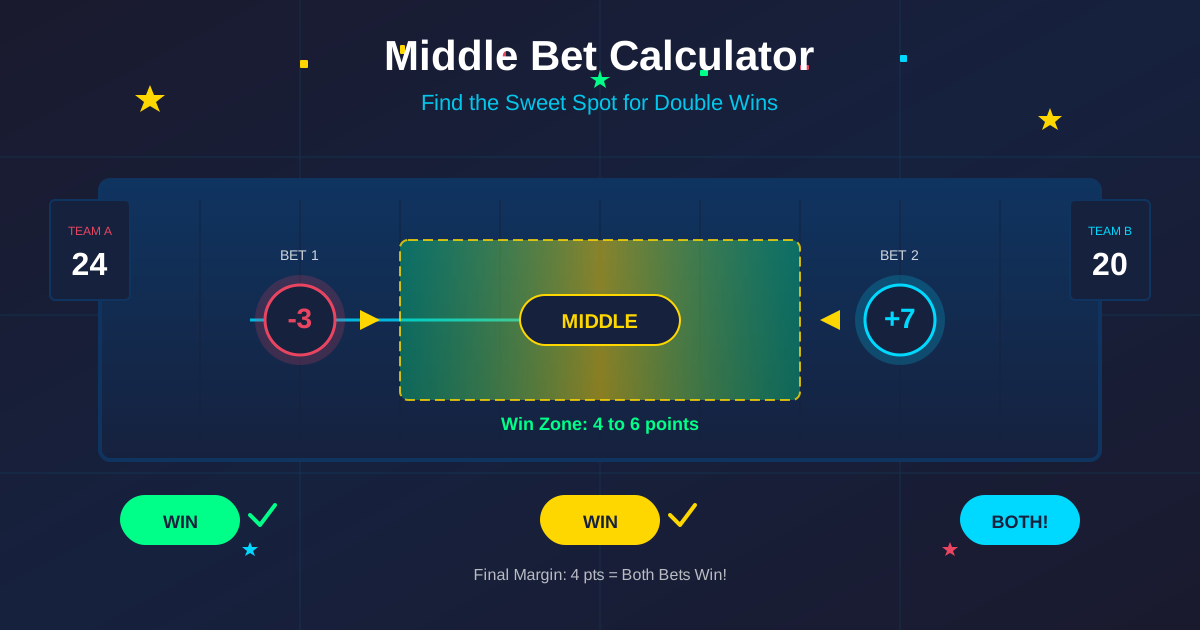
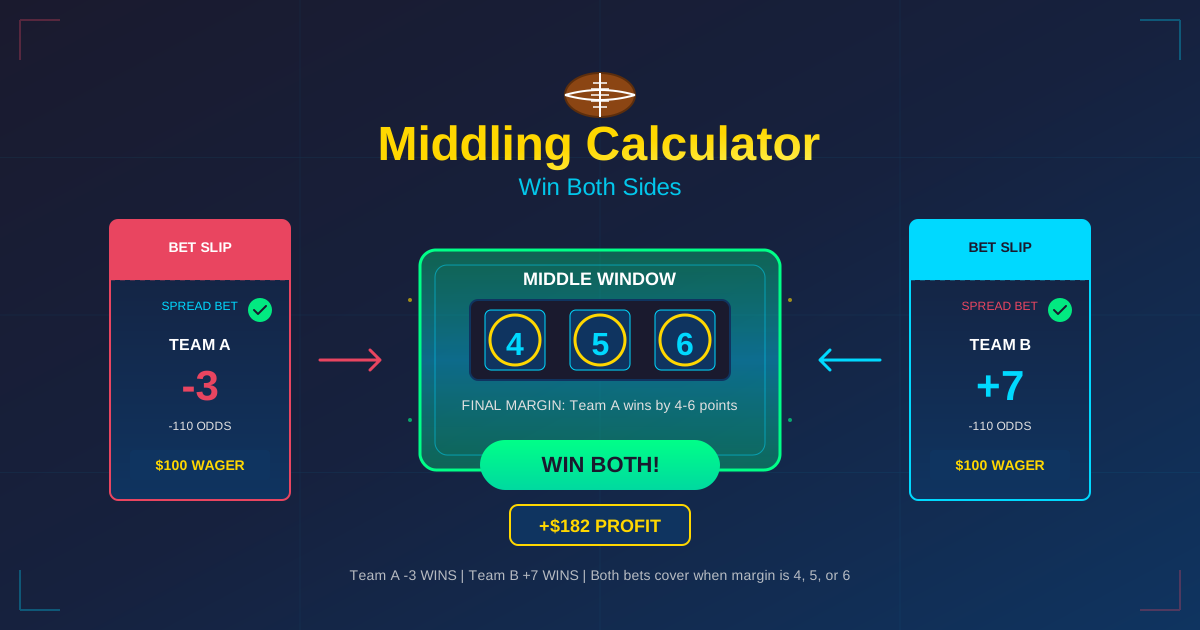
Spread betting levels the playing field by adding or subtracting points. The favorite must win by more than the spread; the underdog can lose by less than the spread (or win outright) and still "cover."
- NFL/NBA: Variable spreads (e.g., -3.5, -7, -10.5)
- MLB: Standard 1.5-run "run line"
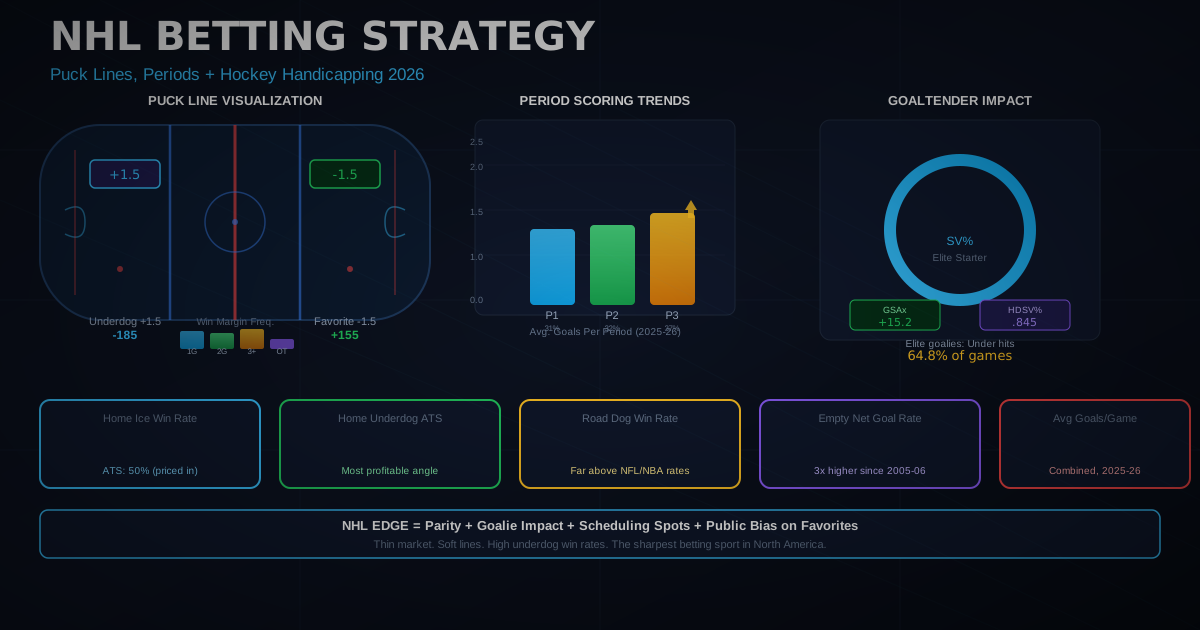
- NHL: Standard 1.5-goal "puck line"
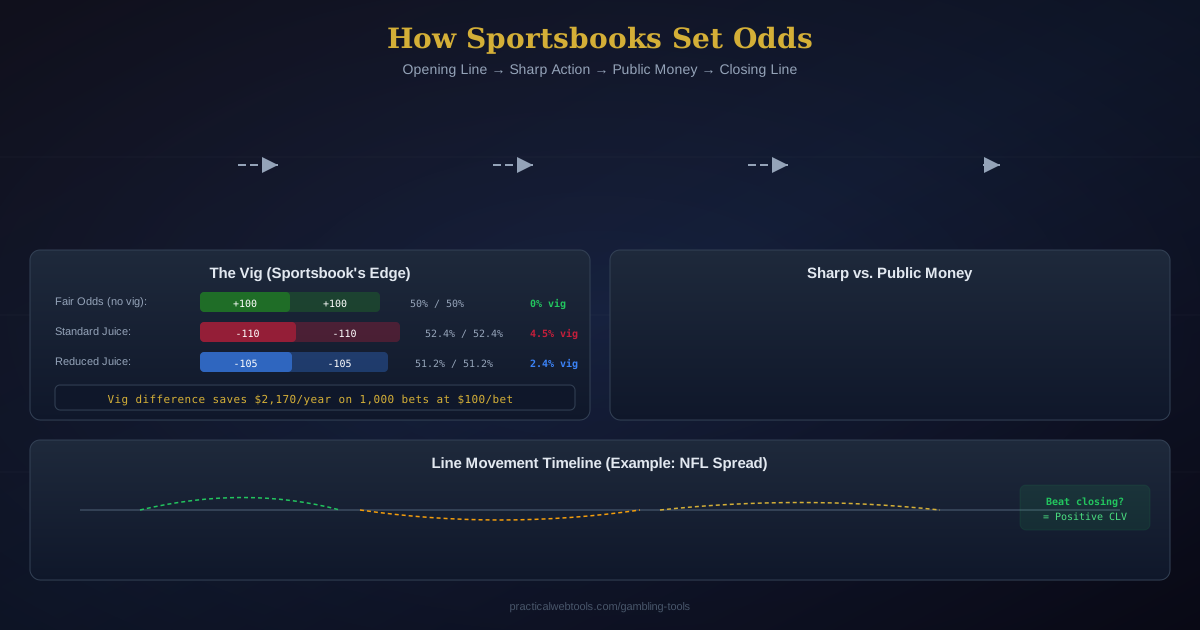
- Standard juice: -110 on both sides (52.4% break-even)
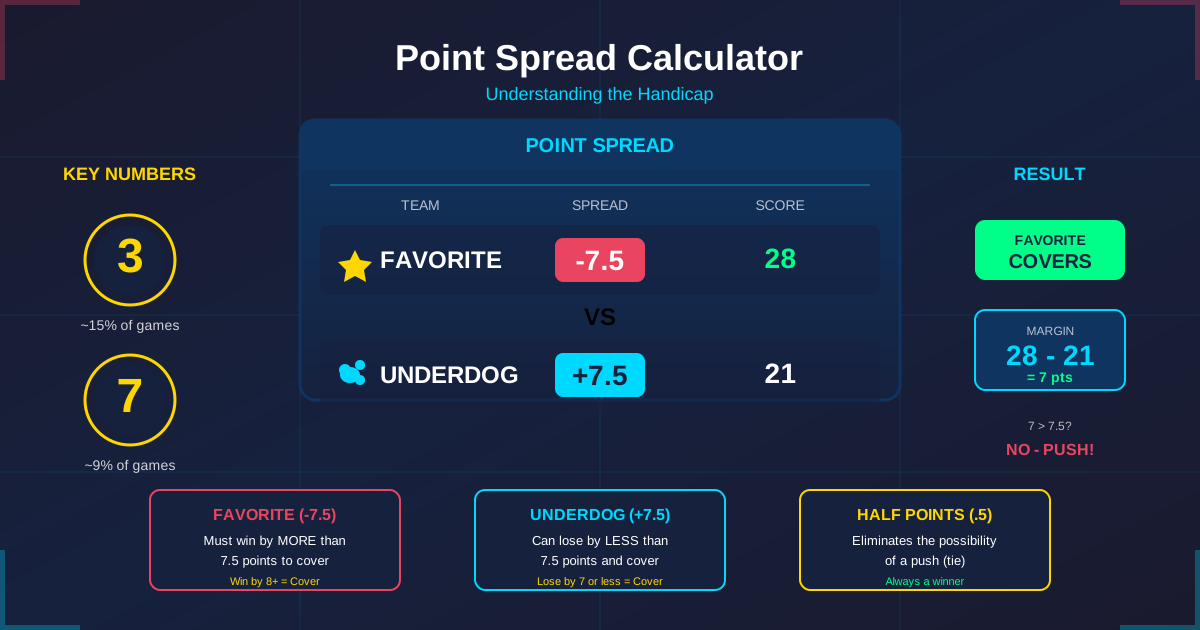
Example: The Buffalo Bills are -6.5 (-110) against the Miami Dolphins at +6.5 (-110). The Bills must win by 7 or more for a spread bet to cash. The Dolphins can lose by 6 or fewer (or win outright) and the spread bet pays.
Totals (Over/Under)
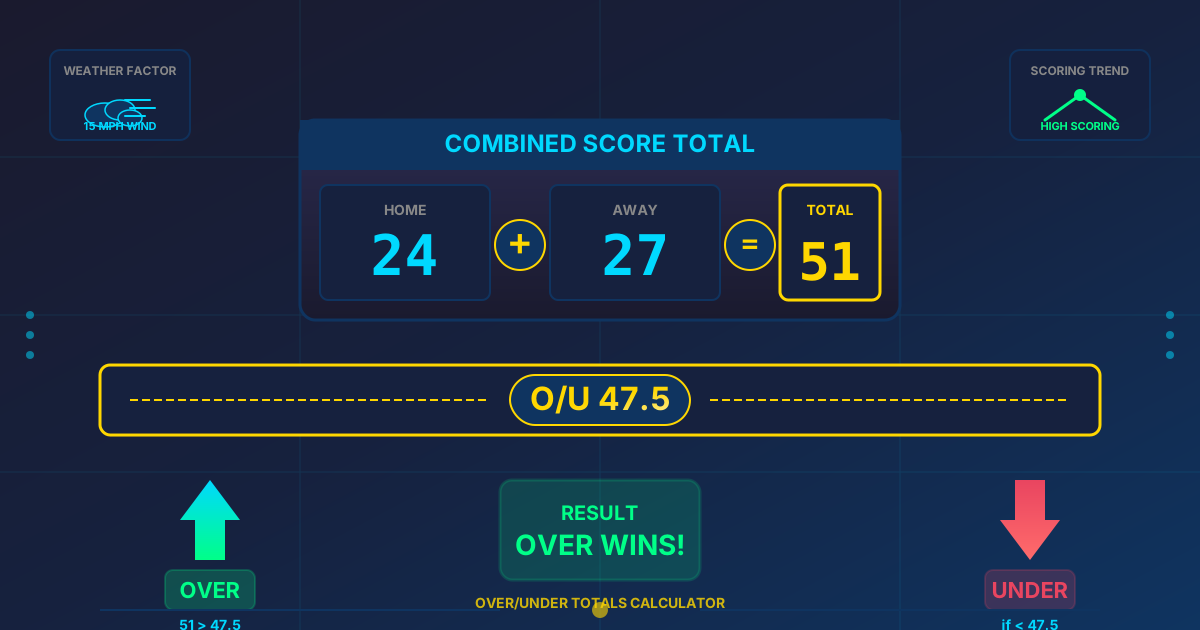
Totals betting removes the question of who wins entirely. You are betting on whether the combined score of both teams goes over or under a number set by the sportsbook.
- Standard juice: -110 on both sides
- Key factors: Pace of play, weather, injuries, defensive matchups
- Overtime counts in most sports (except soccer and some prop markets)
Example: The Golden State Warriors vs. Los Angeles Lakers total is set at 228.5 (-110 both sides). If the final score is 118-115 (233 total), the over cashes. If it finishes 104-101 (205 total), the under wins.
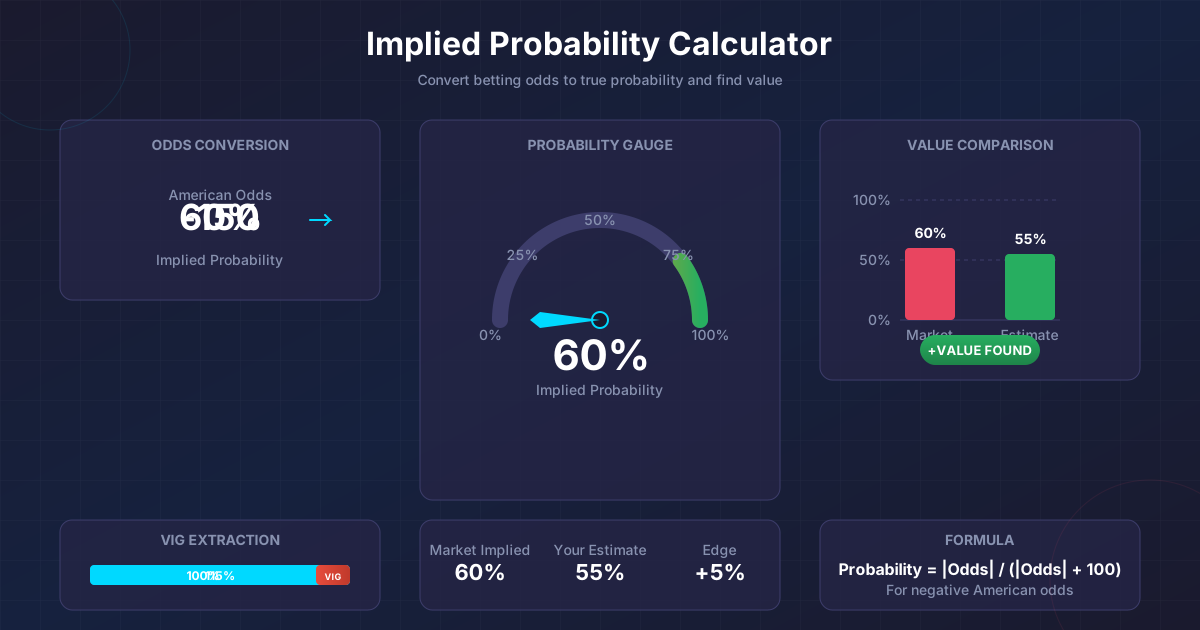
Calculate the implied probability behind any odds with our Implied Probability Calculator.
Side-by-Side Comparison: Moneyline vs. Spread vs. Totals
| Feature | Moneyline | Spread | Totals |
|---|---|---|---|
| What you predict | Who wins | Margin of victory | Combined score |
| Typical juice | Variable (-300 to +300) | -110 / -110 | -110 / -110 |
| Break-even win rate | Depends on odds | ~52.4% at -110 | ~52.4% at -110 |
| Best for | Low-scoring sports, big underdogs | High-scoring sports, close games | Weather situations, pace mismatches |
| Worst for | Heavy favorites (poor payout) | Low-scoring sports (1.5 line too rigid) | Unpredictable game scripts |
| Vig impact | Highest on heavy favorites | Consistent and moderate | Consistent and moderate |
| Sharp preference | MLB, NHL, soccer | NFL, NBA, college sports | Situational across all sports |
When Moneylines Are the Right Call
Moneylines are not always the best bet, but in certain situations, they are clearly the optimal choice. Here is when to lean moneyline.
1. Low-Scoring Sports Where Margins Are Thin
In baseball, hockey, and soccer, games are frequently decided by a single run, goal, or point. The standard spread in these sports--1.5 runs (MLB) or 1.5 goals (NHL/soccer)--is a massive number relative to typical final score margins.
The math tells the story:
| Sport | Games decided by 1 | Avg. margin of victory | Spread line |
|---|---|---|---|
| MLB | ~30% of games | ~3.2 runs | 1.5 runs |
| NHL | ~25% of games | ~1.9 goals | 1.5 goals |
| Soccer | ~35% of games | ~1.2 goals | 0.5-1.5 goals |
| NFL | ~23% of games | ~11.1 points | Variable (1-14+) |
| NBA | ~5% of games | ~9.5 points | Variable (1-15+) |
In MLB, roughly 30% of all games are decided by exactly one run. When the run line is fixed at 1.5, you are asking a team to win by 2+ runs--a fundamentally different proposition than simply winning the game. That gap between "winning" and "covering -1.5" is where moneyline value lives in low-scoring sports.
Real-world scenario: The New York Yankees are -140 favorites against the Baltimore Orioles. The run line on the Yankees is -1.5 (+130). You believe the Yankees win this game 62% of the time, but only win by 2+ runs about 40% of the time.
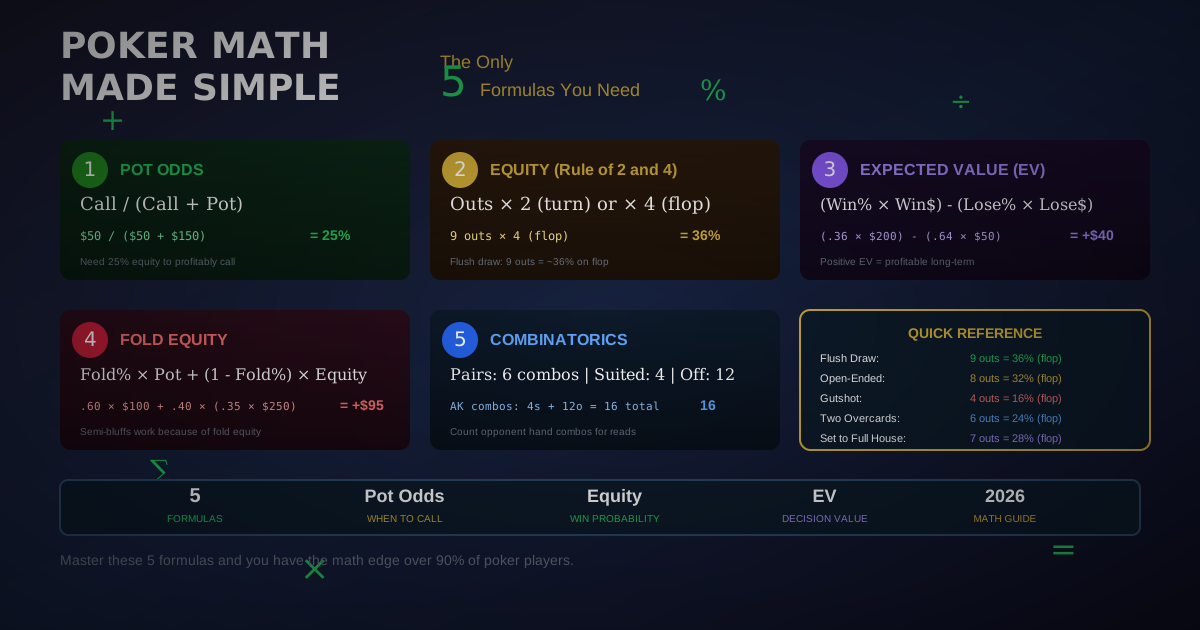
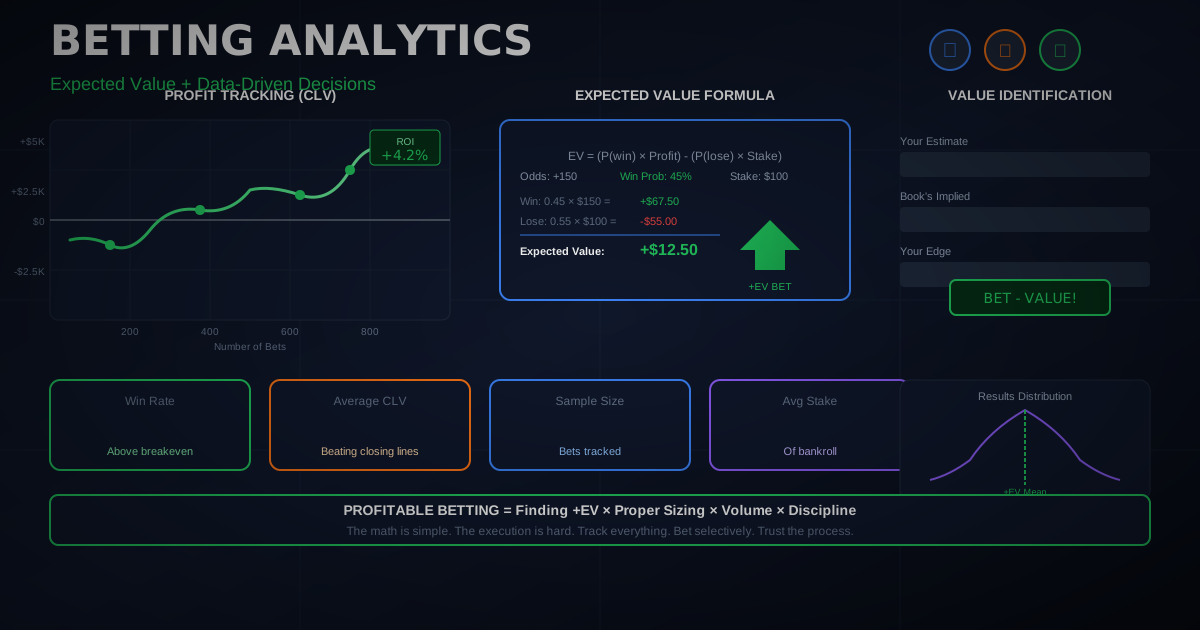
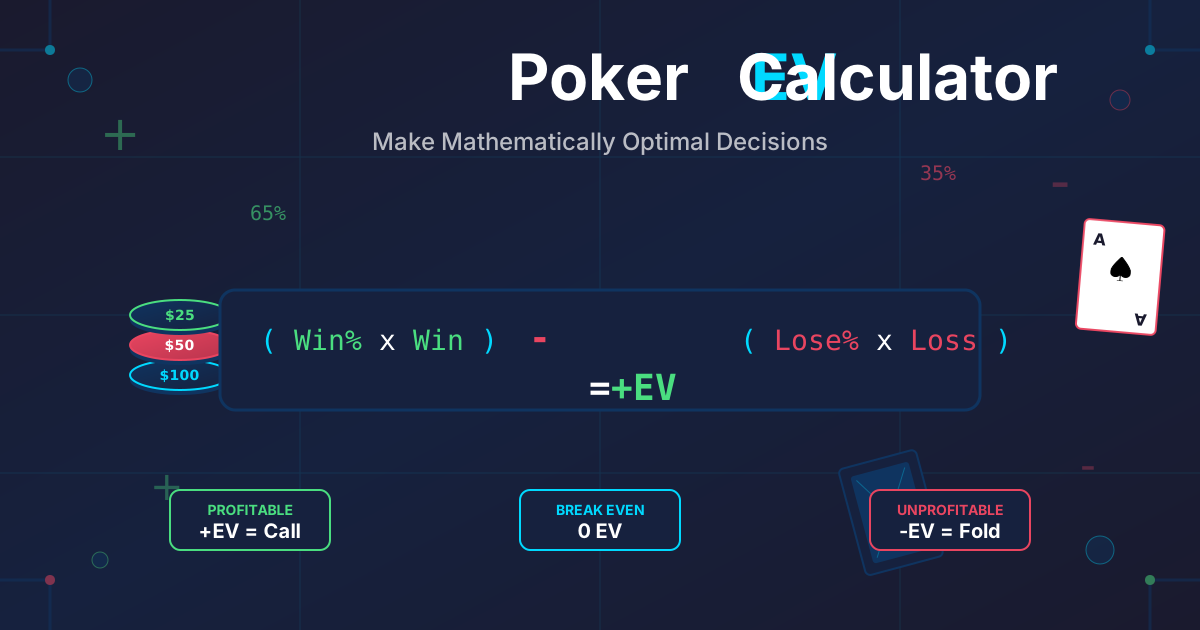
- Moneyline EV: (0.62 x $71.43) - (0.38 x $100) = $44.29 - $38.00 = +$6.29 per $100 risked
- Run line EV: (0.40 x $130) - (0.60 x $100) = $52.00 - $60.00 = -$8.00 per $100 risked
The moneyline is the clearly superior bet here, even though the run line pays better per win.
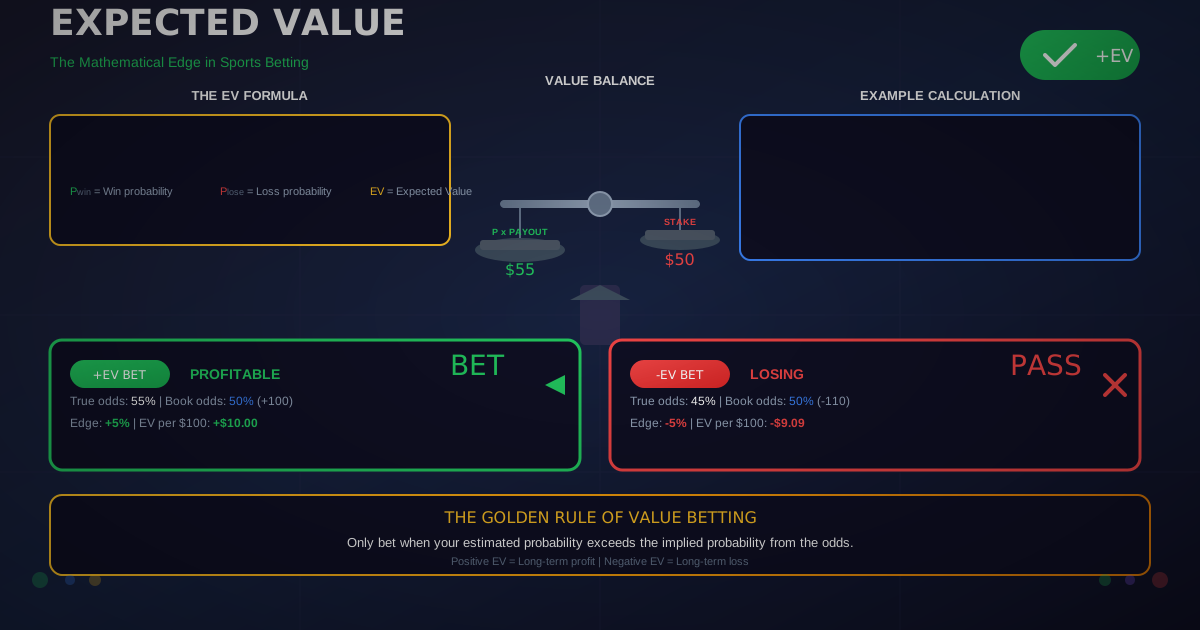
Run your own EV calculations with our Expected Value Calculator.
2. Underdog Bets Where You See Genuine Value
Moneylines shine brightest on underdogs. The payout structure rewards you handsomely for being right, and you do not need a high hit rate to be profitable.
Break-even win rates for underdog moneylines:
| Moneyline Odds | Break-Even Win Rate | Implied Probability |
|---|---|---|
| +100 | 50.0% | 50.0% |
| +120 | 45.5% | 45.5% |
| +150 | 40.0% | 40.0% |
| +200 | 33.3% | 33.3% |
| +250 | 28.6% | 28.6% |
| +300 | 25.0% | 25.0% |
| +400 | 20.0% | 20.0% |
| +500 | 16.7% | 16.7% |
At +200, you only need to win one out of every three bets to be profitable. If your model or analysis identifies an underdog that wins 38% of the time but is priced at +200 (implied 33.3%), you have a substantial edge.
Real-world scenario: The Cleveland Browns are +250 underdogs against the Baltimore Ravens in a divisional rivalry game. The public sees a blowout, but divisional games are historically tighter. Your analysis gives the Browns a 32% chance to win.
- EV: (0.32 x $250) - (0.68 x $100) = $80.00 - $68.00 = +$12.00 per $100 risked
That is a 12% edge--the kind of bet sharps salivate over.
3. When the Vig on the Spread Is Unfavorable
Sometimes sportsbooks shade the spread juice heavily on one side. If you see a spread at -7 (-125) / +7 (+100), the implied probabilities are skewed. In cases like this, the moneyline may offer cleaner pricing.
Always compare the implied probability of the moneyline versus the spread. If the moneyline offers better value for the same opinion, take it.
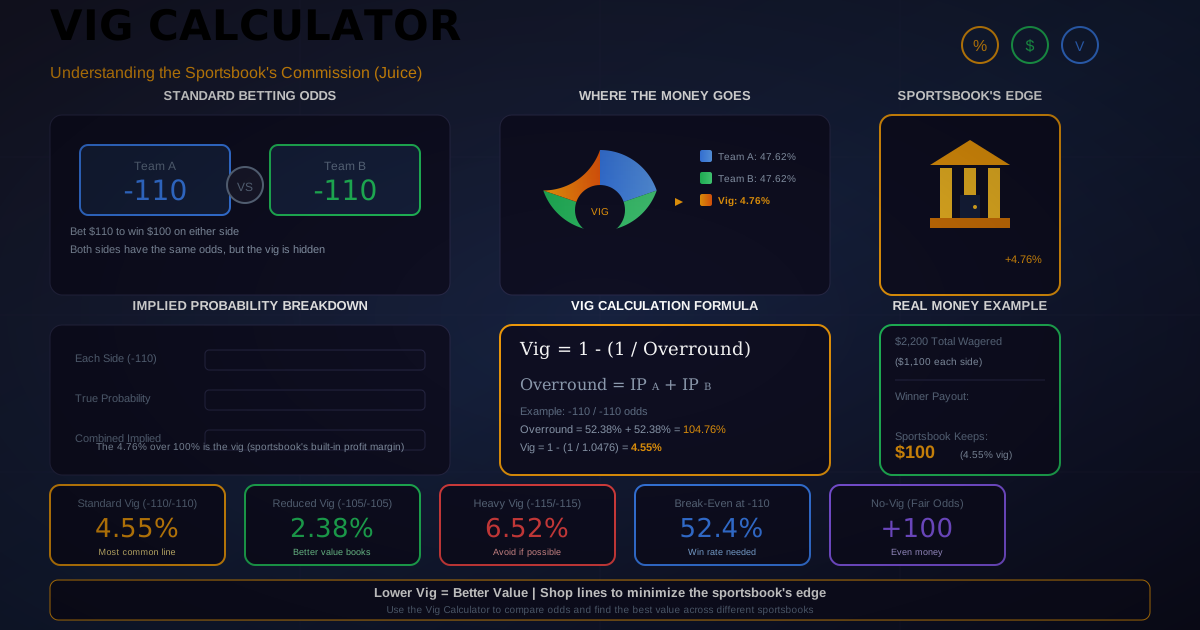
See exactly how much vig the sportsbook is charging with our Hold/Vig Calculator.
When to Avoid the Moneyline
- Heavy favorites (-250 or worse): You are risking $250 to win $100. One loss wipes out 2.5 wins. The math is brutal unless your edge is enormous.
- High-scoring sports with large spreads: In NFL or NBA, if you believe the favorite wins but it could be close, the spread usually offers better value.
- Parlay building with big favorites: Stacking -300 moneylines in parlays looks safe until it isn't. One upset torpedoes the entire bet.
| Favorite Moneyline | Amount Risked | Profit if Win | Wins Needed to Recover 1 Loss |
|---|---|---|---|
| -150 | $150 | $100 | 1.5 wins |
| -200 | $200 | $100 | 2.0 wins |
| -300 | $300 | $100 | 3.0 wins |
| -400 | $400 | $100 | 4.0 wins |
| -500 | $500 | $100 | 5.0 wins |
That table should scare anyone who habitually bets heavy favorites on the moneyline.
When Spreads Give You the Edge
Spread betting is the bread and butter of NFL and NBA wagering for good reason. In high-scoring sports with variable margins, spreads offer consistent pricing and cleaner expected value.
1. NFL: The Spread Sport
The NFL is where spread betting dominates, and for good reason. Football games have enough scoring variance that the point spread creates meaningful, predictive markets.
Why spreads work best in the NFL:
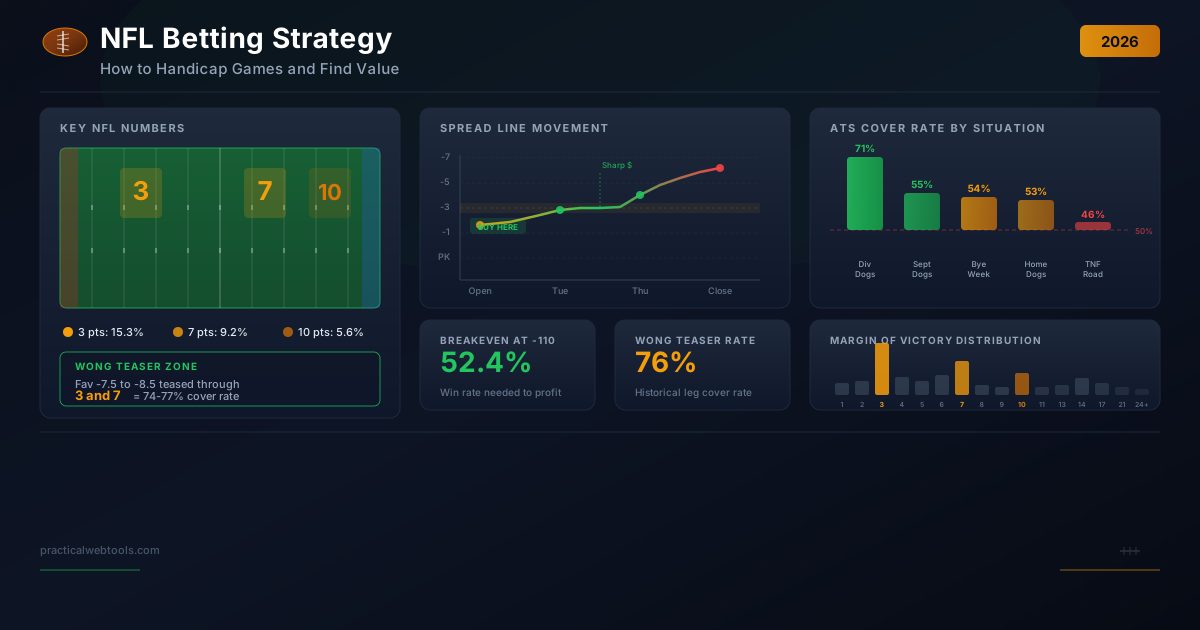
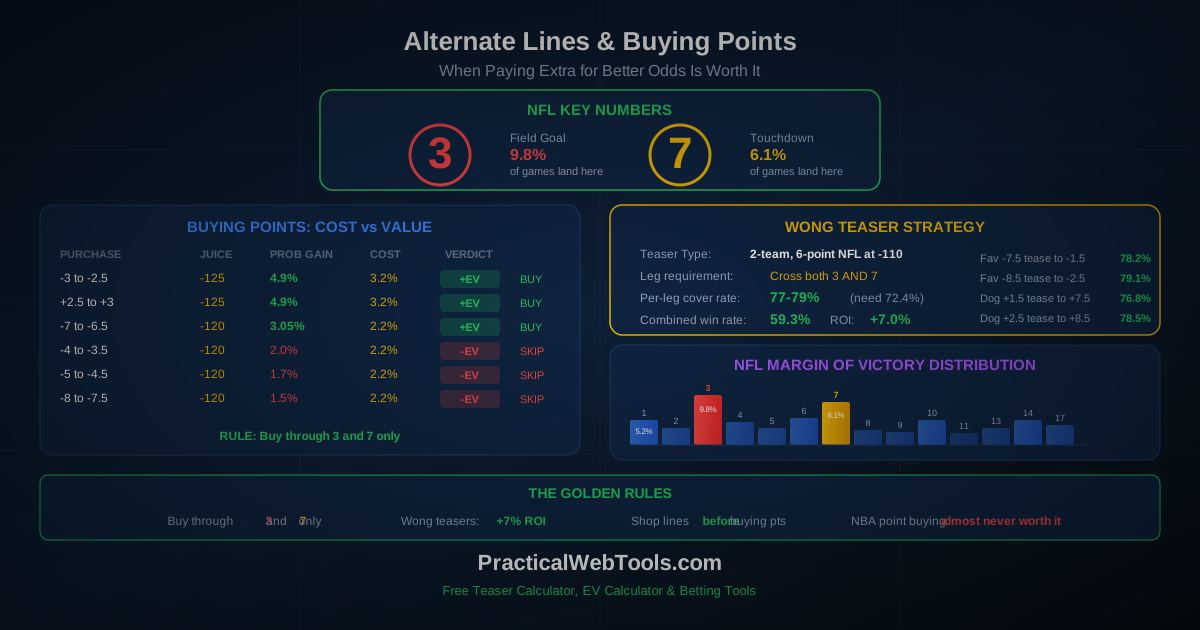
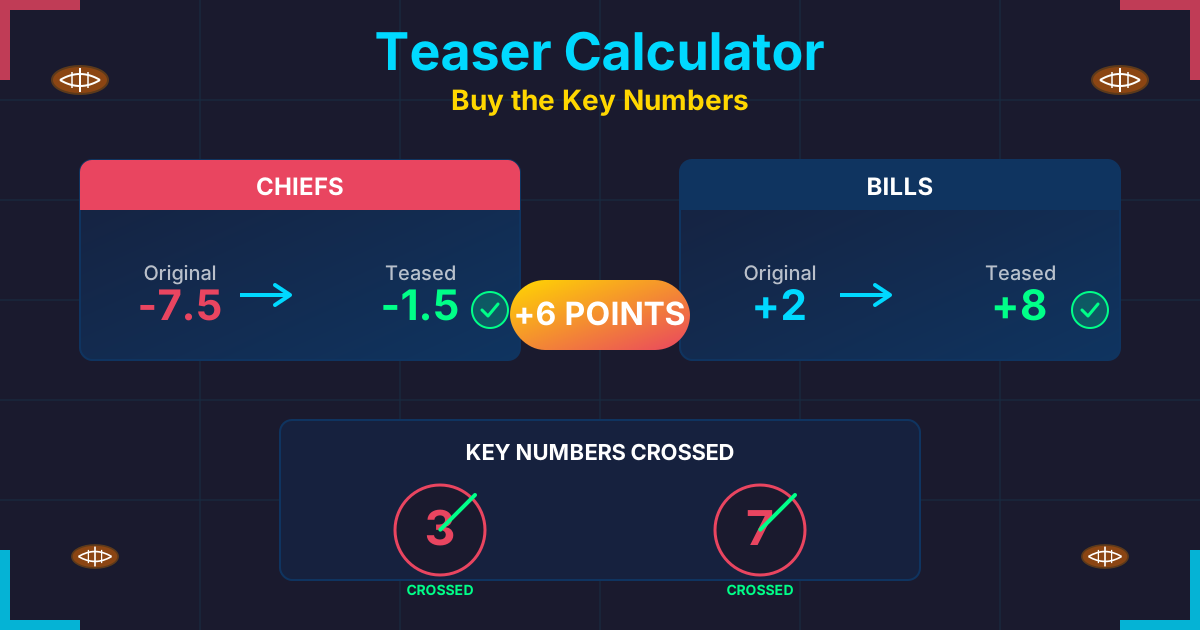
- Key numbers matter: NFL games disproportionately land on margins of 3 and 7 (field goal and touchdown). Sharp bettors exploit this by buying on or off key numbers.
- Variable margins: Unlike baseball (often 1 run) or hockey (often 1 goal), NFL margins range from 1 to 40+.
- Even pricing: Both sides typically priced at -110, giving you a consistent 52.4% break-even rate.
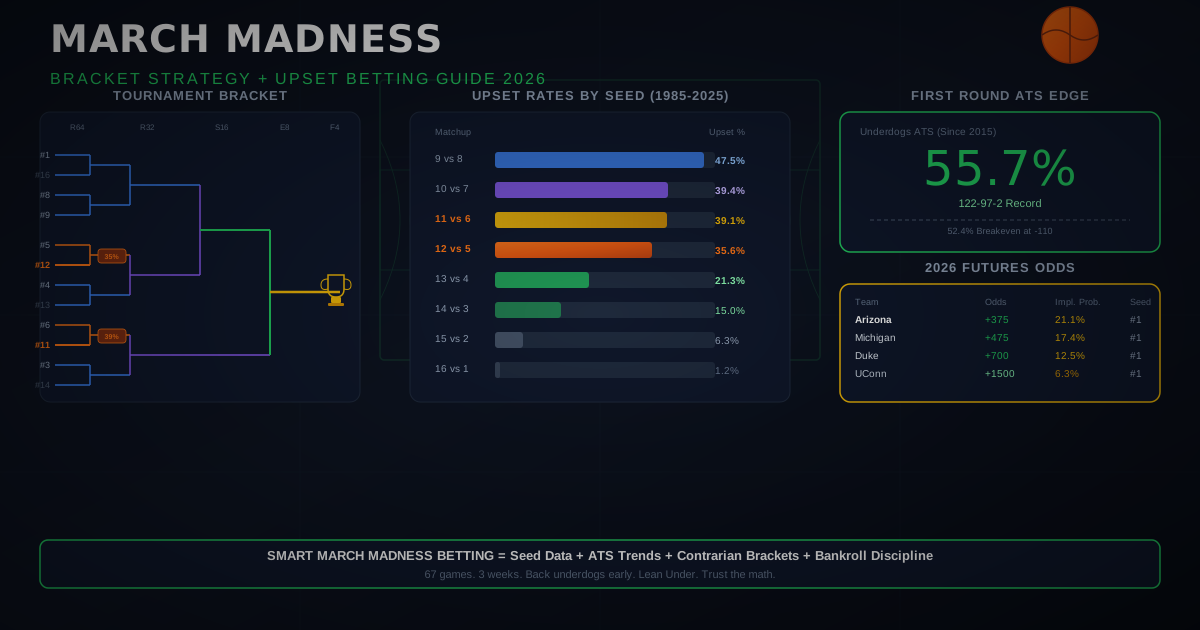
- Public money inflates favorites: The public loves laying points with big-name teams, which pushes spreads higher and creates value on underdogs.
Real-world scenario: The Philadelphia Eagles are -3 (-110) at home against the Dallas Cowboys. The moneyline is Eagles -160, Cowboys +135.
Your analysis says the Eagles win 58% of the time, and they cover -3 about 53% of the time.
- Spread EV: (0.53 x $90.91) - (0.47 x $100) = $48.18 - $47.00 = +$1.18 per $100 risked
- Moneyline EV: (0.58 x $62.50) - (0.42 x $100) = $36.25 - $42.00 = -$5.75 per $100 risked
The spread is the better bet here because the -160 moneyline requires a higher win rate to be profitable than covering -3 at -110.
2. NBA: Variable Spreads for Variable Margins
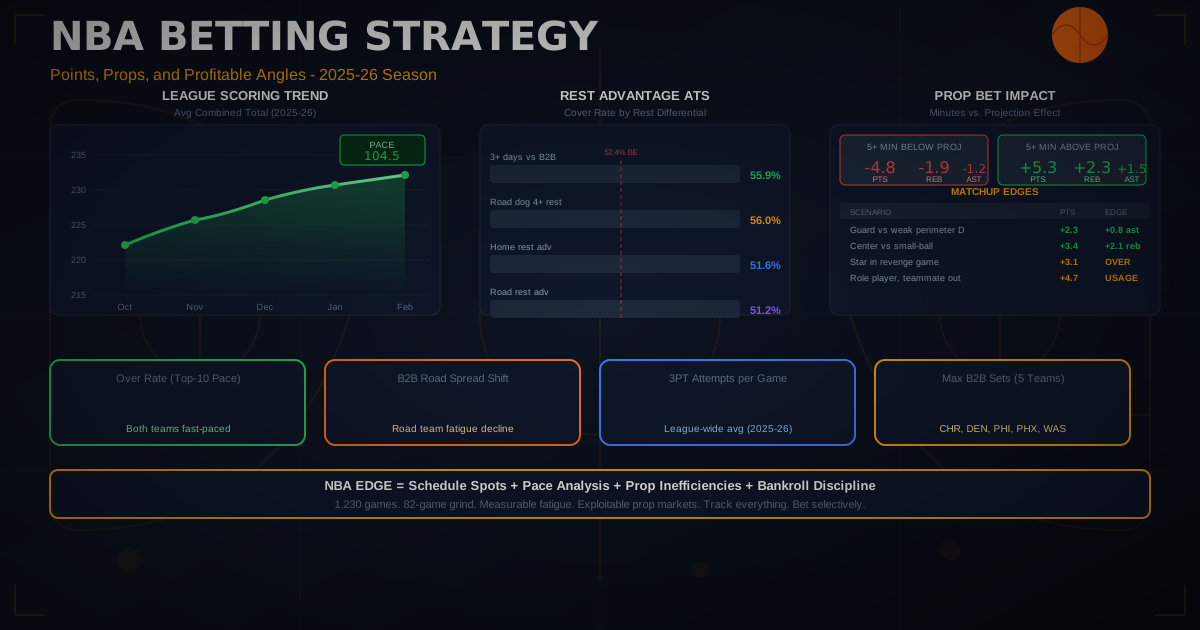
NBA games regularly feature double-digit margins. The average NBA margin of victory is around 9-10 points, and blowouts of 15-25+ points are common. This makes spread betting highly viable.
When to use NBA spreads:
- Mismatched teams: When a top-5 team plays a bottom-5 team, the spread often lands between -8 and -14. If you have a strong opinion on the margin, spreads give you even-money pricing.
- Back-to-back games: Teams on the second night of a back-to-back historically underperform by 2-3 points. The market sometimes underadjusts.
- Home/away splits: Some teams show massive home/away performance differences. If the spread does not fully account for this, you have edge.
3. College Sports: Where Spreads Create the Most Inefficiency
College football and basketball feature the widest talent gaps in all of sports betting. Spreads regularly reach -20, -30, even -40+ in college football. These large spreads create pricing inefficiencies that sharp bettors exploit.
Why college spreads are exploitable:
- Fewer bets, less efficient markets: Sportsbooks invest less modeling on mid-major college basketball than on the NFL
- Public bias toward big programs: Alabama, Ohio State, and Duke attract public money regardless of the spread
- Garbage time scoring: Backup players and running clock can swing margins by 7-14 points in the final quarter
When to Avoid Spreads
- Low-scoring sports: A 1.5-run line in MLB or 1.5-goal puck line in NHL is too rigid. It does not flex with the matchup the way NFL or NBA spreads do.
- Pick'em games (spread at 0): If the spread is 0, you are essentially betting the moneyline at worse odds. Just take the moneyline.
- When the moneyline underdog is more appealing: If you think an underdog wins outright, the moneyline's payout usually beats the spread.
When Totals Offer the Best Value
Totals (over/under) betting is the bet type that most recreational bettors overlook, and that is exactly why it can offer the best value. While public money floods the moneyline and spread markets, totals often get less attention, leading to softer lines that sharps can exploit.
1. When You Have Weather Intelligence
Weather is the totals bettor's best friend, especially in outdoor sports. Rain, wind, snow, and extreme temperatures directly affect scoring--and the market sometimes underreacts.
Weather impact on NFL totals:
| Weather Condition | Expected Scoring Impact | Strategy |
|---|---|---|
| Wind 15-20+ mph | -3 to -7 points total | Lean under |
| Heavy rain | -3 to -5 points total | Lean under |
| Snow | -1 to -3 points total | Slight under lean |
| Extreme cold (<20F) | -2 to -4 points total | Lean under |
| Dome game / warm, calm | Neutral to +1-2 | Context-dependent |
Real-world scenario: The Green Bay Packers host the Chicago Bears in December. The total is set at 42.5. Weather forecast shows 22 mph sustained winds with gusts to 35 mph and temperatures of 15 degrees.
Wind at that level significantly hampers passing games. Both teams will likely lean run-heavy, shortening the game and reducing scoring. The market may only adjust the total by 1-2 points, but the true impact could be 5-7 points.
- Under 42.5 at -110 in these conditions often carries positive expected value because the market underestimates extreme weather.
2. Pace Mismatches and Style Clashes
The pace at which teams play is the single most predictive factor for totals in basketball and football.
NBA pace impact:
- Two fast-paced teams (top 10 in pace): Totals regularly go over. Games can exceed 240 total points.
- Two slow-paced teams (bottom 10 in pace): Games grind, possessions shrink. Under is viable even on low totals.
- Pace mismatch (fast vs. slow): The slower team usually controls tempo. The under has value if the total is set based on averaging both team's typical outputs.
Example: The Indiana Pacers (fastest pace in NBA) host the New York Knicks (bottom 10 in pace). The total is set at 222.5. When fast meets slow, the slower team typically dictates. If the Knicks control tempo and limit possessions, the game tracks closer to their preferred scoring output. The under has value here because the total is set higher than the likely controlled-pace reality.
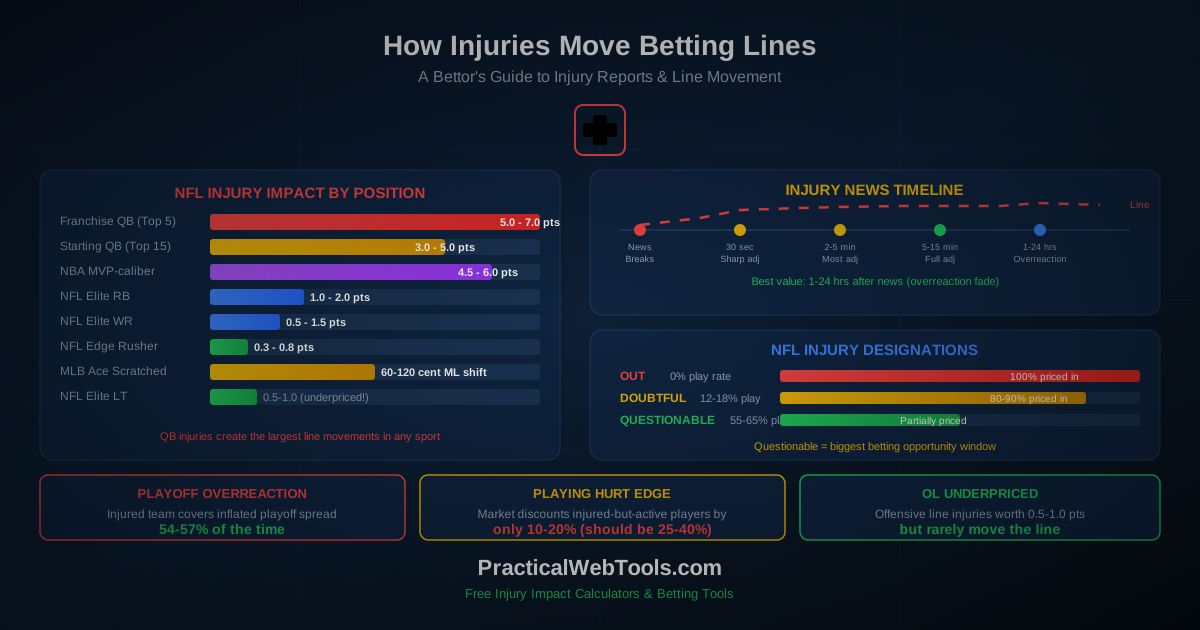
3. Key Injuries That Affect Scoring More Than Outcome
Here is an underappreciated angle: some injuries dramatically shift the total without significantly affecting the spread or moneyline.
Scenario: A team's starting quarterback goes down, and the backup is a conservative game manager. The team might still win (defense and run game carry them), so the spread barely moves. But the offense will score 7-10 fewer points. The total should drop--and if it has not dropped enough, the under has value.
Similarly, losing a lockdown cornerback or shutdown defender can inflate scoring without changing who wins. The total should rise, and if it has not fully adjusted, the over has value.
4. MLB Totals and Pitching Matchups
In baseball, the starting pitcher drives the total more than any other single factor. A game featuring two elite aces will have a total around 7-7.5, while two struggling starters might see a total of 10+.
MLB totals strategy framework:
| Pitching Matchup | Expected Total Range | Strategy Focus |
|---|---|---|
| Ace vs. Ace | 6.5 - 7.5 | Under if bullpens also strong |
| Ace vs. Average | 7.5 - 8.5 | Lean under, check wind/park factors |
| Average vs. Average | 8.5 - 9.5 | Park and weather driven |
| Below average vs. Below average | 9.5 - 11+ | Over if hitter-friendly park |
| Bullpen day vs. Bullpen day | 9 - 11+ | Over, volatile game script |
Park factors matter: Coors Field in Denver inflates totals by 1-2 runs on average. Oracle Park in San Francisco suppresses them. Always factor park into your totals analysis.
Calculate whether any bet has positive expected value with our Expected Value Calculator.
Sport-by-Sport Bet Type Recommendations
Here is the definitive breakdown of which bet type works best in each major sport, based on scoring patterns, market efficiency, and where edges historically emerge.
NFL Bet Type Strategy
| Situation | Recommended Bet Type | Why |
|---|---|---|
| Close game (spread 1-3) | Spread or moneyline underdog | Small spreads mean underdog value on ML |
| Moderate favorite (spread 4-7) | Spread | Key numbers (3, 7) create edge |
| Large favorite (spread 8-14) | Spread | ML juice too high on favorite |
| Massive favorite (spread 14+) | Spread or avoid | Blowout pricing rarely offers value |
| Bad weather game | Totals (under) | Wind and cold suppress scoring |
| Two elite offenses | Totals (over) | High-scoring potential |
| Divisional rivalry | Moneyline underdog | Divisional games historically tighter |
| Playoff game | Spread | Markets sharpen, but value still exists on key numbers |
NBA Bet Type Strategy
| Situation | Recommended Bet Type | Why |
|---|---|---|
| Close matchup (spread 1-4) | Spread or moneyline | Even pricing, good value either way |
| Moderate favorite (spread 5-9) | Spread | ML juice starts climbing |
| Large favorite (spread 10+) | Spread | ML too expensive for favorites |
| Back-to-back fatigue spot | Spread on rested team | 2-3 point historical edge |
| Pace mismatch | Totals | Tempo drives scoring more than talent gap |
| Star player out | Totals | Scoring shifts more than win probability |
| End of regular season | Avoid or small bets | Motivation unclear, resting starters |
MLB Bet Type Strategy
| Situation | Recommended Bet Type | Why |
|---|---|---|
| Any game with strong opinion | Moneyline | Baseball is a moneyline sport |
| Small favorite (-110 to -150) | Moneyline | Good risk/reward ratio |
| Large favorite (-200+) | Run line -1.5 or avoid | ML juice too steep |
| Underdog you believe in | Moneyline | Plus-money underdogs are MLB gold |
| Ace pitching matchup | Totals (under) | Low-scoring games predictable |
| Bullpen day or weak starters | Totals (over) | Scoring variance increases |
| Coors Field game | Totals (over) | Park factor inflates scoring |
| Day game after night game | Moneyline on rested team | Fatigue creates edges |
NHL Bet Type Strategy
| Situation | Recommended Bet Type | Why |
|---|---|---|
| Confidence in winner | Moneyline | Low-scoring, 1-goal margins common |
| Strong favorite (-180+) | Puck line -1.5 | Better payout if team dominates |
| Underdog value | Moneyline | Plus-money in a 1-goal sport |
| Goalie mismatch | Moneyline or totals | Elite goalie suppresses scoring |
| Back-to-back goalie | Totals (over) | Backup goalies allow more goals |
| Playoff series | Moneyline | Tight, low-scoring playoff hockey |
Soccer Bet Type Strategy
| Situation | Recommended Bet Type | Why |
|---|---|---|
| Strong opinion on winner | Moneyline | Soccer is a moneyline sport, low scores |
| Top team vs. bottom team | Moneyline or -1.5 spread | Top teams win but margins vary |
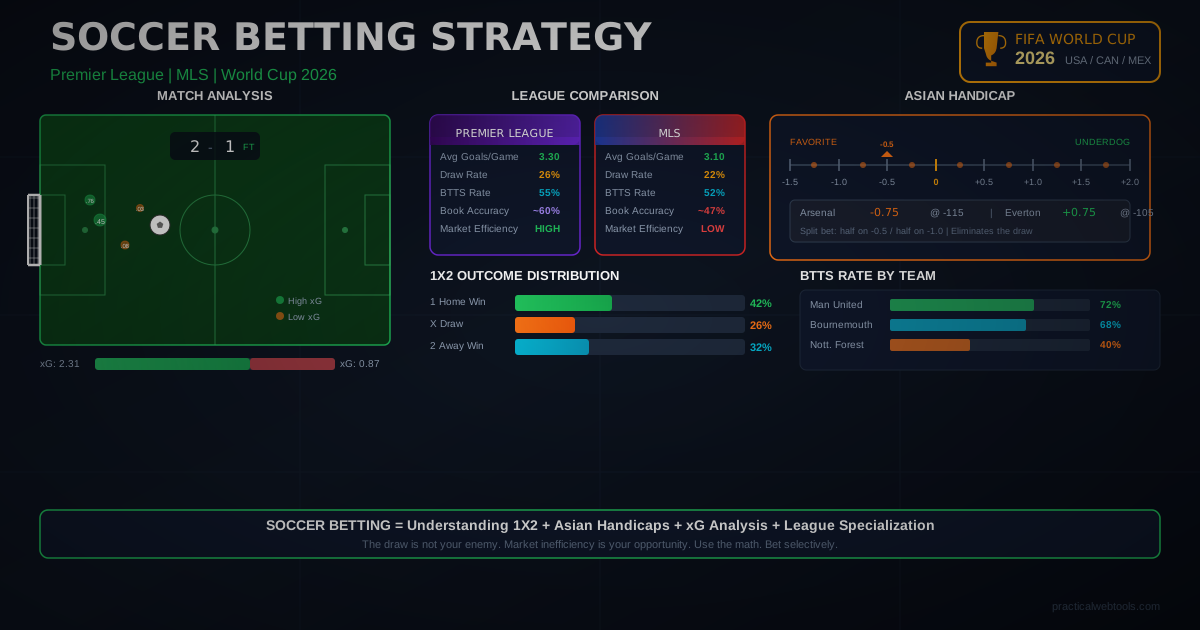
| Even matchup | Draw or double chance | Draws happen ~25% of the time |
| Defensive teams | Totals (under) | Low-scoring by nature |
| High-pressing teams | Totals (over) | Open play creates chances |
| Cup/knockout match | Moneyline + under | Tight, cagey elimination games |
Combining Bet Types Strategically
The most sophisticated bettors do not limit themselves to one bet type per game. They combine bet types to express complex opinions and manage risk.
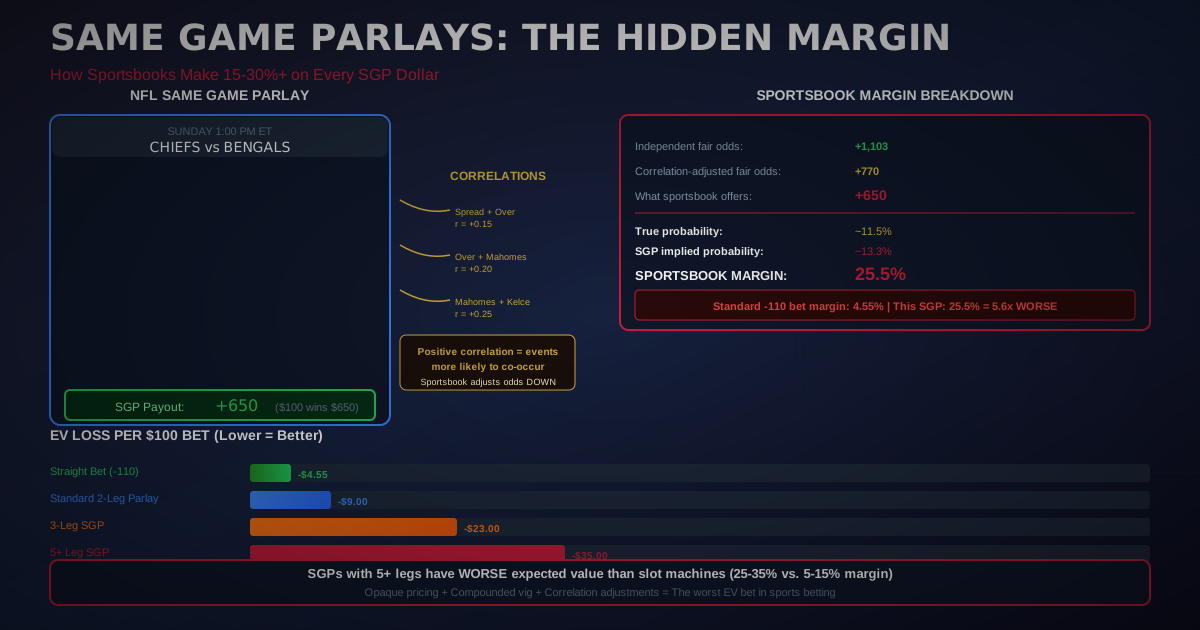
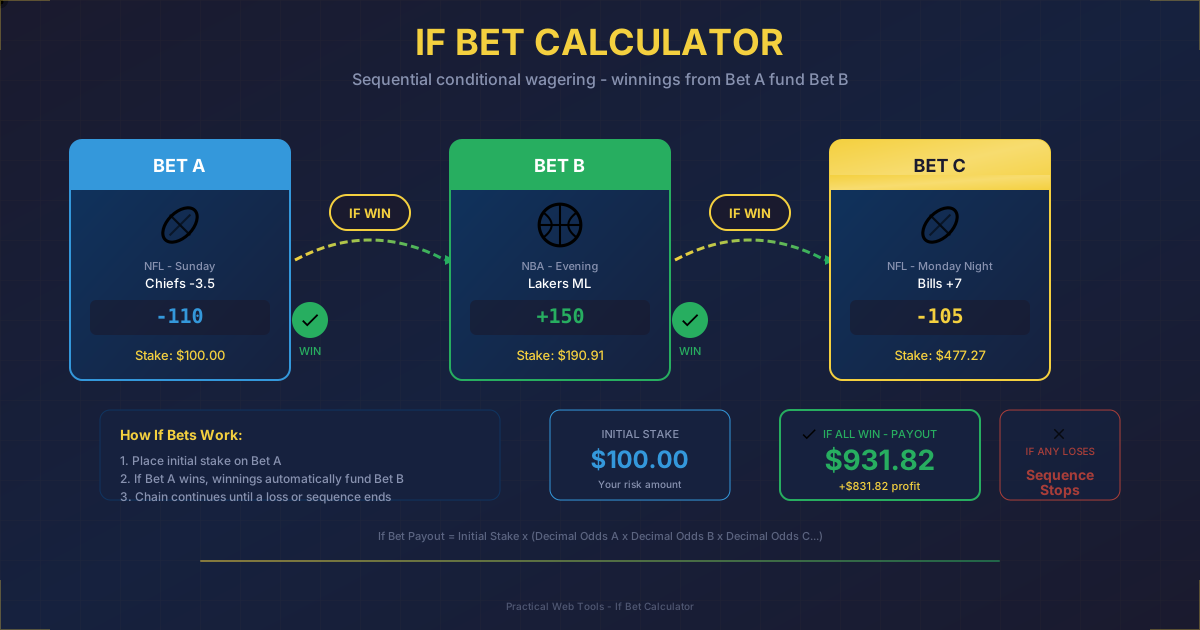
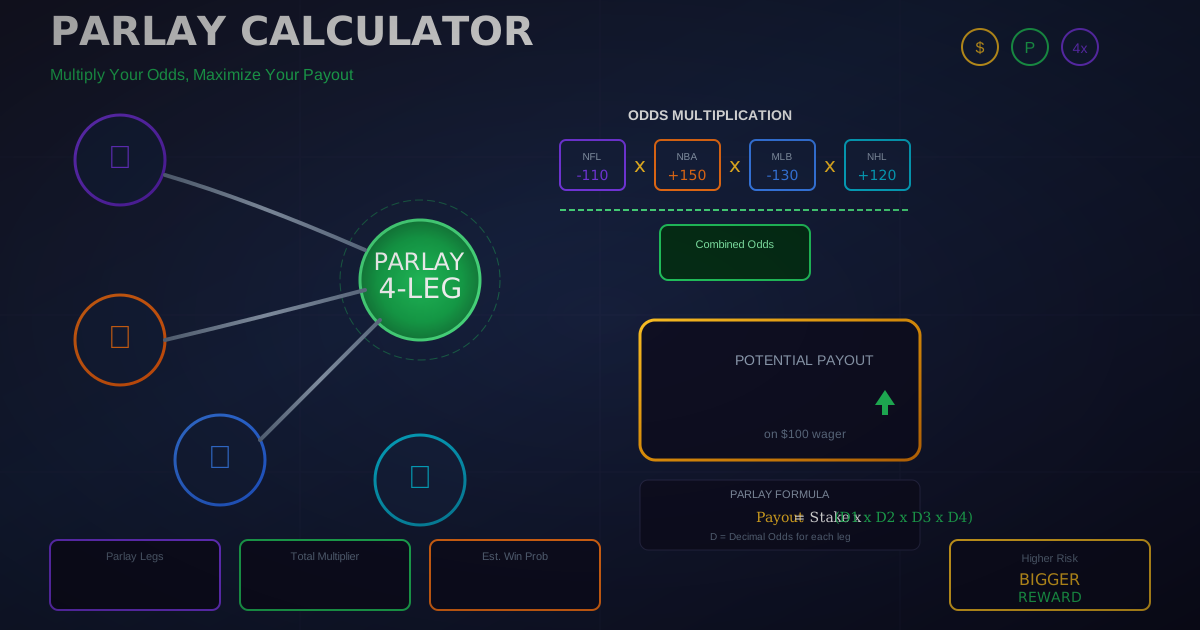
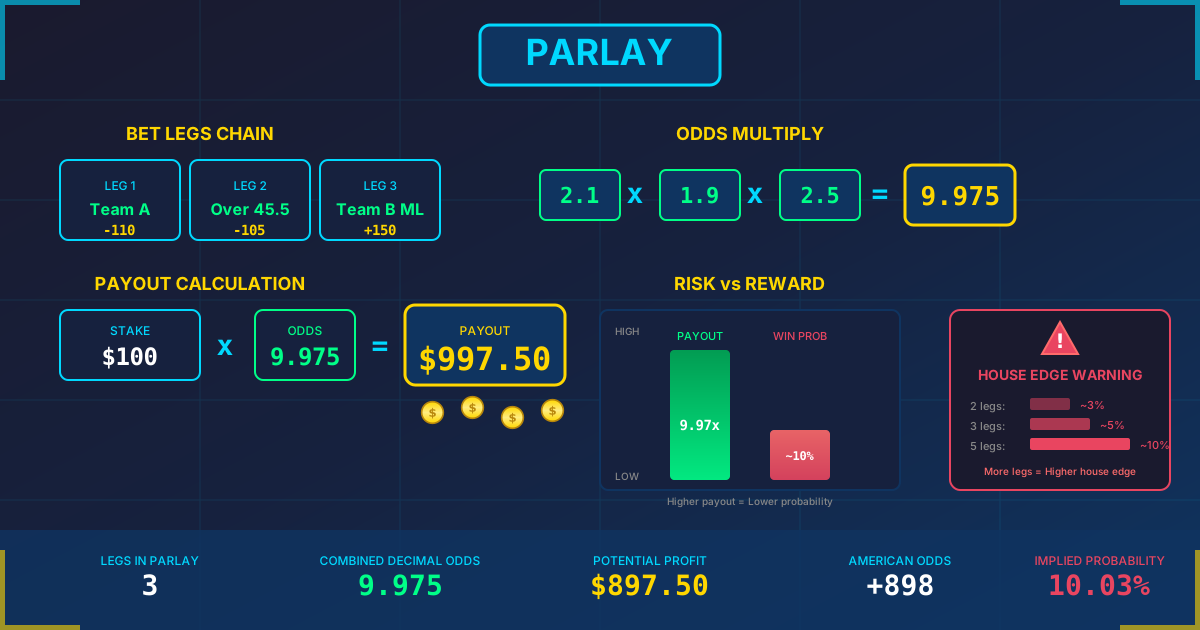
Strategy 1: Moneyline + Totals Parlay
When you have opinions on both the winner and the scoring environment, combining them can offer excellent value.
Example: You believe the Dallas Cowboys beat the New York Giants AND the game stays under 44.5.
- Cowboys ML: -175
- Under 44.5: -110
- Parlay payout: approximately +185
You are expressing two correlated opinions (Cowboys win in a low-scoring game), and the parlay pays nearly 3x your original moneyline bet.
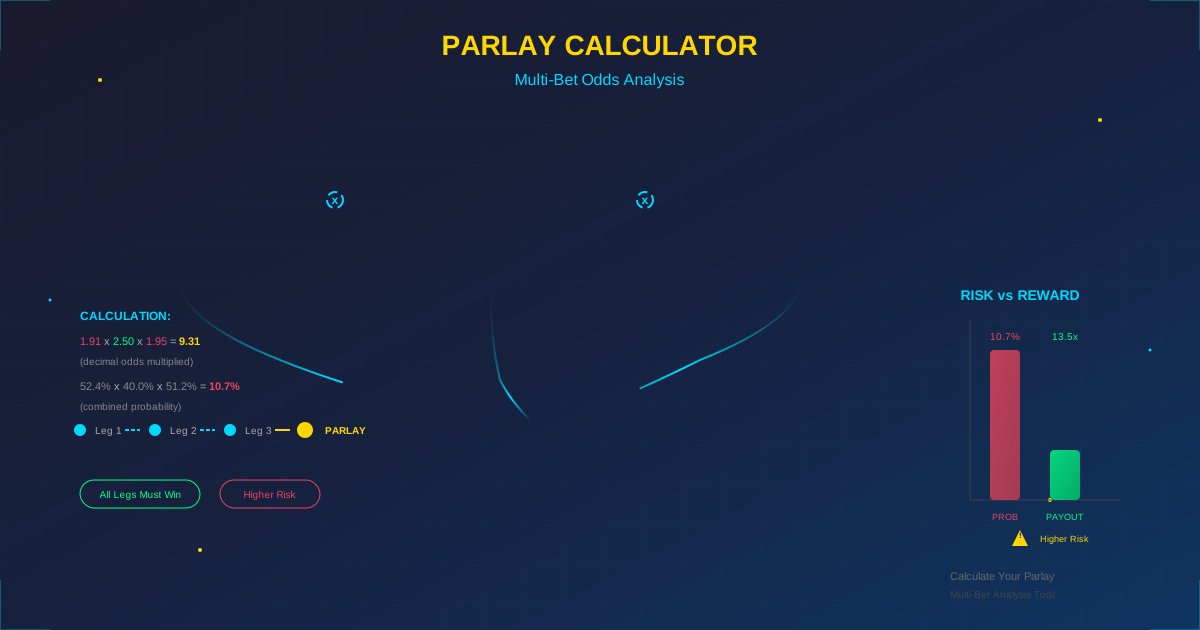
Calculate exact parlay payouts with our Parlay Calculator.
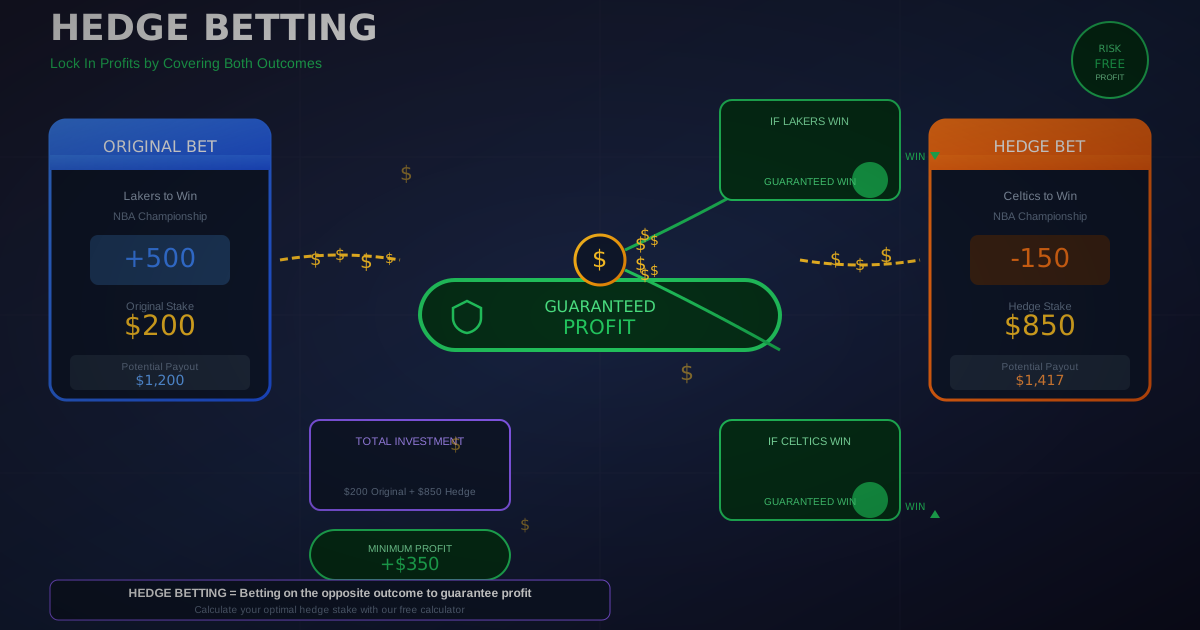
Strategy 2: Hedging Across Bet Types
Sometimes your pre-game bet looks shaky at halftime. Rather than sweating it out, you can hedge using a different bet type.
Example: You bet $200 on the Celtics -6.5 pre-game. At halftime, the Celtics lead by 2 in a defensive struggle. You are nervous about the spread but still think Boston wins. You could:
- Hedge with a live moneyline bet on the opponent
- Bet the live under if scoring is tracking low
- Let it ride if your analysis still holds
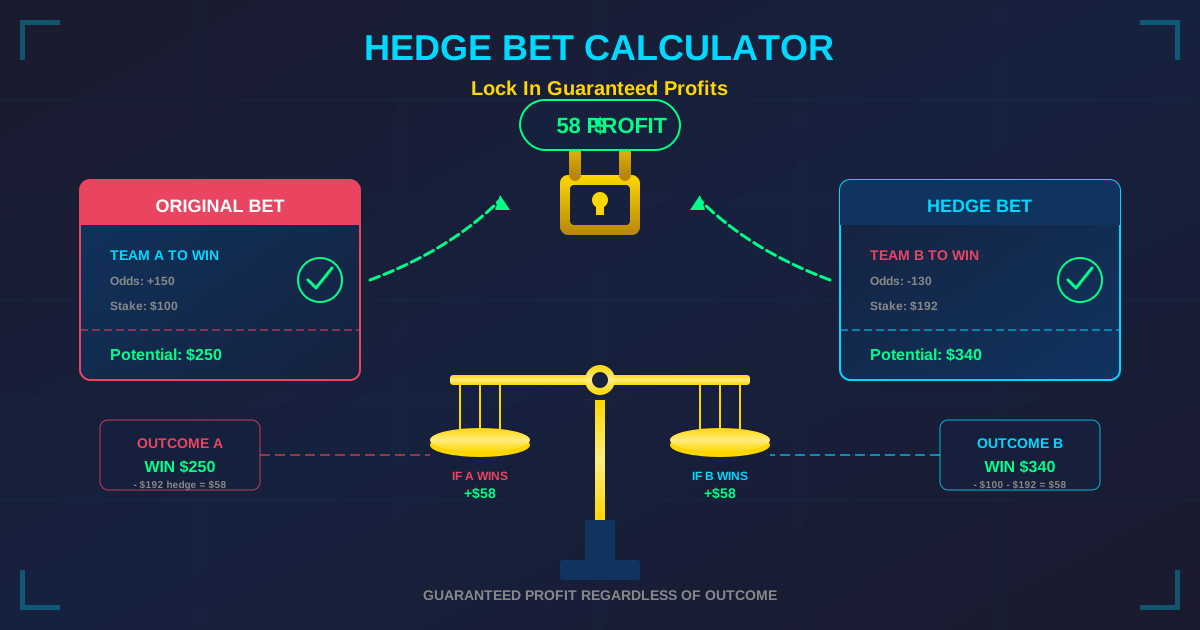
Size your hedges precisely with our Hedge Calculator.
Strategy 3: Opposite-Side Correlation
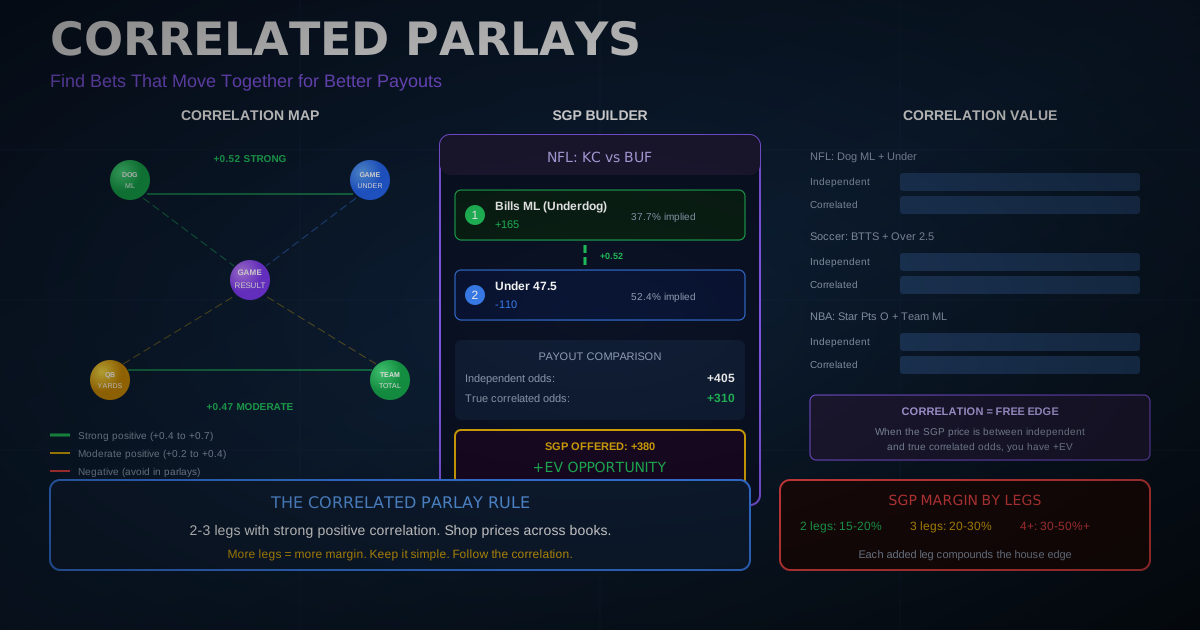
Sharp bettors sometimes bet the underdog moneyline AND the over. The logic: if the underdog is going to win, it is often in a high-scoring game where they keep pace or pull ahead. This correlation boosts your parlay's true probability beyond what the sportsbook prices in.
Similarly, favorite + under can be correlated: the favorite builds a lead and the opponent cannot score enough to push the game over.
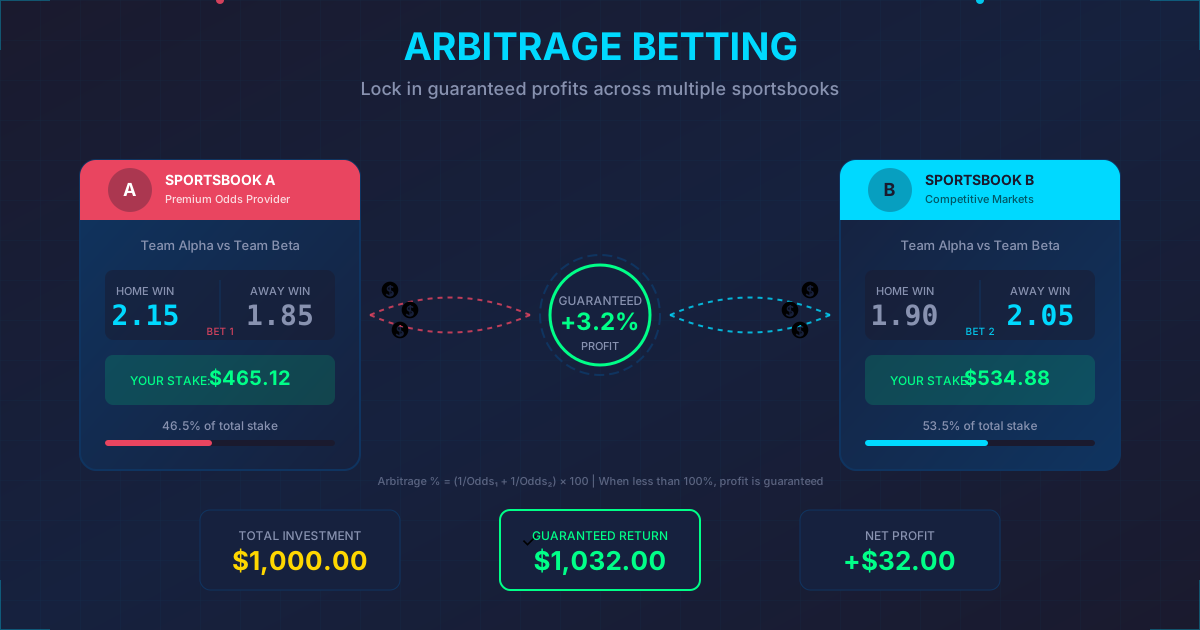
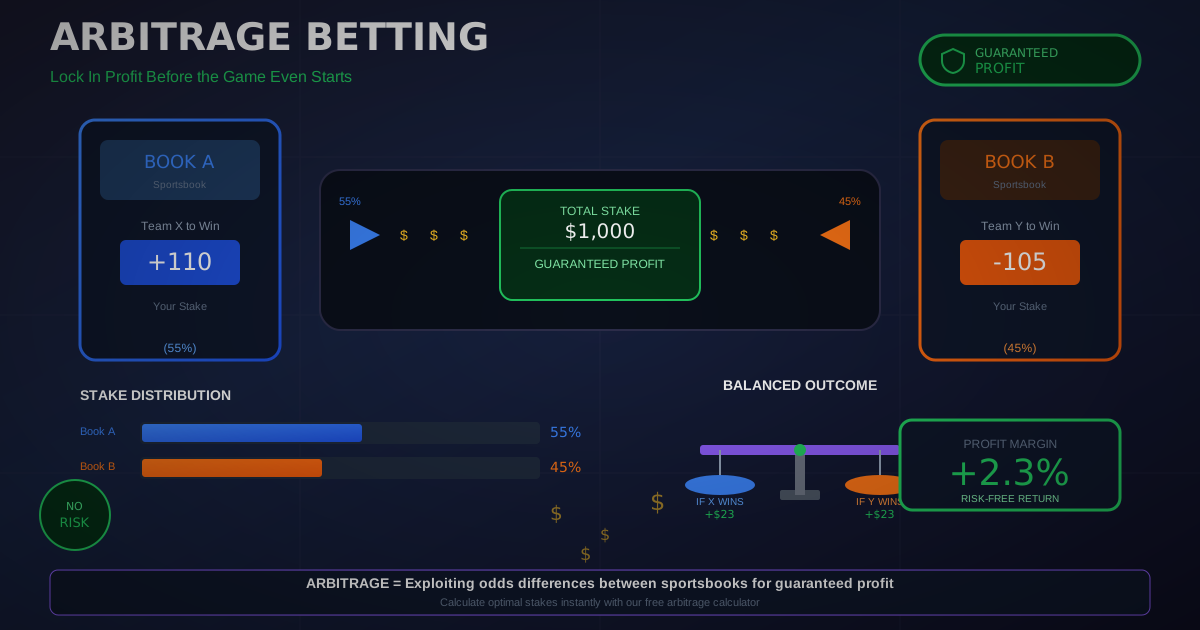
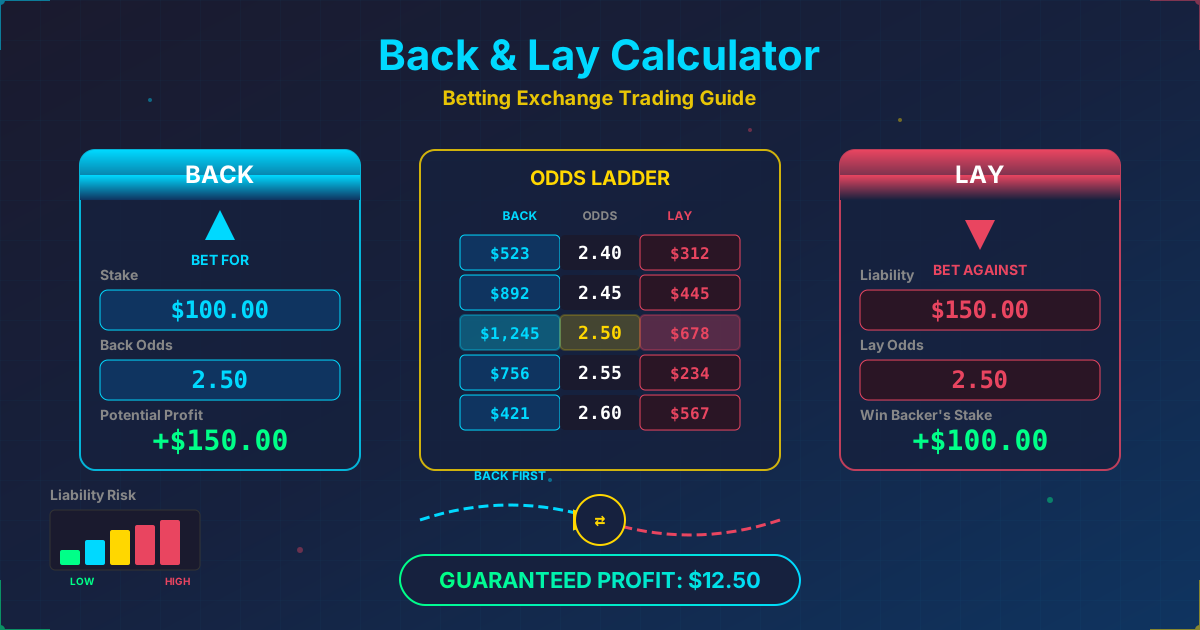
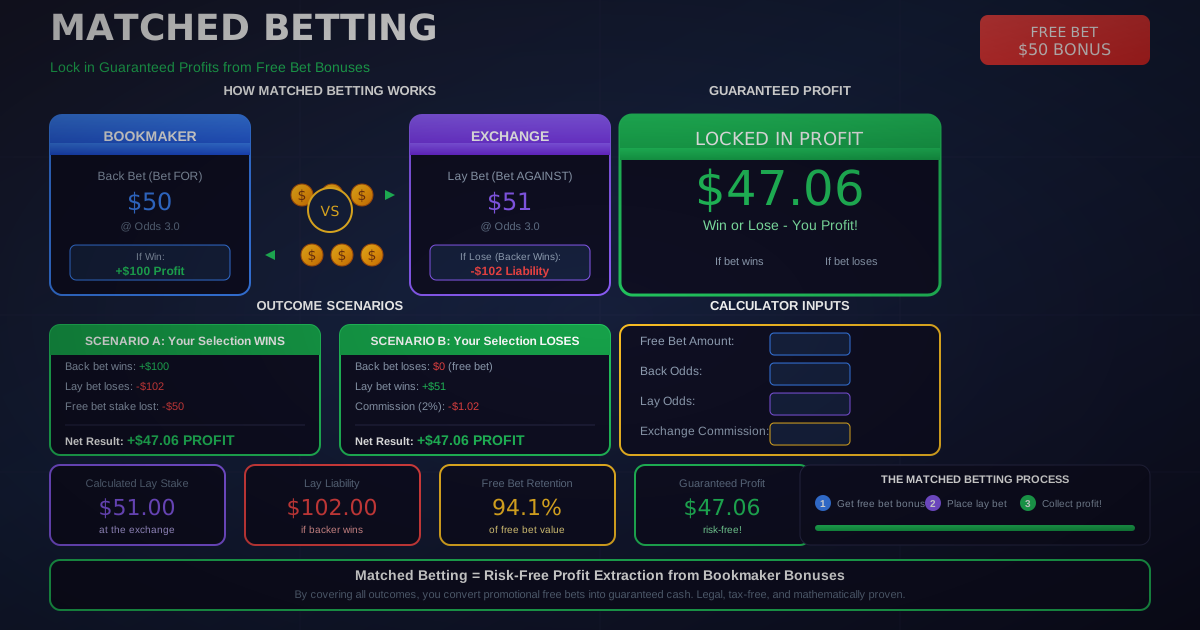
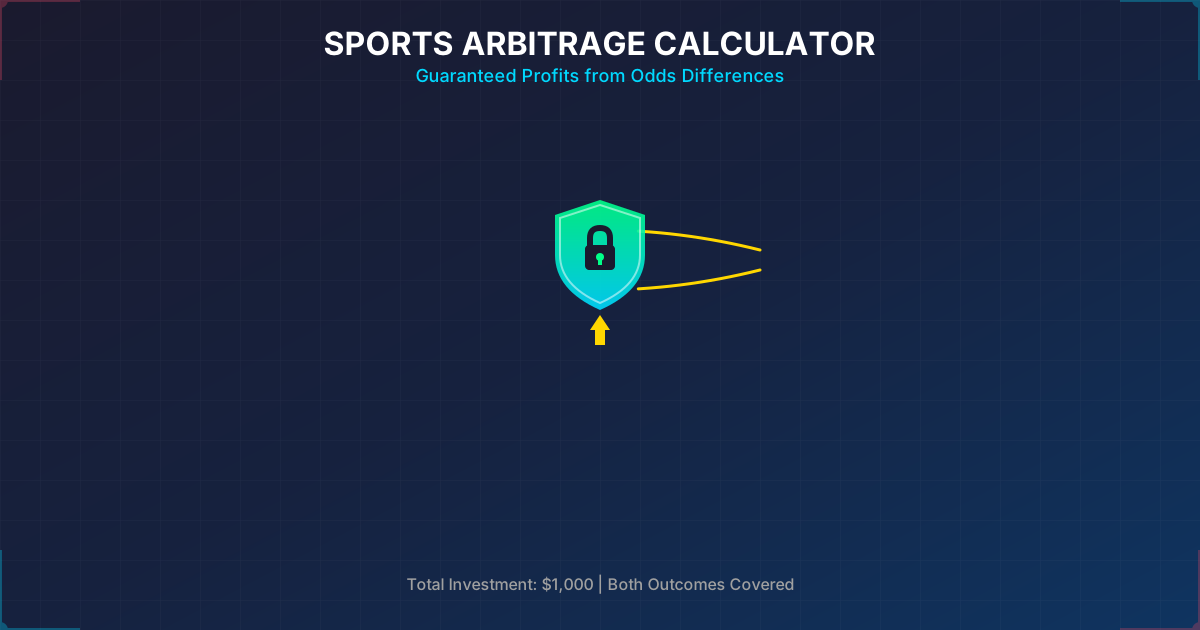
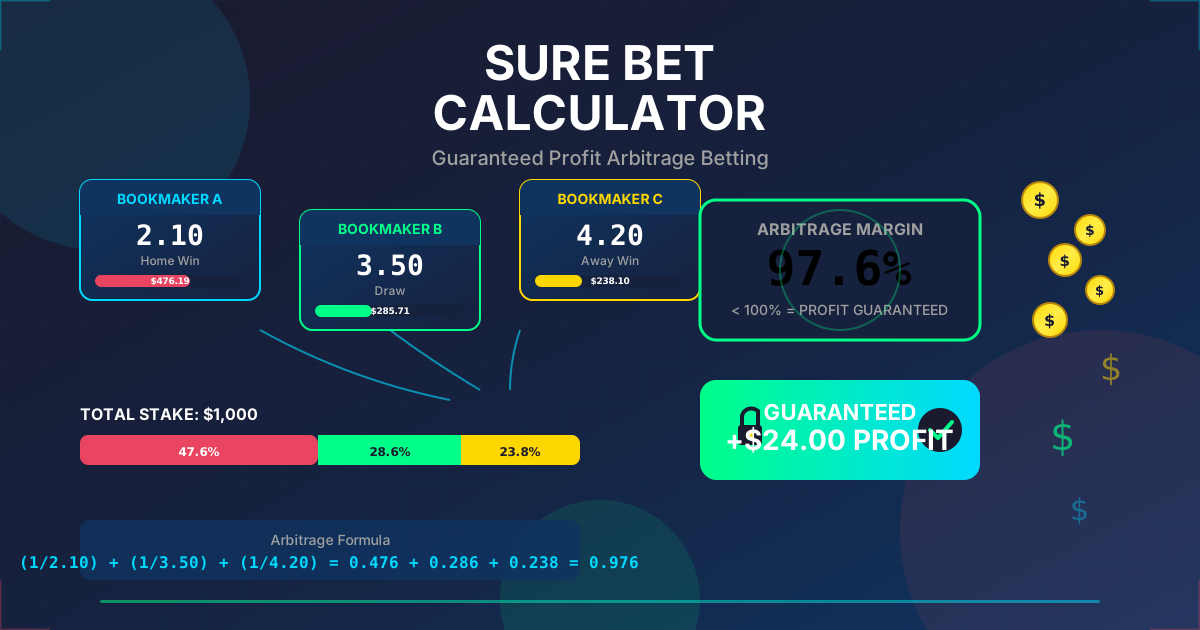
Strategy 4: Arbitrage Across Bet Types
When odds differ across sportsbooks, you can sometimes construct guaranteed profits by combining different bet types at different books.
Example: Book A has Team X moneyline at +145. Book B has Team Y spread -1.5 at -105. If the math works out, betting both guarantees profit regardless of outcome--though the opportunities are rare and fleeting.
Find and calculate arbitrage opportunities with our Arbitrage Calculator.
EV Analysis: When Each Bet Type Has Positive Expected Value
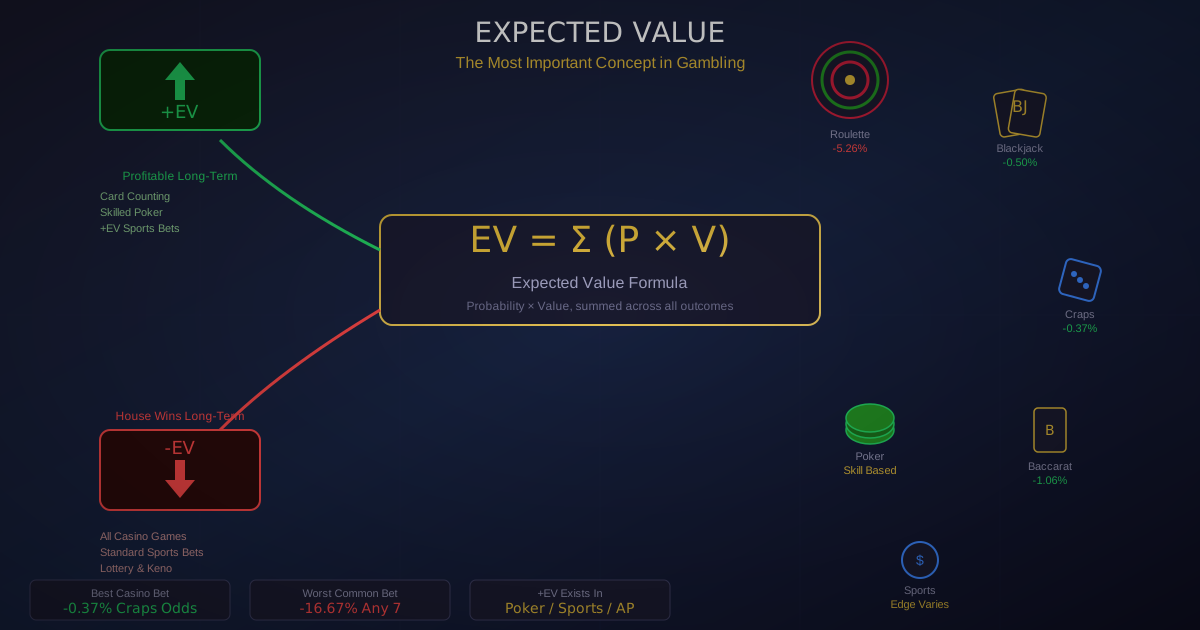
The question is not "which bet type is best?" but "which bet type is +EV in this specific situation?" Here is a framework for evaluating.
Step 1: Estimate True Probability
Before anything else, you need an honest assessment of the true probability. Use power ratings, models, or detailed matchup analysis.
Step 2: Convert Odds to Implied Probability
Use the Implied Probability Calculator to convert the sportsbook's odds into the probability they are pricing in.
Step 3: Compare Your Probability to the Market's
| Your Probability vs. Implied | Action |
|---|---|
| Your estimate > implied by 3%+ | Strong bet, positive EV |
| Your estimate > implied by 1-3% | Marginal bet, small EV |
| Your estimate matches implied | No bet (you have no edge) |
| Your estimate < implied | No bet (negative EV) |
Step 4: Check All Three Bet Types
For any given game, calculate the EV of your moneyline opinion, your spread opinion, and your totals opinion. You might have edge on only one, or on multiple bet types.
A disciplined approach:
| Analysis Output | Best Action |
|---|---|
| Edge on ML only | Bet ML |
| Edge on spread only | Bet spread |
| Edge on totals only | Bet totals |
| Edge on ML + totals | Consider parlay or bet both separately |
| Edge on spread + totals | Bet both separately |
| No edge on any | Pass the game entirely |
Passing on a game is a winning play. Sharps pass on the majority of games because they only bet when they have identified genuine edge.
Step 5: Size the Bet Appropriately
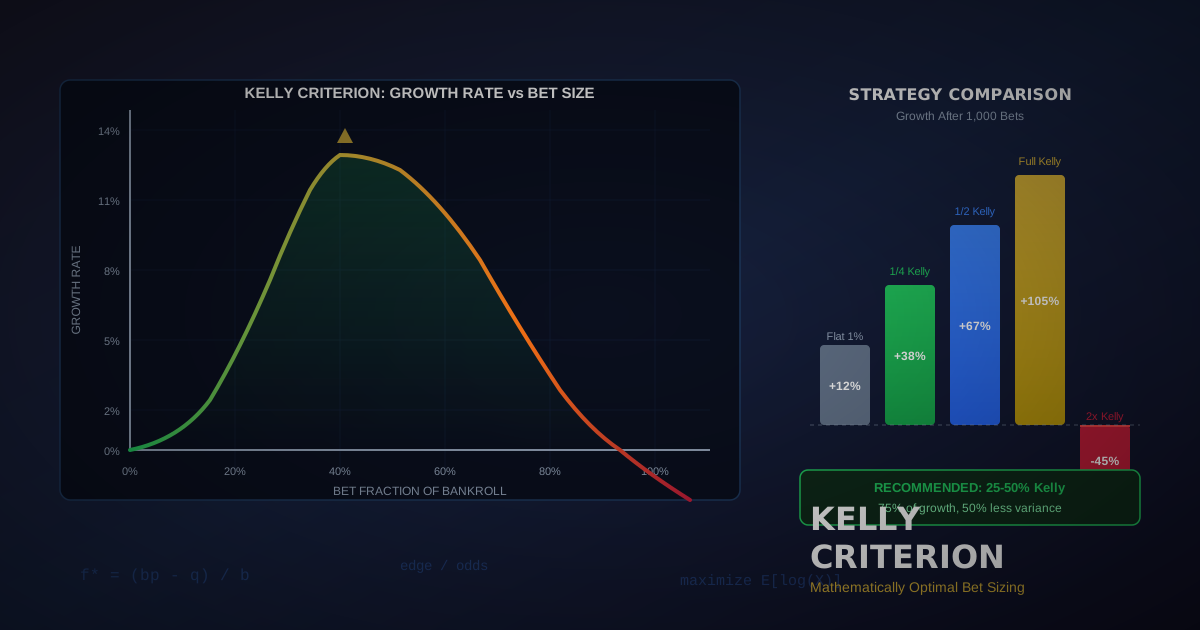
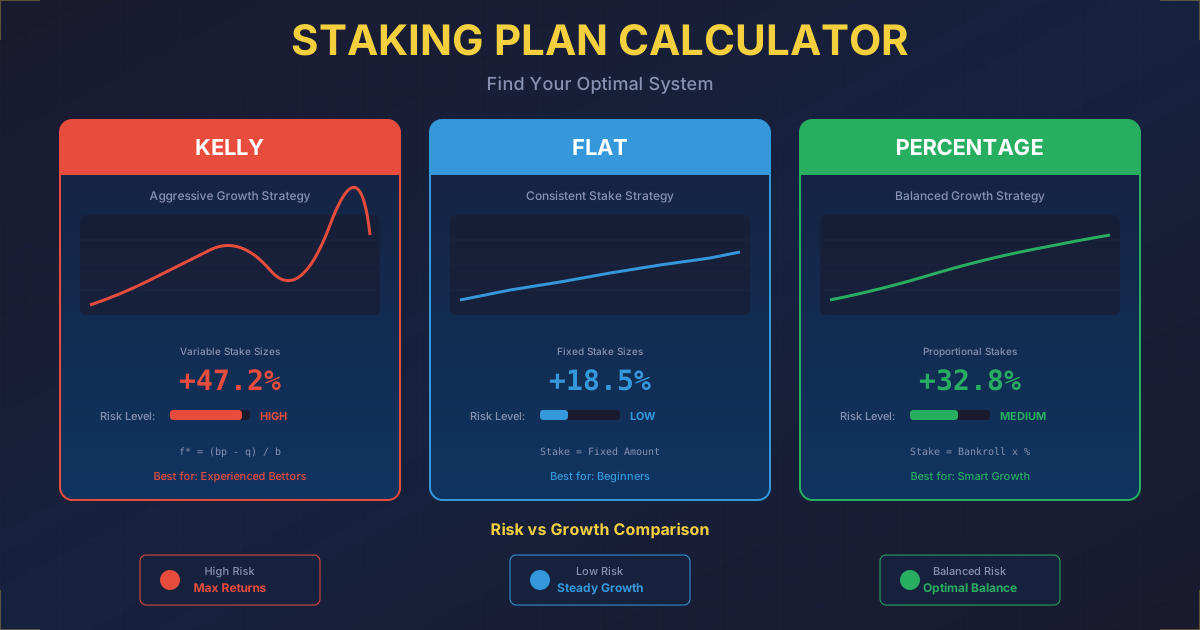
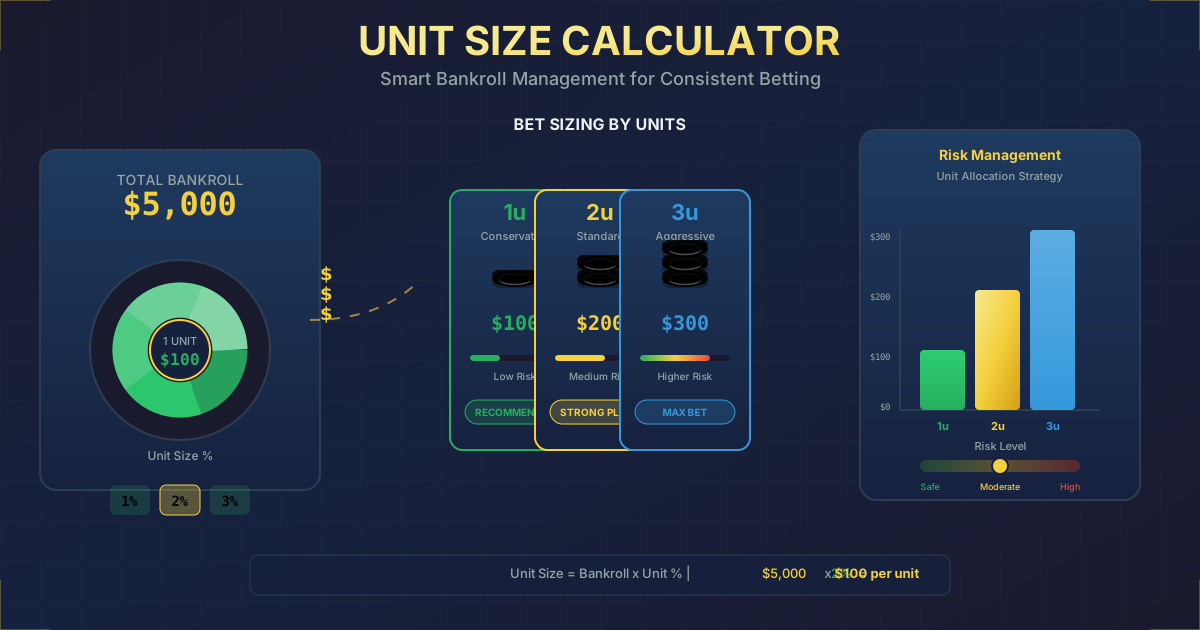
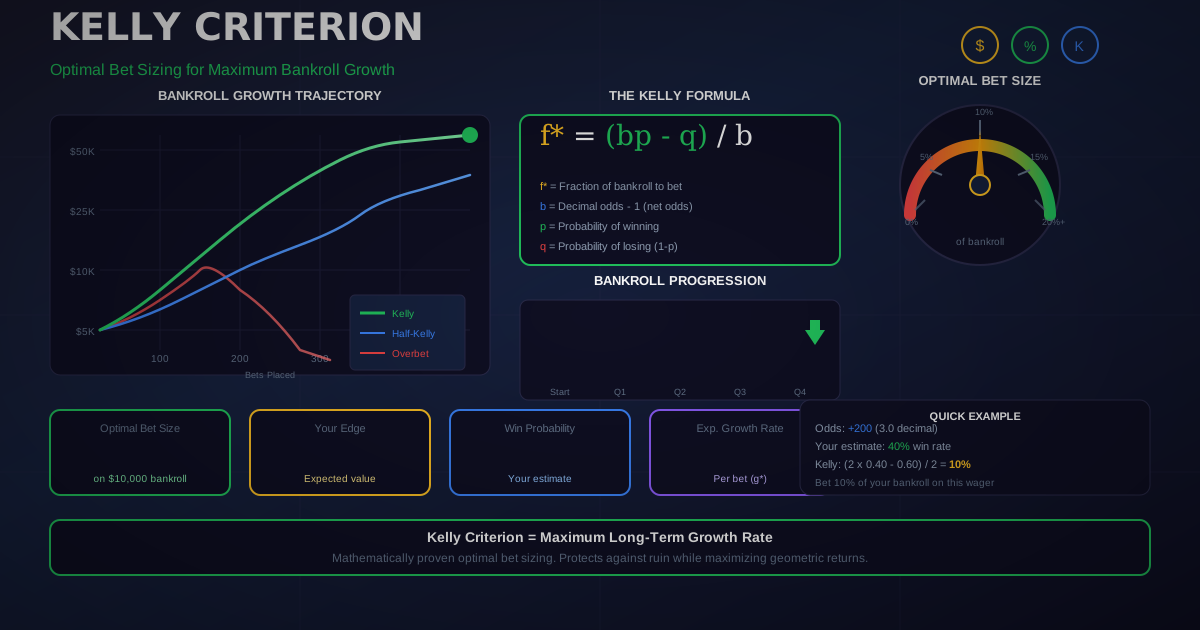
Once you have identified a +EV bet, size it using the Kelly Criterion or a conservative flat-bet approach.
Determine your optimal bet size with our Kelly Criterion Calculator.
Common Mistakes Bettors Make With Bet Type Selection
Mistake 1: Always Betting the Moneyline on Favorites
This is the most common recreational bettor error. Betting -200, -300, or worse on favorites feels safe until you lose one. At -300, you need to win 75% of your bets just to break even. Professional bettors almost never lay more than -200 on a moneyline unless the edge is extraordinary.
Mistake 2: Ignoring Totals Entirely
Many bettors view games only through a "who wins" lens. Totals let you bet on games where you have no opinion on the winner but a strong opinion on the scoring environment. Weather, injuries, pace, and pitching are all quantifiable factors that drive totals.
Mistake 3: Using Run Lines and Puck Lines Blindly
The 1.5-run line in MLB and 1.5-goal puck line in NHL are fixed numbers that do not adjust to the matchup. A -1.5 run line on a team you think wins by exactly 1 run is a terrible bet. Always compare the moneyline and the run/puck line before deciding.
Mistake 4: Not Shopping Lines Across Bet Types
Different sportsbooks offer different odds. Book A might have a better moneyline while Book B has a better spread on the same game. Line shopping across both sportsbooks AND bet types maximizes your edge.
Mistake 5: Parlaying Correlated Bets Without Understanding the Math
Combining a team's moneyline with that same game's over sounds smart, but the correlation varies by sport and situation. True parlay payouts should reflect this correlation--most sportsbooks do not give you full credit. Understand the math before you parlay.
Frequently Asked Questions
Should I bet the moneyline or the spread? It depends entirely on the sport and situation. In low-scoring sports like baseball, hockey, and soccer, moneylines are usually superior because games are decided by thin margins and fixed spreads (1.5 runs/goals) are too rigid. In high-scoring sports like football and basketball, spreads offer consistent -110 pricing and better value, especially on moderate to large favorites where moneyline juice becomes prohibitive. Always compare the expected value of both bet types before wagering. Use our Expected Value Calculator to run the numbers.
What is the most profitable bet type in sports betting? No single bet type is inherently more profitable than others. Profitability depends on finding positive expected value (+EV), which can exist in moneylines, spreads, or totals. Professional bettors who sustain 55%+ win rates on -110 lines achieve 2-5% long-term ROI regardless of bet type. The key is matching the right bet type to the right situation, not defaulting to one type on every game.
When should I bet totals instead of sides? Bet totals when you have a strong opinion on the scoring environment but not on the winner. The best totals opportunities come from weather factors (wind and rain suppress NFL scoring), pace mismatches (fast team vs. slow team in NBA), key injuries that affect scoring more than win probability (starting QB out, backup is a game manager), and pitching matchups in MLB (two aces suggest under, two weak starters suggest over).
What percentage of bets do professional sports bettors win? Professional sports bettors rarely sustain a win rate above 55-56% on spread and totals bets priced at -110. The break-even point at -110 is 52.4%, so even a 54% win rate represents a meaningful, profitable edge. On moneylines, win rate varies dramatically based on odds--an underdog specialist might win only 35% of bets but still be profitable because plus-money payouts more than compensate for the lower hit rate.
Is it better to bet underdogs on the moneyline or the spread? If you believe an underdog will win the game outright, the moneyline almost always offers better value than the spread. The moneyline pays more when you are right, and your opinion (that they win) directly matches the bet. If you think the underdog keeps it close but ultimately loses, the spread is the better vehicle. The key distinction is your opinion on the outright outcome versus the margin.
How do I know if a spread or moneyline offers better value? Convert both the moneyline and spread odds to implied probabilities using our Implied Probability Calculator, then compare those to your own estimated probabilities. The bet type where your estimated probability exceeds the implied probability by the widest margin is the one with the best expected value. Also check the hold/vig on each market--lower vig means more value passes through to you. Use our Hold/Vig Calculator to compare.
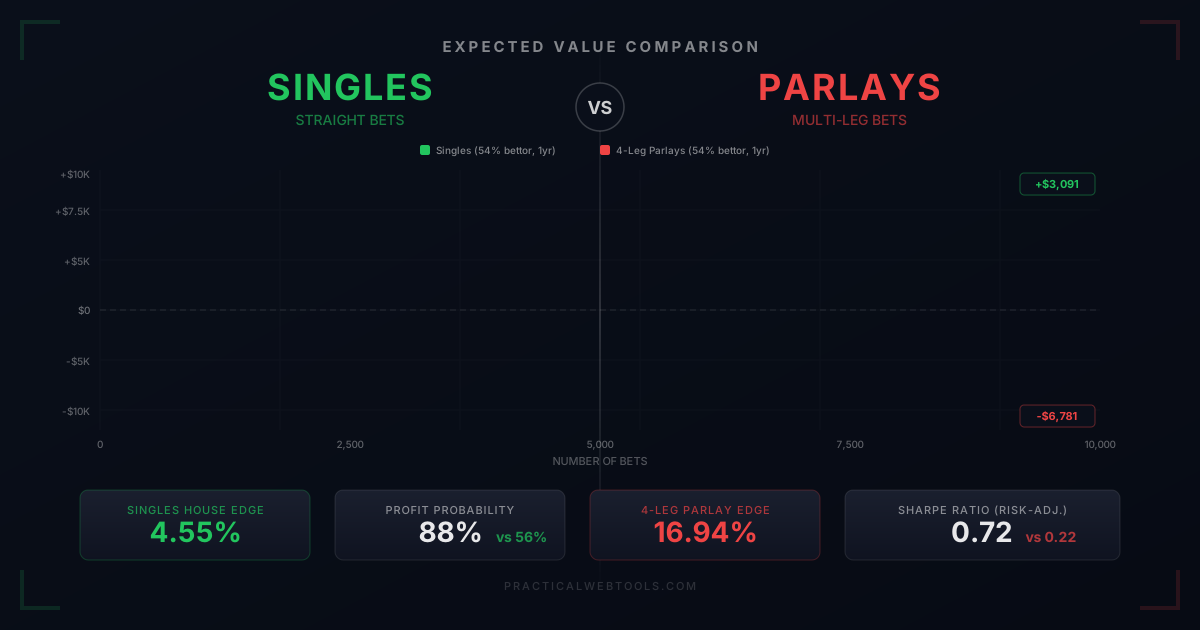
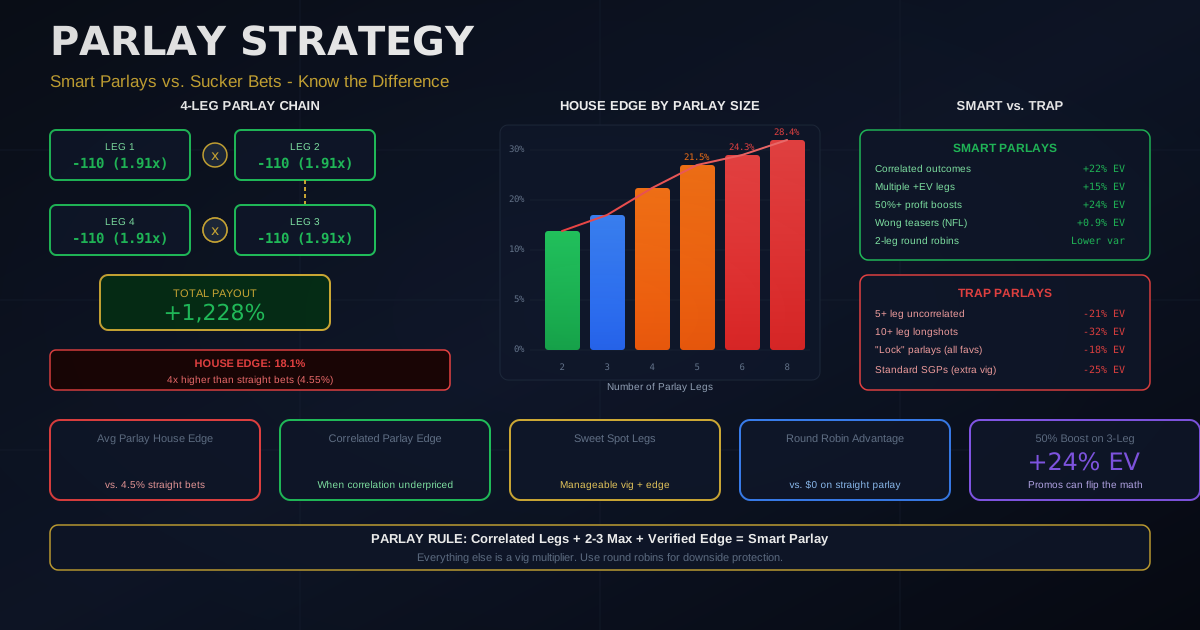
Can I make money betting parlays with different bet types? Parlays are mathematically disadvantaged because the sportsbook compounds the vig. However, correlated parlays (where one outcome increases the likelihood of the other) can offer value. For example, betting a favorite moneyline with the game under is correlated--if the favorite controls the game, both scoring and the win outcome track together. Use our Parlay Calculator to calculate exact payouts, but remember that long-term profitability still requires +EV on each individual leg.
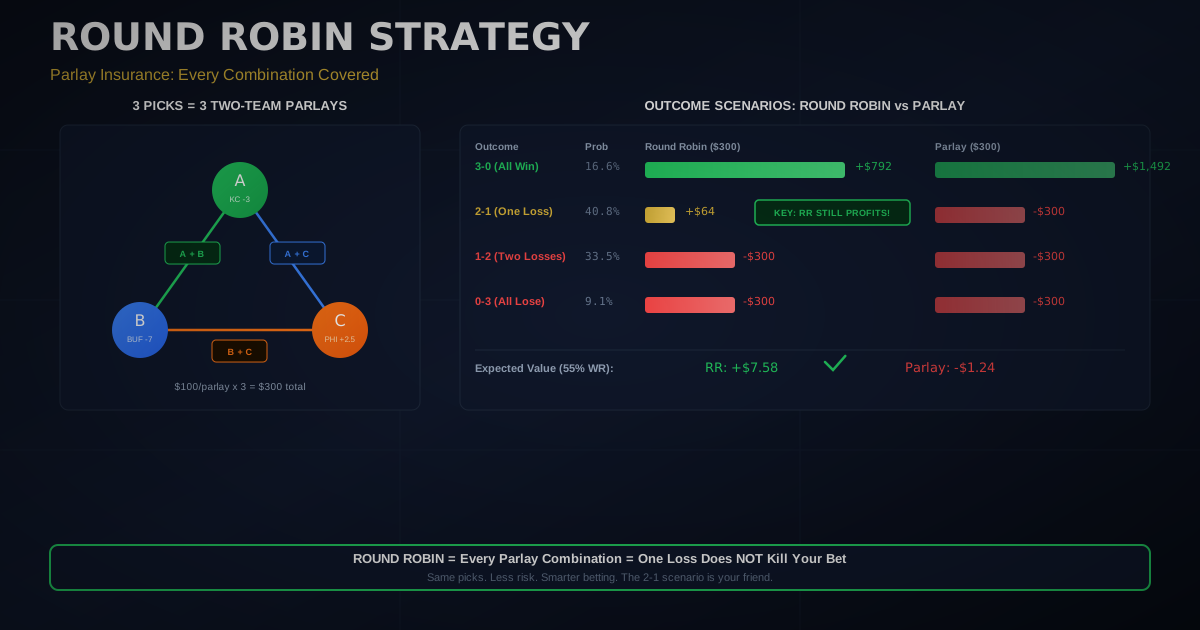
What is the biggest mistake bettors make with bet type selection? The biggest mistake is defaulting to the same bet type regardless of the situation. Recreational bettors who always bet moneyline favorites or always bet spreads leave significant value on the table. Every game should be evaluated across all three bet types, and you should only bet the type that offers the highest expected value for your specific opinion on that matchup.
Your Sports Betting Bet Type Toolkit
These free tools will help you analyze and compare bet types for every game:
Odds and Probability Tools
- Odds Converter: Convert between American, decimal, and fractional odds instantly
- Implied Probability Calculator: See the true probability behind any odds line
- Hold/Vig Calculator: Calculate how much edge the sportsbook is taking
Expected Value and Sizing Tools
- Expected Value Calculator: Calculate EV for any bet to determine if it is +EV
- Kelly Criterion Calculator: Optimal bet sizing based on your edge
- Parlay Calculator: Calculate parlay odds and payouts across multiple legs
Risk Management Tools
- Hedge Calculator: Calculate exact hedge amounts to lock in profit or limit loss
- Arbitrage Calculator: Find and size guaranteed-profit arbitrage opportunities
Conclusion: The Right Bet Type for the Right Situation
There is no universally "best" bet type. There is only the best bet type for a specific game, sport, and situation. The bettors who make money long-term are the ones who:
- Evaluate all three bet types for every game they consider
- Match the bet type to the sport: Moneylines for baseball and hockey, spreads for football and basketball, totals when weather or pace create edge
- Calculate expected value before placing any wager
- Pass on games where no bet type offers positive expected value
- Size bets properly using Kelly Criterion or conservative flat betting
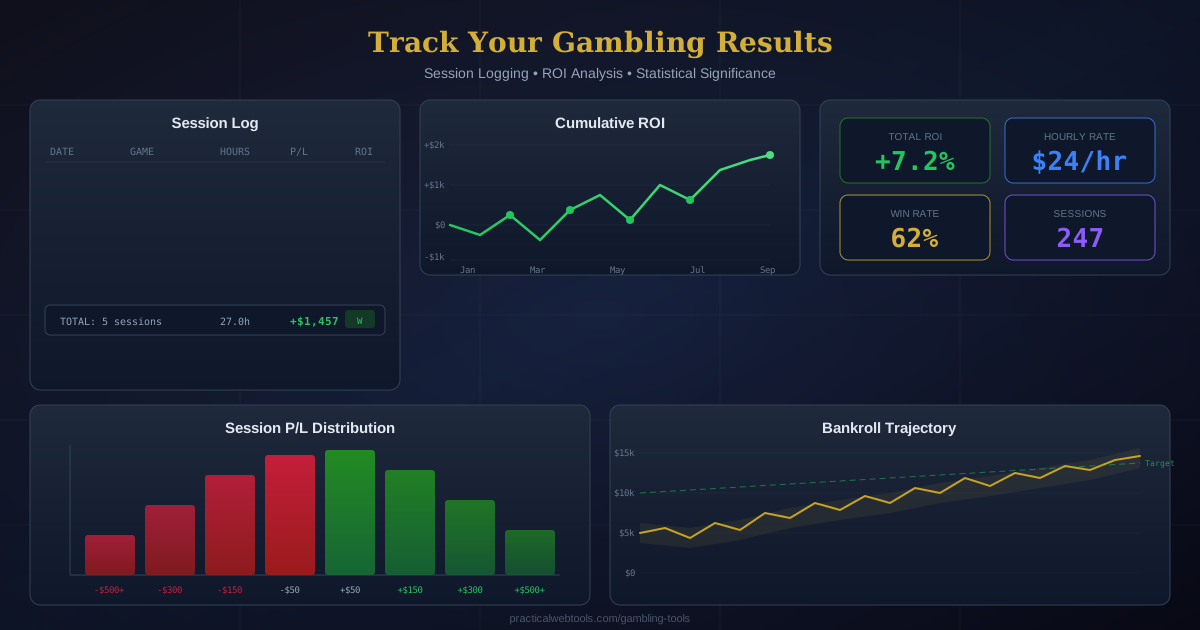
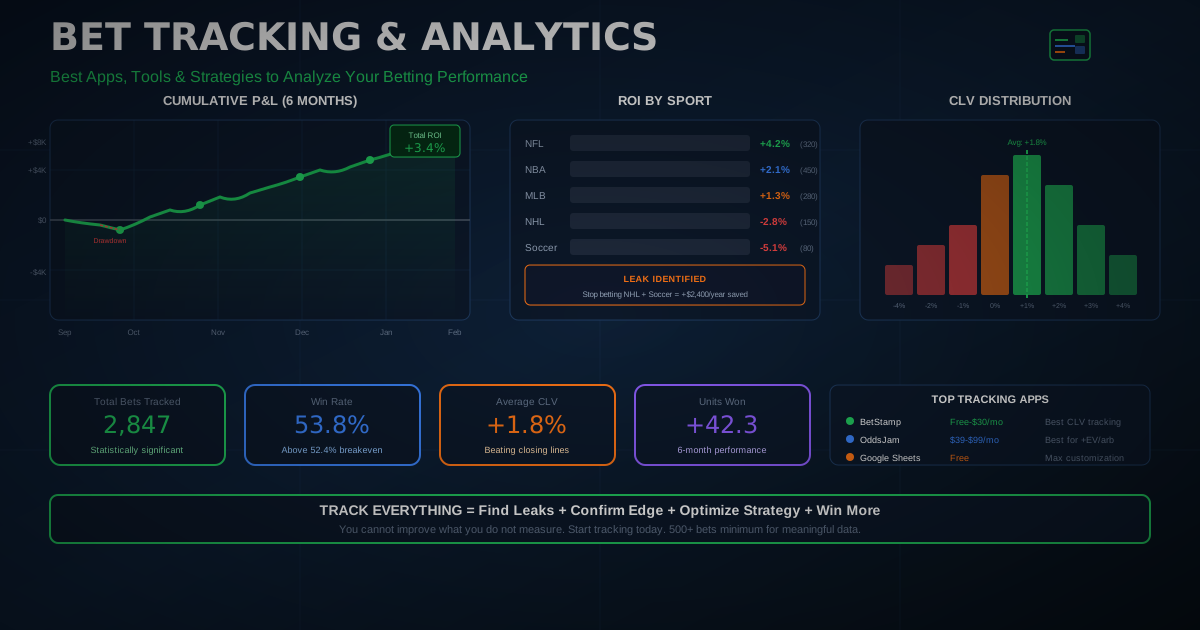
- Track results across bet types to identify where their edge is strongest
The sportsbook does not care which bet type you choose--they have built their edge into all of them. Your job is to find the situations where that edge is thinnest and your analysis is strongest.
Start analyzing your bets with our free Odds Converter, check implied probabilities with our Implied Probability Calculator, and calculate expected value with our Expected Value Calculator.
Pick the right tool for the job, every single time.
Gambling involves risk. This content is for educational and informational purposes only. Always gamble responsibly, set limits you can afford, and seek help if gambling becomes a problem. Visit the National Council on Problem Gambling or call 1-800-522-4700 for support.