The $800 Million on the Sign Is a Payment Plan, Not a Pile of Money
This week is the lottery's entire business model in miniature. Mega Millions rolled past Friday's $433 million drawing to an estimated $800 million jackpot for Tuesday, October 27. Powerball followed with an estimated $687 million after Saturday's drawing came and went without a jackpot winner.
Both national games sitting above $680 million at the same time is rare — and it puts five drawing nights inside one week: Powerball Monday, Wednesday, and Saturday; Mega Millions Tuesday and Friday.
Try Present Value of Annuity Calculator — free, no sign-up, and it runs entirely in your browser.
The headlines all repeat the same two numbers. Almost nobody runs the math that matters to the person actually holding the ticket: advertised annuity versus real cash option, the 37% federal bite, the state tax spread from zero to north of 10%, and the interest rate that decides whether the lump sum or the 30 annual payments actually comes out ahead.
That's this post. No drawing-night hype — just the arithmetic, the kind you'd want before the numbers are drawn.
How $294.7 Million Becomes a "$687 Million Jackpot"
The number on the marquee is not money in a vault. It's the total of 30 annual payments the lottery would send you over 29 years.
Powerball's own site lists both figures side by side: an estimated $687 million annuity, and a cash value of $294.7 million. The cash number is the real prize pool — about 43 cents on every advertised dollar.
So where does the other $392 million come from? Nowhere, yet. If you elect the annuity, the lottery invests that $294.7 million in government securities and pays you graduated installments that step up roughly 5% a year. On this jackpot, the first check lands around $10 million and the final one clears $40 million. Add all thirty checks together and you arrive at $687 million — delivered across three decades.
The "jackpot," in other words, is a bond the lottery builds on your behalf. Hold onto that framing; it settles nearly every argument that follows.
After Taxes: What the Winner Actually Takes Home
The federal bill comes first
A prize this size lands almost entirely in the top federal bracket: 37%. The mechanics are worth knowing before the confetti:
- The lottery withholds 24% off the top at payout.
- The remaining ~13% comes due at tax time, because at this income level nearly the entire prize sits in the top bracket.
- On Powerball's $294.7 million cash, the 37% federal share is about $109 million. What's left: roughly $185.7 million before state tax.
This is where the news coverage thins out fast. Forbes covered the gap in a single headline — "nears $700 million, but a winner would take home much less after taxes" — and local wires compressed it further into one line: "$687 million, $233 million after taxes." That's a number without a method. It hides the fork that actually decides your financial life: cash versus annuity, and which state's tax authority is waiting for you.
Your state is worth tens of millions of dollars
State income tax on lottery winnings runs from 0% to more than 10%, and on a $294.7 million cash prize that spread is enormous:
- Zero-tax states — Florida, Texas, and the other no-income-tax states: you keep the full ~$185.7 million after federal tax.
- New York State: a top rate around 8.8% takes another ~$16 million, leaving roughly $169 million.
- New York City residents: the city piles its own levy on top of the state's, pushing the combined bite past 12% — take-home lands in the low $160 millions.
- California: famously doesn't tax its own lottery's winnings, so a Powerball ticket bought in Sacramento skips state income tax entirely. The courtesy doesn't run both directions — California taxes winnings from other states' games.
Running the same math on Mega Millions' $800 million
Tuesday's Mega Millions figure is an estimate, and the official cash option floats with bond yields. But Powerball's published ratio — $294.7 million cash on a $687 million annuity, about 43% — comes from the same bond math Mega Millions uses. Back of the envelope:
- Cash option: roughly $340–345 million
- After the 37% federal bite: about $215–218 million
- After state tax: from about $216 million in a zero-tax state down to roughly $189 million for a New York City winner
Treat those as estimates and check the official cash figure on drawing day — but the shape is certain. The "$800 million" headline is, in cash reality, a $200-and-change million event once Washington (and possibly Albany) takes its share.
Lump Sum vs. 30 Annual Payments: The Interest Rate That Flips the Answer
Here's the question every actual winner faces, and the one no drawing-night story bothers to answer.
The setup. Take the cash now and invest it yourself, or let the lottery's annuity do the investing for you. The annuity's payment schedule is locked the moment you claim.
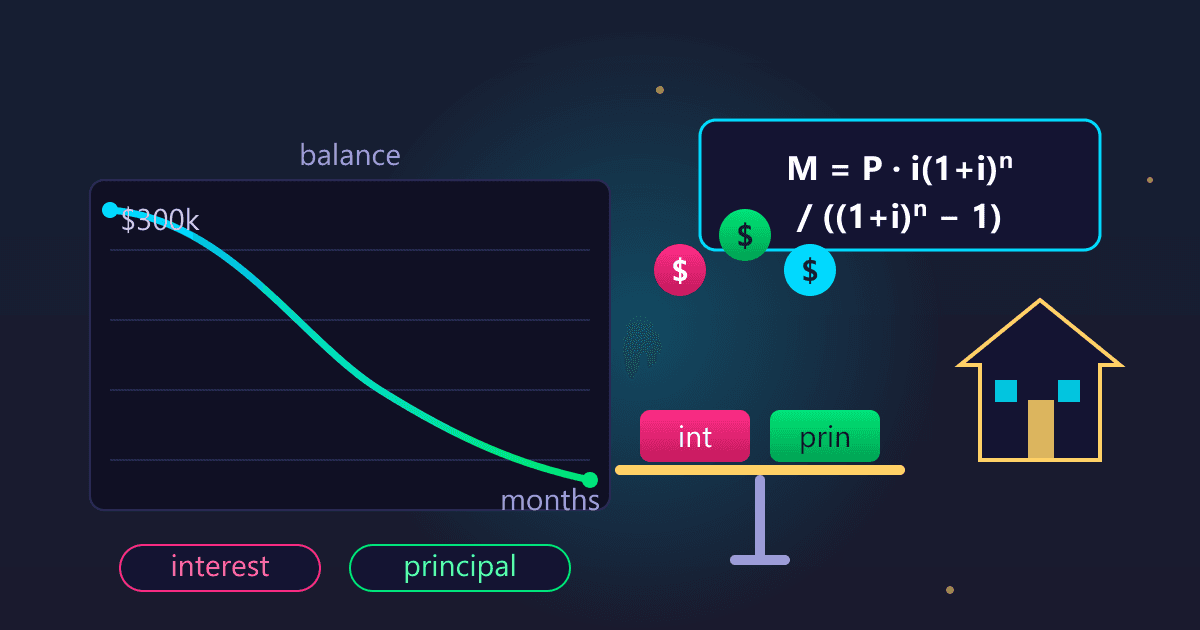
The math. The lottery is effectively offering a trade: $294.7 million today in exchange for that 30-payment stream totaling $687 million. Work out the internal rate of return and the annuity is priced to deliver roughly 5.4% a year — the exact figure shifts a hair with payment timing, but mid-5s is the honest number.
The decision rule. It reduces to one comparison:
- If you can reliably park the lump sum where it earns more than ~5.4% — a T-bill ladder, high-yield savings, boring diversified funds — the cash option mathematically wins, and the gap compounds for 30 years.
- If safe money earns less than ~5.4%, the annuity is the better deal: it's a government-backed stream paying above what you could get on your own.
- Rates move, so the honest version of this advice is practical: on claim day, pull up current T-bill and high-yield savings rates and compare them against the mid-5s break-even. The winner of this argument has literally changed from year to year as rates moved.
What the lump sum earns doing nothing. One more piece of arithmetic that reframes the choice: $185.7 million — the after-federal cash take — invested at a conservative 4% planning rate throws off roughly $7.4 million a year in interest alone, without ever touching the principal. At that rate the annuity's ~5.4% return looks less like a bargain and more like a coin flip with a bond fund. That's the real reason most winners take the cash: the break-even is close, and control beats a schedule.
The human factors belong in the same breath as the math:
- The annuity is a forced budget — 29 consecutive years of "you cannot spend it all this year."
- The lump sum concentrates the 37% tax hit into a single year; the annuity spreads it across three decades of payments.
- Annuity checks don't stop if you die — payments continue to your heirs — but a nine-figure estate needs real estate planning, not good intentions.
- Despite all of the above, most large-jackpot winners take the cash anyway.
The rate math says the two options are close. The discipline math is usually what decides.
"One Ball Away": The 30 Near-Winners From October 24
Saturday's Powerball drawing produced no jackpot winner — but 30 tickets matched all five white balls and missed only the Powerball. Thirty people were one ball away from $687 million.
What they actually won:
- The Match 5 second prize is a flat $1 million (double it to $2 million if Power Play was on the ticket).
- After the 37% federal bite: about $630,000.
- In a high-tax state like New York: closer to $575,000.
Thirty players, more than $30 million in second-tier prizes, one night. It's still life-changing money — and a useful calibration of how lottery proximity works. Missing the jackpot by one ball isn't missing by a little; it's winning an entirely different, much smaller prize. There is no partial credit for closeness.
The 15-Minute Office-Pool Protocol
Jackpot weeks are office-pool weeks, and every big rollover also grows a crop of lawsuits — because a verbal agreement in a break room is not a contract. Fifteen minutes of setup prevents essentially all of it:
- One page, signed before the tickets are bought. Names, buy-in amount, how many tickets, and whether Power Play is included.
- A money deadline in writing. "In by 3 p.m. or you're out" — with the cutoff time recorded, so nobody later claims they paid late.
- A photo of every ticket, sent to the whole group before the drawing. A timestamped group text kills the "that ticket was mine, not ours" argument before it starts.
- Cash vs. annuity decided in advance, on paper. This is the fight nobody expects. Prize-election disputes between pool members have ended up in court — agree while the stakes are still theoretical.
- Know your claim window. Deadlines range from 90 days to a full year depending on the state — and it's the state where the ticket was purchased, not where you live, that sets the clock.
- Check the anonymity rules before claiming. Some states let winners claim through a trust; others release winners' names by law. Better to learn that at the kitchen table than at the press conference.
And the universal rule that costs nothing: sign the back of the ticket the moment you buy it. An unsigned ticket belongs to whoever is holding it.
Five Drawing Nights, One Week
For planning your ticket runs — and your what-if math — the week ahead:
- Monday, October 26 — Powerball, estimated $687 million
- Tuesday, October 27 — Mega Millions, estimated $800 million
- Wednesday, October 28 — Powerball
- Friday, October 30 — Mega Millions
- Saturday, October 31 — Powerball, on Halloween
Every rollover pushes the advertised numbers higher; every win resets its game to the $20 million base and starts the climb over. By Sunday, this week is either a legend or a footnote — and either way, the math above still holds.
FAQ
How much is the $800 million Mega Millions jackpot after taxes? Estimate the cash option at roughly $340–345 million using Powerball's published ~43% cash ratio, then subtract the 37% federal bite: about $215–218 million. State tax runs from zero (Florida, Texas) to past 10% (New York), so real take-home spans about $189 million to $216 million.
How much would the $687 million Powerball pay after taxes? The cash option is $294.7 million; after 37% federal tax that's about $185.7 million. Zero-tax states keep all of it, New York State lands near $169 million, and New York City residents end up in the low $160 millions.
Is the lump sum or the annuity the better deal? The annuity is priced to return roughly 5.4% a year. If your safe after-tax investments beat that, the lump sum wins; if they don't, the annuity is effectively a government-backed above-market bond. Most big winners take the cash anyway.
How long do I have to claim a Powerball or Mega Millions prize? It depends entirely on the state where you bought the ticket — claim windows run from 90 days to a full year. Sign the ticket immediately, because an unsigned ticket belongs to whoever holds it.
What does matching five numbers without the Powerball pay? A flat $1 million — $2 million with Power Play. After federal tax that's about $630,000, closer to $575,000 in a high-tax state. Exactly thirty tickets hit that prize on October 24.
Try it with a free tool
Want to skip the manual work? Our free Present Value of Annuity Calculator works right in your browser — no signup, no uploads, and it works equally well on desktop and mobile.