How Loan Payments Are Calculated: A Guide to Amortization
Your Loan Payment Demystified: How Amortization Really Works
Have you ever looked at your mortgage or car loan statement and wondered where your monthly payment actually goes? It’s a fixed amount, but in the early years, it feels like you’re barely making a dent in the total amount you owe. This isn't just a feeling; it's by design, and the system behind it is called loan amortization.
Understanding amortization is like getting a behind-the-scenes tour of your loan. It’s the key to unlocking how lenders calculate your payments and how you can save thousands of dollars in interest over time. It transforms you from a passive participant into an empowered borrower who can make smarter financial decisions.
In this comprehensive guide, we'll break down the complex world of loan amortization into simple, actionable concepts. We'll walk through the exact formula used to calculate your payments, show you how to read an amortization schedule, and explore strategies to pay off your debt faster. Let's pull back the curtain on your monthly payments.
What Exactly is Loan Amortization?
At its core, loan amortization is an accounting technique used to periodically lower the book value of a loan over a set period. In simpler terms, it’s the process of paying off a debt (like a mortgage, auto loan, or personal loan) with regular, fixed payments over time.
Each payment you make is split into two parts:
- Interest: This is the cost of borrowing money—the fee you pay to the lender for their service.
- Principal: This is the actual amount of money you borrowed and are paying back.
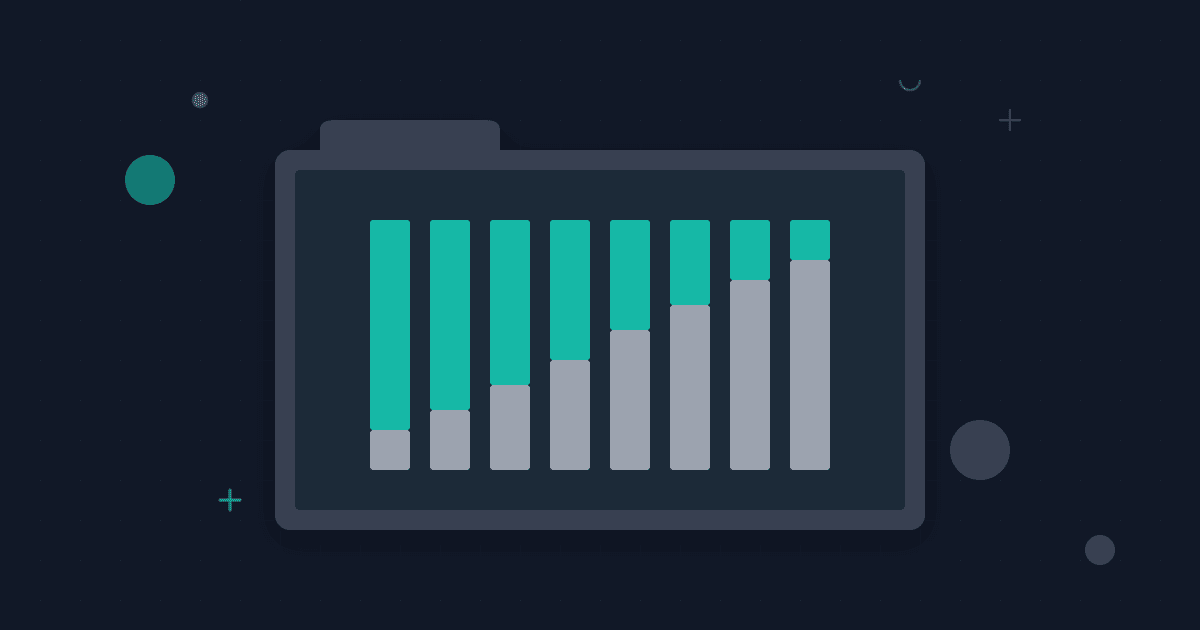
The magic of amortization is how the ratio of these two parts changes with every payment. At the beginning of your loan, a large portion of your payment goes toward interest. As time goes on, the interest portion shrinks, and more of your money goes toward paying down the principal. Think of it like a seesaw: as the interest side goes down, the principal side goes up, even though the total payment amount stays the same.
This front-loading of interest is why your loan balance seems to decrease so slowly at first. But by the end of your loan term, nearly your entire payment is going toward principal, rapidly clearing your remaining debt.
The Key Ingredients: Understanding the Loan Payment Formula
Lenders don't just pick a number out of a hat for your monthly payment. It's calculated with a precise mathematical formula. While it might look intimidating at first, it's built from a few simple components.
The standard formula for calculating the monthly payment (M) is:
M = P [ i(1 + i)^n ] / [ (1 + i)^n – 1 ]
Let's break down each variable so it makes sense:
- M = Monthly Payment: This is the final number we are trying to find—the fixed amount you'll pay each month.
- P = Principal Loan Amount: This is the total amount of money you borrowed. If you're buying a $350,000 house with a $50,000 down payment, your principal (P) is $300,000.
- i = Monthly Interest Rate: This is your annual interest rate divided by 12. Lenders quote rates annually, but since you make monthly payments, the interest needs to be calculated on a monthly basis. So, if your annual rate is 6%, your monthly rate (i) is 0.06 / 12 = 0.005.
- n = Number of Payments: This is the total number of months you have to repay the loan. It’s the loan term in years multiplied by 12. For a 30-year mortgage, 'n' would be 30 * 12 = 360. For a 5-year auto loan, 'n' would be 5 * 12 = 60.
By plugging these four values into the formula, you can determine the exact monthly payment for any fixed-rate loan.
A Step-by-Step Calculation Example
Let's put the formula into action with a common scenario: a mortgage.
Loan Scenario:
- Principal (P): $300,000
- Annual Interest Rate: 6%
- Loan Term: 30 years
Step 1: Calculate the Monthly Interest Rate (i)
First, convert the annual interest rate from a percentage to a decimal, then divide by 12.
i = (6% / 100) / 12 = 0.06 / 12 = 0.005
Step 2: Calculate the Total Number of Payments (n)
Next, multiply the number of years by 12 to find the total number of months.
n = 30 years * 12 months/year = 360
Step 3: Plug the Values into the Formula
Now, substitute P, i, and n into the amortization formula.
M = 300,000 [ 0.005(1 + 0.005)^360 ] / [ (1 + 0.005)^360 – 1 ]
Step 4: Solve the Equation
This part requires a calculator, but let's break it down.
- First, calculate
(1 + 0.005)^360, which is(1.005)^360 ≈ 6.022575 - Now, substitute this back into the formula:
- Numerator:
300,000 * [0.005 * 6.022575] = 300,000 * 0.030112875 ≈ 9033.86 - Denominator:
6.022575 – 1 = 5.022575
- Numerator:
- Finally, divide the numerator by the denominator:
M = 9033.86 / 5.022575 ≈ 1798.65
Result: The calculated monthly payment (M) for this $300,000 mortgage is $1,798.65.
Visualizing the Journey: The Amortization Schedule
An amortization schedule (or table) is a detailed, month-by-month breakdown of your loan payments. It shows you exactly how much of each payment goes toward interest and principal, and it tracks your remaining balance over the entire life of the loan. Lenders can provide this schedule, and it's a powerful tool for visualizing your debt-repayment journey.
Often, when you receive loan closing documents, they are bundled together in a single digital package. If you get these important papers in a compressed folder, you may need a tool to easily Decompress Files to access your amortization schedule and other statements.
Here’s what a typical amortization schedule looks like for the first five months of our example loan:
| Payment # | Payment Amount | Interest Paid | Principal Paid | Remaining Balance |
|---|---|---|---|---|
| 0 | - | - | - | $300,000.00 |
| 1 | $1,798.65 | $1,500.00 | $298.65 | $299,701.35 |
| 2 | $1,798.65 | $1,498.51 | $300.14 | $299,401.21 |
| 3 | $1,798.65 | $1,497.01 | $301.64 | $299,099.57 |
| 4 | $1,798.65 | $1,495.50 | $303.15 | $298,796.42 |
| 5 | $1,798.65 | $1,493.98 | $304.67 | $298,491.75 |
How to Read This Table:
- Payment 1: The first interest payment is calculated on the full loan balance (
$300,000 * 0.005 = $1,500). The rest of your $1,798.65 payment ($298.65) goes to the principal. - Payment 2: The interest for the second month is calculated on the new, slightly lower balance (
$299,701.35 * 0.005 = $1,498.51). Because the interest is a tiny bit less, a tiny bit more of your payment ($300.14) goes to the principal.
This pattern continues for 360 payments. You can see the slow but steady shift: the interest paid decreases each month, while the principal paid increases.
Why Understanding Amortization is a Financial Superpower
Knowing how amortization works isn't just for trivia night. It gives you practical tools to manage your debt more effectively and save significant money.
1. The Power of Extra Payments
Because of how interest is calculated on the remaining balance, any extra payment you make directly reduces the principal. This has a cascading effect:
- It reduces the base on which future interest is calculated.
- It shortens the life of your loan.
- It dramatically decreases the total interest you pay.
For our $300,000 loan example, just paying an extra $100 per month could save you over $33,000 in interest and help you pay off your mortgage nearly four years sooner!
2. Making Smart Refinancing Decisions
When should you refinance? An amortization schedule helps you decide. If you're 15 years into a 30-year mortgage, a large portion of your payment is already going to principal. Refinancing into a new 30-year loan (even at a lower rate) might reset the clock, and you'll go back to paying mostly interest. Understanding your current position helps you weigh the pros and cons.
3. Accurate Budgeting and Financial Planning
When you know the exact breakdown of your largest monthly expenses, you can create a much more accurate budget. You can see when you'll reach certain equity milestones in your home, which is useful for planning other investments or financial goals.
When applying for a loan, you'll need to gather numerous financial documents like bank statements, pay stubs, and tax returns. To send these securely and efficiently, it's often best to group them. You can use a free online tool to Compress Files into a single ZIP archive, making it much easier to email to your lender.
Factors That Influence Your Monthly Payment
The amortization formula shows us that three key variables determine your monthly payment: the principal, the interest rate, and the loan term.
Loan Term (n)
Choosing between a 15-year and a 30-year mortgage is a classic financial dilemma.
- 30-Year Loan: Lower monthly payments, making it more affordable upfront. However, you'll pay significantly more interest over the life of the loan.
- 15-Year Loan: Higher monthly payments, requiring a larger budget. But you build equity much faster and save a massive amount in total interest.
Interest Rate (i)
The interest rate is arguably the most powerful factor. Even a small difference can have a huge impact. A 1% difference on a $300,000 loan can change the monthly payment by nearly $200 and add up to over $68,000 in extra interest over 30 years. This is why shopping around for the best rate is crucial.
Principal Amount (P)
This is the most straightforward factor. The less you borrow, the lower your payment will be. This highlights the importance of a larger down payment. By reducing the initial principal, you reduce the foundation on which all future interest is calculated, saving you money from day one.
Financial institutions use various systems, and while many send documents in a standard ZIP format, you might occasionally encounter other archive types. If you ever receive a financial statement as a .RAR file, for instance, you can easily convert it online using a RAR to ZIP tool before opening it.
Conclusion: Take Control of Your Financial Future
Loan amortization is no longer a mysterious concept. It's a clear and predictable system that dictates how your debts are paid off. By understanding the formula, visualizing your payments with a schedule, and recognizing the factors you can control, you're equipped to make decisions that align with your financial goals.
You can now see that every dollar you pay has a purpose, and you have the power to direct more of those dollars toward your principal, saving you money and accelerating your journey to being debt-free.
Now that you've mastered the mechanics of loan payments, why not explore other ways to become more efficient? Practical Web Tools offers over 455 free, privacy-focused online tools to help you manage your digital life, from editing documents to converting files and much more. Take control of your tasks today!