Boat Loan Calculator: Your Guide to Smooth Financial Sailing

Your First Mate in Boat Buying: The Boat Loan Calculator
The allure of the open water is undeniable. The gentle rock of the waves, the sun on your face, the freedom to explore coastlines and create lasting memories—it's a powerful dream. But between that dream and the reality of casting off from the dock lies a crucial step: financing. Navigating the world of marine loans can feel as complex as reading nautical charts for the first time. Interest rates, loan terms, and down payments can create a fog of uncertainty that obscures the path to ownership.
This is where your most valuable first mate comes in: the boat loan calculator. This simple yet powerful tool cuts through the financial fog, providing a clear view of what you can afford and how different variables will impact your budget. It transforms abstract financial concepts into concrete numbers, empowering you to make informed decisions with confidence.
In this comprehensive guide, we'll dive deep into the mechanics of a boat loan calculator. We'll show you how to use it not just to estimate a monthly payment, but to strategize your purchase, compare offers from lenders, and ultimately, secure a loan that lets you sail away without sinking your budget.
Decoding the Calculator: Understanding the Core Inputs
A boat loan calculator works by taking a few key pieces of information and using them to project the financial details of your loan. To get an accurate picture, you need to understand what each input represents and how to estimate it realistically.
Boat Price / Loan Amount
This is the starting point. The Boat Price is the total purchase price of the vessel, including taxes, title, registration fees, and any essential add-ons like a trailer or initial safety gear. The Loan Amount is this total price minus your down payment.
- Pro Tip: Don't just use the sticker price. Get a detailed quote from the seller that includes all associated fees to avoid surprises. This is the number you'll use for your calculations.
Down Payment
Your down payment is the amount of cash you contribute upfront. Lenders typically require a down payment of 10-20% of the boat's total purchase price. Providing a larger down payment is almost always beneficial for several reasons:
- Lower Monthly Payments: You're borrowing less money, so your payments will be smaller.
- Better Interest Rates: A significant down payment reduces the lender's risk, which can often qualify you for a lower Annual Percentage Rate (APR).
- Instant Equity: You immediately own a larger percentage of your boat, which protects you against depreciation.
- Easier Approval: A substantial down payment signals financial stability to lenders, increasing your chances of loan approval.
Interest Rate (APR)
The Annual Percentage Rate (APR) is the true cost of borrowing money. It includes the interest rate plus any lender fees, expressed as an annual percentage. Your credit score is the single most significant factor determining your APR. Here’s a general idea of what to expect:
| Credit Score Range | Typical APR Range |
|---|---|
| Excellent (760+) | 6% - 8% |
| Good (700-759) | 8% - 10% |
| Fair (640-699) | 10% - 15% |
| Poor (<640) | 15%+ (if approved) |
Note: These are estimates. Rates fluctuate with the market and vary by lender.
Loan Term
This is the length of time you have to repay the loan, typically expressed in months or years. Boat loans often have longer terms than auto loans, commonly ranging from 10 to 20 years (120 to 240 months). The term you choose involves a critical trade-off:
- Longer Term: Results in a lower monthly payment, making a more expensive boat seem more affordable. However, you will pay significantly more in total interest over the life of the loan.
- Shorter Term: Leads to a higher monthly payment, but you'll pay off the loan faster and save a substantial amount on interest.
Making Sense of the Results: What the Numbers Tell You
Once you've entered your data, the calculator will provide several key outputs. Understanding what each one means is crucial for effective financial planning.
- Estimated Monthly Payment: This is the headline number. It's the amount you'll need to budget for each month to cover both principal and interest. This figure is your primary tool for determining affordability.
- Total Principal Paid: This is simply the original amount you borrowed.
- Total Interest Paid: This is the 'cost of borrowing.' It's a powerful number that illustrates the long-term financial impact of your interest rate and loan term. Comparing this figure across different scenarios is a fantastic way to see how much money you can save.
- Total Loan Cost: This is the sum of the principal and interest, showing you the grand total you will have paid for your boat by the end of the loan term.
- Amortization Schedule: Many advanced calculators provide an amortization schedule. This is a detailed table that breaks down each payment over the entire loan term, showing how much goes toward principal and how much goes toward interest. It's fascinating to see how early payments are mostly interest, while later payments are mostly principal.
A Step-by-Step Guide to Using the Boat Loan Calculator for Smart Financing
Ready to chart your own course? Follow these steps to use a boat loan calculator as a strategic tool.
-
Step 1: Gather Your Data. Before you even start looking at boats, get a realistic picture of your finances. Know your approximate credit score, decide on a comfortable down payment, and research current boat loan rates for your credit tier.
-
Step 2: Run an Affordability Test. Start by working backward. Instead of plugging in a boat price, plug in your desired monthly payment, a realistic interest rate, and a preferred loan term. The calculator will tell you the total loan amount you can comfortably afford. This gives you a realistic budget for your boat search.
-
Step 3: Analyze a Specific Boat. Once you have a boat in mind, plug in its actual price, your planned down payment, the loan term, and an estimated APR. Does the resulting monthly payment fit your budget?
-
Step 4: Experiment with Scenarios. This is where the magic happens. Use the calculator to see how small changes can have a big impact.
- What happens if you increase your down payment by $5,000?
- How much interest do you save by choosing a 15-year term instead of a 20-year term?
- How does a 1% difference in interest rate affect your total cost?
-
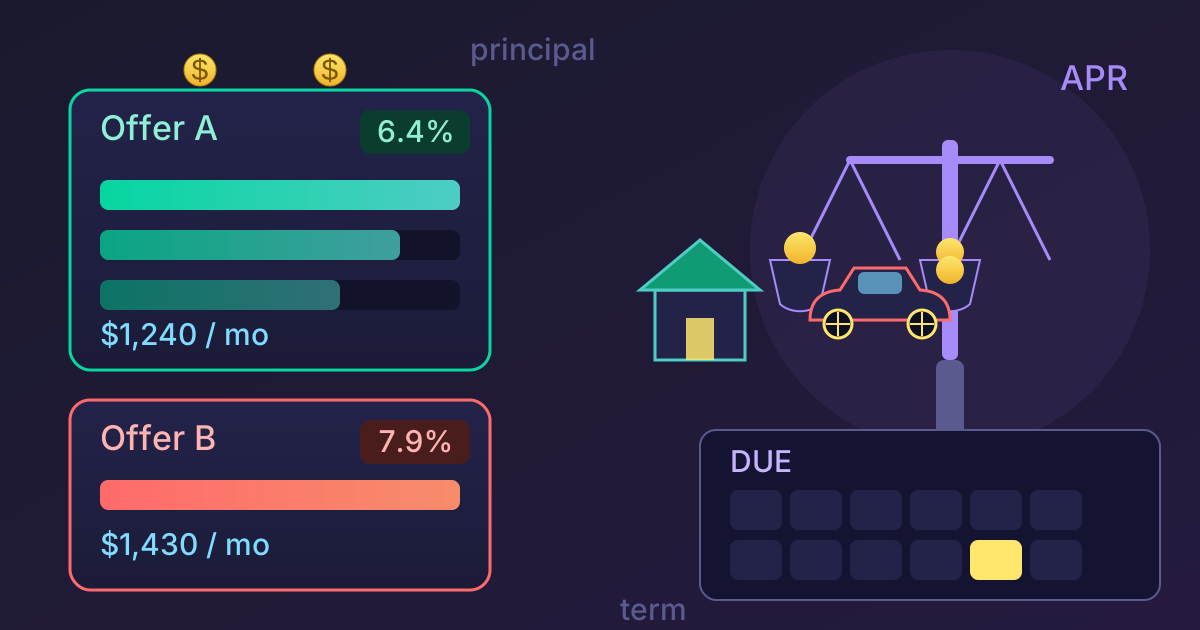
Step 5: Compare Lender Offers. As you receive loan pre-approvals from different lenders, plug their exact terms (APR and term length) into the calculator. This allows you to make a true apples-to-apples comparison of the monthly payment and, more importantly, the total interest paid over the life of the loan.
Beyond the Calculator: Other Factors Influencing Your Loan
The calculator is a financial modeling tool, but lenders look at a broader picture. Be prepared for these factors to play a role in your loan application.
Credit Score and History
As mentioned, this is paramount. Lenders see a high credit score as evidence of reliability and responsible borrowing. A clean credit history, free of late payments or defaults, is essential for securing the best rates.
Debt-to-Income (DTI) Ratio
Your DTI is the percentage of your gross monthly income that goes toward paying your monthly debt obligations (mortgage, car loans, credit cards, etc.). Lenders use it to assess your ability to handle another monthly payment. Most prefer a DTI ratio below 43%.
The Boat Itself
Lenders also evaluate the collateral—the boat. A loan for a new boat from a reputable manufacturer is often easier to secure than one for an older, used boat. They will conduct a marine survey on used boats to assess its condition and value, which can impact the loan terms.
Don't Forget the Total Cost of Ownership
Your loan payment is just the beginning. Make sure your budget accounts for all the other costs associated with owning a boat:
- Insurance: Required by all lenders.
- Storage/Moorage: Marina slip fees or dry storage costs.
- Maintenance: Regular engine service, bottom painting, cleaning.
- Fuel: A significant and variable expense.
- Taxes and Registration: Annual fees.
Managing Your Loan Application Documents
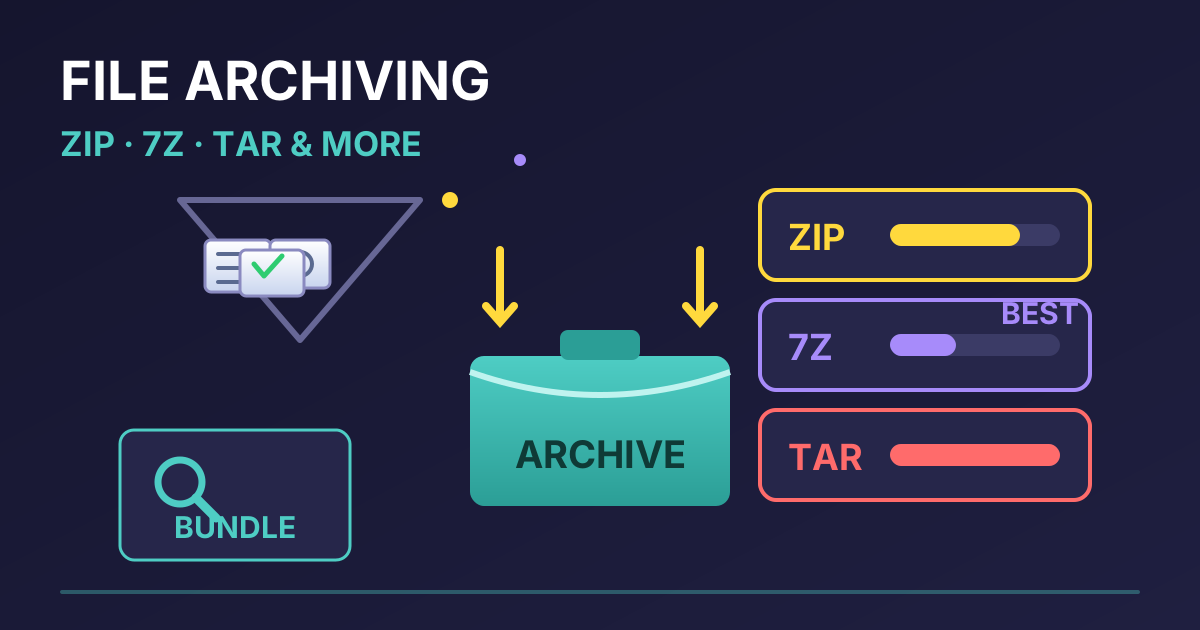
Applying for a marine loan involves a surprising amount of paperwork. You'll need to gather and submit documents like pay stubs, tax returns, bank statements, and the purchase agreement for the boat. This process often involves handling digital files, which is where having the right tools becomes essential.
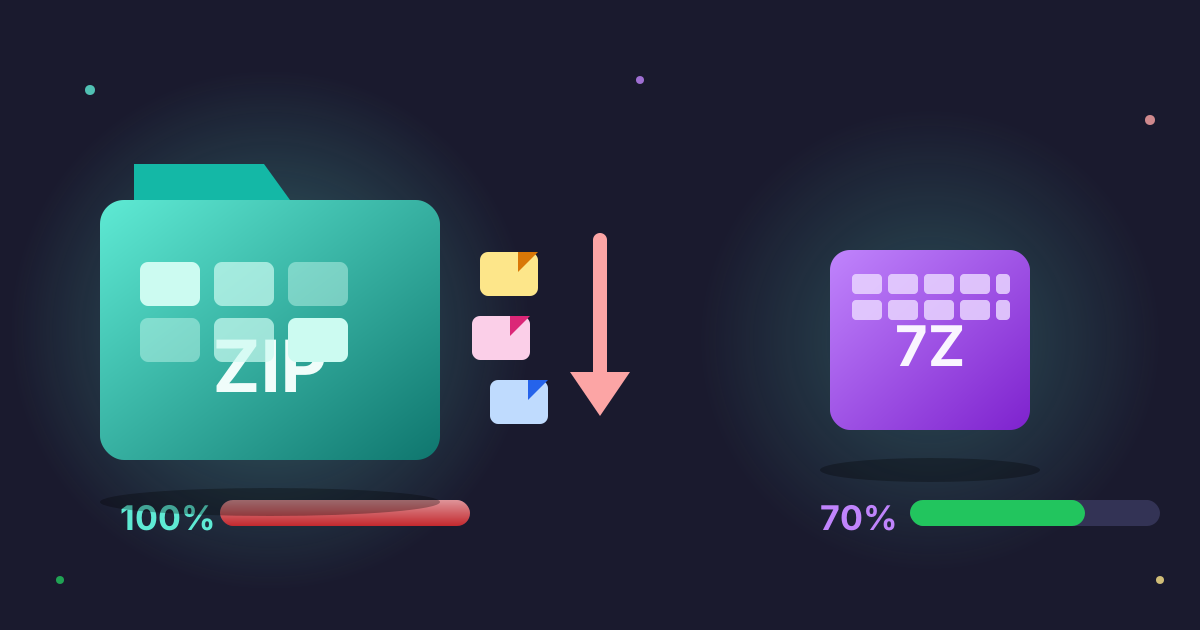
Lenders or brokers may send you an application package as a single compressed file. If you receive a .zip or .7z file, you'll need a quick and easy way to view its contents. Our online tool to Decompress Files lets you do this right in your browser without installing any software.
Conversely, when you've gathered all your scanned documents, you'll need to send them to the lender. Email services often have attachment size limits, and uploading a dozen individual files to a portal can be tedious. The best practice is to bundle them together. You can use a tool to Compress Files into a single, compact ZIP archive. This not only makes the file smaller but also keeps your application organized and professional.
Occasionally, a lender's online portal might have specific file format requirements. If they ask for a TAR archive instead of a ZIP, you don't need to panic. A simple online converter like our ZIP to TAR tool can reformat your document package in seconds, ensuring your application process remains smooth.
Conclusion: Set Sail with Financial Confidence
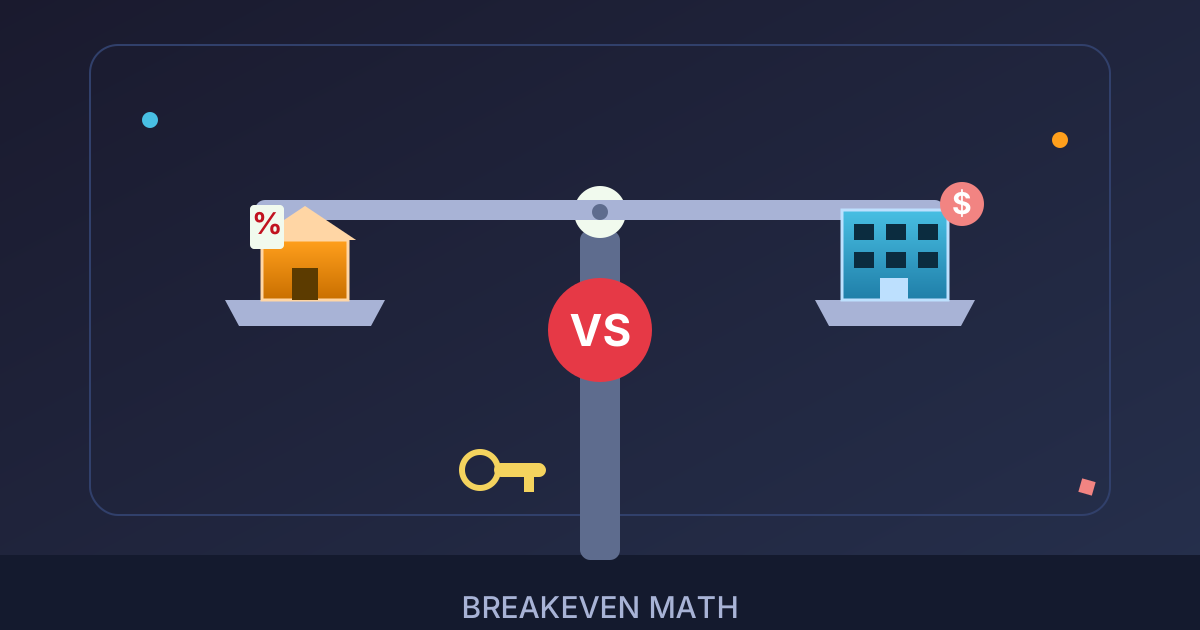
A boat loan calculator is more than just a glorified number cruncher. It's a strategic planning tool that demystifies the financing process. By using it to understand affordability, model different scenarios, and compare loan offers, you transform from a hopeful dreamer into an empowered, informed buyer.
Charting your course to boat ownership requires careful navigation, both on the water and in your finances. Arm yourself with the right information and the right tools, and you’ll be ready to weigh anchor and set sail on your new adventure with complete peace of mind.
Now that you're ready to calculate your loan and manage your documents, explore the 455+ other free and privacy-focused tools at Practical Web Tools to help you master every aspect of your digital world.