Rent vs. Buy Calculator: A Complete Home Decision Guide
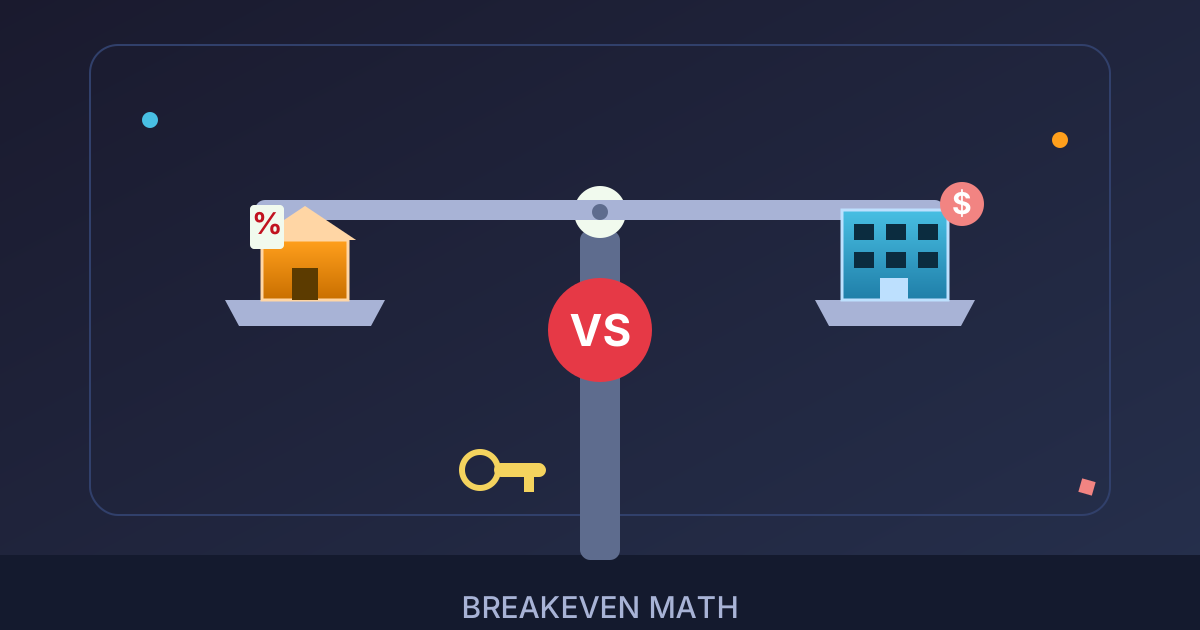
The decision to rent or buy a home is one of the biggest financial choices you'll ever make. It's often framed as a key part of the 'American Dream,' but the reality is far more complex than just a picket fence and a mortgage. It's a deeply personal decision that intertwines your finances, lifestyle, career goals, and future aspirations.
Many people get stuck comparing a monthly mortgage payment to a monthly rent check, but that’s a dangerous oversimplification. The true cost of homeownership involves a cascade of expenses, while renting has its own set of financial trade-offs.
This guide is designed to be your comprehensive manual. We'll move beyond the simple numbers and equip you with a 'rent vs. buy calculator' mindset. We'll break down all the financial variables, explore the crucial lifestyle factors, and help you build a framework to make the best decision for your unique situation.
The Financials: Looking Beyond the Monthly Payment
To make an informed choice, you must understand the full financial picture of both options. It’s not just about what you pay each month; it’s about upfront costs, ongoing responsibilities, and long-term financial impact.
The True Cost of Buying a Home
Owning a home is often more expensive than buyers initially anticipate. Here’s a breakdown of the costs you need to be prepared for.
Upfront Costs (The Big Hurdles)
These are the one-time expenses you'll pay at the beginning of the home-buying process.
- Down Payment: This is the largest upfront cost, typically ranging from 3% to 20% of the home's purchase price. If you put down less than 20%, you'll likely have to pay Private Mortgage Insurance (PMI), an extra monthly fee that protects the lender until you've built up enough equity.
- Closing Costs: These are the fees associated with finalizing the mortgage and real estate transaction. They usually amount to 2% to 5% of the loan amount. Common closing costs include:
- Loan origination fees
- Appraisal fees
- Home inspection fees
- Title insurance
- Attorney fees
- Prepaid property taxes and insurance
- Moving Expenses: Don't forget the cost of actually moving your belongings, which can range from a few hundred to several thousand dollars depending on the distance and amount of stuff.
Ongoing Costs (The Hidden Expenses)
Your monthly payment is more than just the mortgage. It’s often referred to as PITI.
- Principal & Interest (P&I): This is the core of your mortgage payment. Principal is the amount that goes toward paying down your loan balance, while interest is the cost of borrowing the money.
- Property Taxes: These are taxes paid to your local government, based on the assessed value of your home. They are typically paid monthly into an escrow account managed by your lender.
- Homeowners Insurance: This is mandatory coverage that protects your home and belongings from damage or theft.
- Maintenance & Repairs: This is the big one that renters don't have. A common rule of thumb is to budget 1% of your home's value annually for maintenance. A $400,000 home means you should plan for $4,000 per year ($333/month) in repairs. This covers everything from a leaky faucet to a new roof.
- HOA Fees: If your home is in a condominium or a planned community, you'll likely have to pay monthly or annual Homeowners Association (HOA) fees for the upkeep of common areas.
- Utilities: These can be significantly higher in a larger single-family home compared to an apartment.
The True Cost of Renting a Home
Renting is often simpler financially, but it has its own costs and disadvantages.
Upfront Costs
- Security Deposit: Typically equal to one month's rent, this is refundable if you leave the property in good condition.
- First and Last Month's Rent: Many landlords require both upfront.
- Broker Fees: In competitive rental markets, you may need to pay a fee to a real estate agent who helped you find the apartment, often equal to one month's rent.
Ongoing Costs
- Monthly Rent: Your primary, predictable expense.
- Renters Insurance: While not always required, it's a low-cost way to protect your personal belongings.
- Utilities: Depending on your lease, you may be responsible for electricity, gas, water, and internet.
- Rent Increases: Unlike a fixed-rate mortgage, your rent can (and likely will) increase each time you renew your lease, making it harder to budget long-term.
The Rent vs. Buy Calculator Framework
Online calculators are a great starting point, but understanding the variables they use is key. The most important concept to grasp is the breakeven point—the point in time when the total costs of owning become less than the total costs of renting.
Key Variables for Your Personal Calculation
To perform your own analysis, you need to gather these numbers:
- Home Price & Down Payment: How much home can you afford and how much can you put down?
- Mortgage Details: What is the current interest rate for the loan term you want (e.g., 30-year fixed)?
- Ongoing Home Costs: Research property tax rates, homeowners insurance quotes, and potential HOA fees in your target area.
- Market Assumptions: You'll need to estimate the annual home appreciation rate and rent increase rate for your area. Be conservative here.
- Investment Return Rate: This is crucial. If you don't buy, what will you do with the money you would have spent on a down payment and closing costs? What rate of return could you realistically expect from investing it in the stock market or other assets?
- Time Horizon: How long do you realistically plan to stay in one place? This is often the single most important factor. Due to high upfront costs, buying is almost always more expensive than renting in the short term (1-3 years).
Navigating the Document-Intensive Process
Whether you decide to buy or continue renting, you'll be dealing with a lot of paperwork. Lease agreements, rental applications, and especially mortgage applications require a significant amount of documentation.
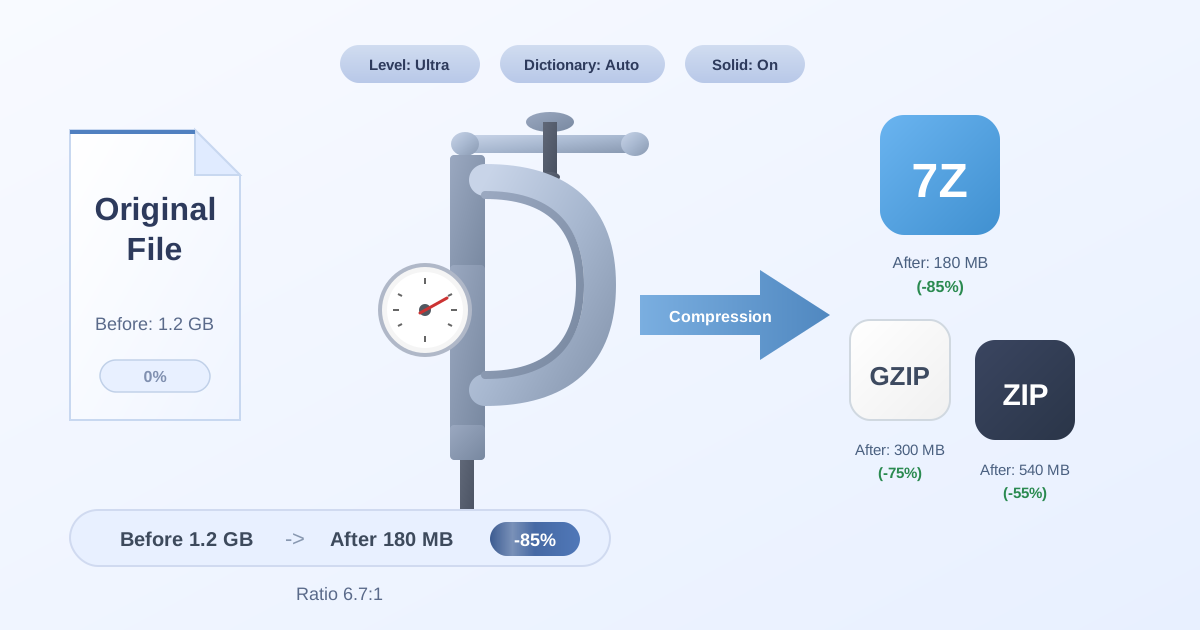
When you apply for a mortgage, you'll need to provide a lender with a mountain of financial documents: years of tax returns, months of bank statements, recent pay stubs, W-2s, and more. Lenders often require all these documents to be bundled into a single digital package. To keep things organized and make the file size manageable for emailing, you can use a tool to Compress Files into a single, secure ZIP archive. This not only makes submission easier but also keeps your sensitive information neatly contained.
Sometimes, you might receive documents from your employer or accountant in a different archive format, like 7Z. If your lender or real estate agent requires a standard ZIP file, you don't need to panic or download new software. You can quickly convert it using a free and private online 7Z to ZIP converter to get it in the right format instantly.
Lifestyle & Non-Financial Factors
Your decision isn't just a spreadsheet. Your lifestyle, values, and personal goals are just as important as the financial calculations. Let's weigh the non-monetary pros and cons.
Advantages of Buying
- Stability and Community: Owning a home allows you to put down roots, get to know your neighbors, and become part of a community. You don't have to worry about a landlord selling the property or not renewing your lease.
- Freedom to Customize: You can paint the walls any color you want, renovate the kitchen, landscape the yard, and truly make the space your own.
- Building Equity: Every mortgage payment acts as a forced savings plan, building your ownership stake (equity) in an asset that will hopefully appreciate over time.
- Predictable Payments: With a fixed-rate mortgage, your principal and interest payment will not change for the life of the loan, making long-term budgeting much easier.
- Potential Tax Benefits: You may be able to deduct mortgage interest and property taxes from your federal income taxes.
Advantages of Renting
- Flexibility and Mobility: Need to move for a new job, family reasons, or just a change of scenery? Renting makes it easy. You can move as soon as your lease is up without the hassle and expense of selling a home.
- No Maintenance Responsibility: When the water heater breaks or the roof leaks, you just call the landlord. The cost and stress of repairs are not your problem.
- Lower Upfront Costs: The initial financial barrier to renting is far lower than buying, freeing up your capital for investments, travel, or other goals.
- Access to Amenities: Many apartment complexes offer amenities like swimming pools, gyms, and community centers that would be very expensive to own and maintain privately.
- Financial Liquidity: The money that would have been tied up in a down payment and home equity remains liquid and available for you to invest or use for other opportunities.
Making the Final Decision
So, how do you put it all together? After running the numbers and weighing the lifestyle factors, you can see which path aligns better with your life right now.
When Buying Makes More Sense
- You plan to stay put for 5-7 years or more. This is typically long enough to ride out market fluctuations and overcome the high initial transaction costs.
- You have a stable income and a healthy emergency fund. You should have 3-6 months of living expenses saved after paying your down payment and closing costs.
- You are ready for the responsibilities of maintenance. You either enjoy DIY projects or have the budget to hire professionals when needed.
- You value stability, control over your living space, and building long-term wealth through real estate.
When Renting Makes More Sense
- You are uncertain about your job or location in the next few years. The flexibility to move is paramount.
- You haven't saved enough for a down payment and closing costs. Don't stretch your finances too thin; it’s better to wait and save more.
- You live in a very high-cost-of-living area. In some cities, the math heavily favors renting, as the cost of ownership far outweighs the financial benefits.
- You prefer a low-maintenance lifestyle and want to avoid the unexpected costs and hassles of homeownership.
Conclusion: Your Home, Your Choice
There is no universal 'right' answer in the rent vs. buy debate. The best choice is the one that aligns with your financial situation, your career path, your family goals, and your personal definition of 'home.'
Don't let societal pressure or market hype rush you into a decision. Use the framework in this guide to perform a clear-eyed analysis. Run the numbers, be honest about your lifestyle preferences, and consider your long-term goals. By doing your homework, you can move forward with confidence, knowing you've made a well-informed decision that is right for you.
Now that you have the framework, start gathering your numbers and personal priorities. And for all your digital document needs during the process, remember that Practical Web Tools has your back with simple, secure, and free file management tools to make the paperwork a little less painful.