Interest Rate Calculator: Guide to Loans & Savings Mastery

Understanding the Language of Money: Your Ultimate Guide to Interest Rates
Interest rates. The term is everywhere—in car commercials, mortgage ads, and news headlines. Yet, for many, it remains a slightly fuzzy concept, a number that somehow affects our money but isn't fully understood. What if you could not only understand interest rates but use them to your advantage? What if you could turn this financial jargon into a powerful tool for building wealth and reducing debt?
That's exactly what this guide is for. We're going to demystify interest rates, breaking down how they work for both loans and savings. More importantly, we'll show you how to leverage free online interest rate calculators to make informed decisions, plan for the future, and take firm control of your financial destiny. Whether you're planning to take out a student loan, buy a house, or simply grow your nest egg, mastering interest rates is the first, most crucial step.
The Fundamentals: What Exactly Is an Interest Rate?
At its core, an interest rate is the price of money. When you borrow money, the interest rate is the percentage you pay to the lender for the privilege of using their funds. Conversely, when you save or invest money, the interest rate is the percentage the bank or institution pays you for letting them use your funds. It's a two-way street, and understanding both sides is critical.
Simple vs. Compound Interest: The Million-Dollar Difference
The most important distinction to grasp is between simple and compound interest. While they might sound similar, their long-term impact on your finances is worlds apart.
-
Simple Interest: This is interest calculated only on the original principal amount. It's straightforward but less common in consumer finance products like savings accounts or loans.
- Formula:
Interest = Principal x Rate x Time
- Formula:
-
Compound Interest: This is the game-changer. It's interest calculated on the initial principal and on the accumulated interest from previous periods. Albert Einstein famously called it the "eighth wonder of the world." He who understands it, earns it; he who doesn't, pays it.
Let's see it in action. Imagine you invest $10,000 at a 5% annual interest rate for 5 years.
| Year | Simple Interest Balance | Compound Interest Balance |
|---|---|---|
| 1 | $10,500 | $10,500 |
| 2 | $11,000 | $11,025 |
| 3 | $11,500 | $11,576.25 |
| 4 | $12,000 | $12,155.06 |
| 5 | $12,500 | $12,762.82 |
As you can see, the compounding effect creates a snowball of growth, earning you money on your earnings. The same principle works in reverse for loans, which is why paying down debt quickly is so important.
APR vs. APY: Decoding the Fine Print
When looking at financial products, you'll see two acronyms: APR and APY. They aren't interchangeable.
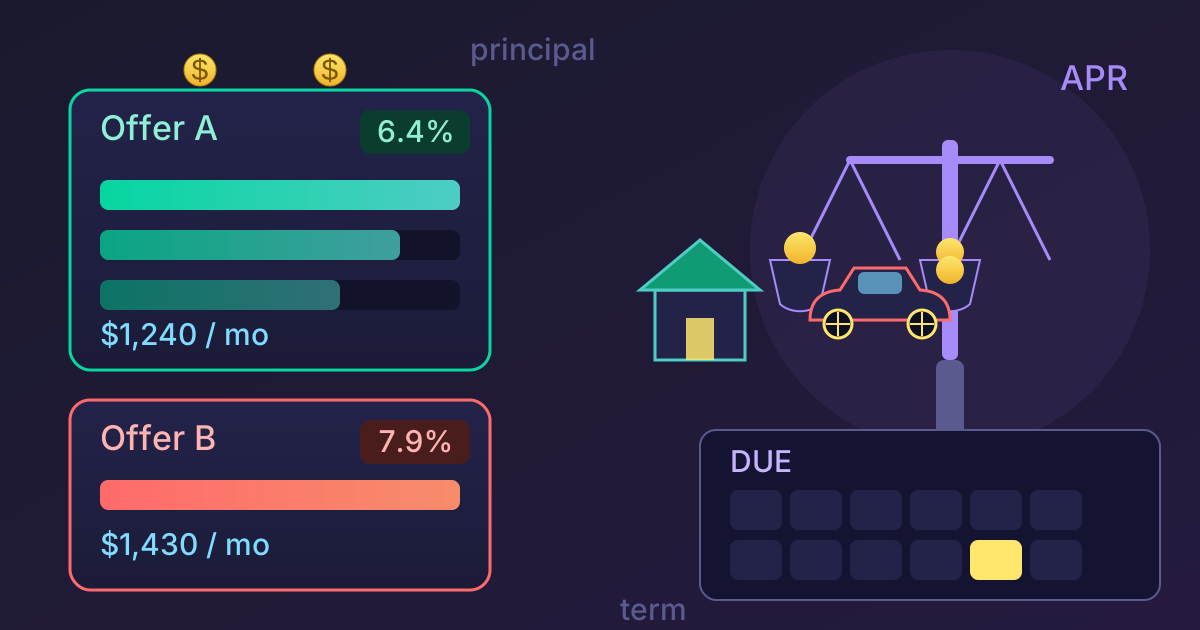
- APR (Annual Percentage Rate): Used for borrowing. This is the yearly interest rate plus any associated fees (like origination fees or closing costs) rolled into a single number. It gives you a more complete picture of a loan's true cost.
- APY (Annual Percentage Yield): Used for saving and investing. This rate reflects the total amount of interest you'll earn in a year, including the effect of compounding. Because it accounts for compounding, the APY will almost always be slightly higher than the stated interest rate.
Key Takeaway: When comparing loans, look at the APR. When comparing savings accounts, look at the APY.
Using an Interest Rate Calculator for Loans
Taking on debt, whether it's for a car, a home, or education, is a major financial commitment. An interest rate calculator is your best friend in this process, transforming abstract percentages into concrete numbers you can use to plan.
How a Loan Calculator Empowers You
A good loan calculator helps you understand three key things:
- Your Monthly Payment: How much will you owe each month?
- Total Interest Paid: How much will this loan cost you over its entire life?
- Amortization: How much of each payment goes toward the principal versus the interest over time?
Step-by-Step: Planning Your Loan
Let's walk through using a typical online loan calculator.
- Gather Your Information: You'll need the total loan amount (principal), the annual interest rate (APR), and the loan term (in years or months).
- Input the Data: Enter these figures into the calculator's fields.
- Analyze the Results: The calculator will instantly show you your estimated monthly payment and the total interest you'll pay. Pay close attention to the total interest—it can often be a shocking number!
- Run "What-If" Scenarios: This is where the magic happens. Adjust the numbers to see how changes affect your payments and total cost.
- What if you increase your down payment, reducing the principal?
- What if you choose a 15-year mortgage instead of a 30-year?
- What if you make one extra payment per year?
By experimenting, you can find the optimal balance between a manageable monthly payment and the lowest possible long-term cost.
Actionable Strategies to Reduce Loan Costs
- Improve Your Credit Score: A higher score qualifies you for lower interest rates, saving you thousands over the life of a loan.
- Choose a Shorter Loan Term: A 15-year mortgage has higher monthly payments than a 30-year one, but you'll pay significantly less in total interest and own your home free and clear much sooner.
- Make Extra Payments: Even an extra $50 a month applied directly to the principal can shave months or years off your loan and save you a surprising amount in interest.
Using an Interest Rate Calculator for Savings
On the flip side, interest rate calculators are incredible tools for visualizing your wealth-building potential. They turn the abstract goal of "saving for the future" into a tangible, achievable plan.
The Power of Visualizing Your Growth
A savings or compound interest calculator shows you the direct impact of three key factors:
- Time: The longer your money is invested, the more powerful compounding becomes.
- Contributions: Regular, consistent contributions dramatically accelerate your growth.
- Interest Rate: A higher APY means your money works harder for you.
Step-by-Step: Charting Your Savings Goals
Using a savings calculator is an exercise in motivation.
- Set a Goal: What are you saving for? Retirement? A down payment? Define your target amount and timeline.
- Input Your Numbers: Enter your initial deposit, how much you plan to contribute regularly (e.g., monthly), the estimated APY, and how long you plan to save.
- Watch It Grow: The calculator will project your balance over time, often with a graph that visually represents the snowball effect of compounding. You'll see how, in later years, the interest earned can surpass your own contributions.
- Adjust and Plan: Not on track to meet your goal? Use the calculator to find a solution. Can you increase your monthly contribution? Can you find an account with a slightly higher APY? Small adjustments today can lead to massive differences down the road.
Where to Put Your Savings to Work
- High-Yield Savings Accounts (HYSAs): Online banks often offer HYSAs with APYs significantly higher than traditional brick-and-mortar banks. They are FDIC-insured and a great place for emergency funds.
- Certificates of Deposit (CDs): You agree to leave your money in a CD for a set term (e.g., 1-5 years) in exchange for a fixed, often higher, interest rate. Less flexible but can offer better returns.
- Money Market Accounts: These accounts blend features of savings and checking accounts and sometimes offer higher rates, though they may have minimum balance requirements.
Managing Your Financial Documents Securely and Efficiently
As you navigate loans and savings plans, you'll accumulate a significant number of important digital documents: loan agreements, monthly statements, amortization schedules, and savings projections. Keeping these organized and secure is a crucial, though often overlooked, part of financial management.
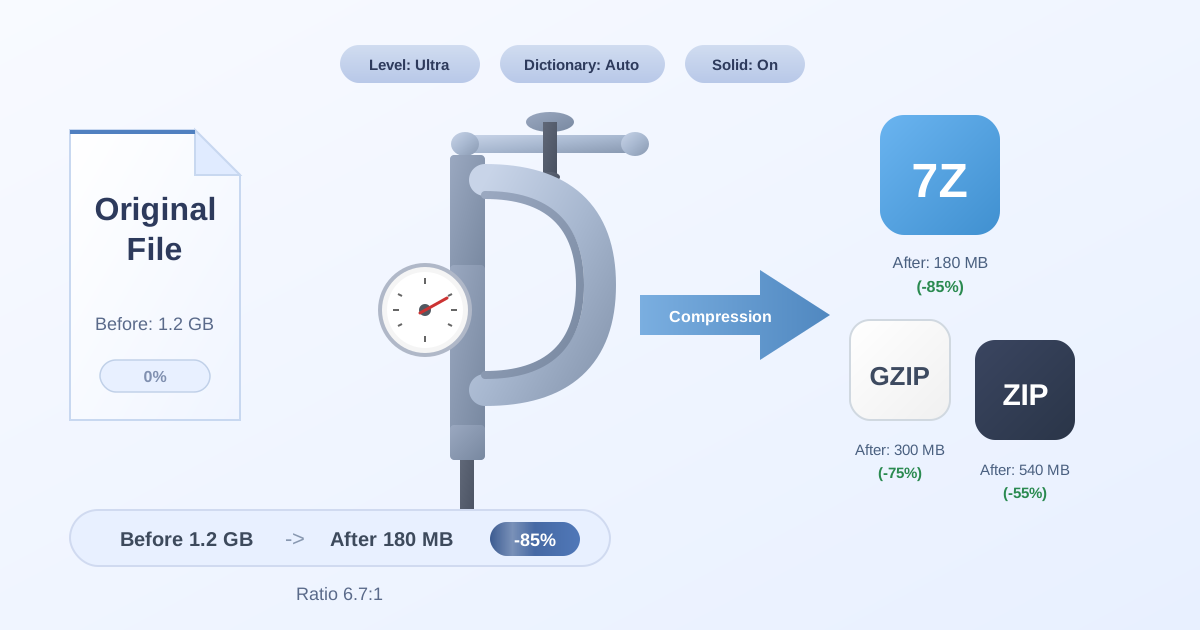
When you download these documents from your bank or lender, they can sometimes come as large PDF files or even packages of multiple files. To save space on your computer or cloud storage, it's a great practice to Compress Files into a single, smaller archive like a ZIP file. This not only saves space but also bundles related documents together for better organization.
Occasionally, you might receive a secure package of documents from a financial institution as a compressed archive. To access them, you'll need a reliable tool to Decompress Files and extract the contents safely. Our free, browser-based tool handles this privately without uploading your sensitive data to a server.
Different systems use different compression formats. If you have an archive in a format like 7Z but need it in a more universally compatible format, you can easily convert it. For instance, using a converter to change a 7Z to ZIP ensures you can open it on any device without special software. Managing your digital paperwork efficiently helps you stay on top of your financial journey.
Conclusion: From Knowledge to Action
Interest rates are not just numbers on a screen; they are the fundamental mechanism that governs debt and wealth. By understanding the difference between simple and compound interest, APR and APY, you've already taken a massive step toward financial literacy.
The real power, however, comes from applying this knowledge. By using free online interest rate calculators, you can model different scenarios, compare loan offers intelligently, and create a realistic roadmap to your savings goals. You can see the long-term consequences of your decisions before you make them.
Your financial future is in your hands. Start today. Pull up a loan or savings calculator and begin playing with the numbers. Transform uncertainty into a clear, actionable plan. And as you manage your journey, don't forget to explore the suite of tools at Practical Web Tools to handle all your digital needs securely and efficiently.