Auto Loan Calculator: The Ultimate Car Payment Guide

Navigating the Road to Your New Car: A Guide to Auto Loans
The thrill of choosing a new car—the color, the features, the new-car smell—is an exciting experience. But for many, that excitement is quickly tempered by the daunting task of navigating auto financing. Terms like APR, loan term, and amortization can feel like a foreign language, and the fear of overpaying can cast a shadow over the entire process.
What if you could walk into a dealership with confidence, armed with a clear understanding of what you can afford and how auto loans work? That’s where an auto loan calculator comes in. This powerful tool isn't just about crunching numbers; it's about empowerment. It translates complex financial jargon into a single, understandable figure: your monthly payment.
This comprehensive guide will walk you through everything you need to know about auto loan calculators and car payments. We'll break down the core components of a loan, show you how to use a calculator effectively, and provide actionable strategies to help you secure the best possible deal. Let's get you in the driver's seat of your finances.
Understanding the Core Components of a Car Loan
Before you can effectively use an auto loan calculator, you need to understand the key variables that determine your monthly payment. Think of these as the ingredients in your loan's recipe.
Principal Amount
The principal is the total amount of money you borrow from a lender to purchase the vehicle. This isn't just the sticker price; it typically includes sales tax, documentation fees, and any other dealership fees, minus your down payment and the value of any trade-in vehicle.
- Formula:
(Vehicle Price + Taxes & Fees) - (Down Payment + Trade-in Value) = Principal
Interest Rate (APR)
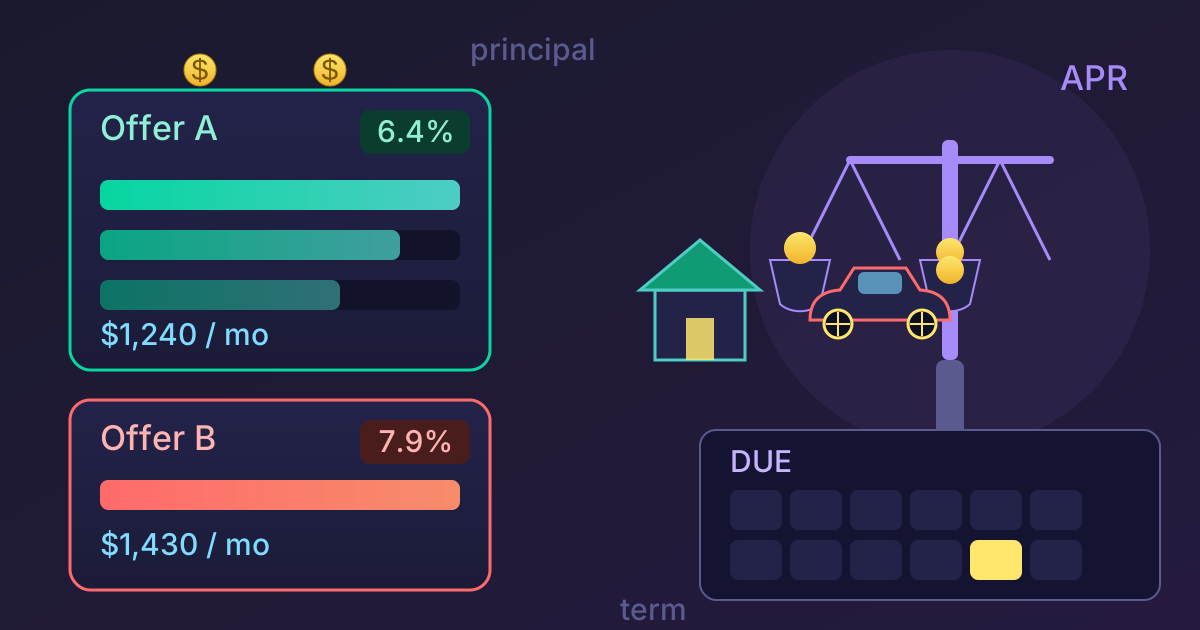
The Annual Percentage Rate (APR) is the cost of borrowing money, expressed as a yearly percentage. It includes the interest rate plus any lender fees. Your credit score is the single most significant factor in determining your APR. A higher credit score signals to lenders that you are a low-risk borrower, earning you a lower APR and saving you thousands over the life of the loan.
Loan Term
The loan term is the length of time you have to repay the loan, typically expressed in months (e.g., 36, 48, 60, 72, or even 84 months).
- Shorter Term (e.g., 48 months): Higher monthly payments, but you pay less total interest and own the car sooner.
- Longer Term (e.g., 72 months): Lower monthly payments, but you pay significantly more in total interest. You also risk being "upside-down" on your loan, where you owe more than the car is worth.
Down Payment
A down payment is the initial amount of money you pay upfront towards the car's purchase price. A larger down payment is always beneficial. It reduces your principal, which in turn lowers your monthly payment and the total interest you'll pay. Most financial experts recommend a down payment of at least 20% of the vehicle's purchase price.
Demystifying the Auto Loan Calculator: Your Financial Crystal Ball
An auto loan calculator uses a standard amortization formula to determine your payment. While the math is complex, the tool makes it incredibly simple. You provide the inputs, and it instantly calculates the outputs, allowing you to experiment with different scenarios.
What You Need to Input
To get an accurate estimate, you'll need the following information:
- Total Car Price: The negotiated price of the car, including any options and destination charges.
- Down Payment: The amount of cash you're putting down.
- Trade-in Value: The value the dealership is giving you for your old car, if applicable.
- Sales Tax: The sales tax rate for your state/locality.
- Interest Rate (APR): Your estimated APR based on your credit score.
- Loan Term: The desired length of your loan in months.
Interpreting the Results
After entering your data, the calculator will provide several key figures:
- Estimated Monthly Payment: The core number most people focus on.
- Total Interest Paid: The total amount you'll pay in interest over the entire loan term. This can be a shocking, eye-opening number.
- Total Loan Amount: The principal you are borrowing.
- Total Cost: The sum of the principal, interest, and down payment. This shows the true total cost of owning the vehicle.
Let's see it in action. Suppose you want to buy a car worth $35,000.
| Scenario | A (Shorter Term) | B (Longer Term) |
|---|---|---|
| Car Price | $35,000 | $35,000 |
| Down Payment | $7,000 (20%) | $7,000 (20%) |
| Loan Principal | $28,000 | $28,000 |
| APR | 6% | 6% |
| Loan Term | 48 Months (4 years) | 72 Months (6 years) |
| Monthly Payment | ~$658 | ~$464 |
| Total Interest | ~$3,584 | ~$5,408 |
| Total Paid | $38,584 | $40,408 |
As you can see, the lower monthly payment in Scenario B comes at a cost of nearly $2,000 extra in interest over the life of the loan.
Getting Ready: Preparing a Winning Loan Application
Once you've used a calculator to find a comfortable payment, the next step is getting approved for the loan. Lenders will require a variety of documents to verify your income, identity, and financial stability. Being prepared can significantly speed up the approval process.
Gather Your Financial Documents
Before you even start applying, gather digital copies of the following documents. You'll likely need:
- Proof of identity (Driver's license, passport)
- Proof of income (Recent pay stubs, W-2s, or tax returns if you're self-employed)
- Proof of residence (Utility bill, lease agreement)
- Bank statements
Streamline Your Digital Paperwork
Managing multiple PDF and image files for a loan application can be messy. Lenders often have specific file size limits for uploads, and emailing numerous large attachments is inefficient. This is where a few smart tools can make a big difference.
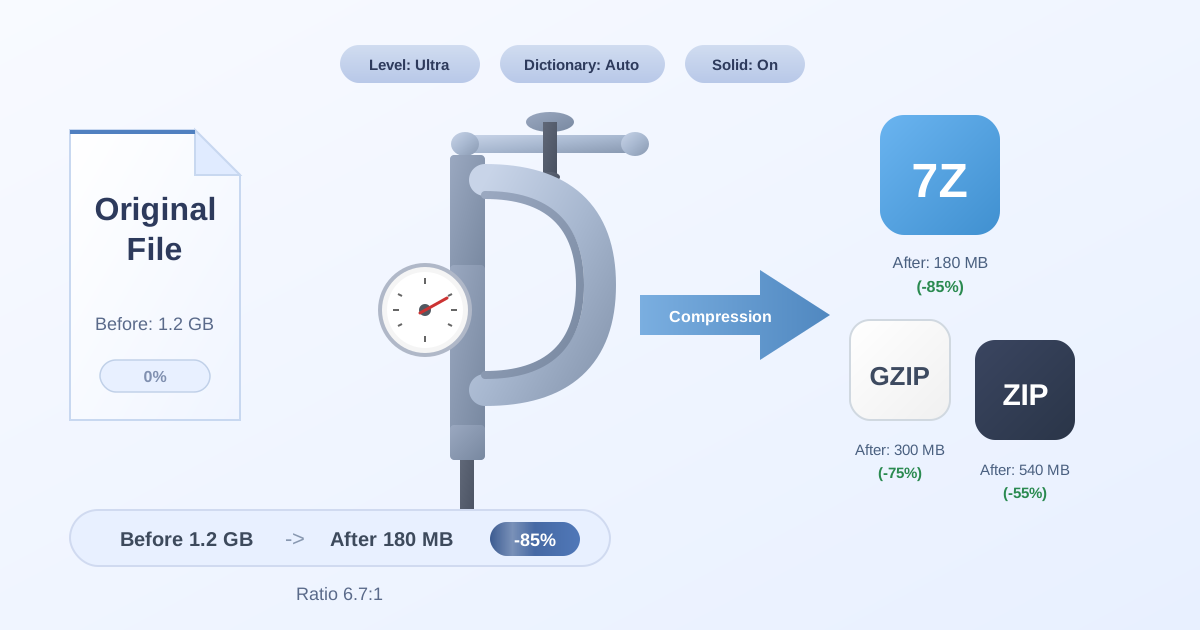
To keep everything organized and easy to submit, you can package all your documents into a single archive file. By using a free online tool to Compress Files, you can combine all your scans and PDFs into one ZIP file. This not only keeps your application tidy but also reduces the total file size, making it perfect for emailing or uploading to a lender's online portal.
Sometimes, you might receive documents from a lender or insurance agent in an unfamiliar format. If you get a file ending in .7z or .tar, you don't need to install special software. You can simply use a converter like 7Z to ZIP to change it into a standard format that your computer can easily open. Keeping your financial documents organized is a key step towards a smooth car-buying journey.
Pro Tips for Landing a Lower Car Payment
Your goal isn't just to get a loan—it's to get a good loan. Here are some strategies to help you lower your monthly payment and save money.
1. Boost Your Credit Score
Before you start car shopping, check your credit report. A higher score directly translates to a lower APR. If your score isn't ideal, consider waiting a few months to pay down debt, dispute any errors, and ensure a history of on-time payments.
2. Get Pre-Approved for a Loan
Never rely solely on dealership financing. Before you set foot on the lot, apply for a pre-approved loan from your bank, a credit union, or an online lender. This gives you a baseline APR to compare against the dealer's offer. A pre-approval letter is a powerful negotiating tool that shows you're a serious, qualified buyer.
3. Negotiate the Car Price, Not the Payment
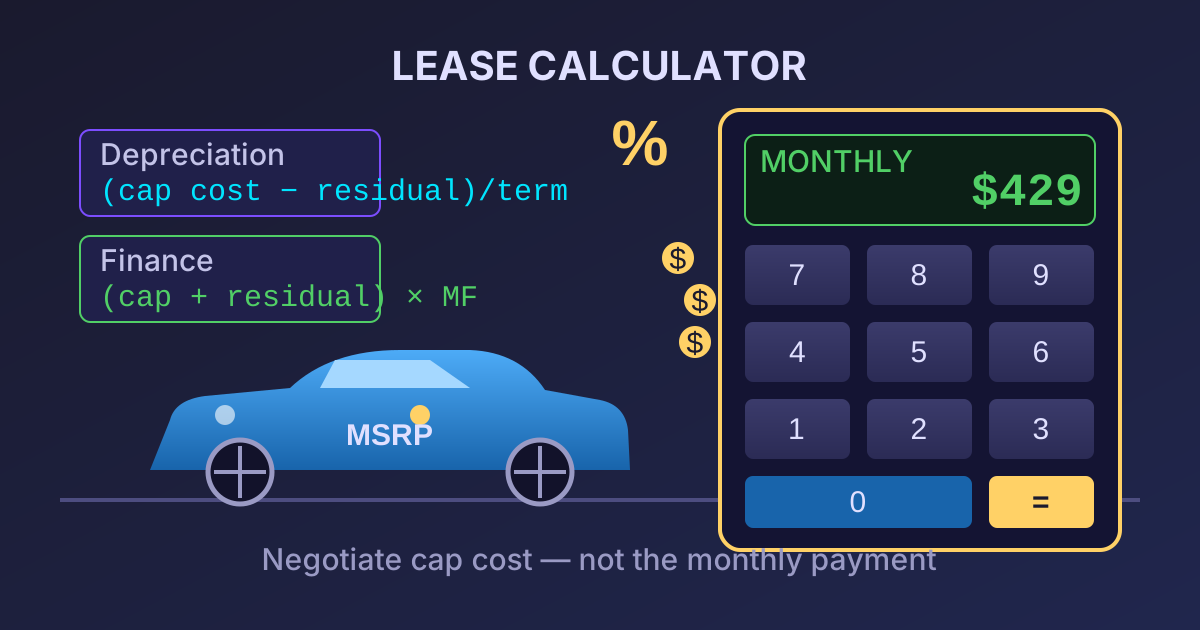
This is a classic car-buying mistake. When a salesperson asks what monthly payment you're looking for, they can manipulate the loan term or add fees to hit that number while maximizing their profit. Instead, focus on negotiating the "out-the-door" price of the vehicle first. Once you have a firm price, then you can discuss financing.
4. Make the Largest Down Payment You Can Comfortably Afford
As we've seen, a larger down payment has multiple benefits. It reduces the amount you need to finance, lowers your monthly payment, and decreases the total interest paid. It also helps you build equity in the car faster, protecting you from becoming upside-down on your loan.
5. Keep the Loan Term as Short as Possible
While the allure of a low monthly payment from a 72 or 84-month loan is strong, resist it if you can. The long-term interest costs are substantial. Use the auto loan calculator to find the shortest loan term that still fits comfortably within your monthly budget.
6. Keep Excellent Records
Once you've secured your loan and purchased your car, it's vital to keep all related paperwork: the loan agreement, the bill of sale, the vehicle title, and registration documents. For long-term digital storage, consider converting your ZIP archive of these documents into a more efficient format. Using a ZIP to 7Z converter can provide a higher compression ratio, saving you digital space while keeping your important records safe and organized.
Conclusion: Driving Forward with Financial Confidence
An auto loan calculator is more than just a tool for math; it's a tool for clarity and confidence. By understanding the components of a loan and using a calculator to explore different scenarios, you transform a confusing process into a predictable one. You can determine what you can truly afford, identify a good deal, and avoid financial pitfalls down the road.
Your journey to a new car should be exciting, not stressful. By preparing your documents, securing pre-approval, and negotiating smartly, you can ensure you drive off the lot with a vehicle you love and a loan you can comfortably manage.
Ready to get your digital life as organized as your car-buying plan? Explore the full suite of free and privacy-focused tools at Practical Web Tools to manage your files, edit documents, and much more.