Lease Calculator Guide: Decode Your Next Car Deal
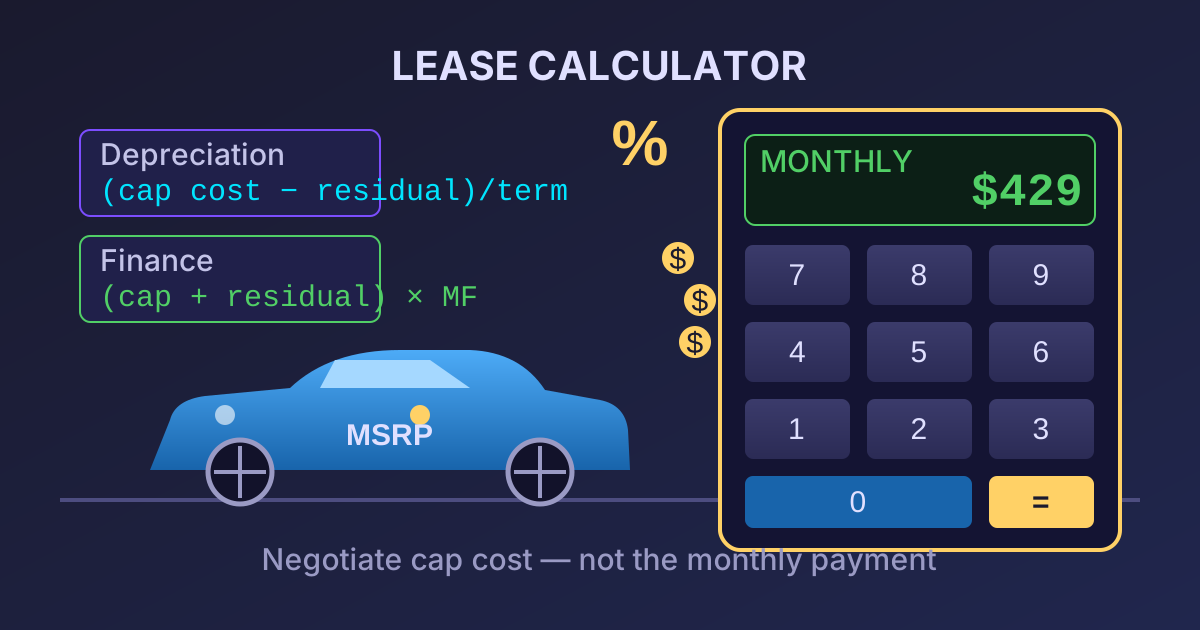
Your Complete Guide to Mastering the Car Lease Calculator
Walking into a car dealership can feel like stepping into a different world, one filled with its own language of MSRPs, money factors, and residual values. The dream of driving a new car is exciting, but the financial complexity, especially with leasing, can be overwhelming. You might hear a monthly payment that sounds attractive, but do you really know what you're paying for? Is it a good deal, or are hidden costs lurking in the fine print?
This is where a lease calculator becomes your most powerful tool. It’s more than just a number-cruncher; it’s a transparency machine. By understanding the components of a lease and how they fit together, you can turn the tables. Instead of being a passive recipient of a dealer's offer, you become an informed negotiator, ready to dissect the numbers and secure the best possible terms.
This comprehensive guide will walk you through everything you need to know. We'll break down the confusing jargon into simple terms, reveal the exact formula used to calculate a lease payment, and provide a step-by-step walkthrough of how to use a lease calculator to your advantage. Get ready to decode your next car deal and drive off the lot with confidence.
Why a Lease Calculator is Your Secret Weapon
Before diving into the numbers, it's crucial to understand why taking a few minutes to use a lease calculator is so important. It’s about shifting the power dynamic during a major financial transaction.
- Financial Transparency: A lease agreement is a complex contract. A calculator breaks it down into its core components—depreciation, interest, and fees—so you can see exactly where your money is going.
- Negotiation Power: The single most important rule of leasing is to negotiate the price of the car (the capitalized cost), not the monthly payment. A dealer can easily manipulate other variables to hit a target monthly payment while padding their profit. With a calculator, you can run the numbers yourself and see how a lower vehicle price directly impacts your payment, giving you a concrete goal for negotiation.
- Apples-to-Apples Comparisons: Are you considering leases for a Honda CR-V and a Toyota RAV4? Different manufacturers offer different incentives, residual values, and money factors. A lease calculator allows you to input the specific numbers for each deal and make a true, unbiased comparison of the total cost.
- Budgeting with Precision: A calculator gives you a precise, all-in monthly payment, including sales tax. This helps you determine what you can truly afford and prevents you from getting in over your head with a payment that balloons after taxes and fees are added.
Decoding the Lingo: The Key Inputs of a Lease Calculator
To use a lease calculator effectively, you first need to understand the terms it uses. Think of these as the ingredients in your lease payment recipe. Getting them right is essential for an accurate result.
Here’s a breakdown of the most important terms you'll encounter:
| Term | What It Means | Why It Matters |
|---|---|---|
| MSRP | Manufacturer's Suggested Retail Price. This is the official "sticker price" of the car. | It's the starting point, but you should almost never pay it. Your goal is to negotiate a price below the MSRP. |
| Capitalized Cost | Often called the "cap cost," this is the negotiated selling price of the car. | This is the most critical number to negotiate. A lower cap cost directly leads to a lower monthly payment. |
| Cap Cost Reduction | Anything that lowers the capitalized cost. This includes a cash down payment, trade-in equity, or factory rebates. | While a down payment lowers your monthly bill, it's often advised to put as little cash down as possible on a lease. |
| Residual Value | The estimated wholesale value of the car at the end of the lease term. It's set by the bank and is non-negotiable. | It's expressed as a percentage of MSRP (e.g., 60%). A higher residual value is better for you, as it means you're paying for less depreciation. |
| Lease Term | The length of your lease in months. Common terms are 24, 36, or 39 months. | Shorter terms often have higher residual values but spread the depreciation over less time. 36 months is often the sweet spot. |
| Money Factor (MF) | This is essentially the interest rate on the lease, expressed as a small decimal (e.g., .00125). | It's a key profit center for dealers. Always ask for the "buy rate" (base MF) and check forums like Edmunds to see what it should be. To convert to an APR, multiply the MF by 2400. |
| Acquisition Fee | A fee charged by the leasing company to initiate the lease. It's often around $500-$1000. | This is a standard fee. You can sometimes negotiate to have it waived or rolled into the cap cost. |
| Disposition Fee | A fee charged at the end of the lease to cover the costs of cleaning and selling the car. Typically $300-$500. | This fee is often waived if you lease another car from the same brand. |
| Sales Tax | The tax rate applied to your lease. How it's calculated varies by state; some tax the monthly payment, others the full car price. | The calculator will handle this, but be sure to use your correct local tax rate for an accurate final payment. |
The Lease Payment Formula Unmasked
A lease payment isn't some arbitrary number the dealer comes up with. It’s calculated using a standard formula with two primary components: the depreciation charge and the finance charge.
Part 1: The Depreciation Charge
This part of your payment covers the amount of value the car loses during your lease term. It's the largest portion of your monthly bill.
Formula:
Depreciation Charge = (Adjusted Capitalized Cost - Residual Value) / Lease Term
- Adjusted Capitalized Cost is the negotiated price of the car minus any down payment, trade-in, or rebates.
Part 2: The Finance Charge
This is the interest you pay each month. It's calculated based on the money factor.
Formula:
Finance Charge = (Adjusted Capitalized Cost + Residual Value) * Money Factor
Yes, you read that right—you pay interest on the sum of the adjusted cap cost and the residual value, not just the part you're financing.
Putting It All Together
Your base monthly payment is the sum of these two parts:
Base Monthly Payment = Depreciation Charge + Finance Charge
Finally, you add sales tax to get your total monthly payment:
Total Monthly Payment = Base Monthly Payment * (1 + Sales Tax Rate)
Seeing the formula makes it clear: lowering the Capitalized Cost is the most effective way to reduce both the depreciation and finance charges, thus lowering your overall payment.
Step-by-Step: Using a Lease Calculator with a Real-World Example
Let's put this knowledge into practice. Imagine you want to lease a new SUV.
- Car: 2024 Summit Peak SUV
- MSRP: $38,000
Step 1: Do Your Research and Gather the Numbers
Before you even talk to a dealer, do your homework online. Use sites like Edmunds or brand-specific forums to find the current residual values and money factors for the exact trim and term you want. Negotiate a selling price with a dealer via email or phone.
Here are the numbers we've gathered for our example:
- Negotiated Price (Cap Cost): $35,000
- Lease Term: 36 months
- Annual Mileage: 12,000 miles
- Residual Value: 62% of MSRP ($38,000 * 0.62 = $23,560)
- Money Factor: .00150 (which is 3.6% APR)
- Down Payment: $0
- Rebates: $1,000 manufacturer incentive
- Fees (Acquisition, etc.): $995
- Local Sales Tax: 7%
Step 2: Input the Data into the Calculator
Now, plug these numbers into a reliable online lease calculator. Be methodical and double-check each entry.
- MSRP: $38,000
- Selling Price: $35,000
- Term: 36
- Residual Value: $23,560 (or 62%)
- Money Factor: .00150
- Down Payment: $0
- Rebates/Incentives: $1,000
- Fees: $995 (Let's assume these are paid upfront for simplicity in this example, often called "drive-off" fees)
- Sales Tax: 7%
Step 3: Analyze the Results
The calculator will instantly compute the payment based on the formulas we discussed.
- Adjusted Cap Cost: $35,000 (Price) - $1,000 (Rebate) = $34,000
- Depreciation Charge: ($34,000 - $23,560) / 36 = $10,440 / 36 = $290.00/month
- Finance Charge: ($34,000 + $23,560) * .00150 = $57,560 * .00150 = $86.34/month
- Base Payment: $290.00 + $86.34 = $376.34/month
- Total Monthly Payment with Tax: $376.34 * 1.07 = $402.68/month
Now you have a clear, data-backed target. When the dealer presents you with a worksheet, you can compare it directly to your own calculations.
Expert Tips and Common Leasing Pitfalls
Arming yourself with a calculator is just the start. Here are some pro tips to help you navigate the process and avoid common traps.
1. The Myth of the "$0 Down" Lease
Advertisements for "$0 down" leases are tempting but often misleading. It rarely means you pay nothing to drive the car off the lot. You'll almost always have to pay the first month's payment, acquisition fee, taxes, and registration fees upfront. A true "zero drive-off" lease rolls all of those costs into your monthly payment, inflating it significantly.
2. Focus on the Selling Price (Cap Cost)
As we've stressed, this is the foundation of the deal. Dealers prefer to talk about monthly payments because they can easily manipulate the money factor, term length, or fees to reach a number you're comfortable with, even if the car's price is inflated. Lock in the selling price first, then let the payment fall where it may.
3. Verify the Money Factor
Dealers can mark up the base money factor set by the bank, adding pure profit to their side of the deal. This is why your independent research is vital. If the dealer quotes you a money factor of .00190 when you know the base rate is .00150, you can call them on it and demand the correct rate.
4. Manage Your Lease Documents Digitally
Throughout the leasing process, you will accumulate a lot of important paperwork: dealer quotes, credit applications, finance worksheets, and the final multi-page lease agreement. Keeping these documents organized is crucial for your records.
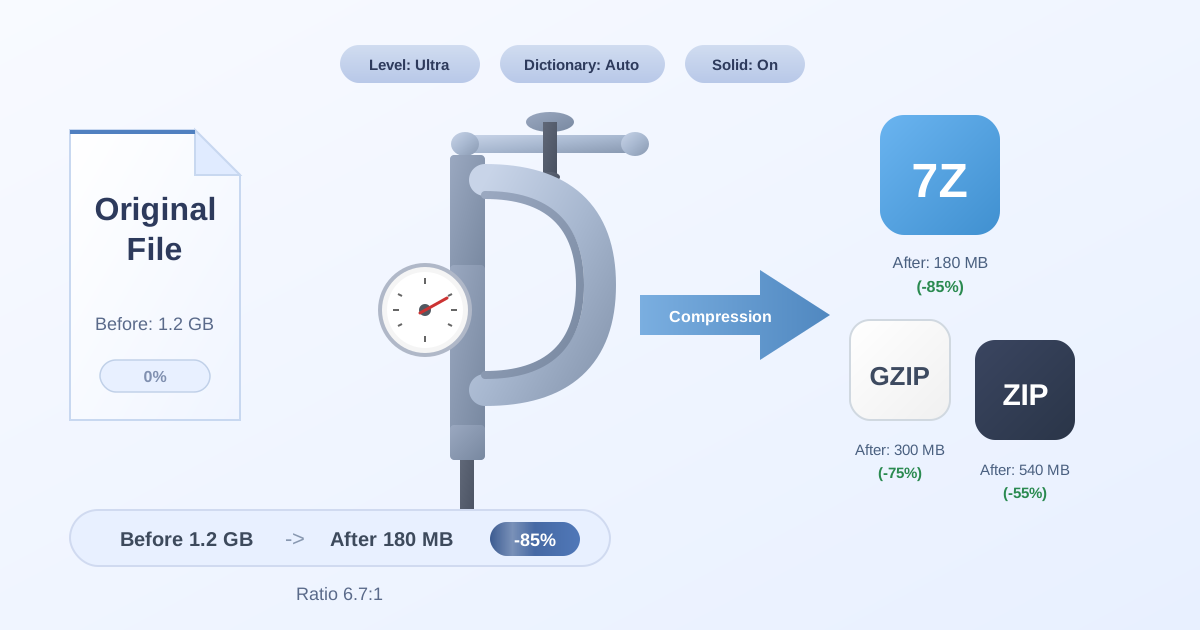
A great strategy is to scan all your documents and create a digital archive. To keep this archive tidy and easy to manage, you can Compress Files into a single, manageable ZIP folder. This not only saves space but also keeps related documents bundled together. When you need to reference your agreement or check a specific fee a year later, you can easily find the archive and Decompress Files to view everything. For added flexibility, especially when sharing with others who might use different systems, you can even convert your archive from a common format like ZIP to TAR using a simple online tool.
Conclusion: Lease with Confidence
Leasing a car doesn't have to be an intimidating experience. By demystifying the process and leveraging the power of a lease calculator, you transform from a confused consumer into an educated negotiator. You can walk into any dealership with a clear understanding of what a good deal looks like and the confidence to ask for it.
Remember the key takeaways:
- Negotiate the capitalized cost above all else.
- Do your homework on residual values and money factors beforehand.
- Use a lease calculator to verify any offer a dealer presents to you.
- Understand all the fees and what you’re paying for.
By following this guide, you're not just calculating a payment; you're taking control of the entire transaction. Explore the wide array of free utilities at Practical Web Tools to help you manage your documents and stay organized through every step of your financial journey.