Sleep Calculator Guide: Wake Up Refreshed With Sleep Cycles
Ever woken up after a full eight hours of sleep feeling more tired than when you went to bed? It’s a frustratingly common experience. You followed the conventional wisdom, but your morning is still clouded by grogginess and a desperate need for coffee. The problem might not be how long you slept, but when you woke up.
The secret to a truly refreshing morning lies in understanding the architecture of your sleep: the sleep cycle. Waking up at the right point in this cycle can make all the difference between a sluggish start and a day full of energy. This comprehensive guide will demystify sleep cycles, explain how sleep calculators work, and give you the tools you need to optimize your rest for peak performance.
What Are Sleep Cycles? The Science of Slumber
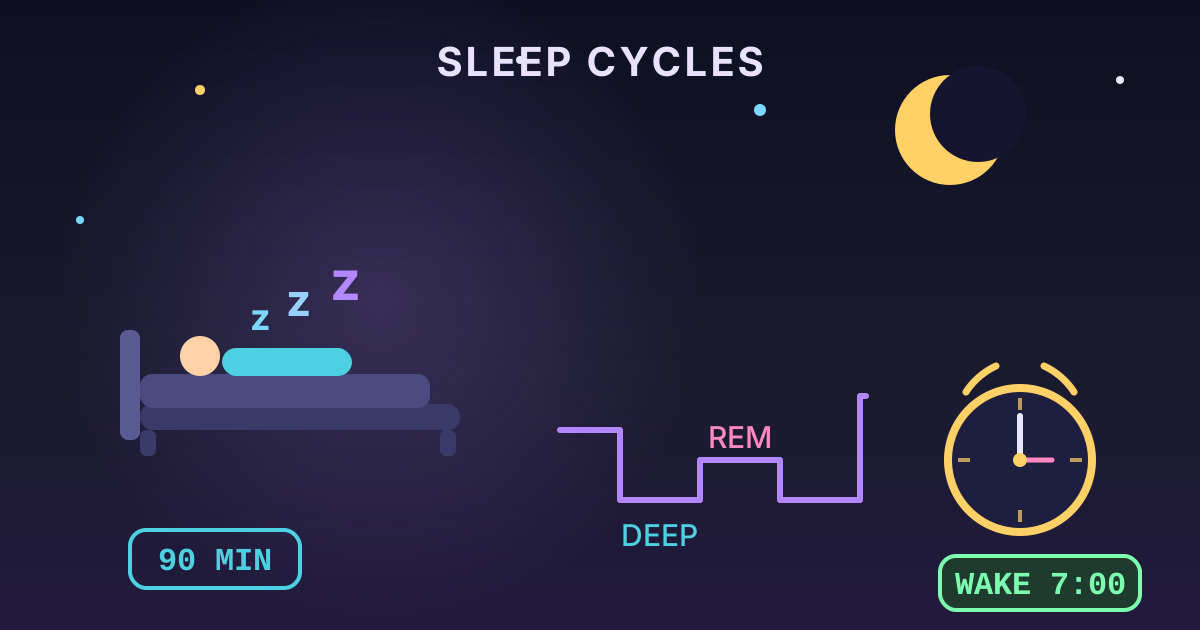
Sleep is not a single, monolithic state of unconsciousness. Instead, your brain cycles through several distinct stages throughout the night. A complete sleep cycle lasts approximately 90 minutes on average and is repeated several times while you sleep. The goal for a restful night is to complete 4 to 6 of these cycles.
The key to waking up refreshed is to be roused at the end of a sleep cycle, during a period of very light sleep. If your alarm clock goes off in the middle of a deep sleep stage, you'll experience what's known as sleep inertia—that groggy, disoriented feeling that can linger for hours. A sleep calculator helps you time your bedtime so your alarm coincides with the end of a cycle.
Think of it like a carefully orchestrated process. Each stage has a purpose, and disrupting the sequence midway through can throw the entire system off. By understanding this natural rhythm, you can work with your body's clock instead of against it.
The Stages of a Sleep Cycle: A Detailed Breakdown
Each 90-minute cycle is composed of four main stages, categorized as Non-Rapid Eye Movement (NREM) and Rapid Eye Movement (REM) sleep. Let's break down what happens in each phase.
Stage 1: NREM - The Doze-Off Phase
This is the very light, transitional stage between wakefulness and sleep, typically lasting only 5 to 10 minutes.
- Your Body: Your breathing and heart rate begin to slow down, and your muscles start to relax. You might experience slight twitches or the sensation of falling.
- Your Brain: Brain waves begin to slow from their daytime wakefulness patterns. You can be easily woken up during this stage.
Stage 2: NREM - Light Sleep
This stage makes up about 50% of your total sleep time. You are now asleep, but it's still a relatively light phase.
- Your Body: Your heart rate and breathing slow further, and your body temperature drops. Eye movement stops.
- Your Brain: Your brain produces short bursts of rapid, rhythmic brain wave activity known as sleep spindles. These are thought to be involved in sensory processing and memory consolidation. Waking up from Stage 2 is still relatively easy compared to what comes next.
Stage 3: NREM - Deep Sleep (The Restorative Stage)
This is the most restorative stage of sleep, crucial for physical recovery. It's much harder to wake someone up from this stage, and if you are, you'll feel extremely groggy.
- Your Body: Your muscles are fully relaxed, and blood pressure drops. This is when the body repairs tissues, builds bone and muscle, and strengthens the immune system.
- Your Brain: Your brain produces very slow delta waves. This is the period when the brain clears out waste products that have accumulated during the day.
Stage 4: REM Sleep - The Dream Stage
About 90 minutes after falling asleep, you enter your first REM cycle. This stage is as important for your mind as deep sleep is for your body.
- Your Body: Your breathing becomes faster and irregular, your heart rate and blood pressure rise to near-waking levels, and your eyes dart back and forth rapidly (hence, Rapid Eye Movement). Your limb muscles become temporarily paralyzed to prevent you from acting out your dreams.
- Your Brain: Brain activity is very high, similar to when you're awake. This is when most vivid dreaming occurs. REM sleep is critical for memory consolidation, learning, and mood regulation. Your brain processes the day's information, solidifying important memories and discarding irrelevant details.
After the REM stage, the cycle begins again. As the night progresses, you'll spend less time in deep sleep and more time in REM sleep.
How a Sleep Calculator Works: The Simple Math to Better Mornings
A sleep calculator isn't a complex device; it's a tool that does simple math based on our understanding of sleep cycles. It helps you determine the best time to go to bed if you have a set wake-up time, or the best time to wake up if you're going to bed now.
The core formula is:
Ideal Bedtime = Wake-up Time - (Number of Cycles x 90 minutes) - 15 minutes
The extra 15 minutes are factored in as the average time it takes for a person to fall asleep.
Let's walk through an example. Suppose you need to wake up at 7:00 AM and want to get five full sleep cycles (which is 7.5 hours of sleep).
- Calculate Total Sleep Time: 5 cycles * 90 minutes/cycle = 450 minutes (or 7.5 hours).
- Subtract from Wake-up Time: 7:00 AM - 7.5 hours = 11:30 PM.
- Account for Falling Asleep: 11:30 PM - 15 minutes = 11:15 PM.
So, to wake up refreshed at 7:00 AM, you should aim to be in bed and trying to sleep by 11:15 PM.
Here are some other potential bedtimes for a 7:00 AM wake-up:
- 6 cycles (9 hours of sleep): 9:45 PM
- 5 cycles (7.5 hours of sleep): 11:15 PM
- 4 cycles (6 hours of sleep): 12:45 AM
Optimizing Your Sleep: Beyond the Calculator
Using a sleep calculator is a fantastic first step, but for the best results, you should also cultivate good sleep hygiene. This means creating an environment and routine that promotes consistent, uninterrupted rest.
Create a Sleep-Inducing Environment
- Keep it Cool: The ideal bedroom temperature is between 60-67°F (15-19°C). Your body temperature naturally drops to initiate sleep.
- Keep it Dark: Use blackout curtains, an eye mask, or both. Even small amounts of light can disrupt your circadian rhythm.
- Keep it Quiet: Use earplugs or a white noise machine to block out disruptive sounds.
The Role of Diet and Exercise
- Avoid large meals, caffeine, and alcohol close to bedtime. Caffeine can stay in your system for hours, and while alcohol might make you feel drowsy, it disrupts REM sleep later in the night.
- Regular physical activity can significantly improve sleep quality. However, try to avoid intense workouts within an hour or two of your bedtime, as the endorphin rush can be stimulating.
Managing Your Digital Life Before Bed
- The blue light emitted by phones, tablets, and computers suppresses the production of melatonin, the hormone that controls your sleep-wake cycle.
- Implement a "digital curfew" at least 60-90 minutes before bed. If you must use a screen, use a blue light filter app or the built-in night mode on your device.
Tracking Your Sleep: Gathering Data for Better Insights
To take your sleep optimization to the next level, consider tracking your sleep patterns. Wearables like the Apple Watch, Fitbit, or Oura Ring can monitor your movement, heart rate, and even blood oxygen levels to provide a detailed breakdown of your night.
These devices generate a wealth of data, showing you how much time you spent in each sleep stage, your heart rate variability, and your overall sleep score. Analyzing this data over weeks or months can reveal patterns you might not have noticed. Perhaps you get less deep sleep on nights after you eat a late dinner or exercise too close to bedtime.
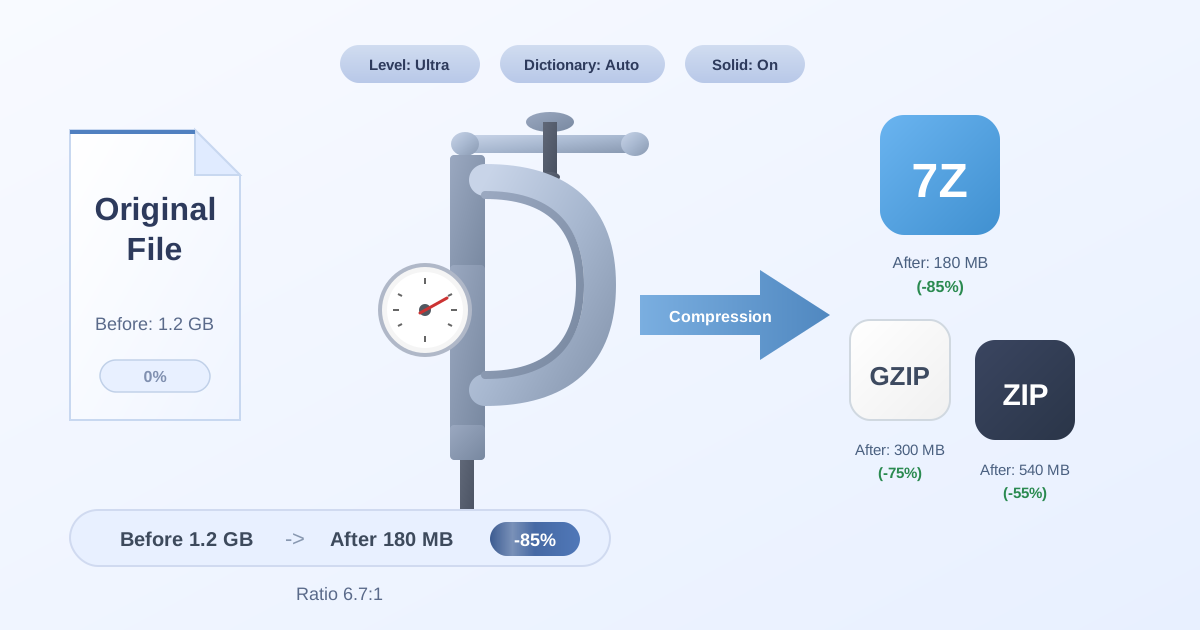
Over time, this data can accumulate into large files, especially if you export daily logs. To efficiently store or share your long-term sleep data with a health professional, it's wise to archive it. Our free Compress Files tool can bundle months of reports into a single, manageable ZIP file, making it easy to store or email.
Occasionally, you might receive sleep study results or data from a clinic in a compressed format you need to open. In that case, our simple Decompress Files tool can quickly extract the contents for you. Furthermore, if you need to send your archived data to a research study or specialist who requires a specific format like TAR, you can easily convert it. Converting a ZIP to TAR is just a few clicks away on our platform, ensuring your data is always in the right format.
Common Questions About Sleep Cycles (FAQ)
What if I wake up in the middle of the night? It's normal to wake up briefly between sleep cycles. As long as you can fall back asleep within a few minutes, it's generally not a problem. If you're consistently waking up for long periods, it could be a sign of a sleep disorder or poor sleep hygiene.
Are sleep calculators 100% accurate for everyone? No. The 90-minute cycle is an average. Your personal sleep cycle might be slightly shorter or longer. Use the calculator as a starting point and adjust based on how you feel. Sleep tracking apps can help you determine your personal average cycle length.
How many sleep cycles do I really need? Most adults need 4-6 full cycles per night, which translates to 6 to 9 hours of sleep. The optimal amount varies from person to person. Listen to your body; if you consistently feel rested and alert during the day, you're likely getting enough sleep.
Can I "catch up" on sleep over the weekend? While sleeping in can help you repay some of your "sleep debt," it's not a perfect solution and can disrupt your circadian rhythm, making it harder to wake up on Monday morning. Consistency is key. Aim for a similar bedtime and wake-up time every day, even on weekends.
Conclusion: Reclaim Your Mornings
Understanding and respecting your body's natural sleep cycles is one of the most powerful changes you can make for your health and well-being. It’s not just about avoiding grogginess; it's about improving cognitive function, mood, and physical health. By using a sleep calculator and practicing good sleep hygiene, you can stop fighting against your internal clock and start waking up feeling genuinely restored and ready to conquer the day.
Mastering your sleep is about understanding and managing cycles. Similarly, mastering your digital files is about having the right tools for the job. While you're optimizing your rest, don't forget to optimize your digital workflow. Explore our full suite of free, privacy-focused online tools at Practical Web Tools to streamline your digital life today!