Measure Body Fat Percentage: A Comprehensive Guide & Analysis
You’ve been diligent with your diet and exercise, but the number on the bathroom scale refuses to budge. It’s a frustratingly common scenario that leaves many people feeling defeated. But what if that scale is only telling you a fraction of the story? Your total body weight is a combination of muscle, bone, water, organs, and fat. Focusing solely on pounds or kilograms misses the most crucial metric for health and fitness: your body composition.
Enter body fat percentage. Unlike BMI, which can be misleading for muscular individuals, understanding your body fat percentage gives you a true insight into your health, fitness progress, and risk for certain diseases. This guide will demystify the process of measuring body fat, from simple at-home methods to gold-standard clinical assessments. We'll explore how each method works, its pros and cons, and how you can track your progress effectively and securely.
What is Body Fat Percentage and Why Does It Matter?
Body fat percentage is simply the proportion of your total body weight that is fat. It’s crucial to understand that not all fat is bad. Your body needs a certain amount of essential fat to function correctly—it helps regulate hormones, body temperature, and vitamin absorption. This fat is found in your organs, bone marrow, and central nervous system.
Beyond that, you have storage fat, which is the adipose tissue that your body uses for energy. While some storage fat is necessary, excessive amounts are linked to an increased risk of chronic conditions like type 2 diabetes, heart disease, and high blood pressure.
This is why measuring your body fat percentage is so important. It helps you:
- Gauge Health Risks: It's a better indicator of obesity-related health risks than BMI.
- Track True Progress: You might be losing fat and gaining muscle simultaneously, which the scale won't show. A decreasing body fat percentage, even if weight is stable, is a sign of positive progress.
- Optimize Athletic Performance: Athletes often monitor their body composition to ensure they are in peak condition for their sport.
- Set Realistic Goals: Knowing your starting point allows you to set achievable, health-focused goals.
General Body Fat Percentage Categories
While ideal percentages can vary based on age and genetics, here are some widely accepted ranges:
| Category | Women (% Fat) | Men (% Fat) |
|---|---|---|
| Essential Fat | 10-13% | 2-5% |
| Athletes | 14-20% | 6-13% |
| Fitness | 21-24% | 14-17% |
| Acceptable | 25-31% | 18-24% |
| Obesity | 32%+ | 25%+ |
Source: American Council on Exercise (ACE)
The Most Common Methods for Measuring Body Fat
There is a wide array of methods available to measure body fat, ranging from simple tape measurements to high-tech medical scans. Let's break down the most common ones.
1. Online Body Fat Calculators (The U.S. Navy Method)
This is one of the most accessible methods. It doesn't measure fat directly but uses an algorithm based on body measurements to estimate your body fat percentage. The most popular formula is the U.S. Navy Body Fat Formula, which requires only a tape measure.
How It Works: The formula uses your height, neck, and waist circumference (and hips for women) to estimate your body composition.
How to Take Your Measurements Accurately:
- Use a flexible tape measure: A non-stretch, flexible tape (like one used for sewing) is best.
- Keep the tape level: Ensure the tape is parallel to the floor for circumference measurements.
- Don't pull too tight: The tape should be snug against the skin but not compress it.
- Take measurements on bare skin: Measuring over clothing will skew the results.
- Measure multiple times: Take each measurement 2-3 times and average them for the best result.
- Neck: Measure just below the larynx (Adam's apple), sloping slightly downward at the front.
- Waist: For men, measure at the navel. For women, measure at the narrowest point of the waist, usually just above the navel.
- Hips (Women Only): Measure around the largest point of the hips and buttocks.
Pros:
- Completely free and accessible.
- Can be done anywhere, anytime.
- Good for tracking changes over time if measurements are consistent.
Cons:
- It's an estimation, not a direct measurement.
- Accuracy is highly dependent on how well you take the measurements.
- May not be accurate for individuals who are very muscular or have unconventional body shapes.
2. Skinfold Calipers
This method, also known as the "pinch test," involves using a tool called a skinfold caliper to measure the thickness of subcutaneous fat at specific sites on the body.
How It Works: A trained individual pinches the skin and underlying fat at 3 to 7 standard locations (e.g., triceps, abdomen, thigh). The caliper measures the thickness in millimeters. These numbers are then plugged into a formula to estimate overall body fat percentage.
Pros:
- Inexpensive and portable.
- Can be quite accurate when performed by a skilled and experienced professional.
Cons:
- Very difficult to perform accurately on yourself.
- High margin of error if the pincer isn't experienced.
- Less accurate for individuals who are very lean or have obesity.
3. Bioelectrical Impedance Analysis (BIA)
This technology is found in most modern "smart scales" and many handheld devices.
How It Works: The device sends a tiny, harmless electrical current through your body. The current travels faster through water-rich tissues (like muscle) than it does through fat. The device measures the resistance (impedance) to this current and uses that data, along with your height and weight, to calculate your body fat percentage.
Pros:
- Extremely convenient and fast.
- Effortless to use at home.
- Excellent for tracking trends over time, as long as conditions are consistent.
Cons:
- Accuracy can be heavily influenced by hydration levels. Being dehydrated will make your reading higher, while being over-hydrated will make it lower.
- Results can also be affected by recent meals, exercise, and even the time of day.
4. Hydrostatic Weighing (Underwater Weighing)
Once considered the gold standard, this method is now less common but still highly accurate.
How It Works: It's based on Archimedes' principle. You are first weighed on a dry-land scale. Then, you are weighed while fully submerged in a large tank of water after exhaling all the air from your lungs. Because fat is less dense than muscle and bone, a person with a higher body fat percentage will weigh less underwater.
Pros:
- Highly accurate.
Cons:
- Inconvenient and requires specialized equipment.
- Can be uncomfortable for people who are not confident in the water.
- Expensive and not widely available.
5. Dual-Energy X-ray Absorptiometry (DEXA Scan)
Often considered the new gold standard for body composition analysis, the DEXA scan is a medical imaging test.
How It Works: You lie on a table while a scanner passes over your entire body, using low-dose X-ray beams. The scan can differentiate between bone mass, fat mass, and lean mass with incredible precision. It can even break down your body composition by region (e.g., how much fat is on your left arm vs. your right leg).
Pros:
- Extremely accurate and reliable.
- Provides detailed data on bone density and regional fat distribution.
- Quick and non-invasive procedure (typically 10-15 minutes).
Cons:
- The most expensive option, often costing hundreds of dollars per scan.
- Requires access to a medical or specialized fitness facility.
Comparison of Body Fat Measurement Methods
To help you decide, here's a quick comparison of the methods:
| Method | Accuracy | Cost | Accessibility | Convenience |
|---|---|---|---|---|
| Online Calculator | Low to Moderate | Free | Very High | Very High |
| Skinfold Calipers | Moderate to High | Low | Moderate | Moderate |
| BIA (Smart Scale) | Low to Moderate | Low to Moderate | High | Very High |
| Hydrostatic Weighing | Very High | High | Very Low | Very Low |
| DEXA Scan | Very High | Very High | Low | Low |
Managing and Securing Your Health Data
As you track your body composition over time, you'll accumulate a significant amount of personal health data. This might include spreadsheets of your measurements, progress photos, and PDF reports from professional scans like a DEXA. Managing this data is key to seeing long-term trends.
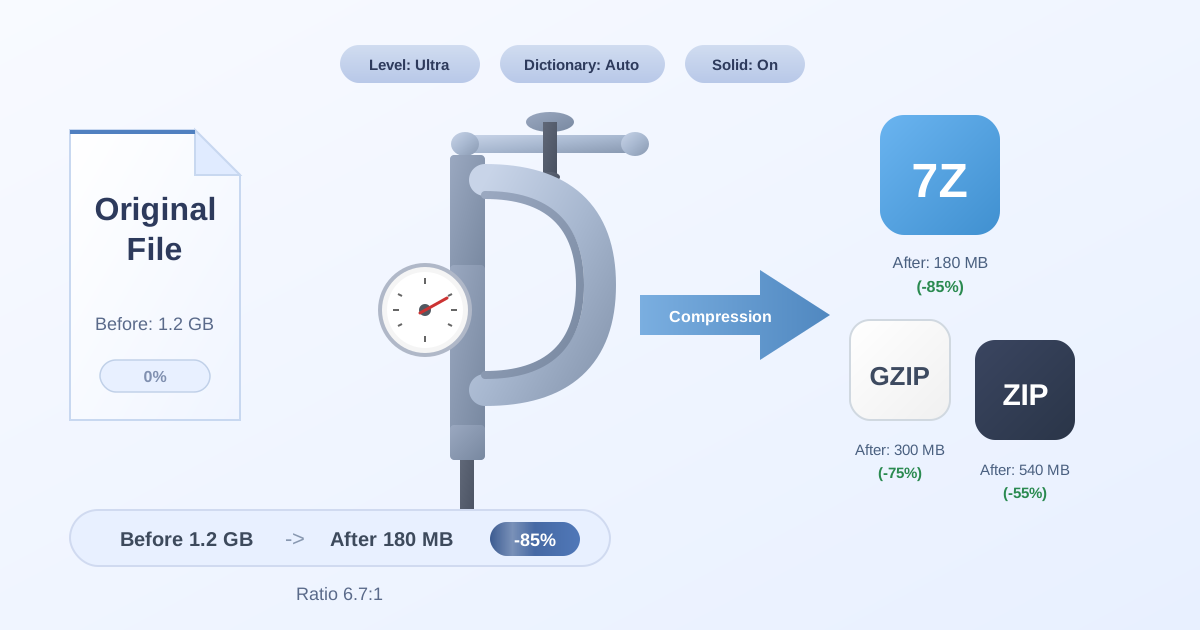
To keep your digital health journal organized and save storage space on your devices, it's a good practice to archive older records. You can easily bundle multiple reports and images from a single month into one file. If you're looking for a privacy-focused way to do this, you can use an online tool to Compress Files into a compact ZIP archive directly in your browser.
Likewise, if you work with a personal trainer or nutritionist who sends you a compressed folder of your meal plans and workout routines, you'll need a way to access them. A secure tool to Decompress Files is essential. At Practical Web Tools, our tools work on your device, ensuring your sensitive health information is never uploaded to a server, giving you complete peace of mind.
The Key to Accurate Tracking: Consistency
No matter which method you choose, the single most important factor for tracking progress is consistency. The trend over time is far more valuable than any single number.
Here are some best practices:
- Measure at the Same Time: Always measure yourself at the same time of day, preferably in the morning after using the restroom and before eating or drinking.
- Control Hydration: For BIA scales, try to be consistently hydrated. Don't measure after a heavy workout or after drinking a lot of coffee.
- Use the Same Method: Stick with the same measurement method each time. Don't compare a BIA scale reading to a DEXA scan and expect them to be identical.
- Focus on the Trend: Look at the weekly or monthly average rather than daily fluctuations. Your body fat percentage can fluctuate for many reasons, so don't get discouraged by a single high reading.
Conclusion: Look Beyond the Scale
Moving your focus from total weight to body fat percentage is a powerful shift that provides a much clearer picture of your health and fitness journey. While clinical methods like DEXA scans offer the highest accuracy, at-home methods like online calculators and BIA scales are fantastic tools for tracking your progress consistently and affordably.
The best method is the one you will use consistently. Start by taking your measurements at home, focus on the long-term trend, and celebrate the non-scale victories like increased energy, better-fitting clothes, and improved strength. You have the knowledge and tools to track what truly matters.
Ready to take control of your health journey? Explore the dozens of free and secure utilities at Practical Web Tools to help you manage all your digital needs along the way.