Depreciation Calculator: A Comprehensive Guide for Businesses
Your In-Depth Guide to Understanding and Using a Depreciation Calculator
As a business owner, you invest in assets to help your company grow. From a new fleet of delivery vehicles to high-performance office computers, these tangible items are the engine of your operations. But as soon as you put an asset into service, a crucial financial process begins: depreciation. This concept might sound like complex accounting jargon, but understanding it is fundamental to grasping your company's true financial health.
What if there was a way to simplify this essential calculation, ensuring accuracy for your tax returns and financial statements? That's where a depreciation calculator comes in. This powerful tool takes the guesswork out of a complex process, but its output is only as good as the information you provide.
This comprehensive guide will demystify depreciation. We'll break down the core concepts, explore the most common methods, and walk you through how to use a calculator effectively. By the end, you'll be able to confidently manage your asset valuation and make smarter financial decisions for your business.
What Exactly is Depreciation?
In simple terms, depreciation is an accounting method used to allocate the cost of a tangible asset over its useful life. It represents how much of an asset's value has been used up in a given period. It's important to distinguish this from the everyday meaning of depreciation, which often refers to a drop in market value.
Accounting depreciation isn't about an asset's resale price; it's a systematic way to spread its initial cost over the time it helps generate revenue. This expense is recorded on the income statement, reducing the company's taxable income, and the accumulated depreciation reduces the asset's value on the balance sheet.
Why is Calculating Depreciation So Important?
Properly calculating depreciation isn't just a box-ticking exercise for your accountant. It has significant real-world implications for your business:
- Tax Benefits: Depreciation is a non-cash expense, meaning you can deduct it from your revenue to lower your taxable income without actually spending any cash in that period. This can result in significant tax savings.
- Accurate Financial Reporting: It ensures your financial statements, particularly the balance sheet and income statement, are accurate. The balance sheet reflects the book value of your assets (original cost minus accumulated depreciation), giving a clearer picture of your company's worth.
- Informed Decision-Making: By understanding how much an asset has depreciated, you can better plan for future capital expenditures. It helps answer critical questions like, "When is the most financially sound time to replace this piece of machinery?"
- Budgeting and Forecasting: Depreciation expenses need to be factored into your financial forecasts to create realistic budgets and profit projections.
Key Terms You Need to Know
Before diving into the methods and calculators, let's define a few key terms you'll encounter:
- Asset Cost: The full purchase price of the asset, including any costs necessary to get it ready for its intended use, such as sales tax, shipping fees, and installation charges.
- Useful Life: The estimated amount of time the asset is expected to be productive and generate revenue for the business. This is an estimate and can be measured in years or, in some cases, by units of production (e.g., machine hours, miles driven).
- Salvage Value (or Residual Value): The estimated resale value of an asset at the end of its useful life. If you expect a company car to be worth $5,000 after five years, its salvage value is $5,000.
- Book Value: The value of an asset on your balance sheet. It is calculated as the original asset cost minus the accumulated depreciation. At the end of its useful life, an asset's book value should equal its salvage value.
Common Depreciation Methods Explained
There isn't a one-size-fits-all way to calculate depreciation. The method you choose depends on the nature of the asset and your accounting strategy. A depreciation calculator will ask you to select one of these common methods.
1. Straight-Line Method
This is the simplest and most widely used method. It spreads the cost of the asset evenly across its useful life, resulting in the same depreciation expense each year.
- Best For: Assets that are used up at a consistent rate over time, like office furniture or buildings.
- Formula:
Annual Depreciation Expense = (Asset Cost - Salvage Value) / Useful Life (in years)
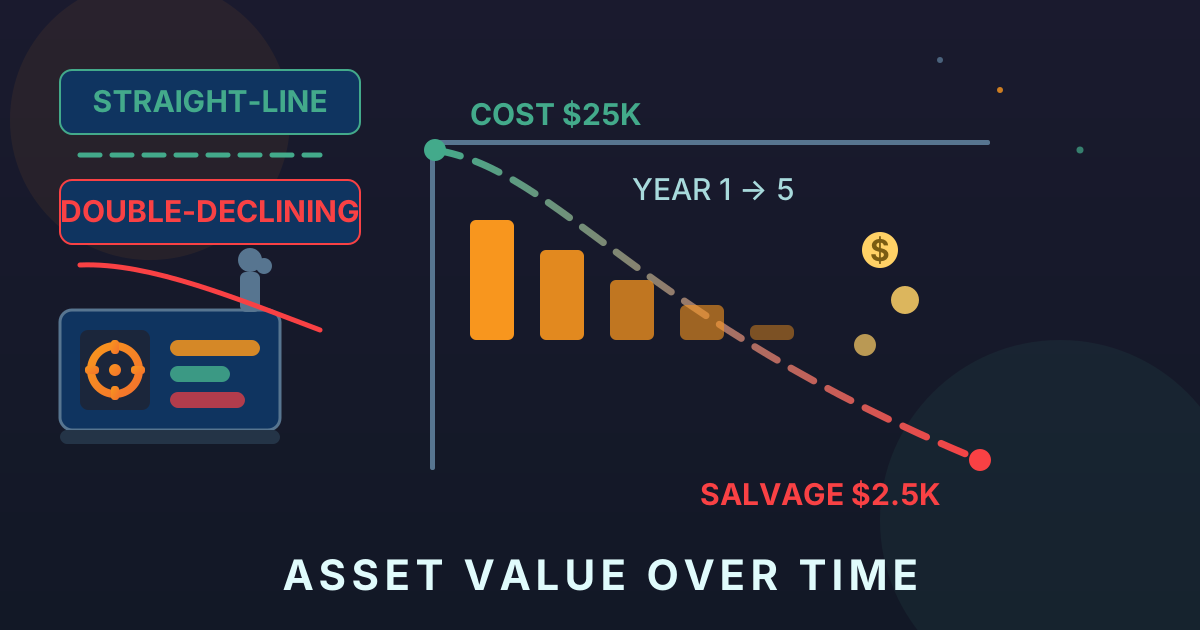
Example: Let's say you buy a new server for your business at a total cost of $25,000. You estimate its useful life to be 5 years and its salvage value to be $2,500.
- Calculation:
($25,000 - $2,500) / 5 = $4,500 per year
Here is the depreciation schedule:
| Year | Beginning Book Value | Depreciation Expense | Ending Book Value |
|---|---|---|---|
| 1 | $25,000 | $4,500 | $20,500 |
| 2 | $20,500 | $4,500 | $16,000 |
| 3 | $16,000 | $4,500 | $11,500 |
| 4 | $11,500 | $4,500 | $7,000 |
| 5 | $7,000 | $4,500 | $2,500 |
2. Double-Declining Balance Method
This is an accelerated depreciation method. It results in higher depreciation expenses in the early years of an asset's life and lower expenses in the later years. It's called "double-declining" because it applies double the straight-line depreciation rate to the book value of the asset each year.
- Best For: Assets that lose value quickly or are more productive in their early years, such as computers, vehicles, and tech equipment.
- Formula:
Annual Depreciation Expense = (2 / Useful Life) * Beginning Book Value
Example: Using the same $25,000 server with a 5-year useful life:
- Straight-Line Rate:
1 / 5 = 20% - Double-Declining Rate:
20% * 2 = 40%
Here is the schedule. Note that depreciation stops once the book value reaches the salvage value ($2,500).
| Year | Beginning Book Value | Depreciation Rate | Depreciation Expense | Ending Book Value |
|---|---|---|---|---|
| 1 | $25,000 | 40% | $10,000 | $15,000 |
| 2 | $15,000 | 40% | $6,000 | $9,000 |
| 3 | $9,000 | 40% | $3,600 | $5,400 |
| 4 | $5,400 | 40% | $2,160 | $3,240 |
| 5 | $3,240 | n/a | $740* | $2,500 |
*In the final year, you only depreciate the amount needed to reach the salvage value ($3,240 - $2,500 = $740).
3. Units of Production Method
Unlike time-based methods, this one calculates depreciation based on the asset's usage. The more an asset is used, the more it depreciates.
- Best For: Manufacturing equipment, machinery, and vehicles, where wear and tear is directly related to usage rather than age.
- Formula:
Depreciation per Unit = (Asset Cost - Salvage Value) / Estimated Total Units of ProductionAnnual Depreciation Expense = Depreciation per Unit * Units Produced in the Year
Example: A company buys a 3D printer for $50,000 with a salvage value of $5,000. It's estimated to have a useful life of 18,000 printing hours.
- Depreciation per Hour:
($50,000 - $5,000) / 18,000 hours = $2.50 per hour
If the printer runs for 4,000 hours in Year 1 and 3,500 hours in Year 2:
- Year 1 Depreciation:
$2.50 * 4,000 = $10,000 - Year 2 Depreciation:
$2.50 * 3,500 = $8,750
A Step-by-Step Guide to Using a Depreciation Calculator
Online depreciation calculators make this process incredibly simple. While interfaces vary, they all follow the same basic steps.
-
Step 1: Gather Your Asset's Information Before you open the tool, have these figures ready:
- The total asset cost.
- The estimated salvage value.
- The useful life (in years).
- The date the asset was placed in service.
-
Step 2: Choose Your Depreciation Method Select the method that best fits the asset from a dropdown menu (e.g., Straight-Line, Double-Declining Balance).
-
Step 3: Input the Data Carefully enter your gathered information into the corresponding fields of the calculator.
-
Step 4: Calculate and Analyze the Results Click the "Calculate" button. The tool will instantly generate a full depreciation schedule, showing the annual depreciation expense and the asset's book value for each year of its useful life.
Choosing the Right Method: A Quick Comparison
Not sure which method to use? This table can help you decide.
| Method | Best For | Complexity | Depreciation Pattern |
|---|---|---|---|
| Straight-Line | Simplicity; assets used evenly over time. | Low | Constant amount each year. |
| Double-Declining | Tech, vehicles; assets that lose value fast. | Medium | Accelerated; high in early years. |
| Sum-of-Years' Digits | A less aggressive accelerated method. | Medium | Accelerated; less front-loaded. |
| Units of Production | Machinery; assets where usage dictates value. | High | Variable; based on output. |
Managing Your Depreciation Records Effectively
Calculating depreciation is only half the battle; maintaining meticulous records is equally important. Your depreciation schedules are critical documents for tax audits, financial planning, and business valuations. These records, which are often created in spreadsheets or accounting software, need to be stored securely and accessibly for many years.
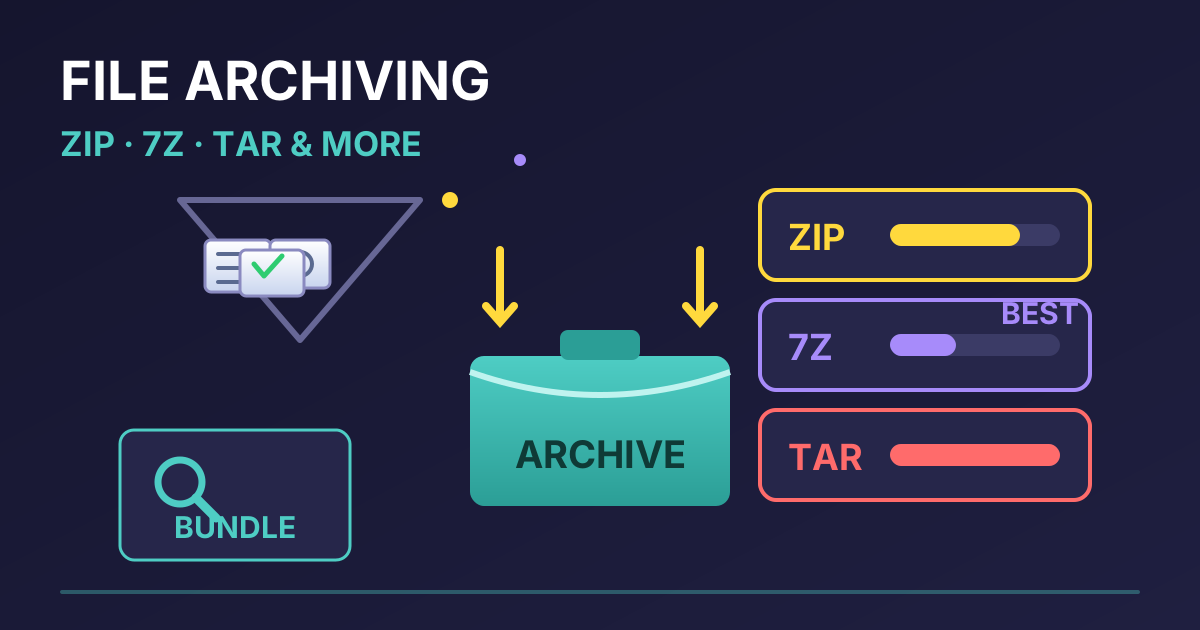
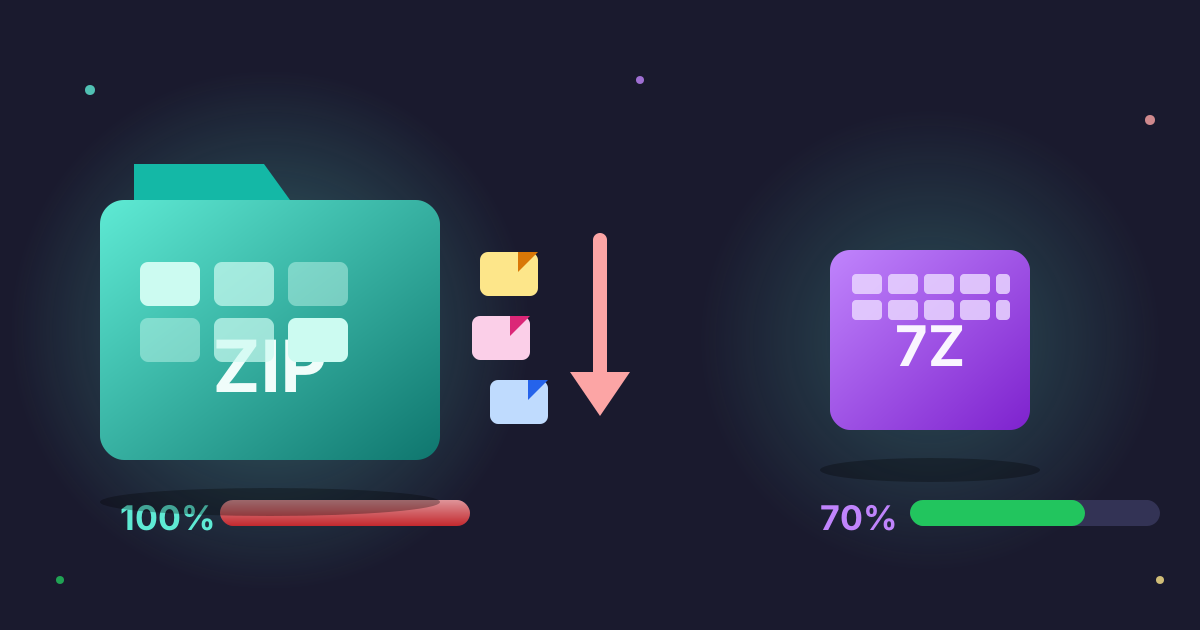
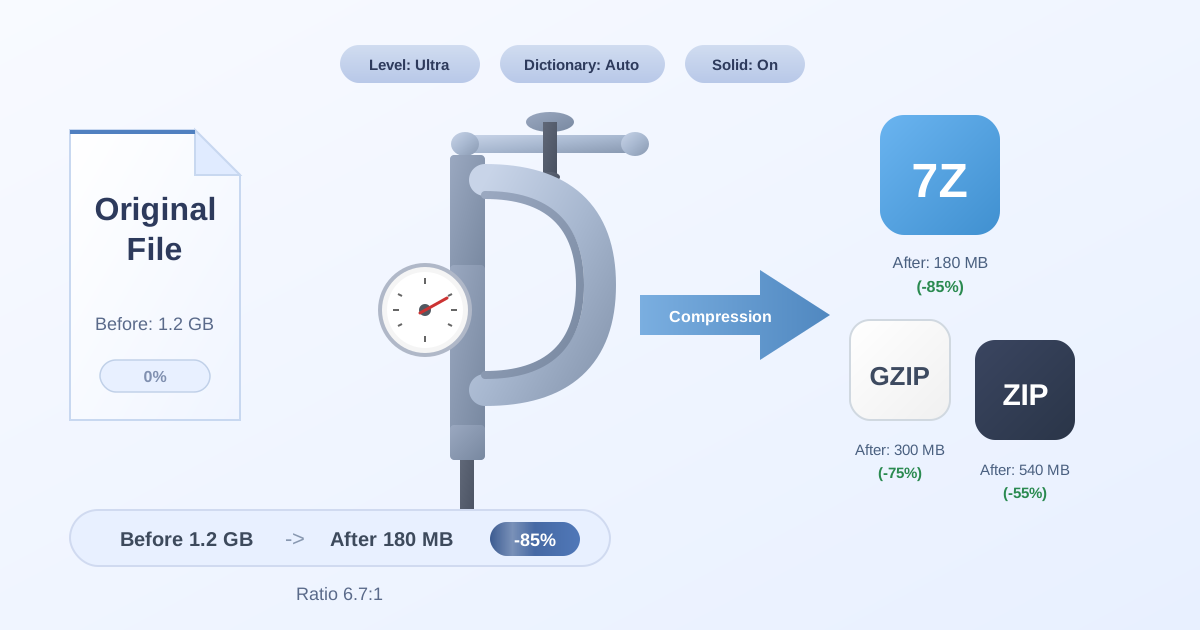
As your business grows, so does the volume of your digital paperwork. To keep your financial archives organized and manageable, it's wise to bundle related documents. You can use a free online tool to Compress Files into a single, compact archive like a ZIP or 7Z file. For example, you can group all depreciation schedules for a fiscal year into one file named Depreciation_Records_2024.zip. This not only saves significant storage space but also makes it easier to email to your accountant or store in the cloud.
When you or your team need to review these records later, a simple tool to Decompress Files can quickly extract the original documents without any loss of quality. Adopting this simple file management practice ensures your critical financial data remains tidy, secure, and easy to retrieve when needed.
Common Mistakes to Avoid
Be mindful of these common pitfalls when calculating depreciation:
- Forgetting to Include All Costs: The asset's cost isn't just the sticker price. Remember to include sales tax, shipping, and installation fees.
- Unrealistic Estimates: Grossly over or underestimating an asset's useful life or salvage value can distort your financial statements and tax liabilities.
- Using the Wrong Method: Applying the straight-line method to a piece of technology that will be obsolete in two years doesn't accurately reflect its loss in value.
- Incorrect Timing: Depreciation begins when an asset is "placed in service," not necessarily on the purchase date.
Conclusion: Take Control of Your Asset Valuation
Depreciation is a cornerstone of sound financial management. By moving beyond the jargon and understanding the underlying principles, you empower yourself to make more strategic decisions for your business. While a depreciation calculator is an indispensable tool for ensuring speed and accuracy, your knowledge of the inputs—cost, useful life, salvage value, and the right method—is what truly drives the value.
By accurately tracking depreciation, you can optimize your tax strategy, present a true and fair view of your company's finances, and plan for a successful future.
Now that you've mastered this financial concept, explore the full suite of free and privacy-focused tools at Practical Web Tools. From file management to data conversion, we have resources designed to help you run your business more efficiently.