DOCX to HTML: The Ultimate Guide to Clean Web Conversions

Have you ever spent hours perfectly formatting a document in Microsoft Word, only to copy and paste it into your website's editor and see a complete mess? You're not alone. The seemingly simple task of moving content from a DOCX file to the web often results in broken layouts, inconsistent fonts, and a mountain of messy, unnecessary code. This isn't just a cosmetic issue; it can harm your website's performance, search engine optimization (SEO), and user experience.
But what if there was a way to bridge the gap between your offline document and your online platform seamlessly? There is. The solution lies in converting your DOCX file to clean, standard-compliant HTML. This comprehensive guide will walk you through why this conversion is crucial, explore the best methods—from simple online tools to advanced developer techniques—and provide best practices to ensure a perfect transition from Word to the web every time.
Why Convert DOCX to HTML in the First Place?
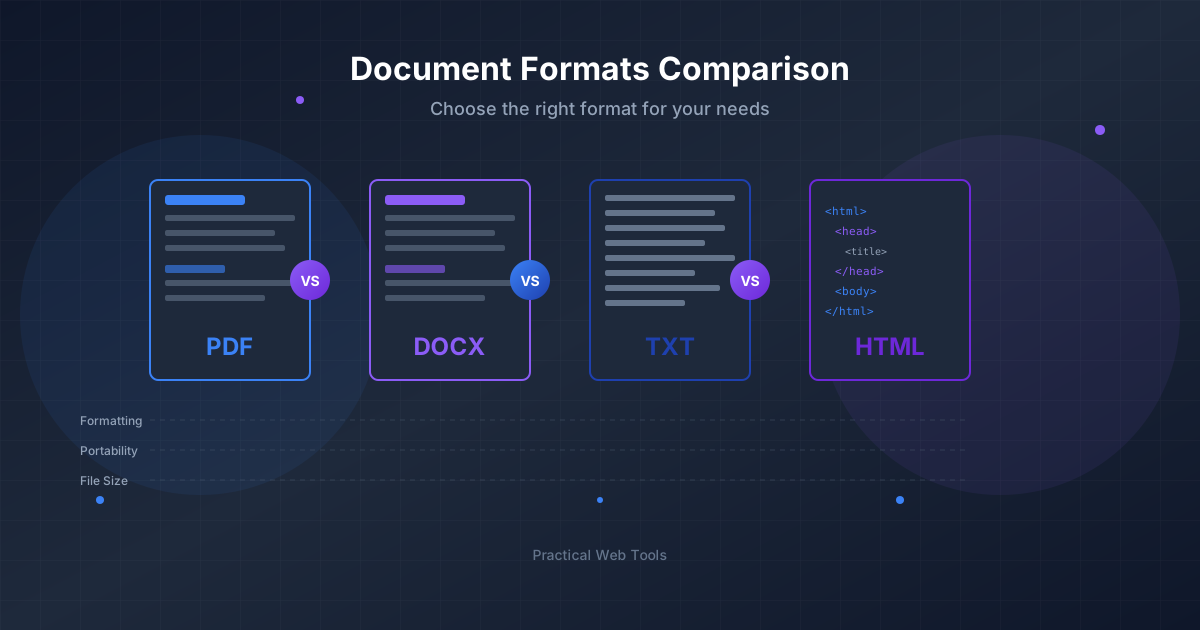
While Word is an excellent tool for drafting and editing, its native format (.docx) is a complex, proprietary structure designed for print and digital documents, not for web browsers. Web browsers read and render HTML (HyperText Markup Language). Converting your document is a necessary step for several common workflows:
- Publishing Blog Posts: Most writers and content creators prefer drafting in Word for its powerful editing and review features. Converting the final draft to HTML is the proper way to move it into a Content Management System (CMS) like WordPress, Ghost, or Joomla.
- Creating Email Newsletters: Email clients are notoriously picky about the code they render. Pasting directly from Word into an email marketing platform like Mailchimp or ConvertKit can lead to disastrous formatting issues. Clean HTML ensures your email looks professional across all devices and clients.
- Updating Website Content: Whether you're adding a new knowledge base article, updating a product description, or posting a press release, starting with a DOCX file is common. A proper conversion ensures the new content matches your website's existing styles.
- Archiving Documents: HTML is a universal, open standard. Converting important documents to HTML makes them easily viewable in any web browser for years to come, without needing specific software like Microsoft Word.
The Big Problem: Why Direct Copy-Paste Fails
When you copy text from a Word document and paste it into a visual editor online, you're not just pasting the words. You're also pasting a huge amount of hidden formatting code that Word uses to describe how the document should look. This code is often non-standard and specific to Microsoft's ecosystem.
What "Junk Code" Looks Like
Let's look at an example. A simple, bolded sentence in Word might look like this to you:
This is a bold sentence.
But when you paste it, the underlying HTML might look like this:
<p class="MsoNormal"><b style="mso-bidi-font-weight:normal"><span style="font-family: 'Calibri',sans-serif; mso-ascii-theme-font: minor-latin; mso-hansi-theme-font: minor-latin; mso-bidi-theme-font: minor-latin;">This is a bold sentence.</span></b></p>
Now, here is what that same sentence looks like in clean, semantic HTML:
<p><strong>This is a bold sentence.</strong></p>
The first example is bloated with proprietary mso- (Microsoft Office) styles, unnecessary <span> tags, and inline CSS that will override your website's stylesheet. This leads to several significant problems:
- Bloated Code: All that extra code increases the size of your webpage, which can slow down its loading time. Page speed is a critical factor for both user experience and SEO.
- Inconsistent Styling: The inline styles (
style="...") pasted from Word will override your website's carefully crafted CSS, leading to inconsistent fonts, sizes, and colors that don't match the rest of your site. - Poor Responsiveness: Code generated by Word is not designed to be responsive. It can break layouts on mobile phones and tablets, creating a frustrating experience for a large portion of your audience.
- Maintenance Nightmares: If you ever decide to redesign your website, you'll have to manually edit every single page with pasted Word code to update the styling. Clean, semantic HTML, on the other hand, will update automatically when you change your site's CSS.
Methods for Converting DOCX to Clean HTML
Fortunately, there are several reliable methods to convert your documents properly. Let's explore them, from the easiest to the most technical.
Method 1: Use a Dedicated Online Converter
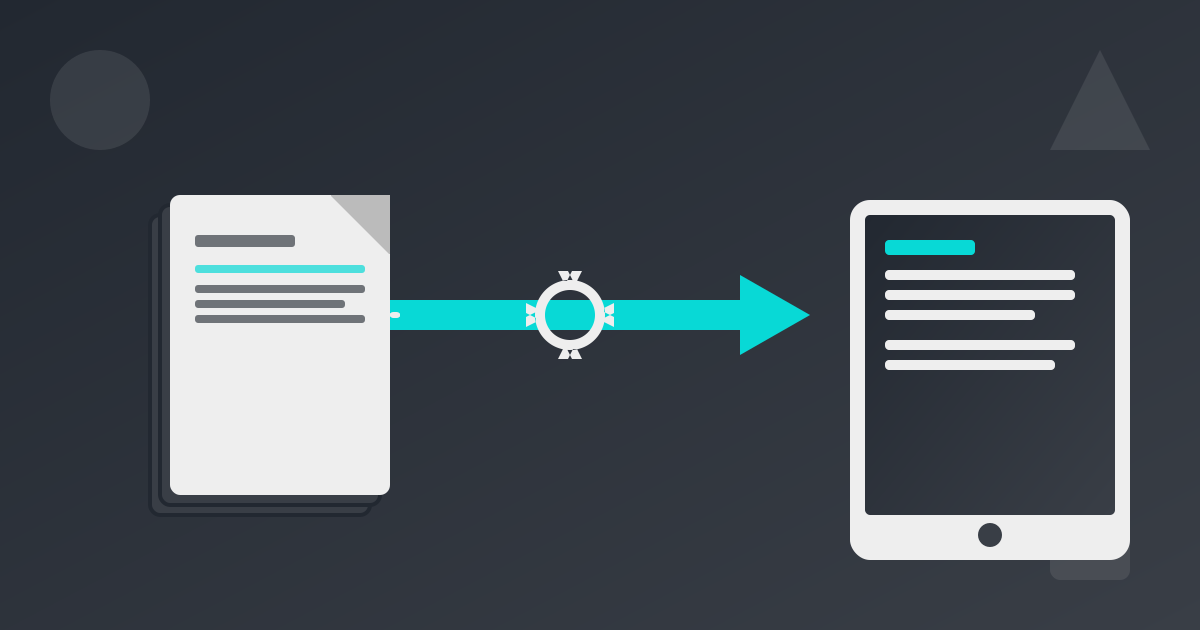
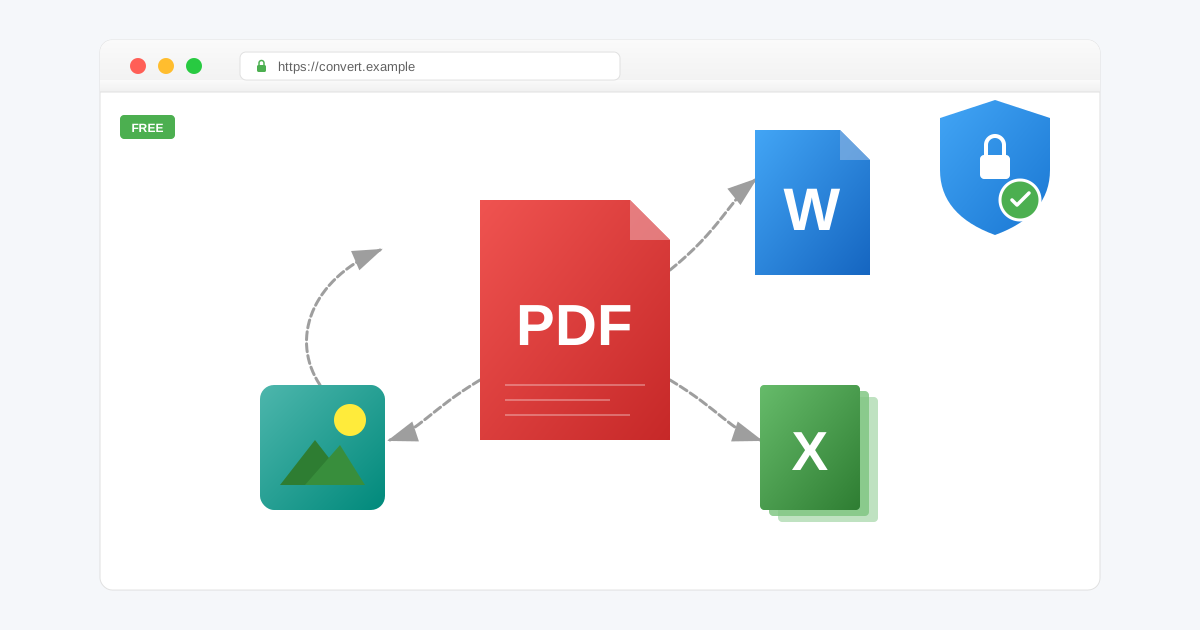
For most users, the fastest, easiest, and most effective method is to use a free online DOCX to HTML converter. These tools are specifically designed to strip out the junk code from Word and produce clean, web-ready HTML.
Benefits:
- Simplicity: The process is typically as simple as uploading a file and clicking a button.
- Clean Output: Good converters are programmed to recognize and remove Microsoft-specific tags, inline styles, and empty paragraphs.
- Accessibility: You can use them from any device with a web browser, with no software installation required.
- Privacy: Reputable sites like Practical Web Tools prioritize user privacy, often processing files in your browser or deleting them from servers shortly after conversion.
How to Use an Online Converter (Step-by-Step):
- Find a Trusted Tool: Navigate to a reliable online file conversion website.
- Upload Your DOCX: Locate the "Upload" or "Choose File" button and select the Word document from your computer.
- Configure Options (If Available): Some tools may offer options to control the output, such as how to handle images or the level of code cleaning.
- Click Convert: Start the conversion process.
- Copy or Download: The tool will generate the HTML code. You can typically copy it directly to your clipboard or download it as an
.htmlfile. - Paste into Your CMS: Paste the clean HTML into the "Text," "Code," or "HTML" view of your website's editor.
This method is the recommended approach for bloggers, marketers, and administrative staff who need a quick and reliable solution without a steep learning curve.
Method 2: Use Microsoft Word's "Save As Web Page, Filtered"
Microsoft Word has a built-in feature to save documents as HTML. The key is to use the correct option. Word offers two choices: "Web Page" and "Web Page, Filtered." You should always choose the "Filtered" option.
- Web Page (
.htm,.html): This option saves the document with a massive amount of XML and Word-specific markup to ensure the document can be opened and edited in Word again with perfect fidelity. This is not what you want for a website. - Web Page, Filtered (
.htm,.html): This option removes the majority of the Microsoft-specific tags and creates a much cleaner file intended for web use.
How to Use This Method:
- Open your document in Microsoft Word.
- Go to
File > Save As. - In the "Save as type" dropdown menu, select
Web Page, Filtered (*.htm;*.html). - Give the file a name and click
Save. - You can now open this
.htmfile in a text editor (like Notepad or VS Code) to view and copy the HTML.
Pros: It's built-in and works offline. Cons: The output is still not as clean as what a dedicated third-party converter can produce. It often leaves behind some questionable styling and empty tags that may require manual cleanup.
Method 3: Use Google Docs as an Intermediary
Google Docs has a surprisingly good HTML export feature. By using it as a middleman, you can often get very clean code from a Word document.
How to Use This Method:
- Open Google Drive and upload your DOCX file.
- Double-click the file to open it in Google Docs. Google Docs will automatically convert it to its own format.
- Review the document to ensure the formatting looks correct.
- Go to
File > Download > Web Page (.html, zipped). - This will download a ZIP file. Unzip it, and you will find the
.htmlfile along with a folder of any images that were in the document.
Pros: Free, accessible, and generally produces clean, modern HTML. It also conveniently extracts images for you. Cons: Requires a Google account, an internet connection, and involves a few extra steps (upload, open, download, unzip).
Method 4: Advanced Option for Developers - Pandoc
For developers, technical writers, or anyone comfortable with the command line, Pandoc is an incredibly powerful document conversion tool. It can convert files between dozens of formats and offers granular control over the output.
To convert a DOCX to HTML with Pandoc, you would open your terminal and run a simple command:
pandoc -f docx -t html -o output.html input.docx
Pros: Extremely powerful and flexible, scriptable for batch conversions, produces exceptionally clean HTML. Cons: Not user-friendly for non-technical users. It requires installation and comfort with command-line interfaces.
Comparison of Conversion Methods
To help you choose, here’s a quick comparison of the methods:
| Method | Ease of Use | Code Cleanliness | Cost | Best For |
|---|---|---|---|---|
| Online Converter | ⭐⭐⭐⭐⭐ | ⭐⭐⭐⭐ | Free | Bloggers, marketers, and most non-technical users |
| Word "Save As Filtered" | ⭐⭐⭐⭐ | ⭐⭐ | Free | Quick, offline conversions when perfection isn't needed |
| Google Docs Intermediary | ⭐⭐⭐ | ⭐⭐⭐⭐ | Free | Users who are already in the Google ecosystem |
| Pandoc (Command Line) | ⭐ | ⭐⭐⭐⭐⭐ | Free | Developers, technical writers, and power users |
Best Practices for Clean Conversions
The quality of your final HTML also depends on how you create your initial Word document. Follow these tips for a smoother process:
- Use Styles: Use Word's built-in styles for headings (Heading 1, Heading 2, etc.) instead of manually changing font sizes and making text bold. This translates directly to
<h1>,<h2>tags in HTML. - Use Proper Lists: Use the bulleted and numbered list buttons instead of typing hyphens or numbers manually.
- Keep it Simple: Avoid complex elements like text boxes, WordArt, columns, and intricate tables, as these do not convert well to standard HTML.
- Handle Images Separately: While some converters can extract images, the best practice is to plan on uploading your images to your website separately and then adding them to the HTML using the
<img>tag.
Handling Related Document Workflows
Your content creation process often involves more than just DOCX files. You might start with research materials or final versions delivered in other formats, most commonly PDF. Before you even get to a DOCX, you might receive a document as a PDF. In these cases, a reliable PDF to Word converter is your first essential step to get an editable version that you can then prepare for the web.
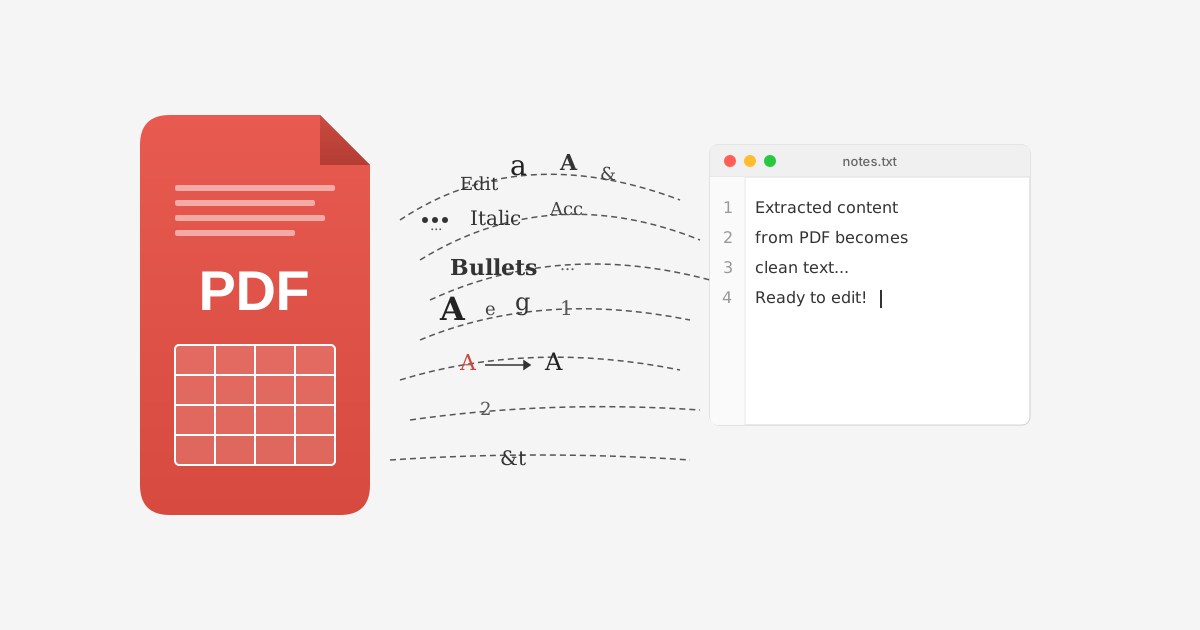
Sometimes, you just need to extract information quickly. If your goal is to grab the text from a PDF to repurpose it in an HTML document, a full conversion to Word might be overkill. Our PDF to Text tool is perfect for quickly pulling out all the written content without any formatting, giving you a clean slate to work with.
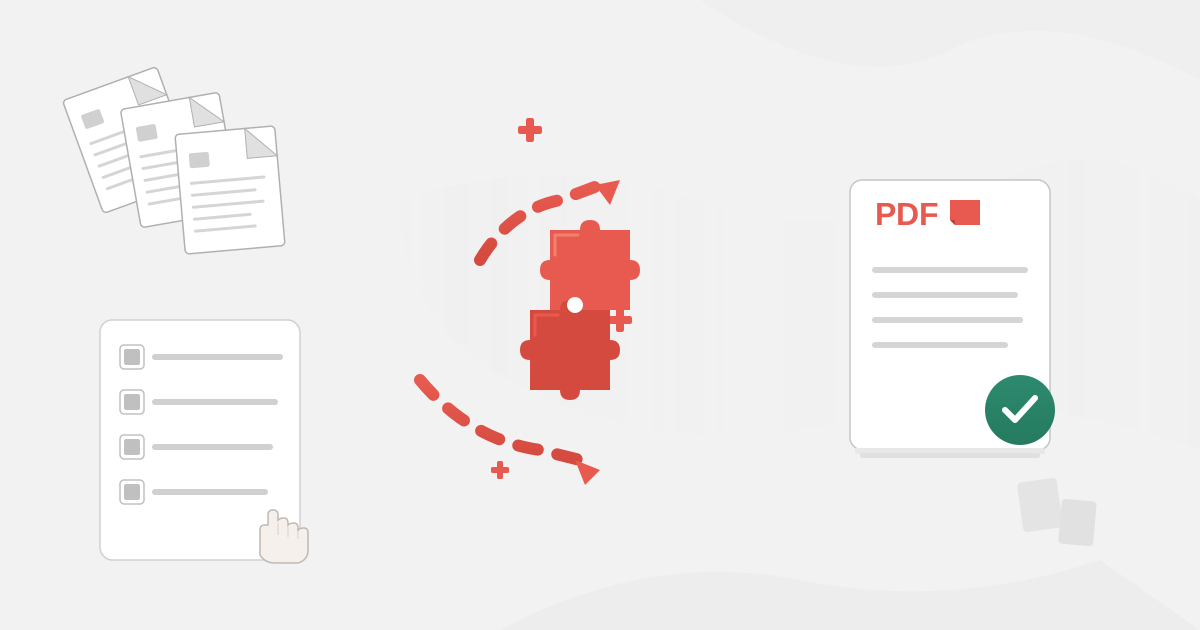
Finally, managing your source files is just as important as publishing the final content. After a project is complete, you may need to archive the various source documents—briefs, drafts, and final approvals. Using a tool to Merge PDFs can help you combine multiple source documents into a single, organized archive file for future reference.
Conclusion: Embrace the Conversion
Moving content from Microsoft Word to the web doesn't have to be a frustrating experience filled with code cleanup and broken layouts. By abandoning the direct copy-paste method and embracing a proper DOCX to HTML conversion workflow, you ensure your content is clean, fast-loading, and professional.
For the vast majority of users, a high-quality online converter offers the perfect balance of simplicity and power. It empowers you to focus on what you do best—creating great content—while the tool handles the technical heavy lifting of producing web-ready code.
Ready to streamline your content workflow? Explore the suite of free, private, and powerful conversion tools at Practical Web Tools to handle all your document needs, from PDF editing to file conversion and beyond.