BMP to PNG: The Ultimate Conversion Guide for 2024

Have you ever stumbled upon an image file with a .bmp extension and wondered why it's taking up so much space on your hard drive? Or perhaps you've tried to upload one to your website, only to find it loads at a snail's pace. You're not alone. The Bitmap (BMP) format, while a pillar of early digital imaging, is often impractical for modern web and digital use. The solution? Converting it to a Portable Network Graphic (PNG).
This comprehensive guide will walk you through everything you need to know about converting BMP files to PNG. We'll explore the core differences between these two formats, outline the significant advantages of making the switch, and provide step-by-step instructions using a variety of tools. By the end, you'll be an expert in optimizing your images for efficiency and quality.
What is a BMP File? A Quick Look Back
BMP, short for Bitmap Image File, is a raster graphics format developed by Microsoft in the early days of Windows. Its primary purpose was to store digital images independent of the display device, ensuring they looked the same on different screens.
Key Characteristics of BMP
- Uncompressed Data: The most defining feature of a BMP file is that it stores image data pixel by pixel, usually without any compression. Every pixel's color information is saved directly, resulting in a 1:1 representation of the image.
- High Quality: Because there's no compression, there is absolutely no data loss. This means the image quality is a perfect, unadulterated copy of the original.
- Large File Sizes: The lack of compression is a double-edged sword. While it preserves quality, it leads to massive file sizes. A simple high-resolution photograph saved as a BMP can easily consume tens or even hundreds of megabytes.
- Limited Features: BMP is a straightforward format. It lacks support for modern features like an alpha channel, which allows for transparency.
While BMP files are excellent for archival purposes where perfect fidelity is paramount, their bulkiness makes them unsuitable for websites, emails, or general document use.
What is a PNG File? The Web's Favorite Format
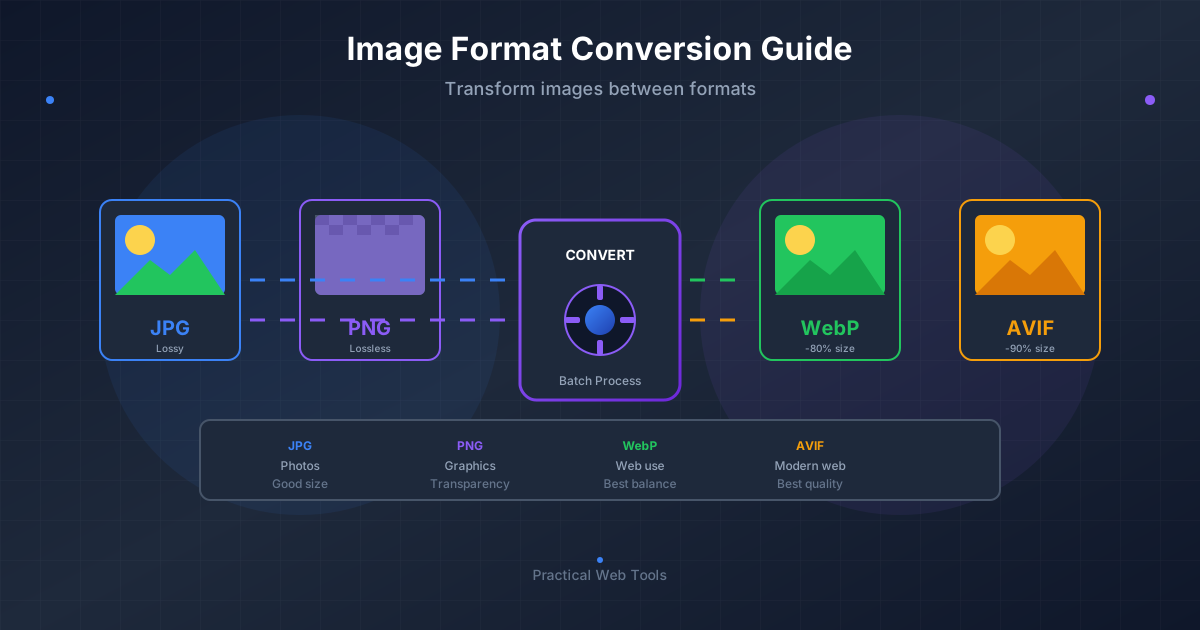
PNG, or Portable Network Graphics, was developed in the mid-1990s as a superior, patent-free replacement for the GIF format. It was designed from the ground up to be a versatile and efficient format for transferring images over the internet.
Key Characteristics of PNG
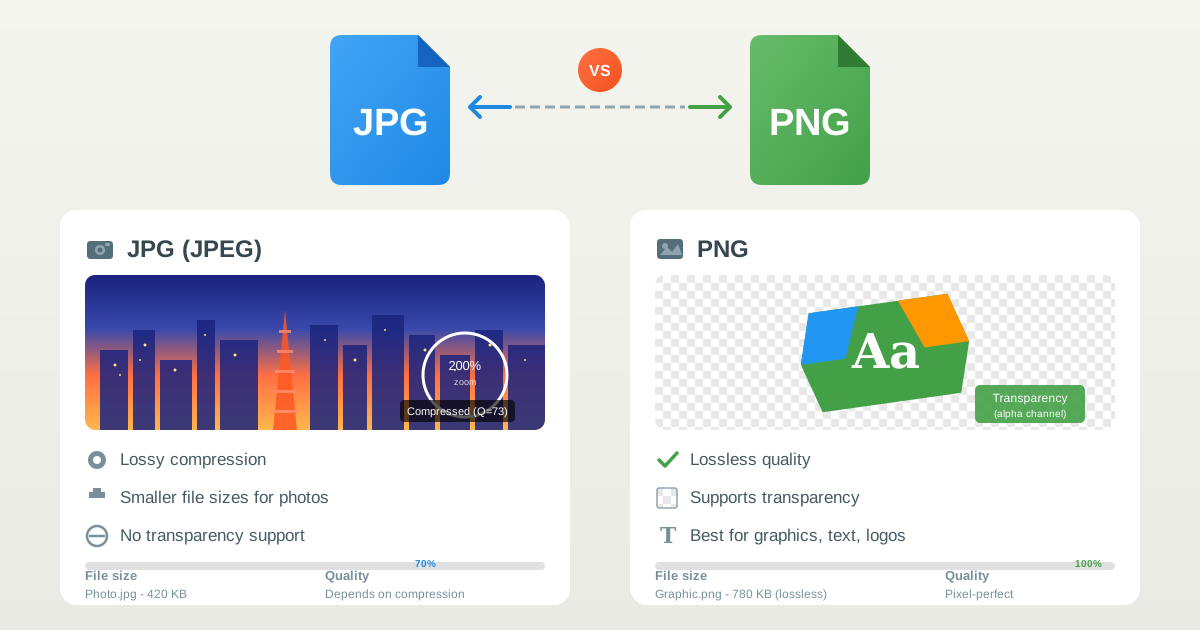
- Lossless Compression: This is the magic of PNG. It uses a sophisticated compression algorithm that reduces file size without discarding a single pixel of data. When you open a PNG, the data is decompressed to its original, perfect state.
- Transparency Support: PNGs support an 8-bit alpha channel, allowing for varying levels of transparency. This is why PNG is the go-to format for logos, icons, and any graphic that needs to be placed over different backgrounds.
- Wide Color Depth: PNG can handle millions of colors (24-bit RGB) and grayscale, making it suitable for a wide range of graphics and illustrations.
- Web-Optimized: Designed for the web, PNGs are supported by every modern browser and image viewer, making them a universal standard.
PNG strikes the perfect balance between high quality and manageable file sizes, making it a workhorse for web designers, graphic artists, and everyday users.
BMP vs. PNG: A Head-to-Head Comparison
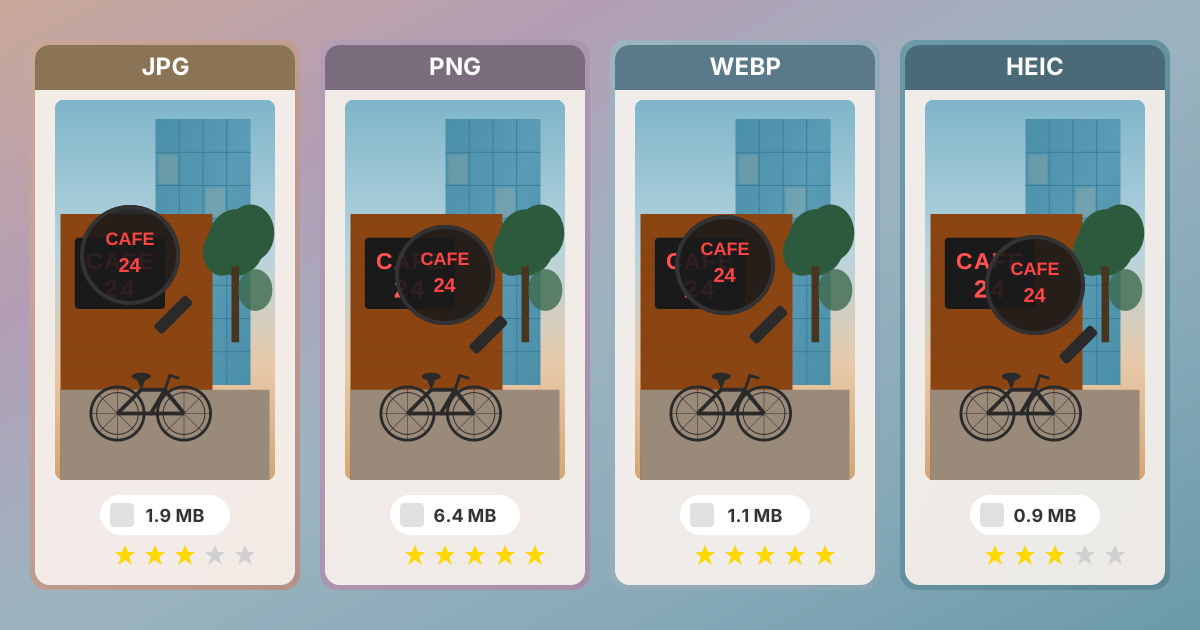
To truly understand the benefits of conversion, let's compare the two formats side-by-side. This table breaks down the key differences.
| Feature | BMP (Bitmap) | PNG (Portable Network Graphics) |
|---|---|---|
| Compression | Typically uncompressed or simple RLE | Lossless (DEFLATE algorithm) |
| File Size | Very Large | Significantly smaller than BMP |
| Transparency | Not supported | Supported (Alpha Channel) |
| Color Depth | Up to 32-bit | Up to 48-bit |
| Best Use Case | Archiving raw image data, legacy Windows apps | Web graphics, logos, icons, images with text |
| Web Friendliness | Poor (slow loading times) | Excellent (universally supported and efficient) |
Why Convert from BMP to PNG? Key Advantages
Now that you know the technical differences, let's look at the practical benefits of converting your BMP files. The reasons are compelling and impact everything from storage space to website performance.
- Drastically Reduced File Size: This is the number one reason. PNG's lossless compression can shrink a file to a fraction of its original BMP size. A 20 MB BMP file might become a 2 MB PNG without any visible change in quality.
- Web Compatibility and Speed: For any online use, PNG is vastly superior. Smaller images mean faster website loading times, which is crucial for user experience and SEO. BMP files are simply too large to be practical for web pages.
- Essential Transparency Support: If you're working with logos, icons, or any graphic that needs to be placed on a colored background, you need transparency. PNG's alpha channel allows for clean overlays, something BMP cannot do.
- Zero Quality Loss: It's important to reiterate this point. Unlike converting to JPEG (a lossy format), converting from BMP to PNG is a lossless process. You get all the benefits of a smaller file with absolutely no degradation in image quality.
- Modern Standard: PNG is a universally accepted standard across all operating systems and software. You'll never have to worry about compatibility issues when sharing or using a PNG file.
How to Convert BMP to PNG: Step-by-Step Methods
Converting a BMP to a PNG is a simple process. You don't need to be a tech wizard. Here are three common methods, ranging from using tools already on your computer to powerful online solutions.
Method 1: Using Built-in OS Tools
Your computer's operating system likely already has everything you need for a basic conversion.
On Windows (Using Microsoft Paint)
MS Paint, the classic Windows application, is a surprisingly quick and effective converter.
- Open your image: Right-click the BMP file and select
Open with > Paint. - Navigate to Save As: Once the image is open in Paint, click on
Filein the top-left corner. - Choose the PNG format: Hover over
Save asand selectPNG picturefrom the list of options. - Save the new file: Choose a location, give your file a new name if you wish, and click
Save. That's it! You now have a PNG version of your image.
On macOS (Using Preview)
The default image viewer on macOS, Preview, is a powerful tool for quick edits and conversions.
- Open your image: Double-click the BMP file to open it in Preview.
- Select Export: From the menu bar at the top, click
File > Export. - Change the format: In the export dialog box, click the
Formatdropdown menu and selectPNG. - Save the file: You can adjust the file name and location, then click
Save.
Method 2: Using Advanced Graphics Editors
For users who need more control or are working within a design workflow, dedicated graphics software is the way to go.
Adobe Photoshop
If you have Photoshop, the process is straightforward.
- Open the BMP file in Photoshop.
- Go to
File > Save a CopyorFile > Export > Quick Export as PNG. - In the
Save Asdialog, selectPNG (*.PNG, *.PNG)from the format dropdown. - Click
Save. Photoshop will then present you with PNG options, where you can choose compression levels. For most cases, the default settings are fine.
GIMP (Free & Open Source Alternative)
GIMP is a powerful free alternative to Photoshop that can handle conversions easily.
- Open your BMP image in GIMP.
- Go to
File > Export As. - In the dialog box, change the file extension in the name field to
.pngor selectPNG Imagefrom theSelect File Typelist. - Click
Export. A new dialog will appear with PNG options. You can generally leave these at their default values and clickExportagain.
Method 3: Using Online Converters
For maximum convenience, especially if you're not on your own computer or don't want to open a large application for a small task, online converters are an excellent choice.
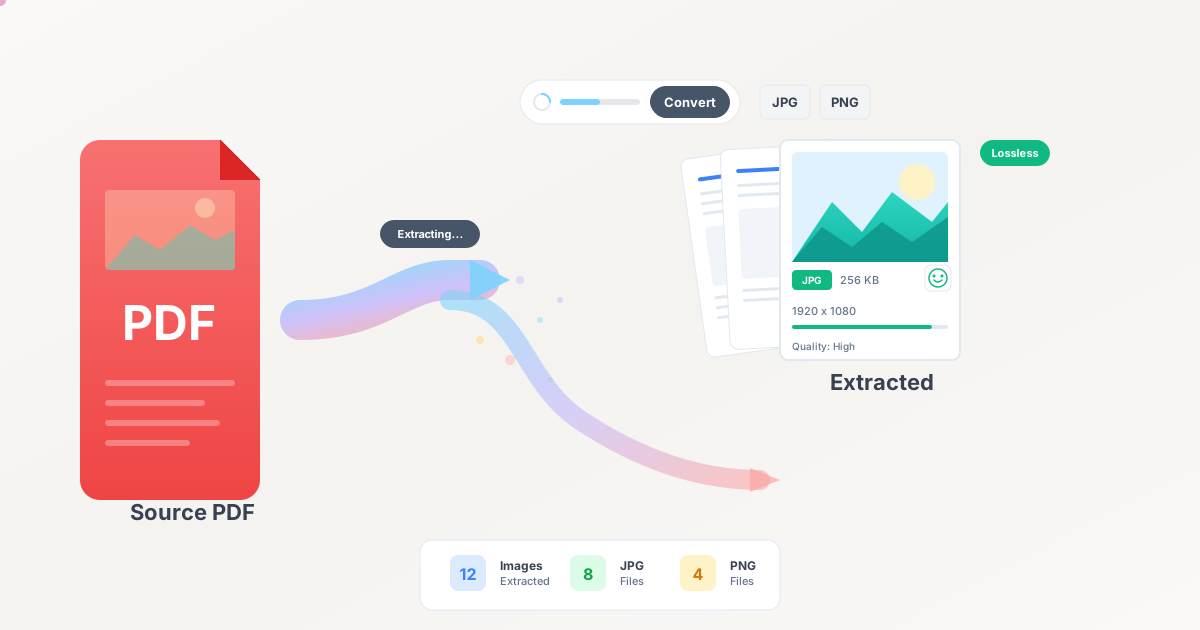
These web-based tools allow you to upload a BMP and receive a PNG in seconds. At Practical Web Tools, we champion tools that are simple, free, and privacy-focused. While we don't currently have a dedicated BMP-to-PNG tool, the principle of easy-to-use browser-based utilities is central to our mission. The same simplicity you find when using our PDF to Image tool to extract images from a document applies to the best online image converters.
Benefits of Online Converters:
- No Installation: Nothing to download or install.
- Cross-Platform: Works on any device with a web browser.
- Fast and Easy: Usually just a drag-and-drop interface.
Practical Use Cases for PNGs in Your Workflow
Converting your images to PNG isn't just a technical exercise; it has real-world benefits for your projects.
- Web Design: Use PNGs for your website's logo, icons, and any graphics that require a transparent background to blend seamlessly with your design.
- Digital Documents: When creating reports, manuals, or presentations, using optimized PNGs instead of BMPs keeps your final document size small and manageable. This is especially important for PDFs that will be shared via email.
- Document Management: When you're managing complex documents, having assets in the right format is key. For example, after ensuring your images are optimized as PNGs, you can easily use a tool like Merge PDFs to combine text pages and image pages into a single, polished file ready for distribution.
- Presentations: Imagine you have a PDF of a presentation that you need to edit. Converting it back to a presentation format is much smoother when the embedded images are in an efficient format like PNG. A reliable PDF to PowerPoint tool can streamline this process, preserving the layout and quality of your visuals.
Frequently Asked Questions (FAQ)
Will converting BMP to PNG lose quality?
No. The conversion from BMP to PNG is 100% lossless. The PNG compression algorithm reorganizes the data more efficiently without discarding any information. The image you get is pixel-perfect.
Is PNG always better than BMP?
For nearly all modern digital applications (web, documents, sharing), yes. The only scenario where BMP might be considered is for storing raw, uncompressed master copies of digital art for archival purposes on local storage.
Can I convert a PNG back to a BMP?
Yes, you can. However, there is no benefit to doing so. You will not gain any quality back (since none was lost), and the file size will balloon back to its original uncompressed size.
What's the difference between PNG and JPEG?
PNG uses lossless compression, making it ideal for graphics, logos, and images with sharp lines and text. JPEG uses lossy compression, which discards some data to achieve much smaller file sizes, making it best for photographs where slight quality loss is less noticeable.
Conclusion: Make the Smart Switch to PNG
Moving away from the antiquated BMP format is a simple step with significant rewards. By converting your BMP images to PNG, you gain massive reductions in file size, the versatile power of transparency, and universal compatibility—all without sacrificing a single pixel of quality.
Whether you use a built-in tool like MS Paint, a professional editor like Photoshop, or a convenient online converter, the process is quick and painless. Optimizing your images is a cornerstone of an efficient digital workflow.
Ready to streamline your other digital tasks? Explore the full suite of free, private, and practical online tools at Practical Web Tools to handle all your document conversion and editing needs.