WebP to GIF: The Ultimate Guide to Animated Conversions

Your Guide to Converting Animated WebP to GIF
You've found the perfect animated meme or reaction image online. You save it, ready to deploy in your group chat or email, only to discover it's a .webp file that won't upload or display properly. It's a common frustration. While WebP is a modern, efficient image format, the classic Graphics Interchange Format (GIF) still reigns supreme for universal compatibility.
But don't worry, you're not stuck. Converting an animated WebP file to a GIF is a straightforward process, and understanding the nuances can help you create a high-quality, optimized animation that works everywhere.
This comprehensive guide will walk you through everything you need to know. We'll compare the two formats, explore the reasons for converting, and provide step-by-step instructions for various methods, from simple online tools to advanced desktop software. By the end, you'll be a WebP-to-GIF conversion expert.
Understanding the Formats: WebP and GIF
Before diving into the conversion process, it's essential to understand what these two file types are and why they behave differently.
All About Animated WebP
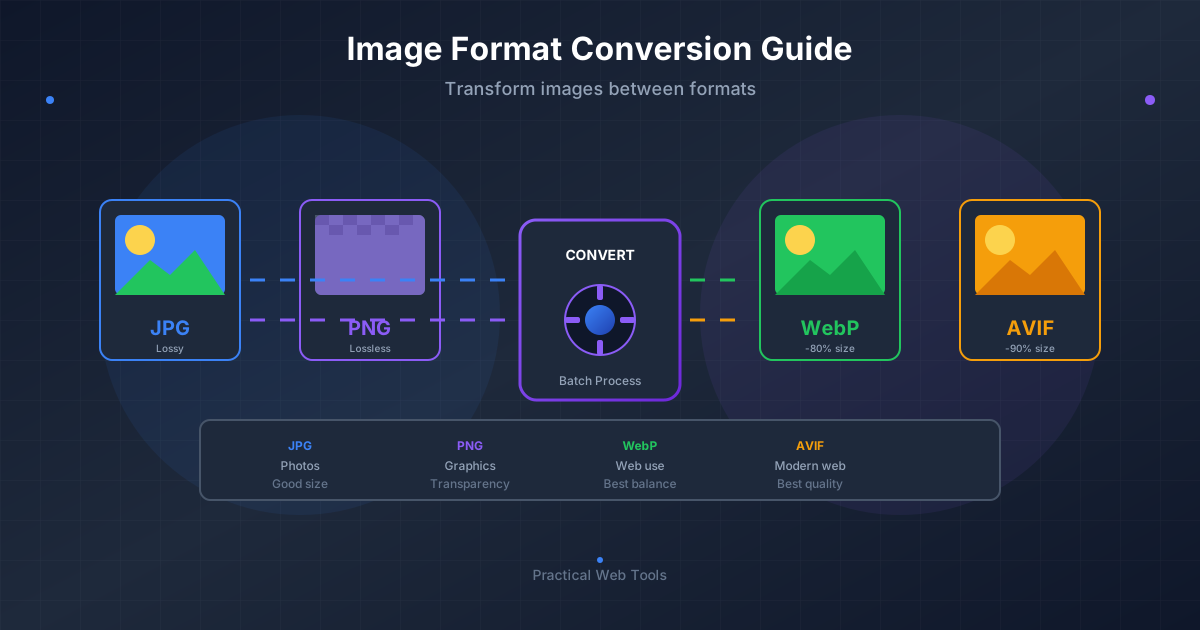
Developed by Google, WebP is a modern image format designed for the web. It provides superior lossless and lossy compression for images. When it comes to animations, WebP is a powerhouse, offering significant advantages over GIF.
- Superior Compression: Animated WebPs can be significantly smaller than their GIF counterparts—often 25-35% smaller—while maintaining higher visual quality. This means faster loading times and less bandwidth usage.
- Rich Color Support: WebP supports 24-bit RGB color with an 8-bit alpha channel (transparency). This translates to over 16 million colors, allowing for vibrant, true-to-life animations without the color banding often seen in GIFs.
- Flexibility: WebP can combine lossy and lossless compression frame by frame within a single animation, allowing for advanced optimization.
WebP is the technically superior format for animations on the modern web. Many static images, like JPEGs, can also be converted into the WebP format to save space, a task easily handled by a tool like our JPG to WebP converter.
The Timeless Appeal of Animated GIF
The GIF format is a digital relic from 1987 that has defied all odds to remain culturally relevant. Despite its technical limitations, its universal support is its killer feature.
- Universal Compatibility: GIFs work everywhere. From the oldest web browsers and email clients to every social media platform and messaging app, you can be confident a GIF will play as intended.
- Simplicity: The format is simple, with no complex codecs or containers. It just works.
- Limitations: The biggest drawback of GIF is its limited 8-bit color palette, which means it can only display a maximum of 256 colors. This often results in dithering (a pattern of dots to simulate more colors) and visible color banding, especially in images with smooth gradients.
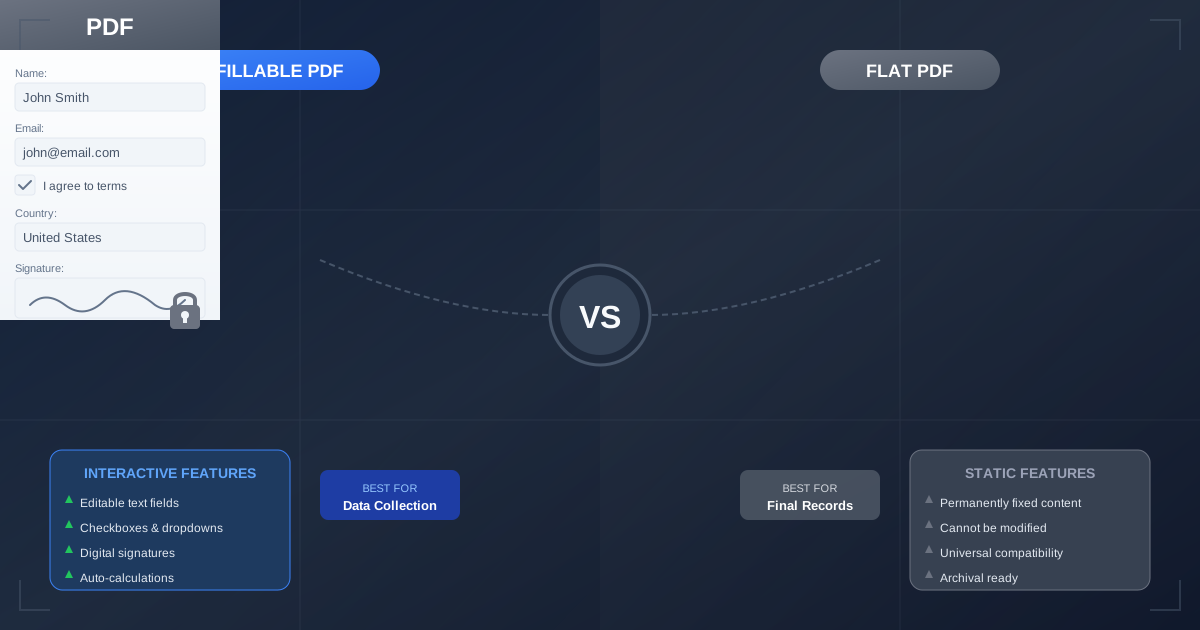
WebP vs. GIF: A Detailed Showdown
Let's break down the key differences in a head-to-head comparison. This is crucial for understanding the trade-offs you make when converting from WebP to GIF.
| Feature | Animated WebP | Animated GIF | Winner (Technical) |
|---|---|---|---|
| Color Depth | 24-bit color (16.7 million colors) | 8-bit color (256 colors) | WebP |
| Transparency | 8-bit alpha channel (smooth transparency) | 1-bit transparency (on or off) | WebP |
| File Size | Significantly smaller due to modern compression | Larger, less efficient compression | WebP |
| Compression | Lossy and Lossless | Lossless (within the 256-color palette) | WebP |
| Compatibility | Supported by ~97% of modern browsers, but not all apps/software | Universally supported across all platforms | GIF |
As you can see, WebP wins on every technical metric. However, the 'Compatibility' row is precisely why this guide exists. That one category is often the most important, forcing us to convert a technically superior file into a universally accepted one.
Why Convert from Animated WebP to GIF?
Given WebP's advantages, why would you ever want to convert it to a GIF? The reasons almost always boil down to compatibility and audience.
- Email Marketing: Many email clients, especially older versions of Outlook, have poor or no support for WebP. If you want to embed an animation in an email campaign, GIF is the only reliable choice.
- Legacy Software and Systems: Corporate environments, older content management systems (CMS), or specific presentation software may not recognize the
.webpextension. - Specific Social Media Platform Requirements: While most major platforms now support WebP, some smaller or niche sites might still have a GIF-only upload policy for animations.
- Simplicity for Non-Technical Users: If you're sharing a file with someone less tech-savvy, sending a GIF removes any potential friction of them not being able to open or view a WebP file.
How to Convert Animated WebP to GIF
Now for the practical part. We'll cover three primary methods, ranging from quick and easy online tools to powerful desktop applications that offer fine-grained control.
Method 1: Using Online Converters (The Easiest Way)
For a quick, one-off conversion, online tools are your best bet. They require no software installation and get the job done in seconds.
Pros:
- Extremely easy to use.
- No software installation required.
- Fast for single files.
- Accessible from any device with a browser.
Cons:
- Potential privacy concerns (don't upload sensitive files).
- File size and usage limits.
- Fewer customization options.
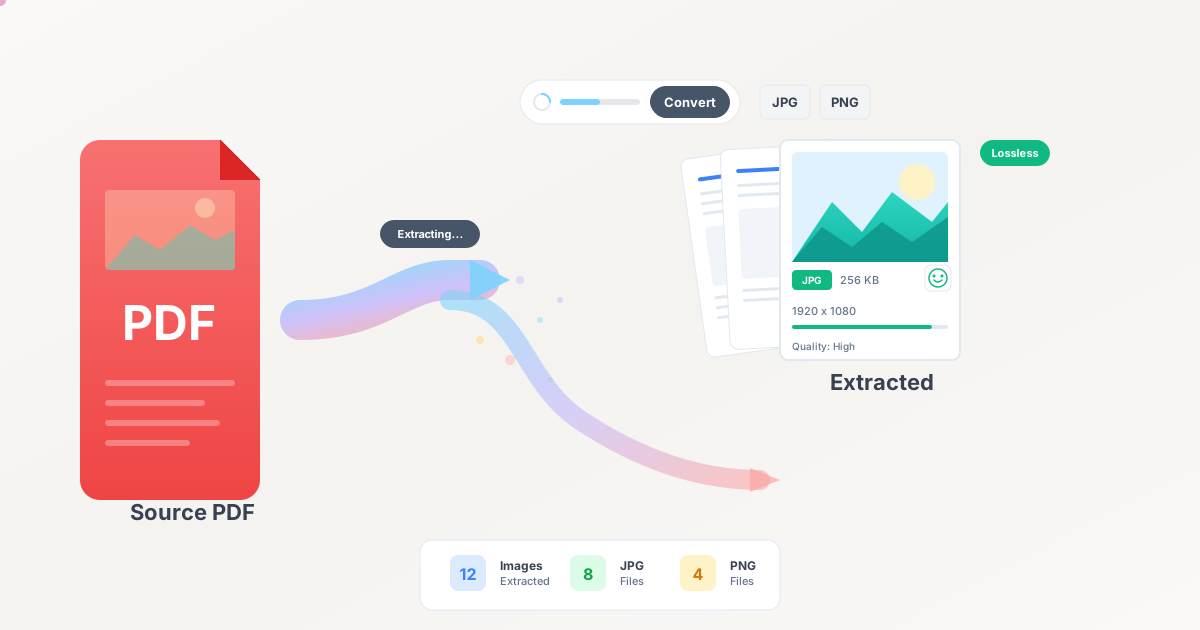
Step-by-Step Guide for a Typical Online Converter:
- Find a Converter: Search for "WebP to GIF converter" online. Choose a reputable site.
- Upload Your File: Drag and drop your
.webpfile onto the website or use the "Choose File" button. - Start the Conversion: The site will typically process the file automatically or with a single click of a "Convert" button.
- Download the GIF: Once complete, a download link for your new
.giffile will appear.
This method is perfect when you just need a functional GIF and aren't concerned with tweaking every last setting for optimal quality or file size.
Method 2: Using Desktop Software (For Power Users)
For more control, better quality, and batch processing, desktop software is the way to go. Here are guides for two of the most popular applications.
Using Adobe Photoshop
Photoshop provides a robust set of tools for converting and optimizing animations. It's the professional's choice for a reason.
- Open the WebP File: Go to
File > Openand select your animated WebP file. Photoshop will open it with each frame on a separate layer. - Open the Timeline Panel: If it's not already visible, go to
Window > Timeline. You should see your animation frames laid out. - Export the Animation: Go to
File > Export > Save for Web (Legacy).... This opens a powerful optimization dialog. - Choose GIF Settings: In the top right, select
GIFfrom the format dropdown. You will now see a range of options:- Colors: This is the most critical setting. 256 is the maximum. Reducing this number can significantly shrink the file size, but at the cost of color accuracy.
- Dithering: This helps to smooth gradients and reduce color banding by creating a pattern of pixels.
Diffusionis usually the best-looking option. Experiment to see what works best for your image. - Lossy: You can add a bit of lossy compression to the GIF to further reduce its size. Use this sparingly, as it can degrade quality.
- Image Size: You can resize the animation directly in this dialog.
- Preview and Save: Use the preview window and playback controls at the bottom to see how your changes affect the animation. Once you're happy, click
Save...and choose a destination.
Using GIMP (Free & Open-Source Alternative)
GIMP is a fantastic free alternative to Photoshop that can also handle animated WebP to GIF conversions.
- Open the WebP File: Go to
File > Openand select your animated WebP file. GIMP will open it with each frame as a layer, similar to Photoshop. - Export as GIF: Go to
File > Export As.... - Name and Select File Type: In the dialog box, name your file with a
.gifextension (e.g.,my-animation.gif). GIMP will automatically detect that you want to export as a GIF. - Configure GIF Options: Click
Export. A new "Export Image as GIF" dialog will appear. Key settings include:- As animation: Make sure this box is checked!
- Loop forever: Check this if you want the animation to repeat endlessly.
- Frame disposal: You can generally leave this on the default setting (
I don't care). - Use delay entered above for all frames: Adjust the timing if needed.
- Finalize the Export: Click
Exportagain to create your GIF file.
Method 3: Using FFmpeg (The Command-Line Method)
For developers, system administrators, or anyone comfortable with the command line, FFmpeg is an incredibly powerful and fast tool for media conversion.
Step-by-Step Guide:
-
Install FFmpeg: If you don't have it, install it using your system's package manager (e.g.,
brew install ffmpegon macOS,sudo apt-get install ffmpegon Debian/Ubuntu). -
Navigate to Your File: Open your terminal or command prompt and use the
cdcommand to navigate to the directory containing your WebP file. -
Run the Basic Conversion Command: The simplest conversion command is:
ffmpeg -i input.webp output.gifReplace
input.webpwith your file's name andoutput.gifwith your desired output name. -
Advanced Command for Better Quality: The basic command can sometimes produce a low-quality GIF. A more advanced two-pass approach generates a custom color palette first, resulting in a much better-looking output:
ffmpeg -i input.webp -vf "palettegen" -y palette.png
ffmpeg -i input.webp -i palette.png -lavfi "paletteuse" -y output.gif
This first command analyzes
input.webpand creates an optimized 256-color palette namedpalette.png. The second command then uses that custom palette to create the finaloutput.gif.
Navigating Conversion Pitfalls & Best Practices
When you convert from a 16.7 million color format to a 256 color format, you'll inevitably face some challenges. Here's how to manage them.
Quality Loss and Color Banding
This is the most common issue. Your vibrant WebP looks dull or has strange patterns in the GIF.
- Solution: Use dithering. In Photoshop or other advanced tools, select a dithering algorithm like 'Diffusion' or 'Pattern'. This intelligently mixes the available colors to simulate the missing ones, smoothing out gradients.
Increased File Size
It can be shocking to see your 500KB WebP animation balloon into a 3MB GIF.
- Solution: Optimize aggressively. Before or during conversion, consider:
- Reducing Dimensions: Does the animation need to be 800px wide, or would 400px work just as well?
- Lowering the Frame Rate: A silky smooth 60fps WebP might be overkill. Try reducing it to 15 or 20fps for the GIF version.
- Reducing Colors: Don't just default to 256 colors. If your animation only uses a few colors, try 128, 64, or even 32. This can slash the file size.
- Refine Your Source: Before you even start, refining your source images can make a huge difference. For example, if each frame has a complex background, using a tool like our Background Remover can drastically simplify the image, leading to a much smaller and cleaner final GIF.
Preserving Transparency
WebP has smooth, 8-bit alpha transparency, while GIF's is a simple on/off switch. This can lead to jagged edges.
- Solution: When exporting, ensure you check the "Transparency" box. In Photoshop's "Save for Web" dialog, you can also select a "Matte" color. This color will blend the edges of your transparent areas, making them look smoother when placed on a background of that same color. This is a crucial step for achieving clean transparency, much like when you need to convert a flat image like a JPG into a format that supports it. Often, converting a JPG to PNG is the first step for static images needing a transparent background.
Conclusion: The Right Tool for the Job
While WebP is the clear technical winner for modern web animations, the venerable GIF remains an essential tool in our digital communication toolkit due to its unbreakable, universal compatibility.
Converting from WebP to GIF is a common necessity, but it's a process that involves trade-offs between quality, file size, and compatibility. By understanding the formats and choosing the right conversion method—whether it's a quick online tool for a one-off task or a powerful desktop application like Photoshop for fine-tuned control—you can create effective, optimized GIFs that work anywhere you need them to.
Now that you've mastered animated conversions, why not see what else you can do? Explore the full suite of over 455 free, privacy-focused image and web tools at Practical Web Tools to handle all your conversion and editing needs!