M4A to MP3: The Ultimate Free Conversion Guide (2024)

You've just recorded a great voice memo on your iPhone or downloaded a track from Apple Music, but when you try to play it on your car's stereo or your Windows PC, you're met with silence or an error message. The culprit? That little file extension: .m4a. While M4A is a fantastic audio format, its compatibility can be a roadblock. The universal solution is the trusty MP3.
But how do you bridge the gap between these two formats? The answer is conversion. This comprehensive guide will walk you through everything you need to know to convert M4A to MP3 for free. We'll explore the easiest online methods, powerful desktop software, and the technical details you need to know to get the best possible audio quality. By the end, you'll be an expert in audio conversion, ready to make your files work anywhere, anytime.
What's the Difference Between M4A and MP3?
Before we dive into the 'how,' let's understand the 'what.' Knowing the fundamental differences between M4A and MP3 files will help you understand why you need to convert them and how to choose the right settings for your needs.
M4A: The Modern Apple Standard
M4A stands for MPEG-4 Audio. It was developed by Apple as a successor to MP3 and is the default audio format for Apple software like iTunes (now Apple Music) and for recordings made on iPhones and iPads. M4A files are actually a container format, which means they can hold audio encoded with different codecs.
- AAC (Advanced Audio Coding): This is the most common codec found in M4A files. It's a lossy compression format, meaning it removes some audio data to reduce file size. However, its compression algorithm is more advanced and efficient than MP3's. This means that at the same bitrate, an M4A file with AAC encoding will generally sound better and be smaller than an MP3 file.
- ALAC (Apple Lossless Audio Codec): M4A can also contain lossless audio using ALAC. These files retain all the original audio information, resulting in perfect, CD-quality sound, but at the expense of a much larger file size.
Pros: High quality at smaller file sizes (AAC), supports lossless audio (ALAC). Cons: Limited compatibility outside the Apple ecosystem.
MP3: The Universal Standard
MP3 (MPEG-1 Audio Layer III) is the format that kickstarted the digital music revolution. It's a lossy format that became the de facto standard for audio due to its ability to drastically reduce file sizes while maintaining reasonable sound quality. Its biggest strength today isn't its technology, but its history.
Pros: Near-universal compatibility. If a device can play digital audio, it can almost certainly play an MP3. Cons: Older, less efficient compression technology compared to AAC.
M4A vs. MP3: At a Glance
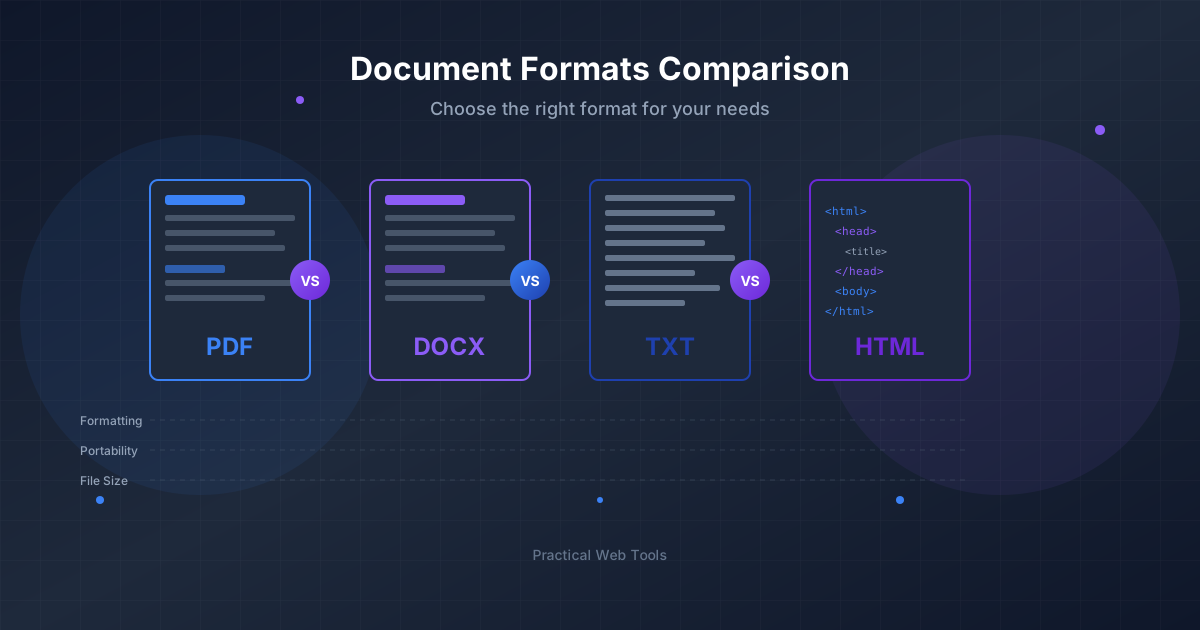
To make it even clearer, here's a side-by-side comparison:
| Feature | M4A (AAC Codec) | MP3 |
|---|---|---|
| Compression | Lossy (more efficient) or Lossless (ALAC) | Lossy |
| Quality | Generally better than MP3 at the same bitrate | Good, but can be surpassed by modern codecs |
| File Size | Generally smaller than MP3 for similar quality | Larger than M4A for similar quality |
| Compatibility | Excellent in Apple ecosystem, limited elsewhere | Universal; plays on virtually any device |
| Primary Use | Apple Music, iPhone recordings, modern audio | Music distribution, podcasts, universal playback |
Top Reasons to Convert M4A to MP3
So, why go through the trouble of converting? The primary driver is compatibility.
- Universal Device Support: This is the biggest reason. Many older car stereos, portable music players, smart TVs, and even some software applications don't support the M4A format. Converting to MP3 ensures your audio will play without a hitch.
- Software Compatibility: While most modern video and audio editing software supports M4A, some older or more specialized programs may work exclusively or more stably with MP3 files.
- Sharing and Archiving: When you share an audio file with someone, you can't be sure what device they'll use. Sending an MP3 is a safe bet that they'll be able to open it. For long-term archiving, using a universally recognized format like MP3 reduces the risk of future compatibility issues.
- Web and Streaming: MP3 is still a dominant format for web-based audio players and streaming due to its broad browser support.
The Best Free Methods to Convert M4A to MP3
Now for the practical part. There are several excellent, free ways to convert your files. We'll cover the three most popular methods, each with its own strengths.
Method 1: Using Online Converters (The Easiest Way)
For quick, one-off conversions without installing any software, online tools are your best friend. At Practical Web Tools, we pride ourselves on offering simple, private, and effective tools for exactly this purpose.
How it works: These websites process your file on their servers and then provide you with a download link for the converted file.
Step-by-Step Guide:
- Navigate: Open your web browser and go to a trusted online M4A to MP3 converter.
- Upload: Click the 'Choose File' or 'Upload' button and select the M4A file from your computer.
- Select Format: Ensure that MP3 is selected as the output format.
- Adjust Settings (Optional): Many online tools allow you to adjust the audio bitrate. For most purposes, 192 kbps or 256 kbps is a great balance of quality and file size.
- Convert: Click the 'Convert' button and wait for the process to complete.
- Download: Once finished, a download link for your new MP3 file will appear. Click it to save the file to your device.
Pros:
- Convenient: No software to install.
- Fast: Ideal for converting one or two files quickly.
- Cross-Platform: Works on any operating system with a web browser (Windows, macOS, Linux, ChromeOS).
Cons:
- Privacy: You're uploading your file to a third-party server. It's crucial to use a tool with a strong privacy policy, like those on Practical Web Tools, which process files securely and don't store them.
- File Size Limits: Many free sites impose limits on the size of the file you can upload.
- Internet Required: You need a stable internet connection for both uploading and downloading.
Method 2: Using Desktop Software (For Power Users)
If you frequently convert audio files, need to convert multiple files at once (batch conversion), or want maximum control over the output, free desktop software is the way to go.
Using VLC Media Player
VLC is more than just a media player; it's a powerful multimedia toolkit that includes a robust file converter.
- Open VLC: Launch the application.
- Go to Convert: In the menu bar, click
Media>Convert / Save...(orFile>Convert / Stream...on macOS). - Add File: In the new window, click the
Add...button and select your M4A file. Then clickConvert / Save. - Choose Profile: In the 'Profile' dropdown menu, select
Audio - MP3. - Set Destination: Click the
Browsebutton to choose a name and location for your new MP3 file. Make sure to add.mp3to the end of your filename. - Start: Click
Startto begin the conversion. The timeline slider will move as if it's playing the file, which indicates the conversion progress.
Using Audacity
Audacity is a free, open-source digital audio editor. It's overkill for a simple conversion, but if you already have it installed, it works perfectly.
- Open Audacity: Launch the program.
- Import Audio: Go to
File>Import>Audio...and select your M4A file. - Export as MP3: Go to
File>Export>Export as MP3. - Choose Settings: A dialog box will appear where you can set the destination, file name, and quality settings (bitrate).
- Edit Metadata (Optional): The next screen allows you to edit the song's metadata (artist, album, etc.). Click
OKwhen you're done. - Save: Audacity will now export your file as an MP3.
Method 3: Using Built-in Tools (iTunes/Apple Music)
If you're on a Mac or have iTunes on Windows, you can convert files without any extra software.
- Change Import Settings:
- In Apple Music (macOS): Go to
Music>Preferences>Files>Import Settings.... - In iTunes (Windows): Go to
Edit>Preferences>General>Import Settings....
- In Apple Music (macOS): Go to
- Select MP3 Encoder: In the 'Import Using' dropdown, select
MP3 Encoder. Choose your desired quality from the 'Setting' dropdown (e.g., 'High Quality (192 kbps)'). ClickOKto save. - Select Your File: Find the M4A file in your library. If it's not there, drag and drop it into the Music/iTunes window.
- Convert: Select the song, then from the menu bar, go to
File>Convert>Create MP3 Version. A new, duplicate file will be created in MP3 format right next to the original in your library.
Beyond the Basics: Understanding Bitrate and Quality
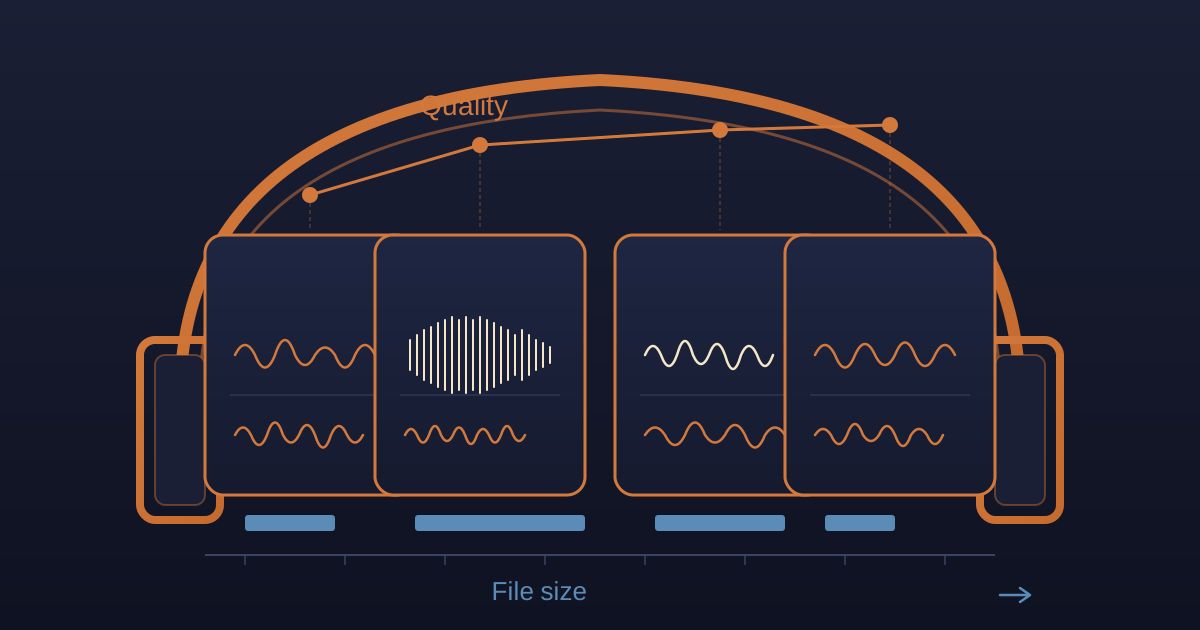
When you convert audio, you'll often see an option for 'bitrate,' measured in kilobits per second (kbps). This setting directly impacts both the file size and the audio quality.
- Higher Bitrate = Higher Quality = Larger File Size.
- Lower Bitrate = Lower Quality = Smaller File Size.
A key principle to remember is that you cannot create quality. Converting a low-quality 128 kbps M4A file to a 320 kbps MP3 will not magically restore the audio data that was lost in the original compression. The resulting MP3 will be a large file that sounds just like the low-quality original. Always aim to start with the highest quality source file possible.
Here's a quick guide to common bitrates:
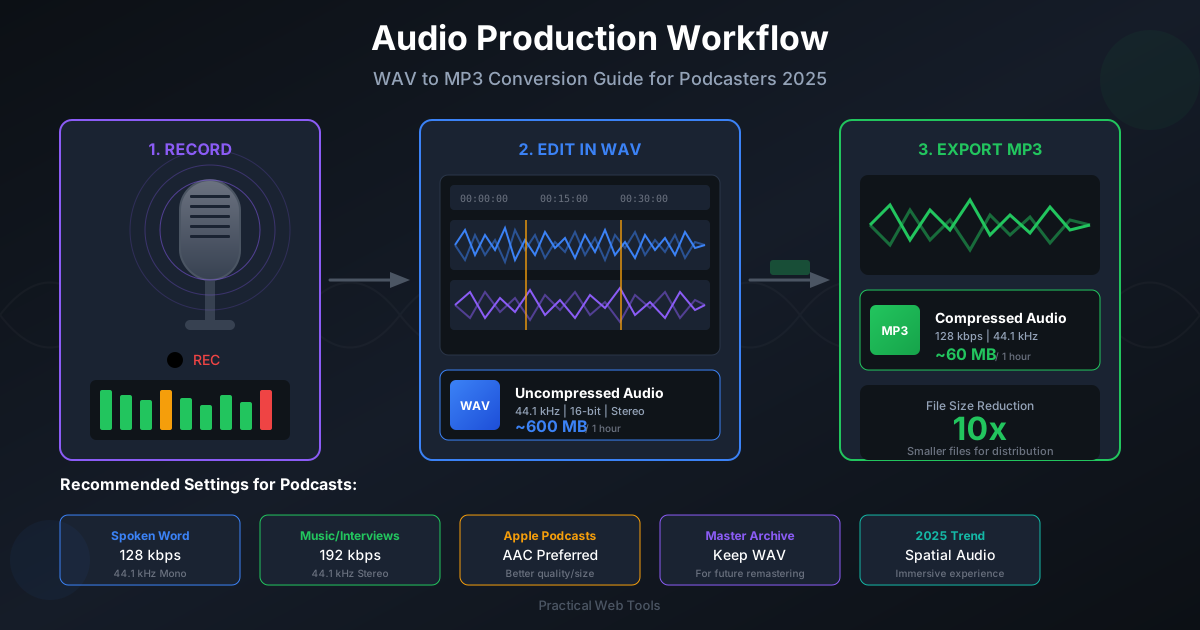
- 128 kbps: Acceptable for speech (podcasts, audiobooks) but may sound tinny for music.
- 192 kbps: A good middle ground. Offers good quality for music with a moderate file size.
- 256 kbps: High quality, often indistinguishable from the original for most listeners.
- 320 kbps: The highest quality for MP3. The gold standard for music lovers who want the best possible sound from a lossy format.
When MP3 Isn't the Only Answer: Other Audio Formats
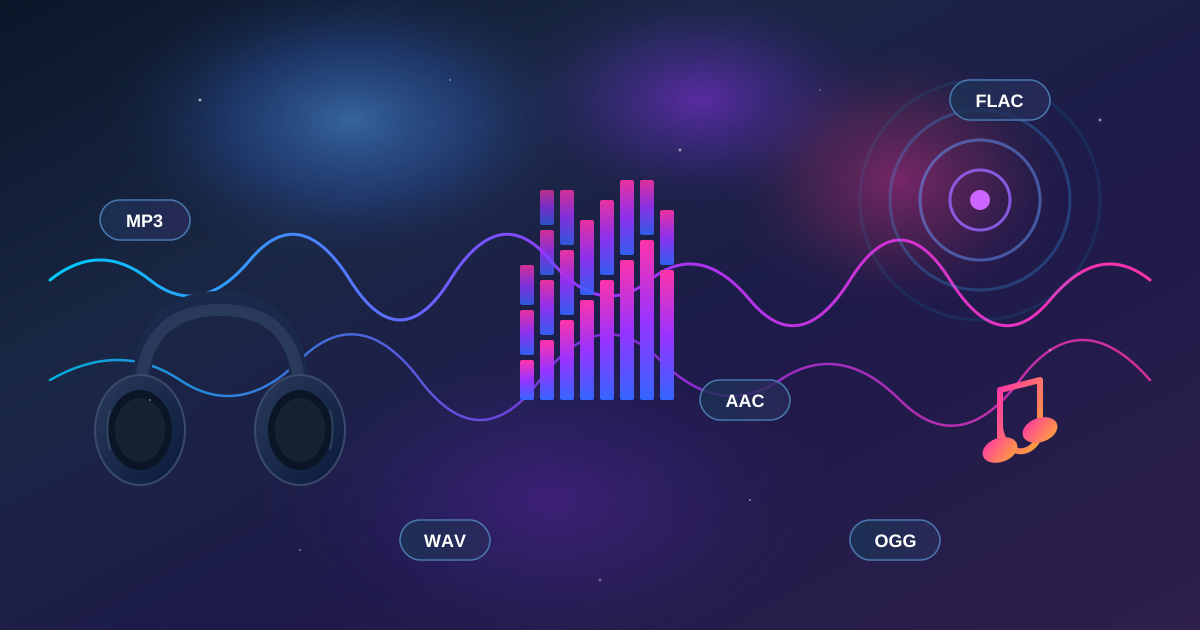
While this guide focuses on converting M4A to the universally compatible MP3, your audio conversion journey might not end there. Different situations call for different formats.
For example, if you're an audio professional or an audiophile looking to do some serious editing, you might need an uncompressed format that preserves every single detail of the original sound wave. In that scenario, converting an MP3 to WAV is a common step in the production workflow.
Web developers and open-source software enthusiasts might prefer the OGG Vorbis format for its open-source nature and excellent compression. Our MP3 to OGG converter is perfect for those needs.
And, of course, sometimes you need to reverse the process. If you have a collection of MP3s and want to standardize them for your Apple devices, you can easily convert an MP3 to M4A to take advantage of the more efficient AAC compression.
Your Go-To Guide for M4A to MP3 Conversion
Navigating the world of audio formats doesn't have to be complicated. As we've seen, converting M4A to MP3 is a straightforward process with several free and accessible options. For the vast majority of users, a secure and private online converter offers the perfect blend of simplicity and speed. For those with more advanced needs, desktop tools like VLC or Audacity provide unparalleled power and control.
By understanding the key differences between M4A and MP3 and knowing how to control settings like bitrate, you can ensure your audio files are always ready for any device, any platform, and any listener.
Ready to convert your audio files with a free, fast, and privacy-focused tool? Explore the wide range of audio utilities at Practical Web Tools and get the perfect format for your needs every time.