AAC to MP3: The Ultimate Conversion Guide for 2024

You've just downloaded a great album or recorded a voice memo, but when you try to play it on your car stereo or an older audio player, you get an error: "Unsupported File Format." The culprit is likely an AAC file, a format that, while modern and efficient, isn't as universally accepted as the good old MP3. It’s a common frustration in our multi-device world.
But don't worry. Converting your audio files from AAC to MP3 is a straightforward process, and you probably already have the tools to do it for free. This comprehensive guide will walk you through everything you need to know. We'll explore why you might need to convert, compare the formats in detail, and provide step-by-step instructions using a variety of popular, free methods. By the end of this article, you'll be an expert at making your audio files play nice with any device you own.
Understanding the Formats: AAC vs. MP3
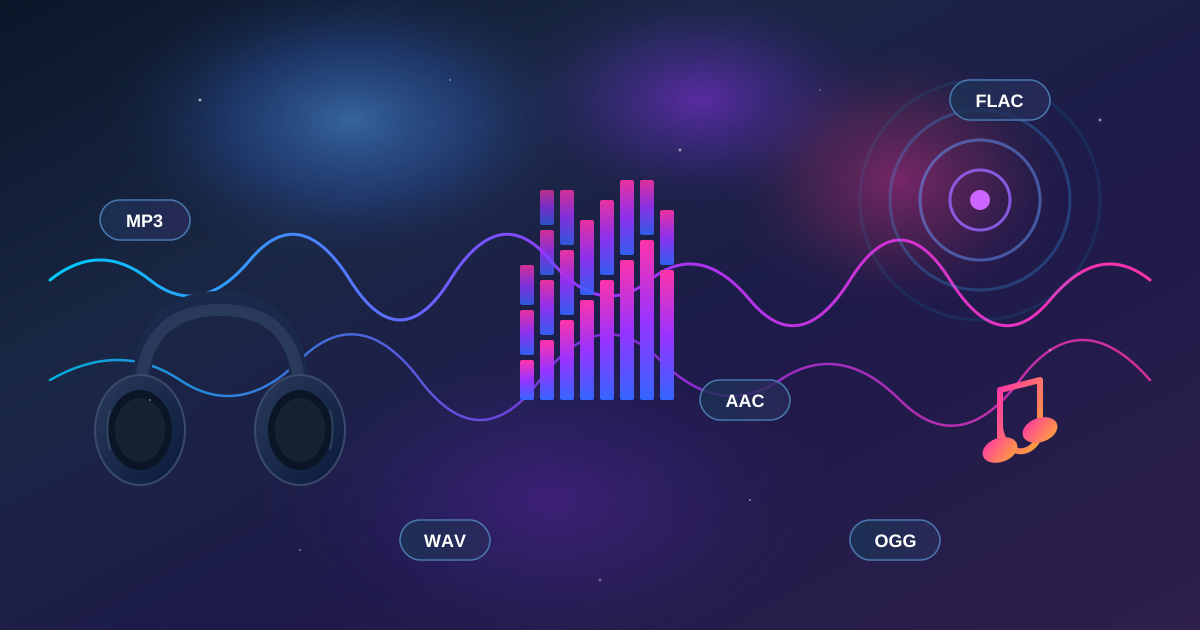
Before we dive into the conversion process, it’s helpful to understand what these file types are. Both AAC and MP3 are "lossy" compression formats, meaning they reduce file size by intelligently removing parts of the audio that the human ear is least likely to notice. However, they achieve this in different ways.
What is an AAC File?
AAC stands for Advanced Audio Coding. It was designed to be the successor to the MP3 format, and in many technical aspects, it is. Developed in the late 1990s, AAC offers better sound quality than MP3 at the same bitrate. This efficiency is why it has been adopted as the standard audio format for major platforms like Apple's iTunes and Apple Music, YouTube, and digital radio.
Pros of AAC:
- Higher Efficiency: Delivers better audio quality at lower bitrates compared to MP3.
- Modern Standard: Used by major streaming services and device manufacturers, particularly Apple.
- Flexibility: Supports more audio channels and sample rates.
Cons of AAC:
- Compatibility: Not as universally supported as MP3, especially on older devices.
- Licensing: Can be more complex from a developer's perspective, though it's free for consumers.
What is an MP3 File?
MP3, short for MPEG-1 Audio Layer III, is the format that started the digital music revolution. Since its development in the early 1990s, it has become the most widely recognized and supported digital audio format in the world. If a device can play digital audio, it can almost certainly play an MP3.
Pros of MP3:
- Universal Compatibility: Works on virtually every digital audio player, software, and device made in the last two decades.
- Simplicity: It's a known, reliable standard.
- Small File Size: Makes it easy to store and share large music libraries.
Cons of MP3:
- Older Technology: Less efficient compression than modern formats like AAC.
- Quality Limitations: At very low bitrates, audio artifacts can be more noticeable than in an equivalent AAC file.
Key Differences: AAC vs. MP3 at a Glance
For a quick comparison, here's a table summarizing the main differences. This is a great reference for deciding which format suits your needs.
| Feature | AAC (Advanced Audio Coding) | MP3 (MPEG-1 Audio Layer III) |
|---|---|---|
| Sound Quality | Generally better than MP3 at the same bitrate. | Good quality, but less efficient than AAC. |
| Compression | More advanced and efficient compression algorithms. | Older, less efficient compression technology. |
| File Size | Smaller file size for the same level of quality as MP3. | Larger file size for the same level of quality as AAC. |
| Compatibility | Very good, but not universal. Less common on older devices. | The de facto standard. Plays on nearly everything. |
| Primary Use | Apple Music, iTunes, YouTube, streaming services. | Digital music libraries, podcasts, general audio sharing. |
The Case for Conversion: Why and When You Need to Switch
Given that AAC is technically superior, why would you ever want to convert it to MP3? The answer almost always comes down to one word: compatibility.
Here are the most common scenarios where an AAC to MP3 conversion is necessary:
- Older Hardware: Many older devices, such as first-generation MP3 players, car stereo systems with USB ports, or even some DVD/Blu-ray players, were built before AAC became widespread. They only have decoders for MP3 and a few other formats.
- Non-Apple Ecosystems: While AAC is the default for Apple, many Android devices, Windows-based players, and other gadgets are built with MP3 as the primary focus. While most modern devices support both, MP3 often provides a more seamless experience.
- Software Requirements: Some audio editing, DJing software, or presentation programs might have limited support for AAC files (often in the .m4a container). Converting to the universally accepted MP3 format can prevent import errors and compatibility headaches.
- Standardizing Your Library: For meticulous music collectors, having a library in a single, consistent format can be desirable for organizational purposes. MP3 is often the format of choice due to its longevity and universal nature.
Is There a Loss in Quality When Converting?
This is a crucial question. Since both AAC and MP3 are lossy formats, converting from one to the other is a process known as transcoding. Every time you transcode from one lossy format to another, you lose some data. Think of it like making a photocopy of a photocopy—each new copy is slightly less sharp than the one before it.
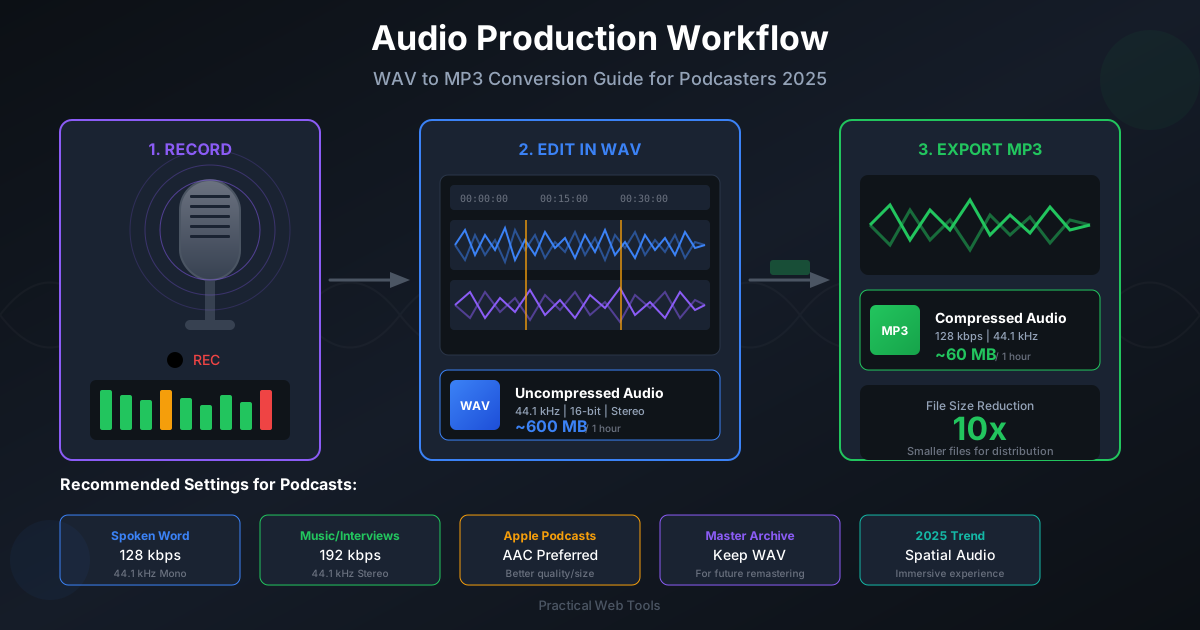
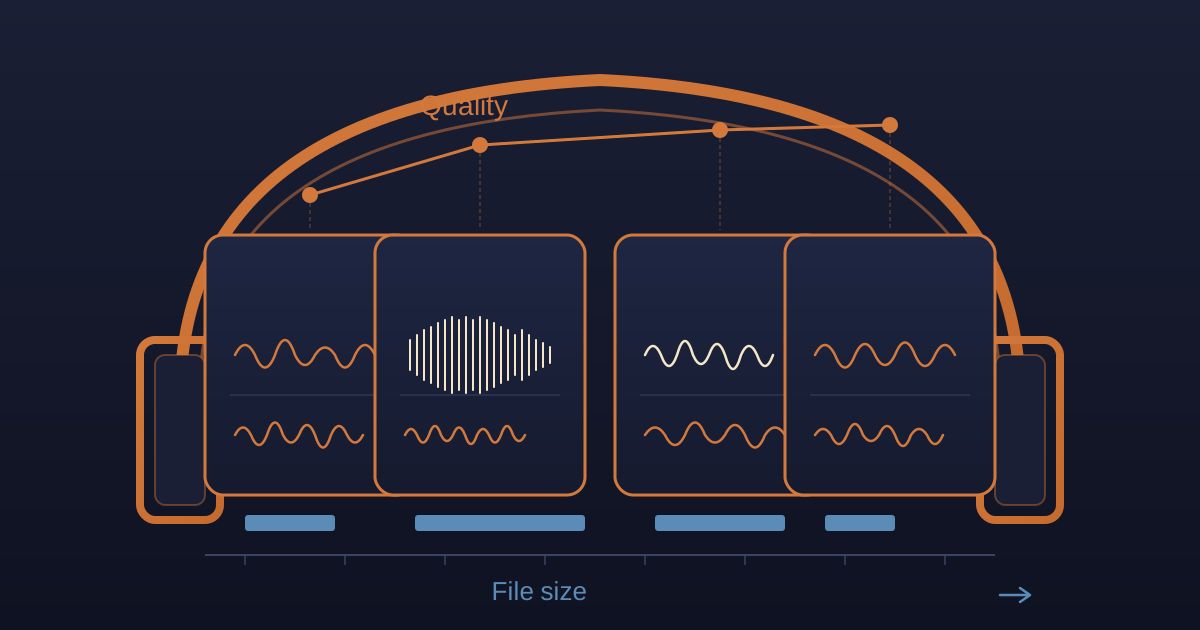
However, you can minimize this quality loss to a point where it is practically inaudible to the human ear. The key is to use a high bitrate for your target MP3 file. If your source AAC file is high quality, converting it to a 320 kbps MP3 will preserve most of the audible detail. Converting to a low-quality 128 kbps MP3, however, will result in a noticeable degradation.
Rule of Thumb: Always convert to the highest MP3 bitrate possible (320 kbps is standard for high quality) to make the quality loss imperceptible.
How to Convert AAC to MP3: A Step-by-Step Guide
Now for the practical part. We'll cover several free and effective methods to convert your files. Choose the one that best fits your needs and technical comfort level.
Method 1: Using VLC Media Player
VLC is a powerful, free, and open-source media player that's often called the Swiss Army knife of media. It can play almost any format you throw at it, and it has a robust, built-in conversion tool.
Step 1: Open the Convert / Save Menu
- Launch VLC Media Player.
- In the top menu bar, click on Media, then select Convert / Save... (or use the shortcut
Ctrl+R).
Step 2: Add Your AAC File
- In the Open Media window, under the File tab, click the + Add... button.
- Navigate to the AAC file (it might have a
.aac,.m4a, or.mp4extension) you want to convert and click Open. - Click the Convert / Save button at the bottom.
Step 3: Choose the Output Profile
- In the Convert window, look for the Profile dropdown menu.
- Select Audio - MP3 from the list. This is the preset for MP3 conversion.
Step 4: Select a Destination
- Click the Browse button next to the Destination file field.
- Choose a folder where you want to save your new file, give it a name (make sure it ends with
.mp3), and click Save.
Step 5: Start the Conversion
- Click the Start button. The progress bar in VLC's main window will move as the file is converted. Once it's finished, your new MP3 file will be in the destination folder you chose.
Method 2: Using Apple Music or iTunes
If your music is already in your Apple Music (on macOS) or iTunes (on older macOS or Windows) library, you can convert it directly within the application. This is especially useful for music purchased from the iTunes store.
Step 1: Change Your Import Settings
- First, you need to tell the application that you want to create MP3 files.
- On Apple Music (macOS): Go to
Music > Preferences > Files > Import Settings.... - On iTunes (Windows): Go to
Edit > Preferences > General > Import Settings.... - In the Import Using dropdown menu, select MP3 Encoder.
- For the Setting, choose High Quality (192 kbps) or a Custom setting of 320 kbps for the best results.
- Click OK to save the settings.
Step 2: Select the Song(s) to Convert
- Go to your library and find the AAC song or songs you want to convert. Select them.
Step 3: Create the MP3 Version
- With the song(s) selected, go to the top menu and click File > Convert > Create MP3 Version.
- The application will create a duplicate of each selected song in the MP3 format. The new file will appear in your library right next to the original.
- You can then right-click the new MP3 file and select Show in Finder (macOS) or Show in Windows Explorer (Windows) to locate the file.
Method 3: Using Online Audio Converters
For quick, one-off conversions without installing any software, online converters are a great option. There are dozens of websites that offer this service for free.
How They Work:
- Upload: You upload your AAC file to the website.
- Convert: You select MP3 as the output format and choose your quality settings.
- Download: The website processes the file and provides you with a download link for the new MP3 file.
Pros:
- No software installation required.
- Fast and convenient for a small number of files.
- Accessible from any device with a web browser.
Cons:
- Privacy Concerns: You are uploading your files to a third-party server. Avoid using online converters for sensitive or private audio recordings.
- File Size/Number Limits: Many free services limit the size or number of files you can convert at once.
- Advertisements and Pop-ups: These sites are often supported by ads, which can be intrusive.
When choosing an online tool, always opt for one with a clear privacy policy. At Practical Web Tools, we believe in privacy-focused solutions, a principle that's just as important for audio files as it is for documents.
Bonus Tip: Organizing Your Project Files
Converting audio is often part of a larger project, whether you're creating a podcast, a presentation, or a music compilation. Managing all the related documents—like scripts, notes, or project briefs—can be a challenge.
If you have multiple documents related to your audio project, you can streamline your workflow by using PDF tools. For instance, you could Merge PDFs containing your script, production notes, and marketing plan into a single, easy-to-manage file. If you're creating a presentation about audio formats and need to share it in an editable format, a tool to convert your final slides from PDF to PowerPoint can be incredibly useful. Finally, if you need a client or collaborator to approve the project plan, you can even use a tool to Sign PDF documents electronically, keeping your entire workflow digital and efficient.
Conclusion: The Right Format for the Right Job
While AAC may be the more modern and efficient codec, the MP3 format's incredible legacy of compatibility ensures it remains relevant and essential. Knowing how to convert from AAC to MP3 is a valuable skill for anyone who manages a digital audio library.
We've covered the why, the when, and the how, showing you that with free tools like VLC Media Player or Apple Music/iTunes, the process is simple and accessible to everyone. By choosing a high-quality output setting, you can ensure your music and audio files are ready for any device, anytime, without a perceptible loss in quality.
Now that you've mastered your audio files, why not explore the other ways you can simplify your digital life? Check out the full suite of over 455+ free and privacy-focused online tools at Practical Web Tools to handle all your document, image, and utility needs.