MP4 to 3GP: The Ultimate Guide to Mobile Video Conversion
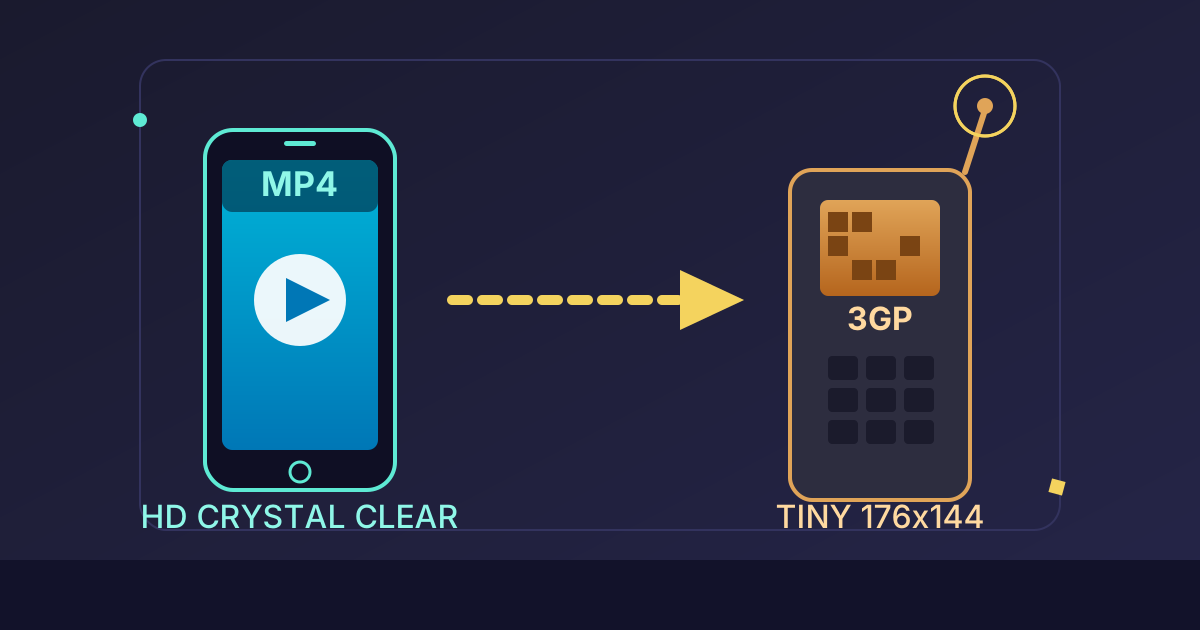
Do you remember the days of flip phones and the dawn of mobile video? Sending a clip to a friend was a monumental task, constrained by tiny data plans and even tinier storage capacities. In that era, one video format reigned supreme: 3GP. While modern smartphones and blazing-fast networks have made high-definition MP4 the new standard, the need to convert MP4 to 3GP hasn't completely vanished. In fact, it remains a surprisingly useful trick to have up your sleeve.
Whether you're trying to send a video to someone with an older device, fighting against a painfully slow internet connection, or simply need to shrink a file to an absolute minimum size, understanding this conversion process is key. This comprehensive guide will walk you through everything you need to know. We'll explore the core differences between these two formats, uncover the modern-day reasons for making the switch, and provide step-by-step instructions using various tools. Get ready to master the art of mobile video conversion.
Understanding the Formats: MP4 vs. 3GP
Before diving into the conversion process, it's crucial to understand what these file types are. They aren't just different extensions; they represent different philosophies in video technology, designed for vastly different hardware and network conditions.
What is an MP4 File?
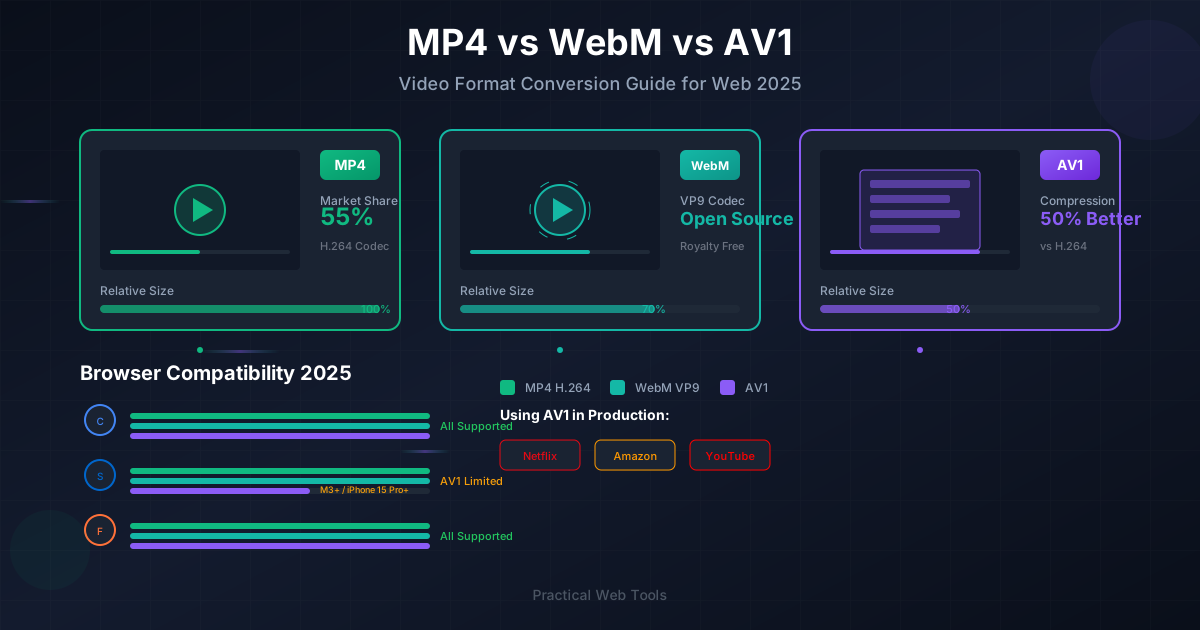
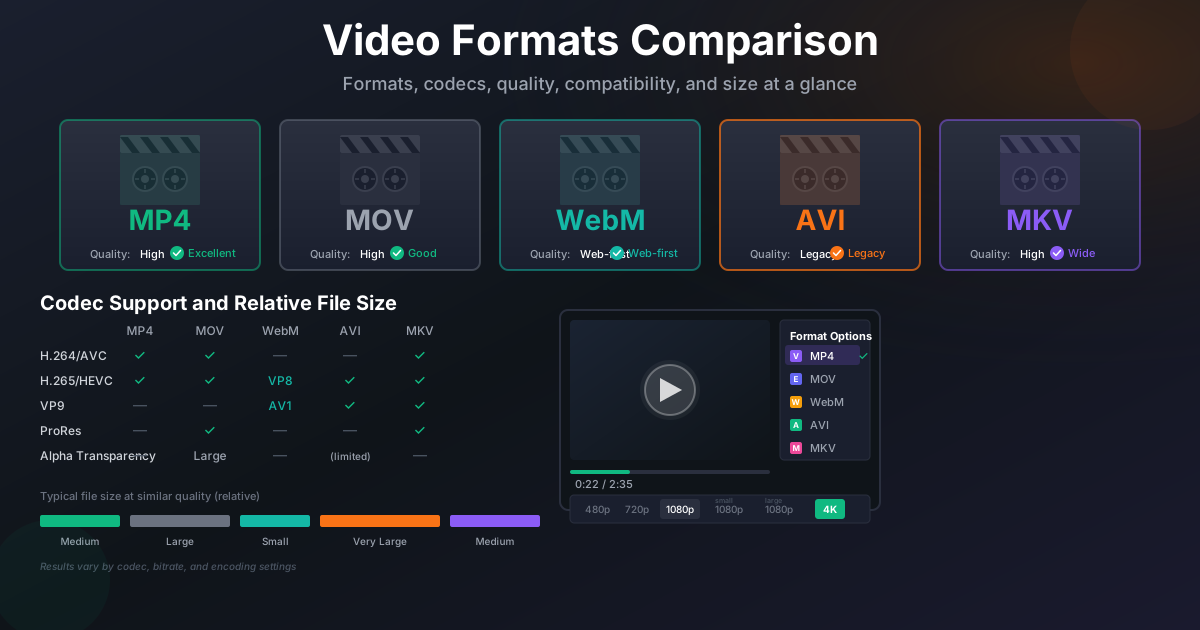
MP4, short for MPEG-4 Part 14, is a digital multimedia container format. Think of a 'container' like a box that can hold various types of data—video, audio, subtitles, and images—all synchronized together. Its versatility and efficiency are why it has become the universal standard for web and mobile video.
- High Quality: MP4 files are known for their ability to store high-quality video and audio, supporting everything from standard definition to 4K and beyond.
- Efficient Compression: It typically uses advanced codecs like H.264 or H.265 (HEVC) for video and AAC for audio. These codecs provide an excellent balance between video quality and file size, making them perfect for streaming.
- Wide Compatibility: Virtually every modern device, from your iPhone and Android smartphone to your smart TV, laptop, and gaming console, can play MP4 files without any issues.
In short, MP4 is the robust, high-quality, do-it-all format of the modern digital world.
What is a 3GP File?
3GP (3GPP file format) is also a multimedia container format, but it was designed with a very specific purpose in mind. As the name suggests, it was created by the 3rd Generation Partnership Project (3GPP) for use on 3G mobile phones. The entire design philosophy was built around limitation.
- Small File Size: The primary goal of 3GP was to create the smallest possible video files to be sent and received over slow 3G mobile networks.
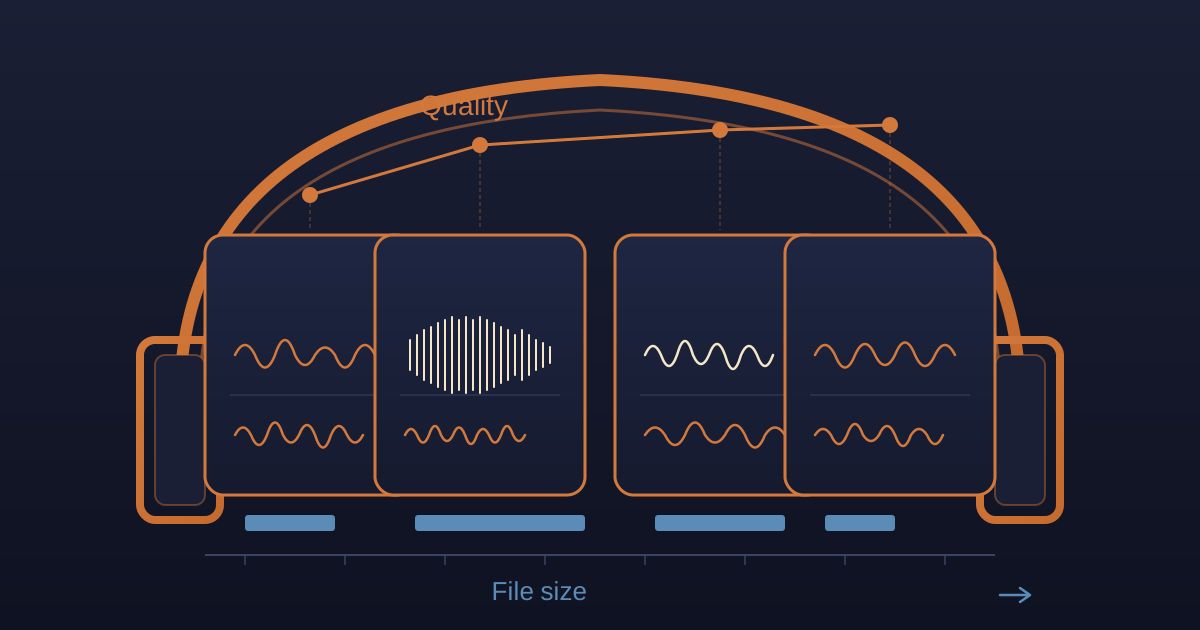
- Lower Quality: To achieve these tiny file sizes, 3GP uses older, less efficient codecs and heavily compresses both the video and audio streams. This results in noticeably lower resolution, blockier images, and less crisp audio.
- Low Bandwidth Requirement: It's optimized for streaming and downloading on networks with limited bandwidth, ensuring playback without constant buffering on older devices.
3GP was a technical solution for a specific time, prioritizing accessibility and speed over fidelity.
Key Differences at a Glance
For a quick comparison, here’s a breakdown of how MP4 and 3GP stack up against each other. This is a great reference for deciding which format suits your specific need.
| Feature | MP4 (MPEG-4 Part 14) | 3GP (3GPP) |
|---|---|---|
| Primary Use Case | Web streaming, modern devices, high-quality video | Legacy mobile phones, low-bandwidth environments |
| Video Quality | High (Supports HD, Full HD, 4K, etc.) | Low (Typically low resolution, e.g., 176x144) |
| Audio Quality | High (Often uses AAC codec) | Low (Often uses AMR or AAC-LC codecs) |
| File Size | Larger, but efficient for its quality | Extremely small |
| Compression | Advanced codecs (H.264, H.265) | Simpler codecs (H.263, MPEG-4 Part 2) |
| Compatibility | Universal on modern devices | Universal on older 3G phones, playable on most PCs |
Why Convert MP4 to 3GP in the Modern Age?
With 5G becoming commonplace and even budget smartphones boasting ample storage, you might wonder why anyone would intentionally downgrade a crisp MP4 video to a pixelated 3GP. The reasons are niche but highly practical.
1. Compatibility with Legacy or Basic Devices
The most straightforward reason is to ensure a video can be played on a very old piece of hardware. This could be a feature phone (often called a 'dumb phone') used by an older relative, a basic mobile device used for specific industrial applications, or even older in-car entertainment systems. These devices lack the processing power and modern codecs needed to handle MP4 files, but they can almost always play a 3GP video.
2. Drastically Reducing File Size for Transmission
This is the most common modern use case. Imagine you're in a remote area with a spotty, slow internet connection. Uploading a 50 MB MP4 video could take an hour, or it might fail altogether. Converting that video to 3GP could shrink it to just 2-3 MB, making it possible to send via email or a messaging app like WhatsApp, which often has its own file size limits.
3. Saving Precious Storage Space
While flagship phones come with hundreds of gigabytes of storage, many people use entry-level smartphones with very limited internal memory (16GB or 32GB). If you need to store a large number of video clips on such a device—perhaps for reference or as part of a collection—converting them to 3GP can free up an enormous amount of space.
4. Minimizing Mobile Data Consumption
For individuals on tight mobile data plans, every megabyte counts. Sending or receiving a 3GP video instead of an MP4 uses a fraction of the data. This can be a lifesaver at the end of a billing cycle or when traveling internationally with expensive data roaming charges.
How to Convert MP4 to 3GP: A Step-by-Step Guide
Now for the practical part. Converting MP4 to 3GP can be done through several methods, each with its own pros and cons. We'll cover the three most popular approaches.
Method 1: Using Online Video Converters
For quick, one-off conversions without installing any software, online tools are a fantastic option.
Pros:
- No installation required; accessible from any browser.
- Extremely simple user interface.
- Fast for small files.
Cons:
- Requires uploading your video to a third-party server, raising privacy concerns.
- Often have file size limits on their free tiers.
- Dependent on your internet upload speed.
Step-by-Step Guide:
- Choose a Converter: Search for a reputable "online MP4 to 3GP converter." Look for sites with clear privacy policies.
- Upload Your File: Click the "Choose File" or "Upload" button and select the MP4 video from your computer.
- Select Output Format: In the output or "convert to" menu, select "3GP."
- Adjust Settings (Optional): Some advanced sites allow you to change the resolution, video bitrate, or audio quality. For the smallest file, choose the lowest settings.
- Start Conversion: Click the "Convert" or "Start" button.
- Download the Result: Once the process is complete, a download link for your new .3gp file will appear. Download it to your device.
Method 2: Using Desktop Software (VLC Media Player)
Many people don't realize that the popular VLC Media Player is also a powerful video conversion tool. It's free, open-source, and works offline, making it a secure and versatile option.
Pros:
- Completely free and safe.
- Works offline, ensuring your files remain private.
- No file size limits.
- Available for Windows, macOS, and Linux.
Cons:
- The conversion interface is less intuitive than dedicated tools.
- Requires you to install the software first.
Step-by-Step Guide:
- Open VLC: Launch the VLC Media Player application.
- Open the Convert Menu: In the top menu bar, click on
Mediaand then selectConvert / Save...(or use the shortcut Ctrl+R). - Add Your File: In the
Filetab, click the+ Add...button and select the MP4 file you want to convert. Then, click theConvert / Savebutton at the bottom. - Choose the Profile: In the new window, look for the
Profiledropdown menu. VLC doesn't always have a default 3GP profile. You may need to select a generic mobile profile like "Video for Android SD Low" and then customize it by clicking the wrench icon next to the dropdown. - Customize the Profile (If Needed): In the profile settings, go to the
Encapsulationtab and selectMP4/MOV. Then, in theVideo codectab, you can choose a codec like H.263 and set a very low bitrate (e.g., 256 kb/s). Finally, go to theAudio codectab and select a low-bitrate codec. - Set the Destination: Click the
Browsebutton and choose where you want to save your converted file. Importantly, you must manually type the file name and end it with the .3gp extension (e.g.,my_video.3gp). - Start Conversion: Click the
Startbutton. The timeline scrubber in VLC will move as if it's playing the video, which indicates the conversion progress. When it reaches the end, your file will be saved.
Method 3: Using Command-Line Tools (FFmpeg)
For tech-savvy users, developers, or anyone needing to batch convert files, FFmpeg is the gold standard. It's an incredibly powerful command-line tool that gives you complete control over the conversion process.
Pros:
- The most powerful and flexible option available.
- Ideal for scripting and automating conversions.
- Total control over every single parameter.
Cons:
- No graphical user interface; requires using the command line (Terminal or Command Prompt).
- Steep learning curve for beginners.
Basic Conversion Command:
Once you have FFmpeg installed, open your terminal or command prompt, navigate to the folder containing your video, and run a command like this:
ffmpeg -i input.mp4 -c:v h263 -c:a amr_nb -ar 8000 -ac 1 -s 176x144 output.3gp
Let's break that down:
ffmpeg: Calls the program.-i input.mp4: Specifies the input file.-c:v h263: Sets the video codec to H.263, common for 3GP.-c:a amr_nb: Sets the audio codec to AMR-NB, optimized for speech.-ar 8000: Sets the audio sampling rate to 8000 Hz (low quality).-ac 1: Sets the audio channels to 1 (mono).-s 176x144: Sets the output video size (resolution).output.3gp: Defines the name of the output file.
Best Practices and Potential Pitfalls
Converting video isn't always straightforward. Keep these tips in mind to get the best results.
Understand Quality Loss is Permanent
Converting from a high-quality format like MP4 to a low-quality one like 3GP is a "lossy" process. Data is permanently discarded to reduce the file size. You cannot convert a 3GP file back to an MP4 and regain the original quality. Always keep a copy of your original MP4 file as a master version.
Choose Appropriate Settings
If your conversion tool allows it, start with the lowest settings for the smallest file (e.g., 176x144 resolution, 15 frames per second, low audio bitrate). If the result is too poor to be usable, you can gradually increase the settings until you find a balance between file size and acceptable quality.
Managing Your Project Files
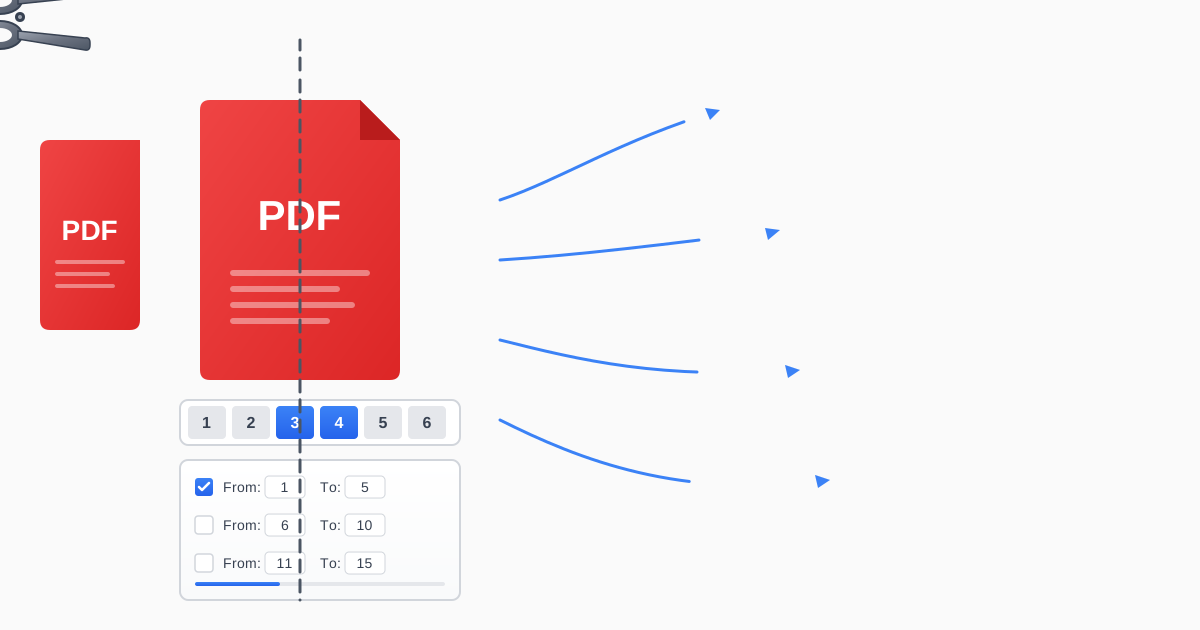
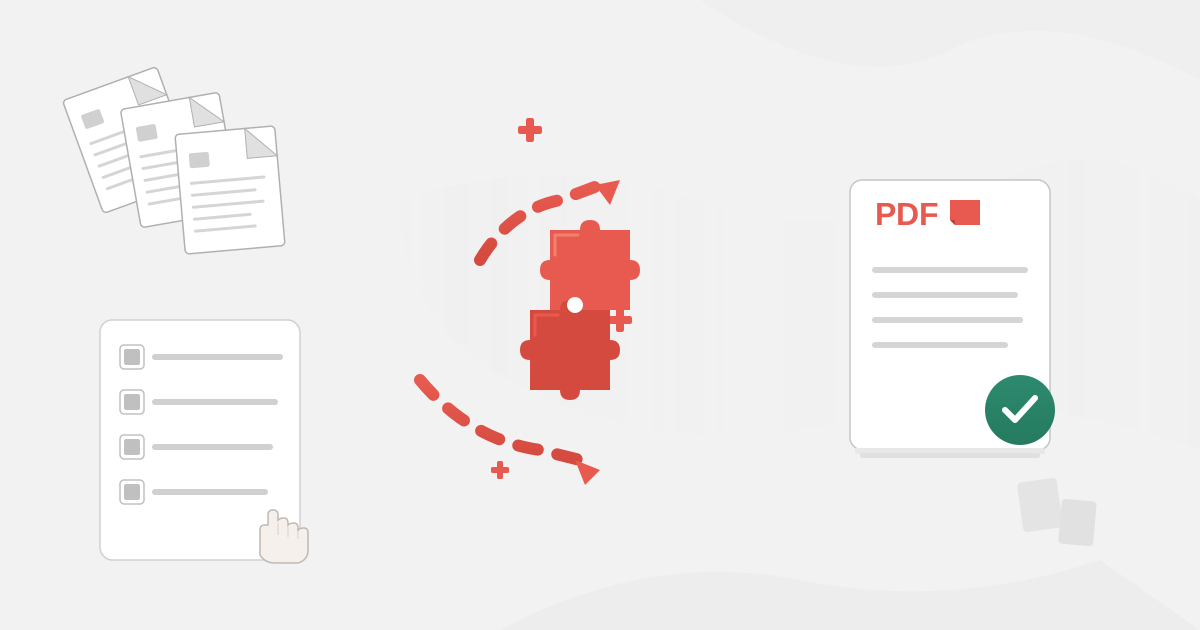
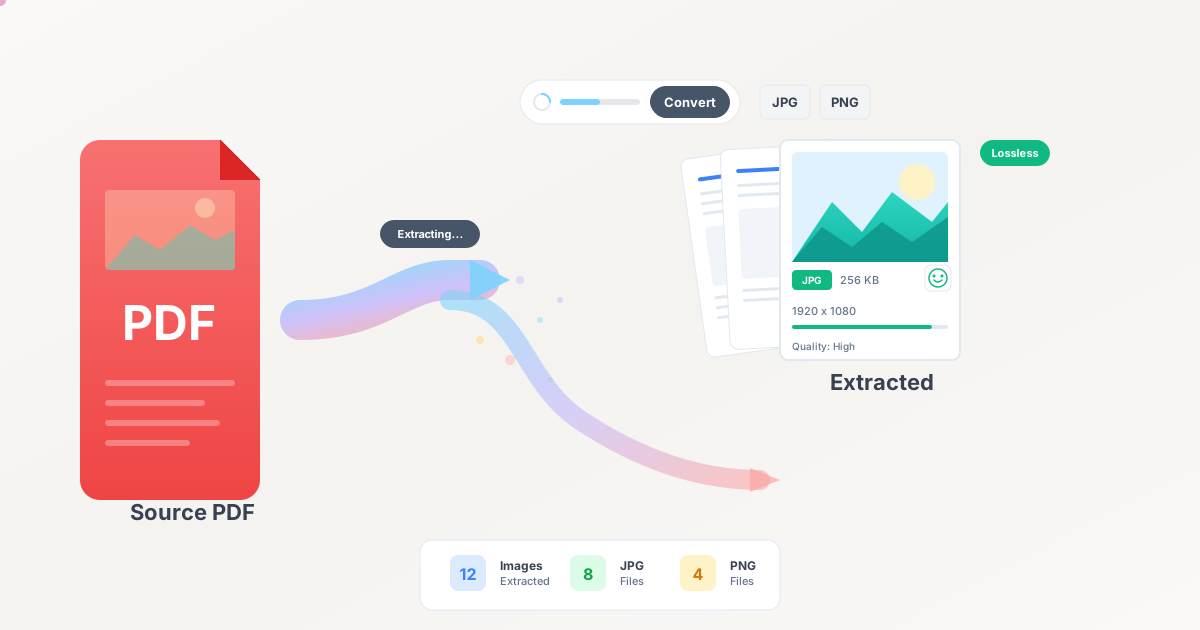
Video projects often involve more than just video files. You might have scripts, storyboards, or release forms in PDF format. Keeping these organized is just as important as choosing the right video format. If you need to combine several document versions, a tool to Merge PDFs is invaluable. Or, if you want to extract a specific scene's details from a long script, our Split PDF tool can isolate just the pages you need. After converting your video, you might also want to share a high-quality promotional still. If you have a frame saved in a PDF document, you can use our PDF to Image tool to quickly extract it as a JPG or PNG, ready for social media.
Conclusion: A Useful Skill for Niche Situations
While MP4 is the undisputed champion of modern video, the humble 3GP format still holds its ground as a powerful problem-solver. It's the ultimate tool for maximum compression and compatibility with older devices. By understanding the core differences between the formats and mastering one of the conversion methods—be it a simple online tool or the powerful VLC Media Player—you've added a valuable skill to your digital toolkit.
The next time you're faced with a massive video file and a terrible internet connection, you'll know exactly how to shrink it down to size without sacrificing the ability to share your message.
At Practical Web Tools, we're dedicated to providing solutions for all your digital conversion and editing needs. While you're mastering video formats, don't forget to explore our suite of 455+ free, secure, and privacy-focused tools to handle all your document management tasks.