TAR to 7Z: The Ultimate Guide to Smarter File Compression
Introduction: Unpacking Your Archive Woes
In the world of data management, file archives are the unsung heroes. They bundle countless files into a single, portable package, making storage and transfer a breeze. You've likely encountered .tar files, especially if you've worked with Linux systems or downloaded source code. They are fantastic at what they do: bundling files together. But what if you could do more? What if you could not only bundle your files but also shrink them to a fraction of their size with robust security?
Enter the .7z format. While TAR is the master of grouping, 7Z is the champion of compression. Converting your TAR archives to 7Z can lead to significant space savings, faster transfers, and enhanced security through encryption. But the process isn't always a simple one-click affair.
This comprehensive guide will walk you through everything you need to know about converting TAR to 7Z. We'll explore the fundamental differences between these formats, break down the clear benefits of making the switch, and provide detailed, step-by-step instructions for a seamless conversion, whether you're using a graphical interface or the command line. Get ready to optimize your digital storage like a pro.
Understanding the Formats: TAR vs. 7Z
Before we dive into the 'how,' it's crucial to understand the 'what.' TAR and 7Z serve similar purposes but are built on entirely different philosophies. Grasping these differences is key to understanding why a conversion is so beneficial.
What is a TAR File?
TAR stands for Tape Archive. Its name hints at its origins in the days of tape-based data backups. A TAR file's primary, and only, job is to take a collection of files and directories and serialize them into a single file, known as a tarball. It meticulously preserves file metadata like permissions and directory structures, which is why it's a long-standing favorite in the Unix and Linux ecosystems.
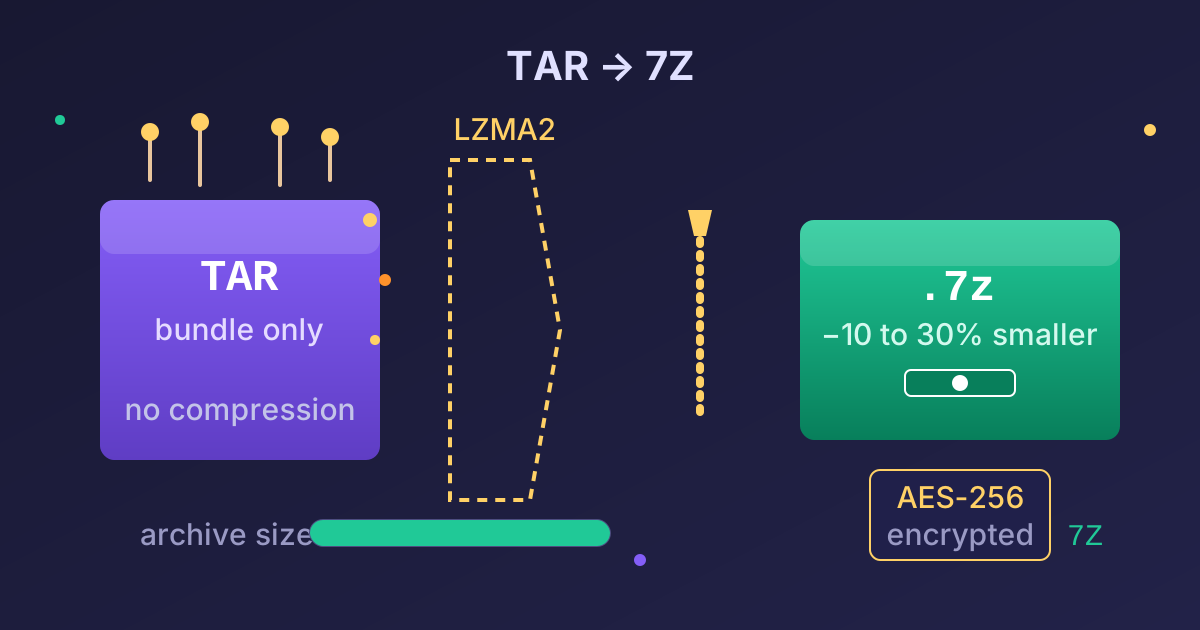
Here’s the critical takeaway: TAR does not compress files. It only bundles them. This is why you almost always see it paired with a compression tool, resulting in file extensions like .tar.gz (using Gzip) or .tar.bz2 (using Bzip2). The process is two-fold: first TAR bundles, then Gzip compresses.
- Pros: Excellent at preserving file system attributes, universally available on Unix-like systems.
- Cons: No built-in compression or encryption.
What is a 7Z File?
The .7z format is the native archive format for the 7-Zip archiver, an open-source powerhouse. Unlike TAR, 7Z was designed from the ground up to be an all-in-one solution for both archiving and compression.
It is most famous for its use of the Lempel-Ziv-Markov chain algorithm (LZMA and LZMA2), which provides an exceptionally high compression ratio. In many cases, 7Z can create archives that are significantly smaller than their ZIP or RAR counterparts. Furthermore, it includes strong AES-256 encryption as a core feature, allowing you to password-protect your archives with military-grade security.
- Pros: Superior compression ratios, strong built-in encryption, open-source standard.
- Cons: Less common by default on some operating systems compared to ZIP.
At a Glance: TAR vs. 7Z Comparison
For a quick overview, this table highlights the key differences:
| Feature | TAR | 7Z |
|---|---|---|
| Primary Function | Archiving (Bundling files) | Archiving & High-Ratio Compression |
| Compression | None (Relies on Gzip, Bzip2, etc.) | Built-in (LZMA/LZMA2 algorithms) |
| Encryption | No (Requires external tools like GPG) | Yes (Built-in AES-256) |
| File Extension | .tar, .tar.gz, .tgz |
.7z |
| Structure | Sequential stream of files | Can use "solid mode" for better compression |
| Common Operating System | Unix, Linux, macOS | Windows (but fully cross-platform) |
Why Convert From TAR to 7Z?
Now that we see the technical differences, the practical benefits of converting become clear. It’s about gaining efficiency, security, and simplicity.
1. Superior Compression Saves Space
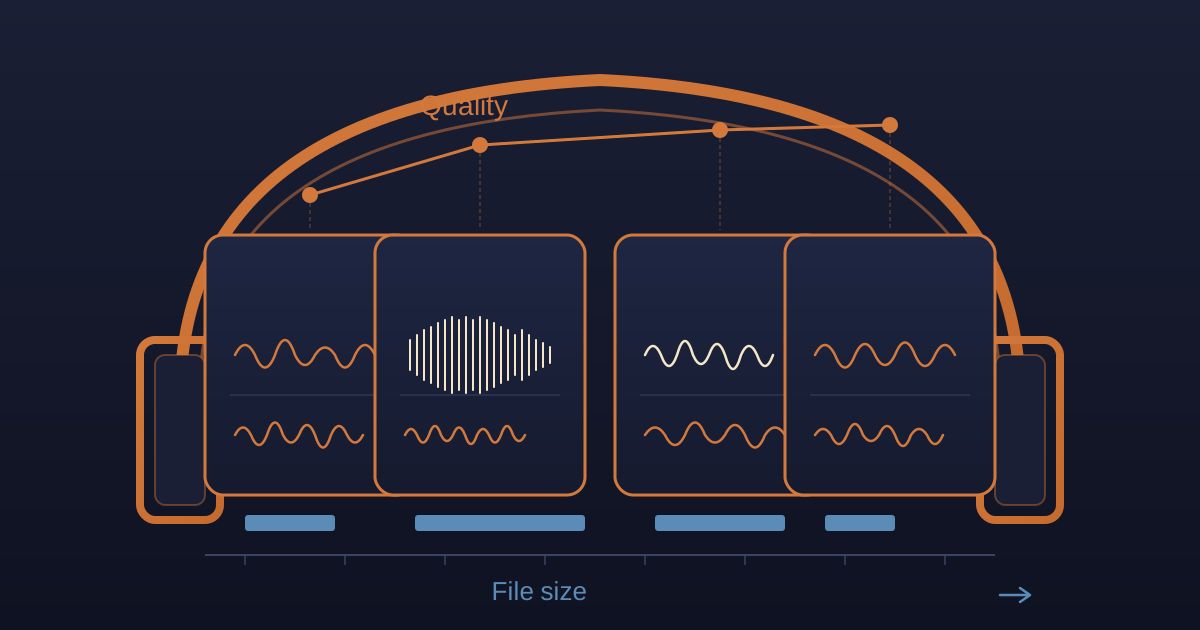
This is the number one reason. The LZMA2 compression algorithm in 7Z is simply more efficient than the DEFLATE algorithm used by Gzip. When you convert a .tar.gz file to .7z, you are essentially re-compressing the same data with a better algorithm. For large archives, especially those containing text, source code, or redundant data, the space savings can be substantial—often between 10% to 30% smaller, and sometimes even more. This means less disk space used, smaller backups, and faster network transfers.
2. Enhanced Security with Built-in Encryption
If your archive contains sensitive information, 7Z is the clear winner. While you can encrypt a TAR file using third-party tools, 7Z has powerful AES-256 encryption built right in. You can password-protect both the file contents and the file names within the archive, creating a secure container for your data in a single, simple step. This is invaluable for sharing confidential documents or backing up private information.
3. All-in-One Simplicity
The workflow for a compressed TAR file is bundle -> compress to create and decompress -> extract to open. With 7Z, it's a single, atomic operation. This streamlined process is not only easier to manage but also reduces the chances of errors, especially when scripting or automating backup tasks.
How to Convert TAR to 7Z: Step-by-Step Methods
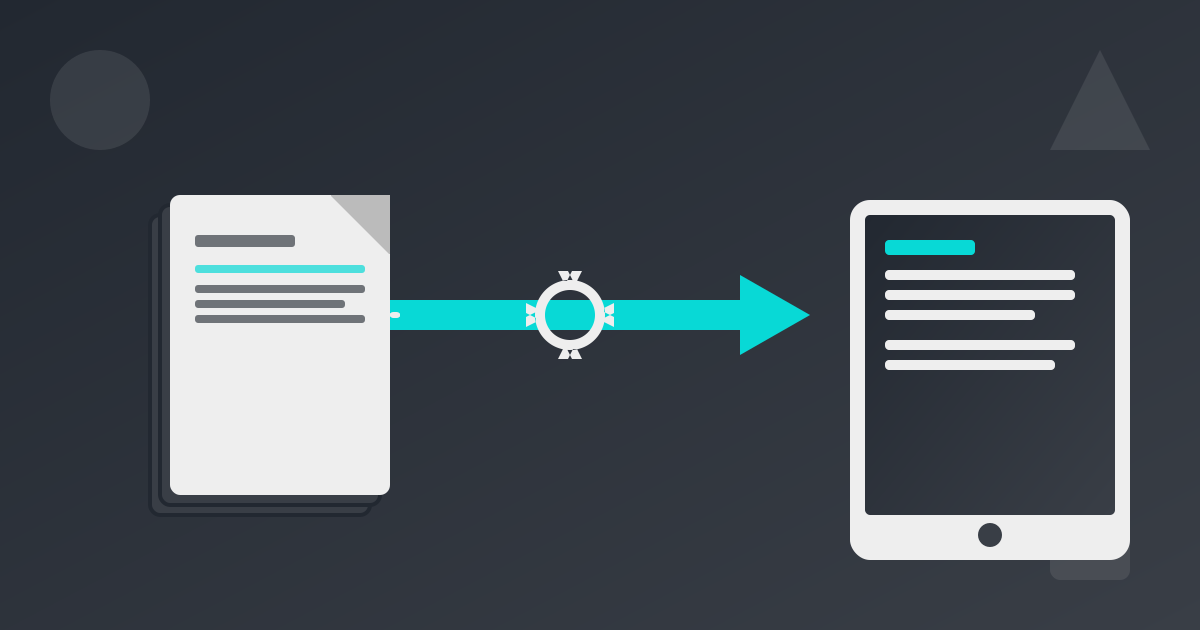
It’s important to understand that there is no direct "convert" button. The process involves two main steps: extracting the contents of the TAR archive and then creating a new 7Z archive from those contents. Here are the most common methods to get it done.
Method 1: Using the 7-Zip GUI on Windows
For most users, the free and open-source 7-Zip application is the best tool for the job. It's lightweight, powerful, and integrates directly into the context menu.
-
Step 1: Install 7-Zip If you don't already have it, download and install 7-Zip from the official website (7-zip.org). Choose the version that matches your system (32-bit or 64-bit).
-
Step 2: Extract the TAR Archive
- Navigate to your
.taror.tar.gzfile in Windows Explorer. - Right-click on the file.
- Hover over the 7-Zip entry in the context menu.
- Select "Extract Here" to extract the contents into the current folder or "Extract to [foldername]/" to create a new folder for the contents. This is the recommended option to keep your files tidy.
Note: If you have a
.tar.gzfile, you may need to perform this step twice. The first extraction decompresses from.gzto.tar, and the second extracts the files from the.tararchive.
- Navigate to your
-
Step 3: Create the New 7Z Archive
- You should now have a folder containing all the files that were inside the tarball.
- Right-click on this new folder.
- Hover over 7-Zip again and this time select "Add to archive..."
- The "Add to Archive" window will open. This is where you configure your new archive:
- Archive format: Make sure this is set to 7z.
- Compression level: "Normal" is fine for most uses. "Ultra" will produce the smallest file but takes much longer.
- Encryption: If you need to, you can enter a password here to encrypt the archive.
- Click OK. 7-Zip will now create a new
.7zfile with the same name as the folder, containing all your files in a highly compressed and secure format.
Method 2: Command-Line Conversion (Linux, macOS, or Windows with WSL)
For power users and those working on servers, the command line is the most efficient method. On Linux and macOS, you'll use the native tar command and the command-line version of 7-Zip, which is often installed via a package named p7zip or p7zip-full (sudo apt-get install p7zip-full on Debian/Ubuntu).
The process is the same logically: extract, then compress.
-
Step 1: Extract the TAR Archive Open your terminal and navigate to the directory containing your file. Use the
tarcommand to extract it.For a
.tar.gzor.tgzfile:tar -xzvf your_archive.tar.gz -C ./extracted_contentFor a simple
.tarfile:tar -xvf your_archive.tar -C ./extracted_contentThe
-Cflag tellstarto extract the contents into a new directory namedextracted_content. This is a clean way to manage the files. -
Step 2: Create the 7Z Archive Now, use the
7zcommand to create the new archive from the directory you just created.7z a new_archive.7z ./extracted_content/Let's break down this command:
7z: Invokes the 7-Zip program.a: The 'add' command, used to create or add files to an archive.new_archive.7z: The name of the output file you want to create../extracted_content/: The source directory containing the files you want to add.
To use maximum compression, you can add the
-mx=9flag:7z a -mx=9 new_archive.7z ./extracted_content/ -
Step 3: (Optional) Clean Up Once you've verified your
new_archive.7zis correct, you can remove the original tarball and the intermediate directory:rm your_archive.tar.gz rm -rf ./extracted_content
Best Practices for File Archiving and Management
Converting formats is a great start, but true efficiency comes from a smart workflow. An archive is only as good as the organization of the files within it.
Organize Your Documents Before Archiving
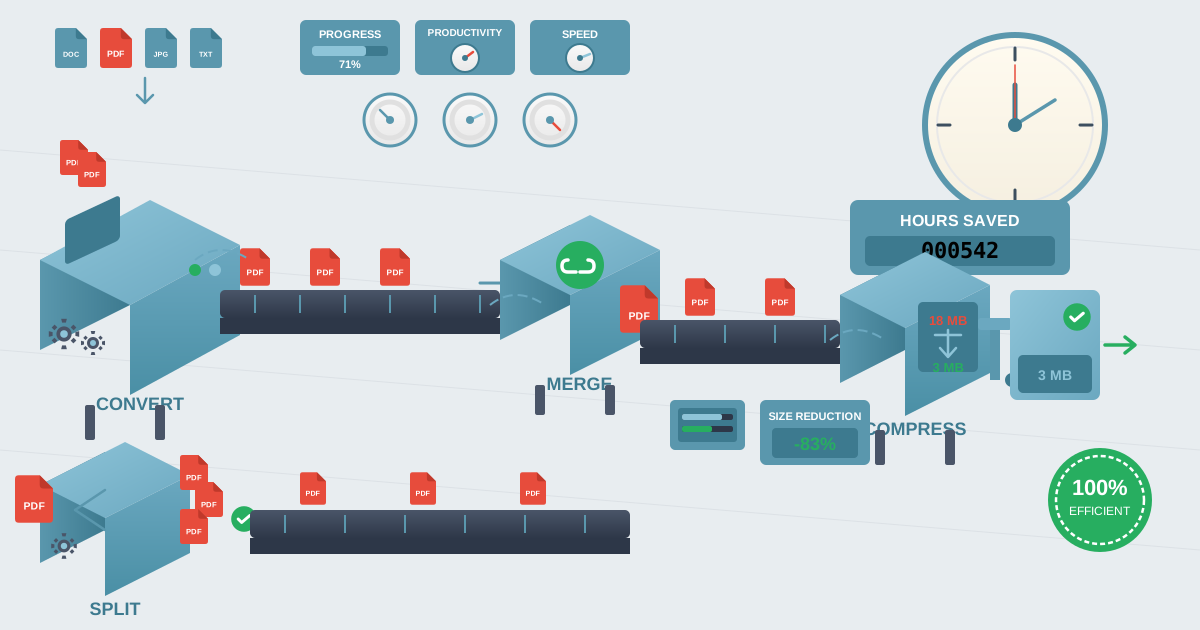
Before you compress a folder, make sure its contents are logical and well-structured. If you're archiving a project that includes multiple reports or document revisions, they can quickly become a mess. Instead of archiving ten separate PDF chapters, consider using a tool to Merge PDFs into a single, cohesive document first. This makes the final archive cleaner and the master document easier to find later.
Be Smart About Large Files
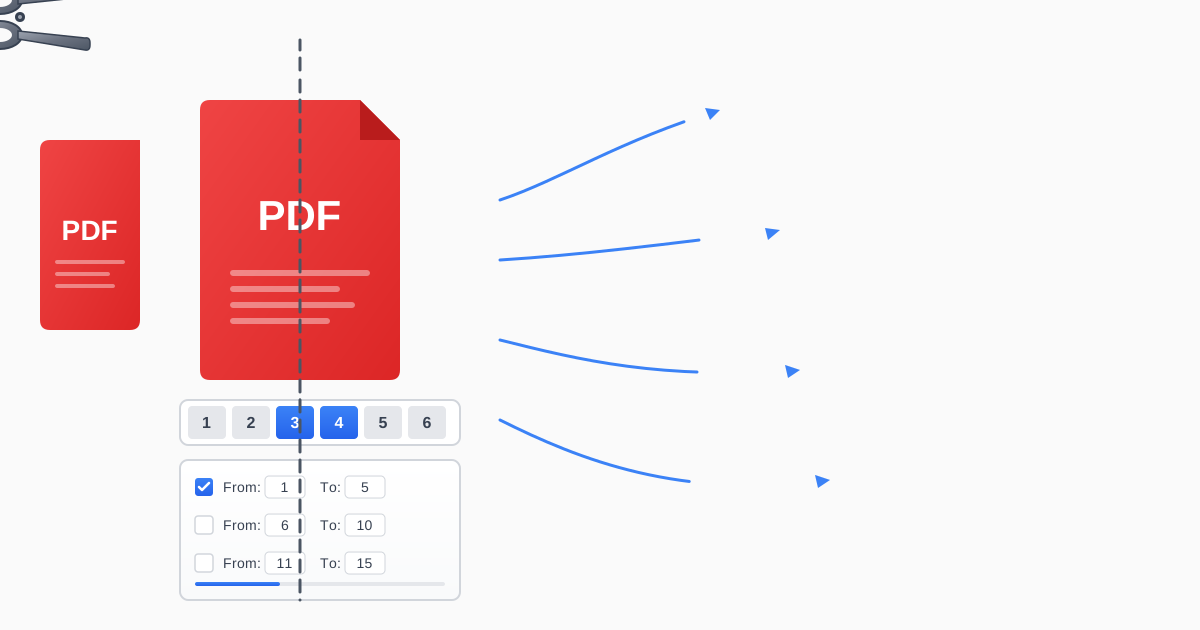
Sometimes, you only need a small piece of a very large document. Archiving a 500-page PDF manual when you only need the troubleshooting section is inefficient. In these scenarios, a better approach is to extract only the necessary pages. By using a tool to Split PDF, you can create a smaller, more relevant document to include in your archive, saving space and making information retrieval much faster.
Ensure Your Content is Accessible
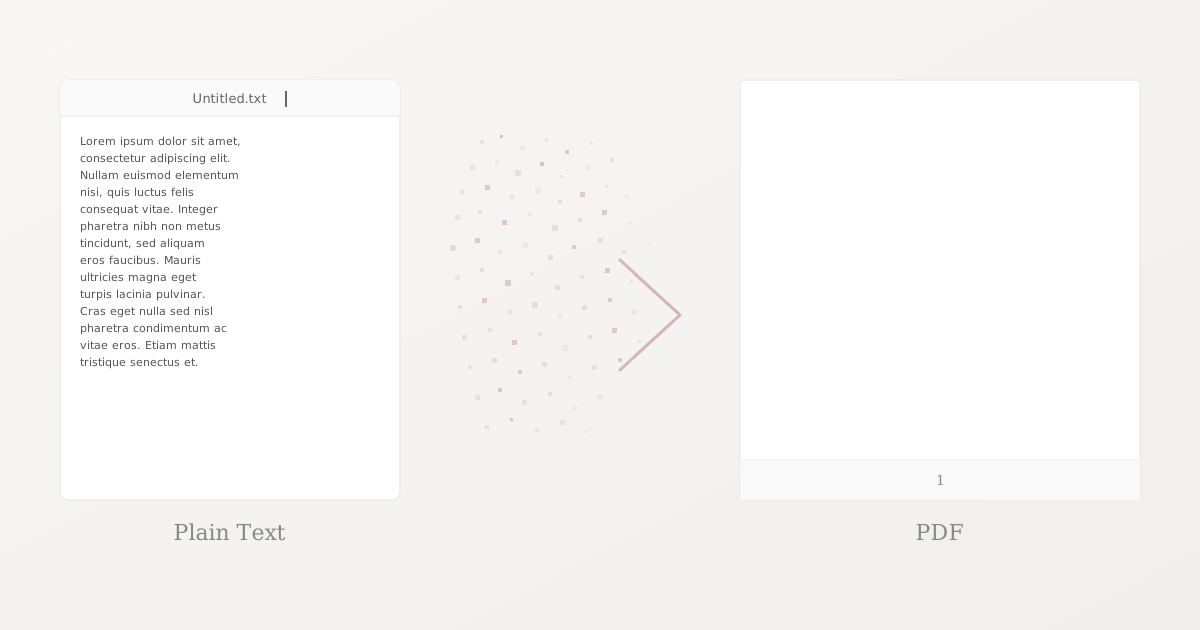
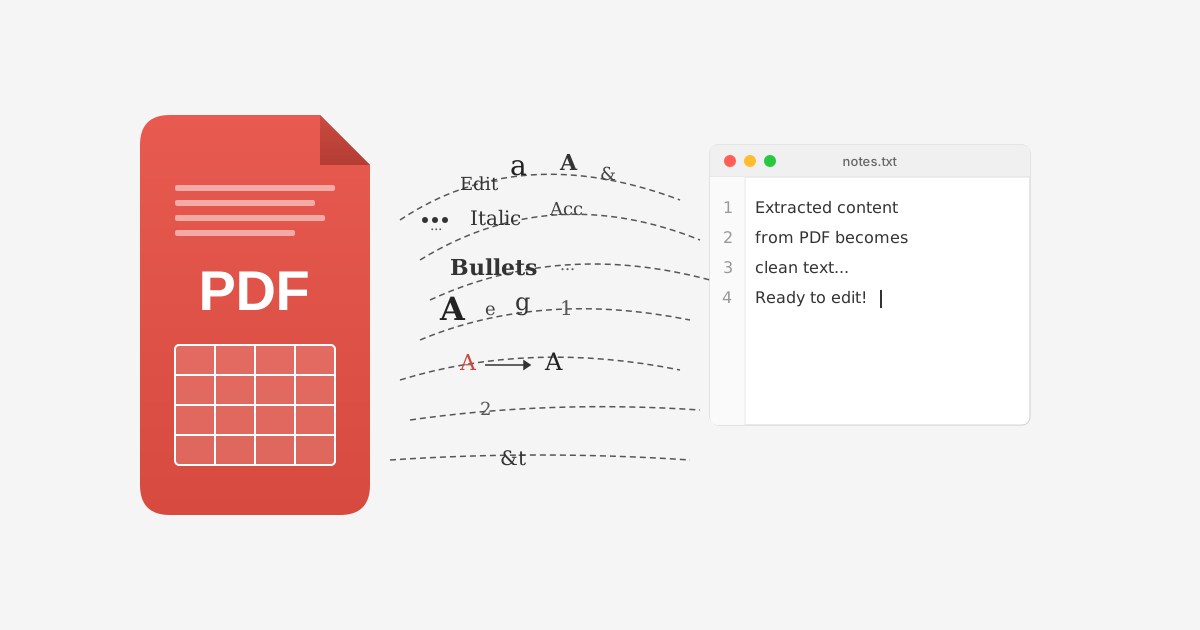
An archive can sometimes feel like a black box. If you have important information locked inside a PDF within that archive, searching for it can be a hassle. To make your archived data more searchable, it's often wise to extract the raw text from key documents. A PDF to Text converter is perfect for this, allowing you to create a lightweight, fully-searchable .txt file to store alongside the original PDF in your archive.
Frequently Asked Questions (FAQ)
Q1: Can I convert from TAR to 7Z in a single step without extracting?
Directly, no. The formats are fundamentally different. The conversion process must involve de-archiving the TAR's contents and then re-archiving them into the 7Z format. However, this two-step process can be easily automated into a single command-line script, making it feel like a one-step operation for practical purposes.
Q2: Is 7Z always better than TAR.GZ?
For compression, yes, 7Z's LZMA2 algorithm almost always produces a smaller file than Gzip's DEFLATE. For preserving specific Unix/Linux file permissions and ownership during a Linux-to-Linux transfer, tar is still considered the gold standard. The best choice depends on your priority: maximum compression and features (7Z) or POSIX compliance (TAR).
Q3: Is the conversion process safe for my original files?
Absolutely. Both the extraction and re-compression steps are non-destructive. They read your original data and create new files based on it. Your original .tar or .tar.gz file will remain untouched until you manually delete it.
Q4: What happens to my file permissions when converting from a Linux TAR to a 7Z on Windows?
This is a key consideration for cross-platform work. TAR excels at preserving Unix-style permissions (read, write, execute for owner, group, other). When you extract these files on a Windows system, those specific permissions do not translate to the Windows NTFS file system. Consequently, when you re-compress them into a 7Z archive on Windows, the original Unix permissions will be lost.
Conclusion
While TAR remains an essential tool for its simplicity and ubiquity in certain environments, converting to 7Z offers undeniable advantages for modern data storage and security. By trading your tarballs for 7Z archives, you gain superior compression that saves valuable disk space, integrated AES-256 encryption that protects your sensitive data, and a more streamlined, all-in-one file format.
Mastering the conversion process, whether through the user-friendly 7-Zip interface or the powerful command line, is a valuable skill for anyone managing digital files. It's a simple change that can lead to a more efficient and secure digital life.
Now that you've optimized your file archives, why stop there? Practical Web Tools offers a full suite of free, privacy-focused utilities to help you manage all your digital tasks. Explore our tools to enhance your productivity today!