MOV to MKV: The Ultimate Conversion Guide for High Quality

You've just finished editing a fantastic video on your Mac or iPhone, and it's a pristine .MOV file. The quality is superb, the colors are perfect, and it’s ready to be shared. But when you try to play it on your smart TV, Windows PC, or media server like Plex, you hit a snag. It either doesn't play, or the audio is missing. This common frustration is where the power of video format conversion comes in.
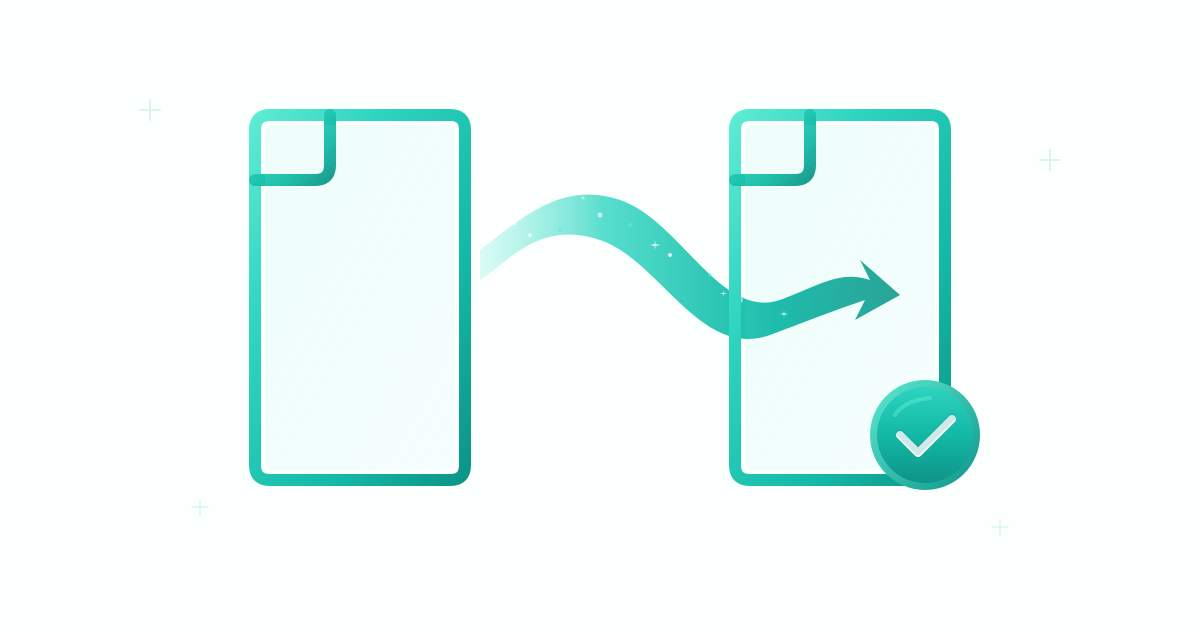
Converting your MOV file to the MKV format can solve these compatibility issues and unlock a world of new possibilities. MKV, or Matroska Video, is a highly versatile and open-source container format that’s beloved for its ability to hold multiple video, audio, and subtitle tracks in a single file. It's the format of choice for many media enthusiasts for a reason.
This comprehensive guide will walk you through everything you need to know about converting MOV to MKV. We'll explore why you should do it, compare the best free tools for the job, and provide step-by-step instructions for every skill level—from simple online converters to powerful desktop applications. Let's dive in and make your videos playable anywhere, anytime.
Understanding the Formats: MOV vs. MKV
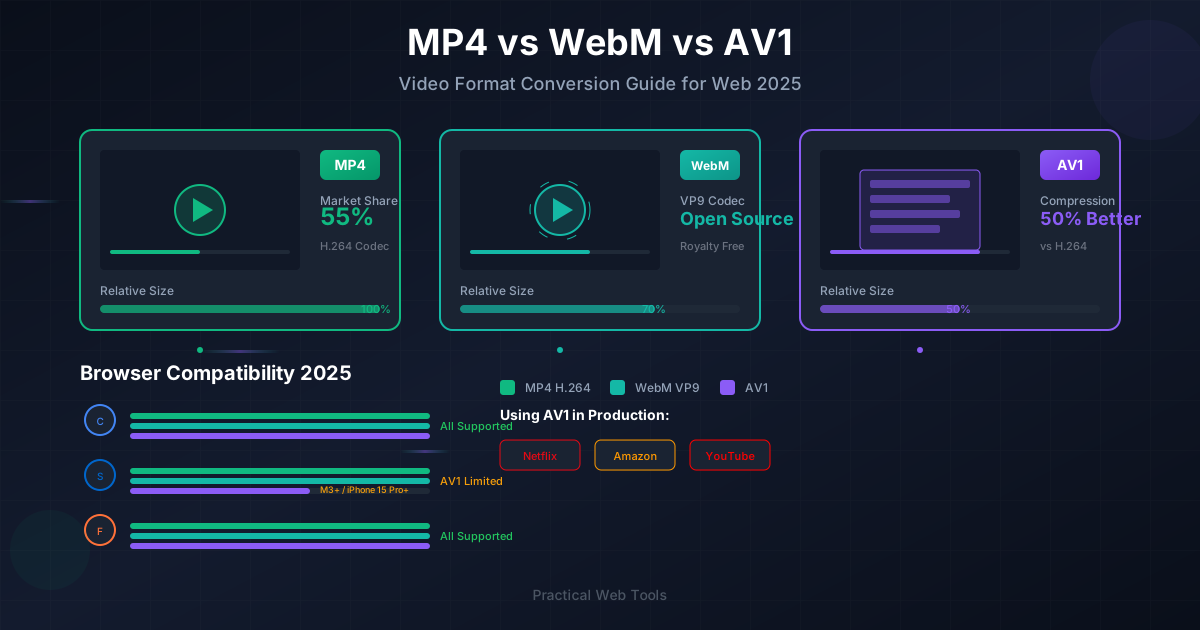
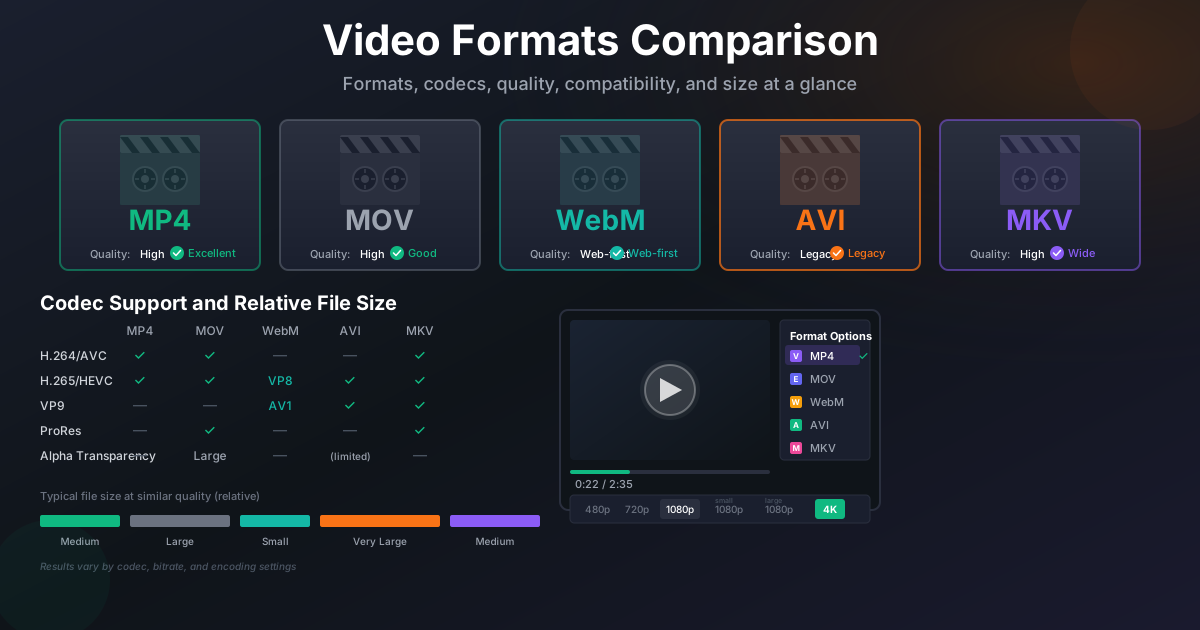
Before we jump into the conversion process, it's essential to understand what these file formats are and why they differ. Both MOV and MKV are "container" formats, which means they act like a box that can hold various types of data, including video streams, audio streams, and metadata. The key difference lies in their origins, features, and compatibility.
What is a MOV File?
The MOV format was developed by Apple and is the standard for its QuickTime Framework. If you’ve ever recorded a video on an iPhone, iPad, or Mac, you've created a MOV file. It's known for its high-quality compression and is widely used in professional video editing environments. However, its Apple-centric nature means it isn't universally supported across all devices and platforms, especially outside the Apple ecosystem.
What is an MKV File?
MKV (Matroska) is a free, open-standard container format. Think of it as the Swiss Army knife of video containers. Its biggest advantage is its flexibility. An MKV file can package virtually any number of video, audio, and subtitle tracks into one file, along with chapter points, menus, and metadata. This makes it incredibly popular for storing movies and TV shows, as you can have different languages and subtitle options all in one place.
MOV vs. MKV: A Quick Comparison
To make it clearer, here’s a head-to-head comparison:
| Feature | MOV (QuickTime File Format) | MKV (Matroska Video) |
|---|---|---|
| Developer | Apple Inc. | Matroska Project (Open Standard) |
| Compatibility | Excellent within the Apple ecosystem (macOS, iOS). | Excellent on non-Apple devices, media centers, and PCs. |
| Limited native support on Windows and Android. | Limited native support on Apple devices without extra apps. | |
| Key Strength | High-quality video editing and professional workflows. | Extreme versatility, supports multiple tracks and features. |
| Subtitle Support | Can contain subtitles, but less flexible. | Robust support for multiple, switchable subtitle tracks. |
| Audio Support | Supports multiple audio tracks. | Supports multiple, switchable audio tracks (e.g., languages, commentary). |
| Licensing | Proprietary | Royalty-free, open-source |
Top Reasons to Convert MOV to MKV
- Universal Playback: MKV files play flawlessly on most media players like VLC, MPC-HC, and on media server platforms like Plex and Kodi.
- All-in-One Archiving: Store your video with multiple language audio tracks and several subtitle files all within a single, organized MKV file.
- Future-Proofing: As an open standard, MKV is not tied to any single company, ensuring its longevity and continued support.
- Feature Rich: Support for chapters, menus, and rich metadata makes it ideal for creating a professional-looking final product.
How to Convert MOV to MKV: The Best Methods
There are several ways to convert your video files, each with its own pros and cons. We'll cover the three most popular methods: powerful desktop software, convenient online converters, and the command-line for advanced users.
Method 1: Free Desktop Software (Recommended for Quality & Privacy)
For the best results in terms of quality, speed, and privacy, desktop applications are the way to go. You have complete control over the conversion process, you aren't limited by file size, and your data never leaves your computer. Here are two of the best free options available.
VLC Media Player: The Hidden Converter
Many people know VLC as the media player that can handle any format you throw at it, but it also contains a powerful, built-in video converter. If you already have VLC installed, you're ready to go.
Step-by-Step Guide to Converting with VLC:
- Open VLC: Launch the VLC Media Player application.
- Access the Converter: In the top menu, click on
Mediaand then selectConvert / Save...(or use the shortcutCtrl+R). - Add Your File: In the
Filetab, click the+ Add...button and select the MOV file you want to convert from your computer. After adding, click theConvert / Savebutton at the bottom. - Choose the Output Profile: In the Convert window, you'll see a
Profiledropdown menu. While there might not be a direct "MKV" profile, you can easily create one. Select any video profile, likeVideo - H.264 + MP3 (MP4). - Edit the Profile: Click the small wrench icon next to the profile dropdown to edit it.
- Select MKV Container: In the
Encapsulationtab, selectMKVfrom the list. - Preserve Quality (Important!):
- Go to the
Video codectab. Check the box that saysKeep original video track. - Go to the
Audio codectab. Check the box that saysKeep original audio track. - By doing this, you are telling VLC to "remux" the file—simply changing the container from MOV to MKV without re-encoding the video or audio. This is the fastest method and results in zero quality loss.
- Go to the
- Name and Save: Give your new profile a name (e.g., "MKV Remux") and click
Create. - Choose a Destination: Click the
Browsebutton at the bottom of the Convert window to choose where you want to save your new file. Make sure to name it with an.mkvextension (e.g.,my-video.mkv). - Start the Conversion: Click the
Startbutton. The progress bar in VLC will move as it converts. Since you're remuxing, this should be very fast!
HandBrake: For Advanced Control and Encoding
HandBrake is a free, open-source video transcoder that is renowned for its power and extensive customization options. It's the perfect tool when you need to not just change the container but also potentially reduce the file size or ensure compatibility by re-encoding the video stream.
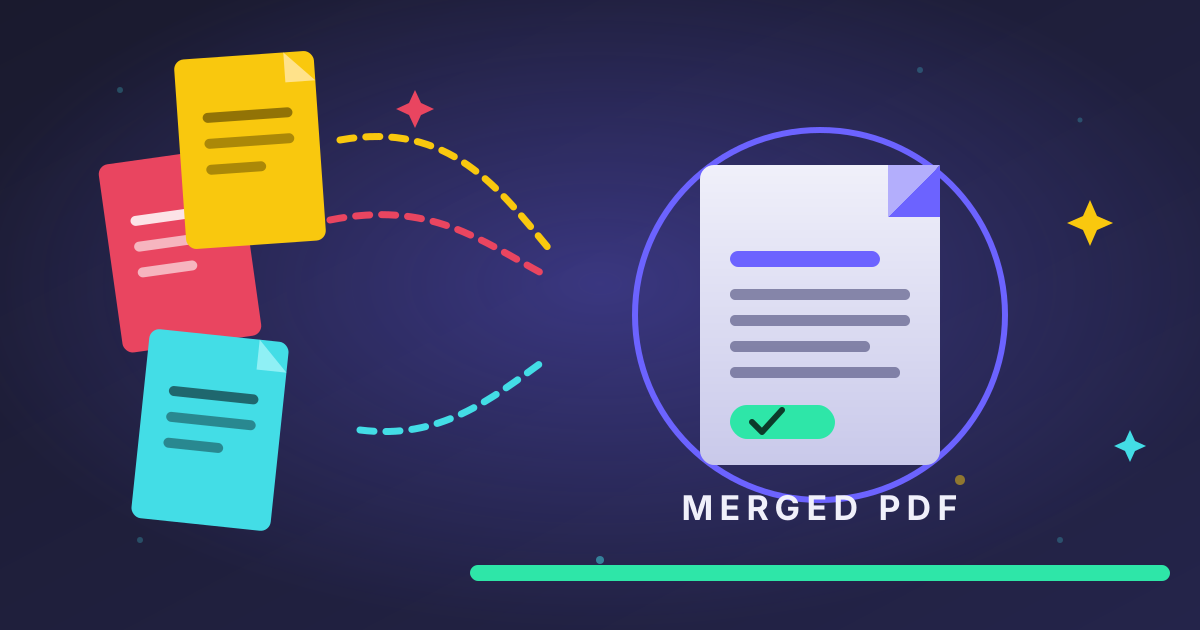
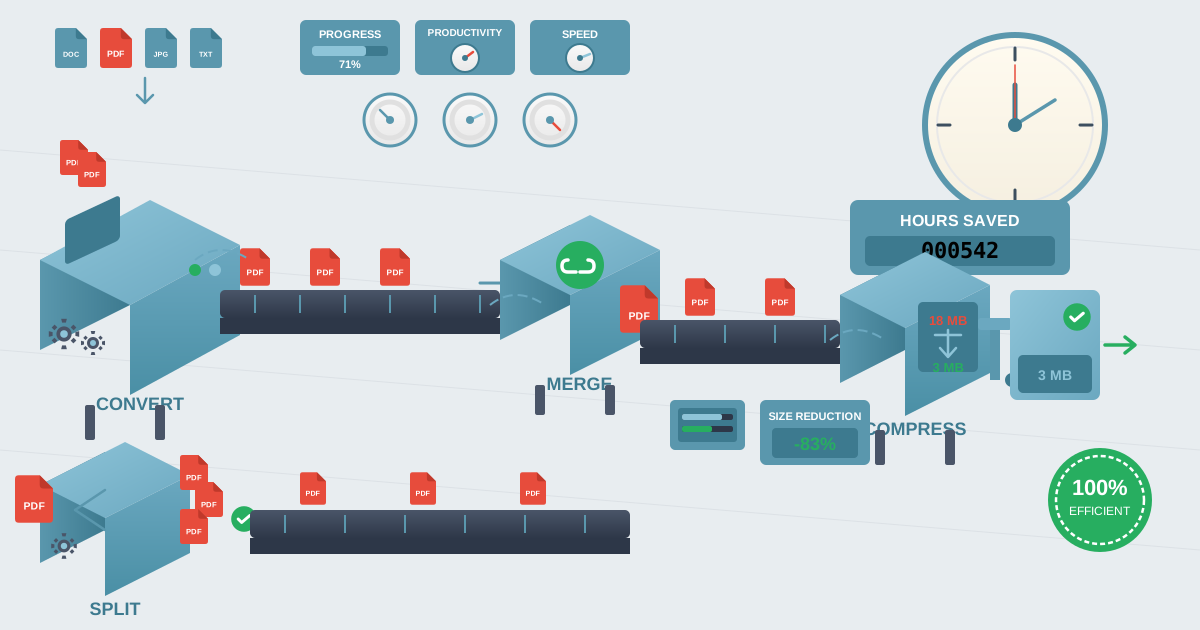
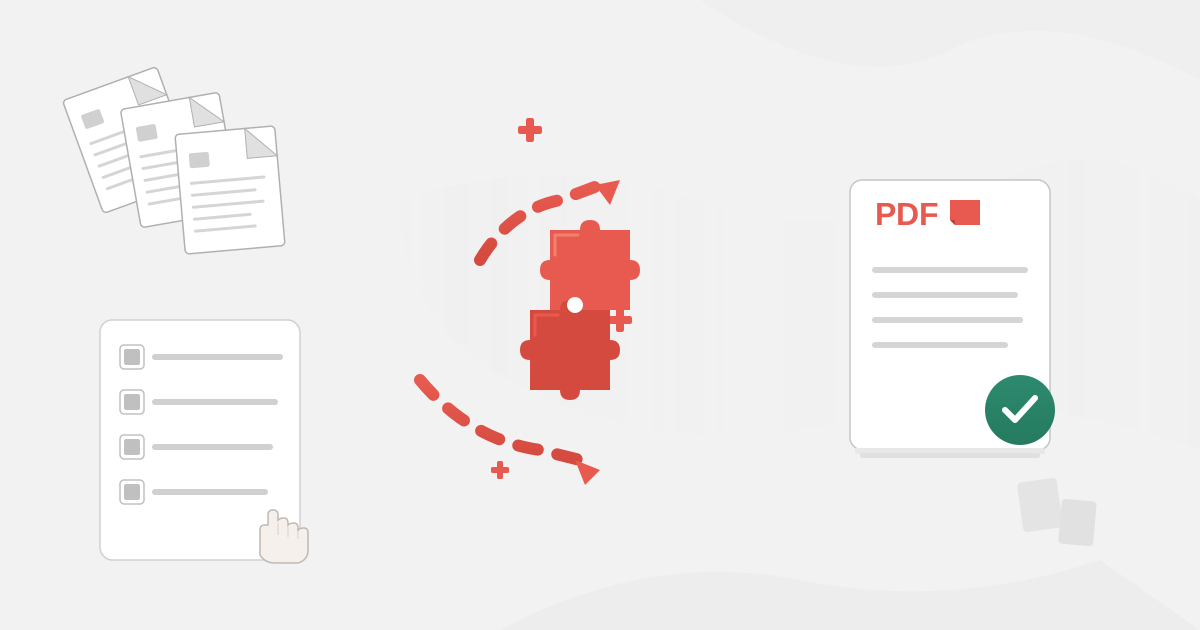
While HandBrake is processing your video, it's a great time to organize your project files. If you have project notes or storyboards saved as PDFs, you might need to combine them for easy reference. Our Merge PDFs tool is perfect for consolidating multiple documents into one streamlined file.
Step-by-Step Guide to Converting with HandBrake:
- Open HandBrake: Launch the application and you'll be prompted to open a source file.
- Select Your MOV File: Drag and drop your MOV file into the HandBrake window or use the
Filebutton to browse for it. - Choose MKV Format: On the
Summarytab, make sure theFormatis set toMKV File. - Select a Preset: For ease of use, HandBrake offers presets on the right side. A good starting point is
Fast 1080p30orHQ 1080p30 Surround. Choose one that matches your source video's resolution. - Adjust Video Settings (Optional): Go to the
Videotab. TheH.264 (x264)encoder is a safe bet. TheConstant Qualityslider (RF) is the most important setting. A lower value (e.g., 18-22) means higher quality and larger file size. A higher value means lower quality and smaller file size. A value of 22 is a good balance. - Manage Audio and Subtitles: Check the
AudioandSubtitlestabs to select which tracks from the original MOV file you want to include in your new MKV file. This is where MKV's power shines. - Set the Destination: At the bottom, under
Save As, clickBrowseto choose a location and name for your output MKV file. - Start Encoding: Click the green
Start Encodebutton at the top. This process will be more CPU-intensive than VLC's remuxing and may take some time depending on your video's length and your computer's speed.
Method 2: Online MOV to MKV Converters
If you have a small file and don't want to install any software, an online converter can be a quick solution. These browser-based tools are simple to use but come with significant trade-offs.
- Pros: No installation needed, accessible from any device, easy drag-and-drop interface.
- Cons: Major privacy concerns (you're uploading your file to a third-party server), strict file size limits, slow upload/download speeds, potential for quality loss, often filled with ads.
We don't recommend online converters for sensitive, private, or large video files. However, for a short, non-confidential clip, they can get the job done.
General Steps for Online Converters:
- Visit a reputable online video converter website.
- Upload your MOV file.
- Select MKV as the desired output format.
- Click the "Convert" button and wait for the process to complete.
- Download the finished MKV file to your computer.
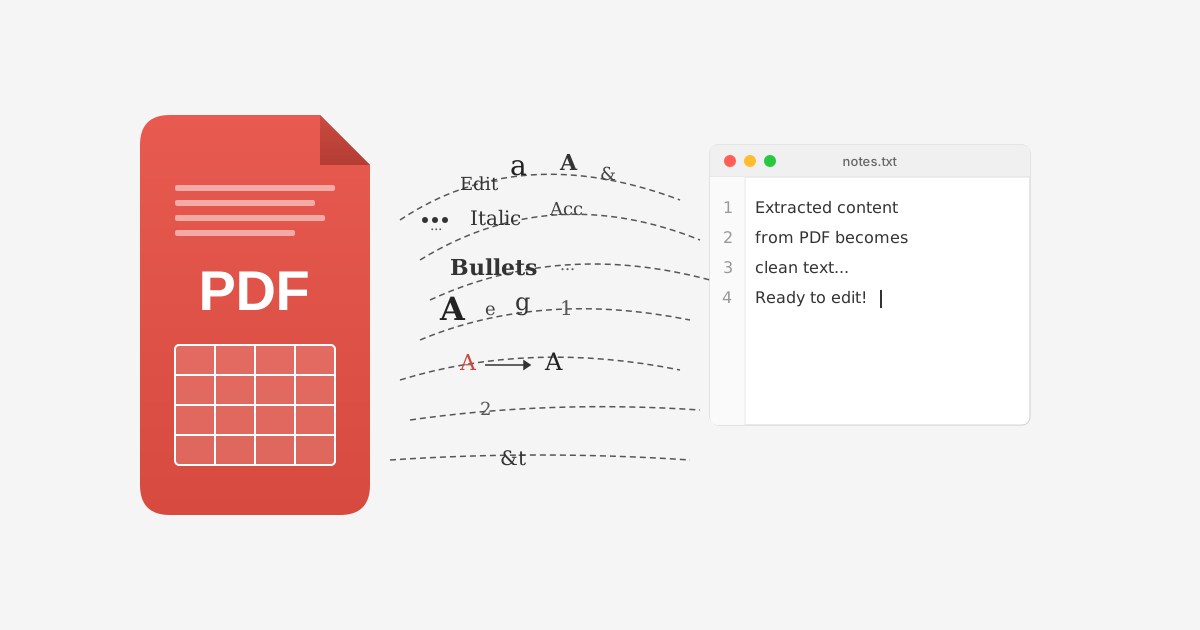
Many online services generate a confirmation or receipt as a PDF after conversion. If you need to extract specific information from such a document, our PDF to Text converter can be incredibly useful, allowing you to quickly copy and paste details without hassle.
Method 3: The Power User's Choice - FFmpeg
For those comfortable with the command line, FFmpeg is the undisputed king of video and audio manipulation. It's the engine that powers many of the converters mentioned above, including HandBrake and VLC. It offers unparalleled speed and control.
Lossless Conversion (Remuxing) with FFmpeg
This is the fastest and best way to convert MOV to MKV if the codecs inside are already compatible. It simply copies the video and audio streams into a new container, resulting in no quality loss.
Open your Terminal or Command Prompt and use the following command:
ffmpeg -i input.mov -c copy output.mkv
ffmpeg: Calls the program.-i input.mov: Specifies the input file.-c copy: This is the magic part. It tells FFmpeg to copy all streams (video, audio, etc.) without re-encoding.output.mkv: The name of your new file.
Conversion with Re-encoding
If you need to change the video or audio codec for better compatibility, you can use FFmpeg to re-encode.
ffmpeg -i input.mov -c:v libx264 -preset slow -crf 22 -c:a aac -b:a 192k output.mkv
This command tells FFmpeg to re-encode the video using the popular H.264 codec (libx264) at a quality level of 22 (crf 22) and the audio using the AAC codec.
Frequently Asked Questions (FAQ)
Q: Will I lose quality when converting MOV to MKV?
A: Not if you "remux" the file, which only changes the container. Methods like VLC's "Keep original track" option or FFmpeg's -c copy command are lossless. If you "re-encode" (transcode) the file to a different codec or lower bitrate, there will be some quality loss, though it can be imperceptible with the right settings.
Q: What is the best free MOV to MKV converter?
A: It depends on your needs. For most users, VLC Media Player is the best choice for easy, lossless conversion. For more control over encoding and file size, HandBrake is superior. For command-line efficiency, FFmpeg is unbeatable.
Q: Can I convert MOV to MKV on a Mac?
A: Absolutely. VLC, HandBrake, and FFmpeg are all cross-platform and have versions that run natively on macOS.
Q: My video project includes a presentation deck. Can I work with that on your site?
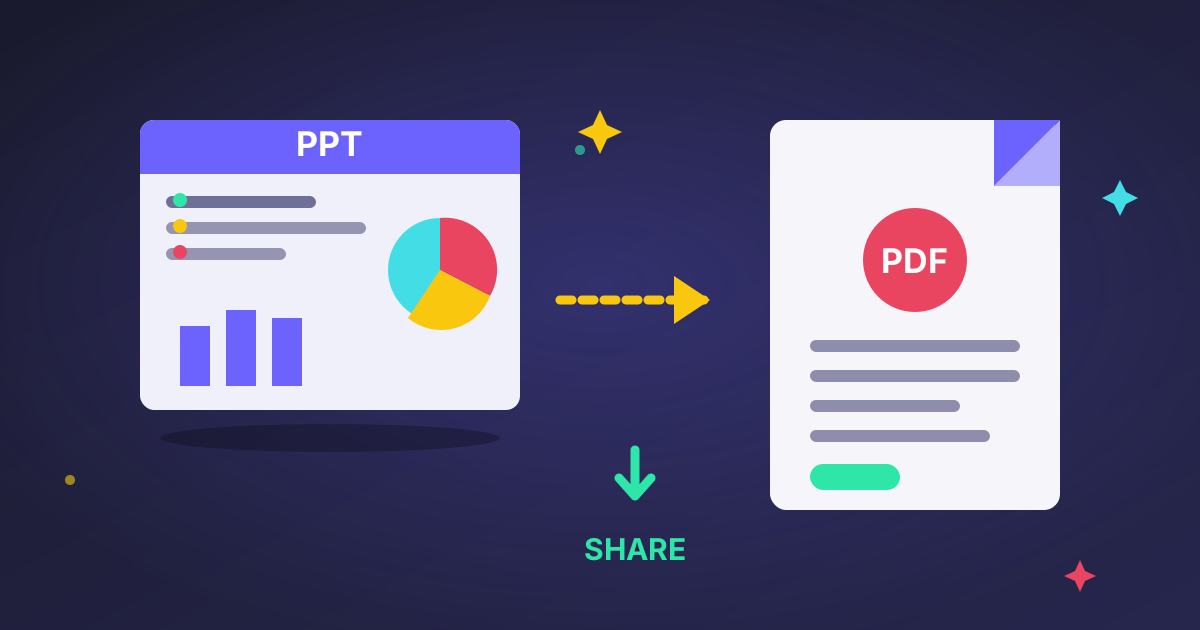
A: While our focus is on web-based utilities, managing all project assets is key. If your presentation is in PDF format, you can easily convert it for editing using our PDF to PowerPoint tool, helping you keep all your project materials in sync.
Conclusion
Converting from MOV to MKV is a straightforward process that opens up a world of compatibility for your videos. By choosing the right tool for the job, you can ensure your files play perfectly on nearly any device.
For the vast majority of cases, a lossless remux using VLC or FFmpeg is the ideal solution—it's fast, easy, and maintains the pristine quality of your original file. When you need to reduce file size or maximize compatibility, a carefully configured re-encode with HandBrake gives you ultimate control.
Now that you've mastered video conversion, don't let other digital tasks slow you down. Explore the suite of over 455 free and privacy-focused online tools at Practical Web Tools to streamline everything from document management to image editing.