Convert PDF to DOC: The Ultimate Guide to Editable Documents

You've just been sent a crucial report, a contract, or an academic paper. It’s perfect, except for one small typo or a section you need to update. The problem? It’s a PDF. That familiar feeling of frustration sets in as you realize you're staring at a digital document that’s as difficult to change as if it were carved in stone.
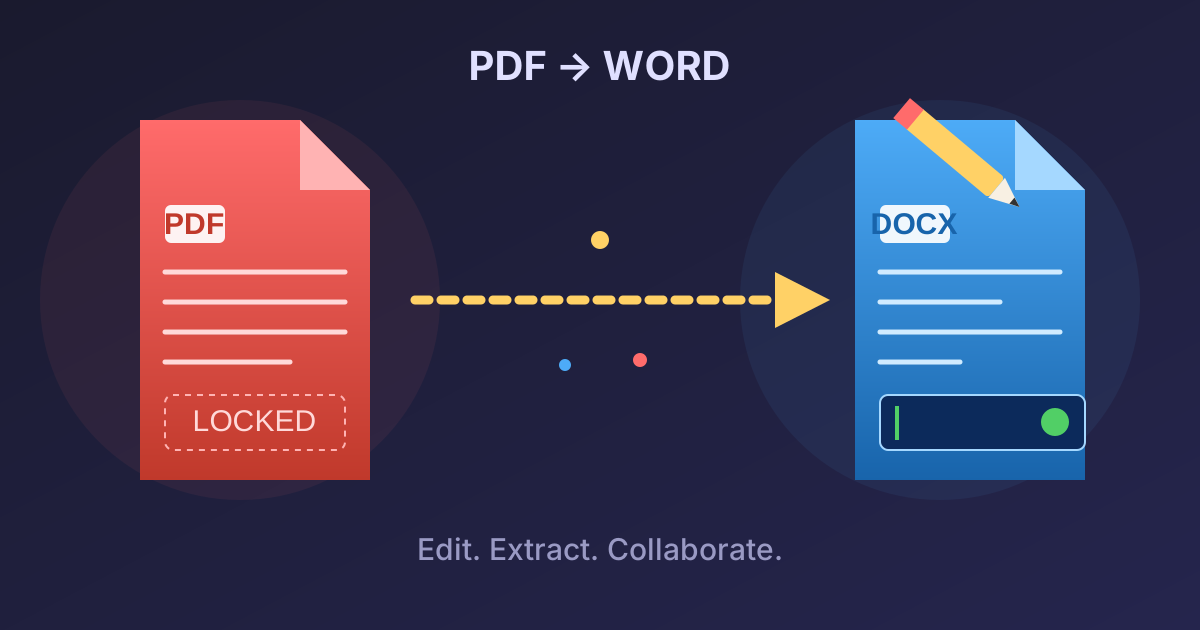
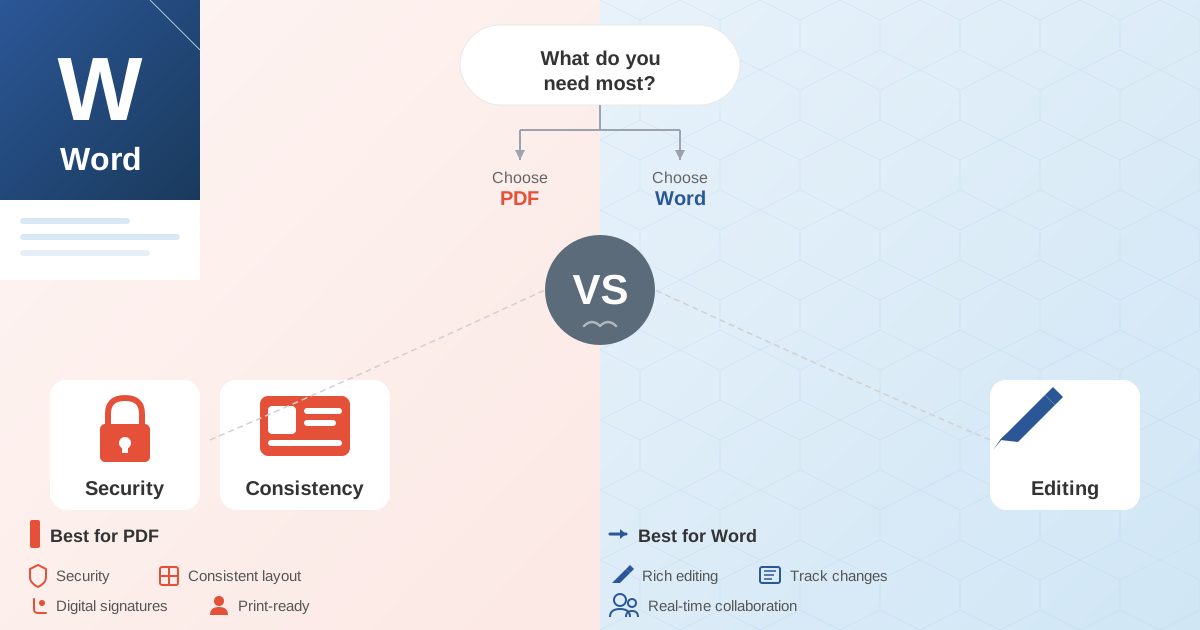
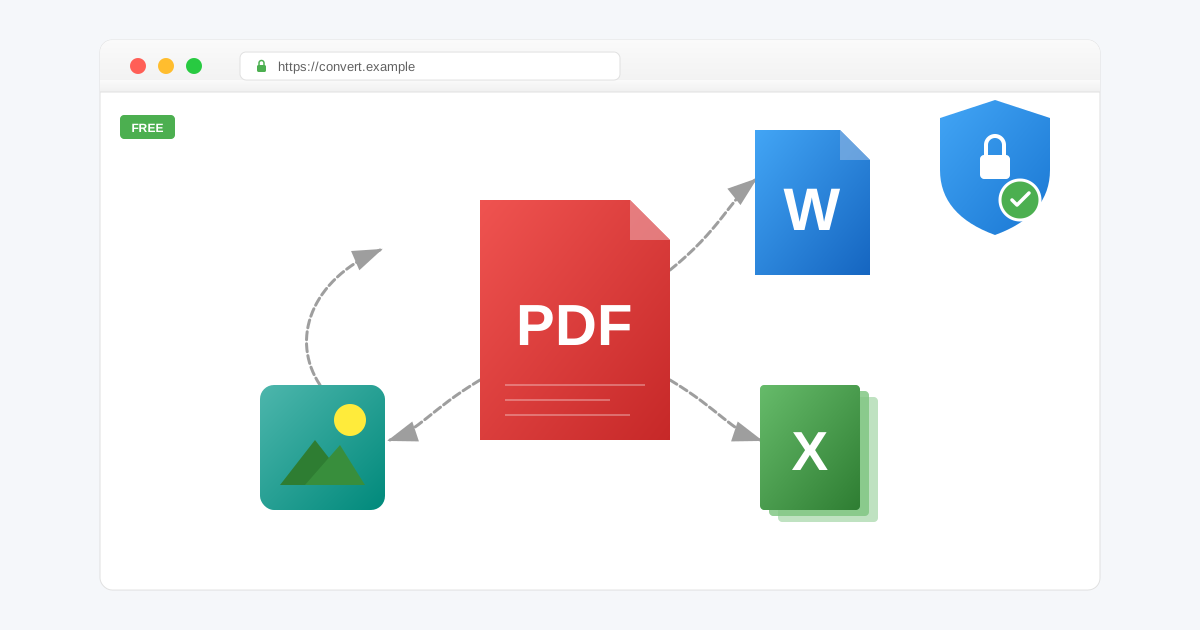
Portable Document Format (PDF) is the undisputed king of document sharing. It preserves formatting across any device, ensuring what you see is what everyone else sees. But this strength is also its greatest weakness: PDFs are not designed for editing. That’s where converting to a DOC or DOCX file comes in. It’s the key to unlocking your document and making it a living, breathing file you can actually work with.
This comprehensive guide will walk you through everything you need to know about converting PDF to DOC. We'll explore the best methods, troubleshoot common conversion nightmares, and show you how to choose the right tool for a flawless result every time.
Why Convert a PDF to DOC in the First Place?
While PDFs are excellent for final-version distribution, there are numerous scenarios where a DOC file is far more practical. The need to convert is driven by one primary goal: to move from a static view to a dynamic workspace.
Effortless Editing and Content Reuse
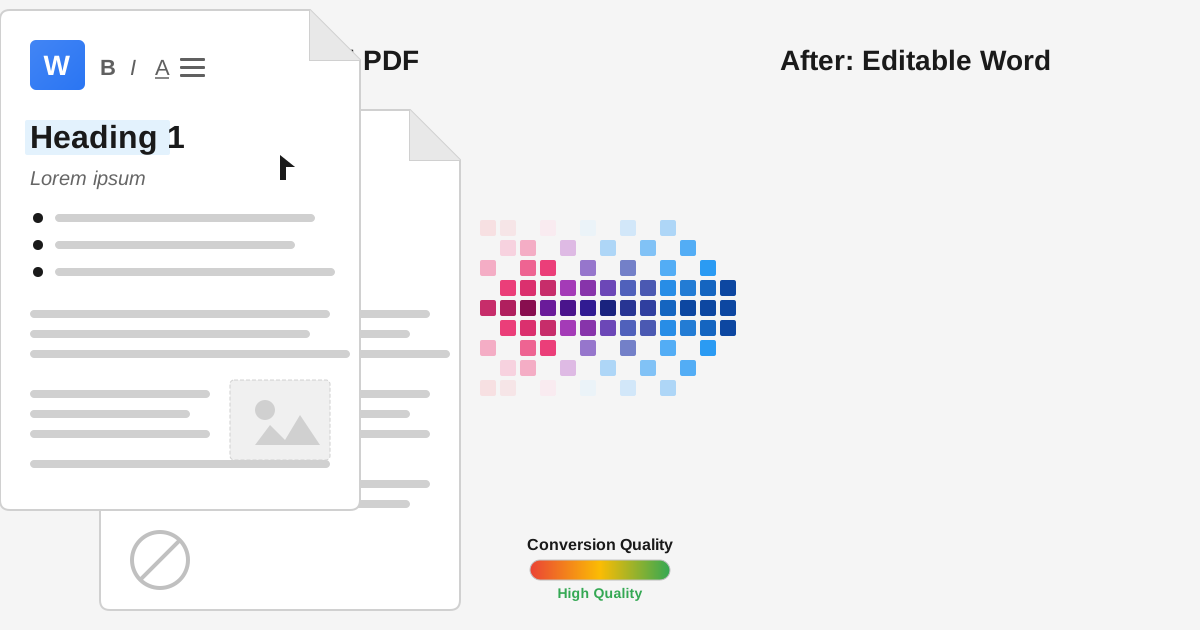
The most common reason to convert is to edit the content. Whether you need to fix a typo, update statistics, rewrite a paragraph, or completely overhaul a document, you need the flexibility of a word processor like Microsoft Word or Google Docs. Converting a PDF to DOC allows you to reuse its content—text, images, and tables—in other reports, presentations, or documents without having to retype everything from scratch.
Seamless Collaboration
Modern word processors are built for collaboration. Features like 'Track Changes,' commenting, and real-time co-authoring are standard in Microsoft Word. These tools are invaluable for team projects, legal reviews, and academic feedback. A PDF, on the other hand, offers limited and often clunky annotation tools that don't integrate well into a collaborative workflow.
Enhanced Accessibility
For users who rely on screen readers and other assistive technologies, a well-structured DOCX file is often more accessible than a PDF. Word documents can be structured with proper headings, alt text for images, and logical reading orders, making them easier for assistive devices to interpret and navigate.
Simplified Form Filling
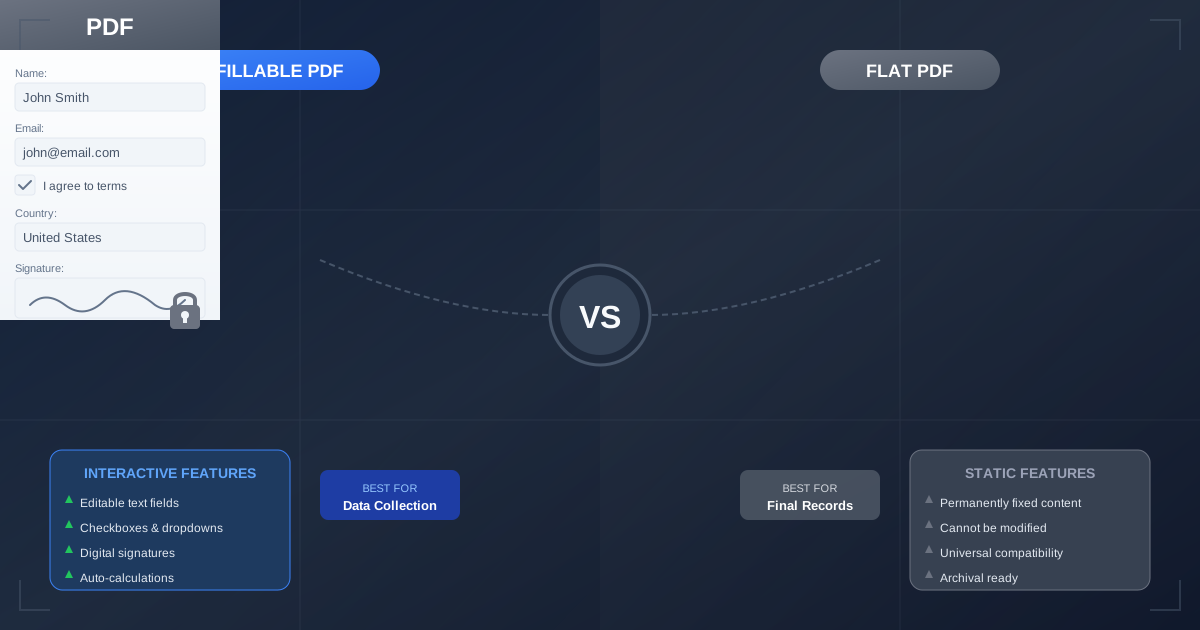
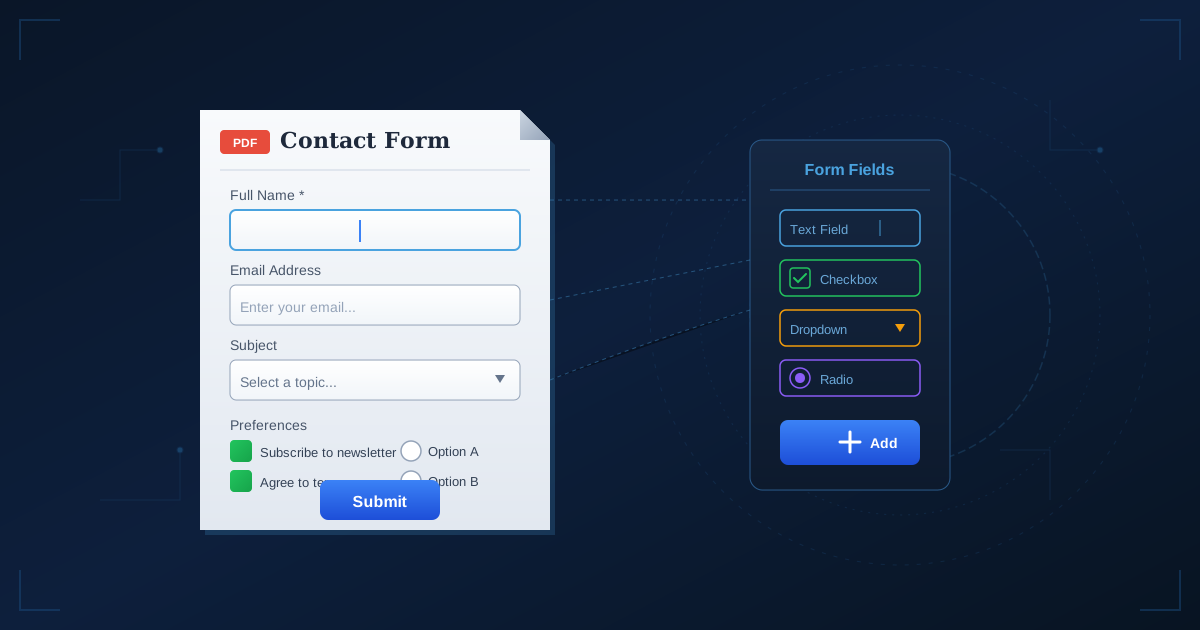
While many PDFs have fillable form fields, many more do not. If you're faced with a non-interactive form that you need to fill out digitally, converting it to a DOC file allows you to easily type your information directly into the document, ensuring a clean, professional appearance instead of printing, handwriting, and scanning.
The Technical Hurdle: Understanding PDF vs. DOC/DOCX
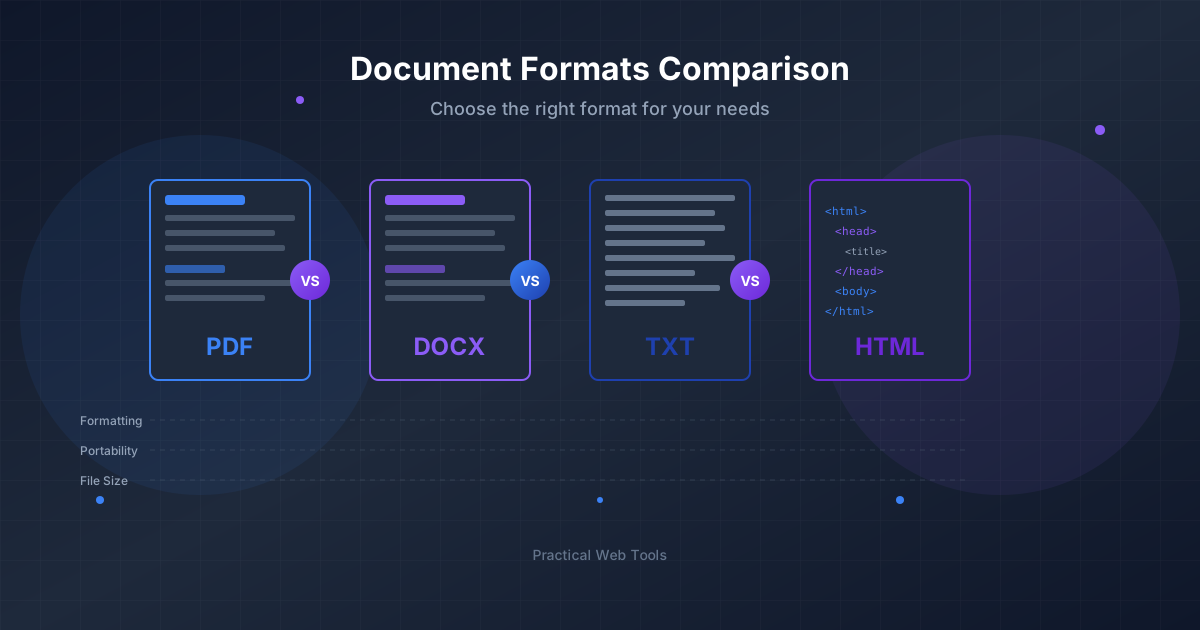
To understand why conversions can sometimes be tricky, it helps to know the fundamental difference between these two file formats. Think of a PDF as a framed painting and a DOCX file as a lump of clay.
-
PDF (The Painting): A PDF is essentially a digital snapshot. Its primary job is to capture the exact position of every letter, line, and image on a page. It cares about the final look and layout, not the underlying structure. Text might be stored as individual characters with X-Y coordinates, not as coherent sentences or paragraphs. This is why it's so good at looking the same everywhere.
-
DOC/DOCX (The Clay): A DOC file is a structured document. It understands concepts like paragraphs, headings, lists, tables, and text flow. It’s designed to be malleable. When you edit a paragraph, the rest of the document reflows accordingly. It prioritizes content structure over a fixed visual layout.
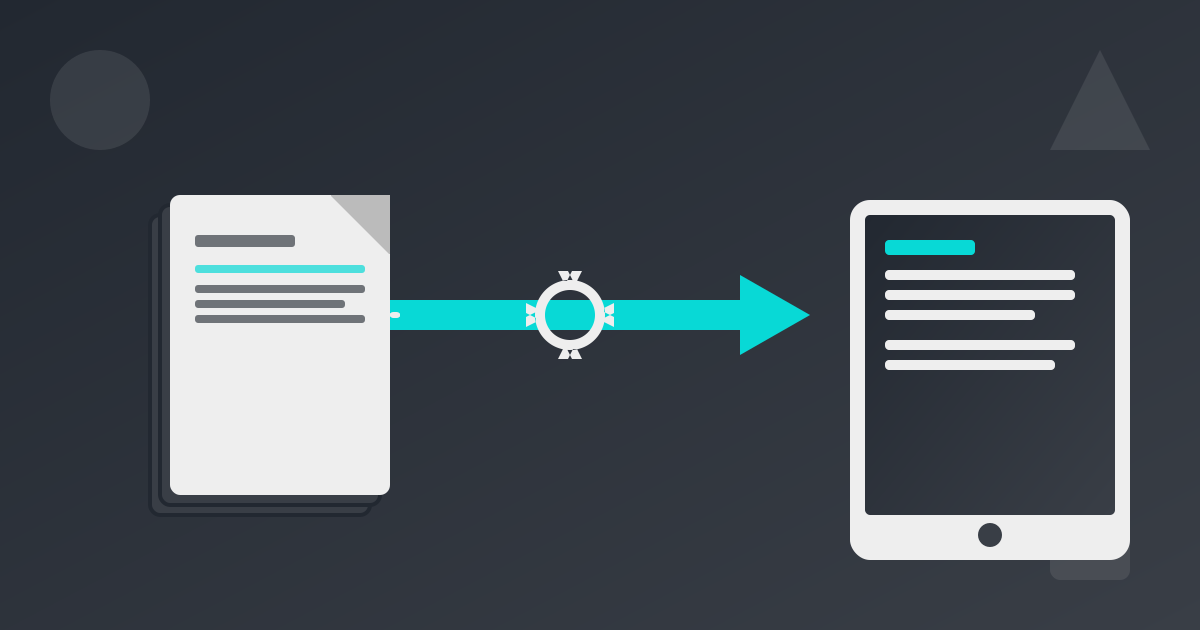
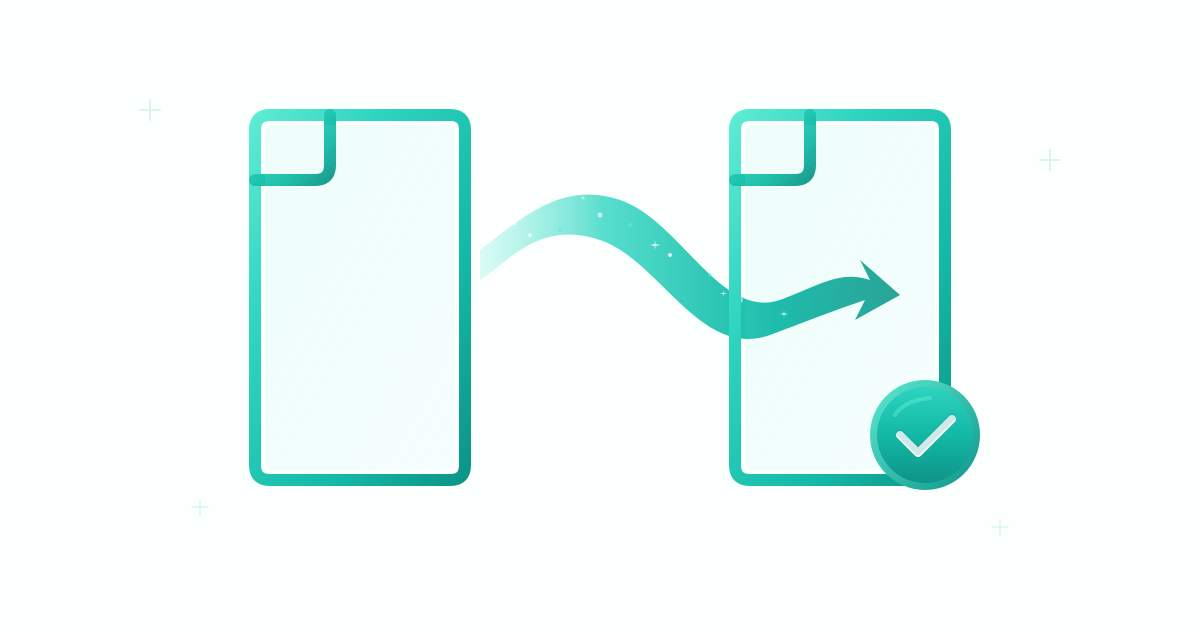
Converting from PDF to DOC is the process of teaching a computer to look at the 'painting' and intelligently rebuild the 'clay' sculpture from it. This complex reconstruction is why formatting can sometimes get lost in translation.
How to Convert PDF to DOC: Top Methods Explained
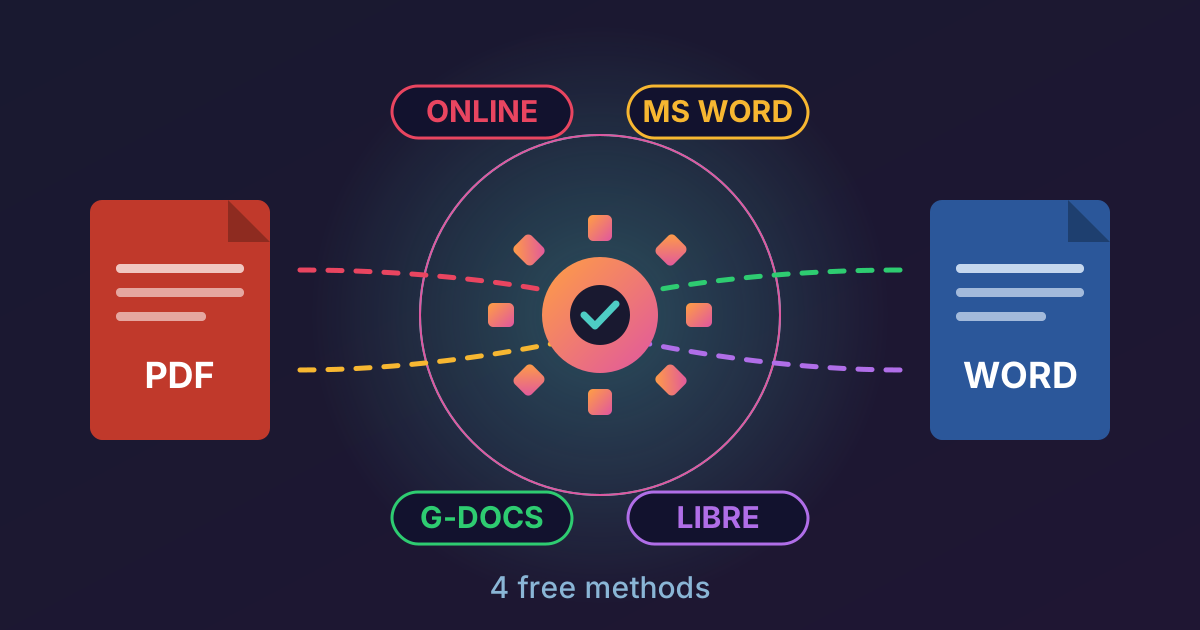
Fortunately, several excellent methods are available for converting your files, ranging from simple online tools to powerful desktop software. Here’s a breakdown of the most effective options.
Method 1: Using a Dedicated Online Converter (The Easiest Way)
For most people, a high-quality online converter is the fastest and most convenient solution. These tools require no software installation and can be accessed from any device with an internet connection.
Why it's great:
- Simplicity: Usually a simple drag-and-drop interface.
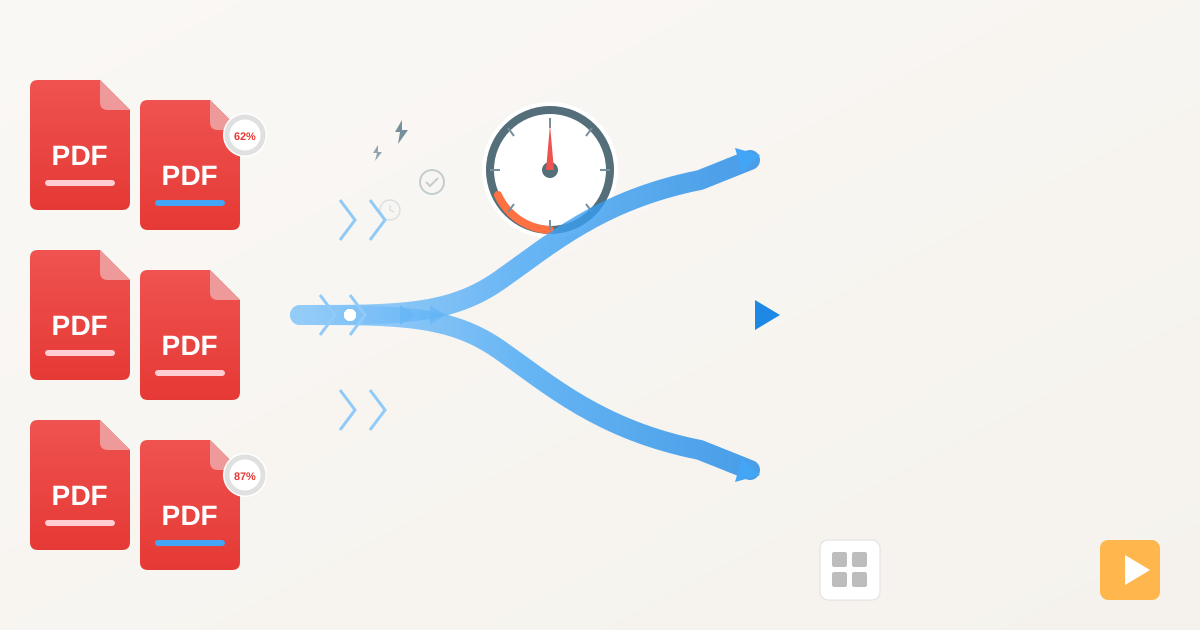
- Speed: Conversions are processed quickly on powerful servers.
- Accessibility: Use it on your laptop, tablet, or phone.
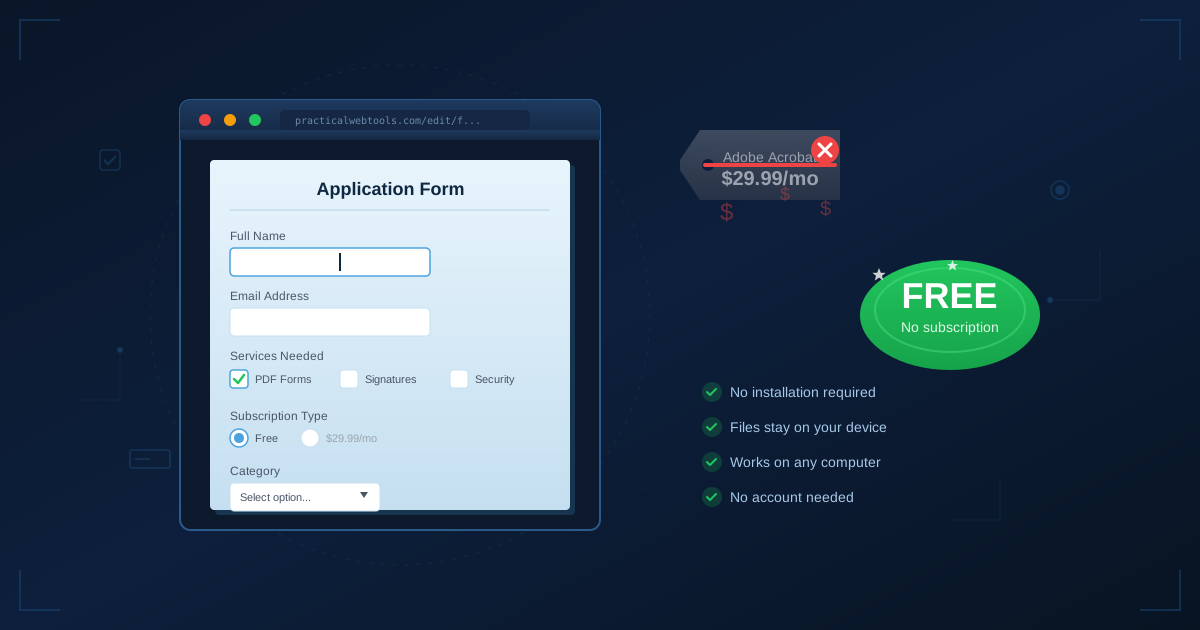
- Privacy-Focused (Choose Wisely): Top-tier services prioritize your privacy. For example, Practical Web Tools processes your files securely and does not store them.
How to Convert Using Practical Web Tools' PDF to Word Converter:
- Navigate to the Tool: Open your web browser and go to the PDF to Word converter page.
- Upload Your File: Click the 'Select PDF file' button or simply drag and drop your PDF from your computer into the upload area.
- Start the Conversion: The tool will automatically begin the conversion process. It's built for efficiency, so this usually only takes a few seconds.
- Download Your DOCX File: Once complete, a download link for your new, editable Word document will appear. Click it to save the file to your device.
This method is ideal for its balance of high-quality results, speed, and security.
Method 2: Using Microsoft Word (The Built-In Option)
If you have a modern version of Microsoft Word (2013 or newer), you might not need any other tool. Word has a built-in PDF reflow feature that can open and convert PDFs directly.
How to use it:
- Open Microsoft Word.
- Go to
File > Open. - Browse to and select the PDF file you want to convert.
- Word will display a notification stating it will now convert your PDF into an editable Word document. Click
OK. - Word will perform the conversion and open the new DOCX file. You can then save it as a Word document.
Pros: Extremely convenient if you're already working within the Microsoft ecosystem. Cons: Can be slow with large or complex files, and the formatting accuracy can be hit-or-miss, especially with intricate layouts.
Method 3: Using Google Docs (The Free Cloud Option)
Google Docs provides another free, cloud-based method for basic conversions. It’s particularly useful for text-heavy documents.
How to use it:
- Upload to Google Drive: Log in to your Google account and upload the PDF file to your Google Drive.
- Open with Google Docs: Right-click on the uploaded PDF, select
Open with, and chooseGoogle Docs. - Conversion and Editing: Google Docs will automatically perform an OCR (Optical Character Recognition) scan and open the file as an editable Google Doc. The original PDF's images may appear first, followed by the extracted text.
- Download as DOCX: Go to
File > Download > Microsoft Word (.docx)to save it to your computer.
Pros: Free and accessible from anywhere. Cons: Formatting fidelity is often poor. It's notorious for struggling with tables, columns, and complex image placements.
Common Conversion Problems and How to Fix Them
Even with the best tools, you might encounter issues. Here’s a guide to the most common problems and their solutions.
Formatting Nightmares: Lost Layouts and Jumbled Text
- The Problem: Your converted document looks like a mess. Columns are gone, images are misplaced, and text is overlapping.
- The Cause: As discussed, the converter struggled to interpret the PDF's visual layout and rebuild it as a structured DOC file.
- The Solution:
- Try a Better Converter: The quality of the conversion engine is the single biggest factor. A dedicated tool like Practical Web Tools' PDF to Word converter often produces more accurate results than general-purpose software like Word or Google Docs.
- Simplify Before Converting: If you have control over the source document, export a simpler version of the PDF. Complex vector graphics and layered objects are common culprits.
- Manual Cleanup: Be prepared for some manual cleanup in Word, especially for highly complex documents. Consider it a massive head start rather than a perfect final product.
The Scanned PDF Problem: Dealing with Images of Text
- The Problem: Your converted DOC file contains an image of the text, not editable text itself. Or, it's just blank.
- The Cause: The original PDF was created from a scanner or is an 'image-only' PDF. The file contains a picture of a page, not digital text data.
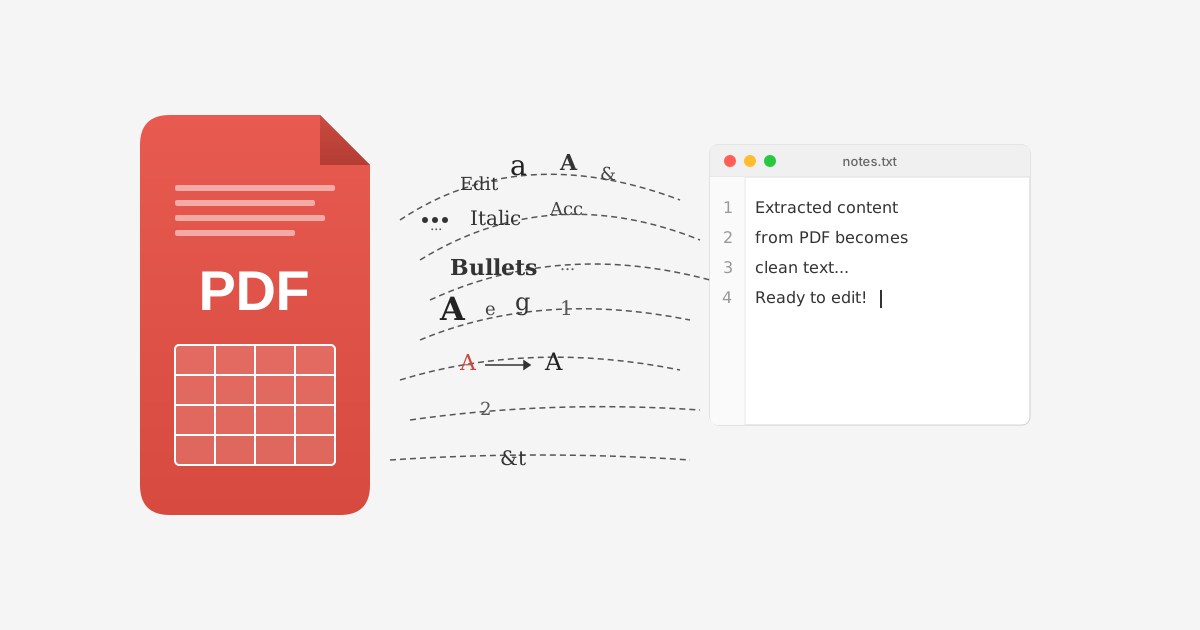
- The Solution: You need a converter with Optical Character Recognition (OCR). OCR technology scans the image, identifies characters and words, and converts them into machine-readable, editable text. Most high-quality online converters have OCR built-in. If you only need the raw text without any formatting, a dedicated PDF to Text tool can be a quick and effective alternative.
Font Woes: Missing or Substituted Fonts
- The Problem: The fonts in your Word document look different from the original PDF.
- The Cause: The fonts used to create the PDF are not installed on your computer. When Word opens the converted file, it substitutes the missing fonts with the closest available match.
- The Solution:
- Identify and Install: Identify the original fonts (often listed in the PDF's properties under
File > Properties > Fonts) and install them on your system before opening the DOC file. - Choose a Suitable Replacement: If you can't get the original fonts, manually select a suitable replacement in Word and apply it consistently throughout the document.
- Identify and Install: Identify the original fonts (often listed in the PDF's properties under
Choosing the Right PDF to DOC Converter: A Checklist
With so many options, how do you pick the right one? Use this checklist to evaluate any potential converter.
- ✅ Conversion Accuracy: How well does it preserve the original layout, formatting, tables, and images? Test it with a complex document.
- ✅ Ease of Use: Is the interface clean and intuitive? Can you convert a file in just a few clicks?
- ✅ Security and Privacy: This is critical. Does the service use HTTPS? What is their privacy policy? Do they automatically delete your files from their servers? A service that respects your privacy will be transparent about this. Practical Web Tools, for instance, deletes user files shortly after processing.
- ✅ OCR Capability: Does the tool include OCR to handle scanned documents effectively? This is a must-have for anyone working with paper archives.
- ✅ Speed: How long does the conversion take? For large files or batch conversions, speed matters.
- ✅ Cost: Is the tool free? Are there limitations (file size, daily uses)? Is a subscription required for premium features?
Beyond Simple Conversion: Advanced PDF Management
Sometimes your workflow requires more than just a straight conversion. What if you have a 200-page manual but only need to edit one chapter?
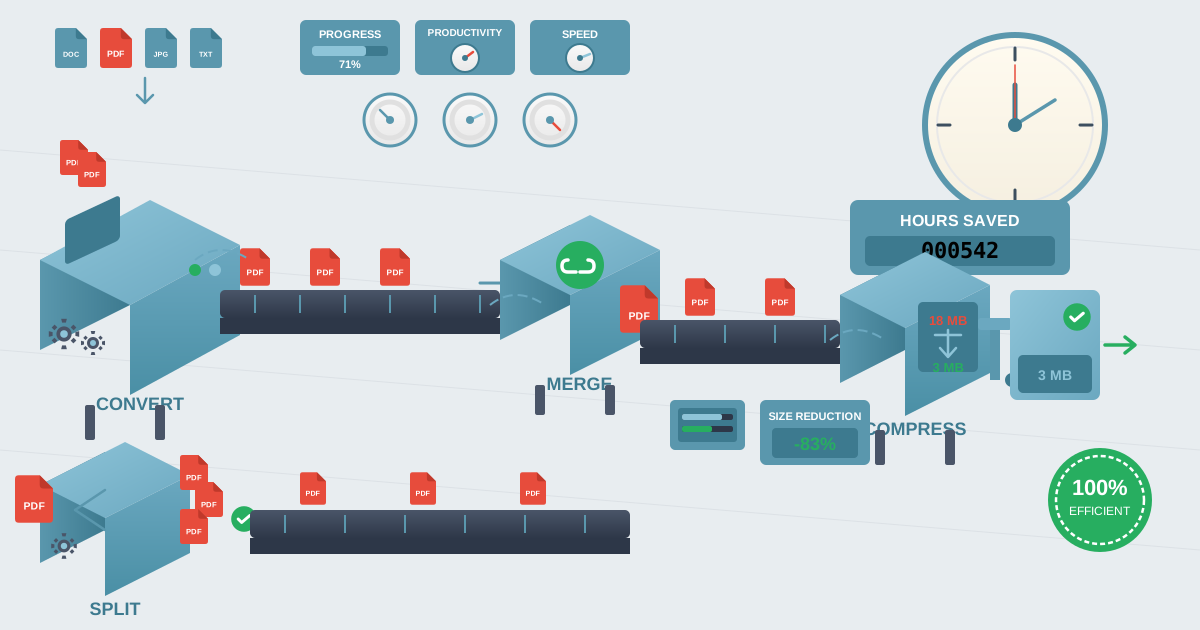
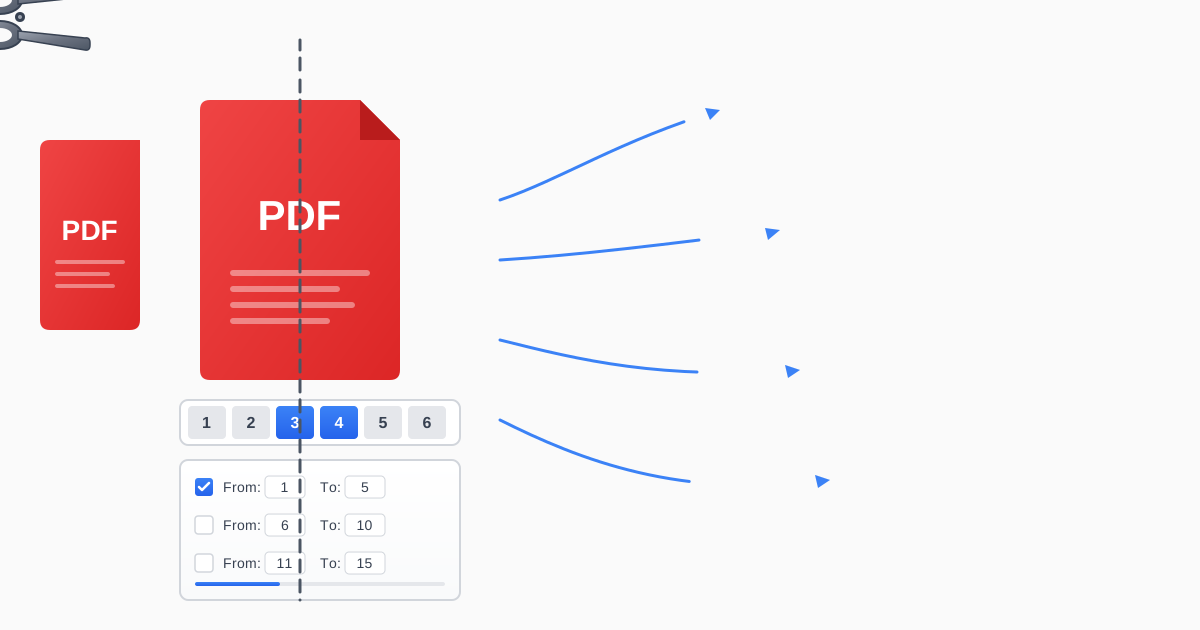
Converting the entire massive file can be slow and unwieldy. A smarter approach is to first isolate the pages you need. Using a tool to Split PDF, you can easily extract a specific page range into a new, smaller PDF. Then, you can run this smaller file through the PDF to DOC converter. This saves time, reduces the chance of conversion errors, and gives you a much more manageable Word document to work with.
Conclusion: Unlock Your Documents with the Right Tool
Converting a PDF to a DOC file is an essential skill for anyone who works with digital documents. It's the bridge from a static, unchangeable file to a dynamic, editable, and collaborative workspace. While the process can seem daunting due to potential formatting issues, understanding the causes and choosing the right method makes it simple and effective.
For the vast majority of users, a secure, high-quality online converter offers the perfect blend of accuracy, speed, and convenience. By prioritizing a tool that respects your privacy and delivers reliable results, you can confidently transform any PDF into a fully editable DOC file in seconds.
Ready to stop retyping and start editing? Try Practical Web Tools' free and secure PDF to Word converter today and experience a seamless conversion process.