HTML to PDF: The Ultimate Guide to Web Page Conversion
In today's digital world, information is constantly flowing. We consume articles, reports, invoices, and tutorials directly in our web browsers. But what happens when you need to save that information for offline use, share it in a fixed format, or archive it for your records? Printing a webpage often results in a jumbled mess of ads, navigation bars, and broken layouts. This is where converting HTML to PDF becomes an essential skill.
PDF (Portable Document Format) is the universal standard for static documents. It preserves formatting, fonts, and images, ensuring that what you see is what everyone else sees, regardless of their device or operating system. This comprehensive guide will walk you through everything you need to know about converting HTML to PDF, from simple browser tricks to powerful developer tools.
Why Convert HTML to PDF?
Before we dive into the 'how,' let's explore the 'why.' Understanding the benefits of HTML to PDF conversion can help you streamline your workflow and make better use of web content. Here are the primary reasons people convert web pages to PDF:
- Archiving and Record-Keeping: Web pages are dynamic; they can be updated or taken down at any moment. Converting an important news article, a purchase receipt, or a legal notice to PDF creates a permanent, timestamped record.
- Offline Access: Planning to be on a flight or in an area with spotty internet? Save long articles, tutorials, or documentation as PDFs to read them anytime, anywhere, without needing a connection.
- Professional Documentation: Many web applications generate reports, invoices, or statements as HTML. Converting these to PDF provides a professional, ready-to-share document for clients or colleagues.
- Consistent Sharing and Printing: A PDF looks the same everywhere. This eliminates the headaches of browser-specific rendering issues and ensures your document will print predictably.
- Collaboration and Feedback: Web designers and content creators often convert mockups to PDF to share with clients. This allows for easy annotation and commenting using standard PDF tools.
- Creating Portfolios: Compile examples of your web-based work, such as blog posts or project pages, into a single, polished PDF portfolio.
Method 1: The Browser's Built-in "Print to PDF" Feature
The quickest and most accessible method for converting a single web page to a PDF is built right into your web browser. All modern browsers include a 'Print to PDF' or 'Save as PDF' function in their print dialog. It's fast, free, and requires no additional software.
Step-by-Step Guide (Chrome & Edge)
Google Chrome and Microsoft Edge share a similar printing interface, making the process identical.
- Open the Web Page: Navigate to the page you wish to convert.
- Open the Print Dialog: Press
Ctrl+P(on Windows/Linux) orCmd+P(on Mac). Alternatively, you can click the three-dot menu in the top-right corner and select "Print...". - Change the Destination: In the print dialog window, look for the 'Destination' dropdown menu. It will likely default to a physical printer. Click it and select Save as PDF.
- Adjust Settings (Optional): You can now customize the output.
- Pages: Choose to save all pages or a custom range.
- Layout: Select 'Portrait' or 'Landscape' orientation.
- More settings: Click this to access options for paper size, margins, and whether to include headers, footers, and background graphics. Disabling headers and footers is great for a cleaner look.
- Save the PDF: Click the 'Save' button, choose a location on your computer, and name your file.
Step-by-Step Guide (Firefox)
Firefox's process is just as simple, with a slightly different interface.
- Open the Web Page: Go to the desired URL.
- Open Print Preview: Press
Ctrl+P(Windows/Linux) orCmd+P(Mac), or click the 'hamburger' menu (three horizontal lines) and choose "Print...". - Select the Destination: In the 'Destination' dropdown at the top, choose Save to PDF.
- Customize the Output: Firefox provides clear options on the right-hand side to change orientation, paper size, and control whether headers, footers, and backgrounds are printed.
- Save: Click the 'Save' button to finalize the PDF.
Pros and Cons of the Browser Method
| Pros | Cons |
|---|---|
| Completely free and built-in | Limited customization options |
| Instant and easy for single pages | Struggles with complex JavaScript or interactive elements |
| No need for third-party software or websites | Layout can sometimes break or render incorrectly |
| Generally safe and private | Not suitable for batch conversions |
Method 2: Using Free Online HTML to PDF Converters
When the browser's built-in function isn't enough, online converters offer a significant step up in power and flexibility. These web-based tools are designed specifically for high-fidelity conversions and often include advanced features that browsers lack.
Why Use an Online Converter?
Online tools are the perfect middle ground—more powerful than the browser's print function but less complex than writing code.
- Greater Control: Set specific margins, page sizes (A4, Letter, etc.), orientation, and even password-protect your PDF.
- Improved Rendering: Many top-tier online converters use sophisticated rendering engines that can handle complex CSS and JavaScript, resulting in a more accurate representation of the live web page.
- Convenience: No installation required. Access them from any device with a web browser.
- Multiple Input Methods: Most tools allow you to either paste a URL directly or upload an HTML file from your computer.
What to Look for in an Online Converter
When choosing an online tool, especially for sensitive information, consider these factors:
- Privacy Policy: How is your data handled? Reputable services like those on Practical Web Tools are privacy-focused, often processing files in-memory and deleting them immediately after conversion.
- Conversion Quality: Does the resulting PDF look like the original webpage? Test it with a complex page to see how well it preserves the layout.
- Features and Customization: Does it offer the options you need, like adjusting margins, page orientation, or quality settings?
- Speed and Reliability: The service should be fast and available when you need it.
Method 3: For Developers - Using Code Libraries
For automated, high-volume, or integrated PDF generation, nothing beats using a code library. This method is ideal for developers who need to programmatically create PDFs from HTML as part of an application—for example, generating a PDF invoice when a user clicks "Download."
Here are some of the most popular libraries across different programming languages:
JavaScript (Node.js)
- Puppeteer: Developed by Google, Puppeteer provides a high-level API to control a headless version of Chrome or Chromium. Because it uses a real browser engine, its rendering is pixel-perfect. It's the go-to choice for complex, JavaScript-heavy pages.
- Playwright: A Microsoft alternative to Puppeteer, Playwright offers cross-browser automation (Chromium, Firefox, WebKit). It has a similar powerful feature set and is excellent for ensuring rendering consistency across browsers.
Python
- WeasyPrint: A popular library that converts HTML and CSS to PDF. It's not based on a browser engine but has its own robust CSS layout engine. It's great for generating documents from templates.
- pdfkit: This library is a wrapper around
wkhtmltopdf, an open-source command-line tool that uses the WebKit rendering engine. It's a long-standing and reliable option.
When to Choose a Code Library
This approach is best for:
- Automated Report Generation: Automatically create daily or weekly reports from a web-based dashboard.
- Web Application Integration: Allow users of your app to download content (like tickets, receipts, or user data) as a PDF.
- Batch Processing: Convert hundreds or thousands of HTML files to PDF in a scripted, unattended manner.
Best Practices for High-Quality Conversions
Regardless of the method you choose, you can improve the final output by preparing your HTML. This is particularly relevant for developers and those who have control over the source code.
Use a Print-Specific Stylesheet
CSS allows you to define styles specifically for printing. You can use this to hide unnecessary elements and optimize the layout for a paper or PDF document.
Wrap your print-specific styles in a @media print block in your CSS:
@media print {
  /* Hide navigation, footers, and ads */
  nav, footer, .ad-banner {
    display: none;
  }

  /* Ensure the main content takes up the full width */
  main, article {
    width: 100%;
    margin: 0;
    padding: 0;
  }

  /* Change text color to black for readability */
  body {
    color: #000;
    background-color: #fff;
  }
}
Manage Page Breaks
Nothing looks less professional than a table or an image awkwardly split across two pages. CSS gives you control over page breaks.
page-break-before: always;- Forces a page break before the element.page-break-after: always;- Forces a page break after the element.page-break-inside: avoid;- Prevents a page break within the element (perfect for images or tables).
Example: To prevent an image from being split:
@media print {
  img, figure {
    page-break-inside: avoid;
  }
}
Ensure Fonts and Images are Accessible
For the best results, use web-safe fonts or ensure that your custom fonts are properly embedded. For images, use high-resolution versions to avoid them looking pixelated in the final PDF.
Beyond Conversion: Editing and Managing Your New PDFs
Creating the PDF is often just the first step. Once you have your file, you may need to modify it further. This is where a suite of dedicated PDF tools becomes invaluable.
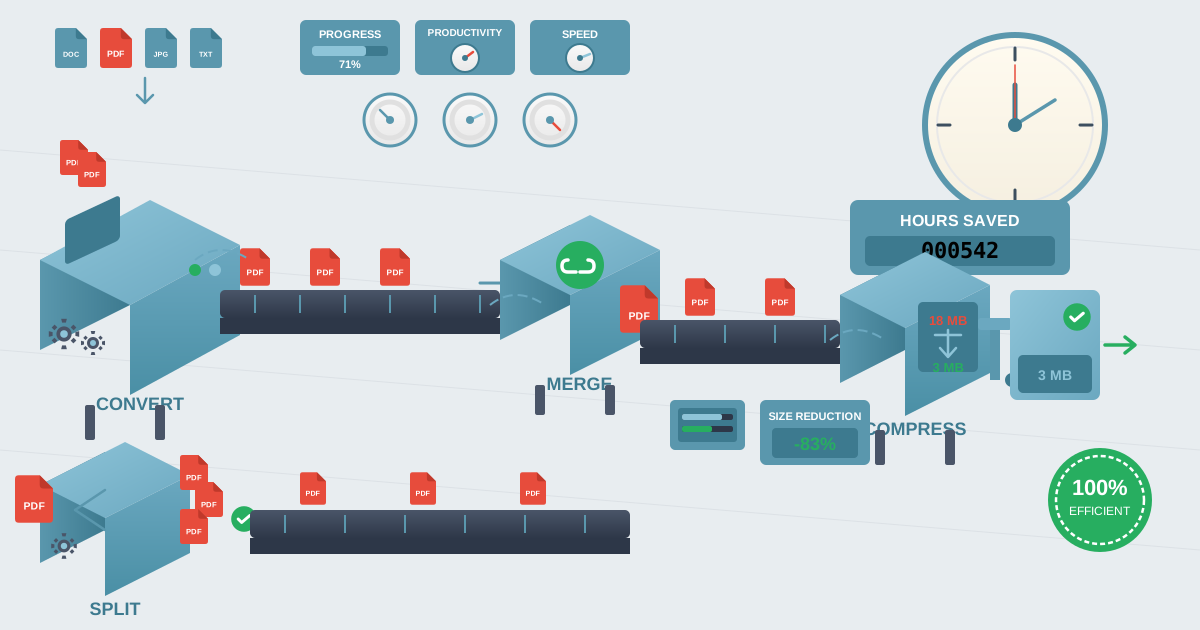
If you've converted several related web pages—for instance, multiple parts of a long tutorial—you'll want to combine them into a single, easy-to-read document. You can do this effortlessly with a tool to Merge PDFs, creating one cohesive report.
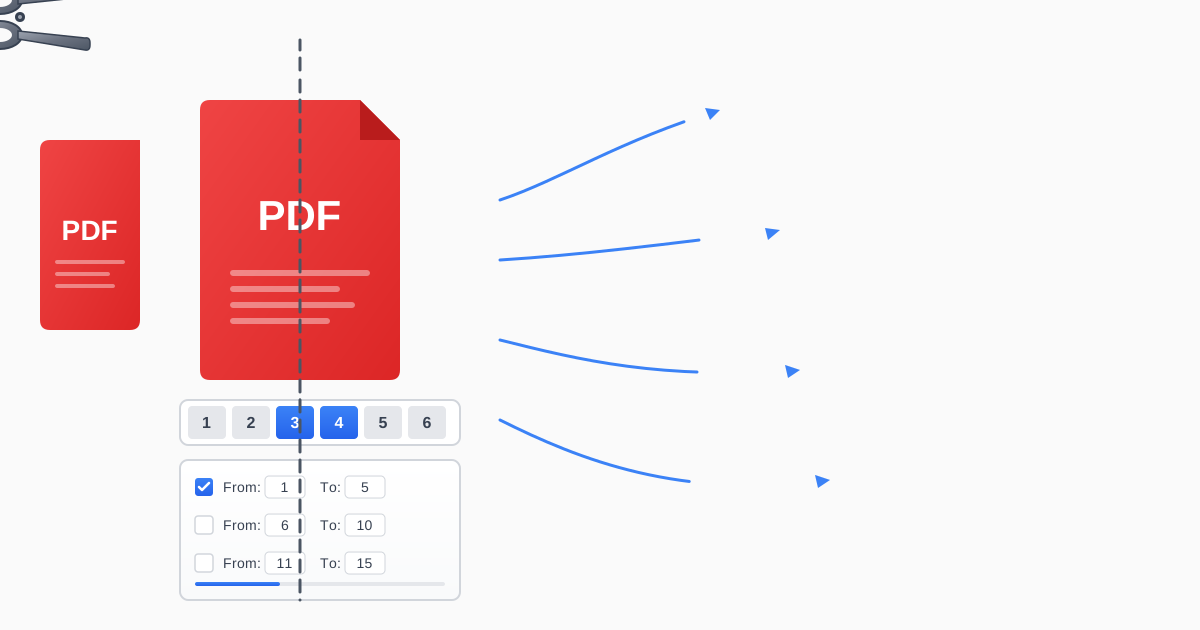
On the other hand, you might have a very large PDF report but only need to share a specific section. Instead of sending the whole file, a Split PDF tool lets you extract just the pages you need, making your file smaller and more focused.
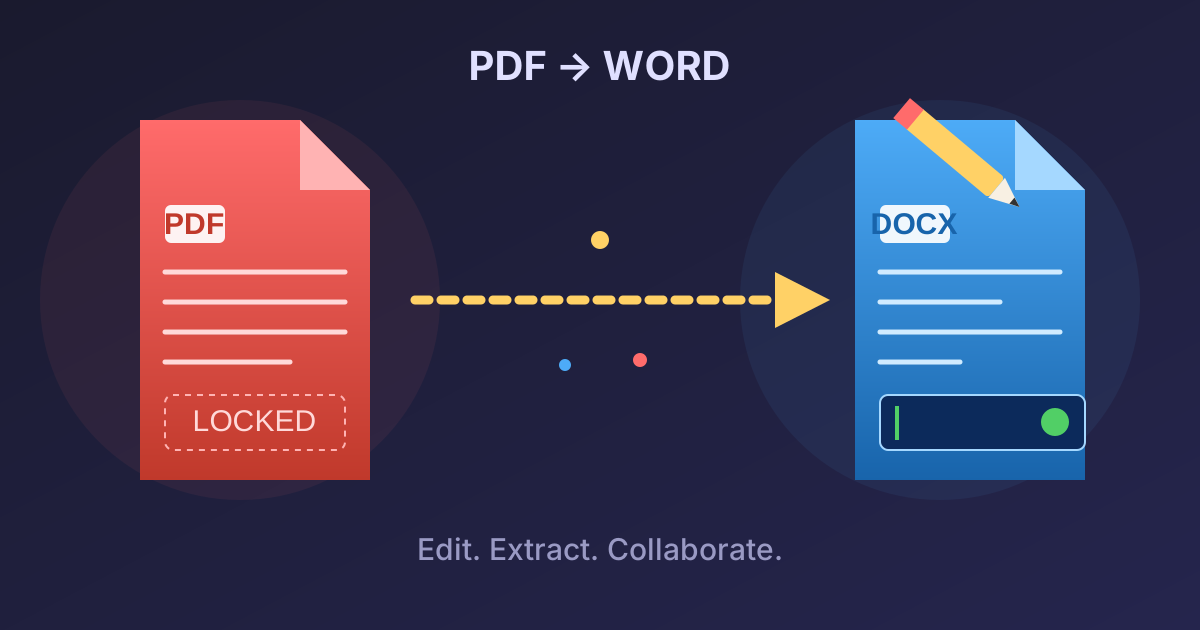
Finally, what if you need to repurpose the content you've archived? Manually copying text from a PDF can be a nightmare, often ruining the formatting. A high-quality PDF to Word converter can save you hours of re-typing and re-formatting, transforming your static PDF back into an editable document.
Conclusion: Choosing the Right Method for You
Converting HTML to PDF is a powerful tool for preserving, sharing, and working with web content. The best method depends entirely on your needs:
- For quick, one-off saves: The browser's built-in Print to PDF feature is your best friend.
- For more control and higher fidelity: Online converters offer a perfect balance of power and ease of use.
- For automation and integration: Code libraries like Puppeteer or WeasyPrint provide ultimate control for developers.
By mastering these techniques, you can transform ephemeral web content into permanent, portable, and professional documents. Explore the wide range of free and privacy-focused PDF tools available at Practical Web Tools to take your document management to the next level.