How to Convert PDF to RTF: The Ultimate Guide

You have a PDF. It looks great, it’s universally viewable, but there’s one major problem: you need to edit it. You don’t have expensive PDF editing software, and all you want to do is tweak some text, copy a large section, or repurpose the content in a different document. You’re stuck with a digital document that’s as unchangeable as if it were carved in stone.
This is where converting a PDF to a more flexible format comes in. While many people think of Microsoft Word's DOCX format, there's another powerful, lightweight, and universally compatible option: the Rich Text Format, or RTF.
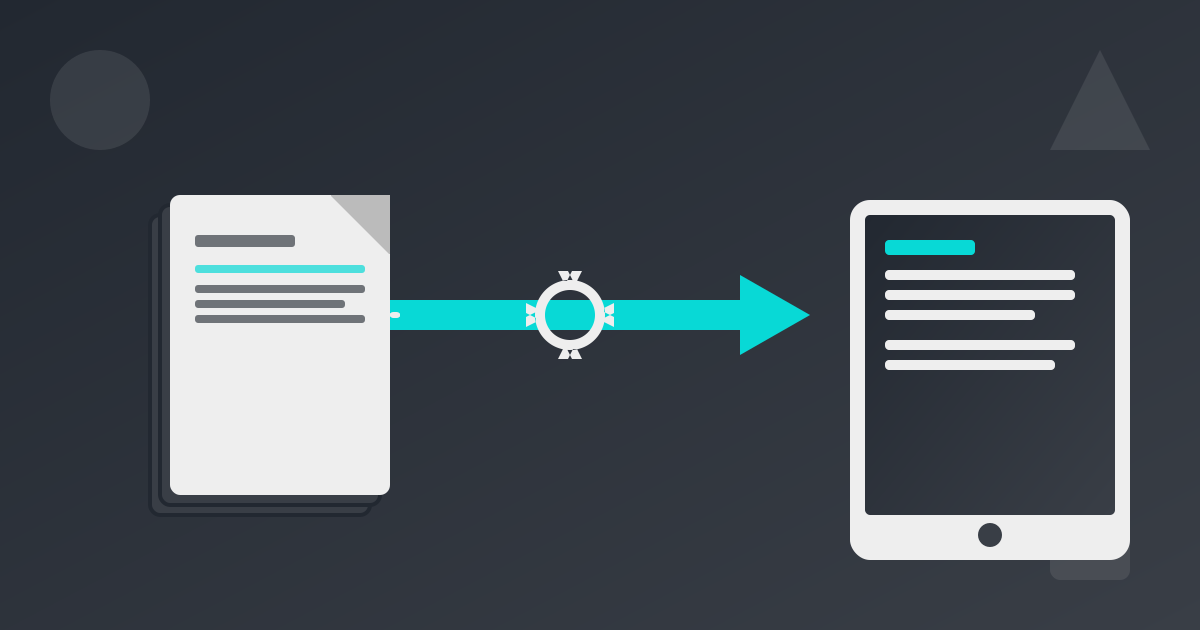
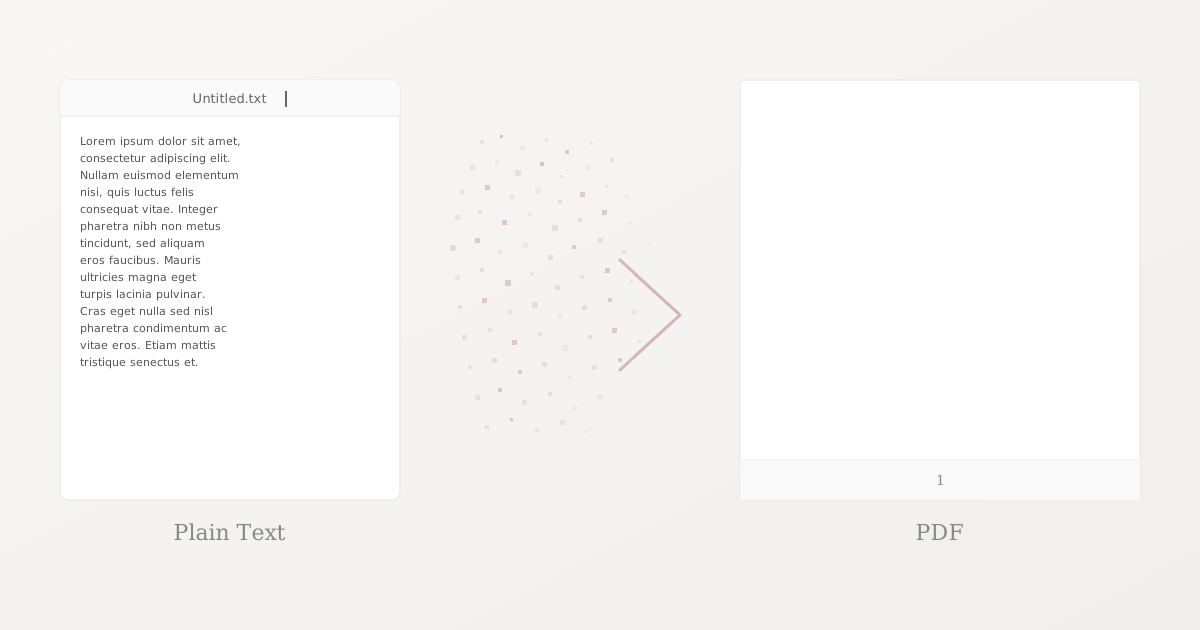
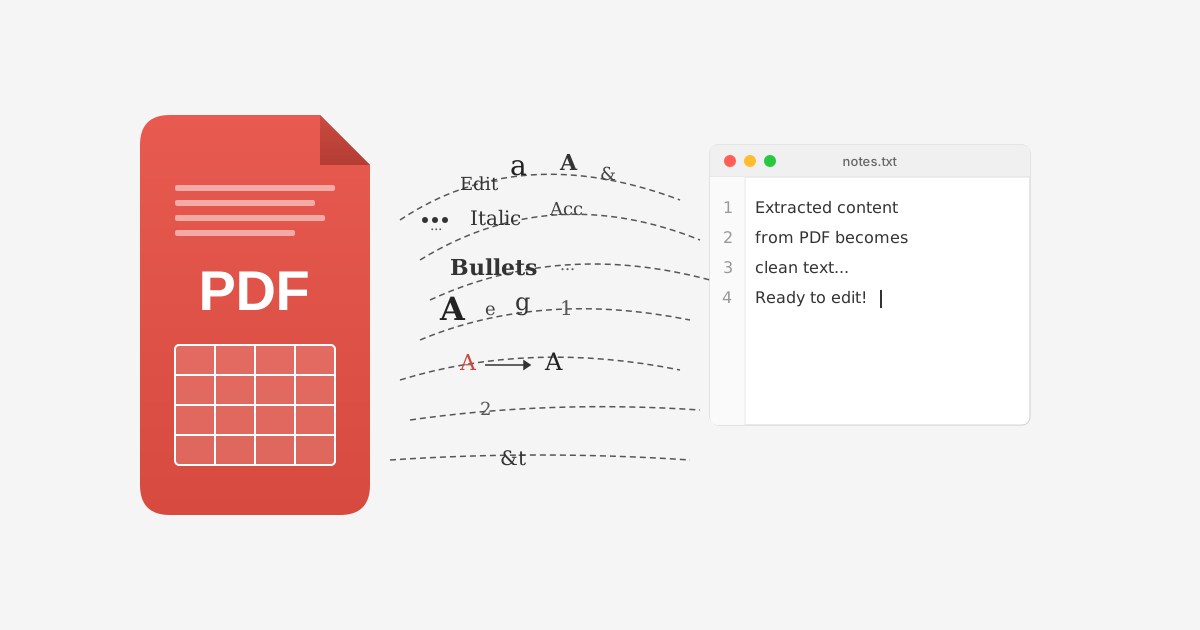
Converting a PDF to RTF can be a lifesaver, unlocking your content and making it editable on virtually any device, with or without fancy software. In this comprehensive guide, we'll dive deep into the world of PDF to RTF conversion. We’ll explore why you’d choose RTF, break down the best conversion methods, and give you a professional workflow for cleaning up the final document. Let's turn that static PDF into a fully editable file.
Understanding the Formats: PDF vs. RTF
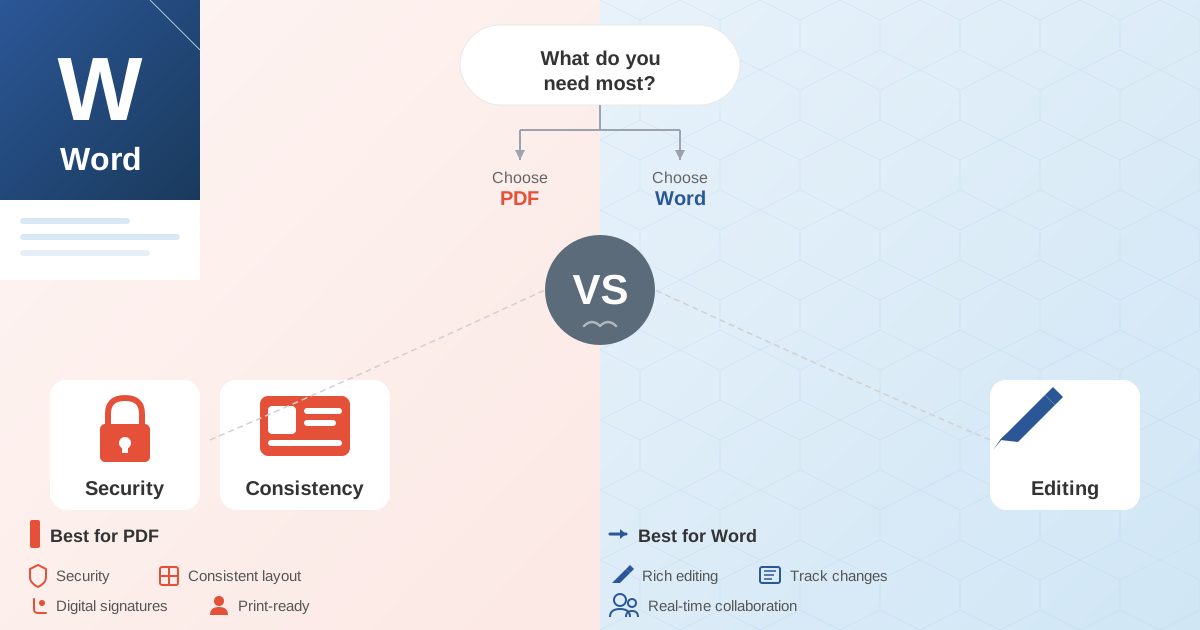
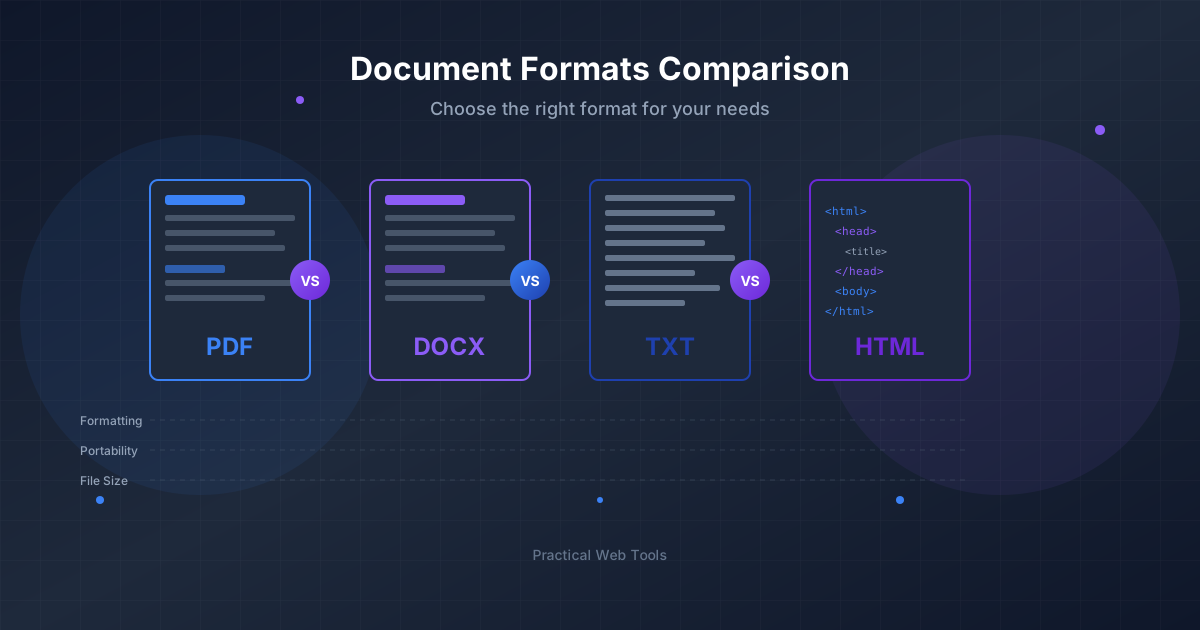
To understand why converting from PDF to RTF is both useful and sometimes challenging, we first need to appreciate what each format is designed to do.
What is a PDF? The Digital Paper Standard
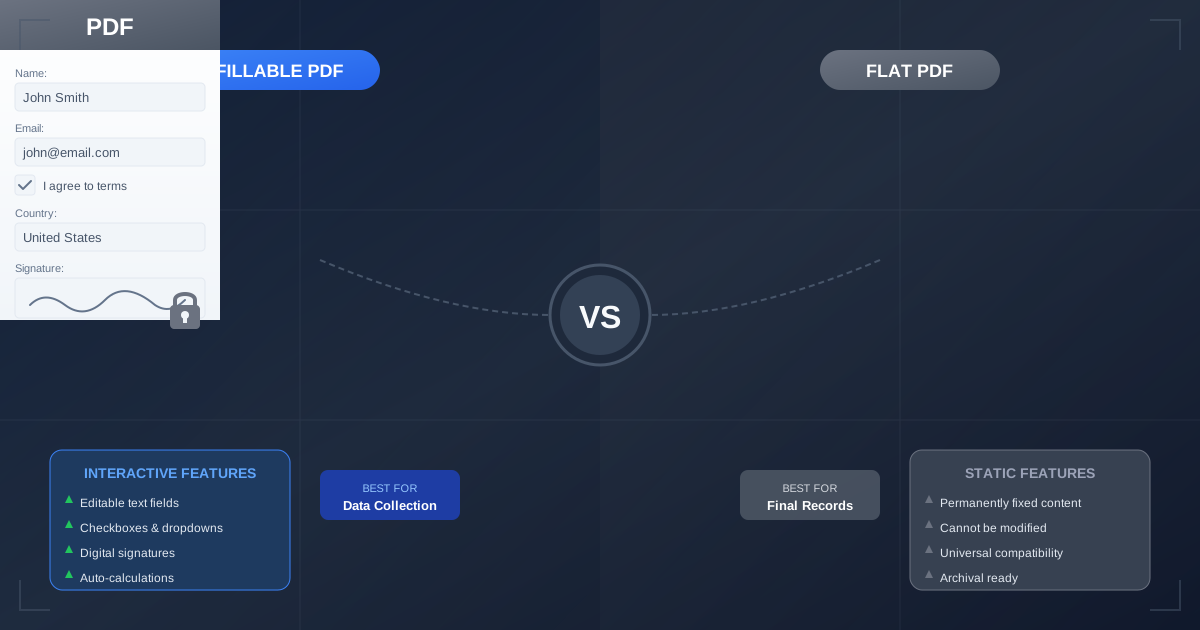
The Portable Document Format (PDF) was created by Adobe in the 1990s with a singular goal: to present documents consistently, regardless of the software, hardware, or operating system being used. Think of it as a digital snapshot of a printed page. When you create a PDF, you're essentially freezing the layout, fonts, and images in place.
Key Characteristics of PDF:
- Portable and Consistent: A PDF will look the same on a Windows PC, a Mac, or a smartphone.
- Secure: PDFs can be password-protected, encrypted, and restricted from printing or editing.
- Self-Contained: Fonts and images are embedded within the file, so there are no missing components.
- Difficult to Edit: This is its greatest strength and its most common frustration. Its design prioritizes presentation over editability.
What is an RTF? The Universal Word Processing Format
The Rich Text Format (RTF) was developed by Microsoft in the 1980s as a way to exchange documents between different word processing applications. Before RTF, opening a document from a competing program often resulted in a mess of unreadable code. RTF was the solution—a common language for text and simple formatting.
Key Characteristics of RTF:
- Highly Compatible: Nearly every word processor, from Microsoft Word to Google Docs to simple built-in editors like WordPad (Windows) and TextEdit (Mac), can open and edit RTF files.
- Preserves Basic Formatting: It reliably maintains text formatting like font type, size, bold, italics, underline, and paragraph alignment.
- Lightweight: RTF files are typically smaller than their DOCX counterparts, especially for simple text documents.
- Lacks Advanced Features: It doesn't support complex features like macros, comments, or tracked changes found in modern formats like DOCX.
Why Convert from PDF to RTF? Key Use Cases
With formats like DOCX available, why would you specifically choose to convert a PDF to RTF? The reasons often come down to simplicity, compatibility, and accessibility.
- Universal Editability: You need to edit a document on a computer that doesn't have Microsoft Office or another major word processor installed. RTF files can be opened and edited with the free, pre-installed text editors on virtually any desktop operating system.
- Legacy Software Compatibility: If you're working with older software or databases that need to import text with formatting, RTF is often the most reliable format to use.
- Extracting Formatted Text: You need to pull text from a PDF while keeping the bolding, italics, and basic structure intact, but without the complexity of a full Word document. RTF is perfect for this middle ground.
- Simplicity and Speed: For quick edits or content repurposing, an RTF file is straightforward and less resource-intensive than a complex DOCX file.
Methods for Converting PDF to RTF
Now for the practical part: how do you actually perform the conversion? There are several methods, each with its own pros and cons.
Method 1: Using Online Conversion Tools (The Easiest Way)
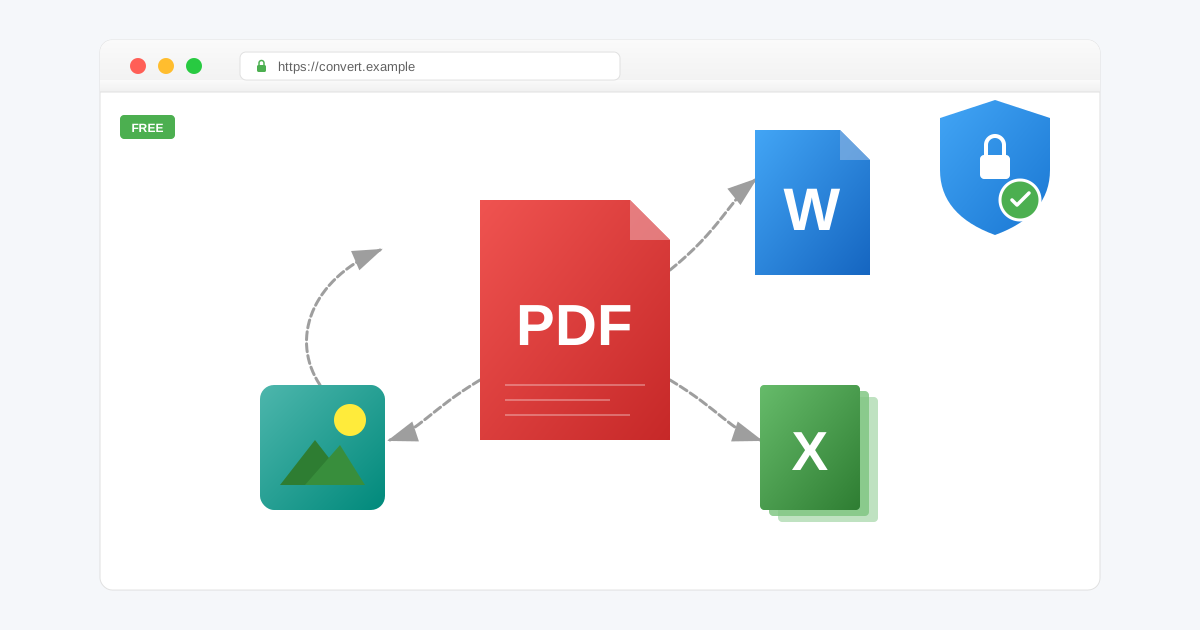
For most people, a free online tool is the fastest and most convenient way to convert a single PDF file. These web-based services handle all the processing on their servers.
How it Works:
- Find a Converter: Search for a "free online PDF to RTF converter."
- Upload Your File: Drag and drop your PDF file onto the website or use the upload button.
- Select Output: Ensure RTF is selected as the output format.
- Convert: Click the convert button and wait for the process to complete.
- Download: Download your newly created RTF file.
Pros:
- Convenience: No software to install. Accessible from any device with a web browser.
- Speed: Excellent for one-off conversions.
- Free: Most online tools are free for basic use.
Cons:
- Privacy and Security: You are uploading your document to a third-party server. Avoid using these tools for sensitive or confidential information.
- Limitations: Free versions often have limits on file size, number of pages, or daily conversions.
- Internet Dependant: You need a stable internet connection.
At Practical Web Tools, we prioritize user privacy and simplicity. While we don't have a dedicated PDF-to-RTF tool yet, this philosophy guides all our products. For similar tasks, our PDF to Word converter offers a way to get a highly editable document, while our PDF to Text tool is perfect for extracting raw content without any formatting.
Method 2: Using Desktop Software (Power and Control)
If you frequently convert documents or work with sensitive information, desktop software is the superior choice. It offers more features, better security, and works offline.
Adobe Acrobat Pro DC
As the creators of the PDF format, Adobe's professional software offers the highest fidelity conversion available.
How it Works:
- Open your PDF in Adobe Acrobat Pro.
- Go to
File > Export To > Microsoft Word > Rich Text Format. - Choose a location and save your file.
Pros:
- Highest Quality: The conversion engine is unmatched, preserving complex layouts accurately.
- Batch Processing: Convert multiple files at once.
- Security: Your files never leave your computer.
Cons:
- Cost: Adobe Acrobat Pro is expensive subscription-based software.
Free Desktop Alternatives
There are several free applications that offer PDF conversion capabilities.
- Calibre: This free and open-source e-book manager has a surprisingly robust file conversion feature that can handle PDF to RTF.
- PDF Readers with Export: Some advanced free PDF readers (like Foxit Reader or Nitro PDF Reader) offer an 'Export' or 'Save As' function that may include RTF as an option.
Pros:
- Free: No cost involved.
- Offline and Secure: Your documents stay on your machine.
Cons:
- Variable Quality: The conversion quality can be hit-or-miss, especially with complex documents.
- More Complex: May require more steps or have a less intuitive interface than online tools.
Method 3: The Manual Copy & Paste (The Last Resort)
When all else fails, or for very simple documents, you can fall back on the classic copy-and-paste method.
How it Works:
- Open the PDF in any PDF reader.
- Use the selection tool to highlight the text you need.
- Press
Ctrl+C(orCmd+Con Mac) to copy the text. - Open a blank document in an RTF editor (like WordPad).
- Press
Ctrl+V(orCmd+Von Mac) to paste the text. - Save the file as an RTF document.
Pros:
- Simple and Free: Requires no special tools.
- Targeted: You can extract just the specific paragraphs you need.
Cons:
- Loses Most Formatting: You'll likely lose all but the most basic formatting. Bolding and italics might transfer, but columns, tables, and images will not.
- Line Break Issues: Pasted text often has hard line breaks at the end of each line, requiring tedious manual removal.
- Impractical for Long Documents: This method is far too time-consuming for documents longer than a page or two.
Post-Conversion Cleanup: A Necessary Step
No conversion is perfect. The shift from a layout-based format (PDF) to a text-flow-based format (RTF) will almost always introduce some quirks. Budgeting time for cleanup is crucial for a professional result.
Here are the most common issues you'll encounter and how to fix them.
Common Issues & Solutions
| Issue | Common Cause | How to Fix It |
|---|---|---|
| Layout & Spacing Errors | The converter struggles to interpret columns, text boxes, and margins. | Manually adjust margins, remove extra paragraph breaks, and re-apply column formatting in your word processor. |
| Incorrect Fonts | The original fonts used in the PDF are not installed on your computer. | Your word processor will substitute a default font. Select all text (Ctrl+A) and apply a consistent font of your choice. |
| Broken Tables | PDF tables are often just a visual arrangement of text and lines, not a true data structure. | This is the hardest issue to fix. You will likely need to delete the garbled text and rebuild the table from scratch in your RTF editor. |
| Garbled or Gibberish Text | The PDF has unusual text encoding or security settings that prevent proper extraction. | Try a different conversion tool. If that fails, the text may not be extractable. Use our PDF to Text tool as a test; if it can't read the text, no converter will. |
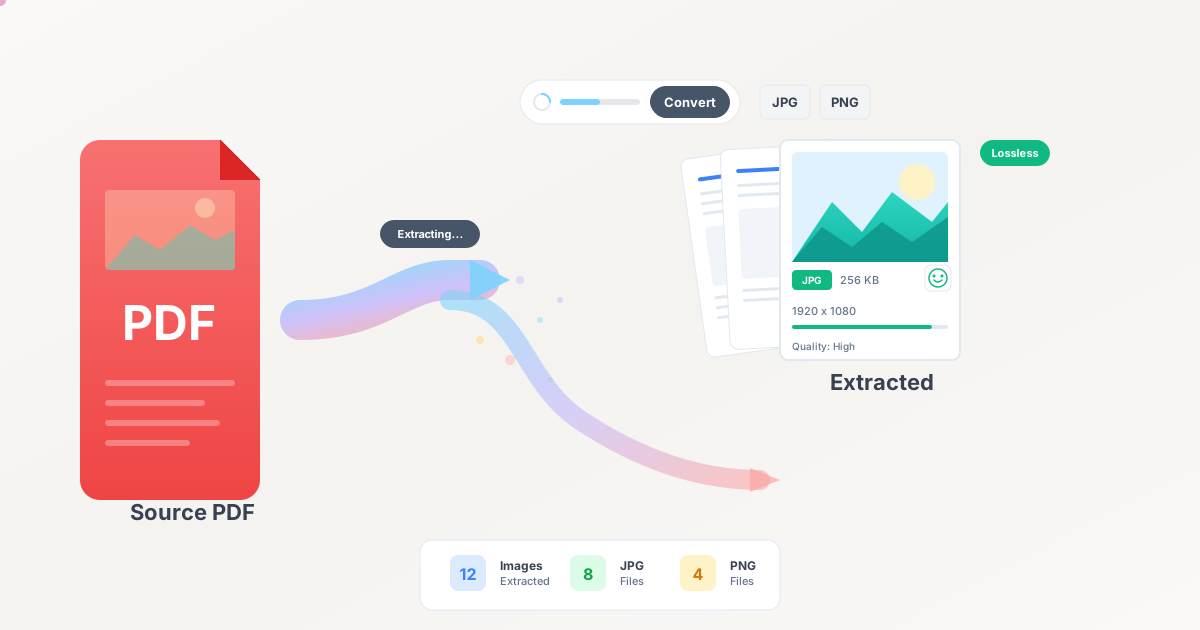
| Images Are Missing or Low Quality | The converter failed to extract images, or it compressed them heavily. | Manually take screenshots of the images from the original PDF and insert them into your RTF document. For higher quality, use a tool like our PDF to Image converter to extract all images from the PDF in their original resolution. |
| Headers/Footers in Body Text | The converter interprets headers, footers, and page numbers as part of the main document text. | Manually delete these repeated lines of text from each page in your RTF file. |
A Quick Cleanup Checklist
- First Glance Scan: Scroll through the entire document to spot major layout breaks, image issues, or misplaced sections.
- Font Consistency: Select all text and apply a single, consistent font and font size.
- Find and Replace: Use the "Find and Replace" function to fix common problems, like removing double spaces or unwanted line breaks.
- Fix Lists: Check all numbered and bulleted lists. They often need to be reformatted using your word processor's list tools.
- Rebuild Tables: Address any broken tables by re-creating them.
- Proofread: Finally, give the document a thorough proofread. The conversion process can sometimes join or split words incorrectly.
Conclusion: Your Go-To Guide for Flawless Conversions
Converting a PDF to RTF is a powerful skill that can save you time and frustration. It liberates your content from a static format, making it accessible and editable for a wide range of applications.
By understanding the strengths of both PDF and RTF, choosing the right conversion method for your needs—whether it's a quick online tool or powerful desktop software—and dedicating a bit of time to post-conversion cleanup, you can achieve a clean, usable document every time.
Your document workflow doesn't stop at conversion. Practical Web Tools offers a full suite of free, private, and easy-to-use PDF utilities. Whether you need to Merge PDFs to combine reports, split a large file into manageable chapters, or sign a document digitally, we have a tool to help. Explore our collection today and take control of your documents!