How to Convert RTF to PDF: The Ultimate Guide (3 Easy Methods)

You've just received a document with a strange .rtf extension. Maybe it's an old file from a colleague, a resume from a job applicant, or a manual for a vintage piece of software. You can open it, but sharing it feels clunky. Will the recipient be able to view it correctly? Will the formatting get messed up? This is where the power of PDF comes in.
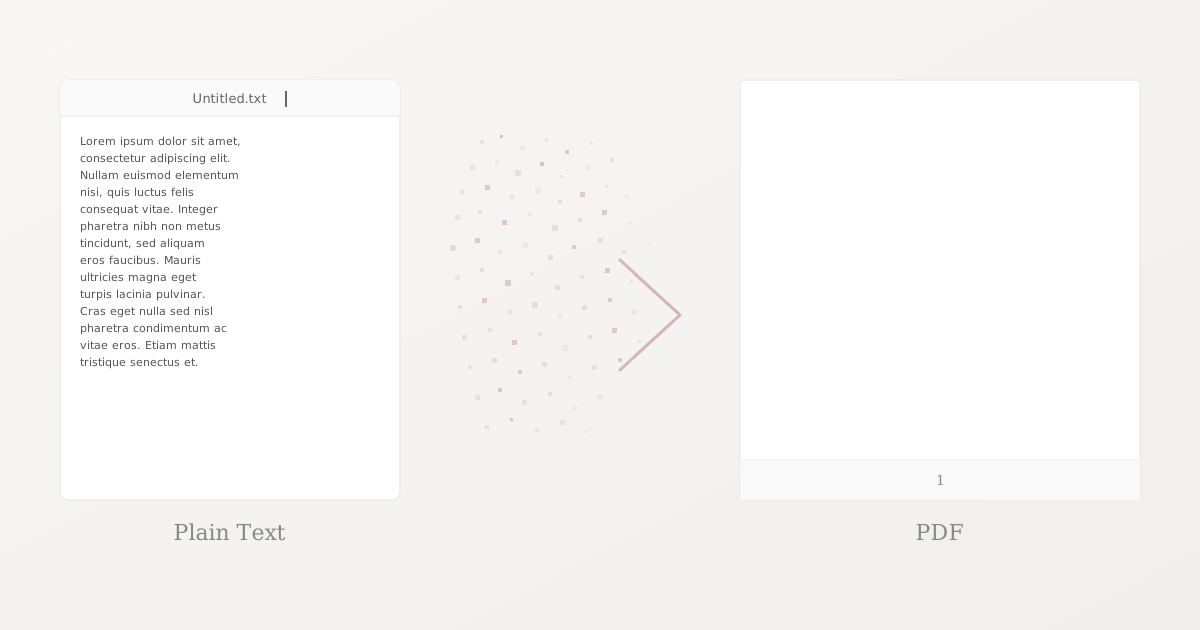
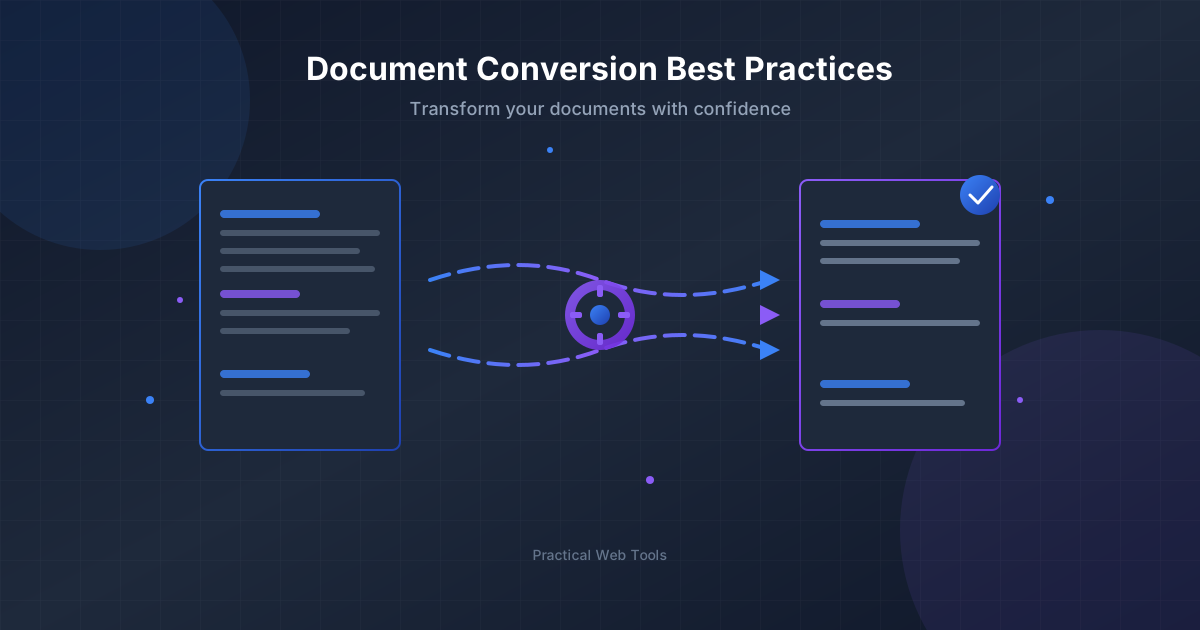
Converting a Rich Text Format (RTF) file to a Portable Document Format (PDF) is one of the most practical skills in modern document management. It transforms a flexible but sometimes unpredictable file into a stable, professional, and universally accessible document. In this comprehensive guide, we'll explore everything you need to know about converting RTF to PDF, from the underlying reasons to the step-by-step methods you can use for free.
Understanding the RTF Format
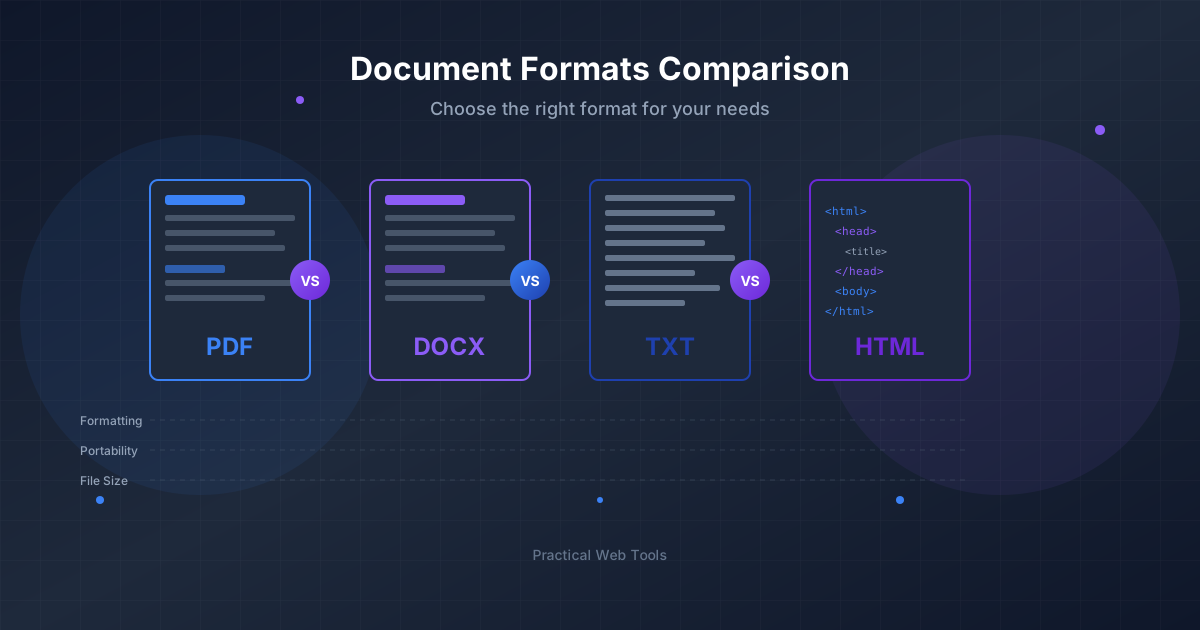
Before we dive into the conversion process, it's helpful to understand what an RTF file actually is. Created by Microsoft in the 1980s, the Rich Text Format was designed to be a universal standard for exchanging documents between different word processing applications and operating systems.
Think of it as a bridge between simple plain text (.txt) and complex proprietary formats like Microsoft Word's .docx. While a .txt file can only hold unformatted characters, an RTF file can store "rich" formatting information, including:
- Font styles: Bold, italics, underline
- Font types and sizes: Times New Roman, Arial, 12pt, 16pt, etc.
- Text alignment: Left, right, center, justified
- Basic page layout: Margins and line spacing
- Simple images
Its key advantage was interoperability. A document created in Microsoft Word on a Windows PC could be saved as an RTF and opened in a different program on an Apple Macintosh with most of its formatting intact—a revolutionary concept at the time. However, the format has since been largely superseded by more advanced standards, and its limitations have become more apparent.
The Top Reasons to Convert RTF to PDF
While RTF files are still readable by most modern word processors (like WordPad on Windows and TextEdit on Mac), converting them to PDF offers significant advantages for sharing, archiving, and professional presentation. Here are the key benefits:
-
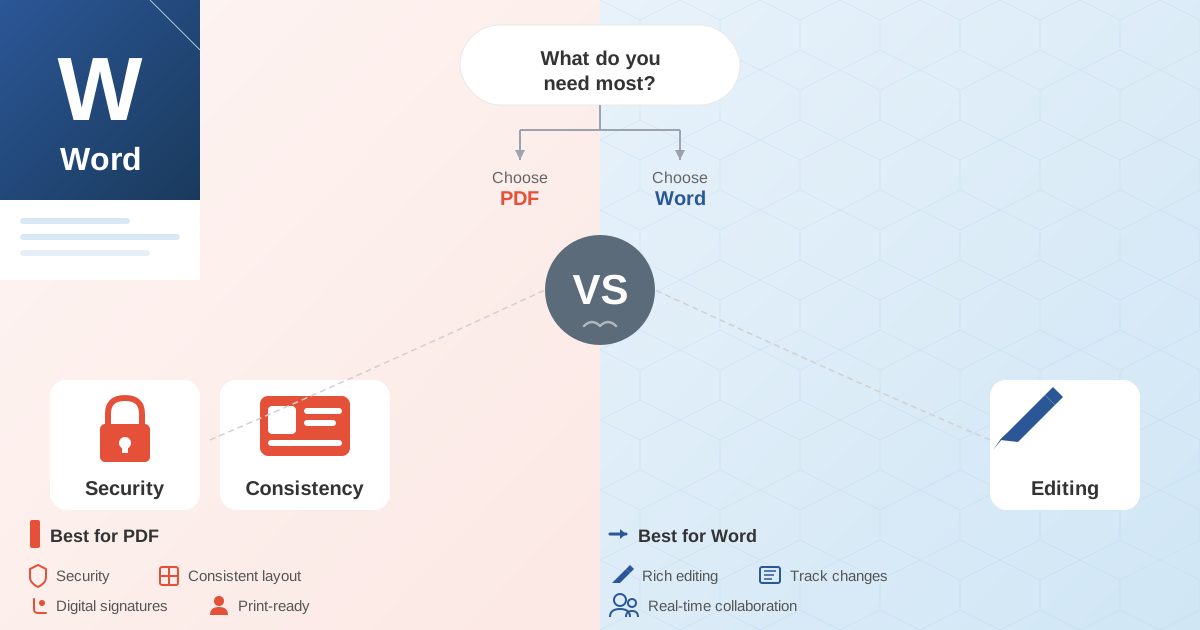
Universal Compatibility and Consistency: A PDF looks the same everywhere, period. Whether it's opened on a Windows PC, a MacBook, an iPhone, or an Android tablet, the layout, fonts, and images will remain exactly as you intended. RTF files can sometimes render differently depending on the application used to open them, leading to unexpected formatting shifts.
-
Preservation of Layout and Formatting: PDF is a final-form format. It essentially takes a digital snapshot of your document, locking everything in place. This is crucial for documents like resumes, contracts, invoices, and reports where precise formatting is non-negotiable.
-
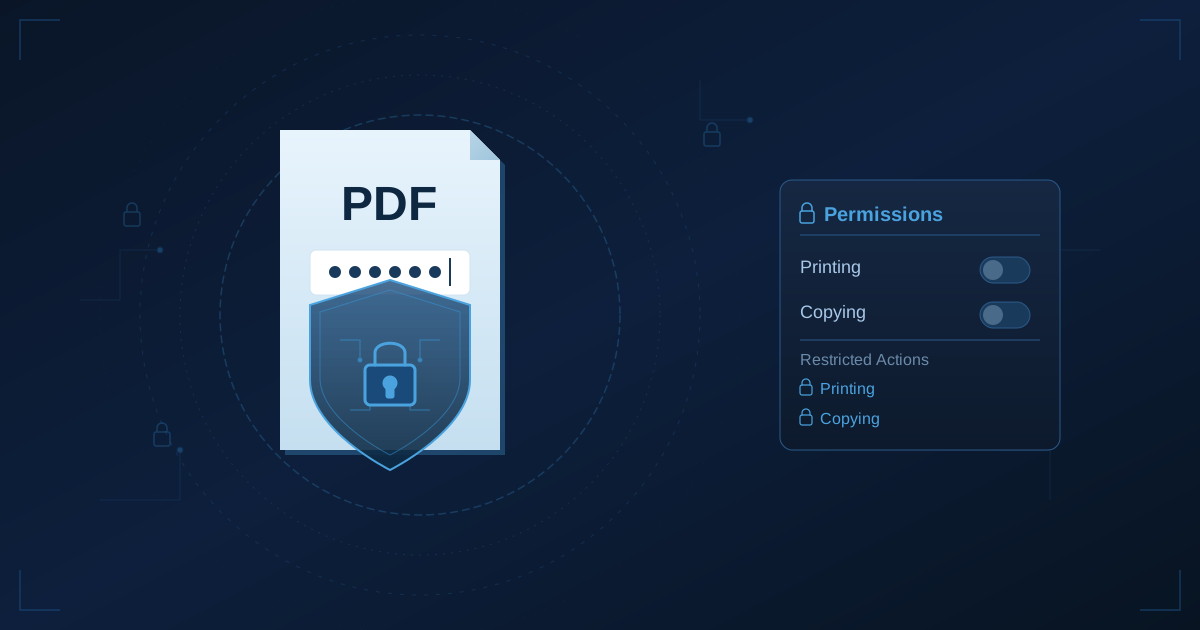
Enhanced Security Features: PDFs are built with security in mind. You can encrypt them with a password, restrict actions like printing or copying text, and apply legally binding digital signatures. RTF files offer no such built-in security features, making them unsuitable for sensitive information.
-
Smaller File Sizes: While a text-only RTF is small, files containing images can become surprisingly large. PDF uses advanced compression algorithms for both text and images, often resulting in a significantly smaller file that is easier to email, download, and store.
-
Professional Standard: PDF is the undisputed global standard for document distribution. Sending a PDF conveys professionalism and ensures your recipient has a hassle-free experience opening and viewing your file.
Method 1: Using Your Operating System's Built-in Tools
You don't need to download any special software to perform a basic RTF to PDF conversion. Both Windows and macOS have powerful, free, built-in features that can handle this task effortlessly.
On Windows (Using Microsoft Print to PDF)
Every modern version of Windows includes a virtual printer called "Microsoft Print to PDF." This tool allows you to "print" any file from any application directly to a new PDF file. It's the simplest method for Windows users.
Here’s a step-by-step guide:
- Open the RTF file. Double-click your
.rtffile. It will most likely open in WordPad, the default rich text editor in Windows. If you have Microsoft Word installed, it may open there instead. - Go to the Print Menu. In the top-left corner, click
File, then selectPrintfrom the dropdown menu. This will open the Print dialog box. - Select the PDF Printer. In the list of available printers, look for and select
Microsoft Print to PDF. - Print the File. Click the
Printbutton. Instead of sending a job to a physical printer, Windows will open a "Save Print Output As" window. - Save Your New PDF. Choose a location to save your file, give it a name, and click
Save. Your RTF document is now a perfectly formatted PDF file.
This method is incredibly reliable for preserving the layout of most standard RTF documents.
On macOS (Using the Built-in PDF Engine)
macOS has a system-wide PDF engine that is even more streamlined than the Windows equivalent. You can save almost anything as a PDF from the standard Print menu.
Here’s how to do it:
- Open the RTF file. Double-click the file to open it in TextEdit, the default text editor on macOS.
- Choose Export as PDF. The most direct way in modern macOS versions is to go to the menu bar, click
File, and then selectExport as PDF.... - Save the File. A save dialog box will appear. Enter a name for your PDF, choose where you want to save it, and click
Save.
Alternative macOS Method (via the Print Menu):
- Open the RTF file in TextEdit.
- Go to
File > Printin the menu bar. - In the bottom-left corner of the Print dialog box, you'll see a small dropdown menu labeled
PDF. - Click this menu and select
Save as PDF. - Choose a name and location, and click
Save.
Both macOS methods produce a high-quality PDF that mirrors the original RTF document perfectly.
Method 2: Using Desktop Word Processors
For more control over the final PDF output, using a full-featured word processor like Microsoft Word or the free and open-source LibreOffice Writer is an excellent choice.
Microsoft Word
If your RTF file is complex or if you want to fine-tune the PDF settings, Microsoft Word offers a robust "Save As" feature.
- Open the RTF file in Microsoft Word.
- Click on
Filein the top-left corner. - Select
Save AsorSave a Copy. - In the "Save as type" dropdown menu, select
PDF (*.pdf). - Before saving, click on the
More options...orOptions...button. This opens a dialog where you can configure settings like:- Optimize for: Choose
Standardfor high-quality printing orMinimum sizeto create a smaller file for web viewing. - Page range: Export all pages, the current page, or a custom selection.
- PDF/A compliance: An archival standard for long-term preservation.
- Optimize for: Choose
- Click
OKand thenSaveto create your PDF.
LibreOffice Writer (Free Alternative)
LibreOffice is a powerful, free, and open-source office suite that is a fantastic alternative to Microsoft Office. Its word processor, Writer, has excellent PDF export capabilities.
- Download and install LibreOffice from its official website.
- Open your RTF file in LibreOffice Writer.
- Go to
File > Export As > Export as PDF.... - This will open a detailed "PDF Options" window, giving you granular control over image compression quality, watermarks, security settings (like setting passwords), and much more.
- Configure the settings to your liking and click
Export. - Choose a file name and location, then click
Save.
Method 3: Using Online RTF to PDF Converters
For ultimate convenience, especially if you're on a device without your usual software, online converters are a fast and easy solution. These web-based tools allow you to upload your RTF file and receive a converted PDF in seconds.
Advantages of Online Converters:
- No Installation: Nothing to download or install.
- Cross-Platform: Works on any device with a web browser (PC, Mac, Linux, Chromebook, phone).
- Simplicity: Most tools feature a simple drag-and-drop interface.
A Critical Note on Privacy
When using online tools, privacy should be your top priority. You are uploading your document to a third-party server, so it's essential to choose a reputable service. At Practical Web Tools, our entire philosophy is built on privacy. While we don't currently offer a dedicated RTF to PDF tool, all our tools are designed to process your files securely, often directly in your browser or by deleting them from our servers immediately after processing. Always check the privacy policy of any online converter before uploading sensitive documents.
What to Do After Converting Your RTF to PDF
Once your document is in the versatile PDF format, a new world of possibilities opens up. Your static document is now ready for more advanced management.
-
Combine Documents: Did you convert a cover page and now need to add it to the main report? You can easily Merge PDFs into a single, cohesive file, keeping everything organized and easy to share.
-
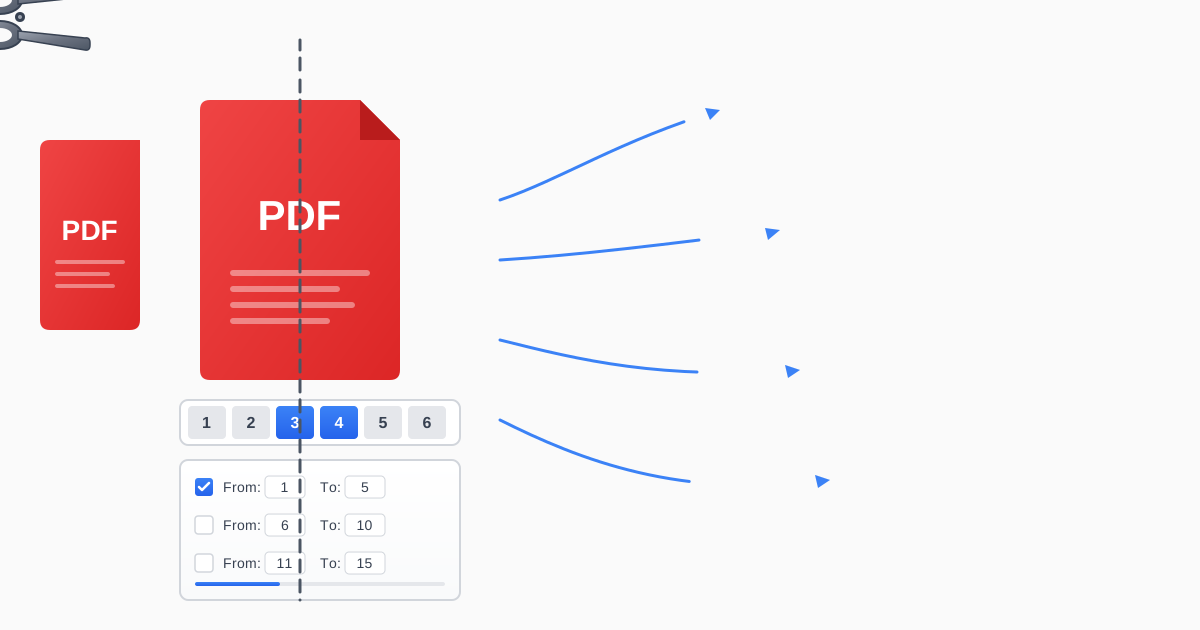
Extract Key Information: If your newly created PDF is a long manual and you only need to share a few specific pages, our Split PDF tool lets you extract just the pages you want into a new, smaller PDF.
-
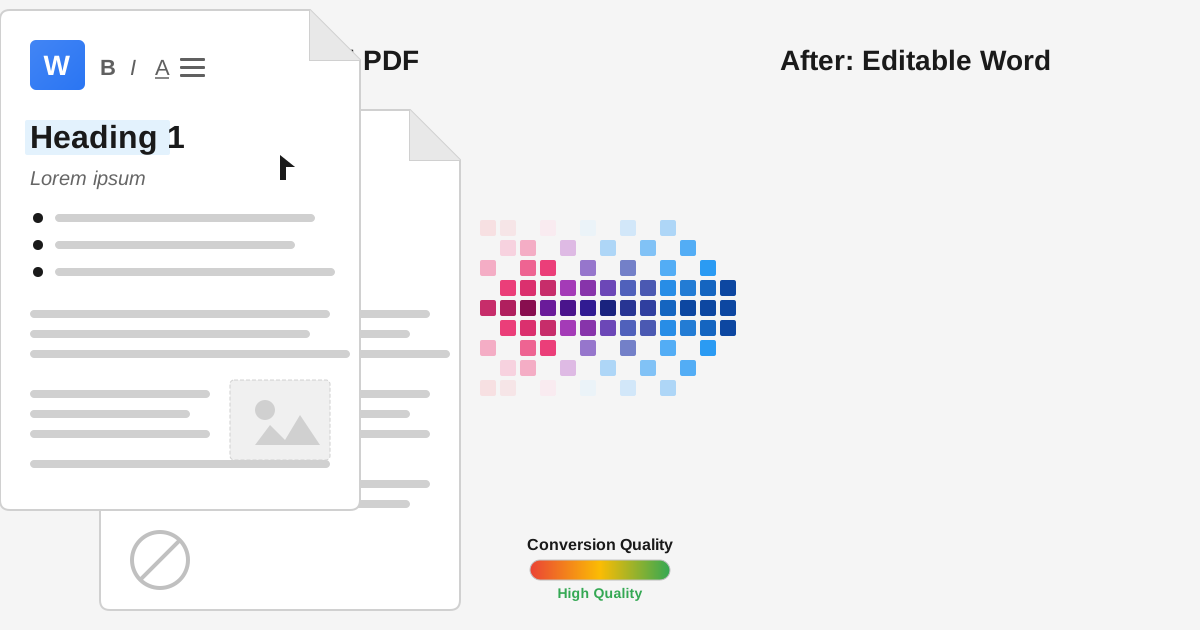
Make Further Edits: Sometimes you notice a typo after you've converted the file. While you can go back to the original RTF, it's often easier to convert the PDF back to an editable format. A PDF to Word converter can transform your PDF into a fully editable
.docxfile for quick changes.
Conclusion: Making the Right Choice for Your Documents
While the Rich Text Format played a vital role in the history of digital documents, PDF is the modern standard for good reason. Converting your RTF files to PDF ensures your documents are professional, secure, and universally accessible.
We've covered three reliable methods:
- Built-in OS tools for quick, software-free conversions.
- Desktop word processors like Word or LibreOffice for greater control.
- Online converters for on-the-go convenience (with a focus on privacy).
By choosing the right method for your needs, you can confidently manage and share your documents, knowing they will look perfect every time. Ready to take control of your digital documents? Explore the full suite of free and privacy-focused utilities at Practical Web Tools today!