How to Convert XLSX to PDF: The Ultimate Guide for 2024

You’ve just spent hours crafting the perfect spreadsheet in Microsoft Excel. The data is pristine, the charts are insightful, and the formulas are flawless. Now, it's time to share it with your team, a client, or for archival purposes. Sending the raw XLSX file can be a recipe for disaster—accidental edits, formatting issues on different devices, or recipients who don't even have Excel. The solution? Converting your XLSX file to a PDF.
This comprehensive guide will walk you through everything you need to know about converting XLSX to PDF. We'll cover why it's essential, explore multiple methods from using Excel itself to powerful online tools, and tackle common formatting challenges to ensure your final document looks professional and polished every time.
Why Convert XLSX to PDF?
Before we dive into the 'how,' let's understand the 'why.' Transforming your Excel spreadsheet into a Portable Document Format (PDF) isn't just about changing the file extension; it offers a host of practical benefits that are crucial for professional communication and data management.
- Universal Compatibility: PDFs are the chameleons of the digital world. They can be opened on virtually any device and operating system—Windows, macOS, Linux, iOS, Android—without needing specific software like Microsoft Excel. The layout, fonts, and images will look exactly as you intended, every single time.
- Preservation of Formatting: Excel files can look vastly different depending on the user's screen resolution, software version, or default printer settings. A PDF locks in your formatting, ensuring that your carefully designed tables, charts, and page layouts remain intact.
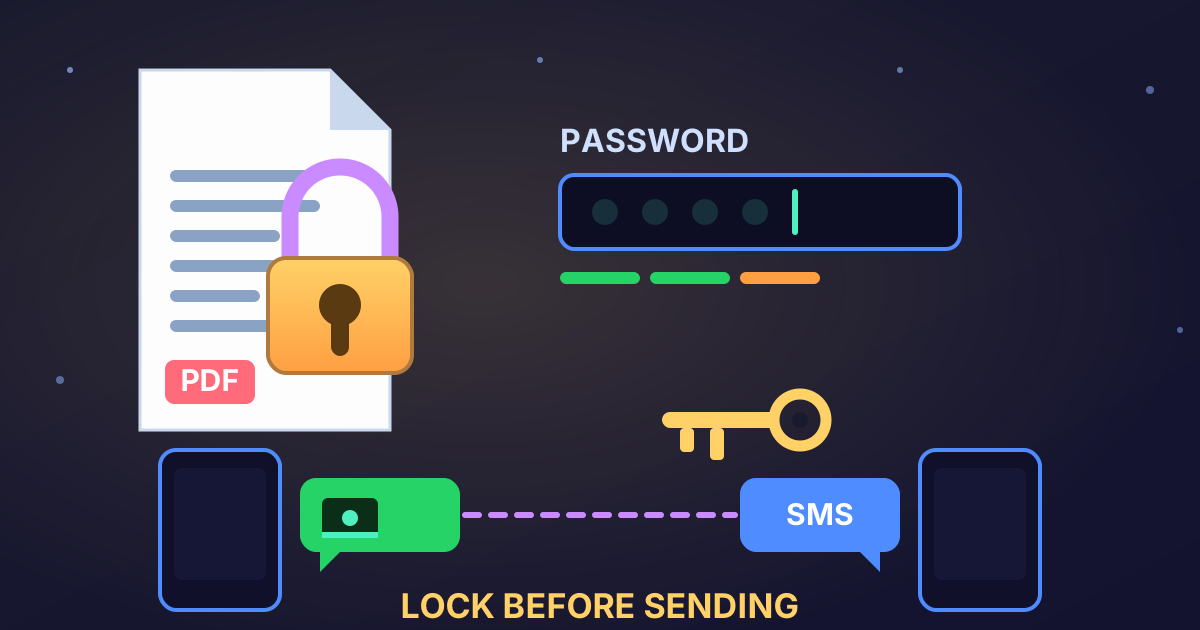
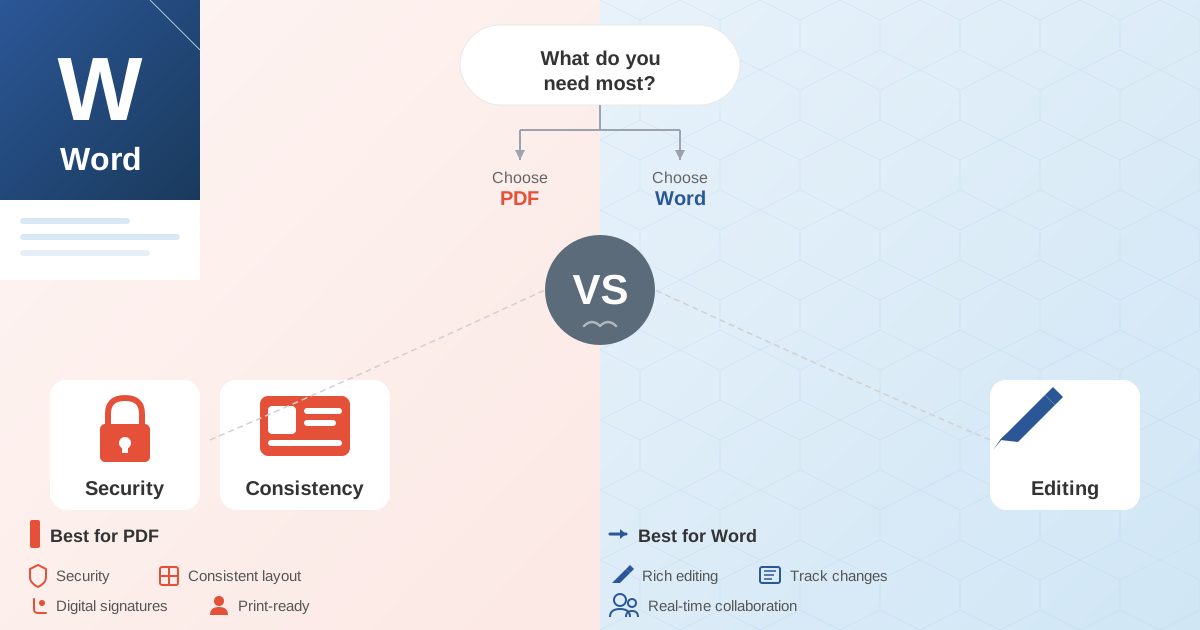
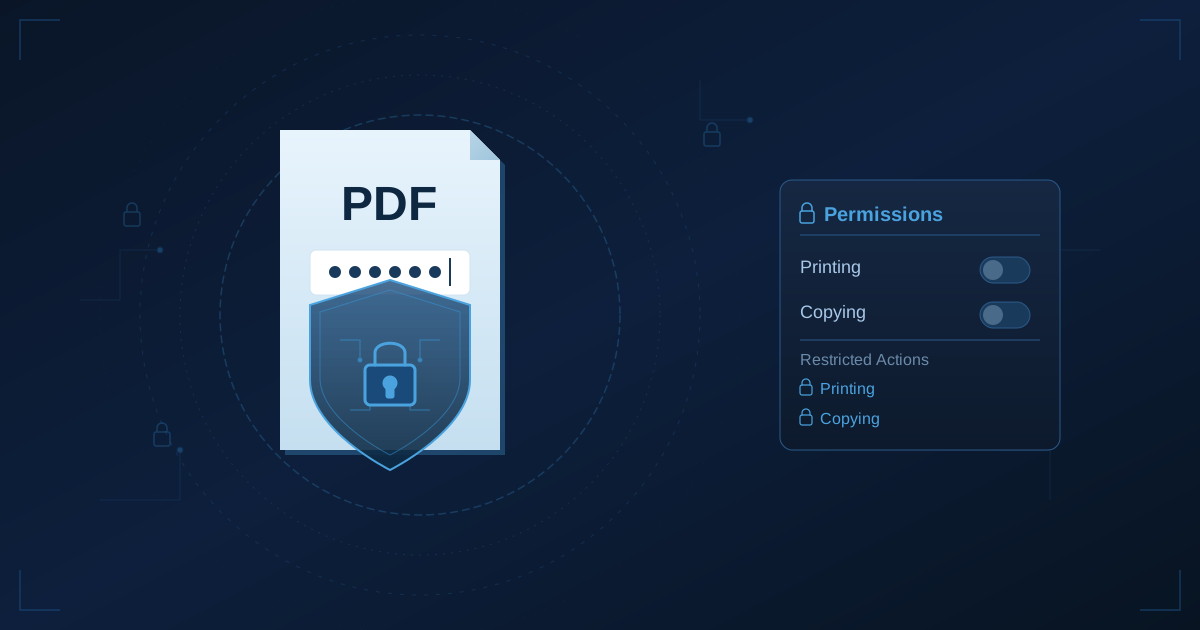
- Enhanced Security: Raw XLSX files are fully editable, which can be a significant risk when sharing sensitive data like financial reports, invoices, or project plans. PDFs are inherently read-only, preventing accidental changes. You can also add extra layers of security, such as password protection and restrictions on printing or copying.
- Professional Presentation: Sending a PDF is standard practice for professional documents. It conveys a finalized, polished report rather than a work-in-progress spreadsheet. It's the digital equivalent of handing someone a printed, bound report instead of a stack of loose-leaf paper.
- Smaller File Size: While not always the case with complex files, a PDF containing text and simple charts is often smaller than the original XLSX file, making it easier to email and share.
Method 1: Using Microsoft Excel's Built-in Features
The most direct way to convert an XLSX file is by using Microsoft Excel itself. It offers robust, built-in options that give you significant control over the final output. This method is ideal when you have Excel installed and need to fine-tune formatting options.
Step-by-Step Guide (Save As)
- Open Your Spreadsheet: Launch Microsoft Excel and open the XLSX file you want to convert.
- Navigate to 'Save As': Click on the
Filetab in the top-left corner. From the menu, selectSave As. - Choose a Location: Browse to the folder where you want to save your new PDF file.
- Select PDF as the Format: In the 'Save As' dialog box, click on the dropdown menu next to 'Save as type.' Scroll down and select
PDF (*.pdf)from the list. - Optimize (Optional): You'll see an 'Optimize for' section with two choices:
Standard (publishing online and printing): This provides the best quality and is suitable for most purposes.Minimum size (publishing online): This reduces the file size but may slightly compromise the quality of images or charts.
- Fine-Tune with 'Options': Before saving, click the
Options...button. This opens a new window with critical settings:- Page range: Choose to convert
Allpages or a specific range. - Publish what: This is the most important setting. You can choose to convert the
Active sheet(s), theEntire workbook, or aSelection(a specific range of cells you highlighted before starting). - Non-printing information: Tick boxes to include document properties or accessibility tags.
- Page range: Choose to convert
- Save: Once you've configured your options, click
OKand thenSave. Excel will generate the PDF in your chosen location.
Method 2: Using Google Sheets
If you don't have Microsoft Excel or prefer working in the cloud, Google Sheets offers a simple and free way to convert your spreadsheets.
Step-by-Step Guide
- Upload or Open Your File: Go to Google Sheets. You can either upload your XLSX file by clicking
File>Import>Uploador open an existing Google Sheet. - Access the Download Menu: Click on
Filein the top menu bar. - Select PDF: Hover over
Downloadand choosePDF document (.pdf)from the submenu. - Configure Print Settings: A new 'Print settings' screen will appear on the right. This is where you customize your PDF output.
- Export: Choose to export the
Current sheet, theEntire workbook, orSelected cells. - Paper size: Select standard sizes like Letter or A4.
- Page orientation: Choose
PortraitorLandscape. - Scale: Use
Fit to width,Fit to height, orFit to pageto prevent your data from being awkwardly cut off. - Margins: Adjust as needed.
- Formatting: Control whether to show gridlines, notes, and page numbers.
- Headers & Footers: Add custom headers and footers.
- Export: Choose to export the
- Export the PDF: Once you are satisfied with the preview, click the blue
Exportbutton in the top-right corner. Your browser will download the converted PDF file.
Method 3: Using a Free Online XLSX to PDF Converter
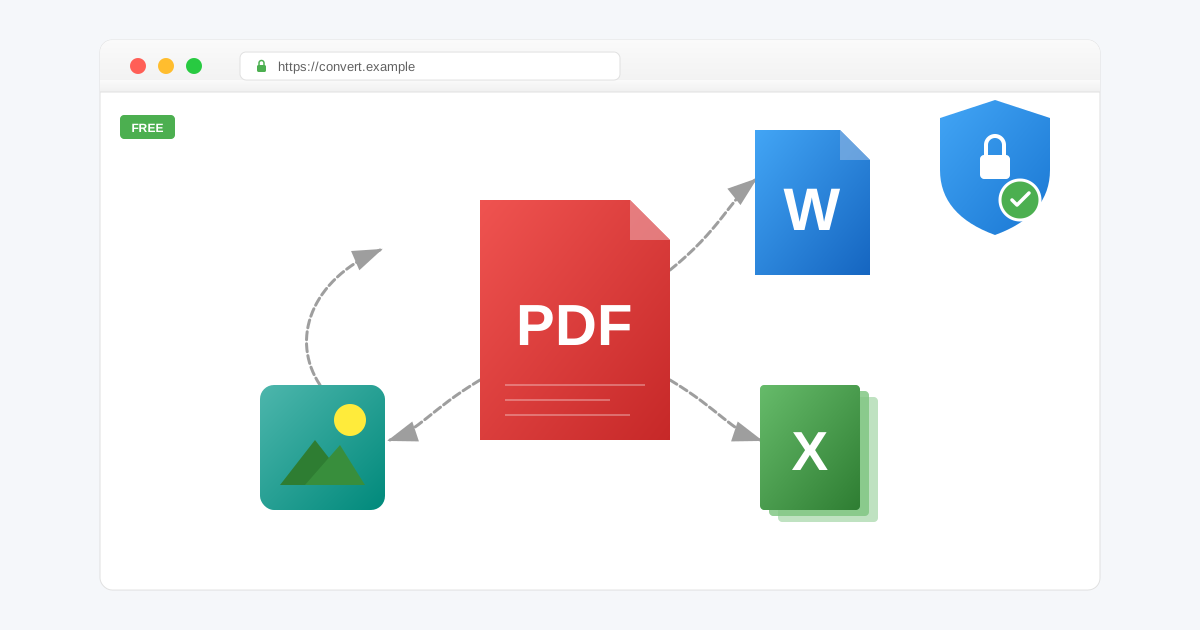
What if you need a quick conversion without any software? Or perhaps you're on a computer that doesn't have Excel or access to your Google account. This is where online converters shine. They are fast, accessible from anywhere, and incredibly easy to use.
At Practical Web Tools, we prioritize your privacy. Unlike many free online services, our tools are designed to be client-side, meaning your files are processed directly in your browser and are never uploaded to our servers. This gives you the speed and convenience of an online tool with the security of an offline application.
How to Use an Online Converter (The Practical Web Tools Way)
- Navigate to the Tool: Open your web browser and go to the XLSX to PDF converter tool on practicalwebtools.com.
- Upload Your File: Click the 'Choose File' button and select the XLSX spreadsheet from your computer. You can also drag and drop the file directly onto the designated area.
- Wait for Conversion: The tool will automatically begin the conversion process. Since it runs in your browser, it's remarkably fast.
- Download Your PDF: Once complete, a 'Download PDF' button will appear. Click it to save the perfectly converted PDF to your device.
It's that simple. No software installation, no sign-ups, and no worries about your data privacy.
Tackling Common Formatting Challenges
The biggest frustration when converting XLSX to PDF is formatting. Here’s a breakdown of common issues and how to solve them before you convert.
| Problem | Solution in Excel/Google Sheets |
|---|---|
| Data gets cut off across pages | Go to the Page Layout tab in Excel. Use the Scale to Fit options to shrink the content to fit on one page wide or one page tall. In Google Sheets, use the 'Scale' options in the print settings. |
| Awkward page breaks | Use the Page Break Preview view (View tab > Page Break Preview). You can manually drag the blue page break lines to adjust where a new page begins. |
| Charts or images look low-quality | When saving from Excel, ensure you select Standard optimization for better quality. Also, make sure the original images in your spreadsheet are high-resolution. |
| Want to print only a specific area | In Excel, highlight the cells you want to convert. Then go to File > Print and under Settings, choose Print Selection. Then, select 'Microsoft Print to PDF' as your printer. |
| Headers and footers are missing | Set them up beforehand. In Excel, go to Insert > Header & Footer. In Google Sheets, configure them in the print settings before exporting. |
| Gridlines don't appear in the PDF | By default, gridlines aren't printed. To include them, go to the Page Layout tab, and under Gridlines, check the Print box. |
Advanced Tips and Tricks
Ready to level up your conversion game? Here are some pro tips.
Converting Multiple Sheets into a Single PDF
In Excel, hold down the Ctrl key and click on the tabs of the sheets you want to include. Once they are all selected (the tabs will appear white), go to File > Save As > PDF. In the 'Publish what' options, Active sheet(s) will now include all the sheets you selected.
If you've already created separate PDFs for each sheet or report, you can easily combine them. Instead of re-converting, use a dedicated tool. Our free Merge PDFs tool lets you combine multiple documents into one seamless PDF in seconds.
When You Need to Go the Other Way: PDF to Excel
Sometimes the tables are turned. You might receive a report in PDF format but need to analyze or manipulate the data within it. Manually re-typing data is tedious and prone to errors. This is where a reverse converter is invaluable. With a tool like our PDF to Excel converter, you can extract tabular data from a PDF and turn it back into a fully editable XLSX spreadsheet.
Conclusion: Choose the Right Method for Your Needs
Converting an XLSX file to a PDF is a fundamental skill for anyone working with data. It ensures your hard work is presented professionally, securely, and consistently across any platform.
- For maximum control and detailed formatting, use the built-in features of Microsoft Excel.
- For a quick, cloud-based solution, Google Sheets is an excellent free alternative.
- For the ultimate convenience, speed, and privacy, a client-side online converter like the one offered by Practical Web Tools is the perfect choice for on-the-go conversions without software constraints.
No matter which method you choose, you now have the knowledge to create perfect, professional PDFs from your spreadsheets every time. Ready to try the easiest method right now?
Give our free and private XLSX to PDF converter a try today and experience hassle-free conversions!