Convert CSV to PDF: The Ultimate Guide for Perfect Tables

You've just spent hours cleaning and analyzing a dataset. Your CSV file is packed with valuable insights, but now you face a new challenge: sharing it. Raw CSV files are difficult to read, can be easily altered, and lack any professional polish. Emailing a raw data file looks unprofessional and can lead to formatting chaos on the recipient's end. So, how do you present your hard work in a clean, secure, and universally accessible format?
The answer is converting it to a PDF. This simple step transforms your raw data into a polished, print-ready document. In this comprehensive guide, we'll explore why, when, and how to convert CSV to PDF, covering everything from simple online tools to advanced methods for perfect results every time.
Why Turn a CSV File into a PDF?
While CSV (Comma-Separated Values) files are fantastic for storing and exchanging raw data, they are not designed for presentation. Converting your CSV to a PDF offers numerous advantages, especially when you need to share, archive, or present your data.
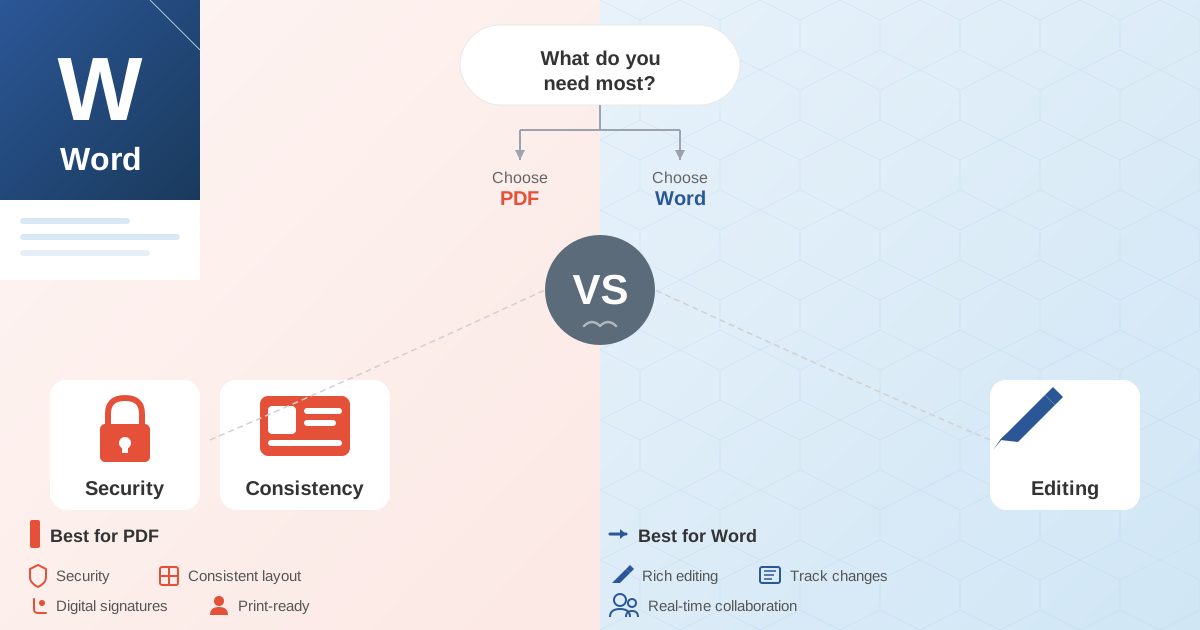
- Universal Accessibility: PDFs are the gold standard for document sharing. A PDF will look the same on any device, operating system, or screen size, ensuring your tables and data are displayed exactly as you intended.
- Professional Presentation: A well-formatted PDF looks clean and professional. You can control the layout, orientation, and presentation, turning a plain data file into a polished report.
- Enhanced Security: PDF files are inherently read-only, which prevents recipients from accidentally altering your data. You can also add further security like password protection, which is crucial for sensitive information.
- Print-Ready Format: PDFs are designed for printing. When you convert your CSV, you can set margins, page breaks, and scaling to ensure it prints perfectly, whether it's a one-page summary or a multi-page report.
- Compact and Easy to Share: PDFs are often smaller in file size than their spreadsheet counterparts, especially when dealing with complex formatting. This makes them easier to email and share online.
- Self-Contained: A PDF file contains all the necessary information, including fonts and images, within a single file. You don't have to worry about compatibility issues or missing components.
Common Challenges in CSV to PDF Conversion
Converting a grid of data into a paginated document isn't always a straightforward click-and-save process. Being aware of potential hurdles can help you choose the right method and achieve a better final product.
- Formatting and Layout: The biggest challenge is making a wide table fit onto a standard A4 or Letter page. Columns can get squished, and long text entries may be cut off.
- Large Datasets: A CSV with thousands of rows can result in a PDF that is hundreds of pages long. Managing page breaks, headers, and footers across all these pages is critical.
- Page Orientation: Many datasets have more columns than rows, making them better suited for a Landscape (horizontal) layout rather than the default Portrait (vertical).
- Data Truncation: If column widths are not adjusted properly, important data can be cut off or hidden, compromising the integrity of your report.
- Character Encoding: CSV files can use different character encodings (like UTF-8 or ANSI). An incorrect conversion can garble special characters, symbols, or text in foreign languages.
Method 1: The Easiest Way - Using a Free Online CSV to PDF Converter
For the vast majority of users, a dedicated online tool is the fastest, easiest, and most efficient way to convert CSV files to PDF. These tools are designed specifically for this task and handle many of the common challenges automatically.
At Practical Web Tools, we prioritize your privacy and efficiency. Our online converters work directly in your browser, meaning your files are not uploaded to a remote server for processing, or they are deleted from our servers within an hour. This ensures your data remains confidential.
How to Use an Online CSV to PDF Converter
Converting your file takes just a few clicks:
- Navigate to the Tool: Open the CSV to PDF converter tool in your web browser.
- Upload Your File: Click the 'Choose File' button and select the CSV file from your computer, or simply drag and drop it onto the page.
- Customize Your Options (Optional): Many converters, including ours, allow you to adjust settings. You can often choose the page size (A4, Letter), page orientation (Portrait, Landscape), and font size to best fit your data.
- Convert: Click the 'Convert' button to start the process. The tool will read your CSV, format it into a table, and generate a PDF document.
- Download: Once the conversion is complete, a download link for your new PDF file will appear. Click it to save the document to your device.
This method is ideal for quick, one-off conversions without the need to install any software. It's a lifesaver when you're on a device without spreadsheet software installed.
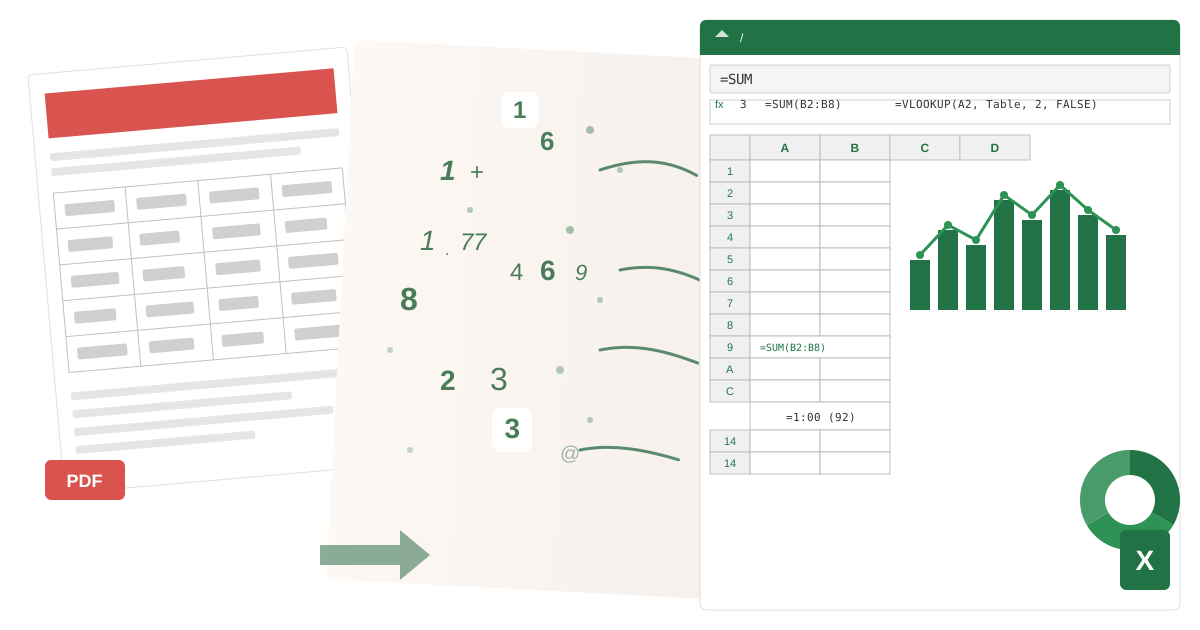
Sometimes, you have data locked inside a PDF table and need to get it out. For these situations, our PDF to Excel tool is the perfect solution for reversing the process, allowing you to extract tabular data for analysis.
Method 2: Converting CSV to PDF with Spreadsheet Software
If you already have spreadsheet software like Microsoft Excel, Google Sheets, or LibreOffice Calc, you can use their built-in features to export your data as a PDF. This method offers more manual control over formatting.
Using Microsoft Excel
Excel provides robust options for fine-tuning the appearance of your final PDF.
- Open your CSV file in Microsoft Excel. It should automatically parse the data into columns.
- Adjust Formatting: This is the most crucial step. Adjust column widths, apply text wrapping, and set font sizes to ensure everything is readable.
- Go to Page Layout: Use the 'Page Layout' tab to select 'Orientation' (Portrait or Landscape). Use the 'Scale to Fit' options to force the table to fit on a single page width or height.
- Print Preview: Go to
File > Print. This screen acts as a live preview of your PDF. You can adjust scaling and margins here until it looks right. - Save as PDF: Instead of printing, go to
File > Save As. From the 'Save as type' dropdown menu, select 'PDF (*.pdf)'. Click 'Save' to create the file.
Using Google Sheets
Google's cloud-based spreadsheet tool also makes this process simple.
- Open or import your CSV file into Google Sheets.
- Format the Sheet: Adjust column widths and other formatting as needed.
- Go to Download: Click on
File > Download > PDF document (.pdf). - Adjust Print Settings: A new screen will appear on the right with PDF export settings. Here you can control paper size, page orientation, scale (Fit to width, Fit to page), and margins.
- Export: Click the blue 'Export' button in the top right to download the generated PDF.
Comparing Methods: Online Tool vs. Spreadsheet Software
| Feature | Online Converter (Practical Web Tools) | Spreadsheet Software (Excel, Sheets) |
|---|---|---|
| Speed | Very fast for direct conversion | Slower; requires manual formatting |
| Convenience | High; no software needed | Medium; requires software installation |
| Customization | Good, with essential options | Excellent, with granular control |
| Privacy | High (browser-based or quick deletion) | High (files stay on your device) |
| Accessibility | Accessible from any web browser | Limited to devices with software |
Best Practices for a Perfect CSV to PDF Conversion
Follow these tips to ensure your data looks its best in the final PDF document.
- Clean Your Data First: Before converting, open the CSV and check for any inconsistencies, extra commas, or errors. A clean source file leads to a clean PDF.
- Use Clear Column Headers: The first row of your CSV should contain clear, concise headers. These will become the table headers in your PDF, making it easy to read.
- Choose the Right Page Orientation: For tables with many columns, a Landscape orientation is almost always the better choice. It gives your data more horizontal space and prevents cramping.
- Check the Preview: Always use the print preview function (in spreadsheet software) or review the output from an online tool before finalizing. This helps you catch any formatting errors or truncated text.
- Split Large Files if Necessary: If you have a CSV with tens of thousands of rows, the resulting PDF can be unwieldy. Consider splitting the CSV into logical chunks (e.g., by month, by region) and converting them into separate PDFs. You can always combine them later using a tool to Merge PDFs into a single, organized report.
- Mind Your Delimiters: While CSV stands for comma-separated, sometimes files use semicolons or tabs as delimiters. Ensure the tool or program you're using correctly identifies the delimiter to parse the columns properly.
Frequently Asked Questions (FAQ)
How do I convert a CSV to a PDF without losing formatting?
The best way is to use spreadsheet software like Excel or Google Sheets, where you can manually set column widths, text wrapping, and page scaling before exporting to PDF. This gives you maximum control over the final appearance.
Can I convert a large CSV file to PDF?
Yes. Most online converters and spreadsheet programs can handle large files. However, for extremely large files (over 100,000 rows), performance may vary. The main consideration is the final PDF's page count. It's often better to split the data or use scaling options to fit more data onto each page.
Is it safe to use online CSV to PDF converters?
It depends on the provider. You should always choose a service with a clear privacy policy. Privacy-focused services like Practical Web Tools process files in your browser or delete them from servers shortly after conversion, ensuring your data isn't stored or analyzed.
How can I make the CSV table fit on one PDF page?
In spreadsheet software, use the 'Scale to Fit' option in the Page Layout or Print settings. Select 'Fit all columns on one page'. In an online converter, choose a Landscape orientation and a smaller font size if available.
Conclusion: Your Go-To Solution for CSV to PDF
Converting CSV files to PDF is an essential skill for anyone who works with data. It transforms raw, messy data into professional, secure, and shareable documents. While spreadsheet programs offer deep customization, a reliable online converter is often the most practical solution for quick and secure conversions.
By understanding the process and following best practices, you can ensure your data is always presented in the best possible light. For your other document management needs, from extracting information with our PDF to Text tool to splitting large reports, Practical Web Tools provides a full suite of free and private utilities.
Ready to transform your data? Try our free and secure CSV to PDF converter today and see how easy it is to create professional documents in seconds!