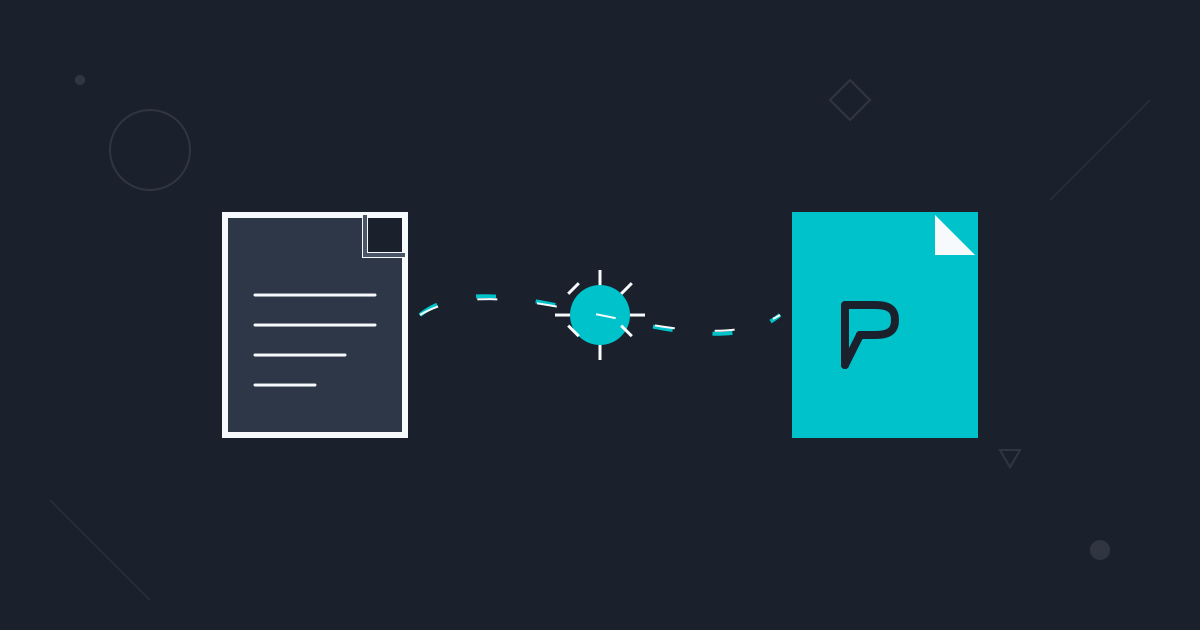
EPUB to FB2 Conversion: Your Complete Guide for E-Readers
Your Digital Bookshelf, Your Rules
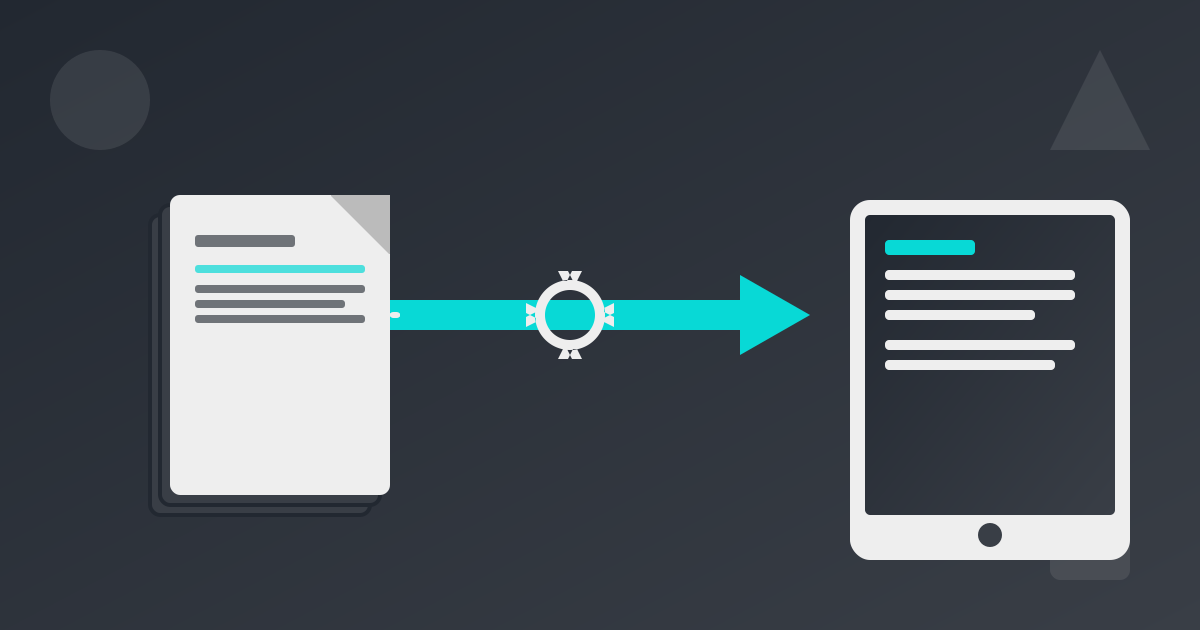
Imagine this: you've just found a fascinating ebook, a classic you've been meaning to read, or the latest bestseller. You download it, eager to dive in, only to find that your favorite e-reader refuses to open it. The file is in EPUB format, but your device stubbornly demands FB2. This common frustration highlights a small but significant hurdle in the world of digital reading: format incompatibility.
While EPUB is a global standard, many excellent e-readers, particularly brands like PocketBook, Onyx Boox, and others popular in certain regions, have a strong preference for the FB2 format. This doesn't mean your ebook collection is locked away. It just means you need the right key.
This comprehensive guide is that key. We'll demystify the EPUB and FB2 formats, explore exactly why you'd want to convert between them, and provide detailed, step-by-step instructions using different methods—from simple online tools to powerful desktop software. By the end, you'll be able to convert any EPUB to FB2 with confidence, ensuring your entire digital library is accessible whenever and wherever you want to read.
What are EPUB and FB2 Files? A Quick Comparison
Before we jump into the conversion process, it's helpful to understand what these file types actually are. They both serve the same ultimate purpose—displaying digital books—but they go about it in fundamentally different ways.
The EPUB Format: The Global Standard
EPUB, short for "Electronic Publication," is the most widely adopted ebook format in the world. Developed and maintained by the World Wide Web Consortium (W3C), it's an open, free-to-use standard. Think of an EPUB file not as a single document, but as a self-contained website packaged in a ZIP archive.
Inside an EPUB, you'll find:
- HTML files: These contain the text content of the book, chapter by chapter.
- CSS files: These control the styling—fonts, spacing, colors, and layout.
- Images and fonts: All visual assets are embedded within the package.
- Metadata: Information about the book, like the author, title, publisher, and cover image.
Because it's built on web technologies, EPUB excels at "reflowable content." This means the text can automatically adjust to fit any screen size, from a small smartphone to a large tablet, without breaking the layout. It's the standard format used by Kobo, Nook, Apple Books, and Google Play Books.
The FB2 Format: The XML-Based Favorite
FB2, or FictionBook, takes a different approach. Instead of being a package of multiple files, an FB2 file is a single, self-contained XML document. This structural simplicity is its greatest strength.
Key characteristics of FB2 include:
- Semantic Structure: FB2 uses XML tags to describe the structure of the book (e.g.,
<title>,<author>,<chapter>) rather than its visual presentation. The e-reader device is responsible for interpreting these tags and rendering the book according to its own settings. - Rich Metadata: All metadata, including the cover image, is embedded directly within the XML file itself. This makes FB2 files incredibly portable and easy for library management software to index and catalog.
- DRM-Free by Nature: The format was not designed with Digital Rights Management (DRM) in mind, which has made it a favorite in communities that champion DRM-free media.
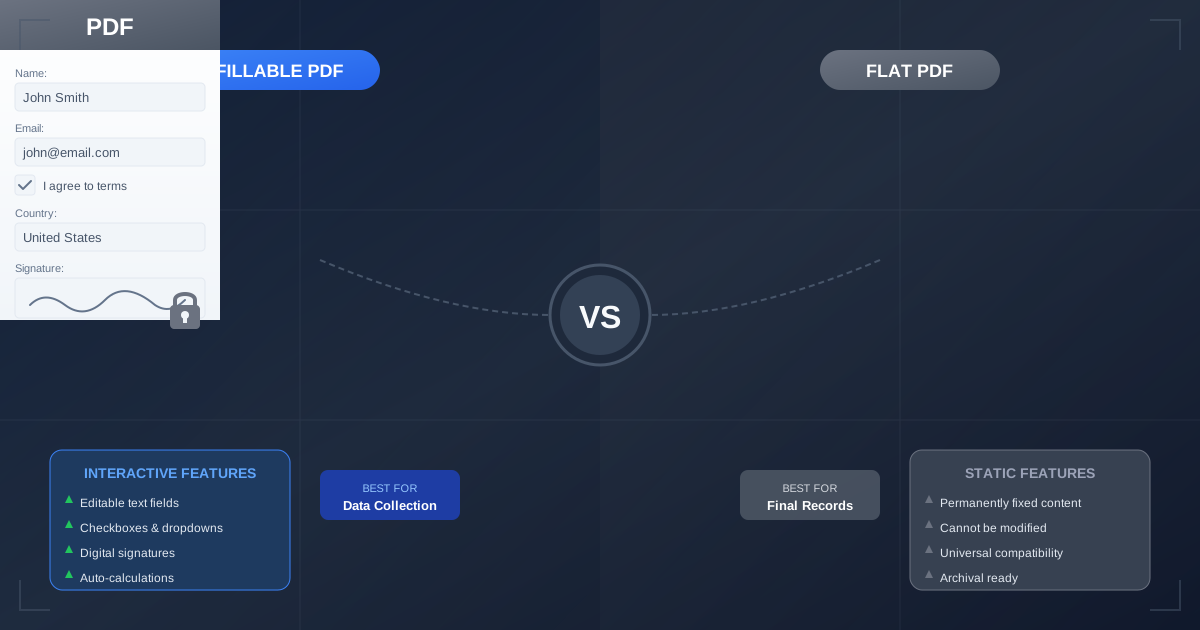
Head-to-Head: EPUB vs. FB2
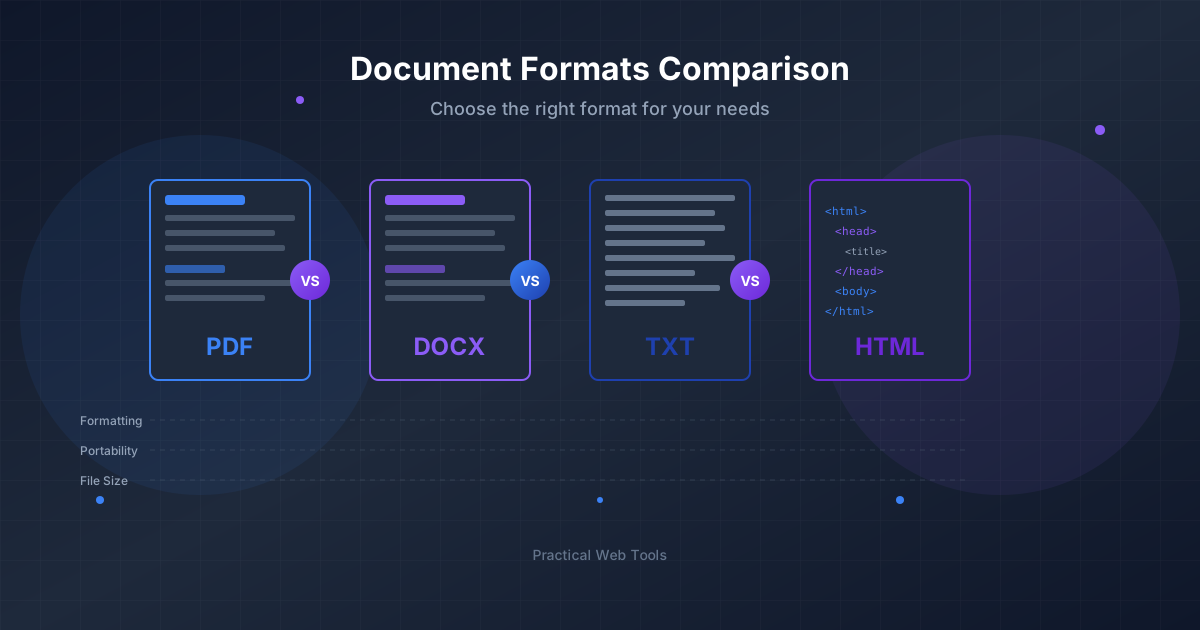
To make the differences crystal clear, here’s a simple comparison table:
| Feature | EPUB | FB2 |
|---|---|---|
| Underlying Tech | ZIP archive of HTML, CSS, etc. | Single XML file |
| Styling | Controlled by internal CSS | Controlled by e-reader interpretation of XML tags |
| DRM Support | Yes, commonly used | No, inherently DRM-free |
| Metadata | Stored in a separate OPF file | Embedded directly within the XML |
| Portability | High, but can be complex | Extremely high, fully self-contained |
| Common Devices | Kobo, Nook, Apple Books, Google Play | PocketBook, FBReader, Onyx Boox, Cool Reader |
Why Convert from EPUB to FB2?
With EPUB being the global standard, why bother converting to FB2? The reasons are practical and user-focused.
-
E-Reader Compatibility: This is the number one reason. If your beloved e-reader provides a superior reading experience with FB2 files or doesn't support EPUB at all (especially older models), converting is a necessity.
-
Superior Library Management: For users who are meticulous about their digital libraries, FB2's all-in-one structure is a significant advantage. The deeply embedded metadata ensures that the author, title, series information, and cover art travel with the file, no matter where it's moved or copied. This can prevent frustrating metadata mismatches in library software.
-
Creating a DRM-Free Archive: Many users wish to create personal backups of their purchased ebooks, free from DRM restrictions that could one day render them unreadable. Since FB2 is an inherently DRM-free format, converting your EPUBs (after legally removing DRM for personal use, where permitted) to FB2 is a great way to build a future-proof personal archive.
-
Consistency: If you own multiple devices that favor the FB2 format, converting your entire library to FB2 creates a consistent, uniform collection that works seamlessly across all of them.
How to Convert EPUB to FB2: Step-by-Step Methods
Now for the practical part. Converting your files is a straightforward process, and you have several excellent options depending on your needs.
Method 1: Using Online Converters (The Quick & Easy Way)
For converting a few files without installing any software, online converters are the perfect solution.
- Pros: No installation needed, works on any OS (Windows, macOS, Linux), simple drag-and-drop interface.
- Cons: Requires an internet connection, potential privacy concerns with your files, often has file size limits.
Step-by-Step Guide:
- Choose a Converter: Search for a reliable "EPUB to FB2 online converter." Prioritize websites that respect your privacy, like the tools offered here at Practical Web Tools.
- Upload Your File: Use the website's interface to upload your EPUB file. This is usually done with a button labeled "Choose File" or by dragging the file directly onto the webpage.
- Select Output Format: Ensure that FB2 is selected as the target format.
- Initiate Conversion: Click the "Convert" or "Start" button.
- Download the Result: Once the process is complete, a download link for your new FB2 file will appear. Download it and transfer it to your e-reader.
Method 2: Using Desktop Software (The Power User's Choice)
For anyone with a sizable ebook collection, desktop software is the undeniable champion. The undisputed king in this category is Calibre.
Calibre is a free, open-source, and incredibly powerful ebook management tool. It's a library, a converter, a metadata editor, and an e-reader sync tool all in one.
- Pros: Works offline, powerful batch conversion for multiple files, advanced customization of the output, total privacy, excellent metadata management.
- Cons: Requires software installation, might seem overwhelming for new users.
Step-by-Step Guide using Calibre:
- Download and Install: Go to the official Calibre website (calibre-ebook.com) and download the version for your operating system.
- Add Your EPUB: Launch Calibre. Click the "Add books" button in the top-left corner and select your EPUB file(s) to add them to your Calibre library.
- Select Your Book: In the main window, click on the book you wish to convert to highlight it.
- Open the Conversion Tool: Click the "Convert books" button in the top menu bar.
- Set the Output Format: A new window will pop up with a vast array of options. In the top-right corner, find the "Output format" dropdown menu and select FB2.
- Customize (Optional): This is where Calibre shines. You can go through the tabs on the left (Metadata, Look & Feel, Page Setup) to fine-tune the output. For most users, the default settings are perfect.
- Start the Conversion: Click the "OK" button at the bottom-right. The "Jobs" counter in the bottom-right corner will spin while Calibre works. Once it stops, the conversion is done.
- Access Your File: The FB2 file will now be available alongside the original EPUB in your Calibre library. You can right-click the book, go to "Open book folder," to find the file directly on your hard drive.
Method 3: Using Command-Line Tools (For the Tech-Savvy)
For those who are comfortable with the command line, Calibre also provides a powerful set of tools that can be used for scripting and automation. The primary tool is ebook-convert.
- Pros: Extremely fast, scriptable for automating large-scale conversions, no GUI needed.
- Cons: Requires command-line knowledge, no visual feedback.
Example Command:
Open your Terminal or Command Prompt and navigate to the folder containing your ebook. Then, run:
ebook-convert "My Awesome Book.epub" "My Awesome Book.fb2"
This command will instantly create an FB2 version of your book in the same folder.
Common Issues and Troubleshooting
Sometimes, conversions don't go perfectly. Here are some common problems and how to fix them.
- Formatting Looks Weird: If the converted FB2 file has strange spacing, missing italics, or other formatting errors, the issue is likely in the translation from EPUB's CSS to FB2's XML. In Calibre's conversion settings, under "Look & Feel," you can experiment with options like "Heuristic Processing" to improve the outcome.
- Missing Cover Art: If the cover doesn't appear on the FB2 file, use Calibre's "Edit metadata" feature before converting. Ensure a high-quality cover image is present and properly assigned.
- DRM-Protected EPUBs: Standard converters will fail if your EPUB is protected by DRM. You must legally remove the DRM for personal backup purposes before you can convert the file. This typically involves using a specific plugin for Calibre, but be sure to check your local laws regarding DRM circumvention.
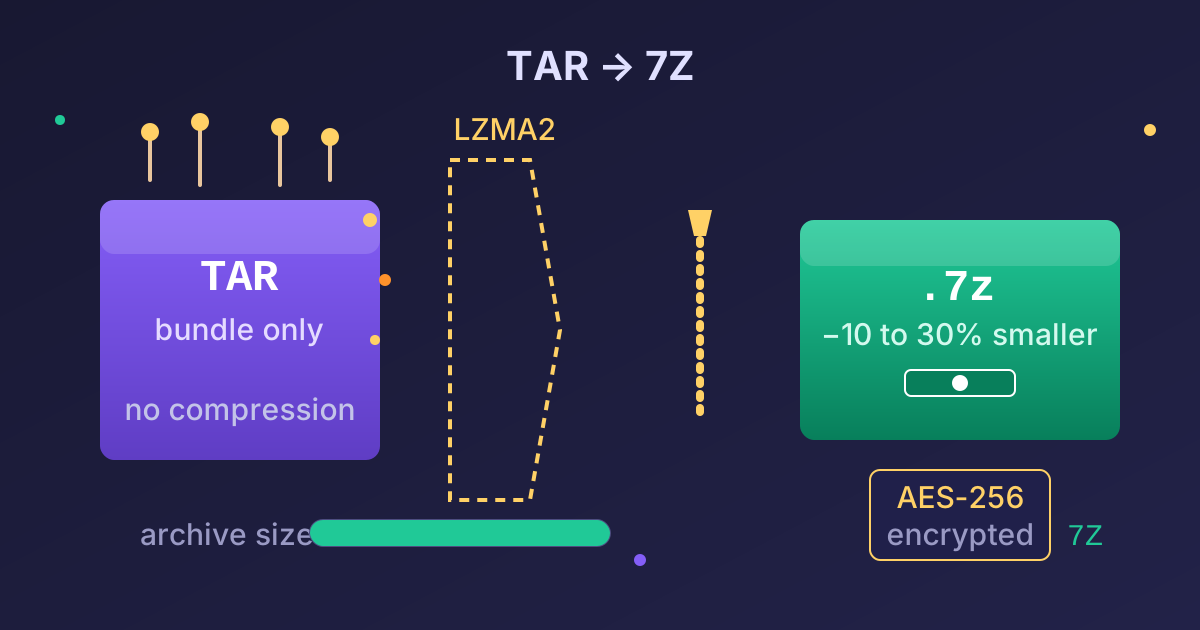
- Managing Large Libraries: After converting hundreds of books, you might have a massive folder of files. To save space or prepare for backup, it's a good idea to archive them. You can use a tool to Compress Files into a single, smaller package. If you download a collection of ebooks that are already in an archive, our Decompress Files tool can easily extract them for you. For even better long-term storage, consider converting standard ZIP archives to a more efficient format; a ZIP to 7Z converter can provide a higher compression ratio.
Best Practices for a Smooth Conversion
Follow this checklist to ensure a perfect conversion every time:
- Backup Your Originals: Always work on a copy of your ebook files. Never convert your only original.
- Clean Up Metadata First: Before you hit convert, use Calibre's metadata editor to fix the title, author, series info, and cover. This ensures the output FB2 is perfect from the start.
- Run a Test: If you're batch converting a series, convert one book first. Check the output file on your e-reader to make sure the settings are correct before converting the rest.
- Verify the Final Product: Don't just assume the conversion worked. Open the FB2 file and flip through a few pages to check the formatting, chapter breaks, and cover art.
Conclusion
Navigating the world of ebook formats doesn't have to be complicated. While EPUB and FB2 serve different ecosystems, the bridge between them is well-established and easy to cross. Whether you need a quick one-off conversion using an online tool or a powerful, offline solution like Calibre to manage a massive library, you now have all the information you need to make your ebooks work for you.
By taking control of your digital library, you ensure that you can read what you want, on the device you love, without any technical barriers. So go ahead, convert those files, and unlock the full potential of your digital bookshelf.
Ready to tackle more file management challenges? Explore the wide range of free, privacy-focused utilities at Practical Web Tools to handle all your file conversion and management needs.