EPUB to PDF: The Ultimate 2024 Conversion Guide

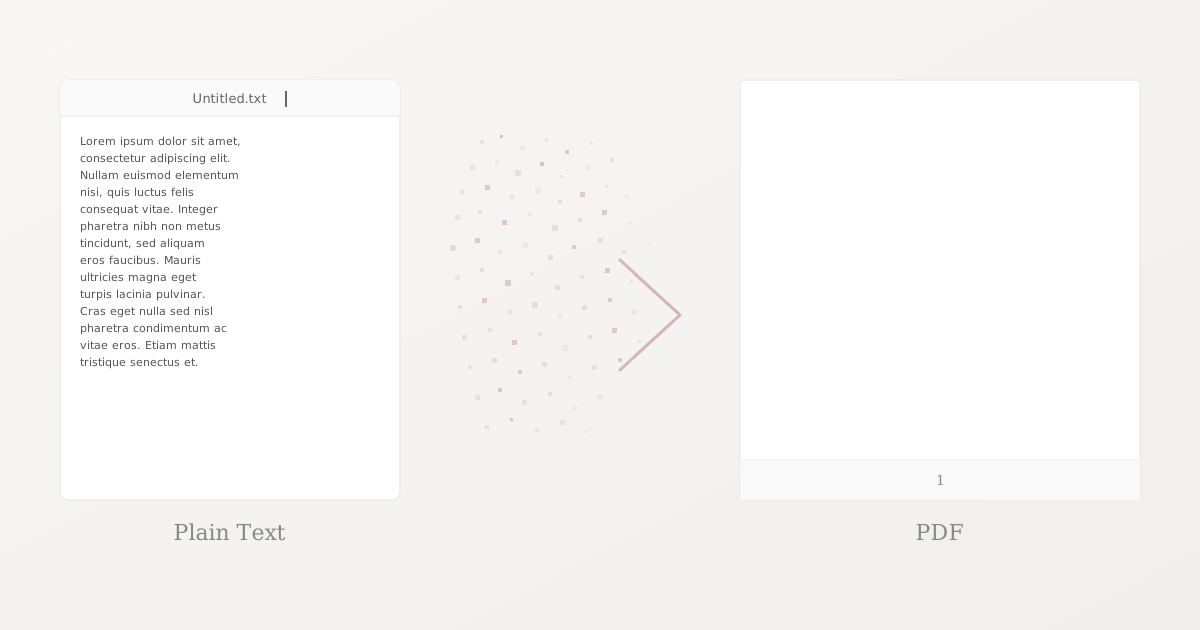
You've got a fantastic ebook in EPUB format, perfect for your e-reader. But now you need to print a chapter for a class, share a section with a colleague who doesn't have an e-reader, or simply archive it in a universal format. Suddenly, the flexible EPUB format feels more like a limitation. What do you do?
This is a common scenario, and the solution is converting your EPUB file to a PDF. While it sounds simple, the process can be fraught with formatting errors, quality loss, and confusing software. This guide is here to change that. We'll walk you through everything you need to know, from understanding the core differences between the formats to mastering the best conversion methods, ensuring your documents look perfect every time.
EPUB vs. PDF: Understanding the Key Differences
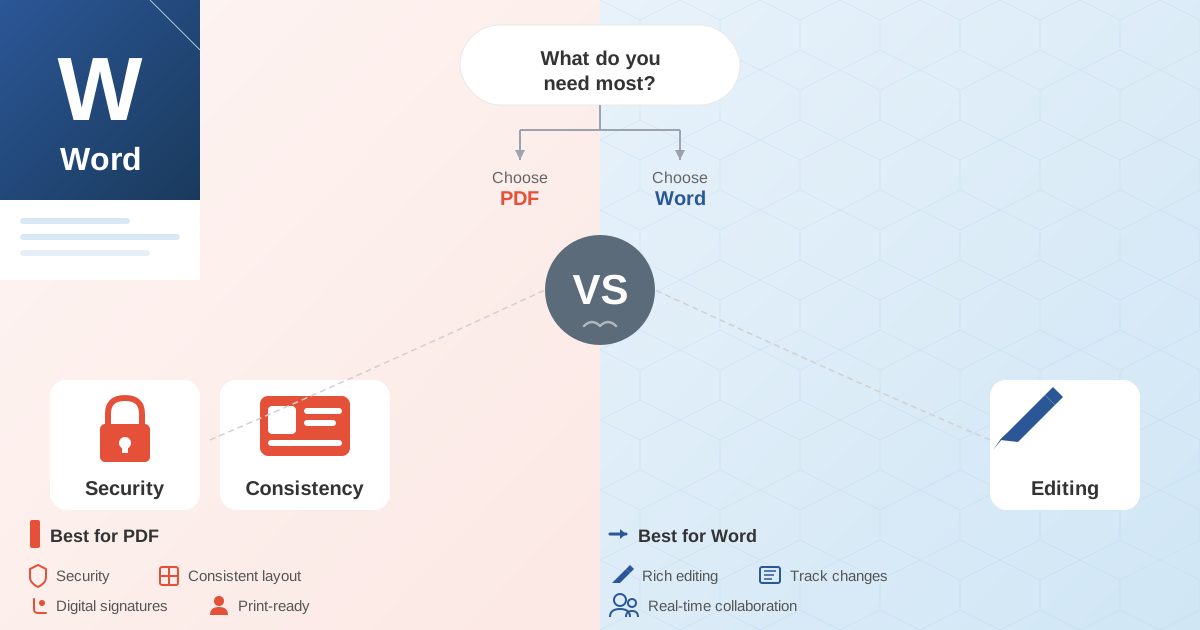
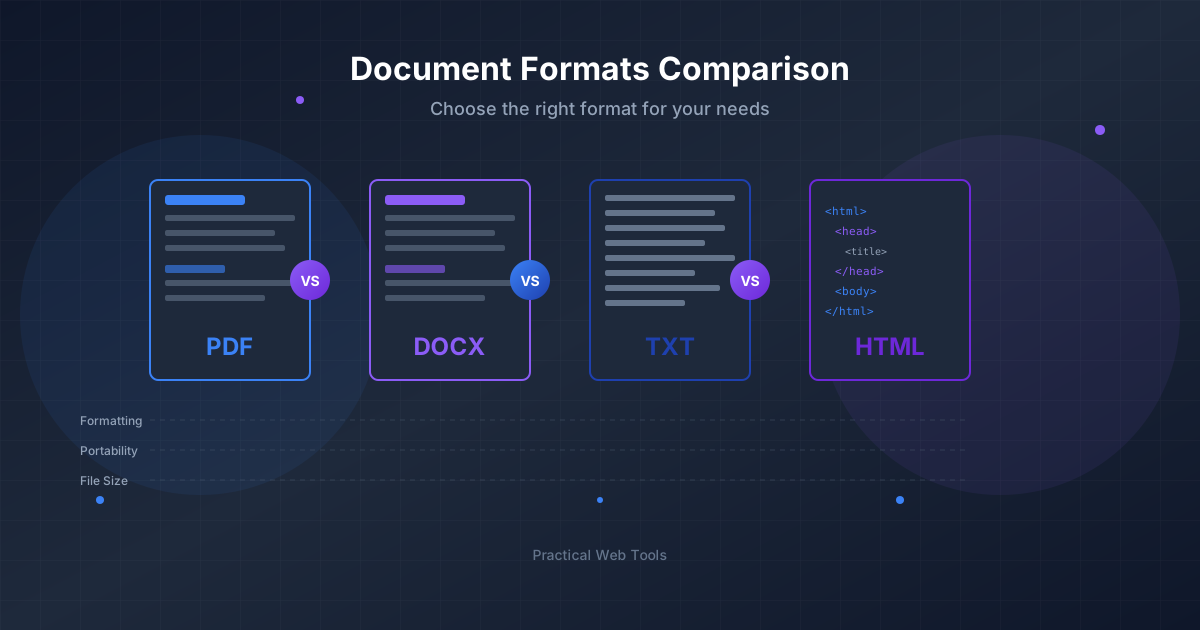
Before we dive into the 'how,' let's quickly cover the 'what' and 'why.' EPUB and PDF are two of the most popular document formats, but they are designed for fundamentally different purposes. Understanding this is key to choosing the right format for your needs.
| Feature | EPUB (Electronic Publication) | PDF (Portable Document Format) |
|---|---|---|
| Layout | Reflowable | Fixed |
| Best For | E-readers, mobile devices | Printing, professional documents |
| Flexibility | Text and images adapt to screen size | Layout is static, like a printed page |
| Editing | Difficult without specific tools | Difficult, but has robust annotation |
| Accessibility | High (adjustable font sizes, etc.) | Varies (can be inaccessible if just an image) |
| Software | Requires an e-reader app or device | Can be opened by nearly any device/browser |
What is an EPUB?
Think of an EPUB file as a website packaged into a single file. It uses HTML, CSS, and XML to structure content. Its greatest strength is its reflowable text. This means the text automatically adjusts to fit the size of your screen, allowing you to change font sizes and line spacing for a comfortable reading experience on anything from a small phone to a large tablet.
What is a PDF?
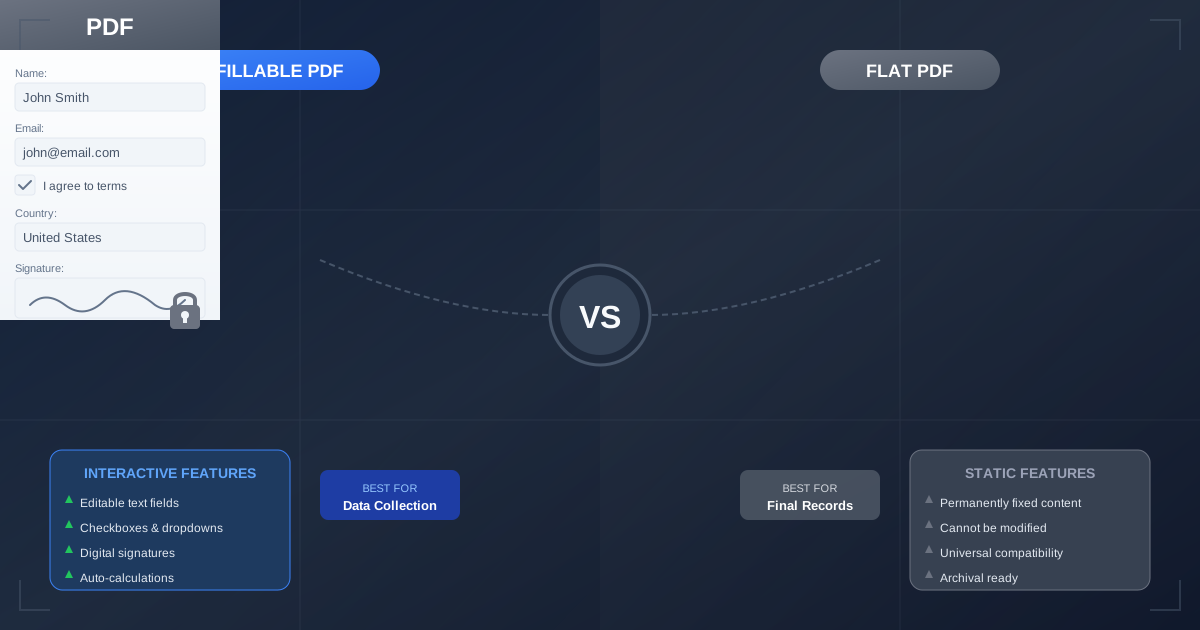
Developed by Adobe, the PDF is a digital snapshot of a printed page. Its layout is fixed. Whether you open it on a phone, a laptop, or a 30-inch monitor, the text, images, and margins will remain in the exact same position. This makes PDF the gold standard for anything that needs to be printed or shared with the guarantee that everyone sees the exact same thing.
Why Convert EPUB to PDF? Top 4 Reasons
Now that you know the difference, the reasons for converting become clear. Here are the most common use cases:
- Printing and Physical Copies: If you need to print your ebook, PDF is the only reliable choice. It preserves page breaks, margins, and formatting, ensuring your printed copy looks exactly as intended.
- Universal Sharing and Compatibility: Not everyone has an e-reader or the software to open an EPUB file. A PDF, on the other hand, can be opened by virtually any web browser, operating system, and device without any special software.
- Archiving and Long-Term Storage: The fixed nature of PDFs makes them ideal for archiving. The PDF/A (Archival) standard is used by libraries and institutions worldwide to preserve digital documents for the long term.
- Annotations and Professional Use: PDFs have robust support for commenting, highlighting, and annotations. This is crucial for academic review, business collaboration, or simply taking notes on a document without altering the original text.
How to Convert EPUB to PDF: 3 Proven Methods
There are several ways to tackle this conversion, each with its own pros and cons. We'll cover the three most effective methods, from the quickest online tools to powerful desktop software.
Method 1: Online Converters (The Quick & Easy Way)
For a one-off conversion where you don't want to install any software, online converters are an excellent choice.
Pros:
- Fast and Convenient: Simply upload your file, click a button, and download the result.
- No Installation: Accessible from any device with a web browser.
- Free: Most online converters are free for basic use.
Cons:
- Privacy Concerns: You're uploading your file to a third-party server. For sensitive documents, this is not recommended.
- File Size Limits: Free services often have restrictions on the size of the EPUB file you can upload.
- Limited Customization: You usually have little to no control over the output formatting (margins, font size, etc.).
How to Use an Online Converter (General Steps):
- Search for a reputable "EPUB to PDF online converter."
- Navigate to the website.
- Click the "Upload" or "Choose File" button and select your EPUB file.
- Ensure the output format is set to "PDF."
- Click the "Convert" button and wait for the process to complete.
- Download your newly created PDF file.
At Practical Web Tools, we prioritize user privacy. While we don't currently offer an EPUB converter, we encourage you to use services that respect your data. Always check the privacy policy of any online tool you use.
Method 2: Calibre (The Power User's Choice)
If you deal with ebooks regularly, Calibre is an indispensable, free, and open-source tool. It's a complete ebook library management software that includes a powerful, highly customizable converter.
Pros:
- Complete Control: You can customize page size, margins, fonts, headers, footers, and even the table of contents.
- High-Quality Output: Calibre's conversion engine is excellent at preserving formatting.
- Offline and Secure: Everything is done on your computer, so your files remain private.
- Batch Conversion: Convert multiple EPUBs to PDFs at once.
- More Than a Converter: It's also a fantastic ebook reader, organizer, and editor.
Cons:
- Requires Installation: You need to download and install the software.
- Learning Curve: With so many options, it can seem intimidating at first.
Step-by-Step Guide to Using Calibre:
- Download and Install Calibre: Visit the official Calibre website (calibre-ebook.com), download the version for your operating system (Windows, macOS, or Linux), and follow the installation instructions.
- Add Your EPUB to the Library: Open Calibre. Click the large "Add books" button in the top-left corner and select your EPUB file. It will appear in your library list.
- Start the Conversion: Select the book you just added and click the "Convert books" button in the top toolbar.
- Set the Output Format: A new window with numerous options will open. In the top-right corner, find the "Output format" dropdown menu and select PDF.
- Customize the Output (The Important Part): This is where Calibre shines. On the left-hand menu, you can fine-tune the conversion:
- Look & Feel: Change the base font size and embed specific fonts.
- Page Setup: This is crucial. Set the "Output profile" to match your intended device (e.g., "Default Profile" for printing on standard paper) and choose your desired paper size (e.g., Letter, A4) and margins.
- Table of Contents: Ensure "Insert table of contents" is checked if you want a clickable TOC in your PDF.
- PDF Output: Here you can set image compression quality to manage file size.
- Run the Conversion: Once you're happy with your settings, click "OK" at the bottom-right. The conversion will start. You can see the progress in the "Jobs" indicator at the bottom-right of the main Calibre window.
- Access Your PDF: When the job is complete, select the book in your library again. On the right-hand side panel, under "Formats," you will see a blue "PDF" link. Click it to open your new file.
Method 3: Using a 'Print to PDF' Function
If you have an application that can open EPUBs (like some e-reader apps or browser extensions), you can often use your operating system's built-in virtual printer to create a PDF.
How it works on Windows & macOS:
- Open your EPUB file in a compatible application.
- Go to the "File" menu and select "Print" (or use the shortcut Ctrl+P / Cmd+P).
- In the print dialog box, instead of selecting a physical printer, choose "Microsoft Print to PDF" (on Windows) or look for a "PDF" dropdown menu in the bottom-left (on macOS) and select "Save as PDF."
- Click "Print" or "Save," choose a file name and location, and your EPUB will be saved as a PDF.
This method is quick but offers less control over formatting than Calibre. It essentially creates a PDF based on how the application displays the EPUB for printing.
Common Conversion Challenges and Solutions
Sometimes, the conversion process isn't perfect. Here are some common issues and how to fix them.
-
Problem: Bad Formatting or Layout Issues.
- Solution: This often happens with simple online converters. The best solution is to use Calibre and meticulously adjust the Page Setup and Look & Feel settings. Experimenting with different output profiles and margin sizes can solve most layout problems.
-
Problem: DRM-Protected Files Won't Convert.
- Solution: DRM (Digital Rights Management) is a form of copy protection. Most converters, including Calibre, cannot and will not process DRM-protected files. You must have the legal right to convert the file. This guide is intended for converting DRM-free or personally created EPUBs.
-
Problem: The Final PDF File is Too Large.
- Solution: This is usually caused by high-resolution images within the EPUB. In Calibre, go to the PDF Output settings during conversion and lower the "JPEG image quality" setting. A value between 70-80 usually provides a good balance of size and quality.
-
Problem: The Table of Contents is Missing.
- Solution: In Calibre's conversion settings, navigate to the Table of Contents section and ensure that the "Insert table of contents" box is checked. You can also fine-tune how it's generated here.
Post-Conversion: Power Up Your New PDF
Creating the PDF is just the first step. Once you have it, a world of possibilities opens up, and Practical Web Tools has the free, privacy-focused tools to help you manage it.
-
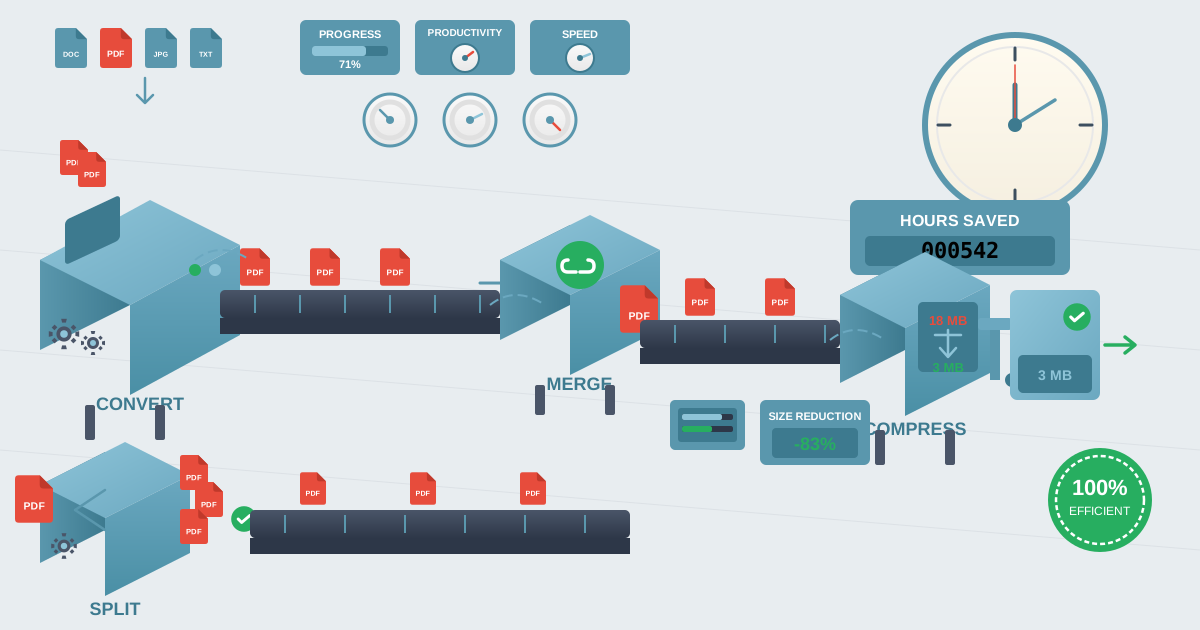
Combine Documents: Did you convert a book chapter by chapter? You can easily combine them into a single, cohesive document. Use a simple tool to Merge PDFs into one file.
-
Extract Key Sections: If your converted PDF is a massive textbook, but you only need a specific chapter, you don't have to keep the whole file. A Split PDF tool lets you extract just the pages you need.
-
Make Edits or Repurpose Content: PDFs are famously difficult to edit. If you need to make significant changes to the text or repurpose it for another document, your best bet is to convert it to an editable format. A PDF to Word converter is perfect for this task, allowing you to edit freely.
Conclusion
Converting an EPUB to a PDF bridges the gap between flexible e-reading and universal, stable document sharing. While online converters offer a quick fix, investing a little time to learn a powerful tool like Calibre gives you complete control over the final product, ensuring a professional and high-quality result every time.
By choosing the right method for your needs and knowing how to troubleshoot common issues, you can transform your ebook library into a versatile collection of documents ready for printing, sharing, and archiving.
Now that you're a PDF conversion pro, explore our full suite of free PDF tools to merge, split, sign, and convert your documents with ease and confidence, all while keeping your data private.