How to Convert DOCX to TXT: The Ultimate Guide (2024)

In a world of rich text, complex layouts, and embedded media, the humble plain text file (.txt) might seem like a relic from a bygone era. Yet, its power lies in its simplicity. Converting a formatted Microsoft Word document (.docx) to a plain text file is a common and incredibly useful task for everyone from developers and data analysts to writers and researchers.
But why would you want to strip away all that beautiful formatting? And what's the best way to do it without losing important information? This comprehensive guide will walk you through everything you need to know about DOCX to TXT conversion. We'll explore the 'why,' the 'how,' and the potential pitfalls to avoid, ensuring you can harness the power of plain text for any project.
What's the Difference Between DOCX and TXT?
Before diving into the conversion methods, it's crucial to understand what you're working with.
-
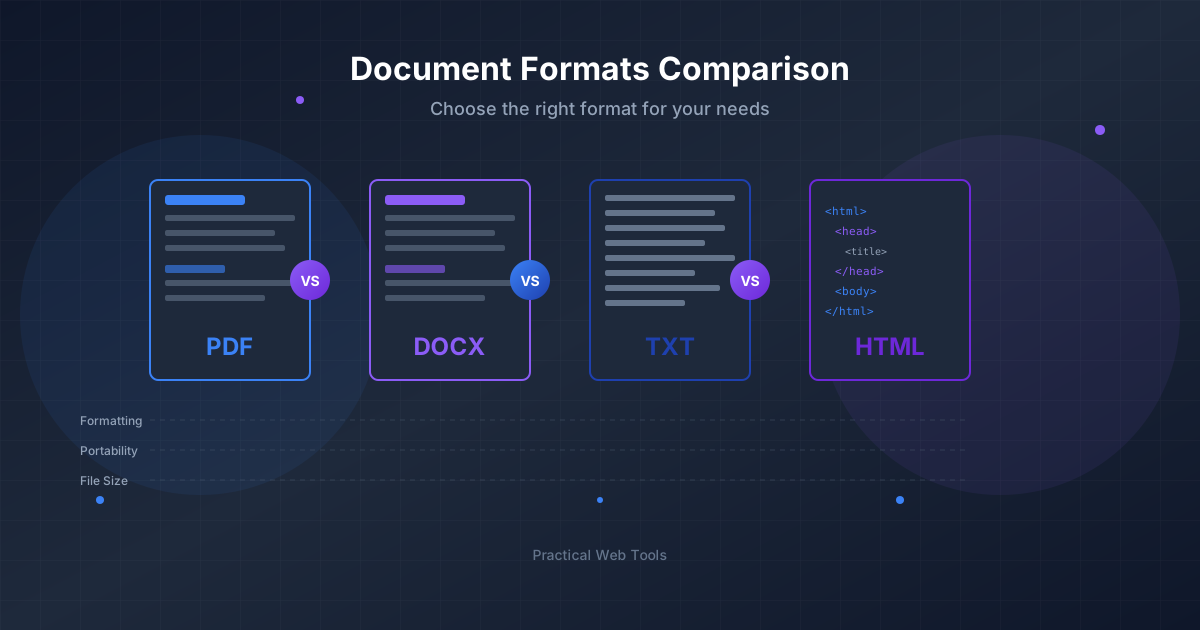
DOCX (Office Open XML Document): This is the default format for Microsoft Word. It's essentially a zip archive containing multiple files and folders, including XML files that define the document's structure, formatting (fonts, colors, spacing), images, objects, and metadata. It's designed for creating visually rich, printable documents.
-
TXT (Plain Text File): This is the simplest possible text format. It contains only raw, unformatted text characters. There are no fonts, no bolding, no images, and no layout information. Its universal compatibility is its greatest strength.
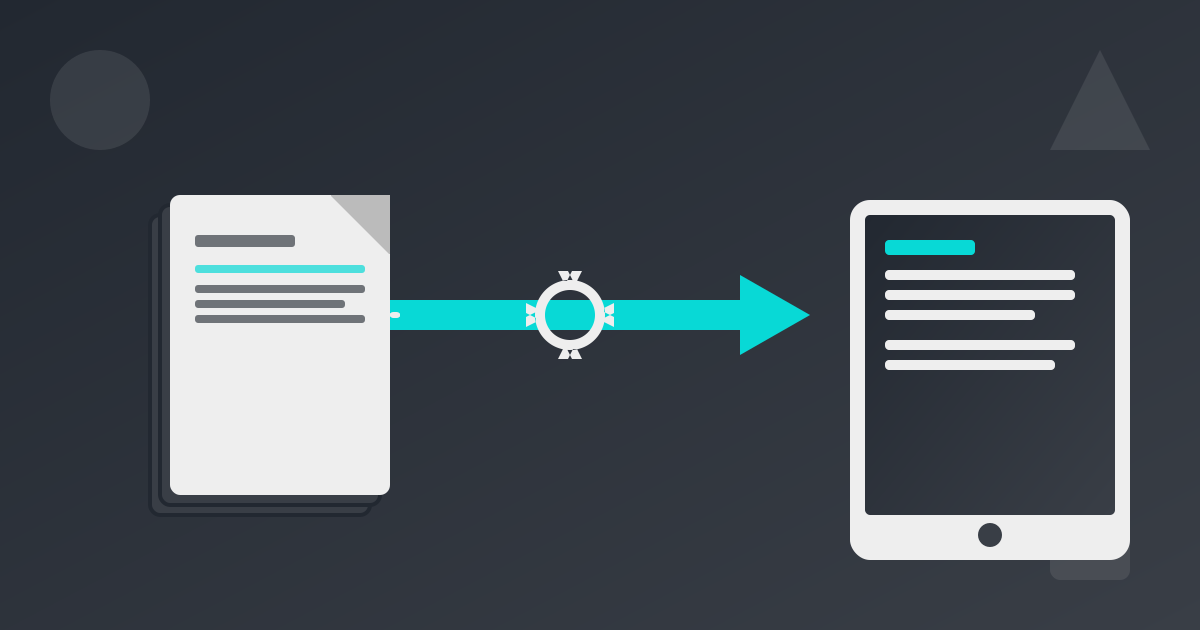
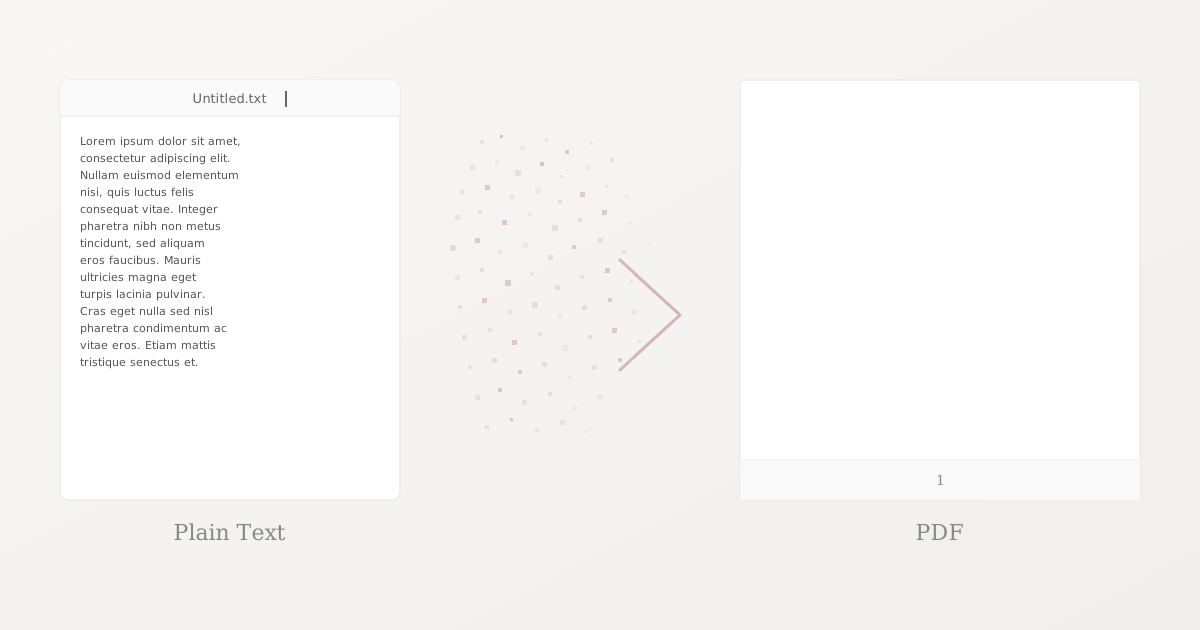
Converting from DOCX to TXT means stripping away the entire presentation layer to isolate the core textual content.
Why Convert DOCX to TXT? Key Use Cases
Stripping a document down to its bare essentials has numerous practical applications. Here are some of the most common reasons to convert your Word files to plain text.
-
Universal Compatibility: A .txt file can be opened and read on virtually any device, operating system, or application, from a modern smartphone to a 30-year-old computer, without any special software.
-
Data Processing and Analysis: If you're using text for Natural Language Processing (NLP), machine learning, or data analysis, you need clean, raw text. Formatting, images, and special characters interfere with algorithms that analyze word frequency, sentiment, or patterns.
-
Coding and Development: Developers frequently use plain text for source code, configuration files (
.ini,.conf,.yml), markdown documentation, and log files. Rich text formatting would break these files. -
Reducing File Size: TXT files are incredibly lightweight and small compared to their DOCX counterparts, making them easy to store, share via email, or transfer quickly.
-
Future-Proofing and Archiving: Technology changes, but plain text is eternal. Archiving important documents as .txt ensures they will be readable decades from now, long after specific software versions become obsolete.
-
Removing Hidden Metadata: DOCX files can contain hidden information, such as author names, revision history, and other metadata. Converting to TXT completely removes this, enhancing privacy and security.
-
Website Content and CMS: When pasting content into a Content Management System (CMS) like WordPress, pasting directly from Word can carry over messy, unwanted HTML styling. Converting to plain text first ensures a clean paste.
How to Convert DOCX to TXT: 4 Easy Methods
Ready to get started? Here are four reliable methods to convert your files, ranging from using everyday software to powerful online tools.
Method 1: Using Microsoft Word
If you have Microsoft Word installed, this is the most direct method. It gives you control over the final output, particularly the character encoding.
- Open Your File: Launch Microsoft Word and open the .docx document you want to convert.
- Navigate to Save As: Click on the File tab in the top-left corner, then select Save As.
- Choose Location: Select the folder where you want to save your new text file.
- Select Plain Text Format: In the "Save As" dialog box, click the dropdown menu next to Save as type. Scroll down and select Plain Text (*.txt).
- Rename and Save: You can give the file a new name if you wish, then click Save.
- Handle the File Conversion Dialog: A new window titled "File Conversion" will likely appear. This is where you can select the text encoding. For maximum compatibility with modern systems and web applications, it's almost always best to choose UTF-8. Click OK.
Your plain text file is now saved and ready to use.
Method 2: Using Google Docs (Free & Cloud-Based)
If you don't have Microsoft Word or prefer working in the cloud, Google Docs is an excellent free alternative.
- Upload to Google Drive: Go to your Google Drive and upload the .docx file.
- Open with Google Docs: Right-click on the uploaded file and select Open with > Google Docs. The file will open in the Google Docs editor.
- Download as Plain Text: In the Google Docs menu, go to File > Download > Plain Text (.txt).
- Save the File: Your browser will automatically download the .txt version of your document to your default downloads folder.
This method is fantastic for its convenience and accessibility from any device with an internet connection.
Method 3: Using the Copy-and-Paste Technique
This low-tech but effective method works with any text editor, like Notepad on Windows or TextEdit on macOS.
- Open and Copy: Open your .docx file in Microsoft Word, Google Docs, or another word processor. Select all the text (Ctrl+A on Windows, Cmd+A on Mac) and copy it to your clipboard (Ctrl+C or Cmd+C).
- Open Your Text Editor: Launch your preferred plain text editor (e.g., Notepad).
- Paste the Text: Paste the copied content into the new, blank file (Ctrl+V or Cmd+V). All formatting will be instantly stripped away.
- Save the File: Go to File > Save and save the document with a
.txtextension.
Pro-Tip for Mac Users: If using TextEdit, make sure you're in plain text mode. You can force this by going to Format > Make Plain Text before pasting.
Method 4: Leveraging Online Tools for All Document Needs
For quick, one-off conversions without opening any software, online tools are a great choice. While Practical Web Tools focuses on privacy and simplicity, it's important to be cautious with sensitive documents on other platforms.
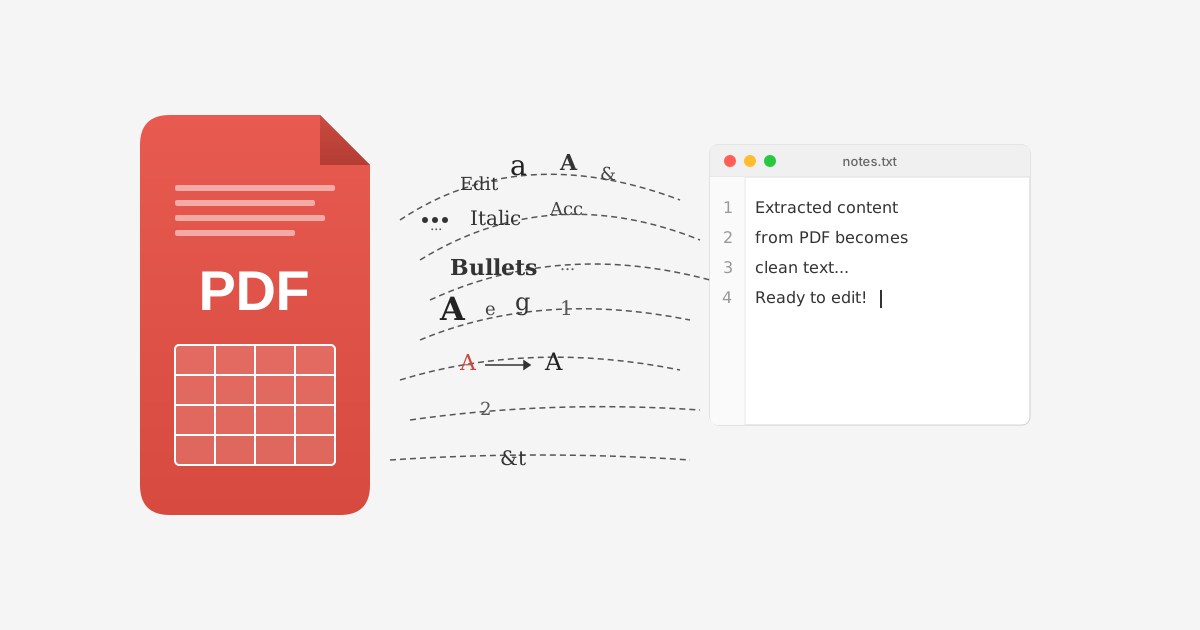
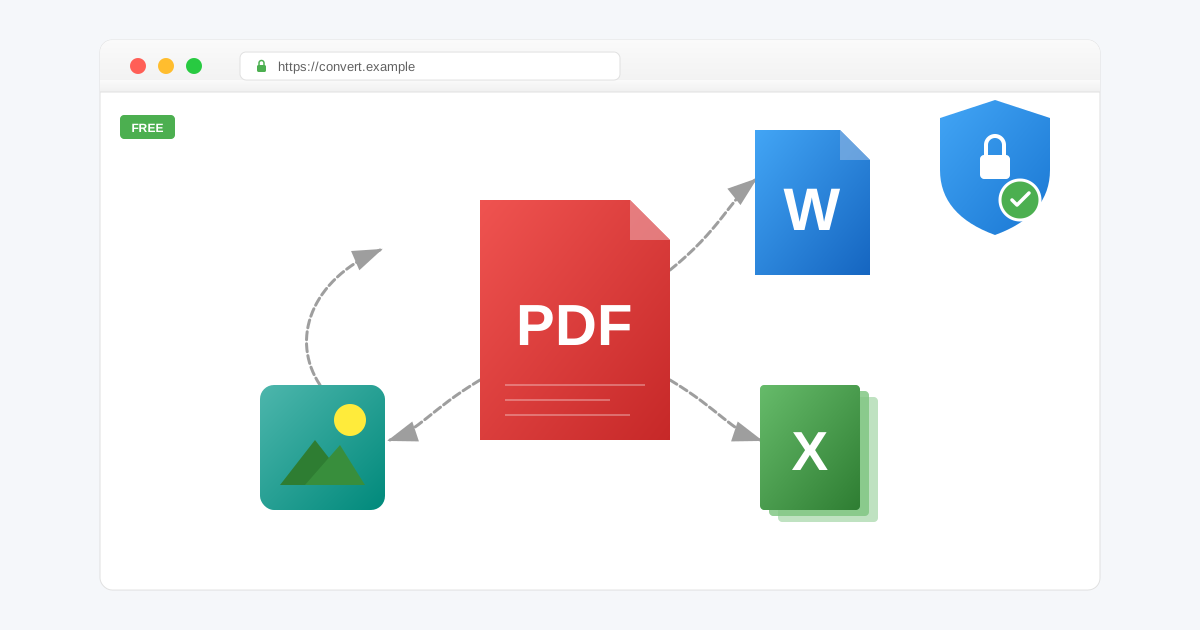
Our suite of tools is designed to handle a variety of document management tasks securely. For instance, sometimes your source text isn't in a DOCX but locked inside a PDF. In that scenario, our free PDF to Text tool is the perfect solution. It directly extracts the text content from a PDF, achieving the same goal.
Similarly, if you receive a document as a PDF but need to edit it before converting it to plain text, a common workflow is to first convert the PDF to a Word document. You can easily do this with a reliable PDF to Word converter and then use Method 1 above to save the final version as a .txt file.
Comparison of Conversion Methods
To help you choose the best option, here's a quick comparison table.
| Method | Best For | Pros | Cons |
|---|---|---|---|
| Microsoft Word | Users with MS Office | Highest fidelity control, handles encoding options | Requires paid software |
| Google Docs | Cloud-based workflows | Free, accessible anywhere, easy to use | Requires Google account and internet |
| Copy & Paste | Simple documents, quick formatting strip | Universal, forces plain text formatting | Manual, can lose some text structure (like tables) |
| Online Tools | Quick, one-off tasks with various formats | No software needed, convenient for all file types | Must choose a privacy-focused service |
Potential Issues and Advanced Considerations
Converting from a rich format to a simple one isn't always a one-to-one process. Here’s what you need to watch out for.
What You Will Lose
- Text Formatting: All bold, italics, underlining, colors, fonts, and text sizes will be gone.
- Images and Objects: All embedded images, charts, graphs, and shapes will be completely removed.
- Layout and Structure: Headers, footers, page numbers, columns, and text boxes will be discarded. The text will be rendered as a single, continuous block.
- Tables: The content of tables will usually be preserved, but the grid structure will be lost. The data is often converted using tabs or commas to separate the cells, which can look messy and may require manual cleanup.
- Hyperlinks: The clickable link will be gone. In most cases, the visible URL text will be preserved, but the underlying link will be removed.
Understanding Character Encoding
When you save a file from Word, you're prompted to choose an encoding. This setting tells the computer how to interpret the bytes in the file as characters.
- ASCII: An older, limited standard that only includes English letters, numbers, and basic punctuation.
- UTF-8: The modern standard for the web. It can represent virtually any character from any language in the world, including emojis. You should almost always choose UTF-8 to ensure that special characters (like accented letters, symbols, etc.) are preserved correctly.
Conclusion: Embrace Simplicity
The conversion from DOCX to TXT is more than just a file format change; it's a strategic move toward compatibility, efficiency, and data purity. Whether you're a developer preparing data for a script, a writer submitting an article, or just someone looking to archive a document in a universally readable format, knowing how to perform this conversion is an essential skill.
By using the methods outlined above—from the built-in functions of Microsoft Word and Google Docs to the versatility of online tools—you can confidently and easily transform any Word document into clean, portable, and powerful plain text.
Ready to take control of your other document workflows? Explore our full suite of free and privacy-focused document tools. Whether you need to Merge PDFs into a single file or split a large report, Practical Web Tools has a simple solution for you.