PDF to EPUB: The Ultimate Ebook Conversion Guide
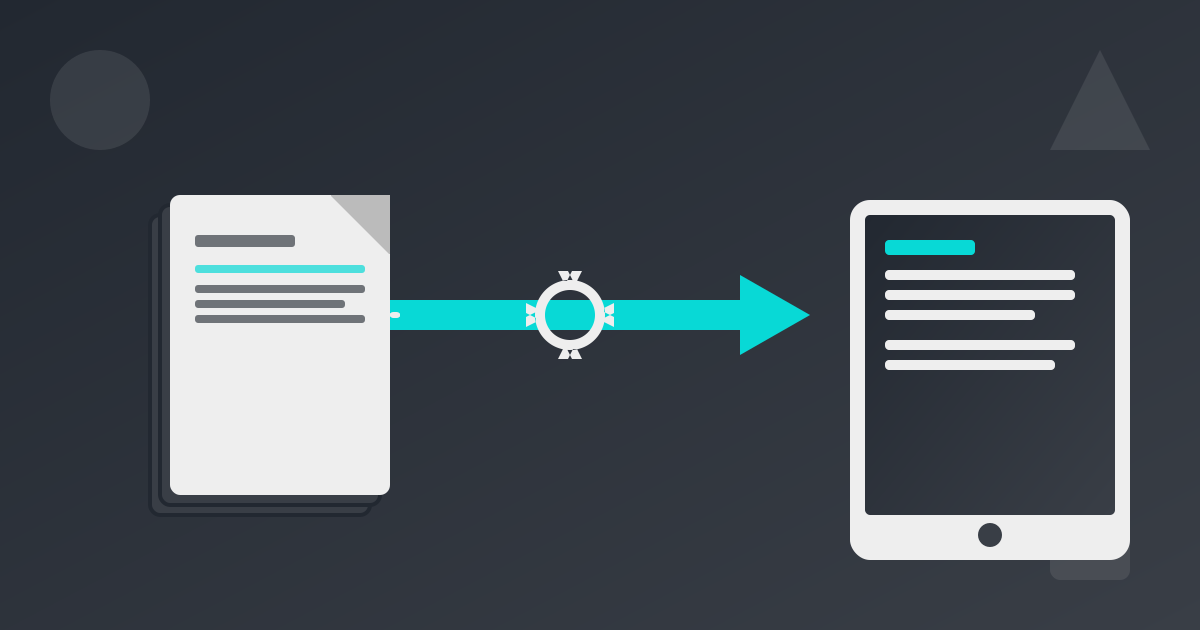
Have you ever tried to read a detailed report, a textbook, or your favorite novel in PDF format on your phone or e-reader? You know the struggle: constant pinching, zooming, and scrolling sideways just to read a single line of text. It's a clunky, frustrating experience that can ruin an otherwise great book. This is because PDFs are digital prints—static snapshots of a page. But what if there was a better way?
Enter the EPUB format. Designed specifically for digital screens, EPUB is the gold standard for ebooks, offering a fluid, responsive reading experience that adapts to your device. This comprehensive guide will walk you through everything you need to know to convert your PDFs into perfectly formatted EPUB ebooks. We'll explore the best tools, troubleshoot common problems, and give you the pro tips you need to achieve a flawless conversion.
Why Convert PDF to EPUB? The Core Differences
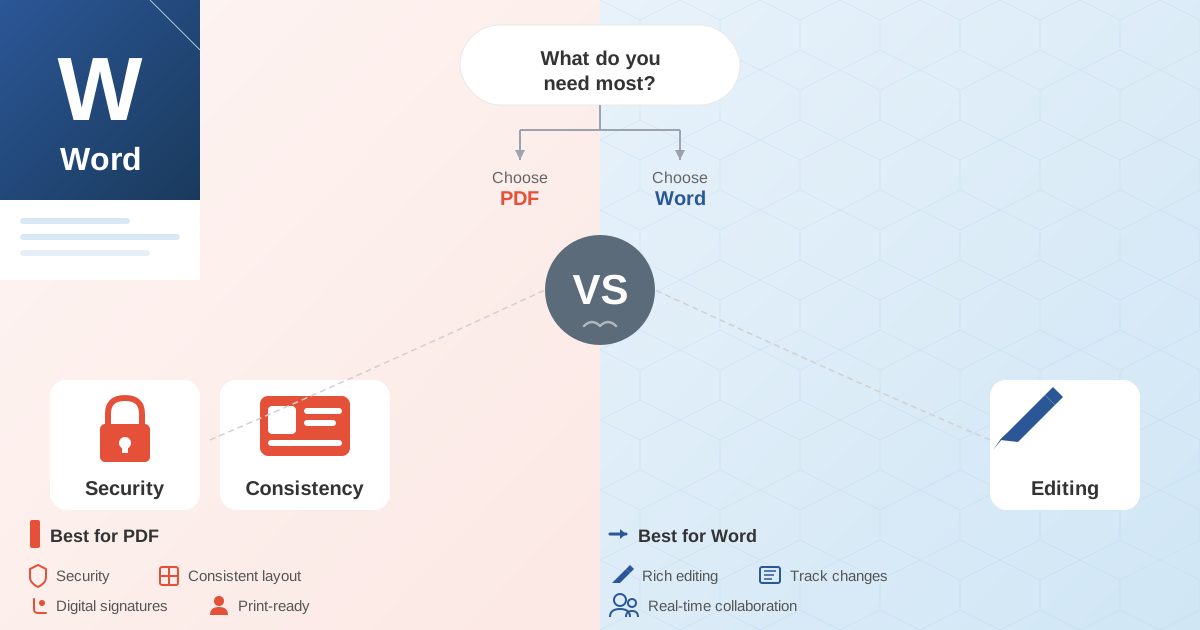
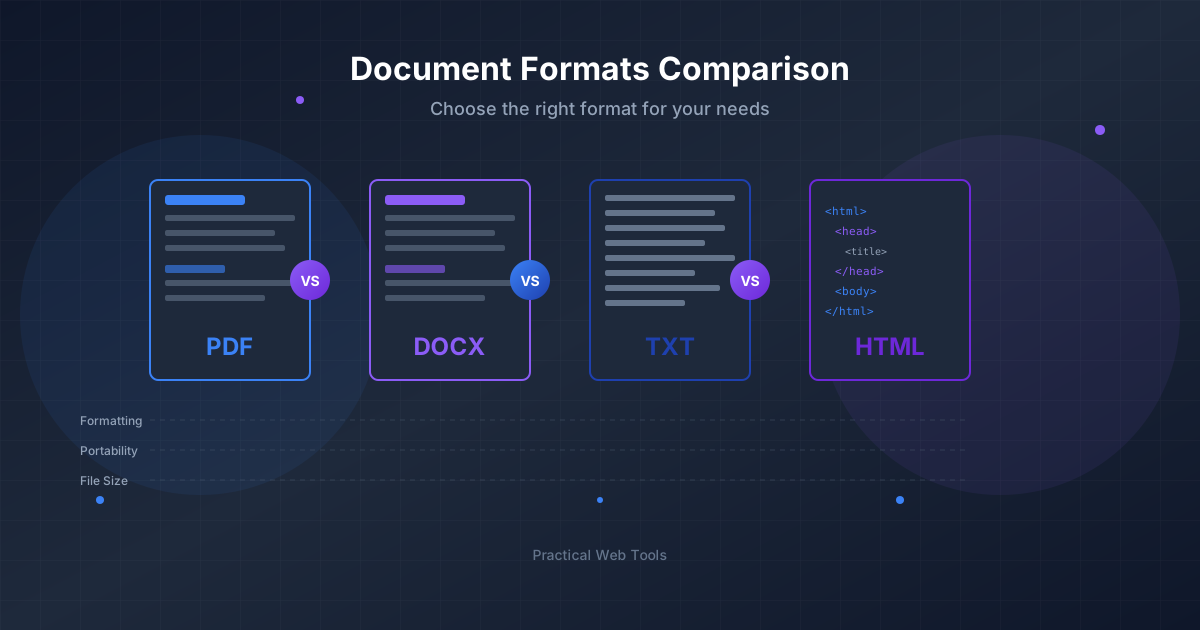
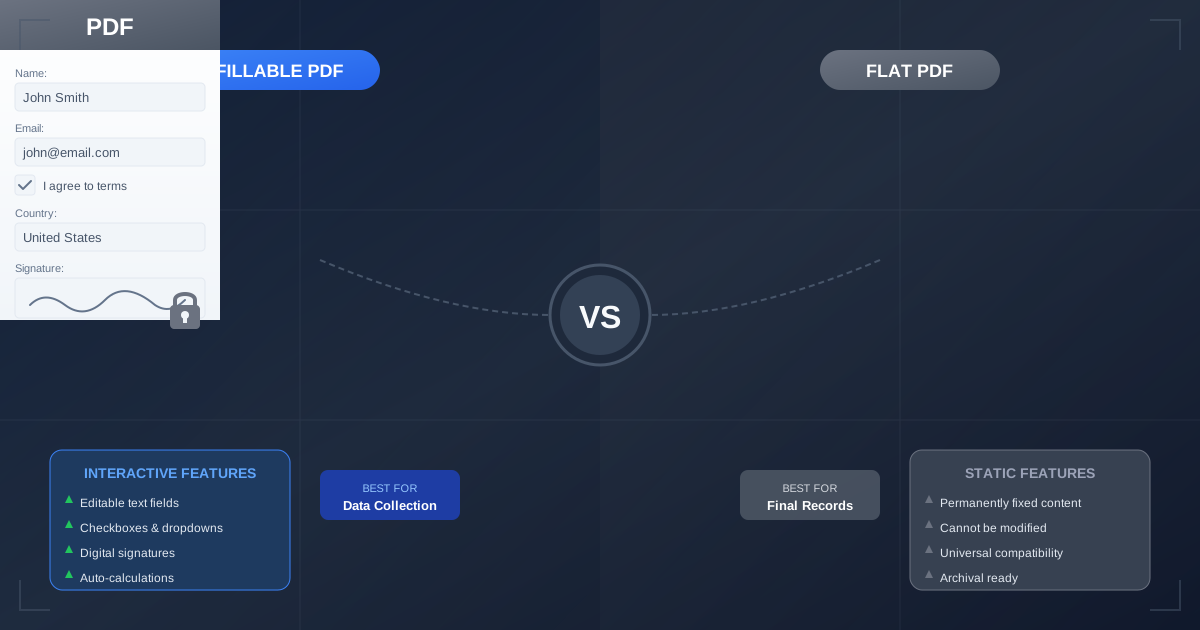
Understanding the fundamental difference between PDF (Portable Document Format) and EPUB (Electronic Publication) is key to appreciating why conversion is so beneficial. A PDF is a fixed-layout format. It preserves the exact look of a printed page, including fonts, images, and layout, regardless of the device you view it on. This is great for forms, brochures, and documents where preserving the original design is critical.
An EPUB, on the other hand, is a reflowable format. Its content dynamically adjusts to fit the screen size and orientation of your device. Think of it like a webpage versus a scanned image. You can change the font size, line spacing, and margins without breaking the layout. This makes for a vastly superior and more comfortable reading experience on e-readers like Kindle (after conversion), Kobo, and on smartphones and tablets.
Here’s a breakdown of the key differences:
| Feature | PDF (Portable Document Format) | EPUB (Electronic Publication) |
|---|---|---|
| Layout | Fixed, static layout. Like a digital photograph of a page. | Reflowable, dynamic layout. Text and images adjust to fit the screen. |
| Readability | Poor on small screens. Requires constant zooming and panning. | Excellent on all screen sizes. Customizable fonts and spacing. |
| Accessibility | Can be difficult for screen readers to parse if not properly tagged. | Inherently accessible. Follows web standards (HTML, CSS). |
| File Size | Often larger, especially with high-resolution images. | Generally smaller and more efficient as it's primarily text-based. |
| Interactivity | Limited to forms, links, and some embedded media. | Supports rich media, interactivity, and is the standard for modern ebooks. |
Essentially, converting from PDF to EPUB is about transforming a static document into a true, flexible ebook.
The Conversion Challenge: It's Not a Simple "Save As"
If converting from PDF to EPUB were as simple as clicking "Save As," this guide wouldn't be necessary. The process is more of a reconstruction than a simple conversion. Because a PDF has no inherent understanding of content structure—it just knows where to place text and images on a page—the conversion software has to intelligently guess the intended reading order, chapter breaks, and headings.
Here are the common hurdles you'll face:
- Source PDF Quality: A clean, text-based PDF created from a word processor will convert far better than a scanned, image-based PDF. Scanned PDFs require an extra step called Optical Character Recognition (OCR) to even become text, which can introduce its own errors.
- Formatting Loss: Complex layouts with multiple columns, sidebars, and intricate tables rarely survive the conversion process intact. The reflowable nature of EPUB just can't replicate a rigid, multi-column design.
- Header and Footer Mayhem: Page numbers, headers, and footers in the PDF can get jumbled into the main body text of the EPUB, creating distracting interruptions in every chapter.
- Incorrect Text Flow: Sentences and paragraphs can be broken up incorrectly, especially if the PDF has complex formatting or text wrapping around images.
- Image Issues: Images might be lost, misplaced, or rendered at a low quality.
Don't be discouraged! With the right tools and techniques, you can overcome these challenges and produce a high-quality EPUB.
Method 1: Using Dedicated Desktop Software (Calibre)
For anyone serious about creating quality ebooks, Calibre is the undisputed champion. It's a free, open-source, and incredibly powerful ebook management tool that runs on Windows, macOS, and Linux. While its interface can seem intimidating at first, its conversion engine is second to none, offering granular control over every aspect of the process.
Step-by-Step Guide to Converting with Calibre
Step 1: Download and Install Calibre Visit the official Calibre website and download the version for your operating system. The installation is straightforward.
Step 2: Add Your PDF to the Library Launch Calibre. You can either drag and drop your PDF file into the main window or click the "Add books" button in the top-left corner to browse for your file.
Step 3: Begin the Conversion Once your book is in the library, select it and click the "Convert books" button on the top toolbar. This will open the conversion dialog, which is where the magic happens.
Step 4: Set the Output Format and Metadata In the top-right corner of the conversion window, ensure the "Output format" is set to EPUB. On the left-hand menu, under "Metadata," take a moment to fill in the correct Title, Author, and upload a cover image if you have one. This ensures your ebook looks professional in your library.
Step 5: Configure the Conversion Settings (The Crucial Part) This is where you can turn a mediocre conversion into a great one. Navigate the settings using the left-hand menu:
- Look & Feel: Here you can embed fonts and adjust text styling. For most conversions, the default settings are fine to start with.
- Heuristic Processing: This is one of the most important settings. Enable it by checking the box. This feature attempts to intelligently detect and remove unwanted headers, footers, and other page artifacts. You can fine-tune its sensitivity, but the defaults are a good starting point.
- Page Setup: Make sure the "Input profile" matches your source document (e.g., Default Profile) and the "Output profile" matches your target device (e.g., Generic e-ink HD for most e-readers). This helps optimize the display.
- Structure Detection: Calibre can automatically create a Table of Contents by identifying chapter headings. You can use XPath expressions to tell it what to look for (e.g.,
//h:h1or//h:h2if you know the PDF is well-structured). If you're unsure, leave it on the default setting for the first pass.
Step 6: Convert and Review Click the "OK" button at the bottom right. The conversion process will begin, and you'll see a "Jobs" indicator spinning in the bottom-right corner of the main Calibre window. Once it's finished, you can view your new EPUB by selecting the book in your library and clicking on the "EPUB" format link in the details panel on the right. Review the file in Calibre's E-book viewer, checking for formatting errors, jumbled text, and other issues.
Method 2: Using Online PDF to EPUB Converters
If you only need a quick, one-off conversion and don't want to install software, online converters can be a viable option. They offer convenience and simplicity, but this comes with trade-offs.
Pros:
- No Installation: Accessible from any web browser.
- Ease of Use: Typically a simple upload-convert-download process.
- Fast: Good for simple, text-heavy documents.
Cons:
- Lack of Control: You have zero control over the conversion settings.
- Privacy Concerns: You are uploading your document to a third-party server.
- File Size/Usage Limits: Most free services have restrictions on file size or the number of conversions per day.
- Lower Quality: They often struggle with complex layouts and can produce messy results.
Online converters are best for non-sensitive, straightforward documents where perfection isn't the primary goal. Always be cautious and read the privacy policy before uploading sensitive or confidential material.
Pre-Conversion Cleanup: Preparing Your PDF for Success
A great EPUB starts with a great source file. Spending a few minutes preparing your PDF before conversion can save you hours of cleanup work later.
Step 1: Simplify the Source Document
If you have access to the original source document (e.g., a Microsoft Word file), make a copy and simplify it. Convert multi-column layouts to a single column, remove unnecessary headers and footers, and ensure a clear heading structure. This clean version will produce a much better PDF to convert from. For PDFs with complex tables, you might find it helpful to first use a PDF to Word converter to extract the content into an editable format where you can clean it up before proceeding.
Step 2: Extract and Verify the Text
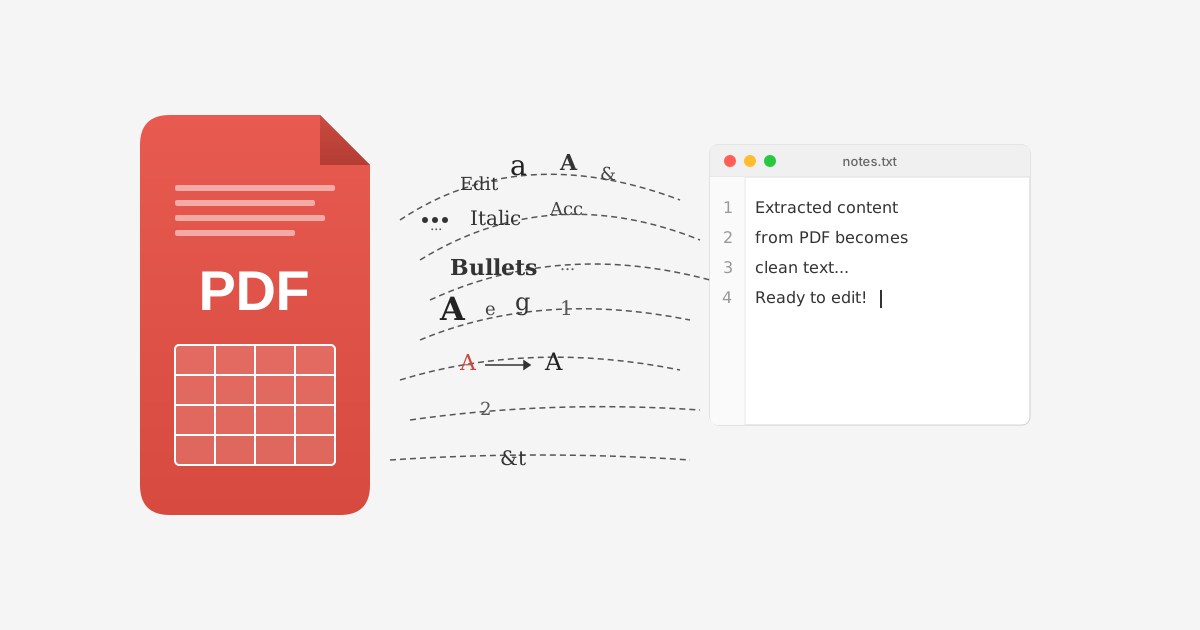
For problematic PDFs, especially scanned ones, the text layer might be corrupted or nonexistent. You can diagnose this by trying to select text in your PDF viewer. If you can't, it's an image-based PDF. The first step is to perform OCR. A great way to get the raw content is to use a reliable extraction tool. Our free PDF to Text converter can pull out all the text, allowing you to copy it into a new document and reformat it correctly before converting to EPUB.
Step 3: Split Large Documents
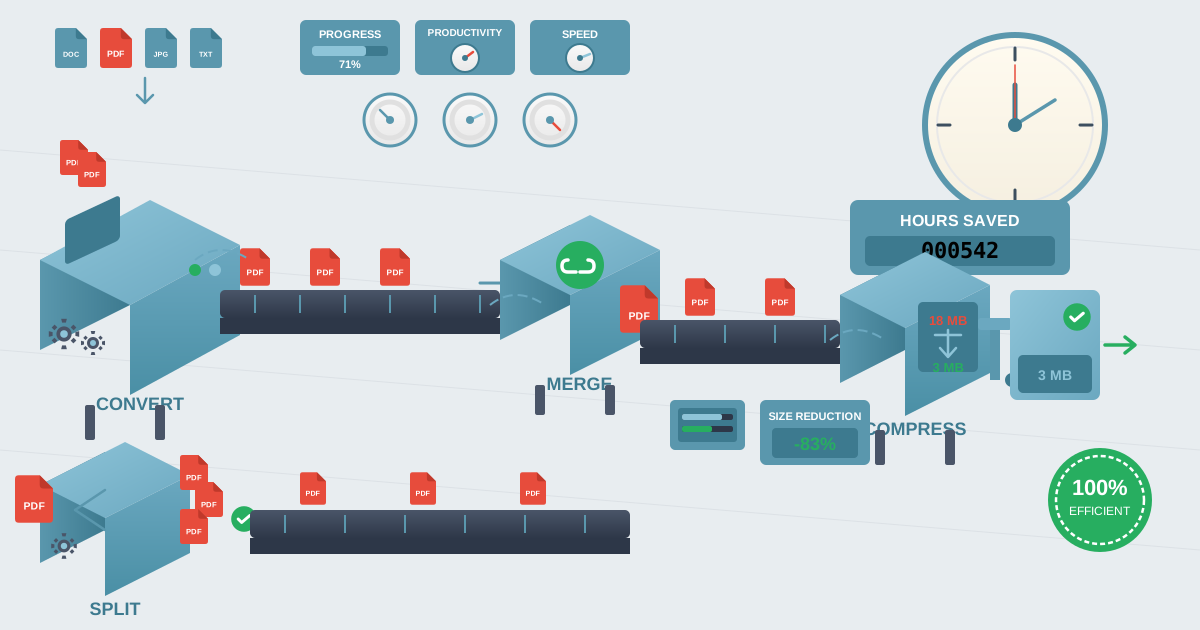
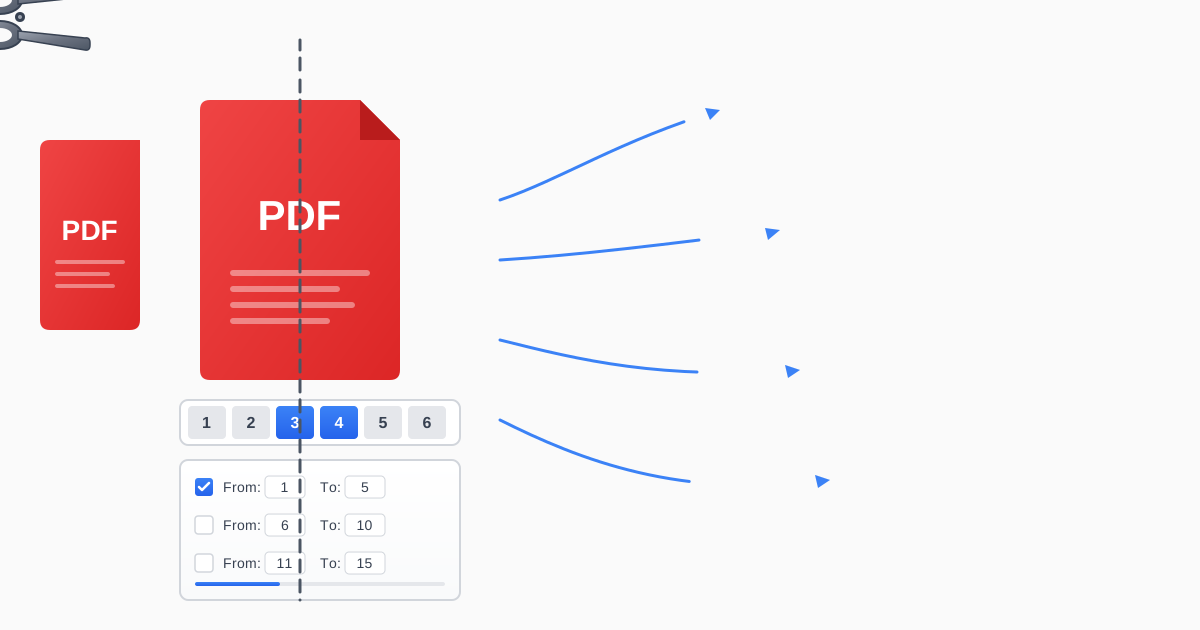
Conversion software can struggle with extremely large PDFs, such as 1000-page textbooks. This can lead to slow performance, crashes, and errors. A smart strategy is to break the document down into manageable chunks. Use a tool like our Split PDF utility to divide the book into individual chapters or sections. You can then convert each section separately and merge them later if needed.
Post-Conversion Editing: Polishing Your EPUB
No automated conversion is perfect. The final step to a professional-quality ebook is a manual review and cleanup. Tools like Sigil (another free, open-source EPUB editor) or Calibre's own built-in "Edit book" feature are essential for this.
Common post-conversion tasks include:
- Fixing the Table of Contents: Ensure all chapters are present and correctly linked.
- Correcting Paragraphs: Merge split paragraphs and fix incorrect line breaks.
- Removing Artifacts: Delete leftover page numbers, headers, or footers that the conversion software missed.
- Adjusting Images: Resize or reposition images for better flow within the text.
- Running Spell Check: Conversion errors can sometimes introduce spelling mistakes.
Common Problems and Solutions (FAQ)
Why is the formatting in my EPUB all wrong?
This is the most common issue. It stems from converting a fixed layout (PDF) to a reflowable one (EPUB). Complex PDF designs with columns, text boxes, and sidebars will almost always break. The best solution is to simplify the source file or manually clean up the EPUB's underlying HTML/CSS using an editor like Sigil or Calibre.
My images are missing or look bad. What can I do?
This can happen if images are part of the PDF background or are in a format the converter struggles with. In a post-conversion editor, you may need to manually re-insert the images into the EPUB file.
Can I convert a scanned PDF to EPUB?
Yes, but it's a two-step process. You must first use Optical Character Recognition (OCR) software to convert the scanned images of text into actual, selectable text. The quality of the final EPUB will depend heavily on the quality of the OCR output.
Conclusion: Your Path to Perfect Ebooks
Converting a PDF to an EPUB is a transformative process that unlocks a comfortable, adaptable reading experience on any digital device. While online converters offer a quick fix for simple documents, the power and control of a dedicated tool like Calibre are unmatched for achieving high-quality results.
Remember the key to a great conversion lies in preparation. By starting with the cleanest possible source file and being prepared to do a little post-conversion polishing, you can turn any frustrating PDF into a beautiful, readable EPUB. The effort is well worth it for the superior reading experience you'll gain.
Ready to get your documents in order? While we focus on a wide array of web-based utilities, you can explore Practical Web Tools' complete suite of free PDF tools to split, merge, and extract text to prepare your files for any conversion project.