Printable Graph Paper: A Guide to Types, Grids & Uses
Try the free tool
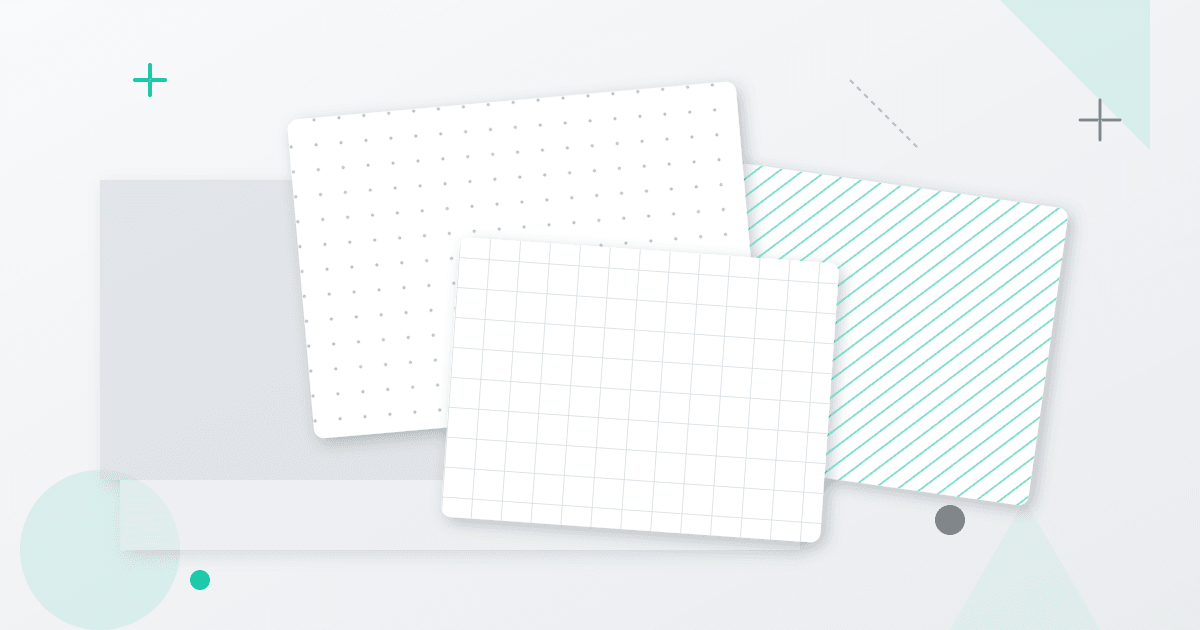
Printable Graph Paper →Free printable graph paper: square grid, lined, dot, isometric, hexagon in exact millimetres on letter or A4. Print or download a vector PDF.
Remember the crisp, blue-lined grid of a graph paper notebook? For many of us, it’s a nostalgic callback to math class—a tool for plotting functions and drawing geometric shapes. But the humble grid is far more versatile than you might remember. From drafting intricate architectural plans to designing the next hit video game, graph paper is an essential tool for creators, thinkers, and planners in nearly every field.
In the digital age, you no longer need to buy bulky pads. Welcome to the world of printable graph paper, where a perfect grid for any project is just a click away. This comprehensive guide will walk you through the most common (and some surprisingly niche) types of graph paper, explore their unique uses, and show you how to manage your digital templates like a pro.
Why Choose Printable Graph Paper?
Before we dive into the different types, let's consider why printable graph paper has become so popular. The advantages are practical and powerful.
- Infinite Supply & On-Demand Access: Never run out of paper in the middle of a project again. Need a single sheet for a quick sketch or a hundred for a workshop? Just print what you need, when you need it.
- Cost-Effective: High-quality graph paper pads can be expensive. Printable templates are often available for free online, saving you money for other essential supplies.
- Unmatched Customization: This is where printable versions truly shine. You can choose your paper size (A4, Letter, etc.), grid size, line weight, and even line color. A light gray grid can be less distracting than a bold blue, making your own marks stand out.
- Variety at Your Fingertips: Your local office supply store might only carry standard quad-ruled paper. Online, you can find everything from isometric and polar coordinate grids to hexagonal paper for organic chemistry or game mapping.
The Core Types of Graph Paper and Their Uses
Understanding the fundamental types of graph paper is the first step to unlocking their potential. Each grid is designed for a specific purpose, offering a unique framework for your ideas.
1. Cartesian (Quad Ruled) Graph Paper
This is the classic, most recognizable type of graph paper. It features a simple grid of evenly spaced horizontal and vertical lines, forming perfect squares. It's the workhorse of the graph paper world.
- Description: A standard square grid.
- Common Sizes: 1/4 inch (4 squares per inch), 1/5 inch (5 squares per inch), and 1/10 inch (10 squares per inch) are the most common.
- Best For:
- Mathematics: Plotting functions on X and Y axes, drawing geometric figures, and creating bar graphs.
- Design: Sketching floor plans, creating pixel art, planning layouts for websites or print.
- Science: Graphing experimental data to visualize trends and relationships.
2. Isometric Graph Paper
Instead of squares, isometric paper uses a grid of equilateral triangles. This unique structure allows you to create three-dimensional drawings on a two-dimensional surface with ease, as the vertical lines remain vertical while horizontal lines are drawn at 30 degrees.
- Description: A grid of lines intersecting at 60-degree angles, forming a pattern of small triangles.
- Best For:
- 3D Drawing: Sketching three-dimensional objects, such as cubes, buildings, and product designs.
- Architecture & Engineering: Creating perspective drawings and visualizing structures.
- Game Design: Designing levels and assets for isometric video games.
- Art & Crafts: Planning quilt patterns, designing logos, or creating geometric art.
3. Engineering Graph Paper
Also known as an "Engineer's Pad," this paper is designed for technical work. It's typically quad-ruled, often with 5 squares per inch, but with heavier lines marking every inch. The grid lines are usually printed in a light, non-reproducible color like green or tan so they don't show up when photocopied.
- Description: A quad-ruled grid (usually 5x5) with emphasized inch-markers, often on light green or tan paper with header/margin space.
- Best For:
- Engineering & Drafting: Taking technical notes, making calculations, and creating detailed drawings to scale.
- Students: A favorite for university-level science and math for its organized structure.
- Note-Taking: The grid helps keep handwriting and diagrams neat and orderly.
4. Dot Paper (Dotted Grid)
For those who find solid lines too restrictive, dot paper offers the perfect balance. It provides the guidance of a grid without the visual clutter, making your own marks the primary focus.
- Description: A grid of dots at the intersection points where grid lines would normally be.
- Best For:
- Bullet Journaling: The go-to choice for the BuJo community for creating custom layouts, trackers, and calendars.
- Sketching & Doodling: Offers a subtle guide for proportion without overpowering the artwork.
- UI/UX Design: Ideal for wireframing websites and mobile apps.
- Handwriting Practice: Practicing calligraphy or penmanship with consistent letter sizing and spacing.
5. Polar Coordinate Graph Paper
This paper moves away from the rectangular grid entirely. It consists of concentric circles and radial lines extending from a central point (the pole). It's designed for plotting data in a polar coordinate system.
- Description: A series of concentric circles and radiating lines.
- Best For:
- Advanced Mathematics: Plotting polar equations in trigonometry and calculus (e.g., cardioids and rose curves).
- Science & Engineering: Graphing directional data, such as microphone pickup patterns, antenna radiation, or light distribution from a fixture.
6. Logarithmic Graph Paper
Logarithmic paper is a powerful tool for visualizing data that spans several orders of magnitude. Instead of evenly spaced grid lines, one or both axes have a logarithmic scale. This allows you to represent exponential relationships as straight lines.
- Description: A grid where one axis (semi-log) or both axes (log-log) have a logarithmic scale.
- Best For:
- Scientific Analysis: Plotting exponential growth (e.g., bacterial populations) or decay (e.g., radioactive half-life).
- Engineering: Analyzing frequency response in circuits (Bode plots) or performance data.
Niche and Specialty Graph Paper Types
Beyond the core types, a whole world of specialized grids exists for specific hobbies and professions.
- Hexagonal Paper: A grid of hexagons, essential for mapping tabletop RPG campaigns, drawing organic chemistry molecules (like benzene rings), or planning tile layouts.
- Music Staff Paper: Features sets of five horizontal lines (staves) for composing and transcribing music.
- Knitting/Cross-Stitch Paper: Rectangular or square grids designed to match the gauge of a specific craft, allowing for detailed pattern design.
- Storyboard Paper: Panels of various aspect ratios used by filmmakers, animators, and comic artists to plan visual sequences.
How to Find, Download, and Manage Your Templates
Now that you know the types, where can you get them? A quick search for "free printable graph paper" will yield thousands of results. Look for websites that offer high-resolution PDF files, as these will print with the sharpest, cleanest lines.
Managing Your Digital Collection
As you collect templates, you'll want to keep them organized. Many resource websites offer template packs bundled together, often in an archive format like .zip, .rar, or .7z.
Working with these files is simple. If you download a template pack in a format like RAR, you might need a tool to access its contents. Our free RAR to ZIP converter can handle this in seconds, right in your browser, making the files more universally accessible.
Once you have your compressed file, you'll need to open it. Our Decompress Files tool lets you extract your templates directly online without needing to install any software. It's a quick and secure way to get to your files.
Over time, your collection of PDFs can start to take up significant hard drive space. To keep your digital workspace tidy, you can bundle them into a single, compact archive. Using a tool to Compress Files is an efficient way to save space while keeping all your related templates in one place.
Printing Tips for Perfect Grids
To ensure your printed graph paper is accurate and usable, follow these simple tips:
- Use High-Quality Settings: In your printer dialogue, choose the "High Quality" or "Best" setting for crisp lines.
- Print at Actual Size: This is the most crucial step. Look for a setting called "Actual Size," "100%," or "No Scaling." If you let your printer "Fit to Page," it will slightly distort the grid dimensions.
- Choose the Right Paper: While standard copy paper works fine, using a slightly heavier stock (like 24 lb or 90 gsm) can prevent ink bleed and provide a better writing experience.
- Experiment with Color: If the template allows, print the grid in a light gray. This makes your own pen or pencil marks stand out, which is especially helpful for complex graphs and detailed drawings.
Conclusion: The Grid is Your Canvas
From a simple tool for elementary math to an essential framework for complex engineering, graph paper is a testament to the power of structured space. Printable graph paper puts this power directly in your hands, offering unparalleled flexibility, customization, and accessibility.
Whether you're plotting data, sketching a 3D model, designing a quilt, or organizing your life in a bullet journal, there's a grid perfectly suited to your task. So go ahead and explore the different types, download some templates, and see how a few simple lines can bring clarity and structure to your next project.
Ready to streamline your digital workflow? Explore our suite of free file management tools at Practical Web Tools to handle all your compression and conversion needs with ease.