Convert PDF to Word Free: 5 Methods That Actually Work
You have a PDF. You need to edit it. We've all been there. That crucial contract, that detailed report, that academic paper—locked away in a format that's perfect for viewing but notoriously difficult to change. The common solution is to convert the PDF to a Microsoft Word document (.docx), but a quick search reveals a dizzying array of tools, many of which are slow, riddled with ads, or produce a jumbled mess of text and images.
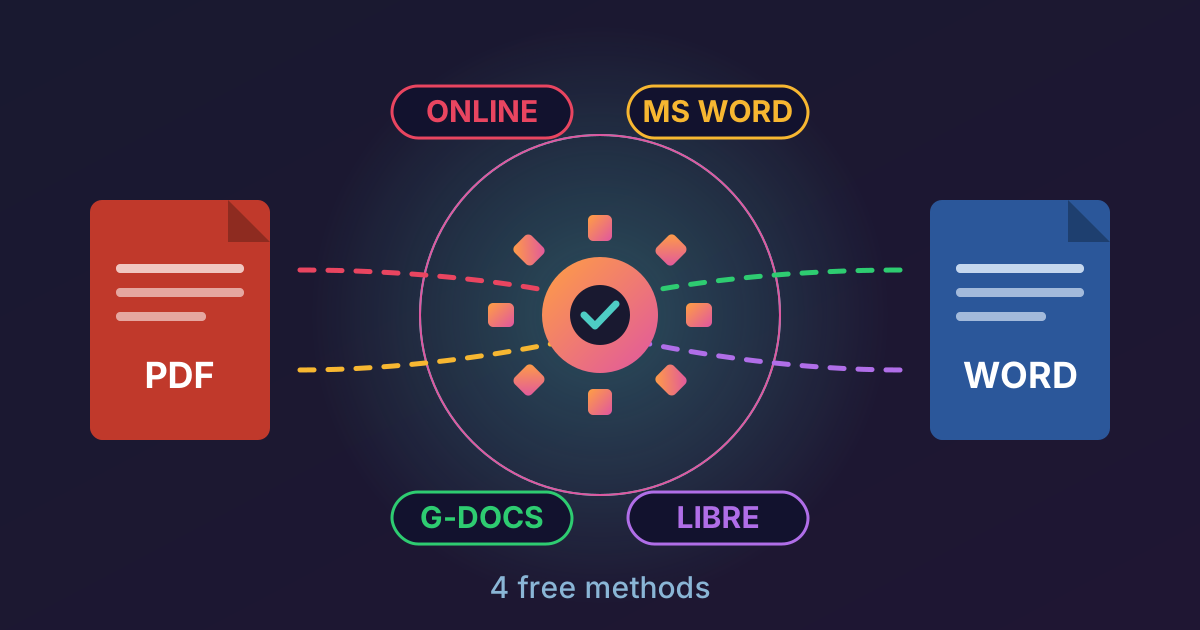
It doesn't have to be this frustrating. There are several free, reliable methods to convert your PDFs into perfectly editable Word documents, preserving your original formatting as closely as possible. In this comprehensive guide, we'll walk you through five methods that actually work, from powerful online tools to hidden features in the software you already use.
Why Convert a PDF to Word in the First Place?
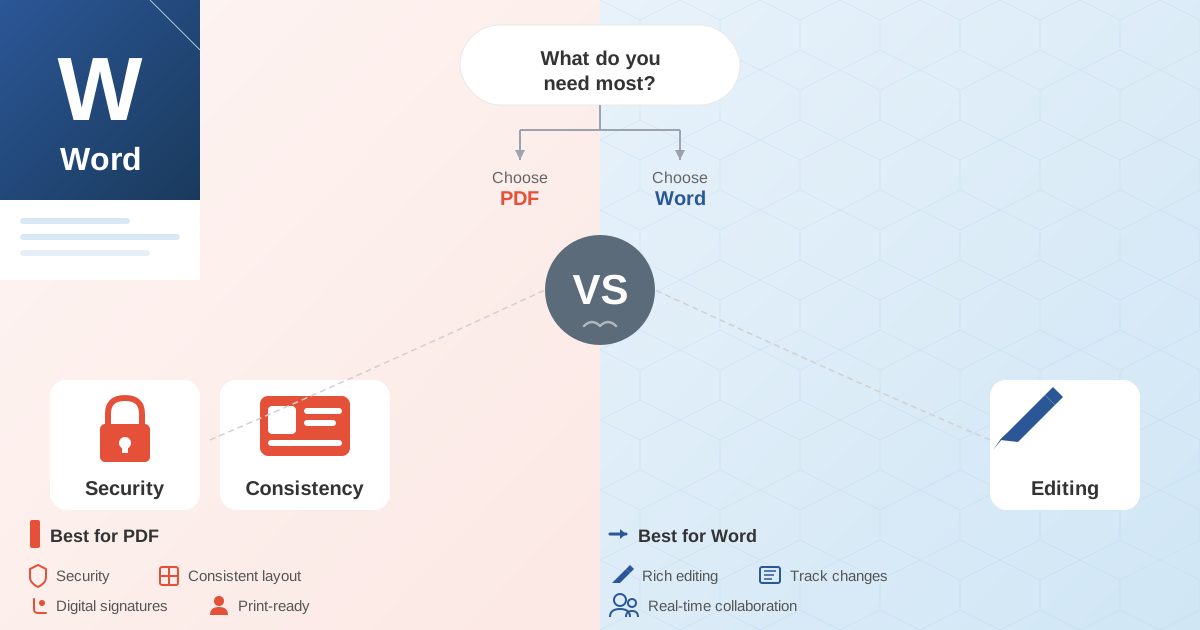
Before diving into the 'how,' let's quickly cover the 'why.' While PDFs are the universal standard for sharing and printing documents, their static nature is their biggest limitation. Converting a PDF to Word unlocks several key benefits:
- Easy Editing: This is the primary reason. You can correct typos, update information, rewrite paragraphs, and change formatting with the full power of a word processor.
- Content Reuse: Extracting text, tables, and images from a PDF can be a copy-paste nightmare. A good conversion allows you to easily repurpose content for other documents, presentations, or reports.
- Collaboration: Word's 'Track Changes' and commenting features are industry standards for collaborative work. Converting a PDF allows your team to suggest edits and leave feedback seamlessly.
- Accessibility: Screen readers and other assistive technologies often work better with the structured, reflowable text of a Word document compared to a static PDF.
The Challenge: Why Perfect Conversion Can Be Tricky
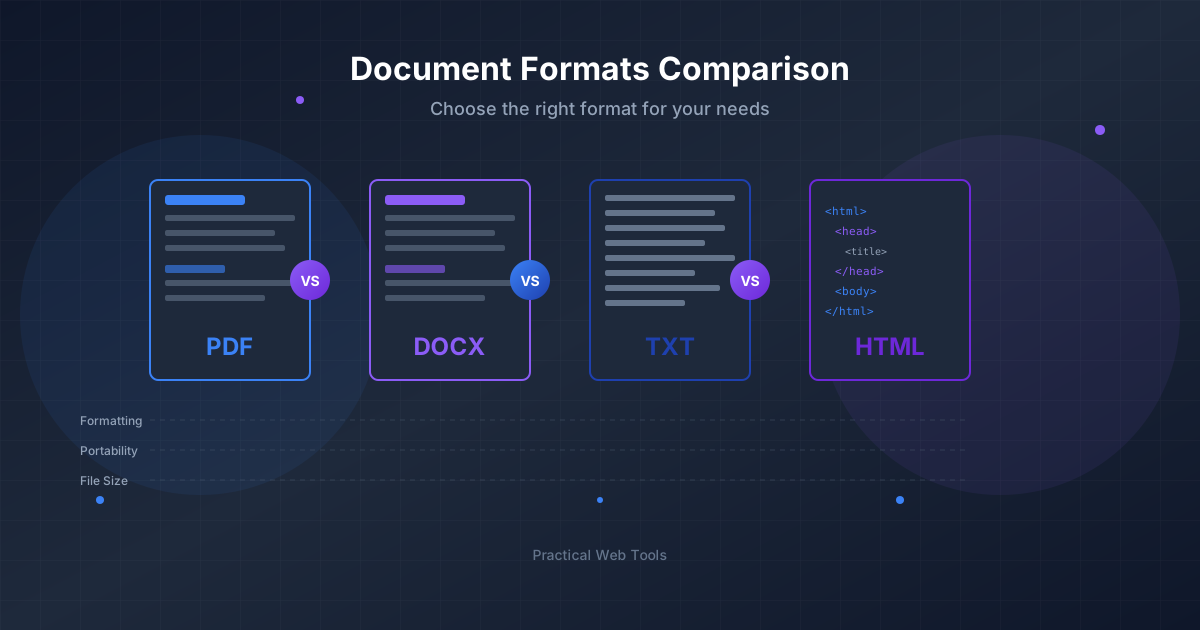
Ever wonder why some conversions look perfect while others are a disaster? It's because PDFs and Word documents think about content differently.
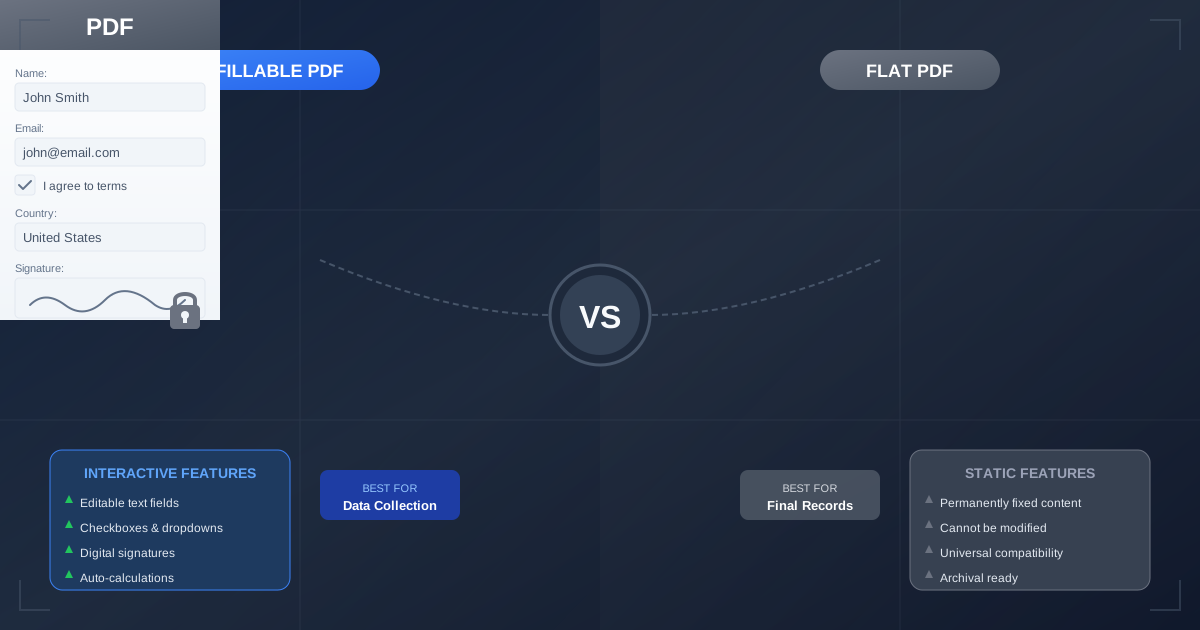
- A PDF is like a digital printout. It stores precise instructions on where to place text, images, and lines on a page. It cares about the final look, not the underlying structure.
- A Word document is fluid. It understands paragraphs, headings, lists, and tables as logical elements. The content reflows as you type or change page size.
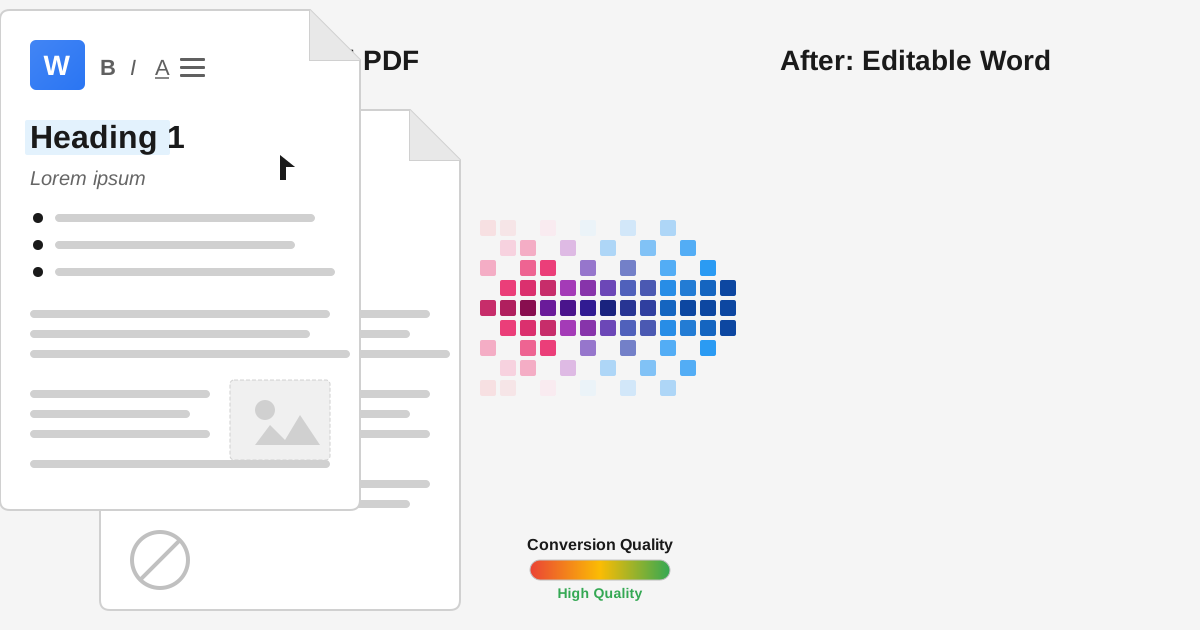
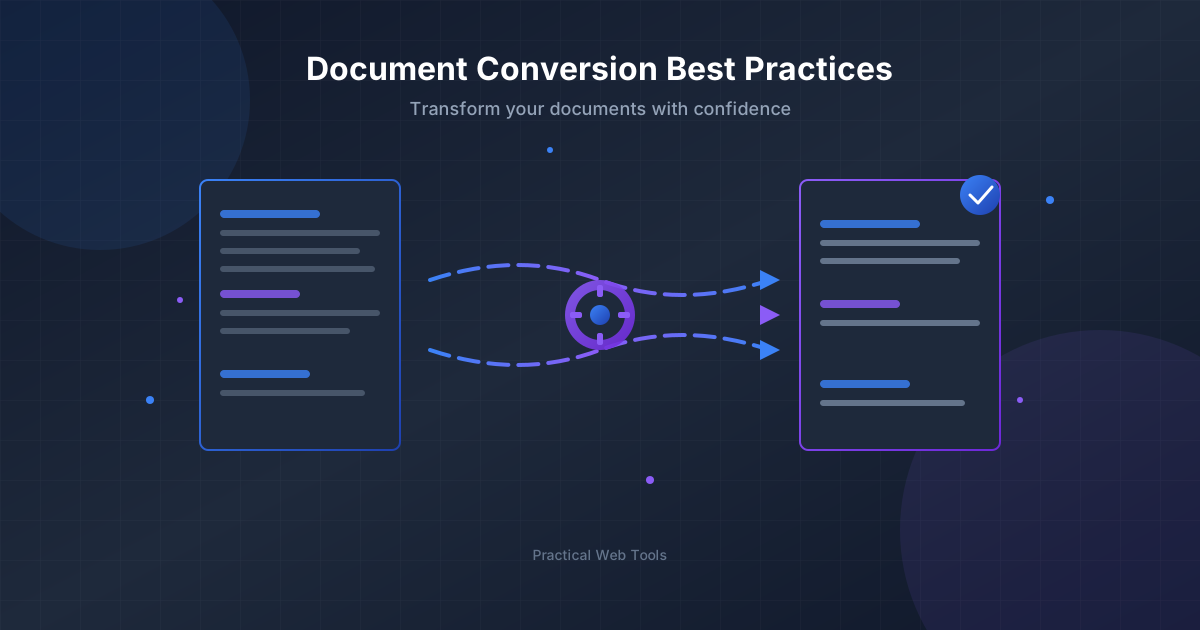
The conversion process is essentially an act of reverse-engineering. The converter has to look at the static PDF page and intelligently guess: "This block of text is a heading, this is a paragraph, and these lines form a table." Complex layouts with columns, text boxes, and intricate graphics make this a significant challenge.
Now, let's explore the methods that do this best.
Method 1: Use a Secure Online PDF to Word Converter
For most people, a high-quality online converter is the fastest, easiest, and most reliable option. You don't need to install any software, and the process takes just a few clicks. However, it's crucial to choose a tool that respects your privacy.
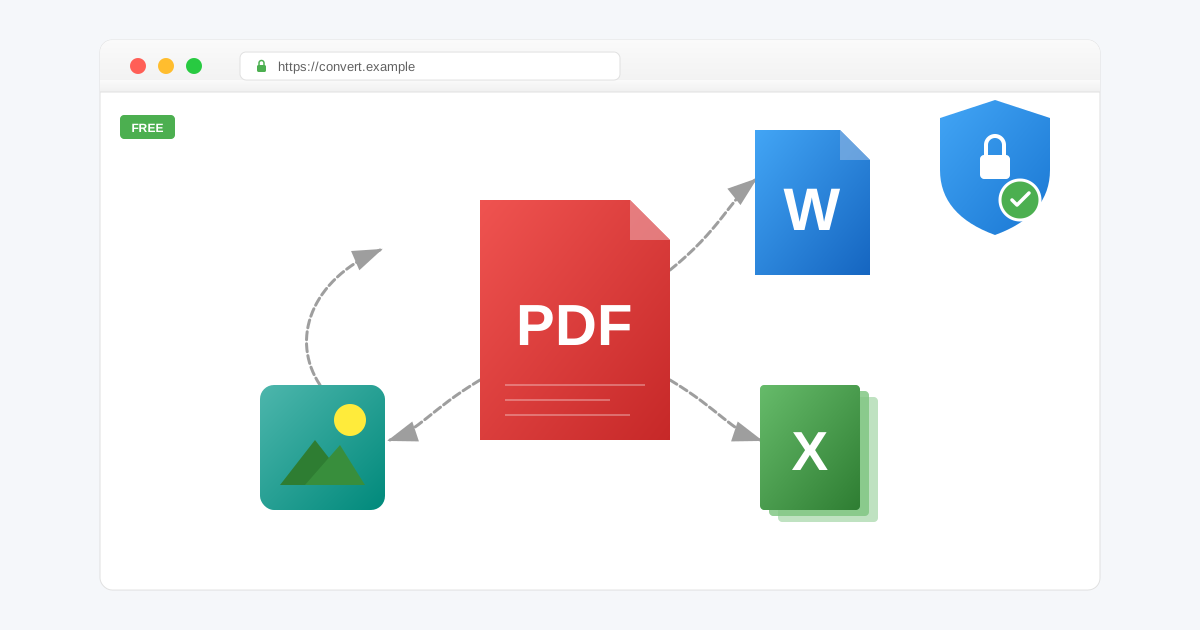
We designed our PDF to Word converter with simplicity and security in mind. It uses powerful conversion technology to maintain formatting while ensuring your files are never stored on our servers.
How to Convert with Practical Web Tools (Step-by-Step)
- Navigate to the Tool: Open the Practical Web Tools PDF to Word Converter.
- Upload Your File: Click the 'Choose File' button to select the PDF from your computer, or simply drag and drop it into the designated area.
- Convert: The conversion process starts automatically. Our tool analyzes the PDF structure, reconstructs the document, and prepares it for download.
- Download: Once complete, a 'Download' button will appear. Click it to save your new, fully editable .docx file to your computer.
| Feature | Practical Web Tools Converter |
|---|---|
| Cost | 100% Free |
| Software Install | None required |
| Sign-up | Not necessary |
| Privacy | Files processed in-browser or deleted immediately from servers |
| Formatting | High-fidelity |
This method is ideal for almost any situation, whether you have a simple text document or a complex report with tables and images. It's the go-to solution for quick, high-quality results.
Method 2: Use Microsoft Word's Built-in Converter
Many users don't realize that modern versions of Microsoft Word (Word 2013 and newer) can open and convert PDFs directly. This is an excellent option if you already have Word installed and prefer to work offline.
The feature, called 'PDF Reflow,' attempts to convert the PDF into an editable Word document right inside the application.
How to Open a PDF in Word
- Open Microsoft Word.
- Go to File > Open > Browse.
- Navigate to the location of your PDF file. Select it and click 'Open'.
- A dialog box will appear, warning you that Word is about to convert your PDF and that it might not look exactly the same, especially if it contains a lot of graphics. Click 'OK'.
- Word will then process the file and open it as a new, editable document. You can then save it as a .docx file.
Pros:
- No third-party tool needed.
- Works completely offline.
- Surprisingly effective for text-heavy documents with simple layouts.
Cons:
- Can struggle with complex formatting, columns, and tables.
- Requires a modern version of Microsoft Office.
- The conversion process can be slow for large files.
Method 3: The Google Docs Workaround
If you have a Google account, you have access to another powerful, free conversion tool: Google Docs. This method leverages Google's cloud-based processing and its surprisingly capable Optical Character Recognition (OCR) to handle both native and scanned PDFs.
How to Convert Using Google Docs
- Upload to Google Drive: Log in to your Google Drive account and upload the PDF file.
- Open with Google Docs: Right-click on the uploaded PDF file in your Drive, select 'Open with', and then choose 'Google Docs'.
- Wait for Conversion: Google will process the file, performing OCR if necessary, and open it as a new, editable Google Doc. The formatting may shift during this process.
- Download as Word: Once it's open, go to File > Download > Microsoft Word (.docx). This will save the converted file to your computer.
Pros:
- Completely free with a Google account.
- Handles scanned PDFs well due to built-in OCR.
- Accessible from any device with an internet connection.
Cons:
- Formatting fidelity can be a mixed bag; you'll likely need to do some cleanup.
- Requires uploading your file to Google's servers, which might be a privacy concern for sensitive documents.
Method 4: Copy and Paste from Adobe Acrobat Reader DC
This is the most basic method and should be considered a last resort. Adobe Acrobat Reader DC is the free, standard PDF viewer, but it does not include a direct conversion feature (that's reserved for the paid Pro version). However, you can still extract text from it.
How to Copy Text from Adobe Reader
- Open your PDF in Adobe Acrobat Reader DC.
- Select the 'Selection Tool' (the standard cursor icon).
- Click and drag to highlight the text you want to copy.
- Right-click and choose 'Copy' (or press Ctrl+C).
- Open a new Microsoft Word document and paste the text (Ctrl+V).
Pros:
- Uses free, standard software.
- Useful for extracting small snippets of text quickly.
Cons:
- Extremely poor formatting retention. You will lose almost all formatting, including fonts, columns, tables, and images.
- Completely impractical for documents longer than a page or two.
For documents where you only care about the raw text, this can work in a pinch. If that's your goal, a dedicated PDF to Text converter is often a much cleaner and faster alternative.
Method 5: Use Offline Open-Source Software (e.g., LibreOffice)
For users who prioritize privacy above all else or need a robust offline solution without paying for Microsoft Office, open-source software like LibreOffice is a fantastic option.
LibreOffice is a full office suite (similar to MS Office) and its 'Draw' application can open and edit PDFs.
How to Convert with LibreOffice Draw
- Download and install LibreOffice (it's free).
- Open the LibreOffice Draw application.
- Go to File > Open and select your PDF.
- Draw will open the PDF, treating each element (text blocks, images) as a separate object. You can edit these objects directly.
- To save it as a document, you will need to copy the content from Draw and paste it into LibreOffice Writer (the word processor), then save it as a .docx file.
Pros:
- Free and open-source.
- Works entirely offline, ensuring maximum privacy.
- Offers granular control over editing PDF elements.
Cons:
- The process is less intuitive than other methods.
- Treats the PDF as a series of drawing objects, not a flowing document, so reformatting for a standard Word document can be very time-consuming.
Comparison of Free PDF to Word Methods
To help you choose the best method for your needs, here's a quick comparison table:
| Method | Ease of Use | Formatting Accuracy | Privacy | Best For |
|---|---|---|---|---|
| Practical Web Tools | ⭐⭐⭐⭐⭐ | ⭐⭐⭐⭐ | ⭐⭐⭐⭐⭐ | Quick, secure, high-quality conversions of almost any document. |
| Microsoft Word | ⭐⭐⭐⭐ | ⭐⭐⭐⭐ | ⭐⭐⭐⭐⭐ | Offline conversions of simple, text-heavy documents if you have Office. |
| Google Docs | ⭐⭐⭐⭐ | ⭐⭐⭐ | ⭐⭐ | Scanned documents (OCR) and users who are already in the Google ecosystem. |
| Adobe Reader Copy/Paste | ⭐⭐ | ⭐ | ⭐⭐⭐⭐⭐ | Quickly grabbing small, unformatted snippets of text. |
| LibreOffice Draw | ⭐⭐ | ⭐⭐ | ⭐⭐⭐⭐⭐ | Advanced users who need a powerful, free, and completely offline tool. |
Conclusion: Your Best Path from PDF to Word
Navigating the world of file conversions doesn't have to be a headache. While there are many ways to convert a PDF to Word for free, they are not all created equal. For the vast majority of users, a secure and efficient online tool offers the perfect balance of quality, speed, and convenience.
By understanding the strengths and weaknesses of each method, you can choose the right tool for the job every time. Whether you're making quick edits with Microsoft Word's built-in feature or handling complex files, you now have a full toolkit at your disposal.
Ready to convert your first document without the hassle? Give our free and privacy-focused PDF to Word converter a try and transform your static files into editable documents in seconds!