PDF to Word Converter: 4 Free Methods That Actually Work
You’ve been there. You receive a PDF file—a contract, a report, a resume—and spot a tiny typo or need to update a crucial piece of information. The problem? It's locked in a PDF, a format designed for viewing, not editing. The frustration is real. For years, converting a PDF back into an editable Word document felt like a digital alchemy, often resulting in a jumbled mess of text boxes and misplaced images.
Thankfully, those days are over. Technology has evolved, and there are now several reliable, free methods to convert your PDFs into fully editable Word documents, preserving your original formatting with impressive accuracy.
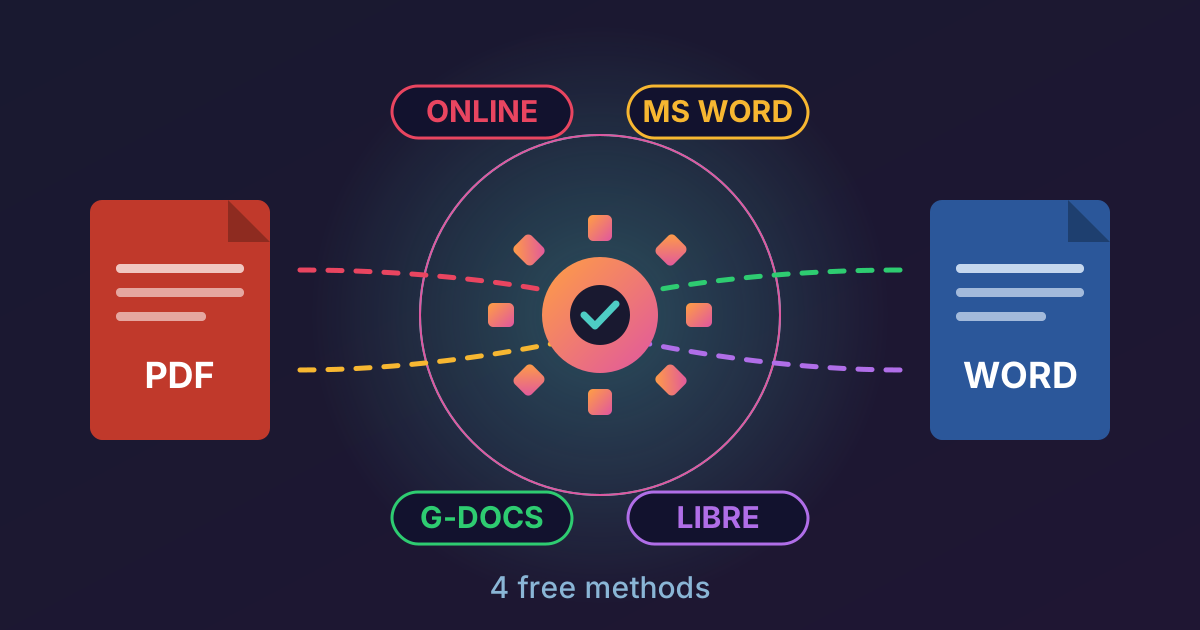
This comprehensive guide will walk you through four of the best free methods that actually work. Whether you prefer a quick online tool, software already on your computer, or a cloud-based solution, you'll find the perfect method for your needs right here.
Why Convert a PDF to Word?
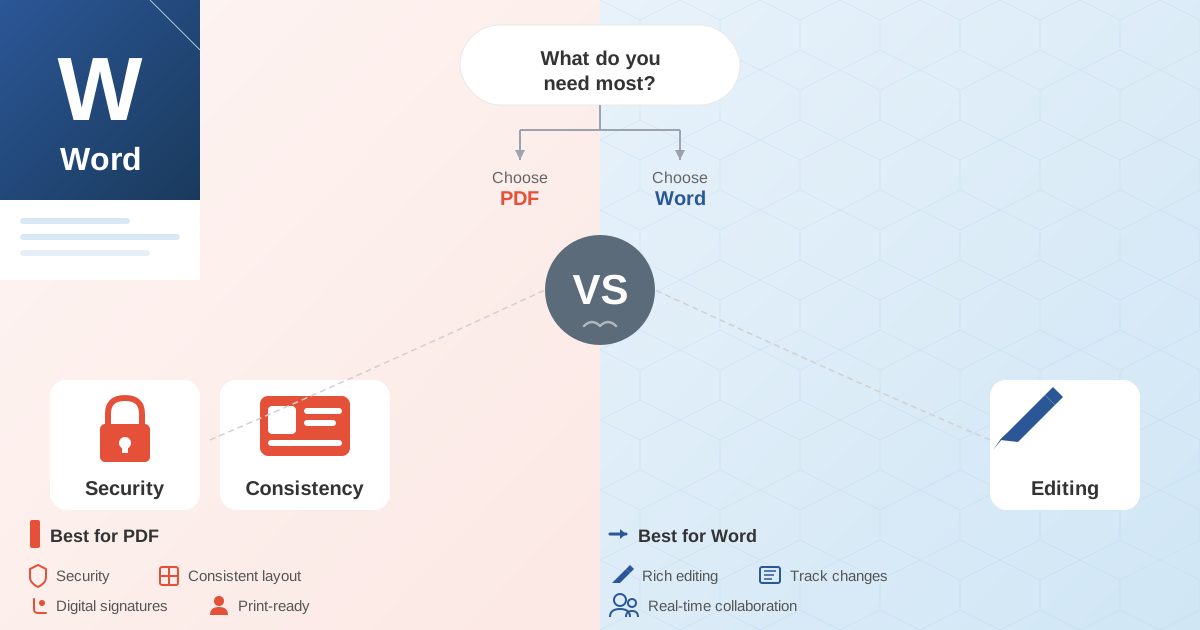
Before we dive into the 'how,' let's quickly cover the 'why.' The Portable Document Format (PDF) is fantastic for sharing and printing documents consistently across different devices. Its static nature ensures that what you see is what everyone else sees. However, this strength is also its biggest weakness when changes are needed.
Here are the most common reasons to convert a PDF to a Word document:
- Editing and Revisions: The primary reason. You need to correct errors, update data, rewrite paragraphs, or add new sections.
- Reusing Content: You need to extract large portions of text or specific images for a new report, presentation, or website without painstakingly copying and pasting, which often ruins formatting.
- Collaboration: Your team works primarily in Microsoft Word, and you need to incorporate the PDF's content into a collaborative document using features like Track Changes.
- Accessibility: Some screen readers and accessibility tools work better with the structured format of a Word document than with a PDF.
- Filling Forms: While many PDFs have fillable fields, many older or poorly created ones don't. Converting them to Word allows you to easily type in your information.
The Challenge: Why is Conversion So Tricky?
Understanding why conversions can fail helps you choose the best tool for the job. A PDF and a Word document store information in fundamentally different ways.
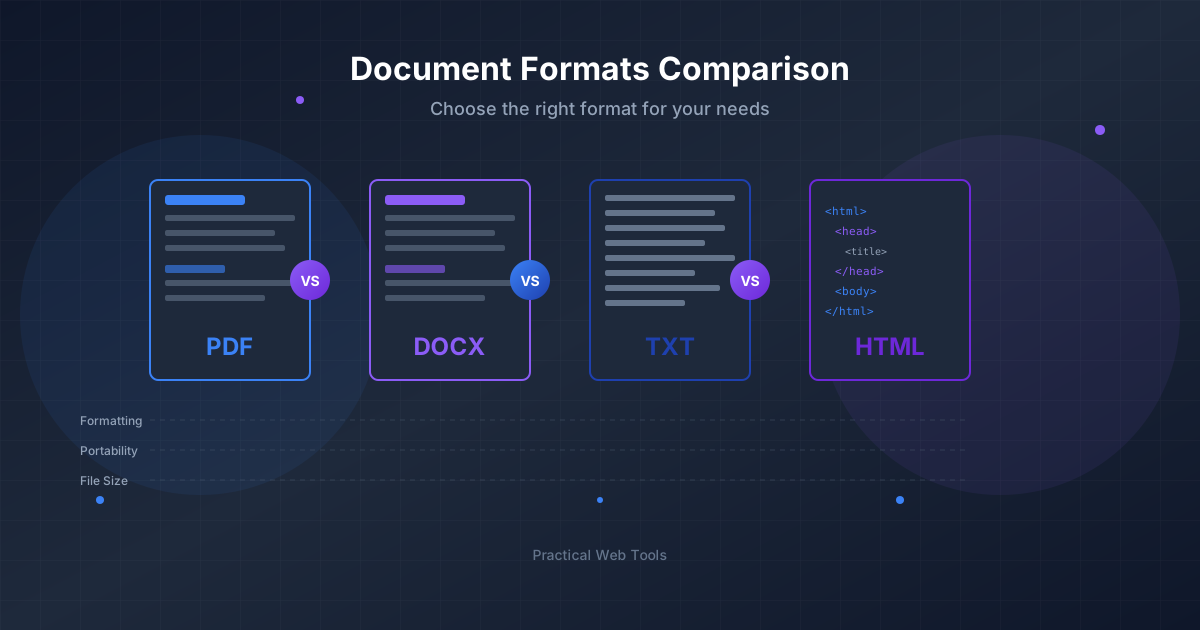
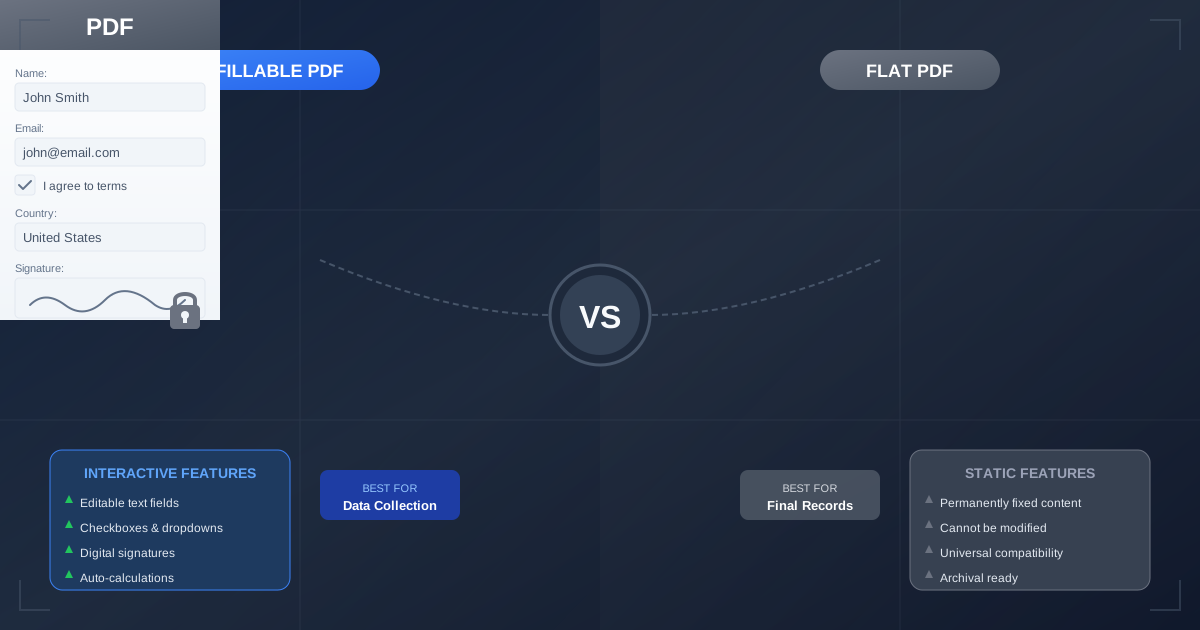
- A PDF is like a digital snapshot or a printout. It stores text characters, images, and vector graphics at precise coordinates on a page. It cares most about visual consistency.
- A Word Document (.docx) is a flowable document. It understands structure—paragraphs, headings, lists, tables, and columns. It cares most about the logical relationship between elements.
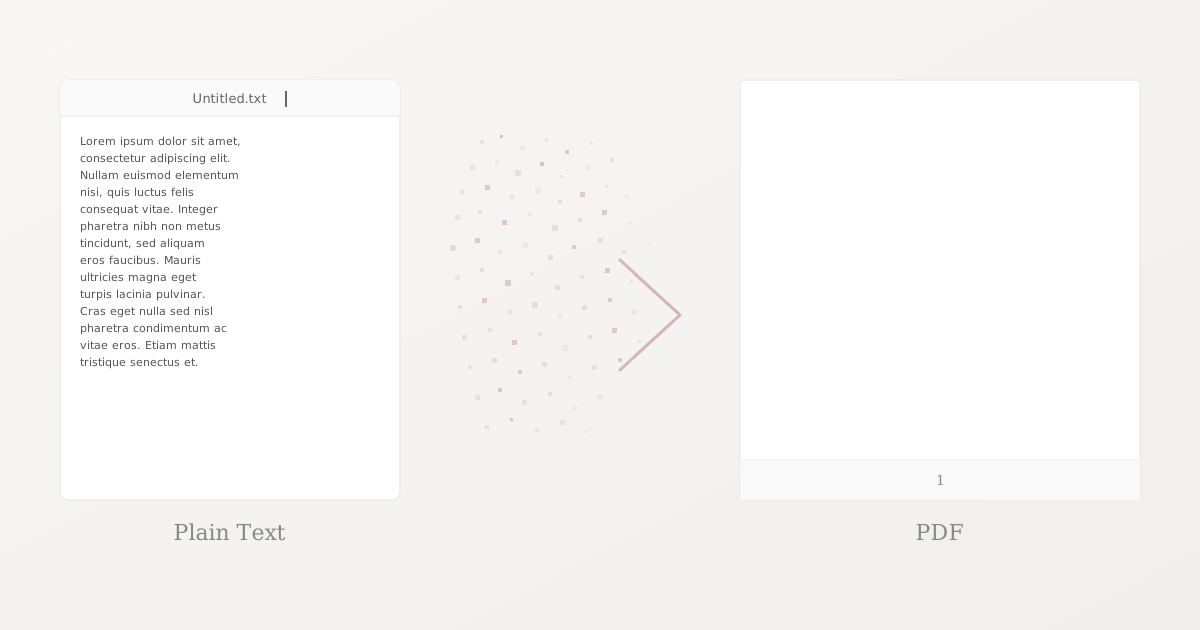
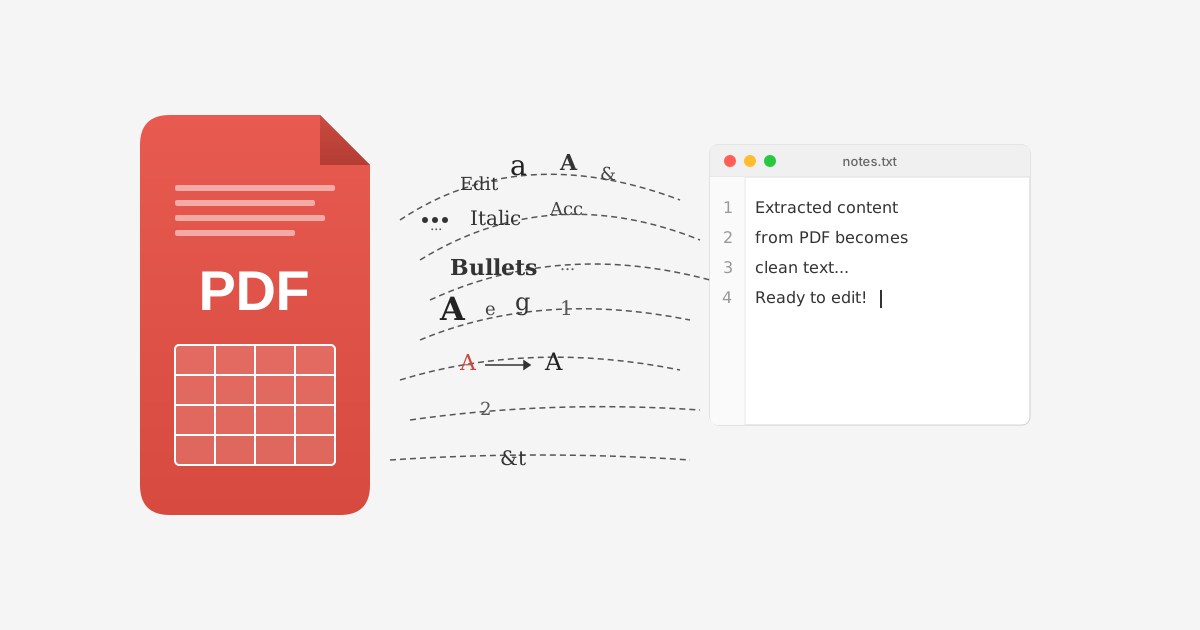
When you convert a PDF to Word, the software has to reverse-engineer this visual layout and translate it into a logical structure. This is a complex task, especially with intricate layouts, tables, and graphics. Scanned PDFs add another layer of complexity, requiring Optical Character Recognition (OCR) to even identify the text in the first place.
Now, let's explore the methods that master this challenge.
Method 1: The Easiest & Quickest Route - Online Converters
For the vast majority of users, a dedicated online converter is the fastest and most effective solution. These browser-based tools require no software installation and are designed to do one thing exceptionally well: convert your files accurately.
At Practical Web Tools, we developed our own PDF to Word converter with a focus on quality, privacy, and simplicity.
How to Use the Practical Web Tools Converter:
Converting your file is a simple, four-step process:
- Navigate to the Tool: Open your web browser and go to the Practical Web Tools PDF to Word converter.
- Upload Your File: Click the 'Choose File' button to select the PDF from your computer, or simply drag and drop it onto the designated area.
- Convert: The tool automatically begins the conversion process as soon as the file is uploaded. You'll see a progress bar indicating it's working.
- Download: In seconds, a 'Download' button will appear. Click it to save your new, fully editable Word document to your computer.
Why Choose a Privacy-Focused Online Tool?
- Security & Privacy: Many free online tools have questionable privacy policies. We prioritize your data security. Your files are processed securely, and we automatically delete them from our servers after a short period.
- High-Quality Results: Our converter uses advanced algorithms to recognize text, images, tables, and layouts, preserving the original document's structure as closely as possible.
- Completely Free & No Sign-Up: There are no hidden costs, subscription requirements, or watermarks on your final document. It’s a truly free tool for everyone.
- Convenience: Access it from any device with an internet connection without installing any software.
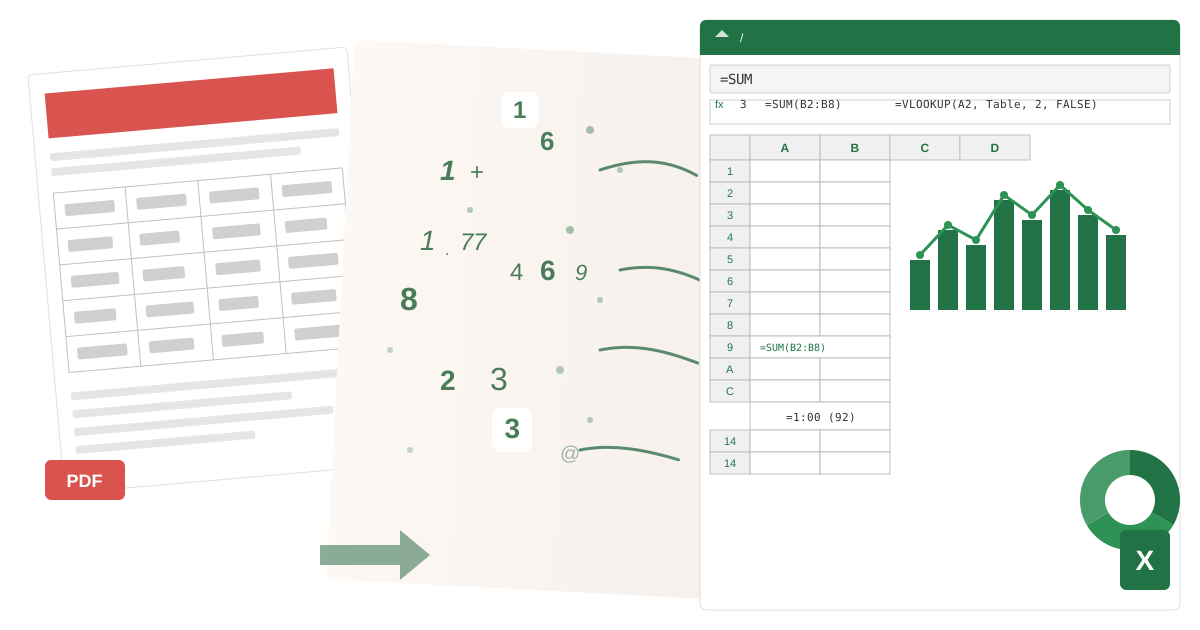
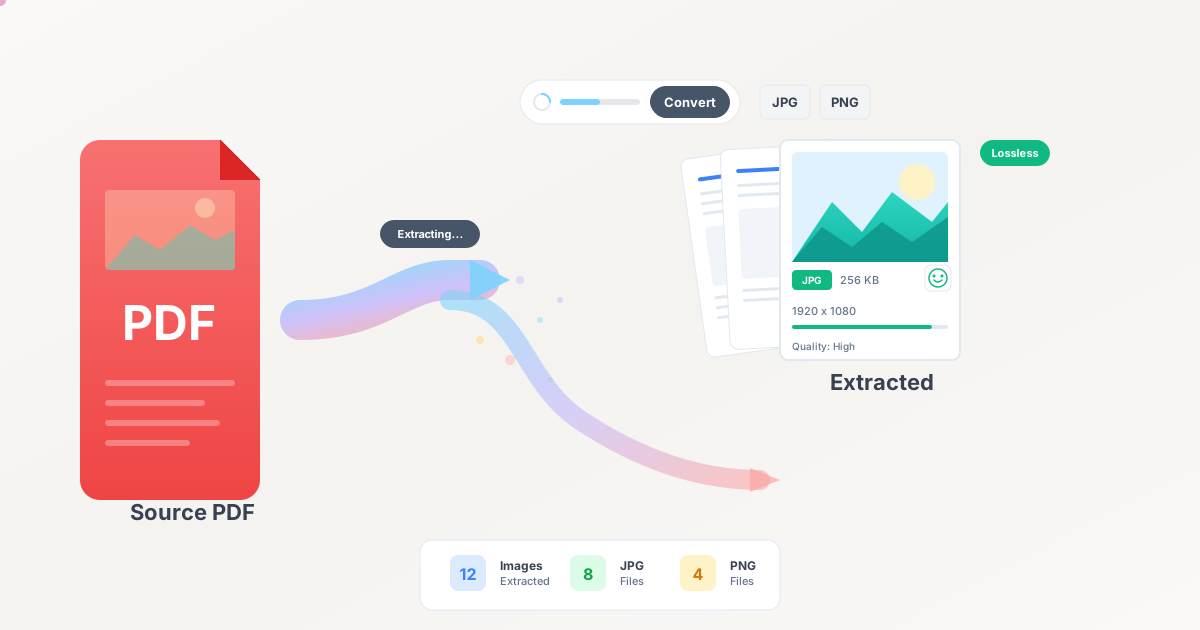
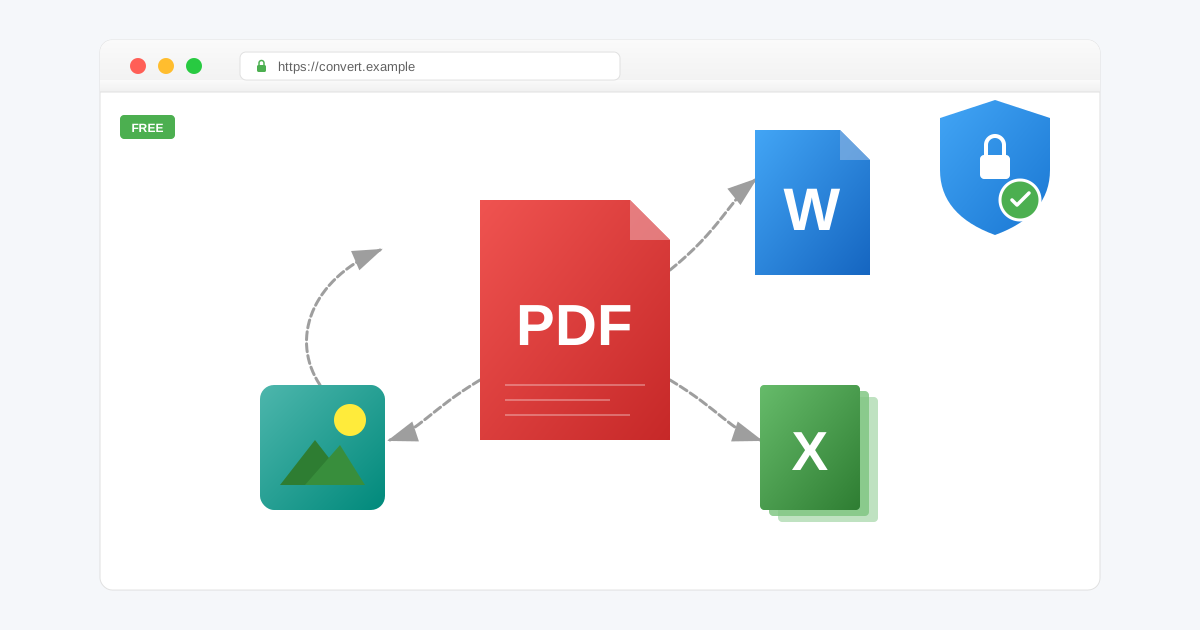
Online converters are perfect for 95% of use cases. And if your workflow involves other formats, you can easily find tools to convert PDF to Excel for data-heavy tables or extract visuals using a PDF to Image converter.
Method 2: The Built-in Solution - Using Microsoft Word Itself
Did you know that the tool you want to edit with can also be the converter? If you have a modern version of Microsoft Word (Office 2013 or newer), it has a surprisingly capable, built-in PDF conversion feature called PDF Reflow.
How to Convert Using Microsoft Word:
- Open Microsoft Word: Launch the Word application on your computer.
- Open the PDF: Go to
File > Open. Browse your computer and select the PDF file you want to convert. Don't double-click the PDF from your file explorer, as that will likely open it in a PDF reader. - Confirm Conversion: Word will display a notification message, explaining that it will now convert your PDF into an editable Word document. It warns that the process may take some time and the resulting layout might not be perfect. Click OK.
- Edit and Save: Word will process the file and open it as a new, editable document. You can now make your changes. Once you're done, go to
File > Save Asand save it in the.docxformat.
Pros and Cons of Using MS Word
| Pros | Cons |
|---|---|
| Completely free if you already own Word | Requires a modern version of Microsoft Office |
| Works entirely offline | Can be slow with large or complex PDFs |
| Good for simple, text-based documents | Often struggles with columns, tables, and complex layouts |
| No need to upload sensitive files to the web | Not an option for users without a paid Office subscription |
This method is incredibly convenient for those who have the software, especially for simple documents like letters or articles. For anything with complex formatting, you'll likely get better results with a dedicated converter.
Method 3: The Cloud-Based Option - Converting with Google Docs
If you're a heavy user of the Google ecosystem, Google Docs offers another free and powerful way to convert PDFs, especially those that are scanned or image-based.
Google Docs uses its powerful Optical Character Recognition (OCR) engine during the conversion process, which is excellent for extracting text from any PDF.
How to Convert Using Google Docs:
- Upload to Google Drive: Log in to your Google account and navigate to Google Drive (
drive.google.com). Upload your PDF file by dragging it into the browser window or clickingNew > File upload. - Open with Google Docs: Once uploaded, find the PDF in your Drive. Right-click on the file.
- Select the Option: From the context menu, hover over
Open withand then selectGoogle Docs. - Conversion in Progress: Google will automatically process the file, using OCR to read the text and images. This will open a new Google Doc containing the content of your PDF.
- Download as Word: The formatting will likely be different from the original PDF, prioritizing editable text over precise layout. From here, you can edit the document. When you're ready, go to
File > Download > Microsoft Word (.docx).
This method is a lifesaver for scanned documents where other converters might fail to recognize the text. While it often sacrifices layout for text accuracy, sometimes just getting the raw content is the most important step. For simple text extraction, our PDF to Text tool can also be a fast, browser-based alternative.
Method 4: The Open-Source Powerhouse - LibreOffice Draw
For fans of free and open-source software (FOSS), LibreOffice is a fantastic, full-featured alternative to Microsoft Office. Its vector graphics editor, LibreOffice Draw, has the ability to open and edit PDF files natively.
This method is less of a 'conversion' and more of a direct 'edit,' but it can be used to export the content into a Word-compatible format.
How to Use LibreOffice Draw:
- Install LibreOffice: If you don't already have it, download and install the free LibreOffice suite from their official website.
- Open in Draw: Launch LibreOffice Draw. Go to
File > Openand select your PDF document. - Edit the Document: Draw will open the PDF, treating each paragraph, line, or even word as a separate text box. This makes it great for small tweaks like correcting a name or a date but cumbersome for rewriting entire sections.
- Export the File: While you can save it as a PDF again, to get it into a Word format, you would need to copy and paste the content into a new LibreOffice Writer document and then save that as a .docx. It's not a direct conversion path and is the most labor-intensive method on this list.
LibreOffice Draw is best viewed as a free PDF editor for minor changes rather than a true PDF-to-Word converter. It's a powerful tool but not the most efficient for this specific task.
Comparison of Free Conversion Methods
To help you choose, here's a quick comparison of the methods we've covered:
| Method | Best For | Formatting Preservation | Ease of Use | Requires Install? | Key Feature |
|---|---|---|---|---|---|
| Practical Web Tools | Quick, high-quality, and private conversions | High | Very Easy | No | Privacy-focused & reliable |
| Microsoft Word | Users who already have Office 2013+ | Medium to High | Easy | Yes | Convenient & offline |
| Google Docs | Scanned PDFs and text extraction | Low to Medium | Easy | No | Powerful OCR engine |
| LibreOffice Draw | Minor text edits in the original layout | Low (as a converter) | Medium | Yes | Free, open-source editor |
Conclusion: The Best Method for You
Navigating the world of PDF to Word conversion doesn't have to be a headache. As we've seen, there are several excellent, free methods that deliver reliable results.
- For convenience and offline editing, the built-in feature in Microsoft Word is a solid choice for simple documents.
- For scanned, image-based PDFs, Google Docs and its superior OCR technology is your best bet for extracting text.
- For quick, high-quality conversions that preserve formatting without any software installation, a dedicated online tool is the clear winner.
The next time you're faced with an uneditable PDF, don't waste time trying to retype it from scratch. Choose the method that best fits your needs.
For the ultimate balance of speed, accuracy, and privacy, we invite you to try the Practical Web Tools PDF to Word converter today. Get your documents converted in seconds and take back control of your content.