How to Convert HTML to PDF: A Complete Step-by-Step Guide

From Web Page to Perfect Document: Why Convert HTML to PDF?
Have you ever found a fantastic article, a crucial online receipt, or a dynamic data report on a website and wished you could just... save it? Not as a bookmark that could disappear, but as a permanent, shareable, and printable document. This is where converting HTML to PDF becomes an essential skill.
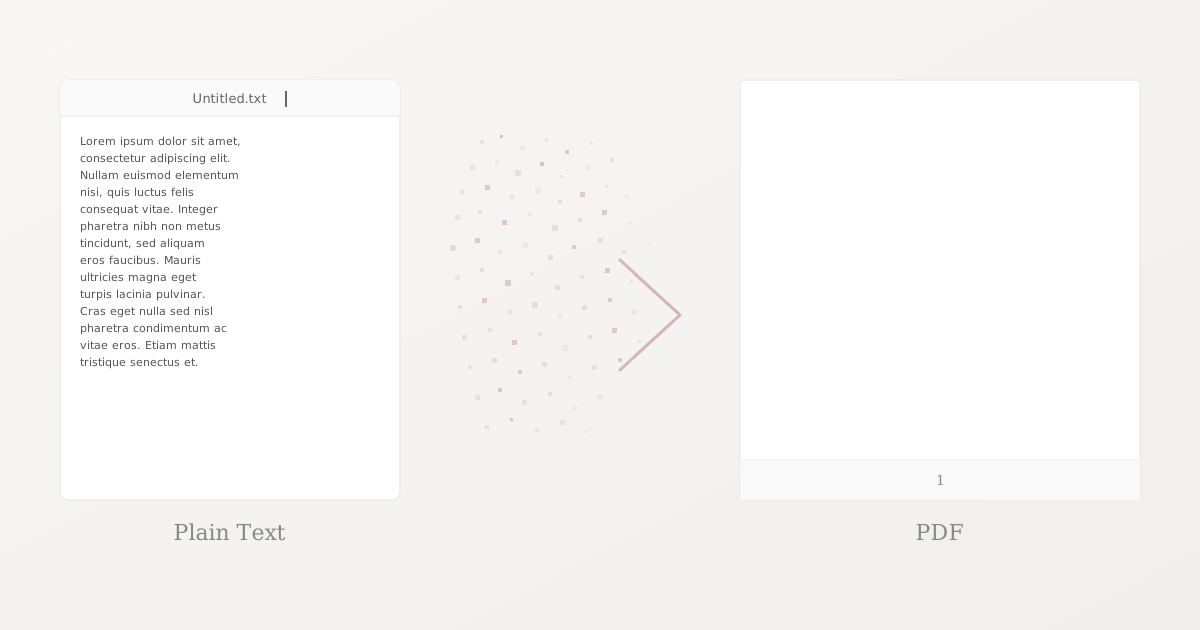
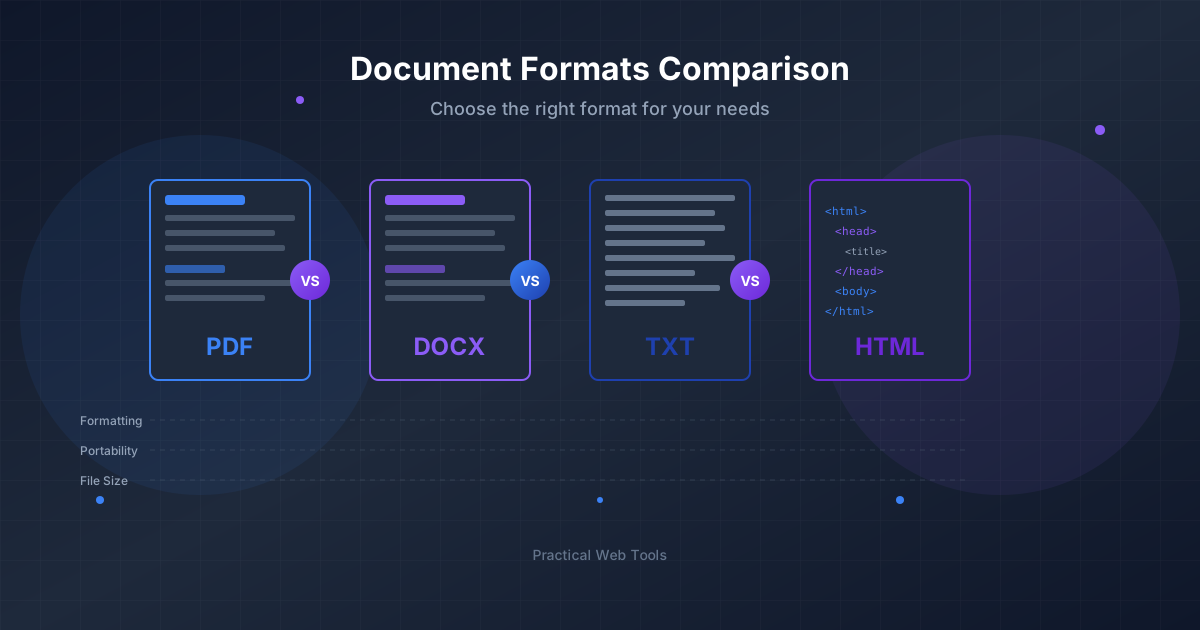
HTML, the backbone of the web, is designed for dynamic rendering in browsers. It's fluid and adaptable. PDF (Portable Document Format), on the other hand, is the gold standard for static, self-contained documents that look the same everywhere. The challenge lies in bridging this gap—transforming a fluid web layout into a pixel-perfect, fixed-layout document.
This comprehensive guide will walk you through every method, from the simple one-click browser trick to powerful developer libraries for automated report generation. Whether you're a student archiving research, a professional creating invoices, or a developer building a complex application, you'll find the perfect solution here.
Key Benefits of Converting HTML to PDF
Before we dive into the 'how', let's quickly cover the 'why'. Understanding the benefits helps you choose the right method for your needs.
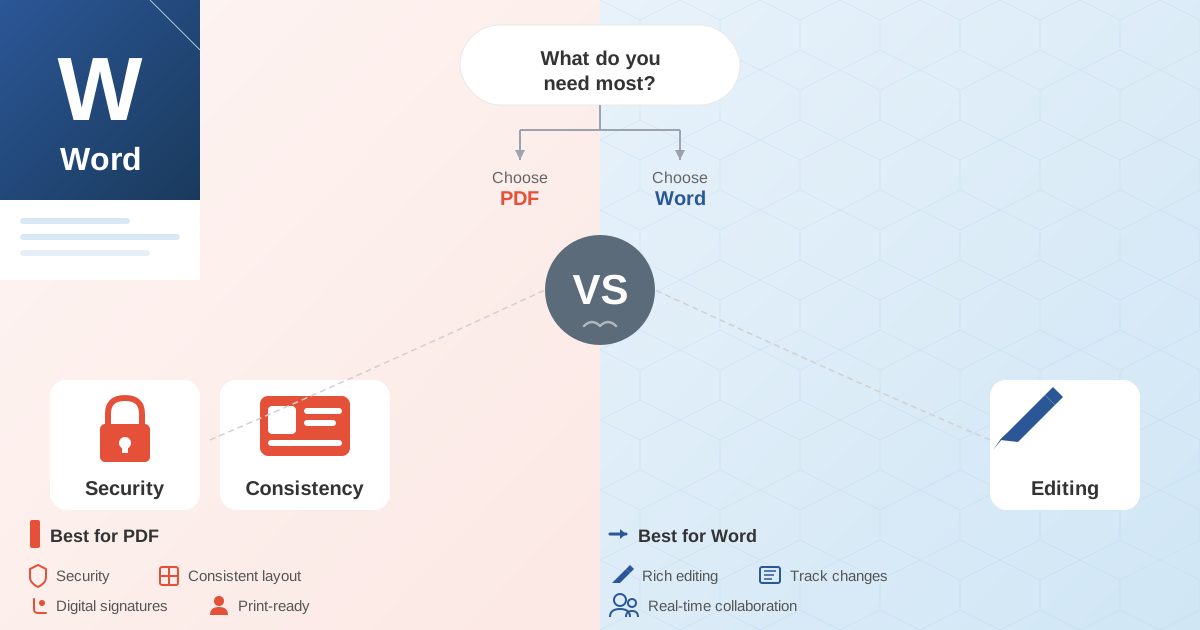
- Universal Accessibility & Consistency: A PDF will look identical whether it's opened on a Mac, a Windows PC, a smartphone, or a tablet. This consistency is crucial for professional documents like invoices, contracts, and reports.
- Offline Access and Archiving: Web pages can change, go offline, or be deleted. Converting a page to PDF creates a permanent snapshot you can access anytime, anywhere, without an internet connection.
- Print-Ready Format: PDFs are optimized for printing. They maintain layout, fonts, and image quality, ensuring your printed document looks exactly as intended.
- Enhanced Security: PDFs offer features like password protection and digital signatures, making them a secure way to share sensitive information.
- Easy Sharing and Collaboration: PDFs are a single, compact file, making them easy to attach to emails or share via messaging apps. Annotations and comments can also be added without altering the original content.
Method 1: The Quick & Easy Way (Using Your Browser)
The simplest method is already built into your web browser. The "Print to PDF" function is a powerful tool for quick captures of web pages.
How to Print to PDF (Step-by-Step)
This process is very similar across all major browsers.
For Google Chrome:
- Open the web page you want to convert.
- Press
Ctrl+P(on Windows) orCmd+P(on Mac) to open the print dialog. - In the Destination dropdown menu, select Save as PDF.
- Adjust the settings as needed:
- Pages: Choose to save all pages or a custom range.
- Layout: Select Portrait or Landscape.
- More settings: Here you can control paper size, margins, and scale. Crucially, you can often choose to include or exclude Headers and footers and Background graphics.
- Click the Save button and choose a location on your computer.
For Mozilla Firefox:
- Open the desired web page.
- Click the menu button (three horizontal lines) in the top-right corner and select Print.
- In the Destination field of the print preview window, select Save to PDF.
- Customize the orientation, page range, and other options.
- Click Save.
Pros:
- Completely free and built-in.
- Extremely fast for one-off conversions.
- Renders the page exactly as you see it, including content loaded by JavaScript.
Cons:
- Limited control over page breaks and advanced formatting.
- Often includes unwanted elements like ads, navigation bars, and sidebars (though some browsers have a 'Simplify' or 'Reader' mode to help with this).
- Not suitable for automation or batch processing.
Method 2: Online HTML to PDF Converters
For more control without needing to code, online converters are a great option. These web-based tools typically allow you to either paste a URL or upload an HTML file directly.
How They Work
- Navigate to an online converter website.
- Choose the conversion method (URL or file upload).
- Paste the URL or select your
.htmlfile. - Configure options like page size, orientation, and margins.
- Click the 'Convert' button and download your PDF.
Pros:
- User-friendly interface.
- More configuration options than browser printing.
- Accessible from any device with an internet connection.
Cons:
- Privacy and Security: Be cautious when uploading sensitive or confidential HTML files to a third-party service. At Practical Web Tools, we champion privacy, which is why all our tools process your files directly in your browser.
- Limitations: Free versions often have restrictions on file size, number of conversions, or may add watermarks.
- Reliability: The quality of the conversion can vary significantly between services.
Method 3: Advanced Control with Developer Tools
When you need pixel-perfect precision, automation, or batch processing, it's time to turn to developer tools. These methods offer complete control over the final PDF output.
Command-Line Tools: wkhtmltopdf
wkhtmltopdf is a popular open-source command-line tool that uses the WebKit rendering engine (the same engine that originally powered Chrome and Safari) to convert HTML to PDF. It's 'headless', meaning it runs without a graphical user interface, making it perfect for server-side scripting.
Basic Usage:
wkhtmltopdf http://google.com google.pdf
This simple command fetches the Google homepage and saves it as google.pdf.
You can also add numerous options for customization:
wkhtmltopdf --page-size A4 --orientation Landscape --header-center 'My Report' --footer-right '[page]' input.html output.pdf
Pros:
- Highly scriptable and ideal for automation.
- Extensive options for headers, footers, tables of contents, and more.
Cons:
- Can be tricky to install, as it has several dependencies.
- Its WebKit engine is older and may struggle with modern CSS and JavaScript features.
Programming Libraries (The Ultimate Solution)
For the most power and flexibility, integrating an HTML-to-PDF library into your application is the best approach. These libraries often use a headless browser like Chromium to render the page before printing it to PDF.
JavaScript (Node.js): Puppeteer & Playwright
Puppeteer (by Google) and Playwright (by Microsoft) are high-level APIs that control a headless version of Chrome/Chromium or other browsers. Because they use a real, modern browser engine, they can handle complex JavaScript, CSS3, and dynamic content flawlessly.
Example using Puppeteer:
First, install it: npm install puppeteer
Then, use a simple script:
const puppeteer = require('puppeteer');

(async () => {
  const browser = await puppeteer.launch();
  const page = await browser.newPage();
  await page.goto('https://practicalwebtools.com', { waitUntil: 'networkidle0' });
  await page.pdf({
    path: 'practicalwebtools.pdf',
    format: 'A4',
    printBackground: true,
    margin: {
      top: '20px',
      right: '20px',
      bottom: '20px',
      left: '20px'
    }
  });

  await browser.close();
})();
Python: WeasyPrint
WeasyPrint is a popular Python library that focuses on converting HTML and CSS to PDF. It's great for generating reports and invoices from templates.
Example using WeasyPrint:
First, install it: pip install WeasyPrint
from weasyprint import HTML

html = HTML(string='<h1>My Report</h1><p>This is a test.</p>')
html.write_pdf('report.pdf')
Comparison of Developer Libraries
| Library | Language | Rendering Engine | Key Feature | Best For |
|---|---|---|---|---|
| Puppeteer | JavaScript | Chromium (Blink) | Flawless rendering of modern web pages | Applications that need to convert live, complex, JS-heavy sites. |
| Playwright | JavaScript | Multi-browser | Can control Chromium, Firefox, and WebKit | Cross-browser testing and generation from various engines. |
| wkhtmltopdf | (CLI/Wrapper) | Old WebKit | Extensive PDF-specific features (TOCs) | Server-side generation where modern JS/CSS isn't critical. |
| WeasyPrint | Python | Custom (Weasy) | Excellent CSS Paged Media support | Generating structured documents like invoices and reports from HTML templates. |
Common Challenges & Solutions
Converting HTML to PDF is not always straightforward. Here are some common hurdles and how to overcome them.
1. Page Breaks
Problem: Content gets awkwardly cut off between pages.
Solution: Use CSS properties designed for print. These work best with libraries like Puppeteer or WeasyPrint.
page-break-before: always;- Start a new page before this element.page-break-after: always;- Start a new page after this element.page-break-inside: avoid;- Prevent an element (like a table or image) from splitting across two pages.
2. Styling for Print
Problem: The PDF includes unwanted navigation bars, ads, or has a layout that doesn't fit the page.
Solution: Use a print-specific stylesheet. You can hide elements and adjust layouts specifically for the PDF output.
/* In your main CSS file */
@media print {
  nav, footer, .ads-container {
    display: none; /* Hide these elements when printing */
  }

  body {
    font-size: 12pt;
    color: #000;
  }
}
3. Asynchronous Content (JavaScript)
Problem: The PDF is generated before your JavaScript has finished loading data or rendering charts.
Solution: Use a tool that can wait for the page to fully load. This is a major strength of Puppeteer and Playwright. The waitUntil: 'networkidle0' option in our Puppeteer example tells the browser to wait until the network is quiet, ensuring all assets and data are loaded.
Taking Your PDF to the Next Level
Once you've successfully created your PDF, your journey might not be over. You may need to perform additional actions to get your document ready for its final purpose.
-
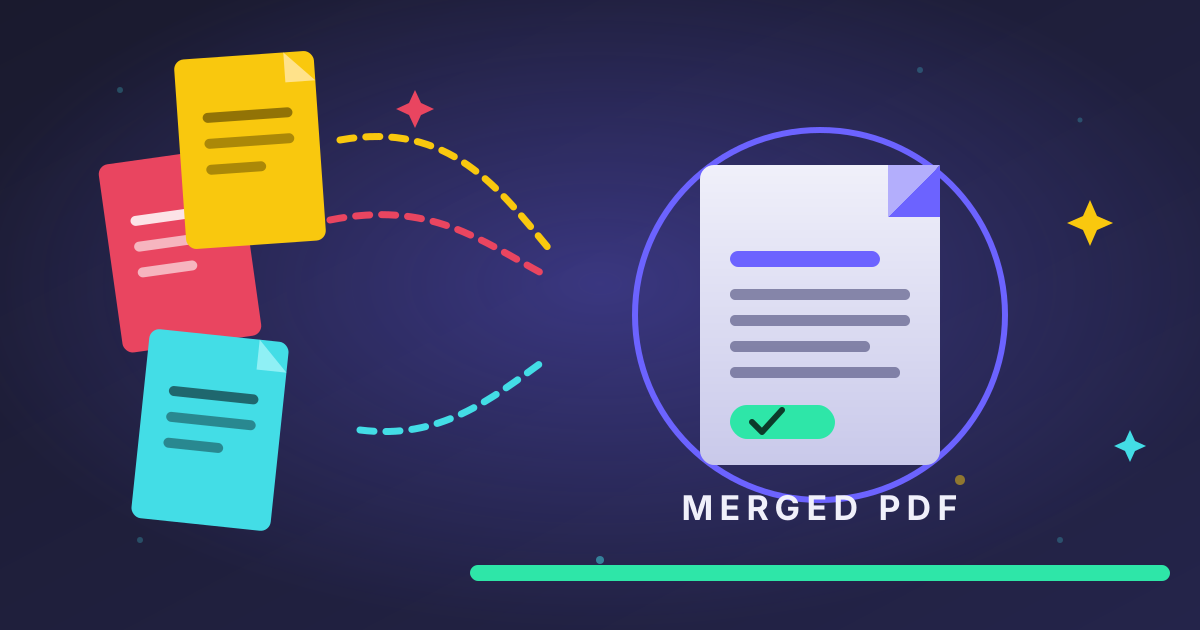
Combining Documents: If you've generated a report from HTML, you might need to add a standard cover page or an appendix that exists as a separate PDF. Instead of struggling with complex software, you can use a simple online tool. Our free Merge PDFs tool lets you combine multiple files into one seamless document, right in your browser.
-
Signing a Document: Perhaps the report you just generated needs to be officially signed. You can easily add a digital signature without printing and scanning. The Sign PDF tool provides a quick and secure way to place your signature on any PDF.
-
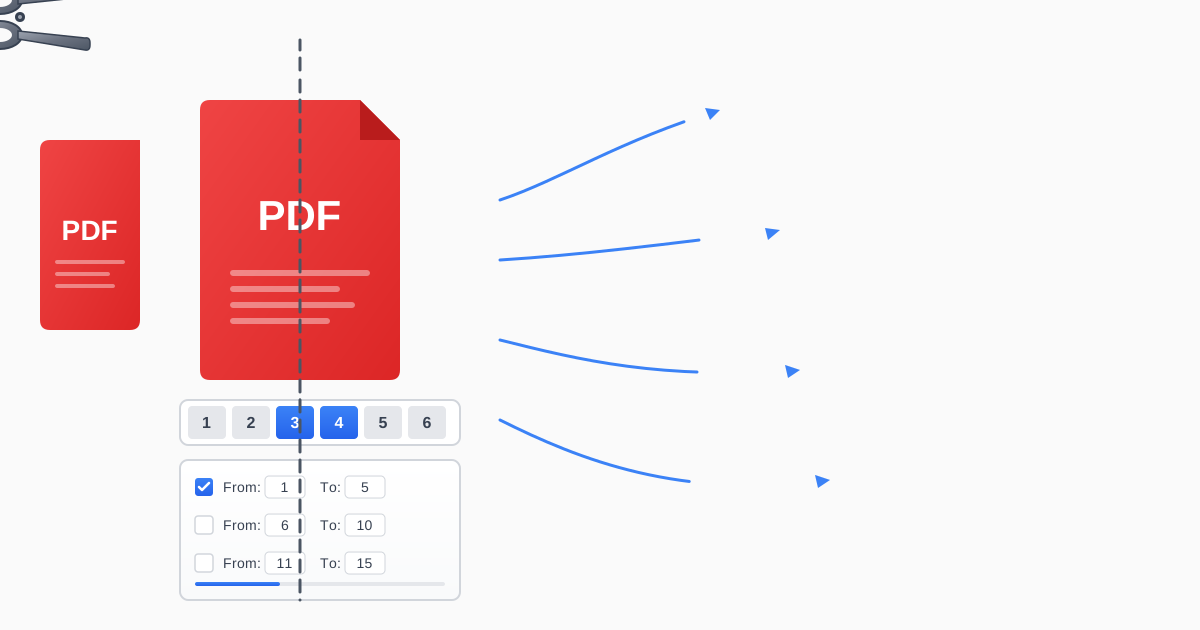
Extracting Key Information: Sometimes, a large report is generated, but you only need to send a specific section to a colleague. You can easily extract the pages you need with a tool like Split PDF, which helps you create smaller, more focused documents from a larger one.
Conclusion: Choose the Right Tool for the Job
Converting HTML to PDF is a versatile task with a solution for every level of complexity.
- For quick, occasional saves, your browser's built-in "Print to PDF" function is your best friend.
- For more control without coding, online converters can be useful (just be mindful of privacy).
- For automation, precision, and professional results, developer libraries like Puppeteer offer unparalleled power and control.
By understanding the different methods available, you can efficiently transform dynamic web content into static, portable, and professional PDF documents.
Ready to manage your other document needs? Explore our full suite of free, private, and easy-to-use PDF tools at Practical Web Tools today!