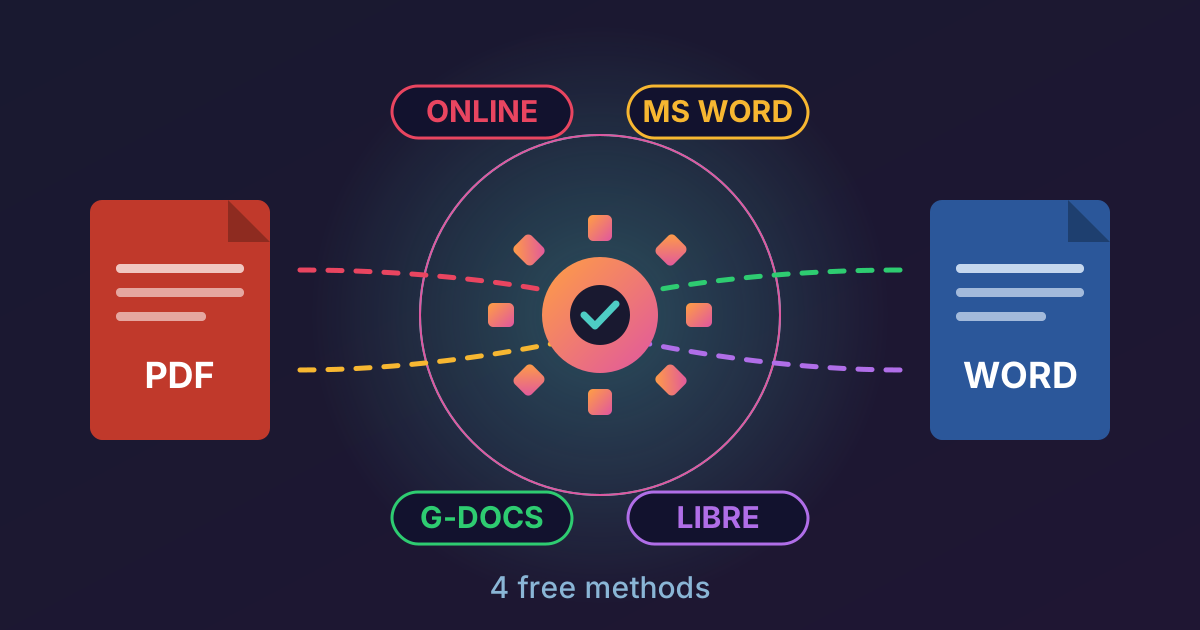
PDF to Word Converters: The Complete 2024 Guide
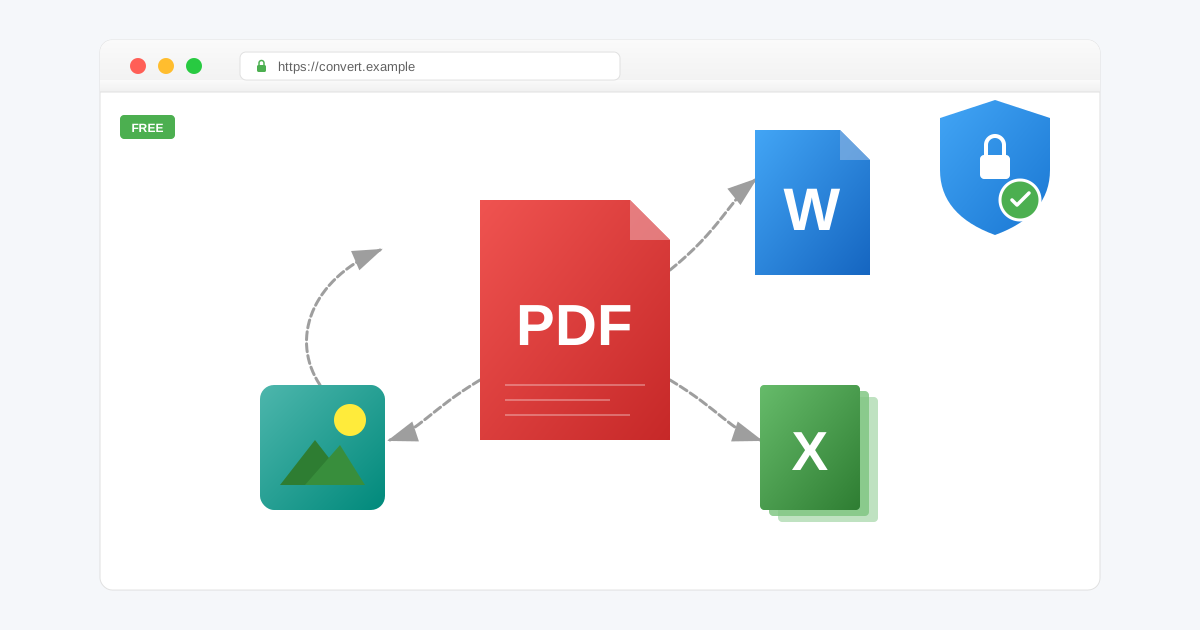
You’ve been there before. A colleague sends you a report, a client sends a contract, or you download an important form, and it’s a PDF. You spot a typo or need to add your own information, but you can't. The document is locked, like text set in digital concrete. This common frustration is precisely why PDF to Word converters are one of the most essential tools in any modern professional's toolkit.
But with so many options available, how do you know which one to choose? Are online converters safe? And how can you get a perfect conversion without messing up all the formatting? This comprehensive guide will answer all those questions and more. We'll dive deep into how these tools work, what to look for, and how to solve common conversion problems, turning you into a document conversion expert.
Why Convert a PDF to Word in the First Place?
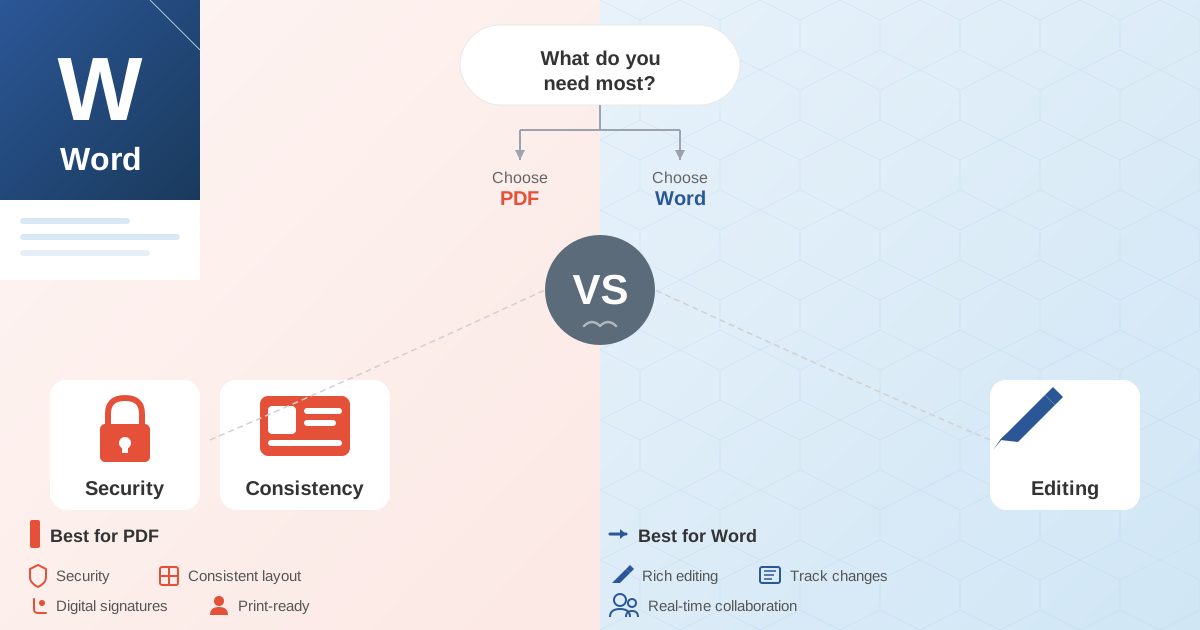
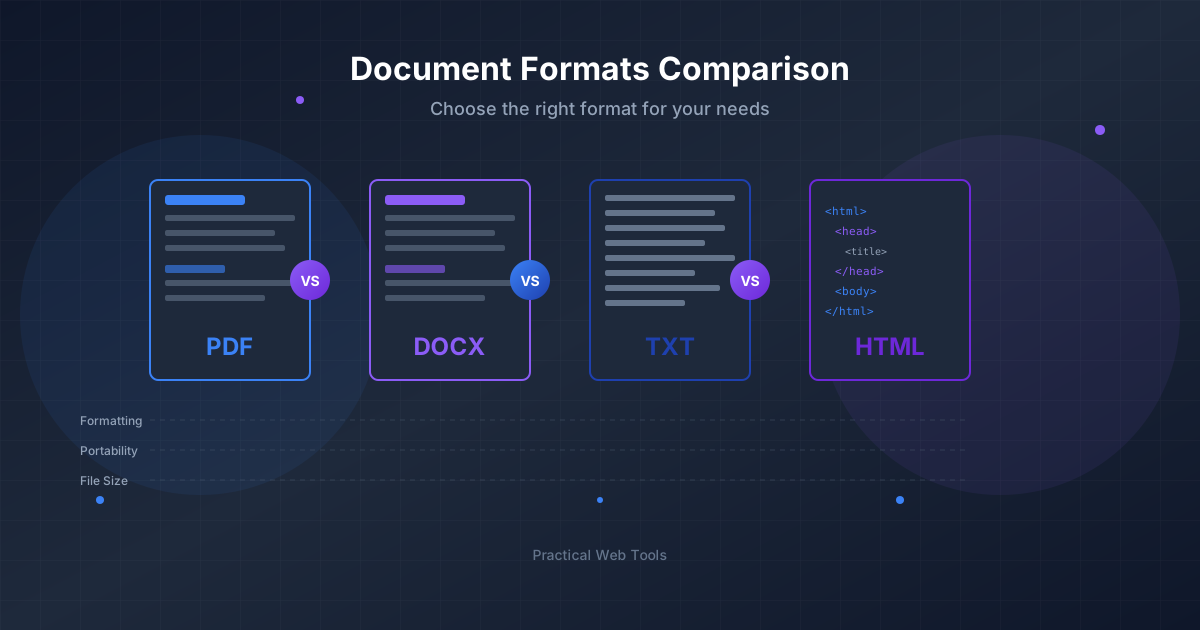
The Portable Document Format (PDF) was designed by Adobe in the 1990s to present documents consistently across any device or operating system. It’s a digital snapshot, preserving fonts, images, and layout perfectly. Microsoft Word documents (.docx), on the other hand, are designed for creation and editing. The fundamental difference between viewing and editing is why we need to convert between them.
Here are some of the most common reasons you might need to convert a PDF to Word:
- Editing and Correcting: You need to fix a typo, update statistics in a report, or change the terms in a draft contract.
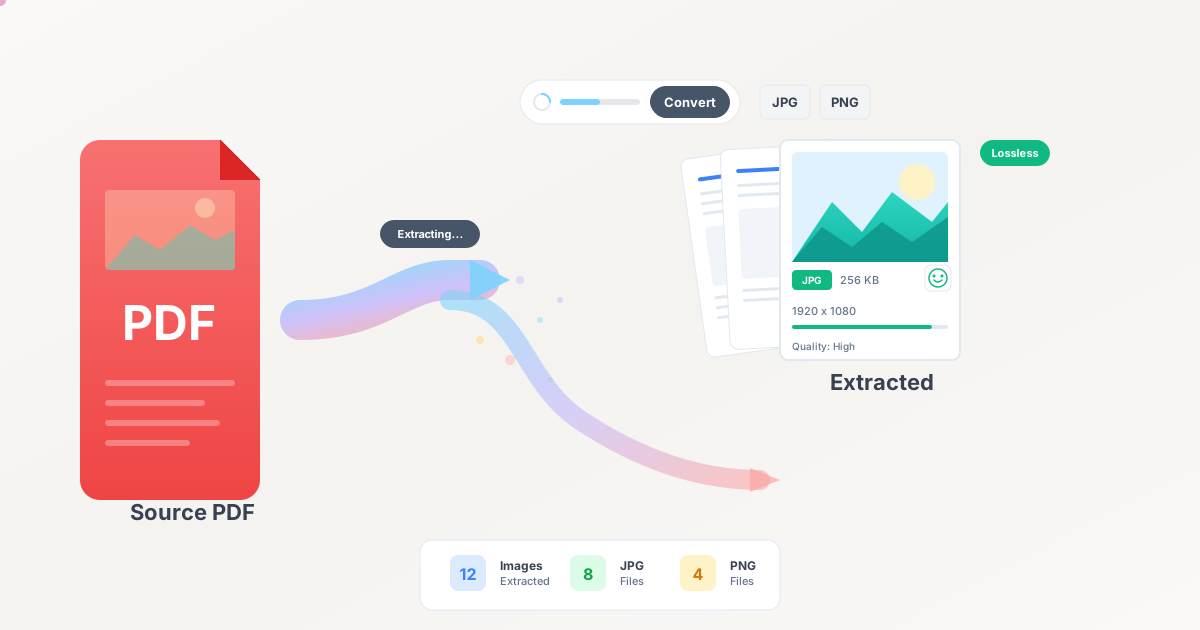
- Repurposing Content: You want to extract text and images from a PDF brochure to use in a new presentation or website article.
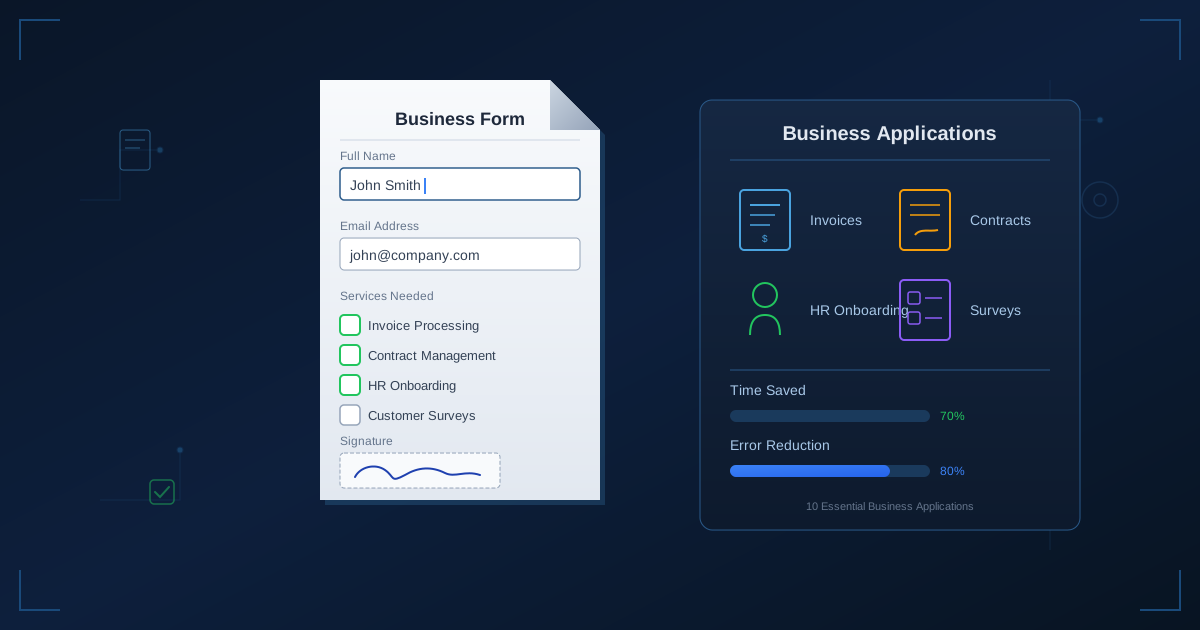
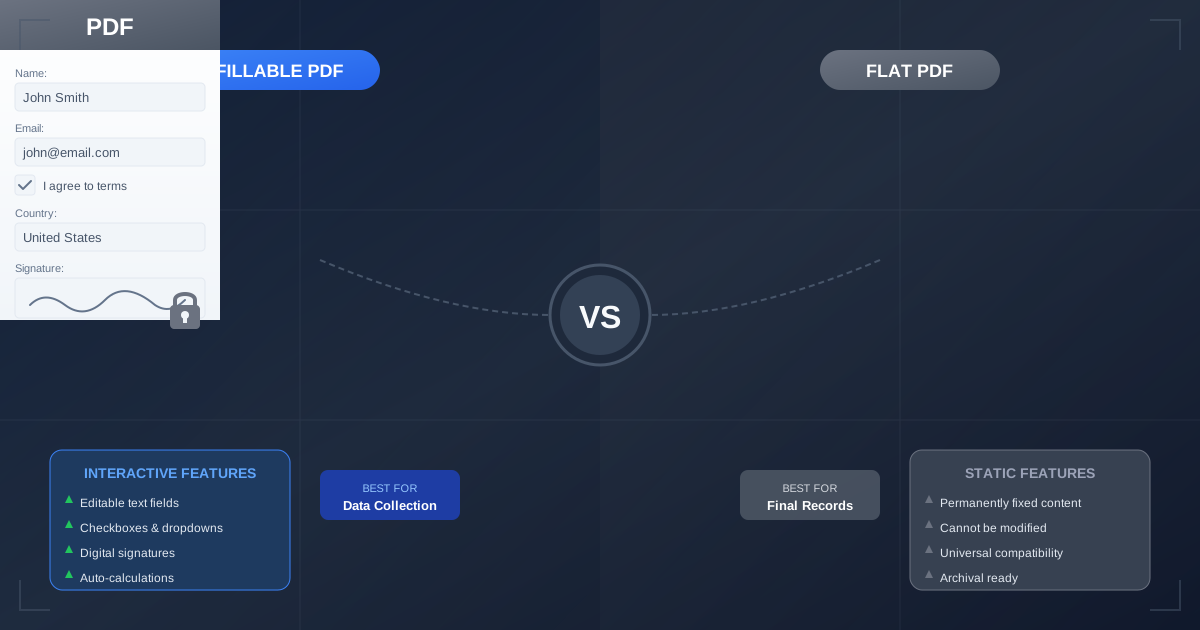
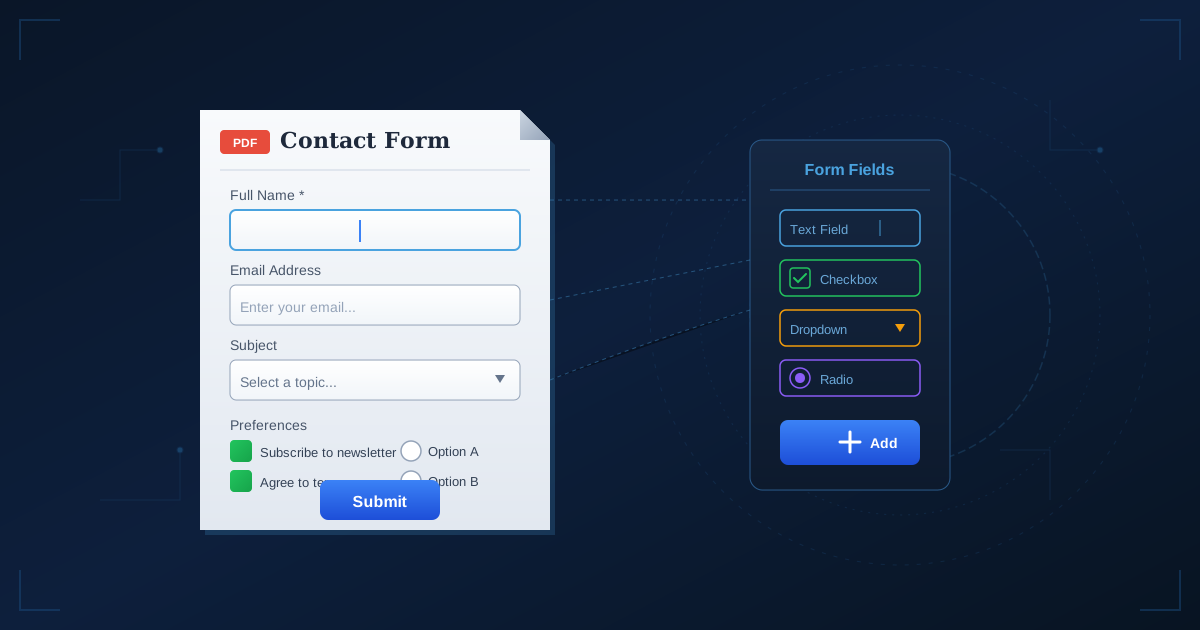
- Filling Out Forms: Many forms are distributed as non-interactive PDFs. Converting to Word allows you to easily type in your information instead of printing and writing by hand.
- Collaboration: You need to work on a document with a team and use Microsoft Word’s “Track Changes” and commenting features.
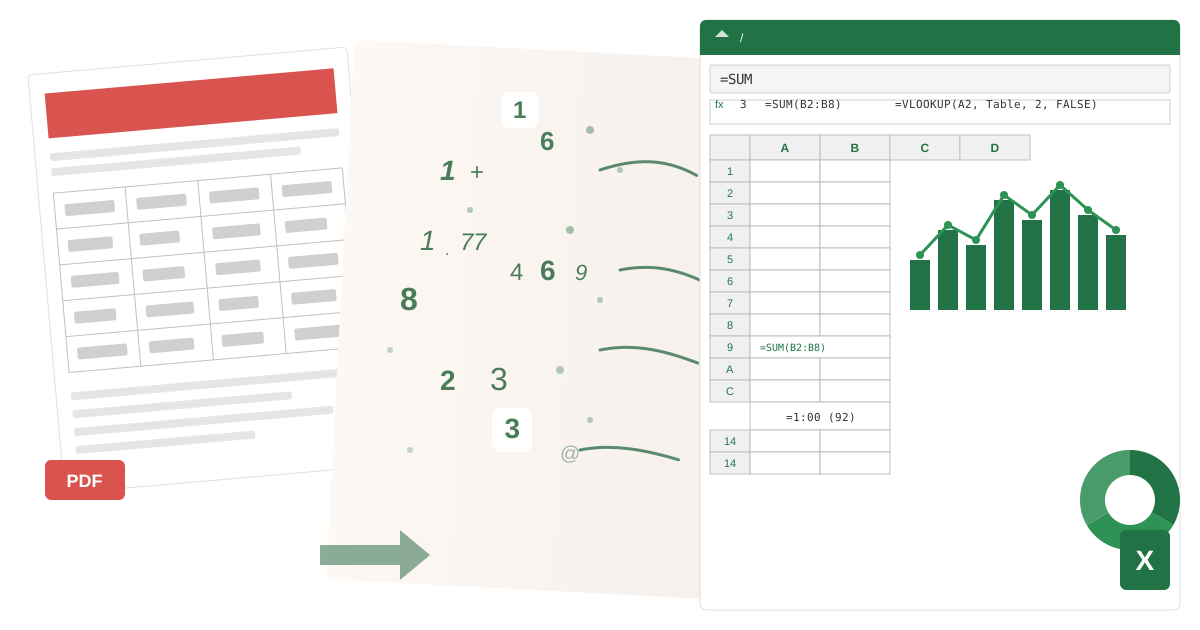
- Data Extraction: You have a PDF with large tables of data that you want to manipulate. While a PDF to Excel converter is often better for this, Word is also a viable option for simple tables.
- Accessibility: Some screen readers and accessibility tools work better with the structure of a Word document than a PDF.
How Do PDF to Word Converters Actually Work?
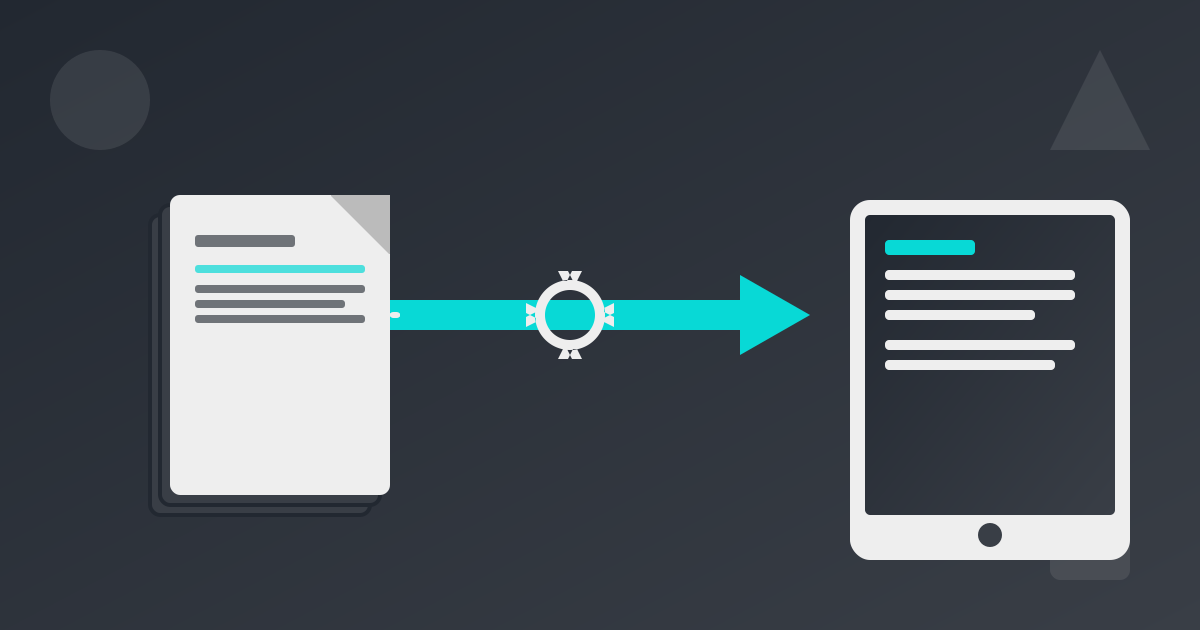
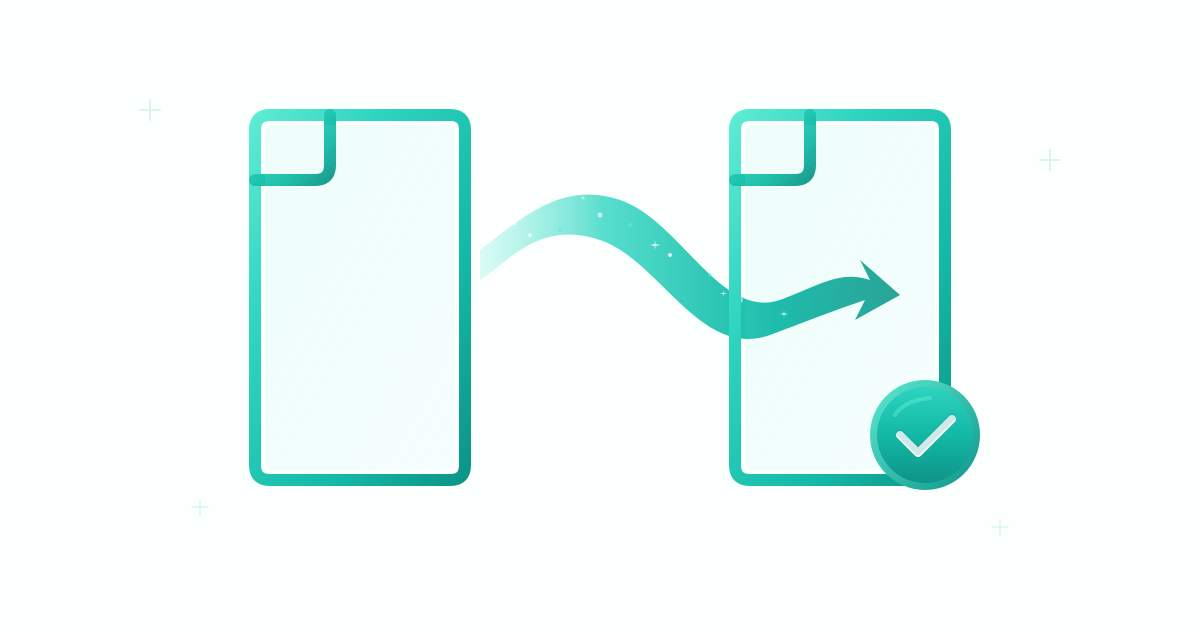
Understanding the magic behind the curtain helps you appreciate why some conversions are flawless while others are… less so. A converter’s job is to deconstruct the PDF and intelligently rebuild it in an editable Word format.
There are two main types of PDFs, and the converter treats them differently:
-
Native PDFs: These are created digitally (e.g., saving a Word doc as a PDF). The text, images, and formatting information are already stored as distinct elements. The converter reads this underlying structure and attempts to replicate it in a .docx file. This process is generally accurate for simple documents.
-
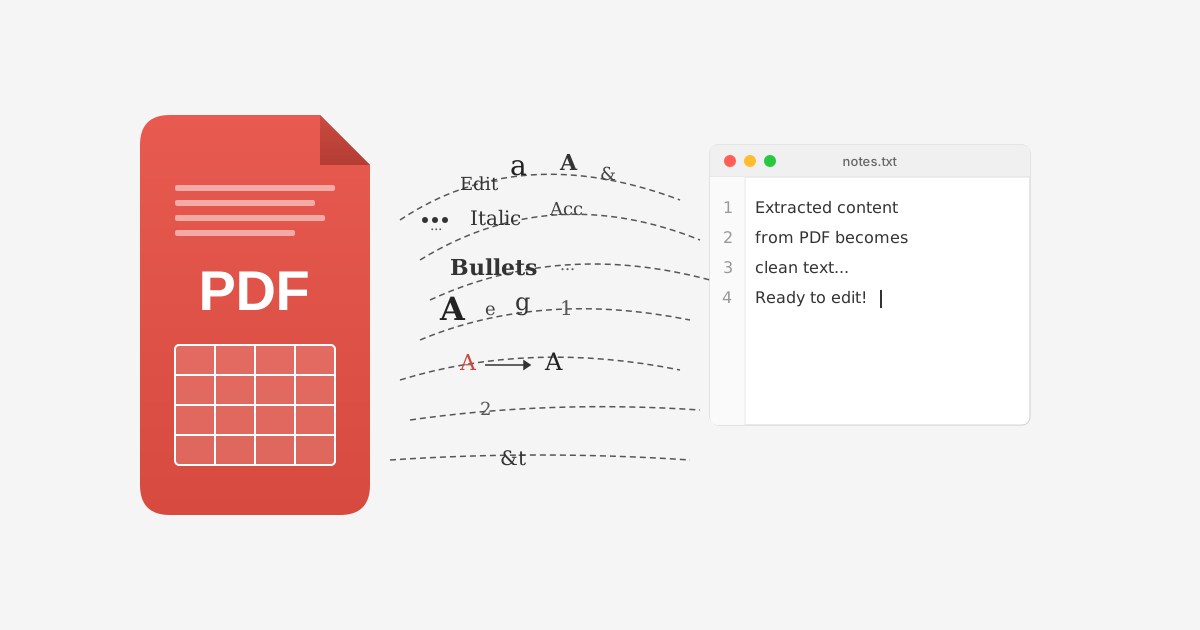
Scanned PDFs: These are essentially images of paper documents. The text isn't actually text; it's just part of the picture. To handle these, converters use a technology called Optical Character Recognition (OCR). OCR scans the image, identifies the shapes of letters and numbers, and converts them into actual, editable text. The quality of the original scan heavily influences the accuracy of the OCR process.
The biggest challenge for any converter is preserving the layout. PDFs use a precise coordinate system to place every element. Word uses a more fluid system of text flow, paragraphs, and tables. The converter must translate the rigid PDF layout into this fluid format, which can be tricky with complex columns, floating images, and intricate tables.
Choosing the Right PDF to Word Converter: Key Factors
Not all converters are created equal. Before you upload a sensitive document to the first website you find, consider these critical factors.
Comparison of Converter Types
| Feature | Online Converters (e.g., Practical Web Tools) | Desktop Software (e.g., Adobe Acrobat) | Built-in Converters (e.g., MS Word) |
|---|---|---|---|
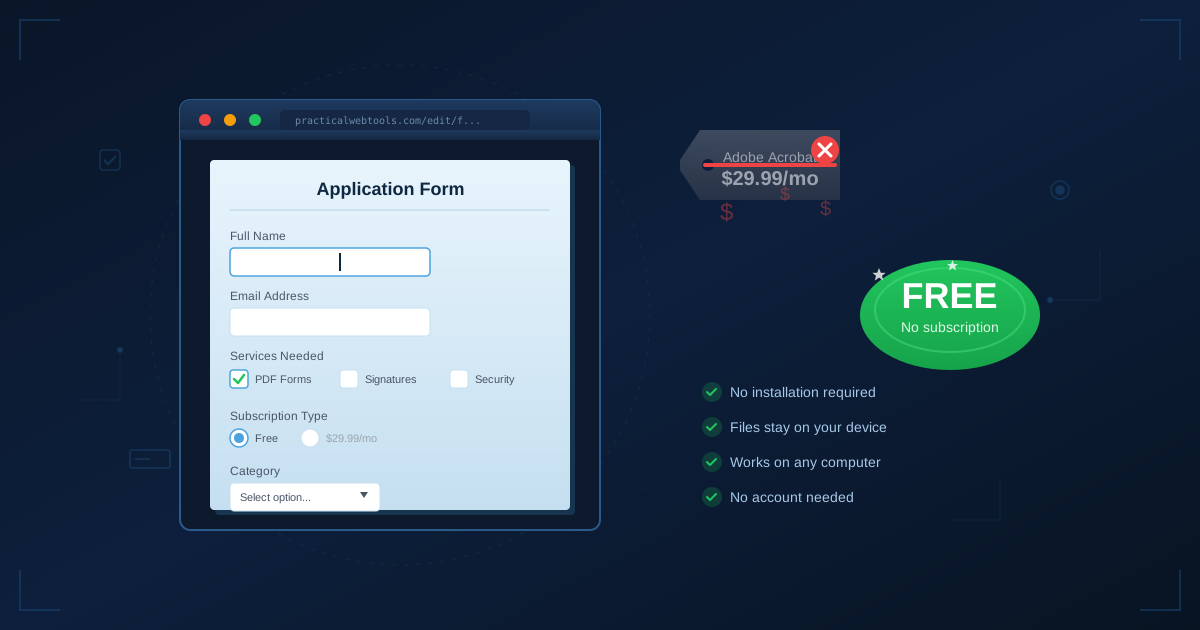
| Cost | Usually Free | Paid (Subscription or one-time) | Included with software |
| Accessibility | Anywhere with internet | Only on installed devices | Only within the specific software |
| Installation | None required | Required | None (already installed) |
| Features | Focused on conversion | Comprehensive PDF editing suite | Basic conversion, may be limited |
| Privacy | Varies (Choose reputable sites) | High (files stay on your PC) | High (files stay on your PC) |
| Best For | Quick, single-file conversions | Heavy, professional PDF workflows | Opening simple PDFs directly for editing |
Accuracy and Formatting Preservation
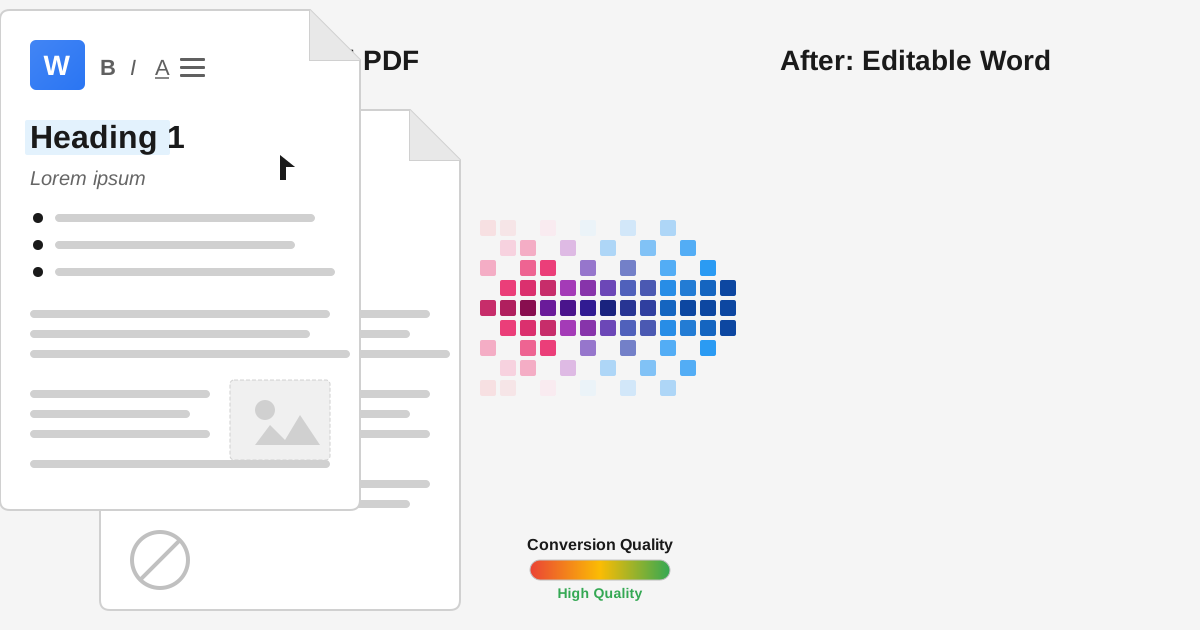
This is the most important factor. A good converter will maintain your original layout, fonts, images, and tables as closely as possible. Look for tools that specifically mention high-fidelity conversions.
Security and Privacy
When you use an online converter, you are uploading your file to a third-party server. For sensitive documents like legal contracts or financial reports, this is a major concern. Choose a service with a clear privacy policy. At Practical Web Tools, we prioritize your privacy: all files are automatically deleted from our servers after a short period, ensuring your data remains your own.
Ease of Use
Life is complicated enough. Your document converter shouldn't be. The best tools offer a simple, intuitive interface—usually a drag-and-drop box and a single “Convert” button. You shouldn't have to read a manual to convert a file.
OCR Capability
If you frequently work with scanned documents or PDFs that contain images of text, you need a converter with a powerful OCR engine. Without it, your converted Word file will just contain an uneditable image.
How to Convert PDF to Word: A Step-by-Step Guide
Ready to unlock your PDF? The process is incredibly simple with a quality online tool. Here’s how to do it using our free and secure converter.
Step 1: Choose a Reliable Converter Navigate to a trustworthy tool that respects your privacy. For a fast, secure, and user-friendly experience, we recommend our own PDF to Word converter.
Step 2: Upload Your PDF File You can typically do this in one of two ways:
- Drag and Drop: Simply drag your PDF file from your computer and drop it into the upload box on the webpage.
- Select File: Click the “Choose File” or “Upload” button to open your computer’s file explorer and select the PDF you want to convert.
Step 3: Start the Conversion Once your file is uploaded, the tool will often start converting automatically. If not, click the “Convert” or “Start” button to begin the process. The tool will analyze your document, perform OCR if needed, and rebuild it as a Word file.
Step 4: Download Your Word Document After a few moments, a download link will appear. Click it to save your new .docx file to your computer. The file will usually have the same name as the original PDF, but with a new extension.
Step 5: Review and Edit This is a crucial final step. Open the downloaded Word document and give it a quick review. Check for any formatting shifts, character recognition errors, or misplaced images. While modern converters are incredibly accurate, complex documents may require minor touch-ups.
Common PDF to Word Conversion Problems (and How to Fix Them)
Sometimes, a conversion doesn't go as planned. Don’t worry—most issues are easy to troubleshoot.
Problem: The Formatting is a Mess
Your columns are jumbled, text is overlapping, and paragraphs are broken. This usually happens with highly visual PDFs like newsletters or magazines.
- Why it happens: The converter struggled to translate the PDF's fixed layout into Word's flowing text structure.
- How to fix it: Try a different conversion engine, as some handle complex layouts better than others. For very complex designs, you may need to accept a less-than-perfect conversion and manually adjust the layout in Word.
Problem: Text is Garbled or Unreadable
Your output looks like gibberish, or words are riddled with errors (e.g., "hello" becomes "he11o").
- Why it happens: This is a classic OCR failure, usually caused by a low-quality or low-resolution scan. The OCR engine couldn't accurately identify the characters.
- How to fix it: If possible, re-scan the original document at a higher resolution (300 DPI is a good standard). Ensure the page is flat and well-lit. If re-scanning isn't an option, you'll unfortunately have to manually correct the text in Word.
Problem: Tables are Broken
Your neat table from the PDF is now a chaotic mess of text boxes or misaligned text.
- Why it happens: Tables are one of the most difficult elements to convert accurately.
- How to fix it: First, try the conversion again. Sometimes it just works on the second try. If the table is still broken and contains critical data, consider using a specialized tool built for the job. Our PDF to Excel converter is designed specifically to extract tabular data with high accuracy.
Problem: Images are Missing or Misplaced
Images from the original PDF are either gone or in the wrong spot in the Word document.
- Why it happens: The converter may have misinterpreted the image's placement or failed to extract it properly.
- How to fix it: This usually requires a manual fix. Simply delete the misplaced image and re-insert it into the correct position in your Word document.
Beyond Simple Conversion: Advanced PDF Tasks
Once you've mastered the basics, you might find you need to do more with your PDFs. Many tasks that seem complex are simple with the right tools.
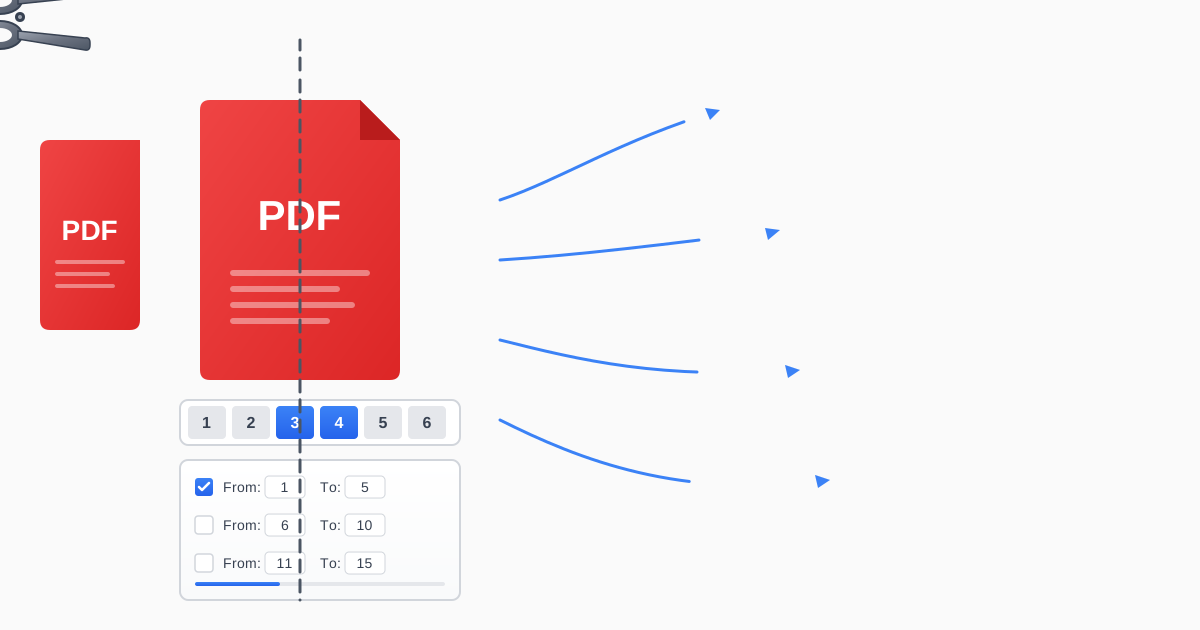
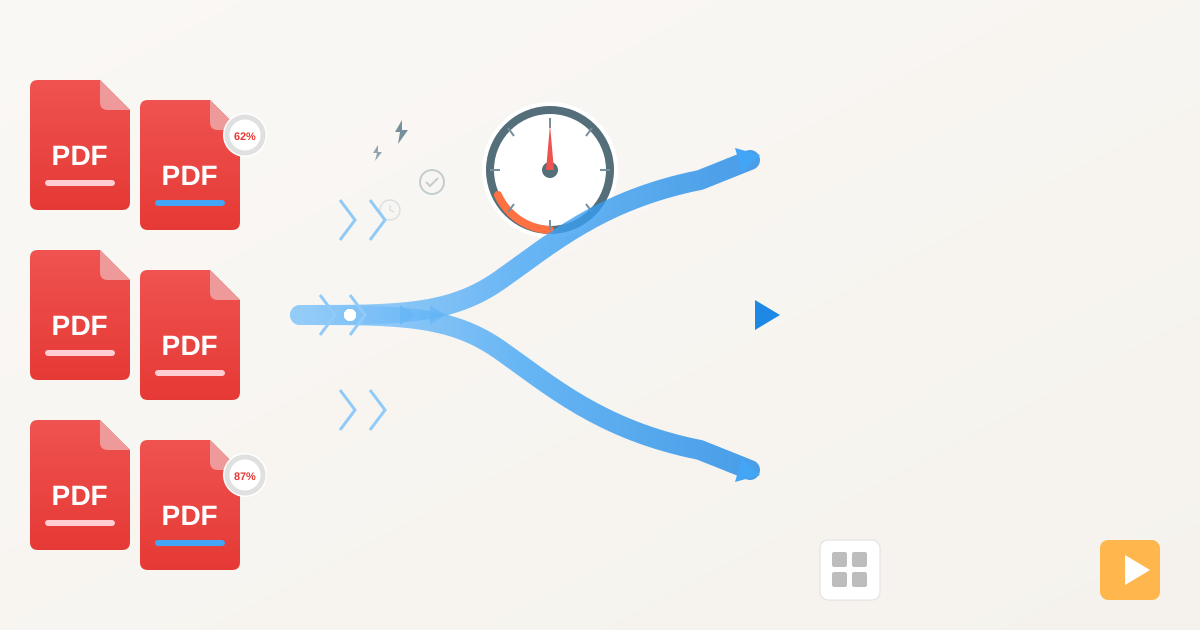
If you have a massive 200-page report but only need to edit a 5-page chapter, uploading and converting the whole thing is inefficient. A better approach is to first isolate the pages you need. You can do this easily with a tool to Split PDF. By splitting the document first, you create a small, manageable file that will convert faster and more accurately.
Similarly, you might have multiple PDFs that you want to combine into a single editable document. Instead of converting them one by one and then copy-pasting, use a Merge PDF tool first to create a single PDF, then convert that file to Word.
Frequently Asked Questions (FAQ)
Is it safe to use online PDF to Word converters?
It depends on the provider. It is safe if you use a reputable service like Practical Web Tools that has a strong privacy policy stating that they do not store or share your files. We automatically delete all uploaded files from our servers. Avoid using unknown websites for documents containing personal or confidential information.
Will my formatting be preserved perfectly?
For standard documents with simple text and images, modern converters do an excellent job of preserving formatting. For highly complex layouts with multiple columns, intricate tables, and layered graphics, you should expect to make some minor manual adjustments in Word after conversion.
Can I convert a scanned PDF to an editable Word document?
Yes, but only if the converter is equipped with Optical Character Recognition (OCR) technology. All high-quality converters, including the ones on our site, have OCR built-in to handle scanned documents.
Are free converters good enough?
Absolutely. For the vast majority of users and everyday tasks—like editing a resume, filling out a form, or repurposing text from a report—free online converters are more than sufficient. They are fast, require no installation, and provide excellent results.
Conclusion: Unlock Your Documents and Your Productivity
Being able to seamlessly convert a PDF into an editable Word document is no longer a niche technical skill—it's an essential part of modern digital literacy. It saves time, reduces frustration, and empowers you to work more efficiently with the information you receive.
By understanding how these converters work, choosing a tool that is secure and accurate, and knowing how to troubleshoot common issues, you can confidently tackle any PDF that comes your way. You no longer have to see a PDF as a digital dead end. Instead, see it as a flexible document, just one simple conversion away from being fully editable.
Ready to stop struggling with uneditable PDFs? Try our free, secure, and user-friendly PDF to Word converter today and transform your documents in seconds!